Operations Management
Company:Coco Cola
Done By:-)
INTRODUCTION
Coca-Cola, or Coke, is a carbonated soft drink manufactured by The
Coca-Cola Company. Originally marketed as a temperance drink and
intended as a patent medicine, it was invented in the late 19th century
by John Stith Pemberton and was bought out by businessman Asa Griggs
Candler, whose marketing tactics led Coca-Cola to its dominance of the
world soft-drink market throughout the 20th century. The drink's name
refers to two of its original ingredients: coca leaves, and kola nuts (a
source of caffeine). The current formula of Coca-Cola remains a trade
secret, although a variety of reported recipes and experimental
recreations have been published.
The Coca-Cola Company produces concentrate, which is then sold to
licensed Coca-Cola bottlers throughout the world. The bottlers, who hold
exclusive territory contracts with the company, produce the finished
product in cans and bottles from the concentrate, in combination with
filtered water and sweeteners. A typical 12-US-fluid-ounce (350 ml) can
contains 38 grams (1.3 oz) of sugar (usually in the form of high fructose
corn syrup). The bottlers then sell, distribute, and merchandise Coca-Cola
to retail stores, restaurants, and vending machines throughout the world.
The Coca-Cola Company also sells concentrate for soda fountains of
major restaurants and foodservice distributors.
The Coca-Cola Company has on occasion introduced other cola drinks
under the Coke name. The most common of these is Diet Coke, along
with others including Caffeine-Free Coca-Cola, Diet Coke Caffeine-
Free, Coca-Cola Zero Sugar, Coca-Cola Cherry, Coca-Cola Vanilla, and
special versions with lemon, lime, and coffee. Based on Interbrand's "best
global brand" study of 2015, Coca-Cola was the world's third most
valuable brand, after Apple and Google. In 2013, Coke products were sold
in over 200 countries worldwide, with consumers drinking more than 1.8
billion company beverage servings each day. Coca-Cola ranked No. 87 in
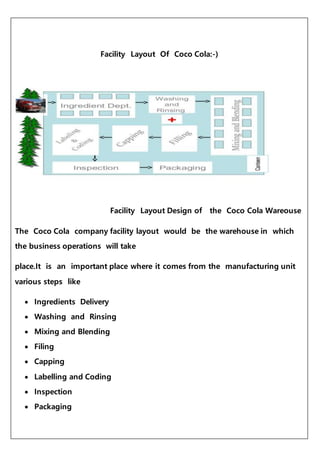
Facility Layout Of Coco Cola:-)
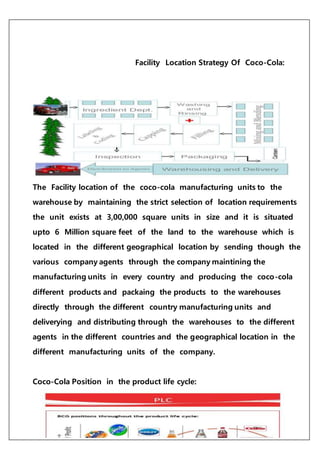
Facility Layout Design of the Coco Cola Wareouse
The Coco Cola company facility layout would be the warehouse in which
the business operations will take
place.It is an important place where it comes from the manufacturing unit
various steps like
 Ingredients Delivery
 Washing and Rinsing
 Mixing and Blending
 Filing
 Capping
 Labelling and Coding
 Inspection
 Packaging
Packing and distributing the coco-cola and the other products to the
Facility Location Strategy Of Coco-Cola:
The Facility location of the coco-cola manufacturing units to the
warehouse by maintaining the strict selection of location requirements
the unit exists at 3,00,000 square units in size and it is situated
upto 6 Million square feet of the land to the warehouse which is
located in the different geographical location by sending though the
various company agents through the company maintining the
manufacturing units in every country and producing the coco-cola
different products and packaing the products to the warehouses
directly through the different country manufacturing units and
deliverying and distributing through the warehouses to the different
agents in the different countries and the geographical location in the
different manufacturing units of the company.
Coco-Cola Position in the product life cycle:

Operations management

  • 1.
  • 2.
    INTRODUCTION Coca-Cola, or Coke,is a carbonated soft drink manufactured by The Coca-Cola Company. Originally marketed as a temperance drink and intended as a patent medicine, it was invented in the late 19th century by John Stith Pemberton and was bought out by businessman Asa Griggs Candler, whose marketing tactics led Coca-Cola to its dominance of the world soft-drink market throughout the 20th century. The drink's name refers to two of its original ingredients: coca leaves, and kola nuts (a source of caffeine). The current formula of Coca-Cola remains a trade secret, although a variety of reported recipes and experimental recreations have been published. The Coca-Cola Company produces concentrate, which is then sold to licensed Coca-Cola bottlers throughout the world. The bottlers, who hold exclusive territory contracts with the company, produce the finished product in cans and bottles from the concentrate, in combination with filtered water and sweeteners. A typical 12-US-fluid-ounce (350 ml) can contains 38 grams (1.3 oz) of sugar (usually in the form of high fructose corn syrup). The bottlers then sell, distribute, and merchandise Coca-Cola to retail stores, restaurants, and vending machines throughout the world. The Coca-Cola Company also sells concentrate for soda fountains of major restaurants and foodservice distributors. The Coca-Cola Company has on occasion introduced other cola drinks under the Coke name. The most common of these is Diet Coke, along with others including Caffeine-Free Coca-Cola, Diet Coke Caffeine- Free, Coca-Cola Zero Sugar, Coca-Cola Cherry, Coca-Cola Vanilla, and special versions with lemon, lime, and coffee. Based on Interbrand's "best global brand" study of 2015, Coca-Cola was the world's third most valuable brand, after Apple and Google. In 2013, Coke products were sold in over 200 countries worldwide, with consumers drinking more than 1.8 billion company beverage servings each day. Coca-Cola ranked No. 87 in
  • 3.
    Facility Layout OfCoco Cola:-) Facility Layout Design of the Coco Cola Wareouse The Coco Cola company facility layout would be the warehouse in which the business operations will take place.It is an important place where it comes from the manufacturing unit various steps like  Ingredients Delivery  Washing and Rinsing  Mixing and Blending  Filing  Capping  Labelling and Coding  Inspection  Packaging Packing and distributing the coco-cola and the other products to the
  • 4.
    Facility Location StrategyOf Coco-Cola: The Facility location of the coco-cola manufacturing units to the warehouse by maintaining the strict selection of location requirements the unit exists at 3,00,000 square units in size and it is situated upto 6 Million square feet of the land to the warehouse which is located in the different geographical location by sending though the various company agents through the company maintining the manufacturing units in every country and producing the coco-cola different products and packaing the products to the warehouses directly through the different country manufacturing units and deliverying and distributing through the warehouses to the different agents in the different countries and the geographical location in the different manufacturing units of the company. Coco-Cola Position in the product life cycle: