INTRODUCTION TO SOCIOLOGY
Chapter 2 SOCIOLOGICAL RESEARCH
PowerPoint Image Slideshow
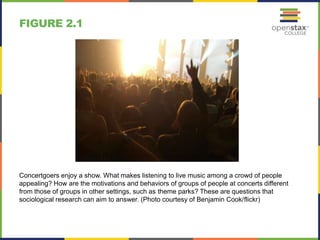
FIGURE 2.1
Concertgoers enjoy a show. What makes listening to live music among a crowd of people
appealing? How are the motivations and behaviors of groups of people at concerts different
from those of groups in other settings, such as theme parks? These are questions that
sociological research can aim to answer. (Photo courtesy of Benjamin Cook/flickr)
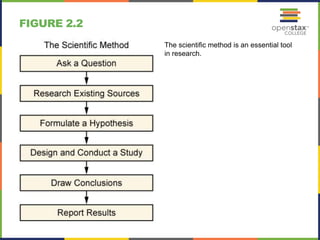
FIGURE 2.2
The scientific method is an essential tool
in research.
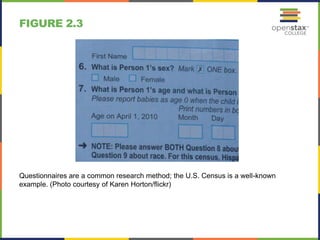
FIGURE 2.3
Questionnaires are a common research method; the U.S. Census is a well-known
example. (Photo courtesy of Karen Horton/flickr)
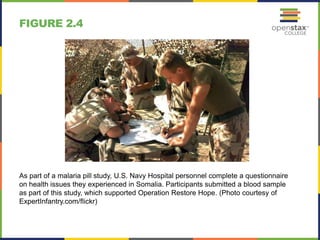
FIGURE 2.4
As part of a malaria pill study, U.S. Navy Hospital personnel complete a questionnaire
on health issues they experienced in Somalia. Participants submitted a blood sample
as part of this study, which supported Operation Restore Hope. (Photo courtesy of
ExpertInfantry.com/flickr)
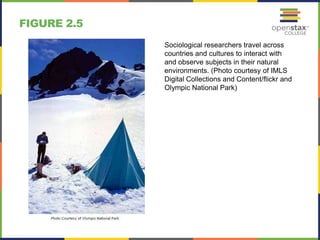
FIGURE 2.5
Sociological researchers travel across
countries and cultures to interact with
and observe subjects in their natural
environments. (Photo courtesy of IMLS
Digital Collections and Content/flickr and
Olympic National Park)
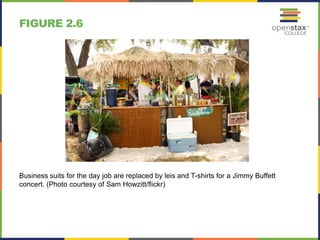
FIGURE 2.6
Business suits for the day job are replaced by leis and T-shirts for a Jimmy Buffett
concert. (Photo courtesy of Sam Howzitt/flickr)
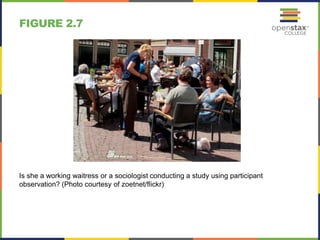
FIGURE 2.7
Is she a working waitress or a sociologist conducting a study using participant
observation? (Photo courtesy of zoetnet/flickr)
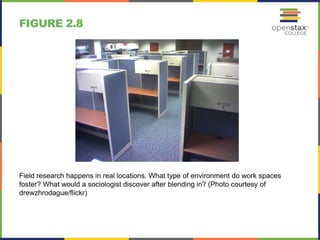
FIGURE 2.8
Field research happens in real locations. What type of environment do work spaces
foster? What would a sociologist discover after blending in? (Photo courtesy of
drewzhrodague/flickr)
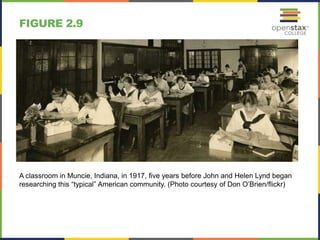
FIGURE 2.9
A classroom in Muncie, Indiana, in 1917, five years before John and Helen Lynd began
researching this “typical” American community. (Photo courtesy of Don O’Brien/flickr)
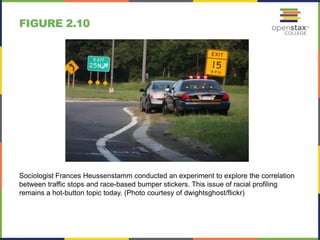
FIGURE 2.10
Sociologist Frances Heussenstamm conducted an experiment to explore the correlation
between traffic stops and race-based bumper stickers. This issue of racial profiling
remains a hot-button topic today. (Photo courtesy of dwightsghost/flickr)

Open stax sociology_ch02_imageslideshow copy

  • 1.
    INTRODUCTION TO SOCIOLOGY Chapter2 SOCIOLOGICAL RESEARCH PowerPoint Image Slideshow
  • 2.
    FIGURE 2.1 Concertgoers enjoya show. What makes listening to live music among a crowd of people appealing? How are the motivations and behaviors of groups of people at concerts different from those of groups in other settings, such as theme parks? These are questions that sociological research can aim to answer. (Photo courtesy of Benjamin Cook/flickr)
  • 3.
    FIGURE 2.2 The scientificmethod is an essential tool in research.
  • 4.
    FIGURE 2.3 Questionnaires area common research method; the U.S. Census is a well-known example. (Photo courtesy of Karen Horton/flickr)
  • 5.
    FIGURE 2.4 As partof a malaria pill study, U.S. Navy Hospital personnel complete a questionnaire on health issues they experienced in Somalia. Participants submitted a blood sample as part of this study, which supported Operation Restore Hope. (Photo courtesy of ExpertInfantry.com/flickr)
  • 6.
    FIGURE 2.5 Sociological researcherstravel across countries and cultures to interact with and observe subjects in their natural environments. (Photo courtesy of IMLS Digital Collections and Content/flickr and Olympic National Park)
  • 7.
    FIGURE 2.6 Business suitsfor the day job are replaced by leis and T-shirts for a Jimmy Buffett concert. (Photo courtesy of Sam Howzitt/flickr)
  • 8.
    FIGURE 2.7 Is shea working waitress or a sociologist conducting a study using participant observation? (Photo courtesy of zoetnet/flickr)
  • 9.
    FIGURE 2.8 Field researchhappens in real locations. What type of environment do work spaces foster? What would a sociologist discover after blending in? (Photo courtesy of drewzhrodague/flickr)
  • 10.
    FIGURE 2.9 A classroomin Muncie, Indiana, in 1917, five years before John and Helen Lynd began researching this “typical” American community. (Photo courtesy of Don O’Brien/flickr)
  • 11.
    FIGURE 2.10 Sociologist FrancesHeussenstamm conducted an experiment to explore the correlation between traffic stops and race-based bumper stickers. This issue of racial profiling remains a hot-button topic today. (Photo courtesy of dwightsghost/flickr)