This document discusses the emergence of open science and the open science economy. It makes the following key points:
1. The open science economy (OSE) utilizes open-source models and applications like open access, open archiving, and open publishing in distributed knowledge and learning systems. This has led to more diffuse, decentralized knowledge production based on open innovation.
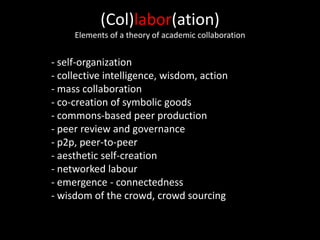
2. Peer-to-peer distributed knowledge systems through open-source projects rival proprietary products due to rapid global sharing. The OSE encourages a culture of collaborative, participatory research involving the public.
3. Portal-based knowledge environments and global science gateways now support collaborative science. Open-source informatics enables knowledge grids that interconnect science communities