Jacqui Kew
LearnAccounting
Opening Access??
The Project
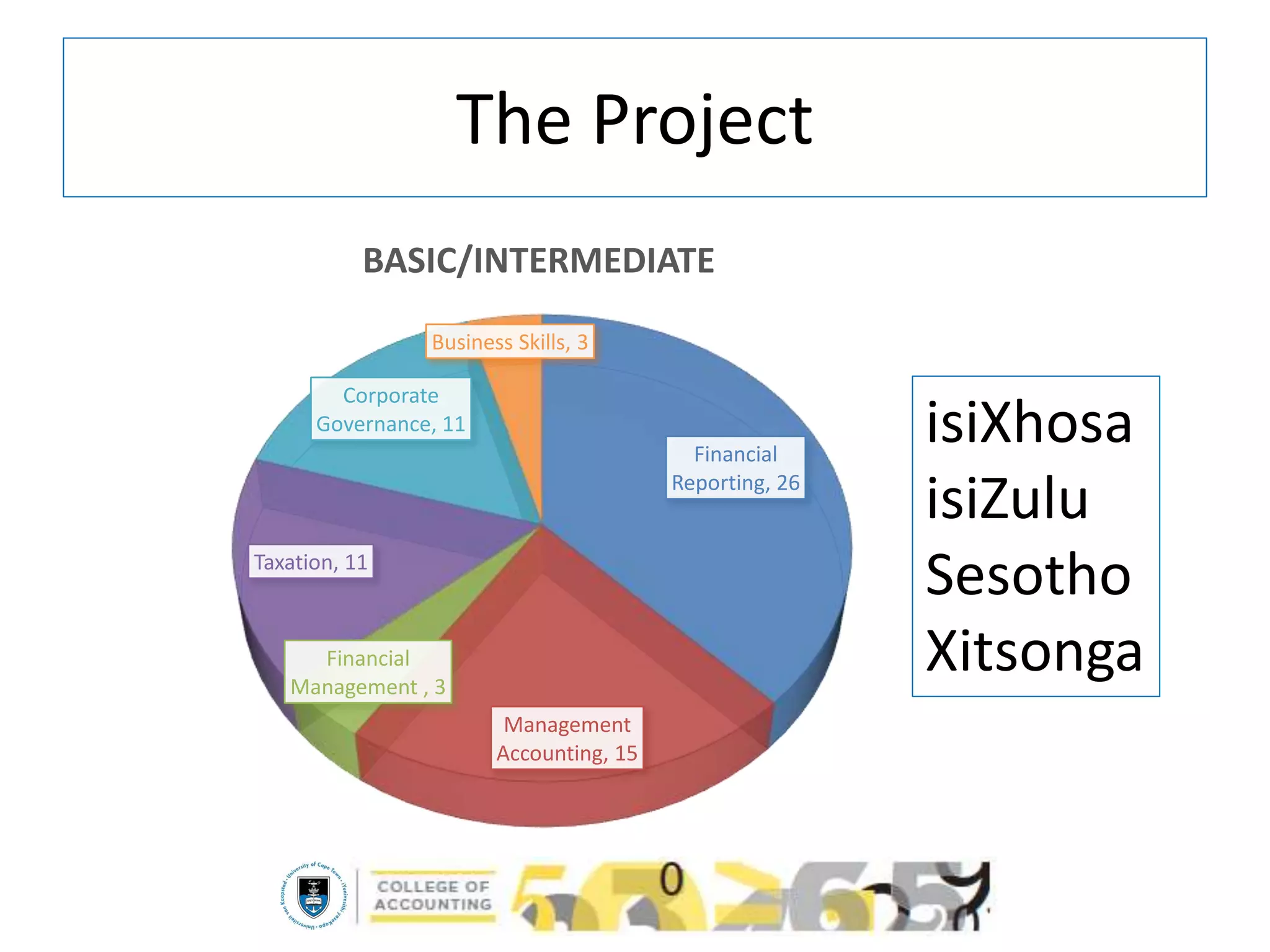
Financial
Reporting, 26
Management
Accounting, 15
Financial
Management , 3
Taxation, 11
Corporate
Governance, 11
Business Skills, 3
BASIC/INTERMEDIATE
isiXhosa
isiZulu
Sesotho
Xitsonga
The Project
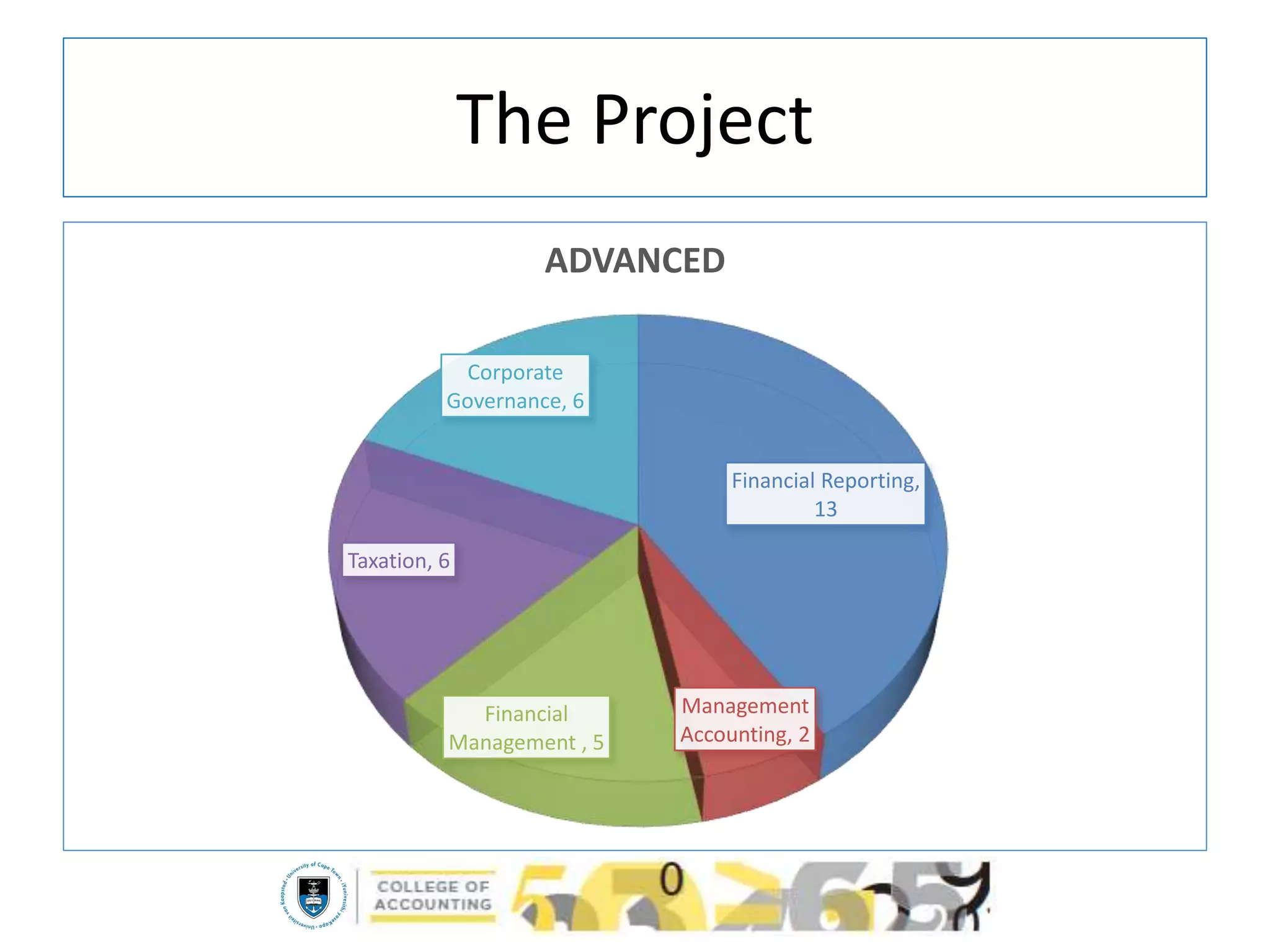
Financial Reporting,
13
Management
Accounting, 2
Financial
Management , 5
Taxation, 6
Corporate
Governance, 6
ADVANCED
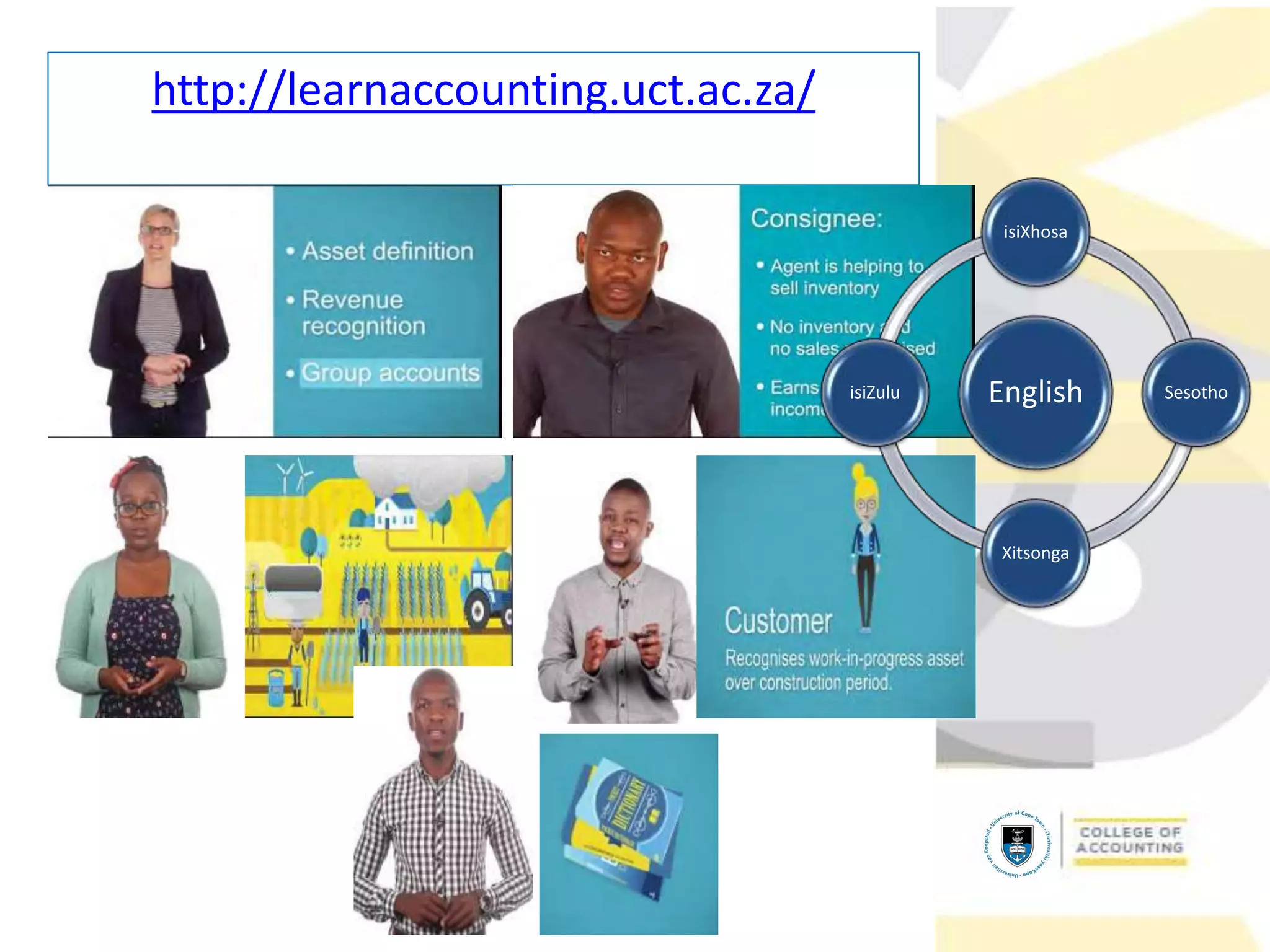
http://learnaccounting.uct.ac.za/
English
isiXhosa
Sesotho
Xitsonga
isiZulu
Open Access ?
• Is free sufficient to be open?
• Open
• Creative Commons License
• Registration
• Why??
• Future options
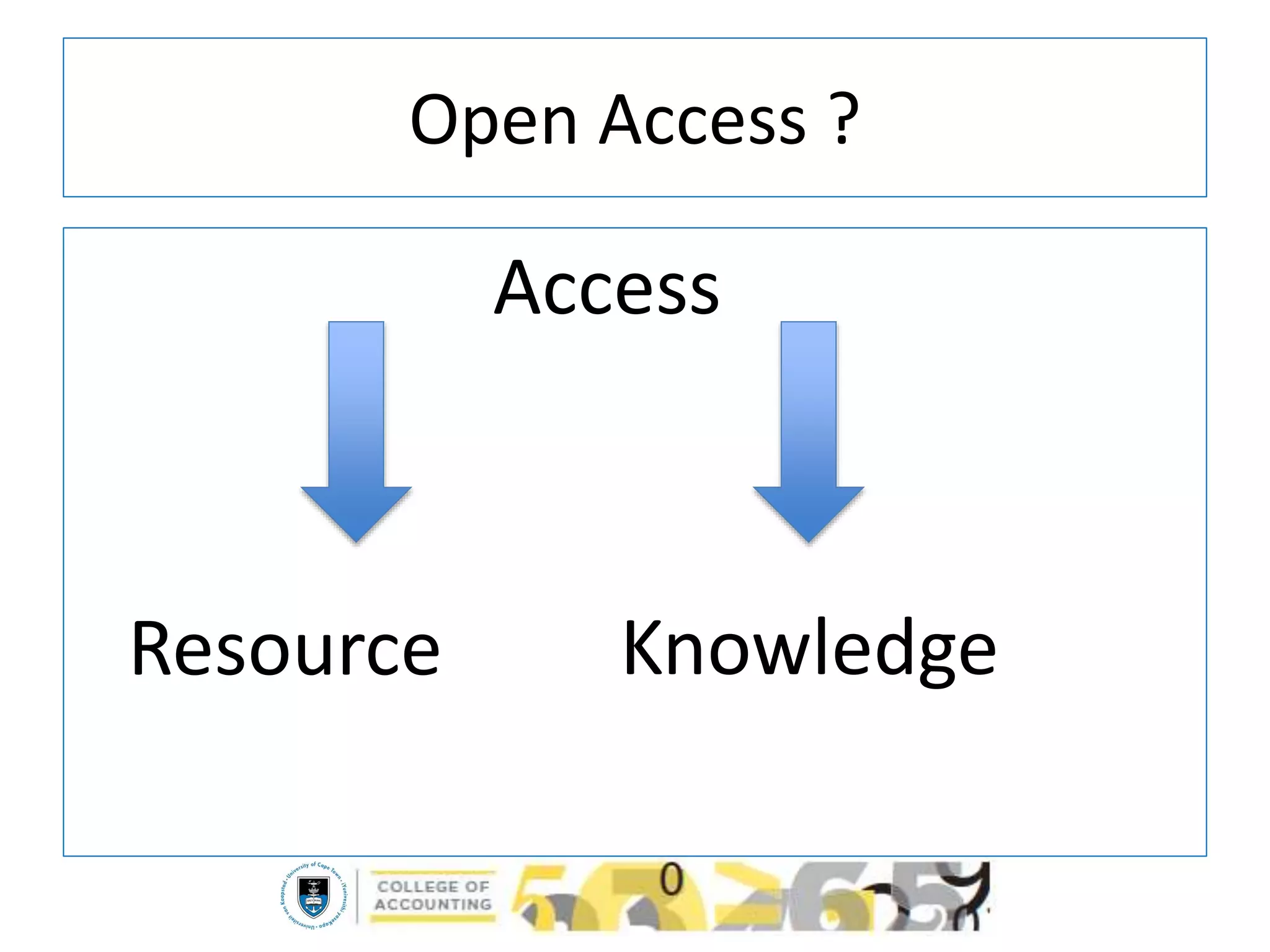
Open Access ?
Access
Resource Knowledge
Opening Access via language ?
• Linguistic bilingualism vs cognitive
bilingualism
• English fluency and achievement - access
• Political and social requirements of language
• Coding
Mastery
Verbal Language
Communication
1
1
Gerber et al
Commonly
spoken
Resources
Subject
specific
Assessments
English
English
IsiZulu/isiXhosa/
Sesotho/XiTsonga
Opening Access via language ?
• Linguistic bilingualism vs cognitive
bilingualism
• English fluency and achievement
• Political and social requirements of language
• Coding
2
2 Setati
Threshold concepts
• Threshold knowledge is a term in the study of
higher education used to describe
core concepts that once understood,
transform perception of a given subject.
[Meyer and Land]
• Access to further years of study
• Scaffolding
• English unless issue with understanding
then mother tongue
• Mother tongue first for understanding
then English for examination readiness
• Before lectures
• After lectures
• Multiple language within lectures – via
own device
Order of learning
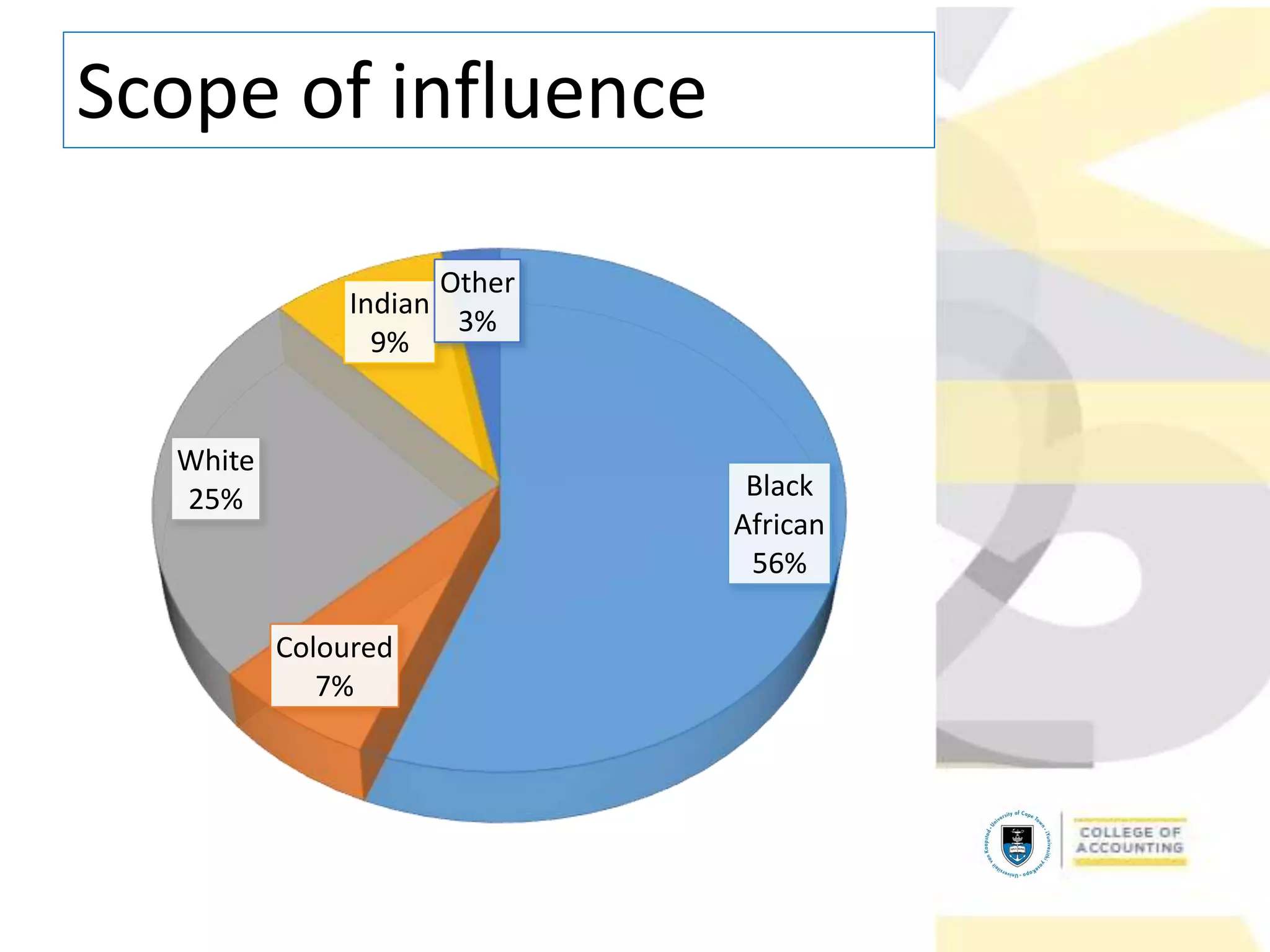
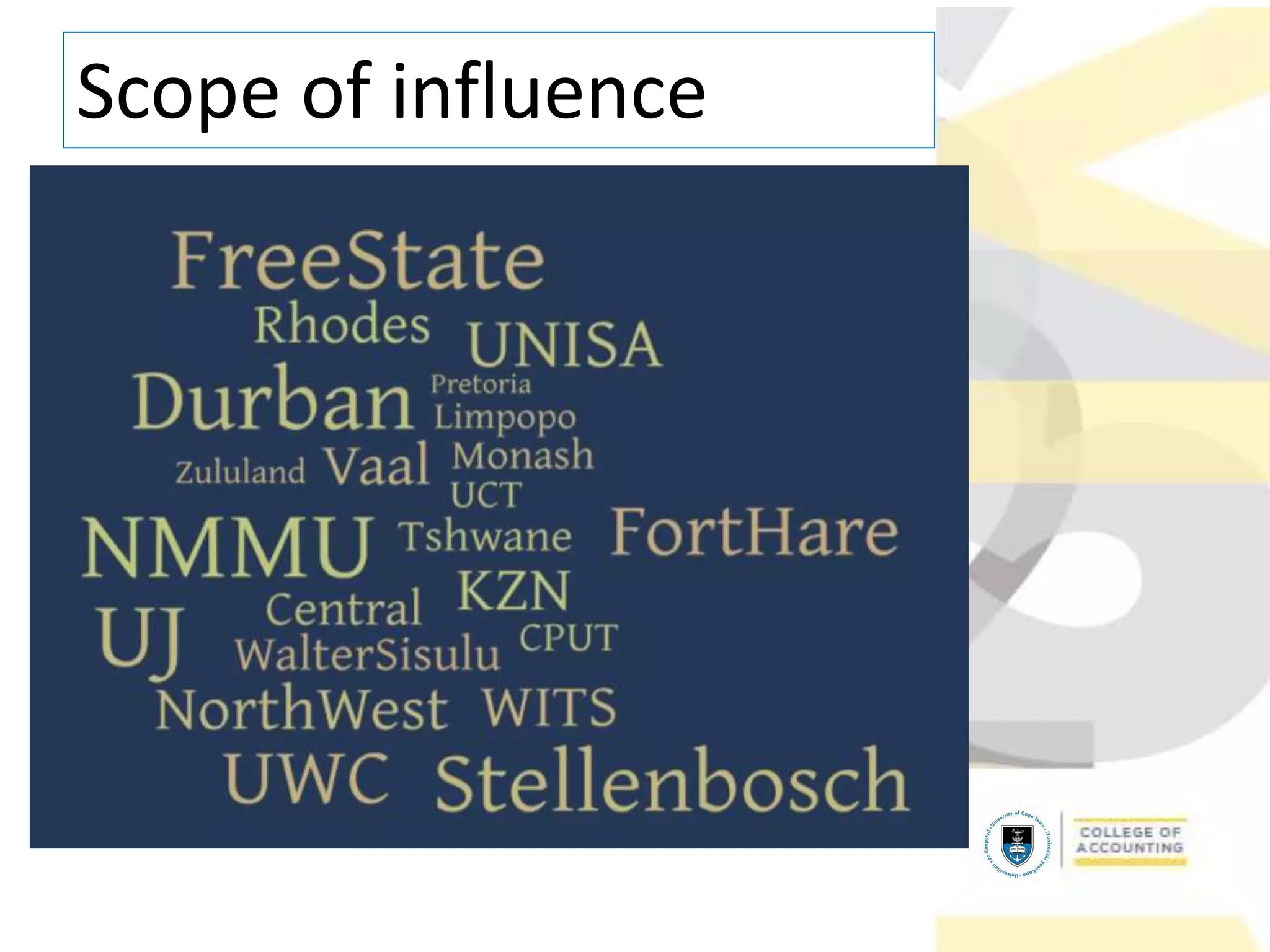
Scope of influence
Black
African
56%
Coloured
7%
White
25%
Indian
9%
Other
3%
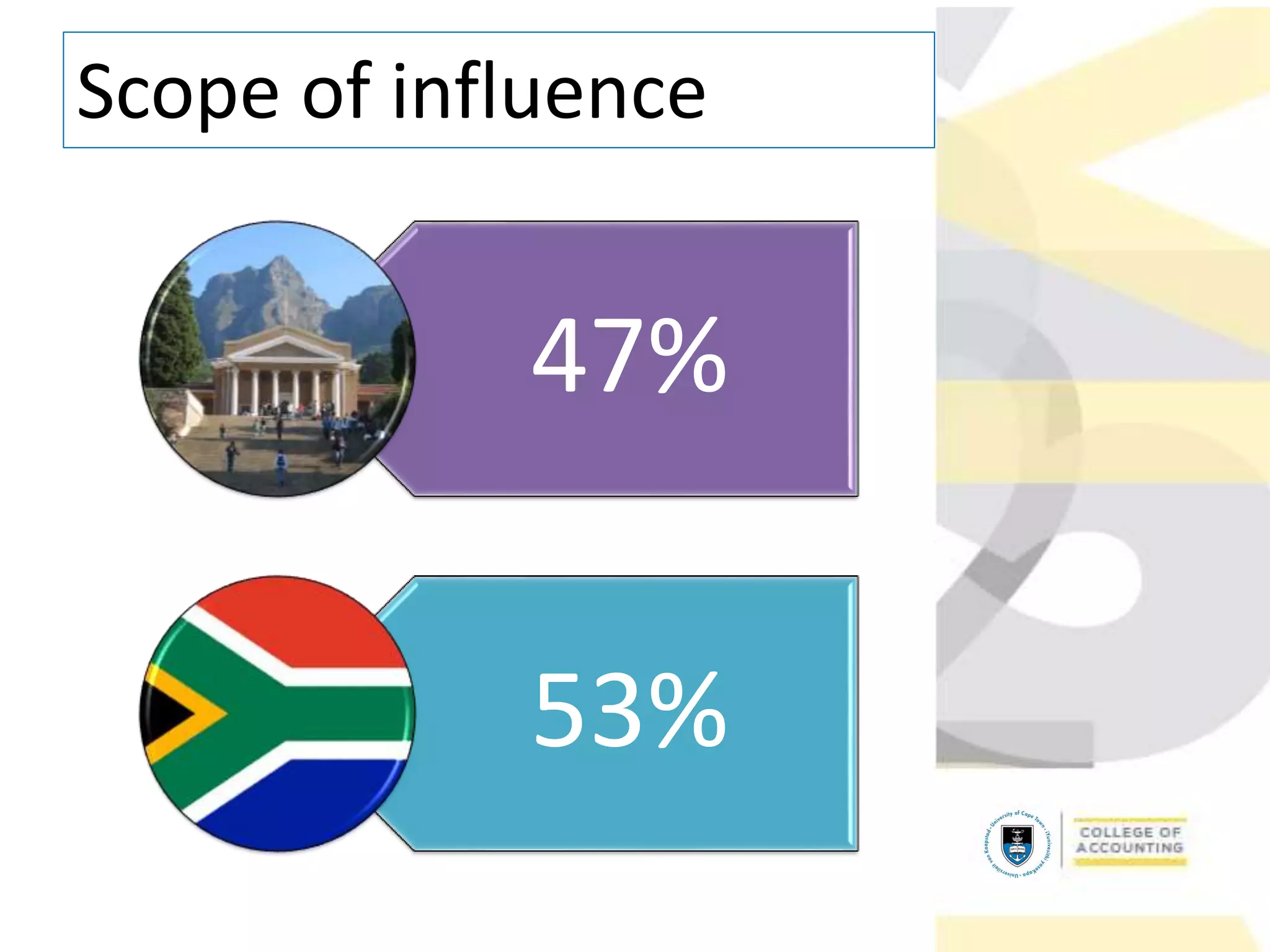
47%
53%
Scope of influence
Scope of influence
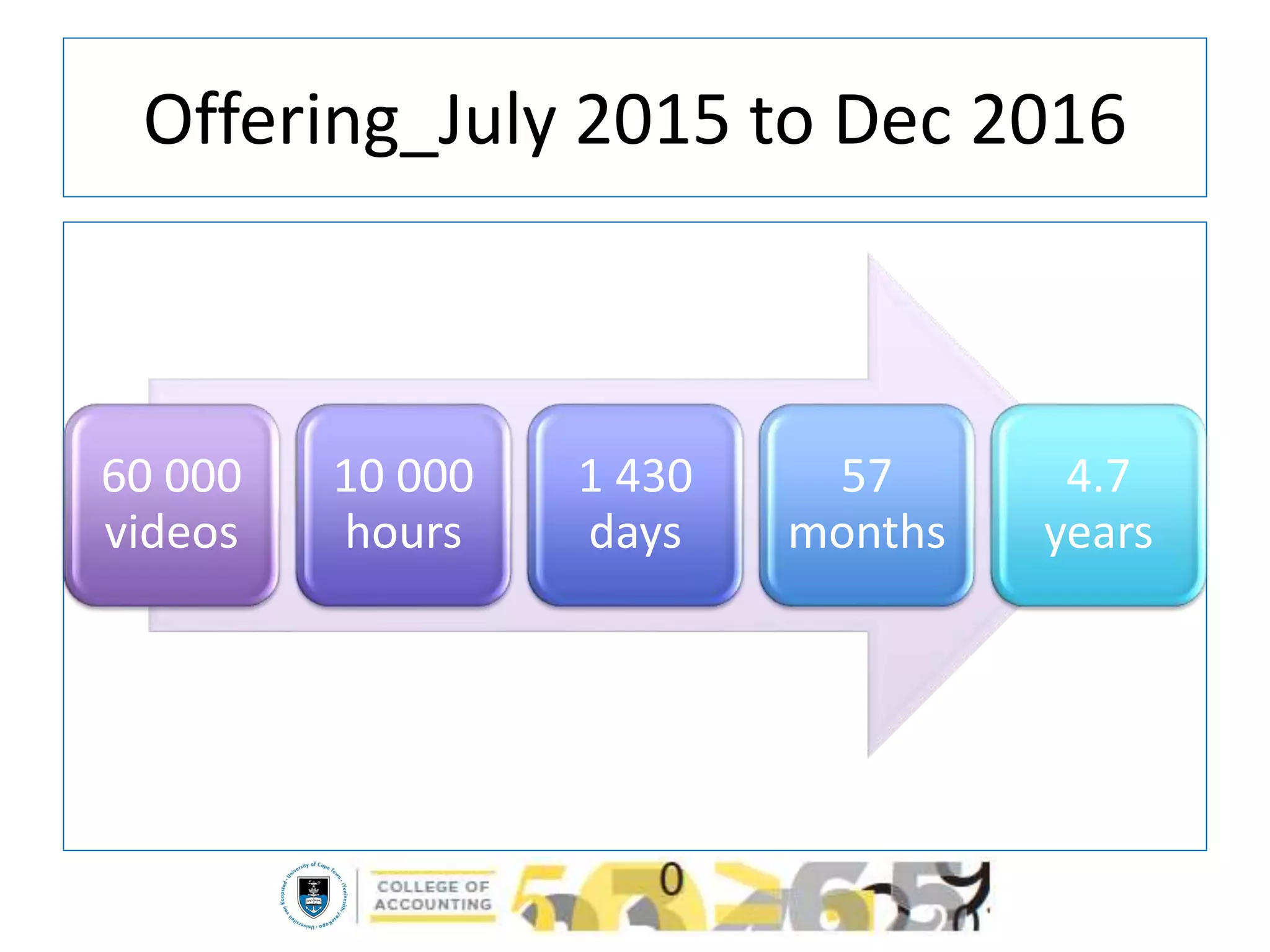
Offering_July 2015 to Dec 2016
60 000
videos
10 000
hours
1 430
days
57
months
4.7
years

Open for Business: the “Learn Accounting” Project

Editor's Notes

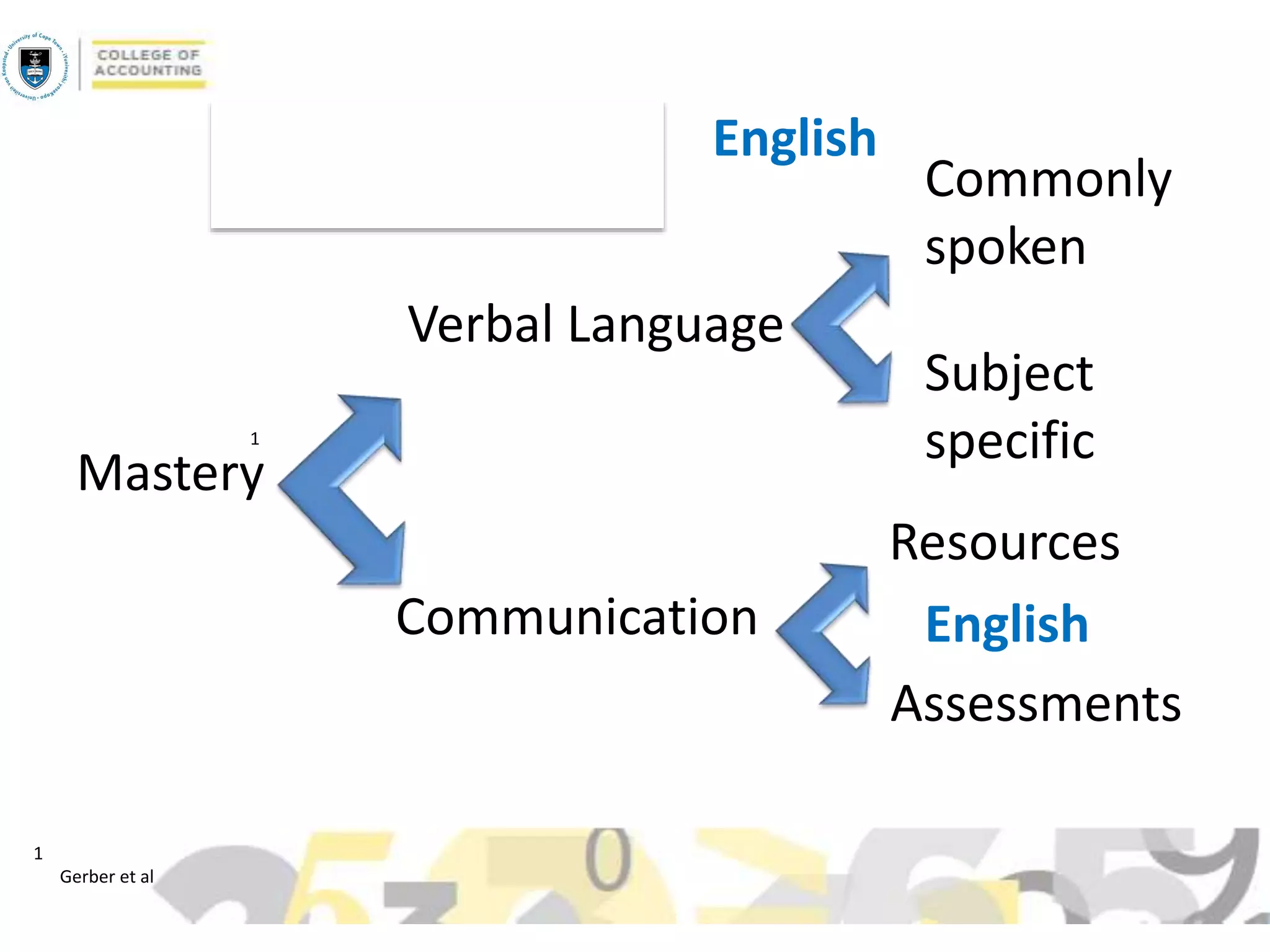
  • #9 Gerber et al (2010) highlight that during the process of understanding, concepts are explained through the use of two verbal languages, a commonly spoken, everyday language and a subject-specific, scientific language. Students are required to be proficient in both these languages. As the commonly spoken language used at UCT is English, non-English first language speakers would be at a disadvantage as they would often be less proficient in English and this could negatively impact on their ability to understand the second language, namely the subject-specific business language. The ability to communicate in a discipline, in English, is important as students need to be able to efficiently access resources such as textbooks and complete written assessments in English. The two-step approach to mastery of a discipline underpins the development of the mother tongue intervention. The primary aim of the intervention is to present videos in African languages to allow students to engage with concepts without having to deal with the nuances inherent in learning in a second or third language.  A secondary aim is to assist students to develop their ability to become more confident in their ability to communicate in English in a professional environment.