1
TfL open data
Powering London
Phil Young
Head of Online
2
Overview
• Background
• Digital landscape for travel in London
• Our open data
• License terms
• Outcomes
• Next steps
3
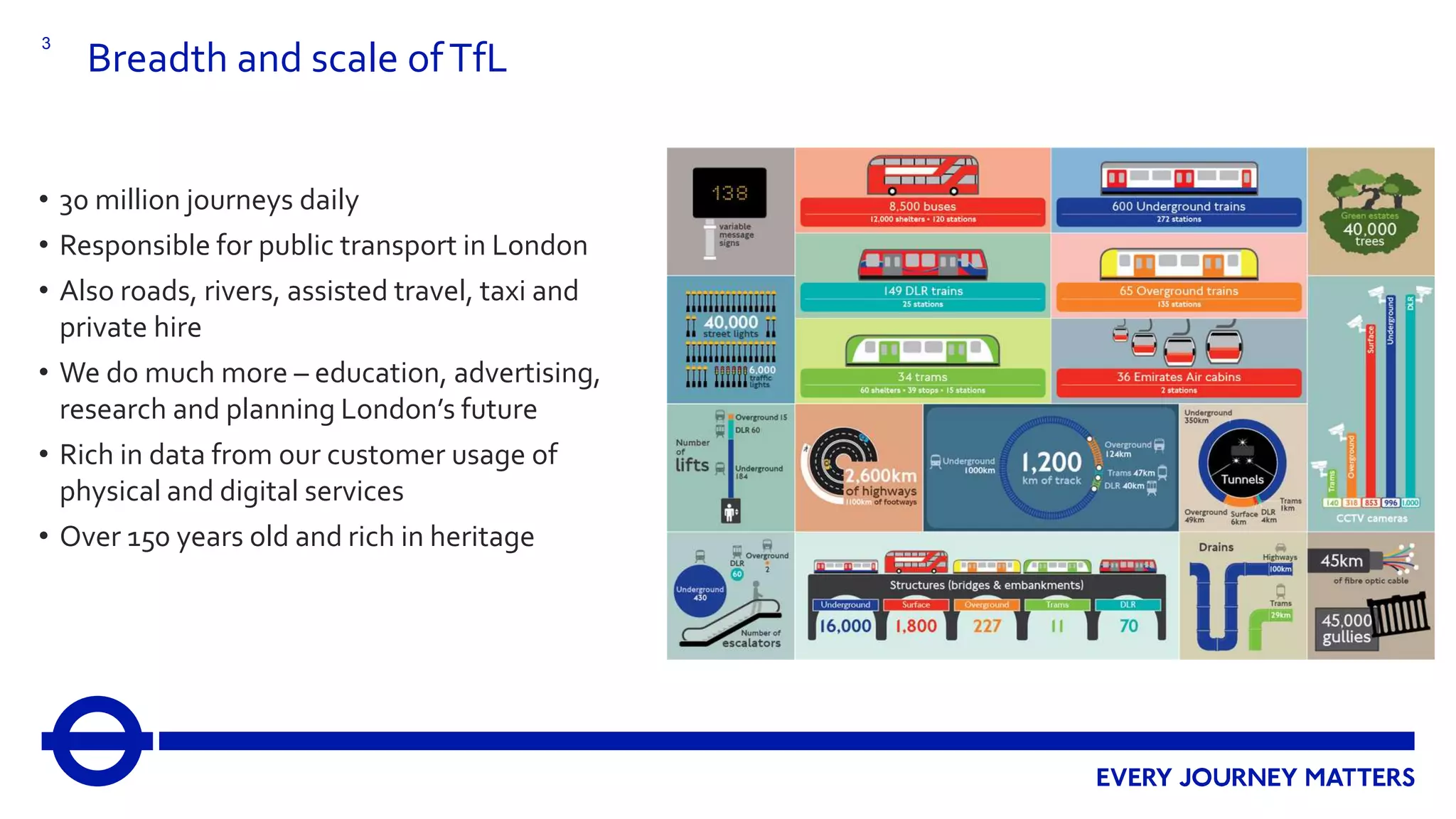
• 30 million journeys daily
• Responsible for public transport in London
• Also roads, rivers, assisted travel, taxi and
private hire
• We do much more – education, advertising,
research and planning London’s future
• Rich in data from our customer usage of
physical and digital services
• Over 150 years old and rich in heritage
Breadth and scale ofTfL
4 Our purpose
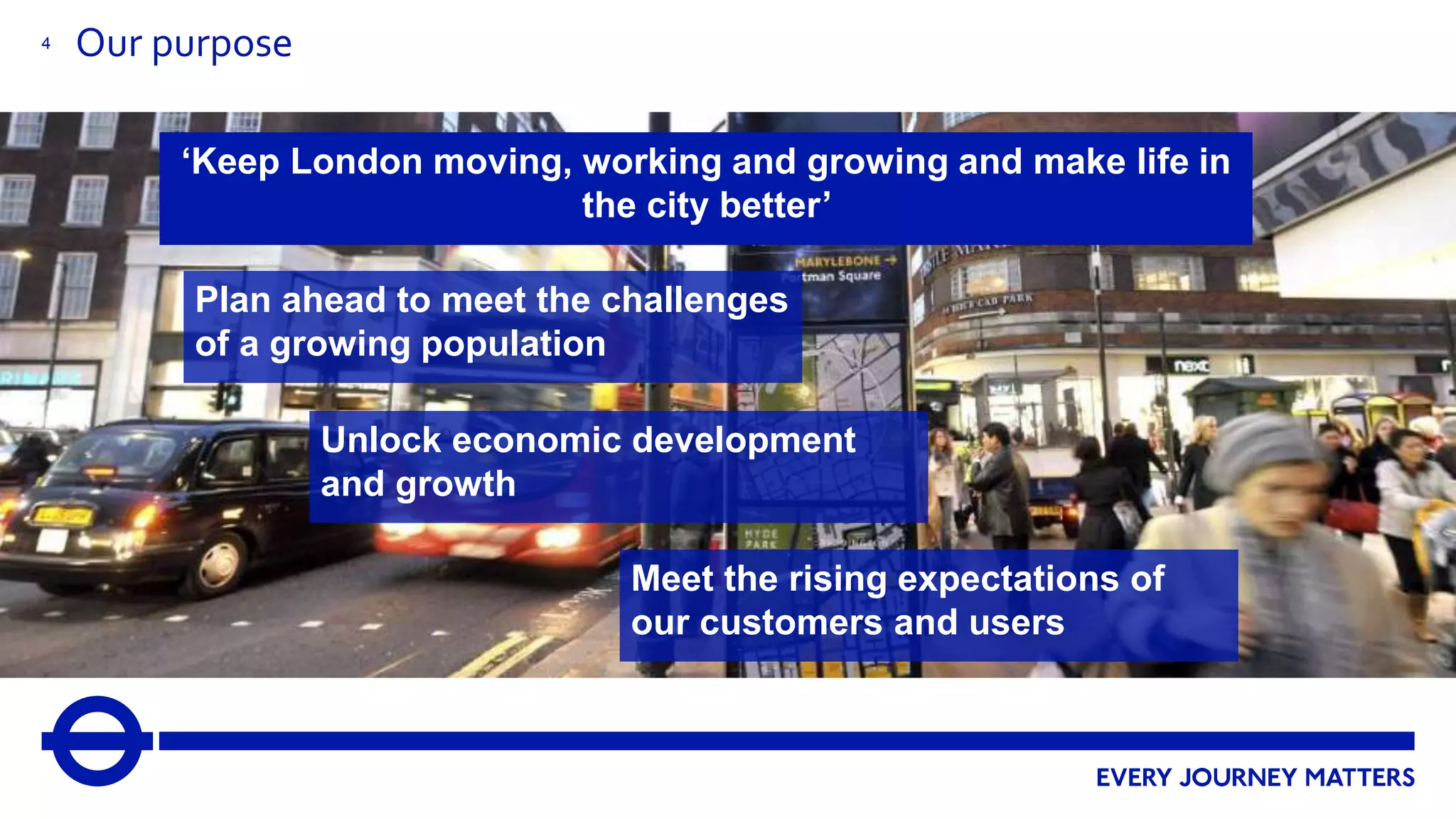
‘Keep London moving, working and growing and make life in
the city better’
Plan ahead to meet the challenges
of a growing population
Unlock economic development
and growth
Meet the rising expectations of
our customers and users
5
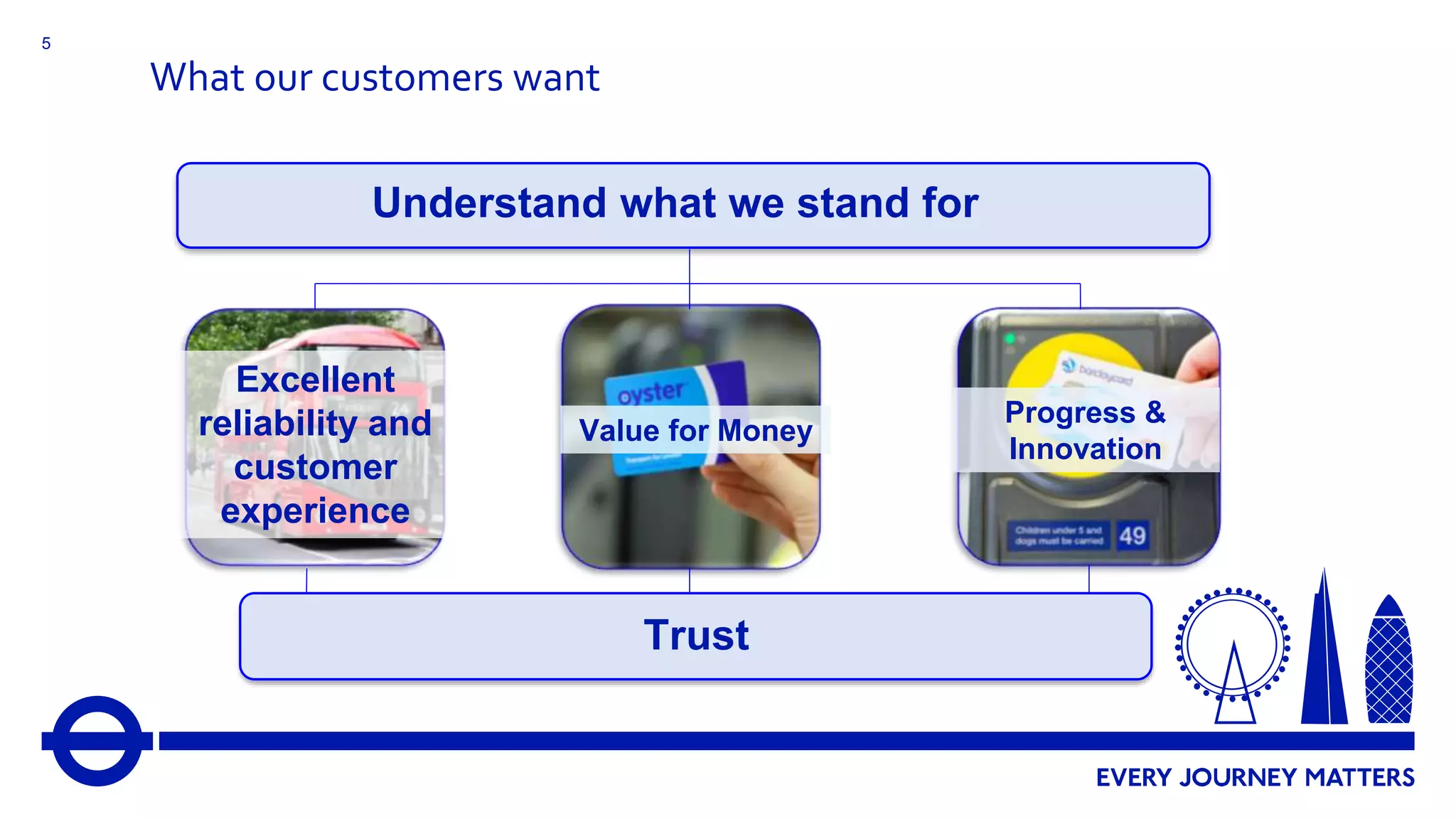
What our customers want
Understand what we stand for
Excellent
reliability and
customer
experience
Value for Money
Progress &
Innovation
Trust
6
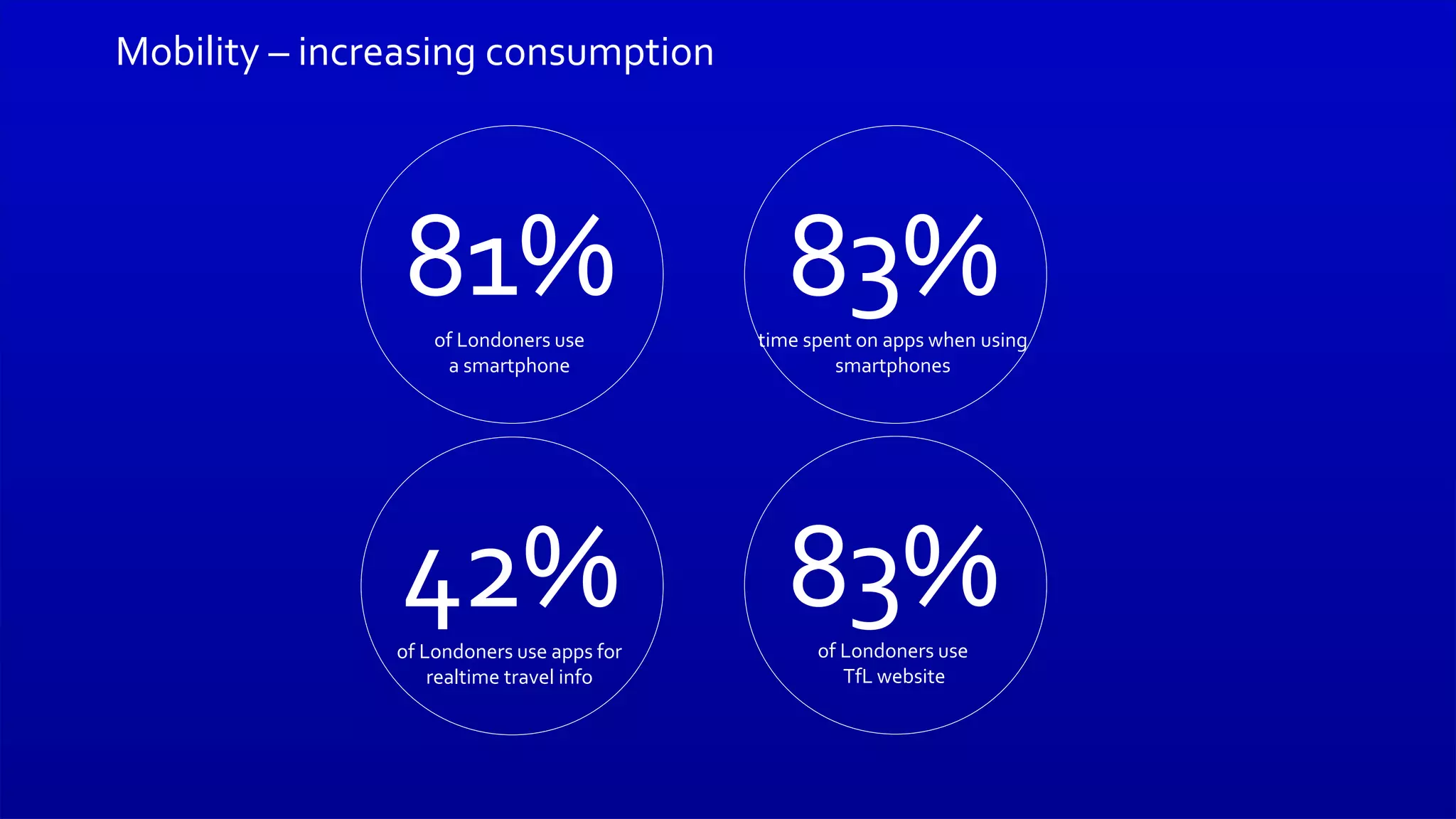
Mobility – increasing consumption
81%of Londoners use
a smartphone
42%of Londoners use apps for
realtime travel info
83%of Londoners use
TfL website
83%time spent on apps when using
smartphones
7
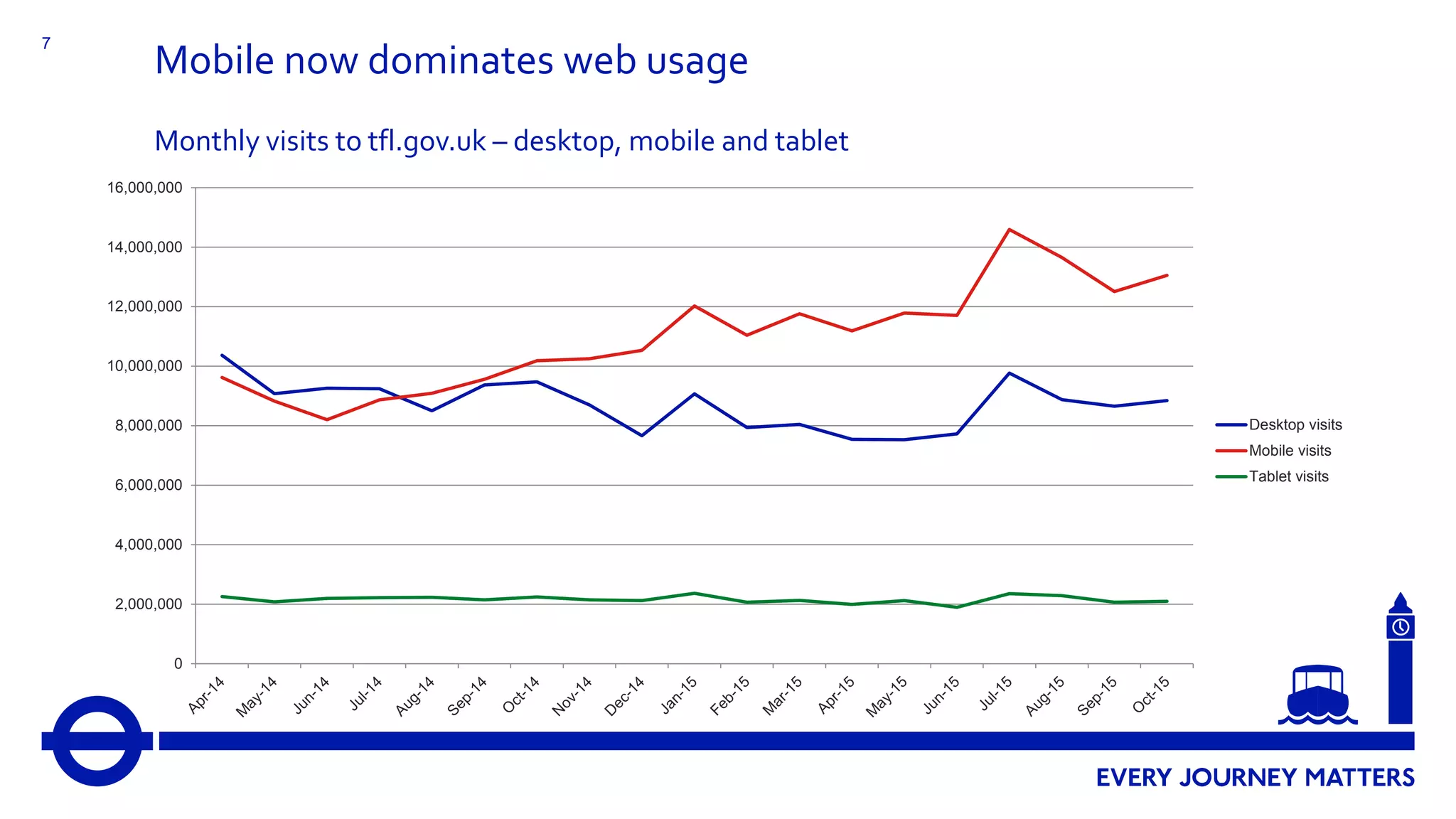
Mobile now dominates web usage
Monthly visits to tfl.gov.uk – desktop, mobile and tablet
0
2,000,000
4,000,000
6,000,000
8,000,000
10,000,000
12,000,000
14,000,000
16,000,000
Desktop visits
Mobile visits
Tablet visits
8
8
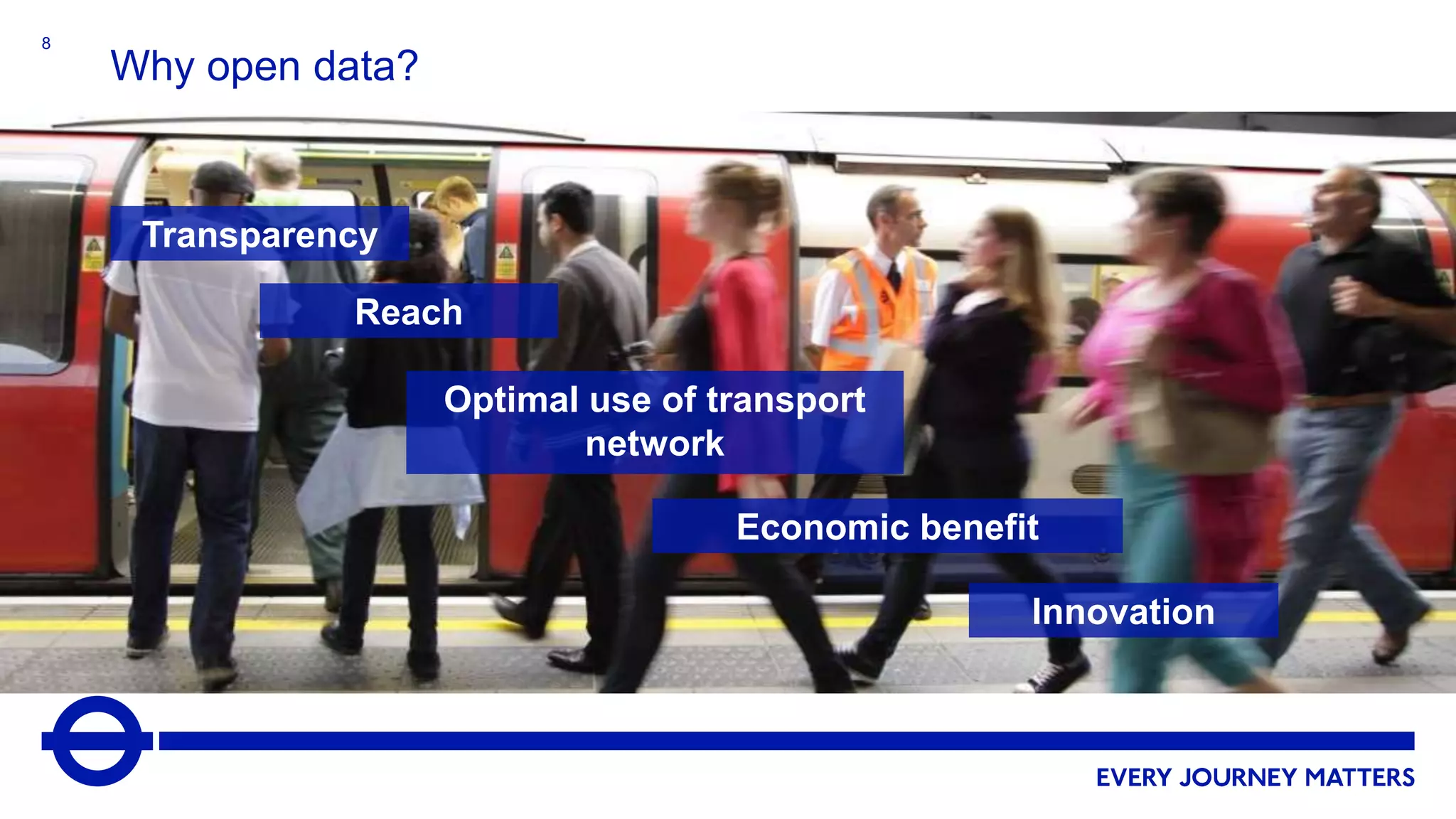
Transparency
Reach
Optimal use of transport
network
Economic benefit
Innovation
Why open data?
9
Transparency strategy 2015
Following a public consultation we have established the first
TfL transparency strategy. It sets out our intentions in this
area.
“By being open and accountable we;
• Enable our customers and stakeholders to hold us to account,
contributing to better decision-making and enabling public input into
those decisions
• Deliver better value for money
• Engage businesses, non-profit organisations, academics and others
to make transport in London better”
10
Transparency strategy – categories of information
Our published information is focused on:
• Our operational performance, including the reliability and
safety of public transport and the road network, and data on
ticketing
• Progress on delivery of our investment programme which is
modernising public transport and roads infrastructure
• Our people, including levels of remuneration and expenses
• Real-time customer information on public transport and roads
including open data feeds that can be used by third parties free
of charge
• Value for money, including commercial contracts and
sponsorships
11
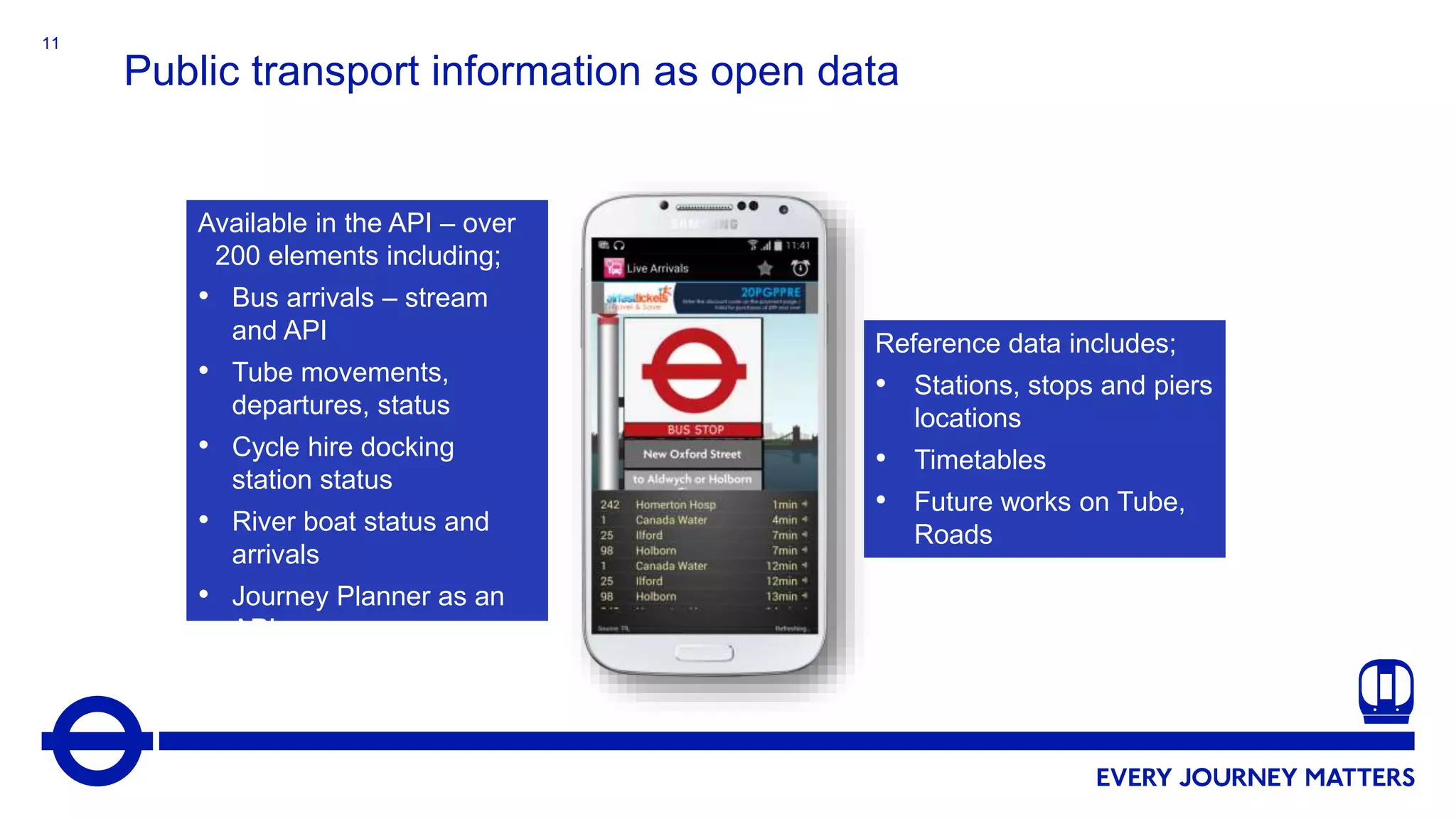
Reference data includes;
• Stations, stops and piers
locations
• Timetables
• Future works on Tube,
Roads
Available in the API – over
200 elements including;
• Bus arrivals – stream
and API
• Tube movements,
departures, status
• Cycle hire docking
station status
• River boat status and
arrivals
• Journey Planner as an
API
Public transport information as open data
12
Open data - Roads
• Casualty, collision and vehicle raw data files
• Detailed provisional and final casualty figures
• Quarterly and annual figures for the total number
Killed or Seriously Injured (KSI) casualties
• Top line bus safety data
• Detail accident geolocation data
• Live roads disruption and planned works data
• Live camera images on 5 second loops
13
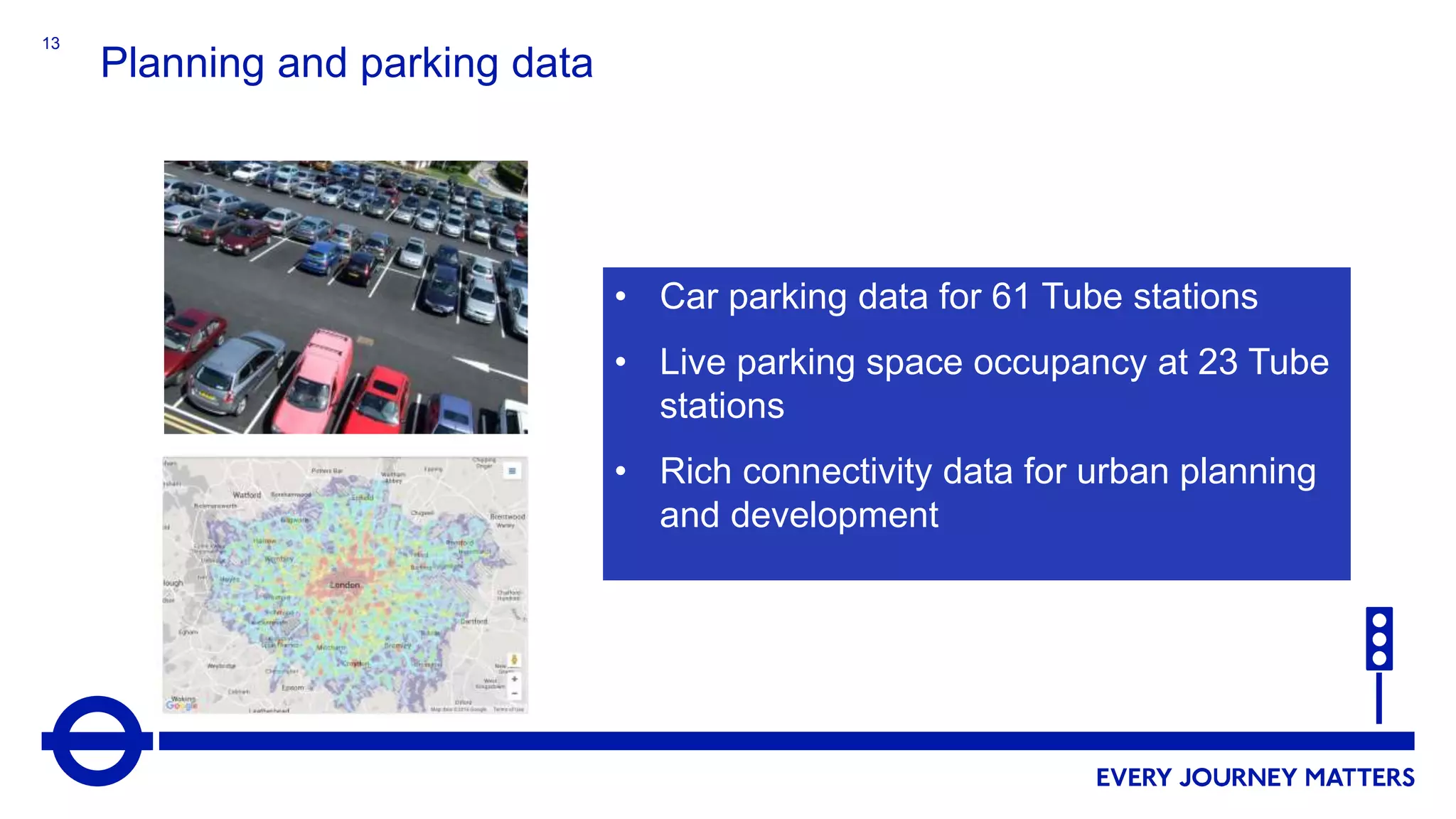
Planning and parking data
• Car parking data for 61 Tube stations
• Live parking space occupancy at 23 Tube
stations
• Rich connectivity data for urban planning
and development
14
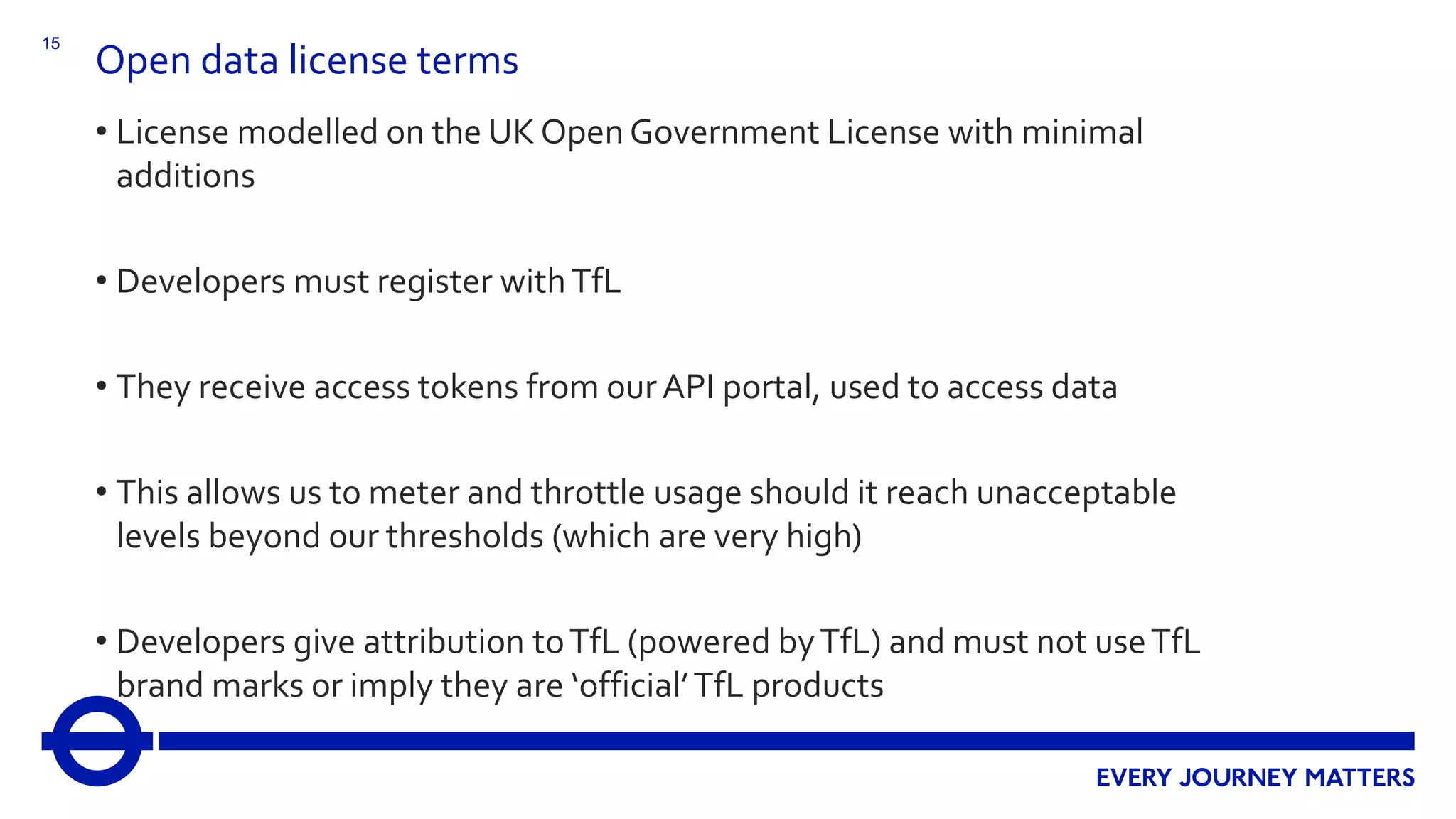
Operational realtime systems and data repositories
Individual system APIs and reference data
Normalised single API
Single Sign On
Responsive webNative apps
Access layer
How open data works
15
Open data license terms
• License modelled on the UK Open Government License with minimal
additions
• Developers must register withTfL
• They receive access tokens from ourAPI portal, used to access data
• This allows us to meter and throttle usage should it reach unacceptable
levels beyond our thresholds (which are very high)
• Developers give attribution toTfL (powered byTfL) and must not useTfL
brand marks or imply they are ‘official’TfL products
16
Outcomes
• Broad range of data users from satnav and mobile app providers to vehicle
manufacturers, universities, property developers, local authorities, journalists,
students etc
• 462 native mobile smartphone applications available as at October 2015
(up from 362 in October 2014)
• 42% of Londoners using smartphone applications to access realtime travel
information on the move (while 83% use our responsive website)
• Londoners feel ‘well served’ by the range of services available
• Developer engagement is driving up data quality
17
Outcomes - financial
• Deloitte study estimated £15m-£58m per annum benefits from customer time
saved in apps powered by TfL open data
• Usage has since doubled – bringing the estimate to £30m-£116m per annum.
• Significant investment in app development firms has attracted hundred of
millions of pounds in technology investment in London and elsewhere off the
back of our data
• Over 1,000 jobs estimated to be enabled by our open data ecosystem
• Around 175,000 people are now employed in the digital technology industry in
London, in 45,000 companies with £30bn annual turnover
18
Partnerships
• Customers spend much of their time on the ecosystems of large technology
companies – Apple, Google, Amazon, Microsoft, Twitter, Facebook etc. We
need to maximise what we can get out of these platforms through rich and
deep partnerships
• We are moving to a balanced use of channels – Paid, Earned, Shared and
Owned
• Transport app developers have part of the answer too – we need to work
much more closely with them on shared activities to benefit customers and
the city
• We use partnerships to extend reach and gain access to data at low cost
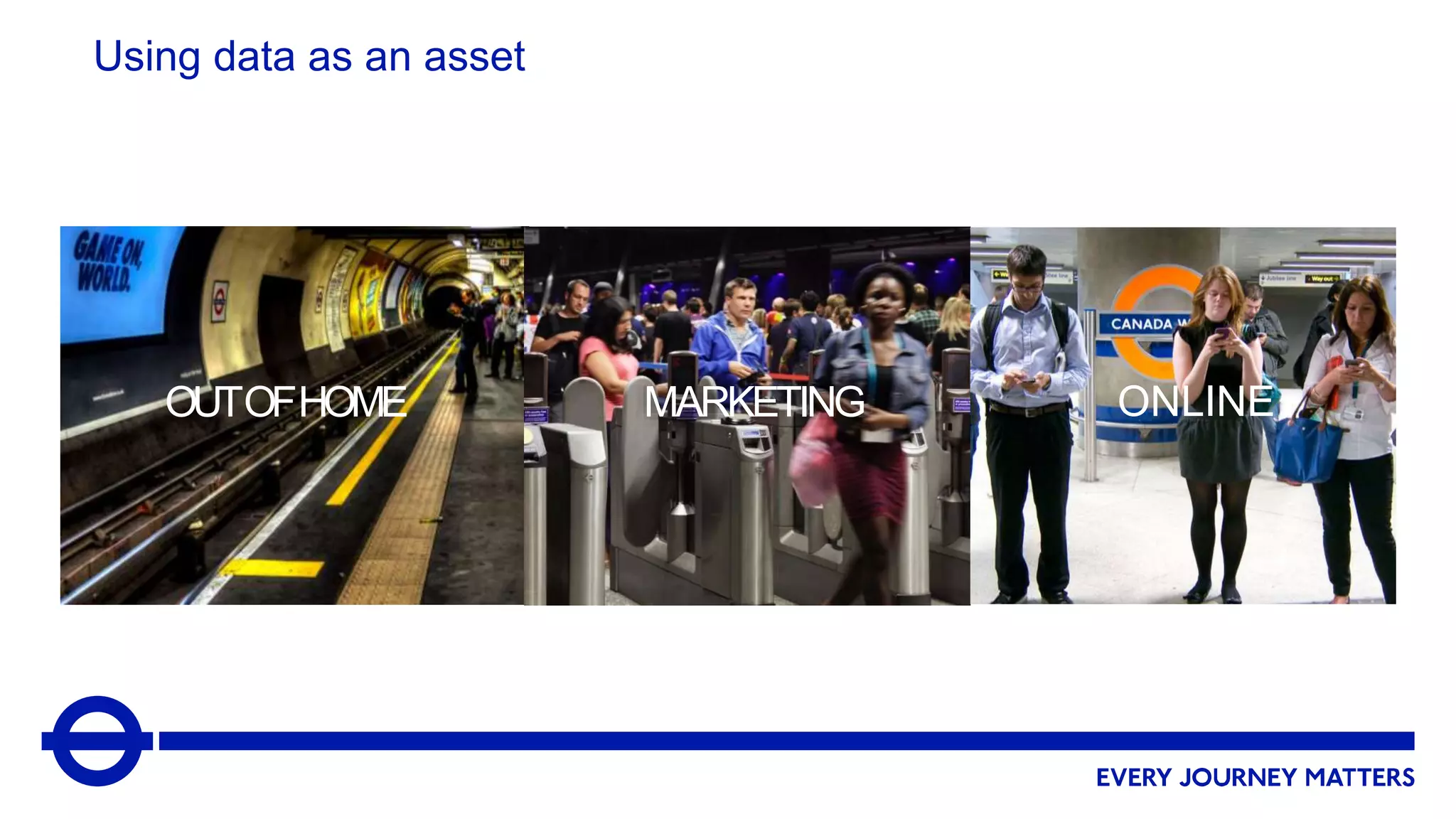
OUTOFHOME MARKETING ONLINE
Using data as an asset
20
Thank you
Phil Young
Head of Online

Open Data for TFL

  • 1.
    1 TfL open data PoweringLondon Phil Young Head of Online
  • 2.
    2 Overview • Background • Digitallandscape for travel in London • Our open data • License terms • Outcomes • Next steps
  • 3.
    3 • 30 millionjourneys daily • Responsible for public transport in London • Also roads, rivers, assisted travel, taxi and private hire • We do much more – education, advertising, research and planning London’s future • Rich in data from our customer usage of physical and digital services • Over 150 years old and rich in heritage Breadth and scale ofTfL
  • 4.
    4 Our purpose ‘KeepLondon moving, working and growing and make life in the city better’ Plan ahead to meet the challenges of a growing population Unlock economic development and growth Meet the rising expectations of our customers and users
  • 5.
    5 What our customerswant Understand what we stand for Excellent reliability and customer experience Value for Money Progress & Innovation Trust
  • 6.
    6 Mobility – increasingconsumption 81%of Londoners use a smartphone 42%of Londoners use apps for realtime travel info 83%of Londoners use TfL website 83%time spent on apps when using smartphones
  • 7.
    7 Mobile now dominatesweb usage Monthly visits to tfl.gov.uk – desktop, mobile and tablet 0 2,000,000 4,000,000 6,000,000 8,000,000 10,000,000 12,000,000 14,000,000 16,000,000 Desktop visits Mobile visits Tablet visits
  • 8.
    8 8 Transparency Reach Optimal use oftransport network Economic benefit Innovation Why open data?
  • 9.
    9 Transparency strategy 2015 Followinga public consultation we have established the first TfL transparency strategy. It sets out our intentions in this area. “By being open and accountable we; • Enable our customers and stakeholders to hold us to account, contributing to better decision-making and enabling public input into those decisions • Deliver better value for money • Engage businesses, non-profit organisations, academics and others to make transport in London better”
  • 10.
    10 Transparency strategy –categories of information Our published information is focused on: • Our operational performance, including the reliability and safety of public transport and the road network, and data on ticketing • Progress on delivery of our investment programme which is modernising public transport and roads infrastructure • Our people, including levels of remuneration and expenses • Real-time customer information on public transport and roads including open data feeds that can be used by third parties free of charge • Value for money, including commercial contracts and sponsorships
  • 11.
    11 Reference data includes; •Stations, stops and piers locations • Timetables • Future works on Tube, Roads Available in the API – over 200 elements including; • Bus arrivals – stream and API • Tube movements, departures, status • Cycle hire docking station status • River boat status and arrivals • Journey Planner as an API Public transport information as open data
  • 12.
    12 Open data -Roads • Casualty, collision and vehicle raw data files • Detailed provisional and final casualty figures • Quarterly and annual figures for the total number Killed or Seriously Injured (KSI) casualties • Top line bus safety data • Detail accident geolocation data • Live roads disruption and planned works data • Live camera images on 5 second loops
  • 13.
    13 Planning and parkingdata • Car parking data for 61 Tube stations • Live parking space occupancy at 23 Tube stations • Rich connectivity data for urban planning and development
  • 14.
    14 Operational realtime systemsand data repositories Individual system APIs and reference data Normalised single API Single Sign On Responsive webNative apps Access layer How open data works
  • 15.
    15 Open data licenseterms • License modelled on the UK Open Government License with minimal additions • Developers must register withTfL • They receive access tokens from ourAPI portal, used to access data • This allows us to meter and throttle usage should it reach unacceptable levels beyond our thresholds (which are very high) • Developers give attribution toTfL (powered byTfL) and must not useTfL brand marks or imply they are ‘official’TfL products
  • 16.
    16 Outcomes • Broad rangeof data users from satnav and mobile app providers to vehicle manufacturers, universities, property developers, local authorities, journalists, students etc • 462 native mobile smartphone applications available as at October 2015 (up from 362 in October 2014) • 42% of Londoners using smartphone applications to access realtime travel information on the move (while 83% use our responsive website) • Londoners feel ‘well served’ by the range of services available • Developer engagement is driving up data quality
  • 17.
    17 Outcomes - financial •Deloitte study estimated £15m-£58m per annum benefits from customer time saved in apps powered by TfL open data • Usage has since doubled – bringing the estimate to £30m-£116m per annum. • Significant investment in app development firms has attracted hundred of millions of pounds in technology investment in London and elsewhere off the back of our data • Over 1,000 jobs estimated to be enabled by our open data ecosystem • Around 175,000 people are now employed in the digital technology industry in London, in 45,000 companies with £30bn annual turnover
  • 18.
    18 Partnerships • Customers spendmuch of their time on the ecosystems of large technology companies – Apple, Google, Amazon, Microsoft, Twitter, Facebook etc. We need to maximise what we can get out of these platforms through rich and deep partnerships • We are moving to a balanced use of channels – Paid, Earned, Shared and Owned • Transport app developers have part of the answer too – we need to work much more closely with them on shared activities to benefit customers and the city • We use partnerships to extend reach and gain access to data at low cost
  • 19.
  • 20.