On Cooking: A Textbook of Culinary
Fundamentals
Sixth Edition
Chapter 31
Quick Breads
Copyright © 2019, 2015, 2012, 2009 Pearson Education, Inc. All Rights Reserved
Learning Objectives
After studying this chapter, you will be able to:
31.1 Understand how different forms of fat are incorporated
into batters and doughs
31.2 Prepare a variety of quick breads using the biscuit
method, muffin method and creaming method
Copyright © 2019, 2015, 2012, 2009 Pearson Education, Inc. All Rights Reserved
Quick Breads
• Quick breads are tender products with a soft crumb
• To keep gluten development to a minimum, flour is mixed
in swiftly and gently
• Quick breads are made with chemical leavening agents
Copyright © 2019, 2015, 2012, 2009 Pearson Education, Inc. All Rights Reserved
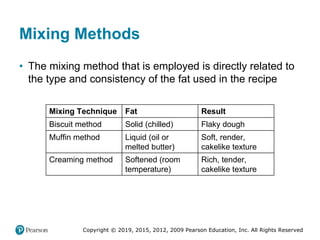
Mixing Methods
• The mixing method that is employed is directly related to
the type and consistency of the fat used in the recipe
Mixing Technique Fat Result
Biscuit method Solid (chilled) Flaky dough
Muffin method Liquid (oil or
melted butter)
Soft, render,
cakelike texture
Creaming method Softened (room
temperature)
Rich, tender,
cakelike texture
Copyright © 2019, 2015, 2012, 2009 Pearson Education, Inc. All Rights Reserved
Biscuit Method Defined
• In the biscuit method, cold solid fat is used
• Creates products that are light and flaky
– Biscuits
– Scones
– Shortcakes
Copyright © 2019, 2015, 2012, 2009 Pearson Education, Inc. All Rights Reserved
Steps in the Biscuit Method
• Measure all ingredients
• Sift the dry ingredients together
• Cut in the cold, solid fat
• Combine the liquid ingredients, including any eggs
• Add liquid ingredients to dry
– Mix just until ingredients are combined
• Place dough on the bench and knead lightly 10-15 times
– Dough should be soft
– Too much kneading toughens the dough
Copyright © 2019, 2015, 2012, 2009 Pearson Education, Inc. All Rights Reserved
Muffin Method Defined
• In the muffin mixing method, oil or melted fats are used
• Creates tender, cakelike baked goods
– Muffins
– Loaves
Copyright © 2019, 2015, 2012, 2009 Pearson Education, Inc. All Rights Reserved
Steps in the Muffin Method
• Measure all ingredients
• Sift dry ingredients together
• Combine liquid ingredients, including melted fat or oil
• Add the liquid to the dry ingredients and stir to combine
– Do not overmix
– The batter will be lumpy
• The batter is now ready for makeup and baking
Copyright © 2019, 2015, 2012, 2009 Pearson Education, Inc. All Rights Reserved
Creaming Method Defined
• In the creaming method, soft but not liquid fats are used
• Comparable to the mixing method used for butter cakes
• Final product is cakelike with a fine texture
– Muffins
– Loaves
Copyright © 2019, 2015, 2012, 2009 Pearson Education, Inc. All Rights Reserved
Steps of the Creaming Method
• Measure all ingredients
• Sift dry ingredients together
• Combine softened fat and sugar in a mixer bowl
– Low speed until color lightens and mixture fluffs
• Add eggs gradually; mix well
• Add dry and liquid ingredients alternately
• The batter is now ready for makeup and baking
Copyright © 2019, 2015, 2012, 2009 Pearson Education, Inc. All Rights Reserved
Tunneling
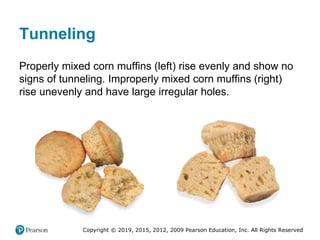
Properly mixed corn muffins (left) rise evenly and show no
signs of tunneling. Improperly mixed corn muffins (right)
rise unevenly and have large irregular holes.
Copyright © 2019, 2015, 2012, 2009 Pearson Education, Inc. All Rights Reserved
Troubleshooting Chart
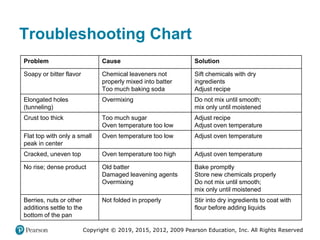
Problem Cause Solution
Soapy or bitter flavor Chemical leaveners not
properly mixed into batter
Too much baking soda
Sift chemicals with dry
ingredients
Adjust recipe
Elongated holes
(tunneling)
Overmixing Do not mix until smooth;
mix only until moistened
Crust too thick Too much sugar
Oven temperature too low
Adjust recipe
Adjust oven temperature
Flat top with only a small
peak in center
Oven temperature too low Adjust oven temperature
Cracked, uneven top Oven temperature too high Adjust oven temperature
No rise; dense product Old batter
Damaged leavening agents
Overmixing
Bake promptly
Store new chemicals properly
Do not mix until smooth;
mix only until moistened
Berries, nuts or other
additions settle to the
bottom of the pan
Not folded in properly Stir into dry ingredients to coat with
flour before adding liquids
Copyright © 2019, 2015, 2012, 2009 Pearson Education, Inc. All Rights Reserved
Copyright
This work is protected by United States copyright laws and is
provided solely for the use of instructors in teaching their courses
and assessing student learning. Dissemination or sale of any part
of this work (including on the World Wide Web) will destroy the
integrity of the work and is not permitted. The work and materials
from it should never be made available to students except by
instructors using the accompanying text in their classes. All
recipients of this work are expected to abide by these restrictions
and to honor the intended pedagogical purposes and the needs of
other instructors who rely on these materials.

OnCooking6CH31PPLecture_accessible.pptx

  • 1.
    On Cooking: ATextbook of Culinary Fundamentals Sixth Edition Chapter 31 Quick Breads Copyright © 2019, 2015, 2012, 2009 Pearson Education, Inc. All Rights Reserved
  • 2.
    Copyright © 2019,2015, 2012, 2009 Pearson Education, Inc. All Rights Reserved Learning Objectives After studying this chapter, you will be able to: 31.1 Understand how different forms of fat are incorporated into batters and doughs 31.2 Prepare a variety of quick breads using the biscuit method, muffin method and creaming method
  • 3.
    Copyright © 2019,2015, 2012, 2009 Pearson Education, Inc. All Rights Reserved Quick Breads • Quick breads are tender products with a soft crumb • To keep gluten development to a minimum, flour is mixed in swiftly and gently • Quick breads are made with chemical leavening agents
  • 4.
    Copyright © 2019,2015, 2012, 2009 Pearson Education, Inc. All Rights Reserved Mixing Methods • The mixing method that is employed is directly related to the type and consistency of the fat used in the recipe Mixing Technique Fat Result Biscuit method Solid (chilled) Flaky dough Muffin method Liquid (oil or melted butter) Soft, render, cakelike texture Creaming method Softened (room temperature) Rich, tender, cakelike texture
  • 5.
    Copyright © 2019,2015, 2012, 2009 Pearson Education, Inc. All Rights Reserved Biscuit Method Defined • In the biscuit method, cold solid fat is used • Creates products that are light and flaky – Biscuits – Scones – Shortcakes
  • 6.
    Copyright © 2019,2015, 2012, 2009 Pearson Education, Inc. All Rights Reserved Steps in the Biscuit Method • Measure all ingredients • Sift the dry ingredients together • Cut in the cold, solid fat • Combine the liquid ingredients, including any eggs • Add liquid ingredients to dry – Mix just until ingredients are combined • Place dough on the bench and knead lightly 10-15 times – Dough should be soft – Too much kneading toughens the dough
  • 7.
    Copyright © 2019,2015, 2012, 2009 Pearson Education, Inc. All Rights Reserved Muffin Method Defined • In the muffin mixing method, oil or melted fats are used • Creates tender, cakelike baked goods – Muffins – Loaves
  • 8.
    Copyright © 2019,2015, 2012, 2009 Pearson Education, Inc. All Rights Reserved Steps in the Muffin Method • Measure all ingredients • Sift dry ingredients together • Combine liquid ingredients, including melted fat or oil • Add the liquid to the dry ingredients and stir to combine – Do not overmix – The batter will be lumpy • The batter is now ready for makeup and baking
  • 9.
    Copyright © 2019,2015, 2012, 2009 Pearson Education, Inc. All Rights Reserved Creaming Method Defined • In the creaming method, soft but not liquid fats are used • Comparable to the mixing method used for butter cakes • Final product is cakelike with a fine texture – Muffins – Loaves
  • 10.
    Copyright © 2019,2015, 2012, 2009 Pearson Education, Inc. All Rights Reserved Steps of the Creaming Method • Measure all ingredients • Sift dry ingredients together • Combine softened fat and sugar in a mixer bowl – Low speed until color lightens and mixture fluffs • Add eggs gradually; mix well • Add dry and liquid ingredients alternately • The batter is now ready for makeup and baking
  • 11.
    Copyright © 2019,2015, 2012, 2009 Pearson Education, Inc. All Rights Reserved Tunneling Properly mixed corn muffins (left) rise evenly and show no signs of tunneling. Improperly mixed corn muffins (right) rise unevenly and have large irregular holes.
  • 12.
    Copyright © 2019,2015, 2012, 2009 Pearson Education, Inc. All Rights Reserved Troubleshooting Chart Problem Cause Solution Soapy or bitter flavor Chemical leaveners not properly mixed into batter Too much baking soda Sift chemicals with dry ingredients Adjust recipe Elongated holes (tunneling) Overmixing Do not mix until smooth; mix only until moistened Crust too thick Too much sugar Oven temperature too low Adjust recipe Adjust oven temperature Flat top with only a small peak in center Oven temperature too low Adjust oven temperature Cracked, uneven top Oven temperature too high Adjust oven temperature No rise; dense product Old batter Damaged leavening agents Overmixing Bake promptly Store new chemicals properly Do not mix until smooth; mix only until moistened Berries, nuts or other additions settle to the bottom of the pan Not folded in properly Stir into dry ingredients to coat with flour before adding liquids
  • 13.
    Copyright © 2019,2015, 2012, 2009 Pearson Education, Inc. All Rights Reserved Copyright This work is protected by United States copyright laws and is provided solely for the use of instructors in teaching their courses and assessing student learning. Dissemination or sale of any part of this work (including on the World Wide Web) will destroy the integrity of the work and is not permitted. The work and materials from it should never be made available to students except by instructors using the accompanying text in their classes. All recipients of this work are expected to abide by these restrictions and to honor the intended pedagogical purposes and the needs of other instructors who rely on these materials.