Making Miles for Millennium
Gertie Clabbers and Harrie Vollaard
24 May – 1 December 2008
Agenda
1. Our mission
2. Trends
3. Competitors
4. Filosophy of One Laptop Per Child
5. What is it?
6. Timeline
7. Implementation
8. How to proceed?
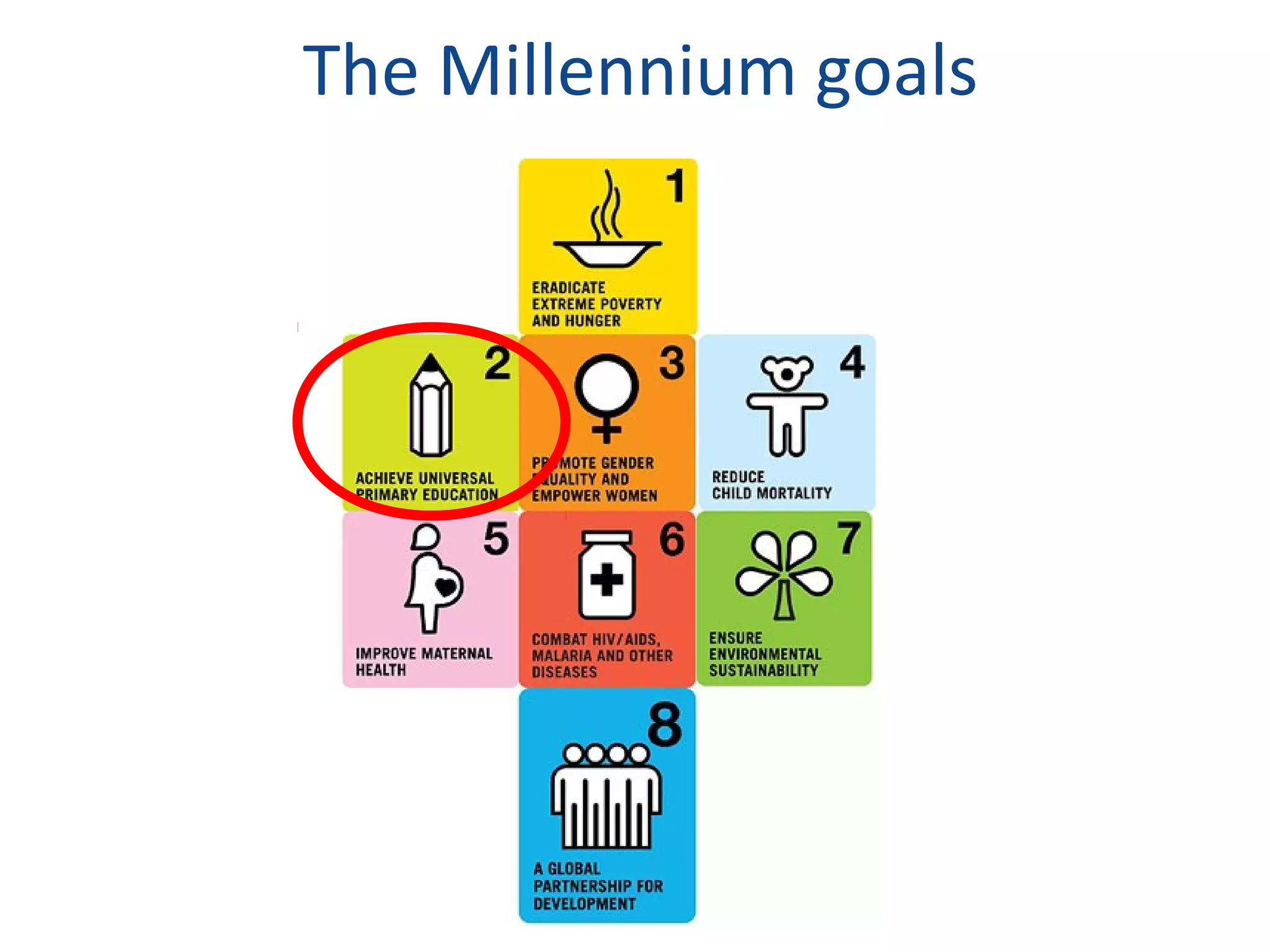
The Millennium goals
LAPTOP PER CHILD
Education and OLPC
Supplies and prior conditions which are
neccesary for good education. It focuses on
how modern tools can be integrated in a
school system in a cheap but sustainable way.
It is not a laptop project but an educational
project
OLPC and our route
Goal of our trip
“Enlarge childrens chances of
getting an equal chance in life”
Our contribution
• Public Relations: We create publicity for OLPC.
• Operational: We help at project level.
• Tactical: We deliver consultancy at the projects.
• Finance: We generate funds for the local projects.
2. Trends
• Smaller
• Quicker
• Collaboration
• Always online
• Mobility
Ultra Mobile PC’s
3. Competitors
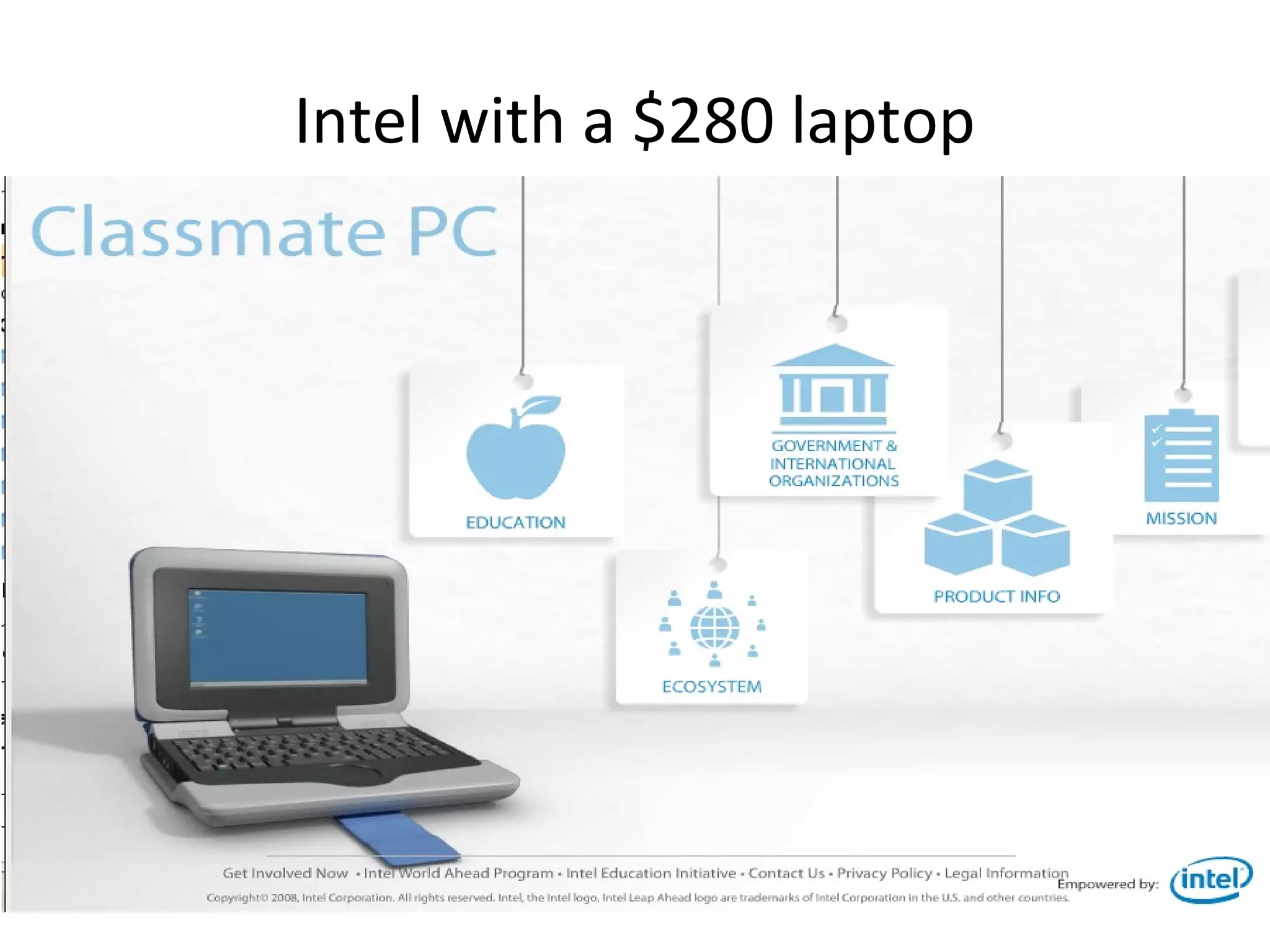
Intel with a $280 laptop
and ASUS with a $400 laptop...
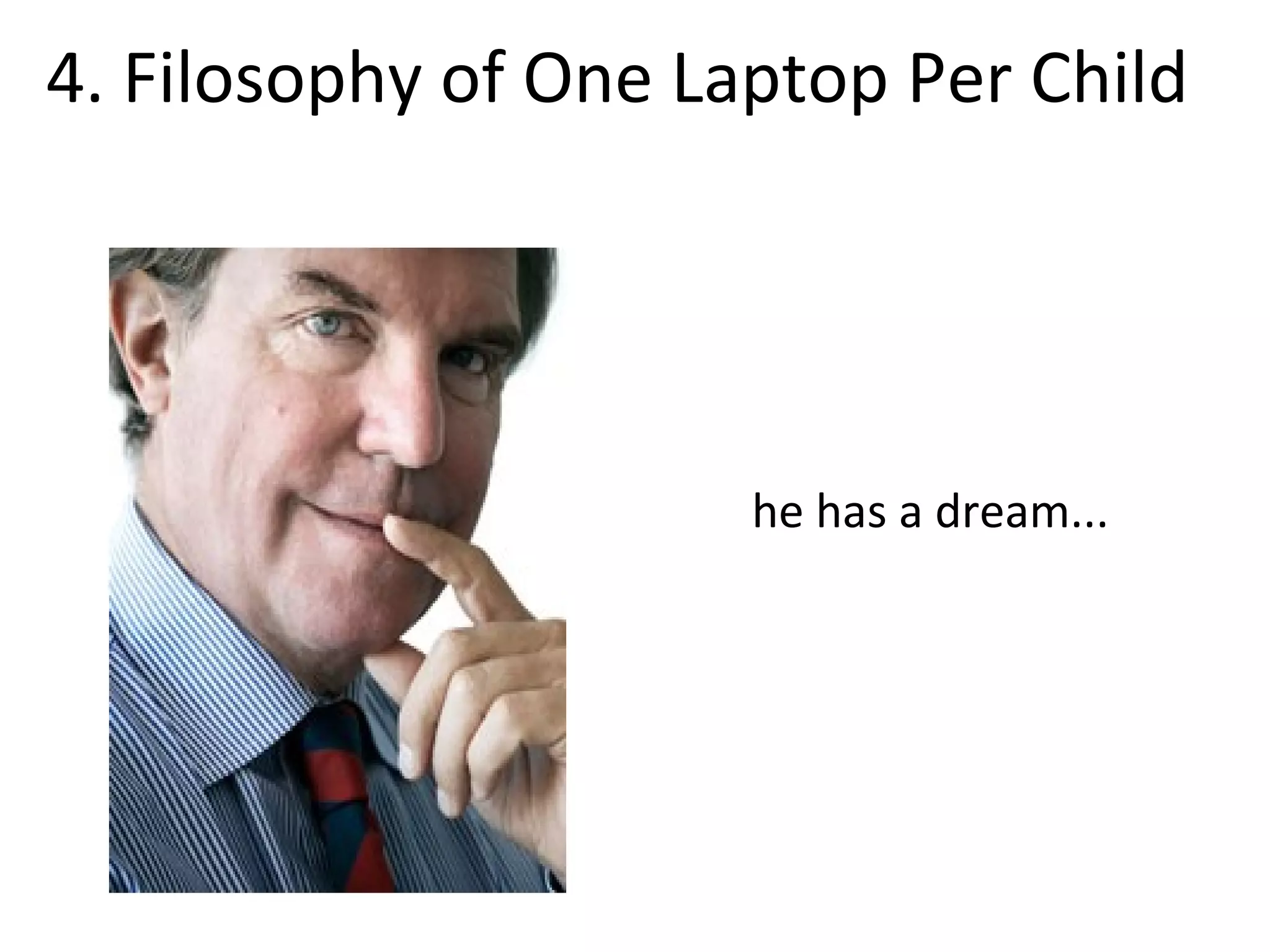
he has a dream...
4. Filosophy of One Laptop Per Child
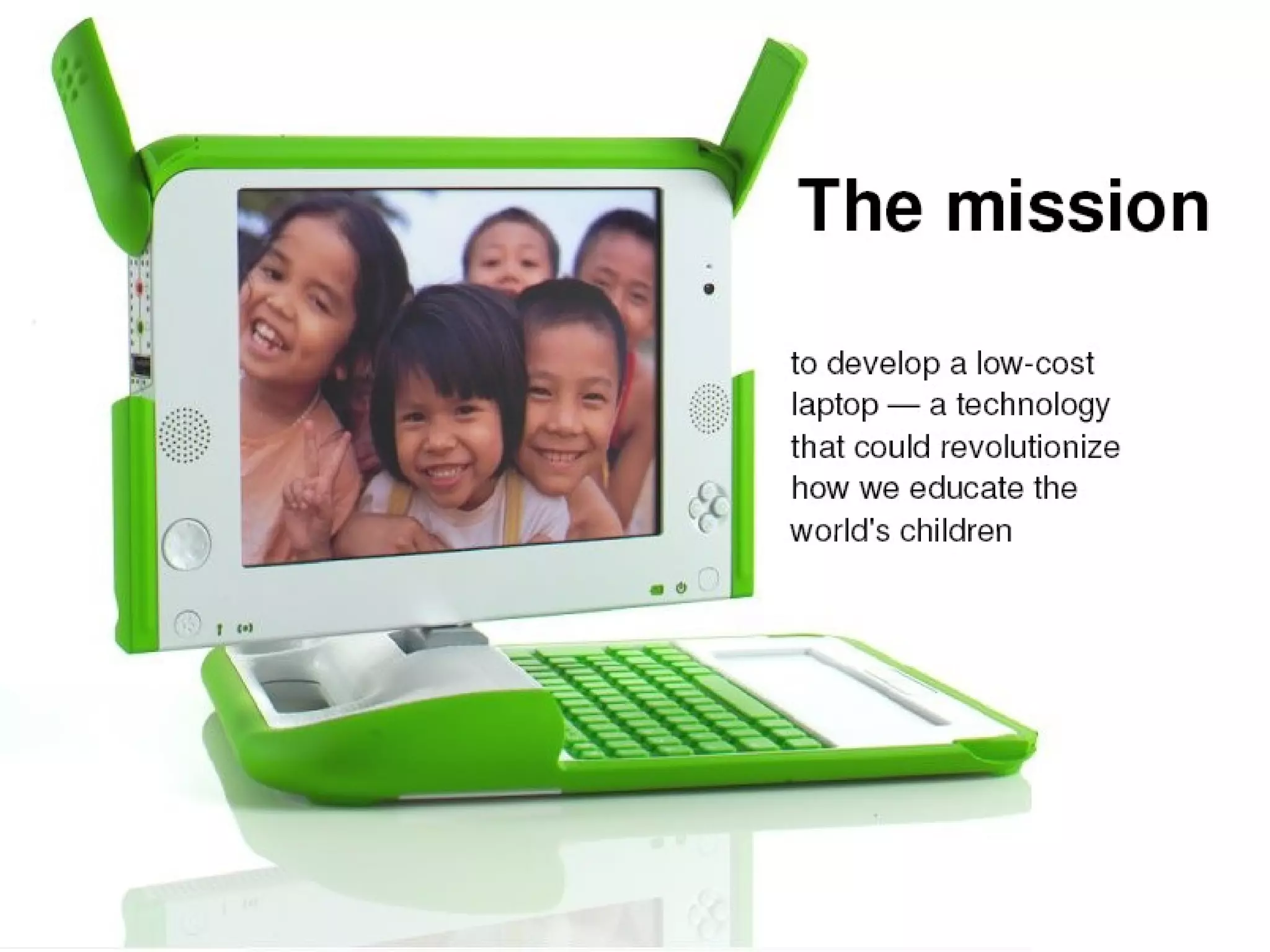
It’s an educational project,
not a laptop project
OLPC
• Non-profit organization
• Founded by Nicholas Negroponte, cofounder
of the MIT
• Design the OLPC, find sponsors and deals with
the government
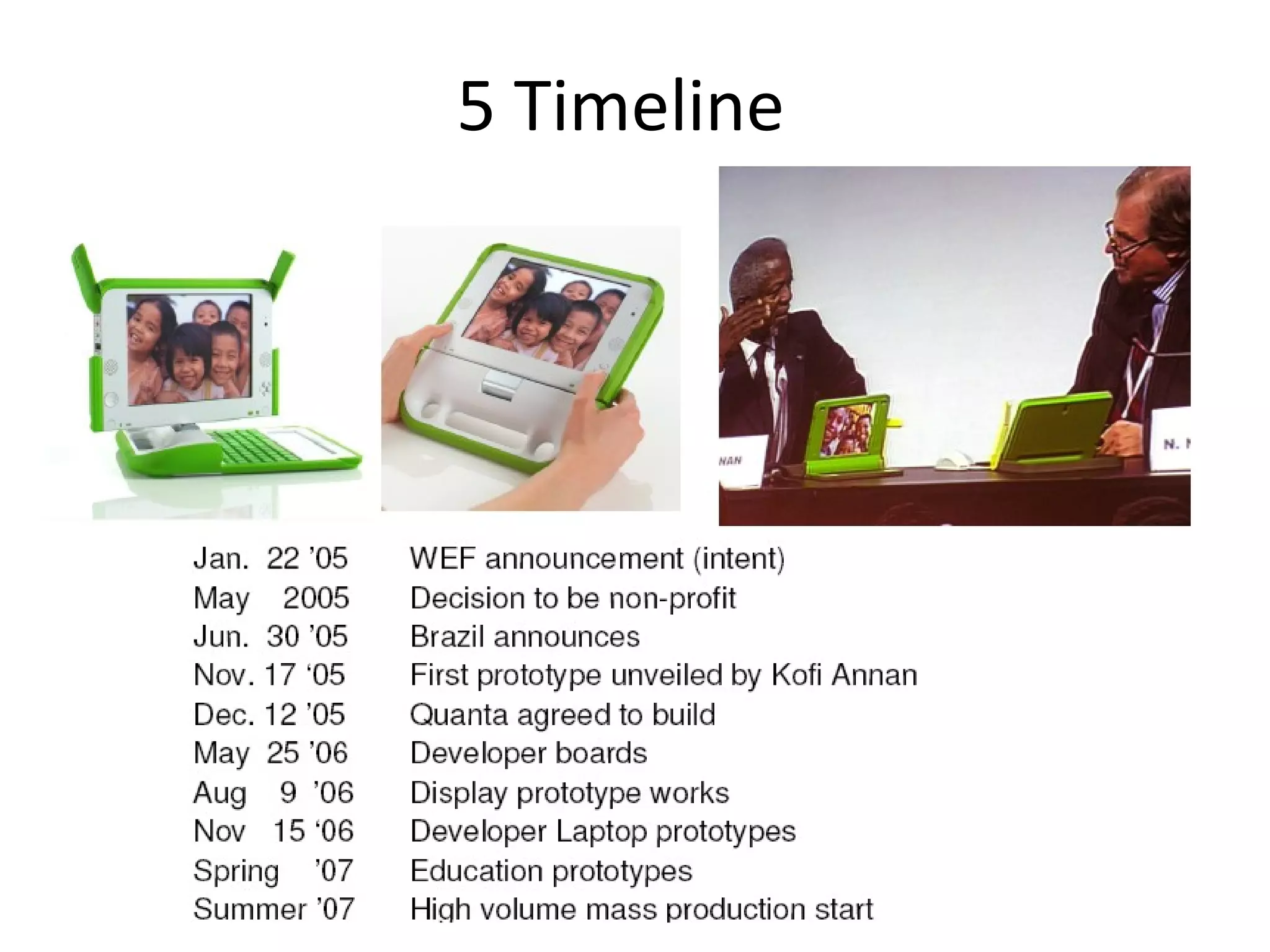
5 What is it?
Cheap
• Large volume
• No sales and marketing force
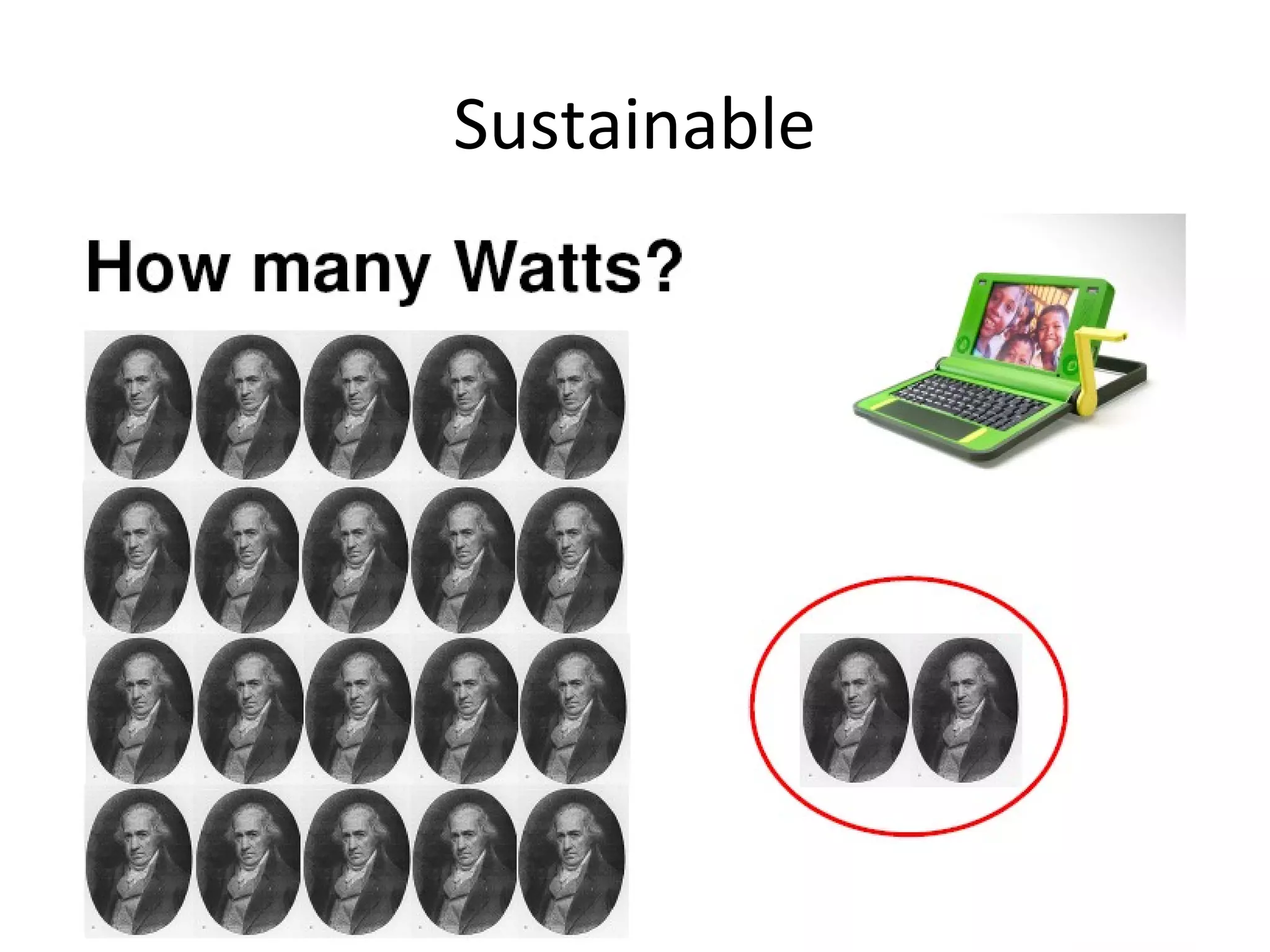
• Display energy consumption
• Direct distribution
• Standardized
• Low cost architecture
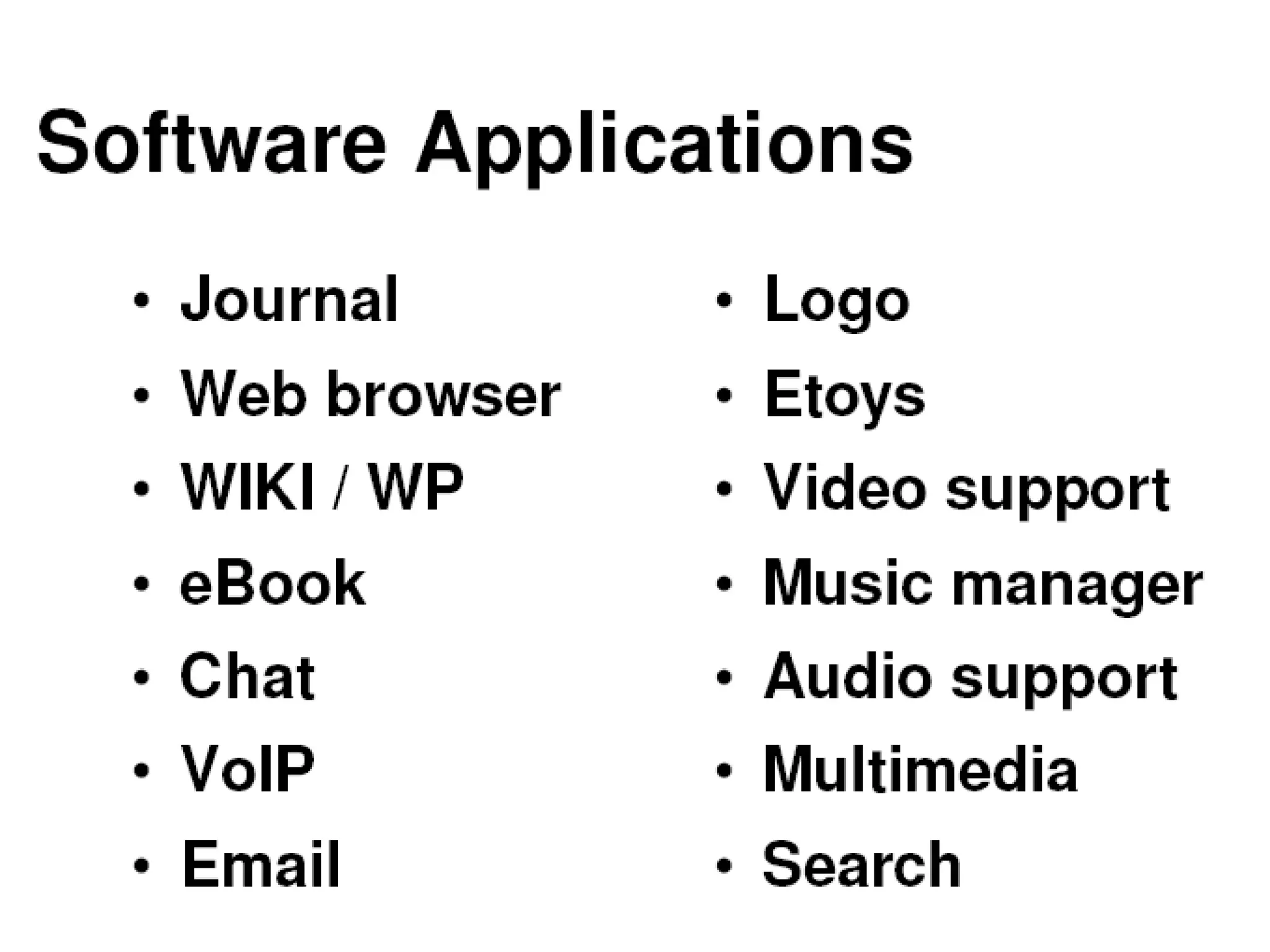
• Linux and Open source software
• Optimized software
• Power management (about 10% of typical
laptop)
Sustainable
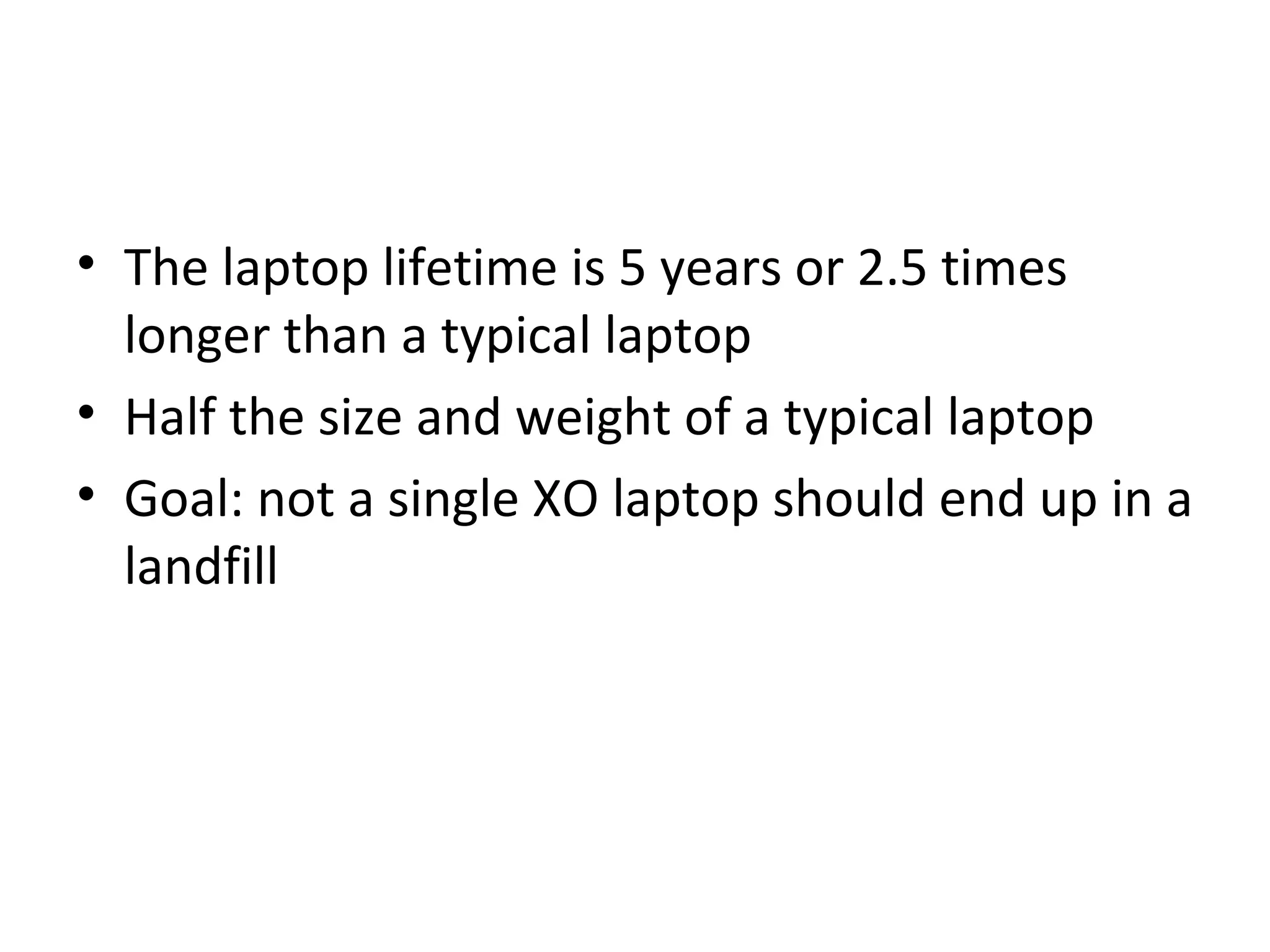
• The laptop lifetime is 5 years or 2.5 times
longer than a typical laptop
• Half the size and weight of a typical laptop
• Goal: not a single XO laptop should end up in a
landfill
Some specifications…
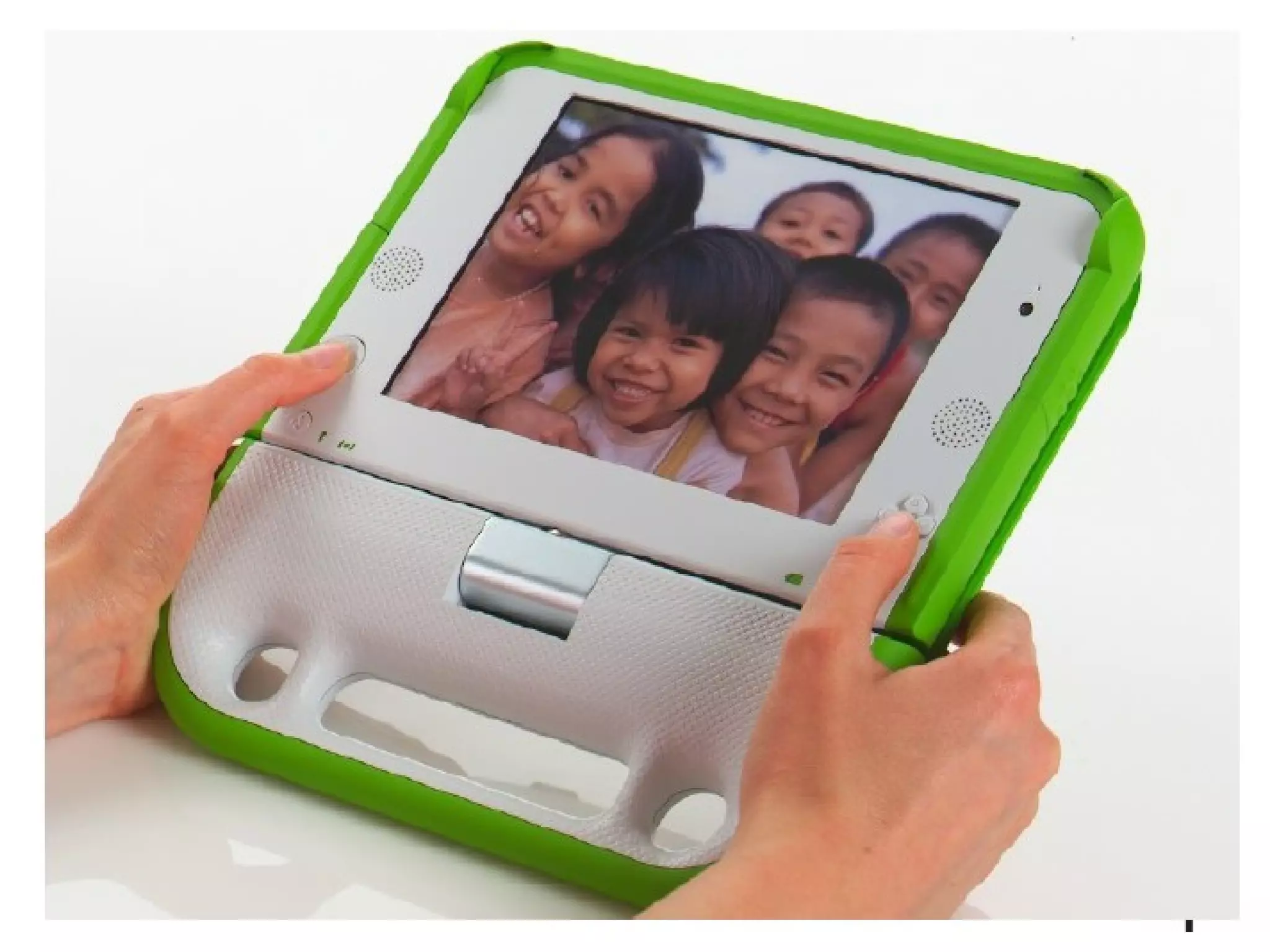
• 7.5 inch diagonal screen at 1200x900 (200 dpi)
• 800x600 in grayscale
– Sunlight readable!
• Wi-fi, USB(x3), mic, speakers, camera, SD
• Screen rotates to tablet mode
• Water and dirt resistant keyboard
– walk in the rain with it!
5 Timeline
6. Implementation
• Peru (200.000)
• Uruguay (100.000)
• Mongolia (20.000)
• India
• Mexico (50.000)
• Filipines, Nigeria, Ethopia and many others
7. Implementation
Challenges
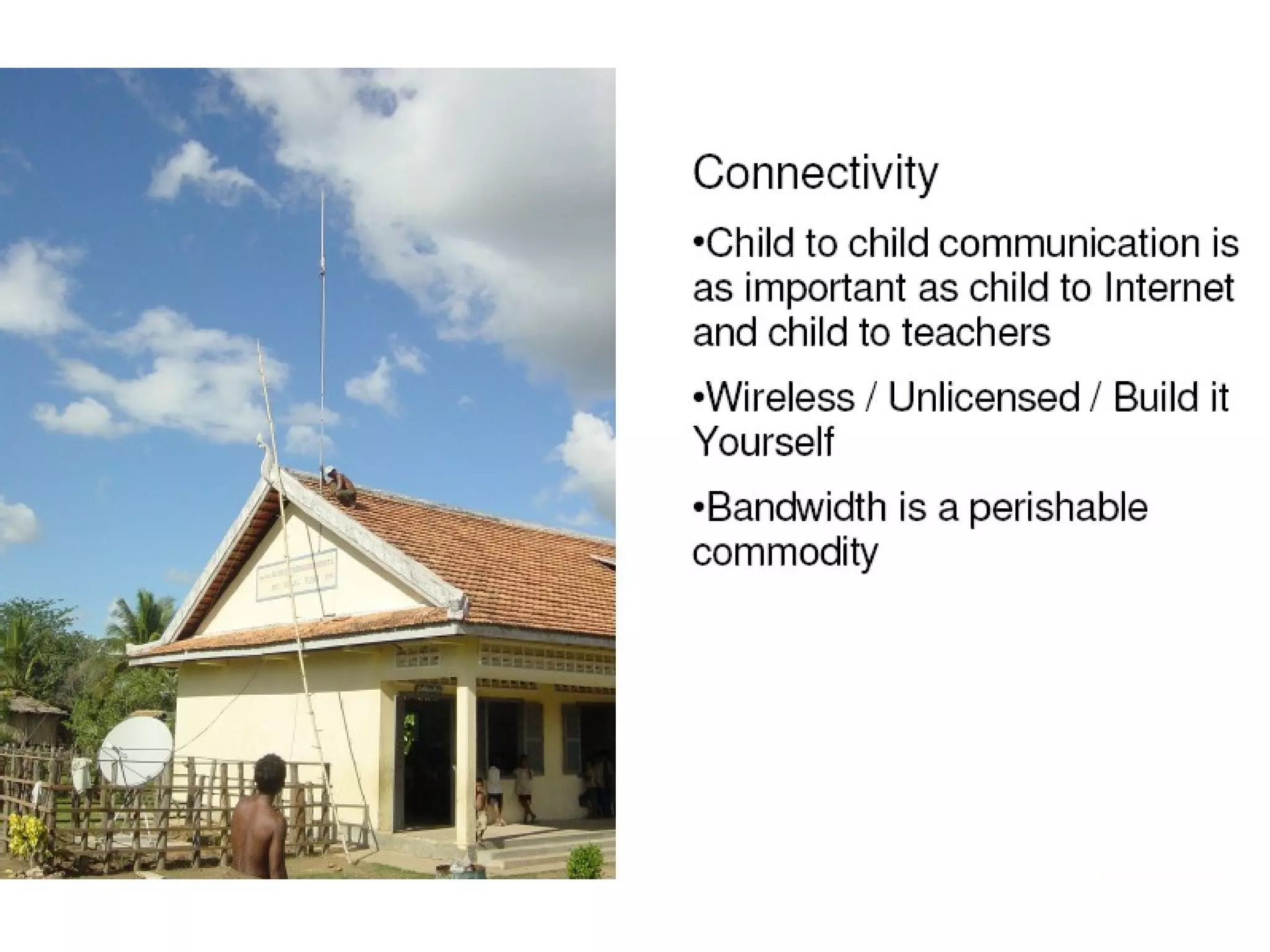
• Infrastructure
– Power
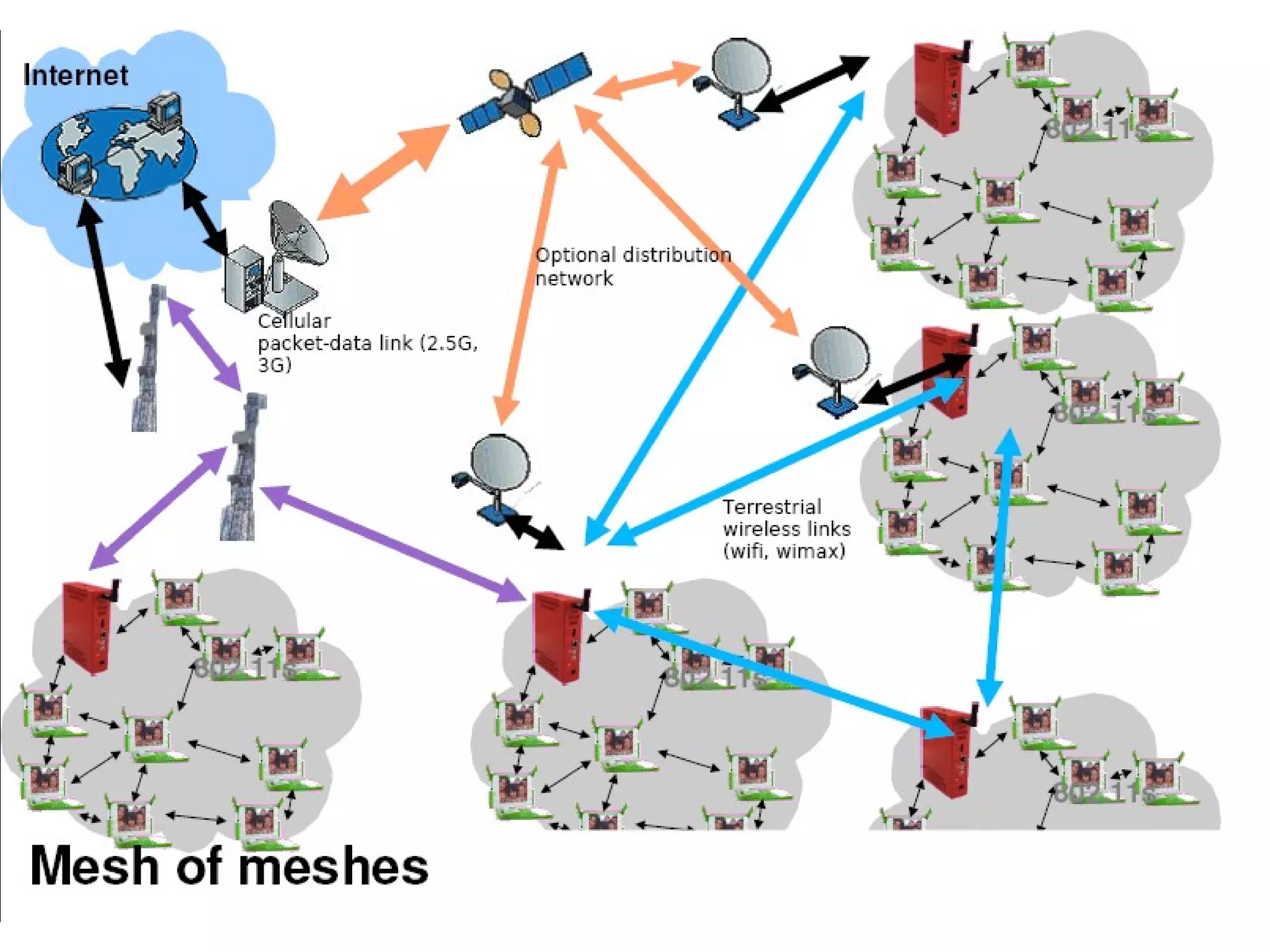
– Connectivity
• Political uncertainty
• Physical environment
• Effective distribution
• OLPC
• Cost
… about the price…
• One Laptop Per Nigerian child would be 73%
of the entire governmental income and One
Laptop Per Argentinean child would be half of
the non-salary education budget. Countries
like Rwanda or Nepal have no hope to afford
even $100 per child out of their own national
budgets.
(2006 figures)
…and about the (real) costs….
• Laptop cost
• Training
• Software maintenance
• Hardware maintenance
• Internet connection – satellite, mobile...
• Estimated about 978$ - 5years
(2006 figures)
…the (2007) business model..
• G1 G1 Program
Why not G1- G100/1000?
• Budget for development
• Non-profits means that profits may not be
distributed to investors, so a non-profit
doesn't have shareholders
…what else?..
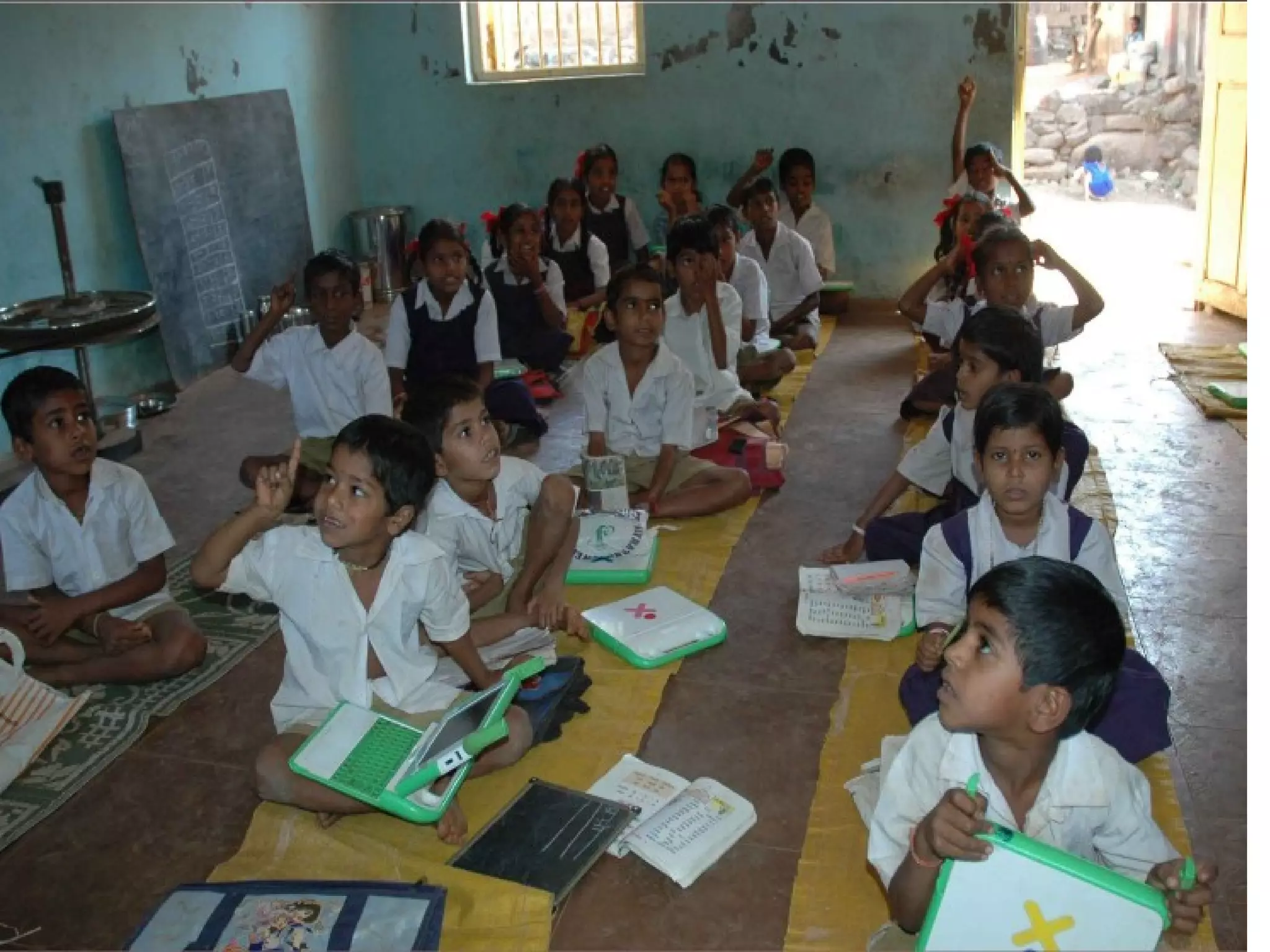
• All children who get an XO will need
training!
• Content
• Training of teachers
8. How to proceed?
• Piloting in different countries
• Sugar independend of device
• Improved interface
• Improved distribution
• Lower cost (75 $ in 2010)
• Framework for implementation
– Training, content etc.
Goal of our trip
“Enlarge childrens chances of
getting an equal chance in life”
Thanks to
• Jim Gettys
• Karin Dalziel
• Didier Donsez
• Ian Howard

OLPC and Making Miles for Millennium

  • 1.
    Making Miles forMillennium Gertie Clabbers and Harrie Vollaard 24 May – 1 December 2008
  • 3.
    Agenda 1. Our mission 2.Trends 3. Competitors 4. Filosophy of One Laptop Per Child 5. What is it? 6. Timeline 7. Implementation 8. How to proceed?
  • 5.
  • 6.
  • 7.
    Education and OLPC Suppliesand prior conditions which are neccesary for good education. It focuses on how modern tools can be integrated in a school system in a cheap but sustainable way. It is not a laptop project but an educational project
  • 8.
  • 9.
    Goal of ourtrip “Enlarge childrens chances of getting an equal chance in life”
  • 10.
    Our contribution • PublicRelations: We create publicity for OLPC. • Operational: We help at project level. • Tactical: We deliver consultancy at the projects. • Finance: We generate funds for the local projects.
  • 11.
    2. Trends • Smaller •Quicker • Collaboration • Always online • Mobility Ultra Mobile PC’s
  • 12.
  • 13.
    Intel with a$280 laptop
  • 14.
    and ASUS witha $400 laptop...
  • 15.
    he has adream... 4. Filosophy of One Laptop Per Child
  • 21.
    It’s an educationalproject, not a laptop project
  • 28.
    OLPC • Non-profit organization •Founded by Nicholas Negroponte, cofounder of the MIT • Design the OLPC, find sponsors and deals with the government
  • 29.
  • 30.
  • 31.
    • Large volume •No sales and marketing force • Display energy consumption • Direct distribution • Standardized • Low cost architecture • Linux and Open source software • Optimized software • Power management (about 10% of typical laptop)
  • 32.
  • 33.
    • The laptoplifetime is 5 years or 2.5 times longer than a typical laptop • Half the size and weight of a typical laptop • Goal: not a single XO laptop should end up in a landfill
  • 35.
    Some specifications… • 7.5inch diagonal screen at 1200x900 (200 dpi) • 800x600 in grayscale – Sunlight readable! • Wi-fi, USB(x3), mic, speakers, camera, SD • Screen rotates to tablet mode • Water and dirt resistant keyboard – walk in the rain with it!
  • 43.
  • 44.
    6. Implementation • Peru(200.000) • Uruguay (100.000) • Mongolia (20.000) • India • Mexico (50.000) • Filipines, Nigeria, Ethopia and many others
  • 45.
  • 46.
    Challenges • Infrastructure – Power –Connectivity • Political uncertainty • Physical environment • Effective distribution • OLPC • Cost
  • 47.
    … about theprice… • One Laptop Per Nigerian child would be 73% of the entire governmental income and One Laptop Per Argentinean child would be half of the non-salary education budget. Countries like Rwanda or Nepal have no hope to afford even $100 per child out of their own national budgets. (2006 figures)
  • 48.
    …and about the(real) costs…. • Laptop cost • Training • Software maintenance • Hardware maintenance • Internet connection – satellite, mobile... • Estimated about 978$ - 5years (2006 figures)
  • 49.
    …the (2007) businessmodel.. • G1 G1 Program Why not G1- G100/1000? • Budget for development • Non-profits means that profits may not be distributed to investors, so a non-profit doesn't have shareholders
  • 50.
    …what else?.. • Allchildren who get an XO will need training! • Content • Training of teachers
  • 51.
    8. How toproceed? • Piloting in different countries • Sugar independend of device • Improved interface • Improved distribution • Lower cost (75 $ in 2010) • Framework for implementation – Training, content etc.
  • 52.
    Goal of ourtrip “Enlarge childrens chances of getting an equal chance in life”
  • 54.
    Thanks to • JimGettys • Karin Dalziel • Didier Donsez • Ian Howard