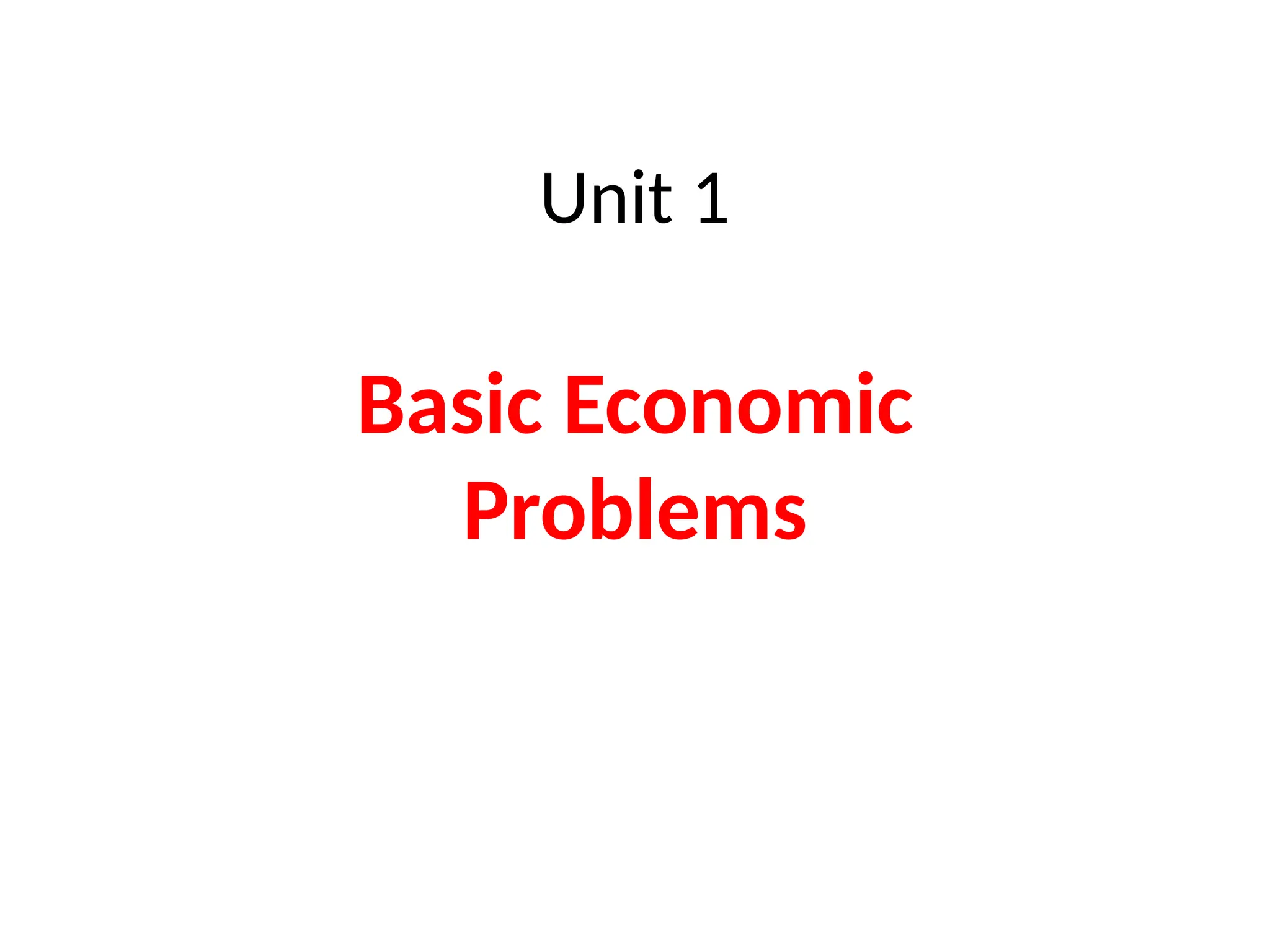
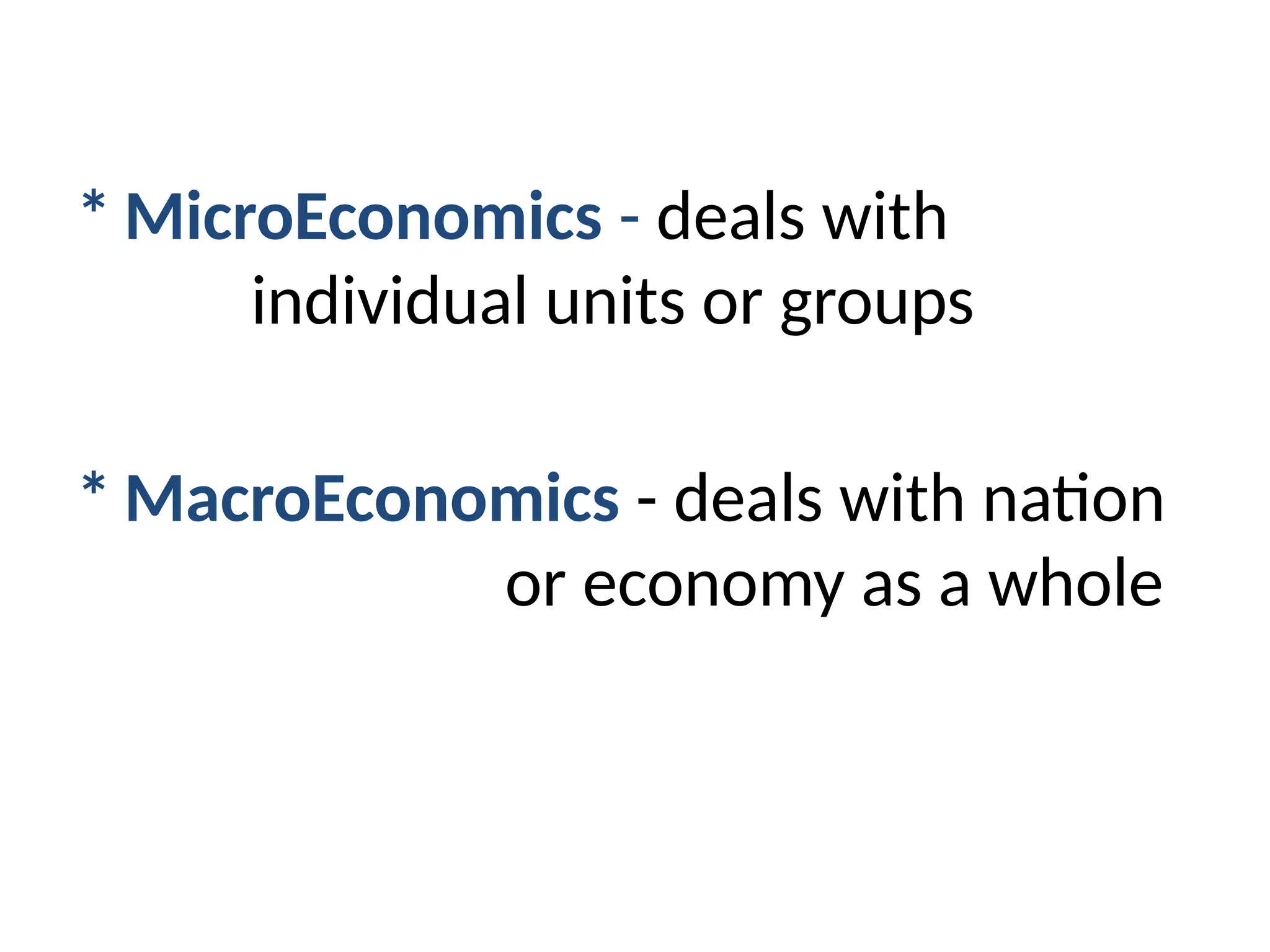
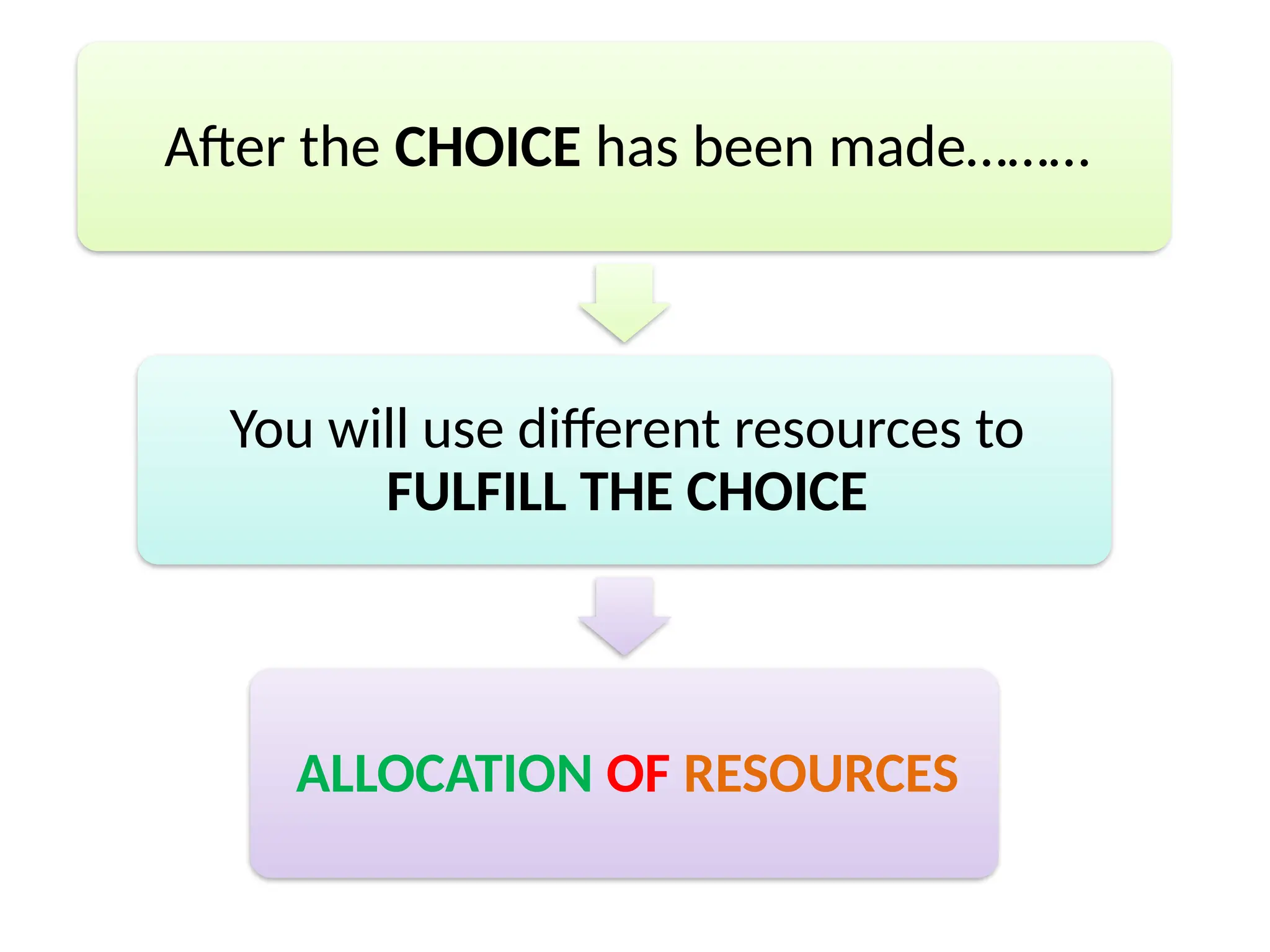
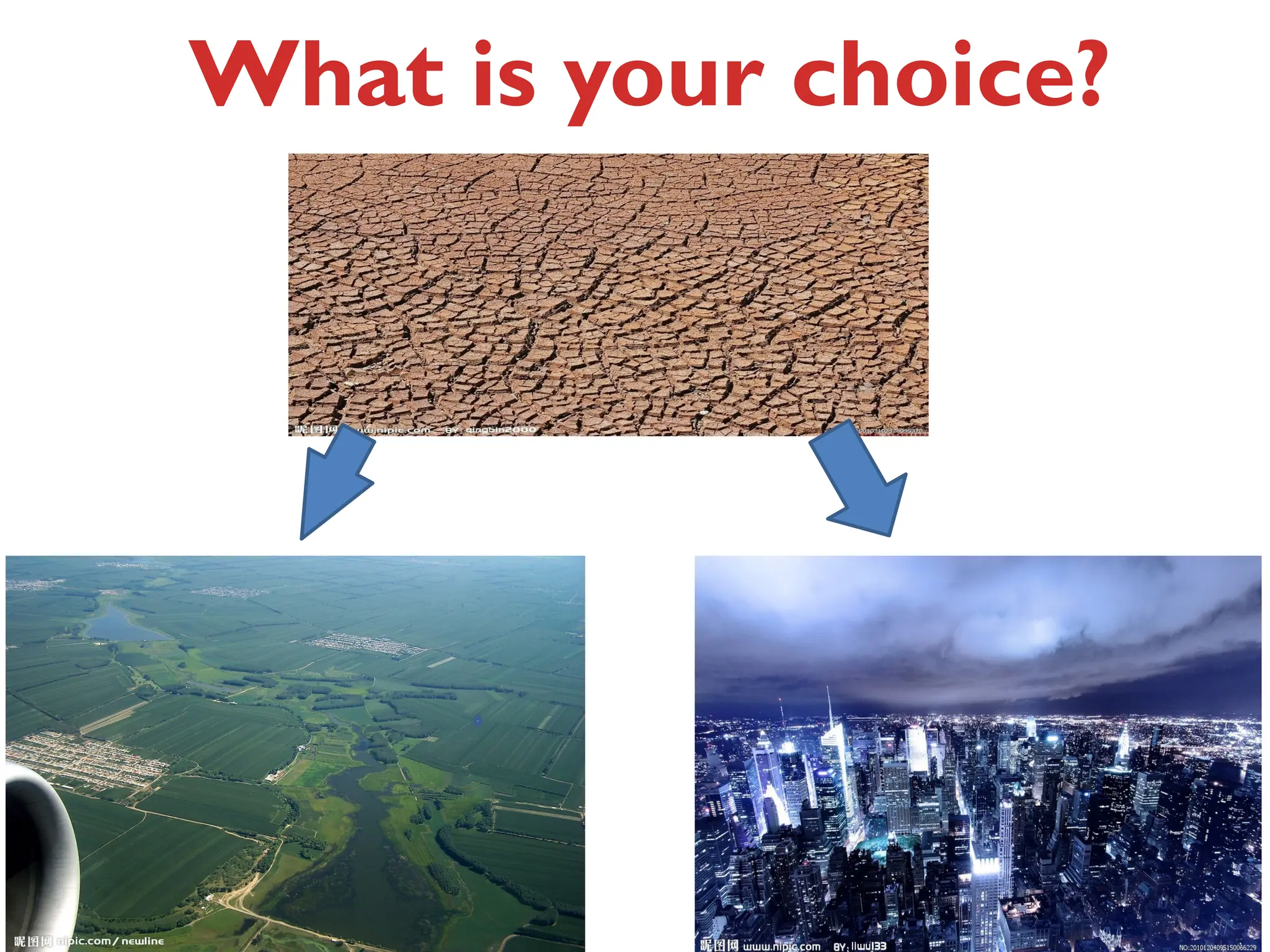
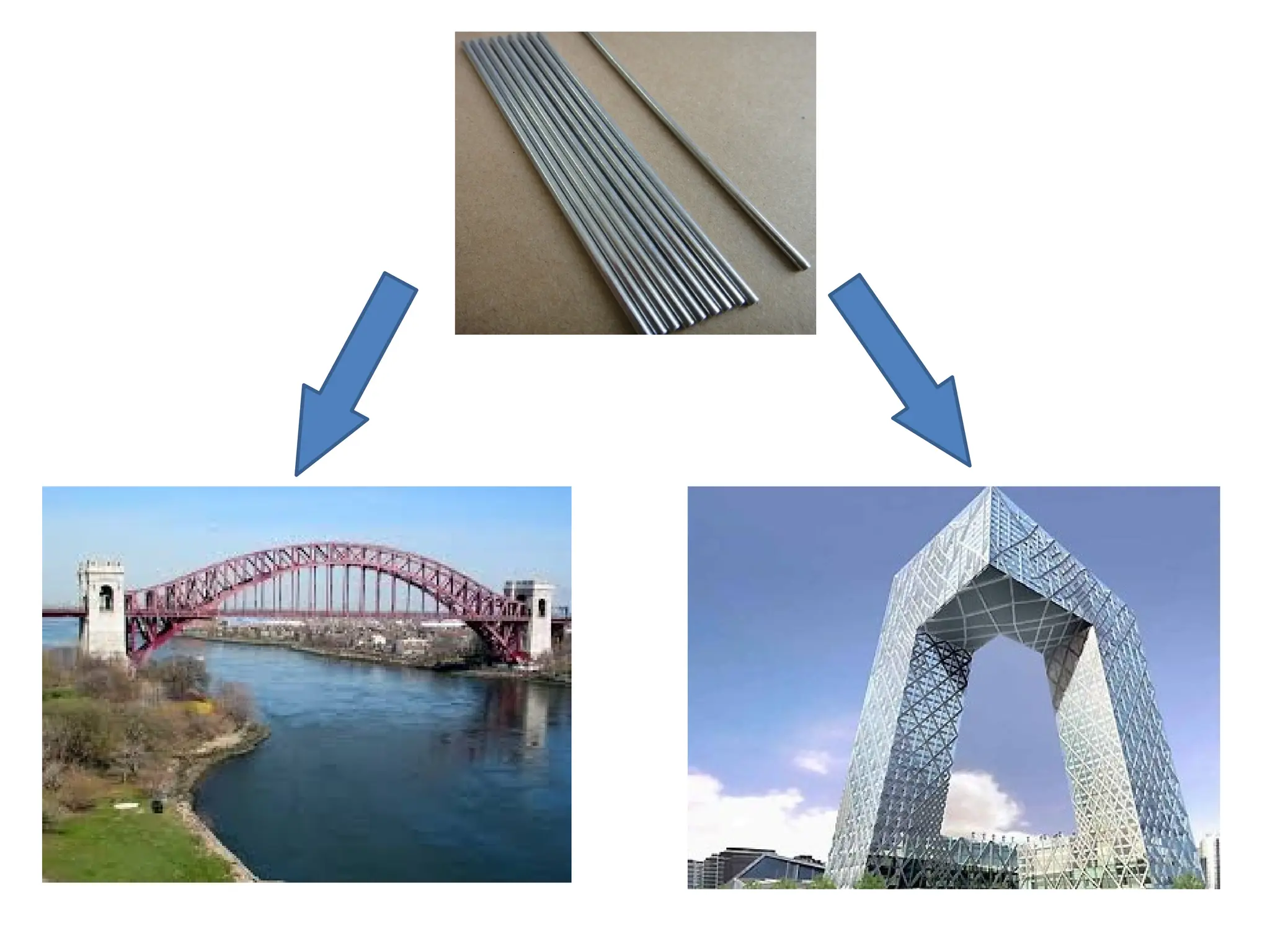
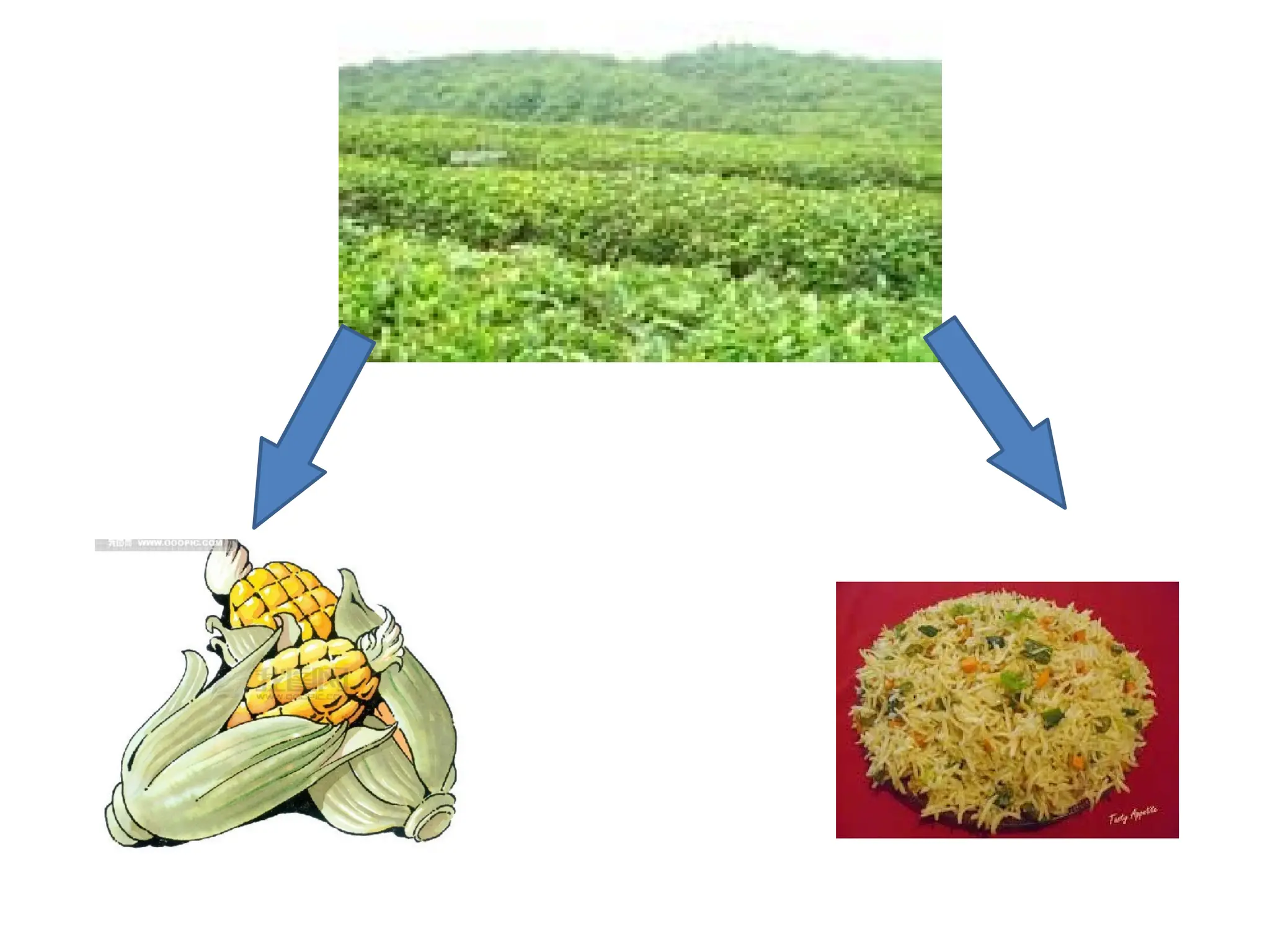
After the CHOICEhas been made………
You will use different resources to
FULFILL THE CHOICE
ALLOCATION OF RESOURCES
11.
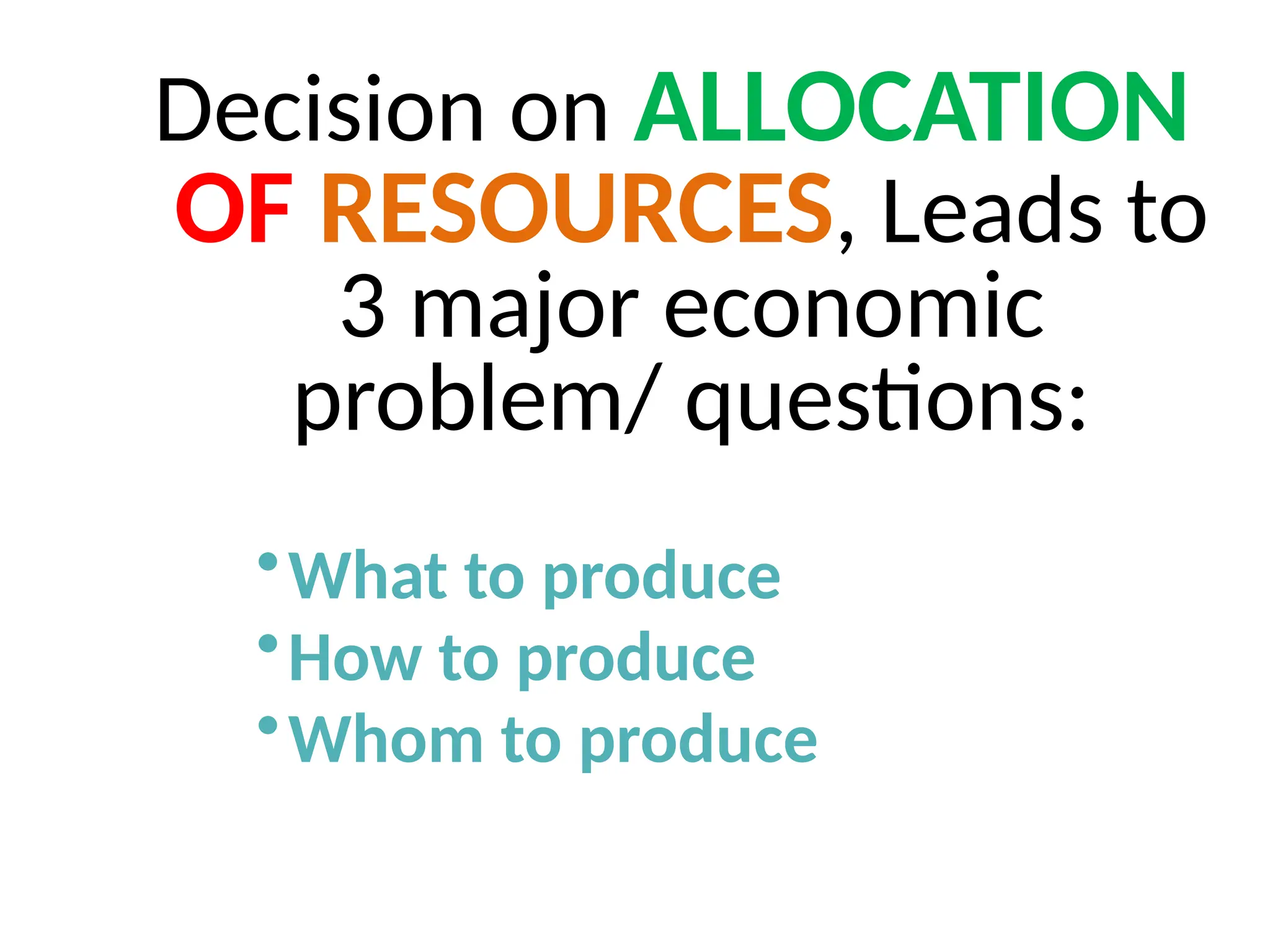
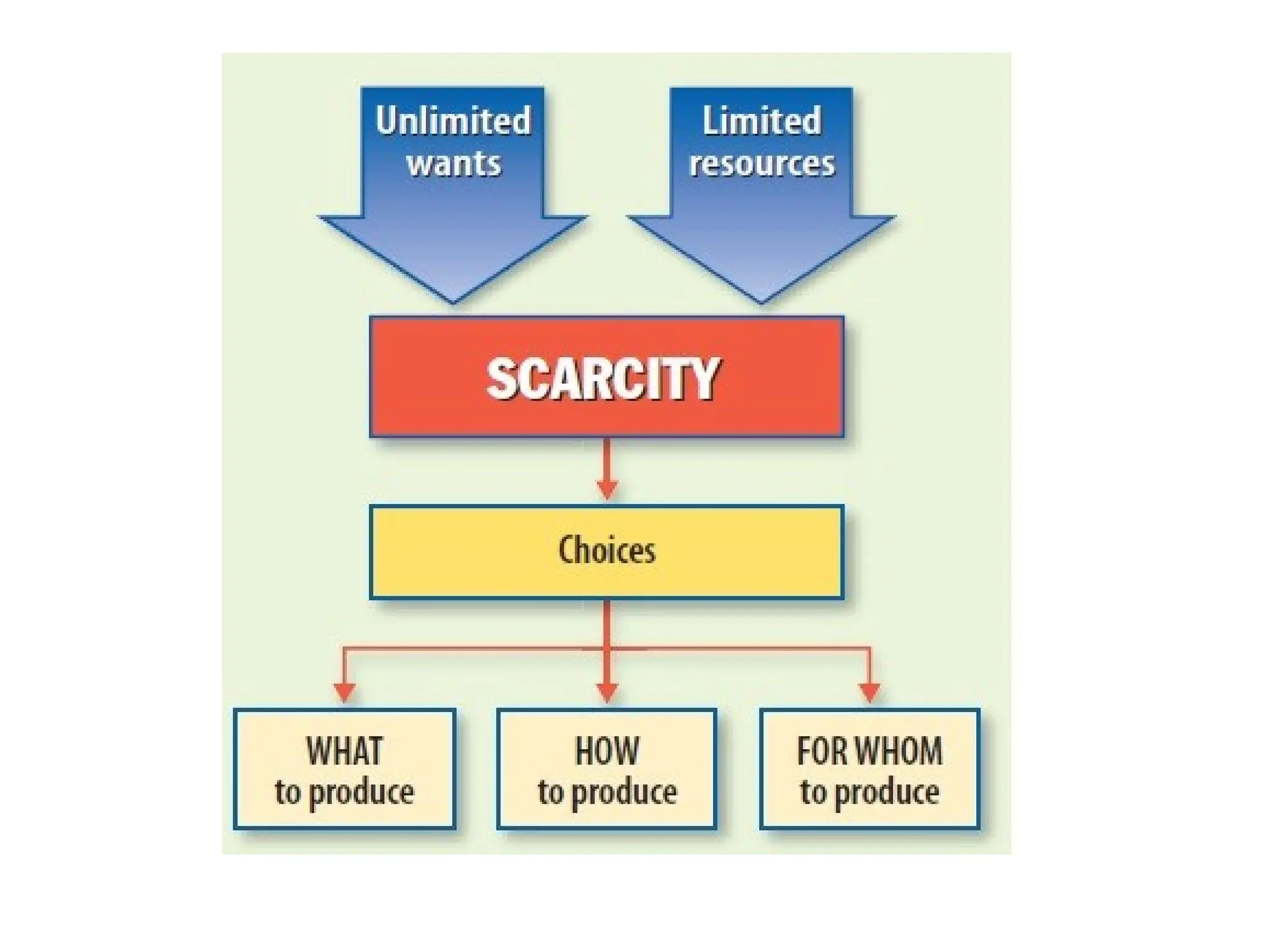
Decision on ALLOCATION
OFRESOURCES, Leads to
3 major economic
problem/ questions:
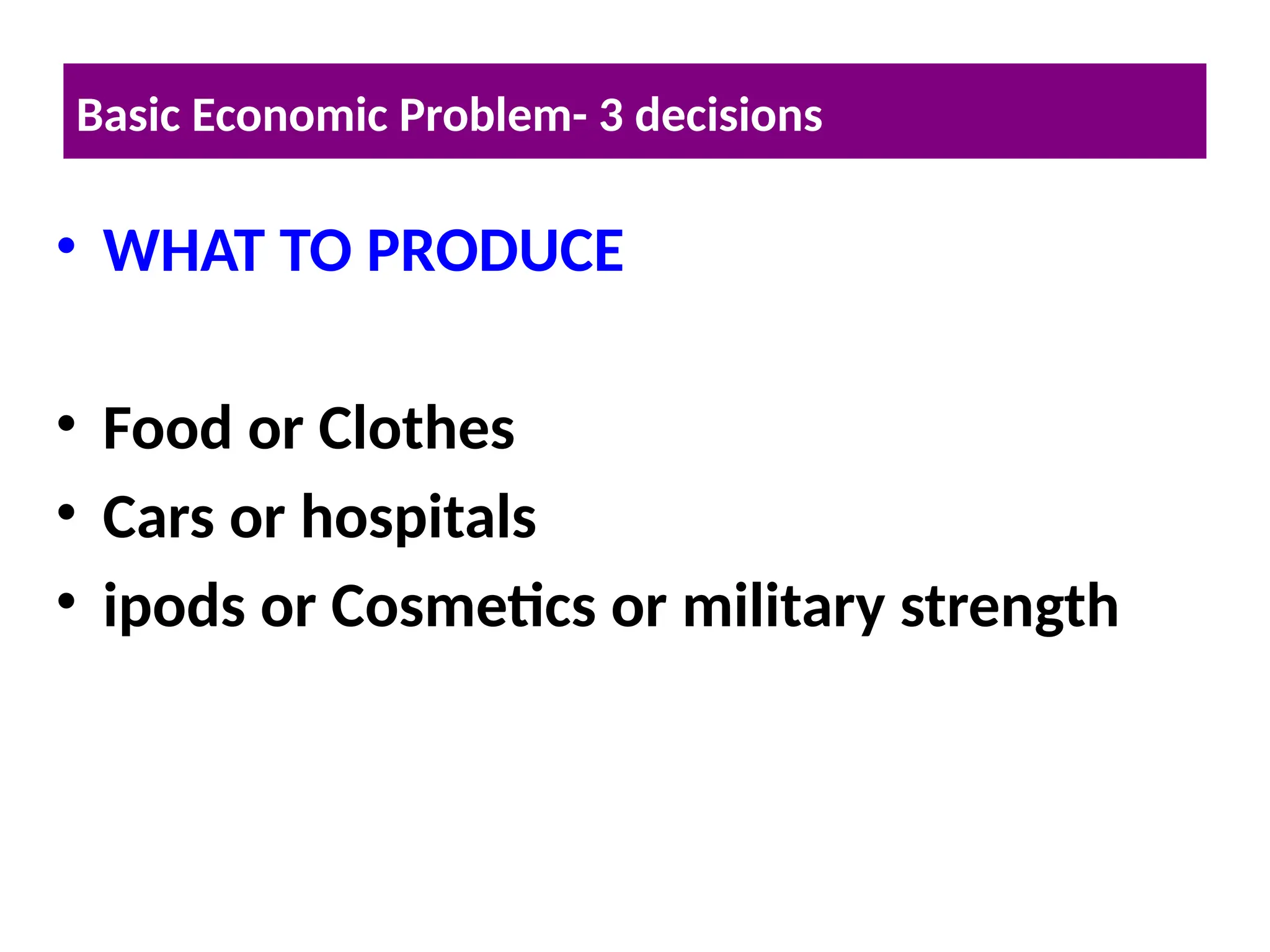
•What to produce
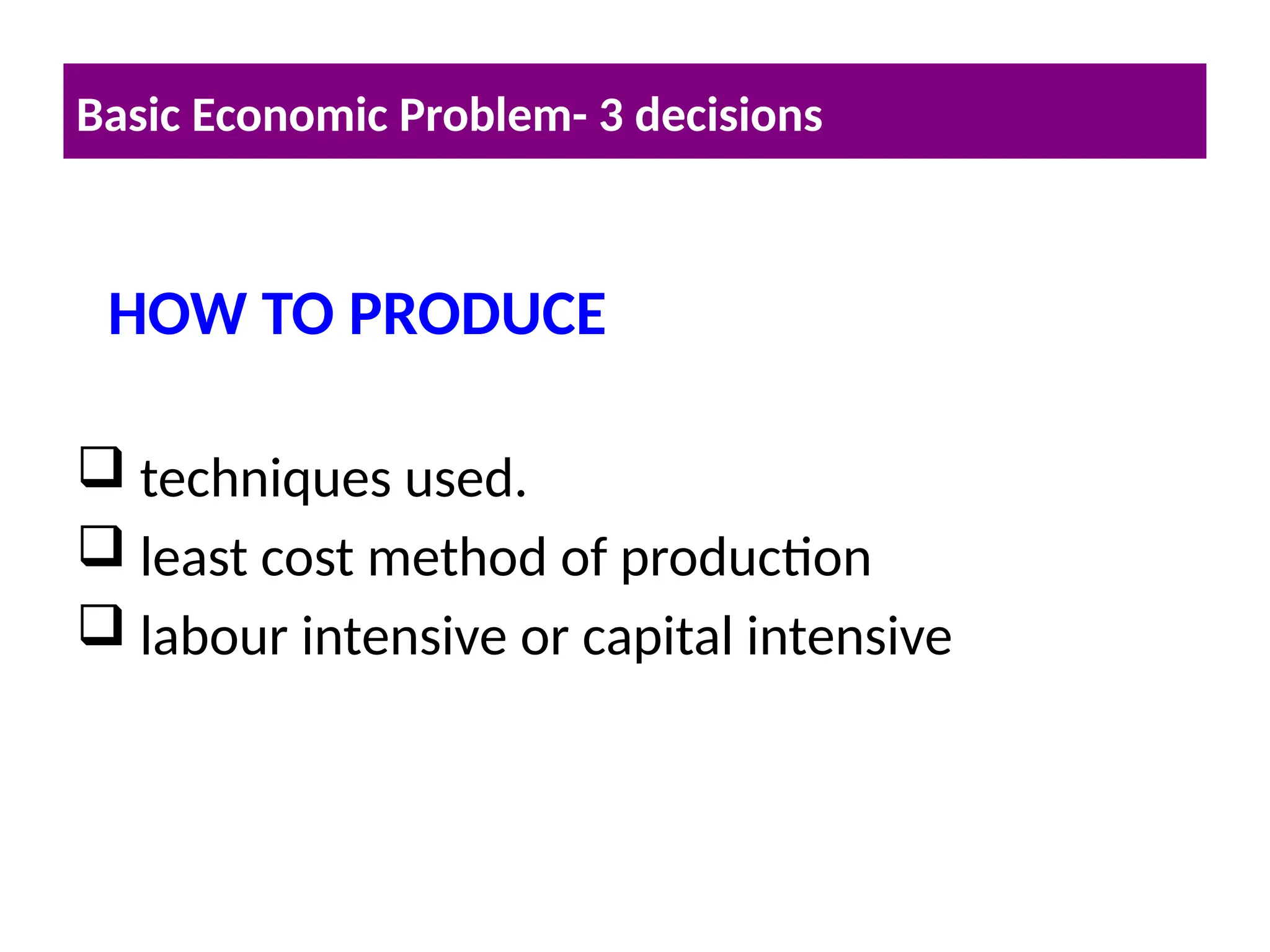
•How to produce
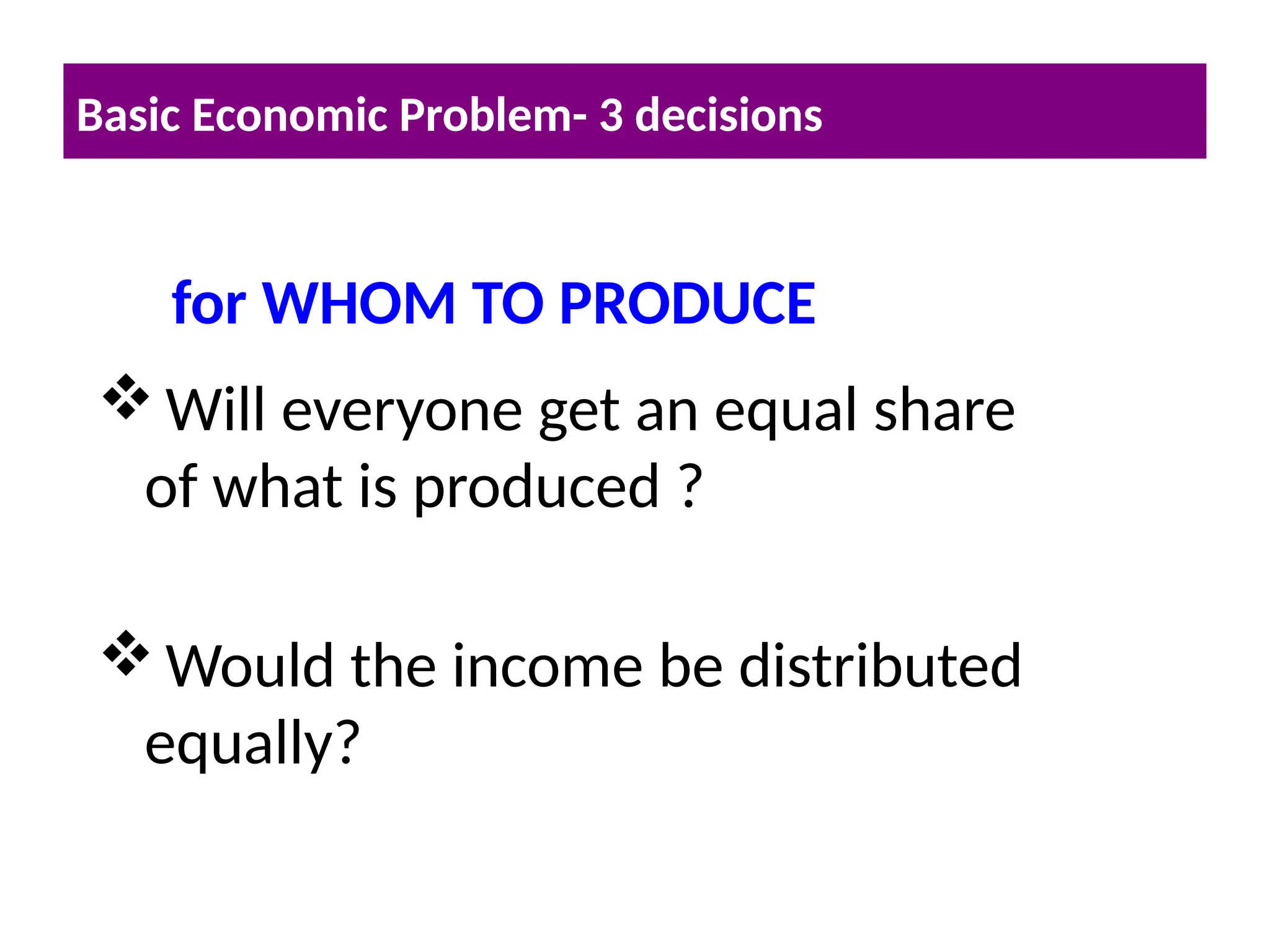
•Whom to produce
13.
• WHAT TOPRODUCE
• Food or Clothes
• Cars or hospitals
• ipods or Cosmetics or military strength
Basic Economic Problem- 3 decisions
14.
techniques used.
least cost method of production
labour intensive or capital intensive
Basic Economic Problem- 3 decisions
HOW TO PRODUCE
15.
Will everyone getan equal share
of what is produced ?
Would the income be distributed
equally?
Basic Economic Problem- 3 decisions
for WHOM TO PRODUCE
16.
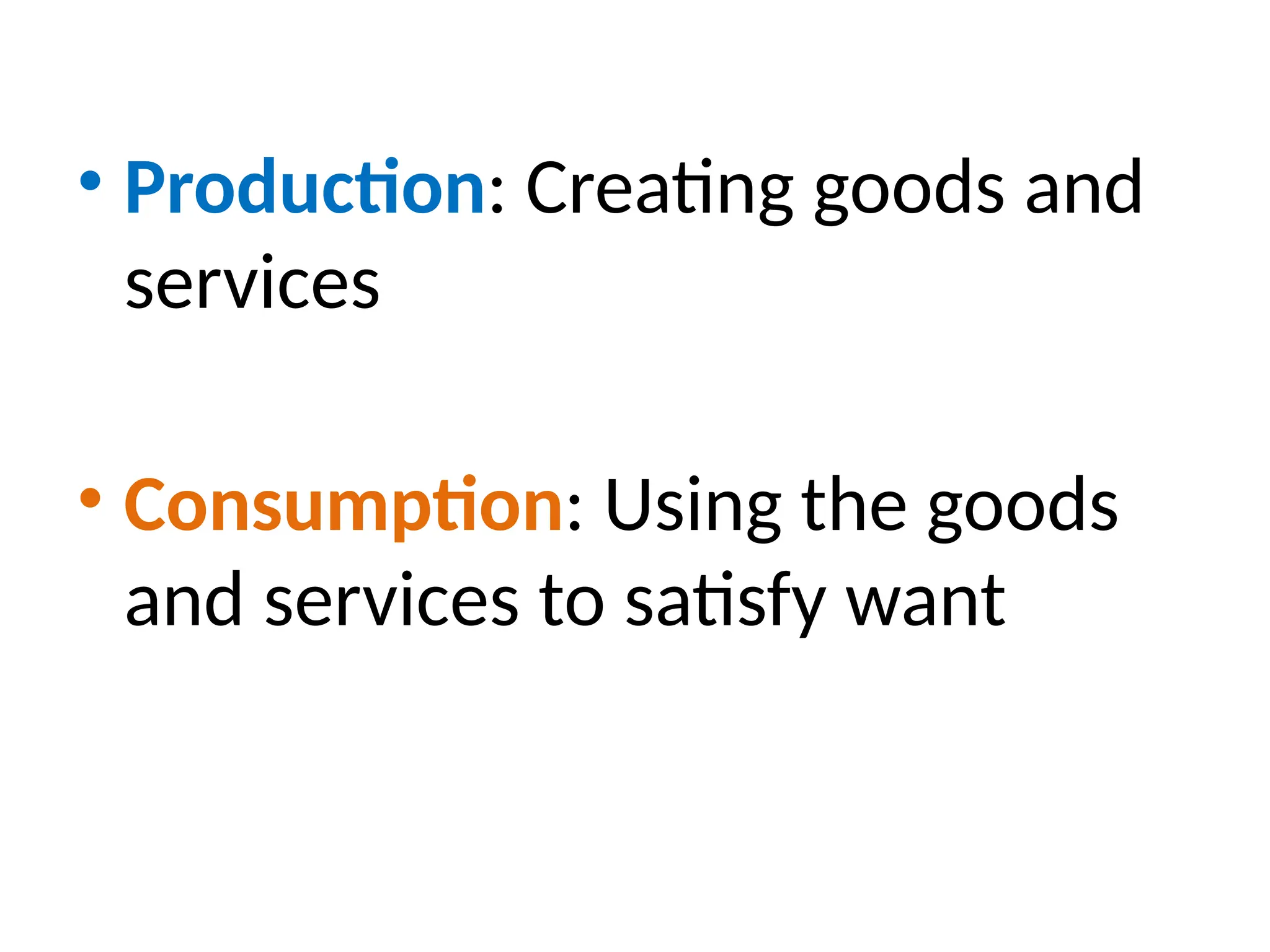
• Production: Creatinggoods and
services
• Consumption: Using the goods
and services to satisfy want
• What youDO NOT CHOOSE is your
Opportunity Cost
• Opportunity Cost is the highest cost forgone
when making the decision
28.
Who has toface this problem
of Opportunity Cost?
• You and me (Individuals)
• Firms (Business)
• Government
29.
Production Possibility Curve(PPC)
• Every decision/choice we make has
an Opportunity Cost
• This idea of Opportunity Cost can be
illustrated using a PPC
30.
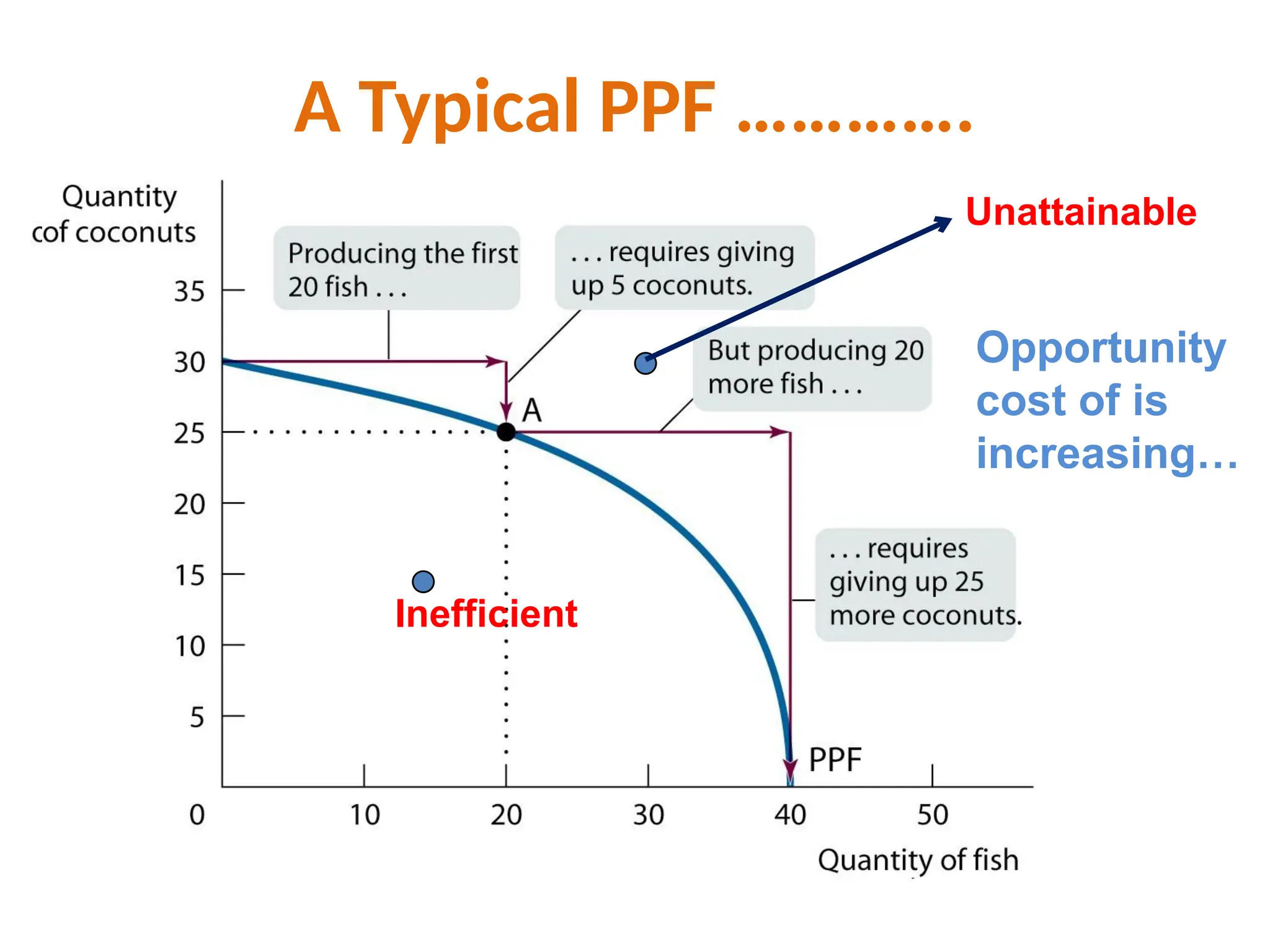
A Typical PPF………….
Unattainable
Inefficient
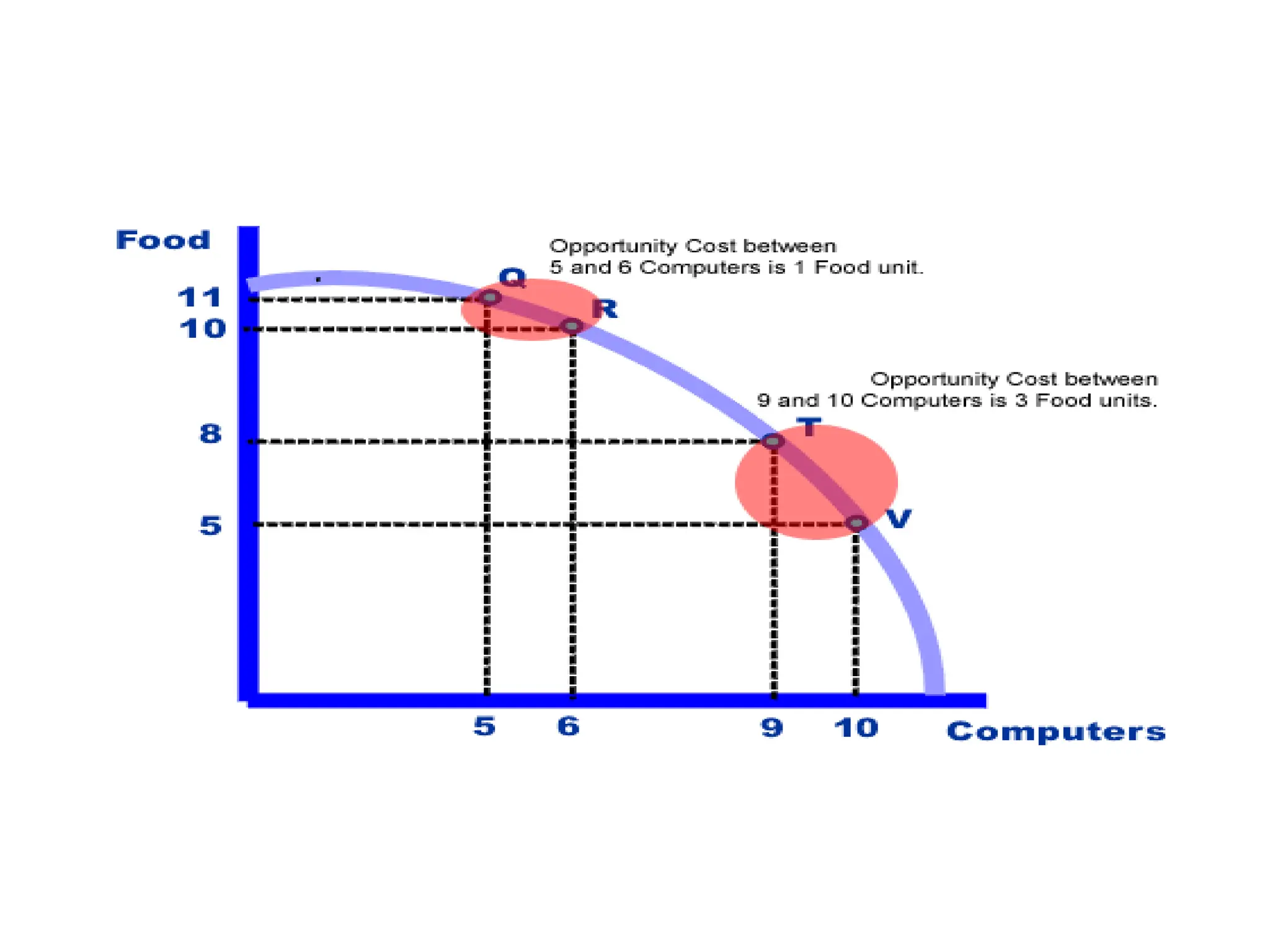
Opportunity
cost of is
increasing…
31.
• Production Possibilitycurve (PPC) shows the
maximum combinations of goods and
services that can be produced by an
economy in a given time period with its
limited resources
• A point outside the graph is unachievable
and a point inside the graph is inefficient
32.
PPC also tellsyou:
• What you can and cannot produce
• What is the cost of producing the
other good
33.
Depending on ourchoices of Production,
the opportunity cost may
Remain Constant
Increase
Decrease
35.
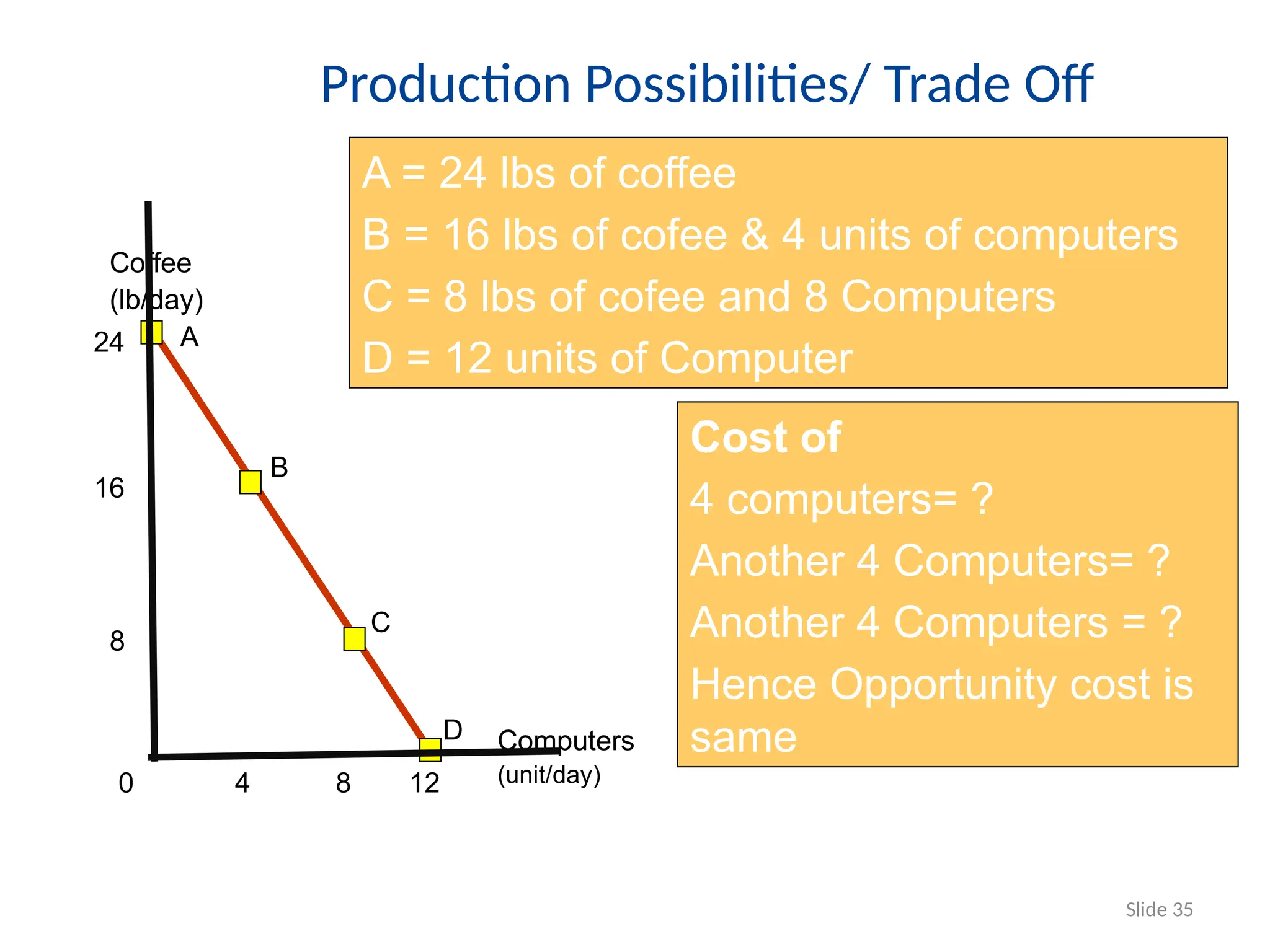
Production Possibilities/ TradeOff
Slide 35
A = 24 lbs of coffee
B = 16 lbs of cofee & 4 units of computers
C = 8 lbs of cofee and 8 Computers
D = 12 units of Computer
Coffee
(lb/day)
Computers
(unit/day)
A
B
C
D
24
0
16
8
4 8 12
Cost of
4 computers= ?
Another 4 Computers= ?
Another 4 Computers = ?
Hence Opportunity cost is
same
36.
Unit 1 :Macroeconomics
National Council on Economic
Education
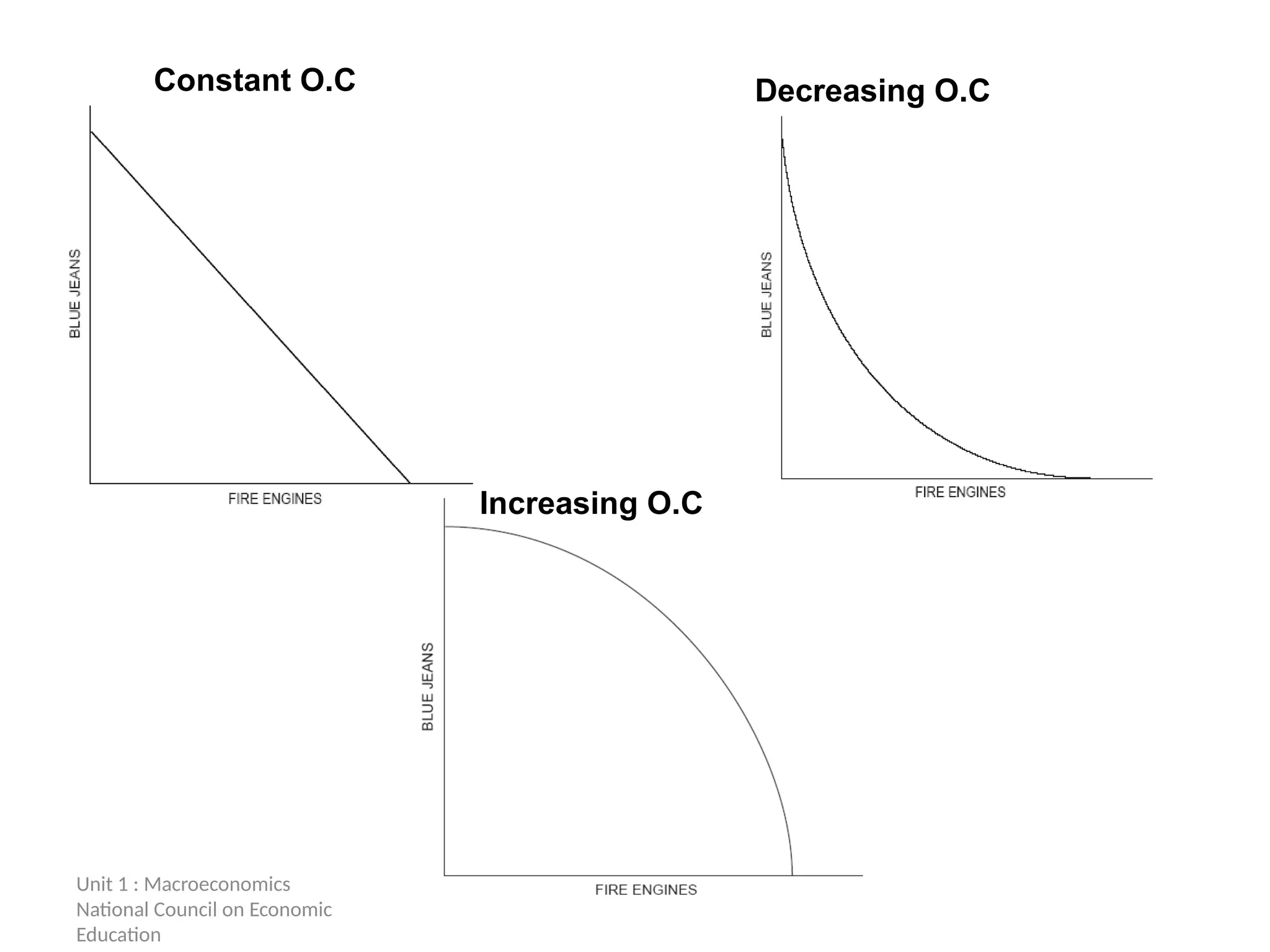
Constant O.C Decreasing O.C
Increasing O.C
37.
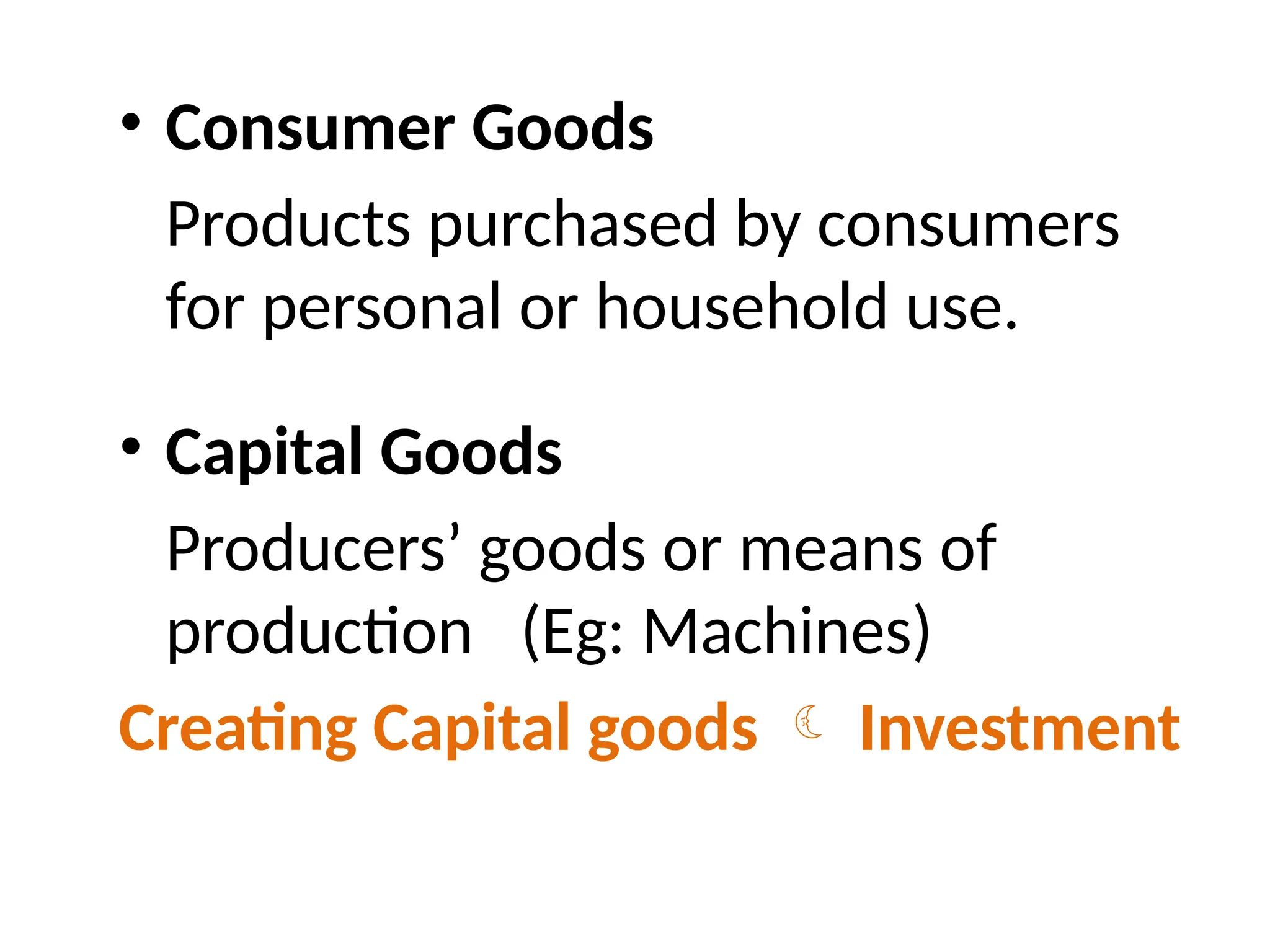
• Consumer Goods
Productspurchased by consumers
for personal or household use.
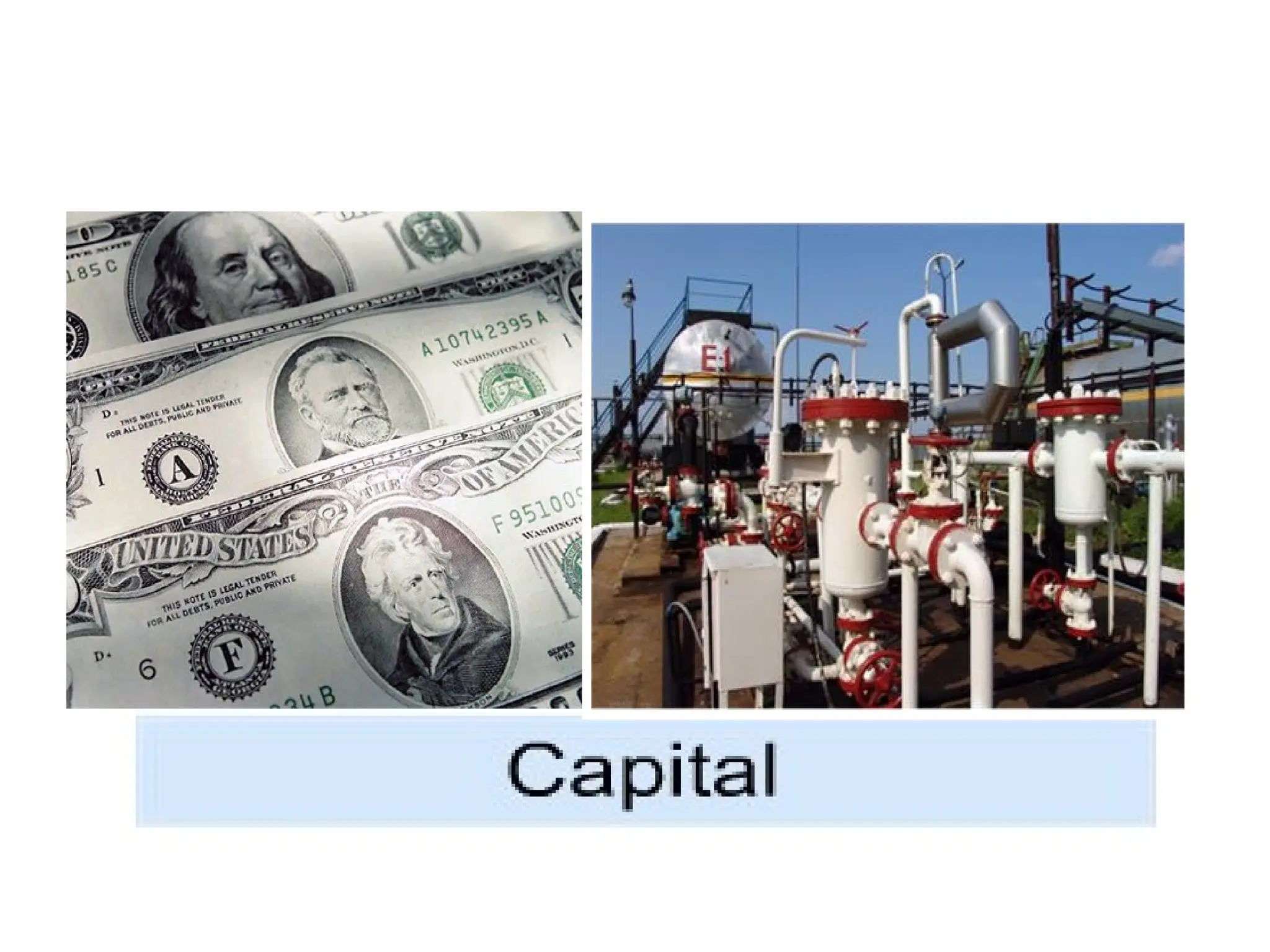
• Capital Goods
Producers’ goods or means of
production (Eg: Machines)
Creating Capital goods Investment