Offline bruteforce attack on
WiFi Protected Setup
Dominique Bongard
Founder
0xcite, Switzerland
@reversity
§  Protocol aiming at easily connecting to protected WiFi networks
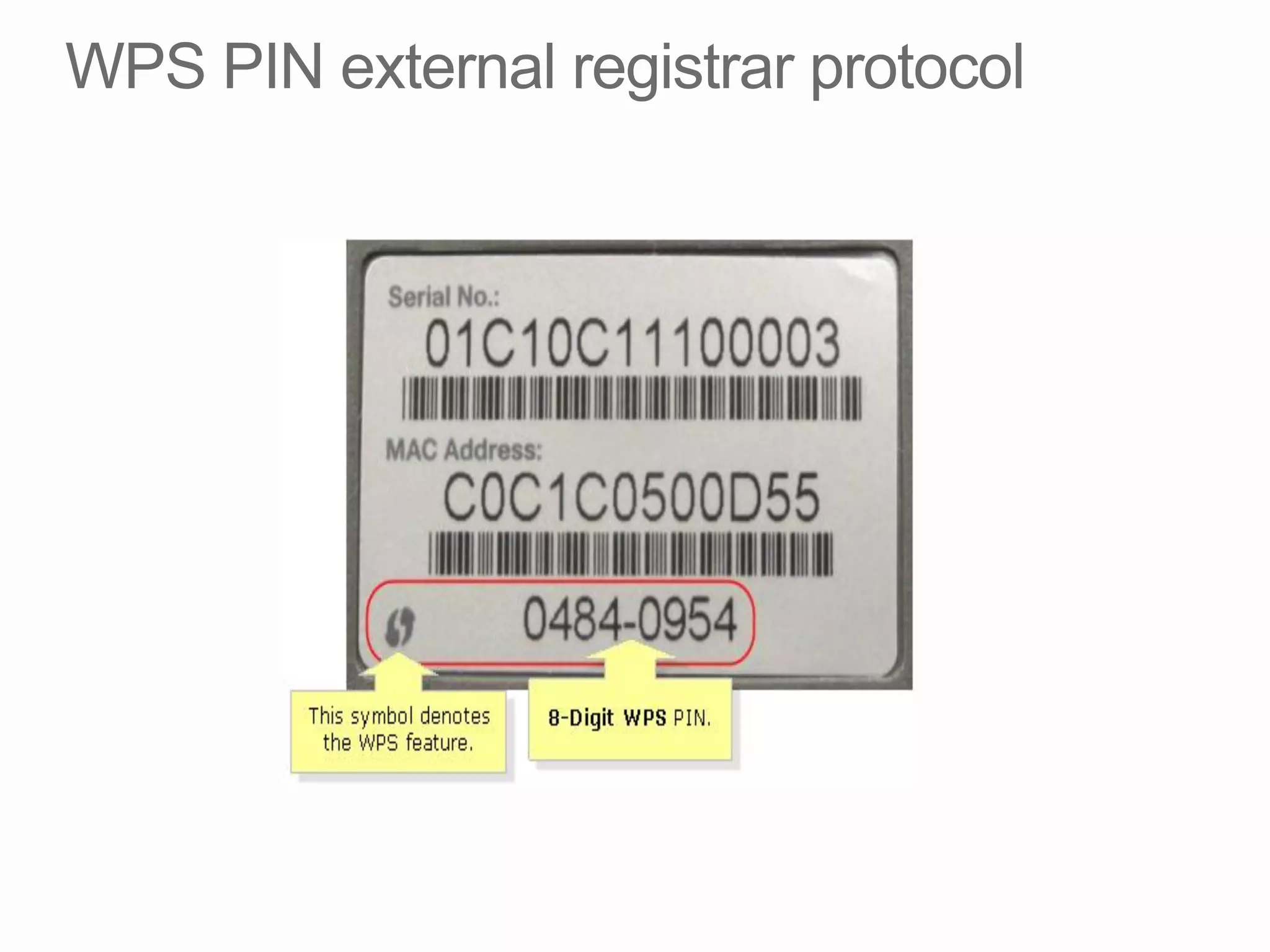
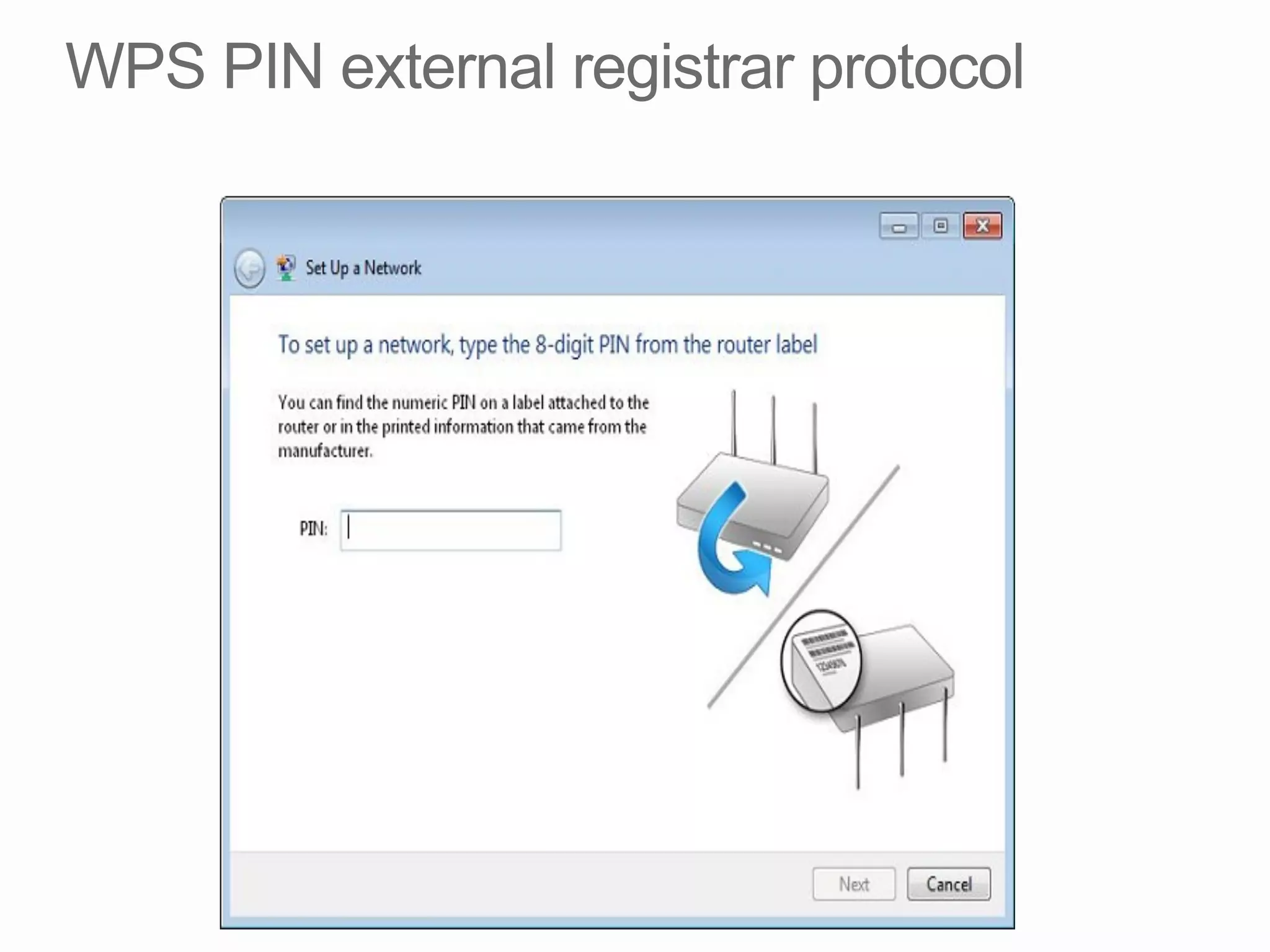
§  Two main modes: Push-Button and 8 digit PIN code
§  Gives the WPA passphrase to stations providing the right PIN
§  Poor design and implementation
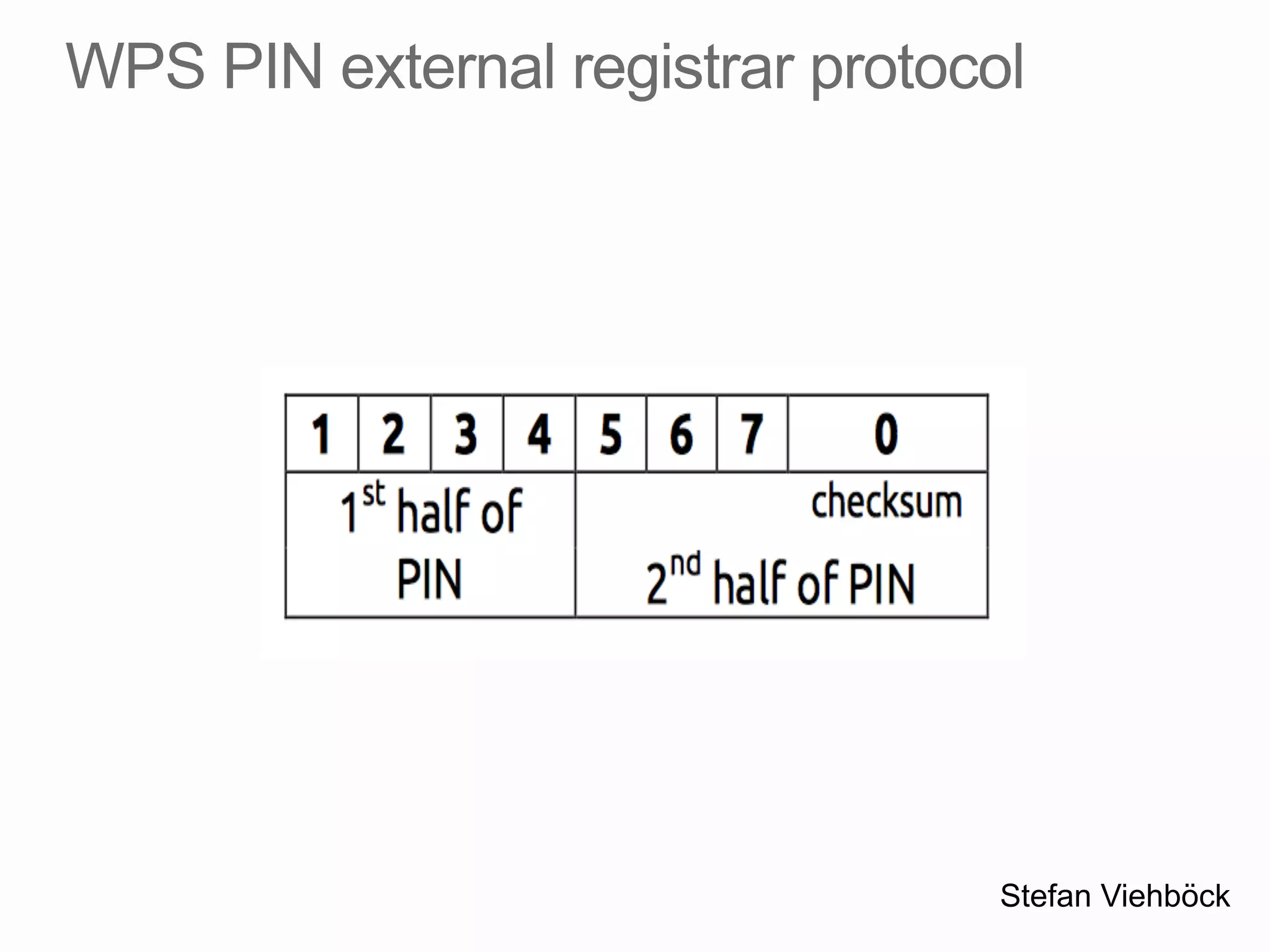
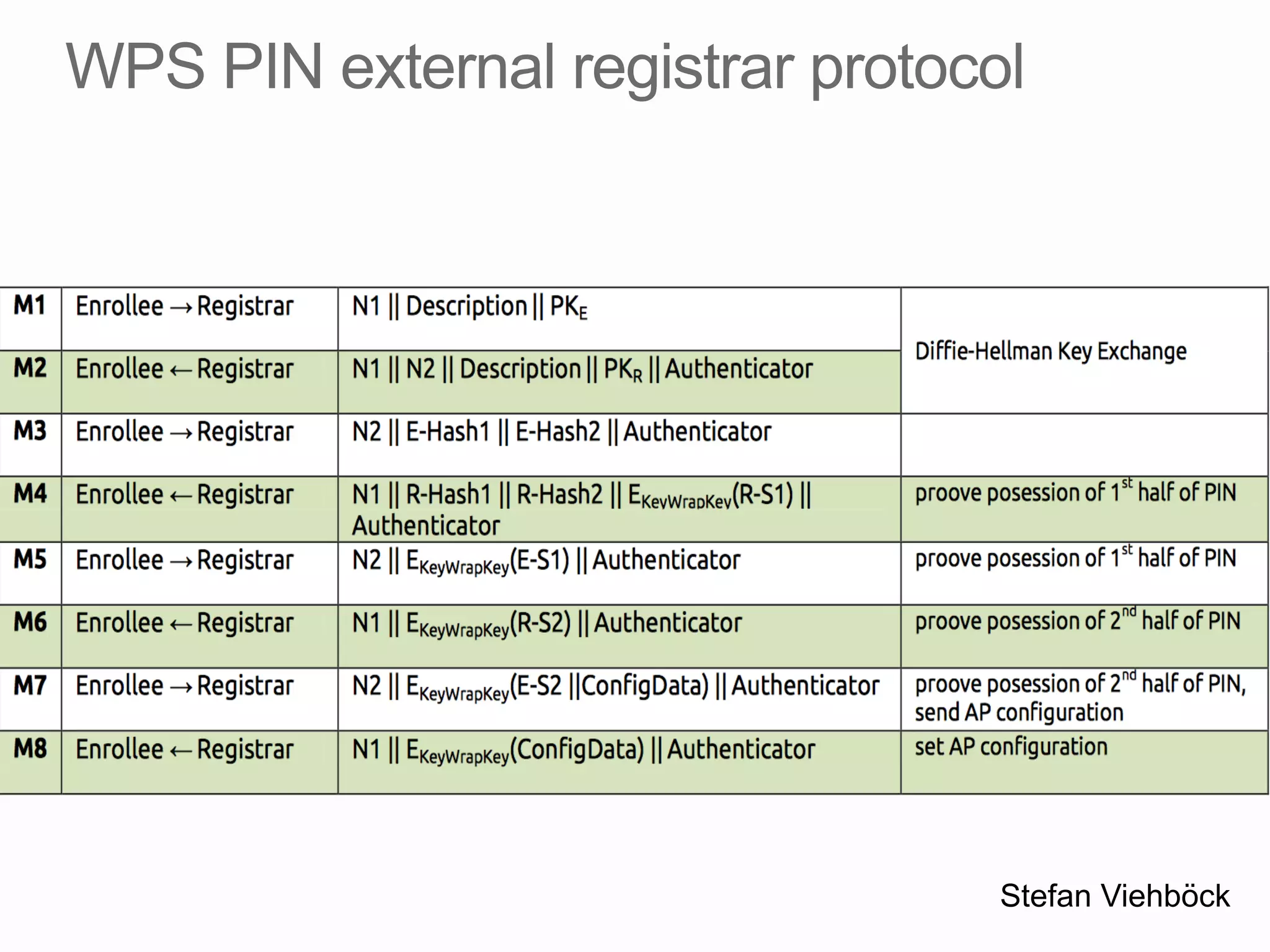
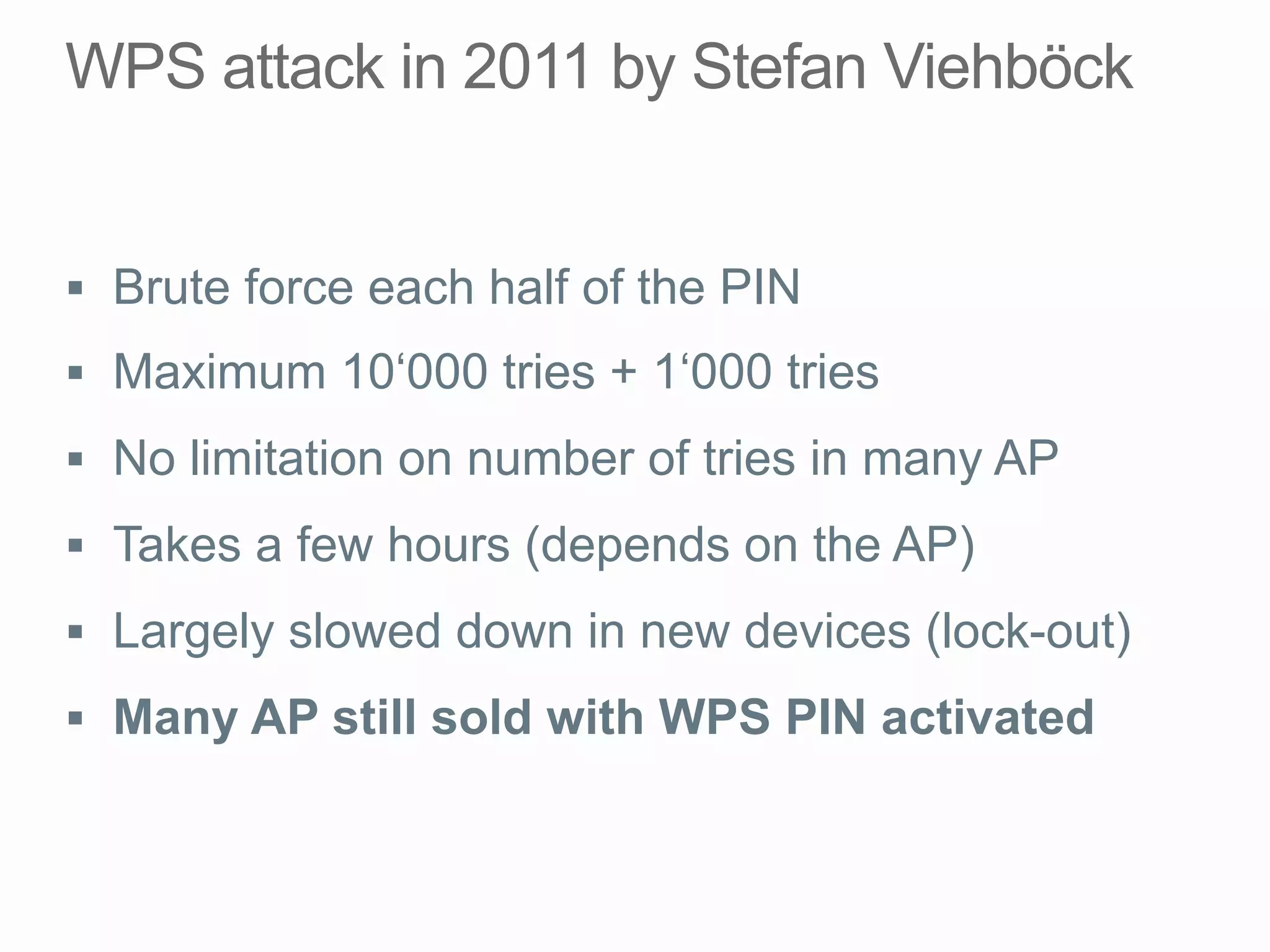
Stefan Viehböck
Stefan Viehböck
§  Brute force each half of the PIN
§  Maximum 10‘000 tries + 1‘000 tries
§  No limitation on number of tries in many AP
§  Takes a few hours (depends on the AP)
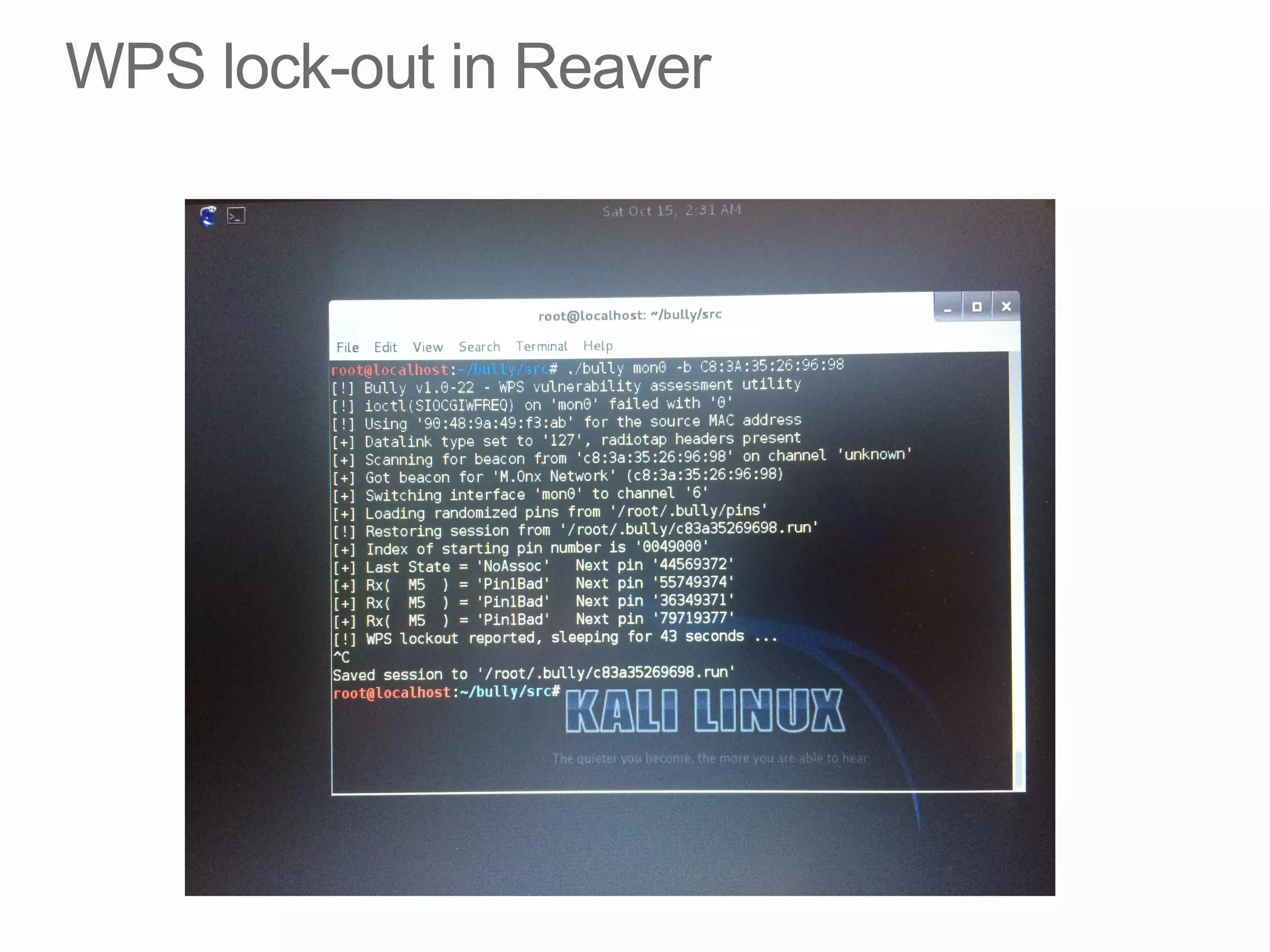
§  Largely slowed down in new devices (lock-out)
§  Many AP still sold with WPS PIN activated
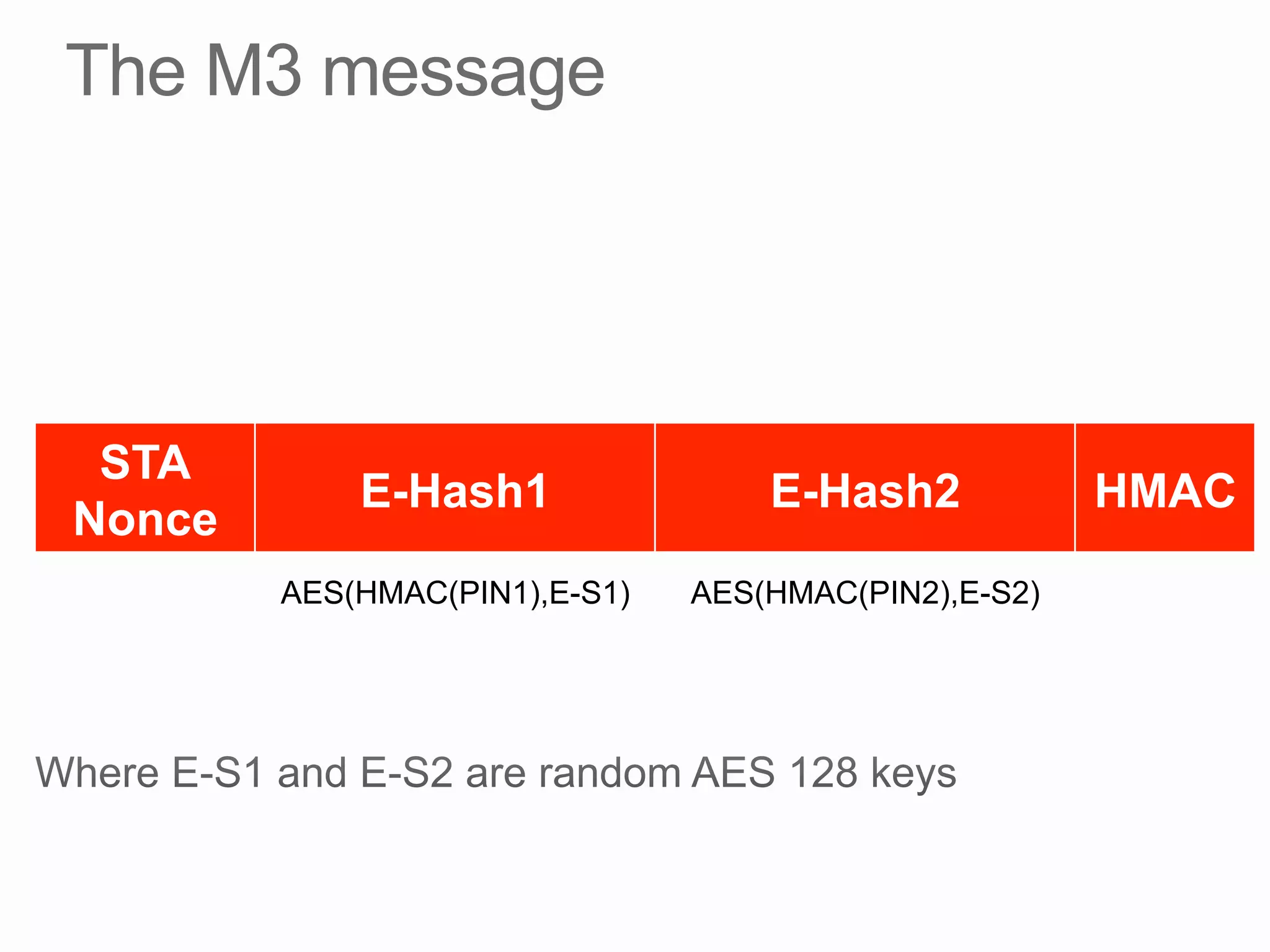
STA
Nonce
E-Hash1 E-Hash2 HMAC
AES(HMAC(PIN1),E-S1) AES(HMAC(PIN2),E-S2)
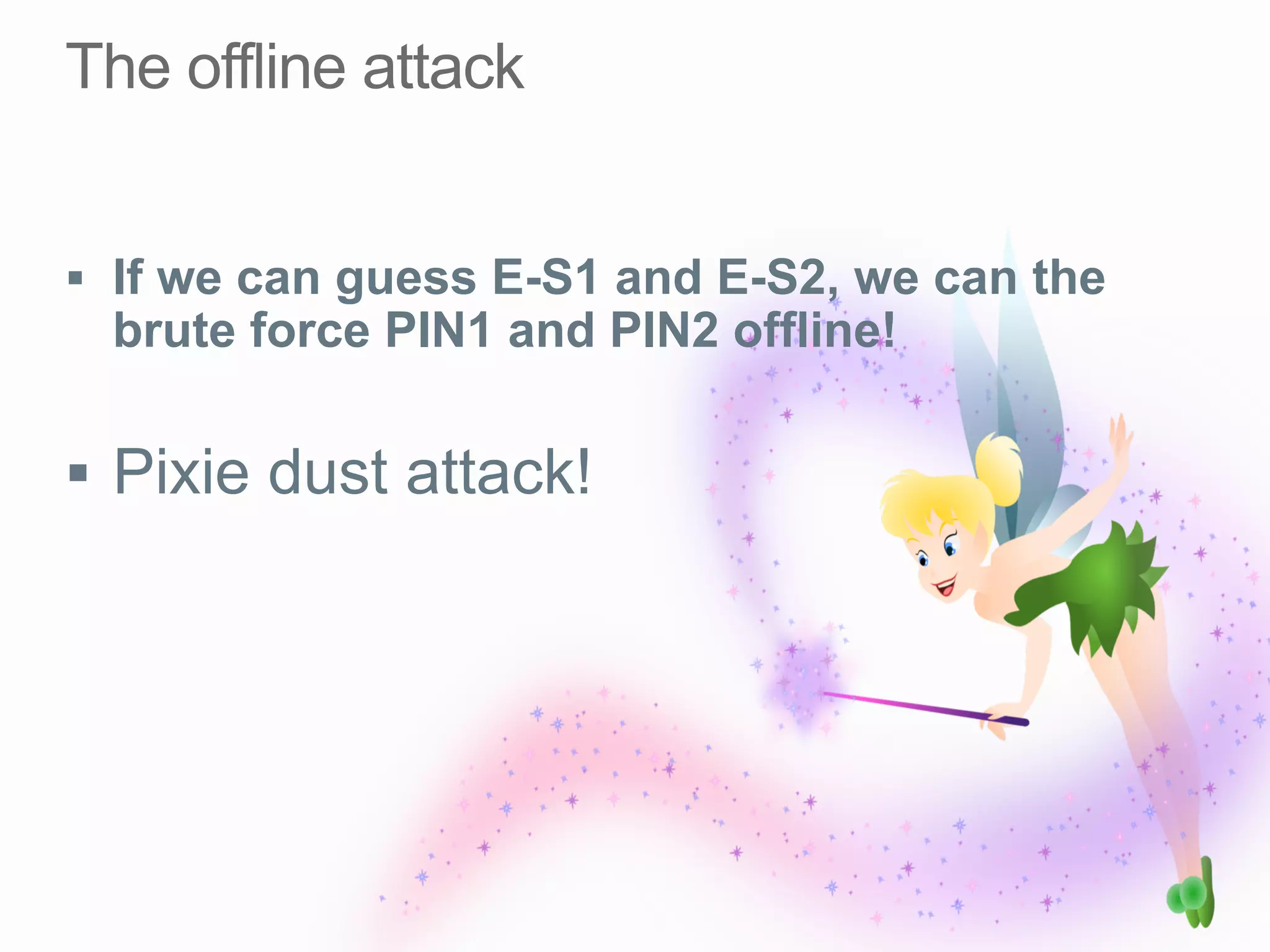
§  If we can guess E-S1 and E-S2, we can the
brute force PIN1 and PIN2 offline!
§  Pixie dust attack!
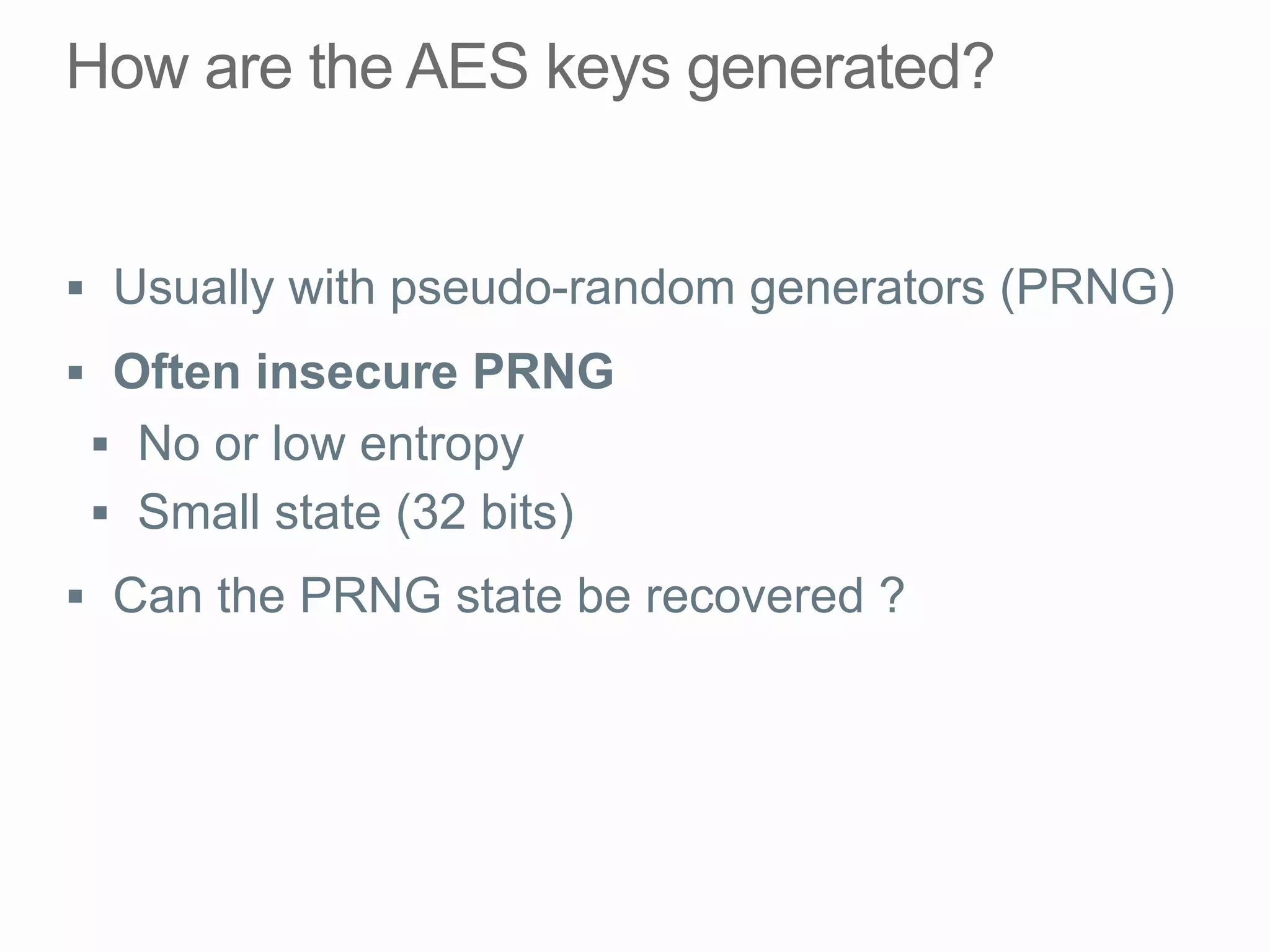
§  Usually with pseudo-random generators (PRNG)
§  Often insecure PRNG
§  No or low entropy
§  Small state (32 bits)
§  Can the PRNG state be recovered ?
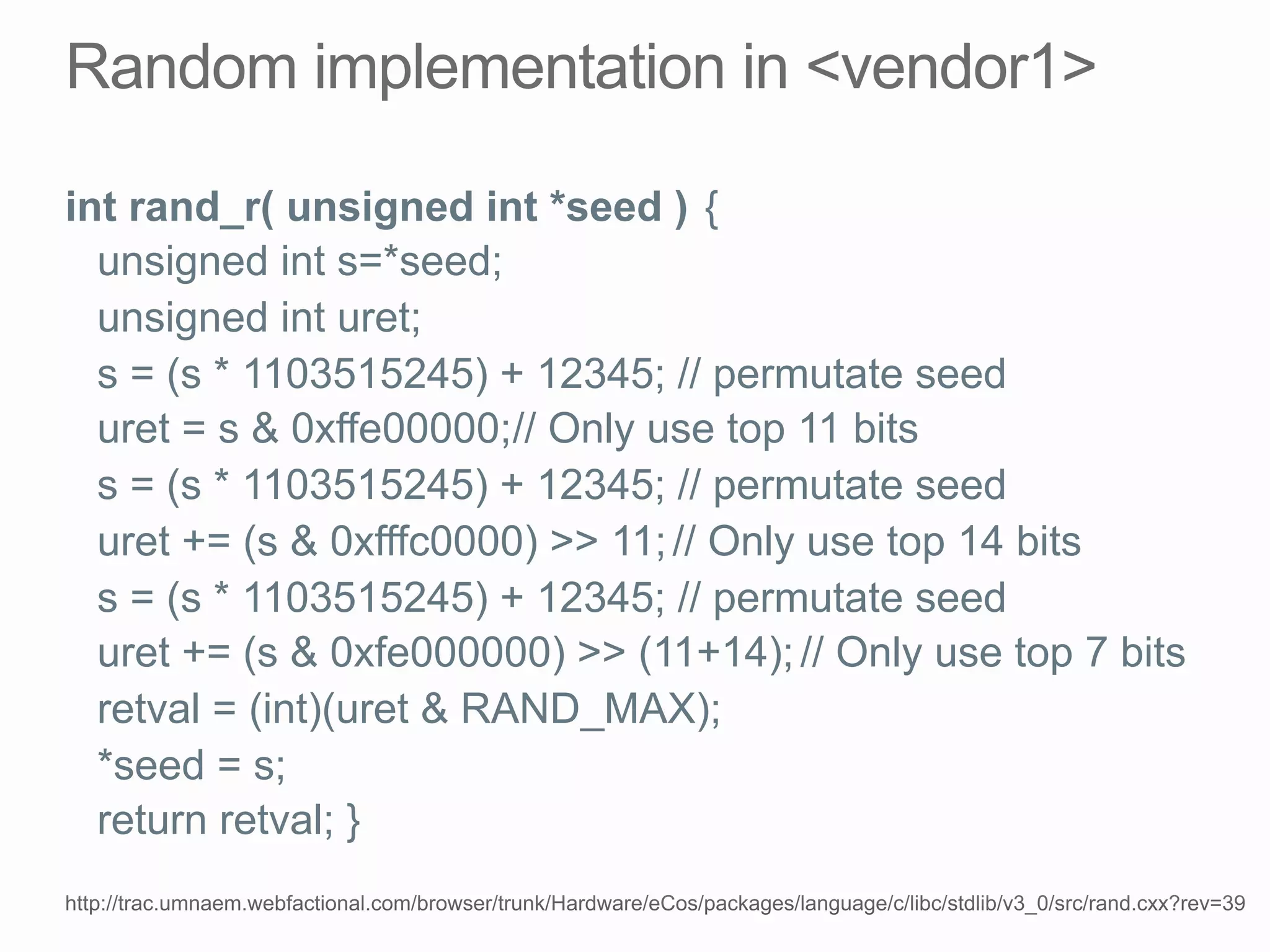
int rand_r( unsigned int *seed ) {
unsigned int s=*seed;
unsigned int uret;
s = (s * 1103515245) + 12345; // permutate seed
uret = s & 0xffe00000;// Only use top 11 bits
s = (s * 1103515245) + 12345; // permutate seed
uret += (s & 0xfffc0000) >> 11;// Only use top 14 bits
s = (s * 1103515245) + 12345; // permutate seed
uret += (s & 0xfe000000) >> (11+14);// Only use top 7 bits
retval = (int)(uret & RAND_MAX);
*seed = s;
return retval; }
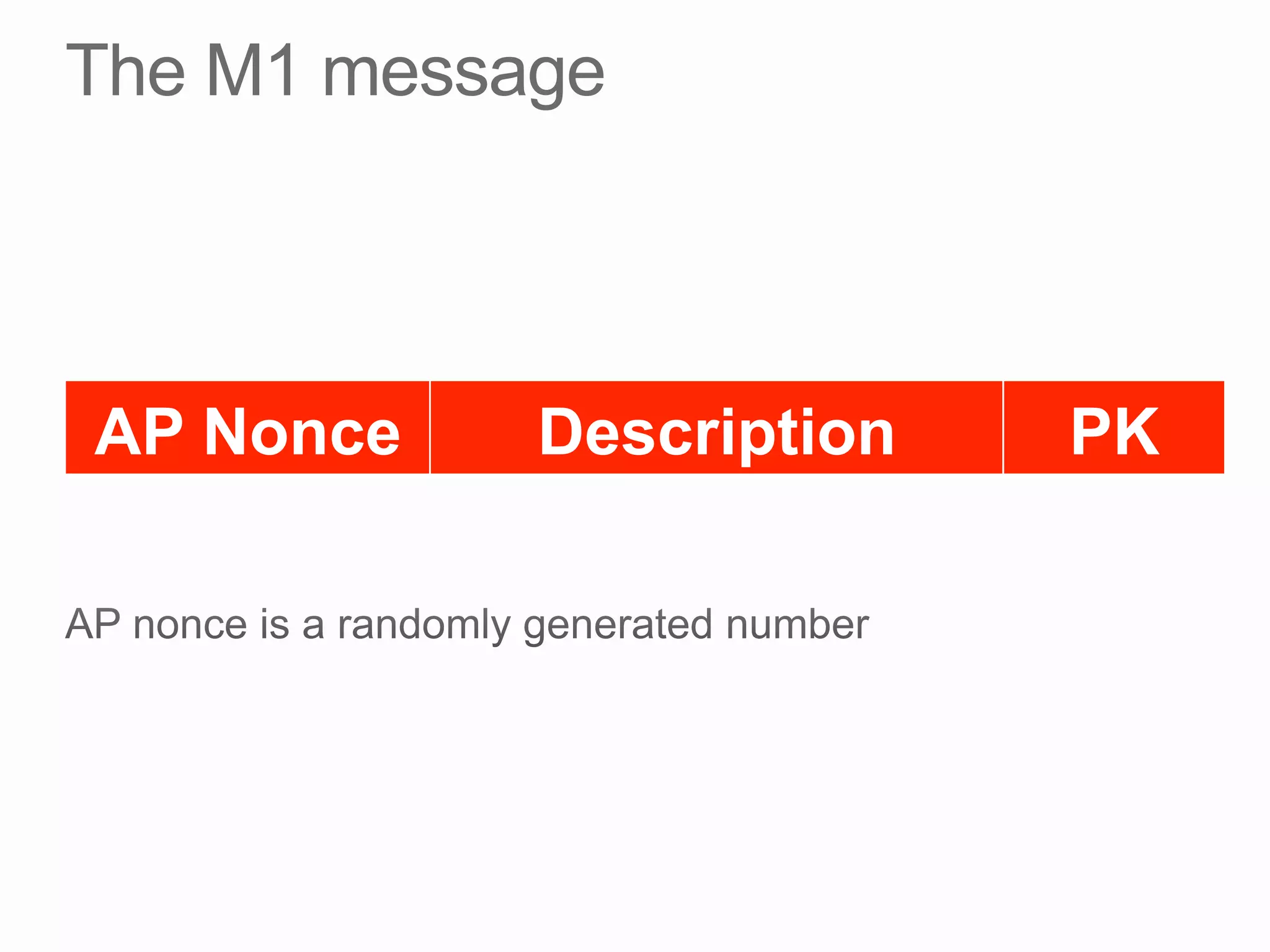
AP Nonce Description PK
§  Linear Congruential Generator
§  32 bits state
§  No external entropy
§  E-S1 and E-S2 generated right after the Nonce
§  Do the WPS protocol up to message M3
§  Get the Nonce from M1
§  Bruteforce the state of the PRNG
§  Compute E-S1 and E-S2 from the state
§  Decrypt E-Hash1 and E-Hash2
§  Bruteforce Pin1 and Pin2
§  Do the full WPS protocol and get the passphrase
§  Linear Feedback Shift Register (LFSR)
§  Broken
§  Doesn‘t matter the keys are always NULL !!
§  Some AP have the same state at each boot
§  Make a list of common states after reboot
§  Attack the AP right after boot
§  Trigger the breakers
§  DDOS the AP
§  Jam the signal until the target reboots the AP
§  Looks okay
§  Uses /dev/random
§  Found in Atheros SDK
§  But you never know
§  Several papers attack the entropy of the linux
PRNG in embedded systems
§  It‘s complicated
§  Many of the implementations are the reference
code for the chipset
§  Only the GUI is reskinned
§  Therefore many brands are affected
§  Many vendors use different chipset
§  Even for the same model number
§  Disable WPS now !
§  Reverse engineers: Check other AP for bad PRNG
§  Cryptographers: Check if good PRNG are okay

Offline bruteforce attack on WiFi Protected Setup

  • 1.
    Offline bruteforce attackon WiFi Protected Setup Dominique Bongard Founder 0xcite, Switzerland @reversity
  • 2.
    §  Protocol aimingat easily connecting to protected WiFi networks §  Two main modes: Push-Button and 8 digit PIN code §  Gives the WPA passphrase to stations providing the right PIN §  Poor design and implementation
  • 5.
  • 6.
  • 7.
    §  Brute forceeach half of the PIN §  Maximum 10‘000 tries + 1‘000 tries §  No limitation on number of tries in many AP §  Takes a few hours (depends on the AP) §  Largely slowed down in new devices (lock-out) §  Many AP still sold with WPS PIN activated
  • 9.
  • 10.
    §  If wecan guess E-S1 and E-S2, we can the brute force PIN1 and PIN2 offline! §  Pixie dust attack!
  • 11.
    §  Usually withpseudo-random generators (PRNG) §  Often insecure PRNG §  No or low entropy §  Small state (32 bits) §  Can the PRNG state be recovered ?
  • 12.
    int rand_r( unsignedint *seed ) { unsigned int s=*seed; unsigned int uret; s = (s * 1103515245) + 12345; // permutate seed uret = s & 0xffe00000;// Only use top 11 bits s = (s * 1103515245) + 12345; // permutate seed uret += (s & 0xfffc0000) >> 11;// Only use top 14 bits s = (s * 1103515245) + 12345; // permutate seed uret += (s & 0xfe000000) >> (11+14);// Only use top 7 bits retval = (int)(uret & RAND_MAX); *seed = s; return retval; }
  • 13.
  • 14.
    §  Linear CongruentialGenerator §  32 bits state §  No external entropy §  E-S1 and E-S2 generated right after the Nonce
  • 15.
    §  Do theWPS protocol up to message M3 §  Get the Nonce from M1 §  Bruteforce the state of the PRNG §  Compute E-S1 and E-S2 from the state §  Decrypt E-Hash1 and E-Hash2 §  Bruteforce Pin1 and Pin2 §  Do the full WPS protocol and get the passphrase
  • 16.
    §  Linear FeedbackShift Register (LFSR) §  Broken §  Doesn‘t matter the keys are always NULL !!
  • 17.
    §  Some APhave the same state at each boot §  Make a list of common states after reboot §  Attack the AP right after boot
  • 18.
    §  Trigger thebreakers §  DDOS the AP §  Jam the signal until the target reboots the AP
  • 19.
    §  Looks okay § Uses /dev/random §  Found in Atheros SDK §  But you never know §  Several papers attack the entropy of the linux PRNG in embedded systems
  • 20.
    §  It‘s complicated § Many of the implementations are the reference code for the chipset §  Only the GUI is reskinned §  Therefore many brands are affected §  Many vendors use different chipset §  Even for the same model number
  • 21.
    §  Disable WPSnow ! §  Reverse engineers: Check other AP for bad PRNG §  Cryptographers: Check if good PRNG are okay