Odontogenic
Lymphadenitis
and
Adenophlegmon
Sood Aarushi
LA1-203(2)
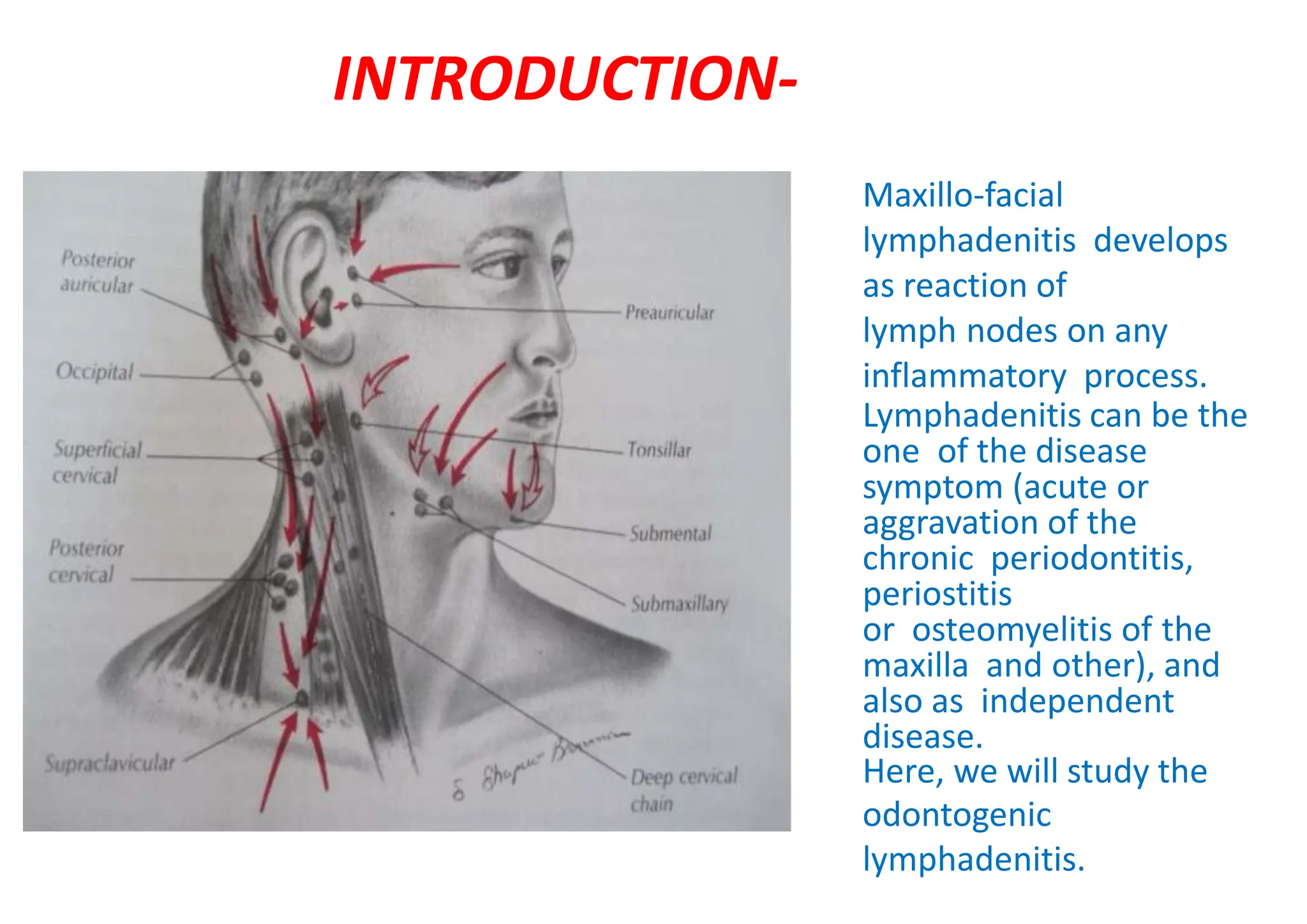
Maxillo-facial
lymphadenitis develops
as reaction of
lymph nodes on any
inflammatory process.
Lymphadenitis can be the
one of the disease
symptom (acute or
aggravation of the
chronic periodontitis,
periostitis
or osteomyelitis of the
maxilla and other), and
also as independent
disease.
Here, we will study the
odontogenic
lymphadenitis.
INTRODUCTION-
The major lymph nodes of the head a
nd neck area should be palpated with
the patient in an
upright position. Findings which shou
ld be noted in the patient record incl
ude enlarged palpable nodes, fixed n
odes, tender nodes and whether the
palpable nodes are single or present
in groups. Single or multiple nontend
er, and fixed nodes are very suspiciou
s for malignancy. Groups of tender n
odes usually occur in conjunction wit
h some type of acute infection. Occa
sionally nodes will remain enlarged a
nd palpable after an infection. This is
a relatively common occurrence esp
ecially within the submandibular gro
up of lymph nodes.
When examined, these nodes should be small (less than 1 cm), non-
tender and mobile.
NEOPLASTIC
Acute:
Serous, Purulent, and
Adenophlegmon.
Chronic:
Hyperplastic, Purulent.
REACTIVE:
Classification
Of
Lymphadenopathy
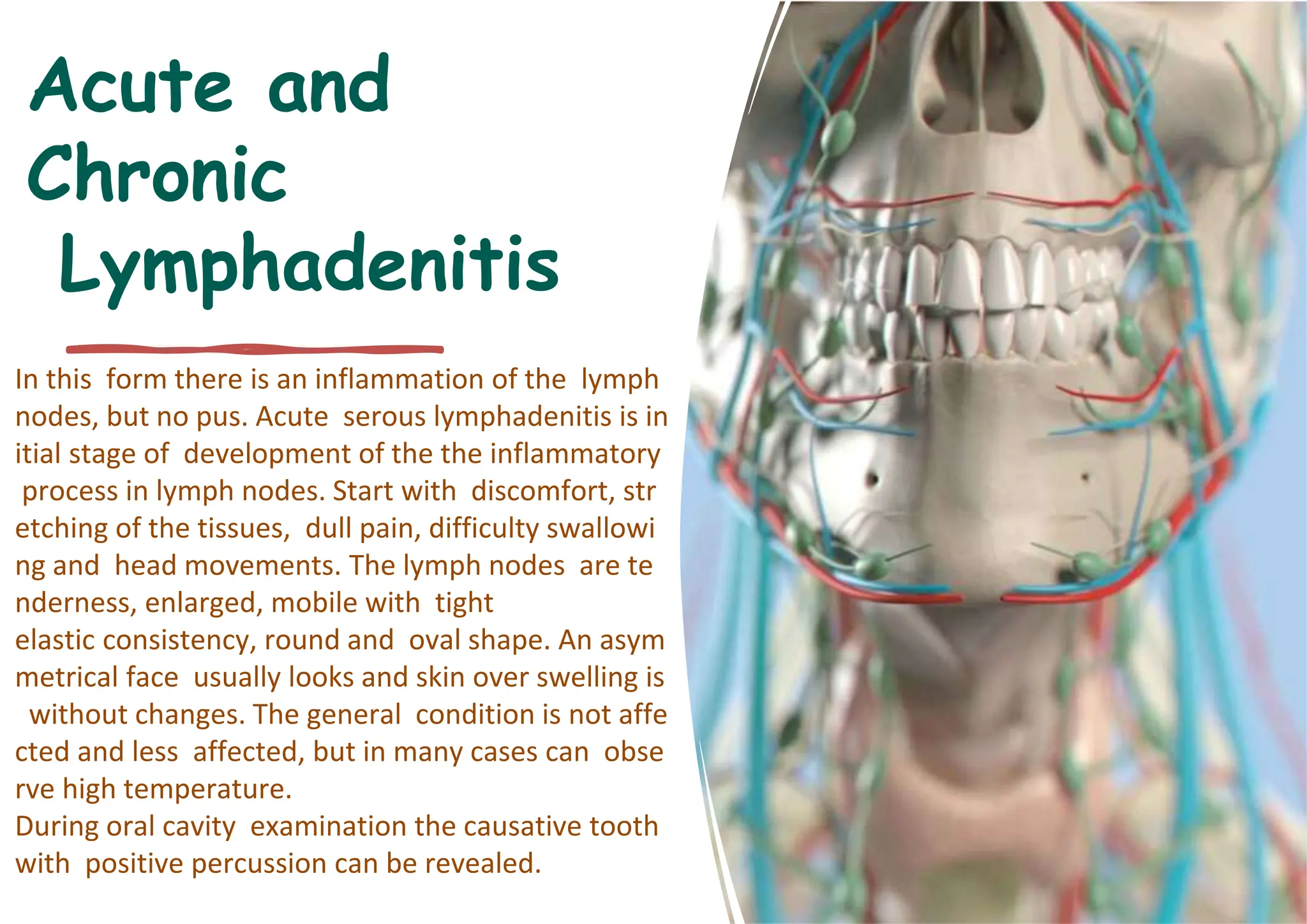
Acute and
Chronic
Lymphadenitis
In this form there is an inflammation of the lymph
nodes, but no pus. Acute serous lymphadenitis is in
itial stage of development of the the inflammatory
process in lymph nodes. Start with discomfort, str
etching of the tissues, dull pain, difficulty swallowi
ng and head movements. The lymph nodes are te
nderness, enlarged, mobile with tight
elastic consistency, round and oval shape. An asym
metrical face usually looks and skin over swelling is
without changes. The general condition is not affe
cted and less affected, but in many cases can obse
rve high temperature.
During oral cavity examination the causative tooth
with positive percussion can be revealed.
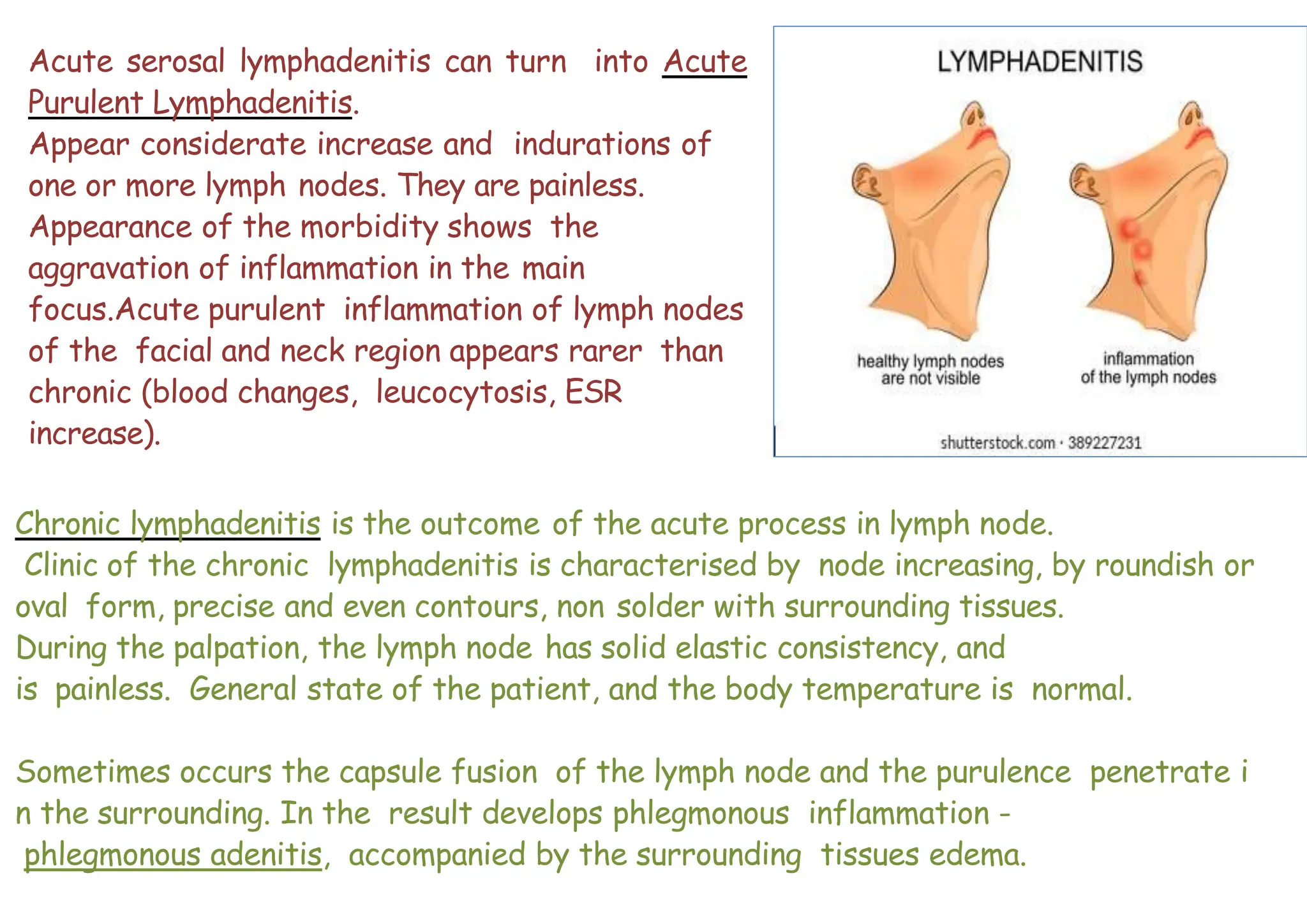
Acute serosal lymphadenitis can turn into Acute
Purulent Lymphadenitis.
Appear considerate increase and indurations of
one or more lymph nodes. They are painless.
Appearance of the morbidity shows the
aggravation of inflammation in the main
focus.Acute purulent inflammation of lymph nodes
of the facial and neck region appears rarer than
chronic (blood changes, leucocytosis, ESR
increase).
Chronic lymphadenitis is the outcome of the acute process in lymph node.
Clinic of the chronic lymphadenitis is characterised by node increasing, by roundish or
oval form, precise and even contours, non solder with surrounding tissues.
During the palpation, the lymph node has solid elastic consistency, and
is painless. General state of the patient, and the body temperature is normal.
Sometimes occurs the capsule fusion of the lymph node and the purulence penetrate i
n the surrounding. In the result develops phlegmonous inflammation -
phlegmonous adenitis, accompanied by the surrounding tissues edema.
Adenophlegmon -
Adenophlegmon is an acute purulent
inflammation of the subcutaneous adipose
tissue of an abscessing nature, closely
associated with purulent processes in
regional lymph nodes (lymphadenitis).
This is an external or internal infection,
most often with coccoid flora. As a result of
a decrease in the body’s defenses of an
exogenous-endogenous nature (focal and
perifocal infection, especially in the area of
the tonsils, oral cavity, kidneys, past illness,
skin injury, more often post-injection,
pyococcal lesion of the dermis), the anti-
infective barrier of lymph nodes decreases.
Most often, adenophlegmon occurs in the
parotid and submandibular areas in
children.
It is clinically manifested by a manifest tumor
fluctuating under pressure, with hyperemic skin
in the central part, quite dense, painful on
palpation. The general condition of the patient
is characterized by symptoms of intoxication.
Diagnosis, taking into account a typical clinic,
does not cause difficulties, soft tissue
ultrasound, blood tests, punctate treatments
are additionally performed. Treatment
of adenophlegmon consists in immediate
surgical intervention.
Complications -
Advanced adenophlegmon of the
maxillofacial region and neck can cause life-
threatening complications, including
mediastinitis, cavernous sinus thrombosis,
meningitis. With the spread of a highly
virulent infection, the development of sepsis
is not excluded
Diagnosis
Sample from affected lymph node
Placing fluid from lymph node into
a culture to see what type of
germs grow.
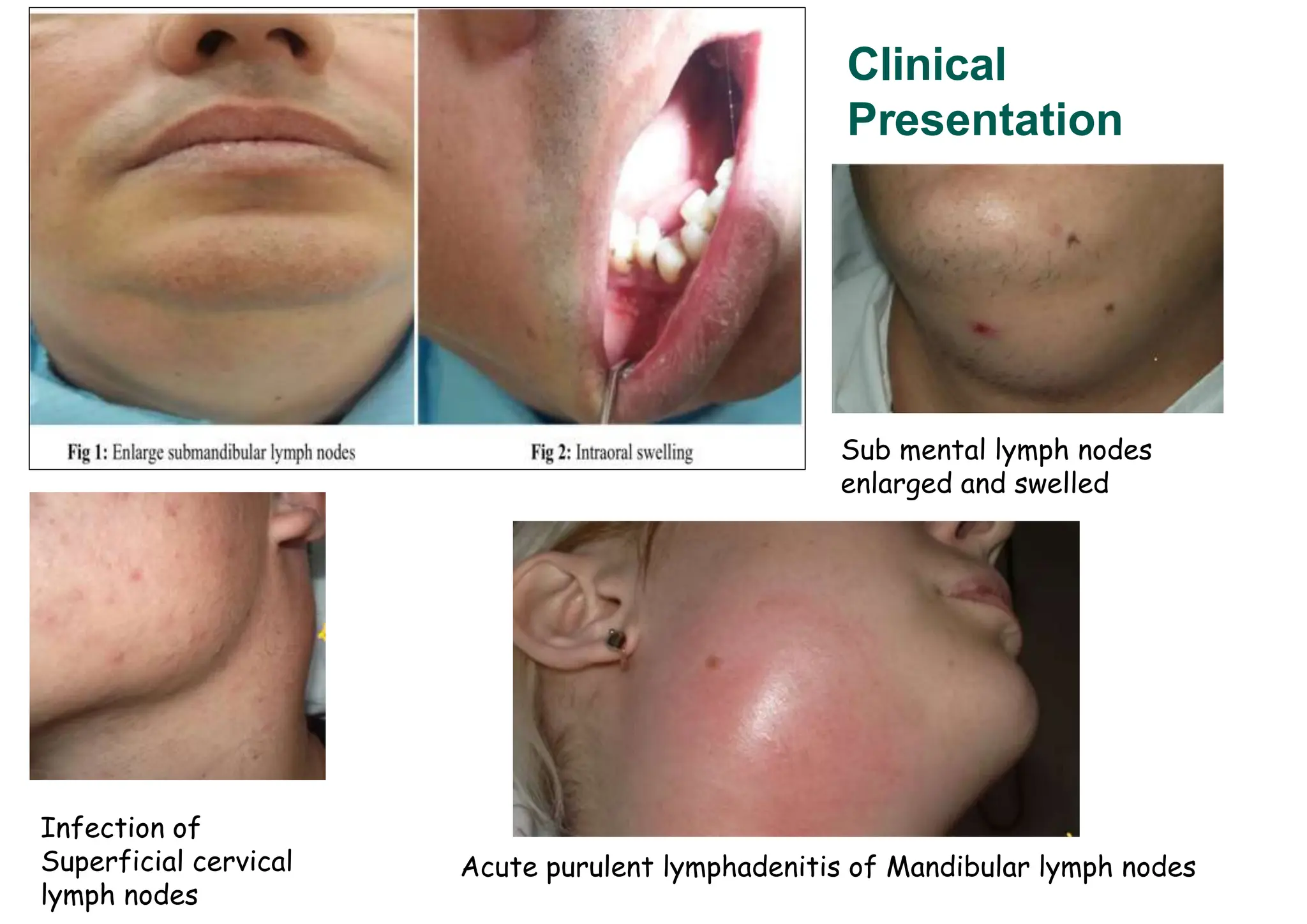
Clinical
Presentation
Sub mental lymph nodes
enlarged and swelled
Infection of
Superficial cervical
lymph nodes
Acute purulent lymphadenitis of Mandibular lymph nodes
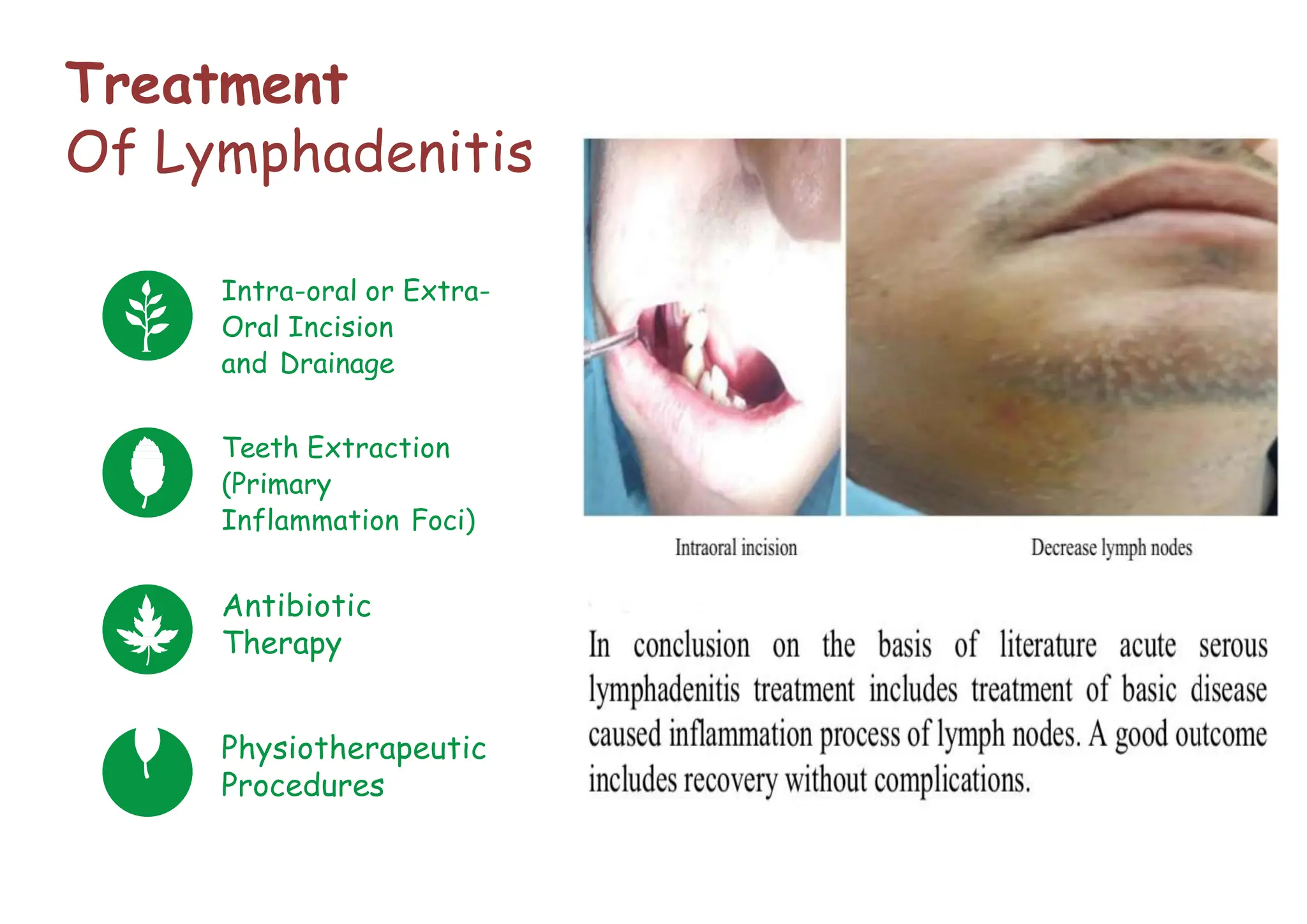
Intra-oral or Extra-
Oral Incision
and Drainage
Physiotherapeutic
Procedures
Teeth Extraction
(Primary
Inflammation Foci)
Antibiotic
Therapy
Treatment
Of Lymphadenitis
Odontogenic lymphadenitis and Adenophlegmon.pptx

Odontogenic lymphadenitis and Adenophlegmon.pptx

  • 1.
  • 2.
    Maxillo-facial lymphadenitis develops as reactionof lymph nodes on any inflammatory process. Lymphadenitis can be the one of the disease symptom (acute or aggravation of the chronic periodontitis, periostitis or osteomyelitis of the maxilla and other), and also as independent disease. Here, we will study the odontogenic lymphadenitis. INTRODUCTION-
  • 3.
    The major lymphnodes of the head a nd neck area should be palpated with the patient in an upright position. Findings which shou ld be noted in the patient record incl ude enlarged palpable nodes, fixed n odes, tender nodes and whether the palpable nodes are single or present in groups. Single or multiple nontend er, and fixed nodes are very suspiciou s for malignancy. Groups of tender n odes usually occur in conjunction wit h some type of acute infection. Occa sionally nodes will remain enlarged a nd palpable after an infection. This is a relatively common occurrence esp ecially within the submandibular gro up of lymph nodes. When examined, these nodes should be small (less than 1 cm), non- tender and mobile.
  • 4.
    NEOPLASTIC Acute: Serous, Purulent, and Adenophlegmon. Chronic: Hyperplastic,Purulent. REACTIVE: Classification Of Lymphadenopathy
  • 5.
    Acute and Chronic Lymphadenitis In thisform there is an inflammation of the lymph nodes, but no pus. Acute serous lymphadenitis is in itial stage of development of the the inflammatory process in lymph nodes. Start with discomfort, str etching of the tissues, dull pain, difficulty swallowi ng and head movements. The lymph nodes are te nderness, enlarged, mobile with tight elastic consistency, round and oval shape. An asym metrical face usually looks and skin over swelling is without changes. The general condition is not affe cted and less affected, but in many cases can obse rve high temperature. During oral cavity examination the causative tooth with positive percussion can be revealed.
  • 6.
    Acute serosal lymphadenitiscan turn into Acute Purulent Lymphadenitis. Appear considerate increase and indurations of one or more lymph nodes. They are painless. Appearance of the morbidity shows the aggravation of inflammation in the main focus.Acute purulent inflammation of lymph nodes of the facial and neck region appears rarer than chronic (blood changes, leucocytosis, ESR increase). Chronic lymphadenitis is the outcome of the acute process in lymph node. Clinic of the chronic lymphadenitis is characterised by node increasing, by roundish or oval form, precise and even contours, non solder with surrounding tissues. During the palpation, the lymph node has solid elastic consistency, and is painless. General state of the patient, and the body temperature is normal. Sometimes occurs the capsule fusion of the lymph node and the purulence penetrate i n the surrounding. In the result develops phlegmonous inflammation - phlegmonous adenitis, accompanied by the surrounding tissues edema.
  • 7.
    Adenophlegmon - Adenophlegmon isan acute purulent inflammation of the subcutaneous adipose tissue of an abscessing nature, closely associated with purulent processes in regional lymph nodes (lymphadenitis). This is an external or internal infection, most often with coccoid flora. As a result of a decrease in the body’s defenses of an exogenous-endogenous nature (focal and perifocal infection, especially in the area of the tonsils, oral cavity, kidneys, past illness, skin injury, more often post-injection, pyococcal lesion of the dermis), the anti- infective barrier of lymph nodes decreases. Most often, adenophlegmon occurs in the parotid and submandibular areas in children.
  • 8.
    It is clinicallymanifested by a manifest tumor fluctuating under pressure, with hyperemic skin in the central part, quite dense, painful on palpation. The general condition of the patient is characterized by symptoms of intoxication. Diagnosis, taking into account a typical clinic, does not cause difficulties, soft tissue ultrasound, blood tests, punctate treatments are additionally performed. Treatment of adenophlegmon consists in immediate surgical intervention. Complications - Advanced adenophlegmon of the maxillofacial region and neck can cause life- threatening complications, including mediastinitis, cavernous sinus thrombosis, meningitis. With the spread of a highly virulent infection, the development of sepsis is not excluded
  • 9.
    Diagnosis Sample from affectedlymph node Placing fluid from lymph node into a culture to see what type of germs grow.
  • 10.
    Clinical Presentation Sub mental lymphnodes enlarged and swelled Infection of Superficial cervical lymph nodes Acute purulent lymphadenitis of Mandibular lymph nodes
  • 11.
    Intra-oral or Extra- OralIncision and Drainage Physiotherapeutic Procedures Teeth Extraction (Primary Inflammation Foci) Antibiotic Therapy Treatment Of Lymphadenitis