Obsidian
What is it?
• Obsidian is an igneous rock, so that means it comes from magma or
lava
• Typically obsidian forms on the surface, so it is an extrusive igneous
rock.
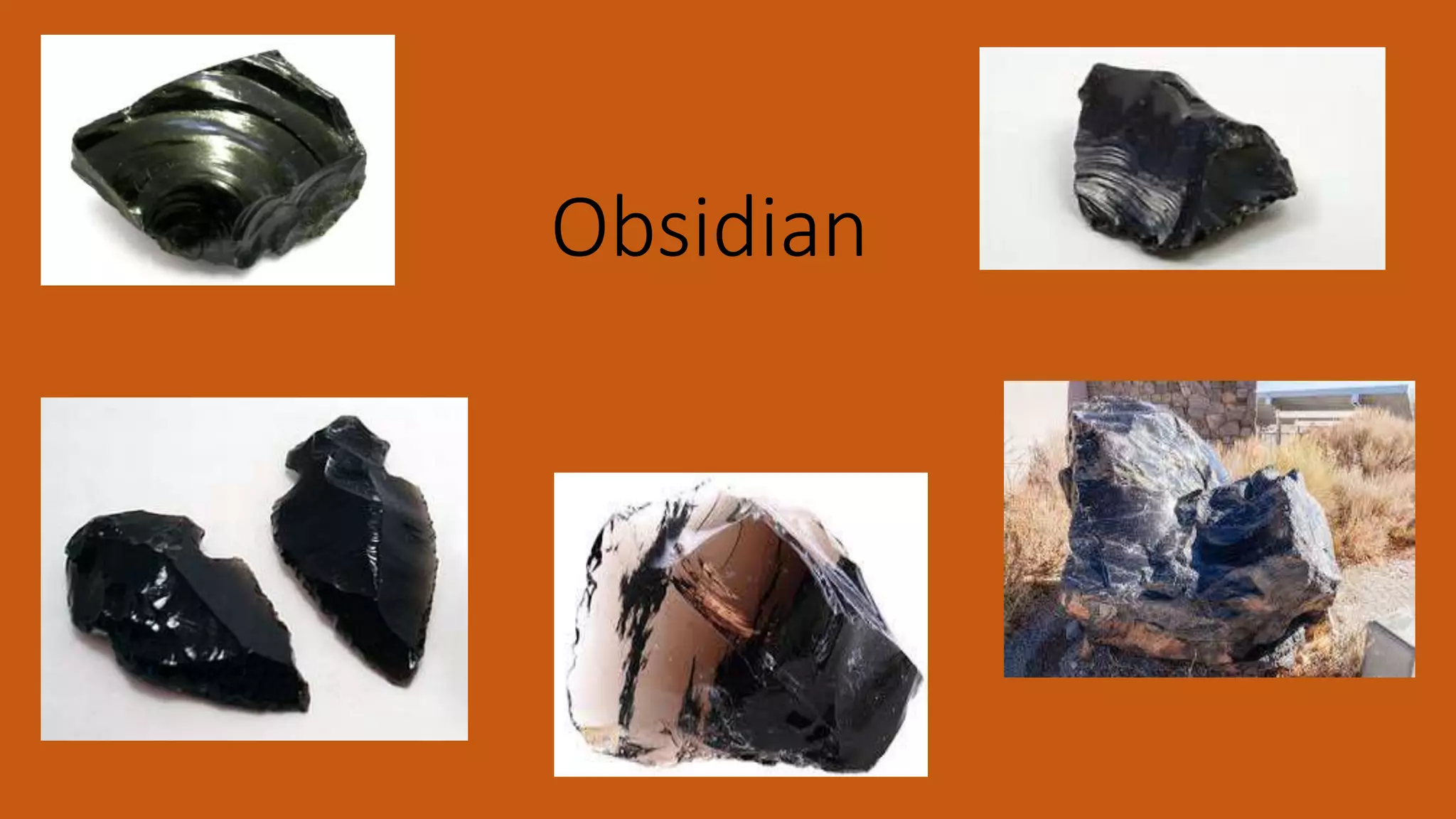
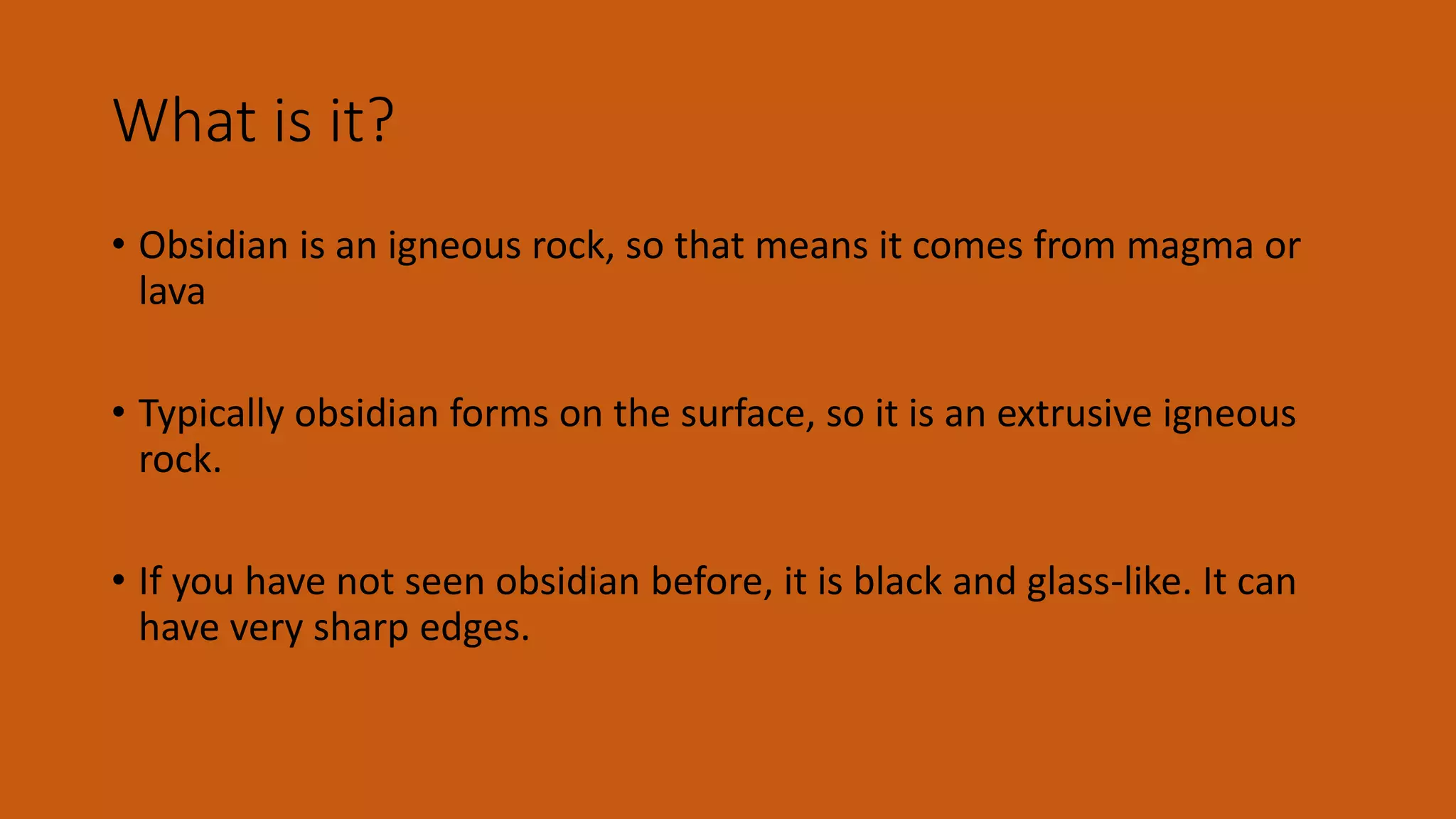
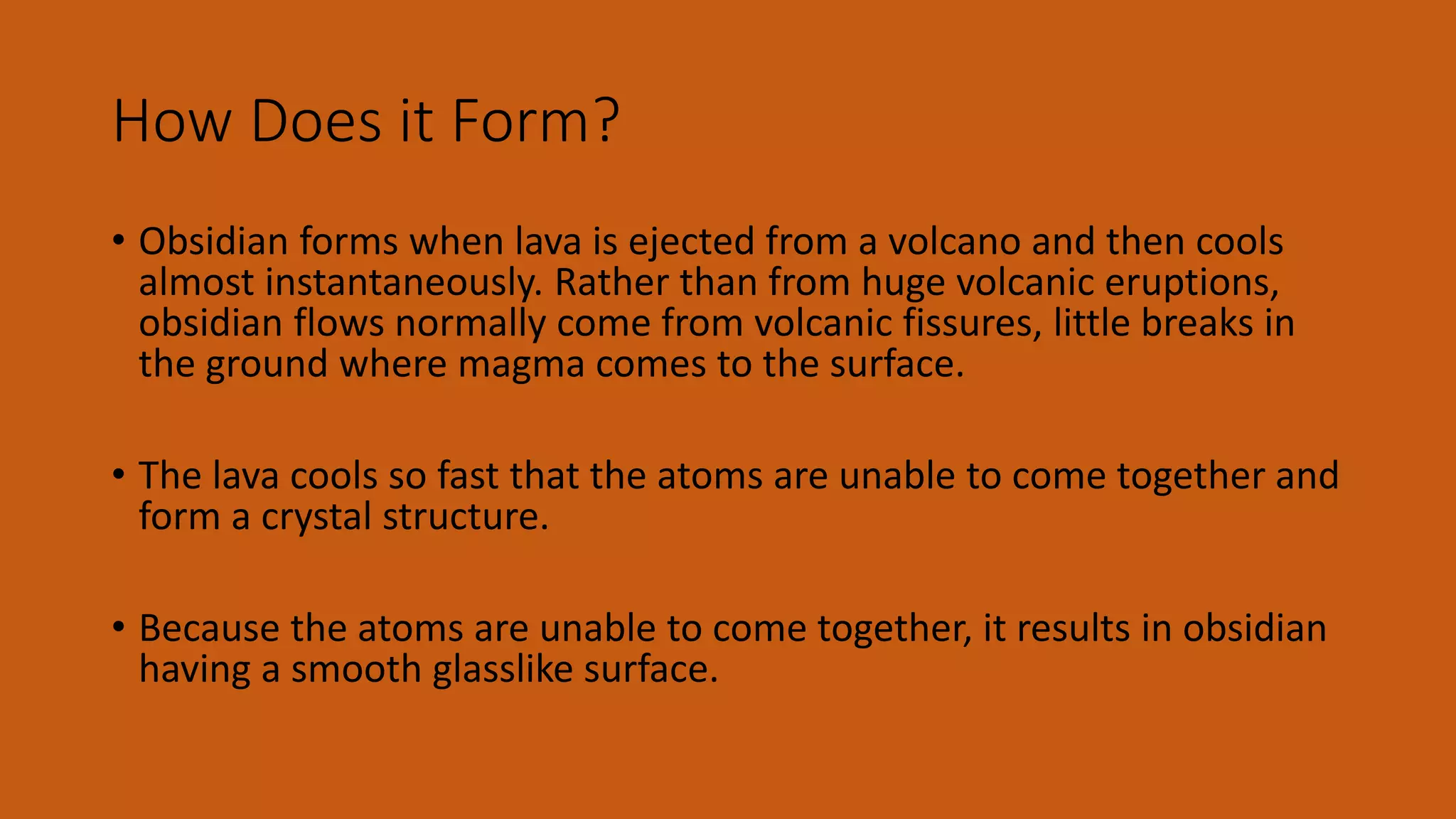
• If you have not seen obsidian before, it is black and glass-like. It can
have very sharp edges.
How Does it Form?
• Obsidian forms when lava is ejected from a volcano and then cools
almost instantaneously. Rather than from huge volcanic eruptions,
obsidian flows normally come from volcanic fissures, little breaks in
the ground where magma comes to the surface.
• The lava cools so fast that the atoms are unable to come together and
form a crystal structure.
• Because the atoms are unable to come together, it results in obsidian
having a smooth glasslike surface.
How can it be shaped?
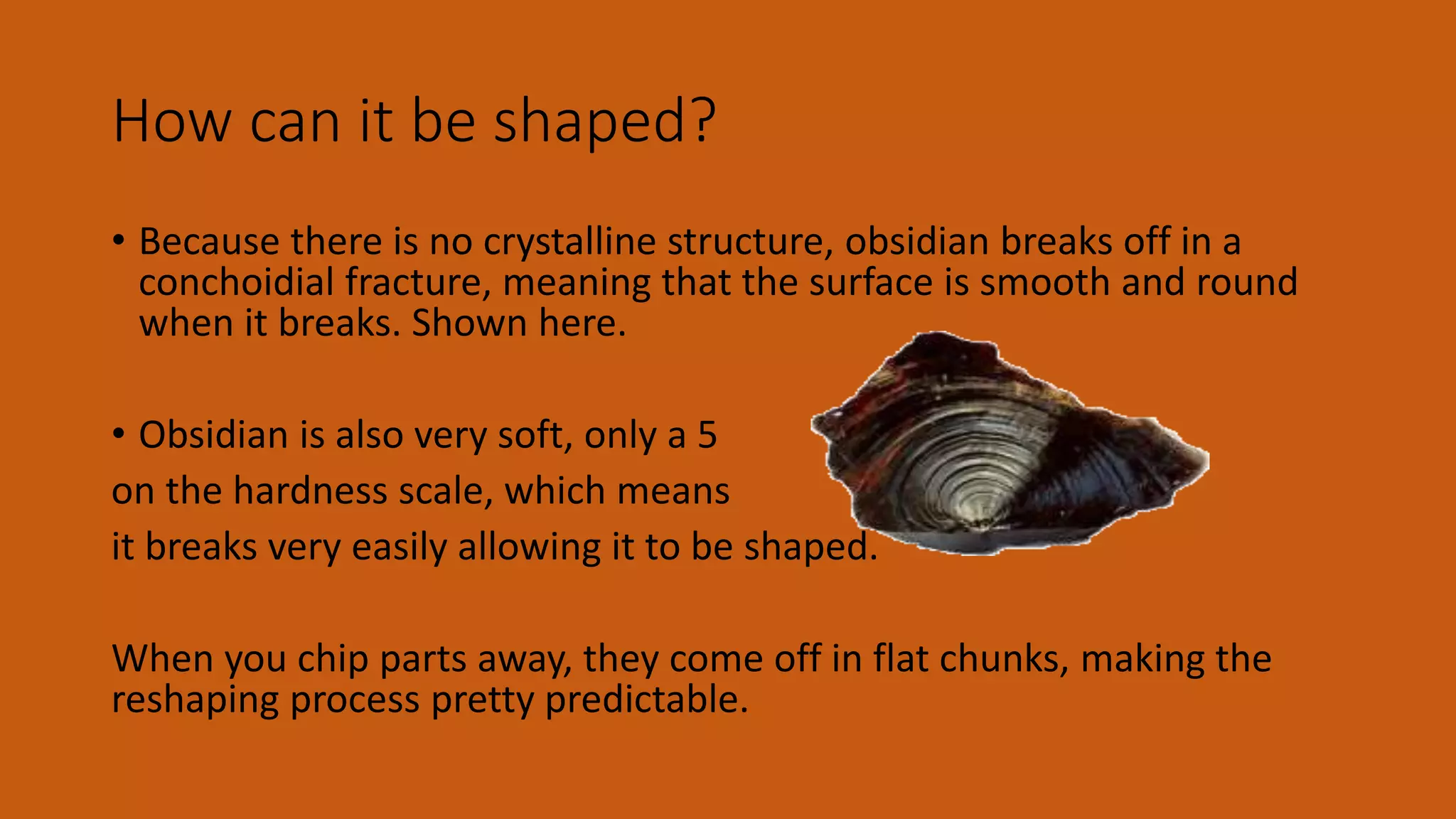
• Because there is no crystalline structure, obsidian breaks off in a
conchoidial fracture, meaning that the surface is smooth and round
when it breaks. Shown here.
• Obsidian is also very soft, only a 5
on the hardness scale, which means
it breaks very easily allowing it to be shaped.
When you chip parts away, they come off in flat chunks, making the
reshaping process pretty predictable.
Why is it so sharp?
• This conchoidial fracture results in curved surfaces, which produces
rocks with very sharp edges.
• The ease at which you can shape it also helped determine its role as a
Bronze Age weapon.
• Fun Fact: Small obsidian blades are actually used today in medical
procedures that require the most precision. They work just as well or
even better than the best steel tools.
Obsidian

Obsidian

  • 1.
  • 2.
    What is it? •Obsidian is an igneous rock, so that means it comes from magma or lava • Typically obsidian forms on the surface, so it is an extrusive igneous rock. • If you have not seen obsidian before, it is black and glass-like. It can have very sharp edges.
  • 3.
    How Does itForm? • Obsidian forms when lava is ejected from a volcano and then cools almost instantaneously. Rather than from huge volcanic eruptions, obsidian flows normally come from volcanic fissures, little breaks in the ground where magma comes to the surface. • The lava cools so fast that the atoms are unable to come together and form a crystal structure. • Because the atoms are unable to come together, it results in obsidian having a smooth glasslike surface.
  • 4.
    How can itbe shaped? • Because there is no crystalline structure, obsidian breaks off in a conchoidial fracture, meaning that the surface is smooth and round when it breaks. Shown here. • Obsidian is also very soft, only a 5 on the hardness scale, which means it breaks very easily allowing it to be shaped. When you chip parts away, they come off in flat chunks, making the reshaping process pretty predictable.
  • 5.
    Why is itso sharp? • This conchoidial fracture results in curved surfaces, which produces rocks with very sharp edges. • The ease at which you can shape it also helped determine its role as a Bronze Age weapon. • Fun Fact: Small obsidian blades are actually used today in medical procedures that require the most precision. They work just as well or even better than the best steel tools.