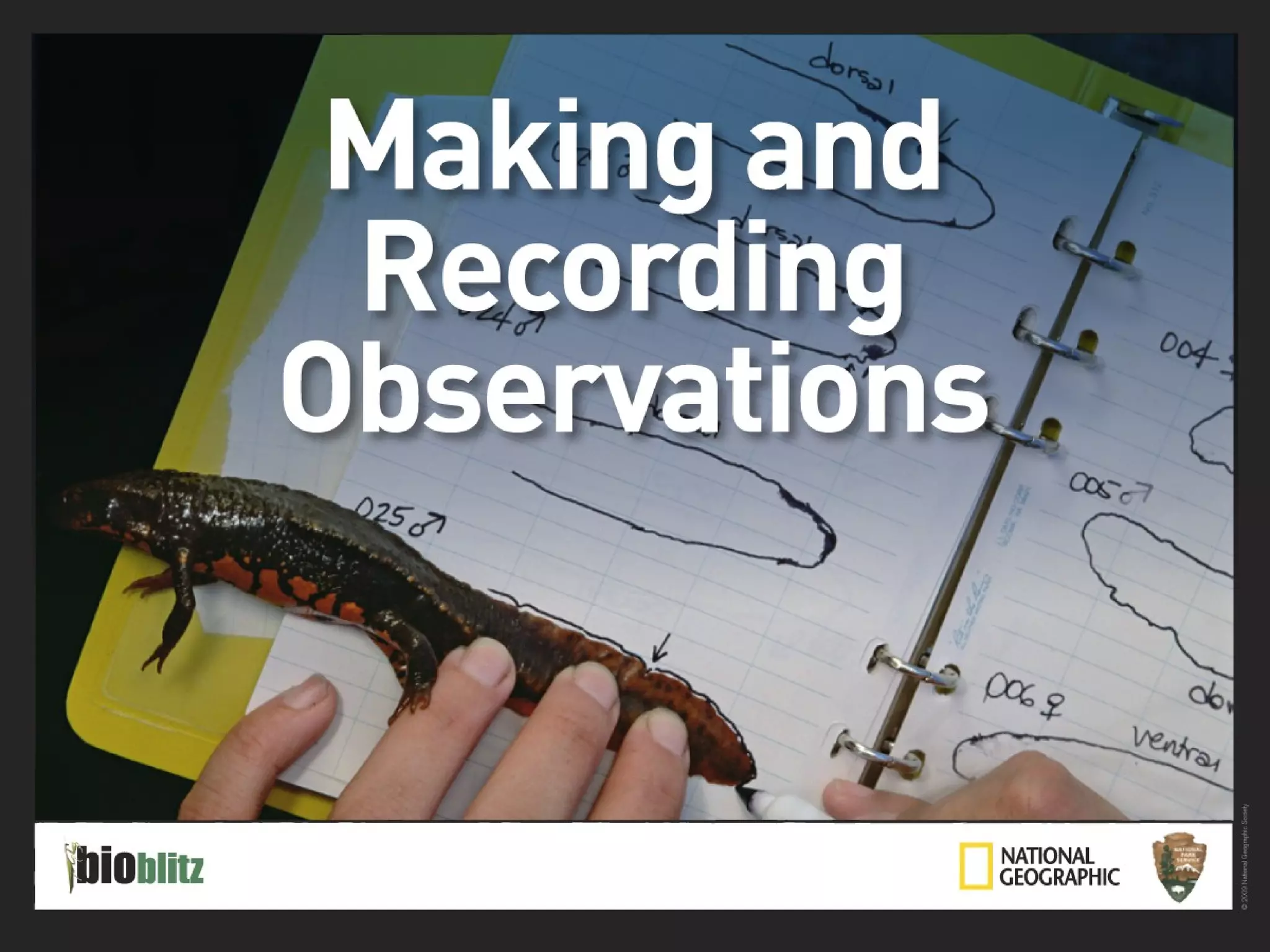
WARM-UP What do you notice about your environment? Record your observations.
What did you observe? What senses did you use? What tools did you use? What tools could you use to more    detailed observations? Share & Discuss
KEY QUESTIONS
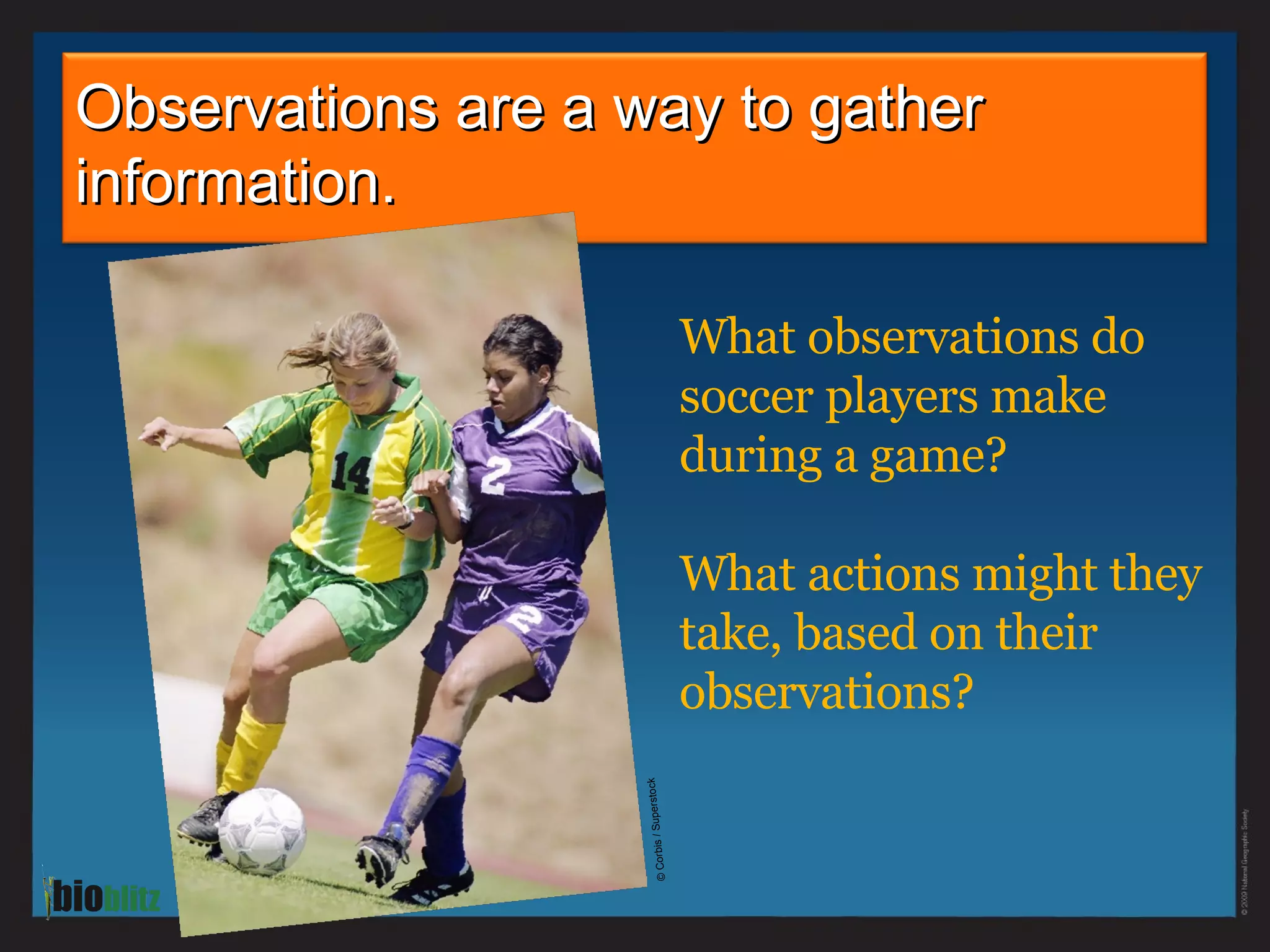
What observations do soccer players make during a game?  What actions might they take, based on their observations?  Observations are a way to gather information. Photo credit here © Corbis / Superstock
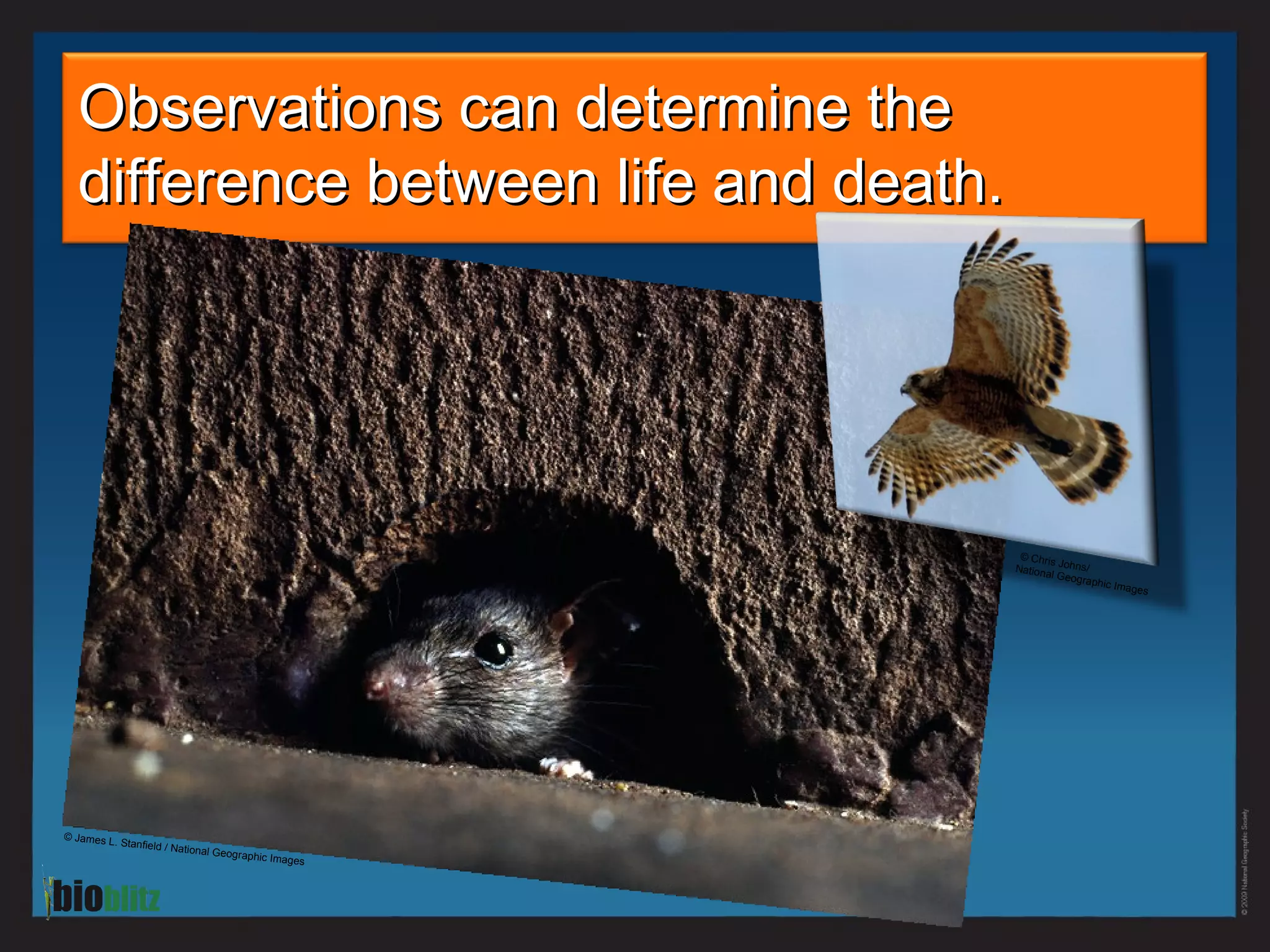
Observations can determine the difference between life and death.  © Chris Johns/ National Geographic Images © James L. Stanfield / National Geographic Images
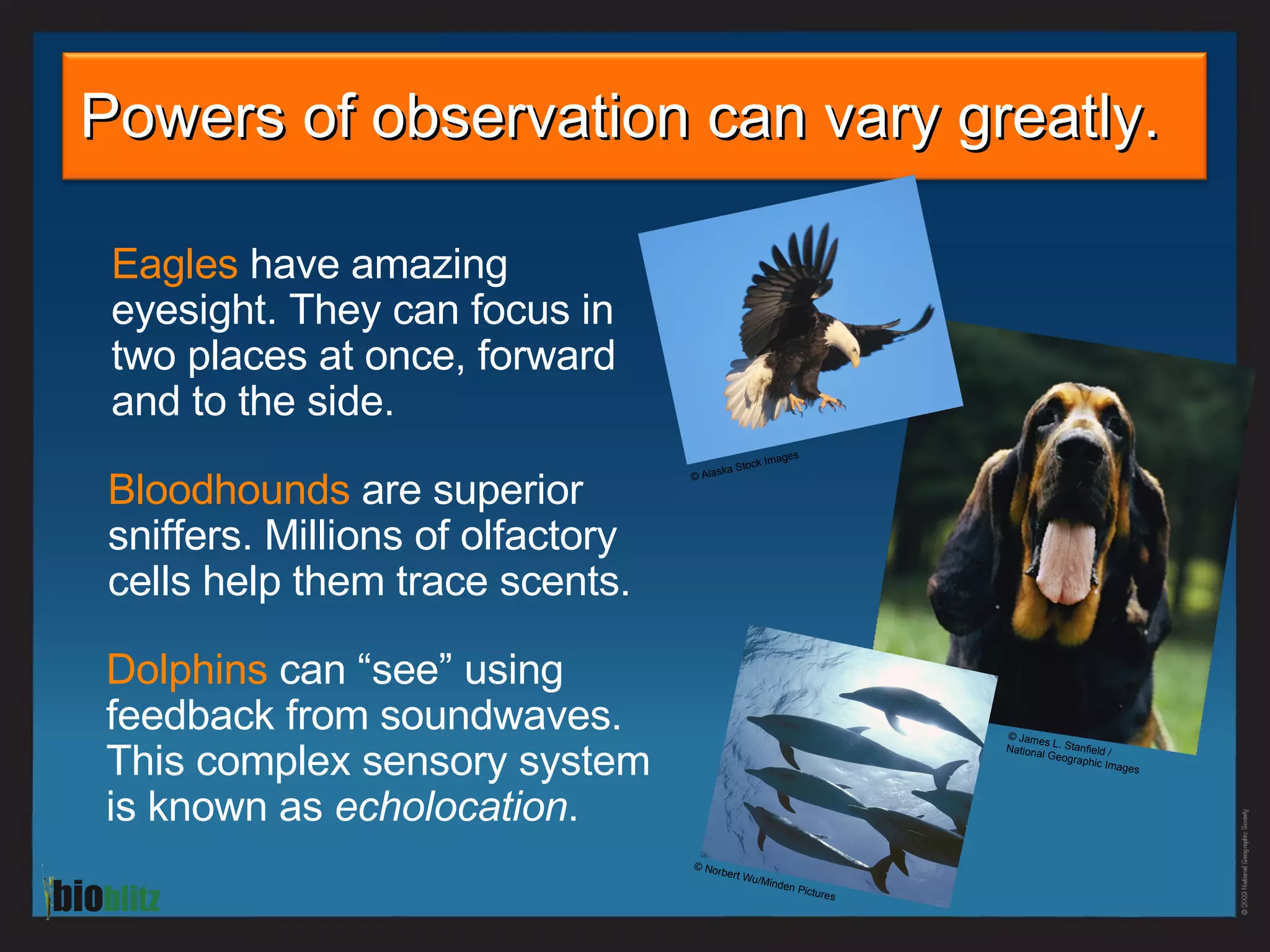
Powers of observation can vary greatly.  Eagles  have amazing eyesight. They can focus in two places at once, forward and to the side.   Bloodhounds   are superior sniffers. Millions of olfactory cells help them trace scents.   Dolphins  can “see” using feedback from soundwaves. This complex sensory system is known as  echolocation .  © Norbert Wu/Minden Pictures © Alaska Stock Images © James L. Stanfield /  National Geographic Images
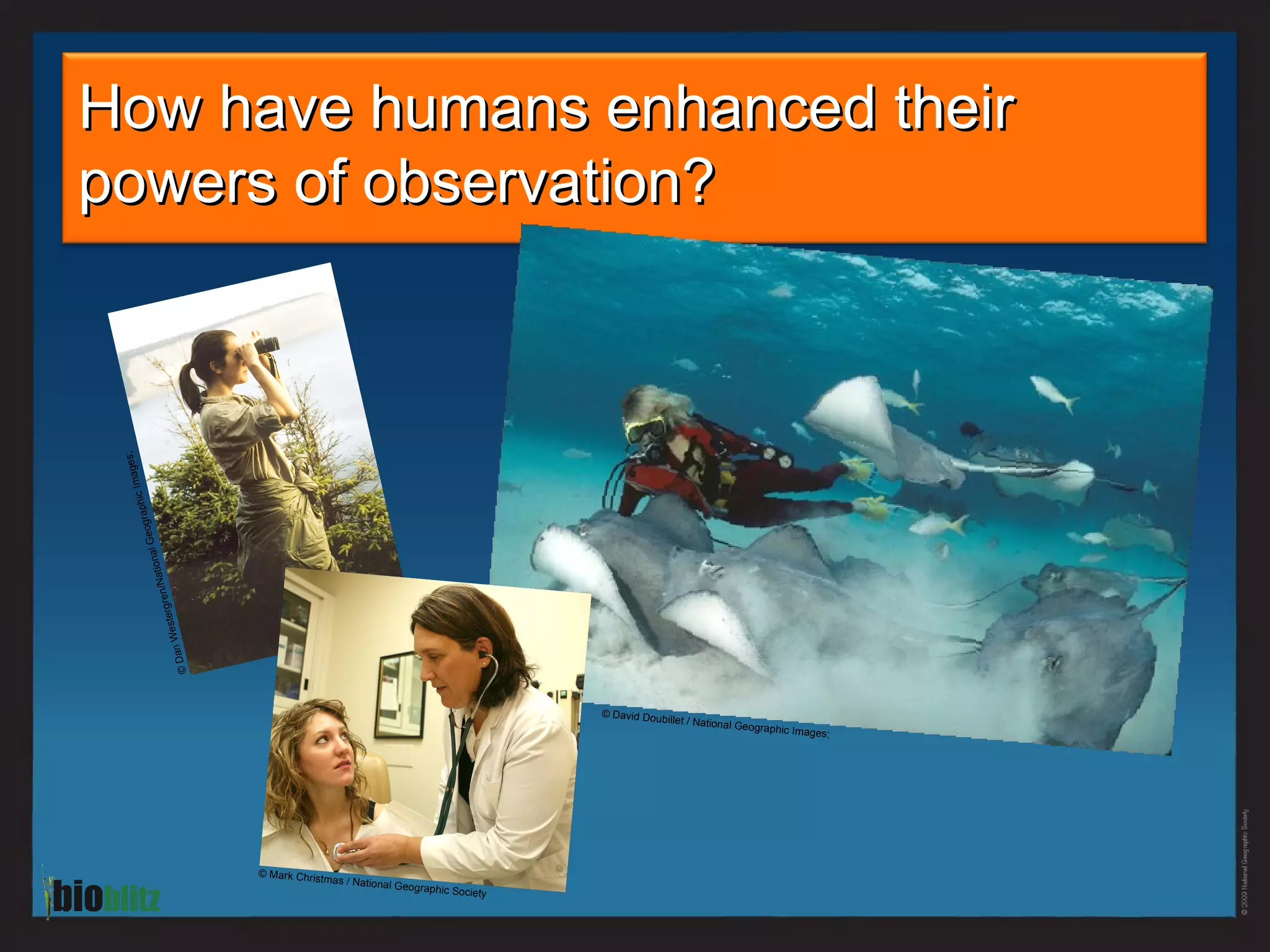
How have humans enhanced their powers of observation?  © Mark Christmas / National Geographic Society © Dan Westergren/National Geographic Images; © David Doubillet / National Geographic Images;
KEY QUESTIONS
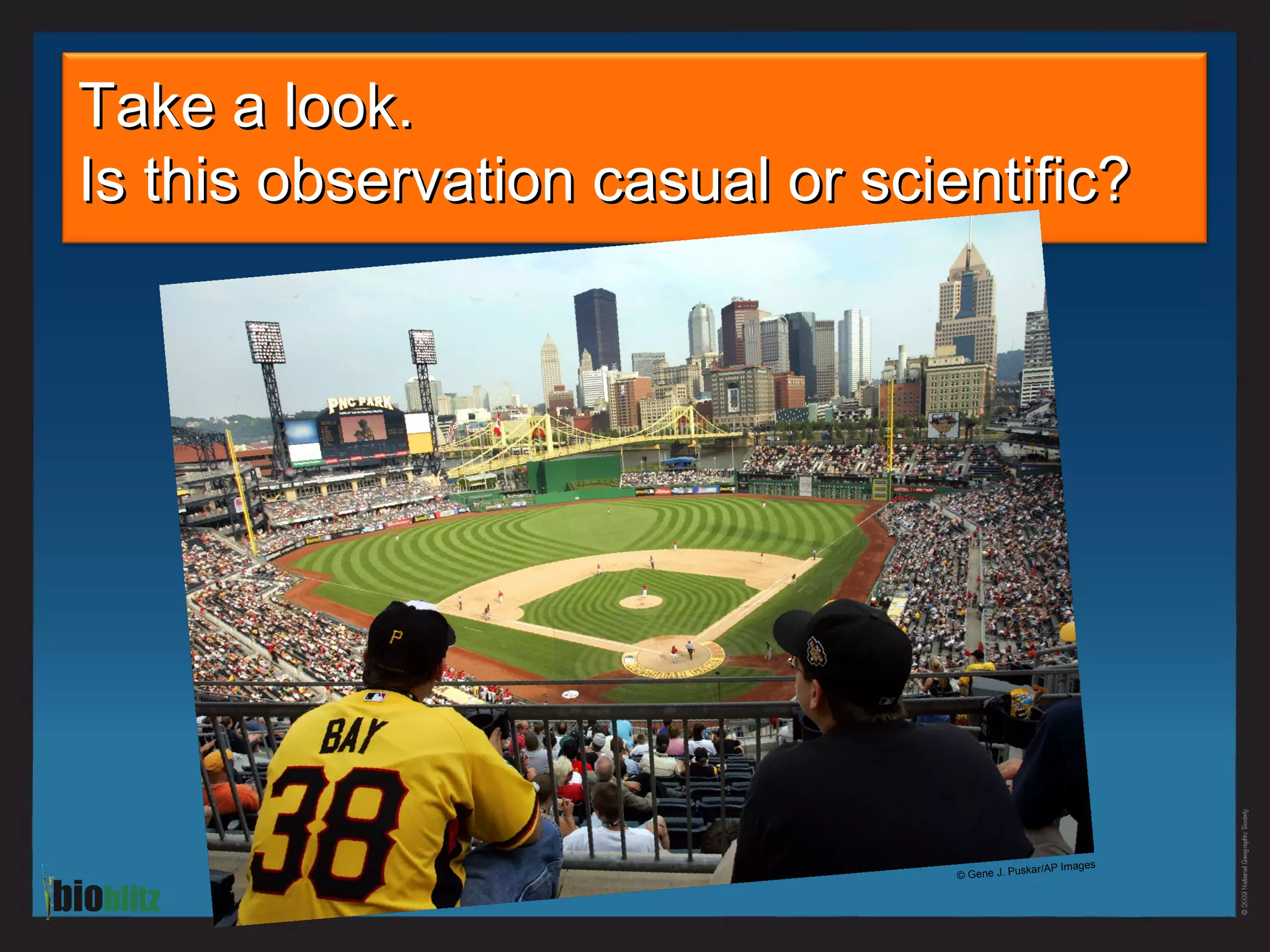
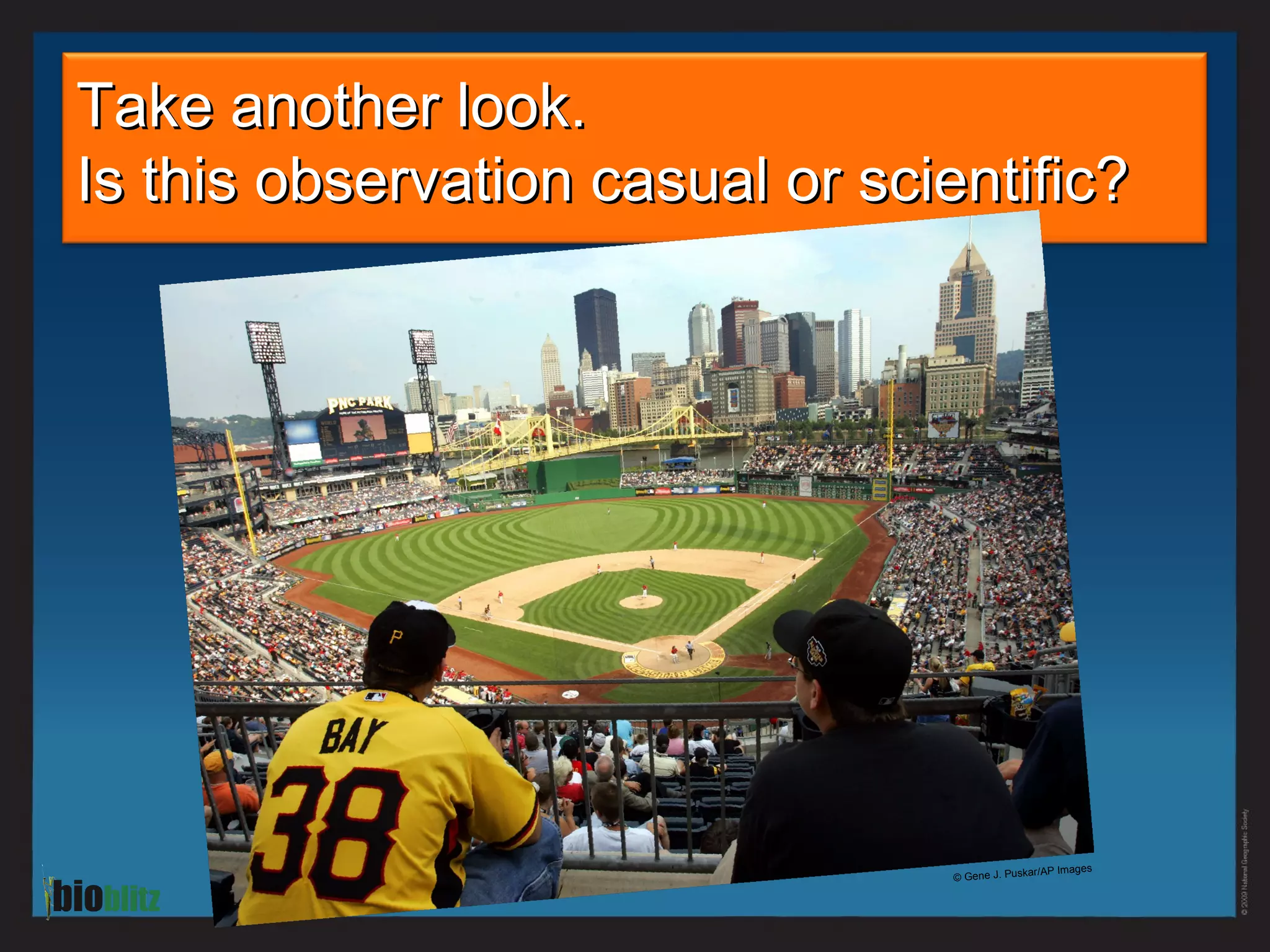
Take a look.  Is this observation casual or scientific?  © Gene J. Puskar/AP Images
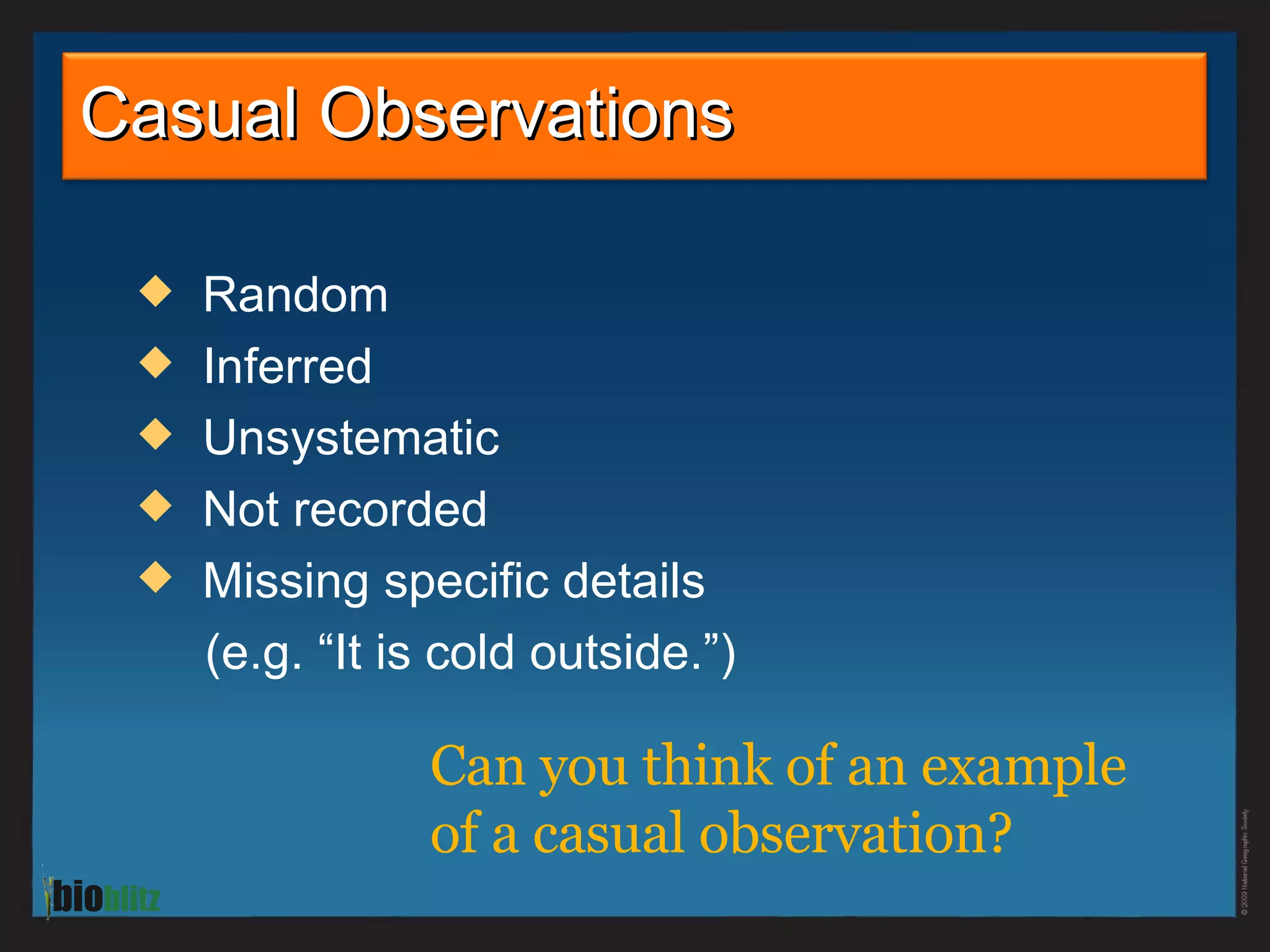
Random Inferred Unsystematic Not recorded Missing specific details (e.g. “It is cold outside.”) Casual Observations Can you think of an example  of a casual observation?
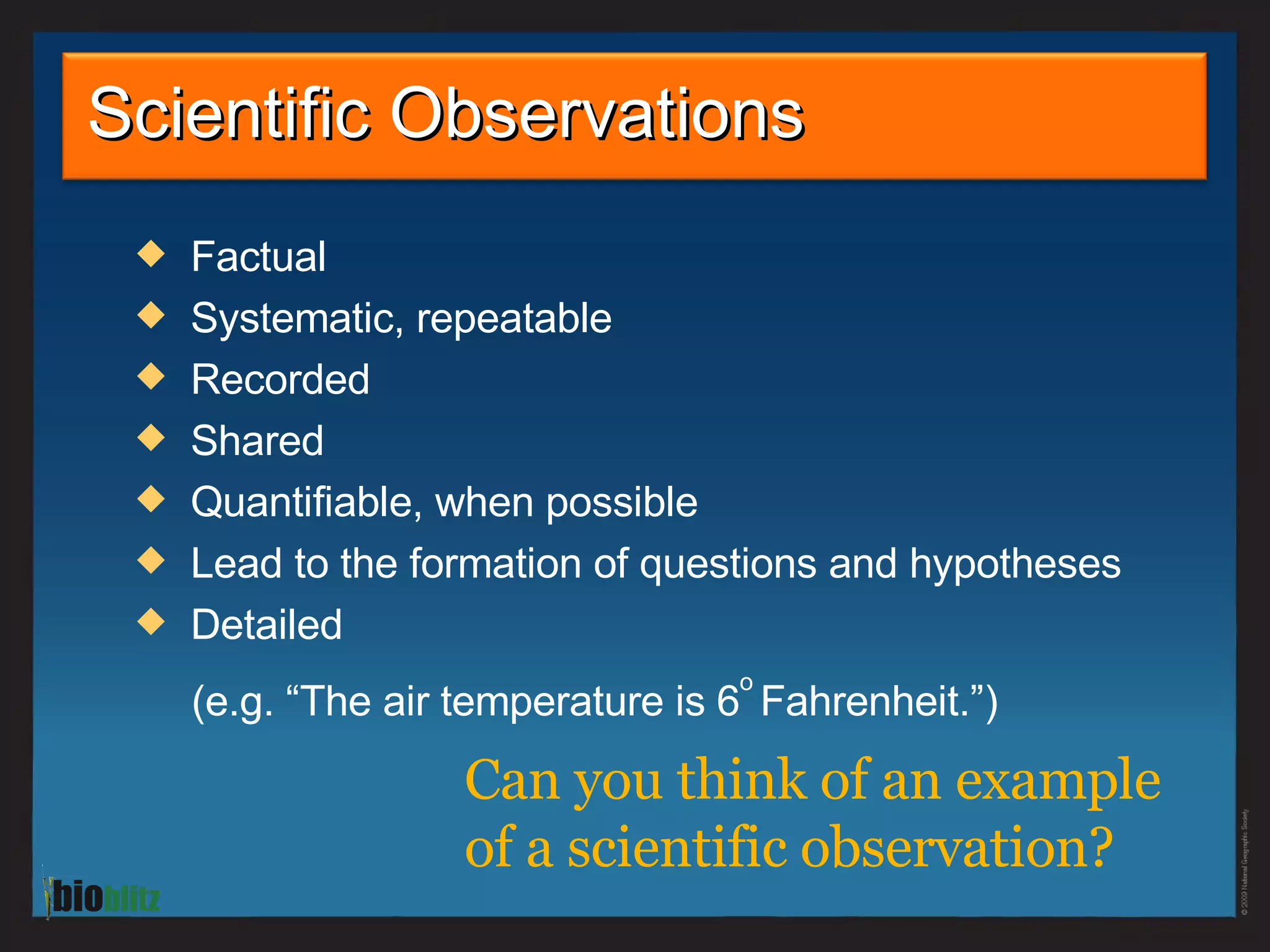
Factual Systematic, repeatable Recorded Shared Quantifiable, when possible Lead to the formation of questions and hypotheses Detailed  (e.g. “The air temperature is 6 o   Fahrenheit .”) Scientific Observations Can you think of an example  of a scientific observation?
Take another look.  Is this observation casual or scientific?  © Gene J. Puskar/AP Images
KEY QUESTIONS
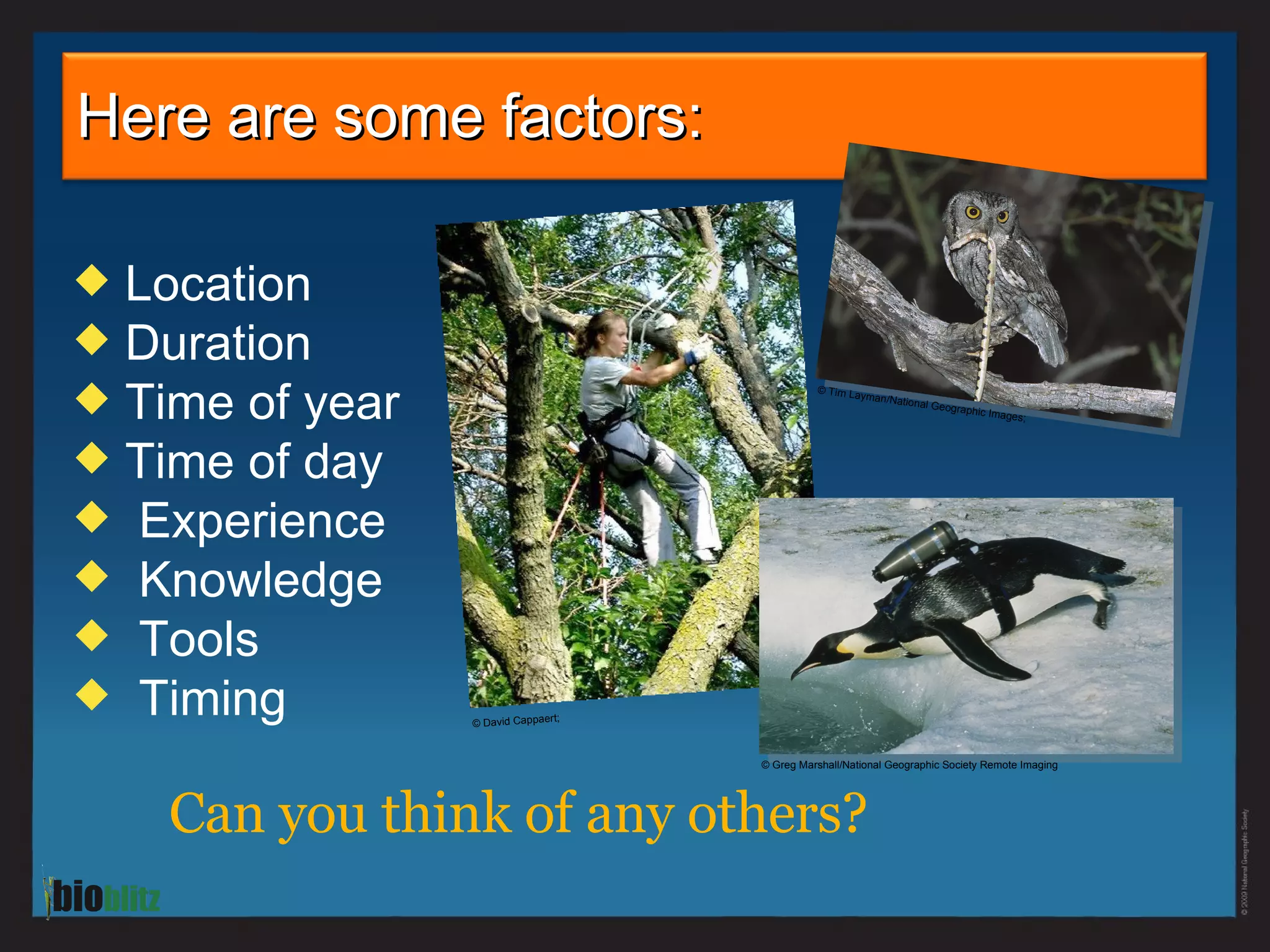
Here are some factors: Location Duration Time of year Time of day Experience Knowledge Tools Timing Can you think of any others?  © David Cappaert;  © Tim Layman/National Geographic Images; © Greg Marshall/National Geographic Society Remote Imaging
KEY QUESTIONS
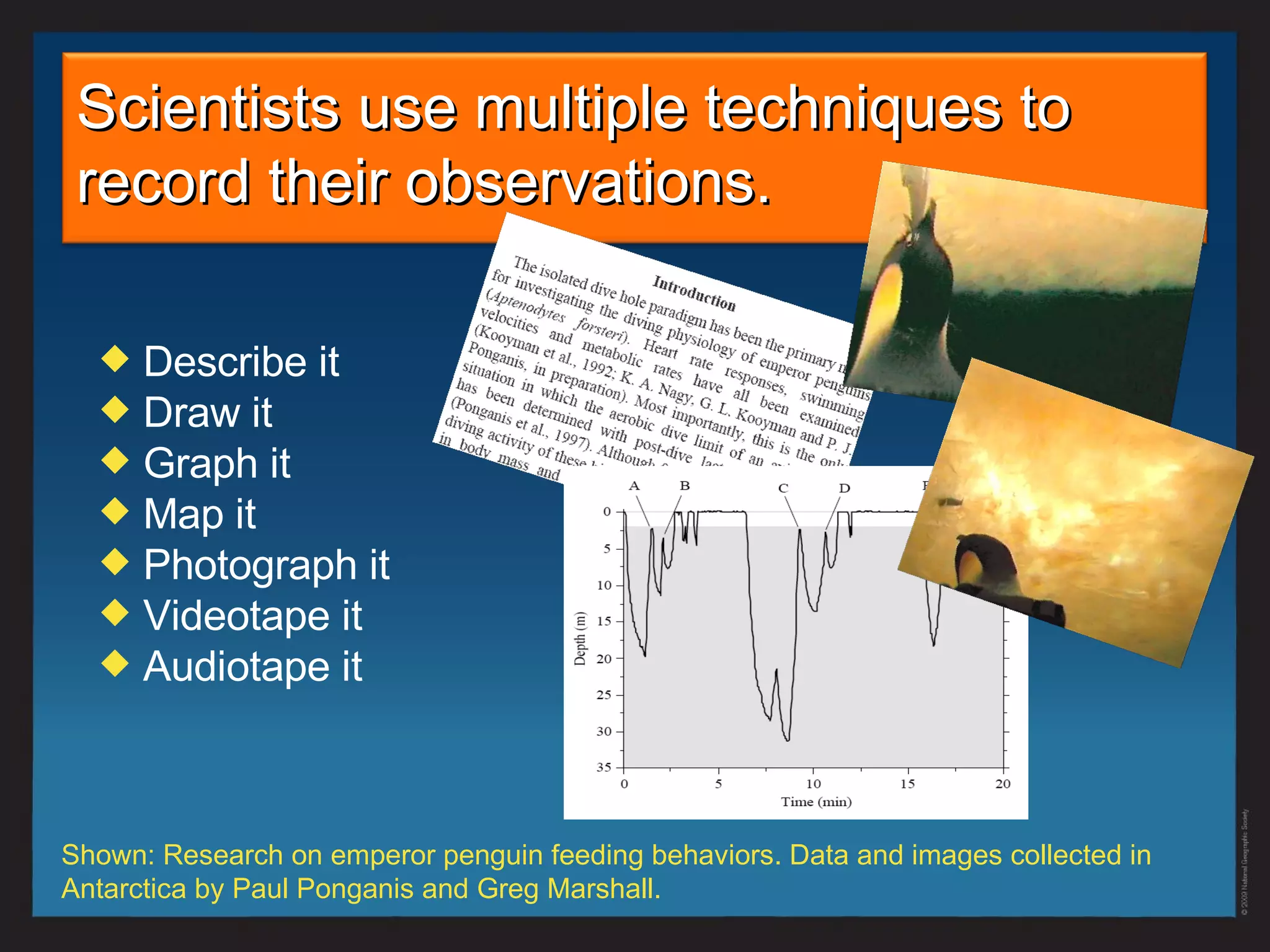
Scientists use multiple techniques to record their observations. Describe it Draw it Graph it Map it Photograph it Videotape it Audiotape it Shown: Research on emperor penguin feeding behaviors. Data and images collected in Antarctica by Paul Ponganis and Greg Marshall.
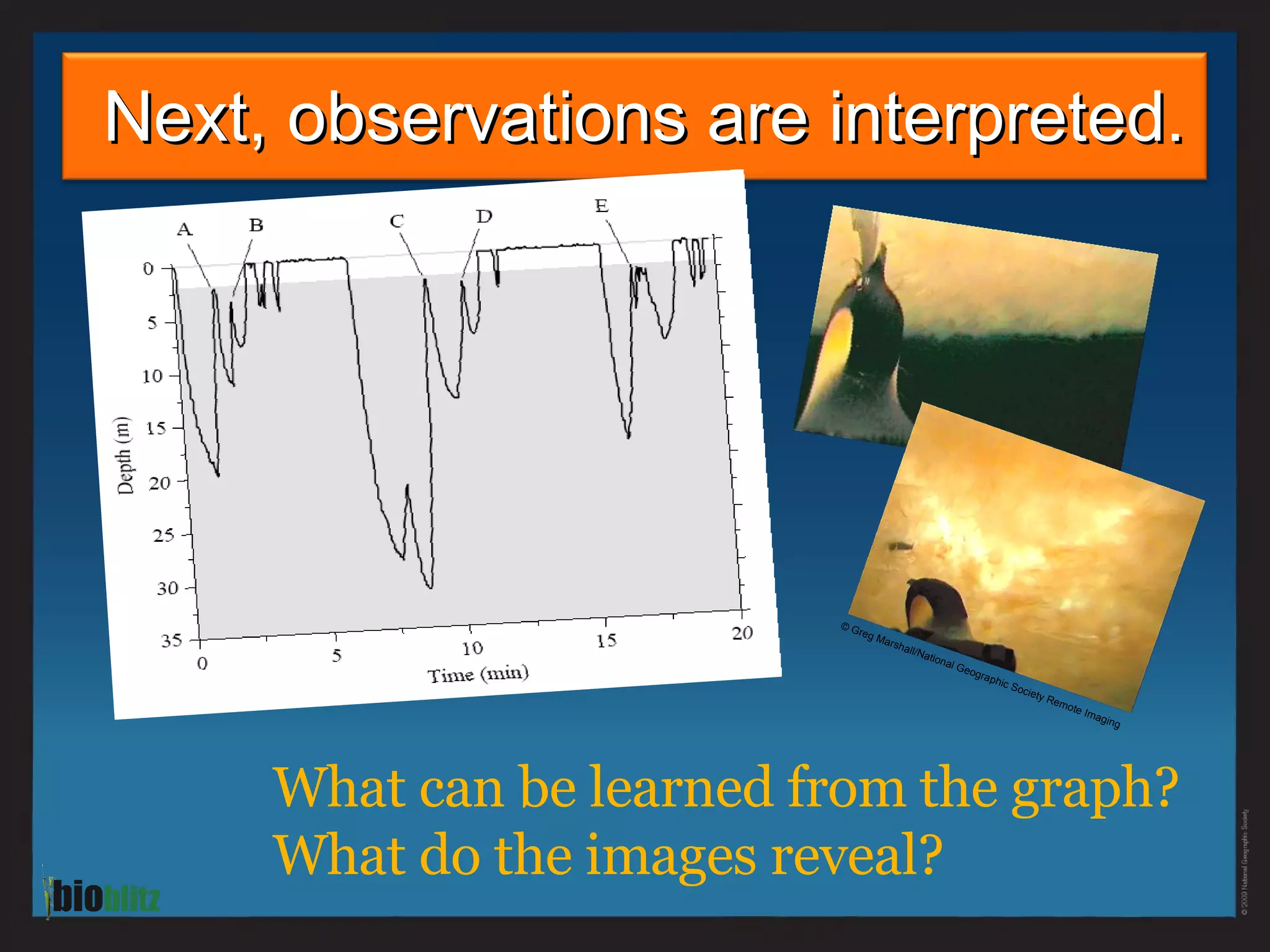
Next, observations are interpreted. What can be learned from the graph?  What do the images reveal?  © Greg Marshall/National Geographic Society Remote Imaging
Now Try Again What do you notice about your environment? Practice making and recording scientific observations!
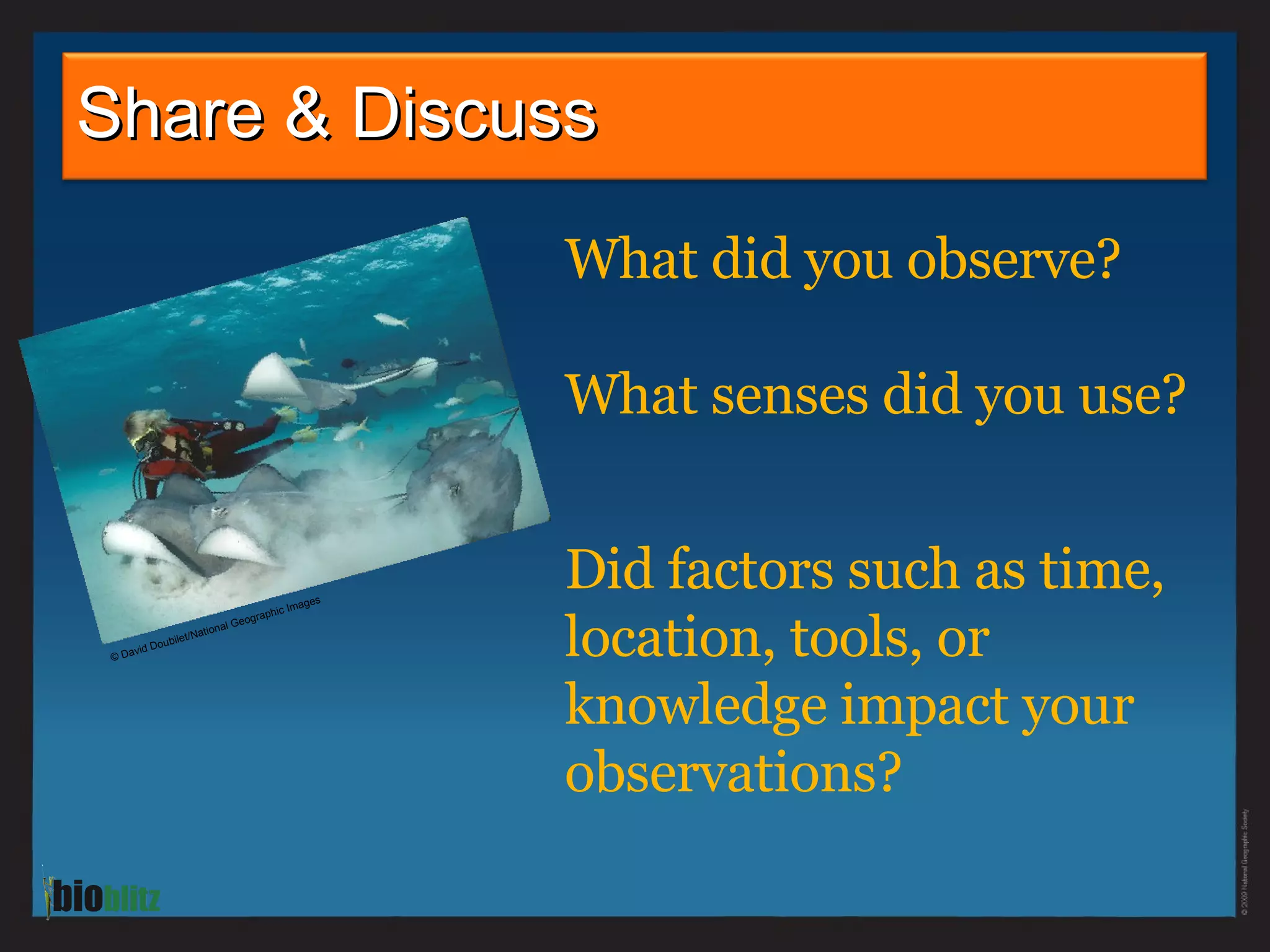
What did you observe? What senses did you use? Share & Discuss Did factors such as time, location, tools, or knowledge impact your observations? © David Doubilet/National Geographic Images
 

Observing And Recording Power Point

  • 1.
  • 2.
    WARM-UP What doyou notice about your environment? Record your observations.
  • 3.
    What did youobserve? What senses did you use? What tools did you use? What tools could you use to more detailed observations? Share & Discuss
  • 4.
  • 5.
    What observations dosoccer players make during a game? What actions might they take, based on their observations? Observations are a way to gather information. Photo credit here © Corbis / Superstock
  • 6.
    Observations can determinethe difference between life and death. © Chris Johns/ National Geographic Images © James L. Stanfield / National Geographic Images
  • 7.
    Powers of observationcan vary greatly. Eagles have amazing eyesight. They can focus in two places at once, forward and to the side. Bloodhounds are superior sniffers. Millions of olfactory cells help them trace scents. Dolphins can “see” using feedback from soundwaves. This complex sensory system is known as echolocation . © Norbert Wu/Minden Pictures © Alaska Stock Images © James L. Stanfield / National Geographic Images
  • 8.
    How have humansenhanced their powers of observation? © Mark Christmas / National Geographic Society © Dan Westergren/National Geographic Images; © David Doubillet / National Geographic Images;
  • 9.
  • 10.
    Take a look. Is this observation casual or scientific? © Gene J. Puskar/AP Images
  • 11.
    Random Inferred UnsystematicNot recorded Missing specific details (e.g. “It is cold outside.”) Casual Observations Can you think of an example of a casual observation?
  • 12.
    Factual Systematic, repeatableRecorded Shared Quantifiable, when possible Lead to the formation of questions and hypotheses Detailed (e.g. “The air temperature is 6 o Fahrenheit .”) Scientific Observations Can you think of an example of a scientific observation?
  • 13.
    Take another look. Is this observation casual or scientific? © Gene J. Puskar/AP Images
  • 14.
  • 15.
    Here are somefactors: Location Duration Time of year Time of day Experience Knowledge Tools Timing Can you think of any others? © David Cappaert; © Tim Layman/National Geographic Images; © Greg Marshall/National Geographic Society Remote Imaging
  • 16.
  • 17.
    Scientists use multipletechniques to record their observations. Describe it Draw it Graph it Map it Photograph it Videotape it Audiotape it Shown: Research on emperor penguin feeding behaviors. Data and images collected in Antarctica by Paul Ponganis and Greg Marshall.
  • 18.
    Next, observations areinterpreted. What can be learned from the graph? What do the images reveal? © Greg Marshall/National Geographic Society Remote Imaging
  • 19.
    Now Try AgainWhat do you notice about your environment? Practice making and recording scientific observations!
  • 20.
    What did youobserve? What senses did you use? Share & Discuss Did factors such as time, location, tools, or knowledge impact your observations? © David Doubilet/National Geographic Images
  • 21.

Editor's Notes

  • #2 Start presentation.