
The Objective-C
Programming Language
Contents


Introduction 7
Who Should Read This Document 7
Organization of This Document 8
Conventions 8
See Also 9
    The Runtime System 9
    Memory Management 9

Objects, Classes, and Messaging 10
The Runtime System 10
Objects 10
    Object Basics 10
    id 11
    Dynamic Typing 11
    Memory Management 12
Object Messaging 12
    Message Syntax 13
    Sending Messages to nil 15
    The Receiver’s Instance Variables 16
    Polymorphism 16
    Dynamic Binding 17
    Dynamic Method Resolution 17
    Dot Syntax 17
Classes 19
    Inheritance 19
    Class Types 23
    Class Objects 25
    Class Names in Source Code 30
    Testing Class Equality 31

Defining a Class 33
Source Files 33
Class Interface 34
    Importing the Interface 35


                                  2011-10-12 | © 2011 Apple Inc. All Rights Reserved.

                                                          2
Contents


    Referring to Other Classes 36
    The Role of the Interface 37
Class Implementation 37
    Referring to Instance Variables 39
    The Scope of Instance Variables 40
Messages to self and super 43
    An Example: Using self and super 45
    Using super 47
    Redefining self 47

Protocols 50
Declaring Interfaces for Others to Implement 50
Methods for Others to Implement 51
Declaring Interfaces for Anonymous Objects 52
Nonhierarchical Similarities 53
Formal Protocols 54
     Declaring a Protocol 54
     Optional Protocol Methods 54
Informal Protocols 55
Protocol Objects 56
Adopting a Protocol 57
Conforming to a Protocol 57
Type Checking 58
Protocols Within Protocols 59
Referring to Other Protocols 60

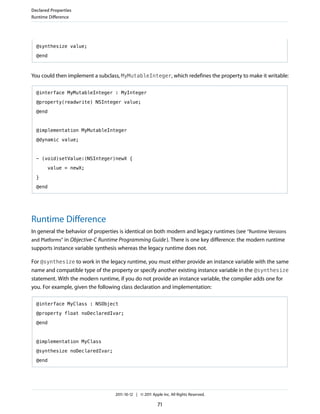
Declared Properties 62
Overview 62
Property Declaration and Implementation 62
    Property Declaration 63
    Property Declaration Attributes 64
    Property Implementation Directives 67
Using Properties 69
    Supported Types 69
    Property Redeclaration 69
    Core Foundation 70
Subclassing with Properties 70
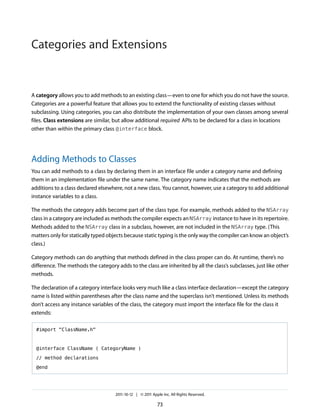
Runtime Difference 71

Categories and Extensions 73


                                  2011-10-12 | © 2011 Apple Inc. All Rights Reserved.

                                                          3
Contents


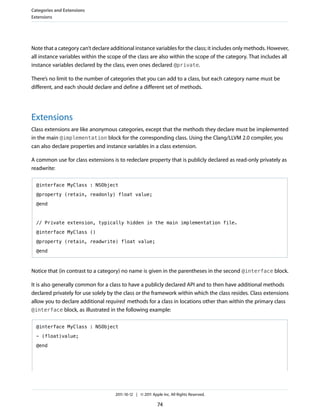
Adding Methods to Classes 73
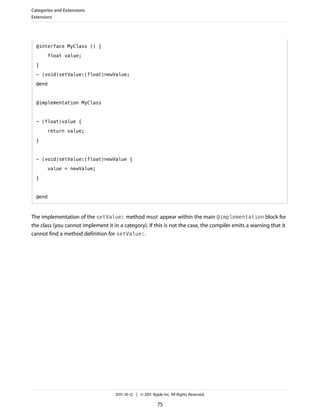
Extensions 74

Associative References 76
Creating Associations 76
Retrieving Associated Objects 77
Breaking Associations 77
Complete Example 78

Fast Enumeration 80
The for…in Syntax 80
Adopting Fast Enumeration 81
Using Fast Enumeration 81

Enabling Static Behavior 83
Default Dynamic Behavior 83
Static Typing 83
Type Checking 85
Return and Parameter Types 85
Static Typing to an Inherited Class 86

Selectors 88
Methods and Selectors 88
    SEL and @selector 88
    Methods and Selectors 89
    Method Return and Parameter Types 89
Varying the Message at Runtime 89
The Target-Action Design Pattern 90
Avoiding Messaging Errors 91

Exception Handling 93
Enabling Exception-Handling 93
Exception Handling 93
Catching Different Types of Exception 94
Throwing Exceptions 95

Threading 96

Document Revision History 98


                                   2011-10-12 | © 2011 Apple Inc. All Rights Reserved.

                                                           4
Contents


Glossary 102


               2011-10-12 | © 2011 Apple Inc. All Rights Reserved.

                                       5
Figures and Listings


Objects, Classes, and Messaging 10
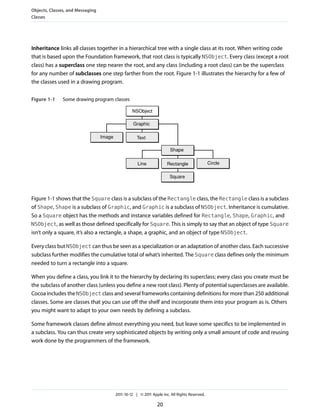
Figure 1-1     Some drawing program classes 20
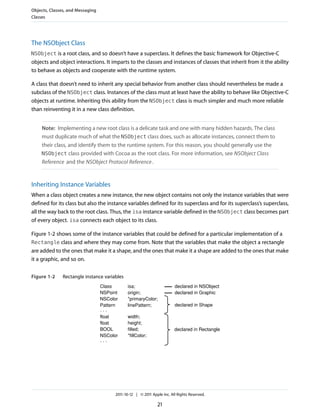
Figure 1-2     Rectangle instance variables 21
Figure 1-3     The inheritance hierarchy for NSCell 27
Listing 1-1    Implementation of the initialize method 30

Defining a Class 33
Figure 2-1     The scope of instance variables (@package scope not shown) 41
Figure 2-2     The hierarchy of High, Mid, and Low 45

Declared Properties 62
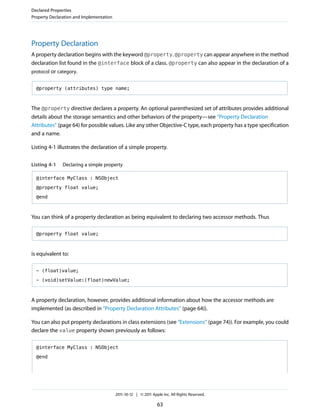
Listing 4-1    Declaring a simple property 63
Listing 4-2    Using @synthesize 67
Listing 4-3    Using @dynamic with NSManagedObject 68

Associative References 76
Listing 6-1    Establishing an association between an array and a string 76

Exception Handling 93
Listing 10-1   An exception handler 94

Threading 96
Listing 11-1   Locking a method using self 96
Listing 11-2   Locking a method using a custom semaphore 97


                                   2011-10-12 | © 2011 Apple Inc. All Rights Reserved.

                                                           6
Introduction


The Objective-C language is a simple computer language designed to enable sophisticated object-oriented
programming. Objective-C is defined as a small but powerful set of extensions to the standard ANSI C language.
Its additions to C are mostly based on Smalltalk, one of the first object-oriented programming languages.
Objective-C is designed to give C full object-oriented programming capabilities, and to do so in a simple and
straightforward way.

Most object-oriented development environments consist of several parts:
●   An object-oriented programming language
●   A library of objects
●   A suite of development tools
●   A runtime environment


This document is about the first component of the development environment—the programming language.
This document also provides a foundation for learning about the second component, the Objective-C application
frameworks—collectively known as Cocoa. The runtime environment is described in a separate document,
Objective-C Runtime Programming Guide .


Who Should Read This Document
The document is intended for readers who might be interested in:
●   Programming in Objective-C
●   Finding out about the basis for the Cocoa application frameworks


This document both introduces the object-oriented model that Objective-C is based upon and fully documents
the language. It concentrates on the Objective-C extensions to C, not on the C language itself.

Because this isn’t a document about C, it assumes some prior acquaintance with that language. Object-oriented
programming in Objective-C is, however, sufficiently different from procedural programming in ANSI C that
you won’t be hampered if you’re not an experienced C programmer.


                                   2011-10-12 | © 2011 Apple Inc. All Rights Reserved.

                                                           7
Introduction
Organization of This Document


Organization of This Document
The following chapters cover all the features Objective-C adds to standard C.
 ●       “Objects, Classes, and Messaging” (page 10)
 ●       “Defining a Class” (page 33)
 ●       “Protocols” (page 50)
 ●       “Declared Properties” (page 62)
 ●       “Categories and Extensions” (page 73)
 ●       “Associative References” (page 76)
 ●       “Fast Enumeration” (page 80)
 ●       “Enabling Static Behavior” (page 83)
 ●       “Selectors” (page 88)
 ●       “Exception Handling” (page 93)
 ●       “Threading” (page 96)


A glossary at the end of this document provides definitions of terms specific to Objective-C and object-oriented
programming.


Conventions
This document makes special use of computer voice and italic fonts. Computer voice denotes words or characters
that are to be taken literally (typed as they appear). Italic denotes words that represent something else or can
be varied. For example, the syntax:

@interfaceClassName (CategoryName )

means that @interface and the two parentheses are required, but that you can choose the class name and
category name.

Where example code is shown, ellipsis points indicates the parts, often substantial parts, that have been omitted:

     - (void)encodeWithCoder:(NSCoder *)coder

     {

           [super encodeWithCoder:coder];

           ...


                                        2011-10-12 | © 2011 Apple Inc. All Rights Reserved.

                                                                8
Introduction
See Also


     }


See Also
If you have never used object-oriented programming to create applications, you should read Object-Oriented
Programming with Objective-C . You should also consider reading it if you have used other object-oriented
development environments such as C++ and Java because they have many expectations and conventions
different from those of Objective-C. Object-Oriented Programming with Objective-C is designed to help you
become familiar with object-oriented development from the perspective of an Objective-C developer. It spells
out some of the implications of object-oriented design and gives you a flavor of what writing an object-oriented
program is really like.


The Runtime System
Objective-C Runtime Programming Guide describes aspects of the Objective-C runtime and how you can use
it.

Objective-C Runtime Reference describes the data structures and functions of the Objective-C runtime support
library. Your programs can use these interfaces to interact with the Objective-C runtime system. For example,
you can add classes or methods, or obtain a list of all class definitions for loaded classes.


Memory Management
Objective-C supports three mechanisms for memory management: automatic garbage collection and reference
counting:
 ●       Automatic Reference Counting (ARC), where the compiler reasons about the lifetimes of objects.
 ●       Manual Reference Counting (MRC, sometimes referred to as MRR for “manual retain/release”), where you
         are ultimately responsible for determining the lifetime of objects.
         Manual reference counting is described in Advanced Memory Management Programming Guide .
 ●       Garbage collection, where you pass responsibility for determining the lifetime of objects to an automatic
         “collector.”
         Garbage collection is described in Garbage Collection Programming Guide . (Not available for iOS—you
         cannot access this document through the iOS Dev Center.)


                                        2011-10-12 | © 2011 Apple Inc. All Rights Reserved.

                                                                9
Objects, Classes, and Messaging


This chapter describes the fundamentals of objects, classes, and messaging as used and implemented by the
Objective-C language. It also introduces the Objective-C runtime.


The Runtime System
The Objective-C language defers as many decisions as it can from compile time and link time to runtime.
Whenever possible, it dynamically performs operations such as creating objects and determining what method
to invoke. Therefore, the language requires not just a compiler, but also a runtime system to execute the
compiled code. The runtime system acts as a kind of operating system for the Objective-C language; it’s what
makes the language work. Typically, however, you don’t need to interact with the runtime directly. To understand
more about the functionality it offers, though, see Objective-C Runtime Programming Guide .


Objects
As the name implies, object-oriented programs are built around objects. An object associates data with the
particular operations that can use or affect that data. Objective-C provides a data type to identify an object
variable without specifying a particular class of the object.


Object Basics
An object associates data with the particular operations that can use or affect that data. In Objective-C, these
operations are known as the object’s methods; the data they affect are its instance variables (in other
environments they may be referred to as ivars or member variables ). In essence, an object bundles a data
structure (instance variables) and a group of procedures (methods) into a self-contained programming unit.

In Objective-C, an object’s instance variables are internal to the object; generally, you get access to an object’s
state only through the object’s methods (you can specify whether subclasses or other objects can access
instance variables directly by using scope directives, see “The Scope of Instance Variables” (page 40)). For
others to find out something about an object, there has to be a method to supply the information. For example,
a rectangle would have methods that reveal its size and position.


                                     2011-10-12 | © 2011 Apple Inc. All Rights Reserved.

                                                            10
Objects, Classes, and Messaging
Objects


Moreover, an object sees only the methods that were designed for it; it can’t mistakenly perform methods
intended for other types of objects. Just as a C function protects its local variables, hiding them from the rest
of the program, an object hides both its instance variables and its method implementations.


id
In Objective-C, object identifiers are of a distinct data type: id. This type is the general type for any kind of
object regardless of class and can be used for instances of a class and for class objects themselves.

  id anObject;


For the object-oriented constructs of Objective-C, such as method return values, id replaces int as the default
data type. (For strictly C constructs, such as function return values, int remains the default type.)

The keyword nil is defined as a null object, an id with a value of 0. id, nil, and the other basic types of
Objective-C are defined in the header file objc/objc.h.

id is defined as pointer to an object data structure:


  typedef struct objc_object {

       Class isa;

  } *id;


Every object thus has an isa variable that tells it of what class it is an instance. Since the Class type is itself
defined as a pointer:

  typedef struct objc_class *Class;


the isa variable is frequently referred to as the “isa pointer.”


Dynamic Typing
The id type is completely nonrestrictive. By itself, it yields no information about an object, except that it is an
object. At some point, a program typically needs to find more specific information about the objects it contains.
Since the id type designator can’t supply this specific information to the compiler, each object has to be able
to supply it at runtime.

The isa instance variable identifies the object’s class—what kind of object it is. Objects with the same behavior
(methods) and the same kinds of data (instance variables) are members of the same class.


                                     2011-10-12 | © 2011 Apple Inc. All Rights Reserved.

                                                             11
Objects, Classes, and Messaging
Object Messaging


Objects are thus dynamically typed at runtime. Whenever it needs to, the runtime system can find the exact
class that an object belongs to, just by asking the object. (To learn more about the runtime, see Objective-C
Runtime Programming Guide .) Dynamic typing in Objective-C serves as the foundation for dynamic binding,
discussed later.

The isa variable also enables objects to perform introspection—to find out about themselves (or other objects).
The compiler records information about class definitions in data structures for the runtime system to use. The
functions of the runtime system use isa to find this information at runtime. Using the runtime system, you
can, for example, determine whether an object implements a particular method or discover the name of its
superclass.

Object classes are discussed in more detail under “Classes” (page 19).

It’s also possible to give the compiler information about the class of an object by statically typing it in source
code using the class name. Classes are particular kinds of objects, and the class name can serve as a type name.
See “Class Types” (page 23) and “Enabling Static Behavior” (page 83).


Memory Management
In any program, it is important to ensure that objects are deallocated when they are no longer
needed—otherwise your application’s memory footprint becomes larger than necessary. It is also important
to ensure that you do not deallocate objects while they’re still being used.

Objective-C offers three mechanisms for memory management that allow you to meet these goals:
 ●   Automatic Reference Counting (ARC), where the compiler reasons about the lifetimes of objects.
 ●   Manual Reference Counting (MRC, sometimes referred to as MRR for “manual retain/release”), where you
     are ultimately responsible for determining the lifetime of objects.
     Manual reference counting is described in Advanced Memory Management Programming Guide .
 ●   Garbage collection, where you pass responsibility for determining the lifetime of objects to an automatic
     “collector.”
     Garbage collection is described in Garbage Collection Programming Guide . (Not available for iOS—you
     cannot access this document through the iOS Dev Center.)


Object Messaging
This section explains the syntax of sending messages, including how you can nest message expressions. It also
discusses the scope or “visibility” of an object’s instance variables, and the concepts of polymorphism and
dynamic binding.


                                     2011-10-12 | © 2011 Apple Inc. All Rights Reserved.

                                                             12
Objects, Classes, and Messaging
Object Messaging


Message Syntax
To get an object to do something, you send it a message telling it to apply a method. In Objective-C, message
expressions are enclosed in brackets:

  [receiver message]


The receiver is an object, and the message tells it what to do. In source code, the message is simply the name
of a method and any parameters that are passed to it. When a message is sent, the runtime system selects the
appropriate method from the receiver’s repertoire and invokes it.

For example, this message tells the myRectangle object to perform its display method, which causes the
rectangle to display itself:

  [myRectangle display];


The message is followed by a “;” as is normal for any statement in C.

Because the method name in a message serves to “select” a method implementation, method names in
messages are often referred to as selectors.

Methods can also take parameters, sometimes called arguments . A message with a single parameter affixes a
colon (:) to the name and puts the parameter right after the colon:

  [myRectangle setWidth:20.0];


For methods with multiple parameters, Objective-C's method names are interleaved with the parameters such
that the method’s name naturally describes the parameters expected by the method. The imaginary message
below tells the myRectangle object to set its origin to the coordinates (30.0, 50.0):

  [myRectangle setOriginX: 30.0 y: 50.0]; // This is a good example of

                                                      // multiple parameters


A selector name includes all the parts of the name, including the colons, so the selector in the preceding
example is named setOriginX:y:. It has two colons, because it takes two parameters. The selector name
does not, however, include anything else, such as return type or parameter types.


                                   2011-10-12 | © 2011 Apple Inc. All Rights Reserved.

                                                           13
Objects, Classes, and Messaging
Object Messaging


 Important: The subparts of an Objective-C selector name are not optional, nor can their order be varied.
 In some languages, the terms “named parameters” and “keyword parameters” carry the implications that
 the parameters can vary at runtime, can have default values, can be in a different order, and can possibly
 have additional named parameters. None of these characteristics about parameters are true for Objective-C.
 For all intents and purposes, an Objective-C method declaration is simply a C function that prepends two
 additional parameters (see “Messaging” in the Objective-C Runtime Programming Guide ). Thus, the structure
 of an Objective-C method declaration differs from the structure of a method that uses named or keyword
 parameters in a language like Python, as the following Python example illustrates:

    def func(a, b, NeatMode=SuperNeat, Thing=DefaultThing):

         pass


 In this Python example, Thing and NeatMode might be omitted or might have different values when called.

In principle, a Rectangle class could instead implement a setOrigin:: method with no label for the second
parameter, which would be invoked as follows:

  [myRectangle setOrigin:30.0 :50.0]; // This is a bad example of multiple parameters


While syntactically legal, setOrigin:: does not interleave the method name with the parameters. Thus, the
second parameter is effectively unlabeled and it is difficult for a reader of this code to determine the kind or
purpose of the method’s parameters.

Methods that take a variable number of parameters are also possible, though they’re somewhat rare. Extra
parameters are separated by commas after the end of the method name. (Unlike colons, the commas are not
considered part of the name.) In the following example, the imaginary makeGroup: method is passed one
required parameter (group) and three parameters that are optional:

  [receiver makeGroup:group, memberOne, memberTwo, memberThree];


Like standard C functions, methods can return values. The following example sets the variable isFilled to
YES if myRectangle is drawn as a solid rectangle, or NO if it’s drawn in outline form only.


  BOOL isFilled;

  isFilled = [myRectangle isFilled];


Note that a variable and a method can have the same name.


                                    2011-10-12 | © 2011 Apple Inc. All Rights Reserved.

                                                           14
Objects, Classes, and Messaging
Object Messaging


One message expression can be nested inside another. Here, the color of one rectangle is set to the color of
another:

     [myRectangle setPrimaryColor:[otherRect primaryColor]];


Objective-C also provides a dot (.) operator that offers a compact and convenient syntax for invoking an
object’s accessor methods. The dot operator is often used in conjunction with the declared properties feature
(see “Declared Properties” (page 62)) and is described in “Dot Syntax” (page 17).


Sending Messages to nil
In Objective-C, it is valid to send a message to nil—it simply has no effect at runtime. There are several patterns
in Cocoa that take advantage of this fact. The value returned from a message to nil may also be valid:
 ●       If the method returns an object, then a message sent to nil returns 0 (nil). For example:

           Person *motherInLaw = [[aPerson spouse] mother];


         If the spouse object here is nil, then mother is sent to nil and the method returns nil.
 ●       If the method returns any pointer type, any integer scalar of size less than or equal to sizeof(void*),
         a float, a double, a long double, or a long long, then a message sent to nil returns 0.
 ●       If the method returns a struct, as defined by the OS X ABI Function Call Guide to be returned in registers,
         then a message sent to nil returns 0.0 for every field in the struct. Other struct data types will not
         be filled with zeros.
 ●       If the method returns anything other than the aforementioned value types, the return value of a message
         sent to nil is undefined.


The following code fragment illustrates a valid use of sending a message to nil.

     id anObjectMaybeNil = nil;


     // this is valid

     if ([anObjectMaybeNil methodThatReturnsADouble] == 0.0)

     {

           // implementation continues...

     }


                                        2011-10-12 | © 2011 Apple Inc. All Rights Reserved.

                                                                15
Objects, Classes, and Messaging
Object Messaging


The Receiver’s Instance Variables
A method has automatic access to the receiving object’s instance variables. You don’t need to pass them to
the method as parameters. For example, the primaryColor method illustrated above takes no parameters,
yet it can find the primary color for otherRect and return it. Every method assumes the receiver and its
instance variables, without having to declare them as parameters.

This convention simplifies Objective-C source code. It also supports the way object-oriented programmers
think about objects and messages. Messages are sent to receivers much as letters are delivered to your home.
Message parameters bring information from the outside to the receiver; they don’t need to bring the receiver
to itself.

A method has automatic access only to the receiver’s instance variables. If it requires information about a
variable stored in another object, it must send a message to the object asking it to reveal the contents of the
variable. The primaryColor and isFilled methods shown earlier are used for just this purpose.

See “Defining a Class” (page 33) for more information on referring to instance variables.


Polymorphism
As the earlier examples illustrate, messages in Objective-C appear in the same syntactic positions as function
calls in standard C. But, because methods “belong to” an object, messages don’t behave in the same way that
function calls do.

In particular, an object can be operated on by only those methods that were defined for it. It can’t confuse
them with methods defined for other kinds of object, even if another object has a method with the same name.
Therefore, two objects can respond differently to the same message. For example, each kind of object that
receives a display message could display itself in a unique way. A Circle and a Rectangle would respond
differently to identical instructions to track the cursor.

This feature, referred to as polymorphism, plays a significant role in the design of object-oriented programs.
Together with dynamic binding, it permits you to write code that might apply to any number of different kinds
of objects, without you having to choose at the time you write the code what kinds of objects they might be.
They might even be objects that will be developed later, by other programmers working on other projects. If
you write code that sends a display message to an id variable, any object that has a display method is a
potential receiver.


                                    2011-10-12 | © 2011 Apple Inc. All Rights Reserved.

                                                           16
Objects, Classes, and Messaging
Object Messaging


Dynamic Binding
A crucial difference between function calls and messages is that a function and its parameters are joined
together in the compiled code, but a message and a receiving object aren’t united until the program is running
and the message is sent. Therefore, the exact method invoked to respond to a message can be determined
only at runtime, not when the code is compiled.

When a message is sent, a runtime messaging routine looks at the receiver and at the method named in the
message. It locates the receiver’s implementation of a method matching the name, “calls” the method, and
passes it a pointer to the receiver’s instance variables. (For more on this routine, see “Messaging” in Objective-C
Runtime Programming Guide .)

This dynamic binding of methods to messages works hand in hand with polymorphism to give object-oriented
programming much of its flexibility and power. Because each object can have its own version of a method, an
Objective-C statement can achieve a variety of results, not by varying the message but by varying the object
that receives the message. Receivers can be decided as the program runs; the choice of receiver can be made
dependent on factors such as user actions.

When executing code based upon the Application Kit (AppKit), for example, users determine which objects
receive messages from menu commands such as Cut, Copy, and Paste. The message goes to whatever object
controls the current selection. An object that displays text would react to a copy message differently from an
object that displays scanned images. An object that represents a set of shapes would respond differently to a
copy message than a Rectangle would. Because messages do not select methods until runtime (from another
perspective, because binding of methods to messages does not occur until runtime), these differences in
behavior are isolated to the methods themselves. The code that sends the message doesn’t have to be concerned
with them; it doesn’t even have to enumerate the possibilities. An application’s objects can each respond in
its own way to copy messages.

Objective-C takes dynamic binding one step further and allows even the message that’s sent (the method
selector) to be a variable determined at runtime. This mechanism is discussed in the section “Messaging” in
Objective-C Runtime Programming Guide .


Dynamic Method Resolution
You can provide implementations of class and instance methods at runtime using dynamic method resolution.
See “Dynamic Method Resolution” in Objective-C Runtime Programming Guide for more details.


Dot Syntax
Objective-C provides a dot (.) operator that offers an alternative to square bracket notation ([]) to invoke
accessor methods. Dot syntax uses the same pattern that accessing C structure elements uses:


                                     2011-10-12 | © 2011 Apple Inc. All Rights Reserved.

                                                             17
Objects, Classes, and Messaging
Object Messaging


  myInstance.value = 10;

  printf("myInstance value: %d", myInstance.value);


When used with objects, however, dot syntax acts as “syntactic sugar”—it is transformed by the compiler into
an invocation of an accessor method. Dot syntax does not directly get or set an instance variable. The code
example above is exactly equivalent to the following:

  [myInstance setValue:10];

  printf("myInstance value: %d", [myInstance value]);


As a corollary, if you want to access an object’s own instance variable using accessor methods, you must
explicitly call out self, for example:

  self.age = 10;


or the equivalent:

  [self setAge:10];


If you do not use self., you access the instance variable directly. In the following example, the set accessor
method for age is not invoked:

  age = 10;


If a nil value is encountered during property traversal, the result is the same as sending the equivalent message
to nil. For example, the following pairs are all equivalent:

  // Each member of the path is an object.

  x = person.address.street.name;

  x = [[[person address] street] name];


  // The path contains a C struct.

  // This will crash if window is nil or -contentView returns nil.

  y = window.contentView.bounds.origin.y;

  y = [[window contentView] bounds].origin.y;


                                    2011-10-12 | © 2011 Apple Inc. All Rights Reserved.

                                                           18
Objects, Classes, and Messaging
Classes


  // An example of using a setter.

  person.address.street.name = @"Oxford Road";

  [[[person address] street] setName: @"Oxford Road"];


Classes
An object-oriented program is typically built from a variety of objects. A program based on the Cocoa frameworks
might use NSMatrix objects, NSWindow objects, NSDictionary objects, NSFont objects, NSText objects,
and many others. Programs often use more than one object of the same kind or class—several NSArray objects
or NSWindow objects, for example.

In Objective-C, you define objects by defining their class. The class definition is a prototype for a kind of object;
it declares the instance variables that become part of every member of the class, and it defines a set of methods
that all objects in the class can use.

The compiler creates just one accessible object for each class, a class object that knows how to build new
objects belonging to the class. (For this reason it’s traditionally called a factory object .) The class object is the
compiled version of the class; the objects it builds are instances of the class. The objects that do the main work
of your program are instances created by the class object at runtime.

All instances of a class have the same set of methods, and they all have a set of instance variables cut from the
same mold. Each object gets its own instance variables, but the methods are shared.

By convention, class names begin with an uppercase letter (such as Rectangle); the names of instances
typically begin with a lowercase letter (such as myRectangle).


Inheritance
Class definitions are additive; each new class that you define is based on another class from which it inherits
methods and instance variables. The new class simply adds to or modifies what it inherits. It doesn’t need to
duplicate inherited code.


                                      2011-10-12 | © 2011 Apple Inc. All Rights Reserved.

                                                              19
Objects, Classes, and Messaging
Classes


Inheritance links all classes together in a hierarchical tree with a single class at its root. When writing code
that is based upon the Foundation framework, that root class is typically NSObject. Every class (except a root
class) has a superclass one step nearer the root, and any class (including a root class) can be the superclass
for any number of subclasses one step farther from the root. Figure 1-1 illustrates the hierarchy for a few of
the classes used in a drawing program.


Figure 1-1     Some drawing program classes

                                                   NSObject

                                                    Graphic

                                  Image               Text

                                                                         Shape

                                                      Line             Rectangle                Circle

                                                                         Square


Figure 1-1 shows that the Square class is a subclass of the Rectangle class, the Rectangle class is a subclass
of Shape, Shape is a subclass of Graphic, and Graphic is a subclass of NSObject. Inheritance is cumulative.
So a Square object has the methods and instance variables defined for Rectangle, Shape, Graphic, and
NSObject, as well as those defined specifically for Square. This is simply to say that an object of type Square
isn’t only a square, it’s also a rectangle, a shape, a graphic, and an object of type NSObject.

Every class but NSObject can thus be seen as a specialization or an adaptation of another class. Each successive
subclass further modifies the cumulative total of what’s inherited. The Square class defines only the minimum
needed to turn a rectangle into a square.

When you define a class, you link it to the hierarchy by declaring its superclass; every class you create must be
the subclass of another class (unless you define a new root class). Plenty of potential superclasses are available.
Cocoa includes the NSObject class and several frameworks containing definitions for more than 250 additional
classes. Some are classes that you can use off the shelf and incorporate them into your program as is. Others
you might want to adapt to your own needs by defining a subclass.

Some framework classes define almost everything you need, but leave some specifics to be implemented in
a subclass. You can thus create very sophisticated objects by writing only a small amount of code and reusing
work done by the programmers of the framework.


                                          2011-10-12 | © 2011 Apple Inc. All Rights Reserved.

                                                                 20
Objects, Classes, and Messaging
Classes


The NSObject Class
NSObject is a root class, and so doesn’t have a superclass. It defines the basic framework for Objective-C
objects and object interactions. It imparts to the classes and instances of classes that inherit from it the ability
to behave as objects and cooperate with the runtime system.

A class that doesn’t need to inherit any special behavior from another class should nevertheless be made a
subclass of the NSObject class. Instances of the class must at least have the ability to behave like Objective-C
objects at runtime. Inheriting this ability from the NSObject class is much simpler and much more reliable
than reinventing it in a new class definition.


     Note: Implementing a new root class is a delicate task and one with many hidden hazards. The class
     must duplicate much of what the NSObject class does, such as allocate instances, connect them to
     their class, and identify them to the runtime system. For this reason, you should generally use the
     NSObject class provided with Cocoa as the root class. For more information, see NSObject Class
     Reference and the NSObject Protocol Reference .


Inheriting Instance Variables
When a class object creates a new instance, the new object contains not only the instance variables that were
defined for its class but also the instance variables defined for its superclass and for its superclass’s superclass,
all the way back to the root class. Thus, the isa instance variable defined in the NSObject class becomes part
of every object. isa connects each object to its class.

Figure 1-2 shows some of the instance variables that could be defined for a particular implementation of a
Rectangle class and where they may come from. Note that the variables that make the object a rectangle
are added to the ones that make it a shape, and the ones that make it a shape are added to the ones that make
it a graphic, and so on.


Figure 1-2     Rectangle instance variables
                                  Class        isa;                      declared in NSObject
                                  NSPoint      origin;                   declared in Graphic
                                  NSColor      *primaryColor;
                                  Pattern      linePattern;              declared in Shape
                                  ...
                                  float        width;
                                  float        height;
                                  BOOL         filled;                   declared in Rectangle
                                  NSColor      *fillColor;
                                  ...


                                        2011-10-12 | © 2011 Apple Inc. All Rights Reserved.

                                                               21
Objects, Classes, and Messaging
Classes


A class doesn’t have to declare instance variables. It can simply define new methods and rely on the instance
variables it inherits, if it needs any instance variables at all. For example, Square might not declare any new
instance variables of its own.


Inheriting Methods
An object has access not only to the methods defined for its class but also to methods defined for its superclass,
and for its superclass’s superclass, all the way back to the root of the hierarchy. For instance, a Square object
can use methods defined in the Rectangle, Shape, Graphic, and NSObject classes as well as methods
defined in its own class.

Any new class you define in your program can therefore make use of the code written for all the classes above
it in the hierarchy. This type of inheritance is a major benefit of object-oriented programming. When you use
one of the object-oriented frameworks provided by Cocoa, your programs can take advantage of the basic
functionality coded into the framework classes. You have to add only the code that customizes the standard
functionality to your application.

Class objects also inherit from the classes above them in the hierarchy. But because they don’t have instance
variables (only instances do), they inherit only methods.


Overriding One Method with Another
There’s one useful exception to inheritance: When you define a new class, you can implement a new method
with the same name as one defined in a class farther up the hierarchy. The new method overrides the original;
instances of the new class perform it rather than the original, and subclasses of the new class inherit it rather
than the original.

For example, Graphic defines a display method that Rectangle overrides by defining its own version of
display. The Graphic method is available to all kinds of objects that inherit from the Graphic class—but
not to Rectangle objects, which instead perform the Rectangle version of display.

Although overriding a method blocks the original version from being inherited, other methods defined in the
new class can skip over the redefined method and find the original (see “Messages to self and super” (page
43) to learn how).

A redefined method can also incorporate the very method it overrides. When it does, the new method serves
only to refine or modify the method it overrides, rather than replace it outright. When several classes in the
hierarchy define the same method, but each new version incorporates the version it overrides, the
implementation of the method is effectively spread over all the classes.


                                     2011-10-12 | © 2011 Apple Inc. All Rights Reserved.

                                                            22
Objects, Classes, and Messaging
Classes


Although a subclass can override inherited methods, it can’t override inherited instance variables. Because an
object has memory allocated for every instance variable it inherits, you can’t override an inherited variable by
declaring a new one with the same name. If you try, the compiler will complain.


Abstract Classes
Some classes are designed only or primarily so that other classes can inherit from them. These abstract classes
group methods and instance variables that can be used by a number of subclasses into a common definition.
The abstract class is typically incomplete by itself, but contains useful code that reduces the implementation
burden of its subclasses. (Because abstract classes must have subclasses to be useful, they’re sometimes also
called abstract superclasses.)

Unlike some other languages, Objective-C does not have syntax to mark classes as abstract, nor does it prevent
you from creating an instance of an abstract class.

The NSObject class is the canonical example of an abstract class in Cocoa. You never use instances of the
NSObject class in an application—it wouldn’t be good for anything; it would be a generic object with the
ability to do nothing in particular.

The NSView class, on the other hand, provides an example of an abstract class, instances of which you might
occasionally use directly.

Abstract classes often contain code that helps define the structure of an application. When you create subclasses
of these classes, instances of your new classes fit effortlessly into the application structure and work automatically
with other objects.


Class Types
A class definition is a specification for a kind of object. The class, in effect, defines a data type. The type is based
not just on the data structure the class defines (instance variables), but also on the behavior included in the
definition (methods).

A class name can appear in source code wherever a type specifier is permitted in C—for example, as an
argument to the sizeof operator:

  int i = sizeof(Rectangle);


Static Typing
You can use a class name in place of id to designate an object’s type:

  Rectangle *myRectangle;


                                       2011-10-12 | © 2011 Apple Inc. All Rights Reserved.

                                                              23
Objects, Classes, and Messaging
Classes


Because this way of declaring an object type gives the compiler information about the kind of object it is, it’s
known as static typing. Just as id is actually a pointer, objects are statically typed as pointers to a class. Objects
are always typed by a pointer. Static typing makes the pointer explicit; id hides it.

Static typing permits the compiler to do some type checking—for example, to warn if an object could receive
a message that it appears not to be able to respond to—and to loosen some restrictions that apply to objects
generically typed id. In addition, it can make your intentions clearer to others who read your source code.
However, it doesn’t defeat dynamic binding or alter the dynamic determination of a receiver’s class at runtime.

An object can be statically typed to its own class or to any class that it inherits from. For example, because
inheritance makes a Rectangle object a kind of Graphic object (as shown in the example hierarchy in Figure
1-1 (page 20)), a Rectangle instance can be statically typed to the Graphic class:

  Graphic *myRectangle;


Static typing to the superclass is possible here because a Rectangle object is a Graphic object. In addition,
it’s more than that because it also has the instance variables and method capabilities of Shape and Rectangle
objects, but it’s a Graphic object nonetheless. For purposes of type checking, given the declaration described
here, the compiler considers myRectangle to be of type Graphic. At runtime, however, if the myRectangle
object is allocated and initialized as an instance of Rectangle, it is treated as one.

See “Enabling Static Behavior” (page 83) for more on static typing and its benefits.


Type Introspection
Instances can reveal their types at runtime. The isMemberOfClass: method, defined in the NSObject class,
checks whether the receiver is an instance of a particular class:

  if ( [anObject isMemberOfClass:someClass] )

       ...


The isKindOfClass: method, also defined in the NSObject class, checks more generally whether the receiver
inherits from or is a member of a particular class (whether it has the class in its inheritance path):

  if ( [anObject isKindOfClass:someClass] )

       ...


The set of classes for which isKindOfClass: returns YES is the same set to which the receiver can be statically
typed.


                                      2011-10-12 | © 2011 Apple Inc. All Rights Reserved.

                                                             24
Objects, Classes, and Messaging
Classes


Introspection isn’t limited to type information. Later sections of this chapter discuss methods that return the
class object, report whether an object can respond to a message, and reveal other information.

See NSObject Class Reference for more on isKindOfClass:, isMemberOfClass:, and related methods.


Class Objects
A class definition contains various kinds of information, much of it about instances of the class:
 ●    The name of the class and its superclass
 ●    A template describing a set of instance variables
 ●    The declarations of method names and their return and parameter types
 ●    The method implementations


This information is compiled and recorded in data structures made available to the runtime system. The compiler
creates just one object, a class object, to represent the class. The class object has access to all the information
about the class, which means mainly information about what instances of the class are like. It’s able to produce
new instances according to the plan put forward in the class definition.

Although a class object keeps the prototype of a class instance, it’s not an instance itself. It has no instance
variables of its own and it can’t perform methods intended for instances of the class. However, a class definition
can include methods intended specifically for the class object—class methods as opposed to instance methods.
A class object inherits class methods from the classes above it in the hierarchy, just as instances inherit instance
methods.

In source code, the class object is represented by the class name. In the following example, the Rectangle
class returns the class version number using a method inherited from the NSObject class:

     int versionNumber = [Rectangle version];


However, the class name stands for the class object only as the receiver in a message expression. Elsewhere,
you need to ask an instance or the class to return the class id. Both respond to a class message:

     id aClass = [anObject class];

     id rectClass = [Rectangle class];


As these examples show, class objects can, like all other objects, be typed id. But class objects can also be
more specifically typed to the Class data type:


                                     2011-10-12 | © 2011 Apple Inc. All Rights Reserved.

                                                            25
Objects, Classes, and Messaging
Classes


  Class aClass = [anObject class];

  Class rectClass = [Rectangle class];


All class objects are of type Class. Using this type name for a class is equivalent to using the class name to
statically type an instance.

Class objects are thus full-fledged objects that can be dynamically typed, receive messages, and inherit methods
from other classes. They’re special only in that they’re created by the compiler, lack data structures (instance
variables) of their own other than those built from the class definition, and are the agents for producing
instances at runtime.


     Note: The compiler also builds a metaclass object for each class. It describes the class object just
     as the class object describes instances of the class. But while you can send messages to instances
     and to the class object, the metaclass object is used only internally by the runtime system.


Creating Instances
A principal function of a class object is to create new instances. This code tells the Rectangle class to create
a new rectangle instance and assign it to the myRectangle variable:

  id   myRectangle;

  myRectangle = [Rectangle alloc];


The alloc method dynamically allocates memory for the new object’s instance variables and initializes them
all to 0—all, that is, except the isa variable that connects the new instance to its class. For an object to be
useful, it generally needs to be more completely initialized. That’s the function of an init method. Initialization
typically follows immediately after allocation:

  myRectangle = [[Rectangle alloc] init];


This line of code, or one like it, would be necessary before myRectangle could receive any of the messages
that were illustrated in previous examples in this chapter. The alloc method returns a new instance and that
instance performs an init method to set its initial state. Every class object has at least one method (like alloc)
that enables it to produce new objects, and every instance has at least one method (like init) that prepares
it for use. Initialization methods often take parameters to allow particular values to be passed and have keywords
to label the parameters (initWithPosition:size:, for example, is a method that might initialize a new
Rectangle instance), but every initialization method begins with “init”        .


                                     2011-10-12 | © 2011 Apple Inc. All Rights Reserved.

                                                            26
Objects, Classes, and Messaging
Classes


Customization with Class Objects
It’s not just a whim of the Objective-C language that classes are treated as objects. It’s a choice that has intended,
and sometimes surprising, benefits for design. It’s possible, for example, to customize an object with a class,
where the class belongs to an open-ended set. In AppKit, for example, an NSMatrix object can be customized
with a particular kind of NSCell object.

An NSMatrix object can take responsibility for creating the individual objects that represent its cells. It can
do this when the matrix is first initialized and later when new cells are needed. The visible matrix that an
NSMatrix object draws on the screen can grow and shrink at runtime, perhaps in response to user actions.
When it grows, the matrix needs to be able to produce new objects to fill the new slots that are added.

But what kind of objects should they be? Each matrix displays just one kind of NSCell, but there are many
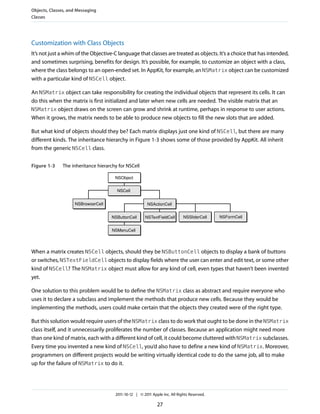
different kinds. The inheritance hierarchy in Figure 1-3 shows some of those provided by AppKit. All inherit
from the generic NSCell class.


Figure 1-3     The inheritance hierarchy for NSCell

                                       NSObject


                                        NSCell


                    NSBrowserCell                        NSActionCell


                                     NSButtonCell      NSTextFieldCell       NSSliderCell    NSFormCell


                                      NSMenuCell


When a matrix creates NSCell objects, should they be NSButtonCell objects to display a bank of buttons
or switches, NSTextFieldCell objects to display fields where the user can enter and edit text, or some other
kind of NSCell? The NSMatrix object must allow for any kind of cell, even types that haven’t been invented
yet.

One solution to this problem would be to define the NSMatrix class as abstract and require everyone who
uses it to declare a subclass and implement the methods that produce new cells. Because they would be
implementing the methods, users could make certain that the objects they created were of the right type.

But this solution would require users of the NSMatrix class to do work that ought to be done in the NSMatrix
class itself, and it unnecessarily proliferates the number of classes. Because an application might need more
than one kind of matrix, each with a different kind of cell, it could become cluttered with NSMatrix subclasses.
Every time you invented a new kind of NSCell, you’d also have to define a new kind of NSMatrix. Moreover,
programmers on different projects would be writing virtually identical code to do the same job, all to make
up for the failure of NSMatrix to do it.


                                       2011-10-12 | © 2011 Apple Inc. All Rights Reserved.

                                                              27
Objects, Classes, and Messaging
Classes


A better solution, and the solution the NSMatrix class adopts, is to allow NSMatrix instances to be initialized
with a kind of NSCell—that is, with a class object. The NSMatrix class also defines a setCellClass: method
that passes the class object for the kind of NSCell object an NSMatrix should use to fill empty slots:

  [myMatrix setCellClass:[NSButtonCell class]];


The NSMatrix object uses the class object to produce new cells when it’s first initialized and whenever it’s
resized to contain more cells. This kind of customization would be difficult if classes weren’t objects that could
be passed in messages and assigned to variables.


Variables and Class Objects
When you define a new class, you can specify instance variables. Every instance of the class can maintain its
own copy of the variables you declare—each object controls its own data. There is, however, no class variable
counterpart to an instance variable. Only internal data structures, initialized from the class definition, are
provided for the class. Moreover, a class object has no access to the instance variables of any instances; it can’t
initialize, read, or alter them.

For all the instances of a class to share data, you must define an external variable of some sort. The simplest
way to do this is to declare a variable in the class implementation file:

  int MCLSGlobalVariable;


  @implementation MyClass

  // implementation continues


In a more sophisticated implementation, you can declare a variable to be static, and provide class methods
to manage it. Declaring a variable static limits its scope to just the class—and to just the part of the class
that’s implemented in the file. (Thus unlike instance variables, static variables cannot be inherited by, or directly
manipulated by, subclasses.) This pattern is commonly used to define shared instances of a class (such as
singletons; see “Creating a Singleton Instance” in Cocoa Fundamentals Guide ).

  static MyClass *MCLSSharedInstance;


  @implementation MyClass


  + (MyClass *)sharedInstance

  {


                                      2011-10-12 | © 2011 Apple Inc. All Rights Reserved.

                                                             28
Objects, Classes, and Messaging
Classes


        // check for existence of shared instance

        // create if necessary

        return MCLSSharedInstance;

  }

  // implementation continues


Static variables help give the class object more functionality than just that of a factory producing instances;
it can approach being a complete and versatile object in its own right. A class object can be used to coordinate
the instances it creates, dispense instances from lists of objects already created, or manage other processes
essential to the application. In the case when you need only one object of a particular class, you can put all
the object’s state into static variables and use only class methods. This saves the step of allocating and initializing
an instance.


      Note: It is also possible to use external variables that are not declared static, but the limited scope
      of static variables better serves the purpose of encapsulating data into separate objects.


Initializing a Class Object
If you want to use a class object for anything besides allocating instances, you may need to initialize it just as
you would an instance. Although programs don’t allocate class objects, Objective-C does provide a way for
programs to initialize them.

If a class makes use of static or global variables, the initialize method is a good place to set their initial
values. For example, if a class maintains an array of instances, the initialize method could set up the array
and even allocate one or two default instances to have them ready.

The runtime system sends an initialize message to every class object before the class receives any other
messages and after its superclass has received the initialize message. This sequence gives the class a
chance to set up its runtime environment before it’s used. If no initialization is required, you don’t need to
write an initialize method to respond to the message.

Because of inheritance, an initialize message sent to a class that doesn’t implement the initialize
method is forwarded to the superclass, even though the superclass has already received the initialize
message. For example, assume class A implements the initialize method, and class B inherits from class
A but does not implement the initialize method. Just before class B is to receive its first message, the
runtime system sends initialize to it. But, because class B doesn’t implement initialize, class A’s
initialize is executed instead. Therefore, class A should ensure that its initialization logic is performed only
once, and for the appropriate class.


                                      2011-10-12 | © 2011 Apple Inc. All Rights Reserved.

                                                             29
Objects, Classes, and Messaging
Classes


To avoid performing initialization logic more than once, use the template in Listing 1-1 when implementing
the initialize method.


Listing 1-1      Implementation of the initialize method

     + (void)initialize

     {

         if (self == [ThisClass class]) {

                // Perform initialization here.

                ...

           }

     }


         Note: Remember that the runtime system sends initialize to each class individually. Therefore,
         in a class’s implementation of the initialize method, you must not send the initialize message
         to its superclass.


Methods of the Root Class
All objects, classes and instances alike, need an interface to the runtime system. Both class objects and instances
should be able to introspect about their abilities and to report their place in the inheritance hierarchy. It’s the
province of the NSObject class to provide this interface.

So that NSObject methods don’t have to be implemented twice—once to provide a runtime interface for
instances and again to duplicate that interface for class objects—class objects are given special dispensation
to perform instance methods defined in the root class. When a class object receives a message that it can’t
respond to with a class method, the runtime system determines whether there’s a root instance method that
can respond. The only instance methods that a class object can perform are those defined in the root class,
and only if there’s no class method that can do the job.

For more on this peculiar ability of class objects to perform root instance methods, see NSObject Class Reference .


Class Names in Source Code
In source code, class names can be used in only two very different contexts. These contexts reflect the dual
role of a class as a data type and as an object:
 ●       The class name can be used as a type name for a kind of object. For example:


                                        2011-10-12 | © 2011 Apple Inc. All Rights Reserved.

                                                               30
Objects, Classes, and Messaging
Classes


       Rectangle *anObject;


     Here anObject is statically typed to be a pointer to a Rectangle object. The compiler expects it to have
     the data structure of a Rectangle instance and to have the instance methods defined and inherited by
     the Rectangle class. Static typing enables the compiler to do better type checking and makes source
     code more self-documenting. See “Enabling Static Behavior” (page 83) for details.
     Only instances can be statically typed; class objects can’t be, because they aren’t members of a class, but
     rather belong to the Class data type.
 ●   As the receiver in a message expression, the class name refers to the class object. This usage was illustrated
     in several of the earlier examples. The class name can stand for the class object only as a message receiver.
     In any other context, you must ask the class object to reveal its id (by sending it a class message). This
     example passes the Rectangle class as a parameter in an isKindOfClass: message:

       if ( [anObject isKindOfClass:[Rectangle class]] )

            ...


     It would have been illegal to simply use the name “Rectangle” as the parameter. The class name can only
     be a receiver.
     If you don’t know the class name at compile time but have it as a string at runtime, you can use
     NSClassFromString to return the class object:


       NSString *className;

            ...

       if ( [anObject isKindOfClass:NSClassFromString(className)] )

            ...


     This function returns nil if the string it’s passed is not a valid class name.


Class names exist in the same namespace as global variables and function names. A class and a global variable
can’t have the same name. Class names are the only names with global visibility in Objective-C.


Testing Class Equality
You can test two class objects for equality using a direct pointer comparison. It is important, though, to get
the correct class. There are several features in the Cocoa frameworks that dynamically and transparently subclass
existing classes to extend their functionality (for example, key-value observing and Core Data do this—see
Key-Value Observing Programming Guide and Core Data Programming Guide respectively). In a


                                      2011-10-12 | © 2011 Apple Inc. All Rights Reserved.

                                                              31
Objects, Classes, and Messaging
Classes


dynamically-created subclass, the class method is typically overridden such that the subclass masquerades
as the class it replaces. When testing for class equality, you should therefore compare the values returned by
the class method rather than those returned by lower-level functions. Put in terms of API, the following
inequalities pertain for dynamic subclasses:

  [object class] != object_getClass(object) != *((Class*)object)


You should therefore test two classes for equality as follows:

  if ([objectA class] == [objectB class]) { //...


                                    2011-10-12 | © 2011 Apple Inc. All Rights Reserved.

                                                           32
Defining a Class


Much of object-oriented programming consists of writing the code for new objects—defining new classes. In
Objective-C, classes are defined in two parts:
 ●   An interface that declares the methods and properties of the class and names its superclass
 ●   An implementation that actually defines the class (contains the code that implements its methods)


Each of these parts is typically in its own file. Sometimes, however, a class definition spans several files through
the use of a feature called a category . Categories can compartmentalize a class definition or extend an existing
one. Categories are described in “Categories and Extensions” (page 73).


Source Files
Although the compiler doesn’t require it, class interface and implementation are usually in two different files.
The interface file must be made available to anyone who uses the class.

A single file can declare or implement more than one class. Nevertheless, it’s customary to have a separate
interface file for each class, if not also a separate implementation file. Keeping class interfaces separate better
reflects their status as independent entities.

Interface and implementation files typically are named after the class. The name of the implementation file
has the .m extension, indicating that it contains Objective-C source code. The interface file can be assigned
any other extension. Because it’s included in other source files, the name of the interface file usually has the
.h extension typical of header files. For example, the Rectangle class would be declared in Rectangle.h
and defined in Rectangle.m.

Separating an object’s interface from its implementation fits well with the design of object-oriented programs.
An object is a self-contained entity that can be viewed from the outside almost as a black box. Once you’ve
determined how an object interacts with other elements in your program—that is, once you’ve declared its
interface—you can freely alter its implementation without affecting any other part of the application.


                                     2011-10-12 | © 2011 Apple Inc. All Rights Reserved.

                                                            33
Defining a Class
Class Interface


Class Interface
The declaration of a class interface begins with the compiler directive @interface and ends with the directive
@end. (All Objective-C directives to the compiler begin with “@”  .)

  @interface ClassName : ItsSuperclass

  // Method and property declarations.

  @end


The first line of the declaration presents the new class name and links it to its superclass. The superclass defines
the position of the new class in the inheritance hierarchy, as discussed under “Inheritance” (page 19).

Methods and properties for the class are declared next, before the end of the class declaration. The names of
methods that can be used by class objects, class methods, are preceded by a plus sign:

  + alloc;


The methods that instances of a class can use, instance methods, are marked with a minus sign:

  - (void)display;


Although it’s not a common practice, you can define a class method and an instance method with the same
name. A method can also have the same name as an instance variable, which is more common, especially if
the method returns the value in the variable. For example, Circle has a radius method that could match a
radius instance variable.

Method return types are declared using the standard C syntax for casting one type to another:

  - (float)radius;


Parameter types are declared in the same way:

  - (void)setRadius:(float)aRadius;


If a return or parameter type isn’t explicitly declared, it’s assumed to be the default type for methods and
messages—an id. The alloc method illustrated earlier returns id.

When there’s more than one parameter, the parameters are declared within the method name after the colons.
Parameters break the name apart in the declaration, just as in a message. For example:


                                     2011-10-12 | © 2011 Apple Inc. All Rights Reserved.

                                                            34
Defining a Class
Class Interface


  - (void)setWidth:(float)width height:(float)height;


Methods that take a variable number of parameters declare them using a comma and ellipsis points, just as a
function would:

  - makeGroup:group, ...;


Property declarations take the form:

  @property (attributes) Type propertyName;


Properties are discussed in more detail in “Declared Properties” (page 62).


     Note: Historically, the interface required declarations of a class’s instance variables, the data
     structures that are part of each instance of the class. These were declared in braces after the
     @interface declaration and before method declarations:

       @interface ClassName : ItsSuperclass

       {

             // Instance variable declarations.

       }

       // Method and property declarations.

       @end


     Instance variables represent an implementation detail, and should typically not be accessed outside
     of the class itself. Moreover, you can declare them in the implementation block or synthesize them
     using declared properties. Typically you should not, therefore, declare instance variables in the public
     interface and so you should omit the braces.


Importing the Interface
The interface file must be included in any source module that depends on the class interface—that includes
any module that creates an instance of the class, sends a message to invoke a method declared for the class,
or mentions an instance variable declared in the class. The interface is usually included with the #import
directive:

  #import "Rectangle.h"


                                     2011-10-12 | © 2011 Apple Inc. All Rights Reserved.

                                                            35
Defining a Class
Class Interface


This directive is identical to #include, except that it makes sure that the same file is never included more
than once. It’s therefore preferred and is used in place of #include in code examples throughout
Objective-C–based documentation.

To reflect the fact that a class definition builds on the definitions of inherited classes, an interface file begins
by importing the interface for its superclass:

  #import "ItsSuperclass.h"


  @interface ClassName : ItsSuperclass

  // Method and property declarations.

  @end


This convention means that every interface file includes, indirectly, the interface files for all inherited classes.
When a source module imports a class interface, it gets interfaces for the entire inheritance hierarchy that the
class is built upon.

Note that if there is a precomp—a precompiled header—that supports the superclass, you may prefer to
import the precomp instead.


Referring to Other Classes
An interface file declares a class and, by importing its superclass, implicitly contains declarations for all inherited
classes, from NSObject on down through its superclass. If the interface mentions classes not in this hierarchy,
it must import them explicitly or declare them with the @class directive:

  @class Rectangle, Circle;


This directive simply informs the compiler that “Rectangle” and “Circle” are class names. It doesn’t import their
interface files.

An interface file mentions class names when it statically types instance variables, return values, and parameters.
For example, this declaration

  - (void)setPrimaryColor:(NSColor *)aColor;


mentions the NSColor class.


                                      2011-10-12 | © 2011 Apple Inc. All Rights Reserved.

                                                             36
Defining a Class
Class Implementation


Because declarations like this simply use the class name as a type and don’t depend on any details of the class
interface (its methods and instance variables), the @class directive gives the compiler sufficient forewarning
of what to expect. However, when the interface to a class is actually used (instances created, messages sent),
the class interface must be imported. Typically, an interface file uses @class to declare classes, and the
corresponding implementation file imports their interfaces (since it needs to create instances of those classes
or send them messages).

The @class directive minimizes the amount of code seen by the compiler and linker, and is therefore the
simplest way to give a forward declaration of a class name. Being simple, it avoids potential problems that
may come with importing files that import still other files. For example, if one class declares a statically typed
instance variable of another class, and their two interface files import each other, neither class may compile
correctly.


The Role of the Interface
The purpose of the interface file is to declare the new class to other source modules (and to other programmers).
It contains information they need to work with the class (programmers might also appreciate a little
documentation).
 ●       The interface file tells users how the class is connected into the inheritance hierarchy and what other
         classes—inherited or simply referred to somewhere in the class—are needed.
 ●       Through its list of method declarations, the interface file lets other modules know what messages can be
         sent to the class object and instances of the class. Every method that can be used outside the class definition
         is declared in the interface file; methods that are internal to the class implementation can be omitted.


Class Implementation
The definition of a class is structured very much like its declaration. It begins with an @implementation
directive and ends with the @end directive. In addition, the class may declare instance variables in braces after
the @implementation directive:

     @implementation ClassName

     {

           // Instance variable declarations.

     }

     // Method definitions.

     @end


                                          2011-10-12 | © 2011 Apple Inc. All Rights Reserved.

                                                                 37
Defining a Class
Class Implementation


Instance variables are often specified by declared properties (see “Declared Properties” (page 62)). If you don’t
declare additional instance variables, you can omit the braces:

  @implementation ClassName

  // Method definitions.

  @end


      Note: Every implementation file must import its own interface. For example, Rectangle.m imports
      Rectangle.h. Because the implementation doesn’t need to repeat any of the declarations it imports,
      it can safely omit the name of the superclass.


Methods for a class are defined, like C functions, within a pair of braces. Before the braces, they’re declared in
the same manner as in the interface file, but without the semicolon. For example:

  + (id)alloc {

        ...

  }


  - (BOOL)isFilled {

        ...

  }


  - (void)setFilled:(BOOL)flag {

        ...
  }


Methods that take a variable number of parameters handle them just as a function would:

  #import <stdarg.h>


   ...


  - getGroup:group, ... {


        va_list ap;


                                     2011-10-12 | © 2011 Apple Inc. All Rights Reserved.

                                                            38
Defining a Class
Class Implementation


       va_start(ap, group);

       ...

  }


Referring to Instance Variables
By default, the definition of an instance method has all the instance variables of the object within its scope. It
can refer to them simply by name. Although the compiler creates the equivalent of C structures to store instance
variables, the exact nature of the structure is hidden. You don’t need either of the structure operators (. or
->) to refer to an object’s data. For example, this method definition refers to the receiver’s filled instance
variable:

  - (void)setFilled:(BOOL)flag

  {

       filled = flag;

       ...

  }


Neither the receiving object nor its filled instance variable is declared as a parameter to this method, yet
the instance variable falls within its scope. This simplification of method syntax is a significant shorthand in
the writing of Objective-C code.

When the instance variable belongs to an object that’s not the receiver, the object’s type must be made explicit
to the compiler through static typing. In referring to the instance variable of a statically typed object, the
structure pointer operator (->) is used.

Suppose, for example, that the Sibling class declares a statically typed object, twin, as an instance variable:

  @interface Sibling : NSObject

  {

       Sibling *twin;

       int gender;

       struct features *appearance;

  }


As long as the instance variables of the statically typed object are within the scope of the class (as they are
here because twin is typed to the same class), a Sibling method can set them directly:


                                     2011-10-12 | © 2011 Apple Inc. All Rights Reserved.

                                                            39
Defining a Class
Class Implementation


  - makeIdenticalTwin

  {

       if ( !twin ) {

             twin = [[Sibling alloc] init];

             twin->gender = gender;

             twin->appearance = appearance;

       }

       return twin;

  }


The Scope of Instance Variables
To enforce the ability of an object to hide its data, the compiler limits the scope of instance variables—that is,
limits their visibility within the program. But to provide flexibility, it also lets you explicitly set the scope at four
levels. Each level is marked by a compiler directive:

 Directive             Meaning

 @private              The instance variable is accessible only within the class that declares it.

 @protected            The instance variable is accessible within the class that declares it and within classes
                       that inherit it. All instance variables without an explicit scope directive have
                       @protected scope.

 @public               The instance variable is accessible everywhere.

 @package              Using the modern runtime, an @package instance variable has @public scope inside
                       the executable image that implements the class, but acts like @private outside.
                       The @package scope for Objective-C instance variables is analogous to
                       private_extern for C variables and functions. Any code outside the class
                       implementation’s image that tries to use the instance variable gets a link error.
                       This scope is most useful for instance variables in framework classes, where @private
                       may be too restrictive but @protected or @public too permissive.


                                       2011-10-12 | © 2011 Apple Inc. All Rights Reserved.

                                                              40
Defining a Class
Class Implementation


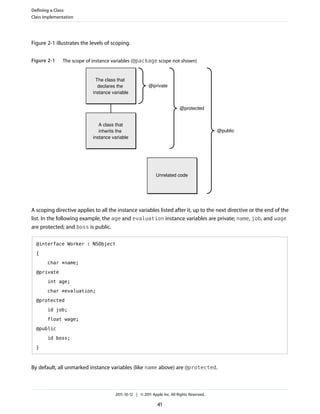
Figure 2-1 illustrates the levels of scoping.


Figure 2-1    The scope of instance variables (@package scope not shown)


                              The class that
                               declares the             @private
                            instance variable


                                                                          @protected


                               A class that
                               inherits the                                                 @public
                            instance variable


                                                             Unrelated code


A scoping directive applies to all the instance variables listed after it, up to the next directive or the end of the
list. In the following example, the age and evaluation instance variables are private; name, job, and wage
are protected; and boss is public.

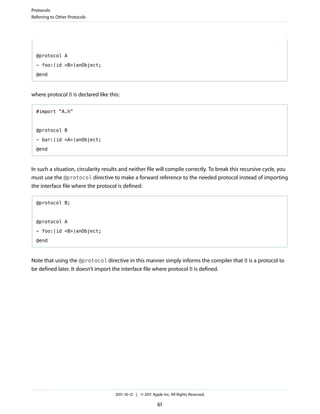
  @interface Worker : NSObject

  {

       char *name;
  @private

       int age;

       char *evaluation;

  @protected

       id job;

       float wage;

  @public

       id boss;

  }


By default, all unmarked instance variables (like name above) are @protected.


                                      2011-10-12 | © 2011 Apple Inc. All Rights Reserved.

                                                             41
Defining a Class
Class Implementation


All instance variables that a class declares, no matter how they’re marked, are within the scope of the class
definition. For example, a class that declares a job instance variable, such as the Worker class shown above,
can refer to it in a method definition:

     - promoteTo:newPosition

     {

           id old = job;

           job = newPosition;

           return old;

     }


Obviously, if a class couldn’t access its own instance variables, the instance variables would be of no use
whatsoever.

Normally, a class also has access to the instance variables it inherits. The ability to refer to an instance variable
is usually inherited along with the variable. It makes sense for classes to have their entire data structures within
their scope, especially if you think of a class definition as merely an elaboration of the classes it inherits from.
The promoteTo: method illustrated earlier could just as well have been defined in any class that inherits the
job instance variable from the Worker class.

However, there are reasons why you might want to restrict inheriting classes from directly accessing an instance
variable:
 ●       Once a subclass accesses an inherited instance variable, the class that declares the variable is tied to that
         part of its implementation. In later versions, it can’t eliminate the variable or alter the role it plays without
         inadvertently breaking the subclass.
 ●       Moreover, if a subclass accesses an inherited instance variable and alters its value, it may inadvertently
         introduce bugs in the class that declares the variable, especially if the variable is involved in class-internal
         dependencies.


To limit an instance variable’s scope to just the class that declares it, you must mark it @private. Instance
variables marked @private are only available to subclasses by calling public accessor methods, if they exist.

At the other extreme, marking a variable @public makes it generally available, even outside of class definitions
that inherit or declare the variable. Normally, to get information stored in an instance variable, other objects
must send a message requesting it. However, a public instance variable can be accessed anywhere as if it were
a field in a C structure. For example:

     Worker *ceo = [[Worker alloc] init];


                                          2011-10-12 | © 2011 Apple Inc. All Rights Reserved.

                                                                 42
Defining a Class
Messages to self and super


  ceo->boss = nil;


Note that the object must be statically typed.

Marking instance variables @public defeats the ability of an object to hide its data. It runs counter to a
fundamental principle of object-oriented programming—the encapsulation of data within objects where it’s
protected from view and inadvertent error. Public instance variables should therefore be avoided except in
extraordinary cases.


Messages to self and super
Objective-C provides two terms that can be used within a method definition to refer to the object that performs
the method—self and super.

Suppose, for example, that you define a reposition method that needs to change the coordinates of whatever
object it acts on. It can invoke the setOrigin:: method to make the change. All it needs to do is send a
setOrigin:: message to the same object that the reposition message itself was sent to. When you’re
writing the reposition code, you can refer to that object as either self or super. The reposition method
could read either:

  - reposition

  {

        ...

        [self setOrigin:someX :someY];

        ...

  }


or:

  - reposition

  {

        ...

        [super setOrigin:someX :someY];

        ...

  }


                                    2011-10-12 | © 2011 Apple Inc. All Rights Reserved.

                                                           43
Defining a Class
Messages to self and super


Here, self and super both refer to the object receiving a reposition message, whatever object that may
happen to be. The two terms are quite different, however. self is one of the hidden parameters that the
messaging routine passes to every method; it’s a local variable that can be used freely within a method
implementation, just as the names of instance variables can be. super is a term that substitutes for self only
as the receiver in a message expression. As receivers, the two terms differ principally in how they affect the
messaging process:
 ●   self searches for the method implementation in the usual manner, starting in the dispatch table of the
     receiving object’s class. In the example above, it would begin with the class of the object receiving the
     reposition message.
 ●   super is a flag that tells the compiler to search for the method implementation in a very different place.
     It begins in the superclass of the class that defines the method where super appears. In the example
     above, it would begin with the superclass of the class where reposition is defined.


Wherever super receives a message, the compiler substitutes another messaging routine for the objc_msgSend
function. The substitute routine looks directly to the superclass of the defining class—that is, to the superclass
of the class sending the message to super—rather than to the class of the object receiving the message.


                                     2011-10-12 | © 2011 Apple Inc. All Rights Reserved.

                                                            44
Defining a Class
Messages to self and super


An Example: Using self and super
The difference between self and super becomes clear when using a hierarchy of three classes. Suppose, for
example, that we create an object belonging to a class called Low. The superclass of Low is Mid; the superclass
of Mid is High. All three classes define a method called negotiate, which each class uses for its own purpose.
In addition, Mid defines an ambitious method called makeLastingPeace, which itself employs the negotiate
method. The classes and those methods are illustrated in Figure 2-2.


Figure 2-2     The hierarchy of High, Mid, and Low


                                                         superclass


                                        High            – negotiate


                                                         superclass


                                        Mid           – negotiate
                                                   – makeLastingPeace


                                                         superclass


                                        Low             – negotiate


Suppose that the implementation of makeLastingPeace (in the Mid class) uses self to indicate the object
to send the negotiate message to:

  - makeLastingPeace

  {

        [self negotiate];

        ...


                                      2011-10-12 | © 2011 Apple Inc. All Rights Reserved.

                                                             45
Defining a Class
Messages to self and super


     }


When a message is sent to a Low object to perform the makeLastingPeace method, makeLastingPeace
sends a negotiate message to the same Low object. The messaging routine finds the version of negotiate
defined in Low, the class of self.

However, if the implementation of makeLastingPeace instead uses super as the receiver,

     - makeLastingPeace

     {

           [super negotiate];

           ...

     }


the messaging routine finds the version of negotiate defined in High. It ignores the class (Low) of the object
that received the makeLastingPeace message and skips to the superclass of Mid, because Mid is where
makeLastingPeace is defined. Neither implementation finds the Mid version of negotiate.

As this example illustrates, super provides a way to bypass a method that overrides another method. Here,
the use of super enabled makeLastingPeace to bypass the Mid version of negotiate that redefined the
High version of that method.

Not being able to reach the Mid version of negotiate, as just described, may seem like a flaw, but under the
circumstances it’s intentional:
 ●       The author of the Low class intentionally overrode the Mid version of negotiate so that instances of Low
         (and its subclasses) would invoke the redefined version of the method instead. The designer of Low didn’t
         want Low objects to perform the inherited method.
 ●       The author of the Mid method makeLastingPeace, in sending the negotiate message to super (as
         shown in the second implementation), intentionally skipped over the Mid version of negotiate (and
         over any versions that might be defined in classes like Low that inherit from Mid) to perform the version
         defined in the High class. The designer of the second implementation of makeLastingPeace wanted
         to use the High version of negotiate and no other.


The Mid version of negotiate could still be used, but it would take a direct message to a Mid instance to do
so.


                                        2011-10-12 | © 2011 Apple Inc. All Rights Reserved.

                                                               46
Defining a Class
Messages to self and super


Using super
Messages to super allow method implementations to be distributed over more than one class. You can override
an existing method to modify or add to it and still incorporate the original method in the modification:

  - negotiate

  {

        ...

        return [super negotiate];

  }


For some tasks, each class in the inheritance hierarchy can implement a method that does part of the job and
passes the message on to super for the rest. The init method, which initializes a newly allocated instance,
is designed to work like this. Each init method has responsibility for initializing the instance variables defined
in its class. But before doing so, it sends an init message to super to have the classes it inherits from initialize
their instance variables. Each version of init follows this procedure, so classes initialize their instance variables
in the order of inheritance:

  - (id)init

  {

        self = [super init];

        if (self) {

              ...

        }

  }


It’s also possible to concentrate core functionality in one method defined in a superclass and have subclasses
incorporate the method through messages to super. For example, every class method that creates an instance
must allocate storage for the new object and initialize its isa variable to the class structure. Allocation is
typically left to the alloc and allocWithZone: methods defined in the NSObject class. If another class
overrides these methods (a rare case), it can still get the basic functionality by sending a message to super.


Redefining self
super is simply a flag to the compiler telling it where to begin searching for the method to perform; it’s used
only as the receiver of a message. But self is a variable name that can be used in any number of ways, even
assigned a new value.


                                      2011-10-12 | © 2011 Apple Inc. All Rights Reserved.

                                                             47
Defining a Class
Messages to self and super


There’s a tendency to do just that in definitions of class methods. Class methods are often concerned not with
the class object, but with instances of the class. For example, many class methods combine allocation and
initialization of an instance, often setting up instance variable values at the same time. In such a method, it
might be tempting to send messages to the newly allocated instance and to call the instance self, just as in
an instance method. But that would be an error. self and super both refer to the receiving object—the
object that gets a message telling it to perform the method. Inside an instance method, self refers to the
instance; but inside a class method, self refers to the class object. This is an example of what not to do:

  + (Rectangle *)rectangleOfColor:(NSColor *) color

  {

        self = [[Rectangle alloc] init]; // BAD

        [self setColor:color];

        return self;

  }


To avoid confusion, it’s usually better to use a variable other than self to refer to an instance inside a class
method:

  + (id)rectangleOfColor:(NSColor *)color

  {

        id newInstance = [[Rectangle alloc] init]; // GOOD

        [newInstance setColor:color];

        return newInstance;

  }


In fact, rather than sending the alloc message to the class in a class method, it’s often better to send alloc
to self. This way, if the class is subclassed, and the rectangleOfColor: message is received by a subclass,
the instance returned is the same type as the subclass (for example, the array method of NSArray is inherited
by NSMutableArray).

  + (id)rectangleOfColor:(NSColor *)color

  {

        id newInstance = [[self alloc] init]; // EXCELLENT

        [newInstance setColor:color];

        return newInstance;

  }


                                     2011-10-12 | © 2011 Apple Inc. All Rights Reserved.

                                                            48
Defining a Class
Messages to self and super


See “Creating and Initializing Objects” for more information about implementing initializer and related methods.


                                    2011-10-12 | © 2011 Apple Inc. All Rights Reserved.

                                                           49
Protocols


Protocols declare methods that can be implemented by any class. Protocols are useful in at least three situations:
 ●    To declare methods that others are expected to implement
 ●    To declare the interface to an object while concealing its class
 ●    To capture similarities among classes that are not hierarchically related


Declaring Interfaces for Others to Implement
Class and category interfaces declare methods that are associated with a particular class—mainly methods
that the class implements. Informal and formal protocols, on the other hand, declare methods that are
independent of any specific class, but which any class, and perhaps many classes, might implement.

A protocol is simply a list of method declarations, unattached to a class definition. For example, these methods
that report user actions on the mouse could be gathered into a protocol:

     - (void)mouseDown:(NSEvent *)theEvent;

     - (void)mouseDragged:(NSEvent *)theEvent;

     - (void)mouseUp:(NSEvent *)theEvent;


Any class that wanted to respond to mouse events could adopt the protocol and implement its methods.

Protocols free method declarations from dependency on the class hierarchy, so they can be used in ways that
classes and categories cannot. Protocols list methods that are (or may be) implemented somewhere, but the
identity of the class that implements them is not of interest. What is of interest is whether or not a particular
class conforms to the protocol—whether it has implementations of the methods the protocol declares. Thus
objects can be grouped into types not just on the basis of similarities resulting from inheriting from the same
class, but also on the basis of their similarity in conforming to the same protocol. Classes in unrelated branches
of the inheritance hierarchy might be typed alike because they conform to the same protocol.

Protocols can play a significant role in object-oriented design, especially when a project is divided among
many implementors or it incorporates objects developed in other projects. Cocoa software uses protocols
heavily to support interprocess communication through Objective-C messages.


                                      2011-10-12 | © 2011 Apple Inc. All Rights Reserved.

                                                             50
Protocols
Methods for Others to Implement


However, an Objective-C program doesn’t need to use protocols. Unlike class definitions and message
expressions, they’re optional. Some Cocoa frameworks use them; some don’t. It all depends on the task at
hand.


Methods for Others to Implement
If you know the class of an object, you can look at its interface declaration (and the interface declarations of
the classes it inherits from) to find what messages it responds to. These declarations advertise the messages
it can receive. Protocols provide a way for it to also advertise the messages it sends.

Communication works both ways; objects send messages as well as receive them. For example, an object might
delegate responsibility for a certain operation to another object, or it may on occasion simply need to ask
another object for information. In some cases, an object might be willing to notify other objects of its actions
so that they can take whatever collateral measures might be required.

If you develop the class of the sender and the class of the receiver as part of the same project (or if someone
else has supplied you with the receiver and its interface file), this communication is easily coordinated. The
sender simply imports the interface file of the receiver. The imported file declares the method selectors the
sender uses in the messages it sends.

However, if you develop an object that sends messages to objects that aren’t yet defined—objects that you’re
leaving for others to implement—you won’t have the receiver’s interface file. You need another way to declare
the methods you use in messages but don’t implement. A protocol serves this purpose. It informs the compiler
about methods the class uses and also informs other implementors of the methods they need to define to
have their objects work with yours.

Suppose, for example, that you develop an object that asks for the assistance of another object by sending it
helpOut: and other messages. You provide an assistant instance variable to record the outlet for these
messages and define a companion method to set the instance variable. This method lets other objects register
themselves as potential recipients of your object’s messages:

  - setAssistant:anObject

  {

       assistant = anObject;

  }


Then, whenever a message is to be sent to the assistant, a check is made to be sure that the receiver
implements a method that can respond:


                                    2011-10-12 | © 2011 Apple Inc. All Rights Reserved.

                                                           51
Protocols
Declaring Interfaces for Anonymous Objects


     - (BOOL)doWork

     {

           ...

           if ( [assistant respondsToSelector:@selector(helpOut:)] ) {

                 [assistant helpOut:self];

                 return YES;

           }

           return NO;

     }


Because, at the time you write this code, you can’t know what kind of object might register itself as the
assistant, you can only declare a protocol for the helpOut: method; you can’t import the interface file of
the class that implements it.


Declaring Interfaces for Anonymous Objects
A protocol can be used to declare the methods of an anonymous object, an object of unknown class. An
anonymous object may represent a service or handle a limited set of functions, especially when only one object
of its kind is needed. (Objects that play a fundamental role in defining an application’s architecture and objects
that you must initialize before using are not good candidates for anonymity.)

Objects are not anonymous to their developers, of course, but they are anonymous when the developer supplies
them to someone else. For example, consider the following situations:
 ●       Someone who supplies a framework or a suite of objects for others to use can include objects that are not
         identified by a class name or an interface file. Lacking the name and class interface, users have no way of
         creating instances of the class. Instead, the supplier must provide a ready-made instance. Typically, a
         method in another class returns a usable object:

           id formatter = [receiver formattingService];


         The object returned by the method is an object without a class identity, at least not one the supplier is
         willing to reveal. For it to be of any use at all, the supplier must be willing to identify at least some of the
         messages that it can respond to. The messages are identified by associating the object with a list of methods
         declared in a protocol.
 ●       You can send Objective-C messages to remote objects—objects in other applications.


                                          2011-10-12 | © 2011 Apple Inc. All Rights Reserved.

                                                                 52
Protocols
Nonhierarchical Similarities


     Each application has its own structure, classes, and internal logic. But you don’t need to know how another
     application works or what its components are to communicate with it. As an outsider, all you need to
     know is what messages you can send (the protocol) and where to send them (the receiver).
     An application that publishes one of its objects as a potential receiver of remote messages must also
     publish a protocol declaring the methods the object will use to respond to those messages. It doesn’t
     have to disclose anything else about the object. The sending application doesn’t need to know the class
     of the object or use the class in its own design. All it needs is the protocol.


Protocols make anonymous objects possible. Without a protocol, there would be no way to declare an interface
to an object without identifying its class.


     Note: Even though the supplier of an anonymous object doesn’t reveal its class, the object itself
     reveals it at runtime. A class message returns the anonymous object’s class. However, there’s usually
     little point in discovering this extra information; the information in the protocol is sufficient.


Nonhierarchical Similarities
If more than one class implements a set of methods, those classes are often grouped under an abstract class
that declares the methods they have in common. Each subclass can reimplement the methods in its own way,
but the inheritance hierarchy and the common declaration in the abstract class capture the essential similarity
between the subclasses.

However, sometimes it’s not possible to group common methods in an abstract class. Classes that are unrelated
in most respects might nevertheless need to implement some similar methods. This limited similarity may not
justify a hierarchical relationship. For example, you might want to add support for creating XML representations
of objects in your application and for initializing objects from an XML representation:

  - (NSXMLElement *)XMLRepresentation;

  - initFromXMLRepresentation:(NSXMLElement *)xmlString;


These methods could be grouped into a protocol and the similarity between implementing classes accounted
for by noting that they all conform to the same protocol.

Objects can be typed by this similarity (the protocols they conform to), rather than by their class. For example,
an NSMatrix instance must communicate with the objects that represent its cells. The matrix could require
each of these objects to be a kind of NSCell (a type based on class) and rely on the fact that all objects that
inherit from the NSCell class have the methods needed to respond to NSMatrix messages. Alternatively,


                                    2011-10-12 | © 2011 Apple Inc. All Rights Reserved.

                                                           53
Protocols
Formal Protocols


the NSMatrix object could require objects representing cells to have methods that can respond to a particular
set of messages (a type based on protocol). In this case, the NSMatrix object wouldn’t care what class a cell
object belonged to, just that it implemented the methods.


Formal Protocols
The Objective-C language provides a way to formally declare a list of methods (including declared properties)
as a protocol. Formal protocols are supported by the language and the runtime system. For example, the
compiler can check for types based on protocols, and objects can introspect at runtime to report whether or
not they conform to a protocol.


Declaring a Protocol
You declare formal protocols with the @protocol directive:

  @protocol ProtocolName

  method declarations

  @end


For example, you could declare an XML representation protocol like this:

  @protocol MyXMLSupport

  - initFromXMLRepresentation:(NSXMLElement *)XMLElement;

  - (NSXMLElement *)XMLRepresentation;

  @end


Unlike class names, protocol names don’t have global visibility. They live in their own namespace.


Optional Protocol Methods
Protocol methods can be marked as optional using the @optional keyword. Corresponding to the @optional
modal keyword, there is a @required keyword to formally denote the semantics of the default behavior. You
can use @optional and @required to partition your protocol into sections as you see fit. If you do not specify
any keyword, the default is @required.

  @protocol MyProtocol


                                   2011-10-12 | © 2011 Apple Inc. All Rights Reserved.

                                                          54
Protocols
Informal Protocols


  - (void)requiredMethod;


  @optional

  - (void)anOptionalMethod;

  - (void)anotherOptionalMethod;


  @required

  - (void)anotherRequiredMethod;


  @end


     Note: In OS X v10.5, protocols cannot include optional declared properties. This constraint is removed
     in OS X v10.6 and later.


Informal Protocols
In addition to formal protocols, you can also define an informal protocol by grouping the methods in a category
declaration:

  @interface NSObject ( MyXMLSupport )

  - initFromXMLRepresentation:(NSXMLElement *)XMLElement;

  - (NSXMLElement *)XMLRepresentation;

  @end


Informal protocols are typically declared as categories of the NSObject class, because that broadly associates
the method names with any class that inherits from NSObject. Because all classes inherit from the root class,
the methods aren’t restricted to any part of the inheritance hierarchy. (It is also possible to declare an informal
protocol as a category of another class to limit it to a certain branch of the inheritance hierarchy, but there is
little reason to do so.)

When used to declare a protocol, a category interface doesn’t have a corresponding implementation. Instead,
classes that implement the protocol declare the methods again in their own interface files and define them
along with other methods in their implementation files.

An informal protocol bends the rules of category declarations to list a group of methods but not associate
them with any particular class or implementation.


                                     2011-10-12 | © 2011 Apple Inc. All Rights Reserved.

                                                            55
Protocols
Protocol Objects


Being informal, protocols declared in categories don’t receive much language support. There’s no type checking
at compile time nor a check at runtime to see whether an object conforms to the protocol. To get these benefits,
you must use a formal protocol. An informal protocol may be useful when all the methods are optional, such
as for a delegate, but (in OS X v10.5 and later) it is typically better to use a formal protocol with optional
methods.


Protocol Objects
Just as classes are represented at runtime by class objects and methods by selector codes, formal protocols
are represented by a special data type—instances of the Protocol class. Source code that deals with a protocol
(other than to use it in a type specification) must refer to the corresponding protocol object.

In many ways, protocols are similar to class definitions. They both declare methods, and at runtime they’re
both represented by objects—classes by instances of Class and protocols by instances of Protocol. Like
class objects, protocol objects are created automatically from the definitions and declarations found in source
code and are used by the runtime system. They’re not allocated and initialized in program source code.

Source code can refer to a protocol object using the @protocol() directive—the same directive that declares
a protocol, except that here it has a set of trailing parentheses. The parentheses enclose the protocol name:

     Protocol *myXMLSupportProtocol = @protocol(MyXMLSupport);


This is the only way that source code can conjure up a protocol object. Unlike a class name, a protocol name
doesn’t designate the object—except inside @protocol().

The compiler creates a protocol object for each protocol declaration it encounters, but only if the protocol is
also:
 ●    Adopted by a class, or
 ●    Referred to somewhere in source code (using @protocol())


Protocols that are declared but not used (except for type checking as described below) aren’t represented by
protocol objects at runtime.


                                    2011-10-12 | © 2011 Apple Inc. All Rights Reserved.

                                                           56
Protocols
Adopting a Protocol


Adopting a Protocol
Adopting a protocol is similar in some ways to declaring a superclass. Both assign methods to the class. The
superclass declaration assigns it inherited methods; the protocol assigns it methods declared in the protocol
list. A class is said to adopt a formal protocol if in its declaration it lists the protocol within angle brackets after
the superclass name:

  @interface ClassName : ItsSuperclass < protocol list >


Categories adopt protocols in much the same way:

  @interface ClassName ( CategoryName ) < protocol list >


A class can adopt more than one protocol; names in the protocol list are separated by commas.

  @interface Formatter : NSObject < Formatting, Prettifying >


A class or category that adopts a protocol must implement all the required methods the protocol declares,
otherwise the compiler issues a warning. The Formatter class above would define all the required methods
declared in the two protocols it adopts, in addition to any it might have declared itself.

A class or category that adopts a protocol must import the header file where the protocol is declared. The
methods declared in the adopted protocol are not declared elsewhere in the class or category interface.

It’s possible for a class to simply adopt protocols and declare no other methods. For example, the following
class declaration adopts the Formatting and Prettifying protocols, but declares no instance variables or
methods of its own:

  @interface Formatter : NSObject < Formatting, Prettifying >

  @end


Conforming to a Protocol
A class is said to conform to a formal protocol if it adopts the protocol or inherits from another class that
adopts it. An instance of a class is said to conform to the same set of protocols its class conforms to.

Because a class must implement all the required methods declared in the protocols it adopts, saying that a
class or an instance conforms to a protocol is equivalent to saying that it has in its repertoire all the methods
the protocol declares.


                                       2011-10-12 | © 2011 Apple Inc. All Rights Reserved.

                                                              57
Protocols
Type Checking


It’s possible to check whether an object conforms to a protocol by sending it a conformsToProtocol:
message.

  if ( ! [receiver conformsToProtocol:@protocol(MyXMLSupport)]                            ) {

       // Object does not conform to MyXMLSupport protocol

       // If you are expecting receiver to implement methods declared in the

       //   MyXMLSupport protocol, this is probably an error

  }


(Note that there is also a class method with the same name—conformsToProtocol:.)

The conformsToProtocol: test is like the respondsToSelector: test for a single method, except that it
tests whether a protocol has been adopted (and presumably all the methods it declares implemented) rather
than just whether one particular method has been implemented. Because it checks for all the methods in the
protocol, conformsToProtocol: can be more efficient than respondsToSelector:.

The conformsToProtocol: test is also like the isKindOfClass: test, except that it tests for a type based
on a protocol rather than a type based on the inheritance hierarchy.


Type Checking
Type declarations for objects can be extended to include formal protocols. Protocols thus offer the possibility
of another level of type checking by the compiler, one that’s more abstract since it’s not tied to particular
implementations.

In a type declaration, protocol names are listed between angle brackets after the type name:

  - (id <Formatting>)formattingService;

  id <MyXMLSupport> anObject;


Just as static typing permits the compiler to test for a type based on the class hierarchy, this syntax permits
the compiler to test for a type based on conformance to a protocol.

For example, if Formatter is an abstract class, the declaration

  Formatter *anObject;


                                    2011-10-12 | © 2011 Apple Inc. All Rights Reserved.

                                                           58
Protocols
Protocols Within Protocols


groups all objects that inherit from Formatter into a type and permits the compiler to check assignments
against that type.

Similarly, the declaration

  id <Formatting> anObject;


groups all objects that conform to the Formatting protocol into a type, regardless of their positions in the class
hierarchy. The compiler can make sure only objects that conform to the protocol are assigned to the type.

In each case, the type groups similar objects—either because they share a common inheritance, or because
they converge on a common set of methods.

The two types can be combined in a single declaration:

  Formatter <Formatting> *anObject;


Protocols can’t be used to type class objects. Only instances can be statically typed to a protocol, just as only
instances can be statically typed to a class. (However, at runtime, both classes and instances respond to a
conformsToProtocol: message.)


Protocols Within Protocols
One protocol can incorporate other protocols using the same syntax that classes use to adopt a protocol:

  @protocol ProtocolName < protocol list >


All the protocols listed between angle brackets are considered part of the ProtocolName protocol. For example,
if the Paging protocol incorporates the Formatting protocol

  @protocol Paging < Formatting >


any object that conforms to the Paging protocol also conforms to Formatting. Type declarations such as

  id <Paging> someObject;


and conformsToProtocol: messages such as


                                     2011-10-12 | © 2011 Apple Inc. All Rights Reserved.

                                                            59
Protocols
Referring to Other Protocols


     if ( [anotherObject conformsToProtocol:@protocol(Paging)] )

        ...


need to mention only the Paging protocol to test for conformance to Formatting as well.

When a class adopts a protocol, it must implement the required methods the protocol declares, as mentioned
earlier. In addition, it must conform to any protocols the adopted protocol incorporates. If an incorporated
protocol incorporates still other protocols, the class must also conform to them. A class can conform to an
incorporated protocol using either of these techniques:
 ●    Implementing the methods the protocol declares
 ●    Inheriting from a class that adopts the protocol and implements the methods


Suppose, for example, that the Pager class adopts the Paging protocol. If Pager is a subclass of NSObject
as shown here:

     @interface Pager : NSObject < Paging >


it must implement all the Paging methods, including those declared in the incorporated Formatting protocol.
It adopts the Formatting protocol along with Paging.

On the other hand, if Pager is a subclass of Formatter (a class that independently adopts the Formatting
protocol) as shown here:

     @interface Pager : Formatter < Paging >


it must implement all the methods declared in the Paging protocol proper, but not those declared in
Formatting. Pager inherits conformance to the Formatting protocol from Formatter.

Note that a class can conform to a protocol without formally adopting it, simply by implementing the methods
declared in the protocol.


Referring to Other Protocols
When working on complex applications, you occasionally find yourself writing code that looks like this:

     #import "B.h"


                                    2011-10-12 | © 2011 Apple Inc. All Rights Reserved.

                                                           60
Protocols
Referring to Other Protocols


  @protocol A

  - foo:(id <B>)anObject;

  @end


where protocol B is declared like this:

  #import "A.h"


  @protocol B

  - bar:(id <A>)anObject;

  @end


In such a situation, circularity results and neither file will compile correctly. To break this recursive cycle, you
must use the @protocol directive to make a forward reference to the needed protocol instead of importing
the interface file where the protocol is defined:

  @protocol B;


  @protocol A

  - foo:(id <B>)anObject;

  @end


Note that using the @protocol directive in this manner simply informs the compiler that B is a protocol to
be defined later. It doesn’t import the interface file where protocol B is defined.


                                     2011-10-12 | © 2011 Apple Inc. All Rights Reserved.

                                                            61
Declared Properties


The Objective-C declared properties feature provides a simple way to declare and implement an object’s
accessor methods.


Overview
You typically access an object’s properties (in the sense of its attributes and relationships) through a pair of
accessor (getter/setter) methods. By using accessor methods, you adhere to the principle of encapsulation
(see “Mechanisms Of Abstraction” in Object-Oriented Programming with Objective-C ). You can exercise tight
control of the behavior of the getter/setter pair and the underlying state management while clients of the API
remain insulated from the implementation changes.

Although using accessor methods therefore has significant advantages, writing accessor methods is a tedious
process. Moreover, aspects of the property that may be important to consumers of the API are left
obscured—such as whether the accessor methods are thread-safe or whether new values are copied when
set.

Declared properties address these issues by providing the following features:
●   The property declaration provides a clear, explicit specification of how the accessor methods behave.
●   The compiler can synthesize accessor methods for you, according to the specification you provide in the
    declaration.
●   Properties are represented syntactically as identifiers and are scoped, so the compiler can detect use of
    undeclared properties.


Property Declaration and Implementation
There are two parts to a declared property, its declaration and its implementation.


                                    2011-10-12 | © 2011 Apple Inc. All Rights Reserved.

                                                           62
Declared Properties
Property Declaration and Implementation


Property Declaration
A property declaration begins with the keyword @property. @property can appear anywhere in the method
declaration list found in the @interface block of a class. @property can also appear in the declaration of a
protocol or category.


  @property (attributes) type name;


The @property directive declares a property. An optional parenthesized set of attributes provides additional
details about the storage semantics and other behaviors of the property—see “Property Declaration
Attributes” (page 64) for possible values. Like any other Objective-C type, each property has a type specification
and a name.

Listing 4-1 illustrates the declaration of a simple property.


Listing 4-1    Declaring a simple property

  @interface MyClass : NSObject

  @property float value;

  @end


You can think of a property declaration as being equivalent to declaring two accessor methods. Thus

  @property float value;


is equivalent to:

  - (float)value;

  - (void)setValue:(float)newValue;


A property declaration, however, provides additional information about how the accessor methods are
implemented (as described in “Property Declaration Attributes” (page 64)).

You can also put property declarations in class extensions (see “Extensions” (page 74)). For example, you could
declare the value property shown previously as follows:

  @interface MyClass : NSObject

  @end


                                          2011-10-12 | © 2011 Apple Inc. All Rights Reserved.

                                                                 63
Declared Properties
Property Declaration and Implementation


  @interface MyClass ()

  @property float value;

  @end


This is useful if you want to hide the declaration of private properties.


Property Declaration Attributes
You can decorate a property with attributes by using the form @property(attribute [, attribute2,
...]). Like methods, properties are scoped to their enclosing interface declaration. For property declarations
that use a comma-delimited list of variable names, the property attributes apply to all of the named properties.

If you use the @synthesize directive to tell the compiler to create the accessor methods (see “Property
Implementation Directives” (page 67)), the code it generates matches the specification given by the keywords.
If you implement the accessor methods yourself, you should ensure that it matches the specification (for
example, if you specify copy you must make sure that you do copy the input value in the setter method).


Accessor Method Names
The default names for the getter and setter methods associated with a property are propertyName and
setPropertyName : respectively—for example, given a property “foo” the accessors would be foo and
                                                                     ,
setFoo:. The following attributes allow you to specify custom names instead. They are both optional and can
appear with any other attribute (except for readonly in the case of setter=).

getter=getterName
      Specifies the name of the get accessor for the property. The getter must return a type matching the
      property’s type and take no parameters.
setter=setterName
      Specifies the name of the set accessor for the property. The setter method must take a single parameter
      of a type matching the property’s type and must return void.
      If you specify that a property is readonly and also specify a setter with setter=, you get a compiler
      warning.

Typically you should specify accessor method names that are key-value coding compliant (see Key-Value Coding
Programming Guide )—a common reason for using the getter decorator is to adhere to the isPropertyName
convention for Boolean values.


                                          2011-10-12 | © 2011 Apple Inc. All Rights Reserved.

                                                                 64
Declared Properties
Property Declaration and Implementation


Writability
These attributes specify whether or not a property has an associated set accessor. They are mutually exclusive.

readwrite
       Indicates that the property should be treated as read/write. This attribute is the default.
       Both a getter and setter method are required in the @implementation block. If you use the @synthesize
       directive in the implementation block, the getter and setter methods are synthesized.
readonly
       Indicates that the property is read-only.
       If you specify readonly, only a getter method is required in the @implementation block. If you use
       the @synthesize directive in the implementation block, only the getter method is synthesized. Moreover,
       if you attempt to assign a value using the dot syntax, you get a compiler error.


Setter Semantics
These attributes specify the semantics of a set accessor. They are mutually exclusive.

strong
       Specifies that there is a strong (owning) relationship to the destination object.
weak
       Specifies that there is a weak (non-owning) relationship to the destination object.
       If the destination object is deallocated, the property value is automatically set to nil.
       (Weak properties are not supported on OS X v10.6 and iOS 4; use assign instead.)
copy
       Specifies that a copy of the object should be used for assignment.
       The previous value is sent a release message.
       The copy is made by invoking the copy method. This attribute is valid only for object types, which must
       implement the NSCopying protocol.
assign
       Specifies that the setter uses simple assignment. This attribute is the default.
       You use this attribute for scalar types such as NSInteger and CGRect.
retain
       Specifies that retain should be invoked on the object upon assignment.
       The previous value is sent a release message.
       In OS X v10.6 and later, you can use the __attribute__ keyword to specify that a Core Foundation
       property should be treated like an Objective-C object for memory management:


                                          2011-10-12 | © 2011 Apple Inc. All Rights Reserved.

                                                                 65
Declared Properties
Property Declaration and Implementation


        @property(retain) __attribute__((NSObject)) CFDictionaryRef myDictionary;


Atomicity
You can use this attribute to specify that accessor methods are not atomic. (There is no keyword to denote
atomic.)

nonatomic
      Specifies that accessors are nonatomic. By default, accessors are atomic.

Properties are atomic by default so that synthesized accessors provide robust access to properties in a
multithreaded environment—that is, the value returned from the getter or set via the setter is always fully
retrieved or set regardless of what other threads are executing concurrently.

If you specify strong, copy, or retain and do not specify nonatomic, then in a reference-counted
environment, a synthesized get accessor for an object property uses a lock and retains and autoreleases the
returned value—the implementation will be similar to the following:

  [_internal lock]; // lock using an object-level lock

  id result = [[value retain] autorelease];

  [_internal unlock];

  return result;


If you specify nonatomic, a synthesized accessor for an object property simply returns the value directly.


Markup and Deprecation
Properties support the full range of C-style decorators. Properties can be deprecated and support
__attribute__ style markup:


  @property CGFloat x

  AVAILABLE_MAC_OS_X_VERSION_10_1_AND_LATER_BUT_DEPRECATED_IN_MAC_OS_X_VERSION_10_4;

  @property CGFloat y __attribute__((...));


If you want to specify that a property is an outlet (see outlet in iOS, and outlet in OS X), you use the IBOutlet
identifier:

  @property (nonatomic, weak) IBOutlet NSButton *myButton;


                                          2011-10-12 | © 2011 Apple Inc. All Rights Reserved.

                                                                 66
Declared Properties
Property Declaration and Implementation


IBOutlet is not, though, a formal part of the list of attributes. For more about declaring outlet properties, see
“Nib Files”.


Property Implementation Directives
You can use the @synthesize and @dynamic directives in @implementation blocks to trigger specific
compiler actions. Note that neither is required for any given @property declaration.

  Important: If you do not specify either @synthesize or @dynamic for a particular property, you must
  provide a getter and setter (or just a getter in the case of a readonly property) method implementation
  for that property. If you do not, the compiler generates a warning.


@synthesize
      You use the @synthesize directive to tell the compiler that it should synthesize the setter and/or getter
      methods for a property if you do not supply them within the @implementation block. The @synthesize
      directive also synthesizes an appropriate instance variable if it is not otherwise declared.


Listing 4-2     Using @synthesize

         @interface MyClass : NSObject

         @property(copy, readwrite) NSString *value;

         @end


         @implementation MyClass

         @synthesize value;

         @end


      You can use the form property=ivar to indicate that a particular instance variable should be used for
      the property, for example:


                                          2011-10-12 | © 2011 Apple Inc. All Rights Reserved.

                                                                 67
Declared Properties
Property Declaration and Implementation


        @synthesize firstName, lastName, age=yearsOld;


      This specifies that the accessor methods for firstName, lastName, and age should be synthesized and
      that the property age is represented by the instance variable yearsOld. Other aspects of the synthesized
      methods are determined by the optional attributes (see “Property Declaration Attributes” (page 64)).
      Whether or not you specify the name of the instance variable, the @synthesize directive can use an
      instance variable only from the current class, not a superclass.
      There are differences in the behavior of accessor synthesis that depend on the runtime (see also “Runtime
      Difference” (page 71)):
        ●     For the legacy runtimes, instance variables must already be declared in the @interface block of
              the current class. If an instance variable of the same name as the property exists, and if its type is
              compatible with the property’s type, it is used—otherwise, you get a compiler error.
        ●     For the modern runtimes (see “Runtime Versions and Platforms” in Objective-C Runtime Programming
              Guide ), instance variables are synthesized as needed. If an instance variable of the same name
              already exists, it is used.
@dynamic
      You use the @dynamic keyword to tell the compiler that you will fulfill the API contract implied by a
      property either by providing method implementations directly or at runtime using other mechanisms
      such as dynamic loading of code or dynamic method resolution. It suppresses the warnings that the
      compiler would otherwise generate if it can’t find suitable implementations. You should use it only if you
      know that the methods will be available at runtime.
      The example shown in Listing 4-3 illustrates using @dynamic with a subclass of NSManagedObject.


Listing 4-3     Using @dynamic with NSManagedObject

        @interface MyClass : NSManagedObject

        @property(nonatomic, retain) NSString *value;

        @end


        @implementation MyClass

        @dynamic value;

        @end


      NSManagedObject is provided by the Core Data framework. A managed object class has a corresponding
      schema that defines attributes and relationships for the class; at runtime, the Core Data framework


                                          2011-10-12 | © 2011 Apple Inc. All Rights Reserved.

                                                                 68
Declared Properties
Using Properties


      generates accessor methods for these as necessary. You therefore typically declare properties for the
      attributes and relationships, but you don’t have to implement the accessor methods yourself and shouldn’t
      ask the compiler to do so. If you just declared the property without providing any implementation,
      however, the compiler would generate a warning. Using @dynamic suppresses the warning.


Using Properties

Supported Types
You can declare a property for any Objective-C class, Core Foundation data type, or “plain old data” (POD) type
(see C++ Language Note: POD Types). For constraints on using Core Foundation types, however, see “Core
Foundation” (page 70).


Property Redeclaration
You can redeclare a property in a subclass, but (with the exception of readonly versus readwrite) you must
repeat its attributes in whole in the subclasses. The same holds true for a property declared in a category or
protocol—while the property may be redeclared in a category or protocol, the property’s attributes must be
repeated in whole.

If you declare a property in one class as readonly, you can redeclare it as readwrite in a class extension
(see “Extensions” (page 74)), in a protocol, or in a subclass (see “Subclassing with Properties” (page 70)). In
the case of a class extension redeclaration, the fact that the property was redeclared prior to any @synthesize
statement causes the setter to be synthesized. The ability to redeclare a read-only property as read/write
enables two common implementation patterns: a mutable subclass of an immutable class (NSString, NSArray,
and NSDictionary are all examples) and a property that has a public API that is readonly but a private
readwrite implementation internal to the class. The following example shows using a class extension to
provide a property that is declared as read-only in the public header but is redeclared privately as read/write.

  // public header file

  @interface MyObject : NSObject

  @property (readonly, copy) NSString *language;

  @end


  // private implementation file

  @interface MyObject ()

  @property (readwrite, copy) NSString *language;


                                    2011-10-12 | © 2011 Apple Inc. All Rights Reserved.

                                                           69
Declared Properties
Subclassing with Properties


  @end


  @implementation MyObject

  @synthesize language;

  @end


Core Foundation
As noted in “Property Declaration Attributes” (page 64), prior to OS X v10.6 you cannot specify the retain
attribute for non-object types. If, therefore, you declare a property whose type is a CFType and synthesize the
accessors as illustrated in the following example:

  @interface MyClass : NSObject

  @property(readwrite) CGImageRef myImage;

  @end


  @implementation MyClass

  @synthesize myImage;

  @end


then in a reference-counted environment, the synthesized set accessor simply assigns the new value to the
instance variable (the new value is not retained and the old value is not released). Simple assignment is typically
incorrect for Core Foundation objects; you should not synthesize the methods but rather implement them
yourself.


Subclassing with Properties
You can override a readonly property to make it writable. For example, you could define a class MyInteger
with a readonly property, value:

  @interface MyInteger : NSObject

  @property(readonly) NSInteger value;

  @end


  @implementation MyInteger


                                     2011-10-12 | © 2011 Apple Inc. All Rights Reserved.

                                                            70
Declared Properties
Runtime Difference


  @synthesize value;

  @end


You could then implement a subclass, MyMutableInteger, which redefines the property to make it writable:

  @interface MyMutableInteger : MyInteger

  @property(readwrite) NSInteger value;

  @end


  @implementation MyMutableInteger

  @dynamic value;


  - (void)setValue:(NSInteger)newX {

       value = newX;

  }

  @end


Runtime Difference
In general the behavior of properties is identical on both modern and legacy runtimes (see “Runtime Versions
and Platforms” in Objective-C Runtime Programming Guide ). There is one key difference: the modern runtime
supports instance variable synthesis whereas the legacy runtime does not.

For @synthesize to work in the legacy runtime, you must either provide an instance variable with the same
name and compatible type of the property or specify another existing instance variable in the @synthesize
statement. With the modern runtime, if you do not provide an instance variable, the compiler adds one for
you. For example, given the following class declaration and implementation:

  @interface MyClass : NSObject

  @property float noDeclaredIvar;

  @end


  @implementation MyClass

  @synthesize noDeclaredIvar;

  @end


                                   2011-10-12 | © 2011 Apple Inc. All Rights Reserved.

                                                          71
Declared Properties
Runtime Difference


the compiler for the legacy runtime would generate an error at @synthesize noDeclaredIvar; whereas
the compiler for the modern runtime would add an instance variable to represent noDeclaredIvar.


                                2011-10-12 | © 2011 Apple Inc. All Rights Reserved.

                                                       72
Categories and Extensions


A category allows you to add methods to an existing class—even to one for which you do not have the source.
Categories are a powerful feature that allows you to extend the functionality of existing classes without
subclassing. Using categories, you can also distribute the implementation of your own classes among several
files. Class extensions are similar, but allow additional required APIs to be declared for a class in locations
other than within the primary class @interface block.


Adding Methods to Classes
You can add methods to a class by declaring them in an interface file under a category name and defining
them in an implementation file under the same name. The category name indicates that the methods are
additions to a class declared elsewhere, not a new class. You cannot, however, use a category to add additional
instance variables to a class.

The methods the category adds become part of the class type. For example, methods added to the NSArray
class in a category are included as methods the compiler expects an NSArray instance to have in its repertoire.
Methods added to the NSArray class in a subclass, however, are not included in the NSArray type. (This
matters only for statically typed objects because static typing is the only way the compiler can know an object’s
class.)

Category methods can do anything that methods defined in the class proper can do. At runtime, there’s no
difference. The methods the category adds to the class are inherited by all the class’s subclasses, just like other
methods.

The declaration of a category interface looks very much like a class interface declaration—except the category
name is listed within parentheses after the class name and the superclass isn’t mentioned. Unless its methods
don’t access any instance variables of the class, the category must import the interface file for the class it
extends:

  #import "ClassName.h"


  @interface ClassName ( CategoryName )

  // method declarations

  @end


                                     2011-10-12 | © 2011 Apple Inc. All Rights Reserved.

                                                            73
Categories and Extensions
Extensions


Note that a category can’t declare additional instance variables for the class; it includes only methods. However,
all instance variables within the scope of the class are also within the scope of the category. That includes all
instance variables declared by the class, even ones declared @private.

There’s no limit to the number of categories that you can add to a class, but each category name must be
different, and each should declare and define a different set of methods.


Extensions
Class extensions are like anonymous categories, except that the methods they declare must be implemented
in the main @implementation block for the corresponding class. Using the Clang/LLVM 2.0 compiler, you
can also declare properties and instance variables in a class extension.

A common use for class extensions is to redeclare property that is publicly declared as read-only privately as
readwrite:

  @interface MyClass : NSObject

  @property (retain, readonly) float value;

  @end


  // Private extension, typically hidden in the main implementation file.

  @interface MyClass ()

  @property (retain, readwrite) float value;

  @end


Notice that (in contrast to a category) no name is given in the parentheses in the second @interface block.

It is also generally common for a class to have a publicly declared API and to then have additional methods
declared privately for use solely by the class or the framework within which the class resides. Class extensions
allow you to declare additional required methods for a class in locations other than within the primary class
@interface block, as illustrated in the following example:


  @interface MyClass : NSObject

  - (float)value;

  @end


                                     2011-10-12 | © 2011 Apple Inc. All Rights Reserved.

                                                            74
Categories and Extensions
Extensions


  @interface MyClass () {

       float value;

  }

  - (void)setValue:(float)newValue;

  @end


  @implementation MyClass


  - (float)value {

       return value;

  }


  - (void)setValue:(float)newValue {

       value = newValue;

  }


  @end


The implementation of the setValue: method must appear within the main @implementation block for
the class (you cannot implement it in a category). If this is not the case, the compiler emits a warning that it
cannot find a method definition for setValue:.


                                    2011-10-12 | © 2011 Apple Inc. All Rights Reserved.

                                                           75
Associative References


Associative references, available starting in OS X v10.6, simulate the addition of object instance variables to
an existing class. Using associative references, you can add storage to an object without modifying the class
declaration. This may be useful if you do not have access to the source code for the class, or if for
binary-compatibility reasons you cannot alter the layout of the object.

Associations are based on a key. For any object you can add as many associations as you want, each using a
different key. An association can also ensure that the associated object remains valid for at least the lifetime
of the source object.


Creating Associations
You use the Objective-C runtime function objc_setAssociatedObject to make an association between
one object and another. The function takes four parameters: the source object, a key, the value, and an
association policy constant. Of these, the key and the association policy merit further discussion.
 ●    The key is a void pointer. The key for each association must be unique. A typical pattern is to use a static
      variable.
 ●    The policy specifies whether the associated object is assigned, retained, or copied, and whether the
      association is be made atomically or non-atomically. This pattern is similar to that of the attributes of a
      declared property (see “Property Declaration Attributes” (page 64)). You specify the policy for the
      relationship using a constant (see objc_AssociationPolicy and Associative Object Behaviors).


Listing 6-1 shows how you can establish an association between an array and a string.


Listing 6-1    Establishing an association between an array and a string

     static char overviewKey;


     NSArray *array =

        [[NSArray alloc] initWithObjects:@"One", @"Two", @"Three", nil];

     // For the purposes of illustration, use initWithFormat: to ensure

     // the string can be deallocated


                                       2011-10-12 | © 2011 Apple Inc. All Rights Reserved.

                                                              76
Associative References
Retrieving Associated Objects


  NSString *overview =

        [[NSString alloc] initWithFormat:@"%@", @"First three numbers"];


  objc_setAssociatedObject (

        array,

        &overviewKey,

        overview,

        OBJC_ASSOCIATION_RETAIN

  );


  [overview release];
  // (1) overview valid

  [array release];

  // (2) overview invalid


At point 1, the string overview is still valid because the OBJC_ASSOCIATION_RETAIN policy specifies that
the array retains the associated object. When the array is deallocated, however (at point 2), overview is
released and so in this case also deallocated. If you try to, for example, log the value of overview, you generate
a runtime exception.


Retrieving Associated Objects
You retrieve an associated object using the Objective-C runtime function objc_getAssociatedObject.
Continuing the example shown in Listing 6-1 (page 76), you could retrieve the overview from the array using
the following line of code:

  NSString *associatedObject =

        (NSString *)objc_getAssociatedObject(array, &overviewKey);


Breaking Associations
To break an association, you typically call objc_setAssociatedObject, passing nil as the value.

Continuing the example shown in Listing 6-1 (page 76), you could break the association between the array
and the string overview using the following line of code:


                                     2011-10-12 | © 2011 Apple Inc. All Rights Reserved.

                                                            77
Associative References
Complete Example


  objc_setAssociatedObject(array, &overviewKey, nil, OBJC_ASSOCIATION_ASSIGN);


Given that the associated object is being set to nil, the policy isn’t actually important.

To break all associations for an object, you can call objc_removeAssociatedObjects. In general, however,
you are discouraged from using this function because it breaks all associations for all clients. Use this function
only if you need to restore an object to “pristine condition.”


Complete Example
The following program combines code from the preceding sections.

  #import <Foundation/Foundation.h>

  #import <objc/runtime.h>


  int main (int argc, const char * argv[]) {


       @autoreleasepool {

             static char overviewKey;


             NSArray *array = [[NSArray alloc]

                  initWithObjects:@ "One", @"Two", @"Three", nil];

             // For the purposes of illustration, use initWithFormat: to ensure

             // we get a deallocatable string
             NSString *overview = [[NSString alloc]

                  initWithFormat:@"%@", @"First three numbers"];


             objc_setAssociatedObject (

                  array,

                  &overviewKey,

                  overview,

                  OBJC_ASSOCIATION_RETAIN

             );

             [overview release];


                                     2011-10-12 | © 2011 Apple Inc. All Rights Reserved.

                                                            78
Associative References
Complete Example


             NSString *associatedObject =

                  (NSString *) objc_getAssociatedObject (array, &overviewKey);

             NSLog(@"associatedObject: %@", associatedObject);


             objc_setAssociatedObject (

                  array,

                  &overviewKey,

                  nil,

                  OBJC_ASSOCIATION_ASSIGN

             );

             [array release];


       }

       return 0;

  }


                                  2011-10-12 | © 2011 Apple Inc. All Rights Reserved.

                                                         79
Fast Enumeration


Fast enumeration is a language feature that allows you to efficiently and safely enumerate over the contents
of a collection using a concise syntax.


The for…in Syntax
The syntax for fast enumeration is defined as follows:


    for (   Type newVariable in expression ) { statements }


or


    Type existingItem ;

    for (   existingItem in expression ) { statements }


In both cases, expression yields an object that conforms to the NSFastEnumeration protocol (see “Adopting
Fast Enumeration” (page 81)). The iterating variable is set to each item in the returned object in turn, and the
code defined by statements is executed. The iterating variable is set to nil when the loop ends by exhausting
the source pool of objects. If the loop is terminated early, the iterating variable is left pointing to the last
iteration item.

There are several advantages to using fast enumeration:
●    The enumeration is considerably more efficient than, for example, using NSEnumerator directly.
●    The syntax is concise.
●    Enumeration is “safe”—the enumerator has a mutation guard so that if you attempt to modify the collection
     during enumeration, an exception is raised.


Because mutation of the object during iteration is forbidden, you can perform multiple enumerations
concurrently.


                                    2011-10-12 | © 2011 Apple Inc. All Rights Reserved.

                                                           80
Fast Enumeration
Adopting Fast Enumeration


In other respects, the feature behaves like a standard for loop. You can use break to interrupt the iteration
and continue to advance to the next element.


Adopting Fast Enumeration
Any class whose instances provide access to a collection of other objects can adopt the NSFastEnumeration
protocol. The collection classes in the Foundation framework—NSArray, NSDictionary, and NSSet—adopt
this protocol, as does NSEnumerator. It should be obvious that in the cases of NSArray and NSSet the
enumeration is over their contents. For other classes, the corresponding documentation should make clear
what property is iterated over—for example, NSDictionary and the Core Data class NSManagedObjectModel
provide support for fast enumeration; NSDictionary enumerates its keys, and NSManagedObjectModel
enumerates its entities.


Using Fast Enumeration
The following code example illustrates using fast enumeration with NSArray and NSDictionary objects.

  NSArray *array = [NSArray arrayWithObjects:

            @"one", @"two", @"three", @"four", nil];


  for (NSString *element in array) {

       NSLog(@"element: %@", element);

  }


  NSDictionary *dictionary = [NSDictionary dictionaryWithObjectsAndKeys:

       @"quattuor", @"four", @"quinque", @"five", @"sex", @"six", nil];


  NSString *key;

  for (key in dictionary) {

       NSLog(@"English: %@, Latin: %@", key, [dictionary objectForKey:key]);

  }


You can also use NSEnumerator objects with fast enumeration, as illustrated in this example:

  NSArray *array = [NSArray arrayWithObjects:


                                   2011-10-12 | © 2011 Apple Inc. All Rights Reserved.

                                                          81
Fast Enumeration
Using Fast Enumeration


             @"one", @"two", @"three", @"four", nil];


  NSEnumerator *enumerator = [array reverseObjectEnumerator];

  for (NSString *element in enumerator) {

       if ([element isEqualToString:@"three"]) {

             break;

       }

  }


  NSString *next = [enumerator nextObject];
  // next = "two"


For collections or enumerators that have a well-defined order—such as an NSArray or an NSEnumerator
instance derived from an array—the enumeration proceeds in that order, so simply counting iterations gives
you the proper index into the collection if you need it.

  NSArray *array = <#Get an array#>;

  NSUInteger index = 0;


  for (id element in array) {

       NSLog(@"Element at index %u is: %@", index, element);

       index++;

  }


                                  2011-10-12 | © 2011 Apple Inc. All Rights Reserved.

                                                         82
Enabling Static Behavior


This chapter explains how static typing works and discusses some other features of Objective-C, including
ways to temporarily overcome its inherent dynamism.


Default Dynamic Behavior
By design, Objective-C objects are dynamic entities. As many decisions about them as possible are pushed
from compile time to runtime:
 ●   The memory for objects is dynamically allocated at runtime by class methods that create new instances.
 ●   Objects are dynamically typed. In source code (at compile time), any object variable can be of type id
     no matter what the object’s class is. The exact class of an id variable (and therefore its particular methods
     and data structure) isn’t determined until the program runs.
 ●   Messages and methods are dynamically bound, as described in “Dynamic Binding” (page 17). A runtime
     procedure matches the method selector in the message to a method implementation that “belongs to”
     the receiver.


These features give object-oriented programs a great deal of flexibility and power, but there’s a price to pay.
In particular, the compiler can’t check the exact types (classes) of id variables. To permit better compile-time
type checking, and to make code more self-documenting, Objective-C allows objects to be statically typed
with a class name rather than generically typed as id. Objective-C also lets you turn off some of its
object-oriented features in order to shift operations from runtime back to compile time.


     Note: Messages are somewhat slower than function calls, typically incurring an insignificant amount
     of overhead compared to actual work performed. The exceptionally rare case where bypassing the
     dynamism of Objective-C might be warranted can be proven by use of analysis tools like Shark or
     Instruments.


Static Typing
If a pointer to a class name is used in place of id in an object declaration such as


                                     2011-10-12 | © 2011 Apple Inc. All Rights Reserved.

                                                            83
Enabling Static Behavior
Static Typing


     Rectangle *thisObject;


the compiler restricts the value of the declared variable to be either an instance of the class named in the
declaration or an instance of a class that inherits from the named class. In the example above, thisObject
can be only a Rectangle object of some kind.

Statically typed objects have the same internal data structures as objects declared to be of type id. The type
doesn’t affect the object; it affects only the amount of information given to the compiler about the object and
the amount of information available to those reading the source code.

Static typing also doesn’t affect how the object is treated at runtime. Statically typed objects are dynamically
allocated by the same class methods that create instances of type id. If Square is a subclass of Rectangle,
the following code would still produce an object with all the instance variables of a Square object, not just
those of a Rectangle object:

     Rectangle *thisObject = [[Square alloc] init];


Messages sent to statically typed objects are dynamically bound, just as messages to objects typed id are. The
exact type of a statically typed receiver is still determined at runtime as part of the messaging process. A
display message sent to the thisObject object:


     [thisObject display];


performs the version of the method defined in the Square class, not the one in its Rectangle superclass.

By giving the compiler more information about an object, static typing opens up possibilities that are absent
for objects typed id:
 ●    In certain situations, it allows for compile-time type checking.
 ●    It can free objects from the restriction that identically named methods must have identical return and
      parameter types.
 ●    It permits you to use the structure pointer operator to directly access an object’s instance variables.


The first two possibilities are discussed in the sections that follow. The third is covered in “Defining a Class” (page
33).


                                      2011-10-12 | © 2011 Apple Inc. All Rights Reserved.

                                                             84
Enabling Static Behavior
Type Checking


Type Checking
With the additional information provided by static typing, the compiler can deliver better type-checking services
in two situations:
 ●    When a message is sent to a statically typed receiver, the compiler can make sure the receiver can respond.
      A warning is issued if the receiver doesn’t have access to the method named in the message.
 ●    When a statically typed object is assigned to a statically typed variable, the compiler makes sure the types
      are compatible. A warning is issued if they’re not.


An assignment can be made without warning, provided the class of the object being assigned is identical to,
or inherits from, the class of the variable receiving the assignment. The following example illustrates this:

     Shape      *aShape;

     Rectangle *aRect;


     aRect = [[Rectangle alloc] init];

     aShape = aRect;


Here aRect can be assigned to aShape because a rectangle is a kind of shape—the Rectangle class inherits
from Shape. However, if the roles of the two variables are reversed and aShape is assigned to aRect, the
compiler generates a warning; not every shape is a rectangle. (For reference, see Figure 1-2 (page 21), which
shows the class hierarchy including Shape and Rectangle.)

There’s no check when the expression on either side of the assignment operator is of type id. A statically typed
object can be freely assigned to an id object, or an id object to a statically typed object. Because methods
like alloc and init return objects of type id, the compiler doesn’t ensure that a compatible object is returned
to a statically typed variable. The following code is error-prone, but is allowed nonetheless:

     Rectangle *aRect;

     aRect = [[Shape alloc] init];


Return and Parameter Types
In general, methods in different classes that have the same selector (the same name) must also share the same
return and parameter types. This constraint is imposed by the compiler to allow dynamic binding. Because the
class of a message receiver (and therefore class-specific details about the method it’s asked to perform), can’t


                                      2011-10-12 | © 2011 Apple Inc. All Rights Reserved.

                                                             85
Enabling Static Behavior
Static Typing to an Inherited Class


be known at compile time, the compiler must treat all methods with the same name alike. When it prepares
information on method return and parameter types for the runtime system, it creates just one method
description for each method selector.

However, when a message is sent to a statically typed object, the class of the receiver is known by the compiler.
The compiler has access to class-specific information about the methods. Therefore, the message is freed from
the restrictions on its return and parameter types.


Static Typing to an Inherited Class
An instance can be statically typed to its own class or to any class that it inherits from. All instances, for example,
can be statically typed as NSObject.

However, the compiler understands the class of a statically typed object only from the class name in the type
designation, and it does its type checking accordingly. Typing an instance to an inherited class can therefore
result in discrepancies between what the compiler thinks would happen at runtime and what actually happens.

For example, if you statically type a Rectangle instance as Shape as shown here:

  Shape *myRectangle = [[Rectangle alloc] init];


the compiler treats it as a Shape instance. If you send the object a message to perform a Rectangle method,

  BOOL solid = [myRectangle isFilled];


the compiler complains. The isFilled method is defined in the Rectangle class, not in Shape.

However, if you send it a message to perform a method that the Shape class knows about such as

  [myRectangle display];


the compiler doesn’t complain, even though Rectangle overrides the method. At runtime, the Rectangle
version of the method is performed.

Similarly, suppose that the Upper class declares a worry method that returns a double as shown here:

  - (double)worry;


                                      2011-10-12 | © 2011 Apple Inc. All Rights Reserved.

                                                             86
Enabling Static Behavior
Static Typing to an Inherited Class


and the Middle subclass of Upper overrides the method and declares a new return type:

  - (int)worry;


If an instance is statically typed to the Upper class, the compiler thinks that its worry method returns a double,
and if an instance is typed to the Middle class, the compiler thinks that worry returns an int. Errors result if
a Middle instance is typed to the Upper class: The compiler informs the runtime system that a worry message
sent to the object returns a double, but at runtime it actually returns an int and generates an error.

Static typing can free identically named methods from the restriction that they must have identical return and
parameter types, but it can do so reliably only if the methods are declared in different branches of the class
hierarchy.


                                      2011-10-12 | © 2011 Apple Inc. All Rights Reserved.

                                                             87
Selectors


In Objective-C, selector has two meanings. It can be used to refer simply to the name of a method when it’s
used in a source-code message to an object. It also, though, refers to the unique identifier that replaces the
name when the source code is compiled. Compiled selectors are of type SEL. All methods with the same name
have the same selector. You can use a selector to invoke a method on an object—this provides the basis for
the implementation of the target-action design pattern in Cocoa.


Methods and Selectors
For efficiency, full ASCII names are not used as method selectors in compiled code. Instead, the compiler writes
each method name into a table, then pairs the name with a unique identifier that represents the method at
runtime. The runtime system makes sure each identifier is unique: No two selectors are the same, and all
methods with the same name have the same selector.


SEL and @selector
Compiled selectors are assigned to a special type, SEL, to distinguish them from other data. Valid selectors are
never 0. You must let the system assign SEL identifiers to methods; it’s futile to assign them arbitrarily.

The @selector() directive lets you refer to the compiled selector, rather than to the full method name. Here,
the selector for setWidth:height: is assigned to the setWidthHeight variable:

  SEL setWidthHeight;

  setWidthHeight = @selector(setWidth:height:);


It’s most efficient to assign values to SEL variables at compile time with the @selector() directive. However,
in some cases, you may need to convert a character string to a selector at runtime. You can do this with the
NSSelectorFromString function:


  setWidthHeight = NSSelectorFromString(aBuffer);


Conversion in the opposite direction is also possible. The NSStringFromSelector function returns a method
name for a selector:


                                    2011-10-12 | © 2011 Apple Inc. All Rights Reserved.

                                                           88
Selectors
Varying the Message at Runtime


  NSString *method;

  method = NSStringFromSelector(setWidthHeight);


Methods and Selectors
Compiled selectors identify method names, not method implementations. The display method for one class,
for example, has the same selector as display methods defined in other classes. This is essential for
polymorphism and dynamic binding; it lets you send the same message to receivers belonging to different
classes. If there were one selector per method implementation, a message would be no different from a function
call.

A class method and an instance method with the same name are assigned the same selector. However, because
of their separate domains, there’s no confusion between the two. A class could define a display class method
in addition to a display instance method.


Method Return and Parameter Types
The messaging routine has access to method implementations only through selectors, so it treats all methods
with the same selector alike. It discovers the return type of a method, and the data types of its parameters,
from the selector. Therefore, except for messages sent to statically typed receivers, dynamic binding requires
all implementations of identically named methods to have the same return type and the same parameter
types. (Statically typed receivers are an exception to this rule because the compiler can learn about the method
implementation from the class type.)

Although identically named class methods and instance methods are represented by the same selector, they
can have different parameter types and return types.


Varying the Message at Runtime
The performSelector:, performSelector:withObject:, and
performSelector:withObject:withObject: methods, defined in the NSObject protocol, take SEL
identifiers as their initial parameters. All three methods map directly into the messaging function. For example,

  [friend performSelector:@selector(gossipAbout:)

       withObject:aNeighbor];


is equivalent to:


                                    2011-10-12 | © 2011 Apple Inc. All Rights Reserved.

                                                           89
Selectors
The Target-Action Design Pattern


  [friend gossipAbout:aNeighbor];


These methods make it possible to vary a message at runtime, just as it’s possible to vary the object that
receives the message. Variable names can be used in both halves of a message expression:

  id     helper = getTheReceiver();

  SEL    request = getTheSelector();

  [helper performSelector:request];


In this example, the receiver (helper) is chosen at runtime (by the fictitious getTheReceiver function), and
the method the receiver is asked to perform (request) is also determined at runtime (by the equally fictitious
getTheSelector function).


     Note: performSelector: and its companion methods return an object of type id. If the method
     that’s performed returns a different type, it should be cast to the proper type. (However, casting
     doesn’t work for all types; the method should return a pointer or a type compatible with a pointer.)


The Target-Action Design Pattern
In its treatment of user-interface controls, AppKit makes good use of the ability to vary both the receiver and
the message at runtime.

NSControl objects are graphical devices that can be used to give instructions to an application. Most resemble
real-world control devices such as buttons, switches, knobs, text fields, dials, menu items, and the like. In
software, these devices stand between the application and the user. They interpret events coming from
hardware devices such as the keyboard and mouse and translate them into application-specific instructions.
For example, a button labeled “Find” would translate a mouse click into an instruction for the application to
start searching for something.

AppKit defines a template for creating control devices and defines a few off-the-shelf devices of its own. For
example, the NSButtonCell class defines an object that you can assign to an NSMatrix instance and initialize
with a size, a label, a picture, a font, and a keyboard shortcut. When the user clicks the button (or uses the
keyboard shortcut), the NSButtonCell object sends a message instructing the application to do something.
To do this, an NSButtonCell object must be initialized not just with an image, a size, and a label, but with
directions on what message to send and who to send it to. Accordingly, an NSButtonCell instance can be
initialized for an action message (the method selector it should use in the message it sends) and a target (the
object that should receive the message).


                                    2011-10-12 | © 2011 Apple Inc. All Rights Reserved.

                                                           90
Selectors
Avoiding Messaging Errors


  [myButtonCell setAction:@selector(reapTheWind:)];

  [myButtonCell setTarget:anObject];


When the user clicks the corresponding button, the button cell sends the message using the NSObject protocol
method performSelector:withObject:. All action messages take a single parameter, the id of the control
device sending the message.

If Objective-C didn’t allow the message to be varied, all NSButtonCell objects would have to send the same
message; the name of the method would be frozen in the NSButtonCell source code. Instead of simply
implementing a mechanism for translating user actions into action messages, button cells and other controls
would have to constrain the content of the message. Constrained messaging would make it difficult for any
object to respond to more than one button cell. There would either have to be one target for each button, or
the target object would have to discover which button the message came from and act accordingly. Each time
you rearranged the user interface, you would also have to reimplement the method that responds to the action
message. An absence of dynamic messaging would create an unnecessary complication that Objective-C
happily avoids.


Avoiding Messaging Errors
If an object receives a message to perform a method that isn’t in its repertoire, an error results. It’s the same
sort of error as calling a nonexistent function. But because messaging occurs at runtime, the error often isn’t
evident until the program executes.

It’s relatively easy to avoid this error when the message selector is constant and the class of the receiving object
is known. As you write your programs, you can make sure that the receiver is able to respond. If the receiver
is statically typed, the compiler performs this test for you.

However, if the message selector or the class of the receiver varies, it may be necessary to postpone this test
until runtime. The respondsToSelector: method, defined in the NSObject class, tests whether a receiver
can respond to a message. It takes the method selector as a parameter and returns whether the receiver has
access to a method matching the selector:

  if ( [anObject respondsToSelector:@selector(setOrigin::)] )

       [anObject setOrigin:0.0 :0.0];

  else

       fprintf(stderr, "%s can’t be placedn",

             [NSStringFromClass([anObject class]) UTF8String]);


                                     2011-10-12 | © 2011 Apple Inc. All Rights Reserved.

                                                            91
Selectors
Avoiding Messaging Errors


The respondsToSelector: runtime test is especially important when you send messages to objects that
you don’t have control over at compile time. For example, if you write code that sends a message to an object
represented by a variable that others can set, you should make sure the receiver implements a method that
can respond to the message.


     Note: An object can also arrange to have messages it receives forwarded to other objects if it doesn’t
     respond to them directly itself. In that case, from the caller’s perspective, the object appears to handle
     the message directly, even though it handles the message indirectly by forwarding it to another
     object. See “Message Forwarding” in Objective-C Runtime Programming Guide for more information.


                                      2011-10-12 | © 2011 Apple Inc. All Rights Reserved.

                                                             92
Exception Handling


The Objective-C language has an exception-handling syntax similar to that of Java and C++. By using this
syntax with the NSException, NSError, or custom classes, you can add robust error-handling to your programs.
This chapter provides a summary of exception syntax and handling; for more details, see Exception Programming
Topics .


Enabling Exception-Handling
Using GNU Compiler Collection (GCC) version 3.3 and later, Objective-C provides language-level support for
exception handling. To turn on support for these features, use the -fobjc-exceptions switch of the GNU
Compiler Collection (GCC) version 3.3 and later. (Note that this switch renders the application runnable only
in OS X v10.3 and later because runtime support for exception handling and synchronization is not present in
earlier versions of the software.)


Exception Handling
An exception is a special condition that interrupts the normal flow of program execution. There are a variety
of reasons why an exception may be generated (exceptions are typically said to be raised or thrown ), by
hardware as well as software. Examples include arithmetical errors such as division by zero, underflow or
overflow, calling undefined instructions (such as attempting to invoke an unimplemented method), and
attempting to access a collection element out of bounds.

Objective-C exception support involves four compiler directives: @try, @catch, @throw, and @finally:
●   Code that can potentially throw an exception is enclosed in a @try{} block.
●   A @catch{} block contains exception-handling logic for exceptions thrown in a @try{} block. You can
    have multiple @catch{} blocks to catch different types of exception. (For a code example, see “Catching
    Different Types of Exception” (page 94).)
●   You use the @throw directive to throw an exception, which is essentially an Objective-C object. You
    typically use an NSException object, but you are not required to.
●   A @finally{} block contains code that must be executed whether an exception is thrown or not.


                                   2011-10-12 | © 2011 Apple Inc. All Rights Reserved.

                                                          93
Exception Handling
Catching Different Types of Exception


This example depicts a simple exception-handling algorithm:

  Cup *cup = [[Cup alloc] init];


  @try {

        [cup fill];

  }

  @catch (NSException *exception) {

        NSLog(@"main: Caught %@: %@", [exception name], [exception reason]);

  }

  @finally {

        [cup release];

  }


Catching Different Types of Exception
To catch an exception thrown in a @try{} block, use one or more @catch{}blocks following the @try{}
block. The @catch{} blocks should be ordered from most-specific to least-specific. That way you can tailor
the processing of exceptions as groups, as shown in Listing 10-1.


Listing 10-1 An exception handler

  @try {

        ...

  }
  @catch (CustomException *ce) {                // 1

        ...

  }

  @catch (NSException *ne) {                    // 2

        // Perform processing necessary at this level.

        ...


  }

  @catch (id ue) {

        ...


                                        2011-10-12 | © 2011 Apple Inc. All Rights Reserved.

                                                               94
Exception Handling
Throwing Exceptions


     }

     @finally {                                 // 3

           // Perform processing necessary whether an exception occurred or not.

           ...

     }


The following list describes the numbered code lines:
1.       Catches the most specific exception type.
2.       Catches a more general exception type.
3.       Performs any clean-up processing that must always be performed, whether exceptions were thrown or
         not.


Throwing Exceptions
To throw an exception, you must instantiate an object with the appropriate information, such as the exception
name and the reason it was thrown.

     NSException *exception = [NSException exceptionWithName: @"HotTeaException"

                                                                          reason: @"The tea is too hot"

                                                                      userInfo: nil];

     @throw exception;


     Important: In many environments, use of exceptions is fairly commonplace. For example, you might throw
     an exception to signal that a routine could not execute normally—such as when a file is missing or data
     could not be parsed correctly. Exceptions are resource-intensive in Objective-C. You should not use exceptions
     for general flow-control, or simply to signify errors. Instead you should use the return value of a method
     or function to indicate that an error has occurred, and provide information about the problem in an error
     object. For more information, see Error Handling Programming Guide .

Inside a @catch{} block, you can rethrow the caught exception using the @throw directive without providing
an argument. Leaving out the argument in this case can help make your code more readable.

You are not limited to throwing NSException objects. You can throw any Objective-C object as an exception
object. The NSException class provides methods that help in exception processing, but you can implement
your own if you so desire. You can also subclass NSException to implement specialized types of exceptions,
such as file-system exceptions or communications exceptions.


                                        2011-10-12 | © 2011 Apple Inc. All Rights Reserved.

                                                               95
Threading


Objective-C provides support for thread synchronization and exception handling, which are explained in this
chapter and in “Exception Handling” (page 93). To turn on support for these features, use the
-fobjc-exceptions switch of the GNU Compiler Collection (GCC) version 3.3 and later.


      Note: Using either of these features in a program renders the application runnable only in OS X
      v10.3 and later because runtime support for exception handling and synchronization is not present
      in earlier versions of the software.


Objective-C supports multithreading in applications. Therefore, two threads can try to modify the same object
at the same time, a situation that can cause serious problems in a program. To protect sections of code from
being executed by more than one thread at a time, Objective-C provides the @synchronized() directive.

The @synchronized()directive locks a section of code for use by a single thread. Other threads are blocked
until the thread exits the protected code—that is, when execution continues past the last statement in the
@synchronized() block.

The @synchronized() directive takes as its only argument any Objective-C object, including self. This object
is known as a mutual exclusion semaphore or mutex. It allows a thread to lock a section of code to prevent its
use by other threads. You should use separate semaphores to protect different critical sections of a program.
It’s safest to create all the mutual exclusion objects before the application becomes multithreaded, to avoid
race conditions.

Listing 11-1 shows code that uses self as the mutex to synchronize access to the instance methods of the
current object. You can take a similar approach to synchronize the class methods of the associated class, using
the class object instead of self. In the latter case, of course, only one thread at a time is allowed to execute
a class method because there is only one class object that is shared by all callers.


Listing 11-1 Locking a method using self

  - (void)criticalMethod

  {

        @synchronized(self) {

             // Critical code.


                                    2011-10-12 | © 2011 Apple Inc. All Rights Reserved.

                                                           96
Threading


             ...

       }

  }


Listing 11-2 shows a general approach. Before executing a critical process, the code obtains a semaphore from
the Account class and uses it to lock the critical section. The Account class could create the semaphore in its
initialize method.


Listing 11-2 Locking a method using a custom semaphore

  Account *account = [Account accountFromString:[accountField stringValue]];


  // Get the semaphore.

  id accountSemaphore = [Account semaphore];


  @synchronized(accountSemaphore) {

       // Critical code.

       ...

  }


The Objective-C synchronization feature supports recursive and reentrant code. A thread can use a single
semaphore several times in a recursive manner; other threads are blocked from using it until the thread releases
all the locks obtained with it; that is, every @synchronized() block is exited normally or through an exception.

When code in an @synchronized() block throws an exception, the Objective-C runtime catches the exception,
releases the semaphore (so that the protected code can be executed by other threads), and rethrows the
exception to the next exception handler.


                                    2011-10-12 | © 2011 Apple Inc. All Rights Reserved.

                                                           97
Document Revision History


This table describes the changes to The Objective-C Programming Language .


 Date                       Notes

 2011-10-12                 Minor updates and corrections regarding current use of declared
                            properties.

 2010-12-08                 Edited for content and clarity.

 2010-07-13                 Updated to show the revised initialization pattern.

 2009-10-19                 Added discussion of associative references.

 2009-08-12                 Corrected minor errors.

 2009-05-06                 Updated article on Mixing Objective-C and C++.

 2009-02-04                 Updated description of categories.

 2008-11-19                 Significant reorganization, with several sections moved to a new Runtime
                            Guide.

 2008-10-15                 Corrected typographical errors.

 2008-07-08                 Corrected typographical errors.

 2008-06-09                 Made several minor bug fixes and clarifications, particularly in the
                            "Properties" chapter.

 2008-02-08                 Extended the discussion of properties to include mutable objects.

 2007-12-11                 Corrected minor errors.

 2007-10-31                 Provided an example of fast enumeration for dictionaries and enhanced
                            the description of properties.


                                  2011-10-12 | © 2011 Apple Inc. All Rights Reserved.

                                                         98
Document Revision History


 Date                       Notes

 2007-07-22                 Added references to documents describing new features in Objective-C
                            2.

 2007-03-26                 Corrected minor typographical errors.

 2007-02-08                 Clarified the discussion of sending messages to nil.

 2006-12-05                 Clarified the description of Code Listing 3-3.

 2006-05-23                 Moved the discussion of memory management to "Memory Management
                            Programming Guide for Cocoa."

 2006-04-04                 Corrected minor typographical errors.

 2006-02-07                 Corrected minor typographical errors.

 2006-01-10                 Clarified use of the static specifier for global variables used by a class.

 2005-10-04                 Clarified effect of sending messages to nil; noted use of ".mm" extension
                            to signal Objective-C++ to compiler.

 2005-04-08                 Corrected typo in language grammar specification and modified a code
                            example.

                            Corrected the grammar for the protocol-declaration-list declaration in
                            “External Declarations”
                                                  .

                            Clarified example in “Using C++ and Objective-C instances as instance
                            variables”.

 2004-08-31                 Removed function and data structure reference. Added exception and
                            synchronization grammar. Made technical corrections and minor editorial
                            changes.


                            Moved function and data structure reference to Objective-C Runtime
                            Reference .

                            Added examples of thread synchronization approaches to “Synchronizing
                            Thread Execution”
                                            .


                                  2011-10-12 | © 2011 Apple Inc. All Rights Reserved.

                                                         99
Document Revision History


 Date                       Notes

                            Clarified when the initialize method is called and provided a template
                            for its implementation in “Initializing a Class Object”
                                                                                  .

                            Added exception and synchronization grammar to “Grammar”
                                                                                   .

                            Replaced conformsTo: with conformsToProtocol: throughout
                            document.

 2004-02-02                 Corrected typos in “An exception handler”
                                                                    .


 2003-09-16                 Corrected definition of id.


 2003-08-14                 Documented the Objective-C exception and synchronization support
                            available in OS X version 10.3 and later in “Exception Handling and Thread
                            Synchronization” .


                            Documented the language support for concatenating constant strings in
                            “Compiler Directives”
                                                .

                            Moved “Memory Management” before “Retaining Objects”
                                                                               .

                            Corrected the descriptions for the Ivar structure and the
                            objc_ivar_list structure.

                            Changed the font of function result in class_getInstanceMethod and
                            class_getClassMethod.

                            Corrected definition of the term conform in the glossary.

                            Corrected definition of method_getArgumentInfo.

                            Renamed from Inside OS X: The Objective-C Programming Language to
                            The Objective-C Programming Language .

 2003-01-01                 Documented the language support for declaring constant strings. Fixed
                            several typographical errors. Added an index.


 2002-05-01                 OS X v10.1 introduces a compiler for Objective-C++, which allows C++
                            constructs to be called from Objective-C classes, and vice versa.


                                  2011-10-12 | © 2011 Apple Inc. All Rights Reserved.

                                                         100
Document Revision History


 Date                       Notes

                            Added runtime library reference material.

                            Fixed a bug in the Objective-C language grammar’s description of instance
                            variable declarations.

                            Updated grammar and section names throughout the book to reduce
                            ambiguities, passive voice, and archaic tone. Restructured some sections
                            to improve cohesiveness.

                            RenamedfromObjectOrientedProgrammingandtheObjective-CLanguage
                            to Inside OS X: The Objective-C Programming Language .


                                  2011-10-12 | © 2011 Apple Inc. All Rights Reserved.

                                                         101
Glossary


abstract class A class that’s defined solely so that               class In the Objective-C language, a prototype for
other classes can inherit from it. Programs don’t use              a particular kind of object. A class definition declares
instances of an abstract class; they use only instances            instance variables and defines methods for all
of its subclasses.                                                 members of the class. Objects that have the same
                                                                   types of instance variables and have access to the
abstract superclass Same as abstract class.
                                                                   same methods belong to the same class. See also
adopt In the Objective-C language, a class is said                 class object.
to adopt a protocol if it declares that it implements
                                                                   class method In the Objective-C language, a
all the methods in the protocol. Protocols are
                                                                   method that can operate on class objects rather than
adopted by listing their names between angle
                                                                   instances of the class.
brackets in a class or category declaration.
                                                                   class object In the Objective-C language, an object
anonymous object An object of unknown class.
                                                                   that represents a class and knows how to create new
The interface to an anonymous object is published
                                                                   instances of the class. Class objects are created by
through a protocol declaration.
                                                                   the compiler, lack instance variables, and can’t be
AppKit Sometimes called Application Kit . A Cocoa                  statically typed, but otherwise behave like all other
framework that implements an application's user                    objects. As the receiver in a message expression, a
interface. AppKit provides a basic program structure               class object is represented by the class name.
for applications that draw on the screen and respond
                                                                   Cocoa An advanced object-oriented development
to events.
                                                                   platform in OS X. Cocoa is a set of frameworks whose
asynchronous message A remote message that                         primary programming interfaces are in Objective-C.
returns immediately, without waiting for the
                                                                   compile time The time when source code is
application that receives the message to respond.
                                                                   compiled. Decisions made at compile time are
The sending application and the receiving
                                                                   constrained by the amount and kind of information
application act independently, and are therefore not
                                                                   encoded in source files.
in sync. Compare synchronous message.
                                                                   conform In the Objective-C language, a class is said
category In the Objective-C language, a set of
                                                                   to conform to a protocol if it (or a superclass)
method definitions that is segregated from the rest
                                                                   implements the methods declared in the protocol.
of the class definition. Categories can be used to
                                                                   An instance conforms to a protocol if its class does.
split a class definition into parts or to add methods
                                                                   Thus, an instance that conforms to a protocol can
to an existing class.
                                                                   perform any of the instance methods declared in
                                                                   the protocol.


                                      2011-10-12 | © 2011 Apple Inc. All Rights Reserved.

                                                             102
Glossary


delegate An object that acts on behalf of another                   factory Same as class object.
object.
                                                                    factory object Same as class object.
designated initializer The init... method that
                                                                    formal protocol In the Objective-C language, a
has primary responsibility for initializing new
                                                                    protocol that’s declared with the @protocol
instances of a class. Each class defines or inherits its
                                                                    directive. Classes can adopt formal protocols, objects
own designated initializer. Through messages to
                                                                    can respond at runtime when asked if they conform
self, other init... methods in the same class
                                                                    to a formal protocol, and instances can be typed by
directly or indirectly invoke the designated initializer,
                                                                    the formal protocols they conform to.
and the designated initializer, through a message
to super, invokes the designated initializer of its                 framework A way to package a logically related
superclass.                                                         set of classes, protocols, and functions together with
                                                                    localized strings, online documentation, and other
dispatch table The Objective-C runtime table that
                                                                    pertinent files. Cocoa provides the Foundation
contains entries that associate method selectors with
                                                                    framework and the AppKit framework, among others.
the class-specific addresses of the methods they
identify.                                                           id In the Objective-C language, the general type for
                                                                    any kind of object regardless of class. id is defined
distributed objects An architecture that facilitates
                                                                    as a pointer to an object data structure. It can be
communication between objects in different address
                                                                    used for both class objects and instances of a class.
spaces.
                                                                    implementation The part of an Objective-C class
dynamic allocation A technique used in C-based
                                                                    specification that defines public methods (those
languages where the operating system provides
                                                                    declared in the class’s interface) as well as private
memory to a running application as it needs it,
                                                                    methods (those not declared in the class’s interface).
instead of when it launches.
                                                                    informal protocol In the Objective-C language, a
dynamic binding Binding a method to a
                                                                    protocol declared as a category, usually as a category
message—that is, finding the method
                                                                    of the NSObject class. The language gives explicit
implementation to invoke in response to the
                                                                    support to formal protocols, but not to informal
message—at runtime, rather than at compile time.
                                                                    ones.
dynamic typing Discovering the class of an object
                                                                    inheritance In object-oriented programming, the
at runtime rather than at compile time.
                                                                    ability of a superclass to pass its characteristics
encapsulation A programming technique that hides                    (methods and instance variables) on to its subclasses.
the implementation of an operation from its users
                                                                    inheritance hierarchy In object-oriented
behind an abstract interface. It allows the
                                                                    programming, the hierarchy of classes that’s defined
implementation to be updated or changed without
                                                                    by the arrangement of superclasses and subclasses.
impacting the users of the interface.
                                                                    Every class (except root classes such as NSObject)
event The direct or indirect report of external                     has a superclass, and any class may have an
activity, especially user activity on the keyboard and
mouse.


                                       2011-10-12 | © 2011 Apple Inc. All Rights Reserved.

                                                              103
Glossary


unlimited number of subclasses. Through its                        expressions are enclosed within square brackets and
superclass, each class inherits from those above it                consist of a receiver followed by a message (method
in the hierarchy.                                                  selector and parameters).

instance In the Objective-C language, an object                    method In object-oriented programming, a
that belongs to (is a member of ) a particular class.              procedure that can be executed by an object.
Instances are created at runtime according to the
                                                                   mutex Short for mutual exclusion semaphore . An
specification in the class definition.
                                                                   object used to synchronize thread execution.
instance method In the Objective-C language, any
                                                                   namespace A logical subdivision of a program
method that can be used by an instance of a class
                                                                   within which all names must be unique. Symbols in
rather than by the class object.
                                                                   one namespace do not conflict with identically
instance variable In the Objective-C language, any                 named symbols in another namespace. For example,
variable that’s part of the internal data structure of             in Objective-C, the instance methods of a class are
an instance. Instance variables are declared in a class            in a unique namespace for the class. Similarly, the
definition and become part of all objects that are                 class methods of a class are in their own namespace,
members of or inherit from the class.                              and the instance variables of a class are in their own
                                                                   namespace.
interface The part of an Objective-C class
specification that declares its public interface, which            nil In the Objective-C language, an object id with
includes its superclass name, instances variables,                 a value of 0.
and public-method prototypes.
                                                                   object A programming unit that groups together
Interface Builder A tool that lets you graphically                 a data structure (instance variables) and the
specify your application’s user interface. It sets up              operations (methods) that can use or affect that data.
the corresponding objects for you and makes it easy                Objects are the principal building blocks of
for you to establish connections between these                     object-oriented programs.
objects and your own code where needed.
                                                                   outlet An instance variable that points to another
link time The time when files compiled from                        object. Outlet instance variables are a way for an
different source modules are linked into a single                  object to keep track of the other objects to which it
program. Decisions made by the linker are                          may need to send messages.
constrained by the compiled code and ultimately
                                                                   polymorphism In object-oriented programming,
by the information contained in source code.
                                                                   the ability of different objects to respond, each in
message In object-oriented programming, the                        its own way, to the same message.
method selector (name) and accompanying
                                                                   procedural programming language A language,
parameters that tell the receiving object in a
                                                                   such as C, that organizes a program as a set of
message expression what to do.
                                                                   procedures that have definite beginnings and ends.
message expression In object-oriented
programming, an expression that sends a message
to an object. In the Objective-C language, message


                                      2011-10-12 | © 2011 Apple Inc. All Rights Reserved.

                                                             104
Glossary


protocol In the Objective-C language, the                         superclass In the Objective-C language, a class
declaration of a group of methods not associated                  that’s one step above another class in the inheritance
with any particular class. See also formal protocol,              hierarchy; the class through which a subclass inherits
informal protocol.                                                methods and instance variables.

receiver In object-oriented programming, the object               synchronous message A remote message that
that is sent a message.                                           doesn’t return until the receiving application finishes
                                                                  responding to the message. Because the application
reference counting A memory-management
                                                                  that sends the message waits for an
technique in which each entity that claims ownership
                                                                  acknowledgment or return information from the
of an object increments the object’s reference count
                                                                  receiving application, the two applications are kept
and later decrements it. When the object’s reference
                                                                  in sync. Compare asynchronous message.
count reaches zero, the object is deallocated. This
technique allows one instance of an object to be
safely shared among several other objects.

remote message A message sent from one
application to an object in another application.

remote object An object in another application,
one that’s a potential receiver for a remote message.

runtime The time after a program is launched and
while it’s running. Decisions made at runtime can
be influenced by choices the user makes.

selector In the Objective-C language, the name of
a method when it’s used in a source-code message
to an object, or the unique identifier that replaces
the name when the source code is compiled.
Compiled selectors are of type SEL.

static typing In the Objective-C language, giving
the compiler information about what kind of object
an instance is, by typing it as a pointer to a class.

subclass In the Objective-C language, any class
that’s one step below another class in the inheritance
hierarchy. Occasionally used more generally to mean
any class that inherits from another class. Also used
as a verb to mean the process of defining a subclass
of another class.


                                     2011-10-12 | © 2011 Apple Inc. All Rights Reserved.

                                                            105
Apple Inc.
© 2011 Apple Inc.
All rights reserved.

No part of this publication may be reproduced,
stored in a retrieval system, or transmitted, in any
form or by any means, mechanical, electronic,
photocopying, recording, or otherwise, without
prior written permission of Apple Inc., with the
following exceptions: Any person is hereby
authorized to store documentation on a single
computer for personal use only and to print
copies of documentation for personal use
provided that the documentation contains
Apple’s copyright notice.
No licenses, express or implied, are granted with
respect to any of the technology described in this
document. Apple retains all intellectual property
rights associated with the technology described
in this document. This document is intended to
assist application developers to develop
applications only for Apple-labeled computers.
Apple Inc.
1 Infinite Loop
Cupertino, CA 95014
408-996-1010

Apple, the Apple logo, Cocoa, iBook, iBooks,
Instruments, Objective-C, and OS X are
trademarks of Apple Inc., registered in the U.S.
and other countries.
Java is a registered trademark of Oracle and/or
its affiliates.
iOS is a trademark or registered trademark of
Cisco in the U.S. and other countries and is used
under license.
Even though Apple has reviewed this document,
APPLE MAKES NO WARRANTY OR REPRESENTATION,
EITHER EXPRESS OR IMPLIED, WITH RESPECT TO THIS
DOCUMENT, ITS QUALITY, ACCURACY,
MERCHANTABILITY, OR FITNESS FOR A PARTICULAR
PURPOSE. AS A RESULT, THIS DOCUMENT IS PROVIDED
“AS IS,” AND YOU, THE READER, ARE ASSUMING THE
ENTIRE RISK AS TO ITS QUALITY AND ACCURACY.
IN NO EVENT WILL APPLE BE LIABLE FOR DIRECT,
INDIRECT, SPECIAL, INCIDENTAL, OR CONSEQUENTIAL
DAMAGES RESULTING FROM ANY DEFECT OR
INACCURACY IN THIS DOCUMENT, even if advised of
the possibility of such damages.
THE WARRANTY AND REMEDIES SET FORTH ABOVE
ARE EXCLUSIVE AND IN LIEU OF ALL OTHERS, ORAL
OR WRITTEN, EXPRESS OR IMPLIED. No Apple dealer,
agent, or employee is authorized to make any
modification, extension, or addition to this warranty.
Some states do not allow the exclusion or limitation
of implied warranties or liability for incidental or
consequential damages, so the above limitation or
exclusion may not apply to you. This warranty gives
you specific legal rights, and you may also have other
rights which vary from state to state.

Objective-C

  • 1.
  • 2.
    Contents Introduction 7 Who ShouldRead This Document 7 Organization of This Document 8 Conventions 8 See Also 9 The Runtime System 9 Memory Management 9 Objects, Classes, and Messaging 10 The Runtime System 10 Objects 10 Object Basics 10 id 11 Dynamic Typing 11 Memory Management 12 Object Messaging 12 Message Syntax 13 Sending Messages to nil 15 The Receiver’s Instance Variables 16 Polymorphism 16 Dynamic Binding 17 Dynamic Method Resolution 17 Dot Syntax 17 Classes 19 Inheritance 19 Class Types 23 Class Objects 25 Class Names in Source Code 30 Testing Class Equality 31 Defining a Class 33 Source Files 33 Class Interface 34 Importing the Interface 35 2011-10-12 | © 2011 Apple Inc. All Rights Reserved. 2
  • 3.
    Contents Referring to Other Classes 36 The Role of the Interface 37 Class Implementation 37 Referring to Instance Variables 39 The Scope of Instance Variables 40 Messages to self and super 43 An Example: Using self and super 45 Using super 47 Redefining self 47 Protocols 50 Declaring Interfaces for Others to Implement 50 Methods for Others to Implement 51 Declaring Interfaces for Anonymous Objects 52 Nonhierarchical Similarities 53 Formal Protocols 54 Declaring a Protocol 54 Optional Protocol Methods 54 Informal Protocols 55 Protocol Objects 56 Adopting a Protocol 57 Conforming to a Protocol 57 Type Checking 58 Protocols Within Protocols 59 Referring to Other Protocols 60 Declared Properties 62 Overview 62 Property Declaration and Implementation 62 Property Declaration 63 Property Declaration Attributes 64 Property Implementation Directives 67 Using Properties 69 Supported Types 69 Property Redeclaration 69 Core Foundation 70 Subclassing with Properties 70 Runtime Difference 71 Categories and Extensions 73 2011-10-12 | © 2011 Apple Inc. All Rights Reserved. 3
  • 4.
    Contents Adding Methods toClasses 73 Extensions 74 Associative References 76 Creating Associations 76 Retrieving Associated Objects 77 Breaking Associations 77 Complete Example 78 Fast Enumeration 80 The for…in Syntax 80 Adopting Fast Enumeration 81 Using Fast Enumeration 81 Enabling Static Behavior 83 Default Dynamic Behavior 83 Static Typing 83 Type Checking 85 Return and Parameter Types 85 Static Typing to an Inherited Class 86 Selectors 88 Methods and Selectors 88 SEL and @selector 88 Methods and Selectors 89 Method Return and Parameter Types 89 Varying the Message at Runtime 89 The Target-Action Design Pattern 90 Avoiding Messaging Errors 91 Exception Handling 93 Enabling Exception-Handling 93 Exception Handling 93 Catching Different Types of Exception 94 Throwing Exceptions 95 Threading 96 Document Revision History 98 2011-10-12 | © 2011 Apple Inc. All Rights Reserved. 4
  • 5.
    Contents Glossary 102 2011-10-12 | © 2011 Apple Inc. All Rights Reserved. 5
  • 6.
    Figures and Listings Objects,Classes, and Messaging 10 Figure 1-1 Some drawing program classes 20 Figure 1-2 Rectangle instance variables 21 Figure 1-3 The inheritance hierarchy for NSCell 27 Listing 1-1 Implementation of the initialize method 30 Defining a Class 33 Figure 2-1 The scope of instance variables (@package scope not shown) 41 Figure 2-2 The hierarchy of High, Mid, and Low 45 Declared Properties 62 Listing 4-1 Declaring a simple property 63 Listing 4-2 Using @synthesize 67 Listing 4-3 Using @dynamic with NSManagedObject 68 Associative References 76 Listing 6-1 Establishing an association between an array and a string 76 Exception Handling 93 Listing 10-1 An exception handler 94 Threading 96 Listing 11-1 Locking a method using self 96 Listing 11-2 Locking a method using a custom semaphore 97 2011-10-12 | © 2011 Apple Inc. All Rights Reserved. 6
  • 7.
    Introduction The Objective-C languageis a simple computer language designed to enable sophisticated object-oriented programming. Objective-C is defined as a small but powerful set of extensions to the standard ANSI C language. Its additions to C are mostly based on Smalltalk, one of the first object-oriented programming languages. Objective-C is designed to give C full object-oriented programming capabilities, and to do so in a simple and straightforward way. Most object-oriented development environments consist of several parts: ● An object-oriented programming language ● A library of objects ● A suite of development tools ● A runtime environment This document is about the first component of the development environment—the programming language. This document also provides a foundation for learning about the second component, the Objective-C application frameworks—collectively known as Cocoa. The runtime environment is described in a separate document, Objective-C Runtime Programming Guide . Who Should Read This Document The document is intended for readers who might be interested in: ● Programming in Objective-C ● Finding out about the basis for the Cocoa application frameworks This document both introduces the object-oriented model that Objective-C is based upon and fully documents the language. It concentrates on the Objective-C extensions to C, not on the C language itself. Because this isn’t a document about C, it assumes some prior acquaintance with that language. Object-oriented programming in Objective-C is, however, sufficiently different from procedural programming in ANSI C that you won’t be hampered if you’re not an experienced C programmer. 2011-10-12 | © 2011 Apple Inc. All Rights Reserved. 7
  • 8.
    Introduction Organization of ThisDocument Organization of This Document The following chapters cover all the features Objective-C adds to standard C. ● “Objects, Classes, and Messaging” (page 10) ● “Defining a Class” (page 33) ● “Protocols” (page 50) ● “Declared Properties” (page 62) ● “Categories and Extensions” (page 73) ● “Associative References” (page 76) ● “Fast Enumeration” (page 80) ● “Enabling Static Behavior” (page 83) ● “Selectors” (page 88) ● “Exception Handling” (page 93) ● “Threading” (page 96) A glossary at the end of this document provides definitions of terms specific to Objective-C and object-oriented programming. Conventions This document makes special use of computer voice and italic fonts. Computer voice denotes words or characters that are to be taken literally (typed as they appear). Italic denotes words that represent something else or can be varied. For example, the syntax: @interfaceClassName (CategoryName ) means that @interface and the two parentheses are required, but that you can choose the class name and category name. Where example code is shown, ellipsis points indicates the parts, often substantial parts, that have been omitted: - (void)encodeWithCoder:(NSCoder *)coder { [super encodeWithCoder:coder]; ... 2011-10-12 | © 2011 Apple Inc. All Rights Reserved. 8
  • 9.
    Introduction See Also } See Also If you have never used object-oriented programming to create applications, you should read Object-Oriented Programming with Objective-C . You should also consider reading it if you have used other object-oriented development environments such as C++ and Java because they have many expectations and conventions different from those of Objective-C. Object-Oriented Programming with Objective-C is designed to help you become familiar with object-oriented development from the perspective of an Objective-C developer. It spells out some of the implications of object-oriented design and gives you a flavor of what writing an object-oriented program is really like. The Runtime System Objective-C Runtime Programming Guide describes aspects of the Objective-C runtime and how you can use it. Objective-C Runtime Reference describes the data structures and functions of the Objective-C runtime support library. Your programs can use these interfaces to interact with the Objective-C runtime system. For example, you can add classes or methods, or obtain a list of all class definitions for loaded classes. Memory Management Objective-C supports three mechanisms for memory management: automatic garbage collection and reference counting: ● Automatic Reference Counting (ARC), where the compiler reasons about the lifetimes of objects. ● Manual Reference Counting (MRC, sometimes referred to as MRR for “manual retain/release”), where you are ultimately responsible for determining the lifetime of objects. Manual reference counting is described in Advanced Memory Management Programming Guide . ● Garbage collection, where you pass responsibility for determining the lifetime of objects to an automatic “collector.” Garbage collection is described in Garbage Collection Programming Guide . (Not available for iOS—you cannot access this document through the iOS Dev Center.) 2011-10-12 | © 2011 Apple Inc. All Rights Reserved. 9
  • 10.
    Objects, Classes, andMessaging This chapter describes the fundamentals of objects, classes, and messaging as used and implemented by the Objective-C language. It also introduces the Objective-C runtime. The Runtime System The Objective-C language defers as many decisions as it can from compile time and link time to runtime. Whenever possible, it dynamically performs operations such as creating objects and determining what method to invoke. Therefore, the language requires not just a compiler, but also a runtime system to execute the compiled code. The runtime system acts as a kind of operating system for the Objective-C language; it’s what makes the language work. Typically, however, you don’t need to interact with the runtime directly. To understand more about the functionality it offers, though, see Objective-C Runtime Programming Guide . Objects As the name implies, object-oriented programs are built around objects. An object associates data with the particular operations that can use or affect that data. Objective-C provides a data type to identify an object variable without specifying a particular class of the object. Object Basics An object associates data with the particular operations that can use or affect that data. In Objective-C, these operations are known as the object’s methods; the data they affect are its instance variables (in other environments they may be referred to as ivars or member variables ). In essence, an object bundles a data structure (instance variables) and a group of procedures (methods) into a self-contained programming unit. In Objective-C, an object’s instance variables are internal to the object; generally, you get access to an object’s state only through the object’s methods (you can specify whether subclasses or other objects can access instance variables directly by using scope directives, see “The Scope of Instance Variables” (page 40)). For others to find out something about an object, there has to be a method to supply the information. For example, a rectangle would have methods that reveal its size and position. 2011-10-12 | © 2011 Apple Inc. All Rights Reserved. 10
  • 11.
    Objects, Classes, andMessaging Objects Moreover, an object sees only the methods that were designed for it; it can’t mistakenly perform methods intended for other types of objects. Just as a C function protects its local variables, hiding them from the rest of the program, an object hides both its instance variables and its method implementations. id In Objective-C, object identifiers are of a distinct data type: id. This type is the general type for any kind of object regardless of class and can be used for instances of a class and for class objects themselves. id anObject; For the object-oriented constructs of Objective-C, such as method return values, id replaces int as the default data type. (For strictly C constructs, such as function return values, int remains the default type.) The keyword nil is defined as a null object, an id with a value of 0. id, nil, and the other basic types of Objective-C are defined in the header file objc/objc.h. id is defined as pointer to an object data structure: typedef struct objc_object { Class isa; } *id; Every object thus has an isa variable that tells it of what class it is an instance. Since the Class type is itself defined as a pointer: typedef struct objc_class *Class; the isa variable is frequently referred to as the “isa pointer.” Dynamic Typing The id type is completely nonrestrictive. By itself, it yields no information about an object, except that it is an object. At some point, a program typically needs to find more specific information about the objects it contains. Since the id type designator can’t supply this specific information to the compiler, each object has to be able to supply it at runtime. The isa instance variable identifies the object’s class—what kind of object it is. Objects with the same behavior (methods) and the same kinds of data (instance variables) are members of the same class. 2011-10-12 | © 2011 Apple Inc. All Rights Reserved. 11
  • 12.
    Objects, Classes, andMessaging Object Messaging Objects are thus dynamically typed at runtime. Whenever it needs to, the runtime system can find the exact class that an object belongs to, just by asking the object. (To learn more about the runtime, see Objective-C Runtime Programming Guide .) Dynamic typing in Objective-C serves as the foundation for dynamic binding, discussed later. The isa variable also enables objects to perform introspection—to find out about themselves (or other objects). The compiler records information about class definitions in data structures for the runtime system to use. The functions of the runtime system use isa to find this information at runtime. Using the runtime system, you can, for example, determine whether an object implements a particular method or discover the name of its superclass. Object classes are discussed in more detail under “Classes” (page 19). It’s also possible to give the compiler information about the class of an object by statically typing it in source code using the class name. Classes are particular kinds of objects, and the class name can serve as a type name. See “Class Types” (page 23) and “Enabling Static Behavior” (page 83). Memory Management In any program, it is important to ensure that objects are deallocated when they are no longer needed—otherwise your application’s memory footprint becomes larger than necessary. It is also important to ensure that you do not deallocate objects while they’re still being used. Objective-C offers three mechanisms for memory management that allow you to meet these goals: ● Automatic Reference Counting (ARC), where the compiler reasons about the lifetimes of objects. ● Manual Reference Counting (MRC, sometimes referred to as MRR for “manual retain/release”), where you are ultimately responsible for determining the lifetime of objects. Manual reference counting is described in Advanced Memory Management Programming Guide . ● Garbage collection, where you pass responsibility for determining the lifetime of objects to an automatic “collector.” Garbage collection is described in Garbage Collection Programming Guide . (Not available for iOS—you cannot access this document through the iOS Dev Center.) Object Messaging This section explains the syntax of sending messages, including how you can nest message expressions. It also discusses the scope or “visibility” of an object’s instance variables, and the concepts of polymorphism and dynamic binding. 2011-10-12 | © 2011 Apple Inc. All Rights Reserved. 12
  • 13.
    Objects, Classes, andMessaging Object Messaging Message Syntax To get an object to do something, you send it a message telling it to apply a method. In Objective-C, message expressions are enclosed in brackets: [receiver message] The receiver is an object, and the message tells it what to do. In source code, the message is simply the name of a method and any parameters that are passed to it. When a message is sent, the runtime system selects the appropriate method from the receiver’s repertoire and invokes it. For example, this message tells the myRectangle object to perform its display method, which causes the rectangle to display itself: [myRectangle display]; The message is followed by a “;” as is normal for any statement in C. Because the method name in a message serves to “select” a method implementation, method names in messages are often referred to as selectors. Methods can also take parameters, sometimes called arguments . A message with a single parameter affixes a colon (:) to the name and puts the parameter right after the colon: [myRectangle setWidth:20.0]; For methods with multiple parameters, Objective-C's method names are interleaved with the parameters such that the method’s name naturally describes the parameters expected by the method. The imaginary message below tells the myRectangle object to set its origin to the coordinates (30.0, 50.0): [myRectangle setOriginX: 30.0 y: 50.0]; // This is a good example of // multiple parameters A selector name includes all the parts of the name, including the colons, so the selector in the preceding example is named setOriginX:y:. It has two colons, because it takes two parameters. The selector name does not, however, include anything else, such as return type or parameter types. 2011-10-12 | © 2011 Apple Inc. All Rights Reserved. 13
  • 14.
    Objects, Classes, andMessaging Object Messaging Important: The subparts of an Objective-C selector name are not optional, nor can their order be varied. In some languages, the terms “named parameters” and “keyword parameters” carry the implications that the parameters can vary at runtime, can have default values, can be in a different order, and can possibly have additional named parameters. None of these characteristics about parameters are true for Objective-C. For all intents and purposes, an Objective-C method declaration is simply a C function that prepends two additional parameters (see “Messaging” in the Objective-C Runtime Programming Guide ). Thus, the structure of an Objective-C method declaration differs from the structure of a method that uses named or keyword parameters in a language like Python, as the following Python example illustrates: def func(a, b, NeatMode=SuperNeat, Thing=DefaultThing): pass In this Python example, Thing and NeatMode might be omitted or might have different values when called. In principle, a Rectangle class could instead implement a setOrigin:: method with no label for the second parameter, which would be invoked as follows: [myRectangle setOrigin:30.0 :50.0]; // This is a bad example of multiple parameters While syntactically legal, setOrigin:: does not interleave the method name with the parameters. Thus, the second parameter is effectively unlabeled and it is difficult for a reader of this code to determine the kind or purpose of the method’s parameters. Methods that take a variable number of parameters are also possible, though they’re somewhat rare. Extra parameters are separated by commas after the end of the method name. (Unlike colons, the commas are not considered part of the name.) In the following example, the imaginary makeGroup: method is passed one required parameter (group) and three parameters that are optional: [receiver makeGroup:group, memberOne, memberTwo, memberThree]; Like standard C functions, methods can return values. The following example sets the variable isFilled to YES if myRectangle is drawn as a solid rectangle, or NO if it’s drawn in outline form only. BOOL isFilled; isFilled = [myRectangle isFilled]; Note that a variable and a method can have the same name. 2011-10-12 | © 2011 Apple Inc. All Rights Reserved. 14
  • 15.
    Objects, Classes, andMessaging Object Messaging One message expression can be nested inside another. Here, the color of one rectangle is set to the color of another: [myRectangle setPrimaryColor:[otherRect primaryColor]]; Objective-C also provides a dot (.) operator that offers a compact and convenient syntax for invoking an object’s accessor methods. The dot operator is often used in conjunction with the declared properties feature (see “Declared Properties” (page 62)) and is described in “Dot Syntax” (page 17). Sending Messages to nil In Objective-C, it is valid to send a message to nil—it simply has no effect at runtime. There are several patterns in Cocoa that take advantage of this fact. The value returned from a message to nil may also be valid: ● If the method returns an object, then a message sent to nil returns 0 (nil). For example: Person *motherInLaw = [[aPerson spouse] mother]; If the spouse object here is nil, then mother is sent to nil and the method returns nil. ● If the method returns any pointer type, any integer scalar of size less than or equal to sizeof(void*), a float, a double, a long double, or a long long, then a message sent to nil returns 0. ● If the method returns a struct, as defined by the OS X ABI Function Call Guide to be returned in registers, then a message sent to nil returns 0.0 for every field in the struct. Other struct data types will not be filled with zeros. ● If the method returns anything other than the aforementioned value types, the return value of a message sent to nil is undefined. The following code fragment illustrates a valid use of sending a message to nil. id anObjectMaybeNil = nil; // this is valid if ([anObjectMaybeNil methodThatReturnsADouble] == 0.0) { // implementation continues... } 2011-10-12 | © 2011 Apple Inc. All Rights Reserved. 15
  • 16.
    Objects, Classes, andMessaging Object Messaging The Receiver’s Instance Variables A method has automatic access to the receiving object’s instance variables. You don’t need to pass them to the method as parameters. For example, the primaryColor method illustrated above takes no parameters, yet it can find the primary color for otherRect and return it. Every method assumes the receiver and its instance variables, without having to declare them as parameters. This convention simplifies Objective-C source code. It also supports the way object-oriented programmers think about objects and messages. Messages are sent to receivers much as letters are delivered to your home. Message parameters bring information from the outside to the receiver; they don’t need to bring the receiver to itself. A method has automatic access only to the receiver’s instance variables. If it requires information about a variable stored in another object, it must send a message to the object asking it to reveal the contents of the variable. The primaryColor and isFilled methods shown earlier are used for just this purpose. See “Defining a Class” (page 33) for more information on referring to instance variables. Polymorphism As the earlier examples illustrate, messages in Objective-C appear in the same syntactic positions as function calls in standard C. But, because methods “belong to” an object, messages don’t behave in the same way that function calls do. In particular, an object can be operated on by only those methods that were defined for it. It can’t confuse them with methods defined for other kinds of object, even if another object has a method with the same name. Therefore, two objects can respond differently to the same message. For example, each kind of object that receives a display message could display itself in a unique way. A Circle and a Rectangle would respond differently to identical instructions to track the cursor. This feature, referred to as polymorphism, plays a significant role in the design of object-oriented programs. Together with dynamic binding, it permits you to write code that might apply to any number of different kinds of objects, without you having to choose at the time you write the code what kinds of objects they might be. They might even be objects that will be developed later, by other programmers working on other projects. If you write code that sends a display message to an id variable, any object that has a display method is a potential receiver. 2011-10-12 | © 2011 Apple Inc. All Rights Reserved. 16
  • 17.
    Objects, Classes, andMessaging Object Messaging Dynamic Binding A crucial difference between function calls and messages is that a function and its parameters are joined together in the compiled code, but a message and a receiving object aren’t united until the program is running and the message is sent. Therefore, the exact method invoked to respond to a message can be determined only at runtime, not when the code is compiled. When a message is sent, a runtime messaging routine looks at the receiver and at the method named in the message. It locates the receiver’s implementation of a method matching the name, “calls” the method, and passes it a pointer to the receiver’s instance variables. (For more on this routine, see “Messaging” in Objective-C Runtime Programming Guide .) This dynamic binding of methods to messages works hand in hand with polymorphism to give object-oriented programming much of its flexibility and power. Because each object can have its own version of a method, an Objective-C statement can achieve a variety of results, not by varying the message but by varying the object that receives the message. Receivers can be decided as the program runs; the choice of receiver can be made dependent on factors such as user actions. When executing code based upon the Application Kit (AppKit), for example, users determine which objects receive messages from menu commands such as Cut, Copy, and Paste. The message goes to whatever object controls the current selection. An object that displays text would react to a copy message differently from an object that displays scanned images. An object that represents a set of shapes would respond differently to a copy message than a Rectangle would. Because messages do not select methods until runtime (from another perspective, because binding of methods to messages does not occur until runtime), these differences in behavior are isolated to the methods themselves. The code that sends the message doesn’t have to be concerned with them; it doesn’t even have to enumerate the possibilities. An application’s objects can each respond in its own way to copy messages. Objective-C takes dynamic binding one step further and allows even the message that’s sent (the method selector) to be a variable determined at runtime. This mechanism is discussed in the section “Messaging” in Objective-C Runtime Programming Guide . Dynamic Method Resolution You can provide implementations of class and instance methods at runtime using dynamic method resolution. See “Dynamic Method Resolution” in Objective-C Runtime Programming Guide for more details. Dot Syntax Objective-C provides a dot (.) operator that offers an alternative to square bracket notation ([]) to invoke accessor methods. Dot syntax uses the same pattern that accessing C structure elements uses: 2011-10-12 | © 2011 Apple Inc. All Rights Reserved. 17
  • 18.
    Objects, Classes, andMessaging Object Messaging myInstance.value = 10; printf("myInstance value: %d", myInstance.value); When used with objects, however, dot syntax acts as “syntactic sugar”—it is transformed by the compiler into an invocation of an accessor method. Dot syntax does not directly get or set an instance variable. The code example above is exactly equivalent to the following: [myInstance setValue:10]; printf("myInstance value: %d", [myInstance value]); As a corollary, if you want to access an object’s own instance variable using accessor methods, you must explicitly call out self, for example: self.age = 10; or the equivalent: [self setAge:10]; If you do not use self., you access the instance variable directly. In the following example, the set accessor method for age is not invoked: age = 10; If a nil value is encountered during property traversal, the result is the same as sending the equivalent message to nil. For example, the following pairs are all equivalent: // Each member of the path is an object. x = person.address.street.name; x = [[[person address] street] name]; // The path contains a C struct. // This will crash if window is nil or -contentView returns nil. y = window.contentView.bounds.origin.y; y = [[window contentView] bounds].origin.y; 2011-10-12 | © 2011 Apple Inc. All Rights Reserved. 18
  • 19.
    Objects, Classes, andMessaging Classes // An example of using a setter. person.address.street.name = @"Oxford Road"; [[[person address] street] setName: @"Oxford Road"]; Classes An object-oriented program is typically built from a variety of objects. A program based on the Cocoa frameworks might use NSMatrix objects, NSWindow objects, NSDictionary objects, NSFont objects, NSText objects, and many others. Programs often use more than one object of the same kind or class—several NSArray objects or NSWindow objects, for example. In Objective-C, you define objects by defining their class. The class definition is a prototype for a kind of object; it declares the instance variables that become part of every member of the class, and it defines a set of methods that all objects in the class can use. The compiler creates just one accessible object for each class, a class object that knows how to build new objects belonging to the class. (For this reason it’s traditionally called a factory object .) The class object is the compiled version of the class; the objects it builds are instances of the class. The objects that do the main work of your program are instances created by the class object at runtime. All instances of a class have the same set of methods, and they all have a set of instance variables cut from the same mold. Each object gets its own instance variables, but the methods are shared. By convention, class names begin with an uppercase letter (such as Rectangle); the names of instances typically begin with a lowercase letter (such as myRectangle). Inheritance Class definitions are additive; each new class that you define is based on another class from which it inherits methods and instance variables. The new class simply adds to or modifies what it inherits. It doesn’t need to duplicate inherited code. 2011-10-12 | © 2011 Apple Inc. All Rights Reserved. 19
  • 20.
    Objects, Classes, andMessaging Classes Inheritance links all classes together in a hierarchical tree with a single class at its root. When writing code that is based upon the Foundation framework, that root class is typically NSObject. Every class (except a root class) has a superclass one step nearer the root, and any class (including a root class) can be the superclass for any number of subclasses one step farther from the root. Figure 1-1 illustrates the hierarchy for a few of the classes used in a drawing program. Figure 1-1 Some drawing program classes NSObject Graphic Image Text Shape Line Rectangle Circle Square Figure 1-1 shows that the Square class is a subclass of the Rectangle class, the Rectangle class is a subclass of Shape, Shape is a subclass of Graphic, and Graphic is a subclass of NSObject. Inheritance is cumulative. So a Square object has the methods and instance variables defined for Rectangle, Shape, Graphic, and NSObject, as well as those defined specifically for Square. This is simply to say that an object of type Square isn’t only a square, it’s also a rectangle, a shape, a graphic, and an object of type NSObject. Every class but NSObject can thus be seen as a specialization or an adaptation of another class. Each successive subclass further modifies the cumulative total of what’s inherited. The Square class defines only the minimum needed to turn a rectangle into a square. When you define a class, you link it to the hierarchy by declaring its superclass; every class you create must be the subclass of another class (unless you define a new root class). Plenty of potential superclasses are available. Cocoa includes the NSObject class and several frameworks containing definitions for more than 250 additional classes. Some are classes that you can use off the shelf and incorporate them into your program as is. Others you might want to adapt to your own needs by defining a subclass. Some framework classes define almost everything you need, but leave some specifics to be implemented in a subclass. You can thus create very sophisticated objects by writing only a small amount of code and reusing work done by the programmers of the framework. 2011-10-12 | © 2011 Apple Inc. All Rights Reserved. 20
  • 21.
    Objects, Classes, andMessaging Classes The NSObject Class NSObject is a root class, and so doesn’t have a superclass. It defines the basic framework for Objective-C objects and object interactions. It imparts to the classes and instances of classes that inherit from it the ability to behave as objects and cooperate with the runtime system. A class that doesn’t need to inherit any special behavior from another class should nevertheless be made a subclass of the NSObject class. Instances of the class must at least have the ability to behave like Objective-C objects at runtime. Inheriting this ability from the NSObject class is much simpler and much more reliable than reinventing it in a new class definition. Note: Implementing a new root class is a delicate task and one with many hidden hazards. The class must duplicate much of what the NSObject class does, such as allocate instances, connect them to their class, and identify them to the runtime system. For this reason, you should generally use the NSObject class provided with Cocoa as the root class. For more information, see NSObject Class Reference and the NSObject Protocol Reference . Inheriting Instance Variables When a class object creates a new instance, the new object contains not only the instance variables that were defined for its class but also the instance variables defined for its superclass and for its superclass’s superclass, all the way back to the root class. Thus, the isa instance variable defined in the NSObject class becomes part of every object. isa connects each object to its class. Figure 1-2 shows some of the instance variables that could be defined for a particular implementation of a Rectangle class and where they may come from. Note that the variables that make the object a rectangle are added to the ones that make it a shape, and the ones that make it a shape are added to the ones that make it a graphic, and so on. Figure 1-2 Rectangle instance variables Class isa; declared in NSObject NSPoint origin; declared in Graphic NSColor *primaryColor; Pattern linePattern; declared in Shape ... float width; float height; BOOL filled; declared in Rectangle NSColor *fillColor; ... 2011-10-12 | © 2011 Apple Inc. All Rights Reserved. 21
  • 22.
    Objects, Classes, andMessaging Classes A class doesn’t have to declare instance variables. It can simply define new methods and rely on the instance variables it inherits, if it needs any instance variables at all. For example, Square might not declare any new instance variables of its own. Inheriting Methods An object has access not only to the methods defined for its class but also to methods defined for its superclass, and for its superclass’s superclass, all the way back to the root of the hierarchy. For instance, a Square object can use methods defined in the Rectangle, Shape, Graphic, and NSObject classes as well as methods defined in its own class. Any new class you define in your program can therefore make use of the code written for all the classes above it in the hierarchy. This type of inheritance is a major benefit of object-oriented programming. When you use one of the object-oriented frameworks provided by Cocoa, your programs can take advantage of the basic functionality coded into the framework classes. You have to add only the code that customizes the standard functionality to your application. Class objects also inherit from the classes above them in the hierarchy. But because they don’t have instance variables (only instances do), they inherit only methods. Overriding One Method with Another There’s one useful exception to inheritance: When you define a new class, you can implement a new method with the same name as one defined in a class farther up the hierarchy. The new method overrides the original; instances of the new class perform it rather than the original, and subclasses of the new class inherit it rather than the original. For example, Graphic defines a display method that Rectangle overrides by defining its own version of display. The Graphic method is available to all kinds of objects that inherit from the Graphic class—but not to Rectangle objects, which instead perform the Rectangle version of display. Although overriding a method blocks the original version from being inherited, other methods defined in the new class can skip over the redefined method and find the original (see “Messages to self and super” (page 43) to learn how). A redefined method can also incorporate the very method it overrides. When it does, the new method serves only to refine or modify the method it overrides, rather than replace it outright. When several classes in the hierarchy define the same method, but each new version incorporates the version it overrides, the implementation of the method is effectively spread over all the classes. 2011-10-12 | © 2011 Apple Inc. All Rights Reserved. 22
  • 23.
    Objects, Classes, andMessaging Classes Although a subclass can override inherited methods, it can’t override inherited instance variables. Because an object has memory allocated for every instance variable it inherits, you can’t override an inherited variable by declaring a new one with the same name. If you try, the compiler will complain. Abstract Classes Some classes are designed only or primarily so that other classes can inherit from them. These abstract classes group methods and instance variables that can be used by a number of subclasses into a common definition. The abstract class is typically incomplete by itself, but contains useful code that reduces the implementation burden of its subclasses. (Because abstract classes must have subclasses to be useful, they’re sometimes also called abstract superclasses.) Unlike some other languages, Objective-C does not have syntax to mark classes as abstract, nor does it prevent you from creating an instance of an abstract class. The NSObject class is the canonical example of an abstract class in Cocoa. You never use instances of the NSObject class in an application—it wouldn’t be good for anything; it would be a generic object with the ability to do nothing in particular. The NSView class, on the other hand, provides an example of an abstract class, instances of which you might occasionally use directly. Abstract classes often contain code that helps define the structure of an application. When you create subclasses of these classes, instances of your new classes fit effortlessly into the application structure and work automatically with other objects. Class Types A class definition is a specification for a kind of object. The class, in effect, defines a data type. The type is based not just on the data structure the class defines (instance variables), but also on the behavior included in the definition (methods). A class name can appear in source code wherever a type specifier is permitted in C—for example, as an argument to the sizeof operator: int i = sizeof(Rectangle); Static Typing You can use a class name in place of id to designate an object’s type: Rectangle *myRectangle; 2011-10-12 | © 2011 Apple Inc. All Rights Reserved. 23
  • 24.
    Objects, Classes, andMessaging Classes Because this way of declaring an object type gives the compiler information about the kind of object it is, it’s known as static typing. Just as id is actually a pointer, objects are statically typed as pointers to a class. Objects are always typed by a pointer. Static typing makes the pointer explicit; id hides it. Static typing permits the compiler to do some type checking—for example, to warn if an object could receive a message that it appears not to be able to respond to—and to loosen some restrictions that apply to objects generically typed id. In addition, it can make your intentions clearer to others who read your source code. However, it doesn’t defeat dynamic binding or alter the dynamic determination of a receiver’s class at runtime. An object can be statically typed to its own class or to any class that it inherits from. For example, because inheritance makes a Rectangle object a kind of Graphic object (as shown in the example hierarchy in Figure 1-1 (page 20)), a Rectangle instance can be statically typed to the Graphic class: Graphic *myRectangle; Static typing to the superclass is possible here because a Rectangle object is a Graphic object. In addition, it’s more than that because it also has the instance variables and method capabilities of Shape and Rectangle objects, but it’s a Graphic object nonetheless. For purposes of type checking, given the declaration described here, the compiler considers myRectangle to be of type Graphic. At runtime, however, if the myRectangle object is allocated and initialized as an instance of Rectangle, it is treated as one. See “Enabling Static Behavior” (page 83) for more on static typing and its benefits. Type Introspection Instances can reveal their types at runtime. The isMemberOfClass: method, defined in the NSObject class, checks whether the receiver is an instance of a particular class: if ( [anObject isMemberOfClass:someClass] ) ... The isKindOfClass: method, also defined in the NSObject class, checks more generally whether the receiver inherits from or is a member of a particular class (whether it has the class in its inheritance path): if ( [anObject isKindOfClass:someClass] ) ... The set of classes for which isKindOfClass: returns YES is the same set to which the receiver can be statically typed. 2011-10-12 | © 2011 Apple Inc. All Rights Reserved. 24
  • 25.
    Objects, Classes, andMessaging Classes Introspection isn’t limited to type information. Later sections of this chapter discuss methods that return the class object, report whether an object can respond to a message, and reveal other information. See NSObject Class Reference for more on isKindOfClass:, isMemberOfClass:, and related methods. Class Objects A class definition contains various kinds of information, much of it about instances of the class: ● The name of the class and its superclass ● A template describing a set of instance variables ● The declarations of method names and their return and parameter types ● The method implementations This information is compiled and recorded in data structures made available to the runtime system. The compiler creates just one object, a class object, to represent the class. The class object has access to all the information about the class, which means mainly information about what instances of the class are like. It’s able to produce new instances according to the plan put forward in the class definition. Although a class object keeps the prototype of a class instance, it’s not an instance itself. It has no instance variables of its own and it can’t perform methods intended for instances of the class. However, a class definition can include methods intended specifically for the class object—class methods as opposed to instance methods. A class object inherits class methods from the classes above it in the hierarchy, just as instances inherit instance methods. In source code, the class object is represented by the class name. In the following example, the Rectangle class returns the class version number using a method inherited from the NSObject class: int versionNumber = [Rectangle version]; However, the class name stands for the class object only as the receiver in a message expression. Elsewhere, you need to ask an instance or the class to return the class id. Both respond to a class message: id aClass = [anObject class]; id rectClass = [Rectangle class]; As these examples show, class objects can, like all other objects, be typed id. But class objects can also be more specifically typed to the Class data type: 2011-10-12 | © 2011 Apple Inc. All Rights Reserved. 25
  • 26.
    Objects, Classes, andMessaging Classes Class aClass = [anObject class]; Class rectClass = [Rectangle class]; All class objects are of type Class. Using this type name for a class is equivalent to using the class name to statically type an instance. Class objects are thus full-fledged objects that can be dynamically typed, receive messages, and inherit methods from other classes. They’re special only in that they’re created by the compiler, lack data structures (instance variables) of their own other than those built from the class definition, and are the agents for producing instances at runtime. Note: The compiler also builds a metaclass object for each class. It describes the class object just as the class object describes instances of the class. But while you can send messages to instances and to the class object, the metaclass object is used only internally by the runtime system. Creating Instances A principal function of a class object is to create new instances. This code tells the Rectangle class to create a new rectangle instance and assign it to the myRectangle variable: id myRectangle; myRectangle = [Rectangle alloc]; The alloc method dynamically allocates memory for the new object’s instance variables and initializes them all to 0—all, that is, except the isa variable that connects the new instance to its class. For an object to be useful, it generally needs to be more completely initialized. That’s the function of an init method. Initialization typically follows immediately after allocation: myRectangle = [[Rectangle alloc] init]; This line of code, or one like it, would be necessary before myRectangle could receive any of the messages that were illustrated in previous examples in this chapter. The alloc method returns a new instance and that instance performs an init method to set its initial state. Every class object has at least one method (like alloc) that enables it to produce new objects, and every instance has at least one method (like init) that prepares it for use. Initialization methods often take parameters to allow particular values to be passed and have keywords to label the parameters (initWithPosition:size:, for example, is a method that might initialize a new Rectangle instance), but every initialization method begins with “init” . 2011-10-12 | © 2011 Apple Inc. All Rights Reserved. 26
  • 27.
    Objects, Classes, andMessaging Classes Customization with Class Objects It’s not just a whim of the Objective-C language that classes are treated as objects. It’s a choice that has intended, and sometimes surprising, benefits for design. It’s possible, for example, to customize an object with a class, where the class belongs to an open-ended set. In AppKit, for example, an NSMatrix object can be customized with a particular kind of NSCell object. An NSMatrix object can take responsibility for creating the individual objects that represent its cells. It can do this when the matrix is first initialized and later when new cells are needed. The visible matrix that an NSMatrix object draws on the screen can grow and shrink at runtime, perhaps in response to user actions. When it grows, the matrix needs to be able to produce new objects to fill the new slots that are added. But what kind of objects should they be? Each matrix displays just one kind of NSCell, but there are many different kinds. The inheritance hierarchy in Figure 1-3 shows some of those provided by AppKit. All inherit from the generic NSCell class. Figure 1-3 The inheritance hierarchy for NSCell NSObject NSCell NSBrowserCell NSActionCell NSButtonCell NSTextFieldCell NSSliderCell NSFormCell NSMenuCell When a matrix creates NSCell objects, should they be NSButtonCell objects to display a bank of buttons or switches, NSTextFieldCell objects to display fields where the user can enter and edit text, or some other kind of NSCell? The NSMatrix object must allow for any kind of cell, even types that haven’t been invented yet. One solution to this problem would be to define the NSMatrix class as abstract and require everyone who uses it to declare a subclass and implement the methods that produce new cells. Because they would be implementing the methods, users could make certain that the objects they created were of the right type. But this solution would require users of the NSMatrix class to do work that ought to be done in the NSMatrix class itself, and it unnecessarily proliferates the number of classes. Because an application might need more than one kind of matrix, each with a different kind of cell, it could become cluttered with NSMatrix subclasses. Every time you invented a new kind of NSCell, you’d also have to define a new kind of NSMatrix. Moreover, programmers on different projects would be writing virtually identical code to do the same job, all to make up for the failure of NSMatrix to do it. 2011-10-12 | © 2011 Apple Inc. All Rights Reserved. 27
  • 28.
    Objects, Classes, andMessaging Classes A better solution, and the solution the NSMatrix class adopts, is to allow NSMatrix instances to be initialized with a kind of NSCell—that is, with a class object. The NSMatrix class also defines a setCellClass: method that passes the class object for the kind of NSCell object an NSMatrix should use to fill empty slots: [myMatrix setCellClass:[NSButtonCell class]]; The NSMatrix object uses the class object to produce new cells when it’s first initialized and whenever it’s resized to contain more cells. This kind of customization would be difficult if classes weren’t objects that could be passed in messages and assigned to variables. Variables and Class Objects When you define a new class, you can specify instance variables. Every instance of the class can maintain its own copy of the variables you declare—each object controls its own data. There is, however, no class variable counterpart to an instance variable. Only internal data structures, initialized from the class definition, are provided for the class. Moreover, a class object has no access to the instance variables of any instances; it can’t initialize, read, or alter them. For all the instances of a class to share data, you must define an external variable of some sort. The simplest way to do this is to declare a variable in the class implementation file: int MCLSGlobalVariable; @implementation MyClass // implementation continues In a more sophisticated implementation, you can declare a variable to be static, and provide class methods to manage it. Declaring a variable static limits its scope to just the class—and to just the part of the class that’s implemented in the file. (Thus unlike instance variables, static variables cannot be inherited by, or directly manipulated by, subclasses.) This pattern is commonly used to define shared instances of a class (such as singletons; see “Creating a Singleton Instance” in Cocoa Fundamentals Guide ). static MyClass *MCLSSharedInstance; @implementation MyClass + (MyClass *)sharedInstance { 2011-10-12 | © 2011 Apple Inc. All Rights Reserved. 28
  • 29.
    Objects, Classes, andMessaging Classes // check for existence of shared instance // create if necessary return MCLSSharedInstance; } // implementation continues Static variables help give the class object more functionality than just that of a factory producing instances; it can approach being a complete and versatile object in its own right. A class object can be used to coordinate the instances it creates, dispense instances from lists of objects already created, or manage other processes essential to the application. In the case when you need only one object of a particular class, you can put all the object’s state into static variables and use only class methods. This saves the step of allocating and initializing an instance. Note: It is also possible to use external variables that are not declared static, but the limited scope of static variables better serves the purpose of encapsulating data into separate objects. Initializing a Class Object If you want to use a class object for anything besides allocating instances, you may need to initialize it just as you would an instance. Although programs don’t allocate class objects, Objective-C does provide a way for programs to initialize them. If a class makes use of static or global variables, the initialize method is a good place to set their initial values. For example, if a class maintains an array of instances, the initialize method could set up the array and even allocate one or two default instances to have them ready. The runtime system sends an initialize message to every class object before the class receives any other messages and after its superclass has received the initialize message. This sequence gives the class a chance to set up its runtime environment before it’s used. If no initialization is required, you don’t need to write an initialize method to respond to the message. Because of inheritance, an initialize message sent to a class that doesn’t implement the initialize method is forwarded to the superclass, even though the superclass has already received the initialize message. For example, assume class A implements the initialize method, and class B inherits from class A but does not implement the initialize method. Just before class B is to receive its first message, the runtime system sends initialize to it. But, because class B doesn’t implement initialize, class A’s initialize is executed instead. Therefore, class A should ensure that its initialization logic is performed only once, and for the appropriate class. 2011-10-12 | © 2011 Apple Inc. All Rights Reserved. 29
  • 30.
    Objects, Classes, andMessaging Classes To avoid performing initialization logic more than once, use the template in Listing 1-1 when implementing the initialize method. Listing 1-1 Implementation of the initialize method + (void)initialize { if (self == [ThisClass class]) { // Perform initialization here. ... } } Note: Remember that the runtime system sends initialize to each class individually. Therefore, in a class’s implementation of the initialize method, you must not send the initialize message to its superclass. Methods of the Root Class All objects, classes and instances alike, need an interface to the runtime system. Both class objects and instances should be able to introspect about their abilities and to report their place in the inheritance hierarchy. It’s the province of the NSObject class to provide this interface. So that NSObject methods don’t have to be implemented twice—once to provide a runtime interface for instances and again to duplicate that interface for class objects—class objects are given special dispensation to perform instance methods defined in the root class. When a class object receives a message that it can’t respond to with a class method, the runtime system determines whether there’s a root instance method that can respond. The only instance methods that a class object can perform are those defined in the root class, and only if there’s no class method that can do the job. For more on this peculiar ability of class objects to perform root instance methods, see NSObject Class Reference . Class Names in Source Code In source code, class names can be used in only two very different contexts. These contexts reflect the dual role of a class as a data type and as an object: ● The class name can be used as a type name for a kind of object. For example: 2011-10-12 | © 2011 Apple Inc. All Rights Reserved. 30
  • 31.
    Objects, Classes, andMessaging Classes Rectangle *anObject; Here anObject is statically typed to be a pointer to a Rectangle object. The compiler expects it to have the data structure of a Rectangle instance and to have the instance methods defined and inherited by the Rectangle class. Static typing enables the compiler to do better type checking and makes source code more self-documenting. See “Enabling Static Behavior” (page 83) for details. Only instances can be statically typed; class objects can’t be, because they aren’t members of a class, but rather belong to the Class data type. ● As the receiver in a message expression, the class name refers to the class object. This usage was illustrated in several of the earlier examples. The class name can stand for the class object only as a message receiver. In any other context, you must ask the class object to reveal its id (by sending it a class message). This example passes the Rectangle class as a parameter in an isKindOfClass: message: if ( [anObject isKindOfClass:[Rectangle class]] ) ... It would have been illegal to simply use the name “Rectangle” as the parameter. The class name can only be a receiver. If you don’t know the class name at compile time but have it as a string at runtime, you can use NSClassFromString to return the class object: NSString *className; ... if ( [anObject isKindOfClass:NSClassFromString(className)] ) ... This function returns nil if the string it’s passed is not a valid class name. Class names exist in the same namespace as global variables and function names. A class and a global variable can’t have the same name. Class names are the only names with global visibility in Objective-C. Testing Class Equality You can test two class objects for equality using a direct pointer comparison. It is important, though, to get the correct class. There are several features in the Cocoa frameworks that dynamically and transparently subclass existing classes to extend their functionality (for example, key-value observing and Core Data do this—see Key-Value Observing Programming Guide and Core Data Programming Guide respectively). In a 2011-10-12 | © 2011 Apple Inc. All Rights Reserved. 31
  • 32.
    Objects, Classes, andMessaging Classes dynamically-created subclass, the class method is typically overridden such that the subclass masquerades as the class it replaces. When testing for class equality, you should therefore compare the values returned by the class method rather than those returned by lower-level functions. Put in terms of API, the following inequalities pertain for dynamic subclasses: [object class] != object_getClass(object) != *((Class*)object) You should therefore test two classes for equality as follows: if ([objectA class] == [objectB class]) { //... 2011-10-12 | © 2011 Apple Inc. All Rights Reserved. 32
  • 33.
    Defining a Class Muchof object-oriented programming consists of writing the code for new objects—defining new classes. In Objective-C, classes are defined in two parts: ● An interface that declares the methods and properties of the class and names its superclass ● An implementation that actually defines the class (contains the code that implements its methods) Each of these parts is typically in its own file. Sometimes, however, a class definition spans several files through the use of a feature called a category . Categories can compartmentalize a class definition or extend an existing one. Categories are described in “Categories and Extensions” (page 73). Source Files Although the compiler doesn’t require it, class interface and implementation are usually in two different files. The interface file must be made available to anyone who uses the class. A single file can declare or implement more than one class. Nevertheless, it’s customary to have a separate interface file for each class, if not also a separate implementation file. Keeping class interfaces separate better reflects their status as independent entities. Interface and implementation files typically are named after the class. The name of the implementation file has the .m extension, indicating that it contains Objective-C source code. The interface file can be assigned any other extension. Because it’s included in other source files, the name of the interface file usually has the .h extension typical of header files. For example, the Rectangle class would be declared in Rectangle.h and defined in Rectangle.m. Separating an object’s interface from its implementation fits well with the design of object-oriented programs. An object is a self-contained entity that can be viewed from the outside almost as a black box. Once you’ve determined how an object interacts with other elements in your program—that is, once you’ve declared its interface—you can freely alter its implementation without affecting any other part of the application. 2011-10-12 | © 2011 Apple Inc. All Rights Reserved. 33
  • 34.
    Defining a Class ClassInterface Class Interface The declaration of a class interface begins with the compiler directive @interface and ends with the directive @end. (All Objective-C directives to the compiler begin with “@” .) @interface ClassName : ItsSuperclass // Method and property declarations. @end The first line of the declaration presents the new class name and links it to its superclass. The superclass defines the position of the new class in the inheritance hierarchy, as discussed under “Inheritance” (page 19). Methods and properties for the class are declared next, before the end of the class declaration. The names of methods that can be used by class objects, class methods, are preceded by a plus sign: + alloc; The methods that instances of a class can use, instance methods, are marked with a minus sign: - (void)display; Although it’s not a common practice, you can define a class method and an instance method with the same name. A method can also have the same name as an instance variable, which is more common, especially if the method returns the value in the variable. For example, Circle has a radius method that could match a radius instance variable. Method return types are declared using the standard C syntax for casting one type to another: - (float)radius; Parameter types are declared in the same way: - (void)setRadius:(float)aRadius; If a return or parameter type isn’t explicitly declared, it’s assumed to be the default type for methods and messages—an id. The alloc method illustrated earlier returns id. When there’s more than one parameter, the parameters are declared within the method name after the colons. Parameters break the name apart in the declaration, just as in a message. For example: 2011-10-12 | © 2011 Apple Inc. All Rights Reserved. 34
  • 35.
    Defining a Class ClassInterface - (void)setWidth:(float)width height:(float)height; Methods that take a variable number of parameters declare them using a comma and ellipsis points, just as a function would: - makeGroup:group, ...; Property declarations take the form: @property (attributes) Type propertyName; Properties are discussed in more detail in “Declared Properties” (page 62). Note: Historically, the interface required declarations of a class’s instance variables, the data structures that are part of each instance of the class. These were declared in braces after the @interface declaration and before method declarations: @interface ClassName : ItsSuperclass { // Instance variable declarations. } // Method and property declarations. @end Instance variables represent an implementation detail, and should typically not be accessed outside of the class itself. Moreover, you can declare them in the implementation block or synthesize them using declared properties. Typically you should not, therefore, declare instance variables in the public interface and so you should omit the braces. Importing the Interface The interface file must be included in any source module that depends on the class interface—that includes any module that creates an instance of the class, sends a message to invoke a method declared for the class, or mentions an instance variable declared in the class. The interface is usually included with the #import directive: #import "Rectangle.h" 2011-10-12 | © 2011 Apple Inc. All Rights Reserved. 35
  • 36.
    Defining a Class ClassInterface This directive is identical to #include, except that it makes sure that the same file is never included more than once. It’s therefore preferred and is used in place of #include in code examples throughout Objective-C–based documentation. To reflect the fact that a class definition builds on the definitions of inherited classes, an interface file begins by importing the interface for its superclass: #import "ItsSuperclass.h" @interface ClassName : ItsSuperclass // Method and property declarations. @end This convention means that every interface file includes, indirectly, the interface files for all inherited classes. When a source module imports a class interface, it gets interfaces for the entire inheritance hierarchy that the class is built upon. Note that if there is a precomp—a precompiled header—that supports the superclass, you may prefer to import the precomp instead. Referring to Other Classes An interface file declares a class and, by importing its superclass, implicitly contains declarations for all inherited classes, from NSObject on down through its superclass. If the interface mentions classes not in this hierarchy, it must import them explicitly or declare them with the @class directive: @class Rectangle, Circle; This directive simply informs the compiler that “Rectangle” and “Circle” are class names. It doesn’t import their interface files. An interface file mentions class names when it statically types instance variables, return values, and parameters. For example, this declaration - (void)setPrimaryColor:(NSColor *)aColor; mentions the NSColor class. 2011-10-12 | © 2011 Apple Inc. All Rights Reserved. 36
  • 37.
    Defining a Class ClassImplementation Because declarations like this simply use the class name as a type and don’t depend on any details of the class interface (its methods and instance variables), the @class directive gives the compiler sufficient forewarning of what to expect. However, when the interface to a class is actually used (instances created, messages sent), the class interface must be imported. Typically, an interface file uses @class to declare classes, and the corresponding implementation file imports their interfaces (since it needs to create instances of those classes or send them messages). The @class directive minimizes the amount of code seen by the compiler and linker, and is therefore the simplest way to give a forward declaration of a class name. Being simple, it avoids potential problems that may come with importing files that import still other files. For example, if one class declares a statically typed instance variable of another class, and their two interface files import each other, neither class may compile correctly. The Role of the Interface The purpose of the interface file is to declare the new class to other source modules (and to other programmers). It contains information they need to work with the class (programmers might also appreciate a little documentation). ● The interface file tells users how the class is connected into the inheritance hierarchy and what other classes—inherited or simply referred to somewhere in the class—are needed. ● Through its list of method declarations, the interface file lets other modules know what messages can be sent to the class object and instances of the class. Every method that can be used outside the class definition is declared in the interface file; methods that are internal to the class implementation can be omitted. Class Implementation The definition of a class is structured very much like its declaration. It begins with an @implementation directive and ends with the @end directive. In addition, the class may declare instance variables in braces after the @implementation directive: @implementation ClassName { // Instance variable declarations. } // Method definitions. @end 2011-10-12 | © 2011 Apple Inc. All Rights Reserved. 37
  • 38.
    Defining a Class ClassImplementation Instance variables are often specified by declared properties (see “Declared Properties” (page 62)). If you don’t declare additional instance variables, you can omit the braces: @implementation ClassName // Method definitions. @end Note: Every implementation file must import its own interface. For example, Rectangle.m imports Rectangle.h. Because the implementation doesn’t need to repeat any of the declarations it imports, it can safely omit the name of the superclass. Methods for a class are defined, like C functions, within a pair of braces. Before the braces, they’re declared in the same manner as in the interface file, but without the semicolon. For example: + (id)alloc { ... } - (BOOL)isFilled { ... } - (void)setFilled:(BOOL)flag { ... } Methods that take a variable number of parameters handle them just as a function would: #import <stdarg.h> ... - getGroup:group, ... { va_list ap; 2011-10-12 | © 2011 Apple Inc. All Rights Reserved. 38
  • 39.
    Defining a Class ClassImplementation va_start(ap, group); ... } Referring to Instance Variables By default, the definition of an instance method has all the instance variables of the object within its scope. It can refer to them simply by name. Although the compiler creates the equivalent of C structures to store instance variables, the exact nature of the structure is hidden. You don’t need either of the structure operators (. or ->) to refer to an object’s data. For example, this method definition refers to the receiver’s filled instance variable: - (void)setFilled:(BOOL)flag { filled = flag; ... } Neither the receiving object nor its filled instance variable is declared as a parameter to this method, yet the instance variable falls within its scope. This simplification of method syntax is a significant shorthand in the writing of Objective-C code. When the instance variable belongs to an object that’s not the receiver, the object’s type must be made explicit to the compiler through static typing. In referring to the instance variable of a statically typed object, the structure pointer operator (->) is used. Suppose, for example, that the Sibling class declares a statically typed object, twin, as an instance variable: @interface Sibling : NSObject { Sibling *twin; int gender; struct features *appearance; } As long as the instance variables of the statically typed object are within the scope of the class (as they are here because twin is typed to the same class), a Sibling method can set them directly: 2011-10-12 | © 2011 Apple Inc. All Rights Reserved. 39
  • 40.
    Defining a Class ClassImplementation - makeIdenticalTwin { if ( !twin ) { twin = [[Sibling alloc] init]; twin->gender = gender; twin->appearance = appearance; } return twin; } The Scope of Instance Variables To enforce the ability of an object to hide its data, the compiler limits the scope of instance variables—that is, limits their visibility within the program. But to provide flexibility, it also lets you explicitly set the scope at four levels. Each level is marked by a compiler directive: Directive Meaning @private The instance variable is accessible only within the class that declares it. @protected The instance variable is accessible within the class that declares it and within classes that inherit it. All instance variables without an explicit scope directive have @protected scope. @public The instance variable is accessible everywhere. @package Using the modern runtime, an @package instance variable has @public scope inside the executable image that implements the class, but acts like @private outside. The @package scope for Objective-C instance variables is analogous to private_extern for C variables and functions. Any code outside the class implementation’s image that tries to use the instance variable gets a link error. This scope is most useful for instance variables in framework classes, where @private may be too restrictive but @protected or @public too permissive. 2011-10-12 | © 2011 Apple Inc. All Rights Reserved. 40
  • 41.
    Defining a Class ClassImplementation Figure 2-1 illustrates the levels of scoping. Figure 2-1 The scope of instance variables (@package scope not shown) The class that declares the @private instance variable @protected A class that inherits the @public instance variable Unrelated code A scoping directive applies to all the instance variables listed after it, up to the next directive or the end of the list. In the following example, the age and evaluation instance variables are private; name, job, and wage are protected; and boss is public. @interface Worker : NSObject { char *name; @private int age; char *evaluation; @protected id job; float wage; @public id boss; } By default, all unmarked instance variables (like name above) are @protected. 2011-10-12 | © 2011 Apple Inc. All Rights Reserved. 41
  • 42.
    Defining a Class ClassImplementation All instance variables that a class declares, no matter how they’re marked, are within the scope of the class definition. For example, a class that declares a job instance variable, such as the Worker class shown above, can refer to it in a method definition: - promoteTo:newPosition { id old = job; job = newPosition; return old; } Obviously, if a class couldn’t access its own instance variables, the instance variables would be of no use whatsoever. Normally, a class also has access to the instance variables it inherits. The ability to refer to an instance variable is usually inherited along with the variable. It makes sense for classes to have their entire data structures within their scope, especially if you think of a class definition as merely an elaboration of the classes it inherits from. The promoteTo: method illustrated earlier could just as well have been defined in any class that inherits the job instance variable from the Worker class. However, there are reasons why you might want to restrict inheriting classes from directly accessing an instance variable: ● Once a subclass accesses an inherited instance variable, the class that declares the variable is tied to that part of its implementation. In later versions, it can’t eliminate the variable or alter the role it plays without inadvertently breaking the subclass. ● Moreover, if a subclass accesses an inherited instance variable and alters its value, it may inadvertently introduce bugs in the class that declares the variable, especially if the variable is involved in class-internal dependencies. To limit an instance variable’s scope to just the class that declares it, you must mark it @private. Instance variables marked @private are only available to subclasses by calling public accessor methods, if they exist. At the other extreme, marking a variable @public makes it generally available, even outside of class definitions that inherit or declare the variable. Normally, to get information stored in an instance variable, other objects must send a message requesting it. However, a public instance variable can be accessed anywhere as if it were a field in a C structure. For example: Worker *ceo = [[Worker alloc] init]; 2011-10-12 | © 2011 Apple Inc. All Rights Reserved. 42
  • 43.
    Defining a Class Messagesto self and super ceo->boss = nil; Note that the object must be statically typed. Marking instance variables @public defeats the ability of an object to hide its data. It runs counter to a fundamental principle of object-oriented programming—the encapsulation of data within objects where it’s protected from view and inadvertent error. Public instance variables should therefore be avoided except in extraordinary cases. Messages to self and super Objective-C provides two terms that can be used within a method definition to refer to the object that performs the method—self and super. Suppose, for example, that you define a reposition method that needs to change the coordinates of whatever object it acts on. It can invoke the setOrigin:: method to make the change. All it needs to do is send a setOrigin:: message to the same object that the reposition message itself was sent to. When you’re writing the reposition code, you can refer to that object as either self or super. The reposition method could read either: - reposition { ... [self setOrigin:someX :someY]; ... } or: - reposition { ... [super setOrigin:someX :someY]; ... } 2011-10-12 | © 2011 Apple Inc. All Rights Reserved. 43
  • 44.
    Defining a Class Messagesto self and super Here, self and super both refer to the object receiving a reposition message, whatever object that may happen to be. The two terms are quite different, however. self is one of the hidden parameters that the messaging routine passes to every method; it’s a local variable that can be used freely within a method implementation, just as the names of instance variables can be. super is a term that substitutes for self only as the receiver in a message expression. As receivers, the two terms differ principally in how they affect the messaging process: ● self searches for the method implementation in the usual manner, starting in the dispatch table of the receiving object’s class. In the example above, it would begin with the class of the object receiving the reposition message. ● super is a flag that tells the compiler to search for the method implementation in a very different place. It begins in the superclass of the class that defines the method where super appears. In the example above, it would begin with the superclass of the class where reposition is defined. Wherever super receives a message, the compiler substitutes another messaging routine for the objc_msgSend function. The substitute routine looks directly to the superclass of the defining class—that is, to the superclass of the class sending the message to super—rather than to the class of the object receiving the message. 2011-10-12 | © 2011 Apple Inc. All Rights Reserved. 44
  • 45.
    Defining a Class Messagesto self and super An Example: Using self and super The difference between self and super becomes clear when using a hierarchy of three classes. Suppose, for example, that we create an object belonging to a class called Low. The superclass of Low is Mid; the superclass of Mid is High. All three classes define a method called negotiate, which each class uses for its own purpose. In addition, Mid defines an ambitious method called makeLastingPeace, which itself employs the negotiate method. The classes and those methods are illustrated in Figure 2-2. Figure 2-2 The hierarchy of High, Mid, and Low superclass High – negotiate superclass Mid – negotiate – makeLastingPeace superclass Low – negotiate Suppose that the implementation of makeLastingPeace (in the Mid class) uses self to indicate the object to send the negotiate message to: - makeLastingPeace { [self negotiate]; ... 2011-10-12 | © 2011 Apple Inc. All Rights Reserved. 45
  • 46.
    Defining a Class Messagesto self and super } When a message is sent to a Low object to perform the makeLastingPeace method, makeLastingPeace sends a negotiate message to the same Low object. The messaging routine finds the version of negotiate defined in Low, the class of self. However, if the implementation of makeLastingPeace instead uses super as the receiver, - makeLastingPeace { [super negotiate]; ... } the messaging routine finds the version of negotiate defined in High. It ignores the class (Low) of the object that received the makeLastingPeace message and skips to the superclass of Mid, because Mid is where makeLastingPeace is defined. Neither implementation finds the Mid version of negotiate. As this example illustrates, super provides a way to bypass a method that overrides another method. Here, the use of super enabled makeLastingPeace to bypass the Mid version of negotiate that redefined the High version of that method. Not being able to reach the Mid version of negotiate, as just described, may seem like a flaw, but under the circumstances it’s intentional: ● The author of the Low class intentionally overrode the Mid version of negotiate so that instances of Low (and its subclasses) would invoke the redefined version of the method instead. The designer of Low didn’t want Low objects to perform the inherited method. ● The author of the Mid method makeLastingPeace, in sending the negotiate message to super (as shown in the second implementation), intentionally skipped over the Mid version of negotiate (and over any versions that might be defined in classes like Low that inherit from Mid) to perform the version defined in the High class. The designer of the second implementation of makeLastingPeace wanted to use the High version of negotiate and no other. The Mid version of negotiate could still be used, but it would take a direct message to a Mid instance to do so. 2011-10-12 | © 2011 Apple Inc. All Rights Reserved. 46
  • 47.
    Defining a Class Messagesto self and super Using super Messages to super allow method implementations to be distributed over more than one class. You can override an existing method to modify or add to it and still incorporate the original method in the modification: - negotiate { ... return [super negotiate]; } For some tasks, each class in the inheritance hierarchy can implement a method that does part of the job and passes the message on to super for the rest. The init method, which initializes a newly allocated instance, is designed to work like this. Each init method has responsibility for initializing the instance variables defined in its class. But before doing so, it sends an init message to super to have the classes it inherits from initialize their instance variables. Each version of init follows this procedure, so classes initialize their instance variables in the order of inheritance: - (id)init { self = [super init]; if (self) { ... } } It’s also possible to concentrate core functionality in one method defined in a superclass and have subclasses incorporate the method through messages to super. For example, every class method that creates an instance must allocate storage for the new object and initialize its isa variable to the class structure. Allocation is typically left to the alloc and allocWithZone: methods defined in the NSObject class. If another class overrides these methods (a rare case), it can still get the basic functionality by sending a message to super. Redefining self super is simply a flag to the compiler telling it where to begin searching for the method to perform; it’s used only as the receiver of a message. But self is a variable name that can be used in any number of ways, even assigned a new value. 2011-10-12 | © 2011 Apple Inc. All Rights Reserved. 47
  • 48.
    Defining a Class Messagesto self and super There’s a tendency to do just that in definitions of class methods. Class methods are often concerned not with the class object, but with instances of the class. For example, many class methods combine allocation and initialization of an instance, often setting up instance variable values at the same time. In such a method, it might be tempting to send messages to the newly allocated instance and to call the instance self, just as in an instance method. But that would be an error. self and super both refer to the receiving object—the object that gets a message telling it to perform the method. Inside an instance method, self refers to the instance; but inside a class method, self refers to the class object. This is an example of what not to do: + (Rectangle *)rectangleOfColor:(NSColor *) color { self = [[Rectangle alloc] init]; // BAD [self setColor:color]; return self; } To avoid confusion, it’s usually better to use a variable other than self to refer to an instance inside a class method: + (id)rectangleOfColor:(NSColor *)color { id newInstance = [[Rectangle alloc] init]; // GOOD [newInstance setColor:color]; return newInstance; } In fact, rather than sending the alloc message to the class in a class method, it’s often better to send alloc to self. This way, if the class is subclassed, and the rectangleOfColor: message is received by a subclass, the instance returned is the same type as the subclass (for example, the array method of NSArray is inherited by NSMutableArray). + (id)rectangleOfColor:(NSColor *)color { id newInstance = [[self alloc] init]; // EXCELLENT [newInstance setColor:color]; return newInstance; } 2011-10-12 | © 2011 Apple Inc. All Rights Reserved. 48
  • 49.
    Defining a Class Messagesto self and super See “Creating and Initializing Objects” for more information about implementing initializer and related methods. 2011-10-12 | © 2011 Apple Inc. All Rights Reserved. 49
  • 50.
    Protocols Protocols declare methodsthat can be implemented by any class. Protocols are useful in at least three situations: ● To declare methods that others are expected to implement ● To declare the interface to an object while concealing its class ● To capture similarities among classes that are not hierarchically related Declaring Interfaces for Others to Implement Class and category interfaces declare methods that are associated with a particular class—mainly methods that the class implements. Informal and formal protocols, on the other hand, declare methods that are independent of any specific class, but which any class, and perhaps many classes, might implement. A protocol is simply a list of method declarations, unattached to a class definition. For example, these methods that report user actions on the mouse could be gathered into a protocol: - (void)mouseDown:(NSEvent *)theEvent; - (void)mouseDragged:(NSEvent *)theEvent; - (void)mouseUp:(NSEvent *)theEvent; Any class that wanted to respond to mouse events could adopt the protocol and implement its methods. Protocols free method declarations from dependency on the class hierarchy, so they can be used in ways that classes and categories cannot. Protocols list methods that are (or may be) implemented somewhere, but the identity of the class that implements them is not of interest. What is of interest is whether or not a particular class conforms to the protocol—whether it has implementations of the methods the protocol declares. Thus objects can be grouped into types not just on the basis of similarities resulting from inheriting from the same class, but also on the basis of their similarity in conforming to the same protocol. Classes in unrelated branches of the inheritance hierarchy might be typed alike because they conform to the same protocol. Protocols can play a significant role in object-oriented design, especially when a project is divided among many implementors or it incorporates objects developed in other projects. Cocoa software uses protocols heavily to support interprocess communication through Objective-C messages. 2011-10-12 | © 2011 Apple Inc. All Rights Reserved. 50
  • 51.
    Protocols Methods for Othersto Implement However, an Objective-C program doesn’t need to use protocols. Unlike class definitions and message expressions, they’re optional. Some Cocoa frameworks use them; some don’t. It all depends on the task at hand. Methods for Others to Implement If you know the class of an object, you can look at its interface declaration (and the interface declarations of the classes it inherits from) to find what messages it responds to. These declarations advertise the messages it can receive. Protocols provide a way for it to also advertise the messages it sends. Communication works both ways; objects send messages as well as receive them. For example, an object might delegate responsibility for a certain operation to another object, or it may on occasion simply need to ask another object for information. In some cases, an object might be willing to notify other objects of its actions so that they can take whatever collateral measures might be required. If you develop the class of the sender and the class of the receiver as part of the same project (or if someone else has supplied you with the receiver and its interface file), this communication is easily coordinated. The sender simply imports the interface file of the receiver. The imported file declares the method selectors the sender uses in the messages it sends. However, if you develop an object that sends messages to objects that aren’t yet defined—objects that you’re leaving for others to implement—you won’t have the receiver’s interface file. You need another way to declare the methods you use in messages but don’t implement. A protocol serves this purpose. It informs the compiler about methods the class uses and also informs other implementors of the methods they need to define to have their objects work with yours. Suppose, for example, that you develop an object that asks for the assistance of another object by sending it helpOut: and other messages. You provide an assistant instance variable to record the outlet for these messages and define a companion method to set the instance variable. This method lets other objects register themselves as potential recipients of your object’s messages: - setAssistant:anObject { assistant = anObject; } Then, whenever a message is to be sent to the assistant, a check is made to be sure that the receiver implements a method that can respond: 2011-10-12 | © 2011 Apple Inc. All Rights Reserved. 51
  • 52.
    Protocols Declaring Interfaces forAnonymous Objects - (BOOL)doWork { ... if ( [assistant respondsToSelector:@selector(helpOut:)] ) { [assistant helpOut:self]; return YES; } return NO; } Because, at the time you write this code, you can’t know what kind of object might register itself as the assistant, you can only declare a protocol for the helpOut: method; you can’t import the interface file of the class that implements it. Declaring Interfaces for Anonymous Objects A protocol can be used to declare the methods of an anonymous object, an object of unknown class. An anonymous object may represent a service or handle a limited set of functions, especially when only one object of its kind is needed. (Objects that play a fundamental role in defining an application’s architecture and objects that you must initialize before using are not good candidates for anonymity.) Objects are not anonymous to their developers, of course, but they are anonymous when the developer supplies them to someone else. For example, consider the following situations: ● Someone who supplies a framework or a suite of objects for others to use can include objects that are not identified by a class name or an interface file. Lacking the name and class interface, users have no way of creating instances of the class. Instead, the supplier must provide a ready-made instance. Typically, a method in another class returns a usable object: id formatter = [receiver formattingService]; The object returned by the method is an object without a class identity, at least not one the supplier is willing to reveal. For it to be of any use at all, the supplier must be willing to identify at least some of the messages that it can respond to. The messages are identified by associating the object with a list of methods declared in a protocol. ● You can send Objective-C messages to remote objects—objects in other applications. 2011-10-12 | © 2011 Apple Inc. All Rights Reserved. 52
  • 53.
    Protocols Nonhierarchical Similarities Each application has its own structure, classes, and internal logic. But you don’t need to know how another application works or what its components are to communicate with it. As an outsider, all you need to know is what messages you can send (the protocol) and where to send them (the receiver). An application that publishes one of its objects as a potential receiver of remote messages must also publish a protocol declaring the methods the object will use to respond to those messages. It doesn’t have to disclose anything else about the object. The sending application doesn’t need to know the class of the object or use the class in its own design. All it needs is the protocol. Protocols make anonymous objects possible. Without a protocol, there would be no way to declare an interface to an object without identifying its class. Note: Even though the supplier of an anonymous object doesn’t reveal its class, the object itself reveals it at runtime. A class message returns the anonymous object’s class. However, there’s usually little point in discovering this extra information; the information in the protocol is sufficient. Nonhierarchical Similarities If more than one class implements a set of methods, those classes are often grouped under an abstract class that declares the methods they have in common. Each subclass can reimplement the methods in its own way, but the inheritance hierarchy and the common declaration in the abstract class capture the essential similarity between the subclasses. However, sometimes it’s not possible to group common methods in an abstract class. Classes that are unrelated in most respects might nevertheless need to implement some similar methods. This limited similarity may not justify a hierarchical relationship. For example, you might want to add support for creating XML representations of objects in your application and for initializing objects from an XML representation: - (NSXMLElement *)XMLRepresentation; - initFromXMLRepresentation:(NSXMLElement *)xmlString; These methods could be grouped into a protocol and the similarity between implementing classes accounted for by noting that they all conform to the same protocol. Objects can be typed by this similarity (the protocols they conform to), rather than by their class. For example, an NSMatrix instance must communicate with the objects that represent its cells. The matrix could require each of these objects to be a kind of NSCell (a type based on class) and rely on the fact that all objects that inherit from the NSCell class have the methods needed to respond to NSMatrix messages. Alternatively, 2011-10-12 | © 2011 Apple Inc. All Rights Reserved. 53
  • 54.
    Protocols Formal Protocols the NSMatrixobject could require objects representing cells to have methods that can respond to a particular set of messages (a type based on protocol). In this case, the NSMatrix object wouldn’t care what class a cell object belonged to, just that it implemented the methods. Formal Protocols The Objective-C language provides a way to formally declare a list of methods (including declared properties) as a protocol. Formal protocols are supported by the language and the runtime system. For example, the compiler can check for types based on protocols, and objects can introspect at runtime to report whether or not they conform to a protocol. Declaring a Protocol You declare formal protocols with the @protocol directive: @protocol ProtocolName method declarations @end For example, you could declare an XML representation protocol like this: @protocol MyXMLSupport - initFromXMLRepresentation:(NSXMLElement *)XMLElement; - (NSXMLElement *)XMLRepresentation; @end Unlike class names, protocol names don’t have global visibility. They live in their own namespace. Optional Protocol Methods Protocol methods can be marked as optional using the @optional keyword. Corresponding to the @optional modal keyword, there is a @required keyword to formally denote the semantics of the default behavior. You can use @optional and @required to partition your protocol into sections as you see fit. If you do not specify any keyword, the default is @required. @protocol MyProtocol 2011-10-12 | © 2011 Apple Inc. All Rights Reserved. 54
  • 55.
    Protocols Informal Protocols - (void)requiredMethod; @optional - (void)anOptionalMethod; - (void)anotherOptionalMethod; @required - (void)anotherRequiredMethod; @end Note: In OS X v10.5, protocols cannot include optional declared properties. This constraint is removed in OS X v10.6 and later. Informal Protocols In addition to formal protocols, you can also define an informal protocol by grouping the methods in a category declaration: @interface NSObject ( MyXMLSupport ) - initFromXMLRepresentation:(NSXMLElement *)XMLElement; - (NSXMLElement *)XMLRepresentation; @end Informal protocols are typically declared as categories of the NSObject class, because that broadly associates the method names with any class that inherits from NSObject. Because all classes inherit from the root class, the methods aren’t restricted to any part of the inheritance hierarchy. (It is also possible to declare an informal protocol as a category of another class to limit it to a certain branch of the inheritance hierarchy, but there is little reason to do so.) When used to declare a protocol, a category interface doesn’t have a corresponding implementation. Instead, classes that implement the protocol declare the methods again in their own interface files and define them along with other methods in their implementation files. An informal protocol bends the rules of category declarations to list a group of methods but not associate them with any particular class or implementation. 2011-10-12 | © 2011 Apple Inc. All Rights Reserved. 55
  • 56.
    Protocols Protocol Objects Being informal,protocols declared in categories don’t receive much language support. There’s no type checking at compile time nor a check at runtime to see whether an object conforms to the protocol. To get these benefits, you must use a formal protocol. An informal protocol may be useful when all the methods are optional, such as for a delegate, but (in OS X v10.5 and later) it is typically better to use a formal protocol with optional methods. Protocol Objects Just as classes are represented at runtime by class objects and methods by selector codes, formal protocols are represented by a special data type—instances of the Protocol class. Source code that deals with a protocol (other than to use it in a type specification) must refer to the corresponding protocol object. In many ways, protocols are similar to class definitions. They both declare methods, and at runtime they’re both represented by objects—classes by instances of Class and protocols by instances of Protocol. Like class objects, protocol objects are created automatically from the definitions and declarations found in source code and are used by the runtime system. They’re not allocated and initialized in program source code. Source code can refer to a protocol object using the @protocol() directive—the same directive that declares a protocol, except that here it has a set of trailing parentheses. The parentheses enclose the protocol name: Protocol *myXMLSupportProtocol = @protocol(MyXMLSupport); This is the only way that source code can conjure up a protocol object. Unlike a class name, a protocol name doesn’t designate the object—except inside @protocol(). The compiler creates a protocol object for each protocol declaration it encounters, but only if the protocol is also: ● Adopted by a class, or ● Referred to somewhere in source code (using @protocol()) Protocols that are declared but not used (except for type checking as described below) aren’t represented by protocol objects at runtime. 2011-10-12 | © 2011 Apple Inc. All Rights Reserved. 56
  • 57.
    Protocols Adopting a Protocol Adoptinga Protocol Adopting a protocol is similar in some ways to declaring a superclass. Both assign methods to the class. The superclass declaration assigns it inherited methods; the protocol assigns it methods declared in the protocol list. A class is said to adopt a formal protocol if in its declaration it lists the protocol within angle brackets after the superclass name: @interface ClassName : ItsSuperclass < protocol list > Categories adopt protocols in much the same way: @interface ClassName ( CategoryName ) < protocol list > A class can adopt more than one protocol; names in the protocol list are separated by commas. @interface Formatter : NSObject < Formatting, Prettifying > A class or category that adopts a protocol must implement all the required methods the protocol declares, otherwise the compiler issues a warning. The Formatter class above would define all the required methods declared in the two protocols it adopts, in addition to any it might have declared itself. A class or category that adopts a protocol must import the header file where the protocol is declared. The methods declared in the adopted protocol are not declared elsewhere in the class or category interface. It’s possible for a class to simply adopt protocols and declare no other methods. For example, the following class declaration adopts the Formatting and Prettifying protocols, but declares no instance variables or methods of its own: @interface Formatter : NSObject < Formatting, Prettifying > @end Conforming to a Protocol A class is said to conform to a formal protocol if it adopts the protocol or inherits from another class that adopts it. An instance of a class is said to conform to the same set of protocols its class conforms to. Because a class must implement all the required methods declared in the protocols it adopts, saying that a class or an instance conforms to a protocol is equivalent to saying that it has in its repertoire all the methods the protocol declares. 2011-10-12 | © 2011 Apple Inc. All Rights Reserved. 57
  • 58.
    Protocols Type Checking It’s possibleto check whether an object conforms to a protocol by sending it a conformsToProtocol: message. if ( ! [receiver conformsToProtocol:@protocol(MyXMLSupport)] ) { // Object does not conform to MyXMLSupport protocol // If you are expecting receiver to implement methods declared in the // MyXMLSupport protocol, this is probably an error } (Note that there is also a class method with the same name—conformsToProtocol:.) The conformsToProtocol: test is like the respondsToSelector: test for a single method, except that it tests whether a protocol has been adopted (and presumably all the methods it declares implemented) rather than just whether one particular method has been implemented. Because it checks for all the methods in the protocol, conformsToProtocol: can be more efficient than respondsToSelector:. The conformsToProtocol: test is also like the isKindOfClass: test, except that it tests for a type based on a protocol rather than a type based on the inheritance hierarchy. Type Checking Type declarations for objects can be extended to include formal protocols. Protocols thus offer the possibility of another level of type checking by the compiler, one that’s more abstract since it’s not tied to particular implementations. In a type declaration, protocol names are listed between angle brackets after the type name: - (id <Formatting>)formattingService; id <MyXMLSupport> anObject; Just as static typing permits the compiler to test for a type based on the class hierarchy, this syntax permits the compiler to test for a type based on conformance to a protocol. For example, if Formatter is an abstract class, the declaration Formatter *anObject; 2011-10-12 | © 2011 Apple Inc. All Rights Reserved. 58
  • 59.
    Protocols Protocols Within Protocols groupsall objects that inherit from Formatter into a type and permits the compiler to check assignments against that type. Similarly, the declaration id <Formatting> anObject; groups all objects that conform to the Formatting protocol into a type, regardless of their positions in the class hierarchy. The compiler can make sure only objects that conform to the protocol are assigned to the type. In each case, the type groups similar objects—either because they share a common inheritance, or because they converge on a common set of methods. The two types can be combined in a single declaration: Formatter <Formatting> *anObject; Protocols can’t be used to type class objects. Only instances can be statically typed to a protocol, just as only instances can be statically typed to a class. (However, at runtime, both classes and instances respond to a conformsToProtocol: message.) Protocols Within Protocols One protocol can incorporate other protocols using the same syntax that classes use to adopt a protocol: @protocol ProtocolName < protocol list > All the protocols listed between angle brackets are considered part of the ProtocolName protocol. For example, if the Paging protocol incorporates the Formatting protocol @protocol Paging < Formatting > any object that conforms to the Paging protocol also conforms to Formatting. Type declarations such as id <Paging> someObject; and conformsToProtocol: messages such as 2011-10-12 | © 2011 Apple Inc. All Rights Reserved. 59
  • 60.
    Protocols Referring to OtherProtocols if ( [anotherObject conformsToProtocol:@protocol(Paging)] ) ... need to mention only the Paging protocol to test for conformance to Formatting as well. When a class adopts a protocol, it must implement the required methods the protocol declares, as mentioned earlier. In addition, it must conform to any protocols the adopted protocol incorporates. If an incorporated protocol incorporates still other protocols, the class must also conform to them. A class can conform to an incorporated protocol using either of these techniques: ● Implementing the methods the protocol declares ● Inheriting from a class that adopts the protocol and implements the methods Suppose, for example, that the Pager class adopts the Paging protocol. If Pager is a subclass of NSObject as shown here: @interface Pager : NSObject < Paging > it must implement all the Paging methods, including those declared in the incorporated Formatting protocol. It adopts the Formatting protocol along with Paging. On the other hand, if Pager is a subclass of Formatter (a class that independently adopts the Formatting protocol) as shown here: @interface Pager : Formatter < Paging > it must implement all the methods declared in the Paging protocol proper, but not those declared in Formatting. Pager inherits conformance to the Formatting protocol from Formatter. Note that a class can conform to a protocol without formally adopting it, simply by implementing the methods declared in the protocol. Referring to Other Protocols When working on complex applications, you occasionally find yourself writing code that looks like this: #import "B.h" 2011-10-12 | © 2011 Apple Inc. All Rights Reserved. 60
  • 61.
    Protocols Referring to OtherProtocols @protocol A - foo:(id <B>)anObject; @end where protocol B is declared like this: #import "A.h" @protocol B - bar:(id <A>)anObject; @end In such a situation, circularity results and neither file will compile correctly. To break this recursive cycle, you must use the @protocol directive to make a forward reference to the needed protocol instead of importing the interface file where the protocol is defined: @protocol B; @protocol A - foo:(id <B>)anObject; @end Note that using the @protocol directive in this manner simply informs the compiler that B is a protocol to be defined later. It doesn’t import the interface file where protocol B is defined. 2011-10-12 | © 2011 Apple Inc. All Rights Reserved. 61
  • 62.
    Declared Properties The Objective-Cdeclared properties feature provides a simple way to declare and implement an object’s accessor methods. Overview You typically access an object’s properties (in the sense of its attributes and relationships) through a pair of accessor (getter/setter) methods. By using accessor methods, you adhere to the principle of encapsulation (see “Mechanisms Of Abstraction” in Object-Oriented Programming with Objective-C ). You can exercise tight control of the behavior of the getter/setter pair and the underlying state management while clients of the API remain insulated from the implementation changes. Although using accessor methods therefore has significant advantages, writing accessor methods is a tedious process. Moreover, aspects of the property that may be important to consumers of the API are left obscured—such as whether the accessor methods are thread-safe or whether new values are copied when set. Declared properties address these issues by providing the following features: ● The property declaration provides a clear, explicit specification of how the accessor methods behave. ● The compiler can synthesize accessor methods for you, according to the specification you provide in the declaration. ● Properties are represented syntactically as identifiers and are scoped, so the compiler can detect use of undeclared properties. Property Declaration and Implementation There are two parts to a declared property, its declaration and its implementation. 2011-10-12 | © 2011 Apple Inc. All Rights Reserved. 62
  • 63.
    Declared Properties Property Declarationand Implementation Property Declaration A property declaration begins with the keyword @property. @property can appear anywhere in the method declaration list found in the @interface block of a class. @property can also appear in the declaration of a protocol or category. @property (attributes) type name; The @property directive declares a property. An optional parenthesized set of attributes provides additional details about the storage semantics and other behaviors of the property—see “Property Declaration Attributes” (page 64) for possible values. Like any other Objective-C type, each property has a type specification and a name. Listing 4-1 illustrates the declaration of a simple property. Listing 4-1 Declaring a simple property @interface MyClass : NSObject @property float value; @end You can think of a property declaration as being equivalent to declaring two accessor methods. Thus @property float value; is equivalent to: - (float)value; - (void)setValue:(float)newValue; A property declaration, however, provides additional information about how the accessor methods are implemented (as described in “Property Declaration Attributes” (page 64)). You can also put property declarations in class extensions (see “Extensions” (page 74)). For example, you could declare the value property shown previously as follows: @interface MyClass : NSObject @end 2011-10-12 | © 2011 Apple Inc. All Rights Reserved. 63
  • 64.
    Declared Properties Property Declarationand Implementation @interface MyClass () @property float value; @end This is useful if you want to hide the declaration of private properties. Property Declaration Attributes You can decorate a property with attributes by using the form @property(attribute [, attribute2, ...]). Like methods, properties are scoped to their enclosing interface declaration. For property declarations that use a comma-delimited list of variable names, the property attributes apply to all of the named properties. If you use the @synthesize directive to tell the compiler to create the accessor methods (see “Property Implementation Directives” (page 67)), the code it generates matches the specification given by the keywords. If you implement the accessor methods yourself, you should ensure that it matches the specification (for example, if you specify copy you must make sure that you do copy the input value in the setter method). Accessor Method Names The default names for the getter and setter methods associated with a property are propertyName and setPropertyName : respectively—for example, given a property “foo” the accessors would be foo and , setFoo:. The following attributes allow you to specify custom names instead. They are both optional and can appear with any other attribute (except for readonly in the case of setter=). getter=getterName Specifies the name of the get accessor for the property. The getter must return a type matching the property’s type and take no parameters. setter=setterName Specifies the name of the set accessor for the property. The setter method must take a single parameter of a type matching the property’s type and must return void. If you specify that a property is readonly and also specify a setter with setter=, you get a compiler warning. Typically you should specify accessor method names that are key-value coding compliant (see Key-Value Coding Programming Guide )—a common reason for using the getter decorator is to adhere to the isPropertyName convention for Boolean values. 2011-10-12 | © 2011 Apple Inc. All Rights Reserved. 64
  • 65.
    Declared Properties Property Declarationand Implementation Writability These attributes specify whether or not a property has an associated set accessor. They are mutually exclusive. readwrite Indicates that the property should be treated as read/write. This attribute is the default. Both a getter and setter method are required in the @implementation block. If you use the @synthesize directive in the implementation block, the getter and setter methods are synthesized. readonly Indicates that the property is read-only. If you specify readonly, only a getter method is required in the @implementation block. If you use the @synthesize directive in the implementation block, only the getter method is synthesized. Moreover, if you attempt to assign a value using the dot syntax, you get a compiler error. Setter Semantics These attributes specify the semantics of a set accessor. They are mutually exclusive. strong Specifies that there is a strong (owning) relationship to the destination object. weak Specifies that there is a weak (non-owning) relationship to the destination object. If the destination object is deallocated, the property value is automatically set to nil. (Weak properties are not supported on OS X v10.6 and iOS 4; use assign instead.) copy Specifies that a copy of the object should be used for assignment. The previous value is sent a release message. The copy is made by invoking the copy method. This attribute is valid only for object types, which must implement the NSCopying protocol. assign Specifies that the setter uses simple assignment. This attribute is the default. You use this attribute for scalar types such as NSInteger and CGRect. retain Specifies that retain should be invoked on the object upon assignment. The previous value is sent a release message. In OS X v10.6 and later, you can use the __attribute__ keyword to specify that a Core Foundation property should be treated like an Objective-C object for memory management: 2011-10-12 | © 2011 Apple Inc. All Rights Reserved. 65
  • 66.
    Declared Properties Property Declarationand Implementation @property(retain) __attribute__((NSObject)) CFDictionaryRef myDictionary; Atomicity You can use this attribute to specify that accessor methods are not atomic. (There is no keyword to denote atomic.) nonatomic Specifies that accessors are nonatomic. By default, accessors are atomic. Properties are atomic by default so that synthesized accessors provide robust access to properties in a multithreaded environment—that is, the value returned from the getter or set via the setter is always fully retrieved or set regardless of what other threads are executing concurrently. If you specify strong, copy, or retain and do not specify nonatomic, then in a reference-counted environment, a synthesized get accessor for an object property uses a lock and retains and autoreleases the returned value—the implementation will be similar to the following: [_internal lock]; // lock using an object-level lock id result = [[value retain] autorelease]; [_internal unlock]; return result; If you specify nonatomic, a synthesized accessor for an object property simply returns the value directly. Markup and Deprecation Properties support the full range of C-style decorators. Properties can be deprecated and support __attribute__ style markup: @property CGFloat x AVAILABLE_MAC_OS_X_VERSION_10_1_AND_LATER_BUT_DEPRECATED_IN_MAC_OS_X_VERSION_10_4; @property CGFloat y __attribute__((...)); If you want to specify that a property is an outlet (see outlet in iOS, and outlet in OS X), you use the IBOutlet identifier: @property (nonatomic, weak) IBOutlet NSButton *myButton; 2011-10-12 | © 2011 Apple Inc. All Rights Reserved. 66
  • 67.
    Declared Properties Property Declarationand Implementation IBOutlet is not, though, a formal part of the list of attributes. For more about declaring outlet properties, see “Nib Files”. Property Implementation Directives You can use the @synthesize and @dynamic directives in @implementation blocks to trigger specific compiler actions. Note that neither is required for any given @property declaration. Important: If you do not specify either @synthesize or @dynamic for a particular property, you must provide a getter and setter (or just a getter in the case of a readonly property) method implementation for that property. If you do not, the compiler generates a warning. @synthesize You use the @synthesize directive to tell the compiler that it should synthesize the setter and/or getter methods for a property if you do not supply them within the @implementation block. The @synthesize directive also synthesizes an appropriate instance variable if it is not otherwise declared. Listing 4-2 Using @synthesize @interface MyClass : NSObject @property(copy, readwrite) NSString *value; @end @implementation MyClass @synthesize value; @end You can use the form property=ivar to indicate that a particular instance variable should be used for the property, for example: 2011-10-12 | © 2011 Apple Inc. All Rights Reserved. 67
  • 68.
    Declared Properties Property Declarationand Implementation @synthesize firstName, lastName, age=yearsOld; This specifies that the accessor methods for firstName, lastName, and age should be synthesized and that the property age is represented by the instance variable yearsOld. Other aspects of the synthesized methods are determined by the optional attributes (see “Property Declaration Attributes” (page 64)). Whether or not you specify the name of the instance variable, the @synthesize directive can use an instance variable only from the current class, not a superclass. There are differences in the behavior of accessor synthesis that depend on the runtime (see also “Runtime Difference” (page 71)): ● For the legacy runtimes, instance variables must already be declared in the @interface block of the current class. If an instance variable of the same name as the property exists, and if its type is compatible with the property’s type, it is used—otherwise, you get a compiler error. ● For the modern runtimes (see “Runtime Versions and Platforms” in Objective-C Runtime Programming Guide ), instance variables are synthesized as needed. If an instance variable of the same name already exists, it is used. @dynamic You use the @dynamic keyword to tell the compiler that you will fulfill the API contract implied by a property either by providing method implementations directly or at runtime using other mechanisms such as dynamic loading of code or dynamic method resolution. It suppresses the warnings that the compiler would otherwise generate if it can’t find suitable implementations. You should use it only if you know that the methods will be available at runtime. The example shown in Listing 4-3 illustrates using @dynamic with a subclass of NSManagedObject. Listing 4-3 Using @dynamic with NSManagedObject @interface MyClass : NSManagedObject @property(nonatomic, retain) NSString *value; @end @implementation MyClass @dynamic value; @end NSManagedObject is provided by the Core Data framework. A managed object class has a corresponding schema that defines attributes and relationships for the class; at runtime, the Core Data framework 2011-10-12 | © 2011 Apple Inc. All Rights Reserved. 68
  • 69.
    Declared Properties Using Properties generates accessor methods for these as necessary. You therefore typically declare properties for the attributes and relationships, but you don’t have to implement the accessor methods yourself and shouldn’t ask the compiler to do so. If you just declared the property without providing any implementation, however, the compiler would generate a warning. Using @dynamic suppresses the warning. Using Properties Supported Types You can declare a property for any Objective-C class, Core Foundation data type, or “plain old data” (POD) type (see C++ Language Note: POD Types). For constraints on using Core Foundation types, however, see “Core Foundation” (page 70). Property Redeclaration You can redeclare a property in a subclass, but (with the exception of readonly versus readwrite) you must repeat its attributes in whole in the subclasses. The same holds true for a property declared in a category or protocol—while the property may be redeclared in a category or protocol, the property’s attributes must be repeated in whole. If you declare a property in one class as readonly, you can redeclare it as readwrite in a class extension (see “Extensions” (page 74)), in a protocol, or in a subclass (see “Subclassing with Properties” (page 70)). In the case of a class extension redeclaration, the fact that the property was redeclared prior to any @synthesize statement causes the setter to be synthesized. The ability to redeclare a read-only property as read/write enables two common implementation patterns: a mutable subclass of an immutable class (NSString, NSArray, and NSDictionary are all examples) and a property that has a public API that is readonly but a private readwrite implementation internal to the class. The following example shows using a class extension to provide a property that is declared as read-only in the public header but is redeclared privately as read/write. // public header file @interface MyObject : NSObject @property (readonly, copy) NSString *language; @end // private implementation file @interface MyObject () @property (readwrite, copy) NSString *language; 2011-10-12 | © 2011 Apple Inc. All Rights Reserved. 69
  • 70.
    Declared Properties Subclassing withProperties @end @implementation MyObject @synthesize language; @end Core Foundation As noted in “Property Declaration Attributes” (page 64), prior to OS X v10.6 you cannot specify the retain attribute for non-object types. If, therefore, you declare a property whose type is a CFType and synthesize the accessors as illustrated in the following example: @interface MyClass : NSObject @property(readwrite) CGImageRef myImage; @end @implementation MyClass @synthesize myImage; @end then in a reference-counted environment, the synthesized set accessor simply assigns the new value to the instance variable (the new value is not retained and the old value is not released). Simple assignment is typically incorrect for Core Foundation objects; you should not synthesize the methods but rather implement them yourself. Subclassing with Properties You can override a readonly property to make it writable. For example, you could define a class MyInteger with a readonly property, value: @interface MyInteger : NSObject @property(readonly) NSInteger value; @end @implementation MyInteger 2011-10-12 | © 2011 Apple Inc. All Rights Reserved. 70
  • 71.
    Declared Properties Runtime Difference @synthesize value; @end You could then implement a subclass, MyMutableInteger, which redefines the property to make it writable: @interface MyMutableInteger : MyInteger @property(readwrite) NSInteger value; @end @implementation MyMutableInteger @dynamic value; - (void)setValue:(NSInteger)newX { value = newX; } @end Runtime Difference In general the behavior of properties is identical on both modern and legacy runtimes (see “Runtime Versions and Platforms” in Objective-C Runtime Programming Guide ). There is one key difference: the modern runtime supports instance variable synthesis whereas the legacy runtime does not. For @synthesize to work in the legacy runtime, you must either provide an instance variable with the same name and compatible type of the property or specify another existing instance variable in the @synthesize statement. With the modern runtime, if you do not provide an instance variable, the compiler adds one for you. For example, given the following class declaration and implementation: @interface MyClass : NSObject @property float noDeclaredIvar; @end @implementation MyClass @synthesize noDeclaredIvar; @end 2011-10-12 | © 2011 Apple Inc. All Rights Reserved. 71
  • 72.
    Declared Properties Runtime Difference thecompiler for the legacy runtime would generate an error at @synthesize noDeclaredIvar; whereas the compiler for the modern runtime would add an instance variable to represent noDeclaredIvar. 2011-10-12 | © 2011 Apple Inc. All Rights Reserved. 72
  • 73.
    Categories and Extensions Acategory allows you to add methods to an existing class—even to one for which you do not have the source. Categories are a powerful feature that allows you to extend the functionality of existing classes without subclassing. Using categories, you can also distribute the implementation of your own classes among several files. Class extensions are similar, but allow additional required APIs to be declared for a class in locations other than within the primary class @interface block. Adding Methods to Classes You can add methods to a class by declaring them in an interface file under a category name and defining them in an implementation file under the same name. The category name indicates that the methods are additions to a class declared elsewhere, not a new class. You cannot, however, use a category to add additional instance variables to a class. The methods the category adds become part of the class type. For example, methods added to the NSArray class in a category are included as methods the compiler expects an NSArray instance to have in its repertoire. Methods added to the NSArray class in a subclass, however, are not included in the NSArray type. (This matters only for statically typed objects because static typing is the only way the compiler can know an object’s class.) Category methods can do anything that methods defined in the class proper can do. At runtime, there’s no difference. The methods the category adds to the class are inherited by all the class’s subclasses, just like other methods. The declaration of a category interface looks very much like a class interface declaration—except the category name is listed within parentheses after the class name and the superclass isn’t mentioned. Unless its methods don’t access any instance variables of the class, the category must import the interface file for the class it extends: #import "ClassName.h" @interface ClassName ( CategoryName ) // method declarations @end 2011-10-12 | © 2011 Apple Inc. All Rights Reserved. 73
  • 74.
    Categories and Extensions Extensions Notethat a category can’t declare additional instance variables for the class; it includes only methods. However, all instance variables within the scope of the class are also within the scope of the category. That includes all instance variables declared by the class, even ones declared @private. There’s no limit to the number of categories that you can add to a class, but each category name must be different, and each should declare and define a different set of methods. Extensions Class extensions are like anonymous categories, except that the methods they declare must be implemented in the main @implementation block for the corresponding class. Using the Clang/LLVM 2.0 compiler, you can also declare properties and instance variables in a class extension. A common use for class extensions is to redeclare property that is publicly declared as read-only privately as readwrite: @interface MyClass : NSObject @property (retain, readonly) float value; @end // Private extension, typically hidden in the main implementation file. @interface MyClass () @property (retain, readwrite) float value; @end Notice that (in contrast to a category) no name is given in the parentheses in the second @interface block. It is also generally common for a class to have a publicly declared API and to then have additional methods declared privately for use solely by the class or the framework within which the class resides. Class extensions allow you to declare additional required methods for a class in locations other than within the primary class @interface block, as illustrated in the following example: @interface MyClass : NSObject - (float)value; @end 2011-10-12 | © 2011 Apple Inc. All Rights Reserved. 74
  • 75.
    Categories and Extensions Extensions @interface MyClass () { float value; } - (void)setValue:(float)newValue; @end @implementation MyClass - (float)value { return value; } - (void)setValue:(float)newValue { value = newValue; } @end The implementation of the setValue: method must appear within the main @implementation block for the class (you cannot implement it in a category). If this is not the case, the compiler emits a warning that it cannot find a method definition for setValue:. 2011-10-12 | © 2011 Apple Inc. All Rights Reserved. 75
  • 76.
    Associative References Associative references,available starting in OS X v10.6, simulate the addition of object instance variables to an existing class. Using associative references, you can add storage to an object without modifying the class declaration. This may be useful if you do not have access to the source code for the class, or if for binary-compatibility reasons you cannot alter the layout of the object. Associations are based on a key. For any object you can add as many associations as you want, each using a different key. An association can also ensure that the associated object remains valid for at least the lifetime of the source object. Creating Associations You use the Objective-C runtime function objc_setAssociatedObject to make an association between one object and another. The function takes four parameters: the source object, a key, the value, and an association policy constant. Of these, the key and the association policy merit further discussion. ● The key is a void pointer. The key for each association must be unique. A typical pattern is to use a static variable. ● The policy specifies whether the associated object is assigned, retained, or copied, and whether the association is be made atomically or non-atomically. This pattern is similar to that of the attributes of a declared property (see “Property Declaration Attributes” (page 64)). You specify the policy for the relationship using a constant (see objc_AssociationPolicy and Associative Object Behaviors). Listing 6-1 shows how you can establish an association between an array and a string. Listing 6-1 Establishing an association between an array and a string static char overviewKey; NSArray *array = [[NSArray alloc] initWithObjects:@"One", @"Two", @"Three", nil]; // For the purposes of illustration, use initWithFormat: to ensure // the string can be deallocated 2011-10-12 | © 2011 Apple Inc. All Rights Reserved. 76
  • 77.
    Associative References Retrieving AssociatedObjects NSString *overview = [[NSString alloc] initWithFormat:@"%@", @"First three numbers"]; objc_setAssociatedObject ( array, &overviewKey, overview, OBJC_ASSOCIATION_RETAIN ); [overview release]; // (1) overview valid [array release]; // (2) overview invalid At point 1, the string overview is still valid because the OBJC_ASSOCIATION_RETAIN policy specifies that the array retains the associated object. When the array is deallocated, however (at point 2), overview is released and so in this case also deallocated. If you try to, for example, log the value of overview, you generate a runtime exception. Retrieving Associated Objects You retrieve an associated object using the Objective-C runtime function objc_getAssociatedObject. Continuing the example shown in Listing 6-1 (page 76), you could retrieve the overview from the array using the following line of code: NSString *associatedObject = (NSString *)objc_getAssociatedObject(array, &overviewKey); Breaking Associations To break an association, you typically call objc_setAssociatedObject, passing nil as the value. Continuing the example shown in Listing 6-1 (page 76), you could break the association between the array and the string overview using the following line of code: 2011-10-12 | © 2011 Apple Inc. All Rights Reserved. 77
  • 78.
    Associative References Complete Example objc_setAssociatedObject(array, &overviewKey, nil, OBJC_ASSOCIATION_ASSIGN); Given that the associated object is being set to nil, the policy isn’t actually important. To break all associations for an object, you can call objc_removeAssociatedObjects. In general, however, you are discouraged from using this function because it breaks all associations for all clients. Use this function only if you need to restore an object to “pristine condition.” Complete Example The following program combines code from the preceding sections. #import <Foundation/Foundation.h> #import <objc/runtime.h> int main (int argc, const char * argv[]) { @autoreleasepool { static char overviewKey; NSArray *array = [[NSArray alloc] initWithObjects:@ "One", @"Two", @"Three", nil]; // For the purposes of illustration, use initWithFormat: to ensure // we get a deallocatable string NSString *overview = [[NSString alloc] initWithFormat:@"%@", @"First three numbers"]; objc_setAssociatedObject ( array, &overviewKey, overview, OBJC_ASSOCIATION_RETAIN ); [overview release]; 2011-10-12 | © 2011 Apple Inc. All Rights Reserved. 78
  • 79.
    Associative References Complete Example NSString *associatedObject = (NSString *) objc_getAssociatedObject (array, &overviewKey); NSLog(@"associatedObject: %@", associatedObject); objc_setAssociatedObject ( array, &overviewKey, nil, OBJC_ASSOCIATION_ASSIGN ); [array release]; } return 0; } 2011-10-12 | © 2011 Apple Inc. All Rights Reserved. 79
  • 80.
    Fast Enumeration Fast enumerationis a language feature that allows you to efficiently and safely enumerate over the contents of a collection using a concise syntax. The for…in Syntax The syntax for fast enumeration is defined as follows: for ( Type newVariable in expression ) { statements } or Type existingItem ; for ( existingItem in expression ) { statements } In both cases, expression yields an object that conforms to the NSFastEnumeration protocol (see “Adopting Fast Enumeration” (page 81)). The iterating variable is set to each item in the returned object in turn, and the code defined by statements is executed. The iterating variable is set to nil when the loop ends by exhausting the source pool of objects. If the loop is terminated early, the iterating variable is left pointing to the last iteration item. There are several advantages to using fast enumeration: ● The enumeration is considerably more efficient than, for example, using NSEnumerator directly. ● The syntax is concise. ● Enumeration is “safe”—the enumerator has a mutation guard so that if you attempt to modify the collection during enumeration, an exception is raised. Because mutation of the object during iteration is forbidden, you can perform multiple enumerations concurrently. 2011-10-12 | © 2011 Apple Inc. All Rights Reserved. 80
  • 81.
    Fast Enumeration Adopting FastEnumeration In other respects, the feature behaves like a standard for loop. You can use break to interrupt the iteration and continue to advance to the next element. Adopting Fast Enumeration Any class whose instances provide access to a collection of other objects can adopt the NSFastEnumeration protocol. The collection classes in the Foundation framework—NSArray, NSDictionary, and NSSet—adopt this protocol, as does NSEnumerator. It should be obvious that in the cases of NSArray and NSSet the enumeration is over their contents. For other classes, the corresponding documentation should make clear what property is iterated over—for example, NSDictionary and the Core Data class NSManagedObjectModel provide support for fast enumeration; NSDictionary enumerates its keys, and NSManagedObjectModel enumerates its entities. Using Fast Enumeration The following code example illustrates using fast enumeration with NSArray and NSDictionary objects. NSArray *array = [NSArray arrayWithObjects: @"one", @"two", @"three", @"four", nil]; for (NSString *element in array) { NSLog(@"element: %@", element); } NSDictionary *dictionary = [NSDictionary dictionaryWithObjectsAndKeys: @"quattuor", @"four", @"quinque", @"five", @"sex", @"six", nil]; NSString *key; for (key in dictionary) { NSLog(@"English: %@, Latin: %@", key, [dictionary objectForKey:key]); } You can also use NSEnumerator objects with fast enumeration, as illustrated in this example: NSArray *array = [NSArray arrayWithObjects: 2011-10-12 | © 2011 Apple Inc. All Rights Reserved. 81
  • 82.
    Fast Enumeration Using FastEnumeration @"one", @"two", @"three", @"four", nil]; NSEnumerator *enumerator = [array reverseObjectEnumerator]; for (NSString *element in enumerator) { if ([element isEqualToString:@"three"]) { break; } } NSString *next = [enumerator nextObject]; // next = "two" For collections or enumerators that have a well-defined order—such as an NSArray or an NSEnumerator instance derived from an array—the enumeration proceeds in that order, so simply counting iterations gives you the proper index into the collection if you need it. NSArray *array = <#Get an array#>; NSUInteger index = 0; for (id element in array) { NSLog(@"Element at index %u is: %@", index, element); index++; } 2011-10-12 | © 2011 Apple Inc. All Rights Reserved. 82
  • 83.
    Enabling Static Behavior Thischapter explains how static typing works and discusses some other features of Objective-C, including ways to temporarily overcome its inherent dynamism. Default Dynamic Behavior By design, Objective-C objects are dynamic entities. As many decisions about them as possible are pushed from compile time to runtime: ● The memory for objects is dynamically allocated at runtime by class methods that create new instances. ● Objects are dynamically typed. In source code (at compile time), any object variable can be of type id no matter what the object’s class is. The exact class of an id variable (and therefore its particular methods and data structure) isn’t determined until the program runs. ● Messages and methods are dynamically bound, as described in “Dynamic Binding” (page 17). A runtime procedure matches the method selector in the message to a method implementation that “belongs to” the receiver. These features give object-oriented programs a great deal of flexibility and power, but there’s a price to pay. In particular, the compiler can’t check the exact types (classes) of id variables. To permit better compile-time type checking, and to make code more self-documenting, Objective-C allows objects to be statically typed with a class name rather than generically typed as id. Objective-C also lets you turn off some of its object-oriented features in order to shift operations from runtime back to compile time. Note: Messages are somewhat slower than function calls, typically incurring an insignificant amount of overhead compared to actual work performed. The exceptionally rare case where bypassing the dynamism of Objective-C might be warranted can be proven by use of analysis tools like Shark or Instruments. Static Typing If a pointer to a class name is used in place of id in an object declaration such as 2011-10-12 | © 2011 Apple Inc. All Rights Reserved. 83
  • 84.
    Enabling Static Behavior StaticTyping Rectangle *thisObject; the compiler restricts the value of the declared variable to be either an instance of the class named in the declaration or an instance of a class that inherits from the named class. In the example above, thisObject can be only a Rectangle object of some kind. Statically typed objects have the same internal data structures as objects declared to be of type id. The type doesn’t affect the object; it affects only the amount of information given to the compiler about the object and the amount of information available to those reading the source code. Static typing also doesn’t affect how the object is treated at runtime. Statically typed objects are dynamically allocated by the same class methods that create instances of type id. If Square is a subclass of Rectangle, the following code would still produce an object with all the instance variables of a Square object, not just those of a Rectangle object: Rectangle *thisObject = [[Square alloc] init]; Messages sent to statically typed objects are dynamically bound, just as messages to objects typed id are. The exact type of a statically typed receiver is still determined at runtime as part of the messaging process. A display message sent to the thisObject object: [thisObject display]; performs the version of the method defined in the Square class, not the one in its Rectangle superclass. By giving the compiler more information about an object, static typing opens up possibilities that are absent for objects typed id: ● In certain situations, it allows for compile-time type checking. ● It can free objects from the restriction that identically named methods must have identical return and parameter types. ● It permits you to use the structure pointer operator to directly access an object’s instance variables. The first two possibilities are discussed in the sections that follow. The third is covered in “Defining a Class” (page 33). 2011-10-12 | © 2011 Apple Inc. All Rights Reserved. 84
  • 85.
    Enabling Static Behavior TypeChecking Type Checking With the additional information provided by static typing, the compiler can deliver better type-checking services in two situations: ● When a message is sent to a statically typed receiver, the compiler can make sure the receiver can respond. A warning is issued if the receiver doesn’t have access to the method named in the message. ● When a statically typed object is assigned to a statically typed variable, the compiler makes sure the types are compatible. A warning is issued if they’re not. An assignment can be made without warning, provided the class of the object being assigned is identical to, or inherits from, the class of the variable receiving the assignment. The following example illustrates this: Shape *aShape; Rectangle *aRect; aRect = [[Rectangle alloc] init]; aShape = aRect; Here aRect can be assigned to aShape because a rectangle is a kind of shape—the Rectangle class inherits from Shape. However, if the roles of the two variables are reversed and aShape is assigned to aRect, the compiler generates a warning; not every shape is a rectangle. (For reference, see Figure 1-2 (page 21), which shows the class hierarchy including Shape and Rectangle.) There’s no check when the expression on either side of the assignment operator is of type id. A statically typed object can be freely assigned to an id object, or an id object to a statically typed object. Because methods like alloc and init return objects of type id, the compiler doesn’t ensure that a compatible object is returned to a statically typed variable. The following code is error-prone, but is allowed nonetheless: Rectangle *aRect; aRect = [[Shape alloc] init]; Return and Parameter Types In general, methods in different classes that have the same selector (the same name) must also share the same return and parameter types. This constraint is imposed by the compiler to allow dynamic binding. Because the class of a message receiver (and therefore class-specific details about the method it’s asked to perform), can’t 2011-10-12 | © 2011 Apple Inc. All Rights Reserved. 85
  • 86.
    Enabling Static Behavior StaticTyping to an Inherited Class be known at compile time, the compiler must treat all methods with the same name alike. When it prepares information on method return and parameter types for the runtime system, it creates just one method description for each method selector. However, when a message is sent to a statically typed object, the class of the receiver is known by the compiler. The compiler has access to class-specific information about the methods. Therefore, the message is freed from the restrictions on its return and parameter types. Static Typing to an Inherited Class An instance can be statically typed to its own class or to any class that it inherits from. All instances, for example, can be statically typed as NSObject. However, the compiler understands the class of a statically typed object only from the class name in the type designation, and it does its type checking accordingly. Typing an instance to an inherited class can therefore result in discrepancies between what the compiler thinks would happen at runtime and what actually happens. For example, if you statically type a Rectangle instance as Shape as shown here: Shape *myRectangle = [[Rectangle alloc] init]; the compiler treats it as a Shape instance. If you send the object a message to perform a Rectangle method, BOOL solid = [myRectangle isFilled]; the compiler complains. The isFilled method is defined in the Rectangle class, not in Shape. However, if you send it a message to perform a method that the Shape class knows about such as [myRectangle display]; the compiler doesn’t complain, even though Rectangle overrides the method. At runtime, the Rectangle version of the method is performed. Similarly, suppose that the Upper class declares a worry method that returns a double as shown here: - (double)worry; 2011-10-12 | © 2011 Apple Inc. All Rights Reserved. 86
  • 87.
    Enabling Static Behavior StaticTyping to an Inherited Class and the Middle subclass of Upper overrides the method and declares a new return type: - (int)worry; If an instance is statically typed to the Upper class, the compiler thinks that its worry method returns a double, and if an instance is typed to the Middle class, the compiler thinks that worry returns an int. Errors result if a Middle instance is typed to the Upper class: The compiler informs the runtime system that a worry message sent to the object returns a double, but at runtime it actually returns an int and generates an error. Static typing can free identically named methods from the restriction that they must have identical return and parameter types, but it can do so reliably only if the methods are declared in different branches of the class hierarchy. 2011-10-12 | © 2011 Apple Inc. All Rights Reserved. 87
  • 88.
    Selectors In Objective-C, selectorhas two meanings. It can be used to refer simply to the name of a method when it’s used in a source-code message to an object. It also, though, refers to the unique identifier that replaces the name when the source code is compiled. Compiled selectors are of type SEL. All methods with the same name have the same selector. You can use a selector to invoke a method on an object—this provides the basis for the implementation of the target-action design pattern in Cocoa. Methods and Selectors For efficiency, full ASCII names are not used as method selectors in compiled code. Instead, the compiler writes each method name into a table, then pairs the name with a unique identifier that represents the method at runtime. The runtime system makes sure each identifier is unique: No two selectors are the same, and all methods with the same name have the same selector. SEL and @selector Compiled selectors are assigned to a special type, SEL, to distinguish them from other data. Valid selectors are never 0. You must let the system assign SEL identifiers to methods; it’s futile to assign them arbitrarily. The @selector() directive lets you refer to the compiled selector, rather than to the full method name. Here, the selector for setWidth:height: is assigned to the setWidthHeight variable: SEL setWidthHeight; setWidthHeight = @selector(setWidth:height:); It’s most efficient to assign values to SEL variables at compile time with the @selector() directive. However, in some cases, you may need to convert a character string to a selector at runtime. You can do this with the NSSelectorFromString function: setWidthHeight = NSSelectorFromString(aBuffer); Conversion in the opposite direction is also possible. The NSStringFromSelector function returns a method name for a selector: 2011-10-12 | © 2011 Apple Inc. All Rights Reserved. 88
  • 89.
    Selectors Varying the Messageat Runtime NSString *method; method = NSStringFromSelector(setWidthHeight); Methods and Selectors Compiled selectors identify method names, not method implementations. The display method for one class, for example, has the same selector as display methods defined in other classes. This is essential for polymorphism and dynamic binding; it lets you send the same message to receivers belonging to different classes. If there were one selector per method implementation, a message would be no different from a function call. A class method and an instance method with the same name are assigned the same selector. However, because of their separate domains, there’s no confusion between the two. A class could define a display class method in addition to a display instance method. Method Return and Parameter Types The messaging routine has access to method implementations only through selectors, so it treats all methods with the same selector alike. It discovers the return type of a method, and the data types of its parameters, from the selector. Therefore, except for messages sent to statically typed receivers, dynamic binding requires all implementations of identically named methods to have the same return type and the same parameter types. (Statically typed receivers are an exception to this rule because the compiler can learn about the method implementation from the class type.) Although identically named class methods and instance methods are represented by the same selector, they can have different parameter types and return types. Varying the Message at Runtime The performSelector:, performSelector:withObject:, and performSelector:withObject:withObject: methods, defined in the NSObject protocol, take SEL identifiers as their initial parameters. All three methods map directly into the messaging function. For example, [friend performSelector:@selector(gossipAbout:) withObject:aNeighbor]; is equivalent to: 2011-10-12 | © 2011 Apple Inc. All Rights Reserved. 89
  • 90.
    Selectors The Target-Action DesignPattern [friend gossipAbout:aNeighbor]; These methods make it possible to vary a message at runtime, just as it’s possible to vary the object that receives the message. Variable names can be used in both halves of a message expression: id helper = getTheReceiver(); SEL request = getTheSelector(); [helper performSelector:request]; In this example, the receiver (helper) is chosen at runtime (by the fictitious getTheReceiver function), and the method the receiver is asked to perform (request) is also determined at runtime (by the equally fictitious getTheSelector function). Note: performSelector: and its companion methods return an object of type id. If the method that’s performed returns a different type, it should be cast to the proper type. (However, casting doesn’t work for all types; the method should return a pointer or a type compatible with a pointer.) The Target-Action Design Pattern In its treatment of user-interface controls, AppKit makes good use of the ability to vary both the receiver and the message at runtime. NSControl objects are graphical devices that can be used to give instructions to an application. Most resemble real-world control devices such as buttons, switches, knobs, text fields, dials, menu items, and the like. In software, these devices stand between the application and the user. They interpret events coming from hardware devices such as the keyboard and mouse and translate them into application-specific instructions. For example, a button labeled “Find” would translate a mouse click into an instruction for the application to start searching for something. AppKit defines a template for creating control devices and defines a few off-the-shelf devices of its own. For example, the NSButtonCell class defines an object that you can assign to an NSMatrix instance and initialize with a size, a label, a picture, a font, and a keyboard shortcut. When the user clicks the button (or uses the keyboard shortcut), the NSButtonCell object sends a message instructing the application to do something. To do this, an NSButtonCell object must be initialized not just with an image, a size, and a label, but with directions on what message to send and who to send it to. Accordingly, an NSButtonCell instance can be initialized for an action message (the method selector it should use in the message it sends) and a target (the object that should receive the message). 2011-10-12 | © 2011 Apple Inc. All Rights Reserved. 90
  • 91.
    Selectors Avoiding Messaging Errors [myButtonCell setAction:@selector(reapTheWind:)]; [myButtonCell setTarget:anObject]; When the user clicks the corresponding button, the button cell sends the message using the NSObject protocol method performSelector:withObject:. All action messages take a single parameter, the id of the control device sending the message. If Objective-C didn’t allow the message to be varied, all NSButtonCell objects would have to send the same message; the name of the method would be frozen in the NSButtonCell source code. Instead of simply implementing a mechanism for translating user actions into action messages, button cells and other controls would have to constrain the content of the message. Constrained messaging would make it difficult for any object to respond to more than one button cell. There would either have to be one target for each button, or the target object would have to discover which button the message came from and act accordingly. Each time you rearranged the user interface, you would also have to reimplement the method that responds to the action message. An absence of dynamic messaging would create an unnecessary complication that Objective-C happily avoids. Avoiding Messaging Errors If an object receives a message to perform a method that isn’t in its repertoire, an error results. It’s the same sort of error as calling a nonexistent function. But because messaging occurs at runtime, the error often isn’t evident until the program executes. It’s relatively easy to avoid this error when the message selector is constant and the class of the receiving object is known. As you write your programs, you can make sure that the receiver is able to respond. If the receiver is statically typed, the compiler performs this test for you. However, if the message selector or the class of the receiver varies, it may be necessary to postpone this test until runtime. The respondsToSelector: method, defined in the NSObject class, tests whether a receiver can respond to a message. It takes the method selector as a parameter and returns whether the receiver has access to a method matching the selector: if ( [anObject respondsToSelector:@selector(setOrigin::)] ) [anObject setOrigin:0.0 :0.0]; else fprintf(stderr, "%s can’t be placedn", [NSStringFromClass([anObject class]) UTF8String]); 2011-10-12 | © 2011 Apple Inc. All Rights Reserved. 91
  • 92.
    Selectors Avoiding Messaging Errors TherespondsToSelector: runtime test is especially important when you send messages to objects that you don’t have control over at compile time. For example, if you write code that sends a message to an object represented by a variable that others can set, you should make sure the receiver implements a method that can respond to the message. Note: An object can also arrange to have messages it receives forwarded to other objects if it doesn’t respond to them directly itself. In that case, from the caller’s perspective, the object appears to handle the message directly, even though it handles the message indirectly by forwarding it to another object. See “Message Forwarding” in Objective-C Runtime Programming Guide for more information. 2011-10-12 | © 2011 Apple Inc. All Rights Reserved. 92
  • 93.
    Exception Handling The Objective-Clanguage has an exception-handling syntax similar to that of Java and C++. By using this syntax with the NSException, NSError, or custom classes, you can add robust error-handling to your programs. This chapter provides a summary of exception syntax and handling; for more details, see Exception Programming Topics . Enabling Exception-Handling Using GNU Compiler Collection (GCC) version 3.3 and later, Objective-C provides language-level support for exception handling. To turn on support for these features, use the -fobjc-exceptions switch of the GNU Compiler Collection (GCC) version 3.3 and later. (Note that this switch renders the application runnable only in OS X v10.3 and later because runtime support for exception handling and synchronization is not present in earlier versions of the software.) Exception Handling An exception is a special condition that interrupts the normal flow of program execution. There are a variety of reasons why an exception may be generated (exceptions are typically said to be raised or thrown ), by hardware as well as software. Examples include arithmetical errors such as division by zero, underflow or overflow, calling undefined instructions (such as attempting to invoke an unimplemented method), and attempting to access a collection element out of bounds. Objective-C exception support involves four compiler directives: @try, @catch, @throw, and @finally: ● Code that can potentially throw an exception is enclosed in a @try{} block. ● A @catch{} block contains exception-handling logic for exceptions thrown in a @try{} block. You can have multiple @catch{} blocks to catch different types of exception. (For a code example, see “Catching Different Types of Exception” (page 94).) ● You use the @throw directive to throw an exception, which is essentially an Objective-C object. You typically use an NSException object, but you are not required to. ● A @finally{} block contains code that must be executed whether an exception is thrown or not. 2011-10-12 | © 2011 Apple Inc. All Rights Reserved. 93
  • 94.
    Exception Handling Catching DifferentTypes of Exception This example depicts a simple exception-handling algorithm: Cup *cup = [[Cup alloc] init]; @try { [cup fill]; } @catch (NSException *exception) { NSLog(@"main: Caught %@: %@", [exception name], [exception reason]); } @finally { [cup release]; } Catching Different Types of Exception To catch an exception thrown in a @try{} block, use one or more @catch{}blocks following the @try{} block. The @catch{} blocks should be ordered from most-specific to least-specific. That way you can tailor the processing of exceptions as groups, as shown in Listing 10-1. Listing 10-1 An exception handler @try { ... } @catch (CustomException *ce) { // 1 ... } @catch (NSException *ne) { // 2 // Perform processing necessary at this level. ... } @catch (id ue) { ... 2011-10-12 | © 2011 Apple Inc. All Rights Reserved. 94
  • 95.
    Exception Handling Throwing Exceptions } @finally { // 3 // Perform processing necessary whether an exception occurred or not. ... } The following list describes the numbered code lines: 1. Catches the most specific exception type. 2. Catches a more general exception type. 3. Performs any clean-up processing that must always be performed, whether exceptions were thrown or not. Throwing Exceptions To throw an exception, you must instantiate an object with the appropriate information, such as the exception name and the reason it was thrown. NSException *exception = [NSException exceptionWithName: @"HotTeaException" reason: @"The tea is too hot" userInfo: nil]; @throw exception; Important: In many environments, use of exceptions is fairly commonplace. For example, you might throw an exception to signal that a routine could not execute normally—such as when a file is missing or data could not be parsed correctly. Exceptions are resource-intensive in Objective-C. You should not use exceptions for general flow-control, or simply to signify errors. Instead you should use the return value of a method or function to indicate that an error has occurred, and provide information about the problem in an error object. For more information, see Error Handling Programming Guide . Inside a @catch{} block, you can rethrow the caught exception using the @throw directive without providing an argument. Leaving out the argument in this case can help make your code more readable. You are not limited to throwing NSException objects. You can throw any Objective-C object as an exception object. The NSException class provides methods that help in exception processing, but you can implement your own if you so desire. You can also subclass NSException to implement specialized types of exceptions, such as file-system exceptions or communications exceptions. 2011-10-12 | © 2011 Apple Inc. All Rights Reserved. 95
  • 96.
    Threading Objective-C provides supportfor thread synchronization and exception handling, which are explained in this chapter and in “Exception Handling” (page 93). To turn on support for these features, use the -fobjc-exceptions switch of the GNU Compiler Collection (GCC) version 3.3 and later. Note: Using either of these features in a program renders the application runnable only in OS X v10.3 and later because runtime support for exception handling and synchronization is not present in earlier versions of the software. Objective-C supports multithreading in applications. Therefore, two threads can try to modify the same object at the same time, a situation that can cause serious problems in a program. To protect sections of code from being executed by more than one thread at a time, Objective-C provides the @synchronized() directive. The @synchronized()directive locks a section of code for use by a single thread. Other threads are blocked until the thread exits the protected code—that is, when execution continues past the last statement in the @synchronized() block. The @synchronized() directive takes as its only argument any Objective-C object, including self. This object is known as a mutual exclusion semaphore or mutex. It allows a thread to lock a section of code to prevent its use by other threads. You should use separate semaphores to protect different critical sections of a program. It’s safest to create all the mutual exclusion objects before the application becomes multithreaded, to avoid race conditions. Listing 11-1 shows code that uses self as the mutex to synchronize access to the instance methods of the current object. You can take a similar approach to synchronize the class methods of the associated class, using the class object instead of self. In the latter case, of course, only one thread at a time is allowed to execute a class method because there is only one class object that is shared by all callers. Listing 11-1 Locking a method using self - (void)criticalMethod { @synchronized(self) { // Critical code. 2011-10-12 | © 2011 Apple Inc. All Rights Reserved. 96
  • 97.
    Threading ... } } Listing 11-2 shows a general approach. Before executing a critical process, the code obtains a semaphore from the Account class and uses it to lock the critical section. The Account class could create the semaphore in its initialize method. Listing 11-2 Locking a method using a custom semaphore Account *account = [Account accountFromString:[accountField stringValue]]; // Get the semaphore. id accountSemaphore = [Account semaphore]; @synchronized(accountSemaphore) { // Critical code. ... } The Objective-C synchronization feature supports recursive and reentrant code. A thread can use a single semaphore several times in a recursive manner; other threads are blocked from using it until the thread releases all the locks obtained with it; that is, every @synchronized() block is exited normally or through an exception. When code in an @synchronized() block throws an exception, the Objective-C runtime catches the exception, releases the semaphore (so that the protected code can be executed by other threads), and rethrows the exception to the next exception handler. 2011-10-12 | © 2011 Apple Inc. All Rights Reserved. 97
  • 98.
    Document Revision History Thistable describes the changes to The Objective-C Programming Language . Date Notes 2011-10-12 Minor updates and corrections regarding current use of declared properties. 2010-12-08 Edited for content and clarity. 2010-07-13 Updated to show the revised initialization pattern. 2009-10-19 Added discussion of associative references. 2009-08-12 Corrected minor errors. 2009-05-06 Updated article on Mixing Objective-C and C++. 2009-02-04 Updated description of categories. 2008-11-19 Significant reorganization, with several sections moved to a new Runtime Guide. 2008-10-15 Corrected typographical errors. 2008-07-08 Corrected typographical errors. 2008-06-09 Made several minor bug fixes and clarifications, particularly in the "Properties" chapter. 2008-02-08 Extended the discussion of properties to include mutable objects. 2007-12-11 Corrected minor errors. 2007-10-31 Provided an example of fast enumeration for dictionaries and enhanced the description of properties. 2011-10-12 | © 2011 Apple Inc. All Rights Reserved. 98
  • 99.
    Document Revision History Date Notes 2007-07-22 Added references to documents describing new features in Objective-C 2. 2007-03-26 Corrected minor typographical errors. 2007-02-08 Clarified the discussion of sending messages to nil. 2006-12-05 Clarified the description of Code Listing 3-3. 2006-05-23 Moved the discussion of memory management to "Memory Management Programming Guide for Cocoa." 2006-04-04 Corrected minor typographical errors. 2006-02-07 Corrected minor typographical errors. 2006-01-10 Clarified use of the static specifier for global variables used by a class. 2005-10-04 Clarified effect of sending messages to nil; noted use of ".mm" extension to signal Objective-C++ to compiler. 2005-04-08 Corrected typo in language grammar specification and modified a code example. Corrected the grammar for the protocol-declaration-list declaration in “External Declarations” . Clarified example in “Using C++ and Objective-C instances as instance variables”. 2004-08-31 Removed function and data structure reference. Added exception and synchronization grammar. Made technical corrections and minor editorial changes. Moved function and data structure reference to Objective-C Runtime Reference . Added examples of thread synchronization approaches to “Synchronizing Thread Execution” . 2011-10-12 | © 2011 Apple Inc. All Rights Reserved. 99
  • 100.
    Document Revision History Date Notes Clarified when the initialize method is called and provided a template for its implementation in “Initializing a Class Object” . Added exception and synchronization grammar to “Grammar” . Replaced conformsTo: with conformsToProtocol: throughout document. 2004-02-02 Corrected typos in “An exception handler” . 2003-09-16 Corrected definition of id. 2003-08-14 Documented the Objective-C exception and synchronization support available in OS X version 10.3 and later in “Exception Handling and Thread Synchronization” . Documented the language support for concatenating constant strings in “Compiler Directives” . Moved “Memory Management” before “Retaining Objects” . Corrected the descriptions for the Ivar structure and the objc_ivar_list structure. Changed the font of function result in class_getInstanceMethod and class_getClassMethod. Corrected definition of the term conform in the glossary. Corrected definition of method_getArgumentInfo. Renamed from Inside OS X: The Objective-C Programming Language to The Objective-C Programming Language . 2003-01-01 Documented the language support for declaring constant strings. Fixed several typographical errors. Added an index. 2002-05-01 OS X v10.1 introduces a compiler for Objective-C++, which allows C++ constructs to be called from Objective-C classes, and vice versa. 2011-10-12 | © 2011 Apple Inc. All Rights Reserved. 100
  • 101.
    Document Revision History Date Notes Added runtime library reference material. Fixed a bug in the Objective-C language grammar’s description of instance variable declarations. Updated grammar and section names throughout the book to reduce ambiguities, passive voice, and archaic tone. Restructured some sections to improve cohesiveness. RenamedfromObjectOrientedProgrammingandtheObjective-CLanguage to Inside OS X: The Objective-C Programming Language . 2011-10-12 | © 2011 Apple Inc. All Rights Reserved. 101
  • 102.
    Glossary abstract class Aclass that’s defined solely so that class In the Objective-C language, a prototype for other classes can inherit from it. Programs don’t use a particular kind of object. A class definition declares instances of an abstract class; they use only instances instance variables and defines methods for all of its subclasses. members of the class. Objects that have the same types of instance variables and have access to the abstract superclass Same as abstract class. same methods belong to the same class. See also adopt In the Objective-C language, a class is said class object. to adopt a protocol if it declares that it implements class method In the Objective-C language, a all the methods in the protocol. Protocols are method that can operate on class objects rather than adopted by listing their names between angle instances of the class. brackets in a class or category declaration. class object In the Objective-C language, an object anonymous object An object of unknown class. that represents a class and knows how to create new The interface to an anonymous object is published instances of the class. Class objects are created by through a protocol declaration. the compiler, lack instance variables, and can’t be AppKit Sometimes called Application Kit . A Cocoa statically typed, but otherwise behave like all other framework that implements an application's user objects. As the receiver in a message expression, a interface. AppKit provides a basic program structure class object is represented by the class name. for applications that draw on the screen and respond Cocoa An advanced object-oriented development to events. platform in OS X. Cocoa is a set of frameworks whose asynchronous message A remote message that primary programming interfaces are in Objective-C. returns immediately, without waiting for the compile time The time when source code is application that receives the message to respond. compiled. Decisions made at compile time are The sending application and the receiving constrained by the amount and kind of information application act independently, and are therefore not encoded in source files. in sync. Compare synchronous message. conform In the Objective-C language, a class is said category In the Objective-C language, a set of to conform to a protocol if it (or a superclass) method definitions that is segregated from the rest implements the methods declared in the protocol. of the class definition. Categories can be used to An instance conforms to a protocol if its class does. split a class definition into parts or to add methods Thus, an instance that conforms to a protocol can to an existing class. perform any of the instance methods declared in the protocol. 2011-10-12 | © 2011 Apple Inc. All Rights Reserved. 102
  • 103.
    Glossary delegate An objectthat acts on behalf of another factory Same as class object. object. factory object Same as class object. designated initializer The init... method that formal protocol In the Objective-C language, a has primary responsibility for initializing new protocol that’s declared with the @protocol instances of a class. Each class defines or inherits its directive. Classes can adopt formal protocols, objects own designated initializer. Through messages to can respond at runtime when asked if they conform self, other init... methods in the same class to a formal protocol, and instances can be typed by directly or indirectly invoke the designated initializer, the formal protocols they conform to. and the designated initializer, through a message to super, invokes the designated initializer of its framework A way to package a logically related superclass. set of classes, protocols, and functions together with localized strings, online documentation, and other dispatch table The Objective-C runtime table that pertinent files. Cocoa provides the Foundation contains entries that associate method selectors with framework and the AppKit framework, among others. the class-specific addresses of the methods they identify. id In the Objective-C language, the general type for any kind of object regardless of class. id is defined distributed objects An architecture that facilitates as a pointer to an object data structure. It can be communication between objects in different address used for both class objects and instances of a class. spaces. implementation The part of an Objective-C class dynamic allocation A technique used in C-based specification that defines public methods (those languages where the operating system provides declared in the class’s interface) as well as private memory to a running application as it needs it, methods (those not declared in the class’s interface). instead of when it launches. informal protocol In the Objective-C language, a dynamic binding Binding a method to a protocol declared as a category, usually as a category message—that is, finding the method of the NSObject class. The language gives explicit implementation to invoke in response to the support to formal protocols, but not to informal message—at runtime, rather than at compile time. ones. dynamic typing Discovering the class of an object inheritance In object-oriented programming, the at runtime rather than at compile time. ability of a superclass to pass its characteristics encapsulation A programming technique that hides (methods and instance variables) on to its subclasses. the implementation of an operation from its users inheritance hierarchy In object-oriented behind an abstract interface. It allows the programming, the hierarchy of classes that’s defined implementation to be updated or changed without by the arrangement of superclasses and subclasses. impacting the users of the interface. Every class (except root classes such as NSObject) event The direct or indirect report of external has a superclass, and any class may have an activity, especially user activity on the keyboard and mouse. 2011-10-12 | © 2011 Apple Inc. All Rights Reserved. 103
  • 104.
    Glossary unlimited number ofsubclasses. Through its expressions are enclosed within square brackets and superclass, each class inherits from those above it consist of a receiver followed by a message (method in the hierarchy. selector and parameters). instance In the Objective-C language, an object method In object-oriented programming, a that belongs to (is a member of ) a particular class. procedure that can be executed by an object. Instances are created at runtime according to the mutex Short for mutual exclusion semaphore . An specification in the class definition. object used to synchronize thread execution. instance method In the Objective-C language, any namespace A logical subdivision of a program method that can be used by an instance of a class within which all names must be unique. Symbols in rather than by the class object. one namespace do not conflict with identically instance variable In the Objective-C language, any named symbols in another namespace. For example, variable that’s part of the internal data structure of in Objective-C, the instance methods of a class are an instance. Instance variables are declared in a class in a unique namespace for the class. Similarly, the definition and become part of all objects that are class methods of a class are in their own namespace, members of or inherit from the class. and the instance variables of a class are in their own namespace. interface The part of an Objective-C class specification that declares its public interface, which nil In the Objective-C language, an object id with includes its superclass name, instances variables, a value of 0. and public-method prototypes. object A programming unit that groups together Interface Builder A tool that lets you graphically a data structure (instance variables) and the specify your application’s user interface. It sets up operations (methods) that can use or affect that data. the corresponding objects for you and makes it easy Objects are the principal building blocks of for you to establish connections between these object-oriented programs. objects and your own code where needed. outlet An instance variable that points to another link time The time when files compiled from object. Outlet instance variables are a way for an different source modules are linked into a single object to keep track of the other objects to which it program. Decisions made by the linker are may need to send messages. constrained by the compiled code and ultimately polymorphism In object-oriented programming, by the information contained in source code. the ability of different objects to respond, each in message In object-oriented programming, the its own way, to the same message. method selector (name) and accompanying procedural programming language A language, parameters that tell the receiving object in a such as C, that organizes a program as a set of message expression what to do. procedures that have definite beginnings and ends. message expression In object-oriented programming, an expression that sends a message to an object. In the Objective-C language, message 2011-10-12 | © 2011 Apple Inc. All Rights Reserved. 104
  • 105.
    Glossary protocol In theObjective-C language, the superclass In the Objective-C language, a class declaration of a group of methods not associated that’s one step above another class in the inheritance with any particular class. See also formal protocol, hierarchy; the class through which a subclass inherits informal protocol. methods and instance variables. receiver In object-oriented programming, the object synchronous message A remote message that that is sent a message. doesn’t return until the receiving application finishes responding to the message. Because the application reference counting A memory-management that sends the message waits for an technique in which each entity that claims ownership acknowledgment or return information from the of an object increments the object’s reference count receiving application, the two applications are kept and later decrements it. When the object’s reference in sync. Compare asynchronous message. count reaches zero, the object is deallocated. This technique allows one instance of an object to be safely shared among several other objects. remote message A message sent from one application to an object in another application. remote object An object in another application, one that’s a potential receiver for a remote message. runtime The time after a program is launched and while it’s running. Decisions made at runtime can be influenced by choices the user makes. selector In the Objective-C language, the name of a method when it’s used in a source-code message to an object, or the unique identifier that replaces the name when the source code is compiled. Compiled selectors are of type SEL. static typing In the Objective-C language, giving the compiler information about what kind of object an instance is, by typing it as a pointer to a class. subclass In the Objective-C language, any class that’s one step below another class in the inheritance hierarchy. Occasionally used more generally to mean any class that inherits from another class. Also used as a verb to mean the process of defining a subclass of another class. 2011-10-12 | © 2011 Apple Inc. All Rights Reserved. 105
  • 106.
    Apple Inc. © 2011Apple Inc. All rights reserved. No part of this publication may be reproduced, stored in a retrieval system, or transmitted, in any form or by any means, mechanical, electronic, photocopying, recording, or otherwise, without prior written permission of Apple Inc., with the following exceptions: Any person is hereby authorized to store documentation on a single computer for personal use only and to print copies of documentation for personal use provided that the documentation contains Apple’s copyright notice. No licenses, express or implied, are granted with respect to any of the technology described in this document. Apple retains all intellectual property rights associated with the technology described in this document. This document is intended to assist application developers to develop applications only for Apple-labeled computers. Apple Inc. 1 Infinite Loop Cupertino, CA 95014 408-996-1010 Apple, the Apple logo, Cocoa, iBook, iBooks, Instruments, Objective-C, and OS X are trademarks of Apple Inc., registered in the U.S. and other countries. Java is a registered trademark of Oracle and/or its affiliates. iOS is a trademark or registered trademark of Cisco in the U.S. and other countries and is used under license. Even though Apple has reviewed this document, APPLE MAKES NO WARRANTY OR REPRESENTATION, EITHER EXPRESS OR IMPLIED, WITH RESPECT TO THIS DOCUMENT, ITS QUALITY, ACCURACY, MERCHANTABILITY, OR FITNESS FOR A PARTICULAR PURPOSE. AS A RESULT, THIS DOCUMENT IS PROVIDED “AS IS,” AND YOU, THE READER, ARE ASSUMING THE ENTIRE RISK AS TO ITS QUALITY AND ACCURACY. IN NO EVENT WILL APPLE BE LIABLE FOR DIRECT, INDIRECT, SPECIAL, INCIDENTAL, OR CONSEQUENTIAL DAMAGES RESULTING FROM ANY DEFECT OR INACCURACY IN THIS DOCUMENT, even if advised of the possibility of such damages. THE WARRANTY AND REMEDIES SET FORTH ABOVE ARE EXCLUSIVE AND IN LIEU OF ALL OTHERS, ORAL OR WRITTEN, EXPRESS OR IMPLIED. No Apple dealer, agent, or employee is authorized to make any modification, extension, or addition to this warranty. Some states do not allow the exclusion or limitation of implied warranties or liability for incidental or consequential damages, so the above limitation or exclusion may not apply to you. This warranty gives you specific legal rights, and you may also have other rights which vary from state to state.