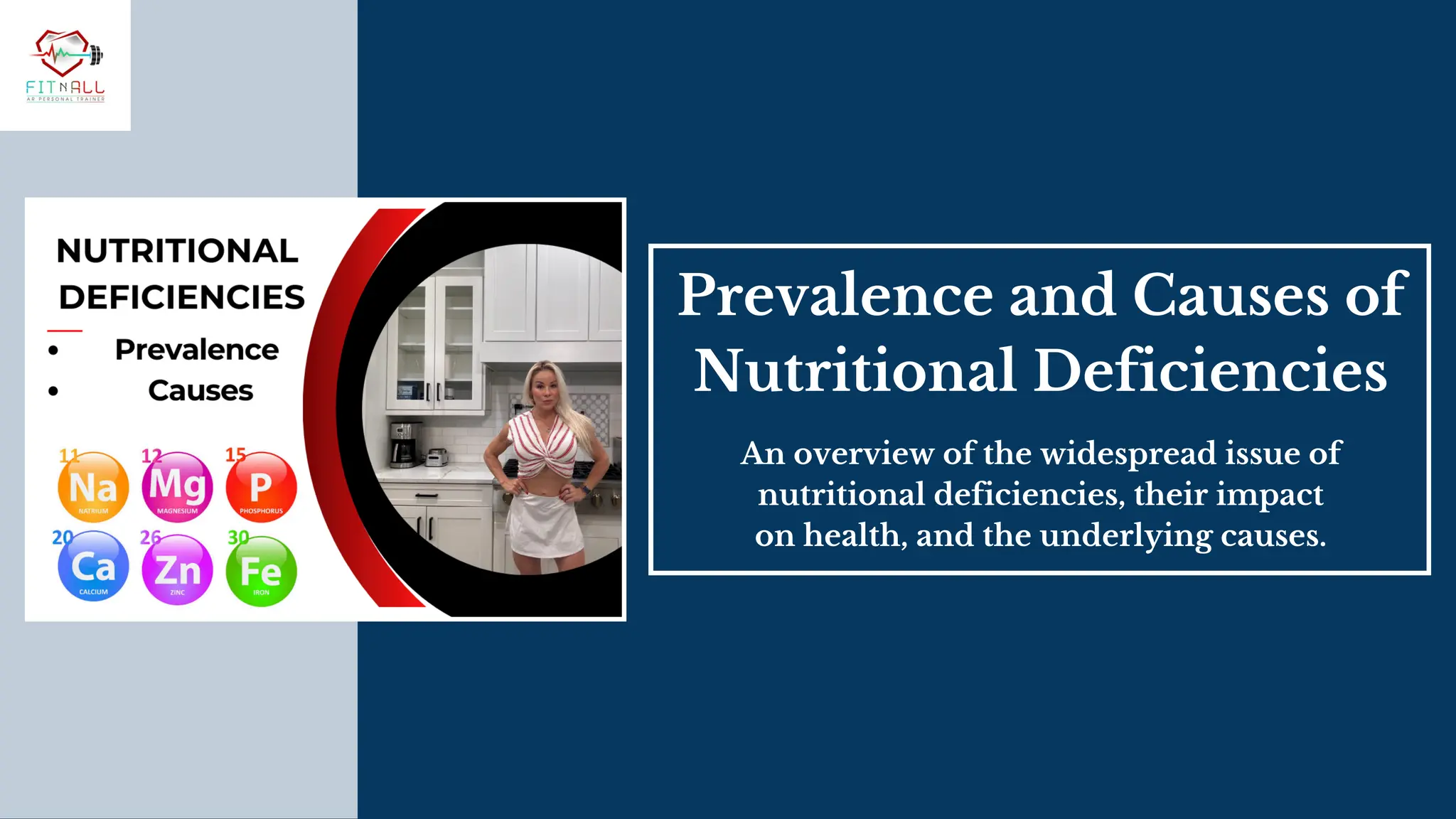
Prevalence and Causes of
Nutritional Deficiencies
An overview of the widespread issue of
nutritional deficiencies, their impact
on health, and the underlying causes.
What Are Nutritional
Deficiencies?
Nutritional deficiencies occur when the
body lacks essential vitamins, minerals,
or macronutrients, leading to impaired
bodily functions and health risks.
How Common Are
Nutritional Deficiencies?
Deficiencies affect millions
worldwide, with key statistics:
Vitamin D – 1 billion+ people.
Iodine – Affects 35-45% globally.
Iron – 25% of the world’s population.
Calcium – 3.5 billion people have low intake.
Poor Diets And
Restrictive Eating
Processed foods lack essential nutrients.
Vegan, keto, and restrictive diets
may lead to deficiencies without
proper supplementation.
Dehydration can impair nutrient absorption.
Illness, Stress And
Lifestyle Choices
Chronic illnesses and digestive disorders
hinder nutrient absorption. Stress, sleep
deprivation, and sedentary lifestyles
worsen deficiencies. Alcohol and
smoking interfere with nutrient uptake.
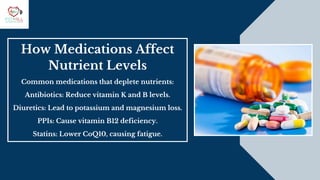
How Medications Affect
Nutrient Levels
Common medications that deplete nutrients:
Antibiotics: Reduce vitamin K and B levels.
Diuretics: Lead to potassium and magnesium loss.
PPIs: Cause vitamin B12 deficiency.
Statins: Lower CoQ10, causing fatigue.
Prevent And Address
Nutritional Deficiencies
Eat a nutrient-dense diet. Stay hydrated and
manage stress. Consider supplementation when
necessary. Get medical checkups to monitor
nutrient levels. For a deeper dive into the causes
and solutions, read the full article here: Prevalence
and Causes of Nutritional Deficiencies.

Nutritional Deficiencies: Understanding Causes & Global Impact.

  • 1.
    Prevalence and Causesof Nutritional Deficiencies An overview of the widespread issue of nutritional deficiencies, their impact on health, and the underlying causes.
  • 2.
    What Are Nutritional Deficiencies? Nutritionaldeficiencies occur when the body lacks essential vitamins, minerals, or macronutrients, leading to impaired bodily functions and health risks.
  • 3.
    How Common Are NutritionalDeficiencies? Deficiencies affect millions worldwide, with key statistics: Vitamin D – 1 billion+ people. Iodine – Affects 35-45% globally. Iron – 25% of the world’s population. Calcium – 3.5 billion people have low intake.
  • 4.
    Poor Diets And RestrictiveEating Processed foods lack essential nutrients. Vegan, keto, and restrictive diets may lead to deficiencies without proper supplementation. Dehydration can impair nutrient absorption.
  • 5.
    Illness, Stress And LifestyleChoices Chronic illnesses and digestive disorders hinder nutrient absorption. Stress, sleep deprivation, and sedentary lifestyles worsen deficiencies. Alcohol and smoking interfere with nutrient uptake.
  • 6.
    How Medications Affect NutrientLevels Common medications that deplete nutrients: Antibiotics: Reduce vitamin K and B levels. Diuretics: Lead to potassium and magnesium loss. PPIs: Cause vitamin B12 deficiency. Statins: Lower CoQ10, causing fatigue.
  • 7.
    Prevent And Address NutritionalDeficiencies Eat a nutrient-dense diet. Stay hydrated and manage stress. Consider supplementation when necessary. Get medical checkups to monitor nutrient levels. For a deeper dive into the causes and solutions, read the full article here: Prevalence and Causes of Nutritional Deficiencies.