NUTRITIONAL
GUIDELINES FOR
FILIPINOS: A
PRESCRIPTION TO GOOD
BY: MAIDA LYNN N. JAGUIT
The study of how the body uses the
food that eaten.
What is a Nutrient
A nutrient is a chemical substance in
food that helps maintain the body.
Some provide energy. Help build cells
and tissues, regulate bodily processes
such as breathing.
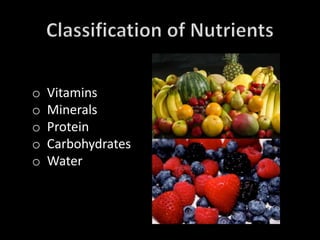
o Vitamins
o Minerals
o Protein
o Carbohydrates
o Water
Sugars
Starches
Cellulose Fats
1. Eat a variety of foods everyday to get
the
nutrients needed by the body.
2. Breastfeed infants exclusively from birth up
to
six months and then give appropriate
complementary foods while continuing
breastfeeding for two years and beyond for
optimum growth and development.
1. Eat a variety of foods everyday to get
the
nutrients needed by the body.
2. Breastfeed infants exclusively from birth up
to
six months and then give appropriate
complementary foods while continuing
breastfeeding for two years and beyond for
optimum growth and development.
3. Eat more vegetables and fruits to get
the
essential vitamins, minerals, and fiber for
4. Consume fish, lean meat, poultry, egg, dried
beans or nuts daily for growth and repair of
body tissues.
5. Consume milk, milk products, and other
calcium-rich food such as small fish and
shellfish, everyday for healthy bones and
teeth.
6. Consume safe foods and water to prevent
diarrhea and other food-and water-borne
diseases.
7. Use iodized salt to prevent Iodine
Deficiency Disorders.
8. Limit intake of salty, fried, fatty, and sugar-
rich foods to prevent cardiovascular
diseases.
9. Attain normal body weight through proper
diet and moderate physical activity to
maintain good health and help prevent
obesity.
10. Be physically active, make healthy food
choices, manage stress, avoid alcoholic
beverage, and do not smoke to help
prevent lifestyle-related non-communicable
disease.
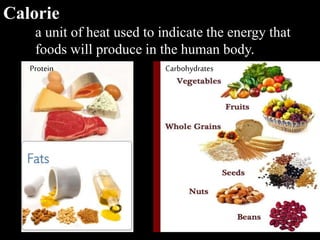
Protein Carbohydrates
Calorie
a unit of heat used to indicate the energy that
foods will produce in the human body.
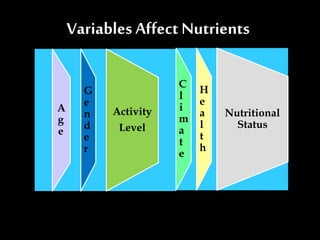
Variables Affect Nutrients
A
g
e
G
e
n
d
e
r
Activity
Level
C
l
i
m
a
t
e
H
e
a
l
t
h
Nutritional
Status
Aim for Fitness
Physicallyfit and
Suitability
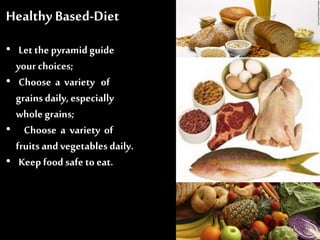
Healthy Based-Diet
• Let thepyramidguide
your choices;
• Choose a variety of
grainsdaily, especially
whole grains;
• Choose a variety of
fruits and vegetables daily.
• Keep food safeto eat.
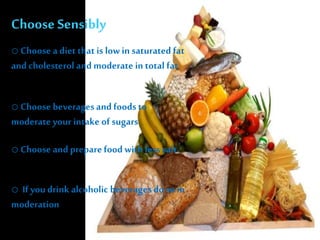
Choose Sensibly
o Choose a diet that is low in saturated fat
and cholesterol and moderate in total fat
o Choose beveragesand foods to
moderate your intake of sugars
o Choose and preparefood with less salt
o If youdrink alcoholic beveragesdo so in
moderation
Thank You

Nutrition Presentation

  • 1.
  • 2.
    The study ofhow the body uses the food that eaten.
  • 3.
    What is aNutrient A nutrient is a chemical substance in food that helps maintain the body. Some provide energy. Help build cells and tissues, regulate bodily processes such as breathing.
  • 4.
    o Vitamins o Minerals oProtein o Carbohydrates o Water Sugars Starches Cellulose Fats
  • 5.
    1. Eat avariety of foods everyday to get the nutrients needed by the body. 2. Breastfeed infants exclusively from birth up to six months and then give appropriate complementary foods while continuing breastfeeding for two years and beyond for optimum growth and development.
  • 6.
    1. Eat avariety of foods everyday to get the nutrients needed by the body. 2. Breastfeed infants exclusively from birth up to six months and then give appropriate complementary foods while continuing breastfeeding for two years and beyond for optimum growth and development. 3. Eat more vegetables and fruits to get the essential vitamins, minerals, and fiber for
  • 7.
    4. Consume fish,lean meat, poultry, egg, dried beans or nuts daily for growth and repair of body tissues. 5. Consume milk, milk products, and other calcium-rich food such as small fish and shellfish, everyday for healthy bones and teeth. 6. Consume safe foods and water to prevent diarrhea and other food-and water-borne diseases.
  • 8.
    7. Use iodizedsalt to prevent Iodine Deficiency Disorders. 8. Limit intake of salty, fried, fatty, and sugar- rich foods to prevent cardiovascular diseases.
  • 9.
    9. Attain normalbody weight through proper diet and moderate physical activity to maintain good health and help prevent obesity. 10. Be physically active, make healthy food choices, manage stress, avoid alcoholic beverage, and do not smoke to help prevent lifestyle-related non-communicable disease.
  • 10.
    Protein Carbohydrates Calorie a unitof heat used to indicate the energy that foods will produce in the human body.
  • 11.
  • 12.
  • 13.
    Healthy Based-Diet • Letthepyramidguide your choices; • Choose a variety of grainsdaily, especially whole grains; • Choose a variety of fruits and vegetables daily. • Keep food safeto eat.
  • 14.
    Choose Sensibly o Choosea diet that is low in saturated fat and cholesterol and moderate in total fat o Choose beveragesand foods to moderate your intake of sugars o Choose and preparefood with less salt o If youdrink alcoholic beveragesdo so in moderation
  • 15.