Numerical Aptitude
18UCAA31
T.Kalaiselvi M.Sc., M.Phil.,
Department of Mathematics (SF)
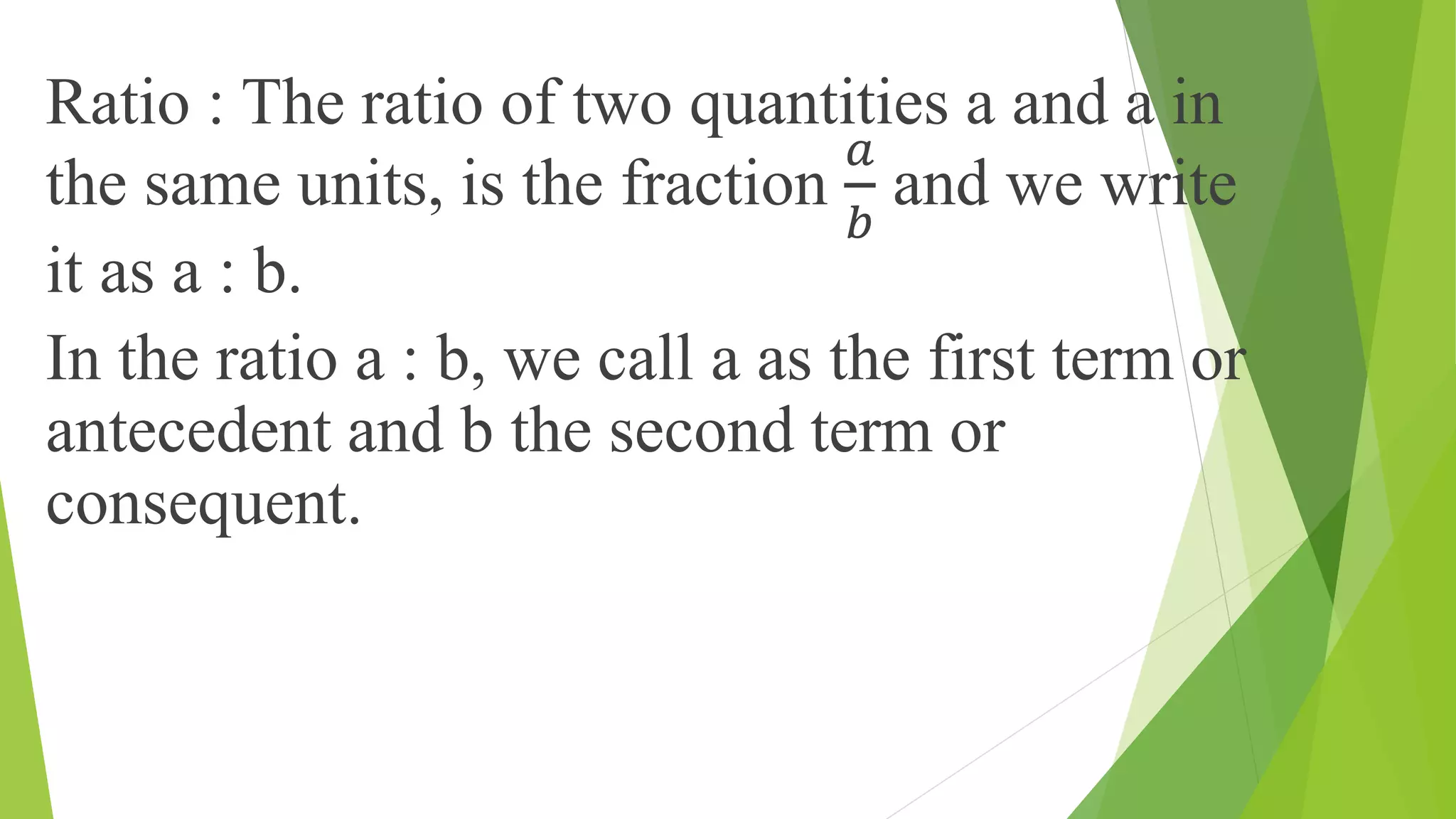
Ratio : The ratio of two quantities a and a in
the same units, is the fraction
𝑎
𝑏
and we write
it as a : b.
In the ratio a : b, we call a as the first term or
antecedent and b the second term or
consequent.
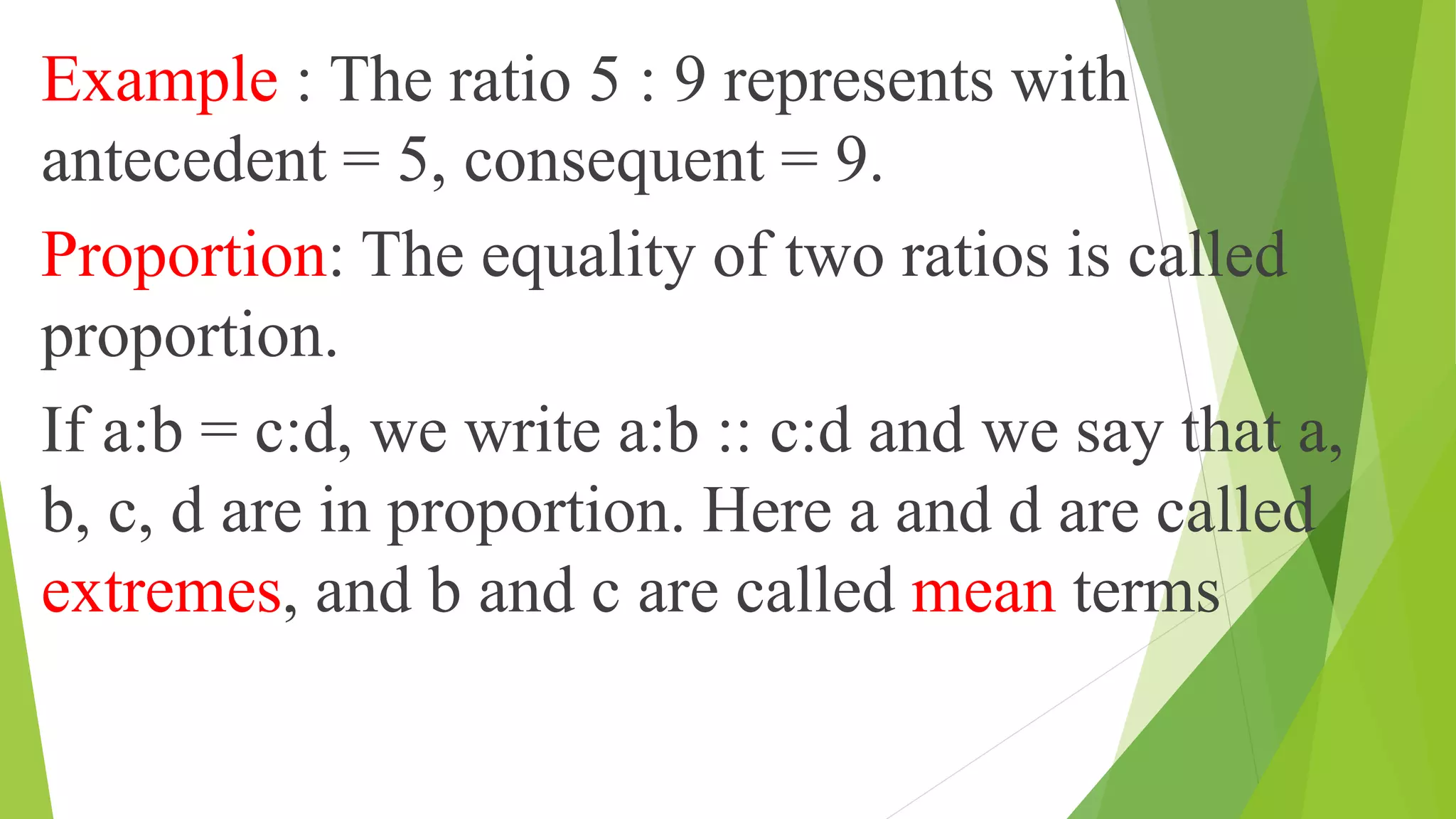
Example : The ratio 5 : 9 represents with
antecedent = 5, consequent = 9.
Proportion: The equality of two ratios is called
proportion.
If a:b = c:d, we write a:b :: c:d and we say that a,
b, c, d are in proportion. Here a and d are called
extremes, and b and c are called mean terms
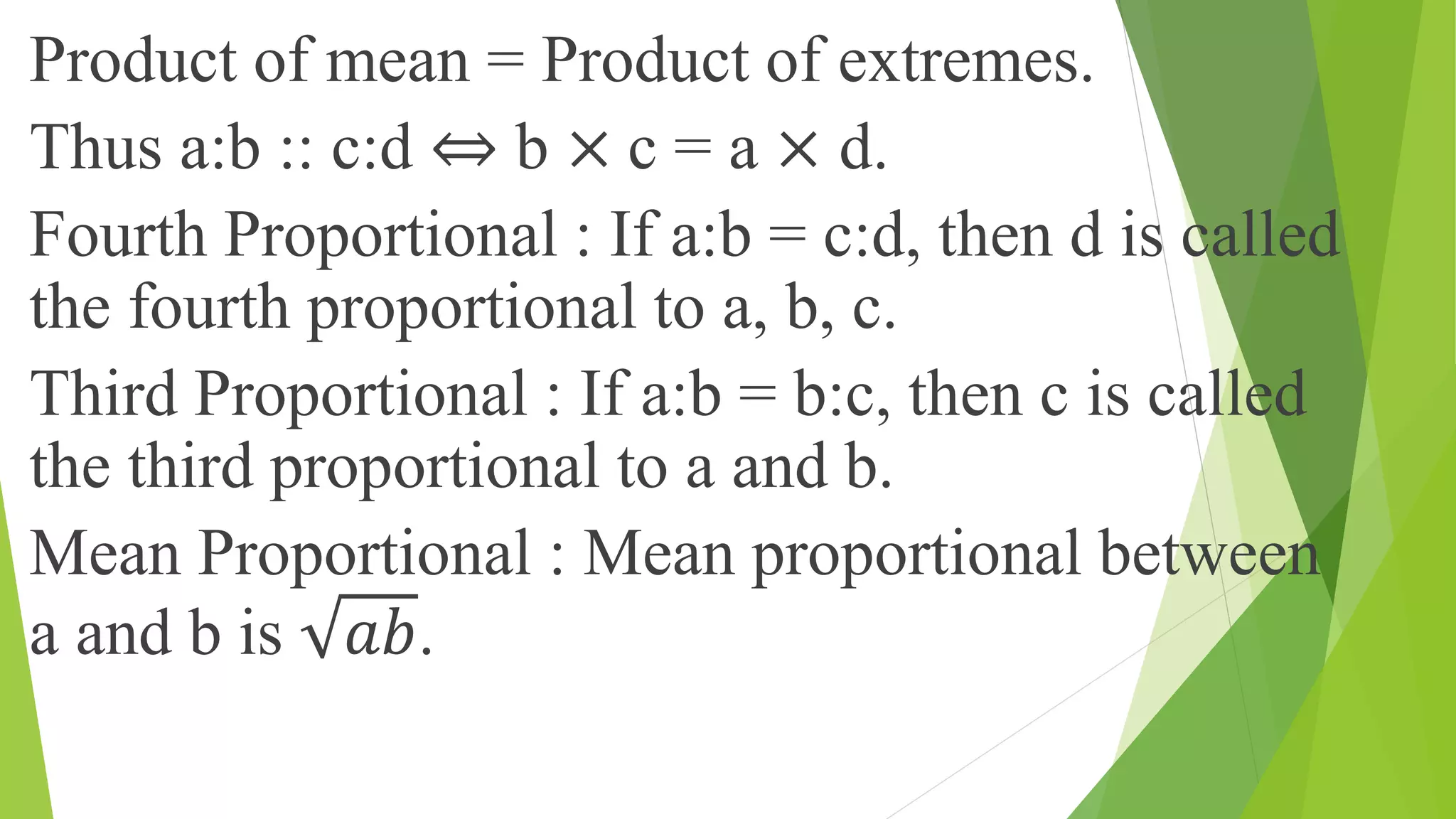
Product of mean = Product of extremes.
Thus a:b :: c:d ⇔ b × c = a × d.
Fourth Proportional : If a:b = c:d, then d is called
the fourth proportional to a, b, c.
Third Proportional : If a:b = b:c, then c is called
the third proportional to a and b.
Mean Proportional : Mean proportional between
a and b is 𝑎𝑏.
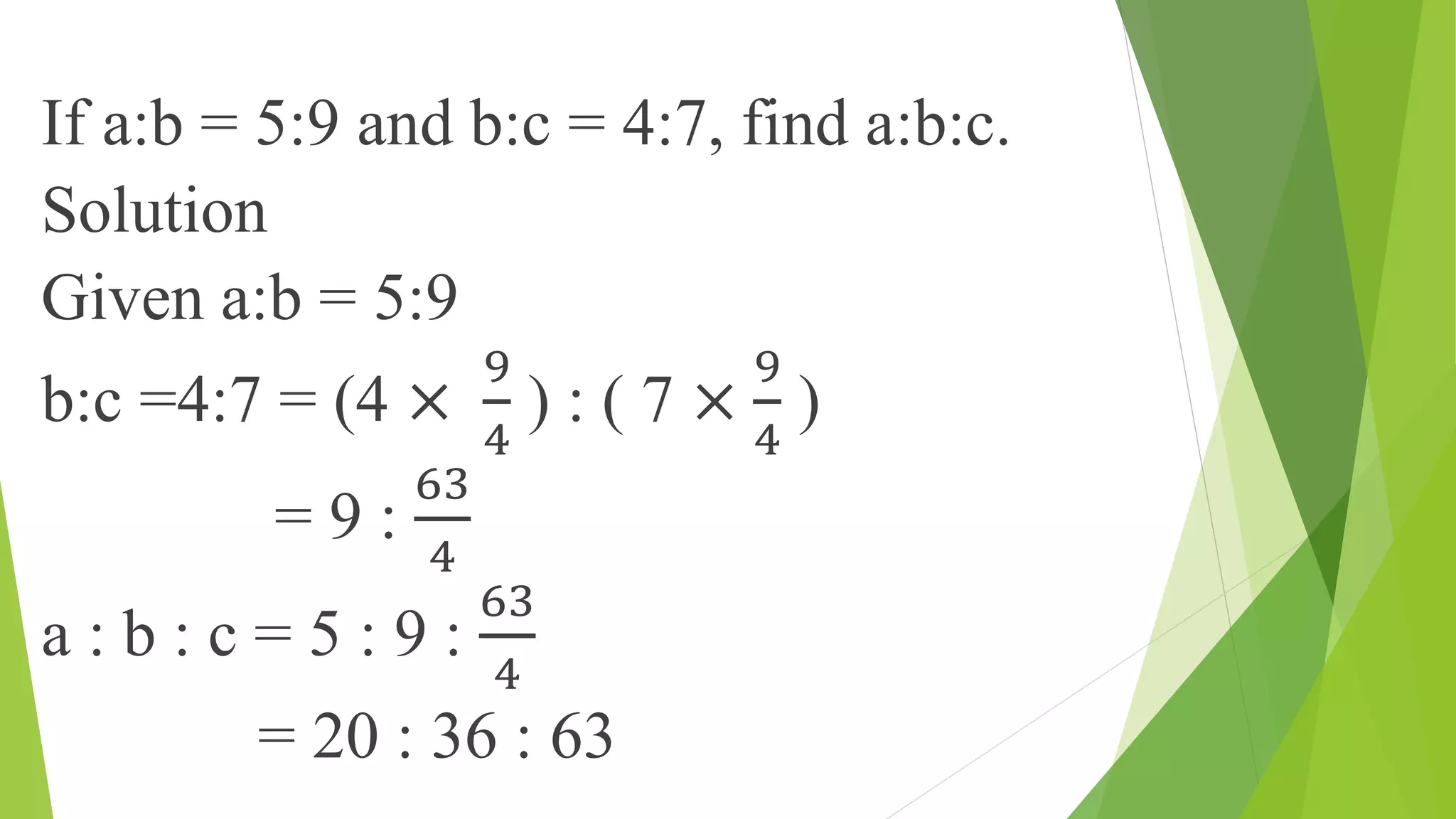
If a:b = 5:9 and b:c = 4:7, find a:b:c.
Solution
Given a:b = 5:9
b:c =4:7 = (4 ×
9
4
) : ( 7 ×
9
4
)
= 9 :
63
4
a : b : c = 5 : 9 :
63
4
= 20 : 36 : 63
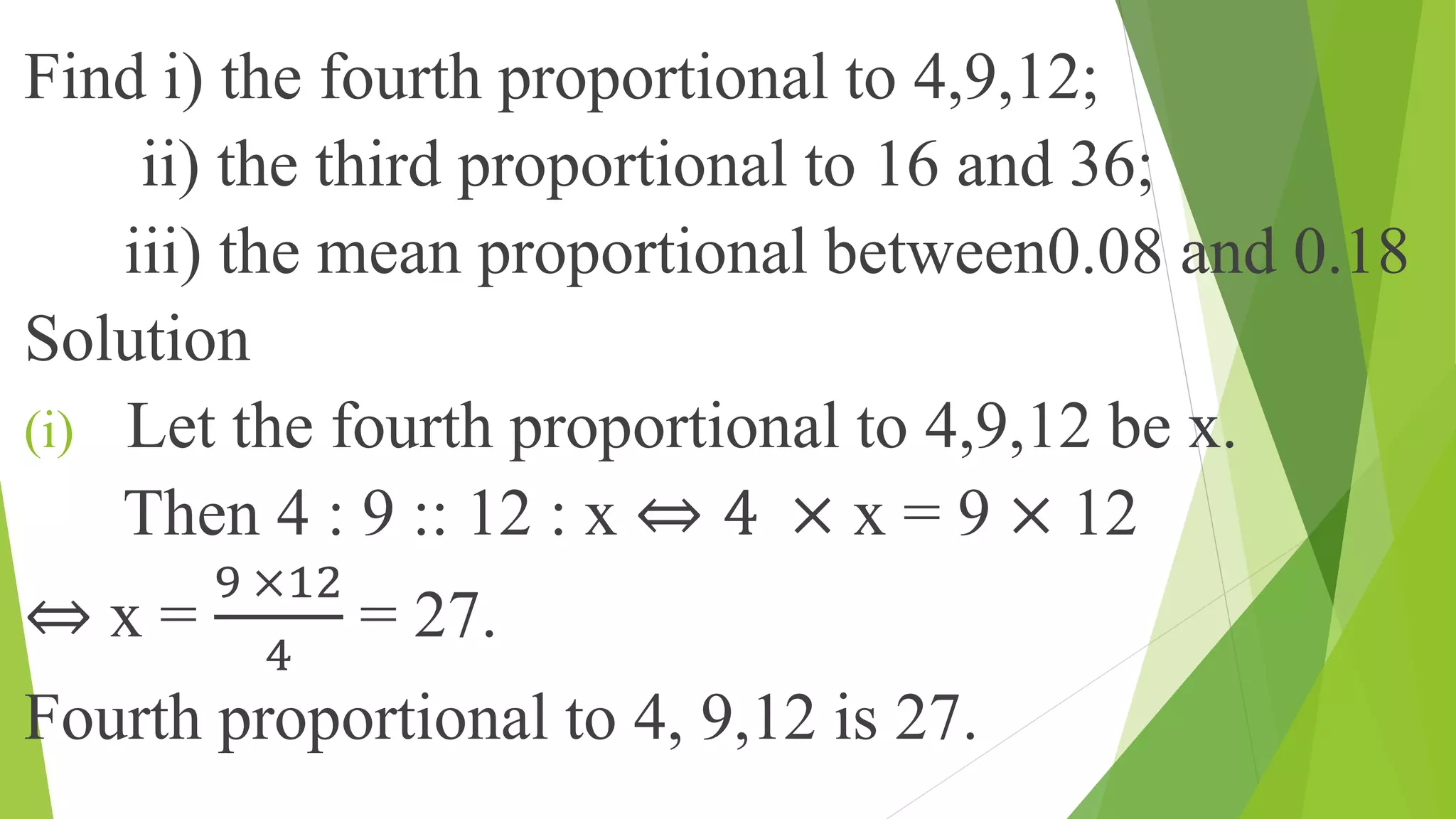
Find i) the fourth proportional to 4,9,12;
ii) the third proportional to 16 and 36;
iii) the mean proportional between0.08 and 0.18
Solution
(i) Let the fourth proportional to 4,9,12 be x.
Then 4 : 9 :: 12 : x ⇔ 4 × x = 9 × 12
⇔ x =
9 ×12
4
= 27.
Fourth proportional to 4, 9,12 is 27.
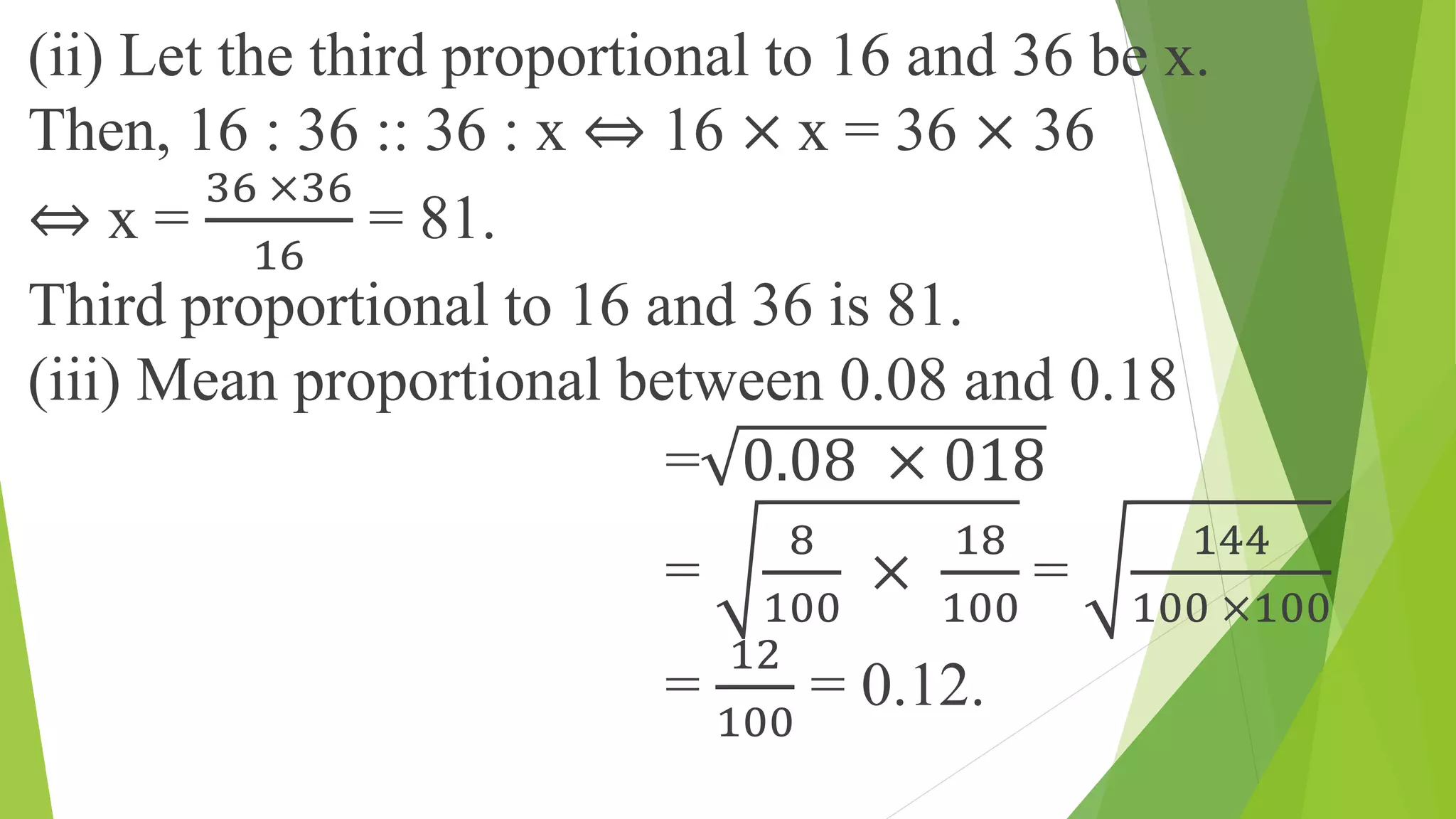
(ii) Let the third proportional to 16 and 36 be x.
Then, 16 : 36 :: 36 : x ⇔ 16 × x = 36 × 36
⇔ x =
36 ×36
16
= 81.
Third proportional to 16 and 36 is 81.
(iii) Mean proportional between 0.08 and 0.18
= 0.08 × 018
=
8
100
×
18
100
=
144
100 ×100
=
12
100
= 0.12.
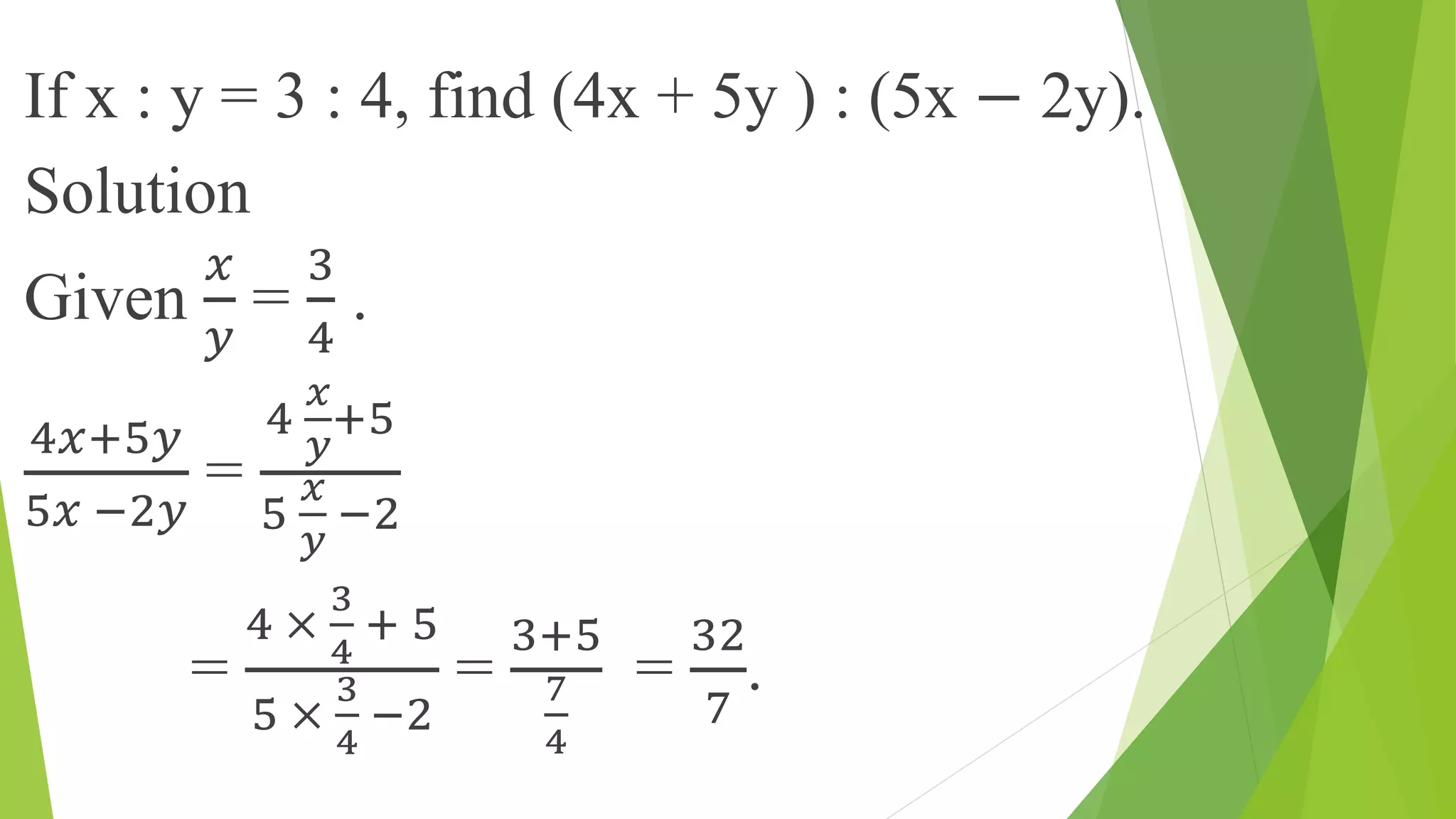
If x : y = 3 : 4, find (4x + 5y ) : (5x − 2y).
Solution
Given
𝑥
𝑦
=
3
4
.
4𝑥+5𝑦
5𝑥 −2𝑦
=
4
𝑥
𝑦
+5
5
𝑥
𝑦
−2
=
4 ×
3
4
+ 5
5 ×
3
4
−2
=
3+5
7
4
=
32
7
.
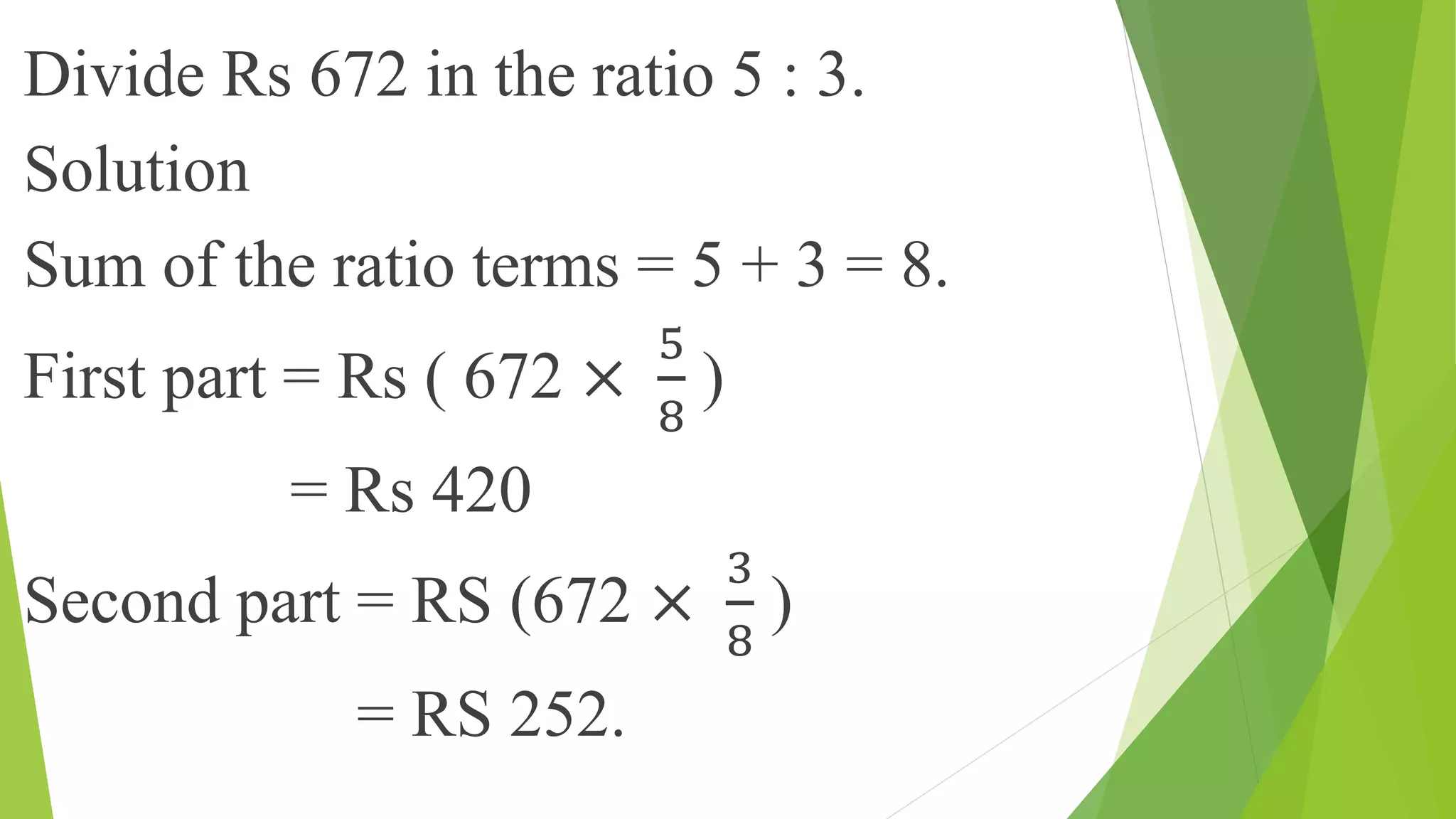
Divide Rs 672 in the ratio 5 : 3.
Solution
Sum of the ratio terms = 5 + 3 = 8.
First part = Rs ( 672 ×
5
8
)
= Rs 420
Second part = RS (672 ×
3
8
)
= RS 252.
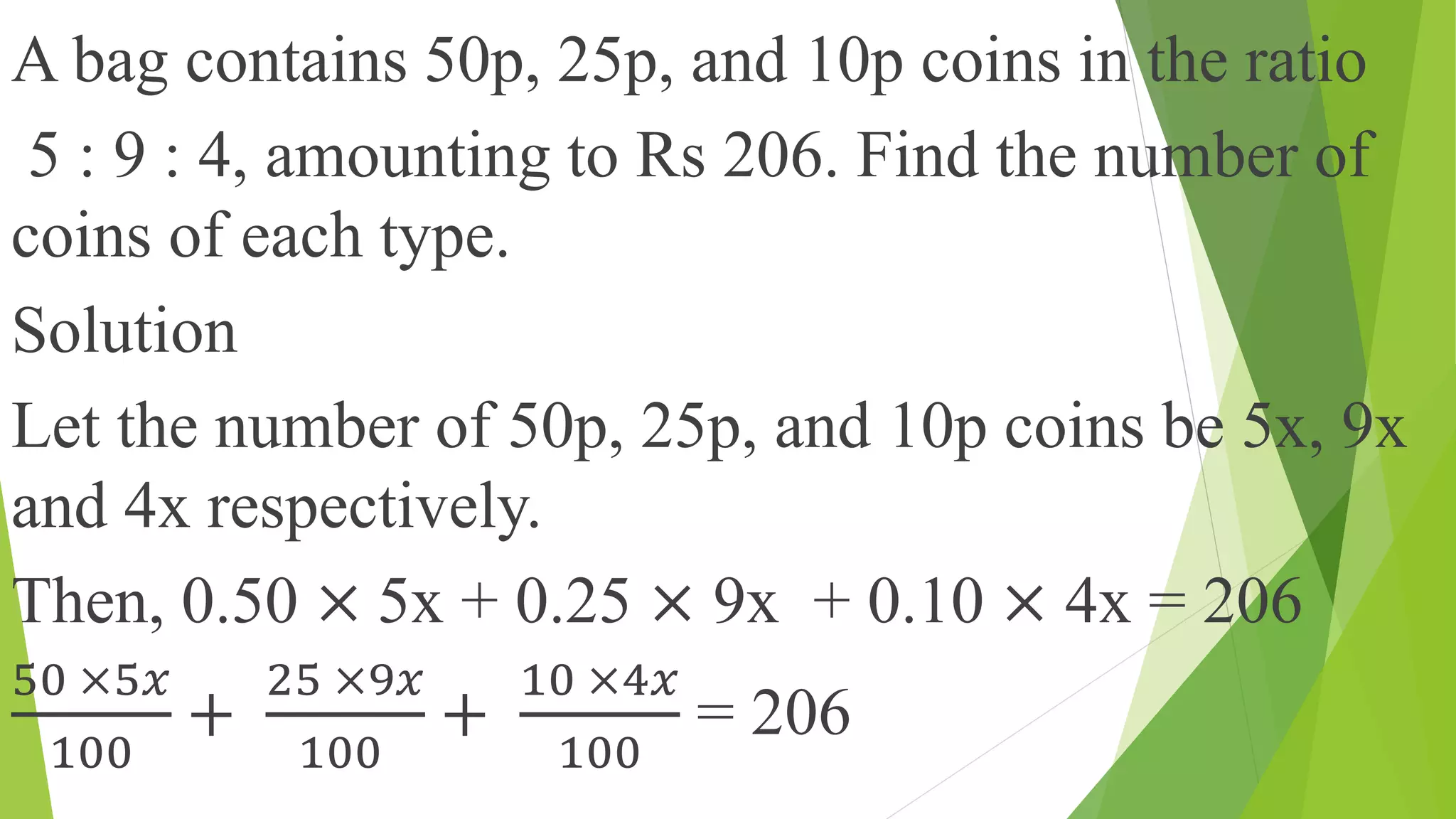
A bag contains 50p, 25p, and 10p coins in the ratio
5 : 9 : 4, amounting to Rs 206. Find the number of
coins of each type.
Solution
Let the number of 50p, 25p, and 10p coins be 5x, 9x
and 4x respectively.
Then, 0.50 × 5x + 0.25 × 9x + 0.10 × 4x = 206
50 ×5𝑥
100
+
25 ×9𝑥
100
+
10 ×4𝑥
100
= 206
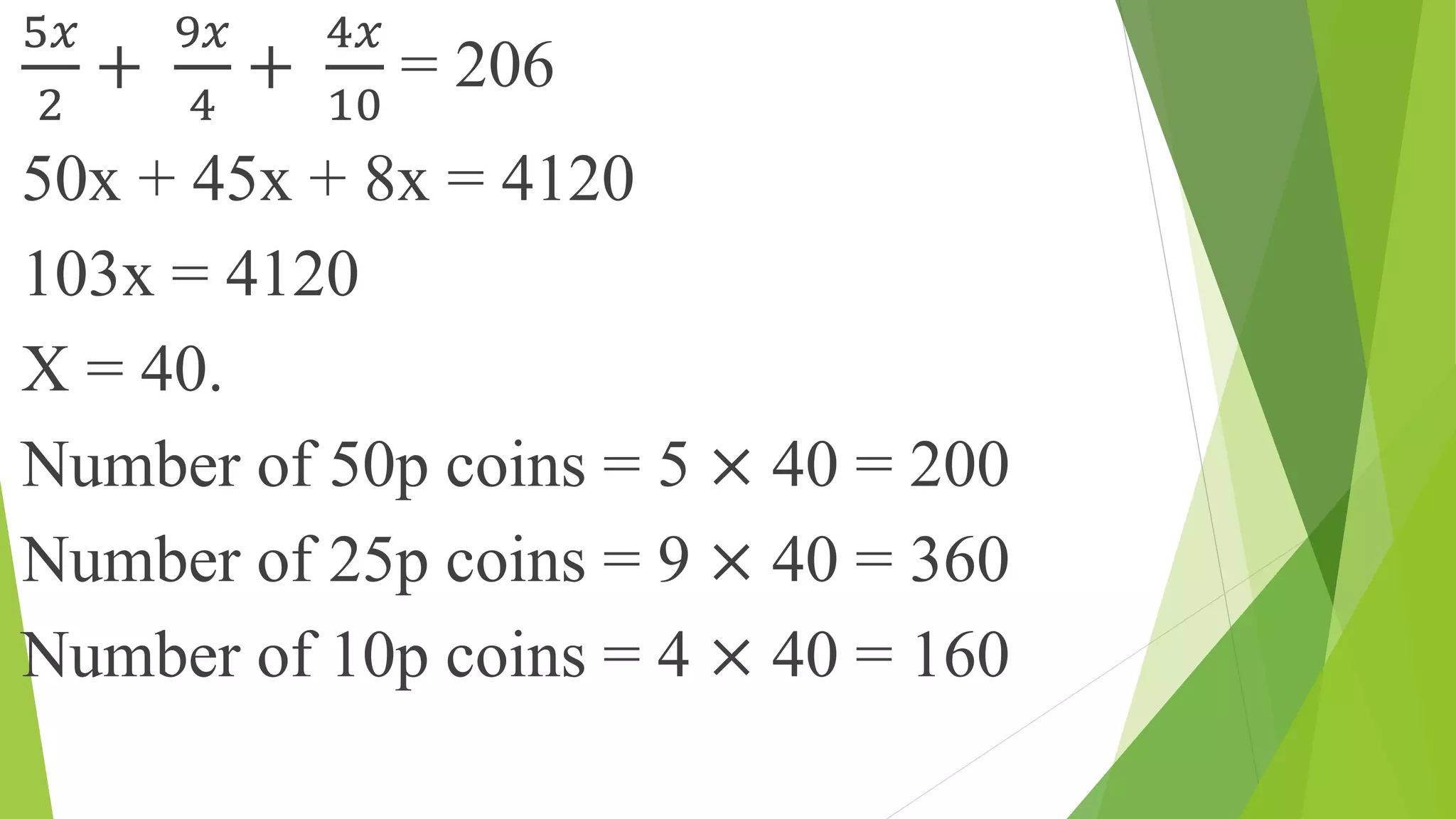
5𝑥
2
+
9𝑥
4
+
4𝑥
10
= 206
50x + 45x + 8x = 4120
103x = 4120
X = 40.
Number of 50p coins = 5 × 40 = 200
Number of 25p coins = 9 × 40 = 360
Number of 10p coins = 4 × 40 = 160
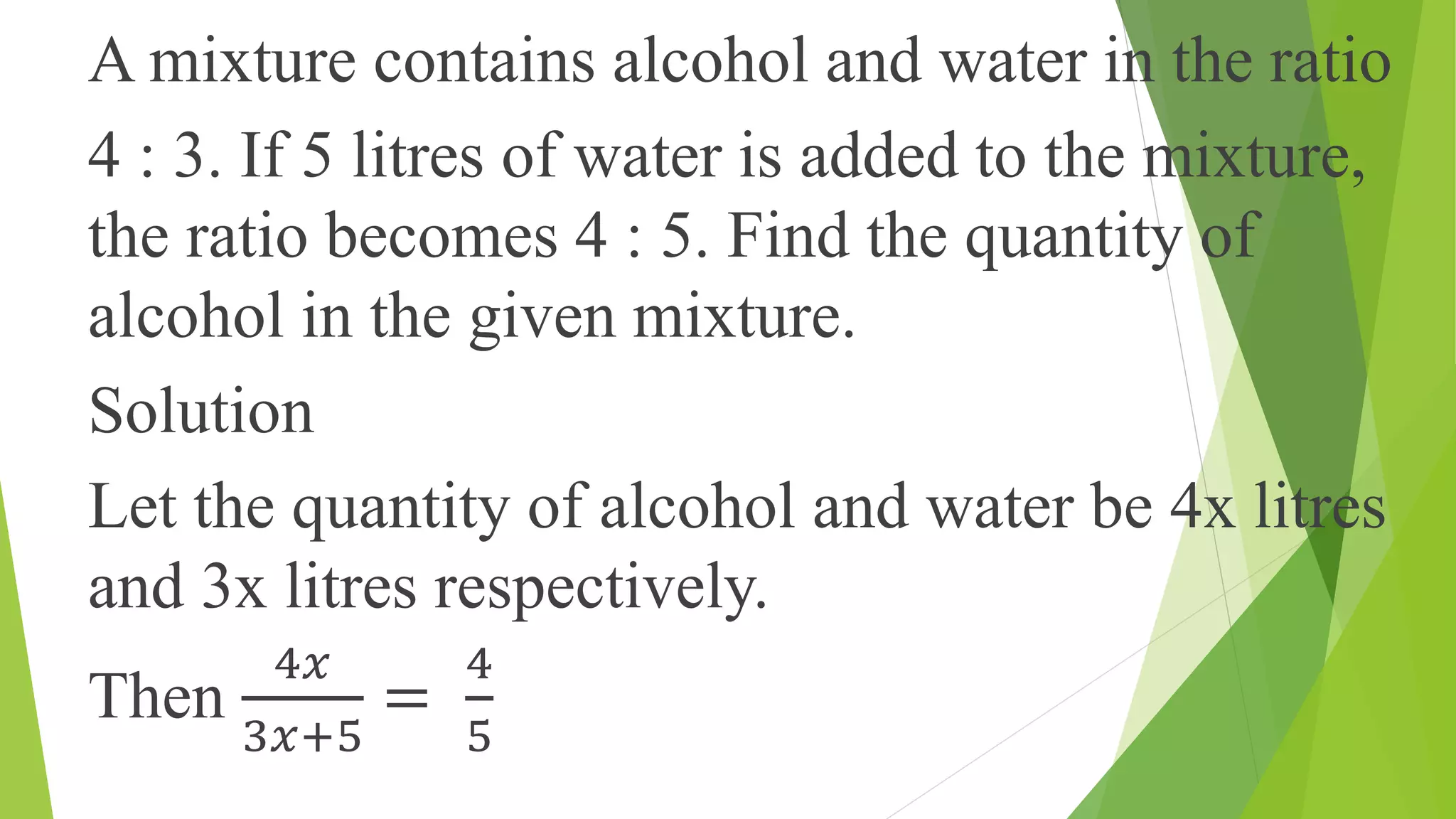
A mixture contains alcohol and water in the ratio
4 : 3. If 5 litres of water is added to the mixture,
the ratio becomes 4 : 5. Find the quantity of
alcohol in the given mixture.
Solution
Let the quantity of alcohol and water be 4x litres
and 3x litres respectively.
Then
4𝑥
3𝑥+5
=
4
5
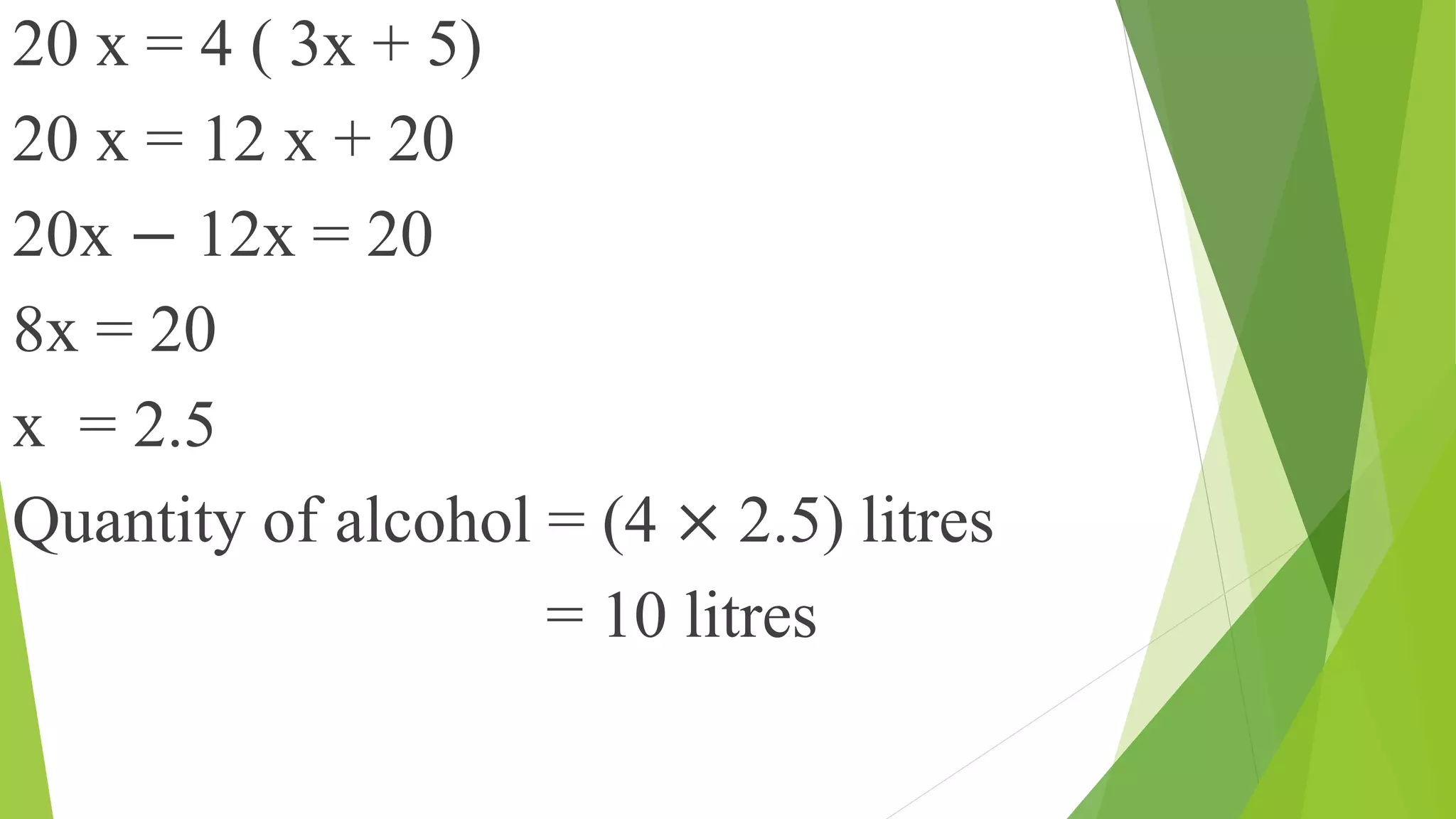
20 x = 4 ( 3x + 5)
20 x = 12 x + 20
20x − 12x = 20
8x = 20
x = 2.5
Quantity of alcohol = (4 × 2.5) litres
= 10 litres

Numerical Aptitude

  • 1.
    Numerical Aptitude 18UCAA31 T.Kalaiselvi M.Sc.,M.Phil., Department of Mathematics (SF)
  • 2.
    Ratio : Theratio of two quantities a and a in the same units, is the fraction 𝑎 𝑏 and we write it as a : b. In the ratio a : b, we call a as the first term or antecedent and b the second term or consequent.
  • 3.
    Example : Theratio 5 : 9 represents with antecedent = 5, consequent = 9. Proportion: The equality of two ratios is called proportion. If a:b = c:d, we write a:b :: c:d and we say that a, b, c, d are in proportion. Here a and d are called extremes, and b and c are called mean terms
  • 4.
    Product of mean= Product of extremes. Thus a:b :: c:d ⇔ b × c = a × d. Fourth Proportional : If a:b = c:d, then d is called the fourth proportional to a, b, c. Third Proportional : If a:b = b:c, then c is called the third proportional to a and b. Mean Proportional : Mean proportional between a and b is 𝑎𝑏.
  • 5.
    If a:b =5:9 and b:c = 4:7, find a:b:c. Solution Given a:b = 5:9 b:c =4:7 = (4 × 9 4 ) : ( 7 × 9 4 ) = 9 : 63 4 a : b : c = 5 : 9 : 63 4 = 20 : 36 : 63
  • 6.
    Find i) thefourth proportional to 4,9,12; ii) the third proportional to 16 and 36; iii) the mean proportional between0.08 and 0.18 Solution (i) Let the fourth proportional to 4,9,12 be x. Then 4 : 9 :: 12 : x ⇔ 4 × x = 9 × 12 ⇔ x = 9 ×12 4 = 27. Fourth proportional to 4, 9,12 is 27.
  • 7.
    (ii) Let thethird proportional to 16 and 36 be x. Then, 16 : 36 :: 36 : x ⇔ 16 × x = 36 × 36 ⇔ x = 36 ×36 16 = 81. Third proportional to 16 and 36 is 81. (iii) Mean proportional between 0.08 and 0.18 = 0.08 × 018 = 8 100 × 18 100 = 144 100 ×100 = 12 100 = 0.12.
  • 8.
    If x :y = 3 : 4, find (4x + 5y ) : (5x − 2y). Solution Given 𝑥 𝑦 = 3 4 . 4𝑥+5𝑦 5𝑥 −2𝑦 = 4 𝑥 𝑦 +5 5 𝑥 𝑦 −2 = 4 × 3 4 + 5 5 × 3 4 −2 = 3+5 7 4 = 32 7 .
  • 9.
    Divide Rs 672in the ratio 5 : 3. Solution Sum of the ratio terms = 5 + 3 = 8. First part = Rs ( 672 × 5 8 ) = Rs 420 Second part = RS (672 × 3 8 ) = RS 252.
  • 10.
    A bag contains50p, 25p, and 10p coins in the ratio 5 : 9 : 4, amounting to Rs 206. Find the number of coins of each type. Solution Let the number of 50p, 25p, and 10p coins be 5x, 9x and 4x respectively. Then, 0.50 × 5x + 0.25 × 9x + 0.10 × 4x = 206 50 ×5𝑥 100 + 25 ×9𝑥 100 + 10 ×4𝑥 100 = 206
  • 11.
    5𝑥 2 + 9𝑥 4 + 4𝑥 10 = 206 50x +45x + 8x = 4120 103x = 4120 X = 40. Number of 50p coins = 5 × 40 = 200 Number of 25p coins = 9 × 40 = 360 Number of 10p coins = 4 × 40 = 160
  • 12.
    A mixture containsalcohol and water in the ratio 4 : 3. If 5 litres of water is added to the mixture, the ratio becomes 4 : 5. Find the quantity of alcohol in the given mixture. Solution Let the quantity of alcohol and water be 4x litres and 3x litres respectively. Then 4𝑥 3𝑥+5 = 4 5
  • 13.
    20 x =4 ( 3x + 5) 20 x = 12 x + 20 20x − 12x = 20 8x = 20 x = 2.5 Quantity of alcohol = (4 × 2.5) litres = 10 litres