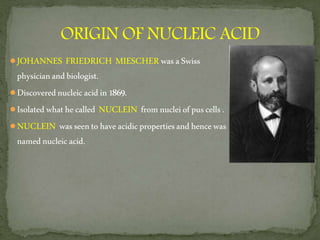
●JOHANNES FRIEDRICH MIESCHERwasaSwiss
physicianandbiologist.
●Discoverednucleicacidin1869.
●Isolatedwhathecalled NUCLEIN fromnucleiofpuscells.
●NUCLEIN wasseentohaveacidicpropertiesandhencewas
namednucleicacid.
Nucleic acids are biopolymers or largebiomolecules found in
abundance in allliving organisms. they are essential to all

known forms of life and function to create, encode and
store information in thenucleus of every life form on
earth..
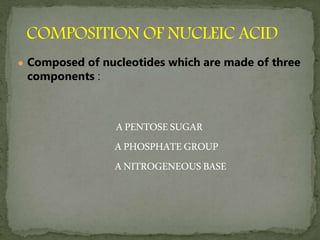
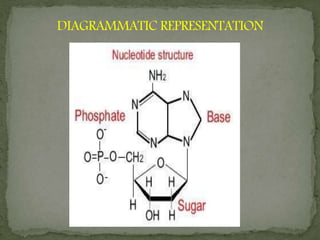
● Composed of nucleotides which are made of three
components :
APENTOSESUGAR
APHOSPHATE GROUP
ANITROGENEOUSBASE
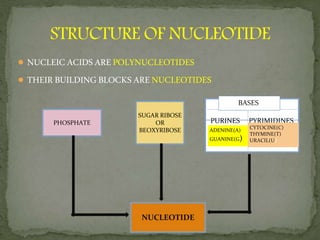
● NUCLEIC ACIDS AREPOLYNUCLEOTIDES
● THEIRBUILDING BLOCKS ARENUCLEOTIDES
PHOSPHATE
SUGAR RIBOSE
OR
BEOXYRIBOSE
PURINES PYRIMIDINES
NUCLEOTIDE
ADENINE(A)
GUANINE(G)
CYTOCINE(C)
THYMINE(T)
URACIL(U)
BASES
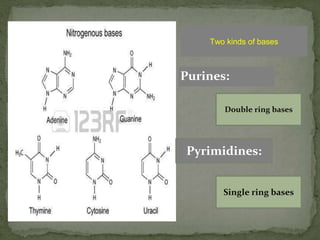
Two kinds of bases
Purines:
Double ring bases
Pyrimidines:
Single ring bases
● DEOXYRIBONUCLEIC ACID (DNA)
● RIBONUCLEIC ACID (RNA)
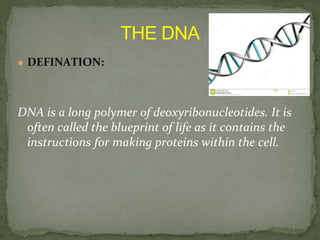
● DEFINATION:
DNA is a long polymer of deoxyribonucleotides. It is
often called the blueprint of life as it contains the
instructions for making proteins within the cell.
● Discovery of the genetic material:
A. FREDERICK GRIFFITH- discovered that a factor in
diseased bacteria can transform harmless bacteria into
deadly bacteria (1928)
B. ROSALIND FRANKLIN- x-ray photo of DNA (1952)
C. WATSON and CRICK- described the DNA molecule from
FRANKLIN’S x-ray (1953)
● A nucleotide is made up of three components:
● A nitrogenous base
● Deoxyribose sugar
● Phosphate group
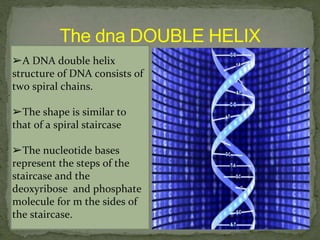
➢A DNA double helix
structure of DNA consists of
two spiral chains.
➢The shape is similar to
that of a spiral staircase
➢The nucleotide bases
represent the steps of the
staircase and the
deoxyribose and phosphate
molecule for m the sides of
the staircase.
● Made up of two polynucleotide chains.
● The two chains have anti parallel polarity.
● The bases in two strands are paired through hydrogen
bonds.
● The two chains are coiled in right handed fashion
● The pitch of the helix is 3.4 nm and there are roughly
about 10 bp inturn.
● The plane of one bp stacks over the other which in
addition to H bonds confer the stability of the structure.
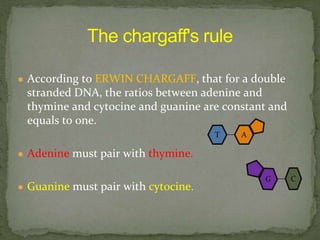
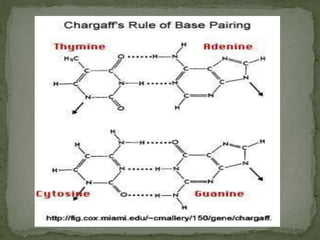
● According to ERWIN CHARGAFF, that for a double
stranded DNA, the ratios between adenine and
thymine and cytocine and guanine are constant and
equals to one.
● Adenine must pair with thymine.
● Guanine must pair with cytocine.
C
T A
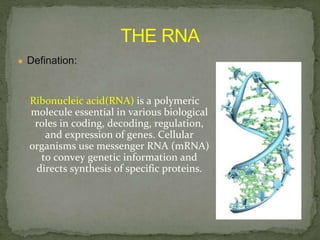
● Defination:
Ribonucleic acid(RNA) is a polymeric
molecule essential in various biological
roles in coding, decoding, regulation,
and expression of genes. Cellular
organisms use messenger RNA (mRNA)
to convey genetic information and
directs synthesis of specific proteins.
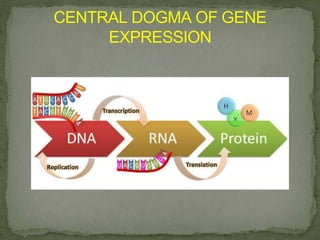
● The concept of messenger RNA emmerged during
the late 1950’s and is associated with Crick’s
description of his “central dogma of molecular
biology” which asserted that DNA led to the
formation of RNA, which in turn led to the
synthesis of proteins.
THEY ARE OF THREE TYPES:
● 1. Messenger RNA (mRNA):
it provides the template,
● 2. Transfer RNA (tRNA):
brings amino acid and reads genetic code
● 3. Ribosomal RNA (rRNA):
plays structural and catalytic role during
translation
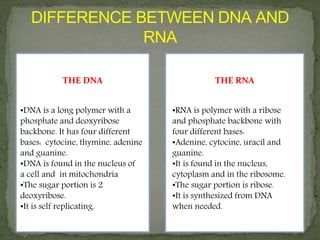
THE DNA THE RNA
•DNA is a long polymer with a
phosphate and deoxyribose
backbone. It has four different
bases: cytocine, thymine, adenine
and guanine.
•DNA is found in the nucleus of
a cell and in mitochondria
•The sugar portion is 2
deoxyribose.
•It is self replicating.
•RNA is polymer with a ribose
and phosphate backbone with
four different bases:
•Adenine, cytocine, uracil and
guanine.
•It is found in the nucleus,
cytoplasm and in the ribosome.
•The sugar portion is ribose.
•It is synthesized from DNA
when needed.
● BIOLOGY NCERT (XI AND XII)
● www.thought.co.com
● www.biologyjunction.com
● www.sabuchill.com
● Wikipedia
● Anmol’s dictionary of biology by R.K KAUSHIK AND
M.S YADAV
● ARIHANT’S all in one biology
nucleic acids- the dna and rna

nucleic acids- the dna and rna

  • 2.
    ●JOHANNES FRIEDRICH MIESCHERwasaSwiss physicianandbiologist. ●Discoverednucleicacidin1869. ●IsolatedwhathecalledNUCLEIN fromnucleiofpuscells. ●NUCLEIN wasseentohaveacidicpropertiesandhencewas namednucleicacid.
  • 3.
    Nucleic acids arebiopolymers or largebiomolecules found in abundance in allliving organisms. they are essential to all known forms of life and function to create, encode and store information in thenucleus of every life form on earth..
  • 4.
    ● Composed ofnucleotides which are made of three components : APENTOSESUGAR APHOSPHATE GROUP ANITROGENEOUSBASE
  • 5.
    ● NUCLEIC ACIDSAREPOLYNUCLEOTIDES ● THEIRBUILDING BLOCKS ARENUCLEOTIDES PHOSPHATE SUGAR RIBOSE OR BEOXYRIBOSE PURINES PYRIMIDINES NUCLEOTIDE ADENINE(A) GUANINE(G) CYTOCINE(C) THYMINE(T) URACIL(U) BASES
  • 7.
    Two kinds ofbases Purines: Double ring bases Pyrimidines: Single ring bases
  • 8.
    ● DEOXYRIBONUCLEIC ACID(DNA) ● RIBONUCLEIC ACID (RNA)
  • 9.
    ● DEFINATION: DNA isa long polymer of deoxyribonucleotides. It is often called the blueprint of life as it contains the instructions for making proteins within the cell.
  • 10.
    ● Discovery ofthe genetic material: A. FREDERICK GRIFFITH- discovered that a factor in diseased bacteria can transform harmless bacteria into deadly bacteria (1928) B. ROSALIND FRANKLIN- x-ray photo of DNA (1952) C. WATSON and CRICK- described the DNA molecule from FRANKLIN’S x-ray (1953)
  • 11.
    ● A nucleotideis made up of three components: ● A nitrogenous base ● Deoxyribose sugar ● Phosphate group
  • 12.
    ➢A DNA doublehelix structure of DNA consists of two spiral chains. ➢The shape is similar to that of a spiral staircase ➢The nucleotide bases represent the steps of the staircase and the deoxyribose and phosphate molecule for m the sides of the staircase.
  • 13.
    ● Made upof two polynucleotide chains. ● The two chains have anti parallel polarity. ● The bases in two strands are paired through hydrogen bonds. ● The two chains are coiled in right handed fashion ● The pitch of the helix is 3.4 nm and there are roughly about 10 bp inturn. ● The plane of one bp stacks over the other which in addition to H bonds confer the stability of the structure.
  • 14.
    ● According toERWIN CHARGAFF, that for a double stranded DNA, the ratios between adenine and thymine and cytocine and guanine are constant and equals to one. ● Adenine must pair with thymine. ● Guanine must pair with cytocine. C T A
  • 16.
    ● Defination: Ribonucleic acid(RNA)is a polymeric molecule essential in various biological roles in coding, decoding, regulation, and expression of genes. Cellular organisms use messenger RNA (mRNA) to convey genetic information and directs synthesis of specific proteins.
  • 17.
    ● The conceptof messenger RNA emmerged during the late 1950’s and is associated with Crick’s description of his “central dogma of molecular biology” which asserted that DNA led to the formation of RNA, which in turn led to the synthesis of proteins.
  • 19.
    THEY ARE OFTHREE TYPES: ● 1. Messenger RNA (mRNA): it provides the template, ● 2. Transfer RNA (tRNA): brings amino acid and reads genetic code ● 3. Ribosomal RNA (rRNA): plays structural and catalytic role during translation
  • 20.
    THE DNA THERNA •DNA is a long polymer with a phosphate and deoxyribose backbone. It has four different bases: cytocine, thymine, adenine and guanine. •DNA is found in the nucleus of a cell and in mitochondria •The sugar portion is 2 deoxyribose. •It is self replicating. •RNA is polymer with a ribose and phosphate backbone with four different bases: •Adenine, cytocine, uracil and guanine. •It is found in the nucleus, cytoplasm and in the ribosome. •The sugar portion is ribose. •It is synthesized from DNA when needed.
  • 21.
    ● BIOLOGY NCERT(XI AND XII) ● www.thought.co.com ● www.biologyjunction.com ● www.sabuchill.com ● Wikipedia ● Anmol’s dictionary of biology by R.K KAUSHIK AND M.S YADAV ● ARIHANT’S all in one biology