BY
P.NARAYANAN
H.MARIA ANTONY JACIYAN
INTRODUCTION
A nuclear power plant is similar to thermal
power plant in which electricity is
produced by atoms where as in thermal
power plant electricity is generated by
using steam
HISTORY
Electricity was generated by a nuclear reactor
for the first time over on December 20, 1951 at the
EBR-I experimental station.
On june 27, 1954, the world’s first nuclear power
plant obninsk was started.
The world’s first commercial scale power
station, calder hall in england was opened in
october 17, 1956.
Pressurized water reactor
Boiling water reactor
Fast Breeder reactor
CANDU Reactor
Pool type reactor
Gas cooled reactor
Molten salt reactor
TYPES OF NUCLEAR REACTOR
CHAIN REACTION
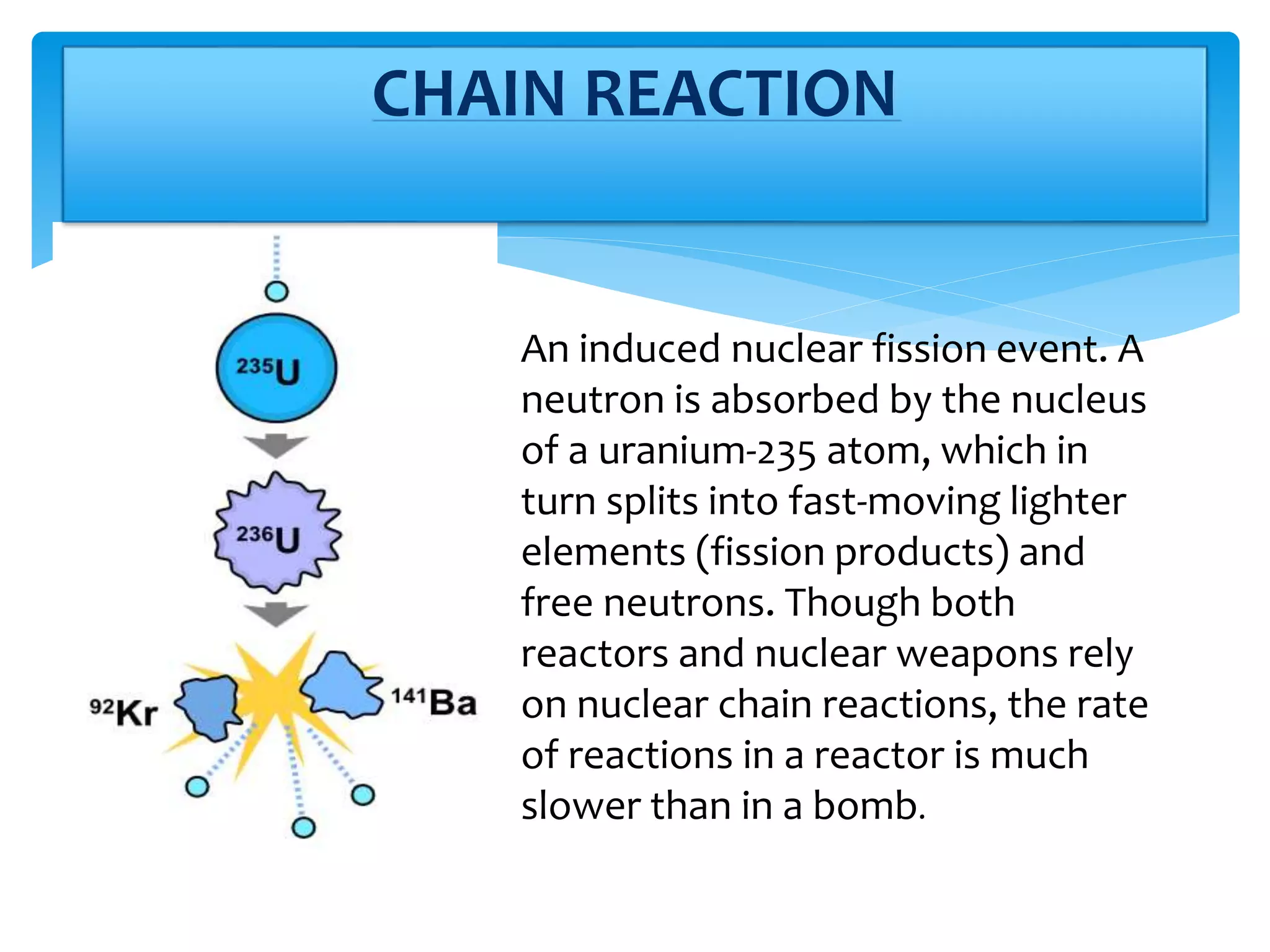
An induced nuclear fission event. A
neutron is absorbed by the nucleus
of a uranium-235 atom, which in
turn splits into fast-moving lighter
elements (fission products) and
free neutrons. Though both
reactors and nuclear weapons rely
on nuclear chain reactions, the rate
of reactions in a reactor is much
slower than in a bomb.
When large fissile atomic nucleus ,URANIUM-235
absorbs a neutron it may undergo fission.
Thus the heavy nucleus split into two or more lighter nucleus
and release kinetic energy or free electrons.
These electrons ,absorbed by other fissile atoms which
produce more electrons by more fissile events
This is called- NUCLEAR CHAIN REACTION
FISSION PROCESESS
 The basic function of PWR is to convert energy of nuclear
fission into electricity.
 PWR- a. primary circuit b. secondary circuit
 Primary system-converts the fission energy into steam
 Secondary system-converts steam into electricity and is
delivered to the consumer
PRESSURIZED WATER REACTOR
Main parts
 NUCLEAR REACTOR - (Control Rod, Fuel Rod, Reflector,
Moderator )
 STEAM GENERATOR
 COOLANT PUMP
 TURBINE
 CONDENSER
 FEED PUMP
 ELECTRIC GENERATOR
Primary circuit
 In reactor fissile fuel undergoes fission and releases
heat.
 Coolant absorbs heat.
Thus the energy released during fission is converted into
steam by primary circuit, and sends it to secondary circuit
Secondary circuit
 After absorbing water boils to steam.
 It passes to turbine and rotates runner.
 Thus electric power is produced in generator.
WORKING PRINCIPLE
I. Nuclear reactors
A nuclear reactor is a device to initiate and control a
sustained nuclear reaction.
The nuclear reactor is the heart of the plant. In its central
part the reactor core’s heat is generator by controlled
nuclear fission.
 In nuclear power plants, different types of reactors, cooling
circuits, moderators are sometimes used.
COMPONENTS OF PRESSURIZED
WATER REACTOR
Steam turbine
 The object of the steam turbine is to convert heat contained
in steam into mechanical energy.
Generator
 The generator converts kinetic energy supplied by the
turbine into electrical energy
 Thus electricity is produced.
Cooling system
A cooling system removes heat from reactor core and
transports it to another area of the plant, where the
thermal energy can be harnessed to produce
electricity or to do other useful work.
Safety valves
 In the event of emergency, two independent safety
valves can be used to prevent pipes from bursting or
the reactor from exploiding.
Feed water pump
The water level in steam generator and nuclear
reactor is controlled using feed water system.
The feed water pump has the task of taking water
from the condensate system, increasing the pressure
and forcing into steam generators or directly into
reactor vessel
Emergency power supply
 The emergency power supplies of a nuclear power
plant are built up by several layers of redundancy,
such as diesel generators, gas turbine generators and
battery buffers. the majority of required power is
used to supply feed pumps in order to cool reactor
and remove the decay heat after shut down.
Nuclear
fuel
reactor
Steam
generato
r
Steam
turbine
generator
LAYOUT-PROCEDURE
 BNHGH
COOLING SYSTEM
PLANT-LAYOUT
 Operating nuclear reactors contains large number of
radioactive fission products which, if dispersed con pose
a direct radiation hazard.
 Also ingested by humans and animals.
 The coolant contained in the reactor may fail, and the
fuel may melt and cause the vessel in which it is
contained to overheat and melt.
This is called nuclear melt down
Failure modes of nuclear power plant
First accident
 1952- chalk river (CANADA)
Recent accidents
 2011- fukushima (JAPAN)
 2011- onaguwa (JAPAN)
 2006- fleurus (BELGIUM)
HISTORIC ACCIDENTS
A number of new designs for nuclear power generation,
collectively known as GENERATION IV REACTORS ,are
the subject of active research and may be used in
practical power generation in the future.
Passively safe plants are available to be built.
The 1600 MWE european pressurized reactor is being
built in olkiluoto, finland.
FUTURE POWER PLANTS
THANK YOU

nuclear power plant.pptx

  • 1.
  • 2.
    INTRODUCTION A nuclear powerplant is similar to thermal power plant in which electricity is produced by atoms where as in thermal power plant electricity is generated by using steam
  • 3.
    HISTORY Electricity was generatedby a nuclear reactor for the first time over on December 20, 1951 at the EBR-I experimental station. On june 27, 1954, the world’s first nuclear power plant obninsk was started. The world’s first commercial scale power station, calder hall in england was opened in october 17, 1956.
  • 4.
    Pressurized water reactor Boilingwater reactor Fast Breeder reactor CANDU Reactor Pool type reactor Gas cooled reactor Molten salt reactor TYPES OF NUCLEAR REACTOR
  • 5.
    CHAIN REACTION An inducednuclear fission event. A neutron is absorbed by the nucleus of a uranium-235 atom, which in turn splits into fast-moving lighter elements (fission products) and free neutrons. Though both reactors and nuclear weapons rely on nuclear chain reactions, the rate of reactions in a reactor is much slower than in a bomb.
  • 6.
    When large fissileatomic nucleus ,URANIUM-235 absorbs a neutron it may undergo fission. Thus the heavy nucleus split into two or more lighter nucleus and release kinetic energy or free electrons. These electrons ,absorbed by other fissile atoms which produce more electrons by more fissile events This is called- NUCLEAR CHAIN REACTION FISSION PROCESESS
  • 7.
     The basicfunction of PWR is to convert energy of nuclear fission into electricity.  PWR- a. primary circuit b. secondary circuit  Primary system-converts the fission energy into steam  Secondary system-converts steam into electricity and is delivered to the consumer PRESSURIZED WATER REACTOR
  • 8.
    Main parts  NUCLEARREACTOR - (Control Rod, Fuel Rod, Reflector, Moderator )  STEAM GENERATOR  COOLANT PUMP  TURBINE  CONDENSER  FEED PUMP  ELECTRIC GENERATOR
  • 9.
    Primary circuit  Inreactor fissile fuel undergoes fission and releases heat.  Coolant absorbs heat. Thus the energy released during fission is converted into steam by primary circuit, and sends it to secondary circuit Secondary circuit  After absorbing water boils to steam.  It passes to turbine and rotates runner.  Thus electric power is produced in generator. WORKING PRINCIPLE
  • 10.
    I. Nuclear reactors Anuclear reactor is a device to initiate and control a sustained nuclear reaction. The nuclear reactor is the heart of the plant. In its central part the reactor core’s heat is generator by controlled nuclear fission.  In nuclear power plants, different types of reactors, cooling circuits, moderators are sometimes used. COMPONENTS OF PRESSURIZED WATER REACTOR
  • 11.
    Steam turbine  Theobject of the steam turbine is to convert heat contained in steam into mechanical energy. Generator  The generator converts kinetic energy supplied by the turbine into electrical energy  Thus electricity is produced.
  • 12.
    Cooling system A coolingsystem removes heat from reactor core and transports it to another area of the plant, where the thermal energy can be harnessed to produce electricity or to do other useful work. Safety valves  In the event of emergency, two independent safety valves can be used to prevent pipes from bursting or the reactor from exploiding.
  • 13.
    Feed water pump Thewater level in steam generator and nuclear reactor is controlled using feed water system. The feed water pump has the task of taking water from the condensate system, increasing the pressure and forcing into steam generators or directly into reactor vessel
  • 14.
    Emergency power supply The emergency power supplies of a nuclear power plant are built up by several layers of redundancy, such as diesel generators, gas turbine generators and battery buffers. the majority of required power is used to supply feed pumps in order to cool reactor and remove the decay heat after shut down.
  • 15.
  • 16.
  • 17.
  • 18.
     Operating nuclearreactors contains large number of radioactive fission products which, if dispersed con pose a direct radiation hazard.  Also ingested by humans and animals.  The coolant contained in the reactor may fail, and the fuel may melt and cause the vessel in which it is contained to overheat and melt. This is called nuclear melt down Failure modes of nuclear power plant
  • 19.
    First accident  1952-chalk river (CANADA) Recent accidents  2011- fukushima (JAPAN)  2011- onaguwa (JAPAN)  2006- fleurus (BELGIUM) HISTORIC ACCIDENTS
  • 20.
    A number ofnew designs for nuclear power generation, collectively known as GENERATION IV REACTORS ,are the subject of active research and may be used in practical power generation in the future. Passively safe plants are available to be built. The 1600 MWE european pressurized reactor is being built in olkiluoto, finland. FUTURE POWER PLANTS
  • 21.