Presentation on

Management of Environment

National Thermal Power Corporation
             (NTPC)

                     Robert S. Kharat, Roll No.156
                          Seema Nare, Roll No.159
                    Saroj R. Panigrahi, Roll No.160
                 Rajesh M. Salgaonkar, Roll No.164
                                                 1
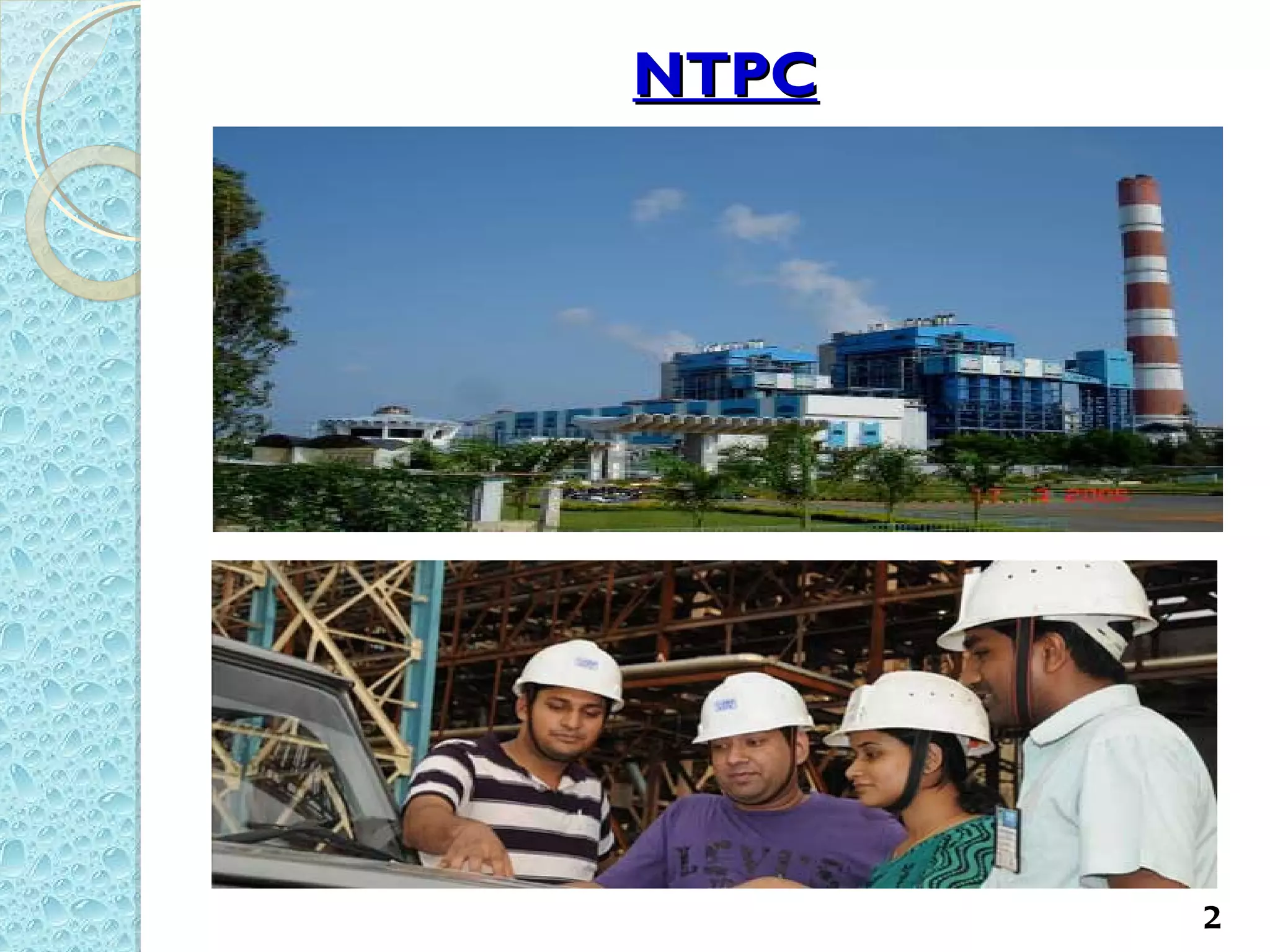
NTPC


       2
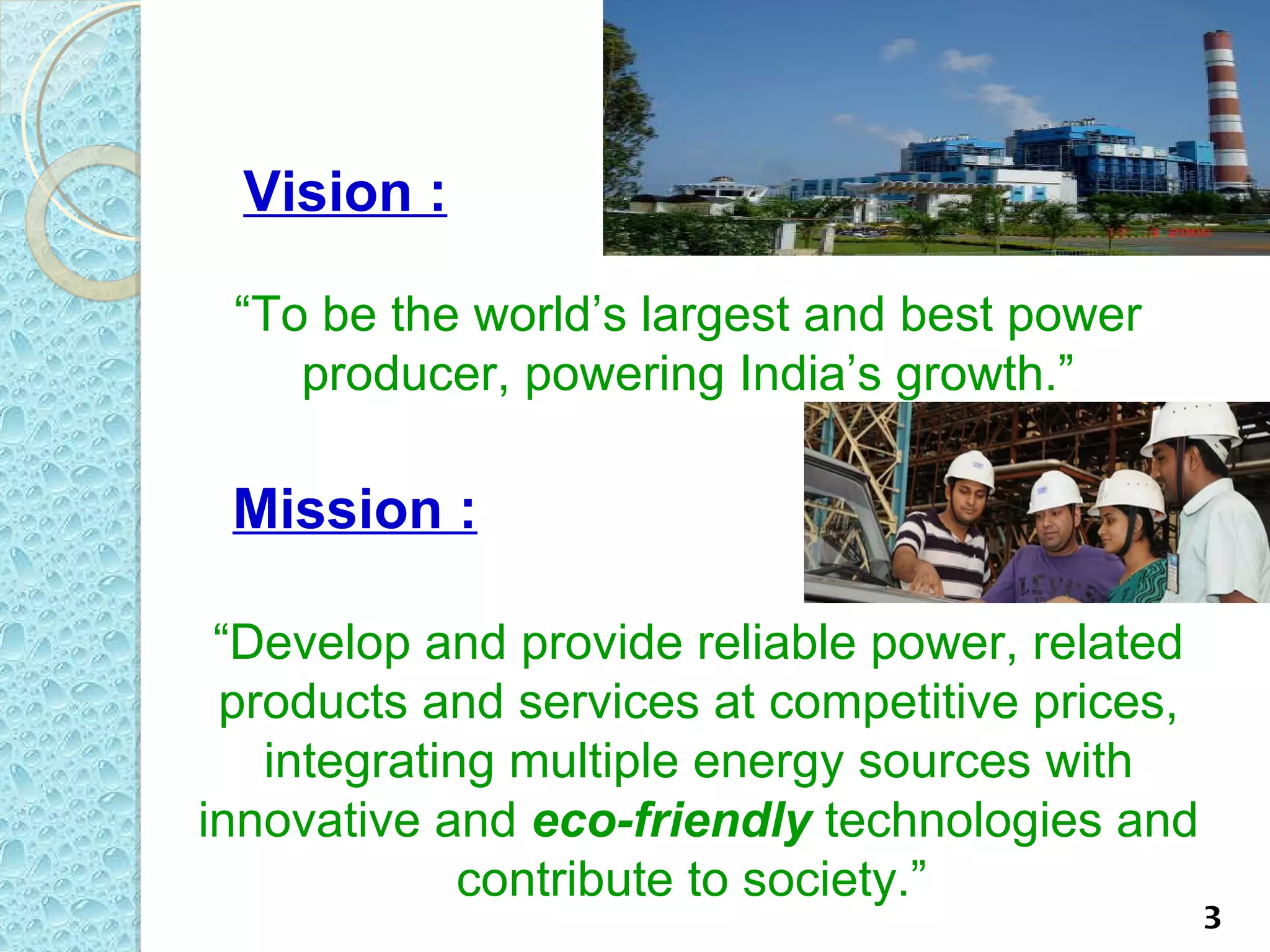
Vision :

 “To be the world’s largest and best power
    producer, powering India’s growth.”

 Mission :

 “Develop and provide reliable power, related
 products and services at competitive prices,
   integrating multiple energy sources with
innovative and eco-friendly technologies and
             contribute to society.”
                                                3
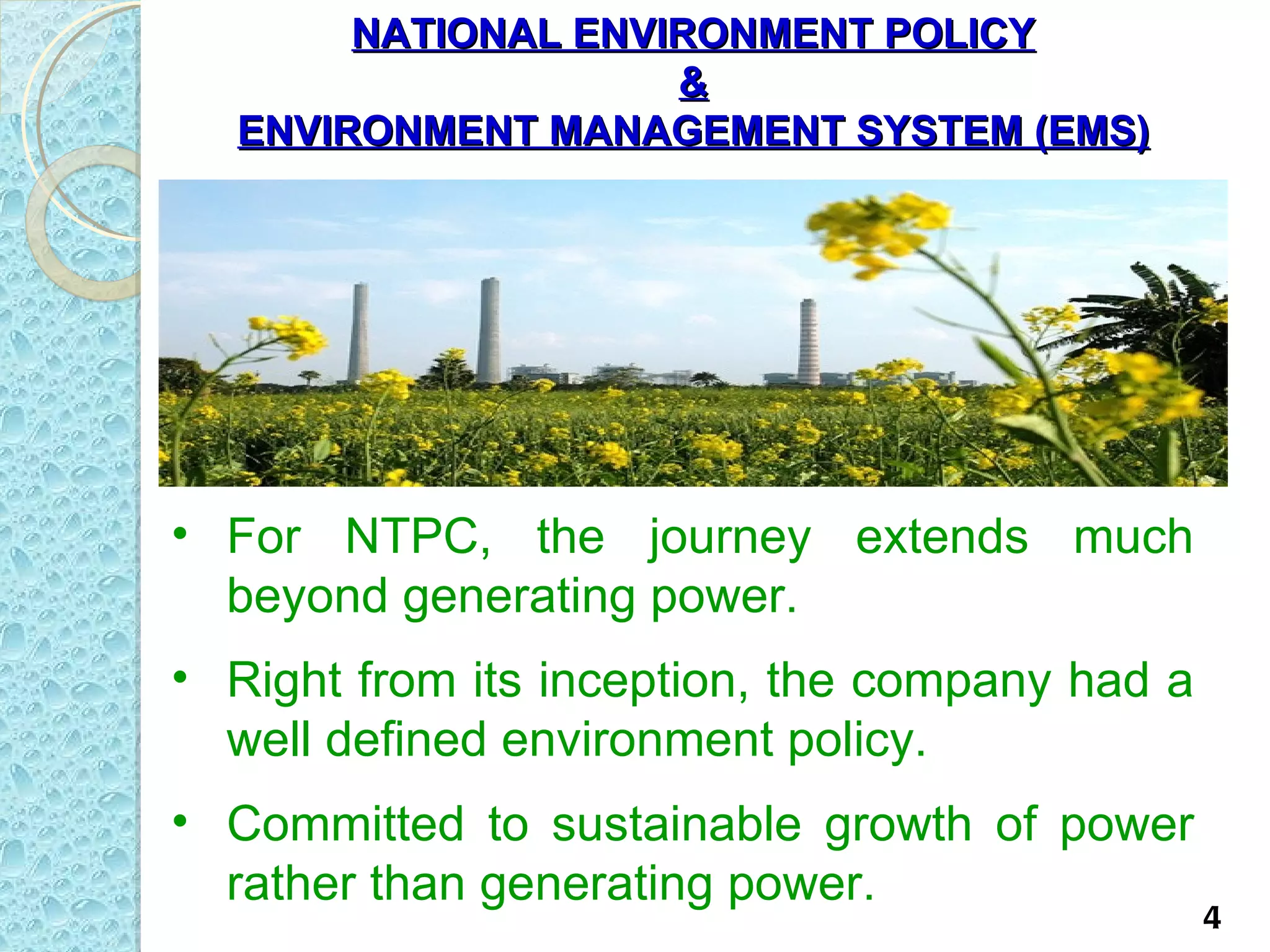
NATIONAL ENVIRONMENT POLICY
                    &
  ENVIRONMENT MANAGEMENT SYSTEM (EMS)


• For NTPC, the journey extends much
  beyond generating power.
• Right from its inception, the company had a
  well defined environment policy.
• Committed to sustainable growth of power
  rather than generating power.
                                                4
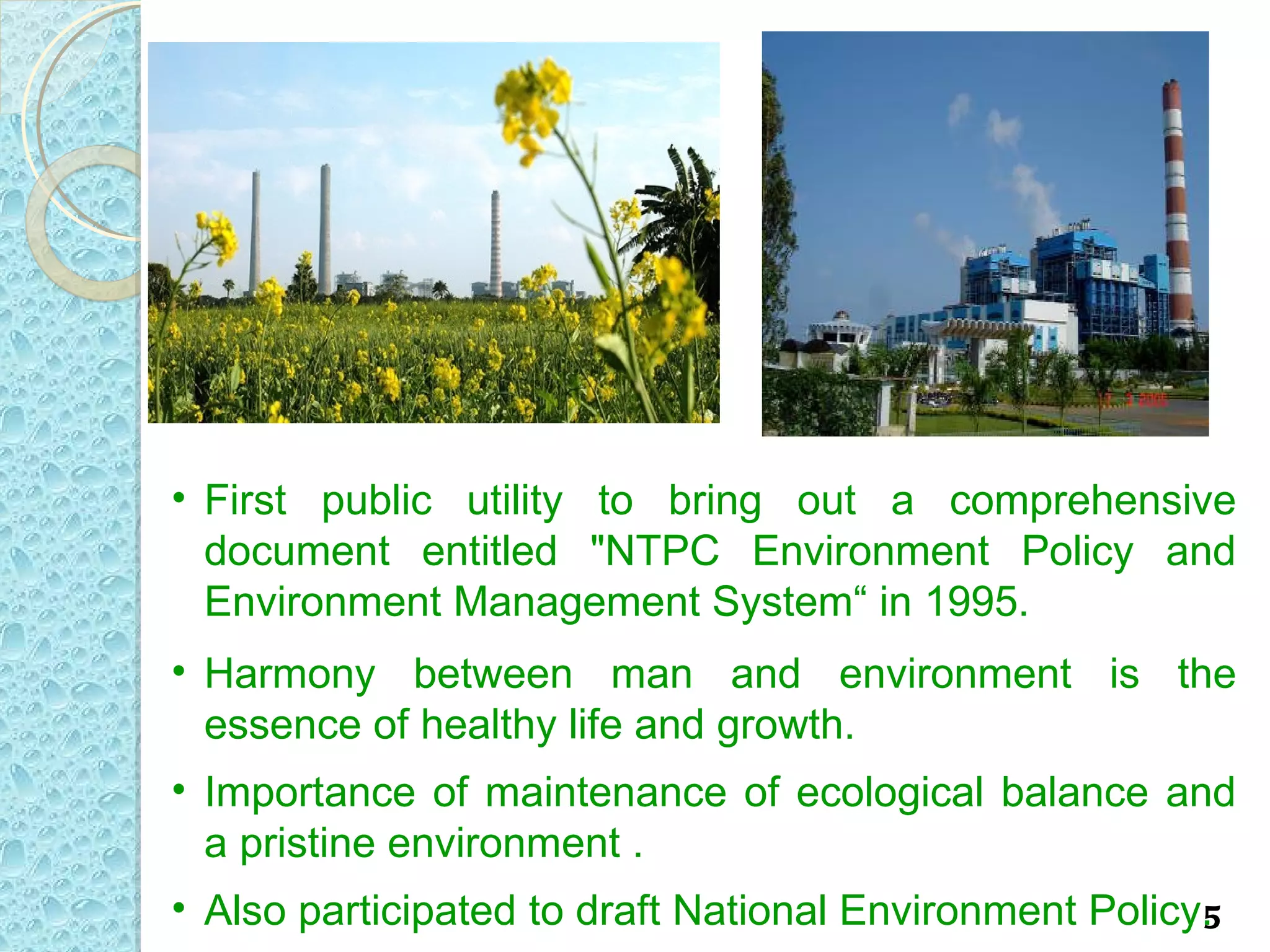
• First public utility to bring out a comprehensive
  document entitled "NTPC Environment Policy and
  Environment Management System“ in 1995.
• Harmony between man and environment is the
  essence of healthy life and growth.
• Importance of maintenance of ecological balance and
  a pristine environment .
• Also participated to draft National Environment Policy.
                                                        5
Guiding principles adopted by NTPC


•   Pro-active approach to environment ;
•   Optimum utilisation of equipment ;
•   Adoption of latest technologies ;
•   Continual environment improvement ;
                                           6
• Efficient utilisation of resources, thereby
  minimising       waste,   maximising    ash
  utilisation ; and
• Ensuring a green belt all around the plant
  for maintaining ecological balance.
                                            7
SALIENT FEATURES

    • Achieve and maintain a
      leader's role in the area of
      Environment Management.
    • Adopt ways and means for
      Environment       Protection
      and             Environment
      Improvement.
    • Adopt sound Environment
      Management practices.
    • Aim at full compliance with
      the statutory norms /
      requirements.
                                8
Environment Management, Occupational Health and
Safety Systems :

• NTPC has adopted the best international
  practices on environment, occupational
  health and safety areas.
• Pursued the Environmental Management
  System (EMS) ISO 14001 and the
  Occupational Health and Safety Assessment
  System (OHSAS) 18001 at its different
  establishments.
• As a result, all NTPC power stations have
  been certified for ISO 14001 & OHSAS
  18001 by reputed national and international
  certifying agencies.
                                              9
Pollution Control Systems :

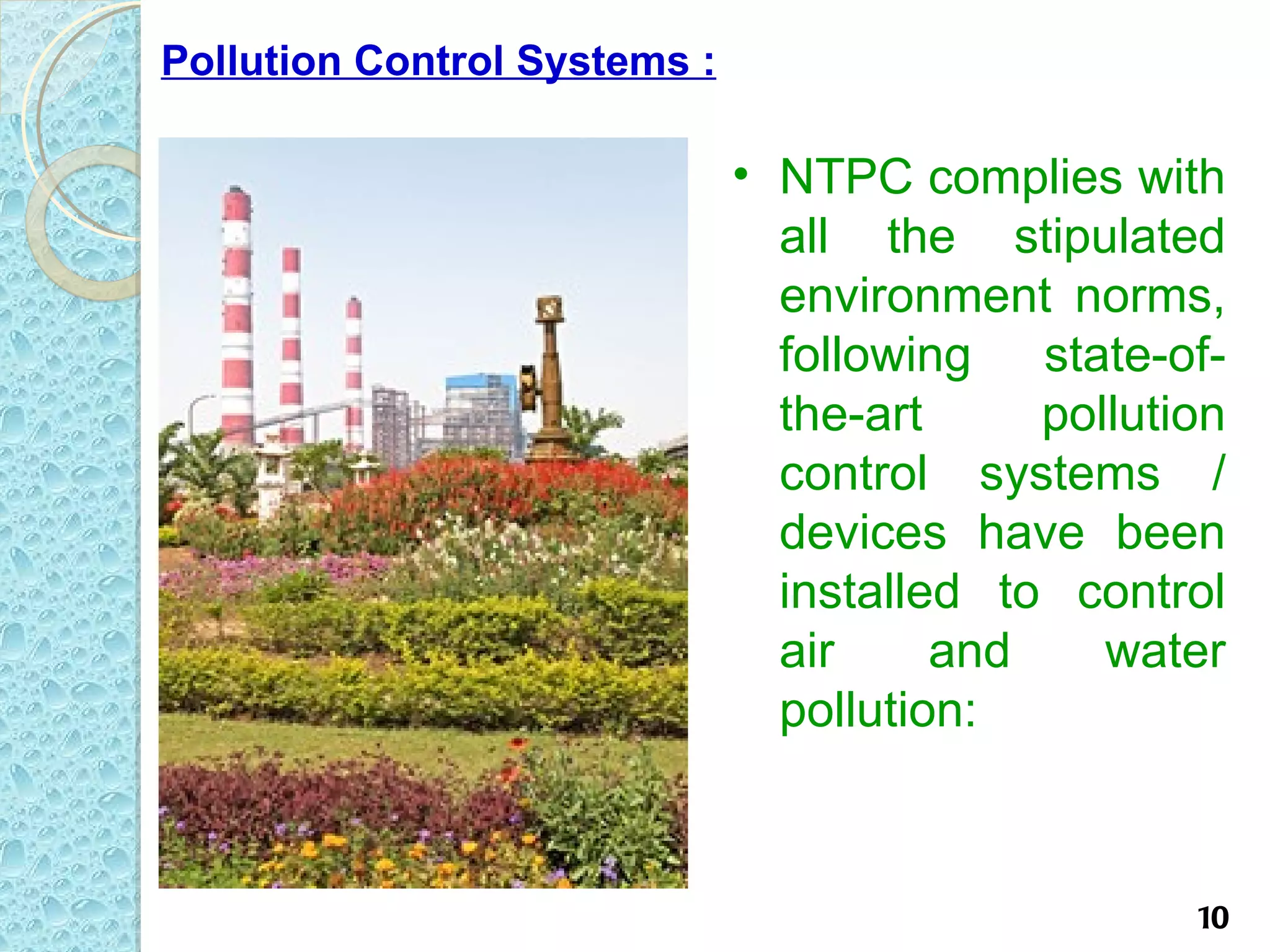
                              • NTPC complies with
                                all the stipulated
                                environment norms,
                                following state-of-
                                the-art     pollution
                                control systems /
                                devices have been
                                installed to control
                                air     and    water
                                pollution:


                                                   10
Pollution Control Systems :


• Electrostatic Precipitators   • Ash Water Recycling System
• Flue Gas Stacks               • Dry Ash Extraction System
• Low-NOX Burners               • Liquid Waste Treatment
• Neutralisation Pits             Plants & Management System
• Coal Settling Pits / Oil      • Sewage Treatment Plants &
  Settling Pits                   Facilities
• DE & DS Systems Cooling       • Environmental Institutional
  Tower                           Set-up
• Ash Dykes & Ash Disposal
  Systems
                                                                11
Additional measures taken          in   the    area   of
Environment Management :

• Environment Management during Operation Phase
• Monitoring of Environmental Parameters
• On-Line Data Base Management
• Environment Review
• Upgradation & Retrofitting of Pollution Control Systems
• Resources Conservation
• Waste Management
• Municipal Waste Management
• Hazardous Waste Management
• Bio-Medical Waste Management
• Land Use / Bio-diversity
• Reclamation of Abandoned Ash ponds
• Green Belts, Afforestation & Energy Plantations

                                                       12
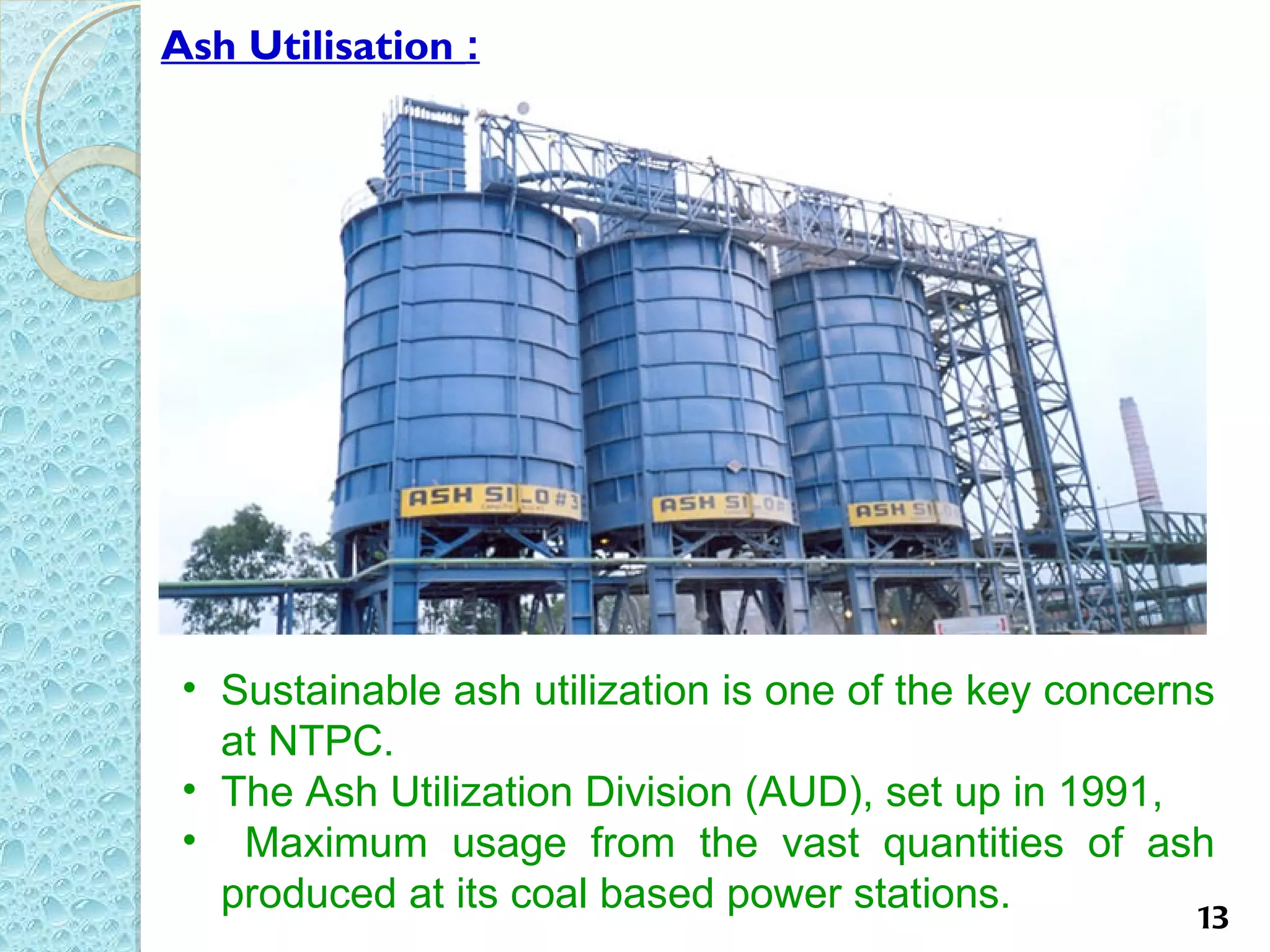
Ash Utilisation :


 • Sustainable ash utilization is one of the key concerns
   at NTPC.
 • The Ash Utilization Division (AUD), set up in 1991,
 • Maximum usage from the vast quantities of ash
   produced at its coal based power stations.           13
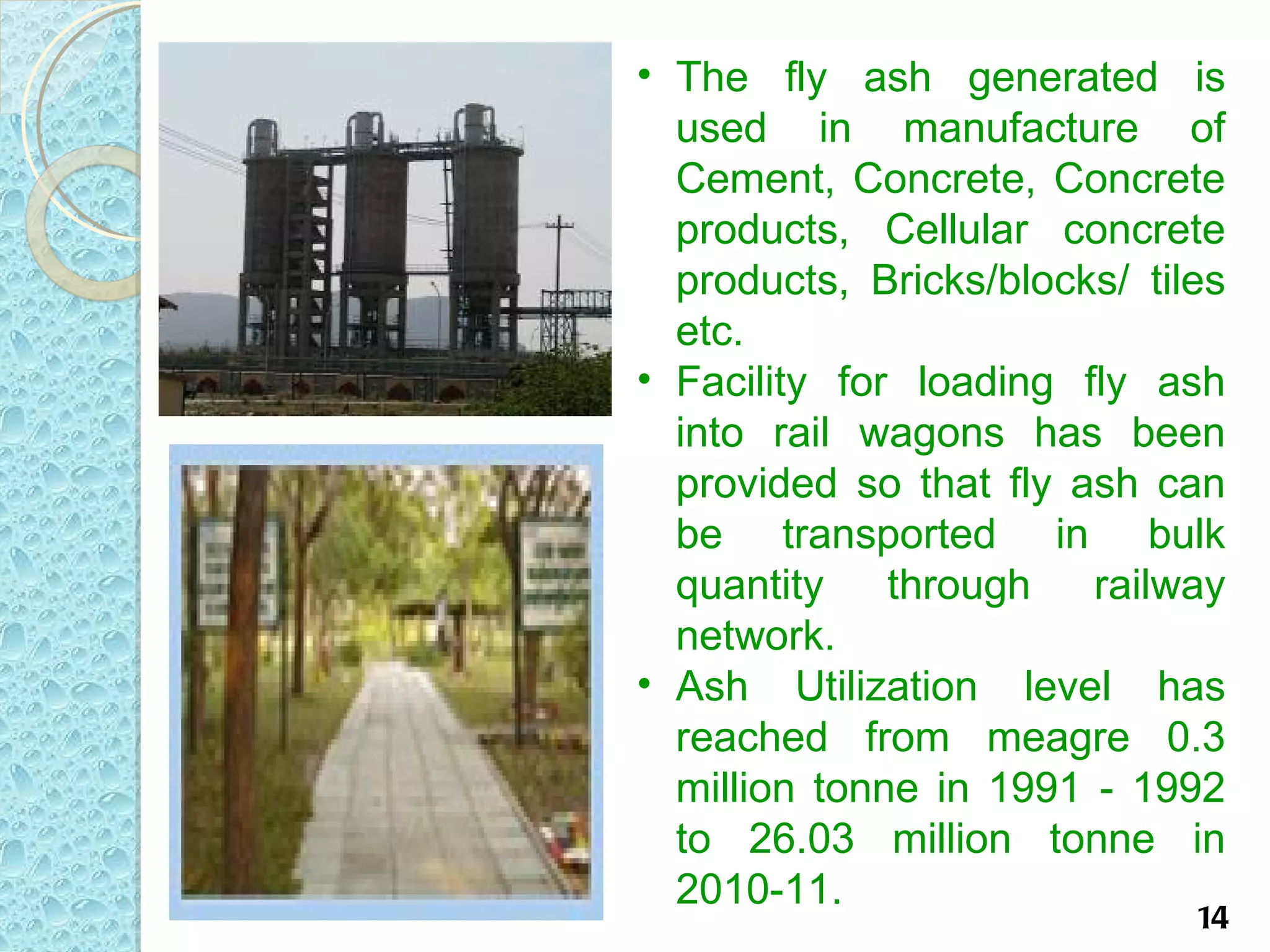
• The fly ash generated is
  used in manufacture of
  Cement, Concrete, Concrete
  products, Cellular concrete
  products, Bricks/blocks/ tiles
  etc.
• Facility for loading fly ash
  into rail wagons has been
  provided so that fly ash can
  be transported in bulk
  quantity through railway
  network.
• Ash Utilization level has
  reached from meagre 0.3
  million tonne in 1991 - 1992
  to 26.03 million tonne in
  2010-11.
                              14
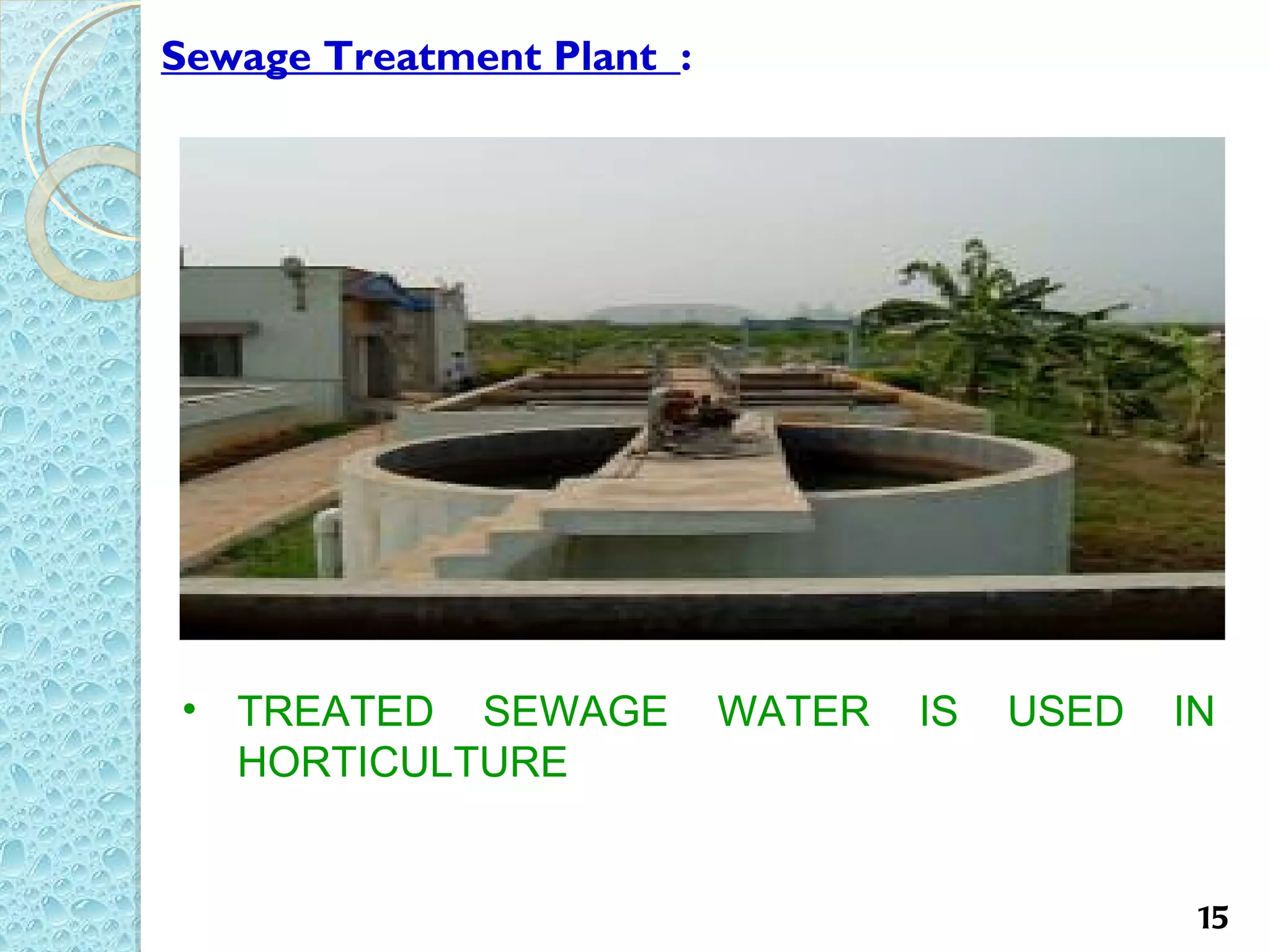
Sewage Treatment Plant :


• TREATED SEWAGE           WATER   IS   USED   IN
  HORTICULTURE


                                                15
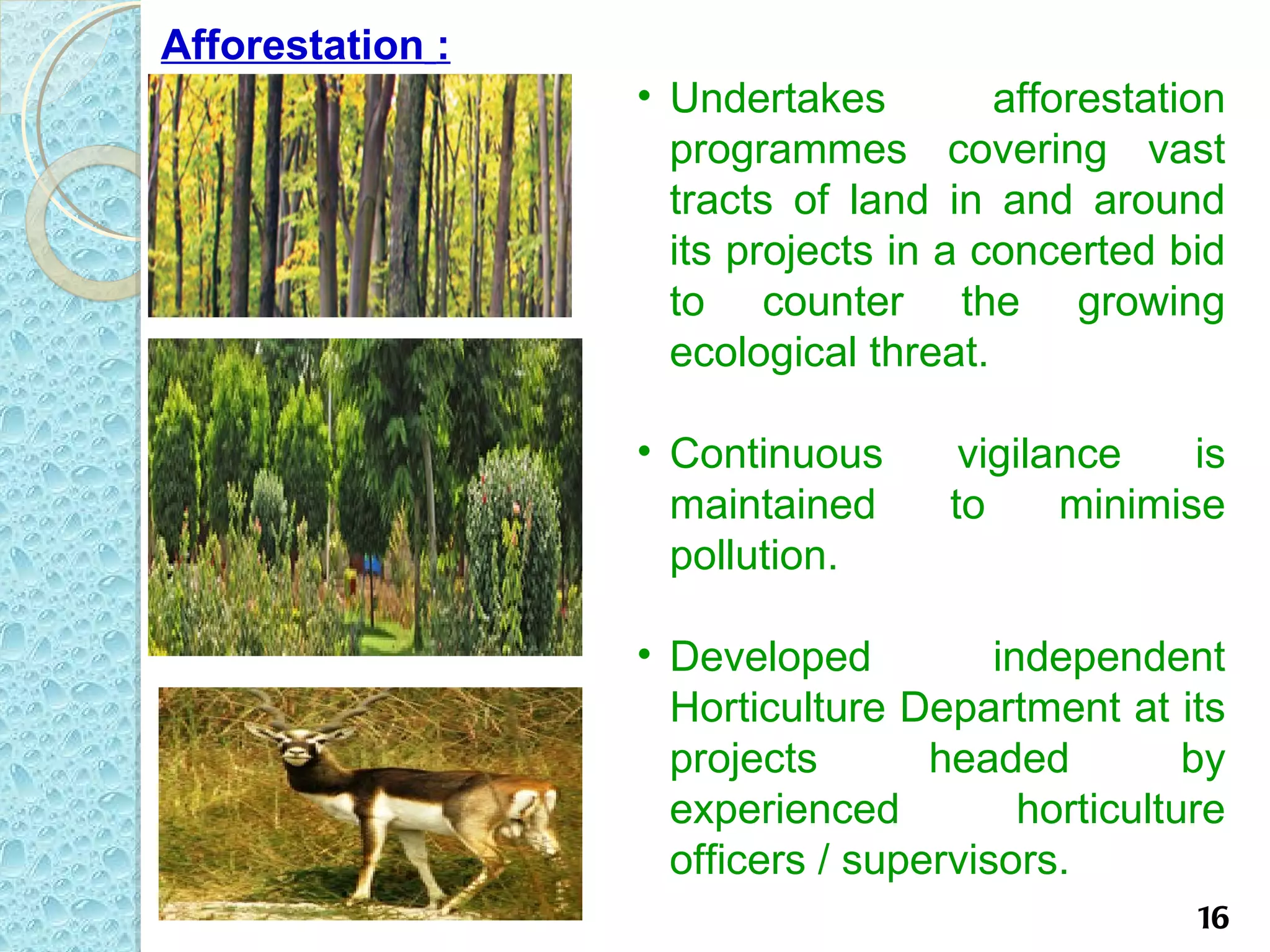
Afforestation :
                  • Undertakes         afforestation
                    programmes covering vast
                    tracts of land in and around
                    its projects in a concerted bid
                    to counter the growing
                    ecological threat.

                  • Continuous       vigilance    is
                    maintained      to     minimise
                    pollution.

                  • Developed          independent
                    Horticulture Department at its
                    projects       headed          by
                    experienced          horticulture
                    officers / supervisors.
                                                   16
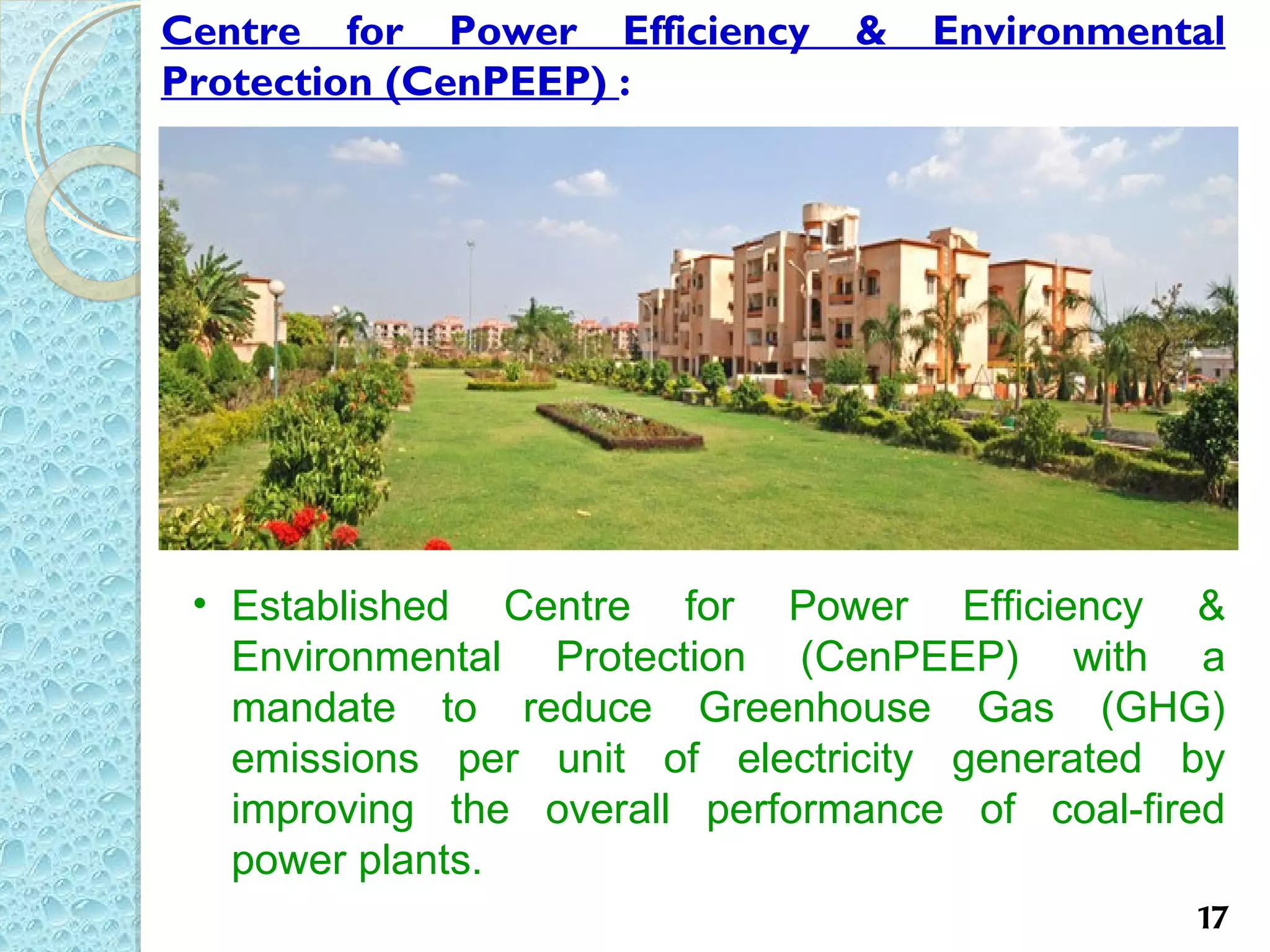
Centre for Power Efficiency     &   Environmental
Protection (CenPEEP) :


 • Established Centre for Power Efficiency &
   Environmental Protection (CenPEEP) with a
   mandate to reduce Greenhouse Gas (GHG)
   emissions per unit of electricity generated by
   improving the overall performance of coal-fired
   power plants.
                                                17
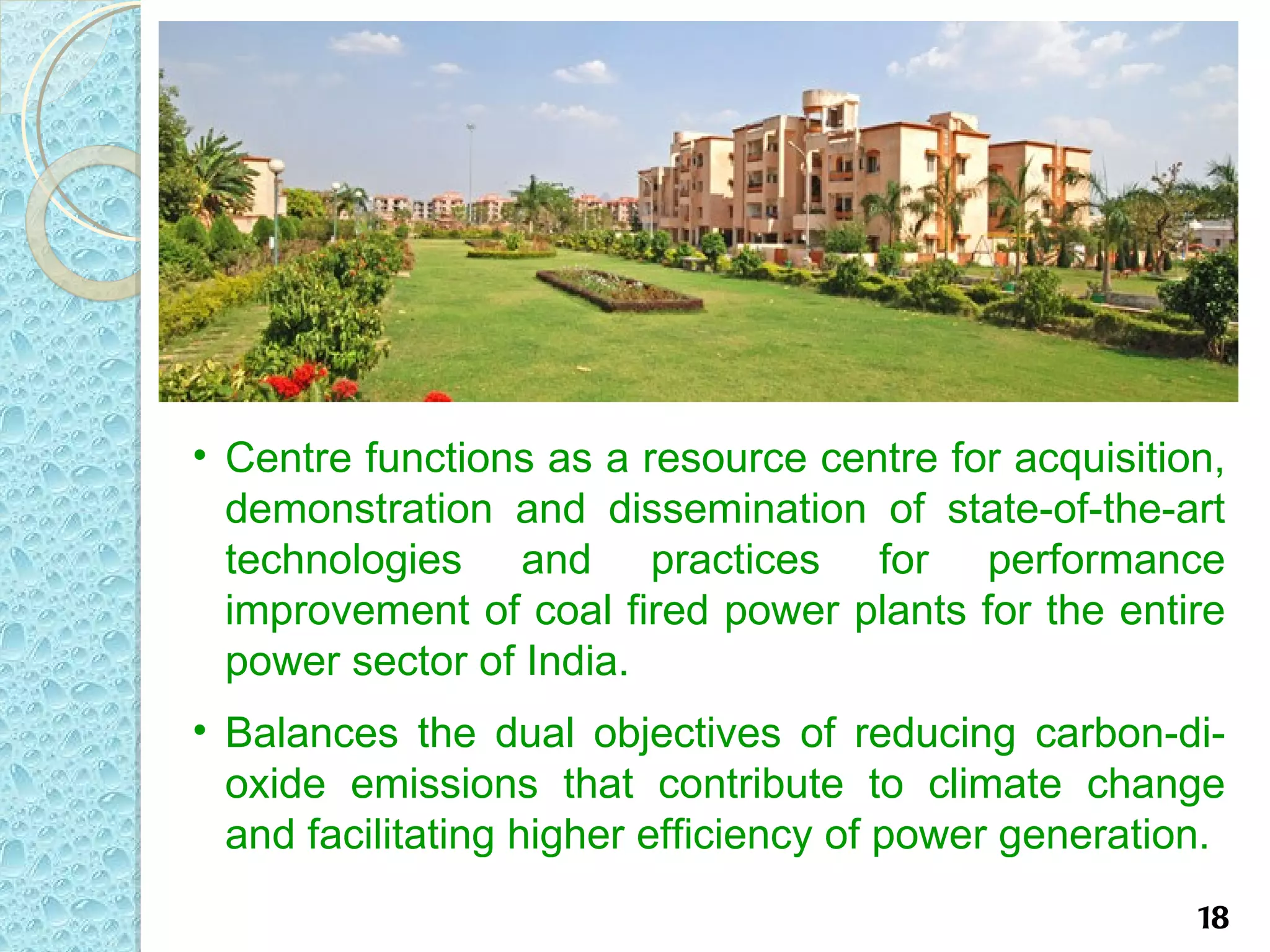
• Centre functions as a resource centre for acquisition,
  demonstration and dissemination of state-of-the-art
  technologies and practices for performance
  improvement of coal fired power plants for the entire
  power sector of India.
• Balances the dual objectives of reducing carbon-di-
  oxide emissions that contribute to climate change
  and facilitating higher efficiency of power generation.
                                                       18
Monitoring of Environmental Parameters :
• All pollutants discharged from the Power Plants such
  as stack emission, ash pond effluent, main plant
  effluent, domestic effluent and Condenser Cooling
  Water (CCW) effluents are monitored at the stipulated
  frequency at the source itself and at the points of
  discharge.
• Ambient air, surface water and ground water quality in
  and around NTPC plants are regularly monitored to
  assess any adverse impacts as a result of operation of
  the power plant.
• Developed and installed a computerised programme
  called “Paryavaran Monitoring System” for reliable
  storage, prompt and accurate flow of information on
  environmental performance of Stations.
• Periodic Environmental Reviews.
                                                     19
Conclusion :


 • NTPC has adopted a pro-active approach to
   environment, optimum utilisation of equipment,
   adoption of latest technologies and continual
   environment improvement.

 • The policy also envisages efficient utilisation of
   resources, thereby minimising waste, maximising
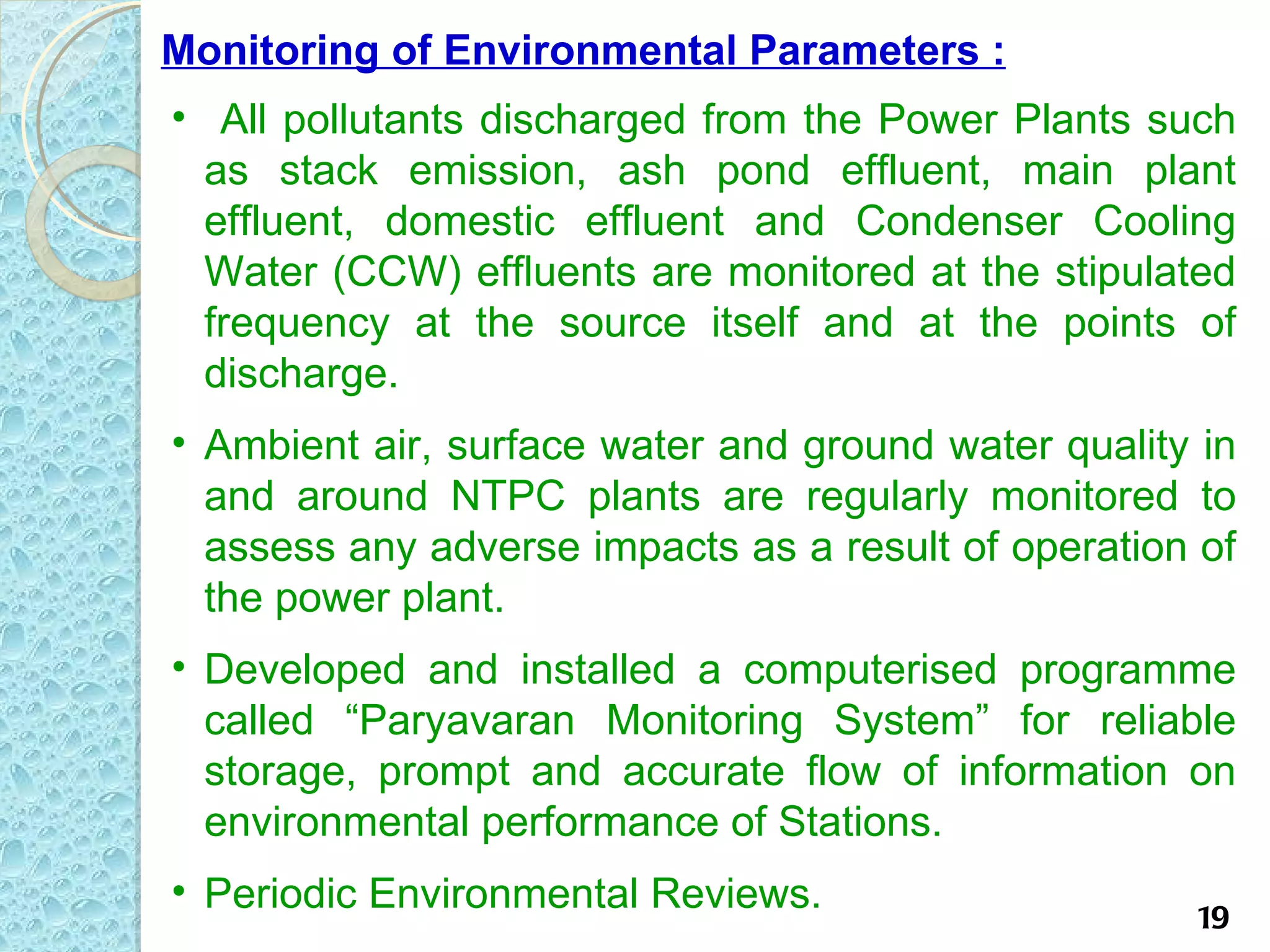
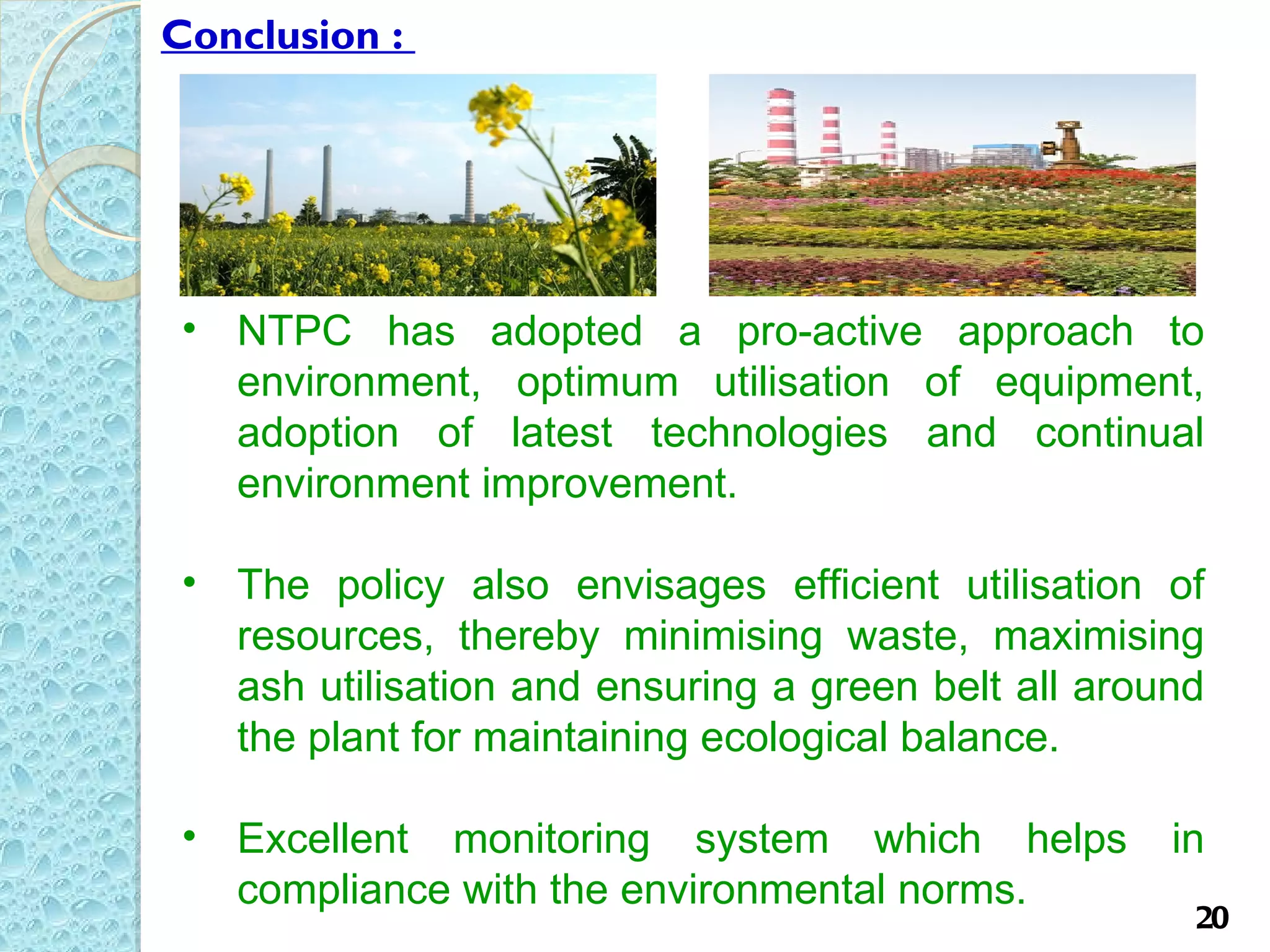
   ash utilisation and ensuring a green belt all around
   the plant for maintaining ecological balance.

 • Excellent monitoring system which helps           in
   compliance with the environmental norms.
                                                      20
THANK YOU


            21

Ntpc.ppt

  • 1.
    Presentation on Management ofEnvironment National Thermal Power Corporation (NTPC) Robert S. Kharat, Roll No.156 Seema Nare, Roll No.159 Saroj R. Panigrahi, Roll No.160 Rajesh M. Salgaonkar, Roll No.164 1
  • 2.
  • 3.
    Vision : “Tobe the world’s largest and best power producer, powering India’s growth.” Mission : “Develop and provide reliable power, related products and services at competitive prices, integrating multiple energy sources with innovative and eco-friendly technologies and contribute to society.” 3
  • 4.
    NATIONAL ENVIRONMENT POLICY & ENVIRONMENT MANAGEMENT SYSTEM (EMS) • For NTPC, the journey extends much beyond generating power. • Right from its inception, the company had a well defined environment policy. • Committed to sustainable growth of power rather than generating power. 4
  • 5.
    • First publicutility to bring out a comprehensive document entitled "NTPC Environment Policy and Environment Management System“ in 1995. • Harmony between man and environment is the essence of healthy life and growth. • Importance of maintenance of ecological balance and a pristine environment . • Also participated to draft National Environment Policy. 5
  • 6.
    Guiding principles adoptedby NTPC • Pro-active approach to environment ; • Optimum utilisation of equipment ; • Adoption of latest technologies ; • Continual environment improvement ; 6
  • 7.
    • Efficient utilisationof resources, thereby minimising waste, maximising ash utilisation ; and • Ensuring a green belt all around the plant for maintaining ecological balance. 7
  • 8.
    SALIENT FEATURES • Achieve and maintain a leader's role in the area of Environment Management. • Adopt ways and means for Environment Protection and Environment Improvement. • Adopt sound Environment Management practices. • Aim at full compliance with the statutory norms / requirements. 8
  • 9.
    Environment Management, OccupationalHealth and Safety Systems : • NTPC has adopted the best international practices on environment, occupational health and safety areas. • Pursued the Environmental Management System (EMS) ISO 14001 and the Occupational Health and Safety Assessment System (OHSAS) 18001 at its different establishments. • As a result, all NTPC power stations have been certified for ISO 14001 & OHSAS 18001 by reputed national and international certifying agencies. 9
  • 10.
    Pollution Control Systems: • NTPC complies with all the stipulated environment norms, following state-of- the-art pollution control systems / devices have been installed to control air and water pollution: 10
  • 11.
    Pollution Control Systems: • Electrostatic Precipitators • Ash Water Recycling System • Flue Gas Stacks • Dry Ash Extraction System • Low-NOX Burners • Liquid Waste Treatment • Neutralisation Pits Plants & Management System • Coal Settling Pits / Oil • Sewage Treatment Plants & Settling Pits Facilities • DE & DS Systems Cooling • Environmental Institutional Tower Set-up • Ash Dykes & Ash Disposal Systems 11
  • 12.
    Additional measures taken in the area of Environment Management : • Environment Management during Operation Phase • Monitoring of Environmental Parameters • On-Line Data Base Management • Environment Review • Upgradation & Retrofitting of Pollution Control Systems • Resources Conservation • Waste Management • Municipal Waste Management • Hazardous Waste Management • Bio-Medical Waste Management • Land Use / Bio-diversity • Reclamation of Abandoned Ash ponds • Green Belts, Afforestation & Energy Plantations 12
  • 13.
    Ash Utilisation : • Sustainable ash utilization is one of the key concerns at NTPC. • The Ash Utilization Division (AUD), set up in 1991, • Maximum usage from the vast quantities of ash produced at its coal based power stations. 13
  • 14.
    • The flyash generated is used in manufacture of Cement, Concrete, Concrete products, Cellular concrete products, Bricks/blocks/ tiles etc. • Facility for loading fly ash into rail wagons has been provided so that fly ash can be transported in bulk quantity through railway network. • Ash Utilization level has reached from meagre 0.3 million tonne in 1991 - 1992 to 26.03 million tonne in 2010-11. 14
  • 15.
    Sewage Treatment Plant: • TREATED SEWAGE WATER IS USED IN HORTICULTURE 15
  • 16.
    Afforestation : • Undertakes afforestation programmes covering vast tracts of land in and around its projects in a concerted bid to counter the growing ecological threat. • Continuous vigilance is maintained to minimise pollution. • Developed independent Horticulture Department at its projects headed by experienced horticulture officers / supervisors. 16
  • 17.
    Centre for PowerEfficiency & Environmental Protection (CenPEEP) : • Established Centre for Power Efficiency & Environmental Protection (CenPEEP) with a mandate to reduce Greenhouse Gas (GHG) emissions per unit of electricity generated by improving the overall performance of coal-fired power plants. 17
  • 18.
    • Centre functionsas a resource centre for acquisition, demonstration and dissemination of state-of-the-art technologies and practices for performance improvement of coal fired power plants for the entire power sector of India. • Balances the dual objectives of reducing carbon-di- oxide emissions that contribute to climate change and facilitating higher efficiency of power generation. 18
  • 19.
    Monitoring of EnvironmentalParameters : • All pollutants discharged from the Power Plants such as stack emission, ash pond effluent, main plant effluent, domestic effluent and Condenser Cooling Water (CCW) effluents are monitored at the stipulated frequency at the source itself and at the points of discharge. • Ambient air, surface water and ground water quality in and around NTPC plants are regularly monitored to assess any adverse impacts as a result of operation of the power plant. • Developed and installed a computerised programme called “Paryavaran Monitoring System” for reliable storage, prompt and accurate flow of information on environmental performance of Stations. • Periodic Environmental Reviews. 19
  • 20.
    Conclusion : •NTPC has adopted a pro-active approach to environment, optimum utilisation of equipment, adoption of latest technologies and continual environment improvement. • The policy also envisages efficient utilisation of resources, thereby minimising waste, maximising ash utilisation and ensuring a green belt all around the plant for maintaining ecological balance. • Excellent monitoring system which helps in compliance with the environmental norms. 20
  • 21.