NOSQL  15 minutes of write
                  performance


                              #neo4j
Emil Eifrem                   @emileifrem
CEO, Neo Technology           emil@neotechnology.com
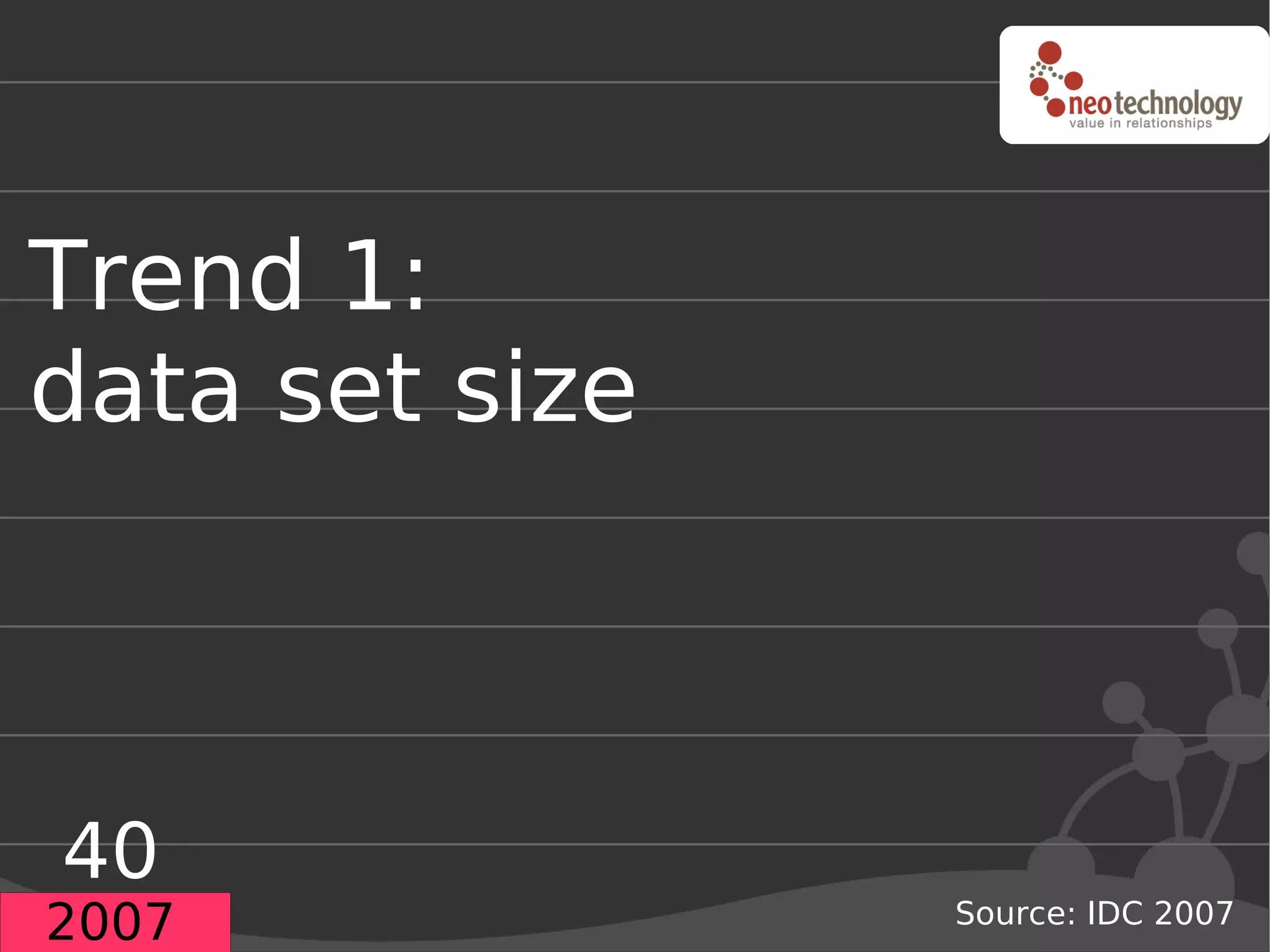
Trend 1:
data set size


40
2007            Source: IDC 2007
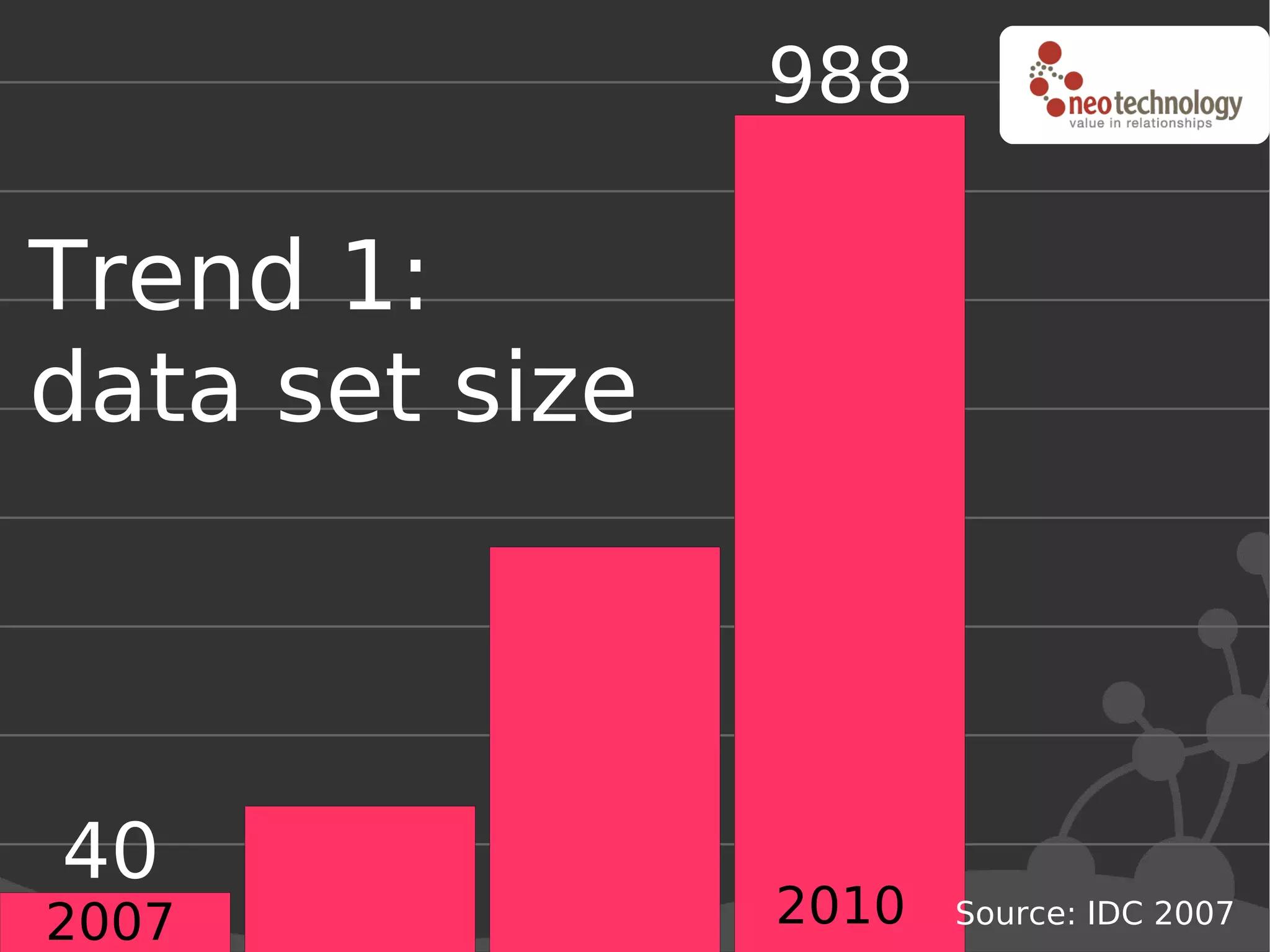
988

Trend 1:
data set size


40
2007            2010   Source: IDC 2007
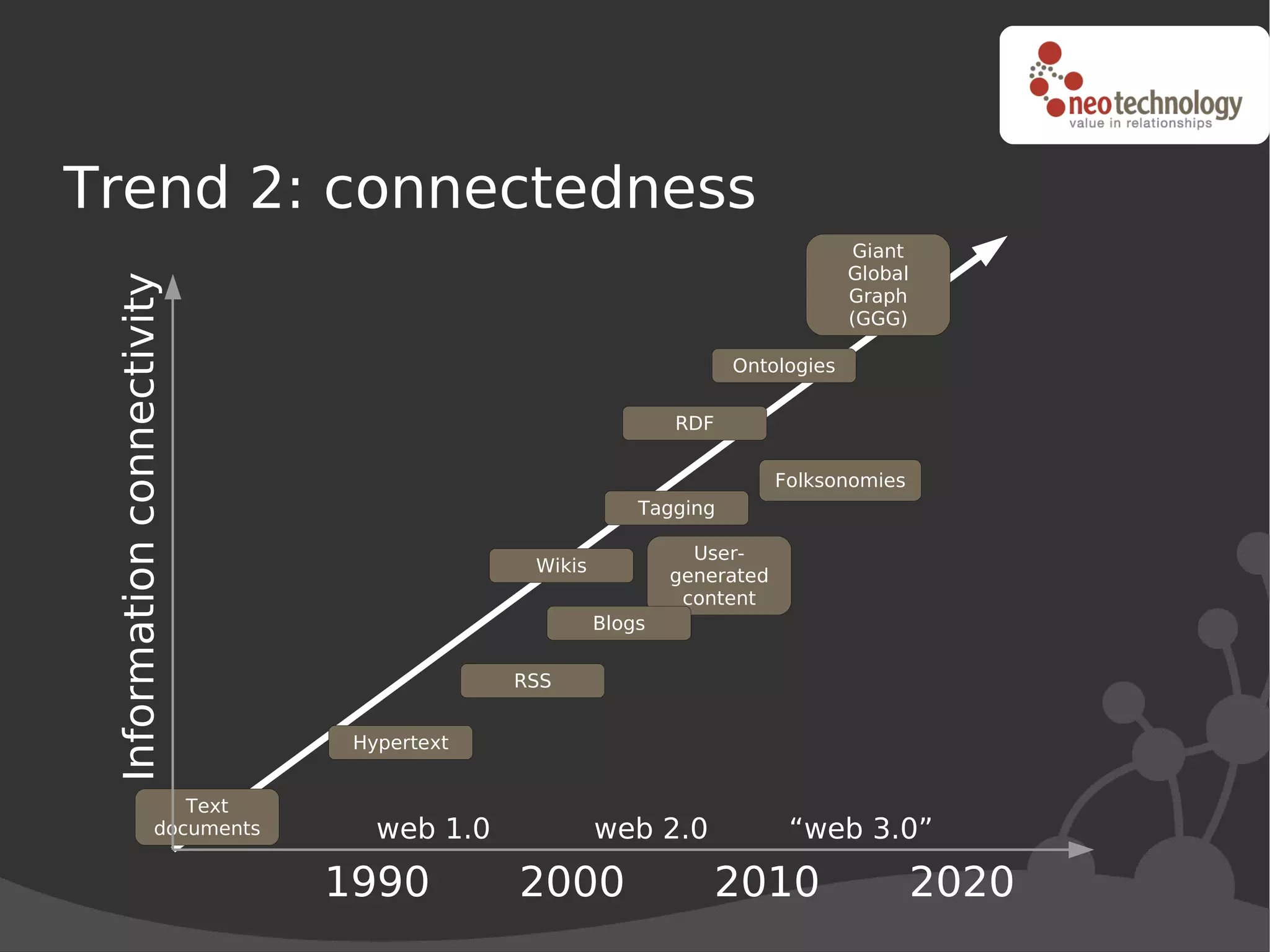
Trend 2: connectedness
                                                                                  Giant
                                                                                 Global
 Information connectivity


                                                                                 Graph
                                                                                 (GGG)

                                                                    Ontologies


                                                              RDF

                                                                          Folksonomies
                                                          Tagging

                                                                User-
                                              Wikis
                                                              generated
                                                               content
                                                      Blogs


                                             RSS


                                 Hypertext


                       Text
                    documents      web 1.0            web 2.0              “web 3.0”

                                1990         2000                   2010                  2020
Trend 3: semi-structure
 Individualization of content!
   In the salary lists of the 1970s, all elements had
   exactly one job
   In the salary lists of the 2000s, we need 5 job
   columns! Or 8? Or 15?

 Trend accelerated by the decentralization of
 content generation that is the hallmark of the age
 of participation (“web 2.0”)
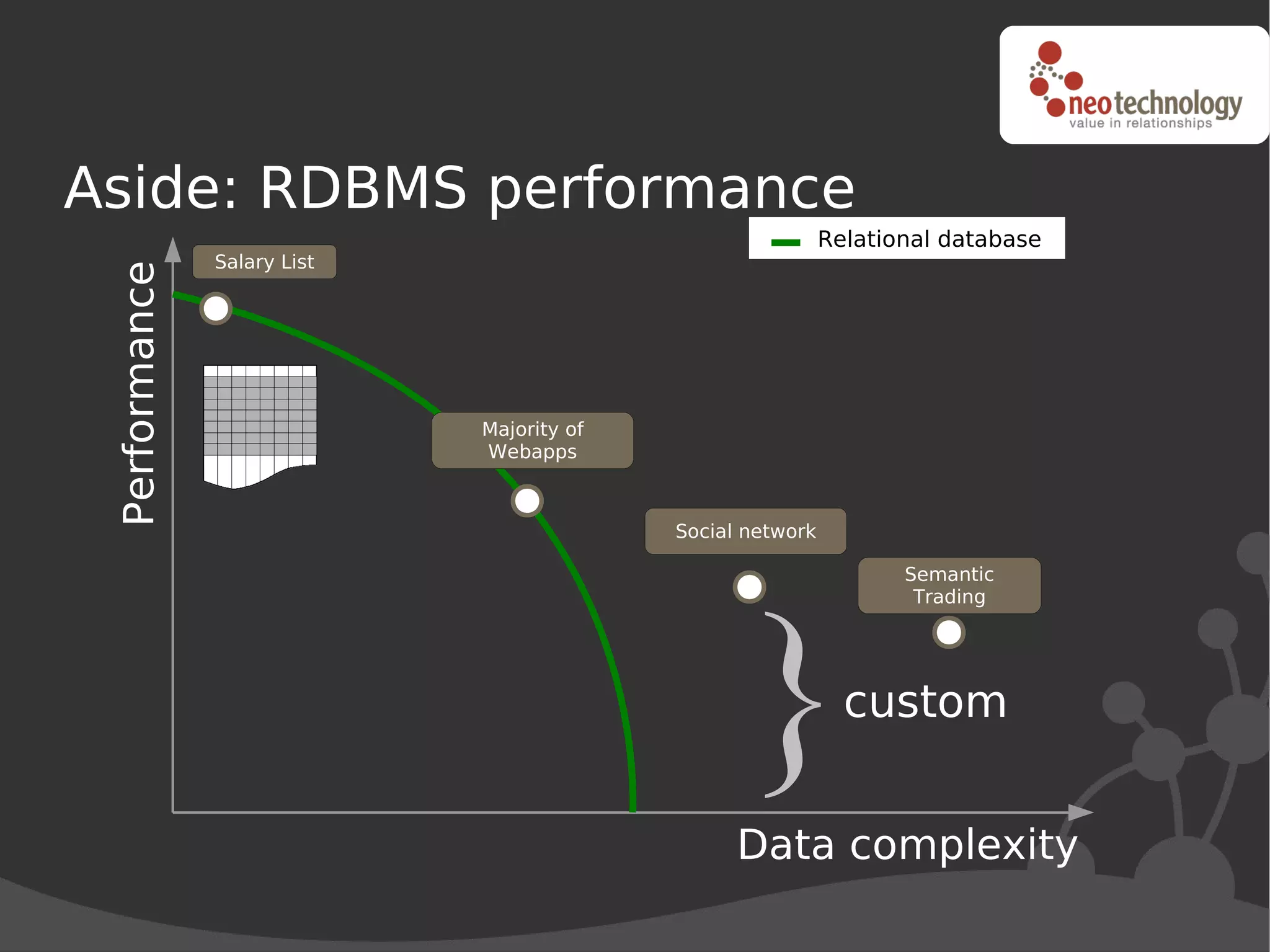
Aside: RDBMS performance
                                                            Relational database
               Salary List
 Performance


                             Majority of
                             Webapps


                                           Social network

                                                                   Semantic


                                                  }
                                                                    Trading


                                                              custom


                                                 Data complexity
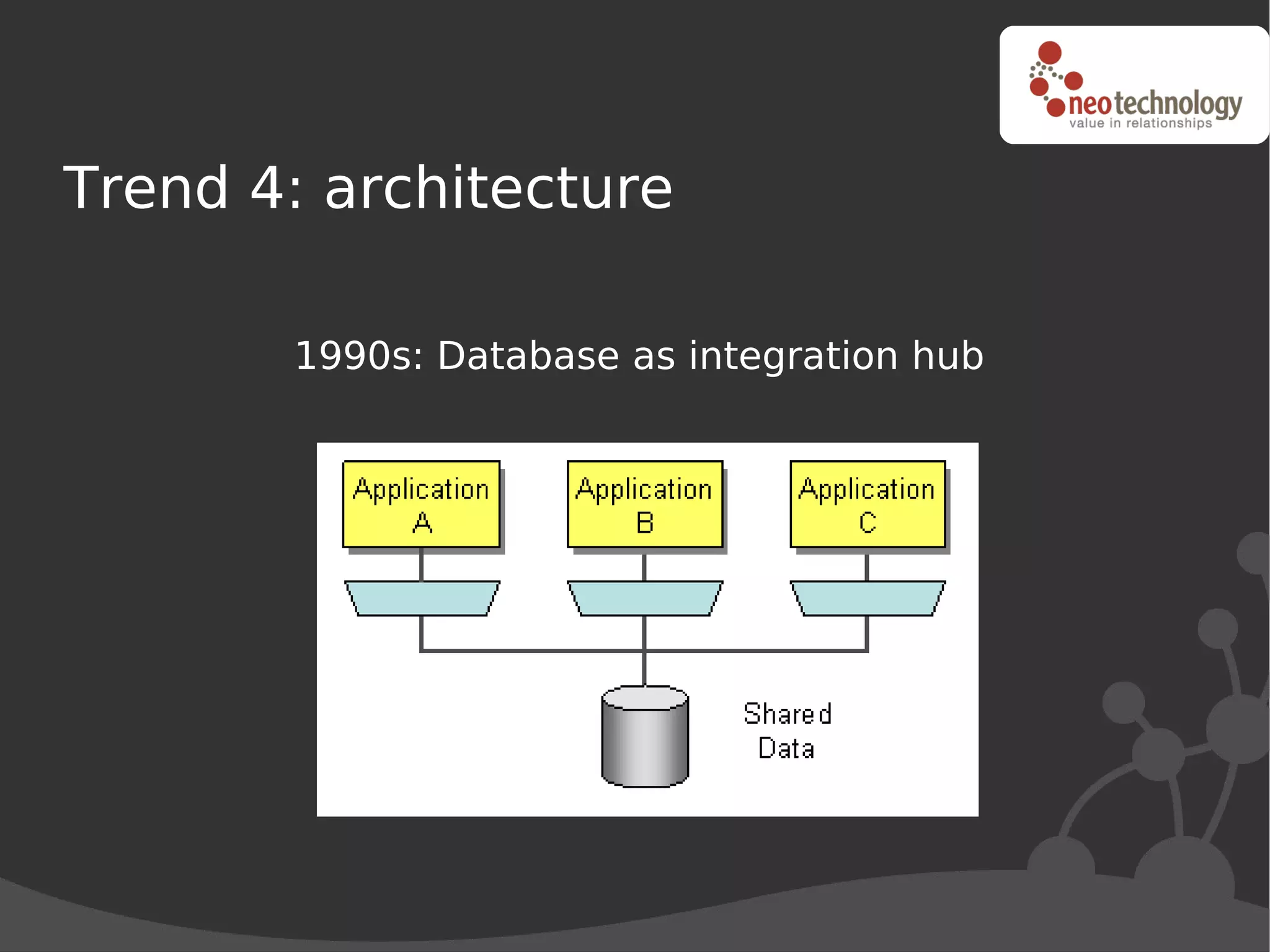
Trend 4: architecture

       1990s: Database as integration hub
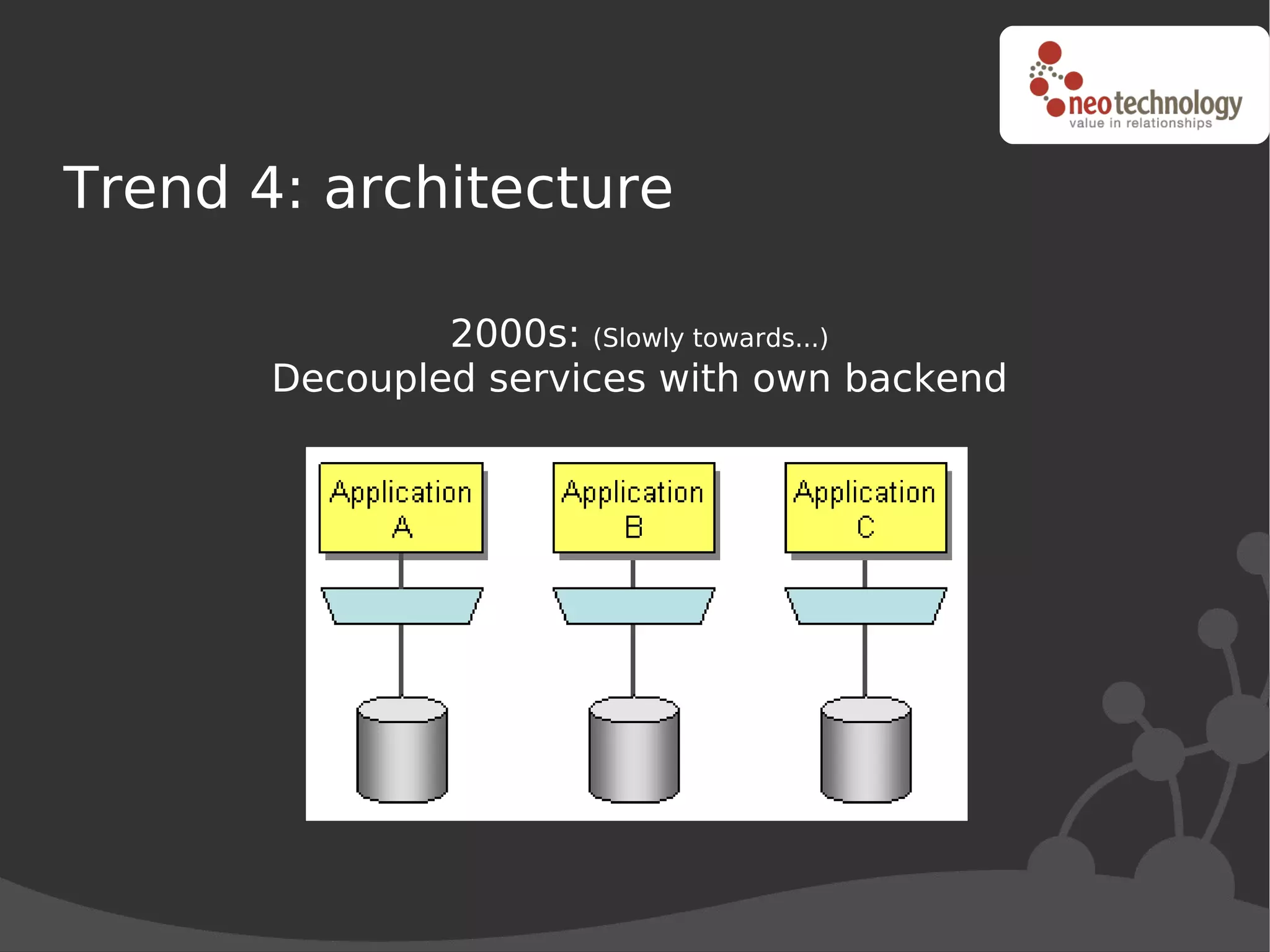
Trend 4: architecture

               2000s: (Slowly towards...)
       Decoupled services with own backend
Why NoSQL 2009?

 Trend 1: Size.

 Trend 2: Connectivity.

 Trend 3: Semi-structure.

 Trend 4: Architecture.
NoSQL
overview
First off: the damn name

 NoSQL is NOT “Never SQL”

 NoSQL is NOT “No To SQL”
NOSQL
    is simply


Not Only SQL!
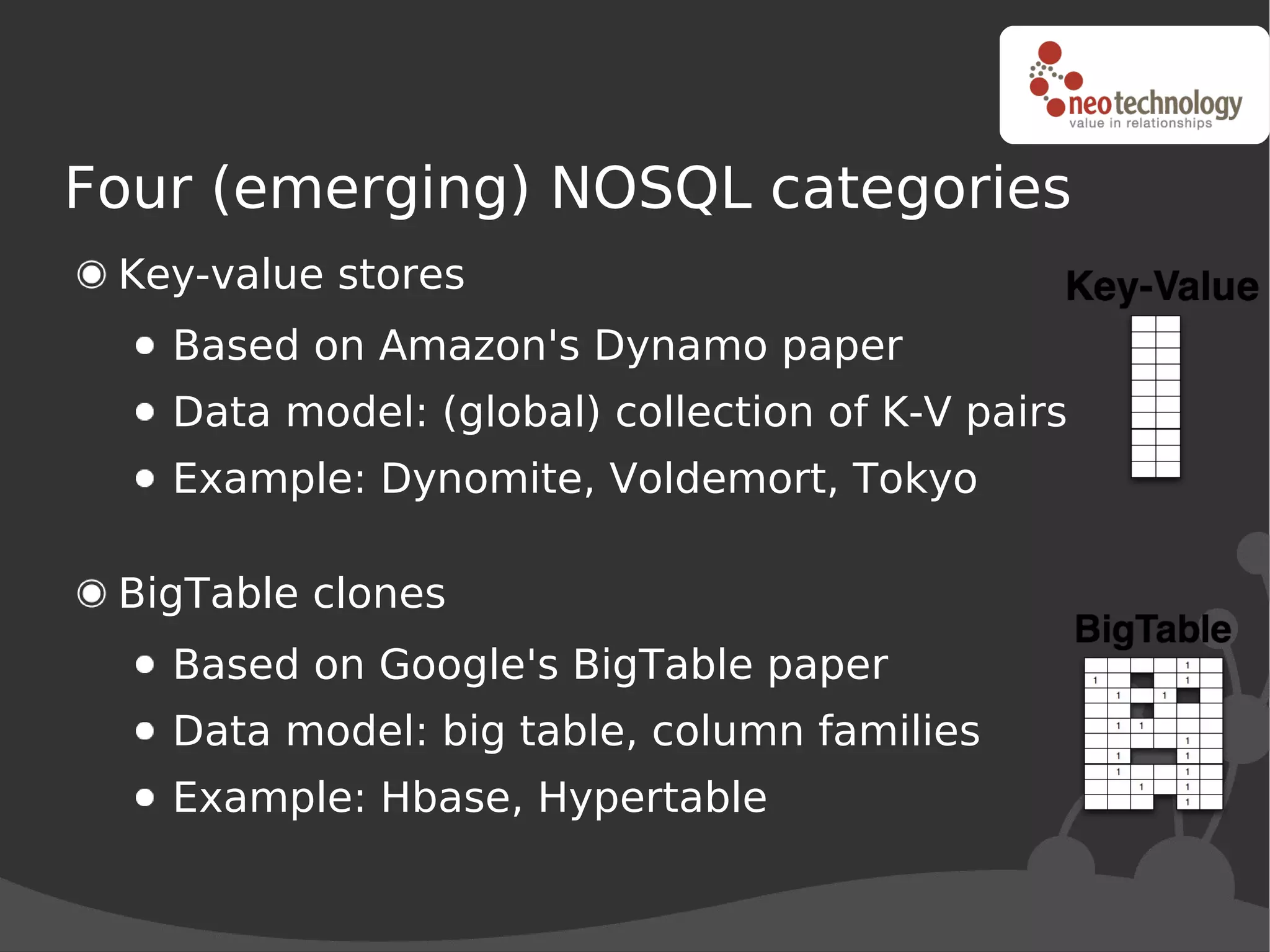
Four (emerging) NOSQL categories
 Key-value stores
   Based on Amazon's Dynamo paper
   Data model: (global) collection of K-V pairs
   Example: Dynomite, Voldemort, Tokyo

 BigTable clones
   Based on Google's BigTable paper
   Data model: big table, column families
   Example: Hbase, Hypertable
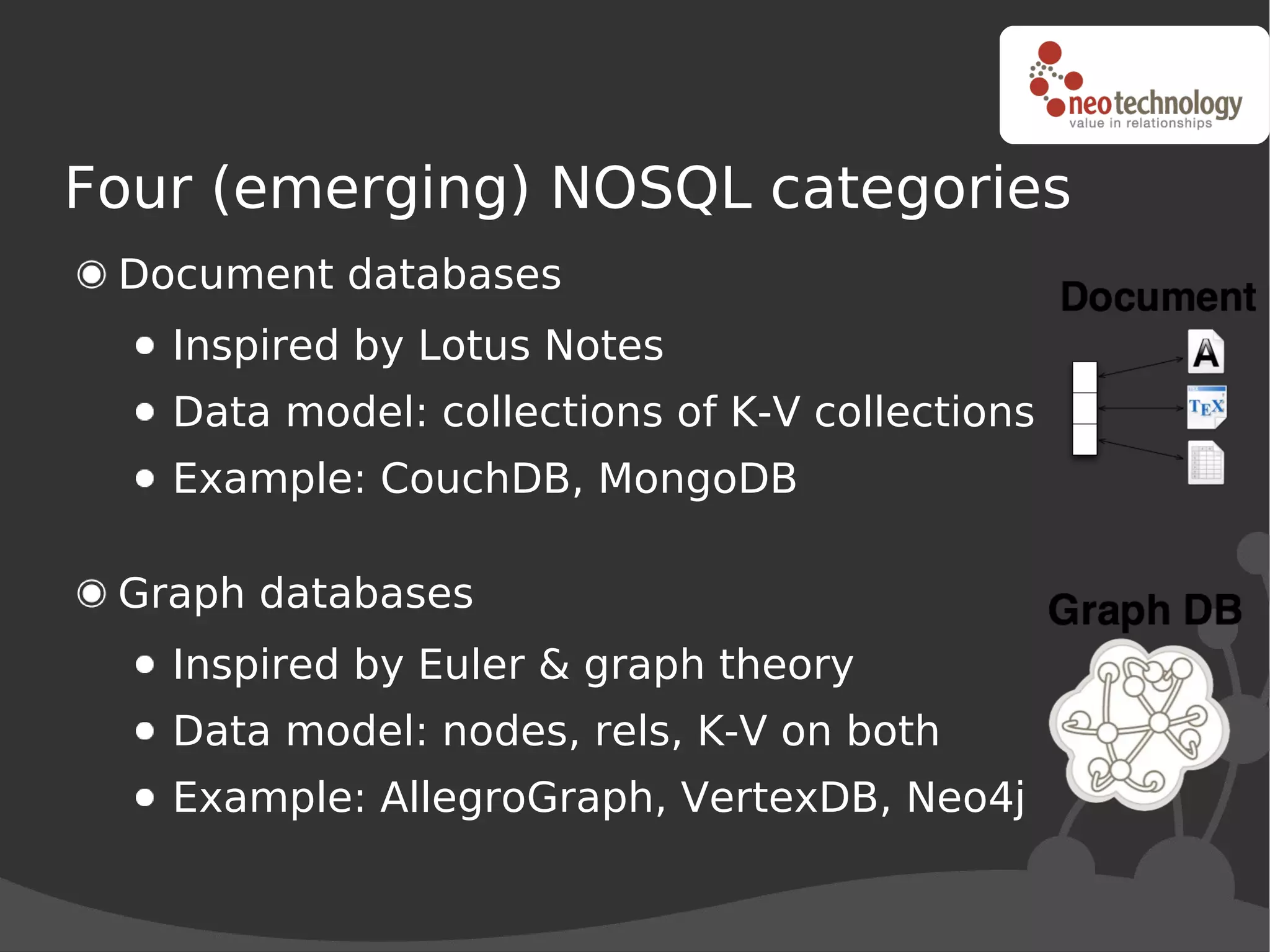
Four (emerging) NOSQL categories
 Document databases
   Inspired by Lotus Notes
   Data model: collections of K-V collections
   Example: CouchDB, MongoDB

 Graph databases
   Inspired by Euler & graph theory
   Data model: nodes, rels, K-V on both
   Example: AllegroGraph, VertexDB, Neo4j
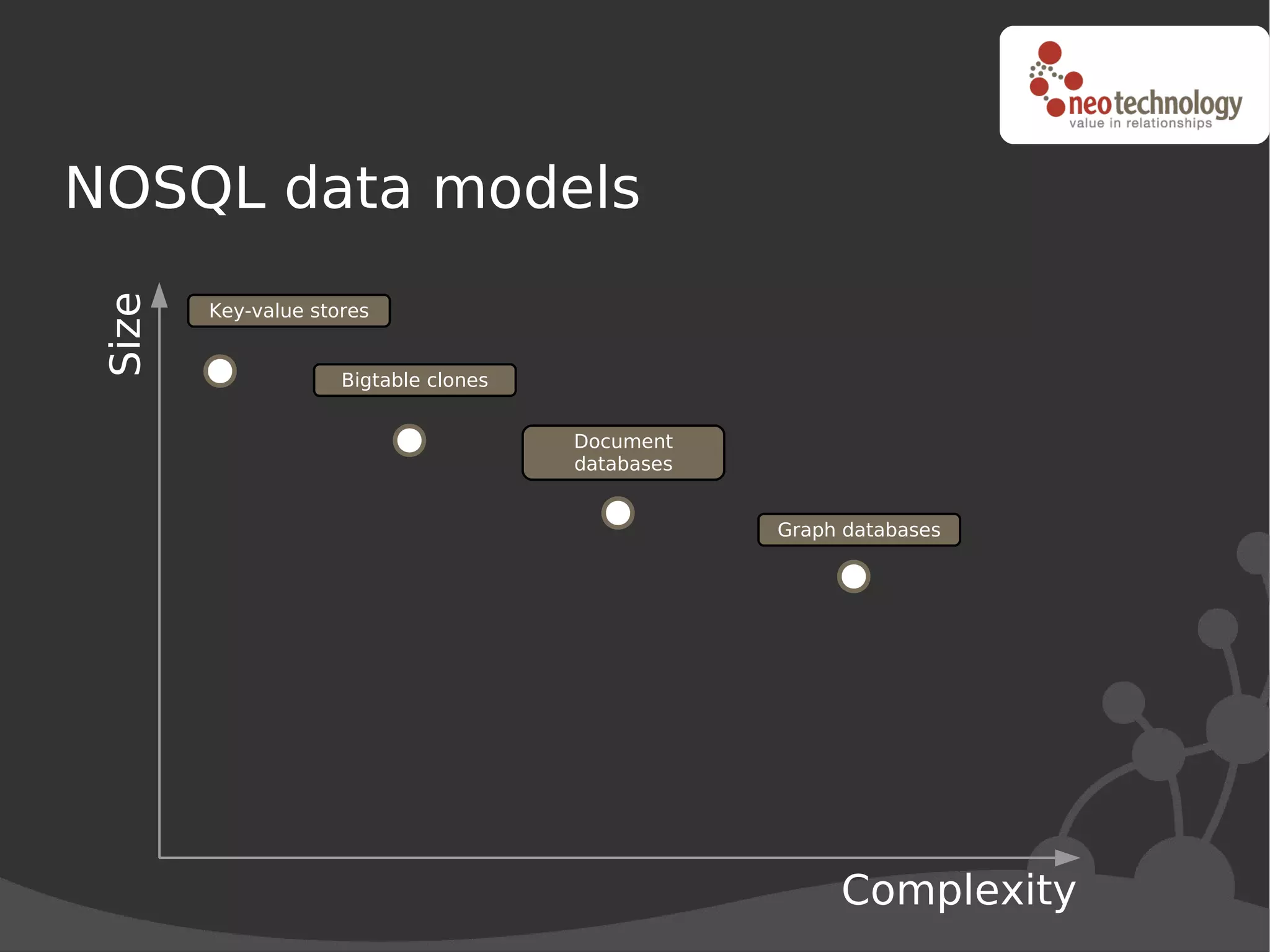
NOSQL data models
 Size


        Key-value stores


                     Bigtable clones


                                       Document
                                       databases


                                                   Graph databases


                                                        Complexity
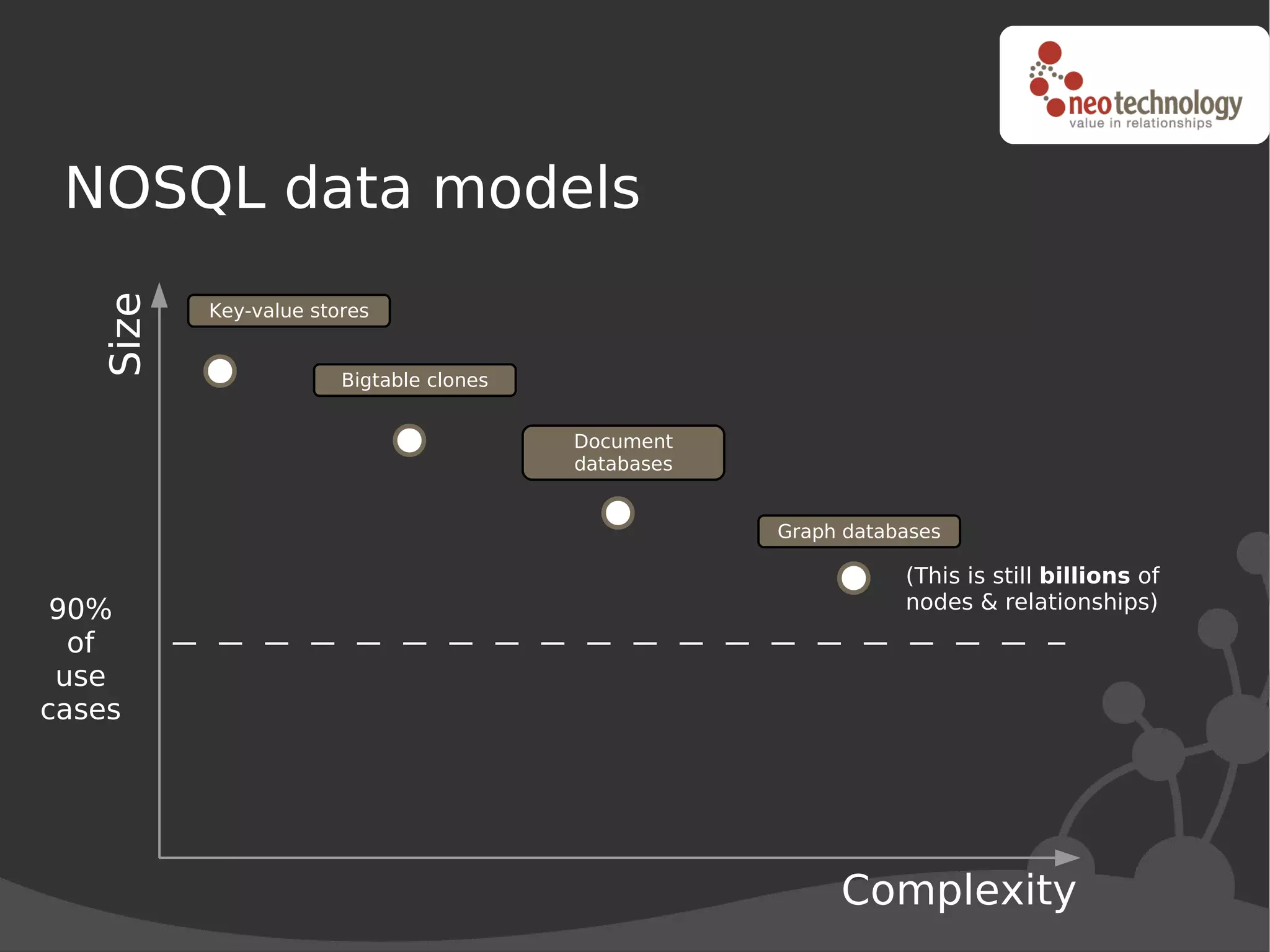
NOSQL data models
   Size


          Key-value stores


                       Bigtable clones


                                         Document
                                         databases


                                                     Graph databases

                                                                (This is still billions of
 90%                                                            nodes & relationships)
  of
 use
cases


                                                          Complexity
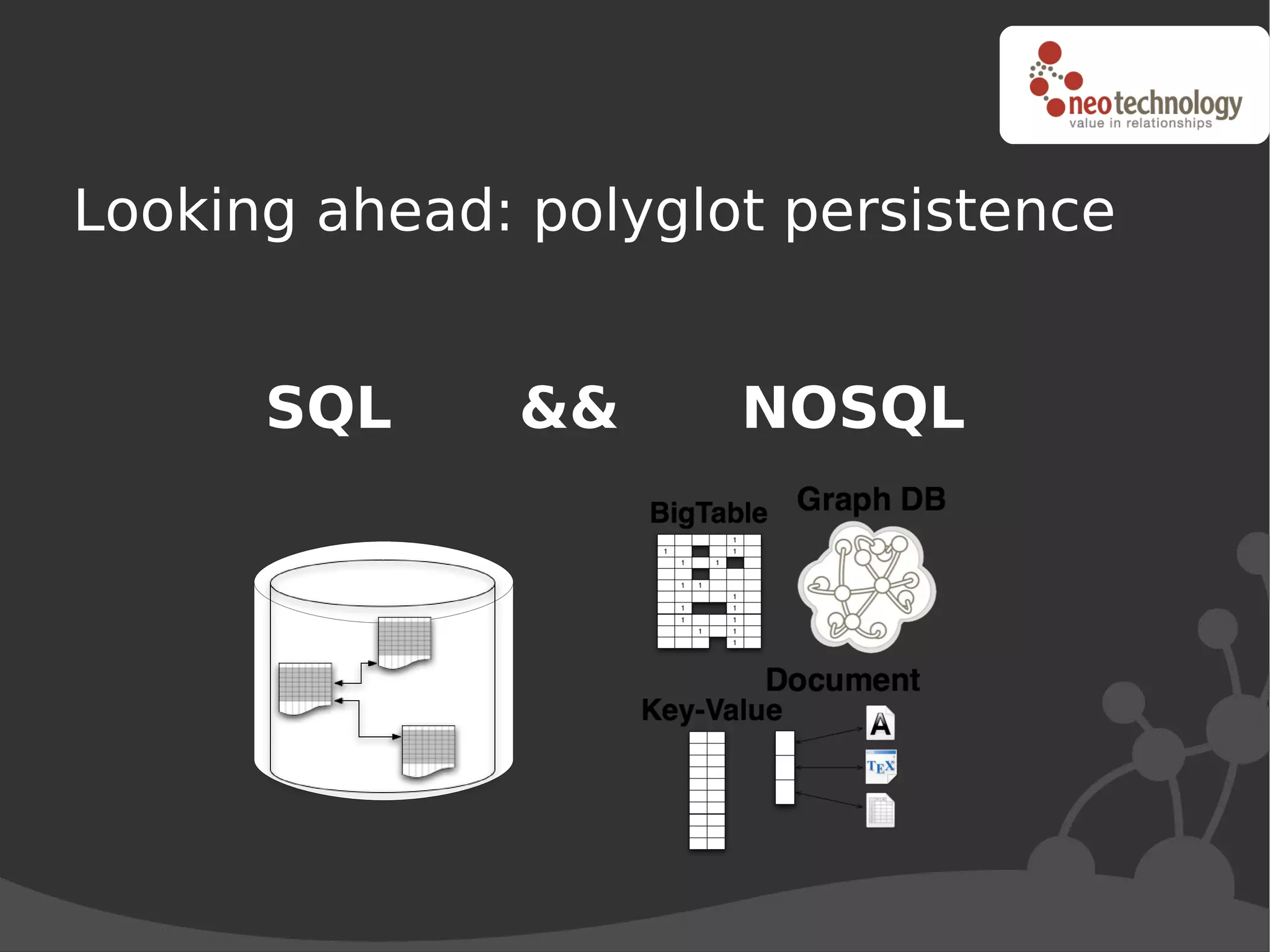
Looking ahead: polyglot persistence


      SQL     &&      NOSQL
http://neotechnology.com

NOSQL Overview Lightning Talk (Scalability Geekcruise 2009)

  • 1.
    NOSQL 15minutes of write performance #neo4j Emil Eifrem @emileifrem CEO, Neo Technology emil@neotechnology.com
  • 2.
    Trend 1: data setsize 40 2007 Source: IDC 2007
  • 3.
    988 Trend 1: data setsize 40 2007 2010 Source: IDC 2007
  • 4.
    Trend 2: connectedness Giant Global Information connectivity Graph (GGG) Ontologies RDF Folksonomies Tagging User- Wikis generated content Blogs RSS Hypertext Text documents web 1.0 web 2.0 “web 3.0” 1990 2000 2010 2020
  • 5.
    Trend 3: semi-structure Individualization of content! In the salary lists of the 1970s, all elements had exactly one job In the salary lists of the 2000s, we need 5 job columns! Or 8? Or 15? Trend accelerated by the decentralization of content generation that is the hallmark of the age of participation (“web 2.0”)
  • 6.
    Aside: RDBMS performance Relational database Salary List Performance Majority of Webapps Social network Semantic } Trading custom Data complexity
  • 7.
    Trend 4: architecture 1990s: Database as integration hub
  • 8.
    Trend 4: architecture 2000s: (Slowly towards...) Decoupled services with own backend
  • 9.
    Why NoSQL 2009? Trend 1: Size. Trend 2: Connectivity. Trend 3: Semi-structure. Trend 4: Architecture.
  • 10.
  • 11.
    First off: thedamn name NoSQL is NOT “Never SQL” NoSQL is NOT “No To SQL”
  • 12.
    NOSQL is simply Not Only SQL!
  • 13.
    Four (emerging) NOSQLcategories Key-value stores Based on Amazon's Dynamo paper Data model: (global) collection of K-V pairs Example: Dynomite, Voldemort, Tokyo BigTable clones Based on Google's BigTable paper Data model: big table, column families Example: Hbase, Hypertable
  • 14.
    Four (emerging) NOSQLcategories Document databases Inspired by Lotus Notes Data model: collections of K-V collections Example: CouchDB, MongoDB Graph databases Inspired by Euler & graph theory Data model: nodes, rels, K-V on both Example: AllegroGraph, VertexDB, Neo4j
  • 15.
    NOSQL data models Size Key-value stores Bigtable clones Document databases Graph databases Complexity
  • 16.
    NOSQL data models Size Key-value stores Bigtable clones Document databases Graph databases (This is still billions of 90% nodes & relationships) of use cases Complexity
  • 17.
    Looking ahead: polyglotpersistence SQL && NOSQL
  • 18.