Noscitur a sociis (NAS)
• Know from association
• A word will be interpreted in the context of
surrounding words.
• A word is known by the company it keeps. The
meaning of a word or phrase is to be derived from
its context.
• A word or phrase can be read on its own as it
stands. However, the maxim noscitur a
sociis(something is known by its associates)
proposes another possible meaning. Words
and phrases next to and near the word or
phrase in question might indicate a meaning
that is not apparent when the word or phrase
is viewed on its own.
• In the obvious case the neighbouring words
create an alternative meaning by suggesting
that words in question should receive a
restricted scope.
Muir v Keay(1874-75) L.R. 10 Q.B. 594
A particular provision of law says:
“all houses, rooms, shops, or buildings, kept open for public
refreshment, resort, and entertainment,” during certain hours
of the night, are to be deemed refreshment houses and
require a licence.
Facts:
The Appellant's house was called The Café; it was found
open during the night, and seventeen females and twenty
gentlemen were there, and were supplied with cigars,
coffee, and ginger beer, which they consumed.
• On the part of the appellant it was contended,
that the premises were not open for any
public entertainment in addition to the sale of
refreshments, such entertainment being
intended to comprise a musical or other public
performance; and therefore the appellant had
not committed the offence charged.
• Blackburn, J. Opinion
I do not think that entertainment need be something
in the nature of refreshment. It is rather the
correlative of resort—the reception and
accommodation of the public who resort to the
place
• Lush, J.
I think entertainment is something connected with
the enjoyment of refreshment-rooms, tables, and the
like. It is something beyond refreshment; it is the
accommodation provided, whether that includes a
musical or other amusement or not.
• The court held that “entertainment” did not
mean musical entertainment but the
reception and accommodation of people, so
the defendant was guilty.
Inland Revenue Commissioners v
Frere (1964)
Inland Revenue Commissioners v Frere (1964)
• The issue was the correct meaning of the
word 'interest'.
• The words of the sections as a whole were
looked at which read 'interest, annuities or
other annual interest'.
• The court decided that the word 'interest' on
its own could have meant any interest paid
whether daily, monthly or annually but
because of the presence of the words 'other
annual interest' in the same section they were
clearly of the view that 'interest' meant only
annual interest.
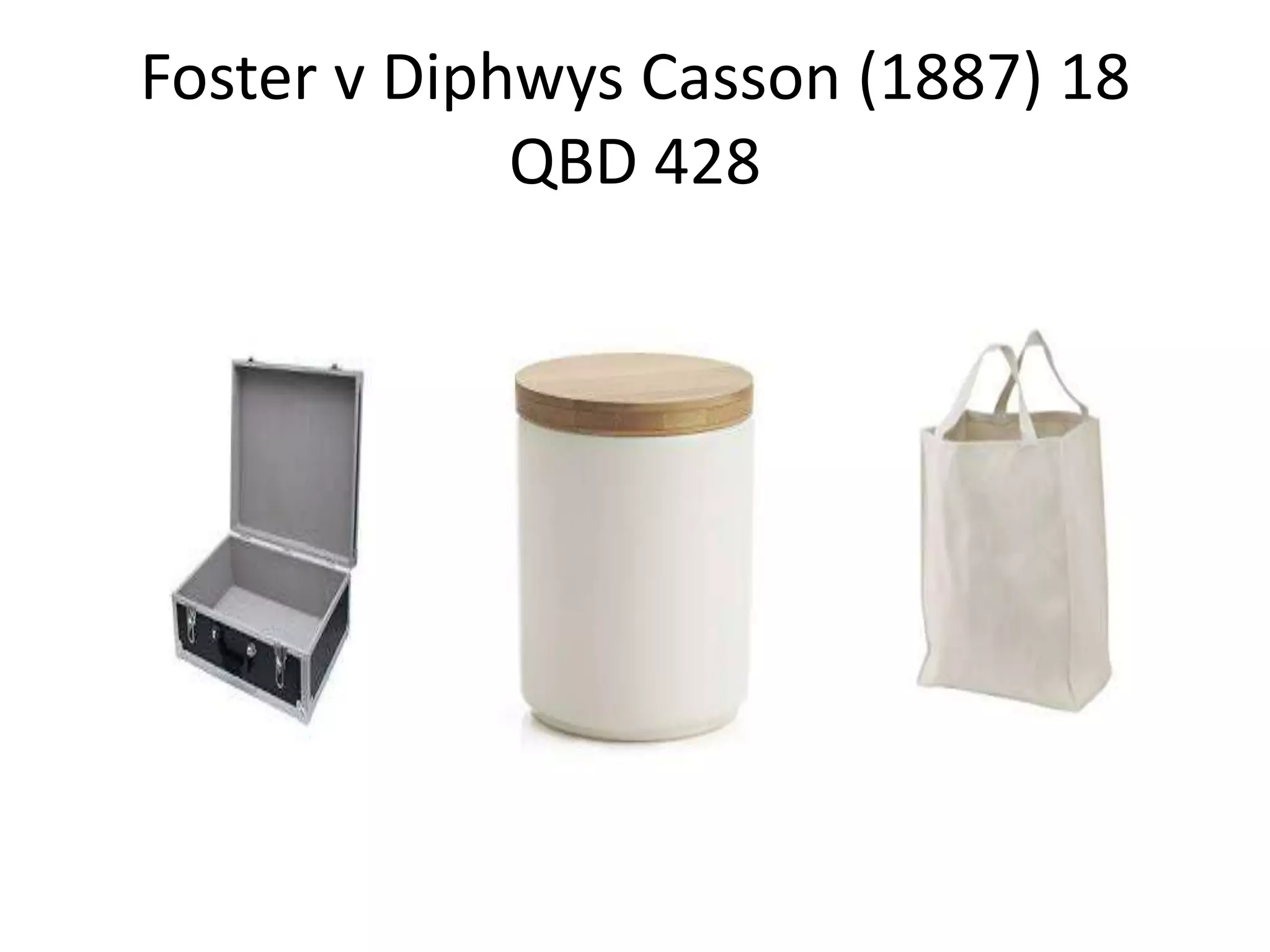
Foster v Diphwys Casson (1887) 18
QBD 428
• A statute which stated that explosives taken
into a mine must be in a “case or canister”.
• The defendant used a cloth bag.
• The courts had to consider whether a cloth
bag was within the definition.
Held
• Under noscitur a sociis, it was held that the
bag could not have been within the statutory
definition, because parliament’s intention was
referring to a case or container of the same
strength as a canister.
Pardeep Aggarbatti, Ludhiana vs State
Of Punjab (AIR 1998 SC 171)
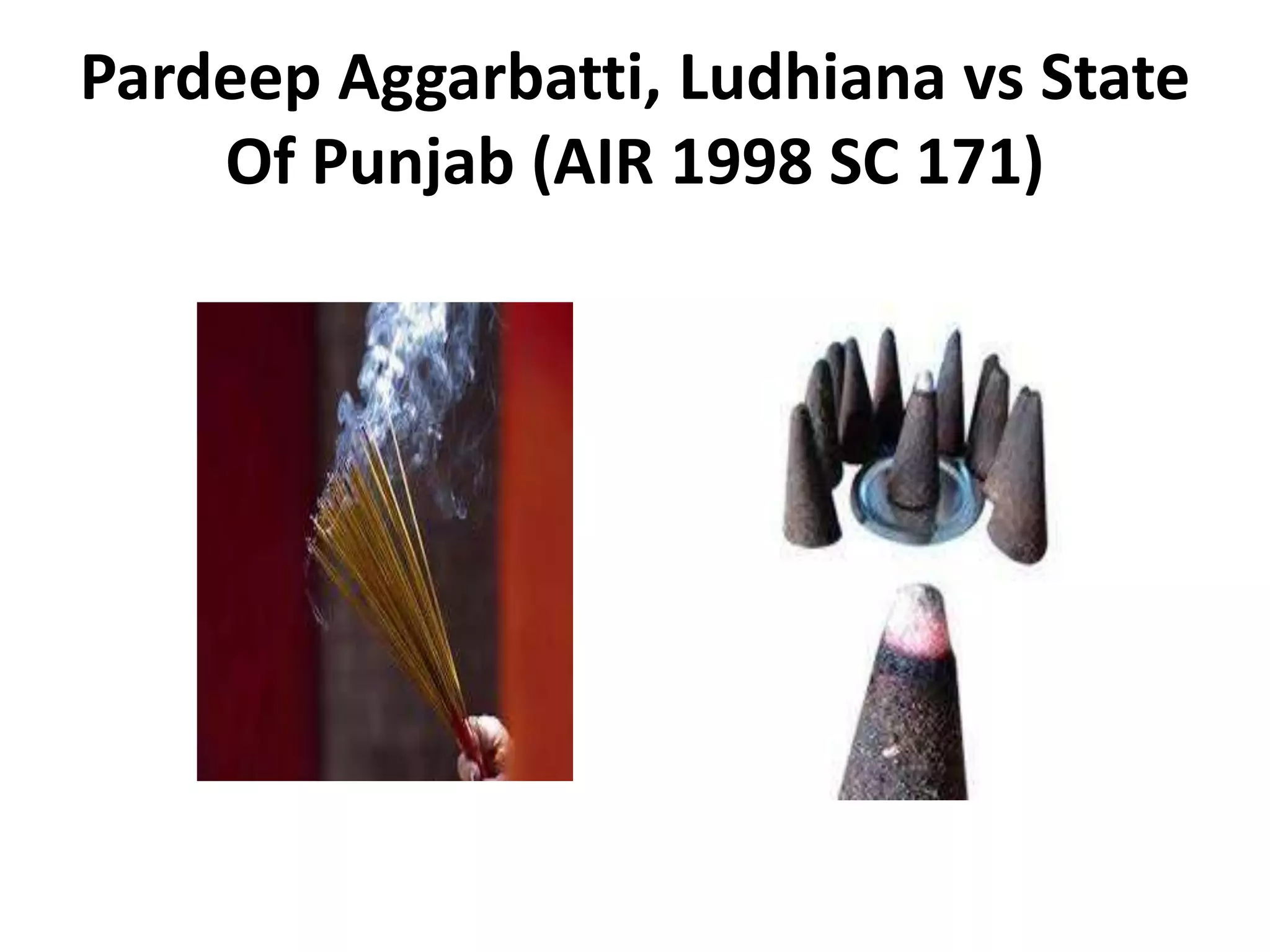
• The appellant is a registered dealer in 'dhoop'
and 'aggarbatti‘.
• The appellant was sought to be made liable to
pay sales tax at the rate of 10 paisa in a rupee,
as was leviable upon items falling under the
Entry No.16 of Punjab General Sales Tax Act,
1948.
• Entry No.16 read thus;
"Cosmetics, perfumery and toilet goods,
excluding tooth-paste, tooth-power, kum-
kum and soap,"
• The question was whether "dhoop" or
"dhoopbatti" fell within the description of
"perfume" thereunder.
• It was held that perfumery means such
articles as used in cosmetics and toilet goods
viz, sprays, etc but does not include ‘Dhoop’
and ‘Agarbatti’ .
Noscitor a sociis

Noscitor a sociis

  • 1.
  • 2.
    Noscitur a sociis(NAS) • Know from association • A word will be interpreted in the context of surrounding words. • A word is known by the company it keeps. The meaning of a word or phrase is to be derived from its context.
  • 3.
    • A wordor phrase can be read on its own as it stands. However, the maxim noscitur a sociis(something is known by its associates) proposes another possible meaning. Words and phrases next to and near the word or phrase in question might indicate a meaning that is not apparent when the word or phrase is viewed on its own. • In the obvious case the neighbouring words create an alternative meaning by suggesting that words in question should receive a restricted scope.
  • 4.
    Muir v Keay(1874-75)L.R. 10 Q.B. 594
  • 5.
    A particular provisionof law says: “all houses, rooms, shops, or buildings, kept open for public refreshment, resort, and entertainment,” during certain hours of the night, are to be deemed refreshment houses and require a licence. Facts: The Appellant's house was called The Café; it was found open during the night, and seventeen females and twenty gentlemen were there, and were supplied with cigars, coffee, and ginger beer, which they consumed.
  • 6.
    • On thepart of the appellant it was contended, that the premises were not open for any public entertainment in addition to the sale of refreshments, such entertainment being intended to comprise a musical or other public performance; and therefore the appellant had not committed the offence charged.
  • 7.
    • Blackburn, J.Opinion I do not think that entertainment need be something in the nature of refreshment. It is rather the correlative of resort—the reception and accommodation of the public who resort to the place • Lush, J. I think entertainment is something connected with the enjoyment of refreshment-rooms, tables, and the like. It is something beyond refreshment; it is the accommodation provided, whether that includes a musical or other amusement or not.
  • 8.
    • The courtheld that “entertainment” did not mean musical entertainment but the reception and accommodation of people, so the defendant was guilty.
  • 9.
  • 10.
    Inland Revenue Commissionersv Frere (1964) • The issue was the correct meaning of the word 'interest'. • The words of the sections as a whole were looked at which read 'interest, annuities or other annual interest'.
  • 11.
    • The courtdecided that the word 'interest' on its own could have meant any interest paid whether daily, monthly or annually but because of the presence of the words 'other annual interest' in the same section they were clearly of the view that 'interest' meant only annual interest.
  • 12.
    Foster v DiphwysCasson (1887) 18 QBD 428
  • 13.
    • A statutewhich stated that explosives taken into a mine must be in a “case or canister”. • The defendant used a cloth bag. • The courts had to consider whether a cloth bag was within the definition.
  • 14.
    Held • Under noscitura sociis, it was held that the bag could not have been within the statutory definition, because parliament’s intention was referring to a case or container of the same strength as a canister.
  • 15.
    Pardeep Aggarbatti, Ludhianavs State Of Punjab (AIR 1998 SC 171)
  • 16.
    • The appellantis a registered dealer in 'dhoop' and 'aggarbatti‘. • The appellant was sought to be made liable to pay sales tax at the rate of 10 paisa in a rupee, as was leviable upon items falling under the Entry No.16 of Punjab General Sales Tax Act, 1948. • Entry No.16 read thus; "Cosmetics, perfumery and toilet goods, excluding tooth-paste, tooth-power, kum- kum and soap,"
  • 17.
    • The questionwas whether "dhoop" or "dhoopbatti" fell within the description of "perfume" thereunder.
  • 18.
    • It washeld that perfumery means such articles as used in cosmetics and toilet goods viz, sprays, etc but does not include ‘Dhoop’ and ‘Agarbatti’ .