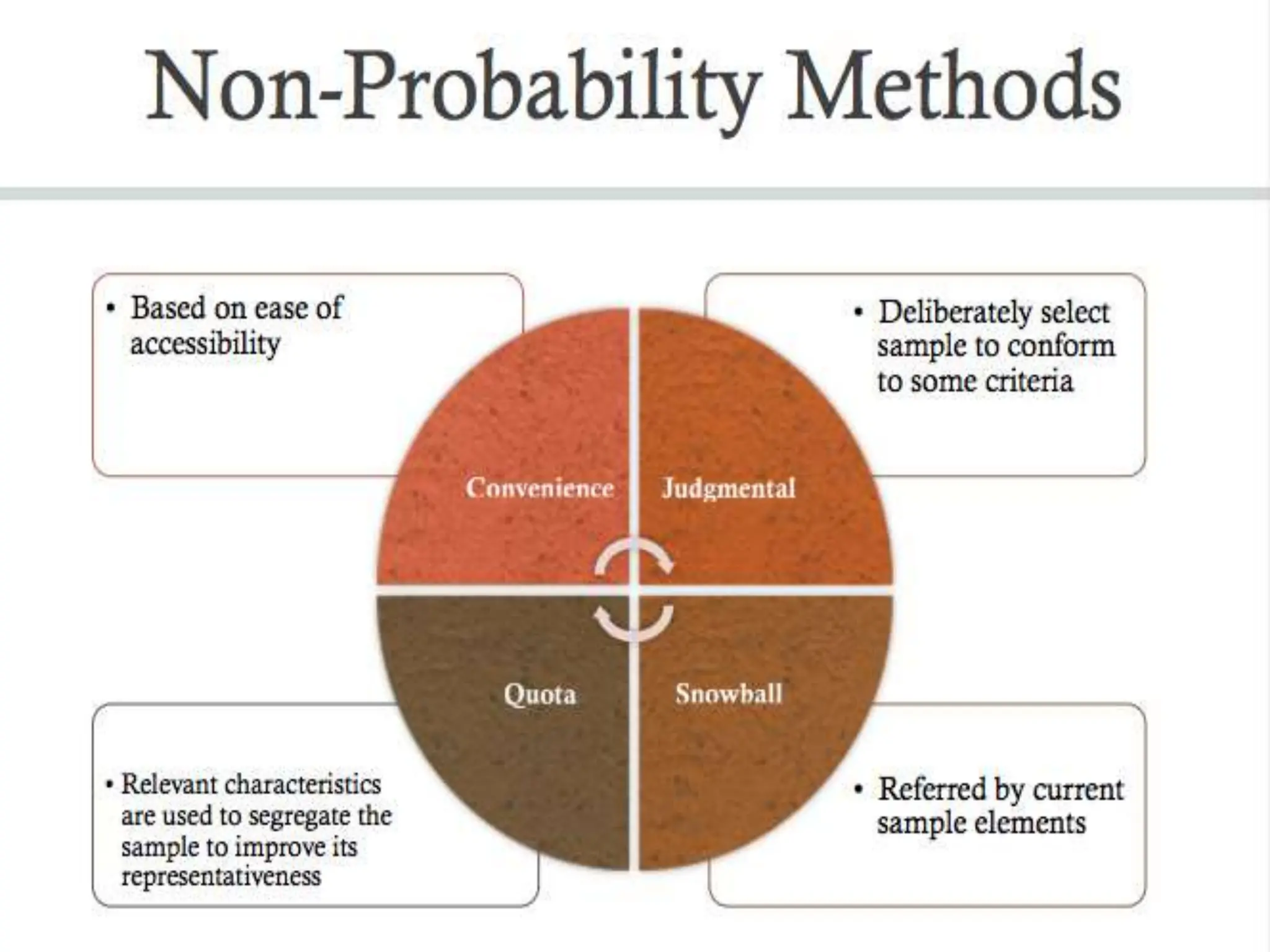
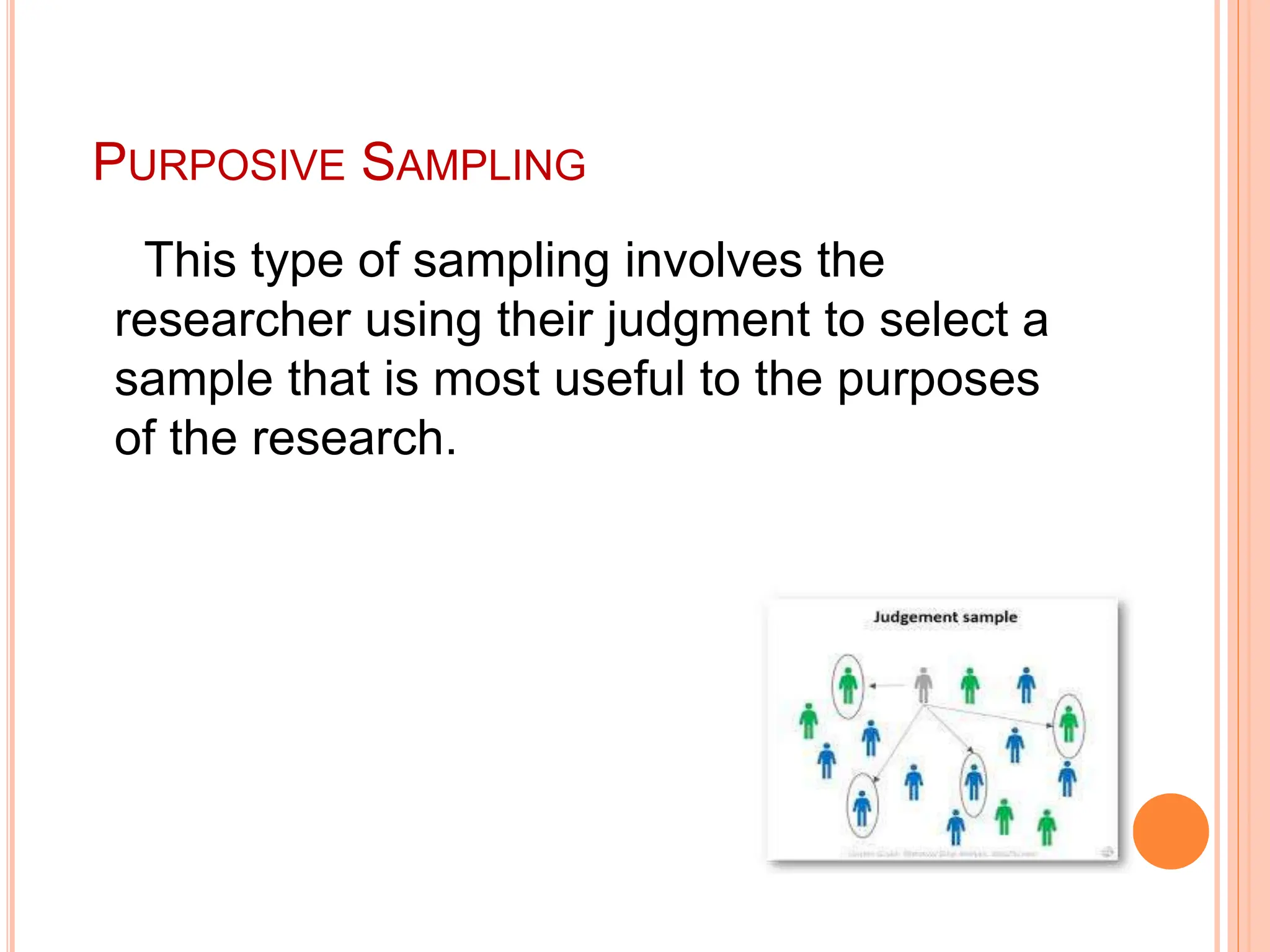
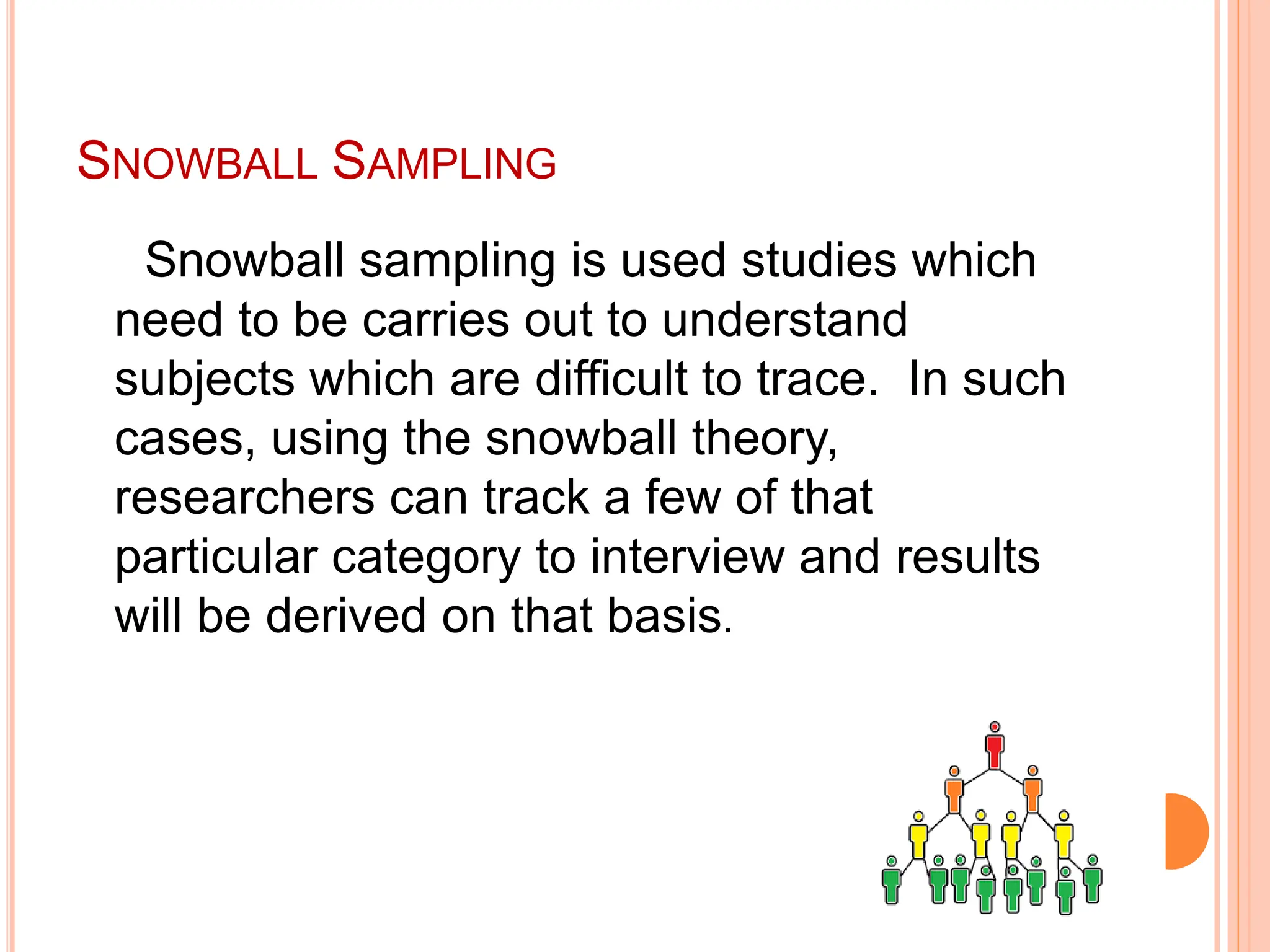
This document discusses different types of non-probability sampling methods. It defines non-probability sampling as selecting individuals for a study based on non-random criteria, where not every individual has an equal chance of being included. The document describes four main types of non-probability sampling: convenience sampling, which uses available participants; purposive sampling, where the researcher selects a sample most useful for the study; quota sampling, which uses predefined standards to select a representative sample; and snowball sampling, which finds additional subjects through the contacts of initial subjects when the population is hard to locate.