OJO-GBENGA AYOBAMI
ELIZABETH
WHAT ARE NON-
WHAT ARE NON-
COMMUNICABLE
COMMUNICABLE
DISEASES
Non-communicable diseases (NCDs) are medical conditions or diseases that
are not caused by infectious agents or pathogens and are not transmissible
from one person to another. They are also referred to as chronic diseases, as
they tend to develop slowly over time and are long-lasting.
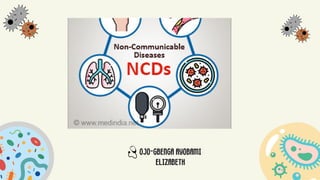
Cardiovascular diseases:
Cancer:
Chronic respiratory diseases:
WE WILL DISCUSS 3 EXAMPLES OF NON COMMUNICABLE DISEASE BASED ON THE SYPTOMS, RISK FACTORS AND
COMPLICATIONS
Some examples of non-communicable diseases include:
These are diseases of the heart and blood vessels, such as coronary heart disease, stroke, and hypertension.
This is a disease caused by uncontrolled growth and division of abnormal cells, which can occur in any part of the body.
These include diseases such as chronic obstructive pulmonary disease (COPD), asthma, and lung cancer
Other examples of non-communicable diseases include Diabetes, Neurological and mental disease, kidney disease,
liver disease, and autoimmune disorders. Non-communicable diseases are often preventable and can be managed
through lifestyle changes, early detection, and treatment.
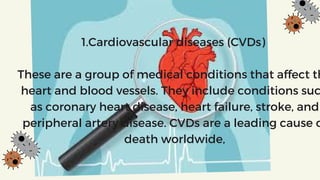
1.Cardiovascular diseases (CVDs)
These are a group of medical conditions that affect th
heart and blood vessels. They include conditions suc
as coronary heart disease, heart failure, stroke, and
peripheral artery disease. CVDs are a leading cause o
death worldwide,
S
I
G
N
S
A
N
D
S
Y
P
T
O
M
S
O
F
C
V
D
HIgh blood pressure
High cholesterol
Smoking
Obesity
Diabetes
Physical inactivity
Family history
Age
Stress
Poor diet
COMPLICATIONS
Chest pain or discomfort
Shortness of breath:
Palpitations
Fatigue
Dizziness or lightheadedness
Swelling in the legs or
ankles
Nausea or vomiting
Heart attack
Stroke
Heart failure
Arrhythmias:
Peripheral artery disease
Aortic aneurysm
Sudden cardiac arrest
Cardiovascular diseases (CVDs)
2. CANCER
Cancer is a disease caused by the uncontrolled growth and spread of
abnormal cells in the body. These abnormal cells can form a mass of
tissue called a tumor, which can invade nearby tissues and organs, and
can also spread to other parts of the body through the bloodstream or
lymphatic system.
There are many different types of cancer, including lung cancer,
breast cancer, colon cancer, and many others
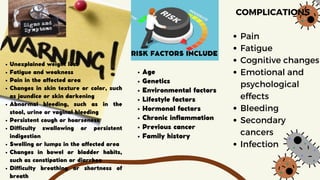
Unexplained weight loss
Fatigue and weakness
Pain in the affected area
Changes in skin texture or color, such
as jaundice or skin darkening
Abnormal bleeding, such as in the
stool, urine or vaginal bleeding
Persistent cough or hoarseness
Difficulty swallowing or persistent
indigestion
Swelling or lumps in the affected area
Changes in bowel or bladder habits,
such as constipation or diarrhea
Difficulty breathing or shortness of
breath
Age
Genetics
Environmental factors
Lifestyle factors
Hormonal factors
Chronic inflammation
Previous cancer
Family history
RISK FACTORS INCLUDE
Pain
Fatigue
Cognitive changes
Emotional and
psychological
effects
Bleeding
Secondary
cancers
Infection
COMPLICATIONS
chronic obstructive pulmonary disease (COPD), is a progressive lung
disease that makes it difficult to breathe. COPD is a term that encompasses
several lung diseases, including chronic bronchitis and emphysema.
The main characteristic of COPD is obstruction of airflow from the lungs,
making it difficult to breathe air in and out. This obstruction is usually
caused by long-term exposure to irritants such as tobacco smoke, air
pollution, and other harmful particles.
coughing
wheezing
shortness of breath,
and tightness in the
chest.
Symptoms of COPD
Over time, the
symptoms can worsen
and become more
persistent, affecting daily
activities and quality of
life.
Smoking
Environmental exposure
Genetics
Respiratory infections
Asthma
Aging
Respiratory
infections
Respiratory failure
Pulmonary
hypertension
Depression and
anxiety
NON COMMUNICABLE DISEASES.pdf

NON COMMUNICABLE DISEASES.pdf

  • 1.
  • 2.
    WHAT ARE NON- WHATARE NON- COMMUNICABLE COMMUNICABLE DISEASES Non-communicable diseases (NCDs) are medical conditions or diseases that are not caused by infectious agents or pathogens and are not transmissible from one person to another. They are also referred to as chronic diseases, as they tend to develop slowly over time and are long-lasting.
  • 3.
    Cardiovascular diseases: Cancer: Chronic respiratorydiseases: WE WILL DISCUSS 3 EXAMPLES OF NON COMMUNICABLE DISEASE BASED ON THE SYPTOMS, RISK FACTORS AND COMPLICATIONS Some examples of non-communicable diseases include: These are diseases of the heart and blood vessels, such as coronary heart disease, stroke, and hypertension. This is a disease caused by uncontrolled growth and division of abnormal cells, which can occur in any part of the body. These include diseases such as chronic obstructive pulmonary disease (COPD), asthma, and lung cancer Other examples of non-communicable diseases include Diabetes, Neurological and mental disease, kidney disease, liver disease, and autoimmune disorders. Non-communicable diseases are often preventable and can be managed through lifestyle changes, early detection, and treatment.
  • 4.
    1.Cardiovascular diseases (CVDs) Theseare a group of medical conditions that affect th heart and blood vessels. They include conditions suc as coronary heart disease, heart failure, stroke, and peripheral artery disease. CVDs are a leading cause o death worldwide,
  • 5.
    S I G N S A N D S Y P T O M S O F C V D HIgh blood pressure Highcholesterol Smoking Obesity Diabetes Physical inactivity Family history Age Stress Poor diet COMPLICATIONS Chest pain or discomfort Shortness of breath: Palpitations Fatigue Dizziness or lightheadedness Swelling in the legs or ankles Nausea or vomiting Heart attack Stroke Heart failure Arrhythmias: Peripheral artery disease Aortic aneurysm Sudden cardiac arrest Cardiovascular diseases (CVDs)
  • 6.
    2. CANCER Cancer isa disease caused by the uncontrolled growth and spread of abnormal cells in the body. These abnormal cells can form a mass of tissue called a tumor, which can invade nearby tissues and organs, and can also spread to other parts of the body through the bloodstream or lymphatic system. There are many different types of cancer, including lung cancer, breast cancer, colon cancer, and many others
  • 7.
    Unexplained weight loss Fatigueand weakness Pain in the affected area Changes in skin texture or color, such as jaundice or skin darkening Abnormal bleeding, such as in the stool, urine or vaginal bleeding Persistent cough or hoarseness Difficulty swallowing or persistent indigestion Swelling or lumps in the affected area Changes in bowel or bladder habits, such as constipation or diarrhea Difficulty breathing or shortness of breath Age Genetics Environmental factors Lifestyle factors Hormonal factors Chronic inflammation Previous cancer Family history RISK FACTORS INCLUDE Pain Fatigue Cognitive changes Emotional and psychological effects Bleeding Secondary cancers Infection COMPLICATIONS
  • 8.
    chronic obstructive pulmonarydisease (COPD), is a progressive lung disease that makes it difficult to breathe. COPD is a term that encompasses several lung diseases, including chronic bronchitis and emphysema. The main characteristic of COPD is obstruction of airflow from the lungs, making it difficult to breathe air in and out. This obstruction is usually caused by long-term exposure to irritants such as tobacco smoke, air pollution, and other harmful particles.
  • 9.
    coughing wheezing shortness of breath, andtightness in the chest. Symptoms of COPD Over time, the symptoms can worsen and become more persistent, affecting daily activities and quality of life. Smoking Environmental exposure Genetics Respiratory infections Asthma Aging Respiratory infections Respiratory failure Pulmonary hypertension Depression and anxiety