NOCTURNAL ENURESIS
SAYED M ELEWEEDY
PROF.OF UROLOGY
UROLOGY DEPARTMENT
AL-AZHAR UNIVERSITY
CAIRO, EGYPT
INTRODUCTION
Involuntary Passage Of Urine During Sleep After The Age At
Which Bladder Control Would Normally Be Anticipated
Most Common Voiding Abnormality In Children
Widespread And Potentially Disabling Disorder For
Children
HISTORICAL OVERVIEW
N E Has Plagued Humans For Centuries
It Has Been Recognized As A Problem Since The Time Of
Papyrus Ebers, Dated 1550 B.C.
Glicklich (1951), Outlined The Treatment Of Enuresis
Over Time And Described The primitive Methods Used
And The Ultimate uselessness Of These Treatments
Some Of These Early Treatment Modalities Include Using
Various Potions From Animals, Organs, Or Plants
HISTORICAL OVERVIEW
Example Of Used Remedies
– Placing a hen in slightly warm water and giving it to
the child to drink
– Putting testicles of a wild rabbit into a glass of wine
and the child drink it
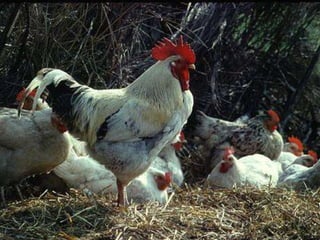
– Others tried drying the comb of a cock and scattering
it over the enuretic's bed
– In the mid-1800s, another treatment was to induce
blisters on the child's sacrum
HISTORICAL OVERVIEW
Example Of Used Remedies
– In 1927, Friedell described using psychic treatment
Restricting fluids and injecting sterile water
Along with positive reassurance that this treatment will work
– His findings demonstrated an 87% success rate and
those children who did not respond were found to
have low urine specific gravity at night
– This monitoring of urine concentration holds
significant merit in regards to common treatment
modalities used today
Normal Development Of Continence
During infancy
– The infant voids through a reflex mechanism
Between 1 and 2 years
– Gradual enlargement of the bladder capacity
– Neural maturation of the frontal and parietal lobes
– This is the time that conscious sensation of bladder fullness develops
During the 2nd and 3rd years of life
– The child is able to void or inhibit voiding voluntarily
By the ages of 4 and 5 years
– Maturation of the bladder should be complete, allowing the child to have an
adult pattern of urinary control
Epidemiology
At age 5, approximately 20% of children have NE episode
at least monthly
The incidence decreases to 10% by age 6 years
15% of these children subsequently attaining nighttime
control each year
By age 15, only 1% to 2% of adolescents remain enuretic
The male to female ratio for NE is three to two
CLASSIFICATIONS
Types
1. Primary
Bed-wetting since birth without any significant periods of dryness (90%)
2. Secondary
Onset of bed-wetting after the child has been dry for at least 6 months
-------------------------
1. Monosymptomaic
N E with normal daytime urination
2. Polysymptomatic
N E with urinary frequency, urgency or other signs of bladder instability
Monosymptomatic NE represents less than half of all bed wetting children
‫حميم‬ ‫صديق‬ ‫لديك‬ ‫يكون‬ ‫ان‬ ‫الحياة‬ ‫متع‬ ‫اعظم‬ ‫من‬
ETIOLOGICAL FACTORS
Multifactorial
Controversial
Genetic Factors
Greater incidence in children whose parents were enuretic
If both parents were bed-wetters, their children have a 77% chance of
having NE
If only one parent had been enuretic, the incidence drops to 44%
Recent research describes a molecular genetic Abnormality to primary
nocturnal enuresis
– This genetic link is consistent with the chromosomes 13q and 12q
Identification of gene characterization for PNE could lead to a better
understanding of the complexity of NE and subsequent management
and treatment
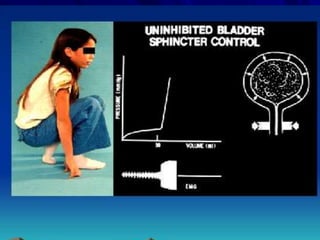
Reduced Bladder Capacity
It have been believed that Enuretic Children have a
reduced bladder capacity
Urodynamic studies indicate that children with NE exhibit
– Frequent uninhibited bladder contractions
– Lower functional bladder capacity
Bladder instability in
– 15% of patients with isolated NE
– 97% of those having both diurnal and nocturnal enuresis
Reduced Bladder Capacity
Sleep cystometries failed to equate NE with unstable
bladder contractions or a reduction in bladder capacity
Children with monosymptomatic PNE rarely exhibit
abnormal urodynamic findings and usually have a
normal bladder capacity
Sleep Disorders
Many children with PNE are "deep sleeper"
Forty years ago
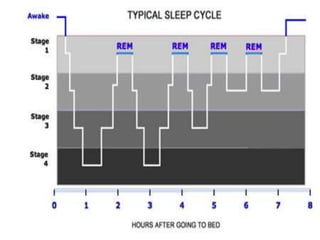
– It was thought that bed-wetting occurred during the deep sleep
stages or
– When transitioning from one sleep stage to another
The theory was that
– The enuretic demonstrates a lack of inhibitory cerebral control of
reflex voiding during deep sleep
Recently
The problem is an alteration in arousal from sleep in
response to the sensation of a full bladder
Sleep Disorders
In (1980)
– Enuresis is independent of sleep stages and occurred randomly
throughout the night
Cystometric testing during sleep revealed
– NE occurred when the bladder was filled to capacity
– If the child awoke or was aroused due to a full bladder, there was an
increase in pelvic floor activity
– When enuresis occurred with the sleeping child, the pelvic floor
was almost electrically silent
– Based on this information
Enuresis treatment should be directed towards limiting
urine output at night rather than sleep modulation
Sleep Apnea
NE is an associated issue in this disorder
Cessation of NE with the surgical removal of the
obstructing lesion (adenotonsillectomy)
Explanations for enuresis in these situations are related to
– Alteration in hormonal activity and renal pathology
– Urine volume and sodium excretion are increased at night
In the adult with leep apnea, secondary enuresis is an
uncommon finding
Endocrine Factors
Normally There is A circadian rhythm for urine output
– Increase in nighttime levels of the antidiuretic hormone
This hormone is excreted from the pituitary gland
– Enhance water reabsorption
– Production of smaller volume of more concentrated urine at night
Nocturnal polyuria could be a pathogenic factor in NE
Enuretic children have lower mean nocturnal urine
osmolalities and higher mean urinary excretion rates
Endocrine Factors
This etiologic theory remains controversial
Nocturnal polyuria may be a factor in the presence or
absence of abnormal ADH secretion
This endocrine-based theory may apply to some enuretics
but not for all cases
Psychological Factors
Psychologic factor is a controversial topic
Psychopathology in NE is relatively infrequent
Most enuretic children are well-adjusted and belong to a
loving family
Enuresis itself can result in psychologic distress
Psychological Factors
Secondary enuresis
May be brought by an emotional or psychological
disturbance
– Divorce
– Death in the family
– Illness
– Emotional or physical trauma
– The birth of a new sibling
Attention-deficit hyperactivity disorder
(ADHD)
 A common problem of childhood
 3% to 5% of children
 Considerable percentage of children with PNE have
symptoms associated with ADHD
Diet
Approximately 10% of children are believed to have
a food-related factor for their NE
Some children benefit from eliminating certain foods
– Those high in caffeine and sugar
– Citrus fruits and juices
– Dairy products (especially after noon)
– Artificially colored foods and drinks
– Chocolate.
CONSTIPATION
Constipation is a significant factor relating to NE
34% of children with constipation had nighttime wetting
Distended rectum from constipation, presses on the bladder wall and
produces outflow obstruction that may lead to bladder instability
Following the treatment and resolution of the constipation, the
percentage of enuresis decreased to 12%
Oxyuris vermicularis infection
EVALUATION
Evaluation
General
The first health care professional to meet the child with
enuresis may be
– General practitioner
– Pediatrician
– Pediatric urologist
– Urologist
– School nurse
They are all adequate and what is important is their
experience and commitment
Evaluation
General
A minimal primary evaluation
– 1) Identify the child who has enuresis secondary to underlying
medical conditions
– 2) Identify the child who for other reasons needs further
examinations
– 3) Identify the child with relevant co morbid conditions
– 4) Start adequate first line treatment after excluding points 1 to 3.
Evaluation
The majority of children with NE are not at risk for
urologic problems
However, initial evaluation should be comprehensive to
ascertain that bed-wetting is the exclusive problem
The practitioner's obligation is to rule out an organic
condition
HISTORY
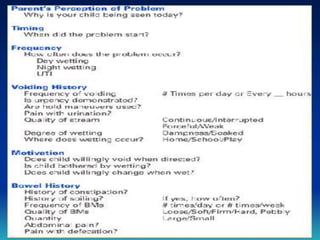
Specific and persistent questions
 The severity of enuresis
 The circumstances in which it occurs
 Associated daytime voiding problems
 Previous urinary tract infections
 Constipation
Pertinent family history
Psychosocial history
HISTORY
Diurnal incontinence
Diurnal incontinence may indicate presence of bladder
instability
Symptoms suggestive of bladder instability
(Frequency+urgency)
– 8% of children with primary NE
– 39% of children with both nocturnal and diurnal enuresis
Physical Examination
Abdominal
Genital examination
Examination of the child's back
– Assess for obvious signs suggesting a spinal abnormality
Sacral dimple
A tuft of hair
Other cutaneous anomalies
Physical Examination
Focused neurologic examination
– Checking reflexes
– Assessing anal sphincter tone and perineal sensation
– Evaluating the child's gait
If the child has a history of an altered urinary stream
– Observing the child voiding
– Urine analysis and culture
Any findings other than uncomplicated, monosymptomatic,
primary nocturnal enuresis require further evaluation
Radiographic Evaluation
INDICTIONS
Polysymptomatic NE
NE after puberty
Monosymptomatic NE with
– History of bacteriuria
– Or If it is found in the workup
 Aim is To rule out urologic abnormalities
– Vesicoureteral reflux
– Hydronephrosis
– Bladder instability
– Detrusor sphincter dyssynergia
– Urethral abnormalities
URODYNAMIC EVALUATION
INDICTIONS
Polysymptomatic NE
NE after puberty
Tests
Cystometry
Electromyography
TREATMENT
TREATMENT
TREATMENT
Why?
Self esteem
Children have been shown to rate wetting pants at
school as the third most catastrophic event that could
occur, behind the death of a parent or going blind.
Treatment
The aim of treatment
Improving and preserving the child's self-esteem
Treatment and workup AFTER THE AGE OF 5 YEARS
Parents must be REASSURED that bed-wetting is usually a
maturational delay
The bed-wetting becomes problematic for the family before the
child is affected
Therefore, any treatment option should be tailored to individual
family situations, parental attitudes, and beliefs
Combination of therapies may be ideal
Education
Explanation and demystification
Understanding of the anatomy and physiology of urine
production, bladder function, and the nervous system
Understanding statistics
– Very important part of the initial treatment plan
– Should include both the patient and the family
– Many parents are surprised to learn the statistics
– Children are relieved
Fluid restriction
Fluid restriction in the evening is often discussed by
parents
Many parents limit fluids well before bedtime by
themselves
At times, this may work
Most families find It a source of frustration and produces a
conflict between the parent and child
Bladder-Retention Training
Based on the assumption that
The child has a decreased functional bladder capacity
The basis for this modality
An increase in the bladder capacity will improve or
eliminate the enuresis
Retention training involves
– Conscious attempts at "bladder stretching" by voluntarily
prolonging the intervals between voidings
The cure rate is 35%
Diet restriction
Some children benefit from eliminating certain foods
afternoon
– Those high in caffeine and sugar
– Citrus fruits and juices
– Dairy products (especially after noon)
– Artificially colored foods and drinks
– Chocolate.
BEHAVIORAL MODIFICATION
Motivational therapy
Promoting positive reinforcement using praise and reward
The child is encouraged to assume responsibility and take an active
role in the treatment program
A behavioral ("star chart") is used to keep track of dry nights and the
parents and clinician provide positive reinforcement and/or rewards
(for example, a toy, money, a special outing)
– The cure rate for motivational therapy alone is 25%
– Marked improvement in greater than 70% of patients
– The principles of motivational therapy can be incorporated into
other therapeutic regimes
Behavioral Modification
Conditioning therapy
ENURETIC ALARM SYSTEM
The most commonly recommended form of therapy
The enuresis alarm is a system using a signal alarm that is triggered
by contact of urine
Teach the child to awaken to the sensation of a full bladder
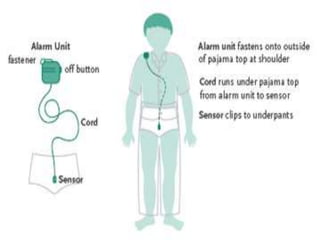
The systems are attached to the clothing at the site of the perineum
and is triggered at the beginning of urination
The conditioning aspect of awakening along with the repression of
voiding is gradually elicited by repetitive association of awakening to
the alarm
Success rate of 65% to 75% and relatively low rates of relapse
Behavioral Modification
Enuretic Alarm System
Several alarms are available that are portable and easy for
the child to operate independently
Most of these systems have an audio alarm
A tactile alarm is available that vibrates upon sensation of
wetness
– Worn near the bladder and has the advantage of alerting the child and not
awakening the rest of the household
Advantages of Enuretic Alarm System
High success rate (if used persistently)
Low relapse rate
Those children that do relapse often respond to a
short second course of treatment with the alarm
Avoiding medication
Using the alarm requires persistence and patience
Disadvantages of Enuretic Alarm System
Time intensive
– Require a high level of motivation and cooperation from the child
and the family for at least 3 weeks and as long as 4 to 6 months
– Relapses may occur if the alarm is discontinued too prematurely
– The child should continue to wear the alarm until he/she is dry at
night for 4 weeks
Enuretic Alarm System
< 5% of physicians used behavioral treatment in favor of
pharmacotherapy
This is most likely related to
– The time-consuming instructions that must be given to the family
– Close follow-up and cooperation required among the physician, patient,
and family members
Recently, the recommendation of alarms by pediatricians
has increased
Pharmacologic Therapy
Pharmacologic treatment for NE is best viewed as a part of
management therapy rather than a cure
This is because of the high relapse rates reported after
short-term treatment with pharmacotherapeutic agents
Therefore, most patients require long-term therapy either
continuously or on an as-needed basis
Children who use these medications on a PRN basis
(sleepovers)have an immediate response with a single
dose
Pharmacologic Therapy
1. Imipramine (tofranil)
2. Desmopressin acetate (DDAVP)
3. Oxybutynin (ditropan)
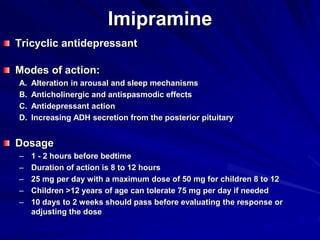
Imipramine
Tricyclic antidepressant
Modes of action:
A. Alteration in arousal and sleep mechanisms
B. Anticholinergic and antispasmodic effects
C. Antidepressant action
D. Increasing ADH secretion from the posterior pituitary
Dosage
– 1 - 2 hours before bedtime
– Duration of action is 8 to 12 hours
– 25 mg per day with a maximum dose of 50 mg for children 8 to 12
– Children >12 years of age can tolerate 75 mg per day if needed
– 10 days to 2 weeks should pass before evaluating the response or
adjusting the dose
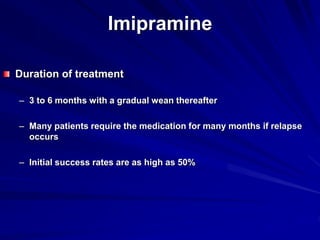
Imipramine
Duration of treatment
– 3 to 6 months with a gradual wean thereafter
– Many patients require the medication for many months if relapse
occurs
– Initial success rates are as high as 50%
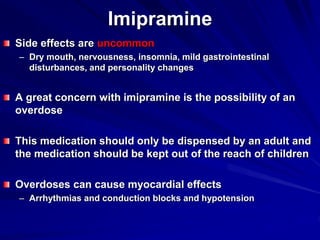
Imipramine
Side effects are uncommon
– Dry mouth, nervousness, insomnia, mild gastrointestinal
disturbances, and personality changes
A great concern with imipramine is the possibility of an
overdose
This medication should only be dispensed by an adult and
the medication should be kept out of the reach of children
Overdoses can cause myocardial effects
– Arrhythmias and conduction blocks and hypotension
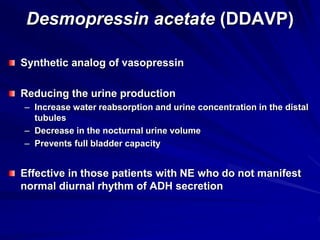
Desmopressin acetate (DDAVP)
Synthetic analog of vasopressin
Reducing the urine production
– Increase water reabsorption and urine concentration in the distal
tubules
– Decrease in the nocturnal urine volume
– Prevents full bladder capacity
Effective in those patients with NE who do not manifest
normal diurnal rhythm of ADH secretion
Desmopressin acetate (DDAVP)
Available in a nasal spray pump and tablet form
Nasal spry (10 mcg in one spray)
– The initial recommended dose is 20 mcg (one spray in each
nostril)
– Some children respond to as little as 10 mcg while others require
up to 40 mcg (two sprays in each nostril) for maximum
effectiveness
– The effect usually lasts 6 to 12 hours.
Desmopressin acetate (DDAVP)
Tablet form {100 and 200 mcg (0.1 to 0.2 mg) }
The recommended dose
– 200 to 600 mcg (0.2 to 0.6 mg)
Advantages
– Preferable form if there is nasal congestion
– Some children may find it difficult to independently administer the
nasal spray
– More unnoticeable than the nasal spray in the presence of others
Desmopressin acetate (DDAVP)
Immediate results are often seen with this medication
Response rate 10% to 91%
For monosymptomatic NE, 68% had a full response
For patients with both diurnal and nocturnal enuresis, only 19%
The length of treatment varies with each patient and is clinician
dependent
Relapse rates after discontinuation of short-term therapy are high
Desmopressin acetate (DDAVP)
SIDE EFFECT
Safe if used correctly
Side effects
Nasal spray
Nasal congestion, rhinitis, mild headache, and epistaxis
Tablets
Mild headache
Rarely significant hyponatremia
– Due to an excess of fluid intake in conjunction with the medication
Desmopressin acetate (DDAVP)
HYPONATREAMIA
 Altered level of consciousness
 Blurred vision
 Confusion
 Disorientation
 Frontal headache
Prior to prescribing desmopressine
– Assess the presence of other factors that may produce electrolyte
imbalances
Cystic fibrosis, renal disease, endocrine disorders, or other disorders
Psychogenic polydipsia and habit polydipsia should be considered
due to the risk of water intoxication and hyponatremia
DDAVP should not be used in instances where fluid and electrolyte
balance would be affected, such as fever, viral illnesses, vomiting, or
diarrhea
ANTICHOLINERGIC
Oxybutynin (Ditropan)
Action
– Reducing uninhibited bladder contractions
– Producing local anesthetic effects on the bladder
– Increasing the bladder capacity
Helpful to children with NE who also present with daytime
frequency/ urgency and/or incontinence
Success rates of 90% have been reported for enuretic
children with significant daytime incontinence and/or
bladder instability
Rarely beneficial for children with monosymptomatic NE
Combination Therapy
For ineffective individual form of therapy
1. Desmopressin + behavior modification + enuresis alarm
2. Desmopressin + imipramine
Combination Therapy
1. Desmopressin + behavior modification + enuresis alarm
– Desmopressin have an immediate effect and the enuresis alarm take up to
3 weeks to see a decrease in wet nights
– Desmopressin at the onset of alarm therapy, it improve compliance
– After 3 weeks of enuresis slow wean of the desmopressin and subsequent
therapy of the alarm and behavior modification can effect a cure of the
enuresis
Combination Therapy
2. Desmopressin + imipramine
 Successful in some patients with refractory primary NE
 Synergistic action between the two medications
Decrease in urine production
Increase in bladder capacity
Easier awakening
Psychotherapy
Psychotherapy has been used as a treatment for enuresis
without convincing evidence of its effectiveness
The majority of primary enuretics do not suffer from
underlying psychoneurosis
Limited to children with obvious psychopathology
Hypnotherapy
Hypnotherapy is not based on conditioning therapy
Combined of
– Explanation of the bladder-brain connection
– Teaching self-hypnosis and visual imaging to the child in
responding to a full bladder during sleep
Comparing hypnotherapy with imipramine
– 76% dryness rate after initiating both types of therapy
– After 9 months
68% of the hypnotherapy group remained dry
only 24% in the imipramine group
Summary
Nocturnal enuresis is a widespread and potentially
disabling disorder for children
The treatment of NE constitutes several approaches and its
pathophysiology remains unsolved
Careful consideration should be given to the workup of NE
since there may be concurrent symptoms that require
attention either before or in conjunction with the treatment
Patient/family education and a cooperative approach
usually produce the most favorable results in the treatment
of nocturnal enuresis.
‫االخرين‬ ‫فيه‬ ‫شارك‬ ‫بشئ‬ ‫استمتعت‬ ‫اذا‬
Nocturnal enuresis By Sayed Eleweedy

Nocturnal enuresis By Sayed Eleweedy

  • 1.
    NOCTURNAL ENURESIS SAYED MELEWEEDY PROF.OF UROLOGY UROLOGY DEPARTMENT AL-AZHAR UNIVERSITY CAIRO, EGYPT
  • 2.
    INTRODUCTION Involuntary Passage OfUrine During Sleep After The Age At Which Bladder Control Would Normally Be Anticipated Most Common Voiding Abnormality In Children Widespread And Potentially Disabling Disorder For Children
  • 3.
    HISTORICAL OVERVIEW N EHas Plagued Humans For Centuries It Has Been Recognized As A Problem Since The Time Of Papyrus Ebers, Dated 1550 B.C. Glicklich (1951), Outlined The Treatment Of Enuresis Over Time And Described The primitive Methods Used And The Ultimate uselessness Of These Treatments Some Of These Early Treatment Modalities Include Using Various Potions From Animals, Organs, Or Plants
  • 4.
    HISTORICAL OVERVIEW Example OfUsed Remedies – Placing a hen in slightly warm water and giving it to the child to drink – Putting testicles of a wild rabbit into a glass of wine and the child drink it – Others tried drying the comb of a cock and scattering it over the enuretic's bed – In the mid-1800s, another treatment was to induce blisters on the child's sacrum
  • 6.
    HISTORICAL OVERVIEW Example OfUsed Remedies – In 1927, Friedell described using psychic treatment Restricting fluids and injecting sterile water Along with positive reassurance that this treatment will work – His findings demonstrated an 87% success rate and those children who did not respond were found to have low urine specific gravity at night – This monitoring of urine concentration holds significant merit in regards to common treatment modalities used today
  • 7.
    Normal Development OfContinence During infancy – The infant voids through a reflex mechanism Between 1 and 2 years – Gradual enlargement of the bladder capacity – Neural maturation of the frontal and parietal lobes – This is the time that conscious sensation of bladder fullness develops During the 2nd and 3rd years of life – The child is able to void or inhibit voiding voluntarily By the ages of 4 and 5 years – Maturation of the bladder should be complete, allowing the child to have an adult pattern of urinary control
  • 8.
    Epidemiology At age 5,approximately 20% of children have NE episode at least monthly The incidence decreases to 10% by age 6 years 15% of these children subsequently attaining nighttime control each year By age 15, only 1% to 2% of adolescents remain enuretic The male to female ratio for NE is three to two
  • 9.
    CLASSIFICATIONS Types 1. Primary Bed-wetting sincebirth without any significant periods of dryness (90%) 2. Secondary Onset of bed-wetting after the child has been dry for at least 6 months ------------------------- 1. Monosymptomaic N E with normal daytime urination 2. Polysymptomatic N E with urinary frequency, urgency or other signs of bladder instability Monosymptomatic NE represents less than half of all bed wetting children
  • 10.
    ‫حميم‬ ‫صديق‬ ‫لديك‬‫يكون‬ ‫ان‬ ‫الحياة‬ ‫متع‬ ‫اعظم‬ ‫من‬
  • 11.
  • 12.
    Genetic Factors Greater incidencein children whose parents were enuretic If both parents were bed-wetters, their children have a 77% chance of having NE If only one parent had been enuretic, the incidence drops to 44% Recent research describes a molecular genetic Abnormality to primary nocturnal enuresis – This genetic link is consistent with the chromosomes 13q and 12q Identification of gene characterization for PNE could lead to a better understanding of the complexity of NE and subsequent management and treatment
  • 13.
    Reduced Bladder Capacity Ithave been believed that Enuretic Children have a reduced bladder capacity Urodynamic studies indicate that children with NE exhibit – Frequent uninhibited bladder contractions – Lower functional bladder capacity Bladder instability in – 15% of patients with isolated NE – 97% of those having both diurnal and nocturnal enuresis
  • 14.
    Reduced Bladder Capacity Sleepcystometries failed to equate NE with unstable bladder contractions or a reduction in bladder capacity Children with monosymptomatic PNE rarely exhibit abnormal urodynamic findings and usually have a normal bladder capacity
  • 16.
    Sleep Disorders Many childrenwith PNE are "deep sleeper" Forty years ago – It was thought that bed-wetting occurred during the deep sleep stages or – When transitioning from one sleep stage to another The theory was that – The enuretic demonstrates a lack of inhibitory cerebral control of reflex voiding during deep sleep Recently The problem is an alteration in arousal from sleep in response to the sensation of a full bladder
  • 17.
    Sleep Disorders In (1980) –Enuresis is independent of sleep stages and occurred randomly throughout the night Cystometric testing during sleep revealed – NE occurred when the bladder was filled to capacity – If the child awoke or was aroused due to a full bladder, there was an increase in pelvic floor activity – When enuresis occurred with the sleeping child, the pelvic floor was almost electrically silent – Based on this information Enuresis treatment should be directed towards limiting urine output at night rather than sleep modulation
  • 19.
    Sleep Apnea NE isan associated issue in this disorder Cessation of NE with the surgical removal of the obstructing lesion (adenotonsillectomy) Explanations for enuresis in these situations are related to – Alteration in hormonal activity and renal pathology – Urine volume and sodium excretion are increased at night In the adult with leep apnea, secondary enuresis is an uncommon finding
  • 20.
    Endocrine Factors Normally Thereis A circadian rhythm for urine output – Increase in nighttime levels of the antidiuretic hormone This hormone is excreted from the pituitary gland – Enhance water reabsorption – Production of smaller volume of more concentrated urine at night Nocturnal polyuria could be a pathogenic factor in NE Enuretic children have lower mean nocturnal urine osmolalities and higher mean urinary excretion rates
  • 21.
    Endocrine Factors This etiologictheory remains controversial Nocturnal polyuria may be a factor in the presence or absence of abnormal ADH secretion This endocrine-based theory may apply to some enuretics but not for all cases
  • 22.
    Psychological Factors Psychologic factoris a controversial topic Psychopathology in NE is relatively infrequent Most enuretic children are well-adjusted and belong to a loving family Enuresis itself can result in psychologic distress
  • 23.
    Psychological Factors Secondary enuresis Maybe brought by an emotional or psychological disturbance – Divorce – Death in the family – Illness – Emotional or physical trauma – The birth of a new sibling
  • 24.
    Attention-deficit hyperactivity disorder (ADHD) A common problem of childhood  3% to 5% of children  Considerable percentage of children with PNE have symptoms associated with ADHD
  • 25.
    Diet Approximately 10% ofchildren are believed to have a food-related factor for their NE Some children benefit from eliminating certain foods – Those high in caffeine and sugar – Citrus fruits and juices – Dairy products (especially after noon) – Artificially colored foods and drinks – Chocolate.
  • 26.
    CONSTIPATION Constipation is asignificant factor relating to NE 34% of children with constipation had nighttime wetting Distended rectum from constipation, presses on the bladder wall and produces outflow obstruction that may lead to bladder instability Following the treatment and resolution of the constipation, the percentage of enuresis decreased to 12% Oxyuris vermicularis infection
  • 27.
  • 28.
    Evaluation General The first healthcare professional to meet the child with enuresis may be – General practitioner – Pediatrician – Pediatric urologist – Urologist – School nurse They are all adequate and what is important is their experience and commitment
  • 29.
    Evaluation General A minimal primaryevaluation – 1) Identify the child who has enuresis secondary to underlying medical conditions – 2) Identify the child who for other reasons needs further examinations – 3) Identify the child with relevant co morbid conditions – 4) Start adequate first line treatment after excluding points 1 to 3.
  • 30.
    Evaluation The majority ofchildren with NE are not at risk for urologic problems However, initial evaluation should be comprehensive to ascertain that bed-wetting is the exclusive problem The practitioner's obligation is to rule out an organic condition
  • 32.
    HISTORY Specific and persistentquestions  The severity of enuresis  The circumstances in which it occurs  Associated daytime voiding problems  Previous urinary tract infections  Constipation Pertinent family history Psychosocial history
  • 33.
    HISTORY Diurnal incontinence Diurnal incontinencemay indicate presence of bladder instability Symptoms suggestive of bladder instability (Frequency+urgency) – 8% of children with primary NE – 39% of children with both nocturnal and diurnal enuresis
  • 34.
    Physical Examination Abdominal Genital examination Examinationof the child's back – Assess for obvious signs suggesting a spinal abnormality Sacral dimple A tuft of hair Other cutaneous anomalies
  • 36.
    Physical Examination Focused neurologicexamination – Checking reflexes – Assessing anal sphincter tone and perineal sensation – Evaluating the child's gait If the child has a history of an altered urinary stream – Observing the child voiding – Urine analysis and culture Any findings other than uncomplicated, monosymptomatic, primary nocturnal enuresis require further evaluation
  • 37.
    Radiographic Evaluation INDICTIONS Polysymptomatic NE NEafter puberty Monosymptomatic NE with – History of bacteriuria – Or If it is found in the workup  Aim is To rule out urologic abnormalities – Vesicoureteral reflux – Hydronephrosis – Bladder instability – Detrusor sphincter dyssynergia – Urethral abnormalities
  • 38.
    URODYNAMIC EVALUATION INDICTIONS Polysymptomatic NE NEafter puberty Tests Cystometry Electromyography
  • 39.
  • 40.
  • 41.
    TREATMENT Why? Self esteem Children havebeen shown to rate wetting pants at school as the third most catastrophic event that could occur, behind the death of a parent or going blind.
  • 42.
    Treatment The aim oftreatment Improving and preserving the child's self-esteem Treatment and workup AFTER THE AGE OF 5 YEARS Parents must be REASSURED that bed-wetting is usually a maturational delay The bed-wetting becomes problematic for the family before the child is affected Therefore, any treatment option should be tailored to individual family situations, parental attitudes, and beliefs Combination of therapies may be ideal
  • 43.
    Education Explanation and demystification Understandingof the anatomy and physiology of urine production, bladder function, and the nervous system Understanding statistics – Very important part of the initial treatment plan – Should include both the patient and the family – Many parents are surprised to learn the statistics – Children are relieved
  • 44.
    Fluid restriction Fluid restrictionin the evening is often discussed by parents Many parents limit fluids well before bedtime by themselves At times, this may work Most families find It a source of frustration and produces a conflict between the parent and child
  • 45.
    Bladder-Retention Training Based onthe assumption that The child has a decreased functional bladder capacity The basis for this modality An increase in the bladder capacity will improve or eliminate the enuresis Retention training involves – Conscious attempts at "bladder stretching" by voluntarily prolonging the intervals between voidings The cure rate is 35%
  • 47.
    Diet restriction Some childrenbenefit from eliminating certain foods afternoon – Those high in caffeine and sugar – Citrus fruits and juices – Dairy products (especially after noon) – Artificially colored foods and drinks – Chocolate.
  • 48.
    BEHAVIORAL MODIFICATION Motivational therapy Promotingpositive reinforcement using praise and reward The child is encouraged to assume responsibility and take an active role in the treatment program A behavioral ("star chart") is used to keep track of dry nights and the parents and clinician provide positive reinforcement and/or rewards (for example, a toy, money, a special outing) – The cure rate for motivational therapy alone is 25% – Marked improvement in greater than 70% of patients – The principles of motivational therapy can be incorporated into other therapeutic regimes
  • 50.
    Behavioral Modification Conditioning therapy ENURETICALARM SYSTEM The most commonly recommended form of therapy The enuresis alarm is a system using a signal alarm that is triggered by contact of urine Teach the child to awaken to the sensation of a full bladder The systems are attached to the clothing at the site of the perineum and is triggered at the beginning of urination The conditioning aspect of awakening along with the repression of voiding is gradually elicited by repetitive association of awakening to the alarm Success rate of 65% to 75% and relatively low rates of relapse

  • 51.
    Behavioral Modification Enuretic AlarmSystem Several alarms are available that are portable and easy for the child to operate independently Most of these systems have an audio alarm A tactile alarm is available that vibrates upon sensation of wetness – Worn near the bladder and has the advantage of alerting the child and not awakening the rest of the household
  • 53.
    Advantages of EnureticAlarm System High success rate (if used persistently) Low relapse rate Those children that do relapse often respond to a short second course of treatment with the alarm Avoiding medication Using the alarm requires persistence and patience
  • 54.
    Disadvantages of EnureticAlarm System Time intensive – Require a high level of motivation and cooperation from the child and the family for at least 3 weeks and as long as 4 to 6 months – Relapses may occur if the alarm is discontinued too prematurely – The child should continue to wear the alarm until he/she is dry at night for 4 weeks
  • 55.
    Enuretic Alarm System <5% of physicians used behavioral treatment in favor of pharmacotherapy This is most likely related to – The time-consuming instructions that must be given to the family – Close follow-up and cooperation required among the physician, patient, and family members Recently, the recommendation of alarms by pediatricians has increased
  • 56.
    Pharmacologic Therapy Pharmacologic treatmentfor NE is best viewed as a part of management therapy rather than a cure This is because of the high relapse rates reported after short-term treatment with pharmacotherapeutic agents Therefore, most patients require long-term therapy either continuously or on an as-needed basis Children who use these medications on a PRN basis (sleepovers)have an immediate response with a single dose
  • 57.
    Pharmacologic Therapy 1. Imipramine(tofranil) 2. Desmopressin acetate (DDAVP) 3. Oxybutynin (ditropan)
  • 58.
    Imipramine Tricyclic antidepressant Modes ofaction: A. Alteration in arousal and sleep mechanisms B. Anticholinergic and antispasmodic effects C. Antidepressant action D. Increasing ADH secretion from the posterior pituitary Dosage – 1 - 2 hours before bedtime – Duration of action is 8 to 12 hours – 25 mg per day with a maximum dose of 50 mg for children 8 to 12 – Children >12 years of age can tolerate 75 mg per day if needed – 10 days to 2 weeks should pass before evaluating the response or adjusting the dose
  • 59.
    Imipramine Duration of treatment –3 to 6 months with a gradual wean thereafter – Many patients require the medication for many months if relapse occurs – Initial success rates are as high as 50%
  • 60.
    Imipramine Side effects areuncommon – Dry mouth, nervousness, insomnia, mild gastrointestinal disturbances, and personality changes A great concern with imipramine is the possibility of an overdose This medication should only be dispensed by an adult and the medication should be kept out of the reach of children Overdoses can cause myocardial effects – Arrhythmias and conduction blocks and hypotension
  • 61.
    Desmopressin acetate (DDAVP) Syntheticanalog of vasopressin Reducing the urine production – Increase water reabsorption and urine concentration in the distal tubules – Decrease in the nocturnal urine volume – Prevents full bladder capacity Effective in those patients with NE who do not manifest normal diurnal rhythm of ADH secretion
  • 62.
    Desmopressin acetate (DDAVP) Availablein a nasal spray pump and tablet form Nasal spry (10 mcg in one spray) – The initial recommended dose is 20 mcg (one spray in each nostril) – Some children respond to as little as 10 mcg while others require up to 40 mcg (two sprays in each nostril) for maximum effectiveness – The effect usually lasts 6 to 12 hours.
  • 63.
    Desmopressin acetate (DDAVP) Tabletform {100 and 200 mcg (0.1 to 0.2 mg) } The recommended dose – 200 to 600 mcg (0.2 to 0.6 mg) Advantages – Preferable form if there is nasal congestion – Some children may find it difficult to independently administer the nasal spray – More unnoticeable than the nasal spray in the presence of others
  • 64.
    Desmopressin acetate (DDAVP) Immediateresults are often seen with this medication Response rate 10% to 91% For monosymptomatic NE, 68% had a full response For patients with both diurnal and nocturnal enuresis, only 19% The length of treatment varies with each patient and is clinician dependent Relapse rates after discontinuation of short-term therapy are high
  • 65.
    Desmopressin acetate (DDAVP) SIDEEFFECT Safe if used correctly Side effects Nasal spray Nasal congestion, rhinitis, mild headache, and epistaxis Tablets Mild headache Rarely significant hyponatremia – Due to an excess of fluid intake in conjunction with the medication
  • 66.
    Desmopressin acetate (DDAVP) HYPONATREAMIA Altered level of consciousness  Blurred vision  Confusion  Disorientation  Frontal headache Prior to prescribing desmopressine – Assess the presence of other factors that may produce electrolyte imbalances Cystic fibrosis, renal disease, endocrine disorders, or other disorders Psychogenic polydipsia and habit polydipsia should be considered due to the risk of water intoxication and hyponatremia DDAVP should not be used in instances where fluid and electrolyte balance would be affected, such as fever, viral illnesses, vomiting, or diarrhea
  • 67.
    ANTICHOLINERGIC Oxybutynin (Ditropan) Action – Reducinguninhibited bladder contractions – Producing local anesthetic effects on the bladder – Increasing the bladder capacity Helpful to children with NE who also present with daytime frequency/ urgency and/or incontinence Success rates of 90% have been reported for enuretic children with significant daytime incontinence and/or bladder instability Rarely beneficial for children with monosymptomatic NE
  • 68.
    Combination Therapy For ineffectiveindividual form of therapy 1. Desmopressin + behavior modification + enuresis alarm 2. Desmopressin + imipramine
  • 69.
    Combination Therapy 1. Desmopressin+ behavior modification + enuresis alarm – Desmopressin have an immediate effect and the enuresis alarm take up to 3 weeks to see a decrease in wet nights – Desmopressin at the onset of alarm therapy, it improve compliance – After 3 weeks of enuresis slow wean of the desmopressin and subsequent therapy of the alarm and behavior modification can effect a cure of the enuresis


  • 70.
    Combination Therapy 2. Desmopressin+ imipramine  Successful in some patients with refractory primary NE  Synergistic action between the two medications Decrease in urine production Increase in bladder capacity Easier awakening
  • 71.
    Psychotherapy Psychotherapy has beenused as a treatment for enuresis without convincing evidence of its effectiveness The majority of primary enuretics do not suffer from underlying psychoneurosis Limited to children with obvious psychopathology
  • 72.
    Hypnotherapy Hypnotherapy is notbased on conditioning therapy Combined of – Explanation of the bladder-brain connection – Teaching self-hypnosis and visual imaging to the child in responding to a full bladder during sleep Comparing hypnotherapy with imipramine – 76% dryness rate after initiating both types of therapy – After 9 months 68% of the hypnotherapy group remained dry only 24% in the imipramine group
  • 73.
    Summary Nocturnal enuresis isa widespread and potentially disabling disorder for children The treatment of NE constitutes several approaches and its pathophysiology remains unsolved Careful consideration should be given to the workup of NE since there may be concurrent symptoms that require attention either before or in conjunction with the treatment Patient/family education and a cooperative approach usually produce the most favorable results in the treatment of nocturnal enuresis.
  • 74.
    ‫االخرين‬ ‫فيه‬ ‫شارك‬‫بشئ‬ ‫استمتعت‬ ‫اذا‬