Nithya credit seminar first.pptx on artificial climate control
1.
SRI KONDA LAXMANTELANGANA STATE HORTICULTURAL UNIVERSITY
POST GRADUATE INSTITUTE FOR HORTICLTURAL SCIENCES
MASTER’S SEMINAR VSC-591
ARTIFICIAL CLIMATE CONTROL SYSTEM IN GREEN HOUSE
Major Advisor
Smt. K.Nirosha
Assistant Professor
Dept. of Vegetable Science
SKLTSHU,Rajendranagar
Course In charge
Dr. S.Mallesh
Assistant Professor
Dept. of Vegetable Science
PGIHS,SKLTSHU,Mulugu
B.Nithya Sri
RHM/22- 04
Dept. of Vegetable Science
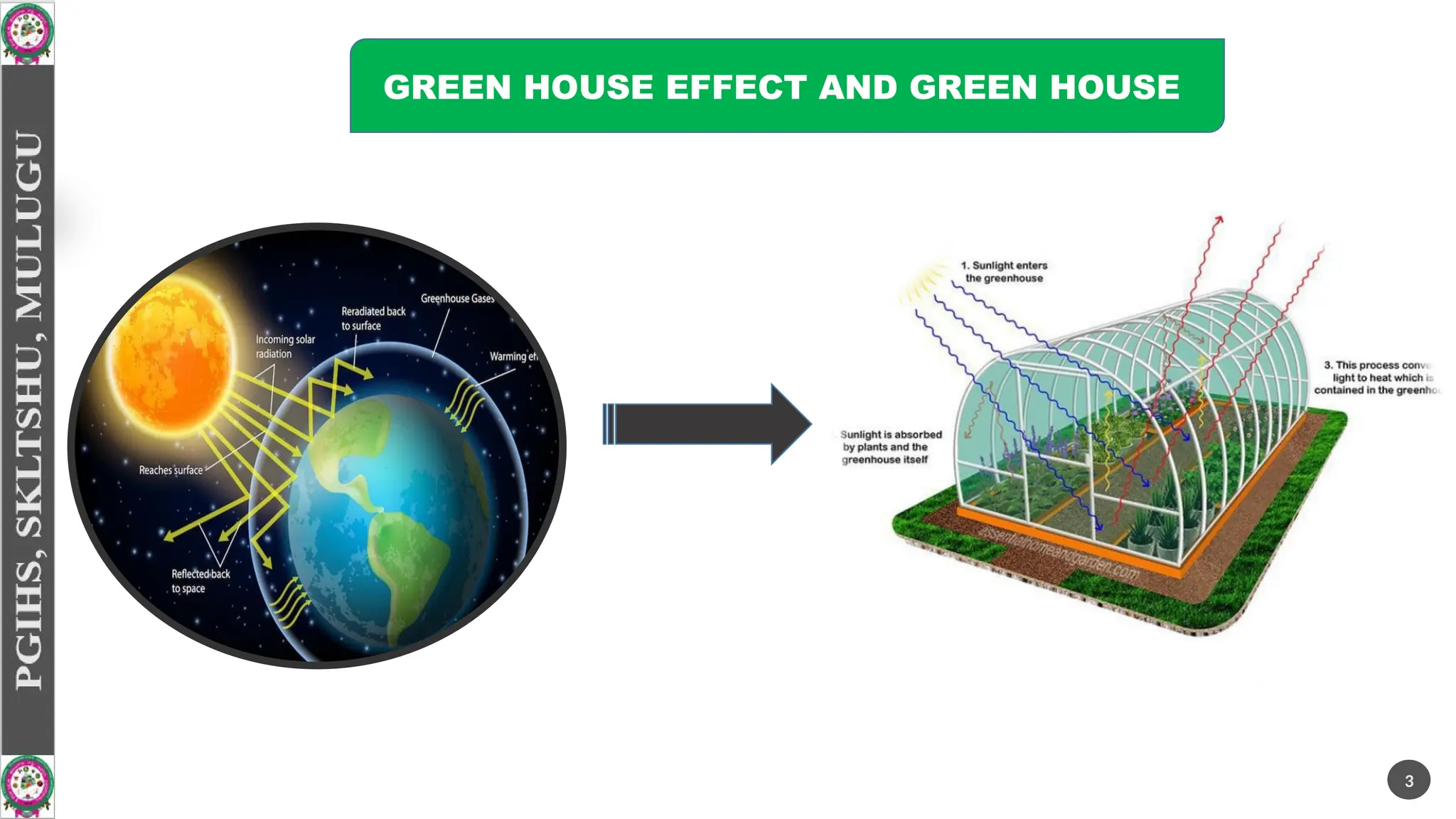
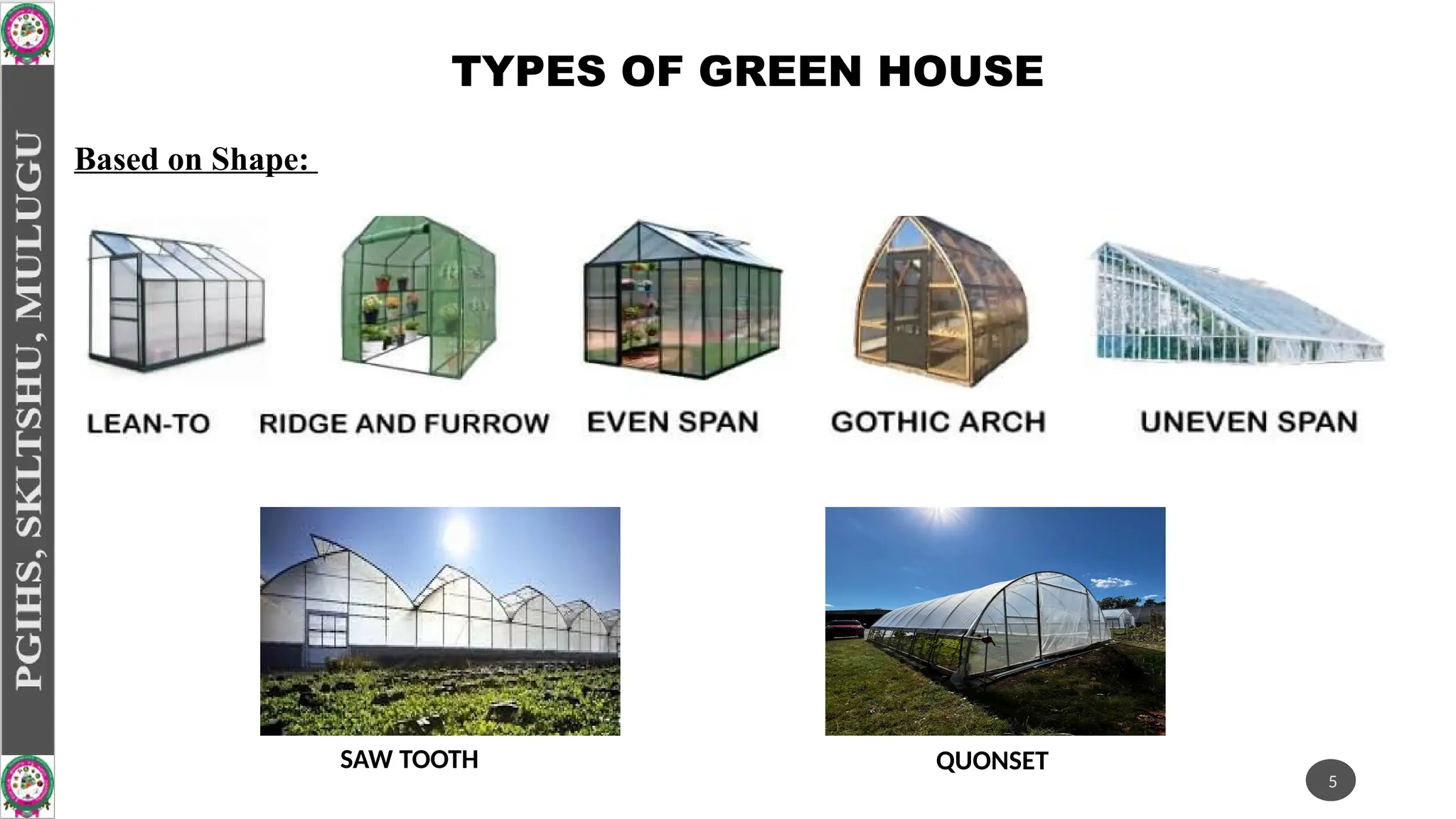
GREEN HOUSE
Agreen house is a framed or an inflated structure covered with a transparent or translucent material in
which crops could be grown under the conditions of a least partially controlled environment.
The most common materials used in modern greenhouses for walls and roofs are rigid plastic made of
polycarbonate, plastic film made of polyethylene, or glass panes.
The automated greenhouses are filled with equipment including screening installations, heating, cooling,
and lighting, and may be controlled by a computer to optimize conditions for plant growth.
Radha, K and Igathinathane, C. 2012. Greenhouse Technology and Management. BS Publications, Hyderabad. 4
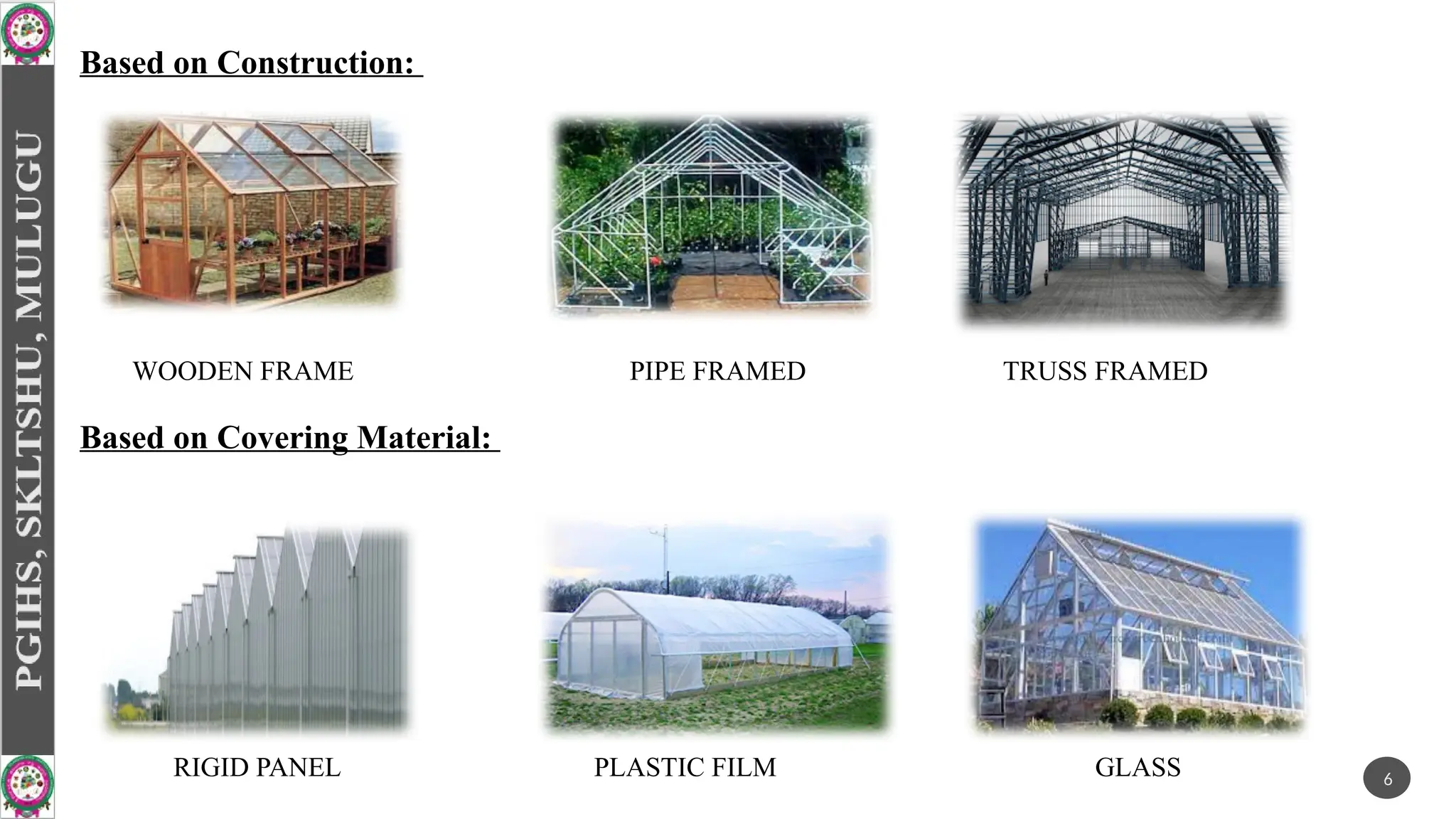
RIGID PANEL PLASTICFILM GLASS
Based on Covering Material:
Based on Construction:
WOODEN FRAME PIPE FRAMED TRUSS FRAMED
6
7.
STATUS OF GREENHOUSE
Global area under protected cultivation is 56,30,000 ha and under green house vegetables it is 4,96,800 ha.
Area under protected cultivation in India is 2.5lakh ha
Maharashtra is the most popular greenhouse farming state in India.
Telangana ranks 17th
in position in green house cultivation with 1150 ha.
In terms of High - tech green house Maharashtra, Chhattisgarh, Haryana are the top 3 states.
Ministry of Agriculture and Farmers Welfare,2020 7
8.
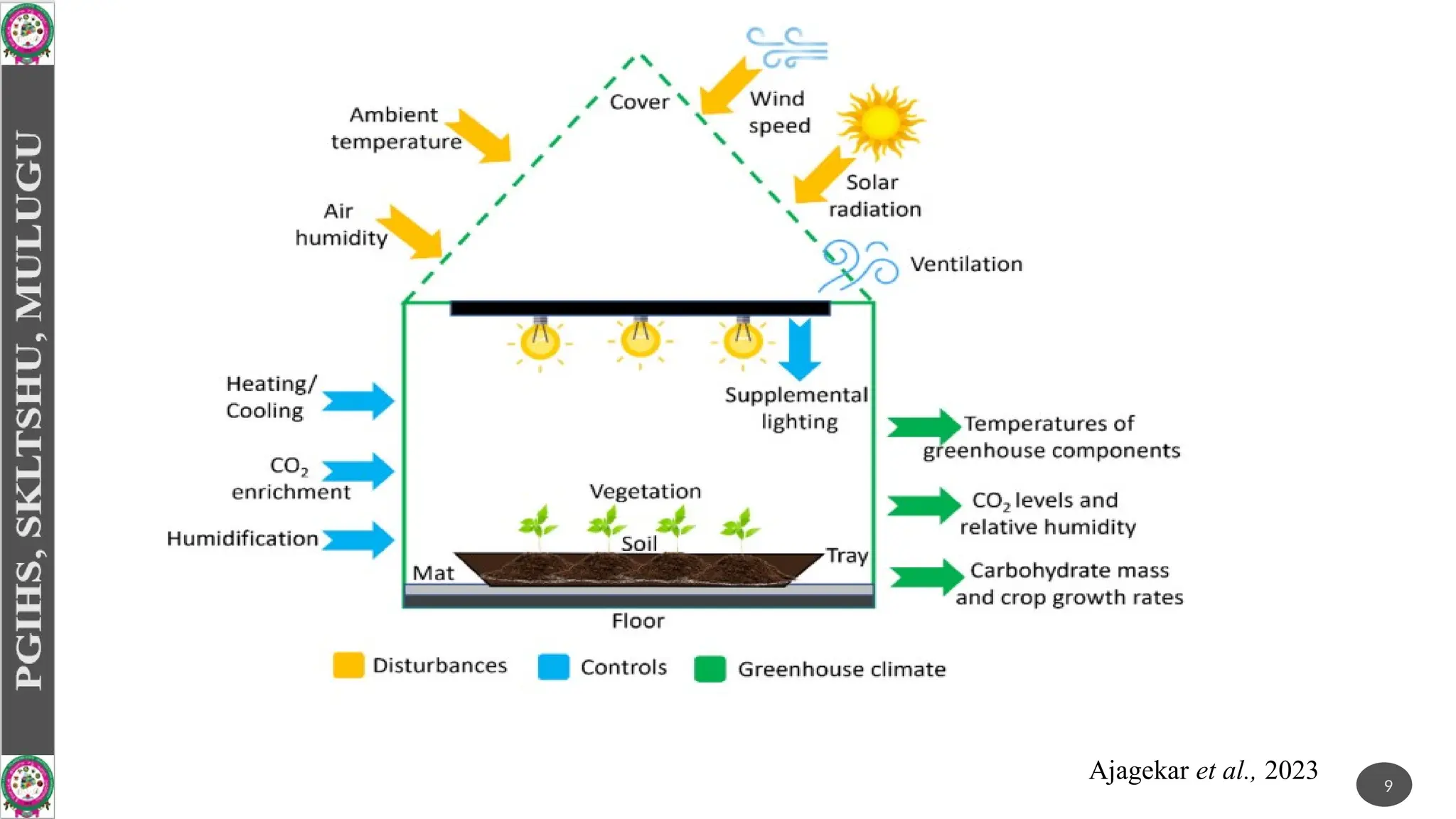
NEED OF ARTIFICIALCLIMATE CONTROL?
• As the demand for healthy and fresh food is projected to increase 60% by the year 2050 due to increasing
global population, reducing the carbon footprint of agricultural practices is central to limiting climate
change.
• Controlled Environment Agriculture (CEA) in greenhouses can further improve crop yields produce high
quality crops decreasing waste labor and energy requirement.
• The development of energy-efficient High-tech Greenhouses is the key step towards achieving sustainable
food production and enabling food security
Ajagekar et al., 2023 8
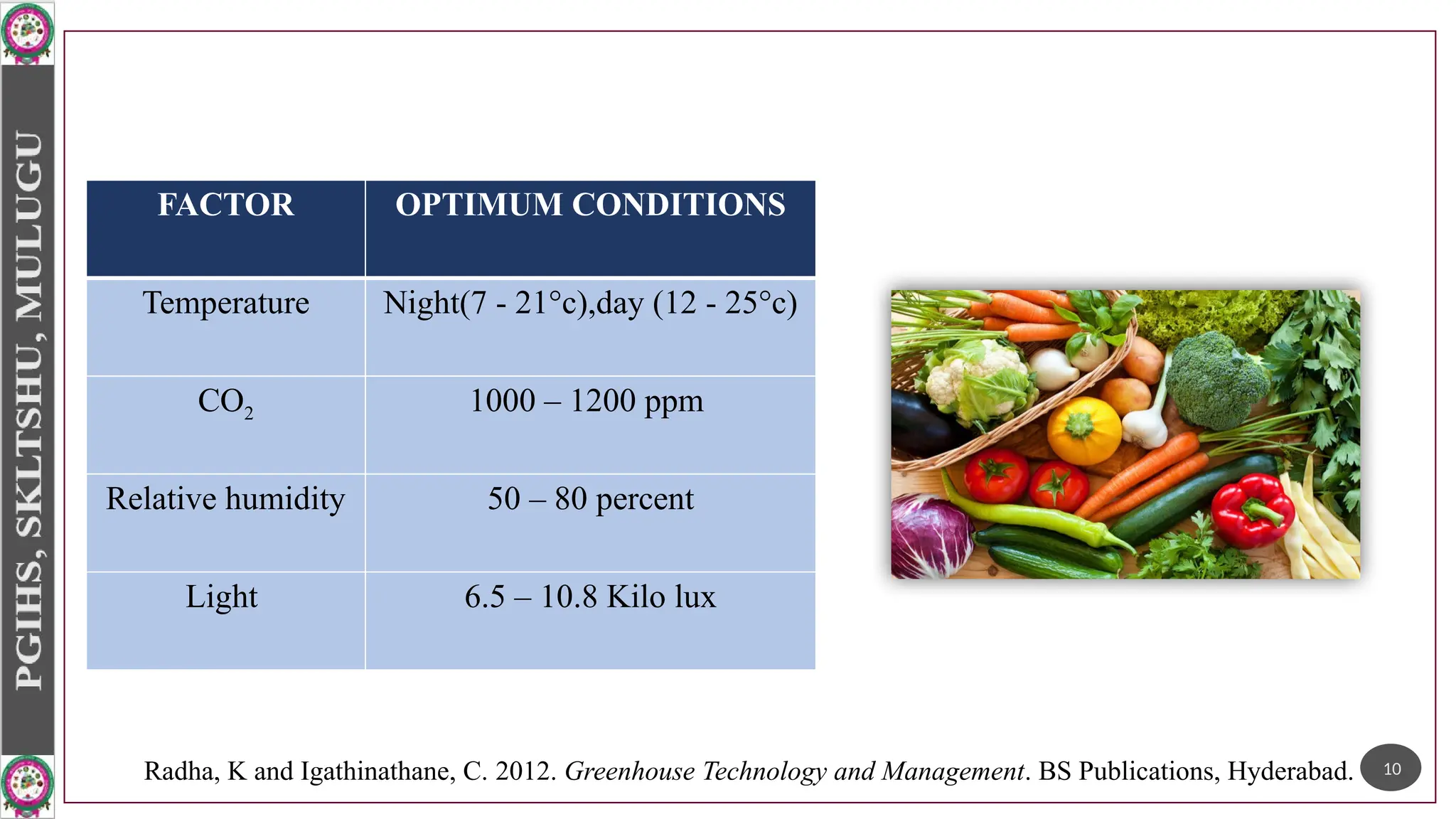
FACTOR OPTIMUM CONDITIONS
TemperatureNight(7 - 21°c),day (12 - 25°c)
CO2 1000 – 1200 ppm
Relative humidity 50 – 80 percent
Light 6.5 – 10.8 Kilo lux
10
Radha, K and Igathinathane, C. 2012. Greenhouse Technology and Management. BS Publications, Hyderabad.
11.
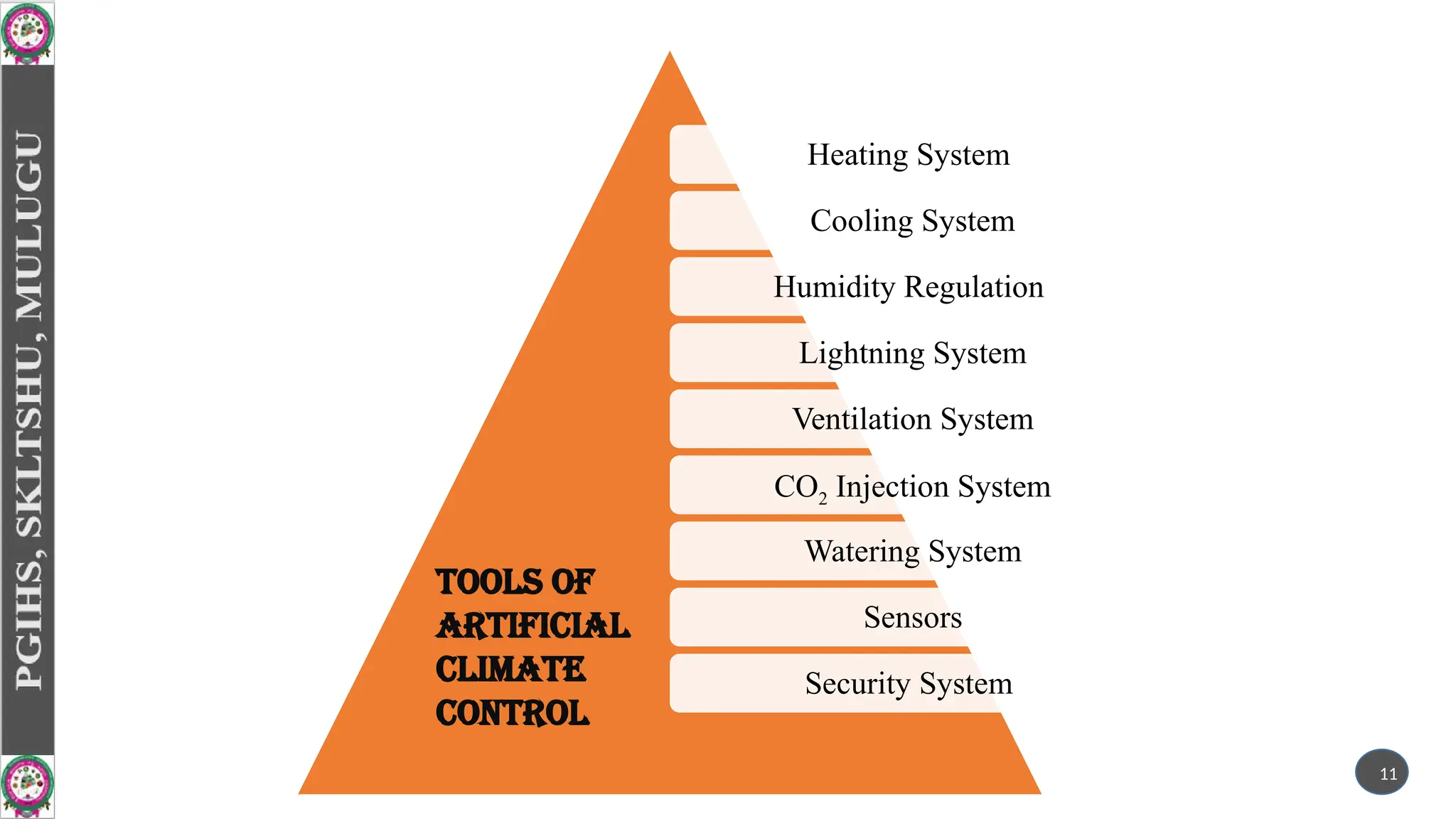
Heating System
Cooling System
HumidityRegulation
Lightning System
Ventilation System
CO2 Injection System
Watering System
Sensors
Security System
TOOLS OF
ARTIFICIAL
CLIMATE
CONTROL
11
12.
HEATING SYSTEM INGREEN HOUSE
• Heat loss from a greenhouse usually occurs by all three modes of heat transfer: Conduction,
Convection and Radiation.
• Greenhouse heater requirements depend upon the amount of heat loss from the structure.
• Greenhouse heating is essential even in countries with a temperate climate in order to maximize
crop production in terms of quantity and quality and thus to increase overall efficiency.
12
Radha, K and Igathinathane, C. 2012. Greenhouse Technology and Management. BS Publications, Hyderabad.
13.
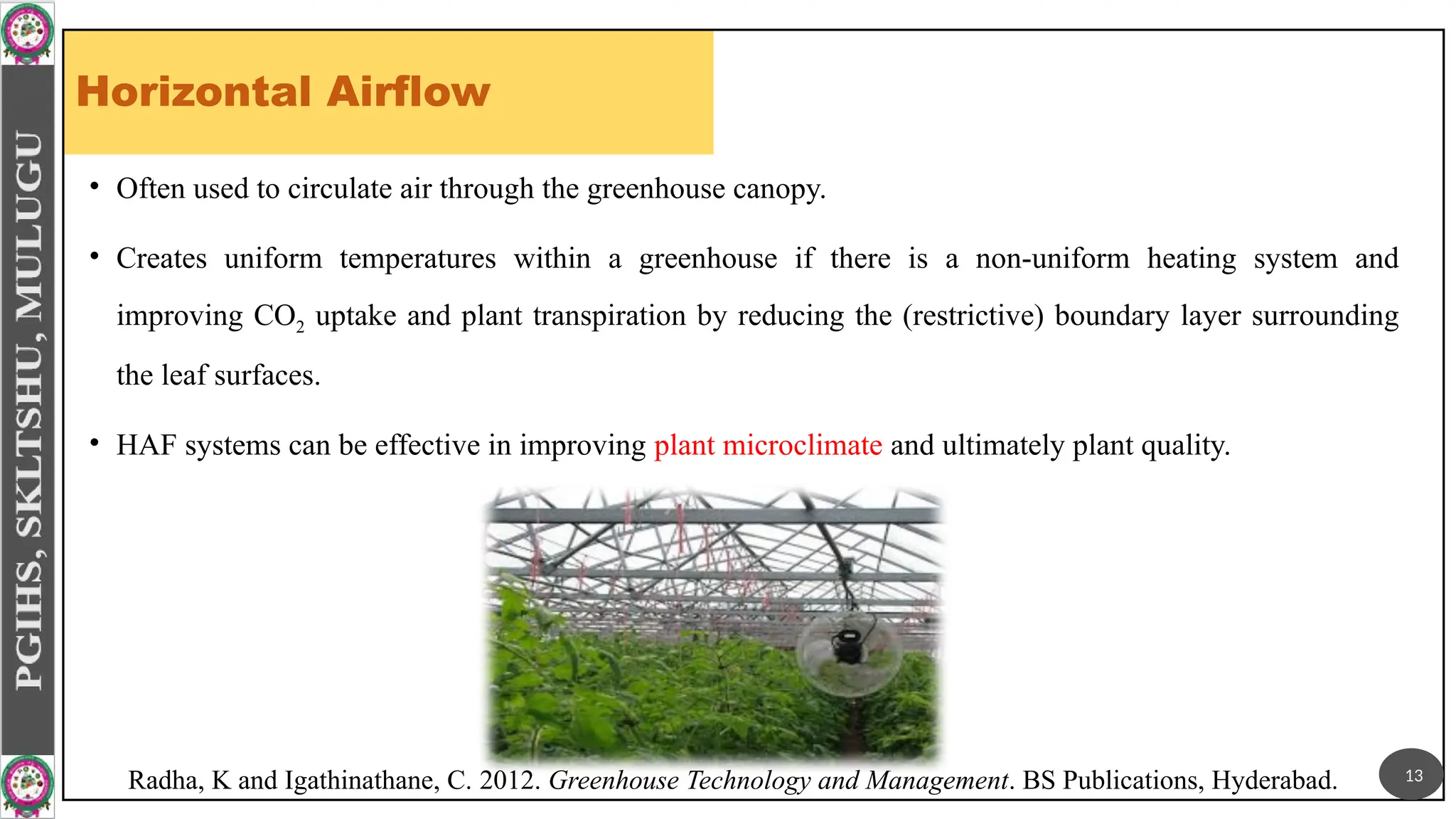
Horizontal Airflow
• Oftenused to circulate air through the greenhouse canopy.
• Creates uniform temperatures within a greenhouse if there is a non-uniform heating system and
improving CO2 uptake and plant transpiration by reducing the (restrictive) boundary layer surrounding
the leaf surfaces.
• HAF systems can be effective in improving plant microclimate and ultimately plant quality.
13
Radha, K and Igathinathane, C. 2012. Greenhouse Technology and Management. BS Publications, Hyderabad.
14.
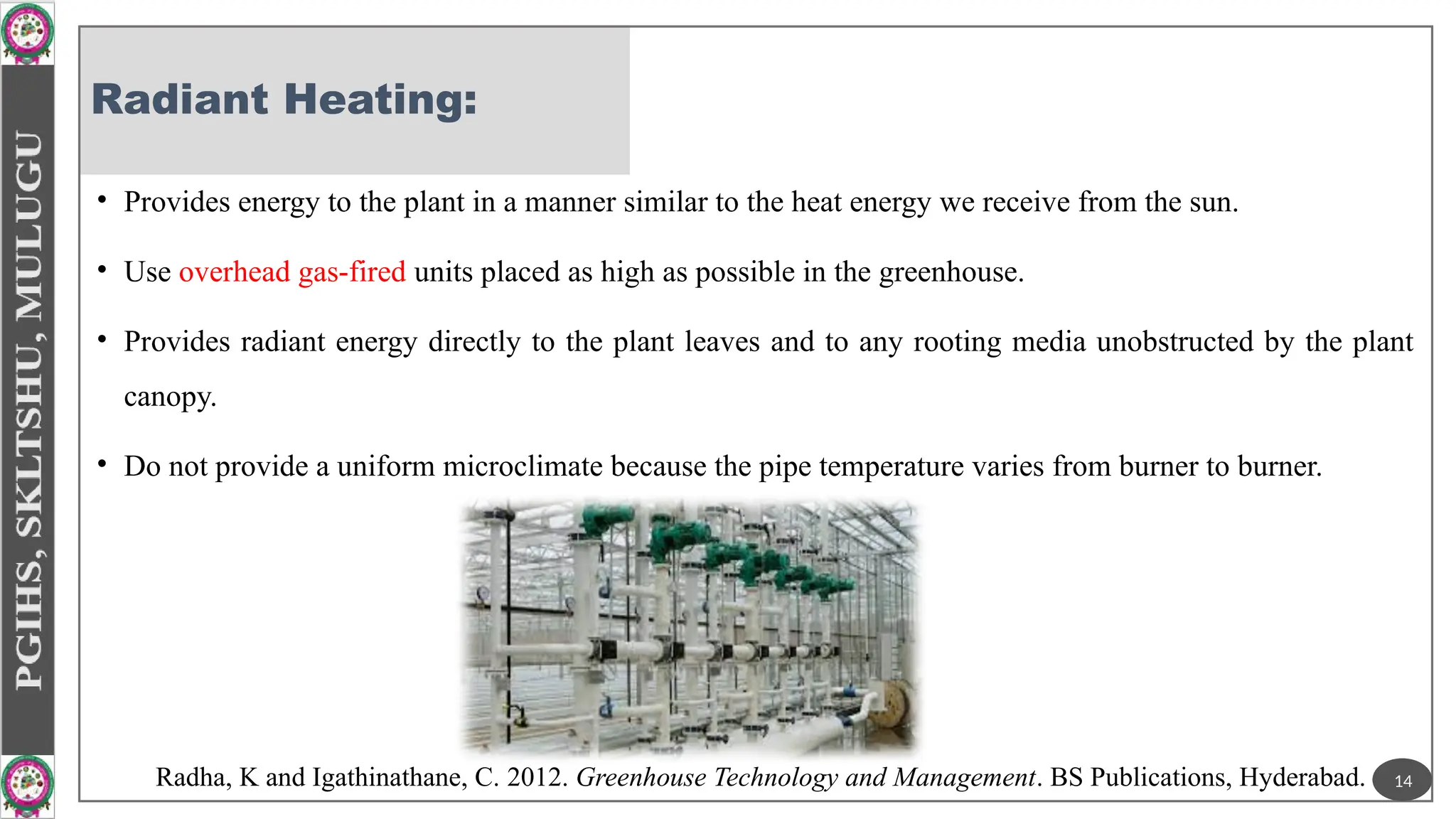
Radiant Heating:
• Providesenergy to the plant in a manner similar to the heat energy we receive from the sun.
• Use overhead gas-fired units placed as high as possible in the greenhouse.
• Provides radiant energy directly to the plant leaves and to any rooting media unobstructed by the plant
canopy.
• Do not provide a uniform microclimate because the pipe temperature varies from burner to burner.
14
Radha, K and Igathinathane, C. 2012. Greenhouse Technology and Management. BS Publications, Hyderabad.
15.
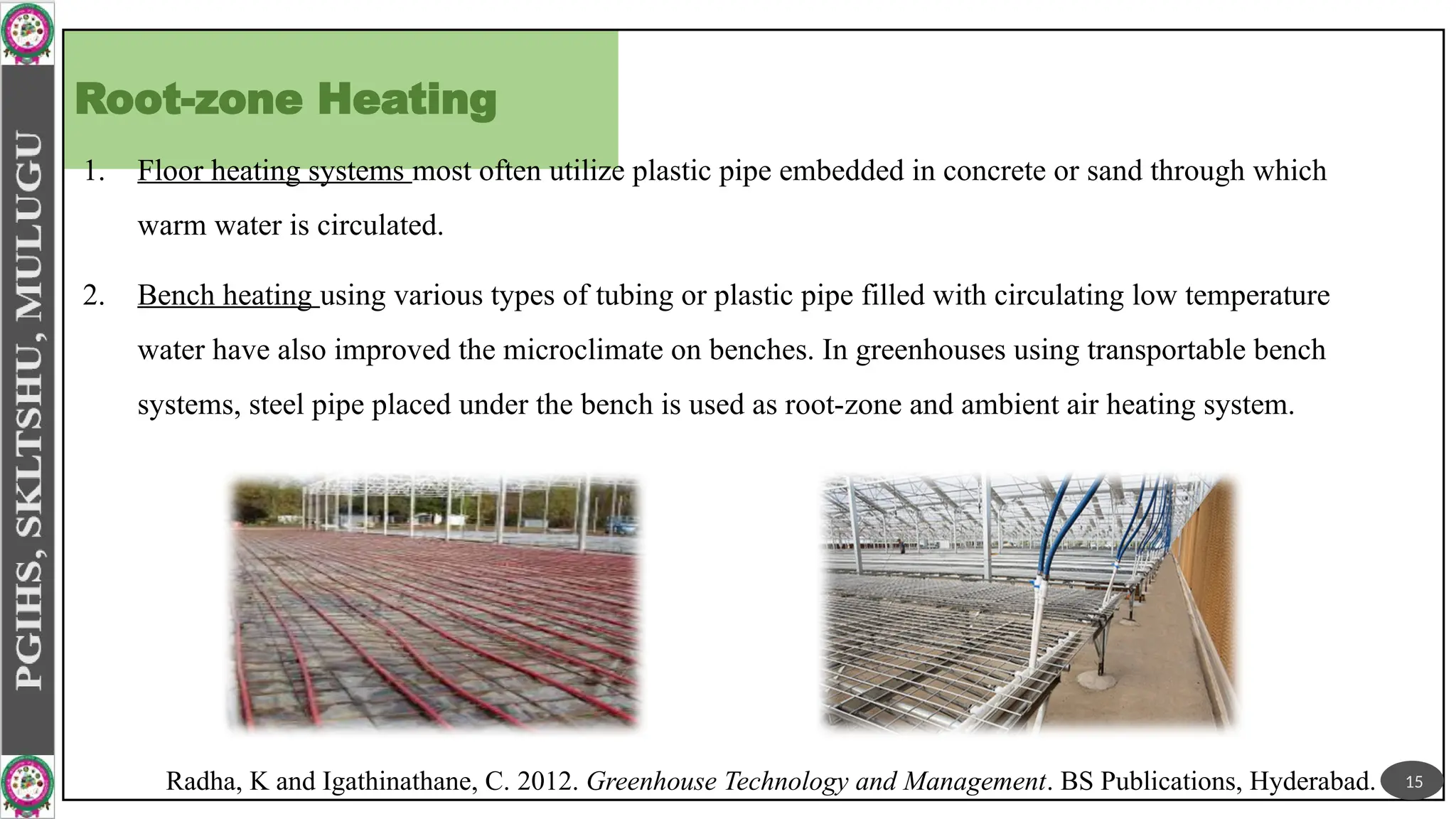
Root-zone Heating
1. Floorheating systems most often utilize plastic pipe embedded in concrete or sand through which
warm water is circulated.
2. Bench heating using various types of tubing or plastic pipe filled with circulating low temperature
water have also improved the microclimate on benches. In greenhouses using transportable bench
systems, steel pipe placed under the bench is used as root-zone and ambient air heating system.
15
Radha, K and Igathinathane, C. 2012. Greenhouse Technology and Management. BS Publications, Hyderabad.
16.
16
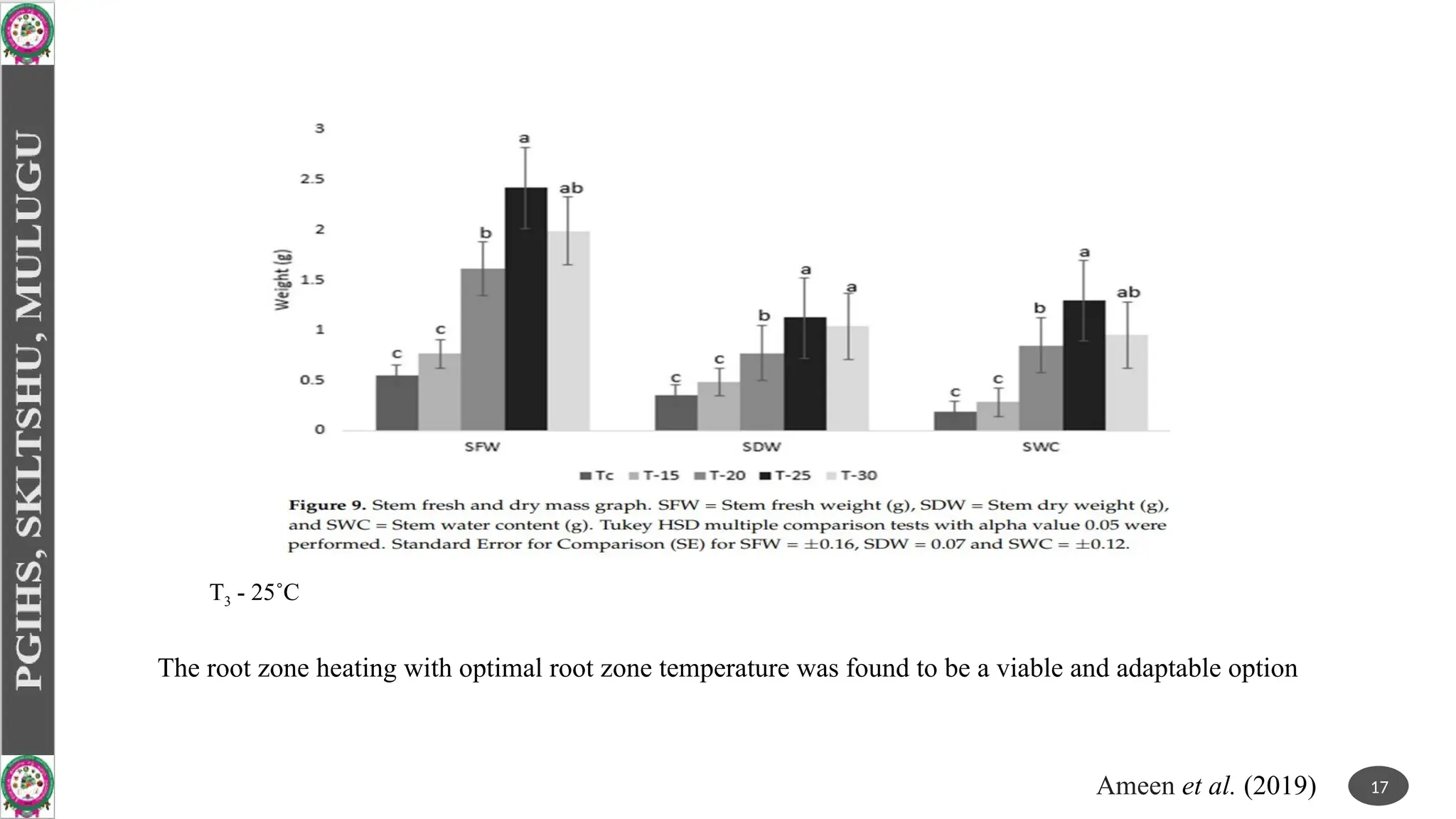
Energies, 12(5): 933.
Ameen,M., Zhang, Z., Wang, X., Yaseen, M., Umair, M., Noor, R.S., Lu, W., Yousaf, K., Ullah, F. and Memon, M.S., 2019.
Treatments include
T1 - 15˚C
T2 - 20˚C
T3 - 25˚C
T4 - 30˚C
TC- No heat(control)
17.
17
T3 - 25˚C
Ameenet al. (2019)
The root zone heating with optimal root zone temperature was found to be a viable and adaptable option
18.
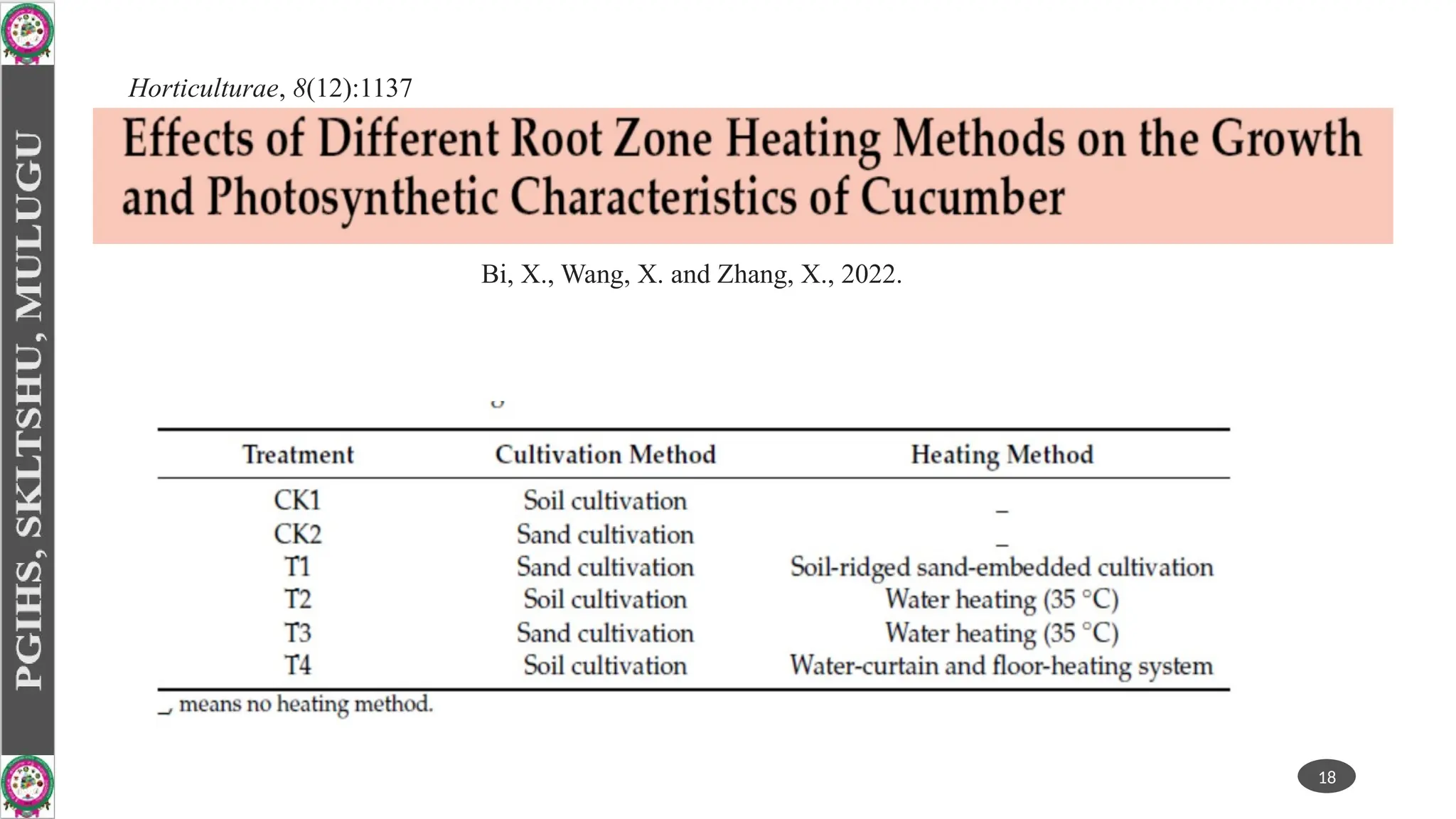
18
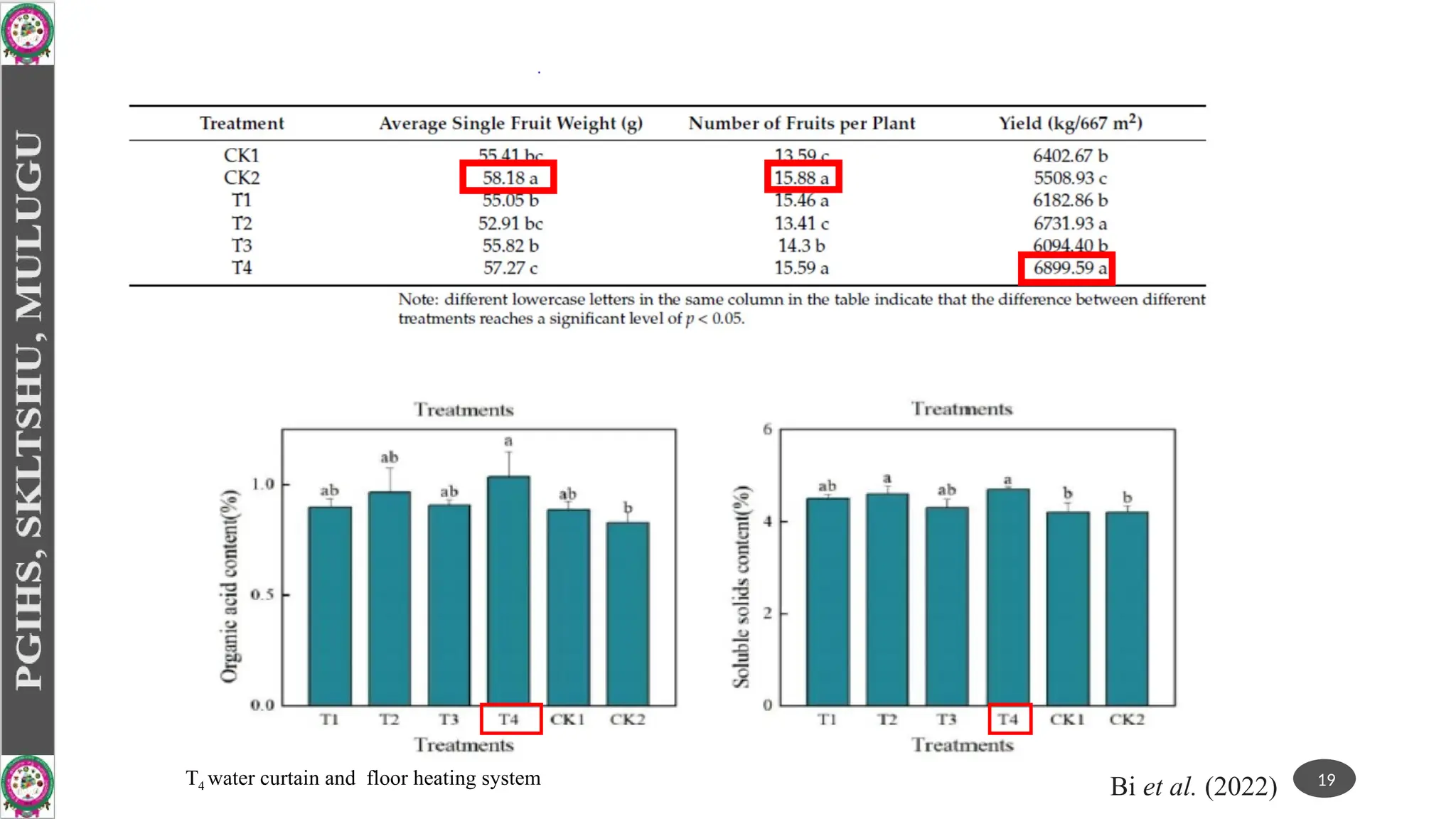
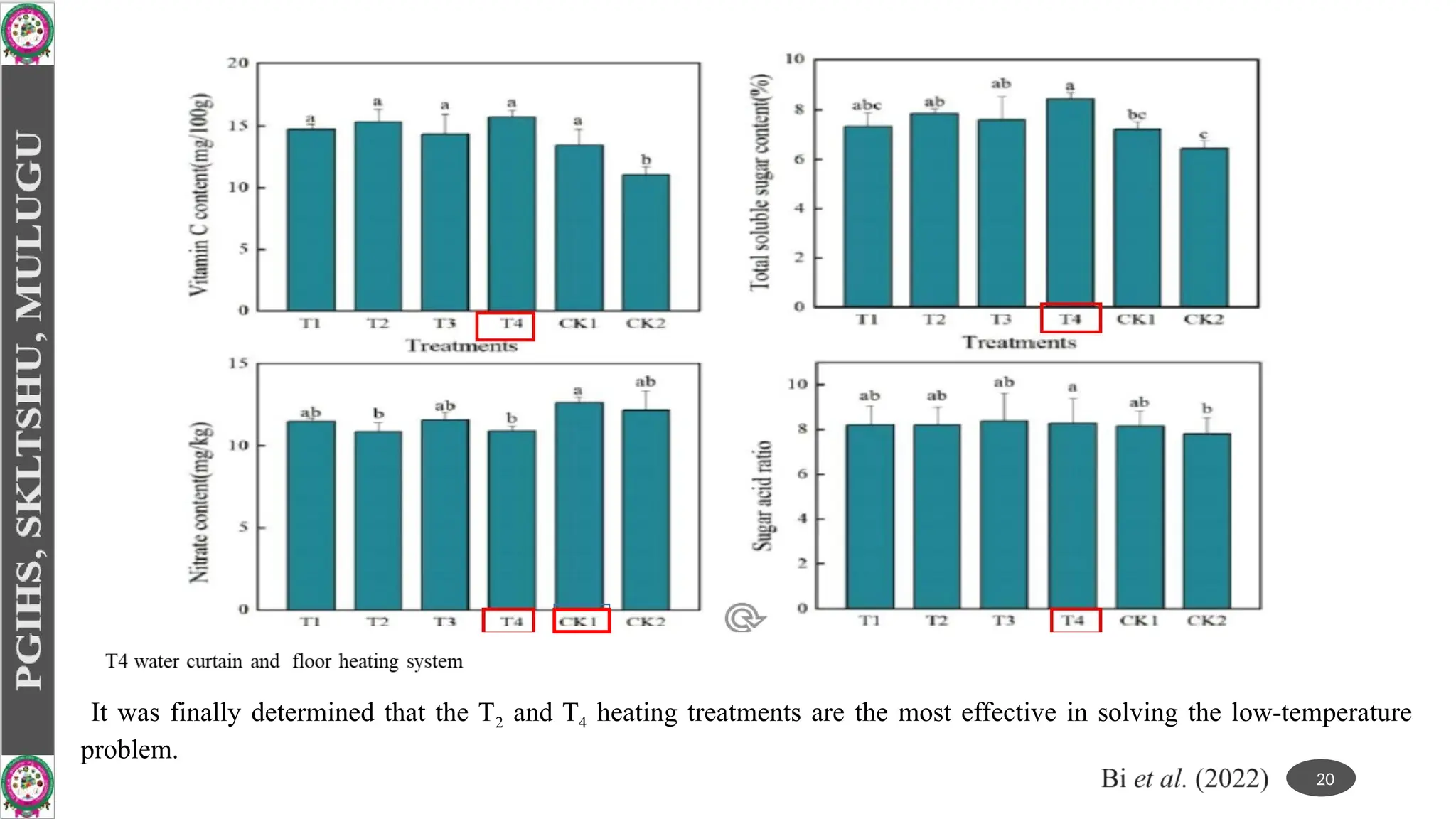
Bi, X., Wang,X. and Zhang, X., 2022.
Horticulturae, 8(12):1137
20
It was finallydetermined that the T2 and T4 heating treatments are the most effective in solving the low-temperature
problem.
21.
COOLING SYSTEM
• Asimple and effective way of reducing the difference between inside and outside air temperatures is to
improve ventilation.
• Greenhouse ventilation is required to control temperature and moisture levels and provide CO2 for good
crop production.
• There are two basic ventilation systems used in greenhouse production systems,
1. Natural Ventilation Systems.
2. Mechanical Ventilation Systems.
Rabbi et al., 2019
21
22.
• Roll-up sides,either hand or automatically operated, side vents, roof vents, and/or ridge
vents ,thermal screens, shade ,insect screens constructed as an integral part of the
greenhouse structure
Natural ventilation
• Air movement created by fans that bring air into the growing area through controllable
openings built into the greenhouse walls and exhaust it through the fan assembly.
Mechanical ventilation
• Controlled by thermostats and in some cases by humidity sensing devices when relative
humidity is the control parameter (e.g., For disease control).
• Fan ventilation systems with properly designed inlets can provide excellent temperature
control during all seasons.
Fan ventilation
22
Fog System
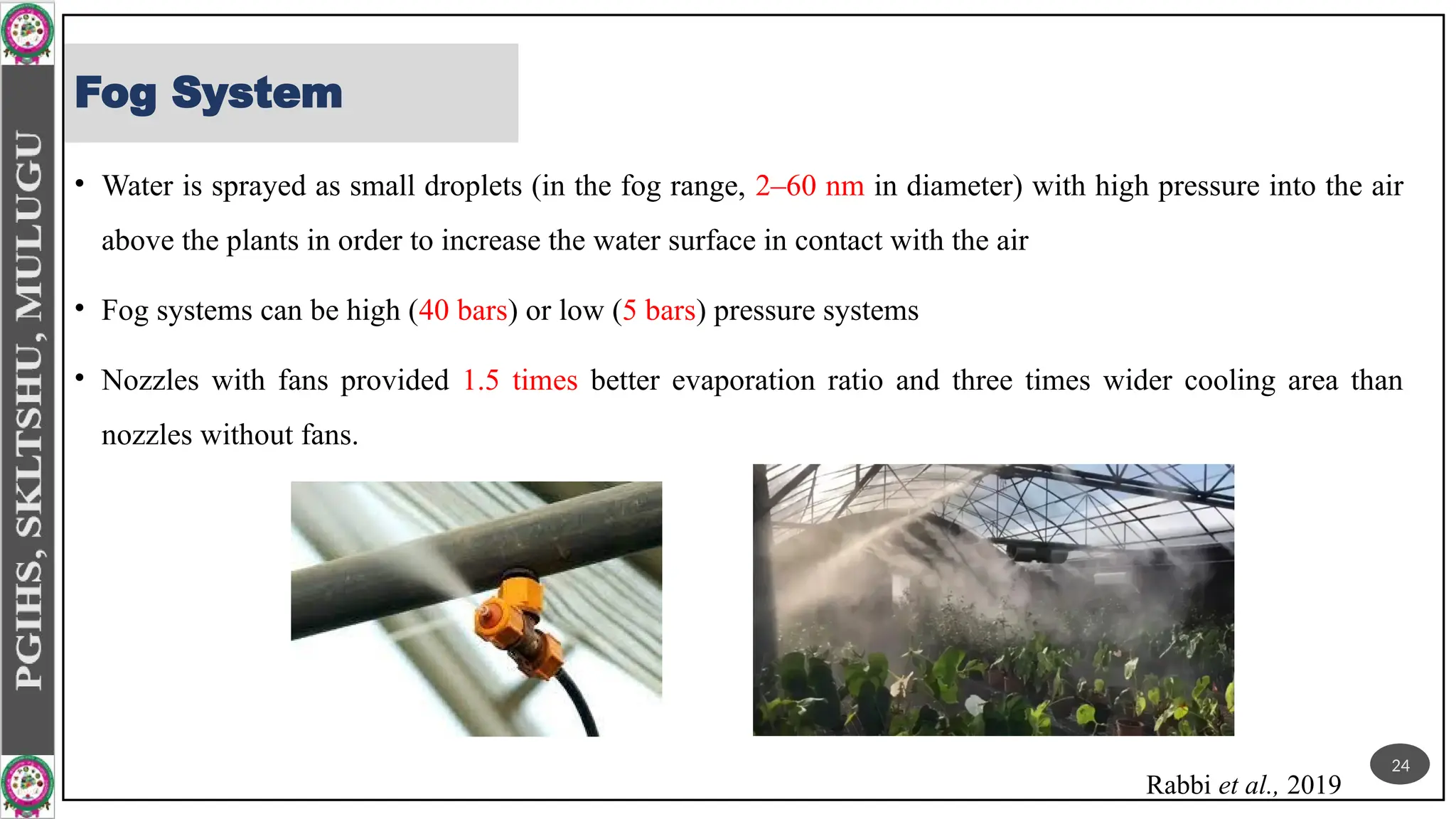
• Wateris sprayed as small droplets (in the fog range, 2–60 nm in diameter) with high pressure into the air
above the plants in order to increase the water surface in contact with the air
• Fog systems can be high (40 bars) or low (5 bars) pressure systems
• Nozzles with fans provided 1.5 times better evaporation ratio and three times wider cooling area than
nozzles without fans.
Rabbi et al., 2019
24
25.
Fan And PadCooling
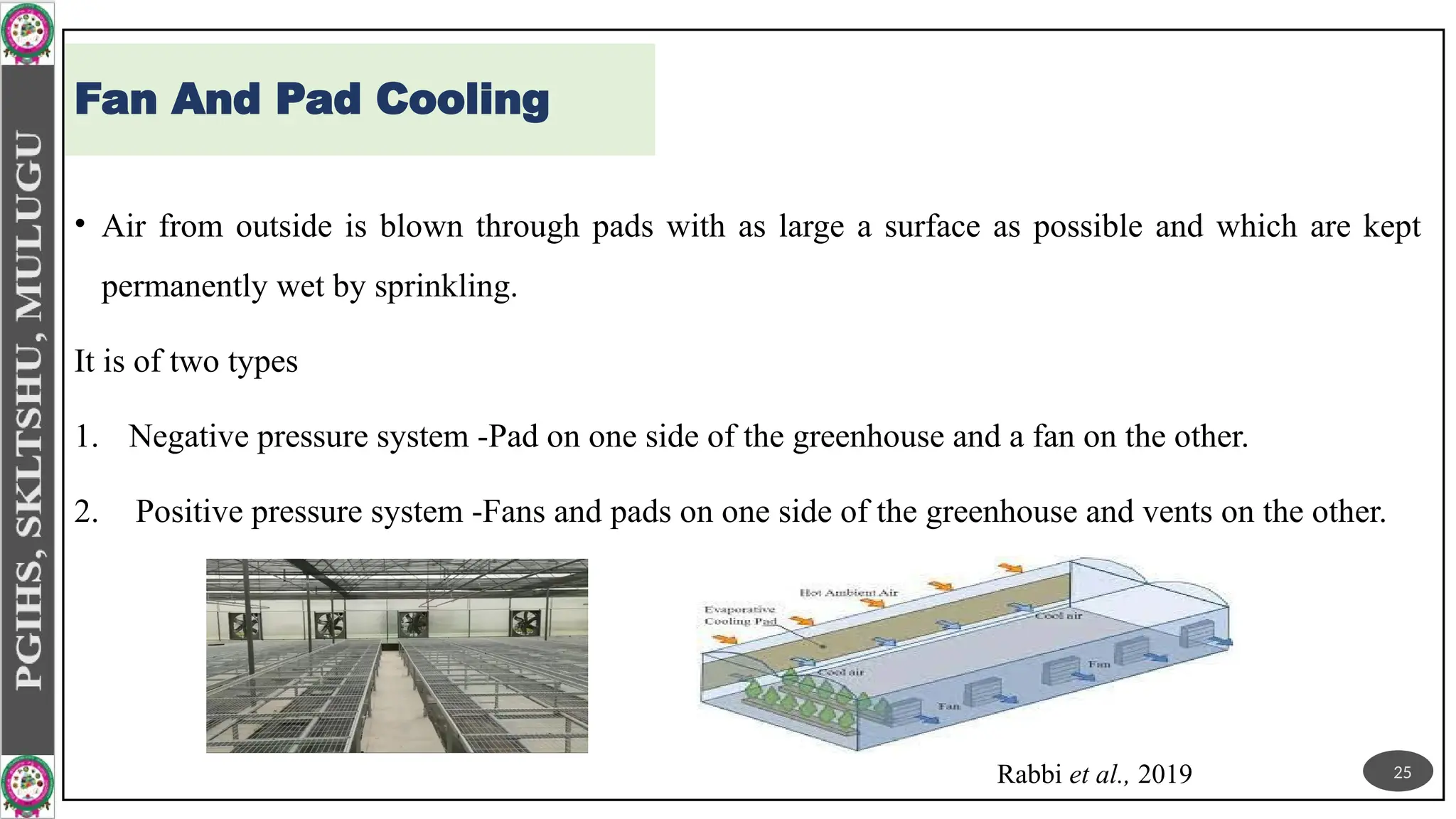
• Air from outside is blown through pads with as large a surface as possible and which are kept
permanently wet by sprinkling.
It is of two types
1. Negative pressure system -Pad on one side of the greenhouse and a fan on the other.
2. Positive pressure system -Fans and pads on one side of the greenhouse and vents on the other.
Rabbi et al., 2019 25
26.
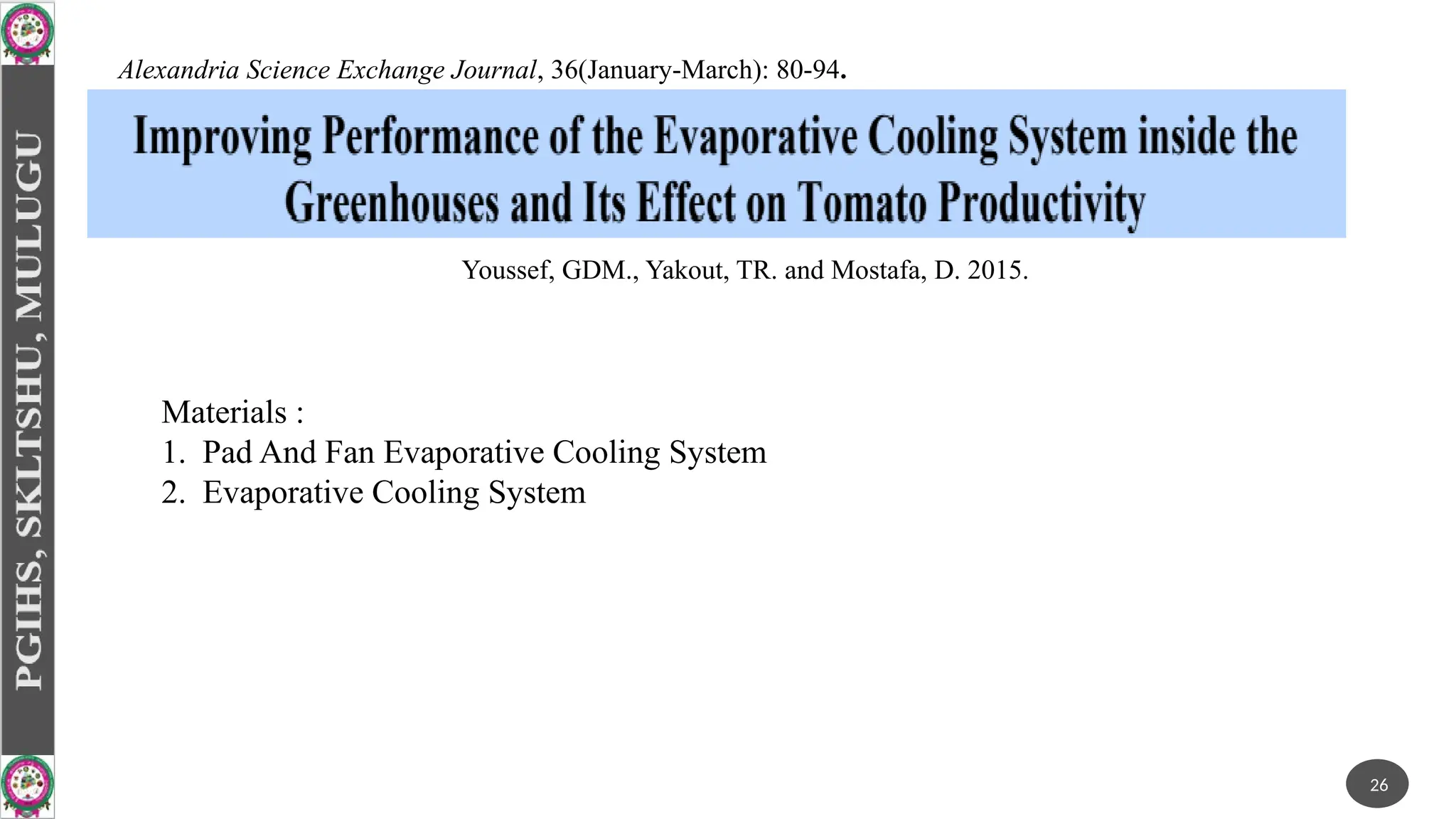
Materials :
1. PadAnd Fan Evaporative Cooling System
2. Evaporative Cooling System
26
Alexandria Science Exchange Journal, 36(January-March): 80-94.
Youssef, GDM., Yakout, TR. and Mostafa, D. 2015.
Conclusion:
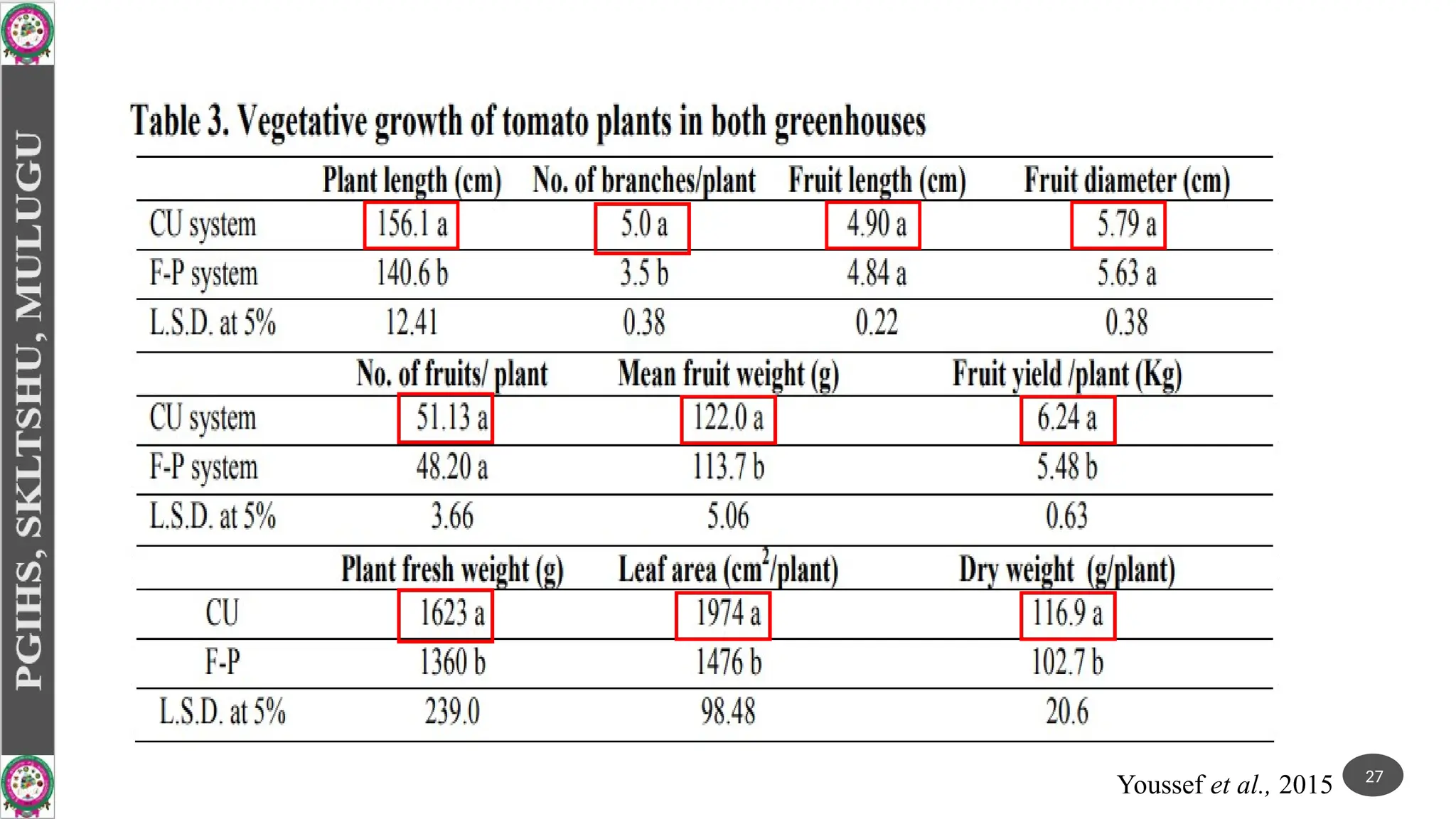
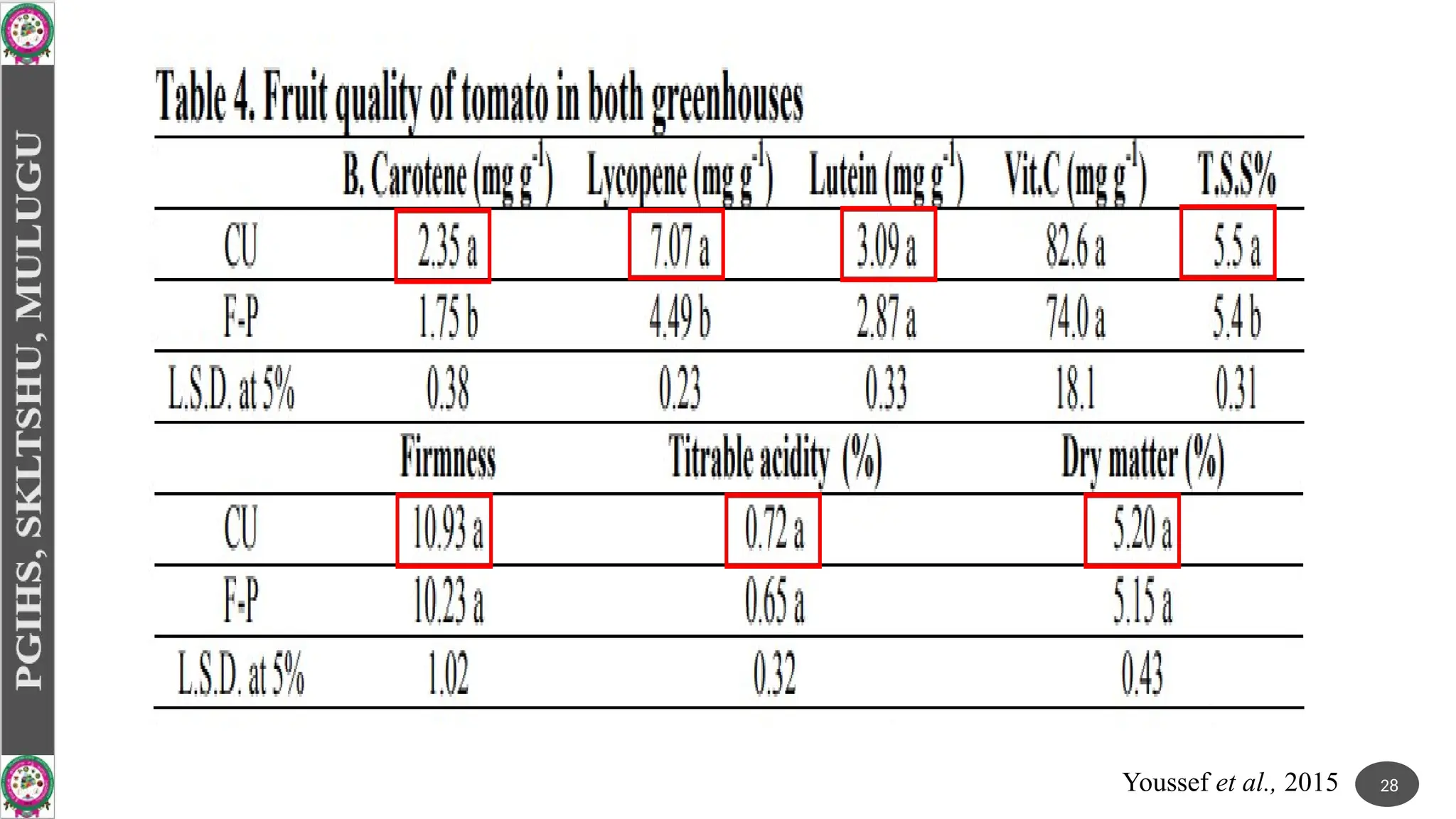
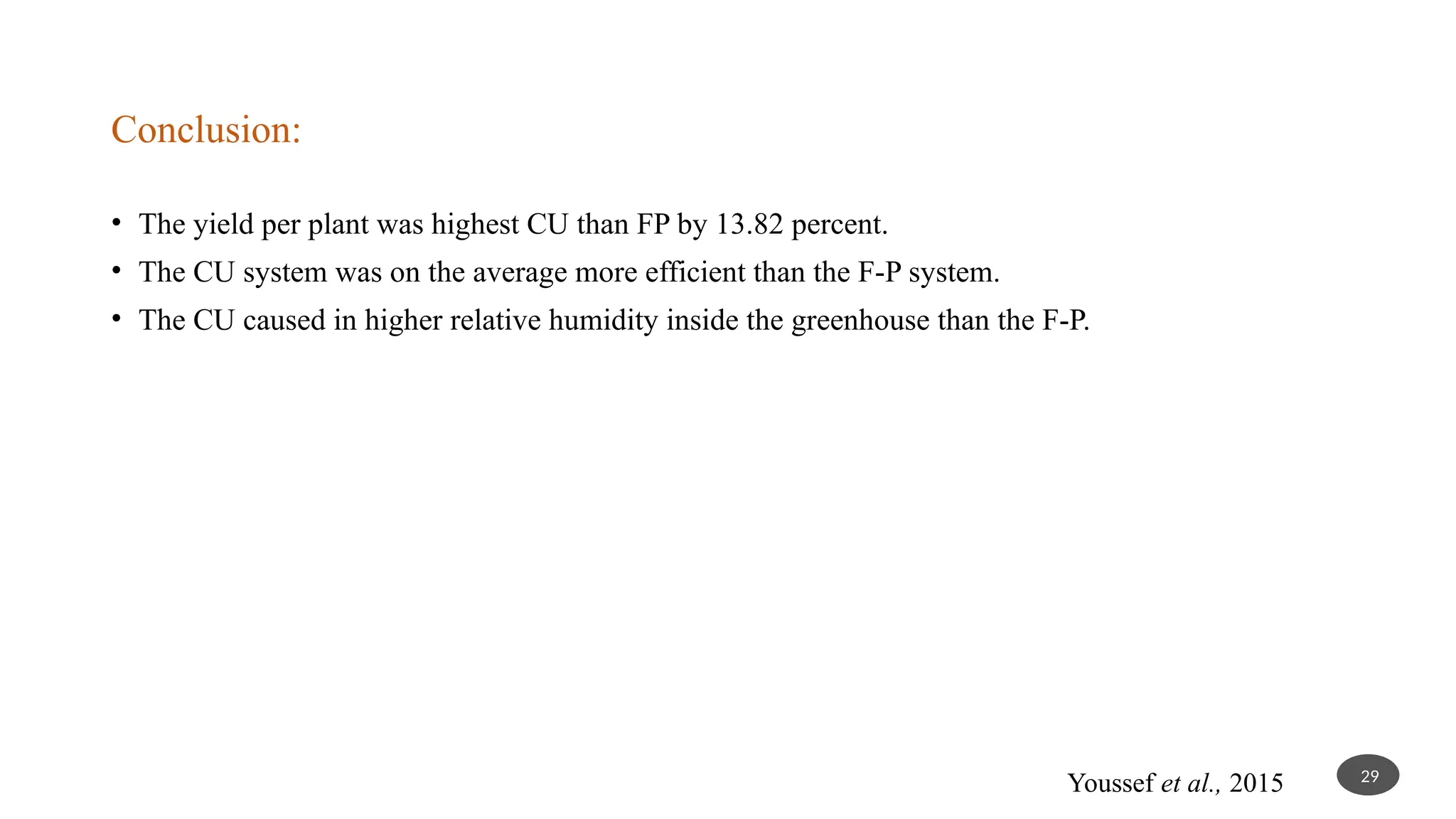
• The yieldper plant was highest CU than FP by 13.82 percent.
• The CU system was on the average more efficient than the F-P system.
• The CU caused in higher relative humidity inside the greenhouse than the F-P.
29
Youssef et al., 2015
30.
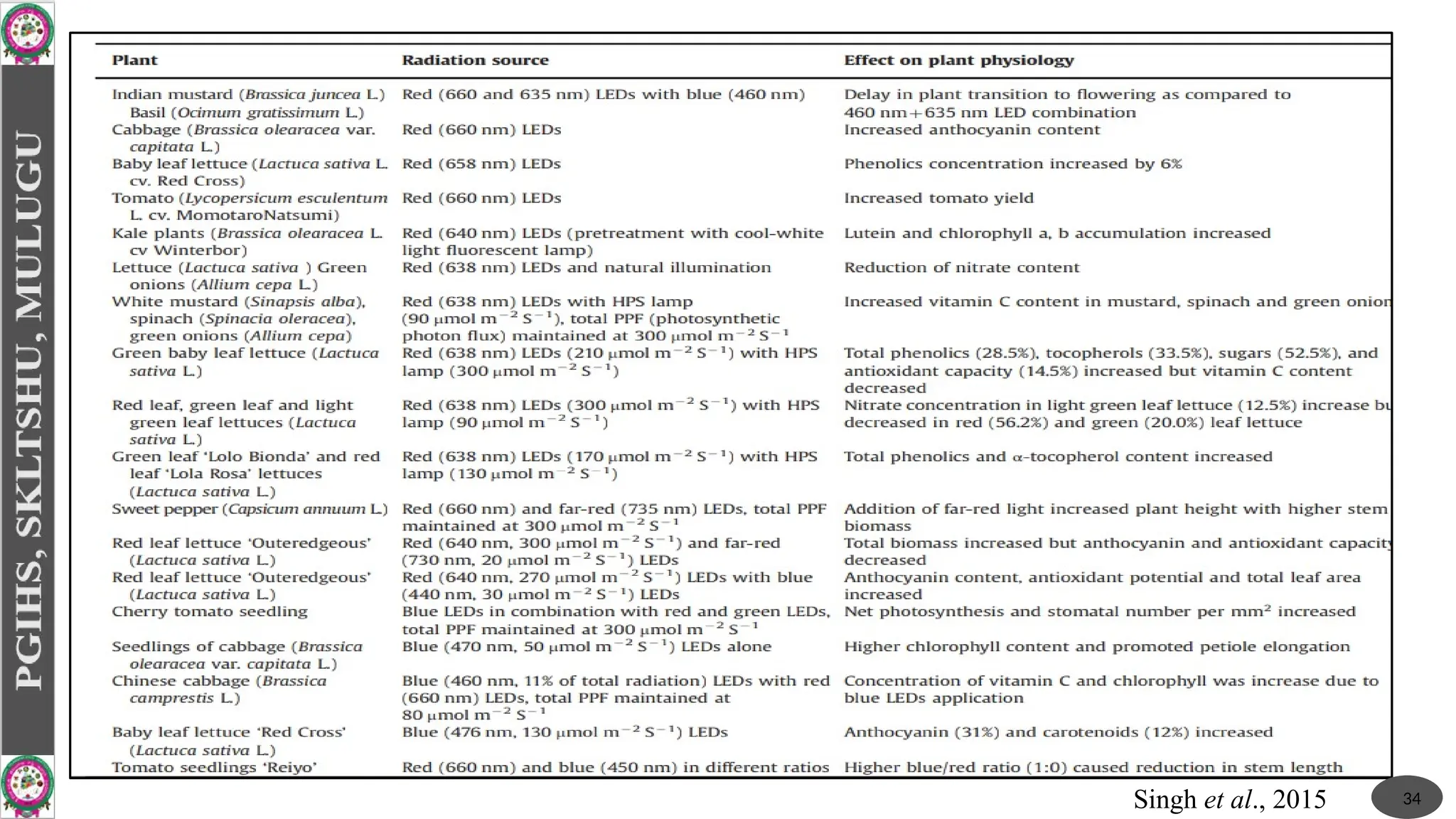
• The performanceof crops is influenced by three aspects of light namely light intensity, quality and
duration
• Fluorescent lamps, High-intensity discharge(HID) lamps, such as Metal Halide (MH) and High-
Pressure Sodium lamps (HPS),UV,Yellow mercury lamps are typically used in greenhouses and
plant growth chambers.
LIGHTNING SYSTEM
30
Singh et al., 2015
31.
Metal Halide (MH)
•Metal halides (MH) lights are commonly used during vegetative plant growth but are less popular than HPS
lamps for flowering, fruiting, or full-lifecycle lighting.
• If MH lamps are used in the flowering stage, they are often of a higher rated power, such as 1,000 W, or are
“enhanced” to provide more red-light output.
31
Singh et al., 2015
32.
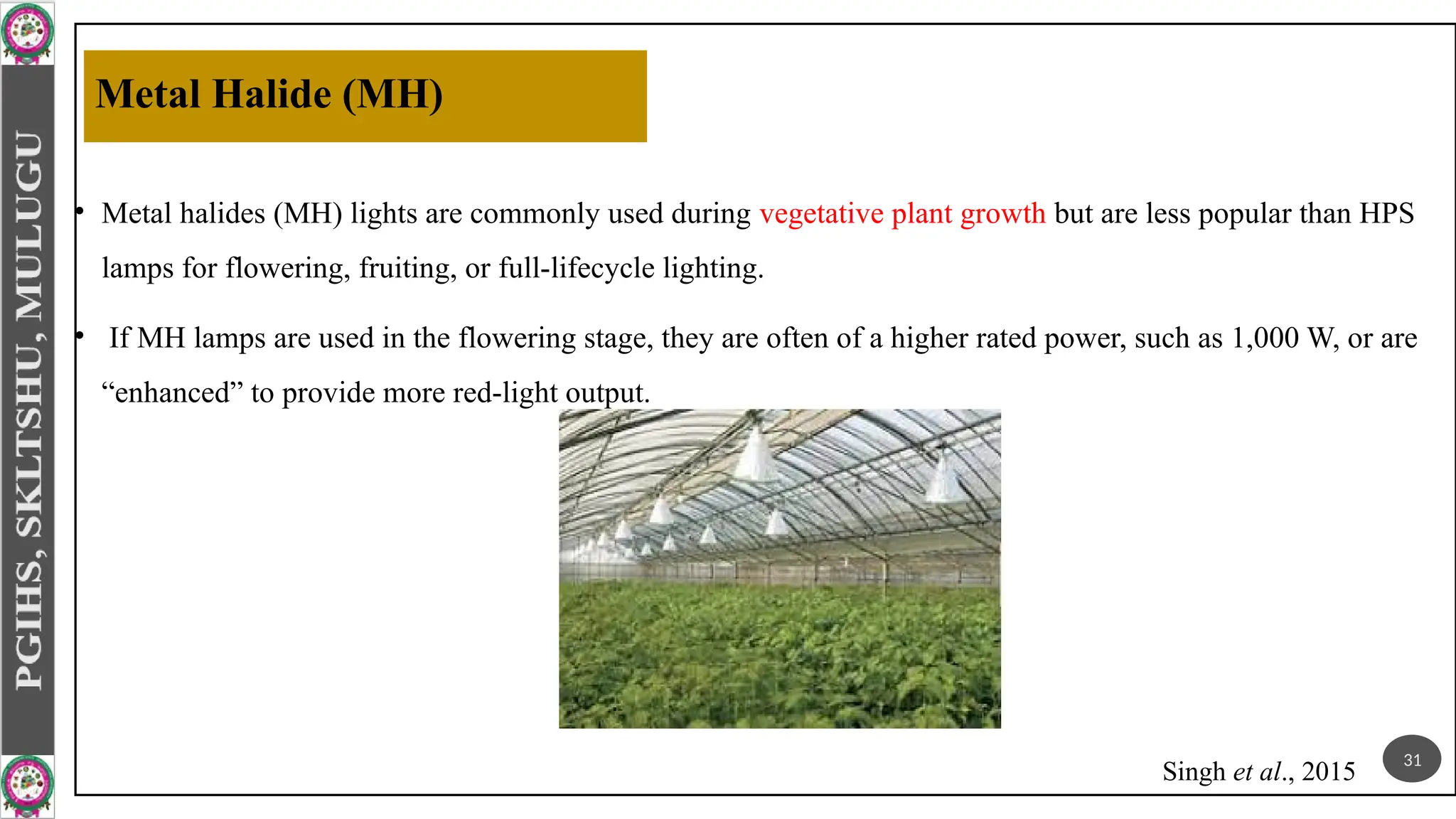
• High-pressure sodium(HPS) lamps are the most commonly used HID fixtures in commercial
greenhouses.
• HPS lamps produce light mainly in the yellow and red end of the light spectrum, which makes
these lighting systems a great fit for late-phase (flowering and fruiting) plant growth.
• HPS lamps may require supplementation with fluorescent, metal halide, or other light sources
high in blue light.
High Pressure Sodium (HPS)
32
Singh et al., 2015
33.
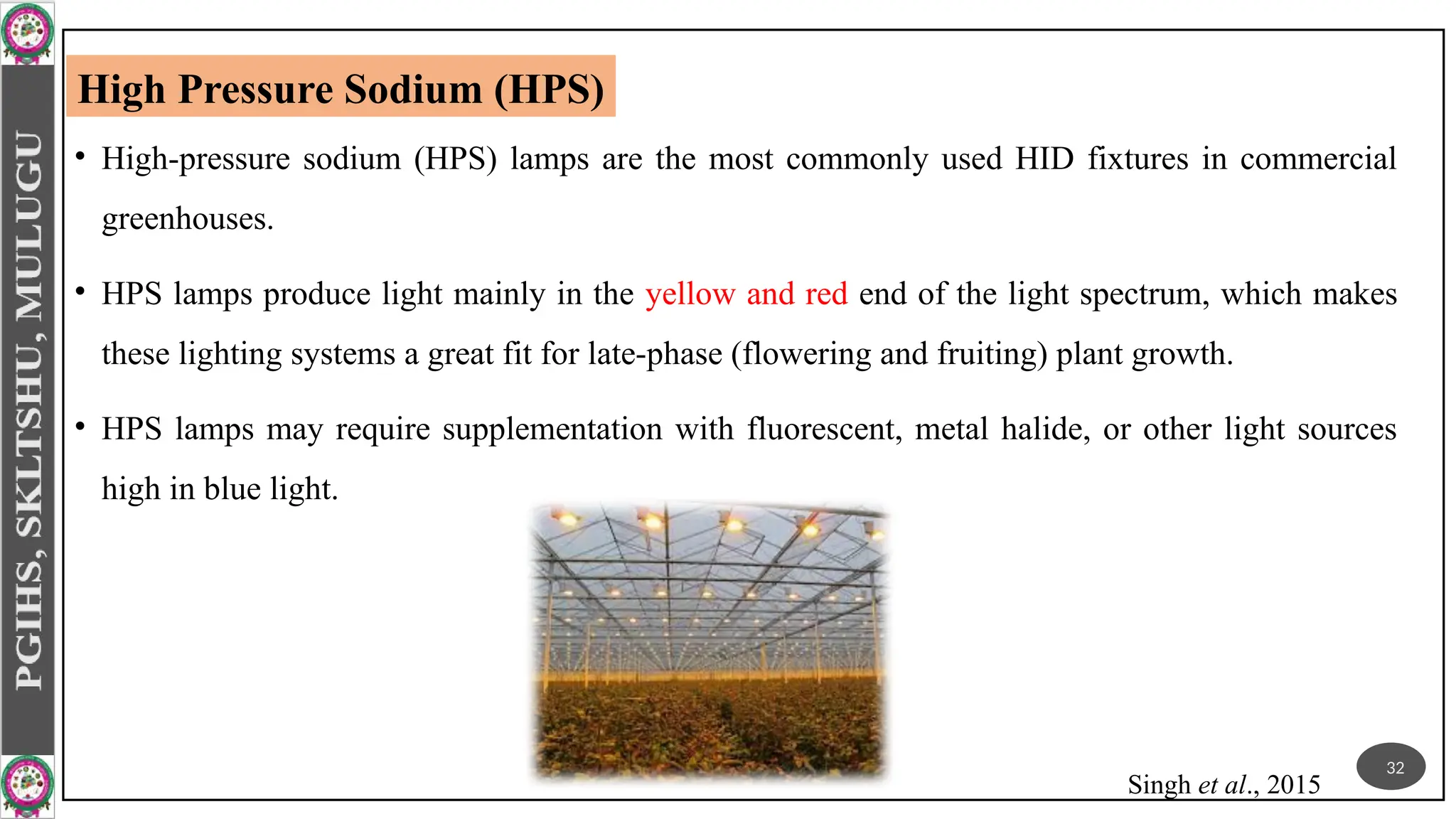
• LEDs canbe manufactured to emit photon colors that match the absorbance peaks of important
plant pigments, such as the red and far-red-absorbing forms of phytochrome, or the red and blue
peaks of leaf photosynthetic action spectra.
• Can be used at low temperature (till − 40 °C) and high humidity.
Singh et al., 2015
Light-emitting diodes (LEDs)
33
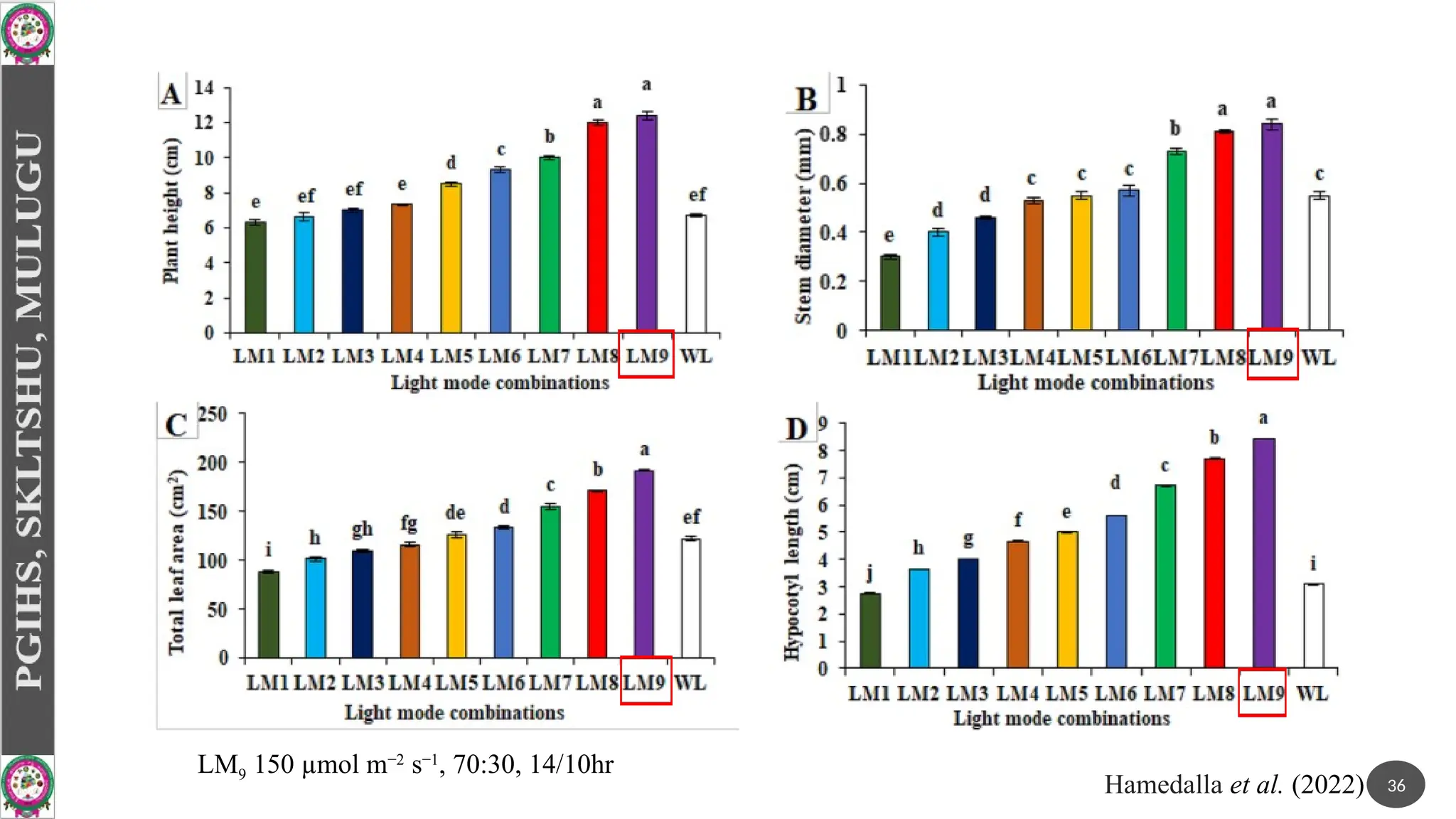
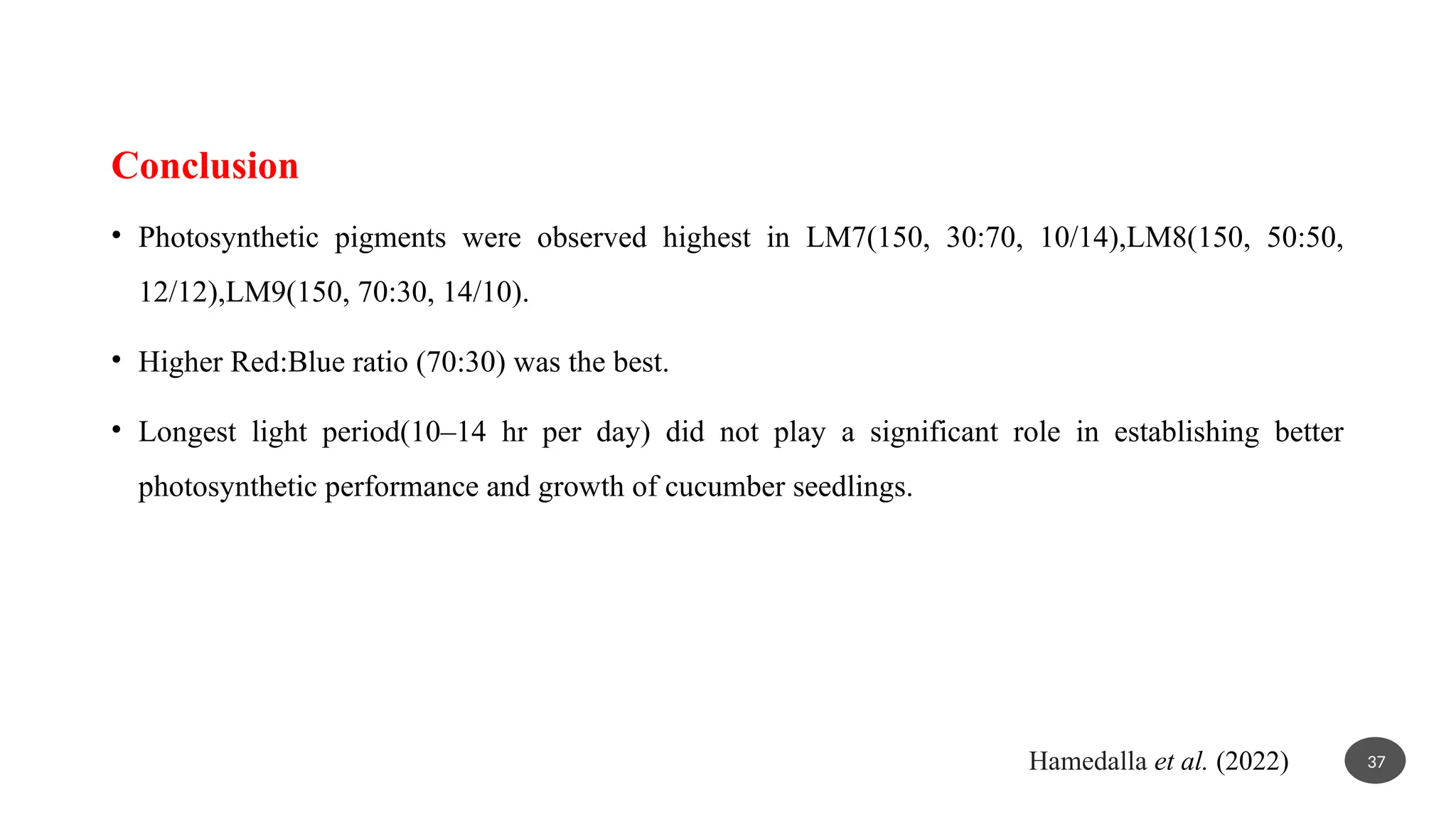
Conclusion
• Photosynthetic pigmentswere observed highest in LM7(150, 30:70, 10/14),LM8(150, 50:50,
12/12),LM9(150, 70:30, 14/10).
• Higher Red:Blue ratio (70:30) was the best.
• Longest light period(10–14 hr per day) did not play a significant role in establishing better
photosynthetic performance and growth of cucumber seedlings.
37
Hamedalla et al. (2022)
38.
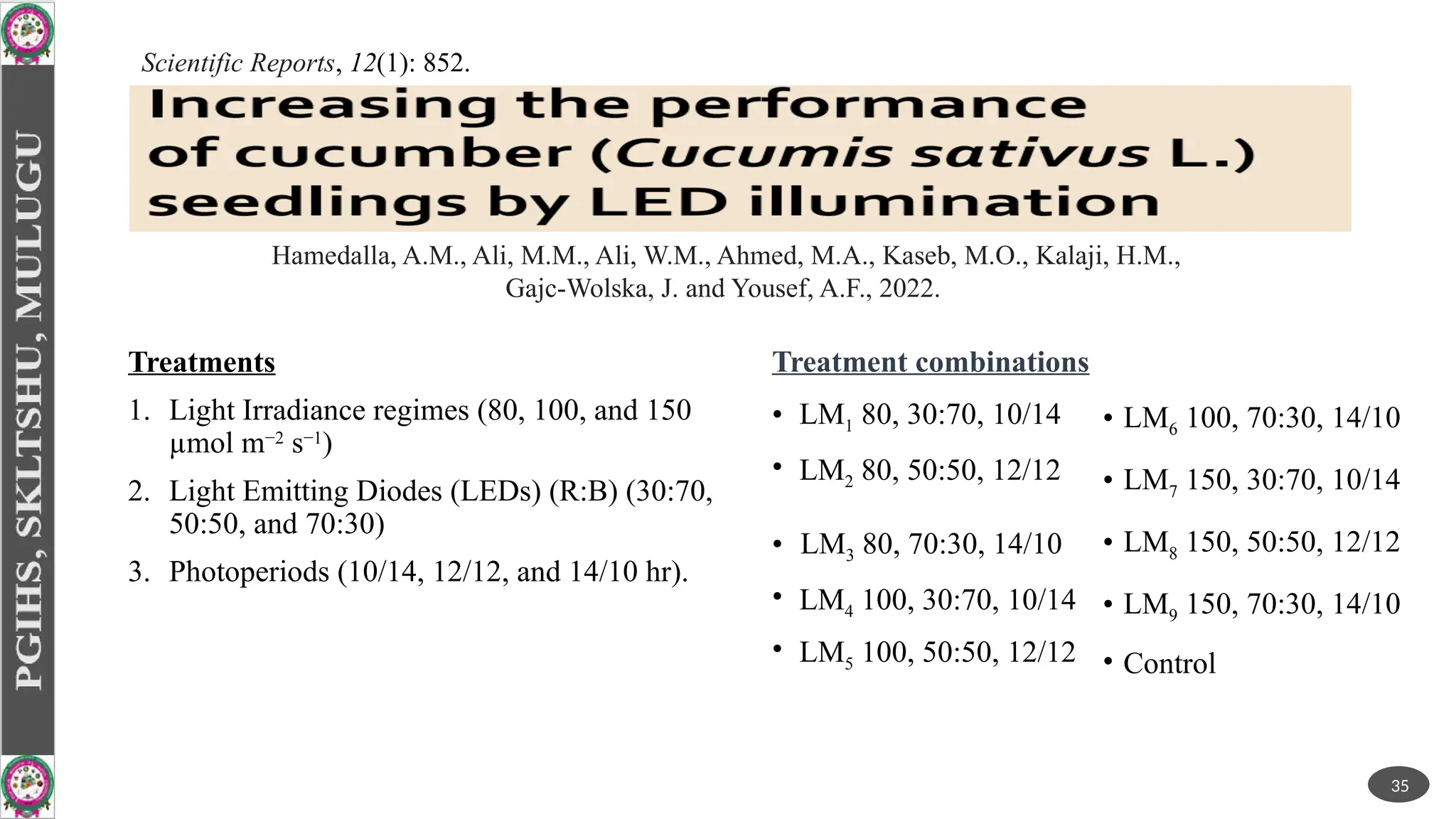
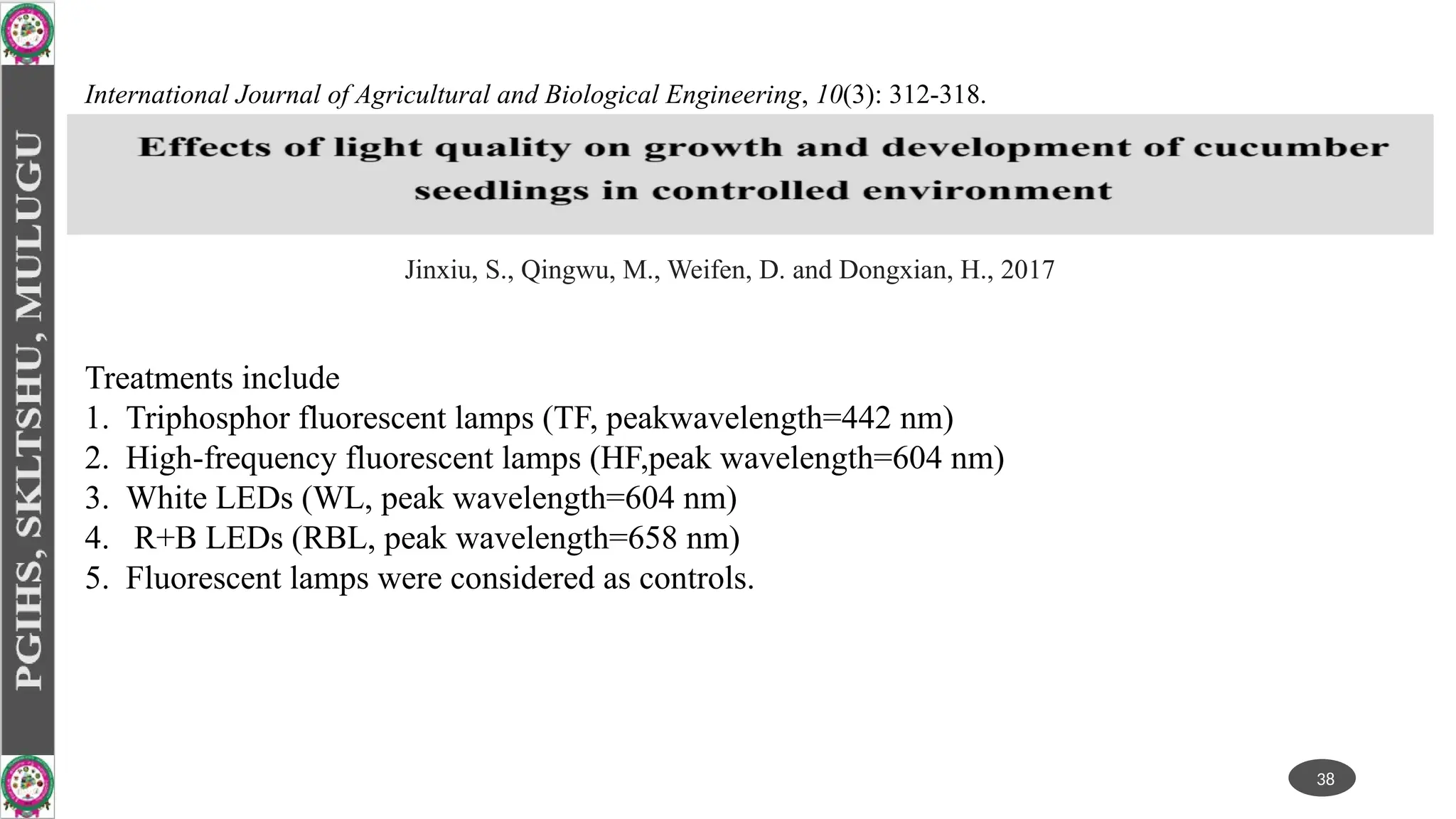
Treatments include
1. Triphosphorfluorescent lamps (TF, peakwavelength=442 nm)
2. High-frequency fluorescent lamps (HF,peak wavelength=604 nm)
3. White LEDs (WL, peak wavelength=604 nm)
4. R+B LEDs (RBL, peak wavelength=658 nm)
5. Fluorescent lamps were considered as controls.
38
International Journal of Agricultural and Biological Engineering, 10(3): 312-318.
Jinxiu, S., Qingwu, M., Weifen, D. and Dongxian, H., 2017
Conclusion :
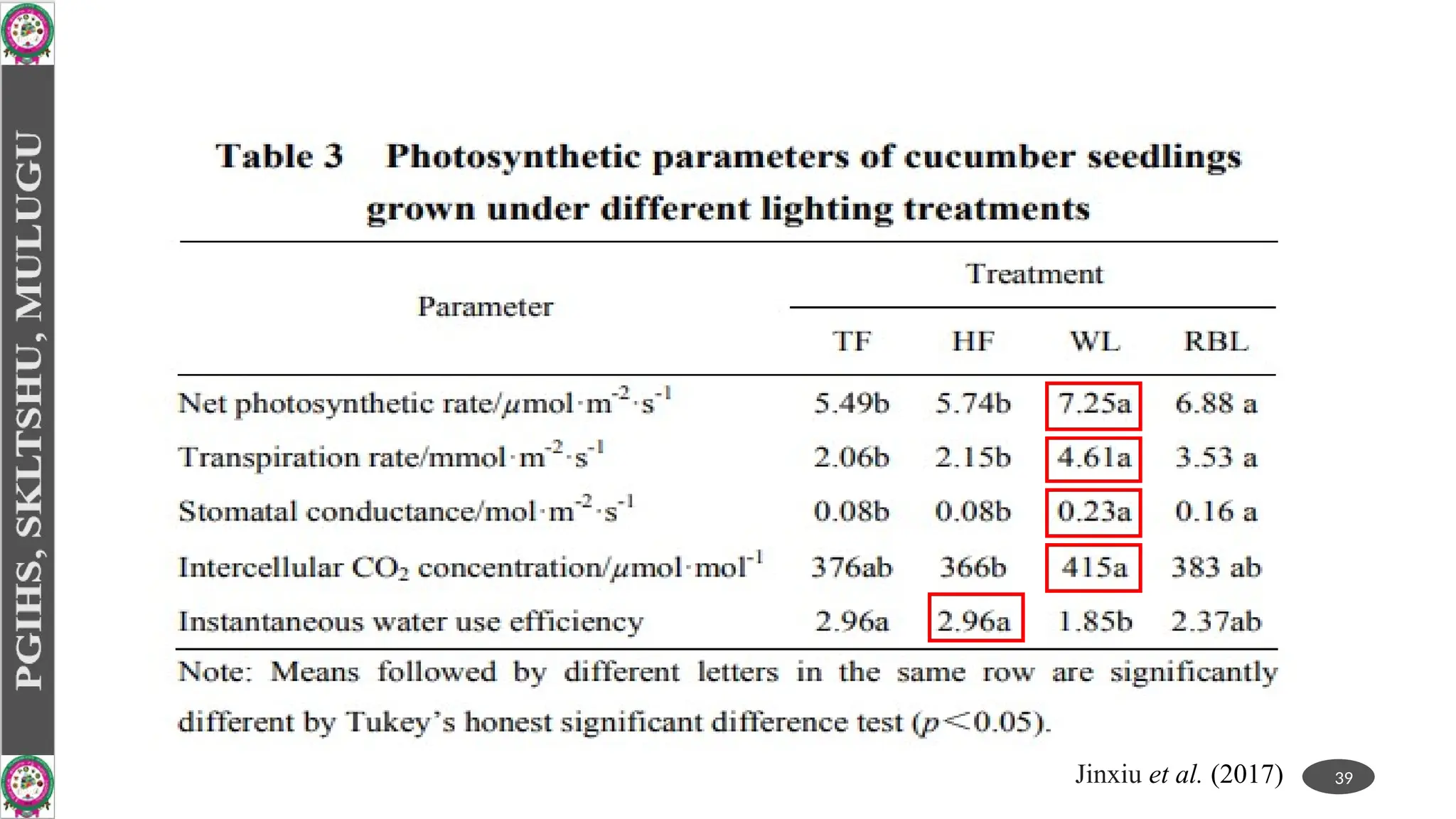
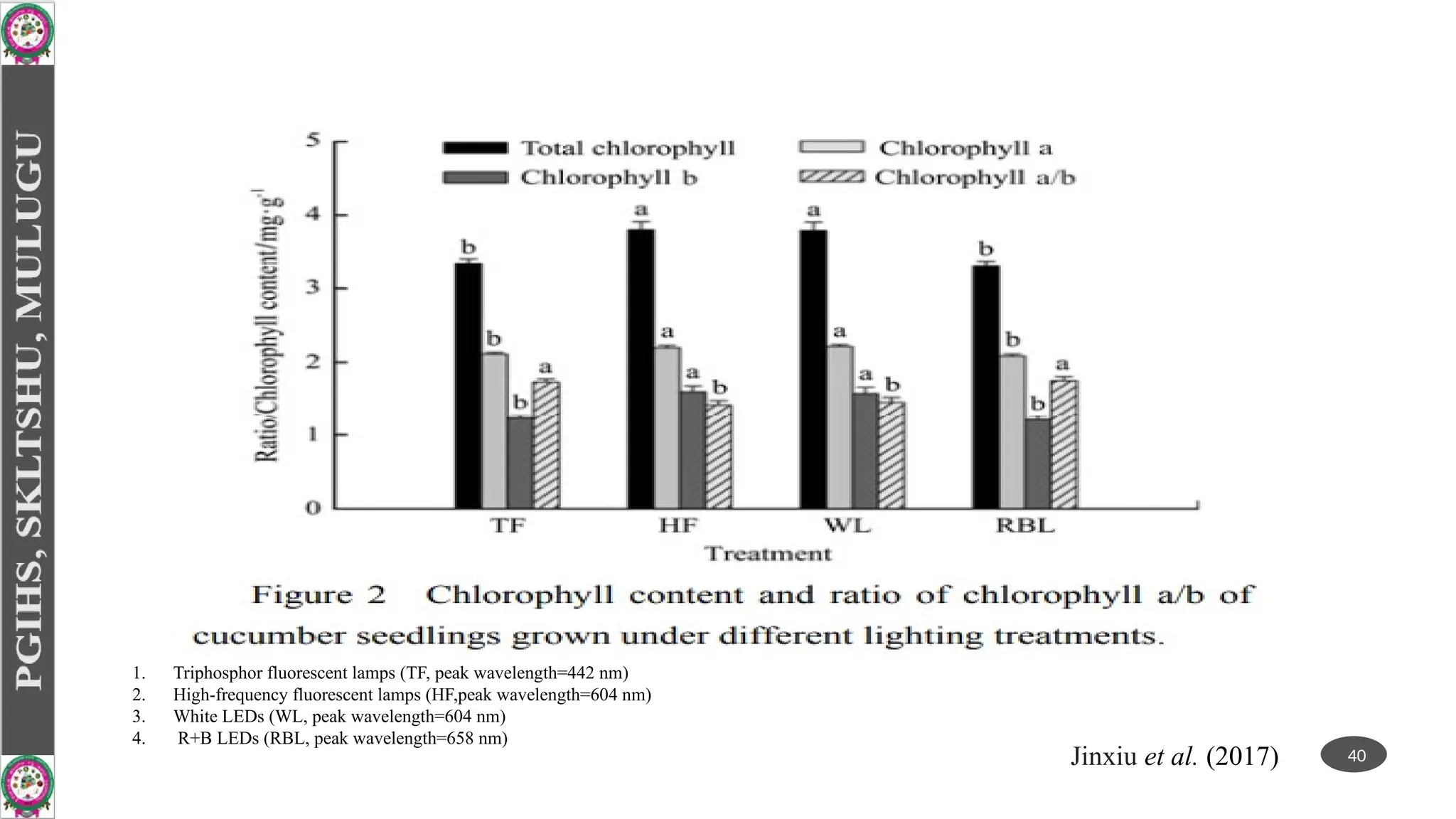
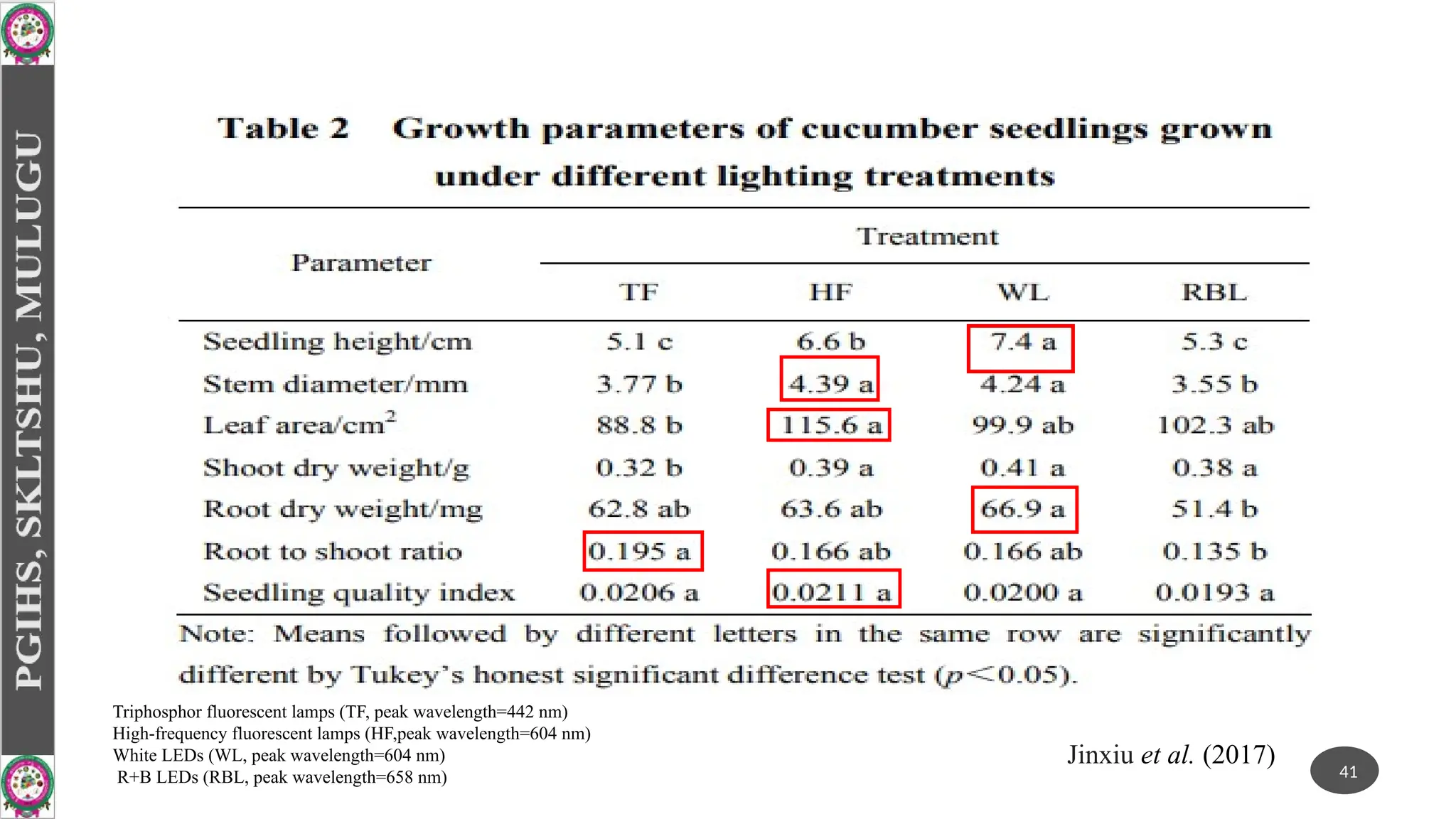
• Highquality cucumber seedlings can be efficiently produced under the broad-spectrum WL that
emit a reasonable amount of blue, green and red light, and the lack of green light and/or high ratio
of red to blue light under the RBL may cause undesired plant attributes.
42
43.
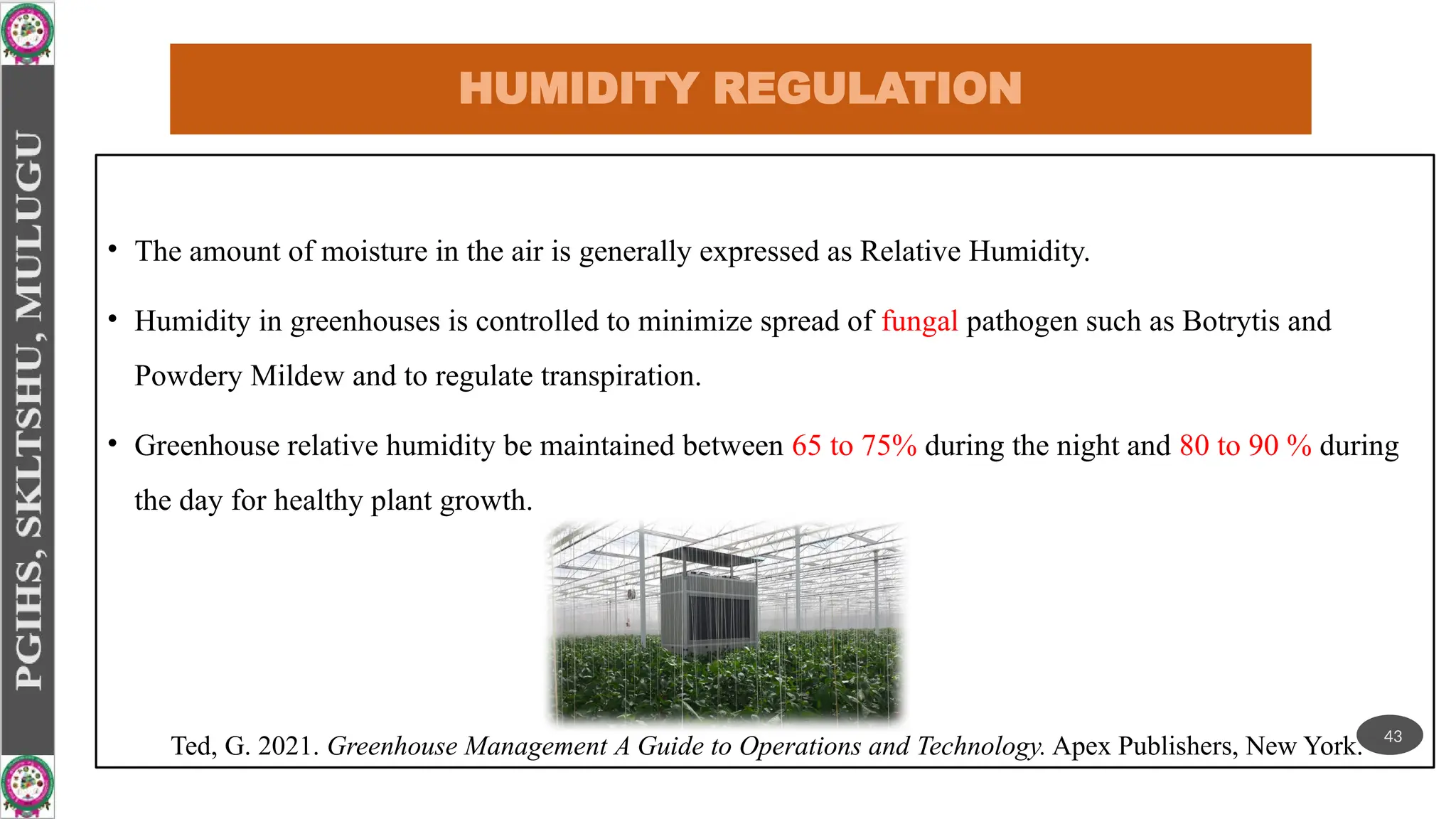
HUMIDITY REGULATION
• Theamount of moisture in the air is generally expressed as Relative Humidity.
• Humidity in greenhouses is controlled to minimize spread of fungal pathogen such as Botrytis and
Powdery Mildew and to regulate transpiration.
• Greenhouse relative humidity be maintained between 65 to 75% during the night and 80 to 90 % during
the day for healthy plant growth.
Ted, G. 2021. Greenhouse Management A Guide to Operations and Technology. Apex Publishers, New York. 43
44.
Methods To MaintainHumidity:
Air Circulation
• Horizontal air flow fans and polytubes can be used to move air in the greenhouse.
Bottom Heat
• Bottom heat will improve air circulation inside plant canopies and will help to prevent condensation on leaf
surfaces.
• The warm air that rises creates air movement around the plants. Bottom heat also keeps the plant surfaces
warm, preventing condensation on the plants.
44
Ted, G. 2021. Greenhouse Management A Guide to Operations and Technology. Apex Publishers, New York.
45.
Greenhouse Design:
A slopedroof (rise to run of 1:2) will encourage moisture to move toward the gutter and collect without
dripping, compared with a roof with a shallow slope. A double-layer glazing will have a warmer interior-
layer surface temperature because of the air-gap insulation between the layers, and thus less condensation.
Anti-Drip Plastic:
The use of a wetting agent either sprayed on the interior surface or as part of the formulation of the glazing
on poly covered greenhouses can also help to reduce the humidity level.
45
Ted, G. 2021. Greenhouse Management A Guide to Operations and Technology. Apex Publishers, New York.
46.
Ventilation and Heating:
•A common dehumidification practice is simply to open the windows, allowing moist greenhouse air to be
replaced by relatively dry outside air.
• As dry air heats up in the greenhouse, it absorbs moisture and lowers the humidity.
Cultural Practices:
• Proper planting dates, adequate spacing, and morning watering (so that foliage can dry prior to lower
night temperatures) are good cultural practices for managing relative humidity and controlling plant
diseases.
• Closely-spaced plants and overlapping canopies can create microclimates different from the rest of the
structure.
46
Ted, G. 2021. Greenhouse Management A Guide to Operations and Technology. Apex Publishers, New York.
47.
WATERING SYSTEM
• Theexact time and volume of irrigation are probably the most important factors for efficient irrigation
management and saving water which in turn also improve the productivity and quality of crops grown in
the greenhouse.
• Soil-based greenhouse crops every 3–4 days(winter),daily(warm)
• Soilless systems one hour after sunrise and stops one hour before sunset
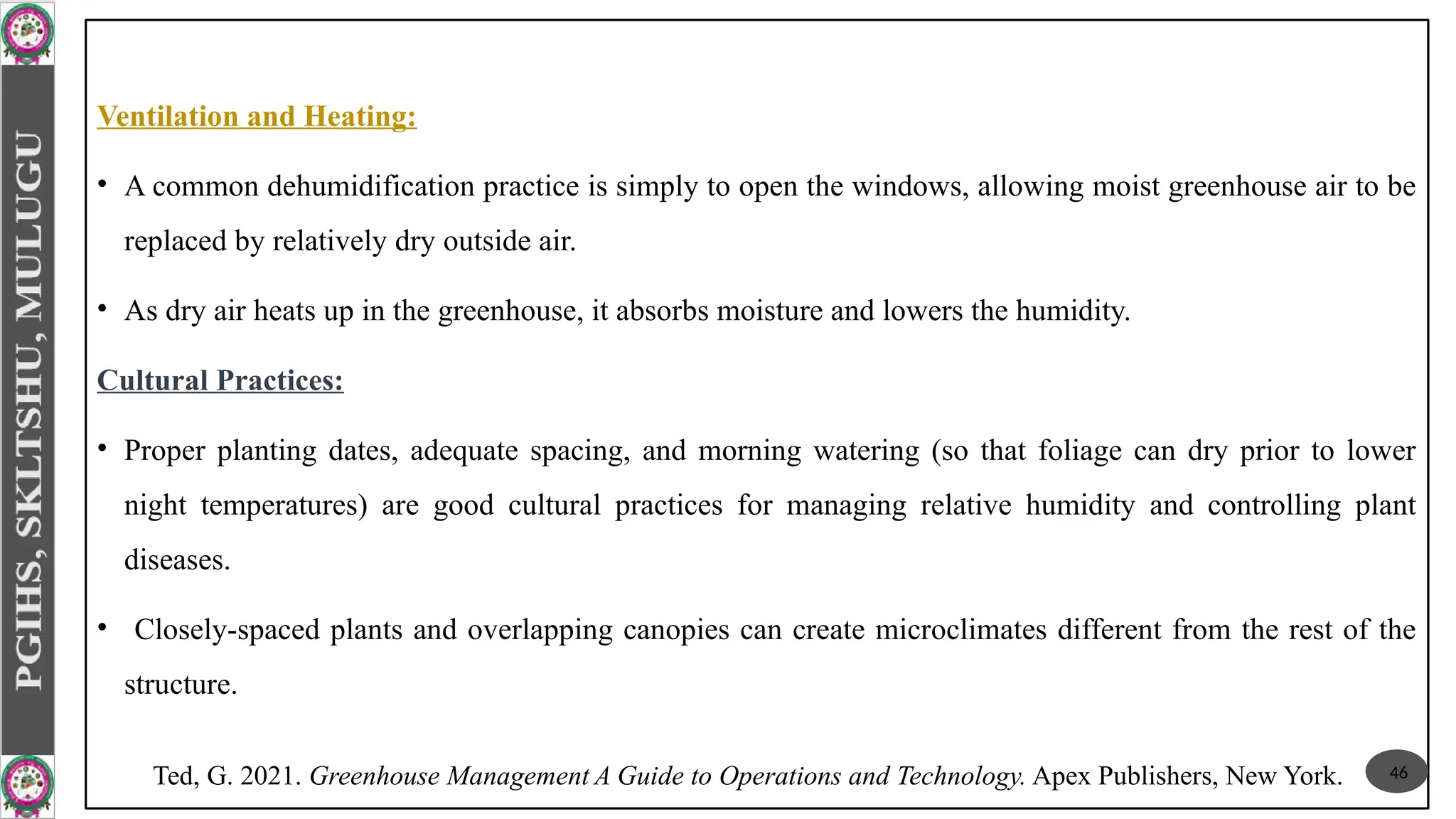
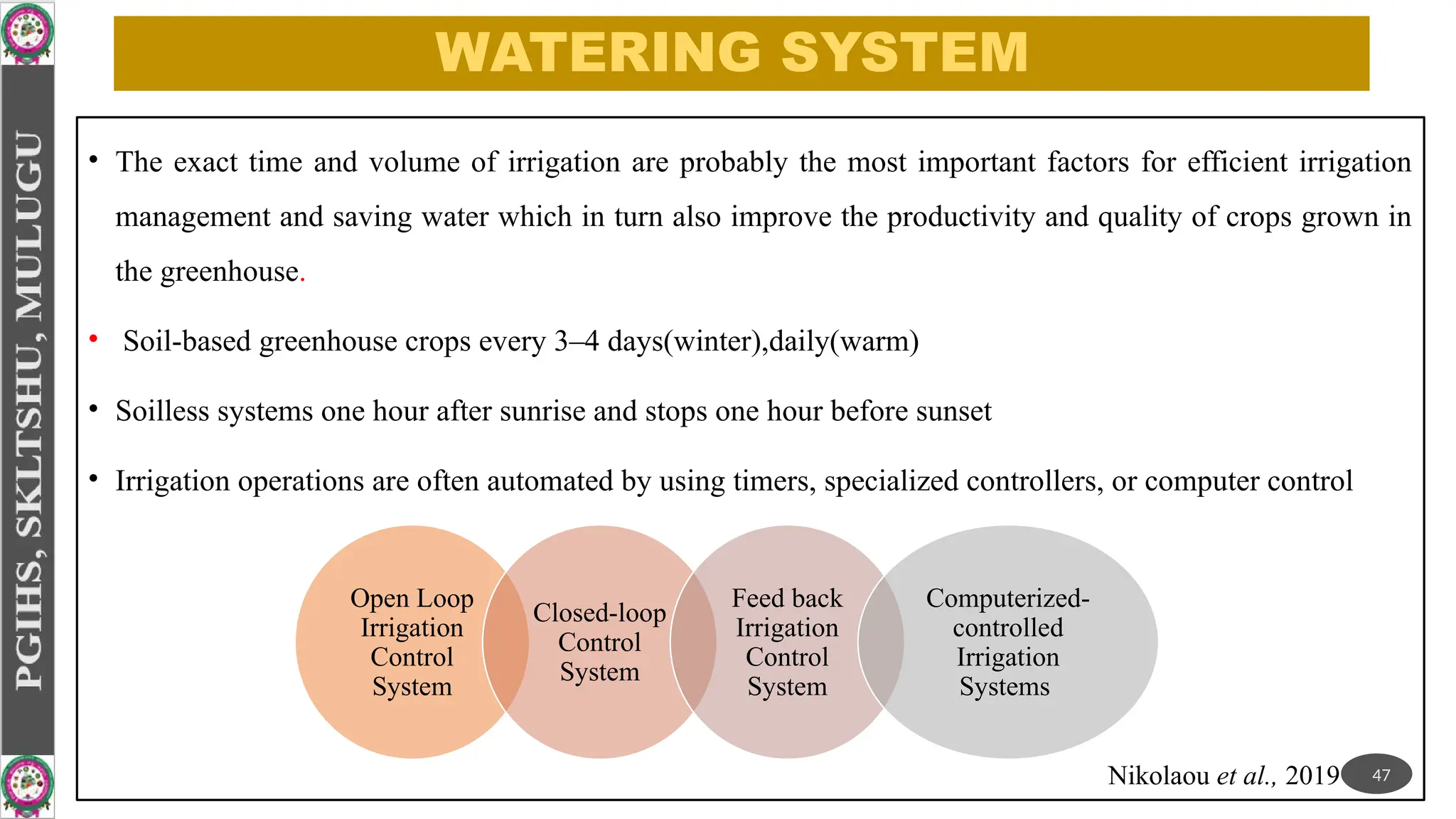
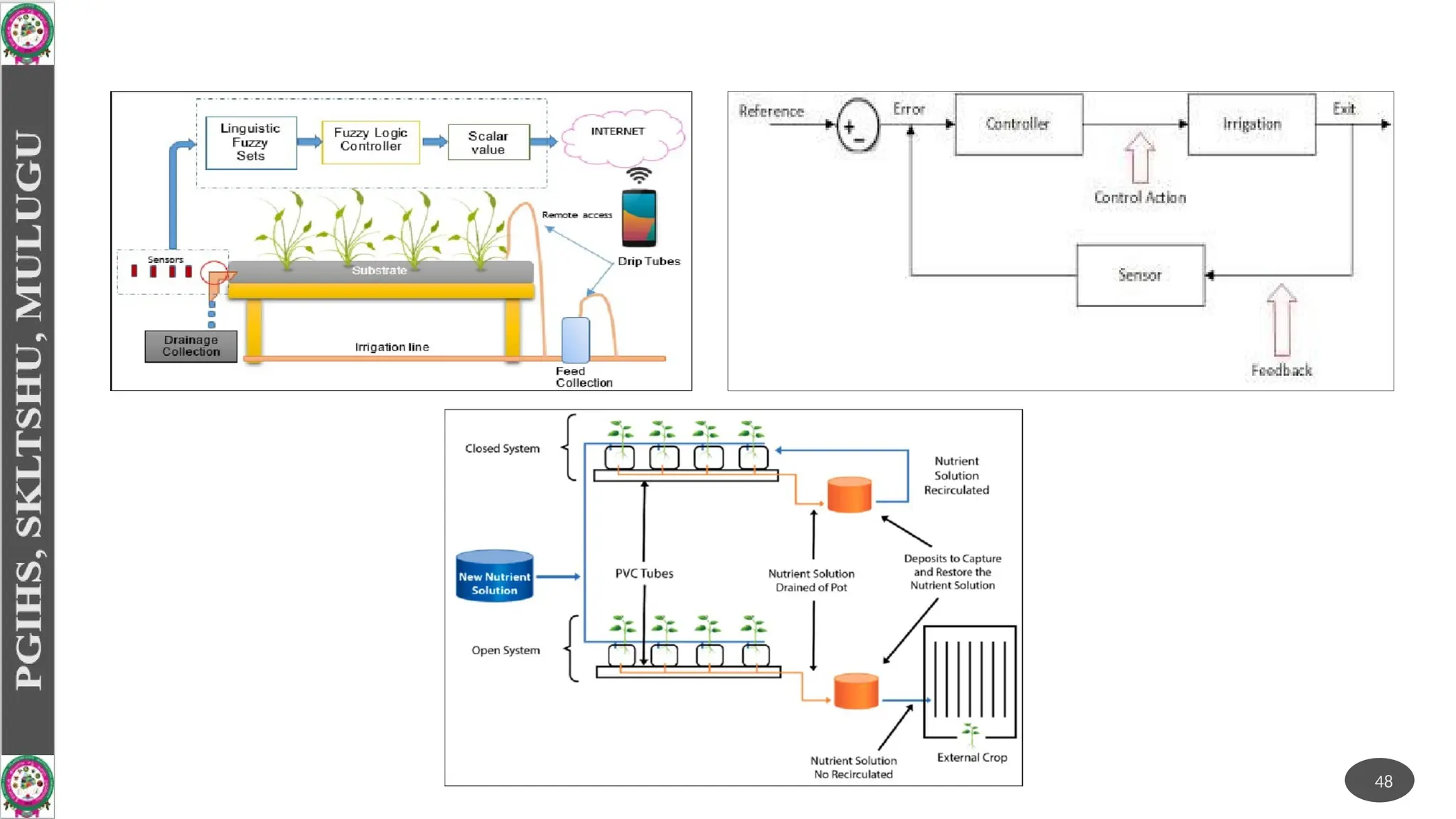
• Irrigation operations are often automated by using timers, specialized controllers, or computer control
Open Loop
Irrigation
Control
System
Closed-loop
Control
System
Feed back
Irrigation
Control
System
Computerized-
controlled
Irrigation
Systems
47
Nikolaou et al., 2019
CO2 INJECTION SYSTEM
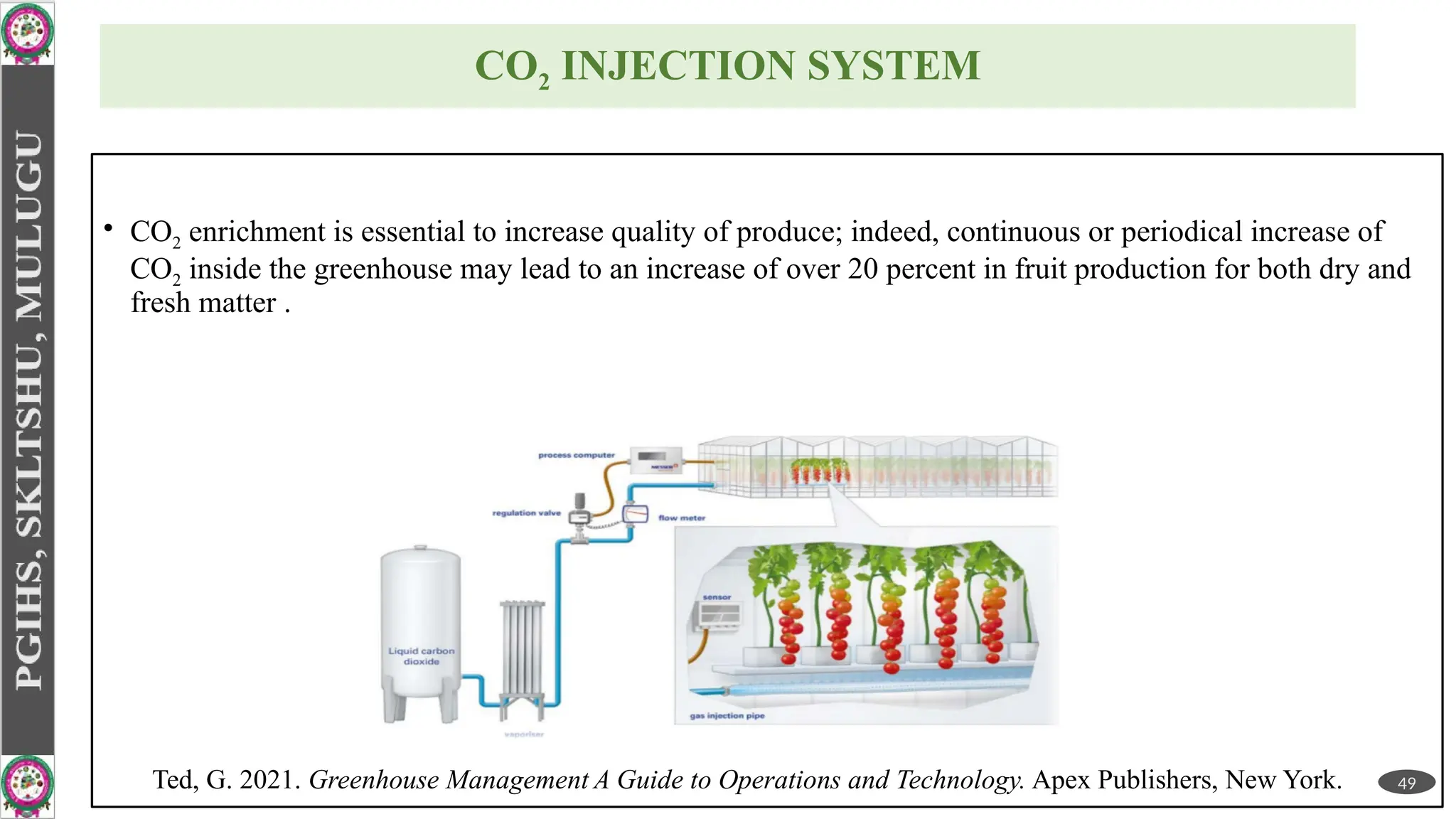
•CO2 enrichment is essential to increase quality of produce; indeed, continuous or periodical increase of
CO2 inside the greenhouse may lead to an increase of over 20 percent in fruit production for both dry and
fresh matter .
49
Ted, G. 2021. Greenhouse Management A Guide to Operations and Technology. Apex Publishers, New York.
50.
Sources of CO2
1.Natural-gas boilers :The burning of natural gas in a boiler provides CO2 which is generally accepted
as sufficiently ‘clean’ to require no further treatment.
2. CHP installations :They are highly efficient, typically converting over 90% of the input fuel into heat
and electricity, and produce more CO2 per unit of heat output than a glasshouse boiler
3. Biomass boilers: Biomass flue gases are passed through a chemical solvent (an amine scrubber),
which absorbs the CO2 and rejects any pollutants. A CO2 -laden solvent is then stored in a tank, where
it is kept until it is needed in the greenhouse. When CO2 is required, the solvent is heated to release the
gas.
50
Ted, G. 2021. Greenhouse Management A Guide to Operations and Technology. Apex Publishers, New York.
51.
4. CO2 burners:They can burn liquefied petroleum gas (LPG) (propane), natural gas or sometimes
kerosene. If LPG or kerosene is relied on, then this will be more costly than natural gas and therefore make
CO2 more expensive.
Distribution:
• Distribution is achieved by means of integral fans which blow the products of combustion around the
glasshouse.
• CO2 supply lines are best sited directly in the crop canopy where active photosynthesis takes place.
51
Ted, G. 2021. Greenhouse Management A Guide to Operations and Technology. Apex Publishers, New York.
52.
SECURITY SYSTEM
Motion Sensors
•A motion sensor is an electronic device to detect intrusions made up of different types of sensors capable
of detecting variations of some physical magnitude that occur in its coverage range.
• Once this happens, they activate an electrical signal that activates the alarm, which can be treated in
different ways depending on the action protocol.
• Likewise, additional actions can be established in programming, such as turning lights on or off or
activating the public address system or audio or video verification.
Infrared barriers
• Equipment consisting of an infrared ray emitter and receiver that form (vertically) an invisible barrier; the
interference of foreign elements in the continuity of the rays will activate the alarm devices.
52
Microsegur advanced security solutions (2023). Greenhouse security systems.
https://microsegur.com/en/greenhouse-security-systems/.
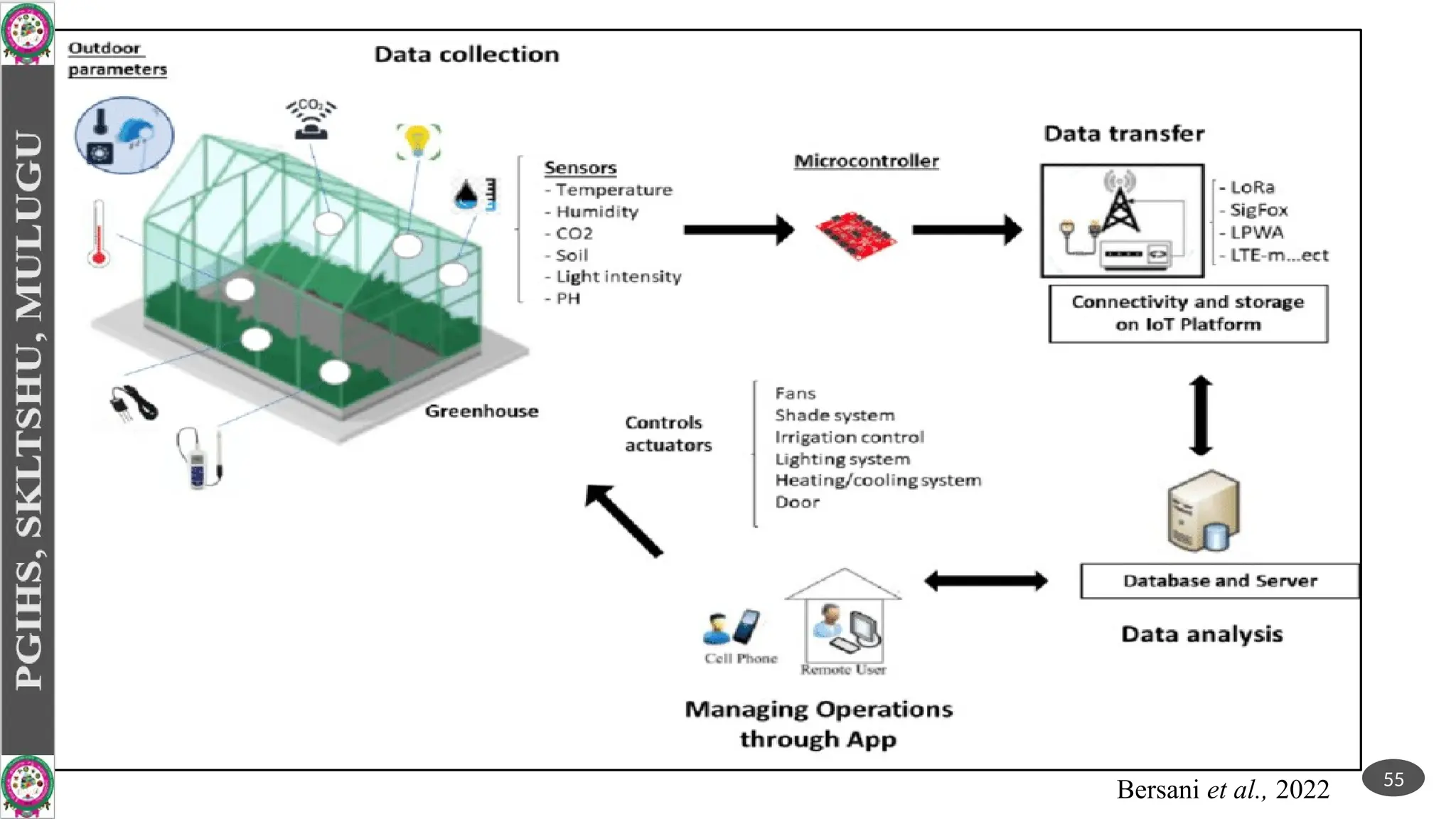
53.
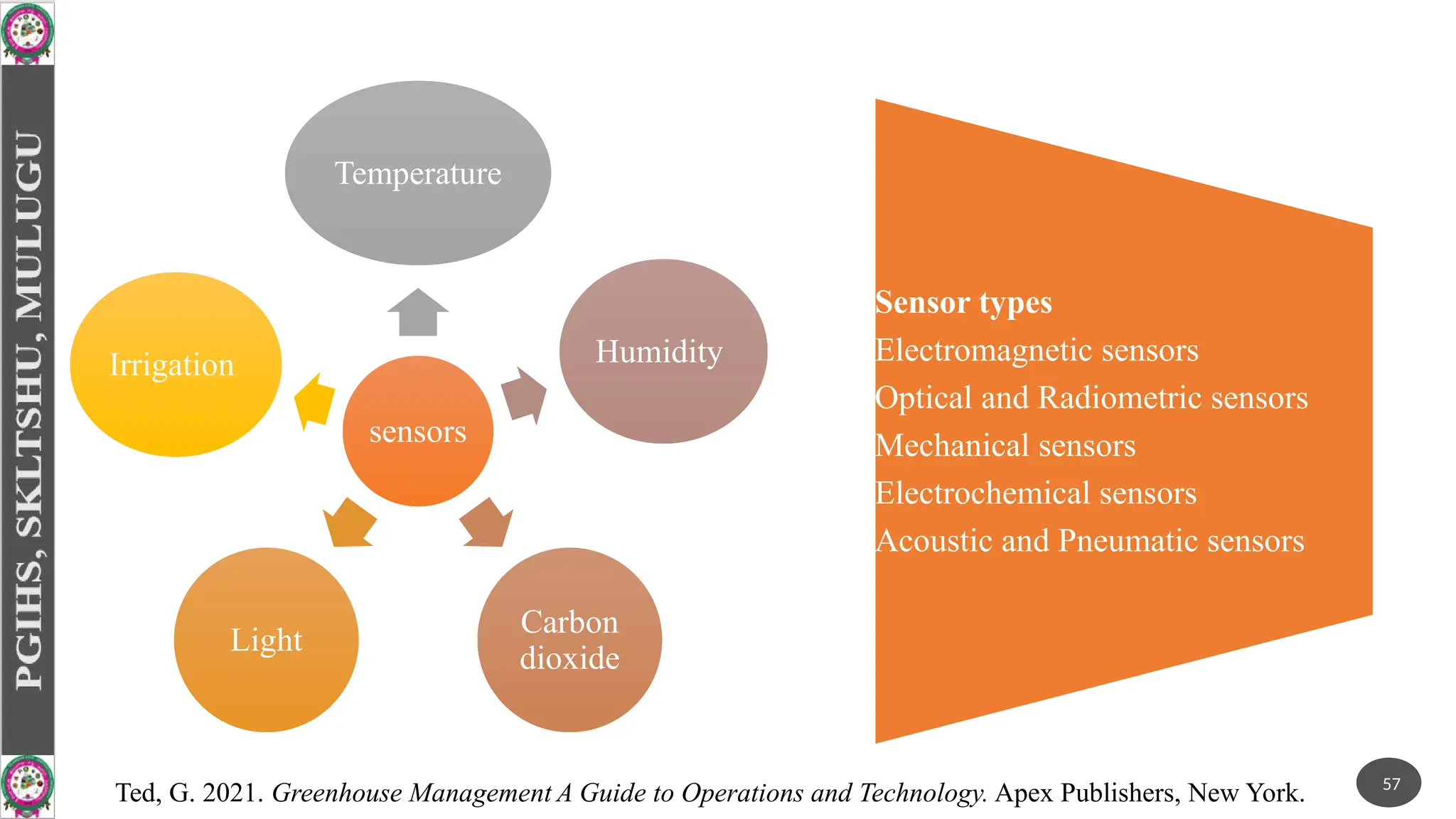
SENSORS
• A sensoris a device placed in the system that produces an electrical signal directly related to the parameter
that is to be measured
• Each sensor continually measures a specific condition such as temperature, relative humidity, vapor
pressure deficit, light intensity, electrical conductivity), pH (feed and drain), carbon dioxide concentrations,
wind speed and direction, and even whether or not it is raining.
53
Ted, G. 2021. Greenhouse Management A Guide to Operations and Technology. Apex Publishers, New York.
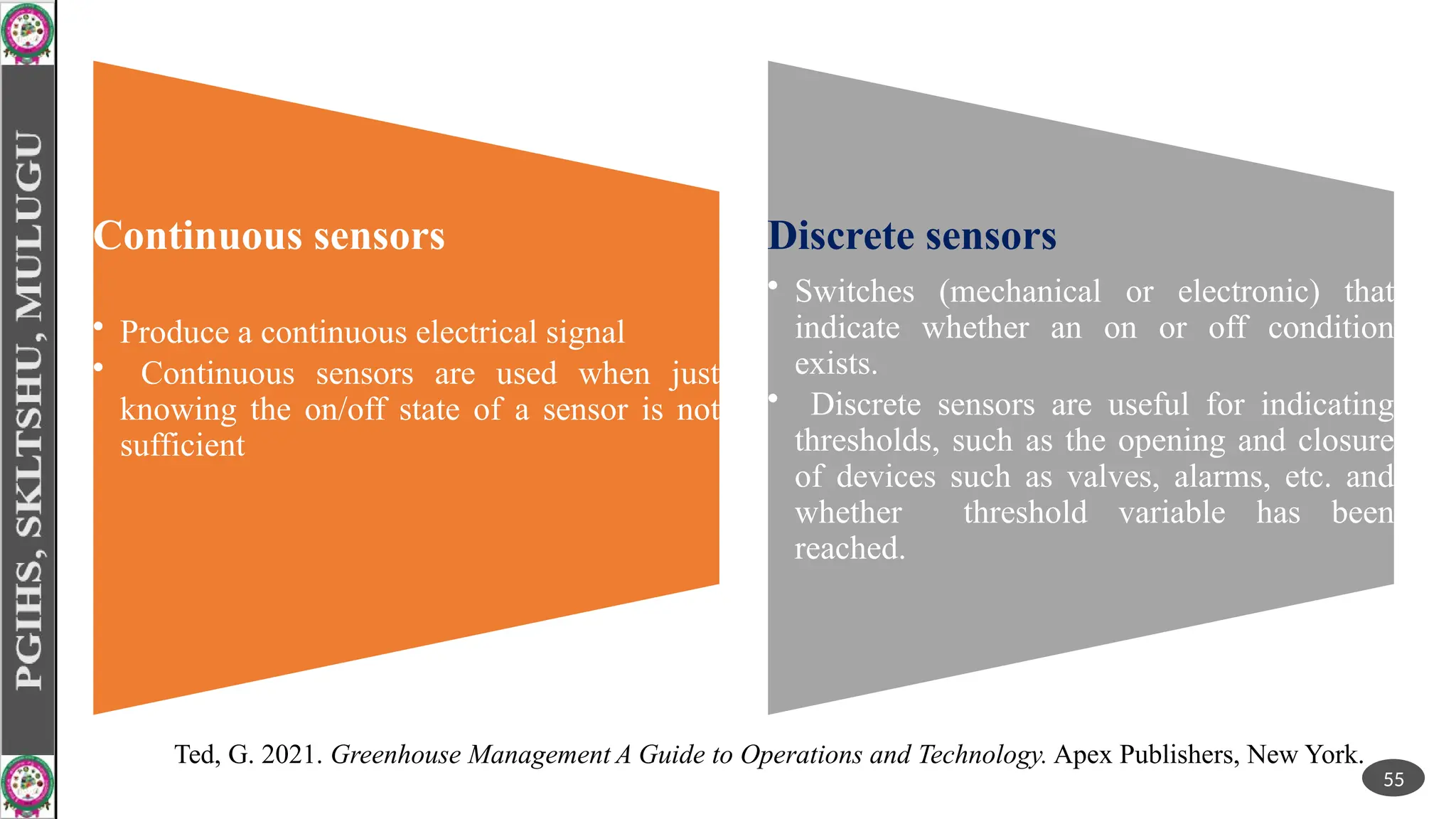
Continuous sensors
• Producea continuous electrical signal
• Continuous sensors are used when just
knowing the on/off state of a sensor is not
sufficient
Discrete sensors
• Switches (mechanical or electronic) that
indicate whether an on or off condition
exists.
• Discrete sensors are useful for indicating
thresholds, such as the opening and closure
of devices such as valves, alarms, etc. and
whether threshold variable has been
reached.
55
Ted, G. 2021. Greenhouse Management A Guide to Operations and Technology. Apex Publishers, New York.
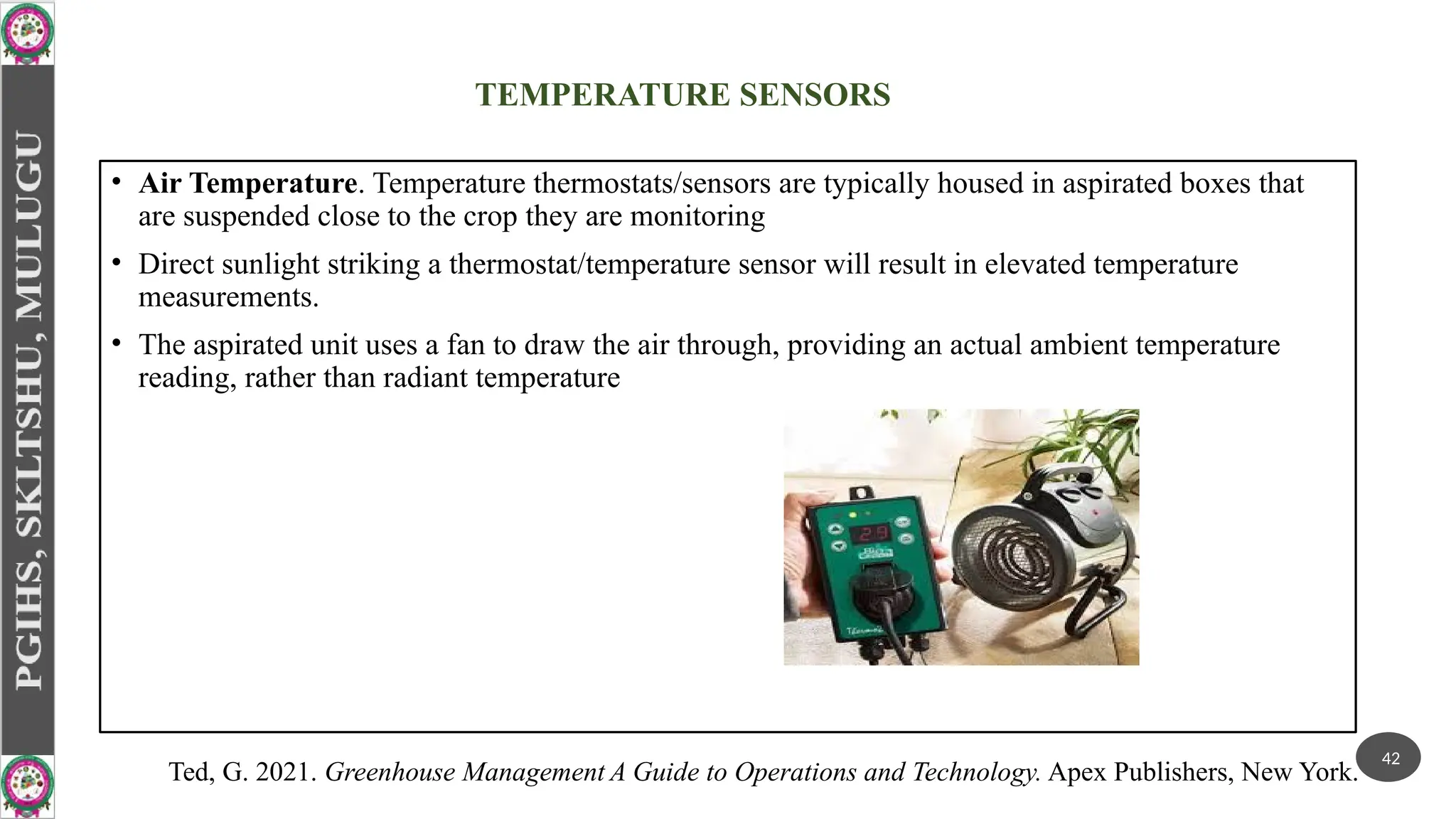
TEMPERATURE SENSORS
• AirTemperature. Temperature thermostats/sensors are typically housed in aspirated boxes that
are suspended close to the crop they are monitoring
• Direct sunlight striking a thermostat/temperature sensor will result in elevated temperature
measurements.
• The aspirated unit uses a fan to draw the air through, providing an actual ambient temperature
reading, rather than radiant temperature
42
Ted, G. 2021. Greenhouse Management A Guide to Operations and Technology. Apex Publishers, New York.
59.
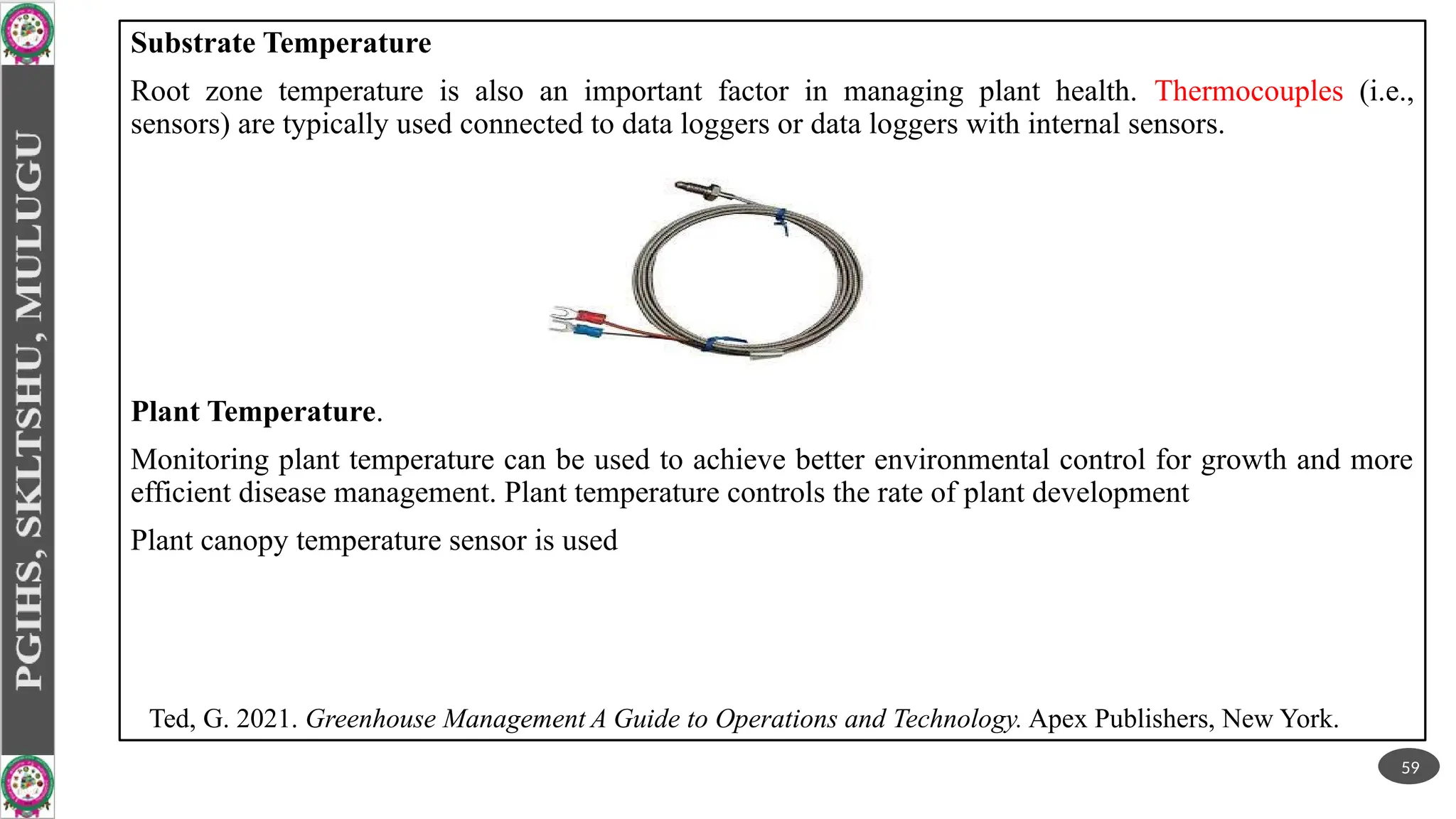
Substrate Temperature
Root zonetemperature is also an important factor in managing plant health. Thermocouples (i.e.,
sensors) are typically used connected to data loggers or data loggers with internal sensors.
Plant Temperature.
Monitoring plant temperature can be used to achieve better environmental control for growth and more
efficient disease management. Plant temperature controls the rate of plant development
Plant canopy temperature sensor is used
59
Ted, G. 2021. Greenhouse Management A Guide to Operations and Technology. Apex Publishers, New York.
60.
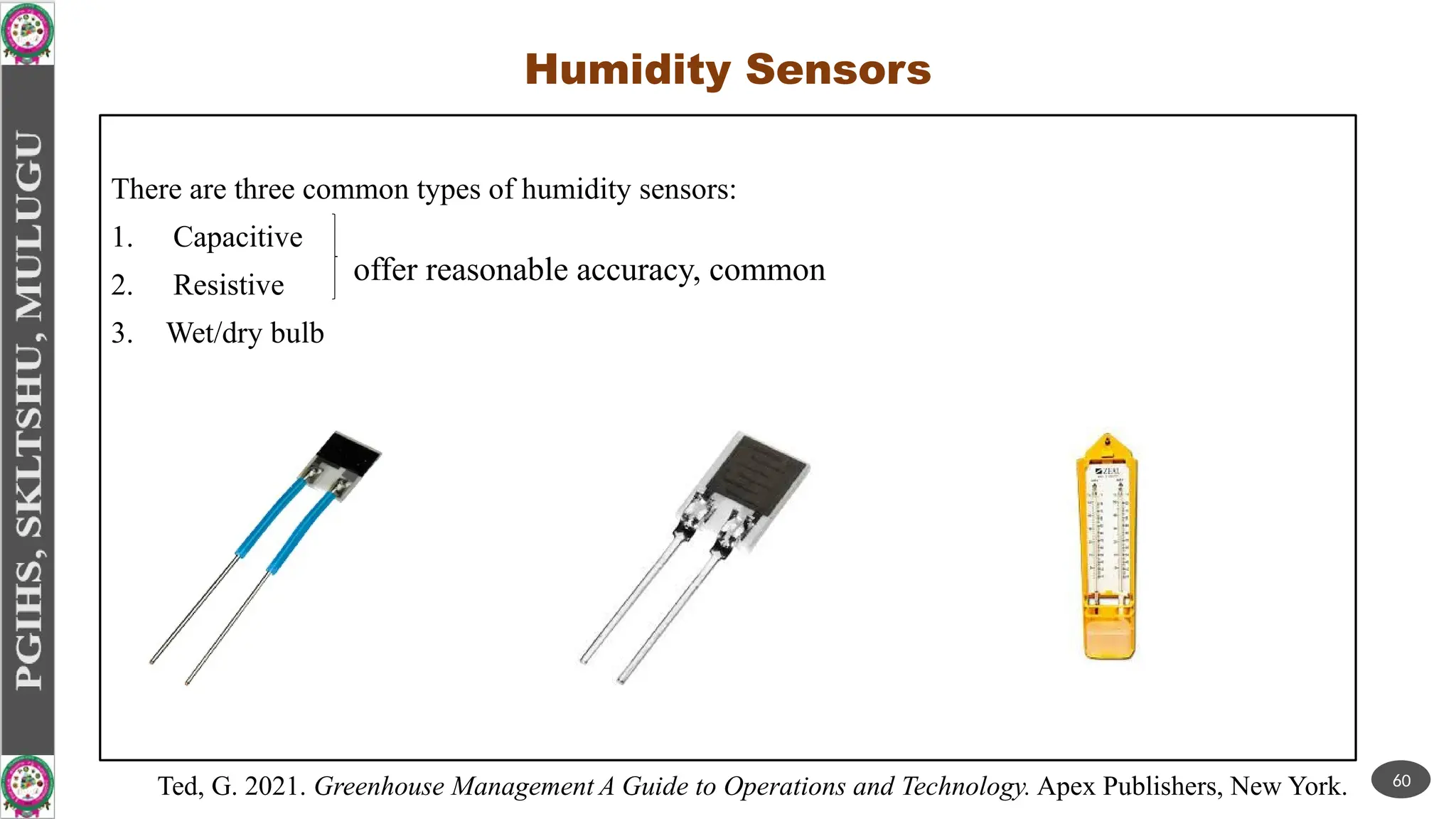
Humidity Sensors
There arethree common types of humidity sensors:
1. Capacitive
2. Resistive
3. Wet/dry bulb
offer reasonable accuracy, common
60
Ted, G. 2021. Greenhouse Management A Guide to Operations and Technology. Apex Publishers, New York.
61.
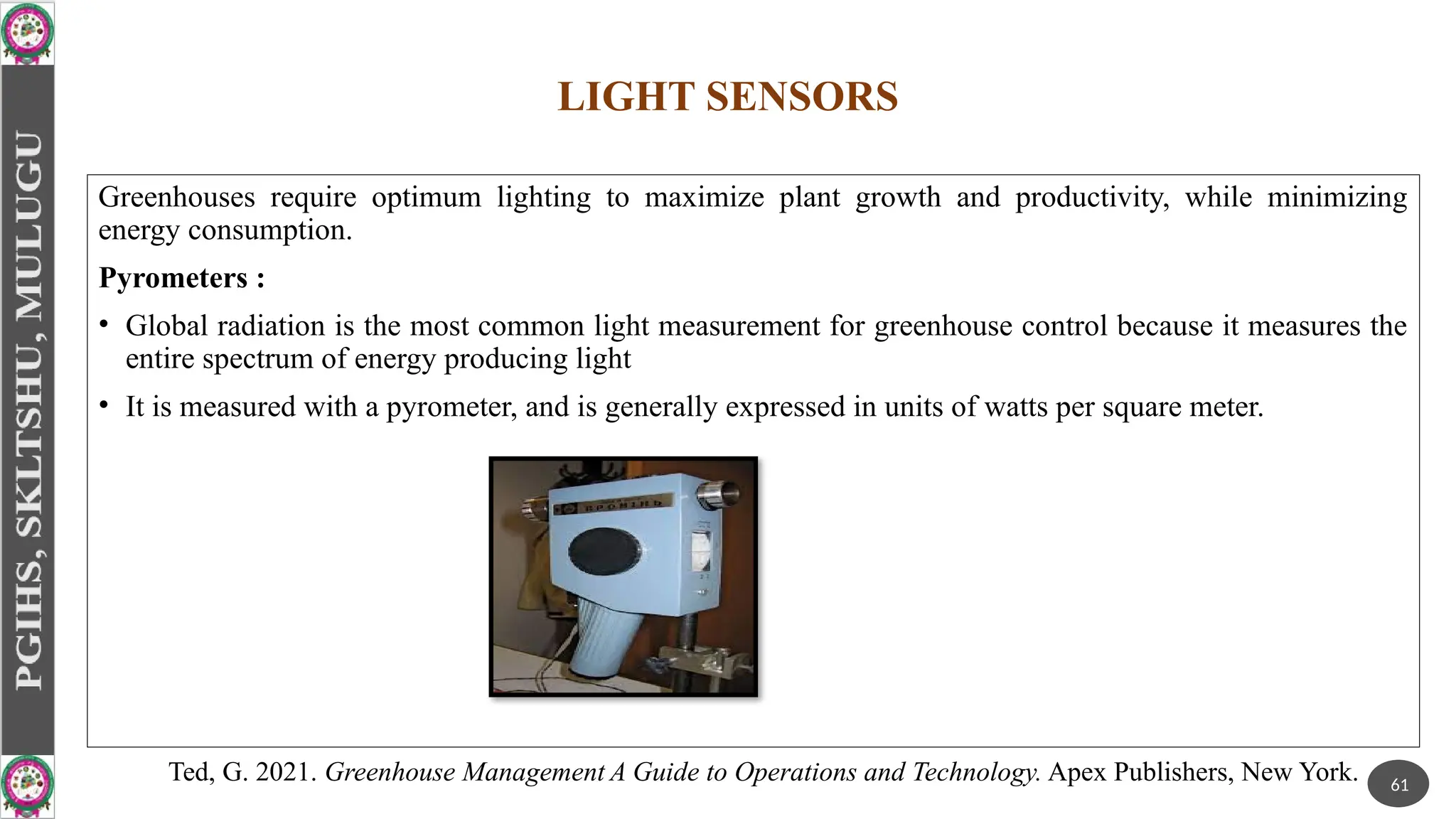
LIGHT SENSORS
Greenhouses requireoptimum lighting to maximize plant growth and productivity, while minimizing
energy consumption.
Pyrometers :
• Global radiation is the most common light measurement for greenhouse control because it measures the
entire spectrum of energy producing light
• It is measured with a pyrometer, and is generally expressed in units of watts per square meter.
61
Ted, G. 2021. Greenhouse Management A Guide to Operations and Technology. Apex Publishers, New York.
62.
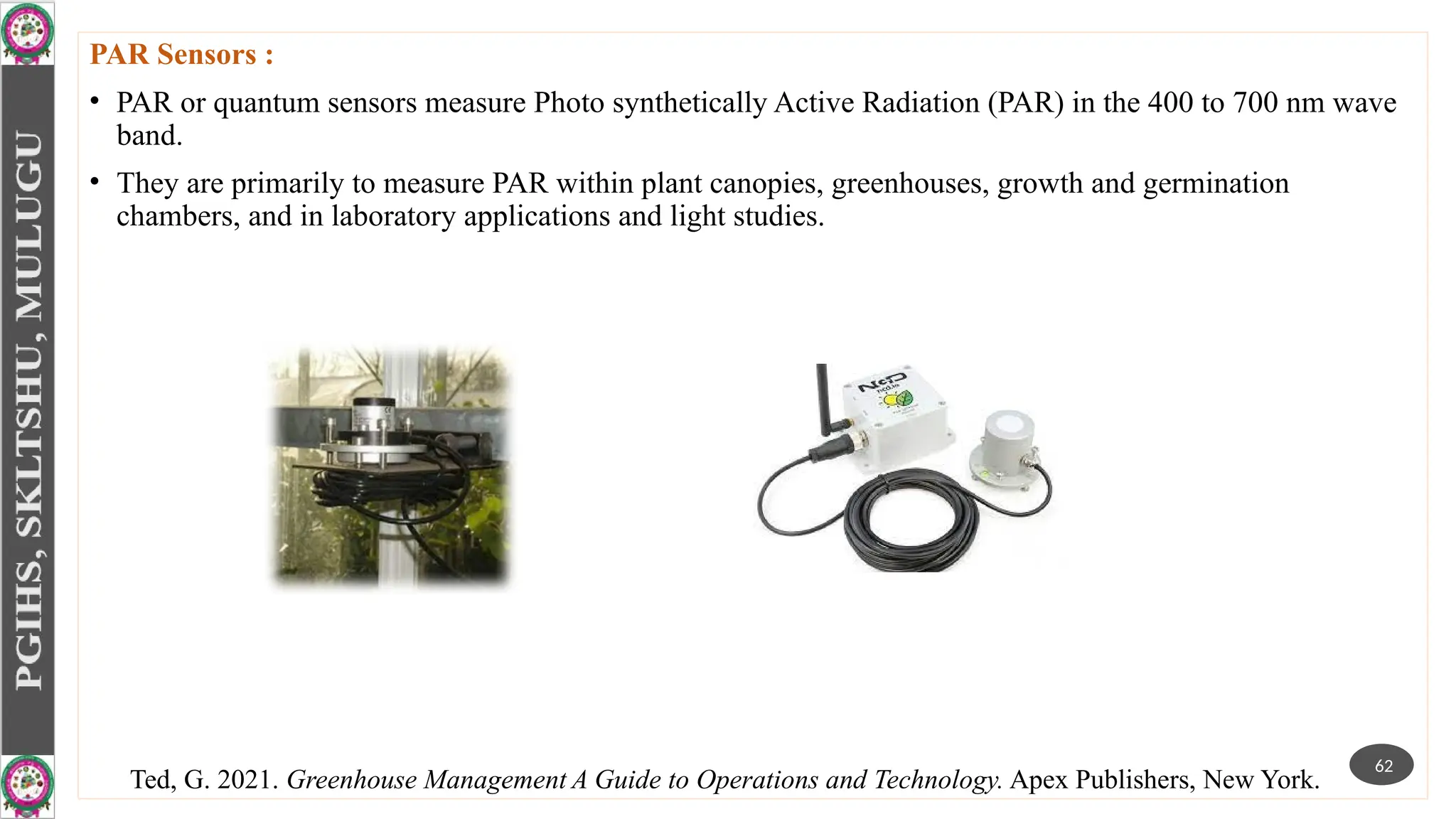
PAR Sensors :
•PAR or quantum sensors measure Photo synthetically Active Radiation (PAR) in the 400 to 700 nm wave
band.
• They are primarily to measure PAR within plant canopies, greenhouses, growth and germination
chambers, and in laboratory applications and light studies.
62
Ted, G. 2021. Greenhouse Management A Guide to Operations and Technology. Apex Publishers, New York.
63.
CARBON DIOXIDE SENSORS
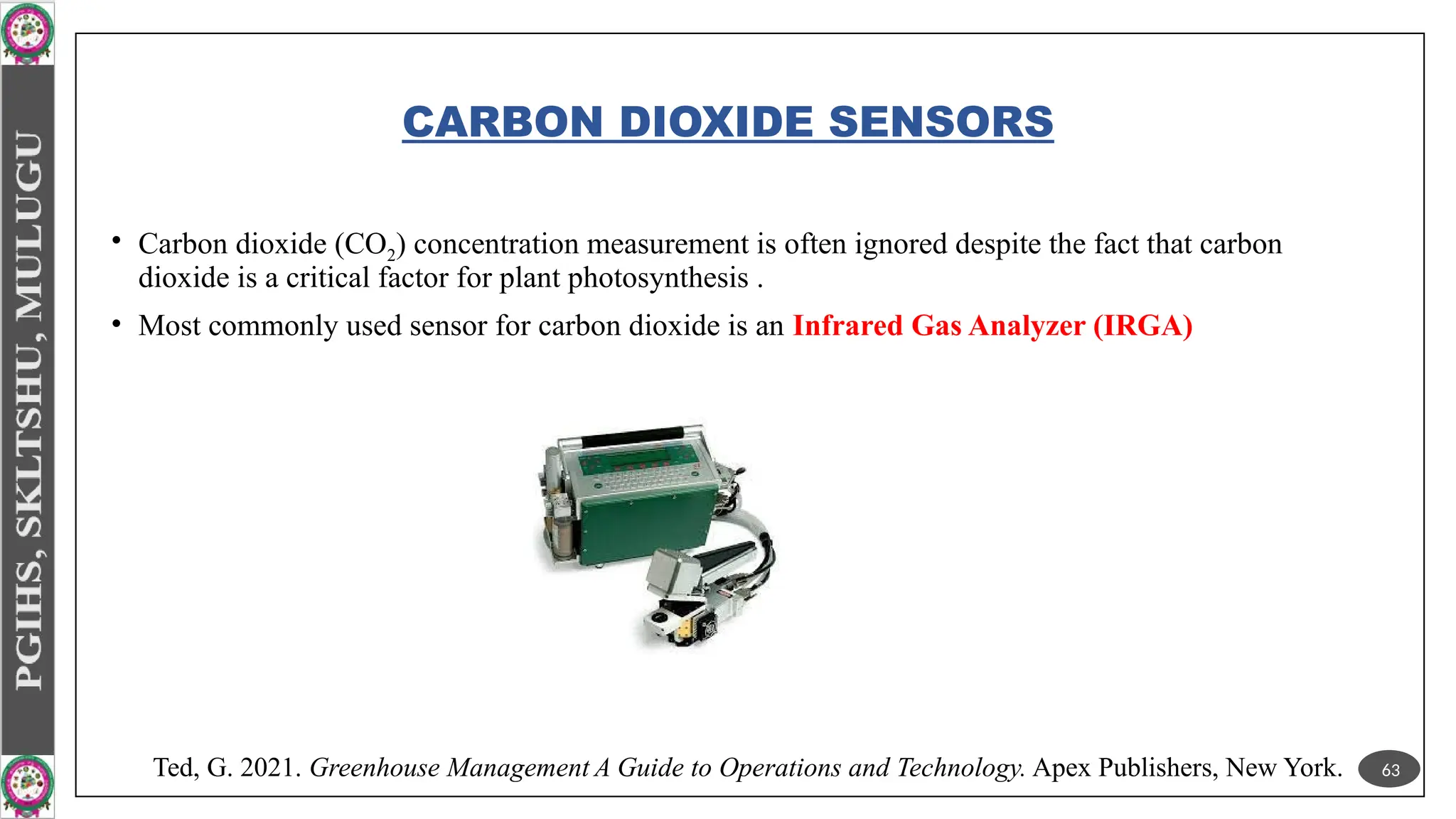
•Carbon dioxide (CO2) concentration measurement is often ignored despite the fact that carbon
dioxide is a critical factor for plant photosynthesis .
• Most commonly used sensor for carbon dioxide is an Infrared Gas Analyzer (IRGA)
63
Ted, G. 2021. Greenhouse Management A Guide to Operations and Technology. Apex Publishers, New York.
64.
IRRIGATION SCHEDULING WITHSUBSTRATE SENSORS
• There are several soil moisture sensing technologies that may benefit greenhouse plant production
including tensiometers, electrical resistance blocks, and dielectric sensors.
• The sensors are used to determine either water availability (i.e. soil water tension) or actual water
content in the substrate.
• Determining the water (or matric) potential of the substrate indicates how easily substrate water is
available to plants, but does not provide information on how much water is present or available.
64
Ted, G. 2021. Greenhouse Management A Guide to Operations and Technology. Apex Publishers, New York.
65.
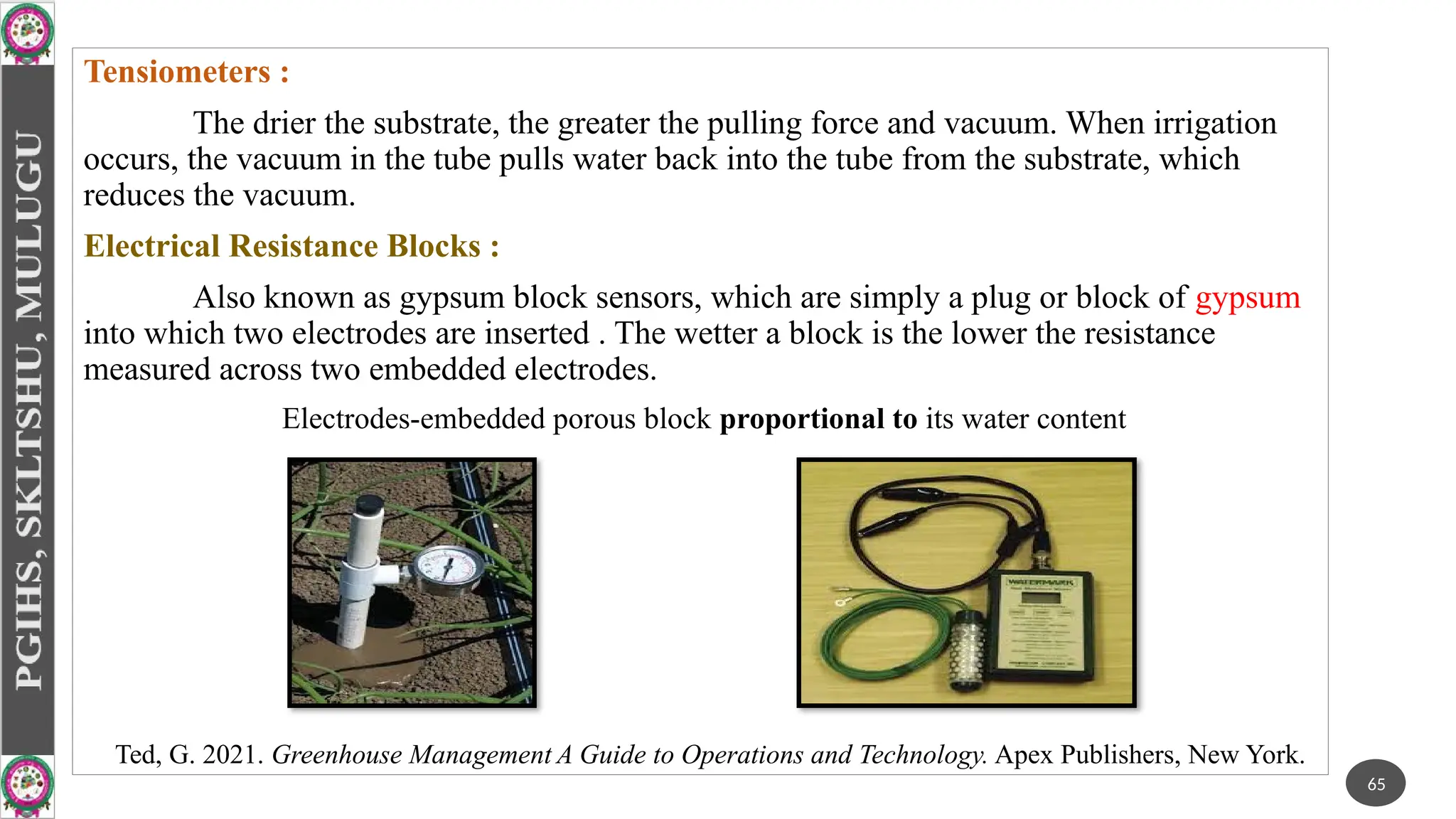
Tensiometers :
The drierthe substrate, the greater the pulling force and vacuum. When irrigation
occurs, the vacuum in the tube pulls water back into the tube from the substrate, which
reduces the vacuum.
Electrical Resistance Blocks :
Also known as gypsum block sensors, which are simply a plug or block of gypsum
into which two electrodes are inserted . The wetter a block is the lower the resistance
measured across two embedded electrodes.
Electrodes-embedded porous block proportional to its water content
65
Ted, G. 2021. Greenhouse Management A Guide to Operations and Technology. Apex Publishers, New York.
66.
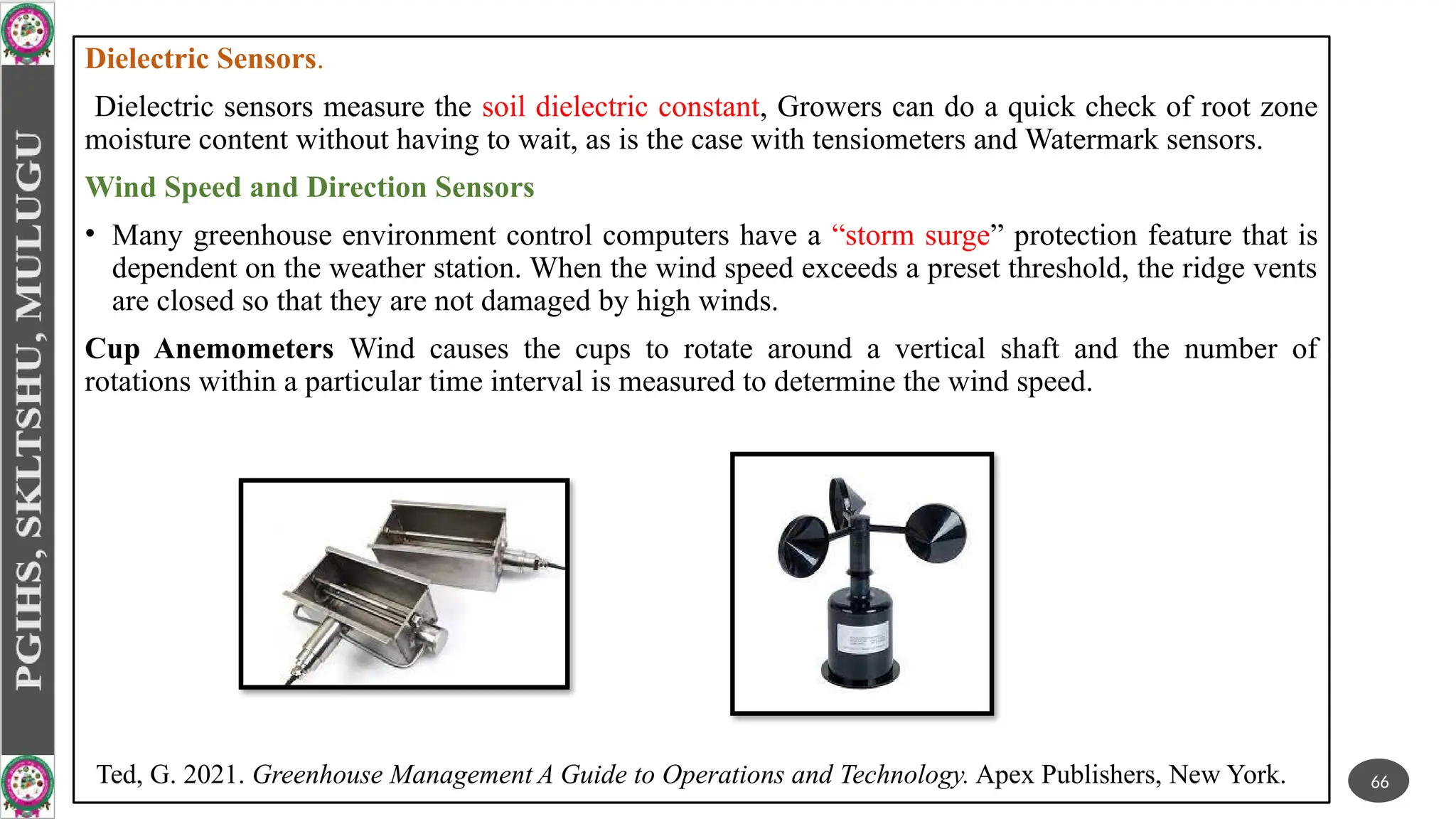
Dielectric Sensors.
Dielectric sensorsmeasure the soil dielectric constant, Growers can do a quick check of root zone
moisture content without having to wait, as is the case with tensiometers and Watermark sensors.
Wind Speed and Direction Sensors
• Many greenhouse environment control computers have a “storm surge” protection feature that is
dependent on the weather station. When the wind speed exceeds a preset threshold, the ridge vents
are closed so that they are not damaged by high winds.
Cup Anemometers Wind causes the cups to rotate around a vertical shaft and the number of
rotations within a particular time interval is measured to determine the wind speed.
66
Ted, G. 2021. Greenhouse Management A Guide to Operations and Technology. Apex Publishers, New York.
67.
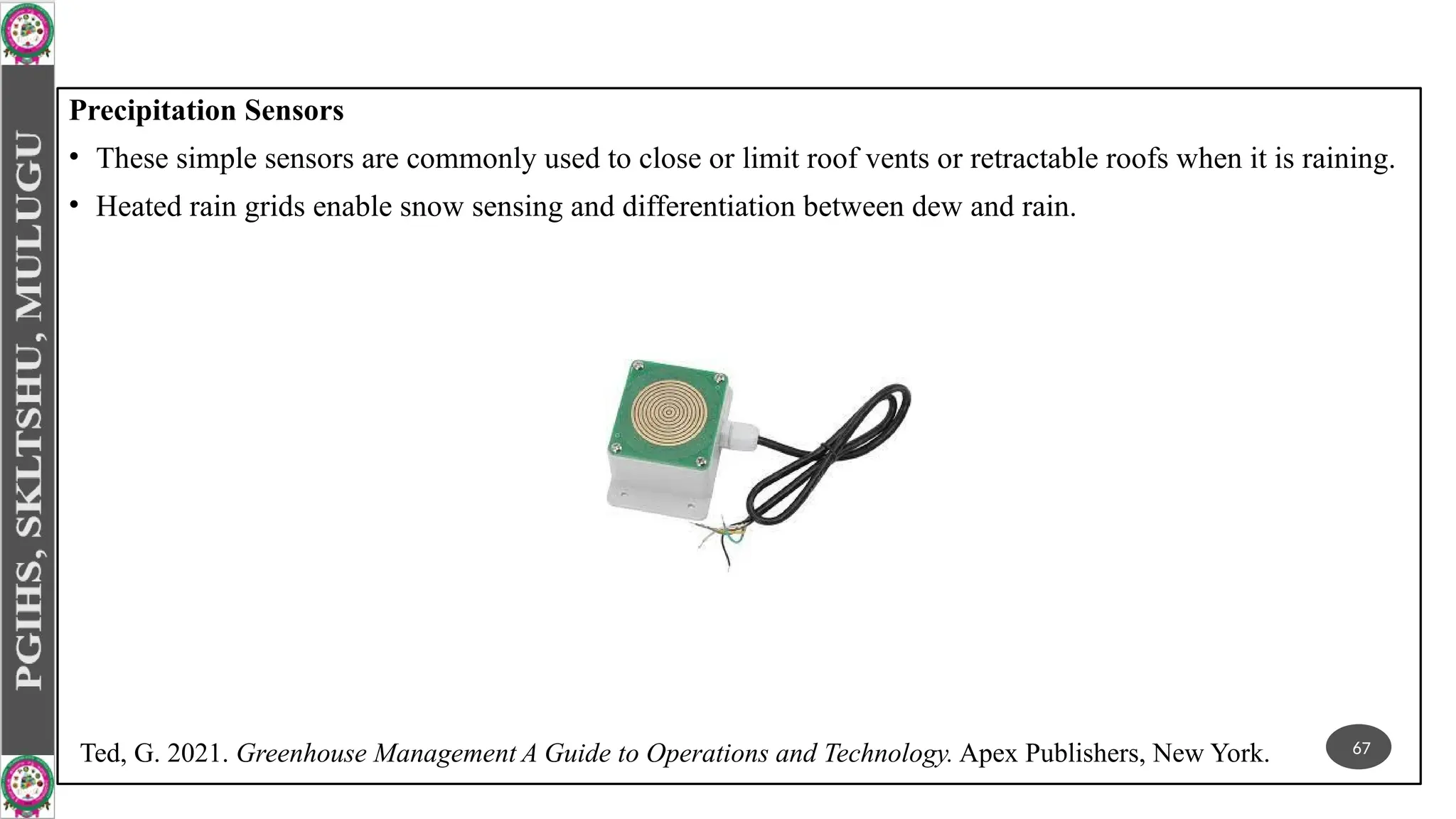
Precipitation Sensors
• Thesesimple sensors are commonly used to close or limit roof vents or retractable roofs when it is raining.
• Heated rain grids enable snow sensing and differentiation between dew and rain.
67
Ted, G. 2021. Greenhouse Management A Guide to Operations and Technology. Apex Publishers, New York.
68.
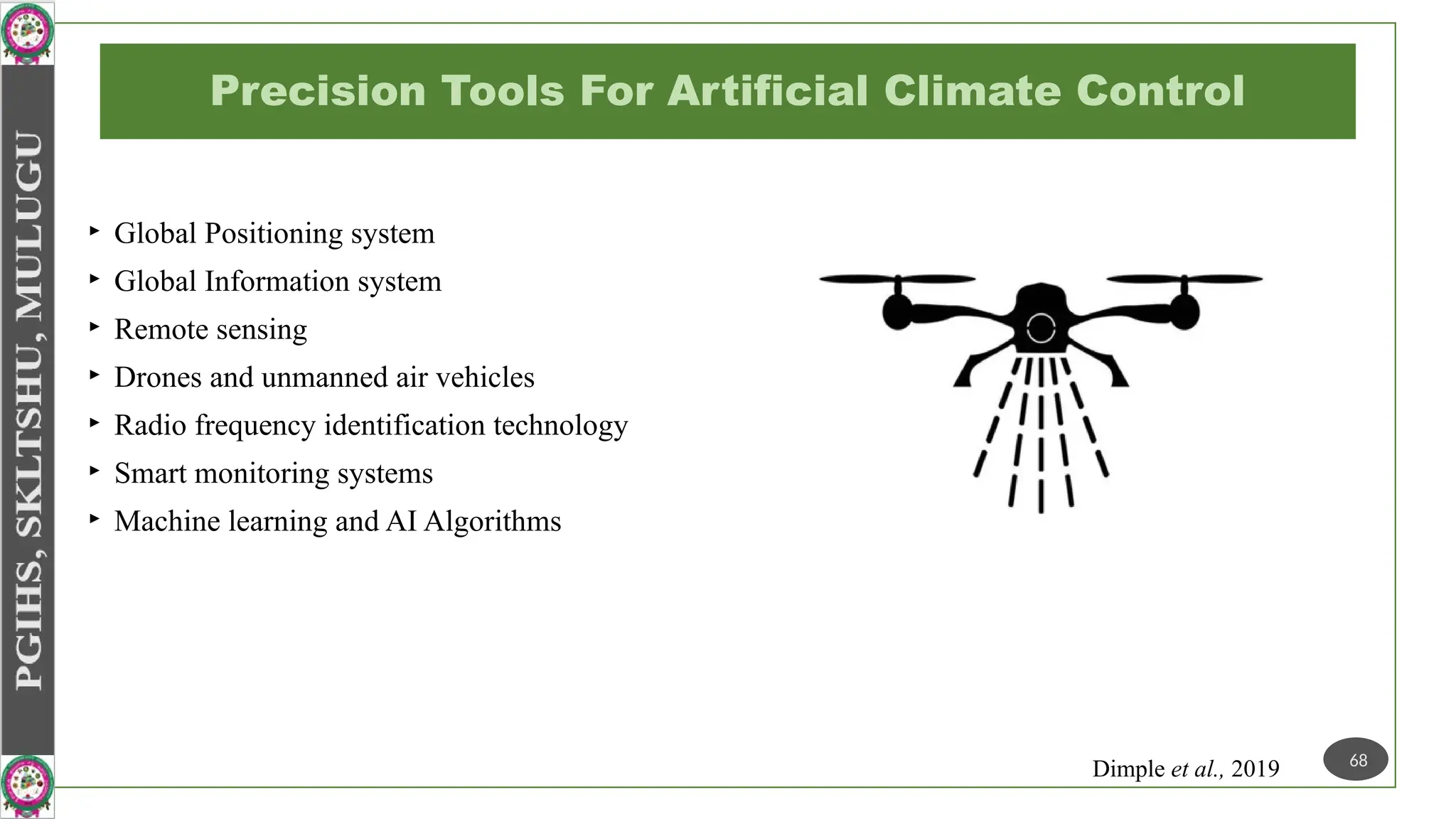
Precision Tools ForArtificial Climate Control
‣ Global Positioning system
‣ Global Information system
‣ Remote sensing
‣ Drones and unmanned air vehicles
‣ Radio frequency identification technology
‣ Smart monitoring systems
‣ Machine learning and AI Algorithms
68
Dimple et al., 2019
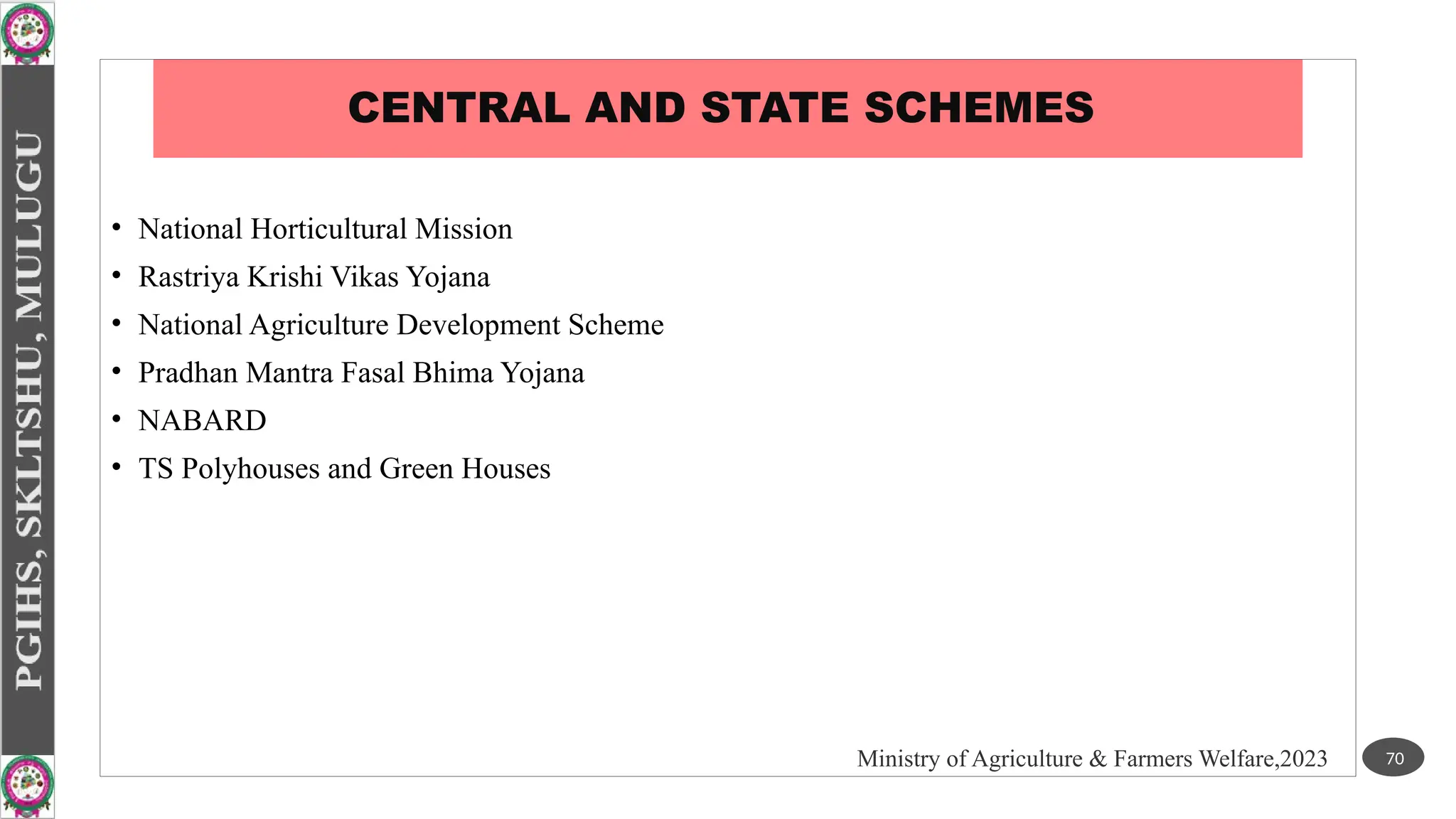
CENTRAL AND STATESCHEMES
• National Horticultural Mission
• Rastriya Krishi Vikas Yojana
• National Agriculture Development Scheme
• Pradhan Mantra Fasal Bhima Yojana
• NABARD
• TS Polyhouses and Green Houses
70
Ministry of Agriculture & Farmers Welfare,2023
71.
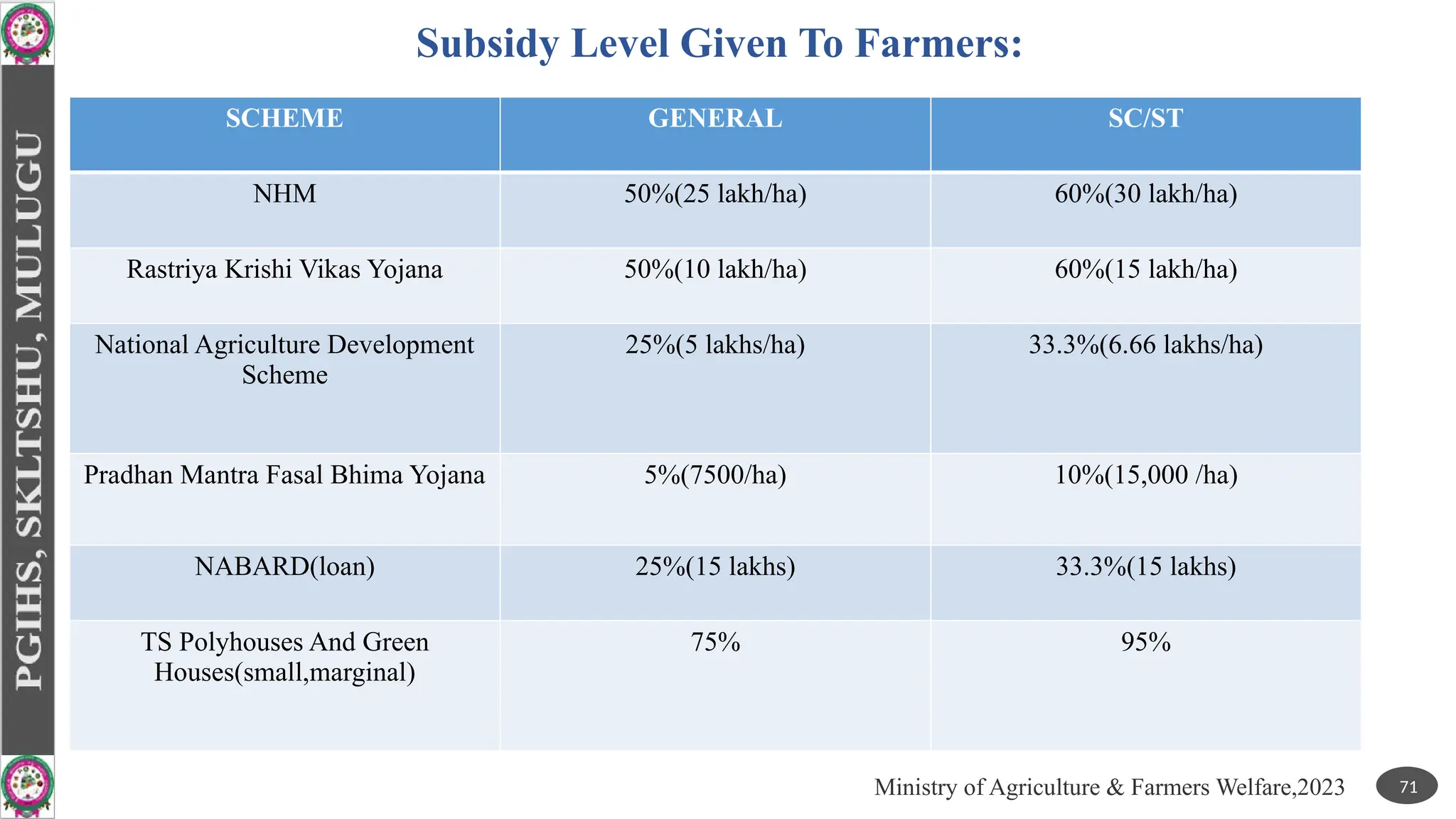
Subsidy Level GivenTo Farmers:
SCHEME GENERAL SC/ST
NHM 50%(25 lakh/ha) 60%(30 lakh/ha)
Rastriya Krishi Vikas Yojana 50%(10 lakh/ha) 60%(15 lakh/ha)
National Agriculture Development
Scheme
25%(5 lakhs/ha) 33.3%(6.66 lakhs/ha)
Pradhan Mantra Fasal Bhima Yojana 5%(7500/ha) 10%(15,000 /ha)
NABARD(loan) 25%(15 lakhs) 33.3%(15 lakhs)
TS Polyhouses And Green
Houses(small,marginal)
75% 95%
71
Ministry of Agriculture & Farmers Welfare,2023
72.
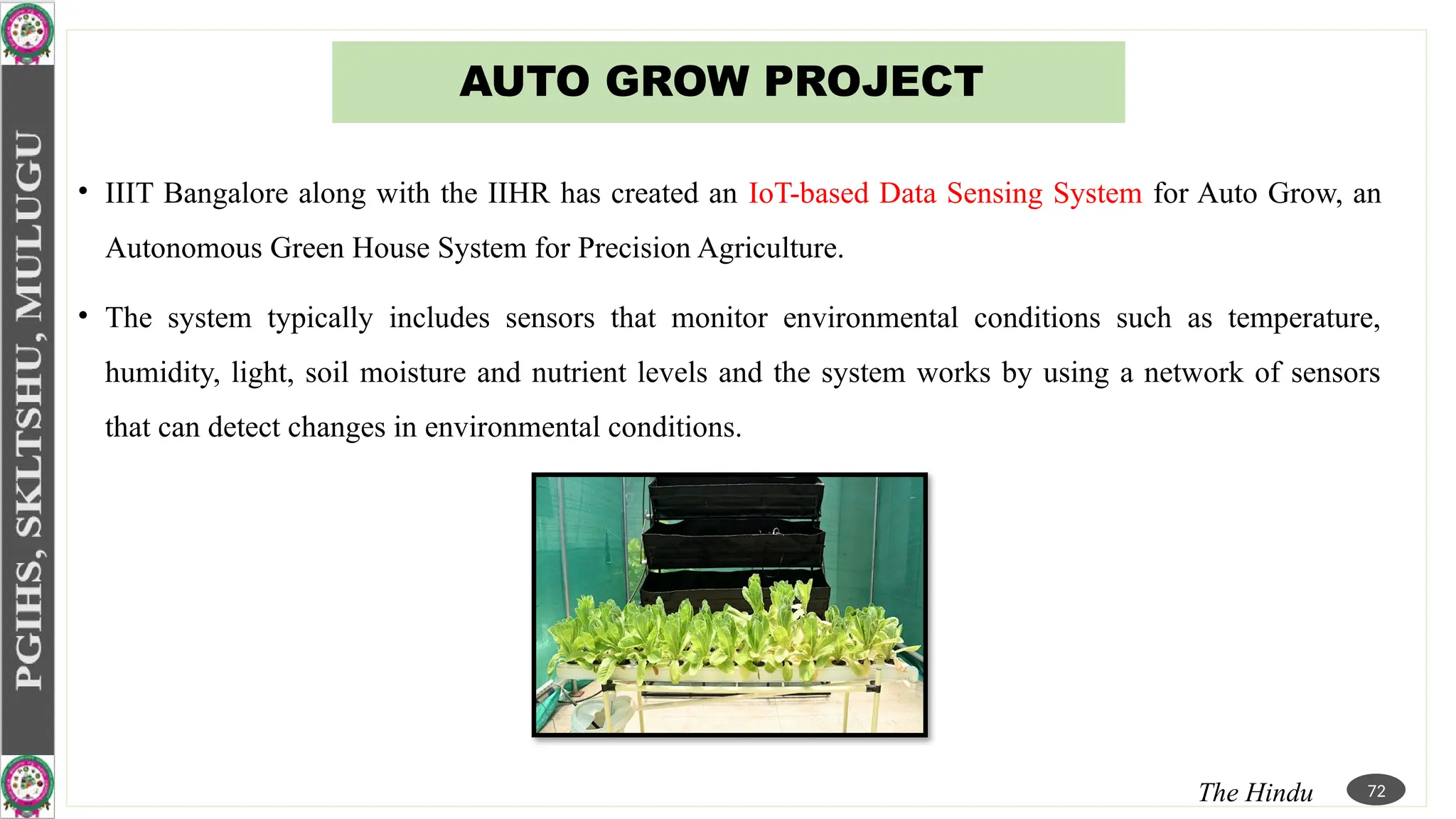
AUTO GROW PROJECT
•IIIT Bangalore along with the IIHR has created an IoT-based Data Sensing System for Auto Grow, an
Autonomous Green House System for Precision Agriculture.
• The system typically includes sensors that monitor environmental conditions such as temperature,
humidity, light, soil moisture and nutrient levels and the system works by using a network of sensors
that can detect changes in environmental conditions.
The Hindu 72
73.
Galvan et al.,2012
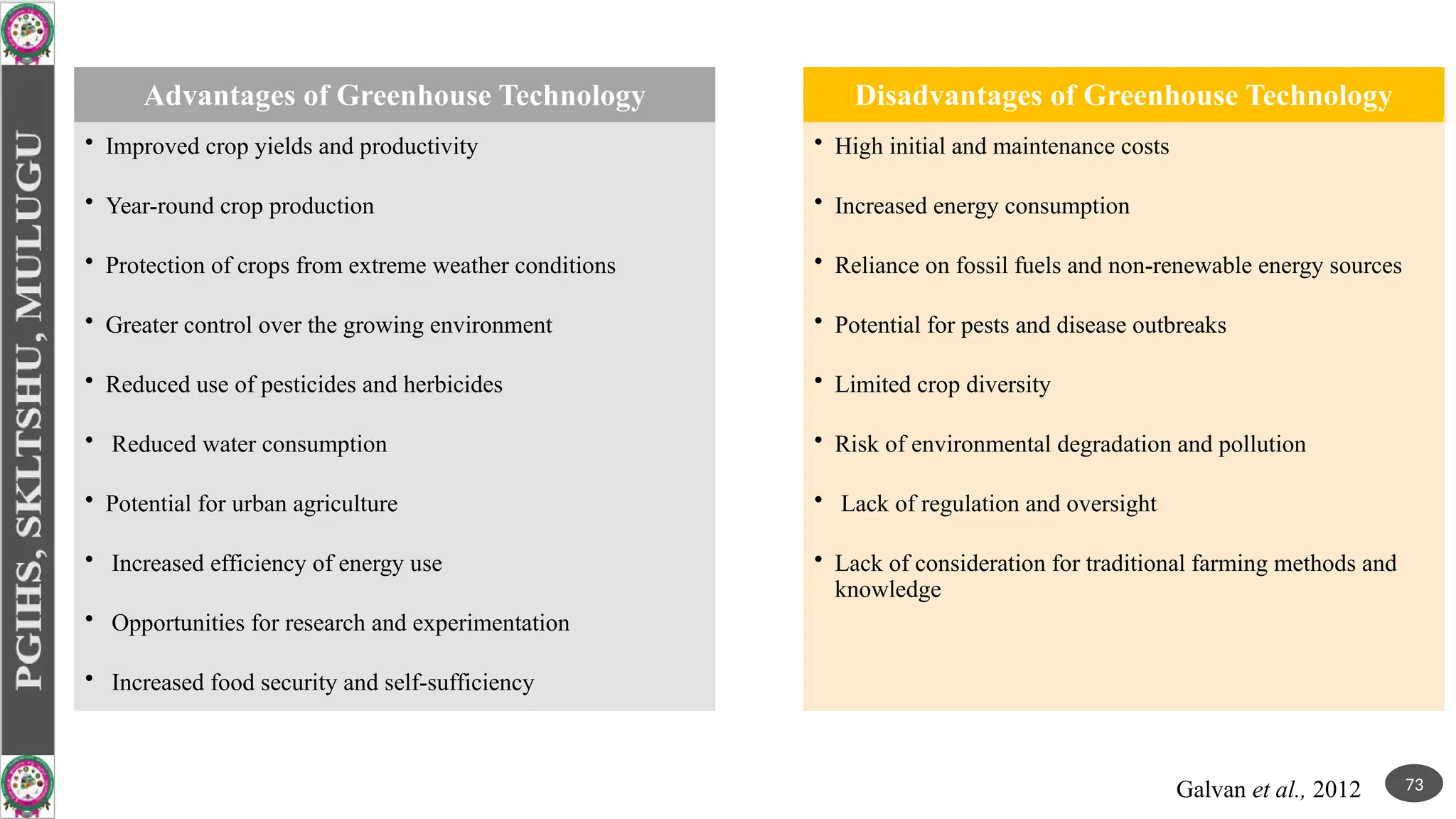
Advantages of Greenhouse Technology
• Improved crop yields and productivity
• Year-round crop production
• Protection of crops from extreme weather conditions
• Greater control over the growing environment
• Reduced use of pesticides and herbicides
• Reduced water consumption
• Potential for urban agriculture
• Increased efficiency of energy use
• Opportunities for research and experimentation
• Increased food security and self-sufficiency
Disadvantages of Greenhouse Technology
• High initial and maintenance costs
• Increased energy consumption
• Reliance on fossil fuels and non-renewable energy sources
• Potential for pests and disease outbreaks
• Limited crop diversity
• Risk of environmental degradation and pollution
• Lack of regulation and oversight
• Lack of consideration for traditional farming methods and
knowledge
73
74.
CROP MODELING
CROP MODELSFOR CLIMATE CONTROL IN GREEN HOUSE
Crop models are mathematical representations or simulations of the growth, development, and
yield of crops under various environmental conditions. These models are based on scientific principles
and empirical data collected through research and experimentation. Crop models aim to predict how crops
will respond to changes in factors such as temperature, water availability, soil nutrients, light, and carbon
dioxide concentration. Modeling helps researchers systematically analyze various scenarios in the
greenhouse and predict their behavior.
Climating Modeling in Greenhouse
• 1)Mechanistic models describe the system it is simulating based on knowledge of the processes that are
taking place.
• 2)black-box models are more used for applications that involve control, optimization, and design of the
greenhouse system
74
Rezvani et al., 2021
75.
Purpose of cropmodels:
• Yield Prediction, Resource Management, Climate Change Impact Assessment, Decision Support
Types of Crop Models:
• Computational fluid dynamics (CFD): It is the most commonly used for simulating situations where
airflow is an important component. makes it possible to predict the distribution of the climatic variables
inside a greenhouse.
• Radiative submodel: The discrete ordinate (DO) model is used to calculate the radiant heat transfer
caused by the sun rays on semitransparent walls and borders.
• Energy balance model: The greenhouse process (KASPRO) model is constructed from modules
describing the physics of mass and energy transport in the greenhouse enclosure.
75
Rezvani et al., 2021
76.
• Crop growthmodel: Crop production management (irrigation, fertilization, pest and disease control),
climate change, climate fluctuations, yield forecast, environmental pollution, sustainable agriculture, and
many other aspects are studied here. TOMSIM , SUSROS87, TOMPOUSSE, TOMGRO models are
generally used.
• Process-based models: These are mostly used for crop model development. In process-based models,
the rates of growth and development are derived from basic principles in heat and mass transfer and
plant physiology.
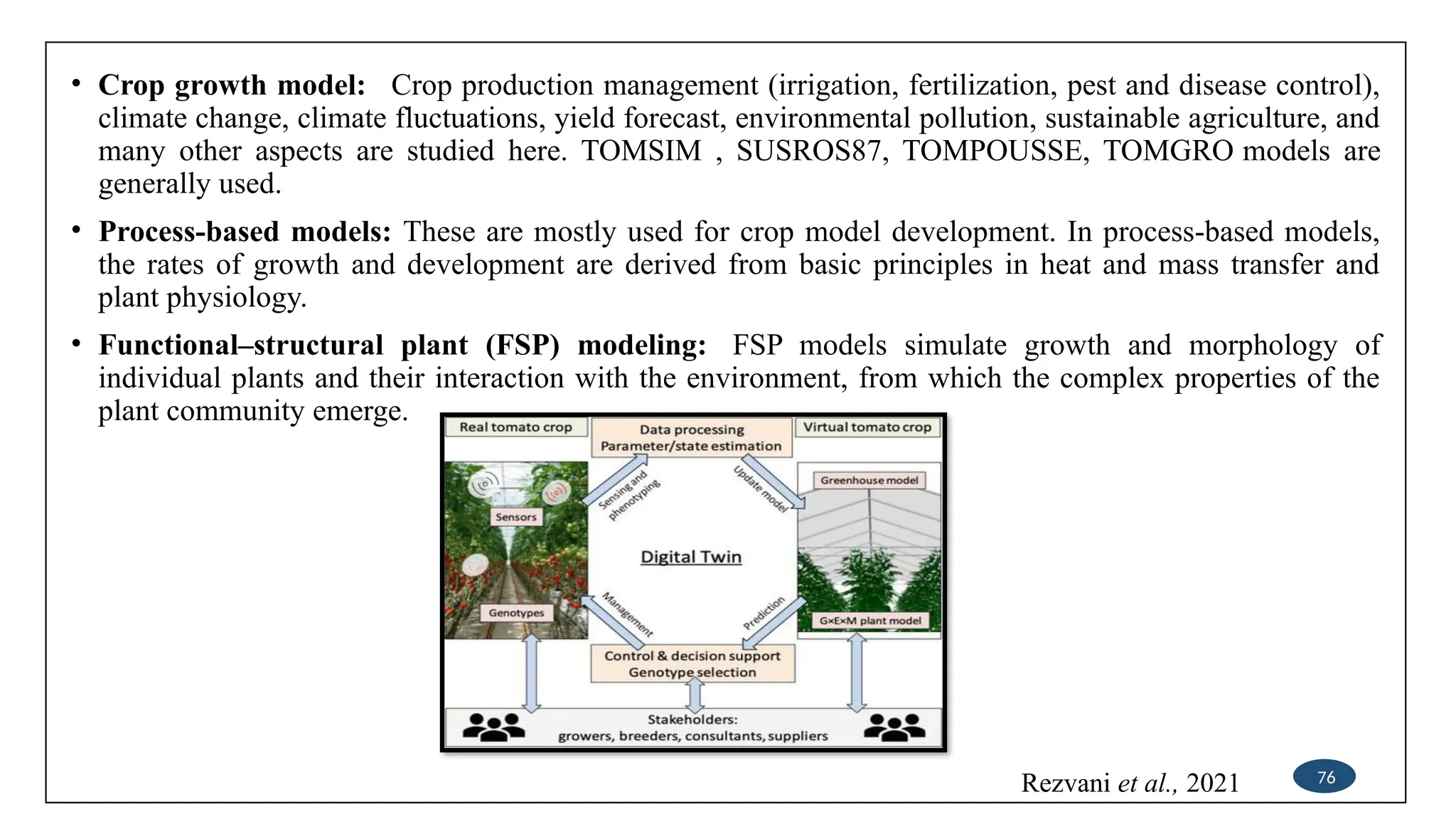
• Functional–structural plant (FSP) modeling: FSP models simulate growth and morphology of
individual plants and their interaction with the environment, from which the complex properties of the
plant community emerge.
76
Rezvani et al., 2021
77.
CONCLUSION
• Greenhouse climatecontrol is one of the challenging tasks in precision agriculture.
• Temperature and humidity are the main variables which have a direct relationship with the plant
production.
• Automatic control of the greenhouse became the mainstream technique which created the most
desirable environment for crop growth and can also get rid of the natural environment constraints.
• Sophisticated new technologies involving microprocessors, data loggers and automated irrigation and
fertigation system allow fully micro-climatic and other input control.
77
78.
FUTURE THRUST
• Needof standard protocol for protected cultivation of different vegetable crops in different agro
climates
• Need to develop farmer friendly and cost effective agro techniques for protected cultivation.
• Need to analyze different control methods and develop affordable greenhouses applicable for
different climatic zones.
• Need to create awareness among farmers for benefits of protective cultivation of vegetables
78