NIST Cloud Computing
Reference Architecture
• NIST Cloud Definition: The National Institute of Standards
and Technology (NIST) defines cloud computing as a
• "pay-per-use model for enabling available, convenient and
on-demand network access to a shared pool of configurable
computing resources (e.g., networks, servers, storage,
applications and services) that can be rapidly provisioned
and released with minimal management effort or service
provider interaction.“
• The goal is to accelerate the federal government’s adoption
of secure and effective cloud computing to reduce costs and
improve services.
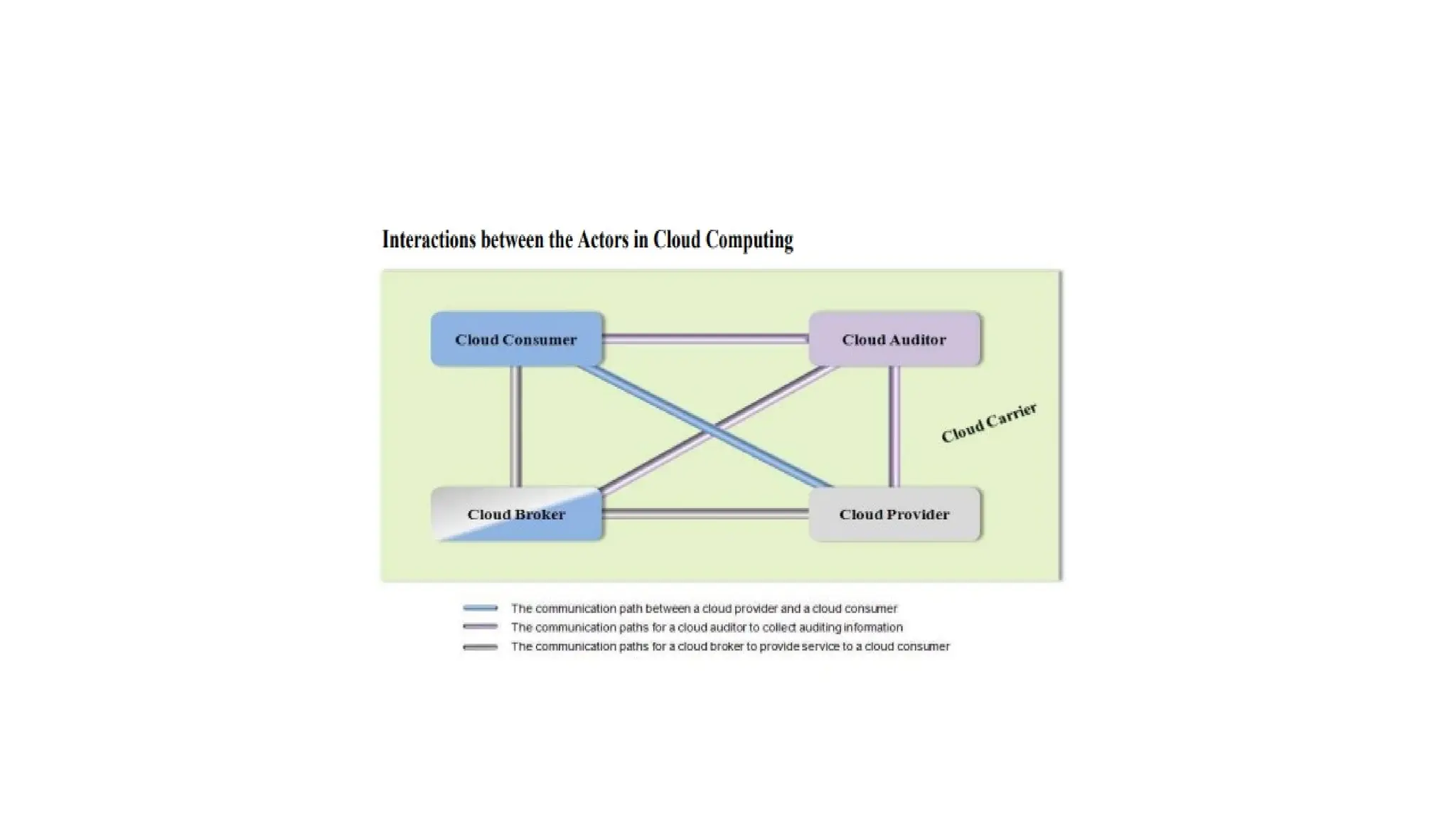
Example Usage Scenario 1:
• A cloud consumer may request service from a cloud broker instead of
contacting a cloud provider directly.
• The cloud broker may create a new service by combining multiple
services or by enhancing an existing service.
Usage Scenario- Cloud Brokers
• In this example, the actual cloud providers are invisible to the cloud
consumer.
• The cloud consumer interacts directly with the cloud broker.
Example Usage Scenario 2
• Cloud carriers provide the connectivity and transport of cloud services from
cloud providers to cloud consumers.
• A cloud provider participates in and arranges for two unique service level
agreements (SLAs), one with a cloud carrier (e.g. SLA2) and one with a cloud
consumer (e.g. SLA1).
Usage Scenario for Cloud Carriers
➢ A cloud provider arranges service level agreements (SLAs) with a cloud
carrier.
➢ Request dedicated and encrypted connections to ensure the cloud services.
• Example Usage Scenario 3 • For a cloud service, a cloud
auditor conducts independent assessments of the operation
and security of the cloud service implementation.
• The audit may involve interactions with both the Cloud
Consumer and the Cloud Provider.
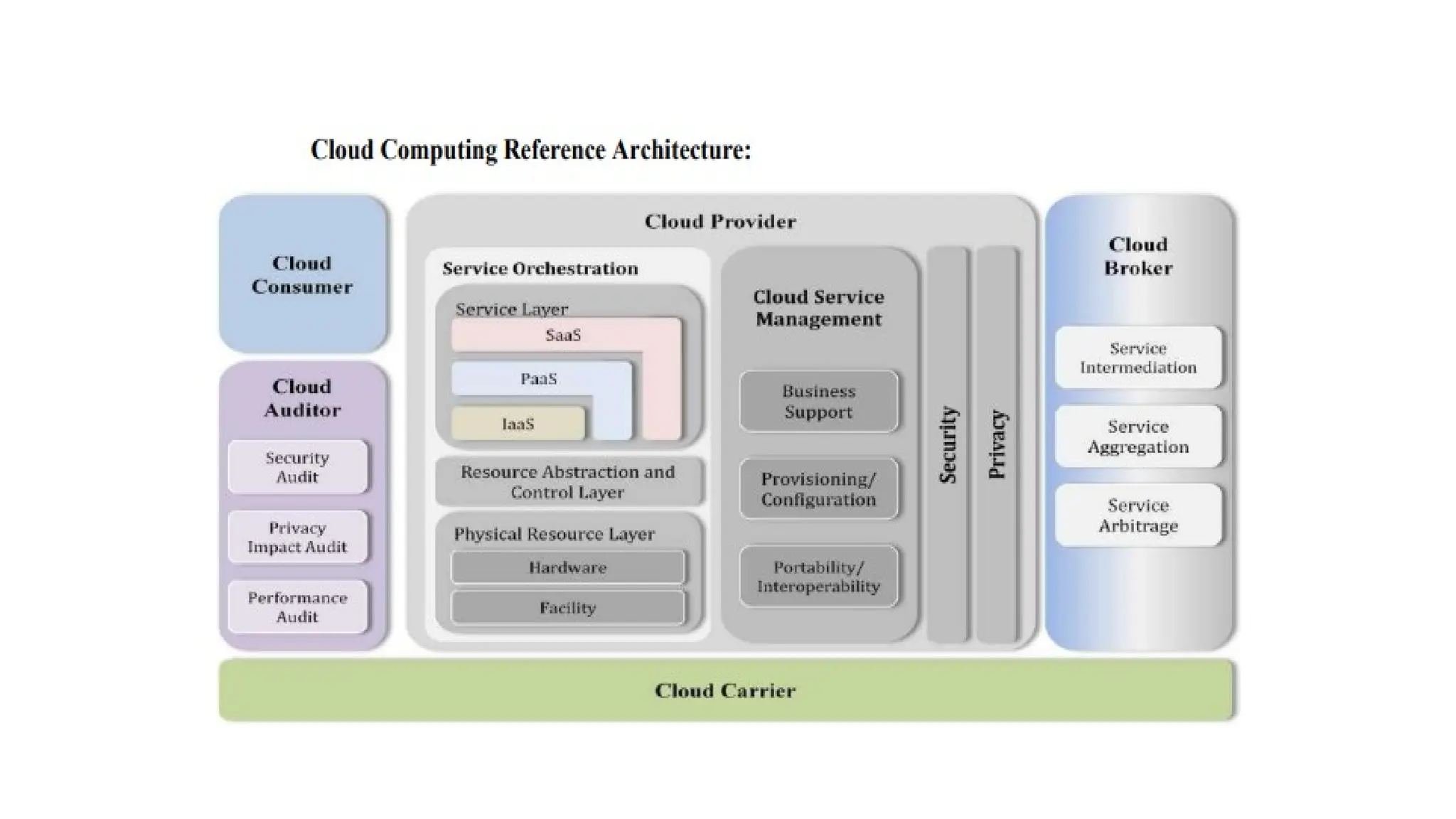
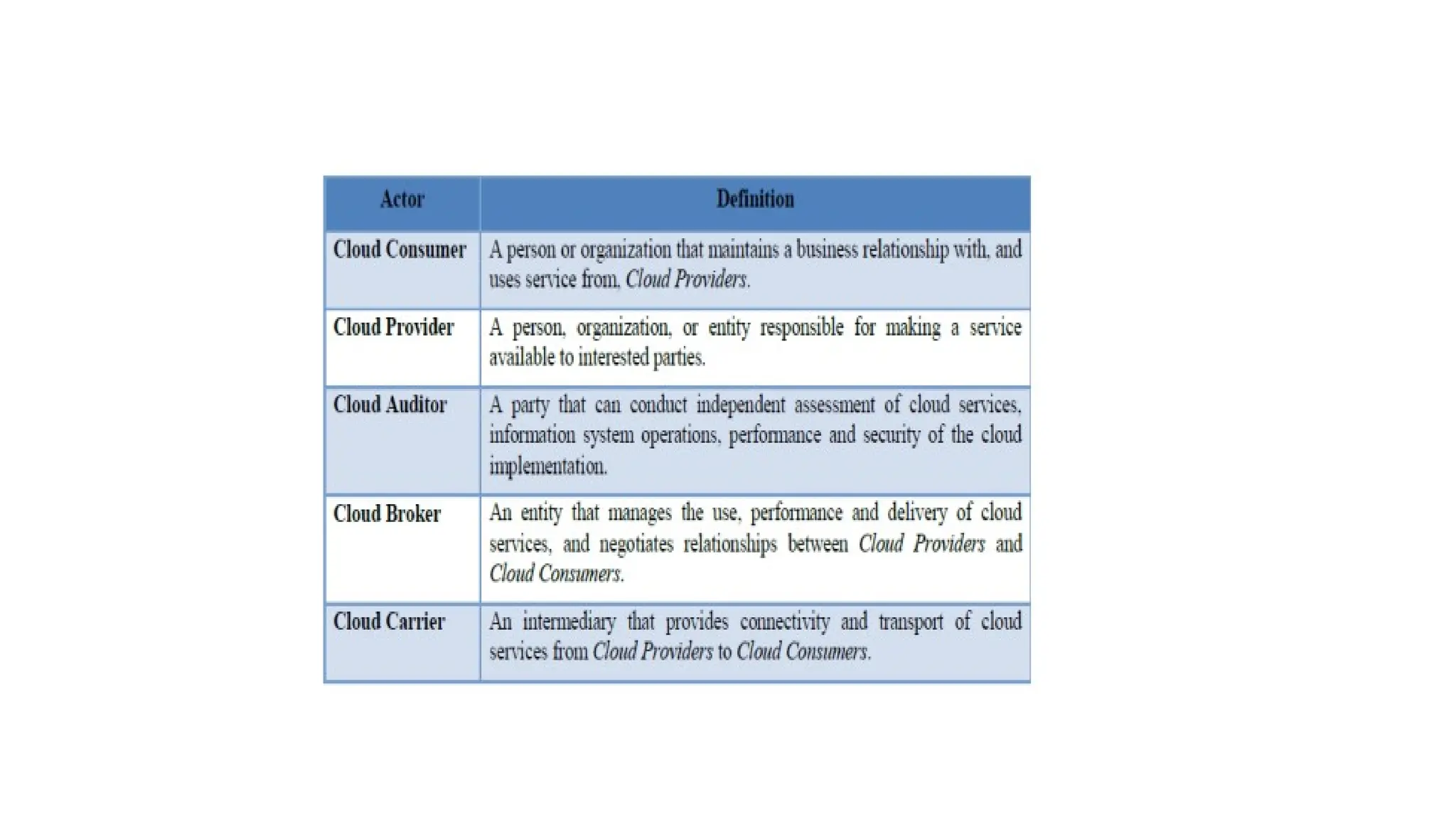
Cloud Consumer
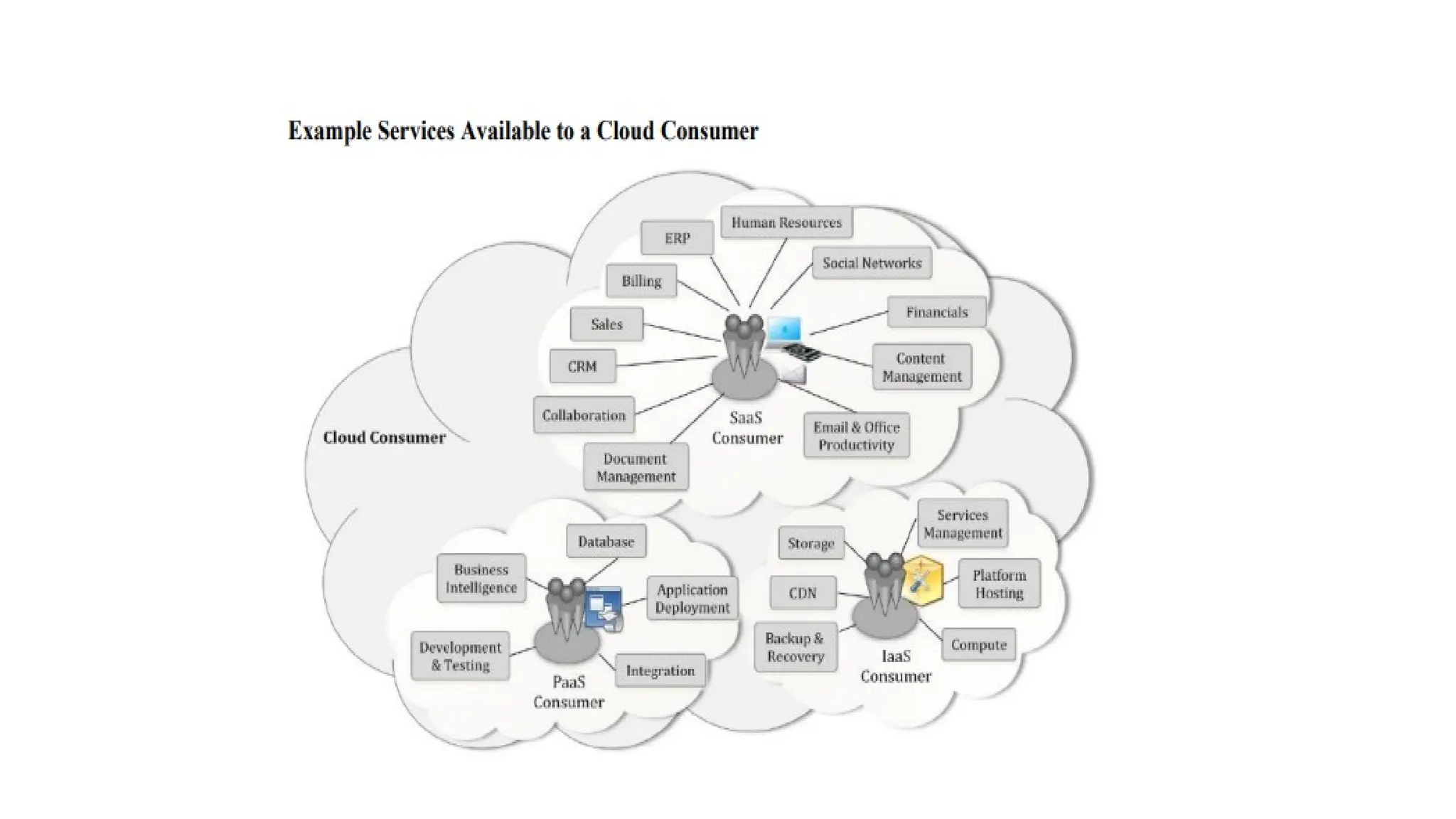
• The cloud consumer is the principal stakeholder for the cloud
computing service.
• A cloud consumer represents a person or organization that maintains
a business relationship with, and uses the service from a cloud
provider. The cloud consumer may be billed for the service
provisioned, and needs to arrange payments accordingly.
• The consumers of SaaS can be organizations that provide their
members with access to software applications, end users or software
application administrators.
• SaaS consumers can be billed based on the number of end users, the
time of use, the network bandwidth consumed, the amount of data
stored or duration of stored data.
• Cloud consumers of PaaScan employ the tools and execution
resources provided by cloud providers to develop, test, deploy and
manage the applications.
• PaaS consumers can be application developers or application testers
who run and test applications in cloud-based environments,.
• PaaS consumers can be billed according to, processing, database
storage and network resources consumed.
• Consumers of IaaS have access to virtual computers, network-
accessible storage & network infrastructure components.
• The consumers of IaaS can be system developers, system
administrators and IT managers.
• IaaS consumers are billed according to the amount or duration of the
resources consumed, such as CPU hours used by virtual computers,
volume and duration of data stored.
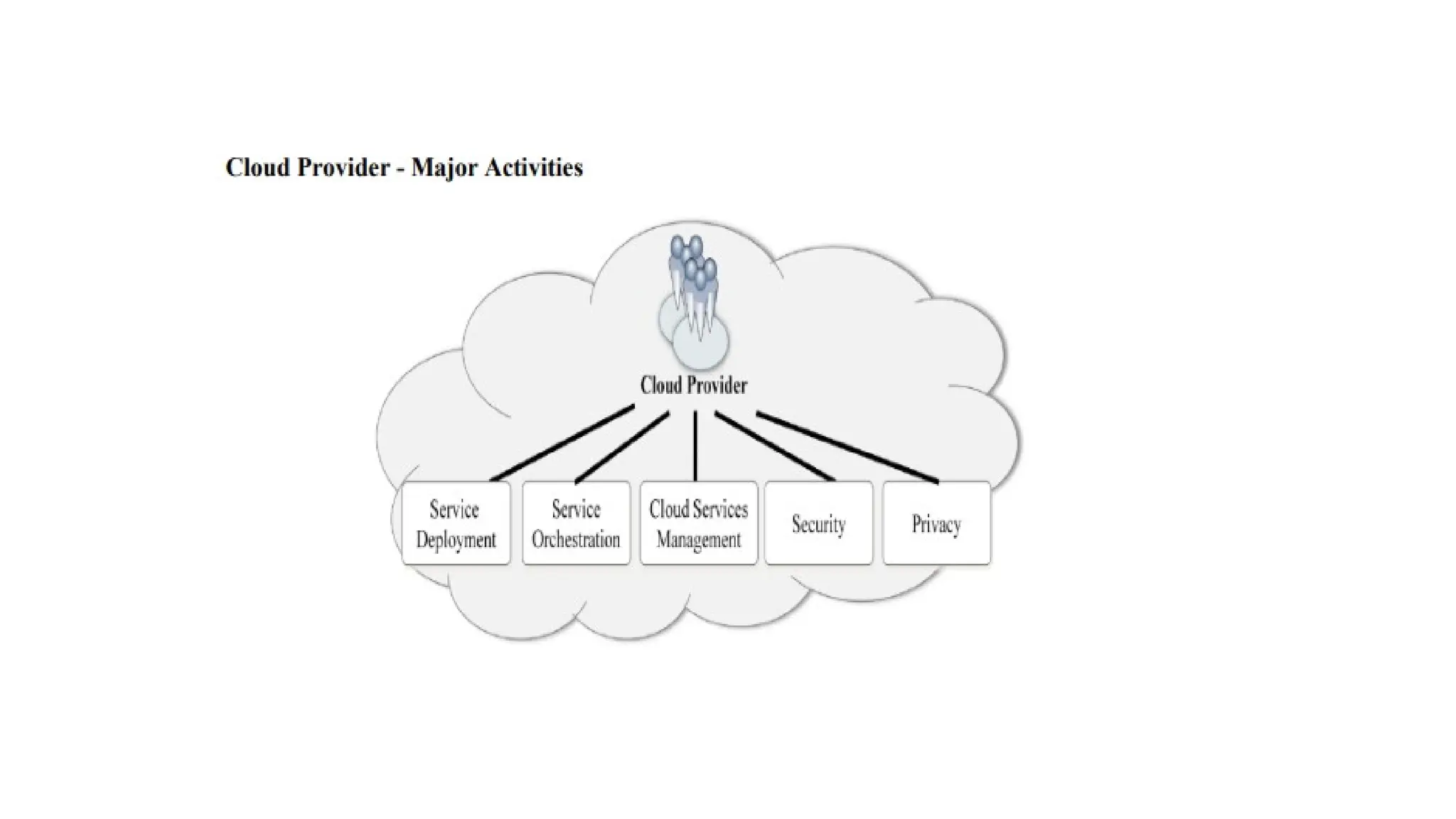
Cloud Provider
• A cloud provider is a person, an organization;
• It is the entity responsible for making a service available to interested
parties.
• A Cloud Provider acquires and manages the computing infrastructure
required for providing the services.
• Runs the cloud software that provides the services. Makes
arrangement to deliver the cloud services to the Cloud Consumers
through network access
Cloud Auditor
• A cloud auditor is a party that can perform an independent examination of cloud
service controls.
• Audits are performed to verify conformance to standards through review of
objective evidence.
• A cloud auditor can evaluate the services provided by a cloud provider in terms of
security controls, privacy impact, performance, etc.
Cloud Broker
• Integration of cloud services can be too complex for cloud consumers to manage.
• A cloud consumer may request cloud services from a cloud broker, instead of
contacting a cloud provider directly.
• A cloud broker is an entity that manages the use, performance and delivery of cloud
services. Negotiates relationships between cloud providers and cloud consumers.
Services of cloud broker
Service Intermediation:
• A cloud broker enhances a given service by improving some specific
capability and providing value-added services to cloud consumers.
Service Aggregation:
• A cloud broker combines and integrates multiple services into one or
more new services.
• The broker provides data integration and ensures the secure data
movement between the cloud consumer and multiple cloud providers.
Services of cloud broker
Service Arbitrage:
• Service arbitrage is similar to service aggregation except that the
services being aggregated are not fixed.
• Service arbitrage means a broker has the flexibility to choose services
from multiple agencies. Eg: The cloud broker can use a credit-scoring
service to measure and select an agency with the best score.
Cloud Carrier
• A cloud carrier acts as an intermediary that provides connectivity and
transport of cloud services between cloud consumers and cloud
providers.
• Cloud carriers provide access to consumers through network.
• The distribution of cloud services is normally provided by network and
telecommunication carriers or a transport agent
• A transport agent refers to a business organization that provides
physical transport of storage media such as high-capacity hard drives
and other access devices.
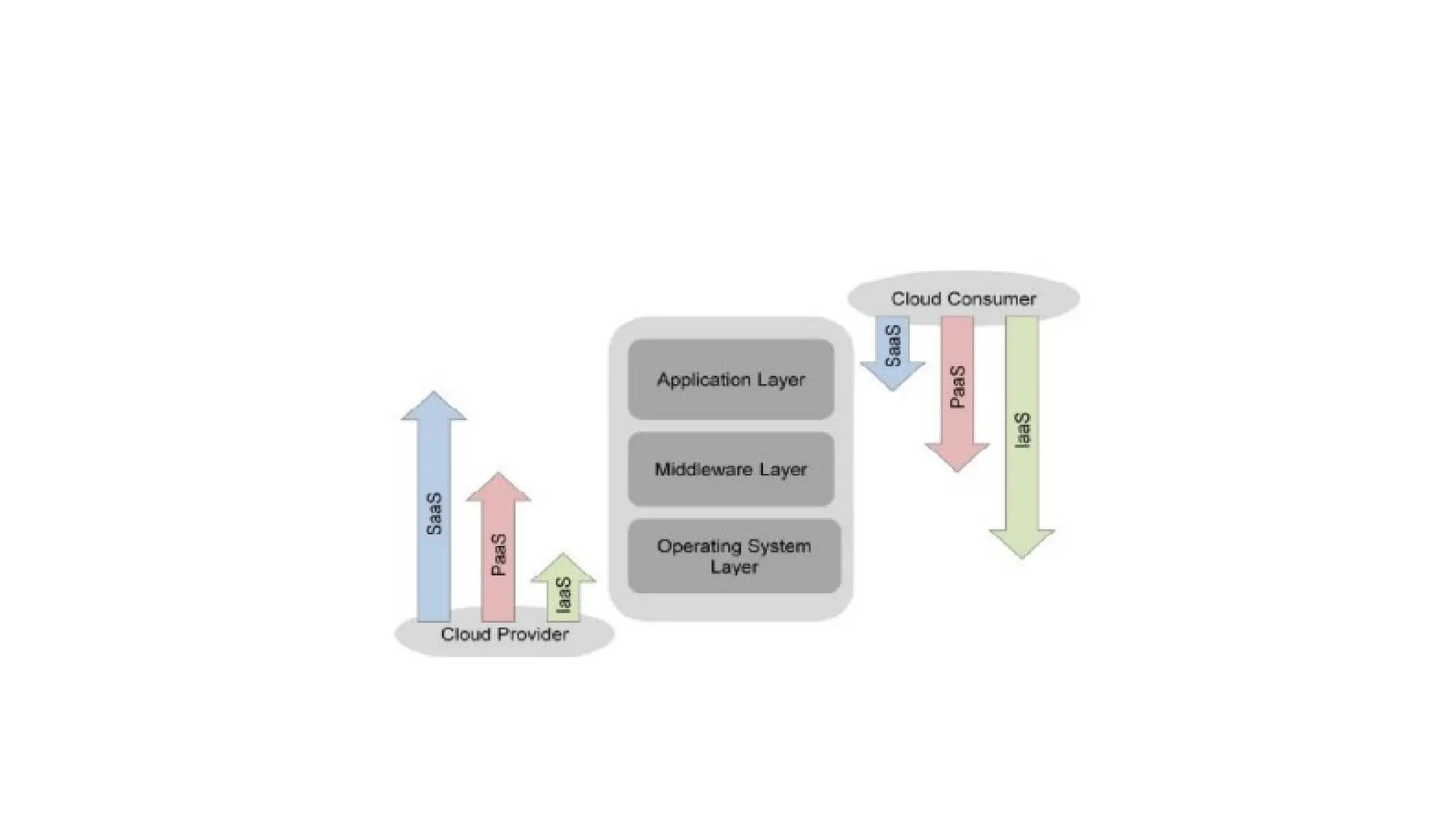
• Scope of Control between Provider and Consumer The Cloud Provider
and Cloud Consumer share the control of resources in a cloud system
• The application layer includes software applications targeted at end
users or programs.
• The applications are used by SaaS consumers, or installed/managed/maintained
by PaaS consumers, IaaS consumers and SaaS providers.
• The middleware layer provides software building blocks (e.g., libraries,
database, and Java virtual machine) for developing application software in the
cloud.
• Used by PaaS consumers, installed/ managed/ maintained by IaaS consumers or
PaaS providers, and hidden from SaaS consumers.
• The OS layer includes operating system and drivers, and is hidden from SaaS
consumers and PaaS consumers.
• An IaaS cloud allows one or multiple guest OS to run virtualized on a single
physical host.
• The IaaS consumers should assume full responsibility for the guest OS, while the
IaaS provider controls the host OS,

NIST Cloud Computing Reference Architecture.pptx

  • 1.
  • 2.
    • NIST CloudDefinition: The National Institute of Standards and Technology (NIST) defines cloud computing as a • "pay-per-use model for enabling available, convenient and on-demand network access to a shared pool of configurable computing resources (e.g., networks, servers, storage, applications and services) that can be rapidly provisioned and released with minimal management effort or service provider interaction.“ • The goal is to accelerate the federal government’s adoption of secure and effective cloud computing to reduce costs and improve services.
  • 6.
    Example Usage Scenario1: • A cloud consumer may request service from a cloud broker instead of contacting a cloud provider directly. • The cloud broker may create a new service by combining multiple services or by enhancing an existing service. Usage Scenario- Cloud Brokers • In this example, the actual cloud providers are invisible to the cloud consumer. • The cloud consumer interacts directly with the cloud broker.
  • 7.
    Example Usage Scenario2 • Cloud carriers provide the connectivity and transport of cloud services from cloud providers to cloud consumers. • A cloud provider participates in and arranges for two unique service level agreements (SLAs), one with a cloud carrier (e.g. SLA2) and one with a cloud consumer (e.g. SLA1). Usage Scenario for Cloud Carriers ➢ A cloud provider arranges service level agreements (SLAs) with a cloud carrier. ➢ Request dedicated and encrypted connections to ensure the cloud services.
  • 8.
    • Example UsageScenario 3 • For a cloud service, a cloud auditor conducts independent assessments of the operation and security of the cloud service implementation. • The audit may involve interactions with both the Cloud Consumer and the Cloud Provider.
  • 9.
    Cloud Consumer • Thecloud consumer is the principal stakeholder for the cloud computing service. • A cloud consumer represents a person or organization that maintains a business relationship with, and uses the service from a cloud provider. The cloud consumer may be billed for the service provisioned, and needs to arrange payments accordingly.
  • 11.
    • The consumersof SaaS can be organizations that provide their members with access to software applications, end users or software application administrators. • SaaS consumers can be billed based on the number of end users, the time of use, the network bandwidth consumed, the amount of data stored or duration of stored data. • Cloud consumers of PaaScan employ the tools and execution resources provided by cloud providers to develop, test, deploy and manage the applications.
  • 12.
    • PaaS consumerscan be application developers or application testers who run and test applications in cloud-based environments,. • PaaS consumers can be billed according to, processing, database storage and network resources consumed. • Consumers of IaaS have access to virtual computers, network- accessible storage & network infrastructure components. • The consumers of IaaS can be system developers, system administrators and IT managers. • IaaS consumers are billed according to the amount or duration of the resources consumed, such as CPU hours used by virtual computers, volume and duration of data stored.
  • 13.
    Cloud Provider • Acloud provider is a person, an organization; • It is the entity responsible for making a service available to interested parties. • A Cloud Provider acquires and manages the computing infrastructure required for providing the services. • Runs the cloud software that provides the services. Makes arrangement to deliver the cloud services to the Cloud Consumers through network access
  • 15.
    Cloud Auditor • Acloud auditor is a party that can perform an independent examination of cloud service controls. • Audits are performed to verify conformance to standards through review of objective evidence. • A cloud auditor can evaluate the services provided by a cloud provider in terms of security controls, privacy impact, performance, etc. Cloud Broker • Integration of cloud services can be too complex for cloud consumers to manage. • A cloud consumer may request cloud services from a cloud broker, instead of contacting a cloud provider directly. • A cloud broker is an entity that manages the use, performance and delivery of cloud services. Negotiates relationships between cloud providers and cloud consumers.
  • 16.
    Services of cloudbroker Service Intermediation: • A cloud broker enhances a given service by improving some specific capability and providing value-added services to cloud consumers. Service Aggregation: • A cloud broker combines and integrates multiple services into one or more new services. • The broker provides data integration and ensures the secure data movement between the cloud consumer and multiple cloud providers.
  • 17.
    Services of cloudbroker Service Arbitrage: • Service arbitrage is similar to service aggregation except that the services being aggregated are not fixed. • Service arbitrage means a broker has the flexibility to choose services from multiple agencies. Eg: The cloud broker can use a credit-scoring service to measure and select an agency with the best score.
  • 18.
    Cloud Carrier • Acloud carrier acts as an intermediary that provides connectivity and transport of cloud services between cloud consumers and cloud providers. • Cloud carriers provide access to consumers through network. • The distribution of cloud services is normally provided by network and telecommunication carriers or a transport agent • A transport agent refers to a business organization that provides physical transport of storage media such as high-capacity hard drives and other access devices.
  • 19.
    • Scope ofControl between Provider and Consumer The Cloud Provider and Cloud Consumer share the control of resources in a cloud system • The application layer includes software applications targeted at end users or programs.
  • 21.
    • The applicationsare used by SaaS consumers, or installed/managed/maintained by PaaS consumers, IaaS consumers and SaaS providers. • The middleware layer provides software building blocks (e.g., libraries, database, and Java virtual machine) for developing application software in the cloud. • Used by PaaS consumers, installed/ managed/ maintained by IaaS consumers or PaaS providers, and hidden from SaaS consumers. • The OS layer includes operating system and drivers, and is hidden from SaaS consumers and PaaS consumers. • An IaaS cloud allows one or multiple guest OS to run virtualized on a single physical host. • The IaaS consumers should assume full responsibility for the guest OS, while the IaaS provider controls the host OS,