Key Concepts in
Data Governance
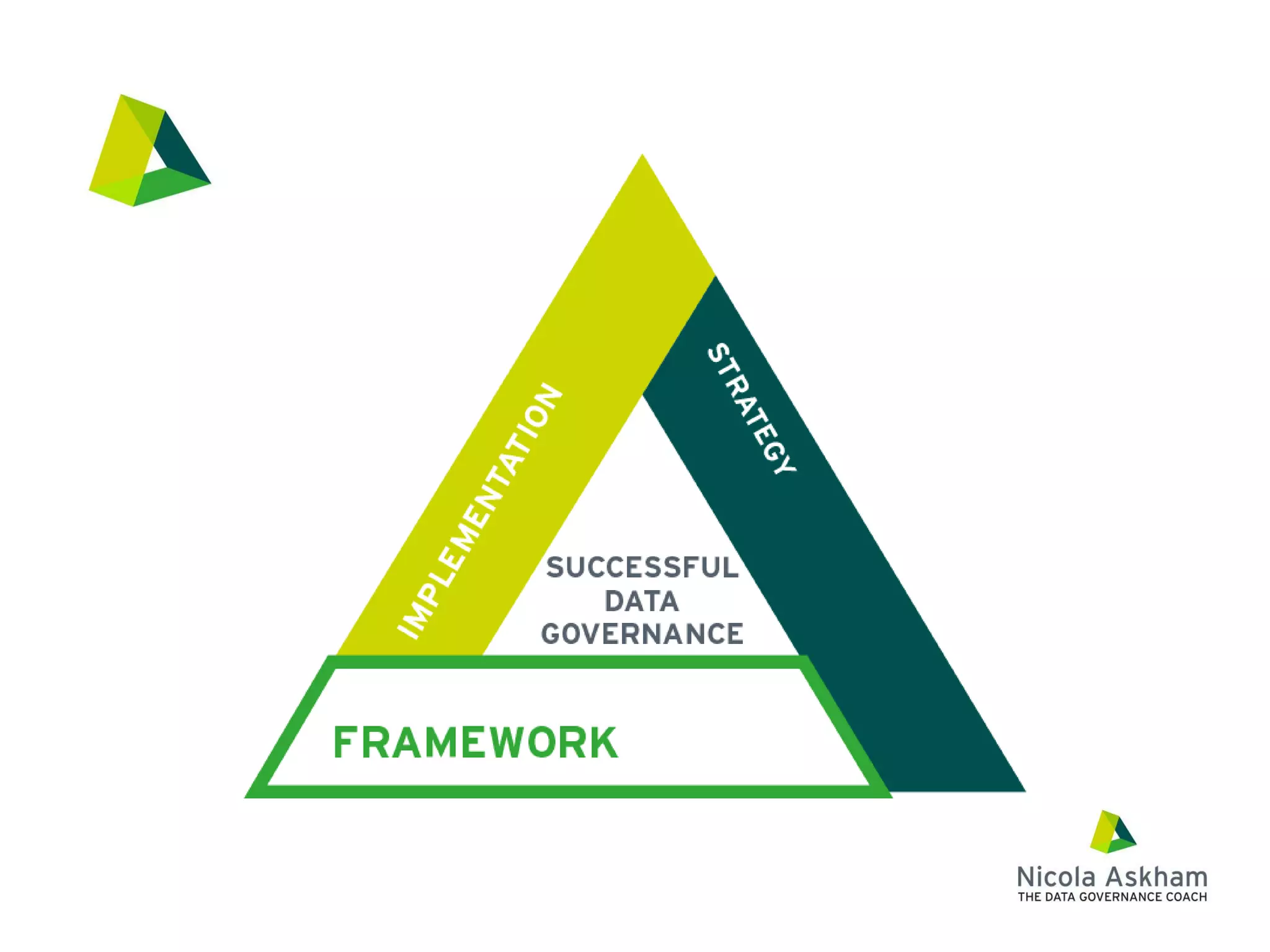
What is Data Governance?
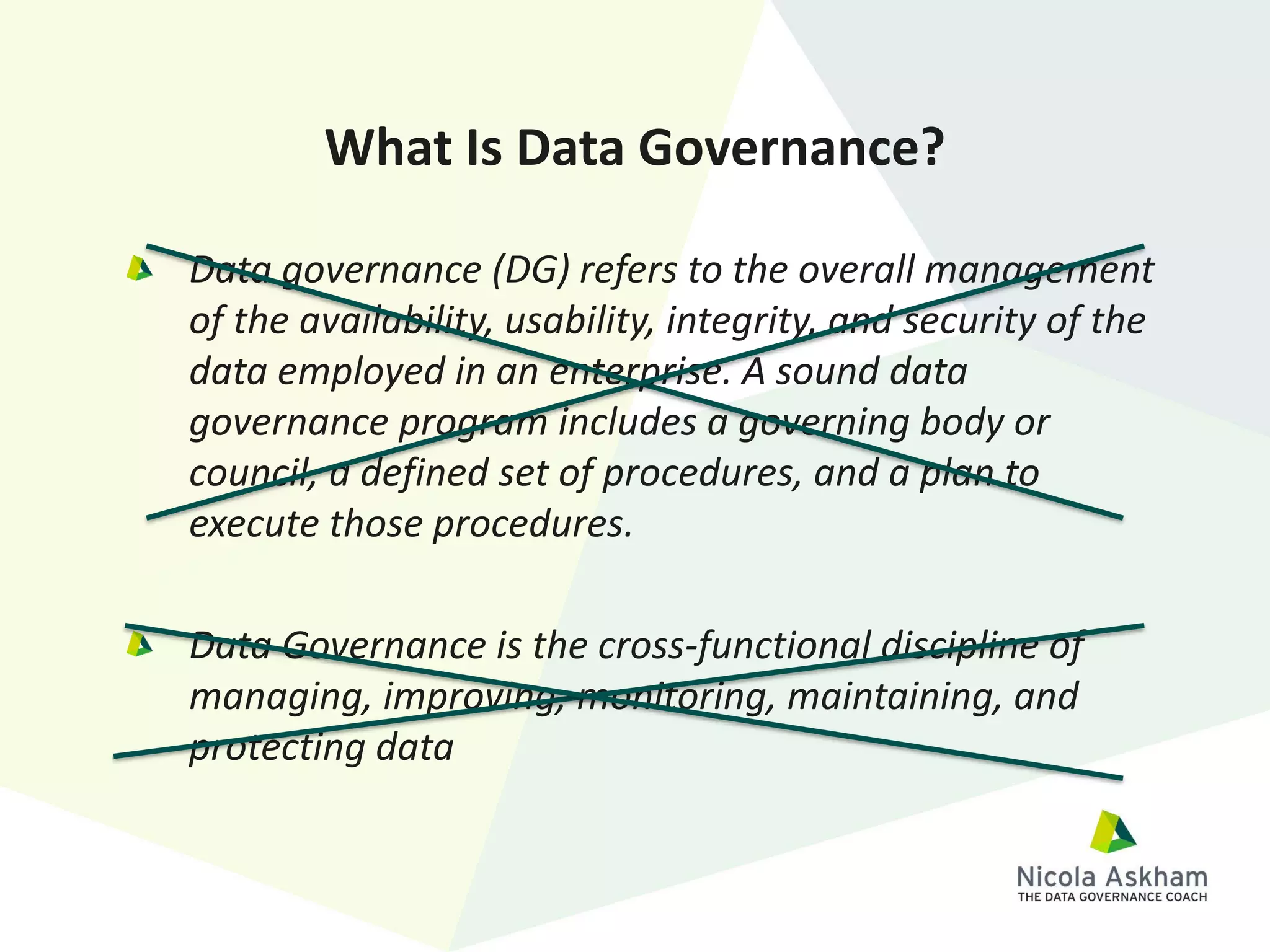
Data governance (DG) refers to the overall management
of the availability, usability, integrity, and security of the
data employed in an enterprise. A sound data
governance program includes a governing body or
council, a defined set of procedures, and a plan to
execute those procedures.
Data Governance is the cross-functional discipline of
managing, improving, monitoring, maintaining, and
protecting data
What Is Data Governance?
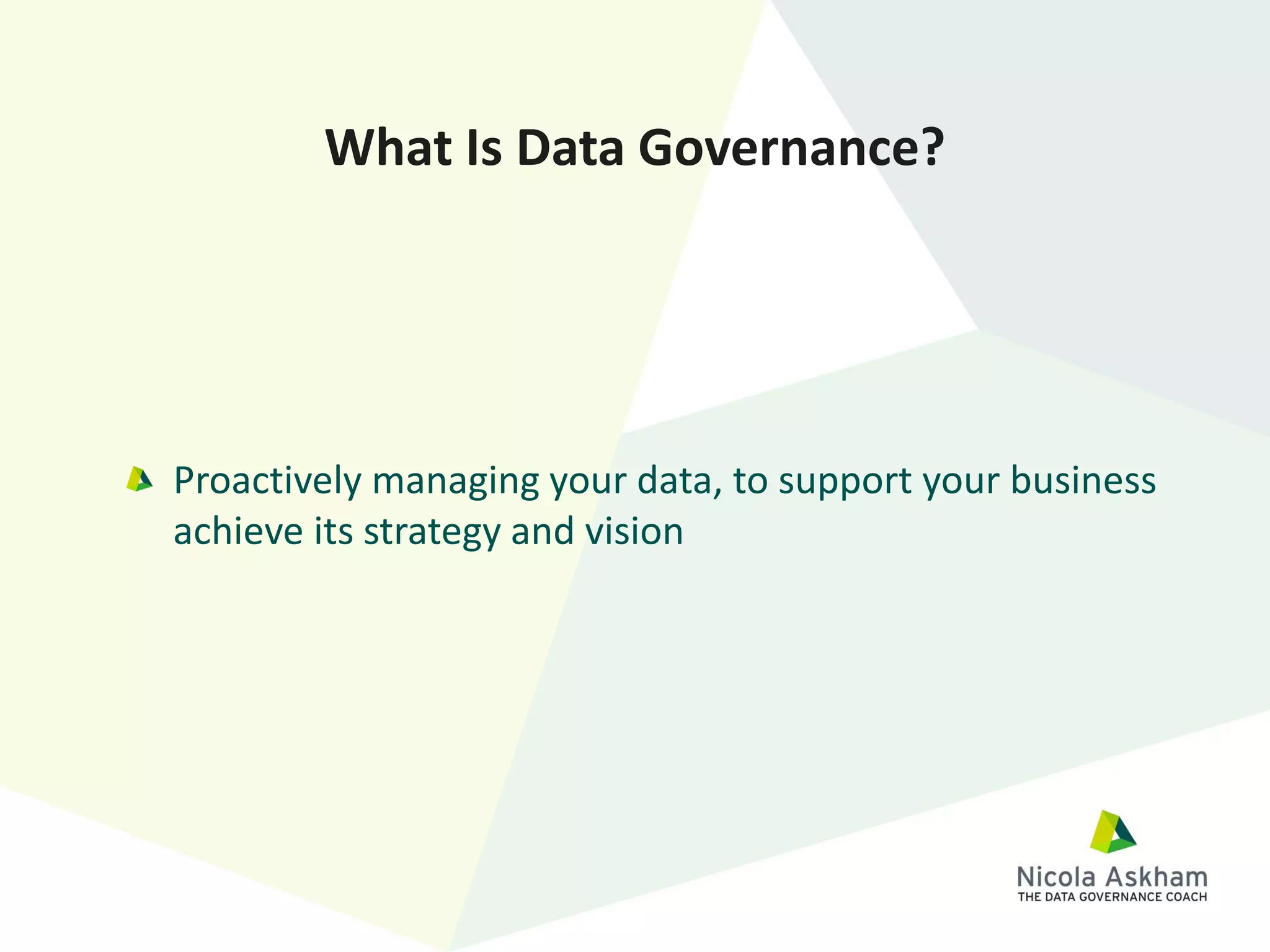
Proactively managing your data, to support your business
achieve its strategy and vision
What Is Data Governance?
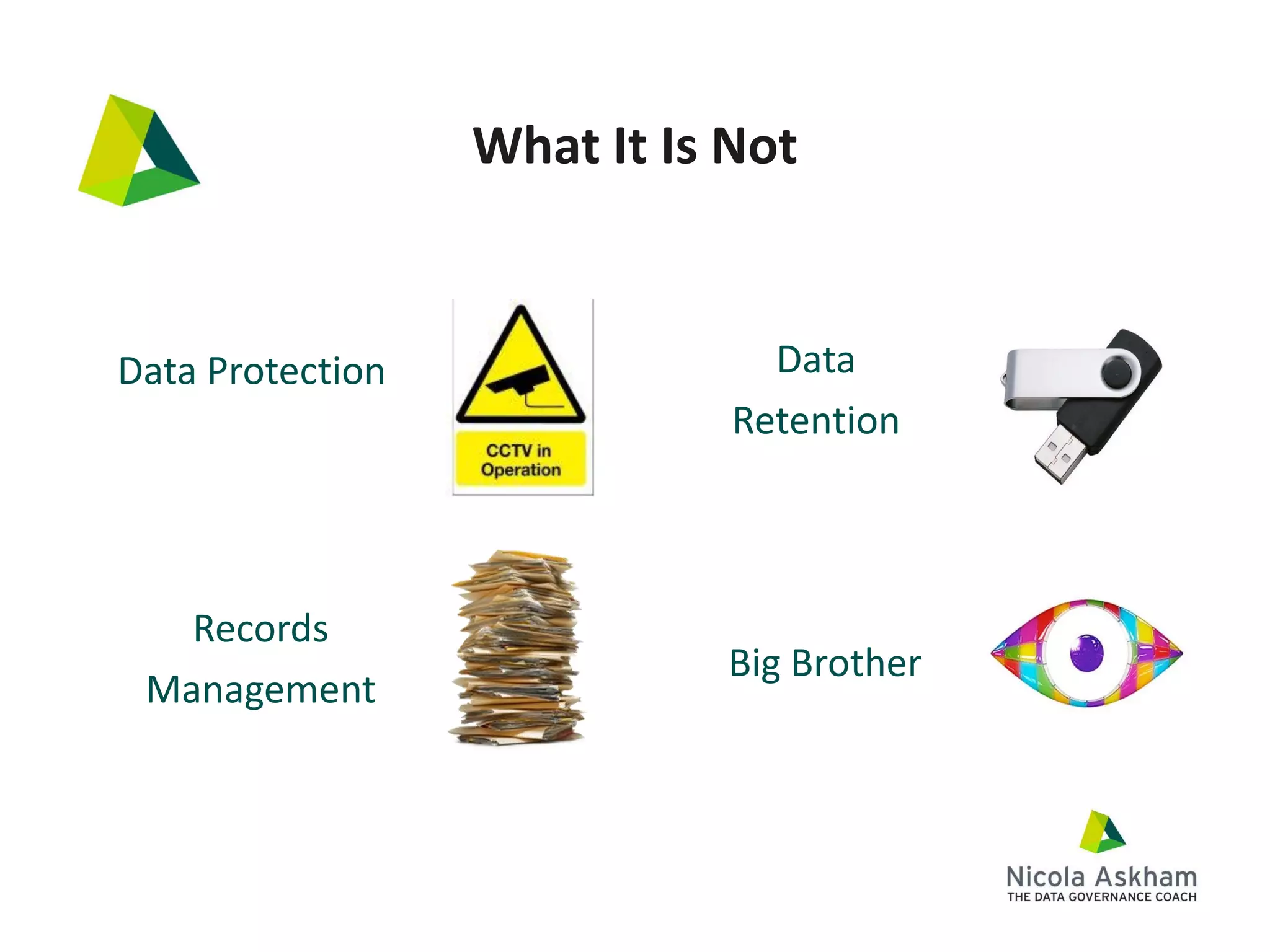
What It Is Not
Data Protection
Records
Management
Data
Retention
Big Brother
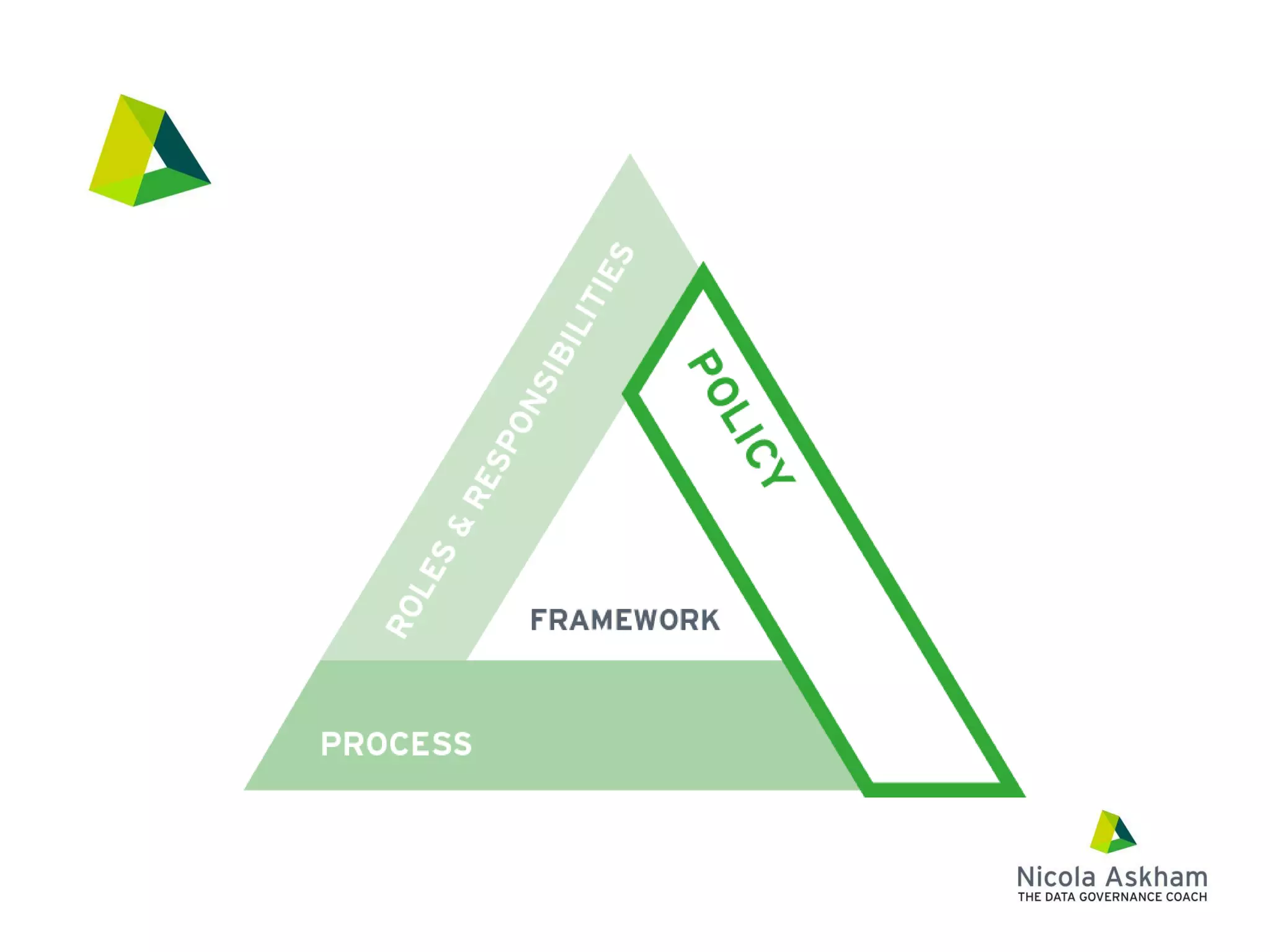
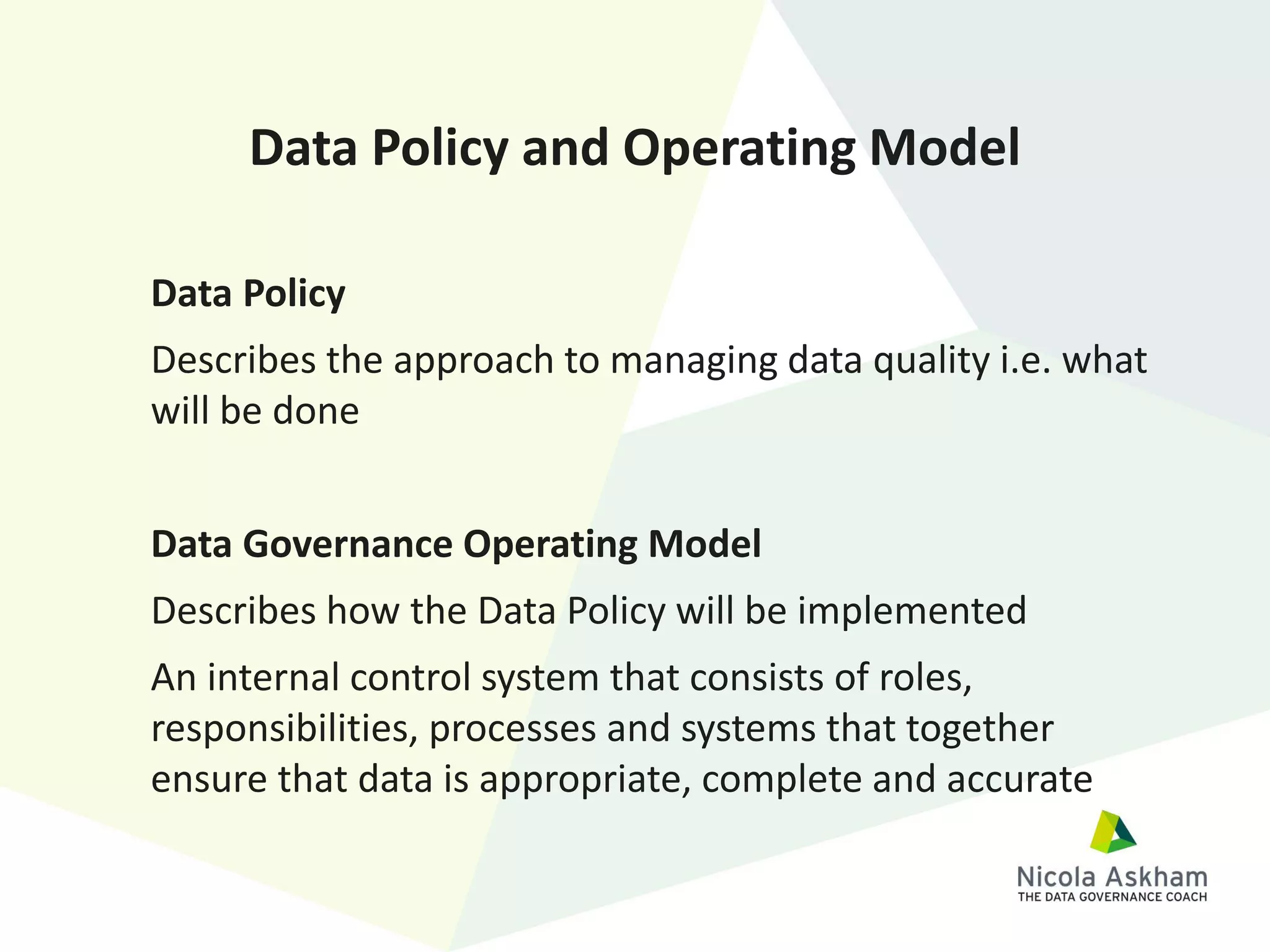
Data Policy
Describes the approach to managing data quality i.e. what
will be done
Data Governance Operating Model
Describes how the Data Policy will be implemented
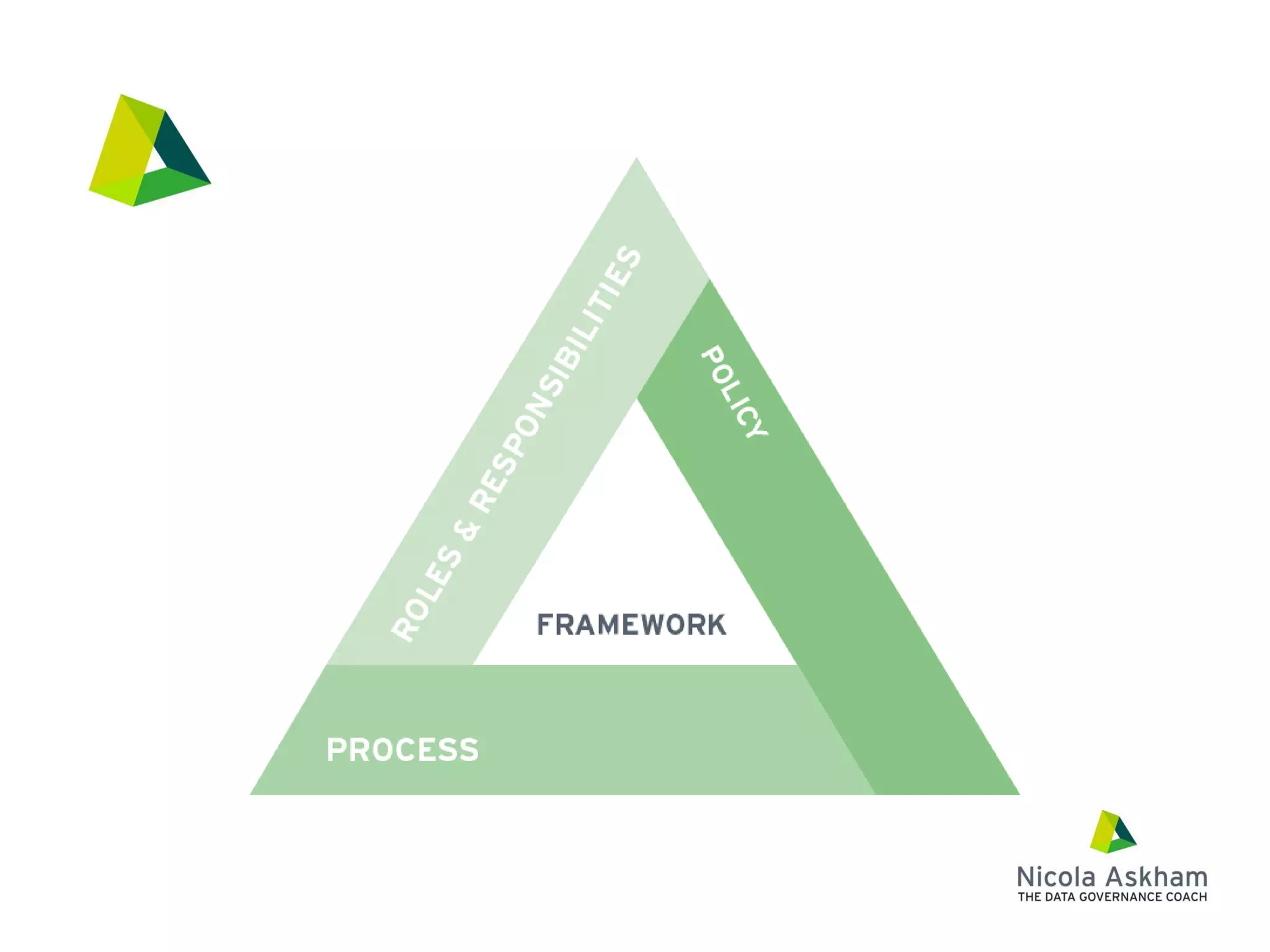
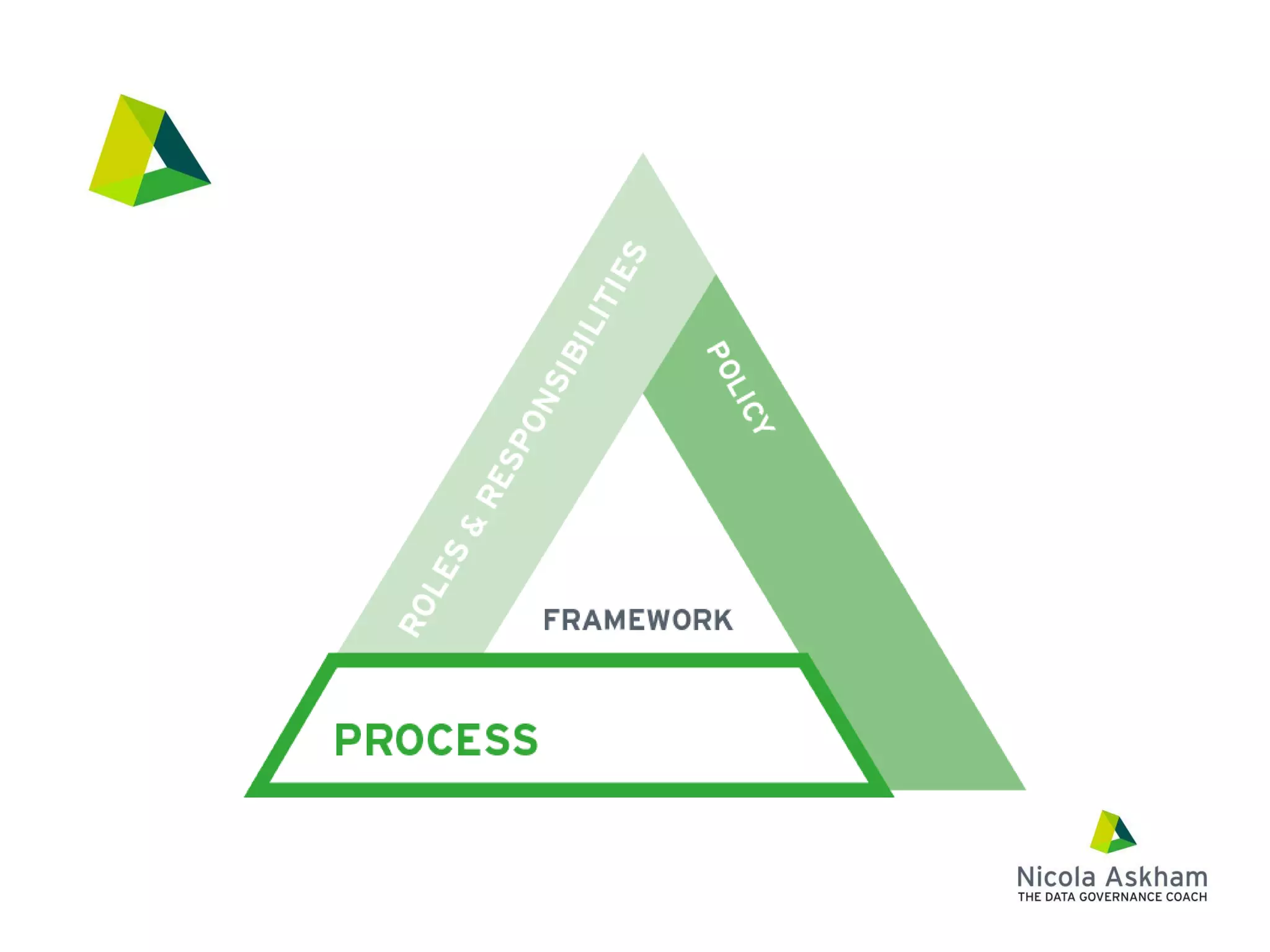
An internal control system that consists of roles,
responsibilities, processes and systems that together
ensure that data is appropriate, complete and accurate
Data Policy and Operating Model
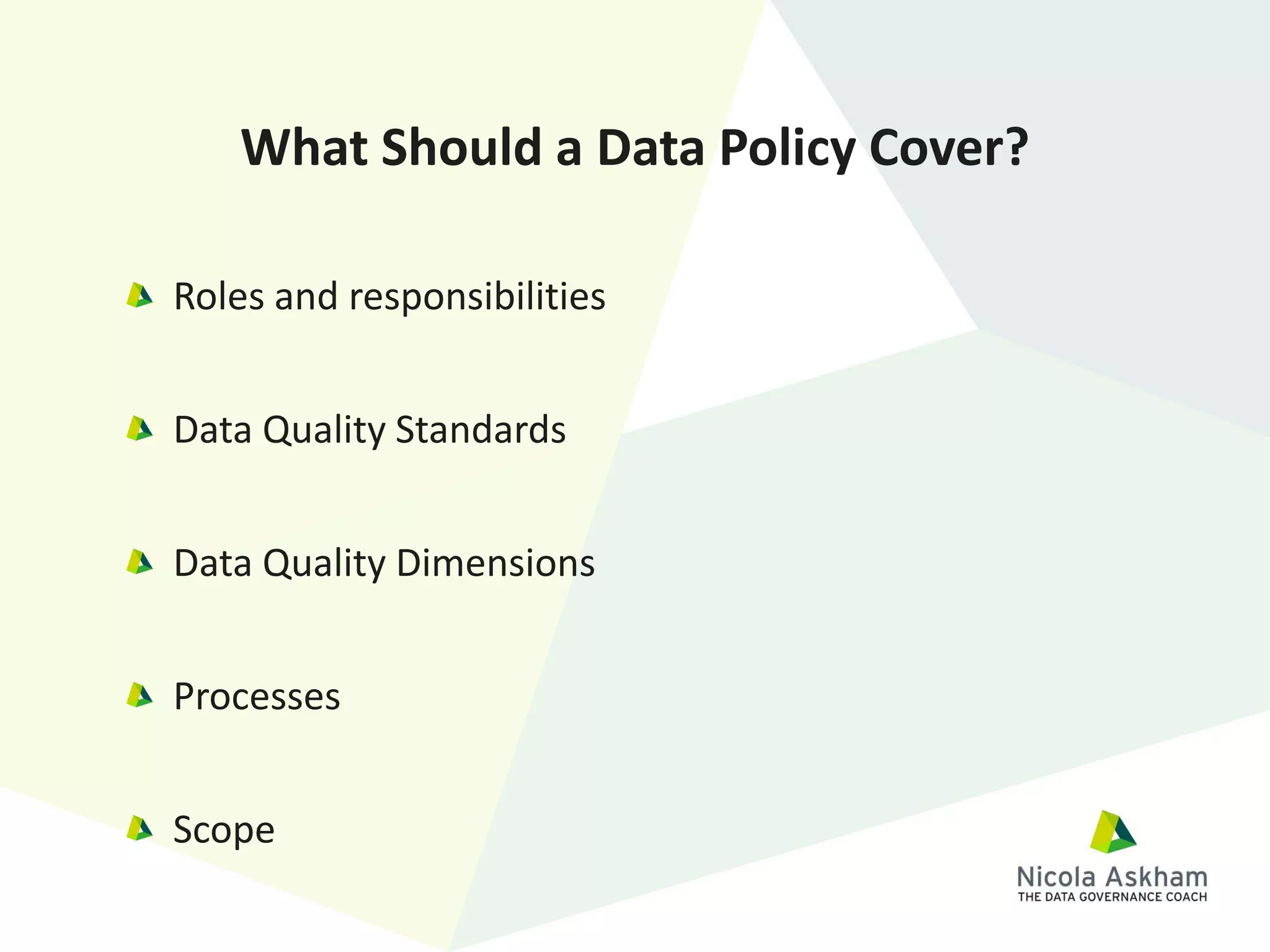
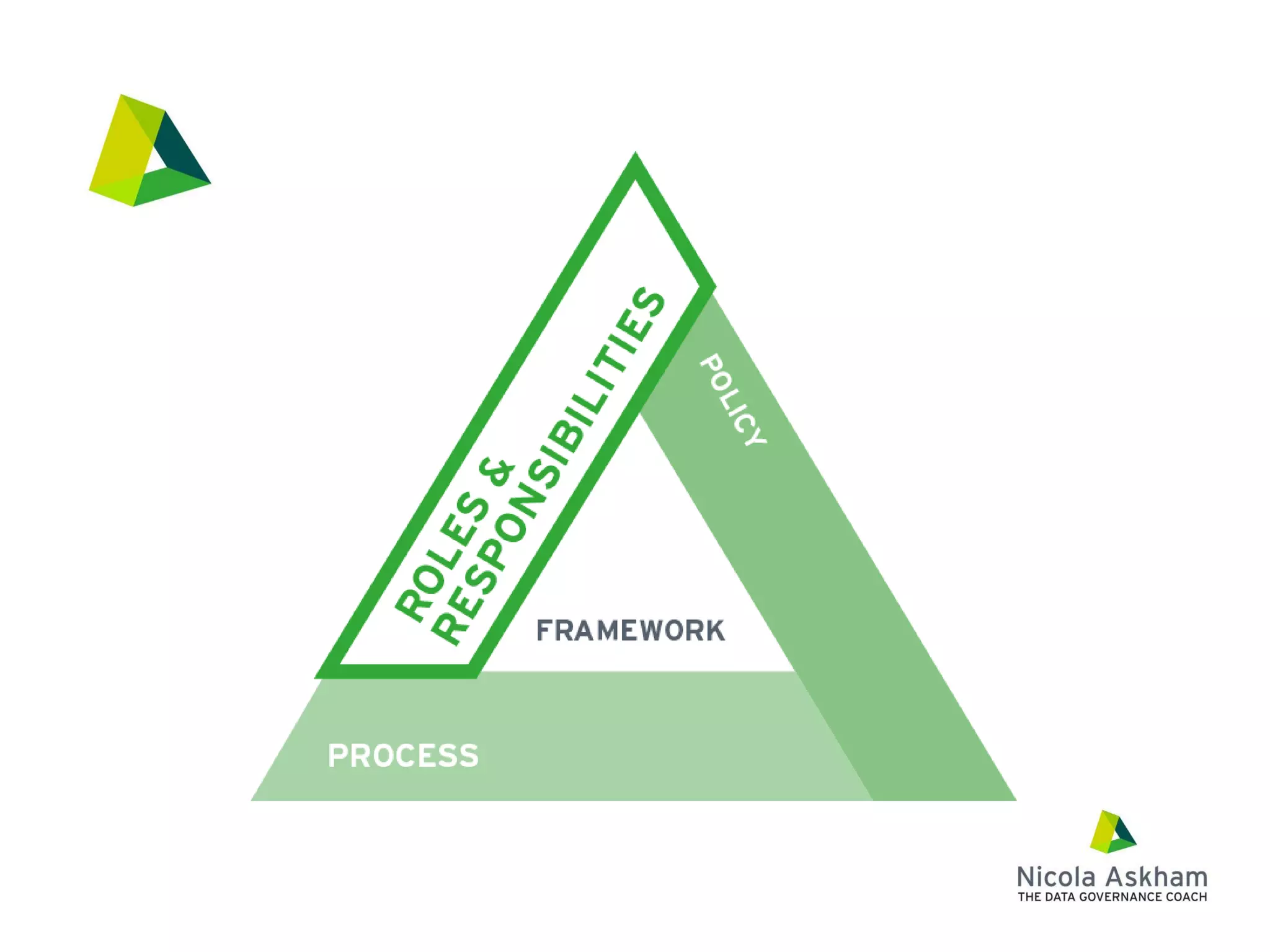
Roles and responsibilities
Data Quality Standards
Data Quality Dimensions
Processes
Scope
What Should a Data Policy Cover?
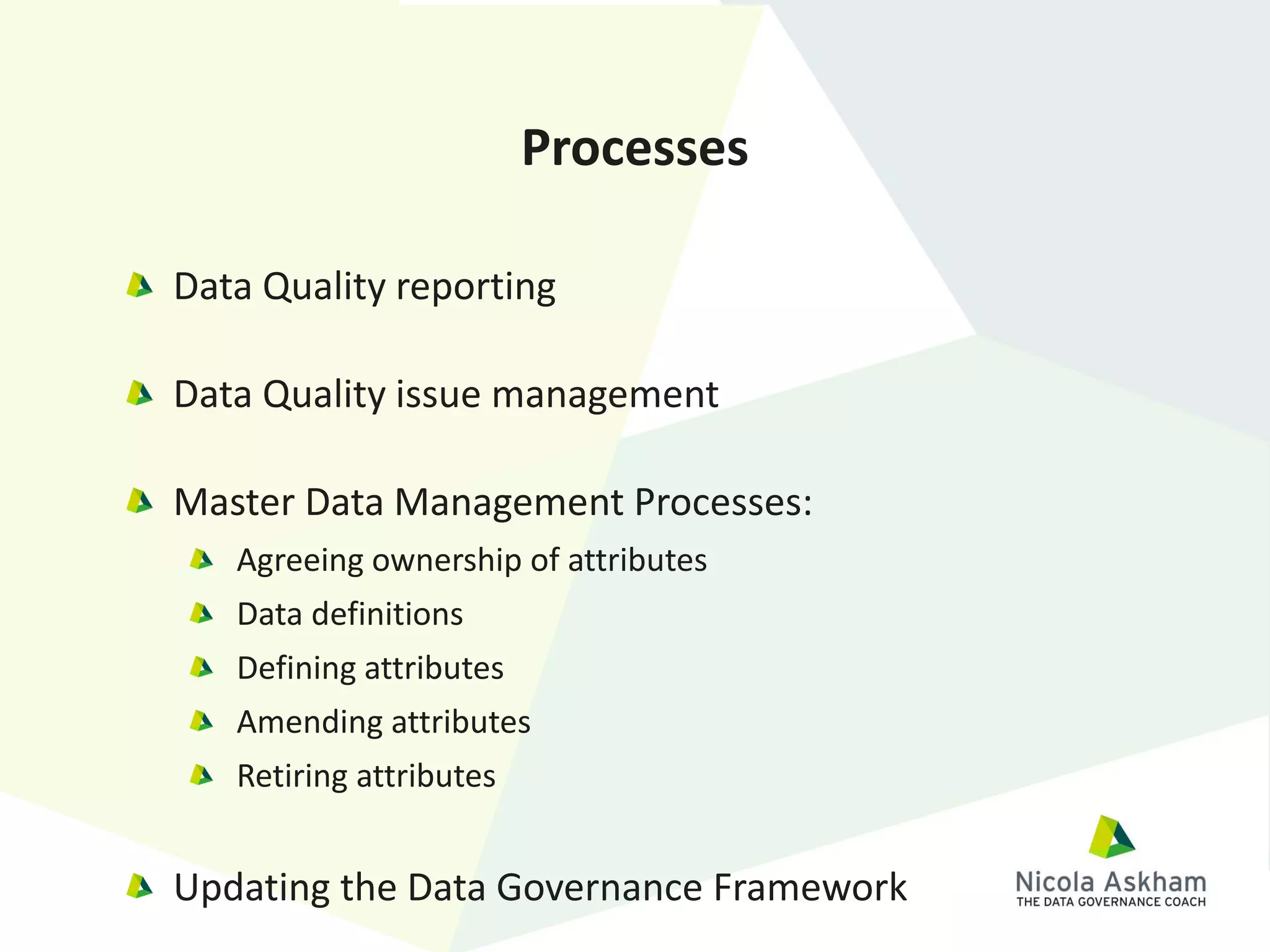
Data Quality reporting
Data Quality issue management
Master Data Management Processes:
Agreeing ownership of attributes
Data definitions
Defining attributes
Amending attributes
Retiring attributes
Updating the Data Governance Framework
Processes
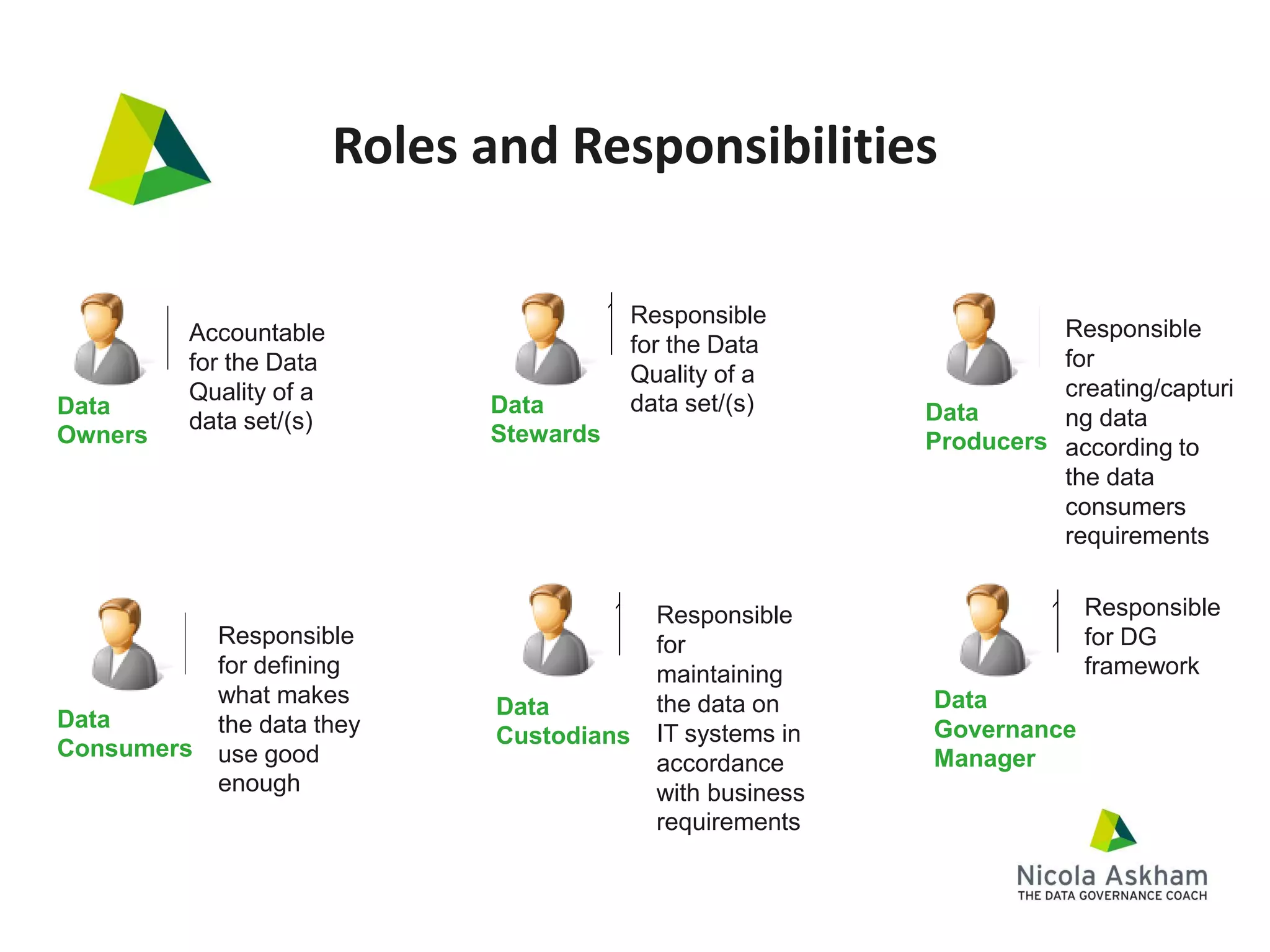
Roles and Responsibilities
14
Data
Governance
Manager
Responsible
for DG
framework
Data
Owners
Accountable
for the Data
Quality of a
data set/(s) Data
Producers
Responsible
for
creating/capturi
ng data
according to
the data
consumers
requirements
Data
Custodians
Responsible
for
maintaining
the data on
IT systems in
accordance
with business
requirements
Data
Stewards
Responsible
for the Data
Quality of a
data set/(s)
Data
Consumers
Responsible
for defining
what makes
the data they
use good
enough
Chief Data Officer
Questions
Email: nicola@nicolaaskham.com
Website and blog: www.nicolaaskham.com
LinkedIn: http://uk.linkedin.com/in/nicolaaskham
Twitter: @nicola_askham and @TheDataGovCoach
© 2016 The Data Governance Coach. All rights reserved.
No part of this material may be reproduced or transmitted in any form or by any means,
electronic or mechanical, including photocopying, recording, or any information storage
and retrieval system, without permission in writing from The Data Governance Coach.
The triangular graphics contained within this document are trademarks of Nicola Askham Ltd

Nicola Askham Key concepts in data governance

  • 1.
  • 2.
    What is DataGovernance?
  • 3.
    Data governance (DG)refers to the overall management of the availability, usability, integrity, and security of the data employed in an enterprise. A sound data governance program includes a governing body or council, a defined set of procedures, and a plan to execute those procedures. Data Governance is the cross-functional discipline of managing, improving, monitoring, maintaining, and protecting data What Is Data Governance?
  • 4.
    Proactively managing yourdata, to support your business achieve its strategy and vision What Is Data Governance?
  • 5.
    What It IsNot Data Protection Records Management Data Retention Big Brother
  • 9.
    Data Policy Describes theapproach to managing data quality i.e. what will be done Data Governance Operating Model Describes how the Data Policy will be implemented An internal control system that consists of roles, responsibilities, processes and systems that together ensure that data is appropriate, complete and accurate Data Policy and Operating Model
  • 10.
    Roles and responsibilities DataQuality Standards Data Quality Dimensions Processes Scope What Should a Data Policy Cover?
  • 12.
    Data Quality reporting DataQuality issue management Master Data Management Processes: Agreeing ownership of attributes Data definitions Defining attributes Amending attributes Retiring attributes Updating the Data Governance Framework Processes
  • 14.
    Roles and Responsibilities 14 Data Governance Manager Responsible forDG framework Data Owners Accountable for the Data Quality of a data set/(s) Data Producers Responsible for creating/capturi ng data according to the data consumers requirements Data Custodians Responsible for maintaining the data on IT systems in accordance with business requirements Data Stewards Responsible for the Data Quality of a data set/(s) Data Consumers Responsible for defining what makes the data they use good enough
  • 15.
  • 16.
  • 17.
    Email: nicola@nicolaaskham.com Website andblog: www.nicolaaskham.com LinkedIn: http://uk.linkedin.com/in/nicolaaskham Twitter: @nicola_askham and @TheDataGovCoach © 2016 The Data Governance Coach. All rights reserved. No part of this material may be reproduced or transmitted in any form or by any means, electronic or mechanical, including photocopying, recording, or any information storage and retrieval system, without permission in writing from The Data Governance Coach. The triangular graphics contained within this document are trademarks of Nicola Askham Ltd