Presentation on Data Governance By Radwan
What is Data Governance
 Data Governance is the organizing framework for establishing the strategy,
objectives and policy for effectively managing corporate data.
 It consists of the processes, policies, organization and technologies required to
manage and ensure the availability, usability, integrity, consistency, auditability
and security of your data.
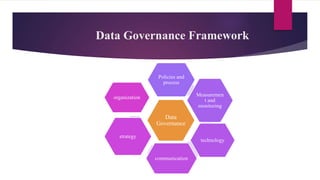
Data Governance Framework
Data
Governance
Policies and
process
Measuremen
t and
monitoring
technology
communication
strategy
organization
Implementing Data Governance
 Different groups within the same organization require different definitions.
 Ethical duties regarding confidential and privileged data.
 Systematic handle data for a customer.
 A need to organize and manage data inventory to improve efficiency.
 To design the appropriate structure while staying in compliance with rules
 Consistency with other databases in the organization.
Why is Data Governance Important ?
 Increasing Customer Demands.
 Technology and market changes outpacing ability to respond.
 Mobile apps enabling data to be created and accessed anywhere.
 Data Volumes are increasing.
 Data Quality issues are persistent.
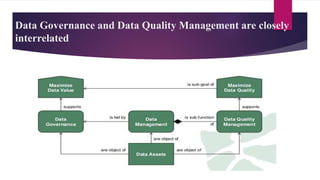
Data Governance and Data Quality Management are closely
interrelated
As Data Governance is an organizational task, design
decisions must be made in five organizational areas
Data governance challenges
 Data stored in different repositories (example: One Drive, SharePoint, Exchange)
 Reducing compliance risk is directly proportional to reducing amount of data and keeping only the high value
data.
 Ensure employees abide by internal policies and regulations set by regulatory bodies.
 Make use of all compliance and data governance.
 Understand attributes attached to a document.
 Auto classification of content will help them work faster.
 Continuous review of policies and regulations.
 Oversee implementation of Data Retention, Archival and Classification.
Data Loss Prevention
 Sensitive Data Analysis
 Define Policies for Sensitive Data
 Policy tips for end users
 All activity is audited and reported
Advanced of Data Governance



Conclusion
A data governance framework also enables collaboration from various levels of the
organizations and it also provides the ability to align various data related programs with
corporate object
Data governance structure, a longitudinal study would give a better indication of the benefits
and success of the data governance structure implementation.
Data governance can use the morphology as a guideline or checklist
Thank you
If you have any questions!
Feel free to email us!

Data governance

  • 1.
    Presentation on DataGovernance By Radwan
  • 2.
    What is DataGovernance  Data Governance is the organizing framework for establishing the strategy, objectives and policy for effectively managing corporate data.  It consists of the processes, policies, organization and technologies required to manage and ensure the availability, usability, integrity, consistency, auditability and security of your data.
  • 3.
    Data Governance Framework Data Governance Policiesand process Measuremen t and monitoring technology communication strategy organization
  • 4.
    Implementing Data Governance Different groups within the same organization require different definitions.  Ethical duties regarding confidential and privileged data.  Systematic handle data for a customer.  A need to organize and manage data inventory to improve efficiency.  To design the appropriate structure while staying in compliance with rules  Consistency with other databases in the organization.
  • 5.
    Why is DataGovernance Important ?  Increasing Customer Demands.  Technology and market changes outpacing ability to respond.  Mobile apps enabling data to be created and accessed anywhere.  Data Volumes are increasing.  Data Quality issues are persistent.
  • 6.
    Data Governance andData Quality Management are closely interrelated
  • 7.
    As Data Governanceis an organizational task, design decisions must be made in five organizational areas
  • 8.
    Data governance challenges Data stored in different repositories (example: One Drive, SharePoint, Exchange)  Reducing compliance risk is directly proportional to reducing amount of data and keeping only the high value data.  Ensure employees abide by internal policies and regulations set by regulatory bodies.  Make use of all compliance and data governance.  Understand attributes attached to a document.  Auto classification of content will help them work faster.  Continuous review of policies and regulations.  Oversee implementation of Data Retention, Archival and Classification.
  • 9.
    Data Loss Prevention Sensitive Data Analysis  Define Policies for Sensitive Data  Policy tips for end users  All activity is audited and reported
  • 10.
    Advanced of DataGovernance   
  • 11.
    Conclusion A data governanceframework also enables collaboration from various levels of the organizations and it also provides the ability to align various data related programs with corporate object Data governance structure, a longitudinal study would give a better indication of the benefits and success of the data governance structure implementation. Data governance can use the morphology as a guideline or checklist
  • 12.
    Thank you If youhave any questions! Feel free to email us!