
New Product Development

Harryadin Mahardika, PhD
Harryadin Mahardika
• Pop Economist
• FEUI & laporsuap.com
• Research objective:
– “to liberate and empower consumer...”

• Current research:
– Consumer empowerment
– Consumer intervention/engineering
– Mobile advertising

• Contact:
– harryadin.mahardika@ui.ac.id / harryadin@gmail.com
– @HarrySastro
2
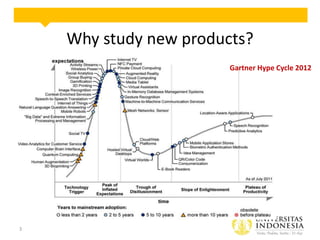
Why study new products?
Gartner Hype Cycle 2012

3
Why Study New Products?
• Innovation as an Investment: A successful new
product does more good for an organization than
anything else that can happen
– Investment in innovation is critical to firm growth
and even survival.
– Radical innovations (those that displace or
obsolete existing products) are particularly crucial
to the firm.
– Technology leaders view “business growth
through innovation” as a major challenge facing
them today.
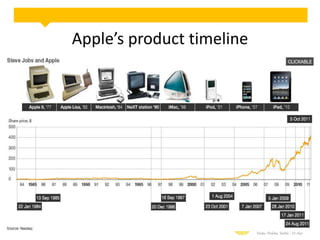
Apple’s product timeline
6
Global Product Development
• Increased globalization make NPD even more
challenging today!
– Procter & Gamble products are developed globally in the
firm’s 22 research centers located in 13 countries.
Market research and testing of the Swiffer mop occurred
in the U.S. and France.
http://www.youtube.com/watch?v=PFbeP6YqHzg&NR=1

– Ikea identifies unmet customer needs and commissions
in-house and outsourced designers to compete for the
design. Worldwide manufacturing partners compete for
the manufacturing rights. The firm also has excellent
global logistics for product delivery to stores and
customers.
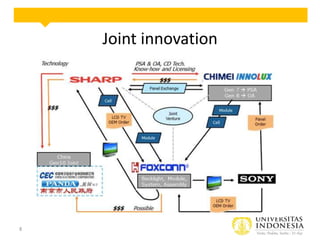
Joint innovation

8
What Is a New Product?
• New-to-the-world (really-new) products (10% of
new products): Inventions that create a whole new
market. Ex.: Polaroid camera, Sony Walkman, Palm Pilot,
Rollerblade skates, P&G Febreze and Dryel.
• New-to-the-firm products (20%): Products that take a
firm into a category new to it. Ex.: P&G brand shampoo or
coffee, Hallmark gift items, AT&T Universal credit card,
Canon laser printer.
• Additions to existing product lines (26%): Line
extensions and flankers that flesh out the product line in
current markets. Ex.: Tide Liquid, Bud Light, Apple’s iMac,
HP LaserJet 7P.
What Is a New Product?
• Improvements and revisions to existing products
(26%): Current products made better. Ex.: P&G’s

continuing improvements to Tide detergent, Ivory soap.
• Repositionings (7%): Products that are retargeted for a
new use or application. Also includes retargeting to new
users or new target markets. Ex.: Arm & Hammer baking
soda sold as a refrigerator deodorant; aspirin repositioned
as a safeguard against heart attacks; Marlboro retargeted as
a man’s cigarette.
• Cost reductions (11%): New products that provide the
customer similar performance but at a lower cost. May be
more of a “new product” in terms of design or production.
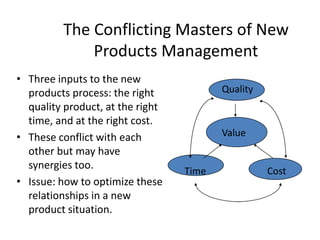
The Conflicting Masters of New
Products Management
• Three inputs to the new
products process: the right
quality product, at the right
time, and at the right cost.
• These conflict with each
other but may have
synergies too.
• Issue: how to optimize these
relationships in a new
product situation.

Quality

Value

Time

Cost
The New Products Process
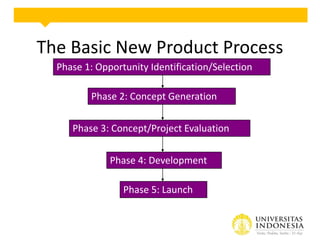
The Basic New Product Process
Phase 1: Opportunity Identification/Selection
Phase 2: Concept Generation

Phase 3: Concept/Project Evaluation
Phase 4: Development
Phase 5: Launch
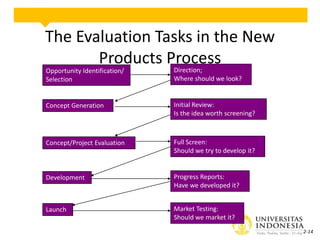
The Evaluation Tasks in the New
Products Process
Opportunity Identification/
Selection

Direction;
Where should we look?

Concept Generation

Initial Review:
Is the idea worth screening?

Concept/Project Evaluation

Full Screen:
Should we try to develop it?

Development

Progress Reports:
Have we developed it?

Launch

Market Testing:
Should we market it?
2-14
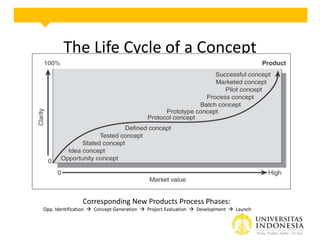
The Life Cycle of a Concept

Corresponding New Products Process Phases:
Opp. Identification  Concept Generation  Project Evaluation  Development  Launch
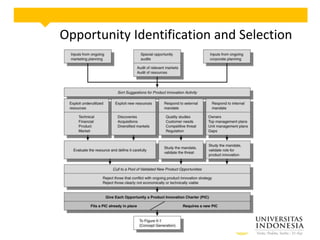
Opportunity Identification and Selection
17
Segment Identification
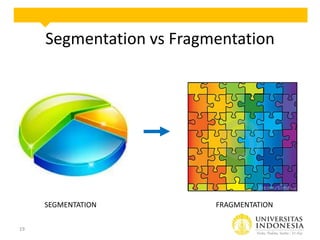
Segmentation vs Fragmentation

SEGMENTATION
19

FRAGMENTATION
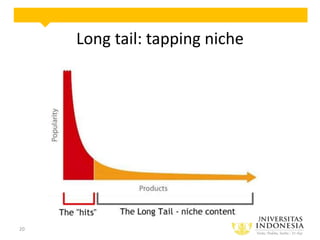
Long tail: tapping niche

20
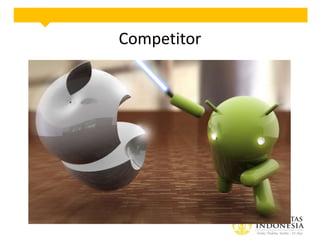
Competitor
Co-opetition: Compete and collaborate
• Formed by a set of companies with shared interests for
market dominance
• Clear objectives in terms of performance targets and life cycle
• Required capabilities should be available in the mix of
partners
• Value-added by a partners are seamlessly integrated
• Information and knowledge sharing
• Visible rules of Governance

22
Finding co-opetitors

23
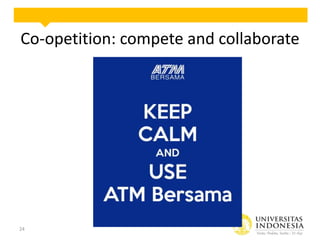
Co-opetition: compete and collaborate

24
Co-opetitor
CASE STUDY: AIRBUS

26
Case Questions
1. Should Airbus produce A-3XX?
2. How should Boeing response?
3. How would the production of A-3XX change product
development/innovation in Airplane Manufacturing
Industry?

27

New Product Development

  • 1.
  • 2.
    Harryadin Mahardika • PopEconomist • FEUI & laporsuap.com • Research objective: – “to liberate and empower consumer...” • Current research: – Consumer empowerment – Consumer intervention/engineering – Mobile advertising • Contact: – harryadin.mahardika@ui.ac.id / harryadin@gmail.com – @HarrySastro 2
  • 3.
    Why study newproducts? Gartner Hype Cycle 2012 3
  • 4.
    Why Study NewProducts? • Innovation as an Investment: A successful new product does more good for an organization than anything else that can happen – Investment in innovation is critical to firm growth and even survival. – Radical innovations (those that displace or obsolete existing products) are particularly crucial to the firm. – Technology leaders view “business growth through innovation” as a major challenge facing them today.
  • 5.
  • 6.
  • 7.
    Global Product Development •Increased globalization make NPD even more challenging today! – Procter & Gamble products are developed globally in the firm’s 22 research centers located in 13 countries. Market research and testing of the Swiffer mop occurred in the U.S. and France. http://www.youtube.com/watch?v=PFbeP6YqHzg&NR=1 – Ikea identifies unmet customer needs and commissions in-house and outsourced designers to compete for the design. Worldwide manufacturing partners compete for the manufacturing rights. The firm also has excellent global logistics for product delivery to stores and customers.
  • 8.
  • 9.
    What Is aNew Product? • New-to-the-world (really-new) products (10% of new products): Inventions that create a whole new market. Ex.: Polaroid camera, Sony Walkman, Palm Pilot, Rollerblade skates, P&G Febreze and Dryel. • New-to-the-firm products (20%): Products that take a firm into a category new to it. Ex.: P&G brand shampoo or coffee, Hallmark gift items, AT&T Universal credit card, Canon laser printer. • Additions to existing product lines (26%): Line extensions and flankers that flesh out the product line in current markets. Ex.: Tide Liquid, Bud Light, Apple’s iMac, HP LaserJet 7P.
  • 10.
    What Is aNew Product? • Improvements and revisions to existing products (26%): Current products made better. Ex.: P&G’s continuing improvements to Tide detergent, Ivory soap. • Repositionings (7%): Products that are retargeted for a new use or application. Also includes retargeting to new users or new target markets. Ex.: Arm & Hammer baking soda sold as a refrigerator deodorant; aspirin repositioned as a safeguard against heart attacks; Marlboro retargeted as a man’s cigarette. • Cost reductions (11%): New products that provide the customer similar performance but at a lower cost. May be more of a “new product” in terms of design or production.
  • 11.
    The Conflicting Mastersof New Products Management • Three inputs to the new products process: the right quality product, at the right time, and at the right cost. • These conflict with each other but may have synergies too. • Issue: how to optimize these relationships in a new product situation. Quality Value Time Cost
  • 12.
  • 13.
    The Basic NewProduct Process Phase 1: Opportunity Identification/Selection Phase 2: Concept Generation Phase 3: Concept/Project Evaluation Phase 4: Development Phase 5: Launch
  • 14.
    The Evaluation Tasksin the New Products Process Opportunity Identification/ Selection Direction; Where should we look? Concept Generation Initial Review: Is the idea worth screening? Concept/Project Evaluation Full Screen: Should we try to develop it? Development Progress Reports: Have we developed it? Launch Market Testing: Should we market it? 2-14
  • 15.
    The Life Cycleof a Concept Corresponding New Products Process Phases: Opp. Identification  Concept Generation  Project Evaluation  Development  Launch
  • 16.
  • 17.
  • 18.
  • 19.
  • 20.
  • 21.
  • 22.
    Co-opetition: Compete andcollaborate • Formed by a set of companies with shared interests for market dominance • Clear objectives in terms of performance targets and life cycle • Required capabilities should be available in the mix of partners • Value-added by a partners are seamlessly integrated • Information and knowledge sharing • Visible rules of Governance 22
  • 23.
  • 24.
  • 25.
  • 26.
  • 27.
    Case Questions 1. ShouldAirbus produce A-3XX? 2. How should Boeing response? 3. How would the production of A-3XX change product development/innovation in Airplane Manufacturing Industry? 27