Massachusetts Bay and New
        England
1629 - Massachusetts Bay

Puritans in England became convinced that God's judgement
was about to fall on "sinful" England.

Led by John Winthrop, the Puritans set up the Massachusetts
Bay Colony, which would serve as, in Winthrop's words, a "city
on a hill" (a quote he took from Jesus' Sermon on the Mount).

The Puritan Church was the only church allowed, and the
church had legal authority over the people. There were laws
against missing church on the sabbath, public drunkeness and
"immorality." Punishments ranged from public humiliation,
whippings, banishment, and death.
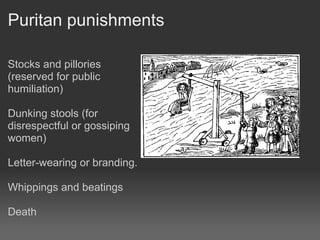
Puritan punishments

Stocks and pillories
(reserved for public
humiliation)

Dunking stools (for
disrespectful or gossiping
women)

Letter-wearing or branding.

Whippings and beatings

Death
Colonies that came about through
dissent.
Rhode Island: Founded in 1632 by Roger Williams, who
disagreed with the Puritans over the issue of infant baptism.
Was the first colony to allow all religions to freely practice, ot
just Christians.

Connecticut: Founded by Thomas Hooker, who felt that the
Church and too many unelected officials had too much power
in Massachusetts. Connecticut was the first colony governed
by a written constitution, the Fundamental Orders of
Connecticut, which limited the powers of the government.
The importance?

These colonies...

Established the idea and importance of religious freedom.


Established the idea of government by mutually agreed-upon
laws.


Established the idea of government limited by laws.
Together....

The Massachusetts (comprised of Maine, Massachusetts and
Plymouth), Connecticut, Rhode Island, and
New Hampshire colonies were known as the

New England Colonies.

from the name given to the Charter for the original Plymouth
Colony (Plymouth Company of New England).

Characteristics include:

Ocean-based industries (fishing, shipping)

Manufacturing

New England

  • 1.
  • 2.
    1629 - MassachusettsBay Puritans in England became convinced that God's judgement was about to fall on "sinful" England. Led by John Winthrop, the Puritans set up the Massachusetts Bay Colony, which would serve as, in Winthrop's words, a "city on a hill" (a quote he took from Jesus' Sermon on the Mount). The Puritan Church was the only church allowed, and the church had legal authority over the people. There were laws against missing church on the sabbath, public drunkeness and "immorality." Punishments ranged from public humiliation, whippings, banishment, and death.
  • 3.
    Puritan punishments Stocks andpillories (reserved for public humiliation) Dunking stools (for disrespectful or gossiping women) Letter-wearing or branding. Whippings and beatings Death
  • 4.
    Colonies that cameabout through dissent. Rhode Island: Founded in 1632 by Roger Williams, who disagreed with the Puritans over the issue of infant baptism. Was the first colony to allow all religions to freely practice, ot just Christians. Connecticut: Founded by Thomas Hooker, who felt that the Church and too many unelected officials had too much power in Massachusetts. Connecticut was the first colony governed by a written constitution, the Fundamental Orders of Connecticut, which limited the powers of the government.
  • 5.
    The importance? These colonies... Establishedthe idea and importance of religious freedom. Established the idea of government by mutually agreed-upon laws. Established the idea of government limited by laws.
  • 6.
    Together.... The Massachusetts (comprisedof Maine, Massachusetts and Plymouth), Connecticut, Rhode Island, and New Hampshire colonies were known as the New England Colonies. from the name given to the Charter for the original Plymouth Colony (Plymouth Company of New England). Characteristics include: Ocean-based industries (fishing, shipping) Manufacturing