Delivering	the	best	in	z	services,	software,	hardware	and	training.Delivering	the	best	in	z	services,	software,	hardware	and	training.
Delivering	the	best	in	z	services,	skills,	security	and	software.
Network	and	Endpoint	Security
Rui	Miguel	Feio	– Senior	Technical	Lead
Agenda
• Network	and	Endpoint	Security	– what	is	it?
• Problems	and	risks
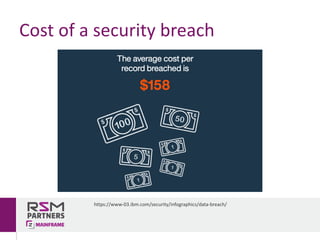
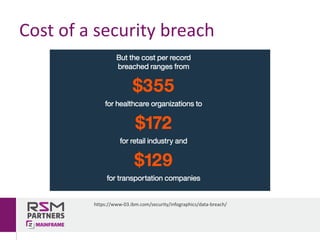
• Impact	and	cost	of	a	security	breach
• How	to	implement	Network	and	Endpoint	Security?
• Endpoint	Security	management
• Challenges
• Real	example	of	an	ineffective	implementation
• Online	world	and	Hackers
• Network	and	endpoint	security	on	the	mainframe
Who	am	I?
RUI	MIGUEL	FEIO
• Senior	Technical	Lead	at	RSM	Partners
• Based	in	the	UK	but	travels	all	over	the	world
• 18	years	experience working	with	mainframes
• Started	with	IBM	as	an	MVS	Sys	Programmer
• Specialist	in	mainframe	security
• Experience	in	other	platforms
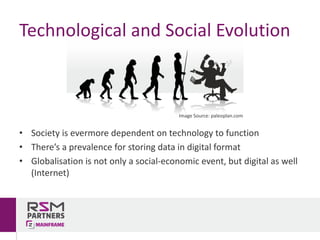
Technological	and	Social	Evolution
• Society	is	evermore	dependent	on	technology	to	function
• There’s	a	prevalence	for	storing	data	in	digital	format
• Globalisation	is	not	only	a	social-economic	event,	but	digital	as	well	
(Internet)
Image	Source:	paleoplan.com
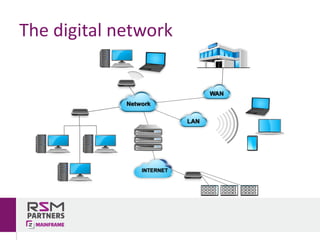
The	digital	network
• Network	security	refers	to	technologies	and	processes	that	are	used	
to	keep	digital	networks	in	good,	secure	working	order.	
• Endpoint	security	refers	to	any	device	that	connects	to	the	digital	
network,	from	servers	to	desktops,	mobile	devices,	and	any	other	
device	that	is	network-enabled.	
• As	such,	Network	and	Endpoint	Security	aims	to	protect	and	ensure	
the	normal	functioning	of	the	digital	network	and	devices	
connected	to	it.
Network	and	Endpoint	Security
• We	can	only	secure	what	we	‘control’:
– Company	digital	network
– Devices	connected	to	the	company’s	
digital	network
• Is	this	enough?	No,	we	should	also	consider:
– People
– Business	partners
– Service	providers
– Physical	security
Securing	our	interests
• Misconfigured	hardware/software
• Lack	of	knowledge	and	resources
• Default	settings
• Human	factor
• Cyber	criminals
• Systems	not	up-to-date
• Solutions	not	fit	for	purpose
• Lack	of	interest
• Out	of	support	software/hardware
Problems	lead	to	security	risks
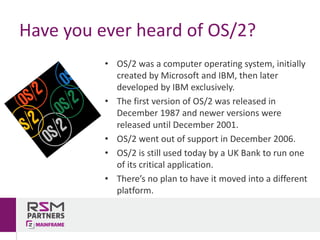
• OS/2	was	a	computer	operating	system,	initially	
created	by	Microsoft	and	IBM,	then	later	
developed	by	IBM	exclusively.	
• The	first	version	of	OS/2	was	released	in	
December	1987	and	newer	versions	were	
released	until	December	2001.
• OS/2	went	out	of	support	in	December	2006.
• OS/2	is	still	used	today	by	a	UK	Bank	to	run	one	
of	its	critical	application.	
• There’s	no	plan	to	have	it	moved	into	a	different	
platform.
Have	you	ever	heard	of	OS/2?
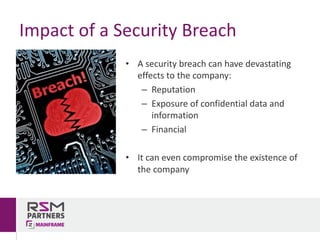
• A	security	breach	can	have	devastating	
effects	to	the	company:
– Reputation
– Exposure	of	confidential	data	and	
information
– Financial
• It	can	even	compromise	the	existence	of	
the	company
Impact	of	a	Security	Breach
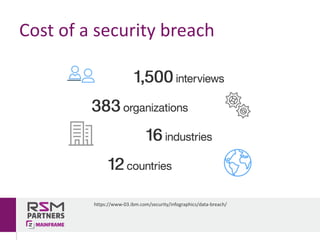
Cost	of	a	security	breach
https://www-03.ibm.com/security/infographics/data-breach/
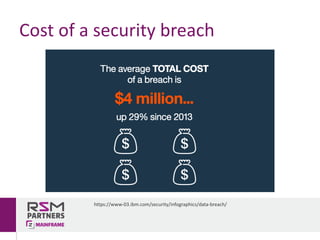
Cost	of	a	security	breach
https://www-03.ibm.com/security/infographics/data-breach/
Cost	of	a	security	breach
https://www-03.ibm.com/security/infographics/data-breach/
Cost	of	a	security	breach
https://www-03.ibm.com/security/infographics/data-breach/
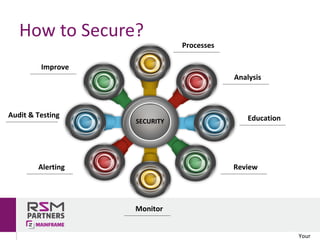
How	to	Secure?
Your	LogoYour	
SECURITY
Processes
Analysis
Education
Review
Monitor
Alerting
Audit	& Testing
Improve
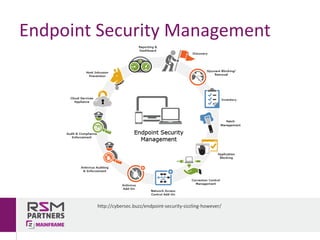
Endpoint	Security	Management
http://cybersec.buzz/endpoint-security-sizzling-however/
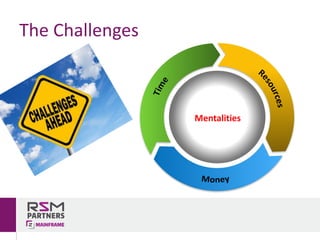
The	Challenges
Mentalities
On	a	Pen	Test	at	one	of	the	top	5	US	banks:
• Client	was	convinced	they	had	a	top	of	the	art	
network	security	system.	
• I	decided	to	unplug	Ethernet	cable	from	one	of	
the	terminals	and	connect	it	to	my	laptop
• This	went	without	detection
• I	was	able	to	run	a	port	scan	on	the	mainframe	
without	detection
• This	was	just	the	beginning!!...
When	you	think	you	got	it	right...
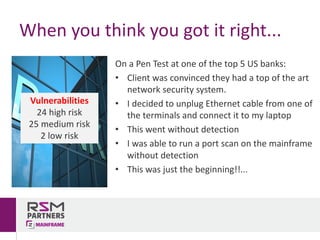
On	a	Pen	Test	at	one	of	the	top	5	US	banks:
• Client	was	convinced	they	had	a	top	of	the	art	
network	security	system.	
• I	decided	to	unplug	Ethernet	cable	from	one	of	
the	terminals	and	connect	it	to	my	laptop
• This	went	without	detection
• I	was	able	to	run	a	port	scan	on	the	mainframe	
without	detection
• This	was	just	the	beginning!!...
When	you	think	you	got	it	right...
Vulnerabilities
24	high	risk
25	medium	risk
2	low	risk
Off	With	Their	Heads!!
• Is	it	enough	to	protect	the	company’s	digital	
network	and	devices?
• Have	you	consider	internal	breaches?
• How	about	the	online	services	you	use?
• Is	your	site	really	secure?
• Is	everyone	following	the	security	procedures?
The	big	questions
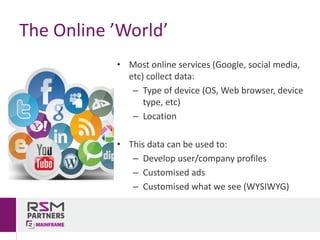
• Most	online	services	(Google,	social	media,	
etc)	collect	data:
– Type	of	device	(OS,	Web	browser,	device	
type,	etc)
– Location
• This	data	can	be	used	to:
– Develop	user/company	profiles
– Customised	ads
– Customised	what	we	see	(WYSIWYG)
The	Online	’World’
• Companies	are	a	prime	target	for	Hackers
• Social	media	is	a	source	of	information
• Data	collected	online	can	be	used	to	
compromise	your	systems
• Hackers	have	time,	patience,	and	in	many	
cases,	resources
• It’s	not	a	matter	of	if	you	will	be	hacked,	it’s	
a	matter	of	what	will	you	do	when	you	are?
The	Hackers	are	coming	for	you
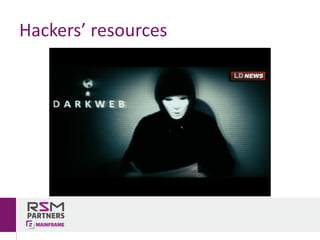
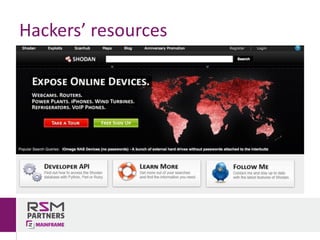
Hackers’	resources
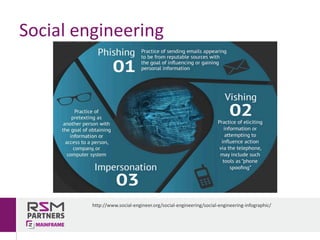
Social	engineering
http://www.social-engineer.org/social-engineering/social-engineering-infographic/
Hackers’	resources
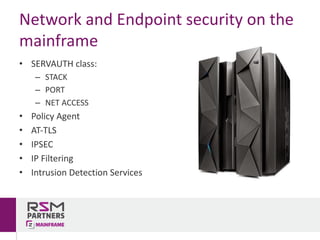
Network	and	Endpoint	security	on	the	
mainframe
• SERVAUTH	class:
– STACK
– PORT
– NET	ACCESS
• Policy	Agent
• AT-TLS
• IPSEC
• IP	Filtering
• Intrusion	Detection	Services
• Defence	Manager	Daemon
• Traffic	Regulation	Management	Daemon
• Syslog	Daemon	(SyslogD)
• SNA	environment
• Enterprise	Edition	(EE)	connections	make	
sure	who	they	are	connected	to	and	what	
access	the	3rd parties	has
• Internal	Telnet	connections
Network	and	Endpoint	security	on	the	
mainframe
• Implement	alerting	systems	(IBM	
zSecure,	Vanguard,	…)
• Monitoring	systems
• Perform	on	a	regular	basis:
– Security	audits
– Penetration	testings
– Security	remediations
– Recertification
• Review	processes	and	procedures
• Educate	and	train	your	resources
Mainframe	– What	else?
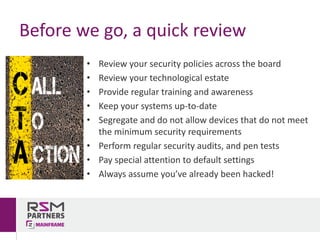
• Review	your	security	policies	across	the	board
• Review	your	technological	estate	
• Provide	regular	training	and	awareness
• Keep	your	systems	up-to-date
• Segregate	and	do	not	allow	devices	that	do	not	meet	
the	minimum	security	requirements	
• Perform	regular	security	audits,	and	pen	tests
• Pay	special	attention	to	default	settings
• Always	assume	you’ve	already	been	hacked!
Before	we	go,	a	quick	review
Questions?
Rui	Miguel	Feio,	RSM	Partners	
ruif@rsmpartners.com
mobile:	+44	(0)	7570	911459
www.rsmpartners.com
Contact
www.linkedin.com/in/rfeio

Network and Endpoint Security v1.0 (2017)