Player interactions as performance
indicator in basketball

Applying network mathematics to tactical aspects of sport
Preliminary


What will you see?

       Exploratory study after tactical patterns in youth
       basketball (age < 20) from an ecological perspective.
                1. Visualization of perspective
                2. Theoretical background


How are tactical patterns measured?

       Social network analysis provides mathematical
       models to quantify the interactions between players.
24-03-10   Applying network mathematics to tactical sport aspects 2
Visualization


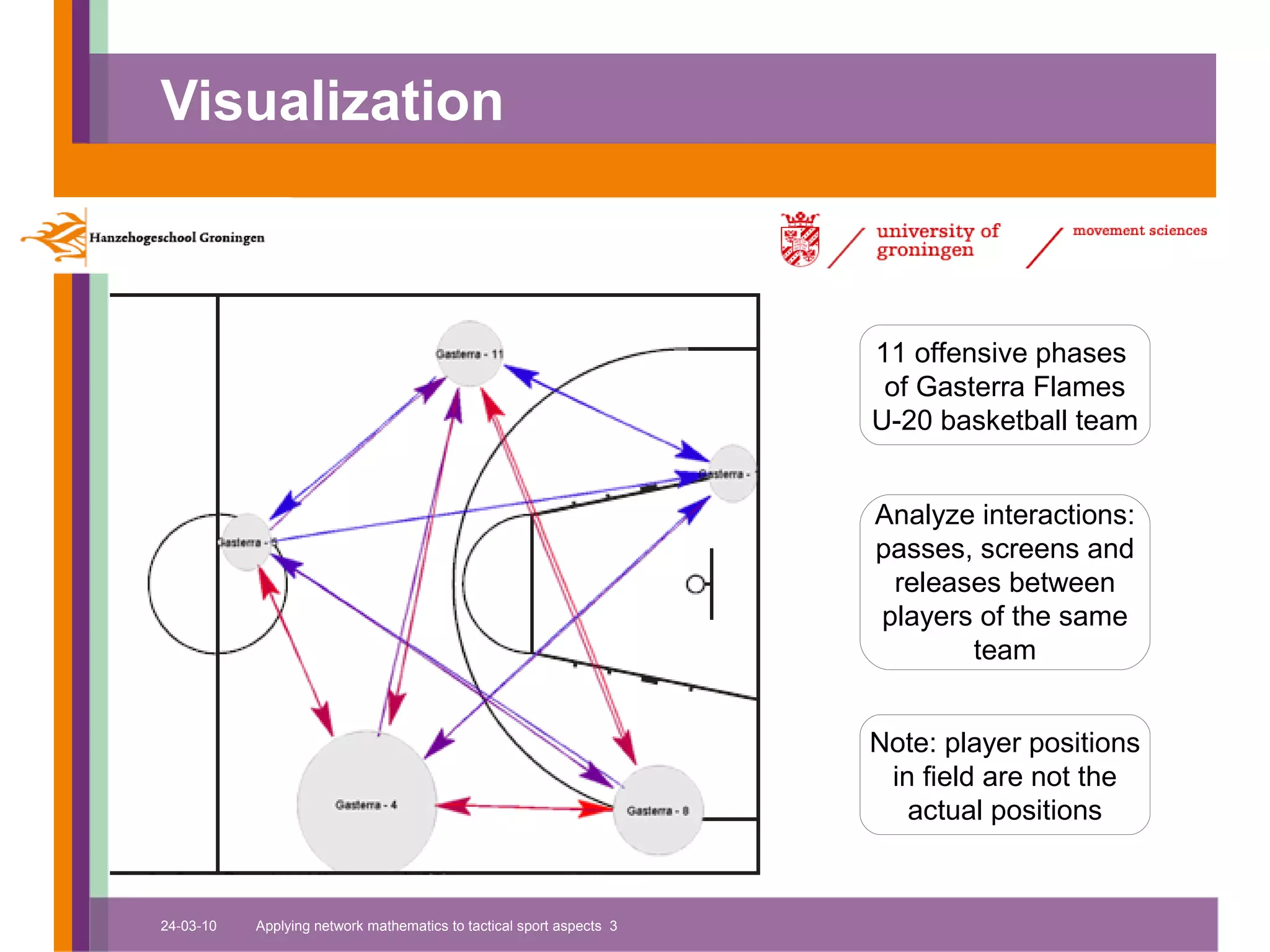
                                                                      11 offensive phases
                                                                       of Gasterra Flames
                                                                      U-20 basketball team


                                                                      Analyze interactions:
                                                                      passes, screens and
                                                                       releases between
                                                                      players of the same
                                                                             team


                                                                      Note: player positions
                                                                       in field are not the
                                                                         actual positions


24-03-10   Applying network mathematics to tactical sport aspects 3
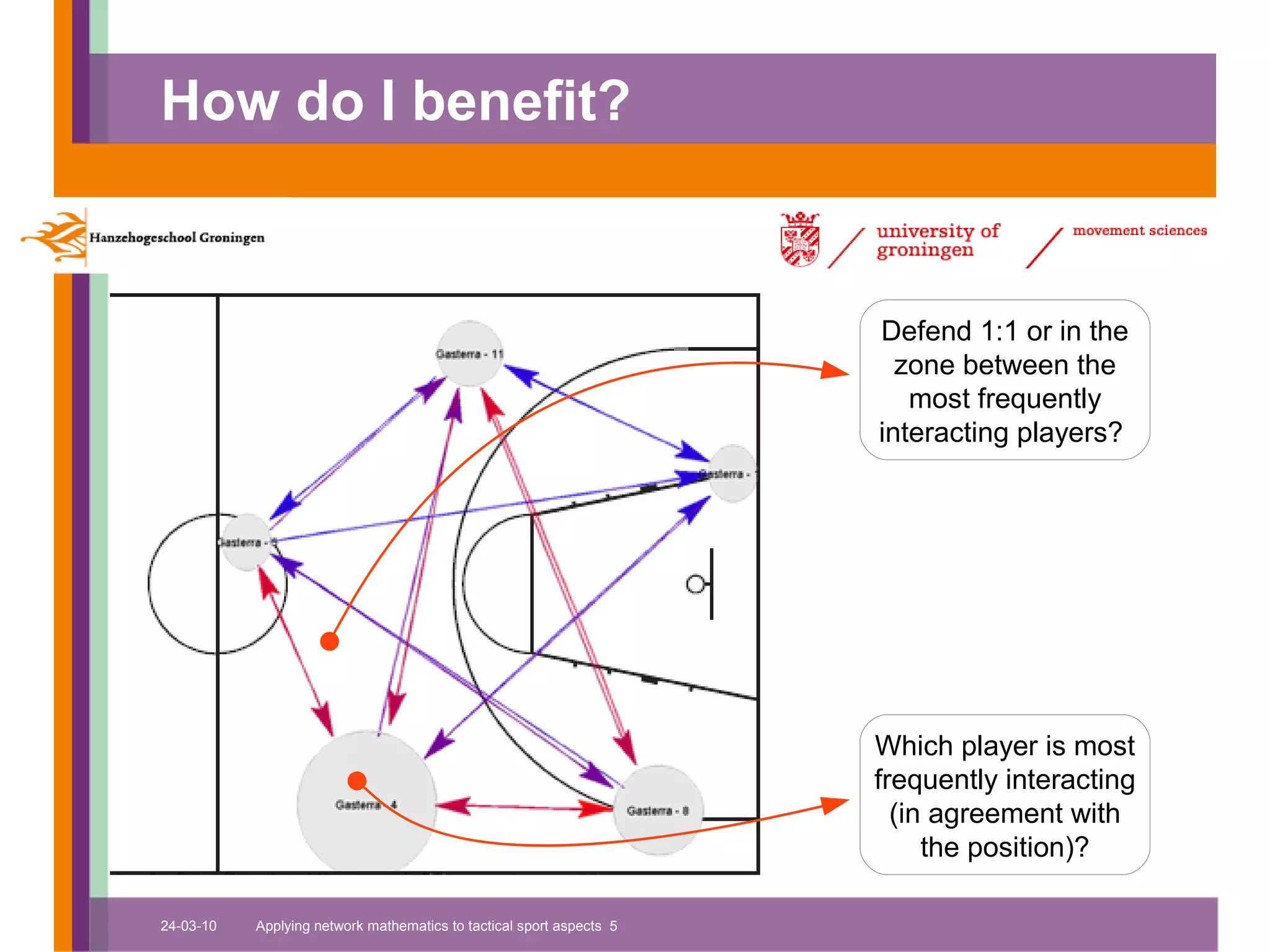
The network of offensive phases


                                                                      ●
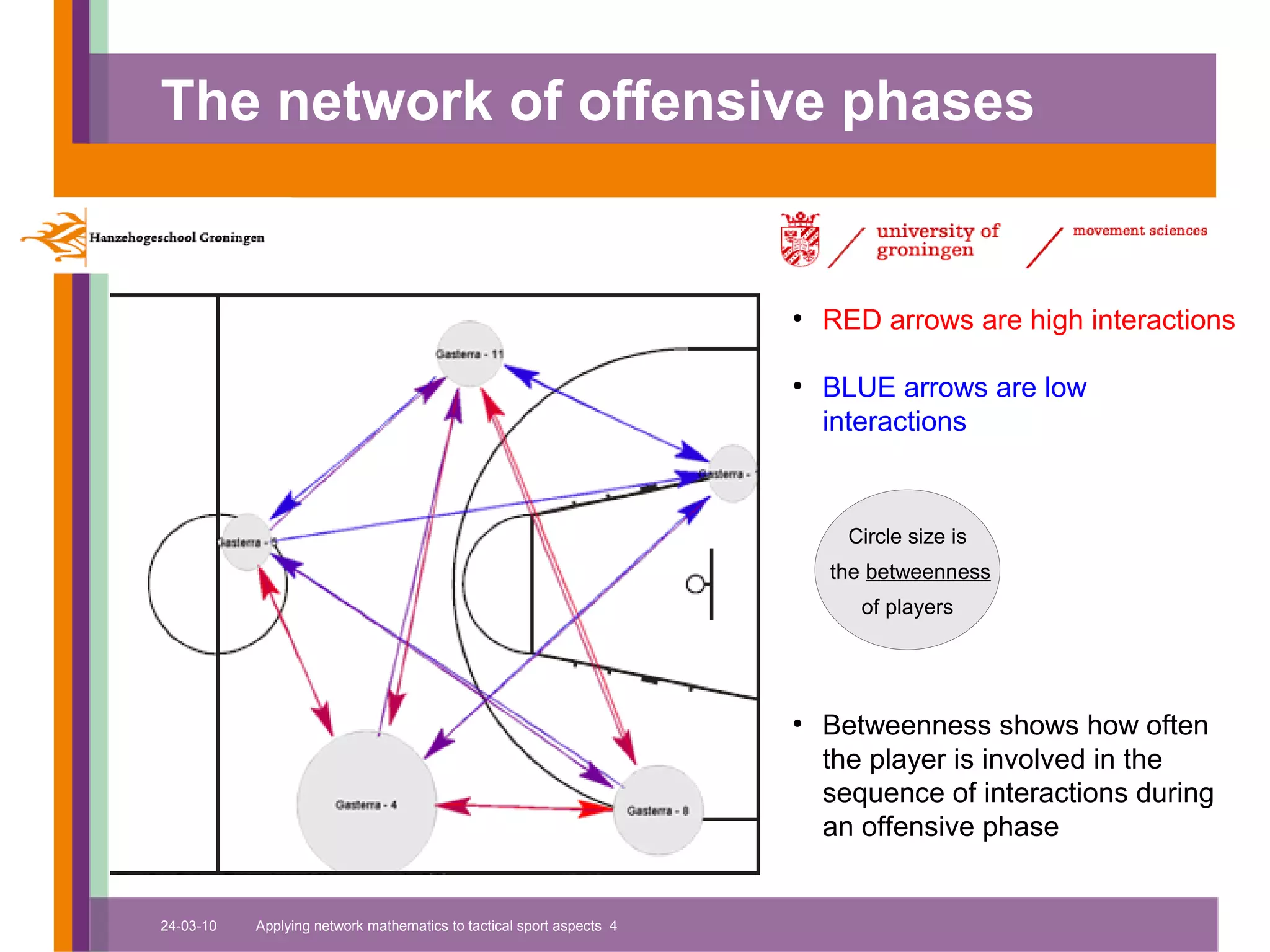
                                                                          RED arrows are high interactions

                                                                      ●
                                                                          BLUE arrows are low
                                                                          interactions


                                                                            Circle size is
                                                                          the betweenness
                                                                             of players


                                                                      ●
                                                                          Betweenness shows how often
                                                                          the player is involved in the
                                                                          sequence of interactions during
                                                                          an offensive phase


24-03-10   Applying network mathematics to tactical sport aspects 4
How do I benefit?


                                                                      Defend 1:1 or in the
                                                                        zone between the
                                                                         most frequently
                                                                      interacting players?


                                                                      Which player is most
                                                                      frequently interacting
                                                                        (in agreement with
                                                                           the position)?

24-03-10   Applying network mathematics to tactical sport aspects 5
One step further!


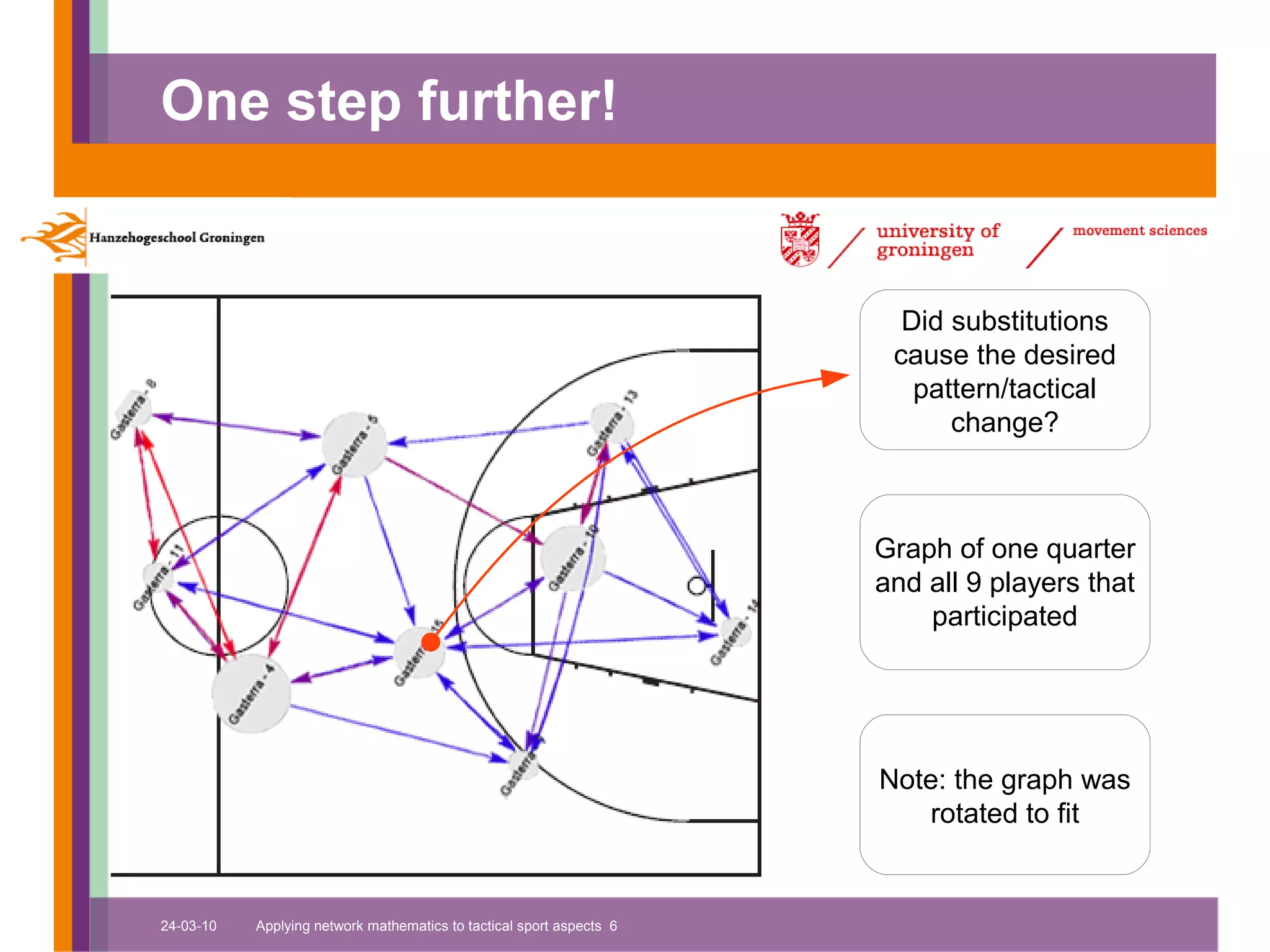
                                                                        Did substitutions
                                                                       cause the desired
                                                                         pattern/tactical
                                                                            change?


                                                                      Graph of one quarter
                                                                      and all 9 players that
                                                                          participated


                                                                      Note: the graph was
                                                                         rotated to fit


24-03-10   Applying network mathematics to tactical sport aspects 6
Background


Current physiological analysis

       Mostly individual characteristics, e.g. heart rate,
       frequency of actions, time in different intensity zones,

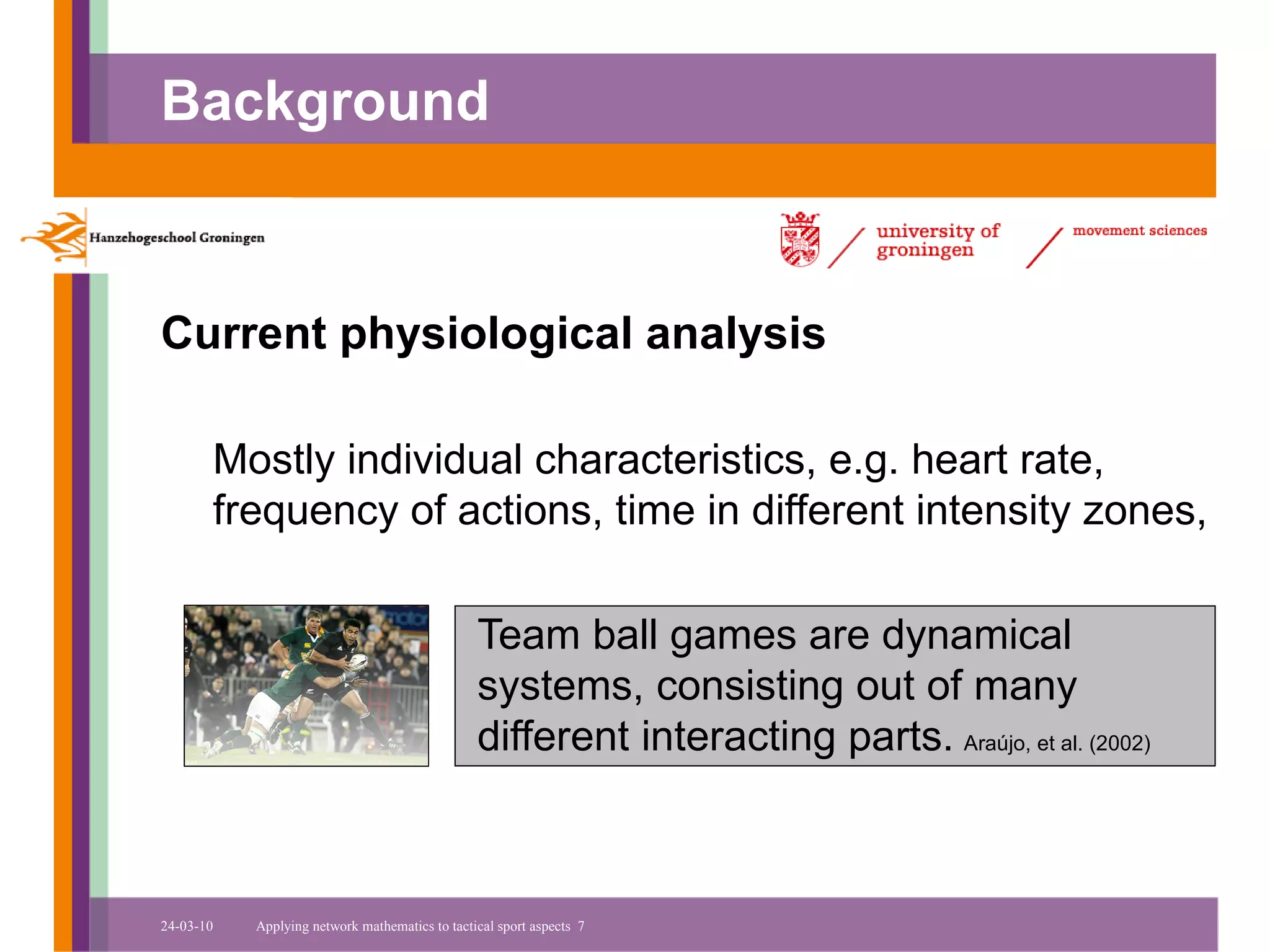
                                                Team ball games are dynamical
                                                systems, consisting out of many
                                                different interacting parts. Araújo, et al. (2002)


24-03-10   Applying network mathematics to tactical sport aspects 7
Emergent interaction


       Player continuously have to overcome problems
       related to space and time, information and
       organization. Grehaigne, et al. (1997)

       Invasive team ball games require interpersonal
       interaction to score points or prevent them from
       being scored. Schmidt, et al. (1999)


24-03-10   Applying network mathematics to tactical sport aspects 8
Patterns matter


Skilled performers are better


       Skilled performers of ball team sports are faster and
       more accurate in recognizing structured patterns
       than novice peers. North, et al. (2006)


How to utilize these findings in team ball games?

24-03-10   Applying network mathematics to tactical sport aspects 9
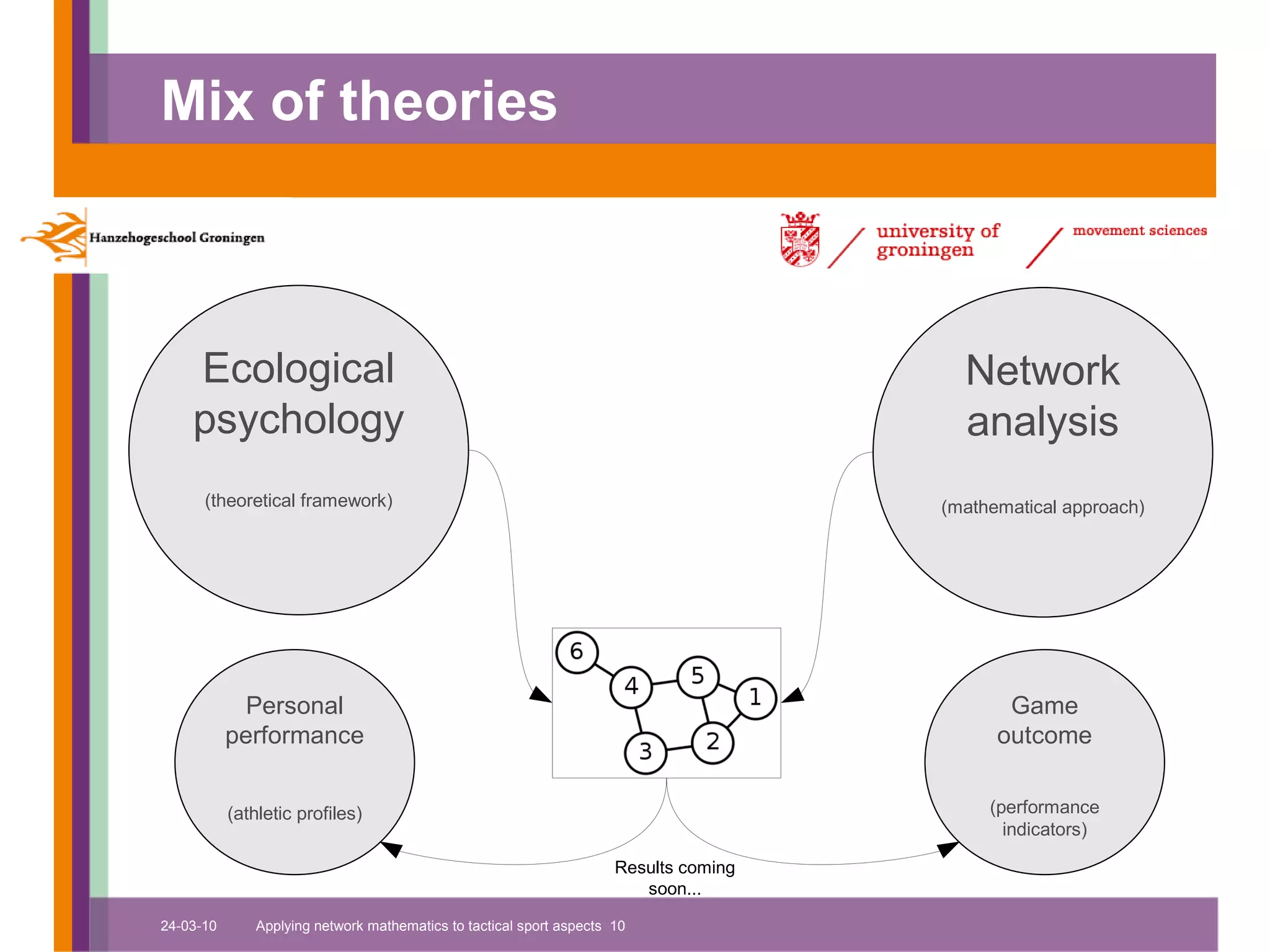
Mix of theories


    Ecological                                                                           Network
    psychology                                                                           analysis
      (theoretical framework)                                                          (mathematical approach)


             Personal                                                                         Game
           performance                                                                       outcome


           (athletic profiles)                                                              (performance
                                                                                              indicators)

                                                                      Results coming
                                                                         soon...

24-03-10       Applying network mathematics to tactical sport aspects 10
Martijn Swaagman

Sports Field Lab
Zernikeplein 17
9747 AS Groningen


24-03-10   Applying network mathematics to tactical sport aspects 11

Network analysis in basketball

  • 1.
    Player interactions asperformance indicator in basketball Applying network mathematics to tactical aspects of sport
  • 2.
    Preliminary What will yousee? Exploratory study after tactical patterns in youth basketball (age < 20) from an ecological perspective. 1. Visualization of perspective 2. Theoretical background How are tactical patterns measured? Social network analysis provides mathematical models to quantify the interactions between players. 24-03-10 Applying network mathematics to tactical sport aspects 2
  • 3.
    Visualization 11 offensive phases of Gasterra Flames U-20 basketball team Analyze interactions: passes, screens and releases between players of the same team Note: player positions in field are not the actual positions 24-03-10 Applying network mathematics to tactical sport aspects 3
  • 4.
    The network ofoffensive phases ● RED arrows are high interactions ● BLUE arrows are low interactions Circle size is the betweenness of players ● Betweenness shows how often the player is involved in the sequence of interactions during an offensive phase 24-03-10 Applying network mathematics to tactical sport aspects 4
  • 5.
    How do Ibenefit? Defend 1:1 or in the zone between the most frequently interacting players? Which player is most frequently interacting (in agreement with the position)? 24-03-10 Applying network mathematics to tactical sport aspects 5
  • 6.
    One step further! Did substitutions cause the desired pattern/tactical change? Graph of one quarter and all 9 players that participated Note: the graph was rotated to fit 24-03-10 Applying network mathematics to tactical sport aspects 6
  • 7.
    Background Current physiological analysis Mostly individual characteristics, e.g. heart rate, frequency of actions, time in different intensity zones, Team ball games are dynamical systems, consisting out of many different interacting parts. Araújo, et al. (2002) 24-03-10 Applying network mathematics to tactical sport aspects 7
  • 8.
    Emergent interaction Player continuously have to overcome problems related to space and time, information and organization. Grehaigne, et al. (1997) Invasive team ball games require interpersonal interaction to score points or prevent them from being scored. Schmidt, et al. (1999) 24-03-10 Applying network mathematics to tactical sport aspects 8
  • 9.
    Patterns matter Skilled performersare better Skilled performers of ball team sports are faster and more accurate in recognizing structured patterns than novice peers. North, et al. (2006) How to utilize these findings in team ball games? 24-03-10 Applying network mathematics to tactical sport aspects 9
  • 10.
    Mix of theories Ecological Network psychology analysis (theoretical framework) (mathematical approach) Personal Game performance outcome (athletic profiles) (performance indicators) Results coming soon... 24-03-10 Applying network mathematics to tactical sport aspects 10
  • 11.
    Martijn Swaagman Sports FieldLab Zernikeplein 17 9747 AS Groningen 24-03-10 Applying network mathematics to tactical sport aspects 11