Netiquette is etiquette and safety for online communication. Basically,
it’s good manners and staying safe (you and your computer) when you’re
online. It’s meant to keep communication positive, safe, and respectful.
Whenever you communicate online, you
need to be following the rules of
netiquette.
Good character is good netiquette.
Show respect for your classmates and
instructor.
Participate in class discussions and
collaboration (group work).
Keep communication family-friendly and
rated G.
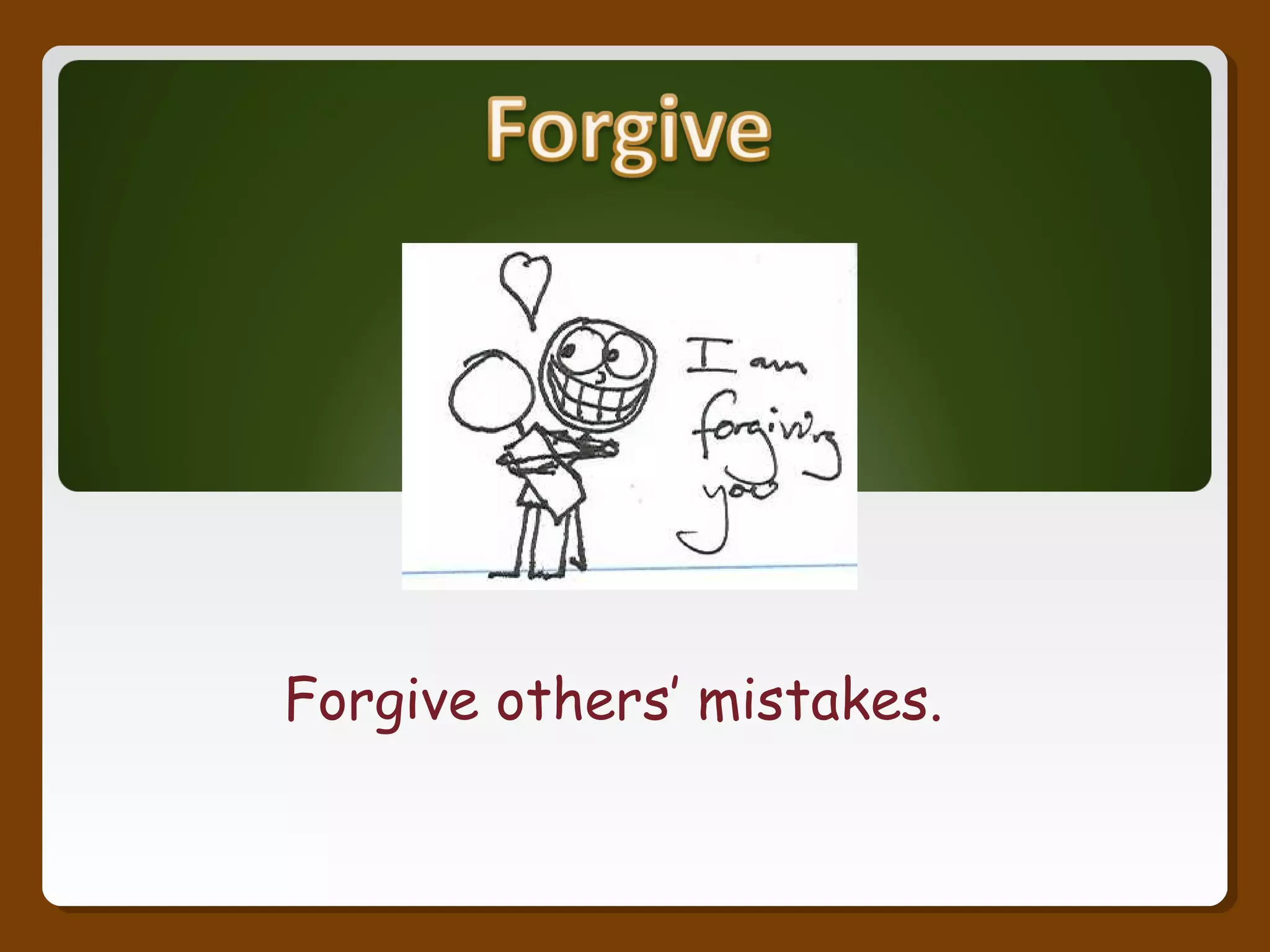
Forgive others’ mistakes.
Accept, provide, and respond to others
with positive feedback.
Show respect for others’ time by
responding and posting in a timely
manner
Your instructor and classmates are
counting on you.
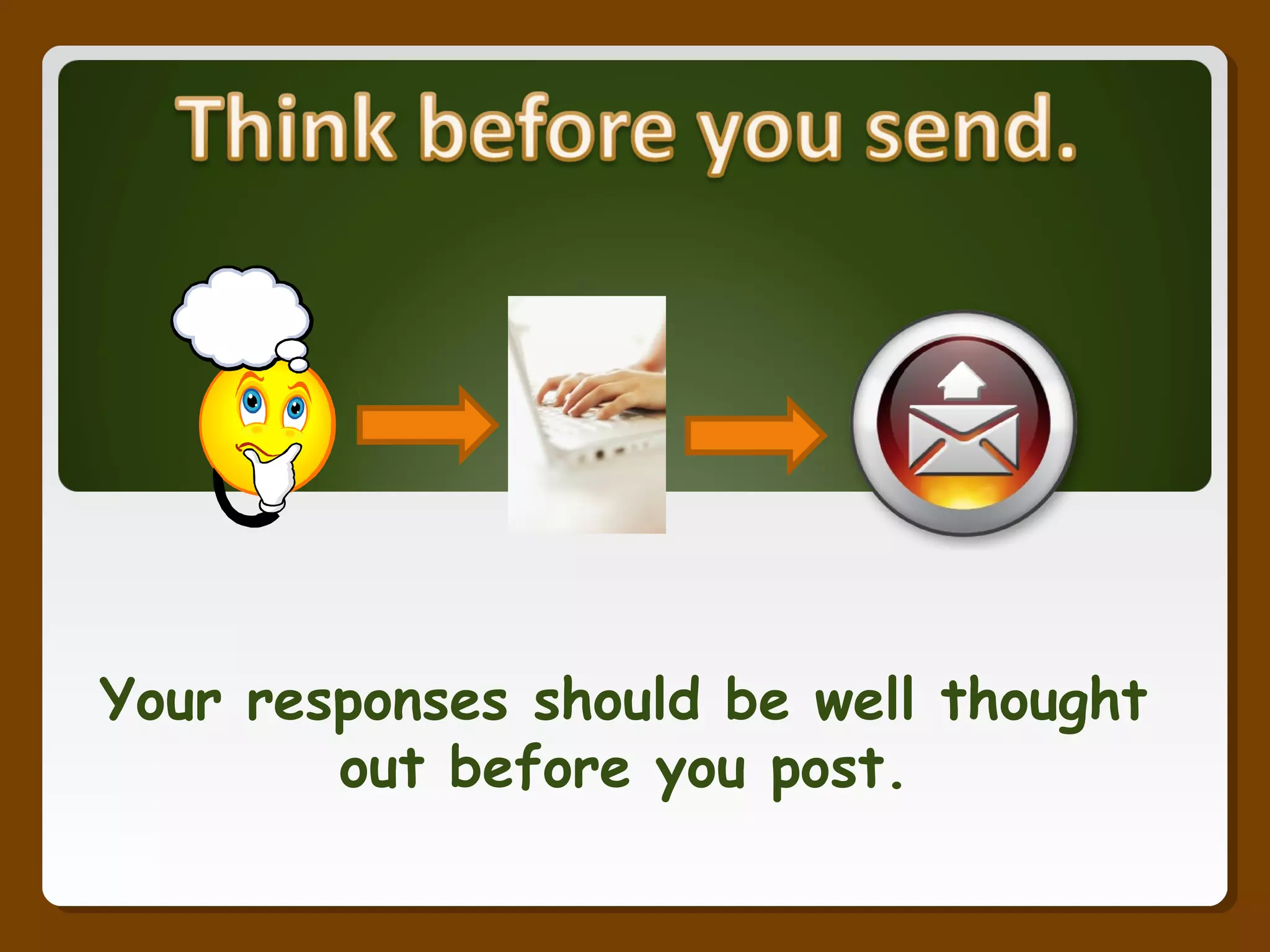
Your responses should be well thought
out before you post.
Always respect the privacy of your
online classmates and yourself.
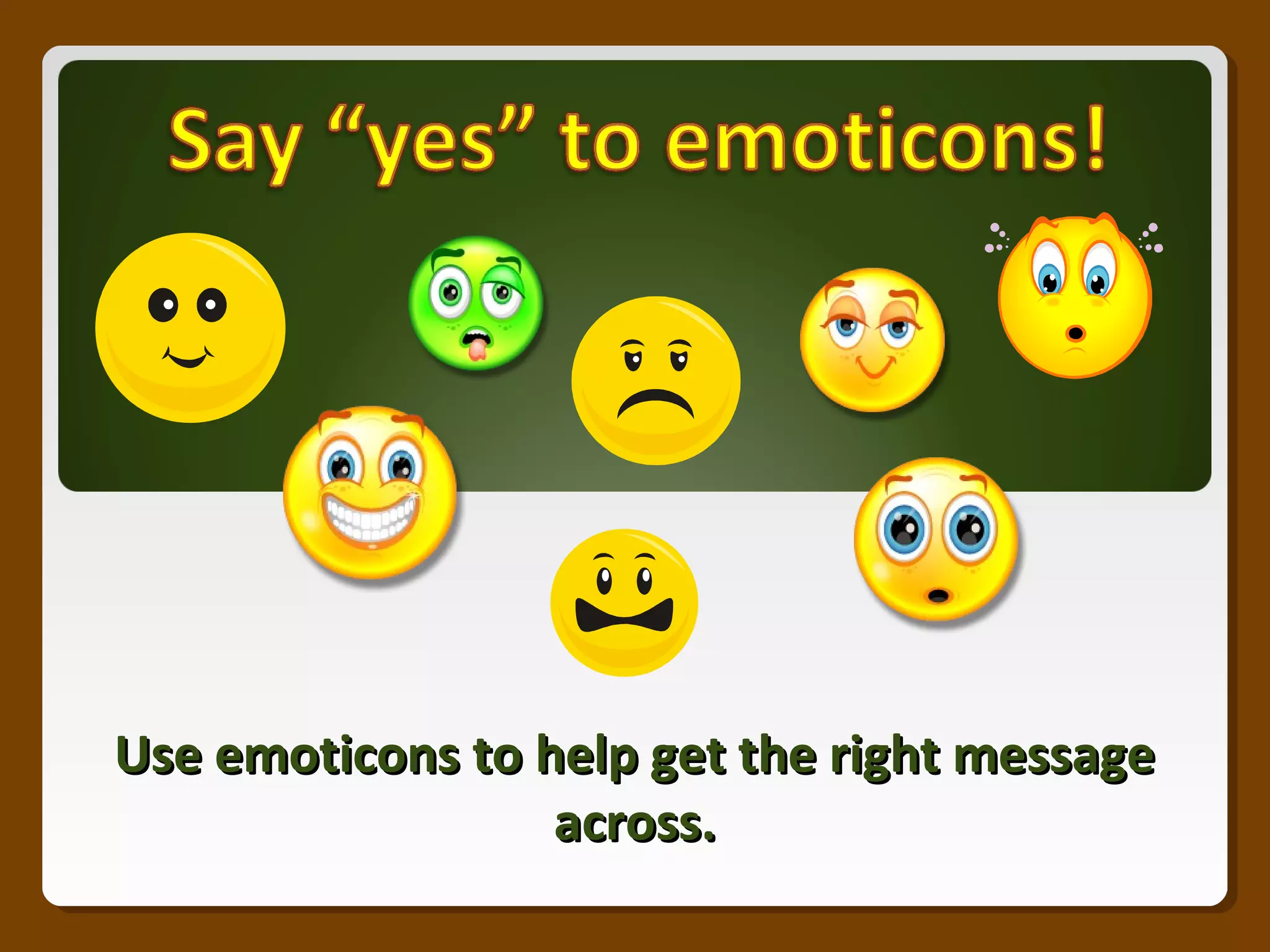
Use emoticons to help get the right messageUse emoticons to help get the right message
across.across.
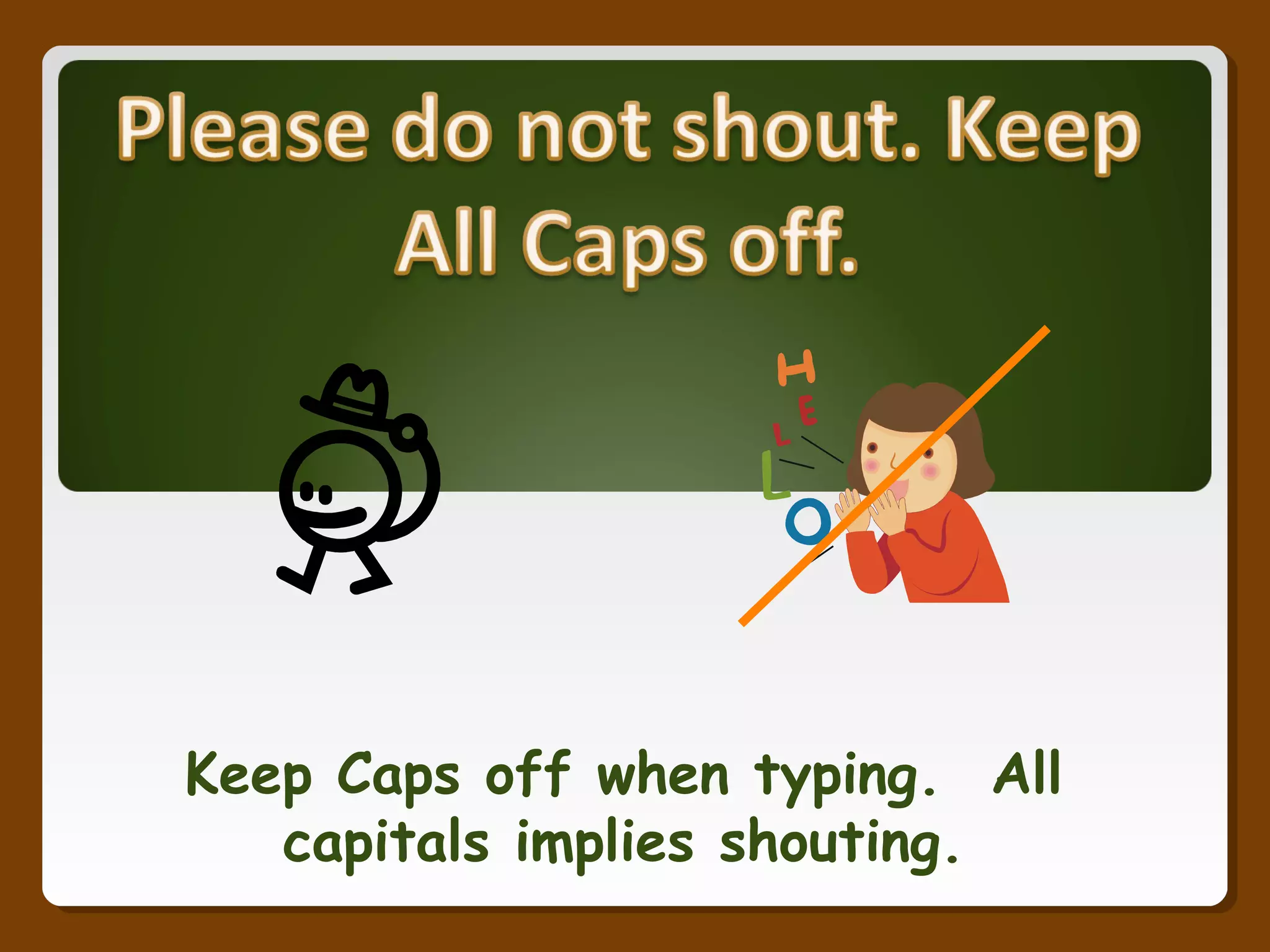
Keep Caps off when typing. All
capitals implies shouting.
Use proper grammar and English.
Inventive spelling and poor grammar
are bad netiquette.
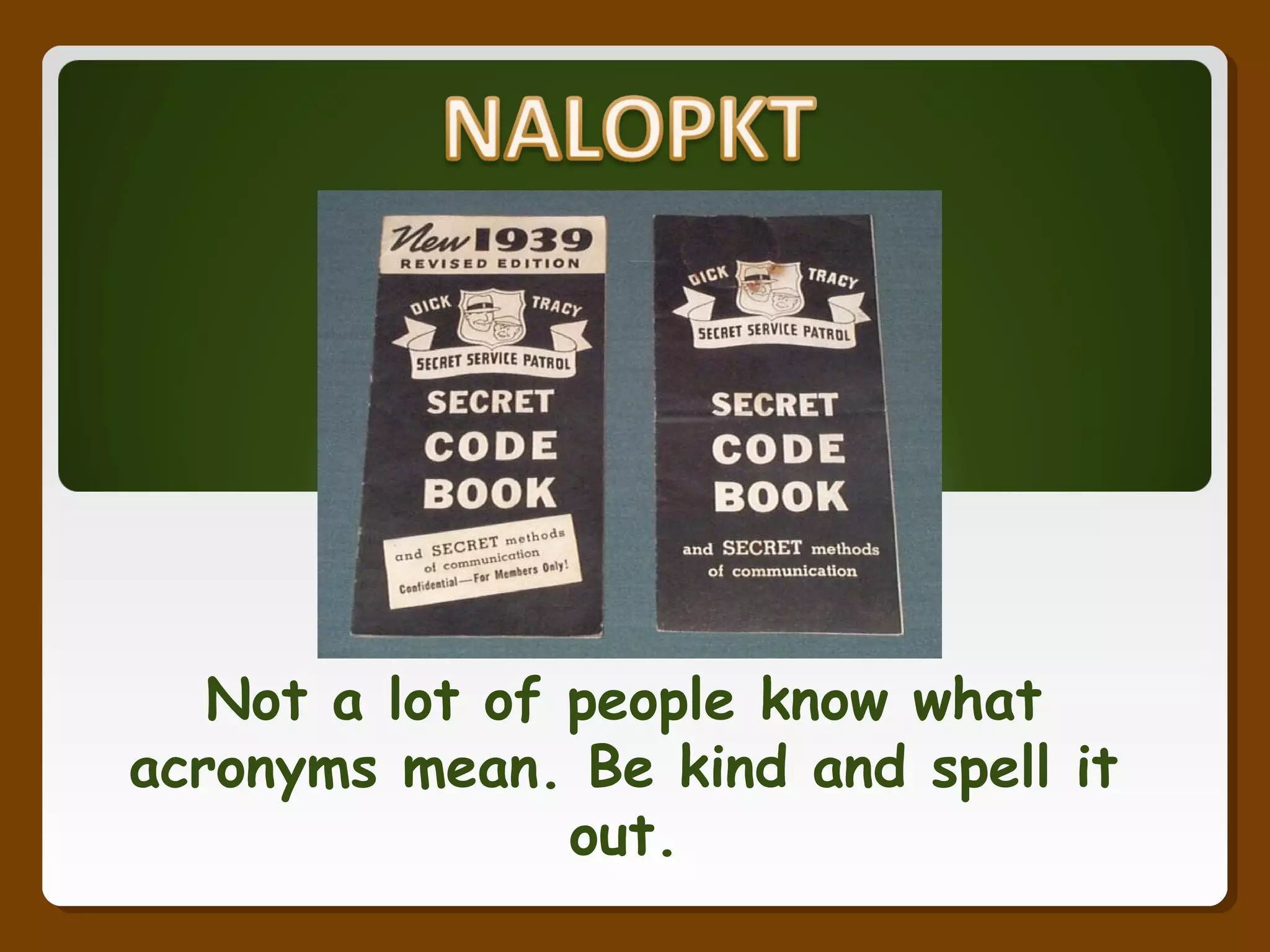
Not a lot of people know what
acronyms mean. Be kind and spell it
out.
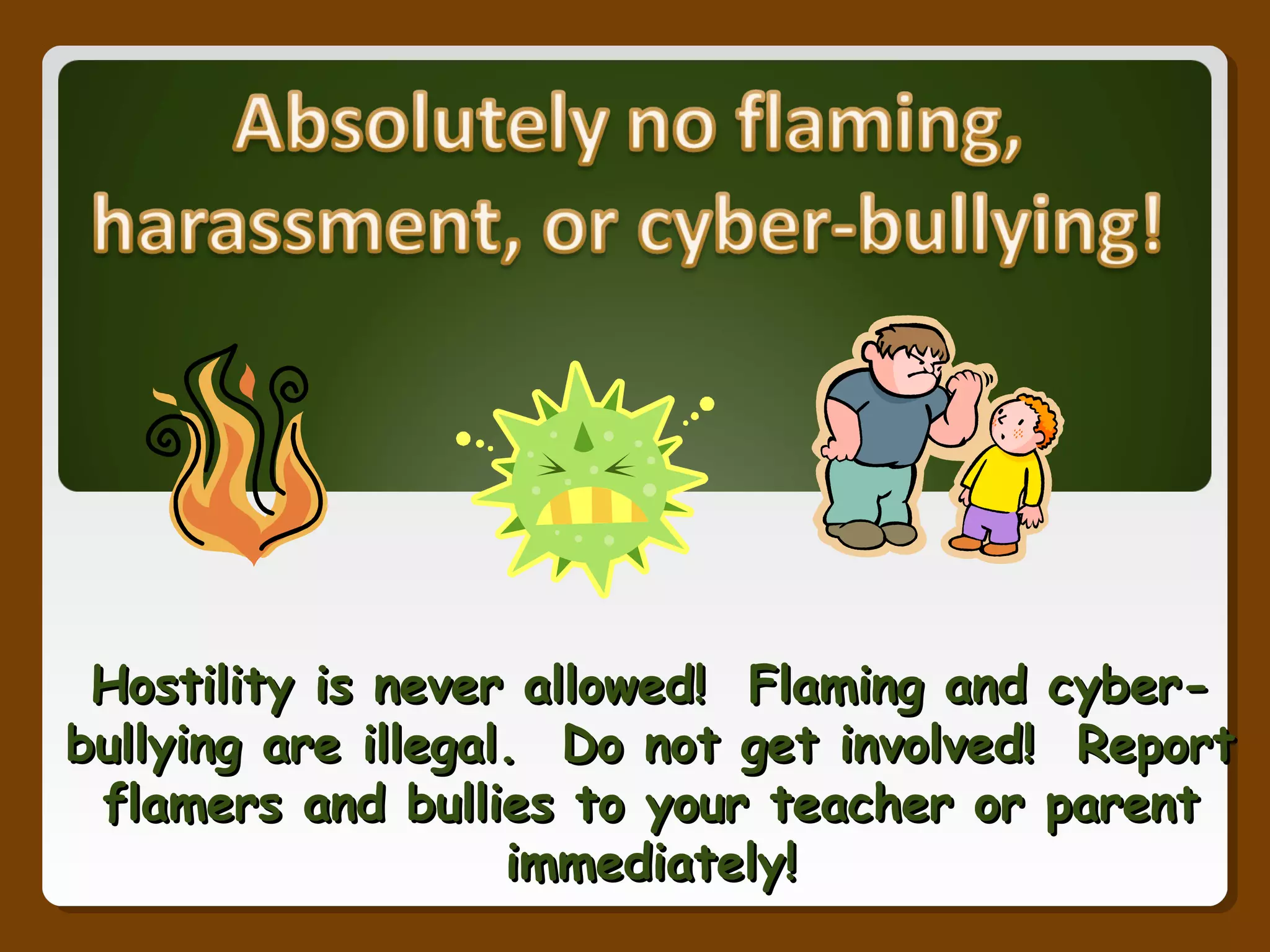
Hostility is never allowed! Flaming and cyber-Hostility is never allowed! Flaming and cyber-
bullying are illegal. Do not get involved! Reportbullying are illegal. Do not get involved! Report
flamers and bullies to your teacher or parentflamers and bullies to your teacher or parent
immediately!immediately!
Beware of emails from anyone, particularly adults you
don’t know, asking for personal information, attempting
to arrange meetings, or engaging in personal contact.
Alert your teacher and/or parent of any message you
receive that is inappropriate or makes you feel
uncomfortable.
To learn more about netiquette and
internet safety, hunt the internet at
http://www.kn.att.com/wired/fil/pages/samnetiq

Netiquette powerpointbooth

  • 2.
    Netiquette is etiquetteand safety for online communication. Basically, it’s good manners and staying safe (you and your computer) when you’re online. It’s meant to keep communication positive, safe, and respectful.
  • 3.
    Whenever you communicateonline, you need to be following the rules of netiquette.
  • 4.
    Good character isgood netiquette. Show respect for your classmates and instructor.
  • 5.
    Participate in classdiscussions and collaboration (group work).
  • 6.
  • 7.
  • 8.
    Accept, provide, andrespond to others with positive feedback.
  • 9.
    Show respect forothers’ time by responding and posting in a timely manner
  • 10.
    Your instructor andclassmates are counting on you.
  • 11.
    Your responses shouldbe well thought out before you post.
  • 12.
    Always respect theprivacy of your online classmates and yourself.
  • 13.
    Use emoticons tohelp get the right messageUse emoticons to help get the right message across.across.
  • 14.
    Keep Caps offwhen typing. All capitals implies shouting.
  • 15.
    Use proper grammarand English. Inventive spelling and poor grammar are bad netiquette.
  • 16.
    Not a lotof people know what acronyms mean. Be kind and spell it out.
  • 17.
    Hostility is neverallowed! Flaming and cyber-Hostility is never allowed! Flaming and cyber- bullying are illegal. Do not get involved! Reportbullying are illegal. Do not get involved! Report flamers and bullies to your teacher or parentflamers and bullies to your teacher or parent immediately!immediately!
  • 18.
    Beware of emailsfrom anyone, particularly adults you don’t know, asking for personal information, attempting to arrange meetings, or engaging in personal contact. Alert your teacher and/or parent of any message you receive that is inappropriate or makes you feel uncomfortable.
  • 20.
    To learn moreabout netiquette and internet safety, hunt the internet at http://www.kn.att.com/wired/fil/pages/samnetiq