PRESENTEDBY :-
Harshavi Maladhari
Khushboo Chauhan
Muskaan Singh
Shreya Thapa
Ritika Soor
 Introduction to Nestle
 Nestle Diversification
 Vision and Mission Statement
 Human Resource planning
 HR Practices – Recruitment , Training and
Development
 HR Issues
 CSV (Creating Shared Value)
CONTENT
nestle
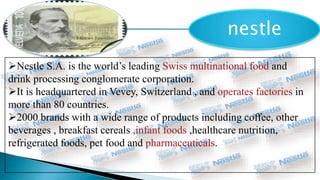
Nestle S.A. is the world’s leading Swiss multinational food and
drink processing conglomerate corporation.
It is headquartered in Vevey, Switzerland , and operates factories in
more than 80 countries.
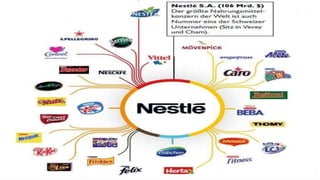
2000 brands with a wide range of products including coffee, other
beverages , breakfast cereals ,infant foods ,healthcare nutrition,
refrigerated foods, pet food and pharmaceuticals.
 As a Swiss national organization, Nestle only sold through
sales agents to countries outside of its home market.
 By the 1900s , it changed its approach to global expansion.
American market was initiated when the First World War
increased
demand for dairy products. Nestle establishes its presence in the
US by
Several existing factors.
 In 1974 Nestle diversified for the first time outside the food
industry.
Nestle Diversification
 Nestle’s mission is to provide the best
food to people throughout the world”.
Meet the nutrition needs of consumers of all
ages , from infancy to old age, from nutrition
to pleasure, through an innovative portfolio of
branded food and beverage products of the
highest quality.
EnviroN-
Mental
Analysis
EstimatiNg
Demand for HR
Analyzing the
supply of HR
Developing action
plans
HR PLANNING
HR Practices
“HR at NESTLE - NESTLE’S SPIRIT”
RECRUITMENT : Recruitment is the process of developing
and maintaining manpower resources. It refers to the
attempt
of creating a pool of prospective employees so that
management can select the right person for the right job
from
this pool. “ Nestle clearly defined” -
People with qualities like loyalty,
pragmatism ,hard work , dynamism , honesty
and reliable.
Training is a major part of an organized
activity
for increasing the skills and knowledge of
task
and deep knowledge of task for a
definite purpose.
- From the company floor to the upper management ,
training at Nestle is continuous.
TRAINING
 Literacy Training - It is on the job training to
upgrade essential literacy skills, especially for
workers who operate new equipment, for those who
have missed their elementary schooling.
 NESTLE Apprenticeship Program- Young
trainees spent three days week at work and two at
school for further advancement.
Nestle provides the following :
 Local Training - Nestle employees work in
factories require continuous training on issues which
range from Technical , leadership and
communication and business economics.
 International Training - Training centre has
brought together managers from around the world to
learn from senior managers. Typically a class
contains 15-20 nationalities.
Assess
Design
Implement
Manage
Change
Evaluate
PEOPLE
TOOLS
PROCESS
CHANGE MANAGEMENT MODEL
STRENGTHS :
Training and development are essential for all types of
organizations as it enhances the skills and knowledge of
the
Employees.
• They hired foreign instructor for the training of the
employees.
• Literacy training provides a chance to employees for
enhance their educational skills to increase
Nestle Training and development
• The employee after getting trained perform well and
become able to maximize their optional.
• They provide international training through which
greater output generated through employees.
• Enhanced the development.
WEAKNESS :
• The factor of favoritism effect the performance of
certain employees.
 Training and Development Strategies
 Conflict among Departments
 DEI (Diversity , equity and inclusion)
 Talent Retention
 Managing Relationships
HR Issues
CSV initiatives by NESTLE IN India
NESTLE creating shared
value for its shareholders
and for society to be
successful in the long term
For individuals and families.
Creating shared value.
“We offer tastier and healthier
choices for happier and healthier
……for our COMMUNITIES.
With servings of fortified
products.
Tracking hidden hunger.
Reducing emissions and
saving water.
Preparing young people for work through young
initiatives.
Enhancing Quality of life for everyone ,today and for
generations to come.
CONCLUSION
 The prospective customers of NESTLE have changed
from kids to adults including every family members
to celebrate any occasion with NESTLE products.
 Human Resource Management is a key function in an
organization. Taking an innovative approach to recruitment
and selection ensures that a business recruits the right
candidate who can grow and develop with the business.
THANK YOU

nestle training and development..pptx

  • 1.
    PRESENTEDBY :- Harshavi Maladhari KhushbooChauhan Muskaan Singh Shreya Thapa Ritika Soor
  • 2.
     Introduction toNestle  Nestle Diversification  Vision and Mission Statement  Human Resource planning  HR Practices – Recruitment , Training and Development  HR Issues  CSV (Creating Shared Value) CONTENT
  • 3.
    nestle Nestle S.A. isthe world’s leading Swiss multinational food and drink processing conglomerate corporation. It is headquartered in Vevey, Switzerland , and operates factories in more than 80 countries. 2000 brands with a wide range of products including coffee, other beverages , breakfast cereals ,infant foods ,healthcare nutrition, refrigerated foods, pet food and pharmaceuticals.
  • 4.
     As aSwiss national organization, Nestle only sold through sales agents to countries outside of its home market.  By the 1900s , it changed its approach to global expansion. American market was initiated when the First World War increased demand for dairy products. Nestle establishes its presence in the US by Several existing factors.  In 1974 Nestle diversified for the first time outside the food industry. Nestle Diversification
  • 6.
     Nestle’s missionis to provide the best food to people throughout the world”. Meet the nutrition needs of consumers of all ages , from infancy to old age, from nutrition to pleasure, through an innovative portfolio of branded food and beverage products of the highest quality.
  • 7.
    EnviroN- Mental Analysis EstimatiNg Demand for HR Analyzingthe supply of HR Developing action plans HR PLANNING
  • 8.
    HR Practices “HR atNESTLE - NESTLE’S SPIRIT” RECRUITMENT : Recruitment is the process of developing and maintaining manpower resources. It refers to the attempt of creating a pool of prospective employees so that management can select the right person for the right job from this pool. “ Nestle clearly defined” - People with qualities like loyalty, pragmatism ,hard work , dynamism , honesty and reliable.
  • 9.
    Training is amajor part of an organized activity for increasing the skills and knowledge of task and deep knowledge of task for a definite purpose. - From the company floor to the upper management , training at Nestle is continuous. TRAINING
  • 10.
     Literacy Training- It is on the job training to upgrade essential literacy skills, especially for workers who operate new equipment, for those who have missed their elementary schooling.  NESTLE Apprenticeship Program- Young trainees spent three days week at work and two at school for further advancement. Nestle provides the following :
  • 11.
     Local Training- Nestle employees work in factories require continuous training on issues which range from Technical , leadership and communication and business economics.  International Training - Training centre has brought together managers from around the world to learn from senior managers. Typically a class contains 15-20 nationalities.
  • 12.
  • 13.
    STRENGTHS : Training anddevelopment are essential for all types of organizations as it enhances the skills and knowledge of the Employees. • They hired foreign instructor for the training of the employees. • Literacy training provides a chance to employees for enhance their educational skills to increase Nestle Training and development
  • 14.
    • The employeeafter getting trained perform well and become able to maximize their optional. • They provide international training through which greater output generated through employees. • Enhanced the development. WEAKNESS : • The factor of favoritism effect the performance of certain employees.
  • 15.
     Training andDevelopment Strategies  Conflict among Departments  DEI (Diversity , equity and inclusion)  Talent Retention  Managing Relationships HR Issues
  • 16.
    CSV initiatives byNESTLE IN India NESTLE creating shared value for its shareholders and for society to be successful in the long term
  • 17.
    For individuals andfamilies. Creating shared value.
  • 18.
    “We offer tastierand healthier choices for happier and healthier ……for our COMMUNITIES.
  • 20.
    With servings offortified products. Tracking hidden hunger.
  • 22.
  • 23.
    Preparing young peoplefor work through young initiatives.
  • 24.
    Enhancing Quality oflife for everyone ,today and for generations to come.
  • 25.
    CONCLUSION  The prospectivecustomers of NESTLE have changed from kids to adults including every family members to celebrate any occasion with NESTLE products.  Human Resource Management is a key function in an organization. Taking an innovative approach to recruitment and selection ensures that a business recruits the right candidate who can grow and develop with the business.
  • 26.