Neonatal Sepsis
By Mariam Dubale B.pharm ,Msc in clinical pharmacy
Email yemariamju@gmail.com or Mariam.deko@ju.edu.et
Cell phone 251942362719
Introduction
Neonatal sepsis is invasive infection, usually bacterial, occurring
during the neonatal period.
Sepsis is an important cause of morbidity and mortality among
newborn infants. Globally, It is the number one cause of death in
Newborn.
Neonatal Sepsis is classified according to the infant's age at the
onset of symptom
Early onset sepsis: It presents within the first 72 hours of life.
Late onset sepsis: It presents after 72 hours of life.
12/30/2023 2
Cont’d…
Early onset sepsis Presents within 72 hours of life.
Respiratory distress is the most common presenting symptom
 Most of newborns are symptomatic by 24 hours of age.
The source of infection is generally the maternal genital tract.
Most cases are caused by group B streptococcus (GBS) and gram-
negative enteric organisms (predominantly Escherichia coli).
Other cases tend to be caused by gram-negative enteric bacilli (eg,
Klebsiella species) and certain gram-positive organisms (Listeria
monocytogenes,
12/30/2023 3
Cont’d…
Late-onset neonatal sepsis
Infection source in late onset sepsis is usually nosocomial (hospital-
acquired) or community acquired.
Staphylococci account for 30 to 60% of late-onset cases and are
most frequently due to intravascular devices (particularly central
vascular catheters).
E. coli is also becoming increasingly recognized as a significant
cause of late-onset sepsis, especially in extremely LBW infants.
Contaminated respiratory equipment is suspected in outbreaks of
hospital-acquire Pseudomonas aeruginosa pneumonia or sepsis.
12/30/2023 4
Risk factors
Early-onset neonatal sepsis
Premature rupture of membranes (PROM) occurring ≥ 18 hours
before birth
Maternal chorioamnionitis (most commonly manifesting as
maternal fever shortly before or during delivery
documented maternal colonization with GBS
Preterm delivery(< 37 week)
 Low birth weight (<2500 grams)
12/30/2023 5
Cont’d…
Late-onset neonatal sepsis
The most important risk factor in late-onset sepsis is
preterm labor
Prolonged use of intravascular catheters
Exposure to antibiotics (which selects resistant bacterial strains)
Prolonged hospitalization
Contaminated equipment or IV or enteral solutions
12/30/2023 6
Clinical Manifestations
Signs are multiple, nonspecific, and include diminished
spontaneous activity, less vigorous sucking, apnea, bradycardia,
temperature instability, respiratory distresss (tachypnea, grunting,
flaring of the nasal alae, retraction), vomiting, diarrhea, abdominal
distention, seizures, and jaundice.
Fever is present in only 10 to 15% of neonates but, when sustained
(eg, > 1 hour), generally indicates infection. Other symptoms and
signs include neurologic findings (eg, seizures, jitteriness)
12/30/2023 7
Diagnosis
Blood culture, a definitive diagnosis of neonatal sepsis is
established by a positive blood cultured. Diagnosis is confirmed by
isolation of a pathogen in culture.
Cerebrospinal fluid (CSF)
CBC
chest x-ray
CRP and ESR
12/30/2023 8
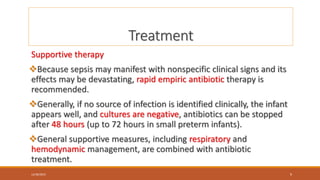
Treatment
Supportive therapy
Because sepsis may manifest with nonspecific clinical signs and its
effects may be devastating, rapid empiric antibiotic therapy is
recommended.
Generally, if no source of infection is identified clinically, the infant
appears well, and cultures are negative, antibiotics can be stopped
after 48 hours (up to 72 hours in small preterm infants).
General supportive measures, including respiratory and
hemodynamic management, are combined with antibiotic
treatment.
12/30/2023 9
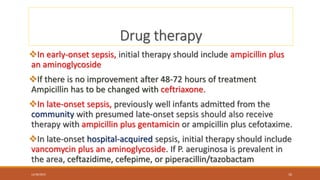
Drug therapy
In early-onset sepsis, initial therapy should include ampicillin plus
an aminoglycoside
If there is no improvement after 48-72 hours of treatment
Ampicillin has to be changed with ceftriaxone.
In late-onset sepsis, previously well infants admitted from the
community with presumed late-onset sepsis should also receive
therapy with ampicillin plus gentamicin or ampicillin plus cefotaxime.
In late-onset hospital-acquired sepsis, initial therapy should include
vancomycin plus an aminoglycoside. If P. aeruginosa is prevalent in
the area, ceftazidime, cefepime, or piperacillin/tazobactam
12/30/2023 10
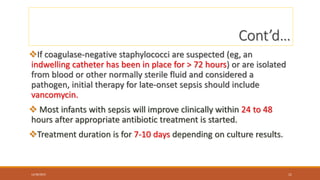
Cont’d…
If coagulase-negative staphylococci are suspected (eg, an
indwelling catheter has been in place for > 72 hours) or are isolated
from blood or other normally sterile fluid and considered a
pathogen, initial therapy for late-onset sepsis should include
vancomycin.
 Most infants with sepsis will improve clinically within 24 to 48
hours after appropriate antibiotic treatment is started.
Treatment duration is for 7-10 days depending on culture results.
12/30/2023 11
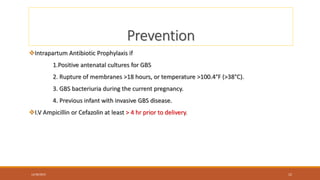
Prevention
Intrapartum Antibiotic Prophylaxis if
1.Positive antenatal cultures for GBS
2. Rupture of membranes >18 hours, or temperature >100.4°F (>38°C).
3. GBS bacteriuria during the current pregnancy.
4. Previous infant with invasive GBS disease.
I.V Ampicillin or Cefazolin at least > 4 hr prior to delivery.
12/30/2023 12
THANK YOU!
12/30/2023 13

Neonatal Sepsis.pptx for pharmacy student

  • 1.
    Neonatal Sepsis By MariamDubale B.pharm ,Msc in clinical pharmacy Email yemariamju@gmail.com or Mariam.deko@ju.edu.et Cell phone 251942362719
  • 2.
    Introduction Neonatal sepsis isinvasive infection, usually bacterial, occurring during the neonatal period. Sepsis is an important cause of morbidity and mortality among newborn infants. Globally, It is the number one cause of death in Newborn. Neonatal Sepsis is classified according to the infant's age at the onset of symptom Early onset sepsis: It presents within the first 72 hours of life. Late onset sepsis: It presents after 72 hours of life. 12/30/2023 2
  • 3.
    Cont’d… Early onset sepsisPresents within 72 hours of life. Respiratory distress is the most common presenting symptom  Most of newborns are symptomatic by 24 hours of age. The source of infection is generally the maternal genital tract. Most cases are caused by group B streptococcus (GBS) and gram- negative enteric organisms (predominantly Escherichia coli). Other cases tend to be caused by gram-negative enteric bacilli (eg, Klebsiella species) and certain gram-positive organisms (Listeria monocytogenes, 12/30/2023 3
  • 4.
    Cont’d… Late-onset neonatal sepsis Infectionsource in late onset sepsis is usually nosocomial (hospital- acquired) or community acquired. Staphylococci account for 30 to 60% of late-onset cases and are most frequently due to intravascular devices (particularly central vascular catheters). E. coli is also becoming increasingly recognized as a significant cause of late-onset sepsis, especially in extremely LBW infants. Contaminated respiratory equipment is suspected in outbreaks of hospital-acquire Pseudomonas aeruginosa pneumonia or sepsis. 12/30/2023 4
  • 5.
    Risk factors Early-onset neonatalsepsis Premature rupture of membranes (PROM) occurring ≥ 18 hours before birth Maternal chorioamnionitis (most commonly manifesting as maternal fever shortly before or during delivery documented maternal colonization with GBS Preterm delivery(< 37 week)  Low birth weight (<2500 grams) 12/30/2023 5
  • 6.
    Cont’d… Late-onset neonatal sepsis Themost important risk factor in late-onset sepsis is preterm labor Prolonged use of intravascular catheters Exposure to antibiotics (which selects resistant bacterial strains) Prolonged hospitalization Contaminated equipment or IV or enteral solutions 12/30/2023 6
  • 7.
    Clinical Manifestations Signs aremultiple, nonspecific, and include diminished spontaneous activity, less vigorous sucking, apnea, bradycardia, temperature instability, respiratory distresss (tachypnea, grunting, flaring of the nasal alae, retraction), vomiting, diarrhea, abdominal distention, seizures, and jaundice. Fever is present in only 10 to 15% of neonates but, when sustained (eg, > 1 hour), generally indicates infection. Other symptoms and signs include neurologic findings (eg, seizures, jitteriness) 12/30/2023 7
  • 8.
    Diagnosis Blood culture, adefinitive diagnosis of neonatal sepsis is established by a positive blood cultured. Diagnosis is confirmed by isolation of a pathogen in culture. Cerebrospinal fluid (CSF) CBC chest x-ray CRP and ESR 12/30/2023 8
  • 9.
    Treatment Supportive therapy Because sepsismay manifest with nonspecific clinical signs and its effects may be devastating, rapid empiric antibiotic therapy is recommended. Generally, if no source of infection is identified clinically, the infant appears well, and cultures are negative, antibiotics can be stopped after 48 hours (up to 72 hours in small preterm infants). General supportive measures, including respiratory and hemodynamic management, are combined with antibiotic treatment. 12/30/2023 9
  • 10.
    Drug therapy In early-onsetsepsis, initial therapy should include ampicillin plus an aminoglycoside If there is no improvement after 48-72 hours of treatment Ampicillin has to be changed with ceftriaxone. In late-onset sepsis, previously well infants admitted from the community with presumed late-onset sepsis should also receive therapy with ampicillin plus gentamicin or ampicillin plus cefotaxime. In late-onset hospital-acquired sepsis, initial therapy should include vancomycin plus an aminoglycoside. If P. aeruginosa is prevalent in the area, ceftazidime, cefepime, or piperacillin/tazobactam 12/30/2023 10
  • 11.
    Cont’d… If coagulase-negative staphylococciare suspected (eg, an indwelling catheter has been in place for > 72 hours) or are isolated from blood or other normally sterile fluid and considered a pathogen, initial therapy for late-onset sepsis should include vancomycin.  Most infants with sepsis will improve clinically within 24 to 48 hours after appropriate antibiotic treatment is started. Treatment duration is for 7-10 days depending on culture results. 12/30/2023 11
  • 12.
    Prevention Intrapartum Antibiotic Prophylaxisif 1.Positive antenatal cultures for GBS 2. Rupture of membranes >18 hours, or temperature >100.4°F (>38°C). 3. GBS bacteriuria during the current pregnancy. 4. Previous infant with invasive GBS disease. I.V Ampicillin or Cefazolin at least > 4 hr prior to delivery. 12/30/2023 12
  • 13.