Lab Values
NCLEX Cram Sheet
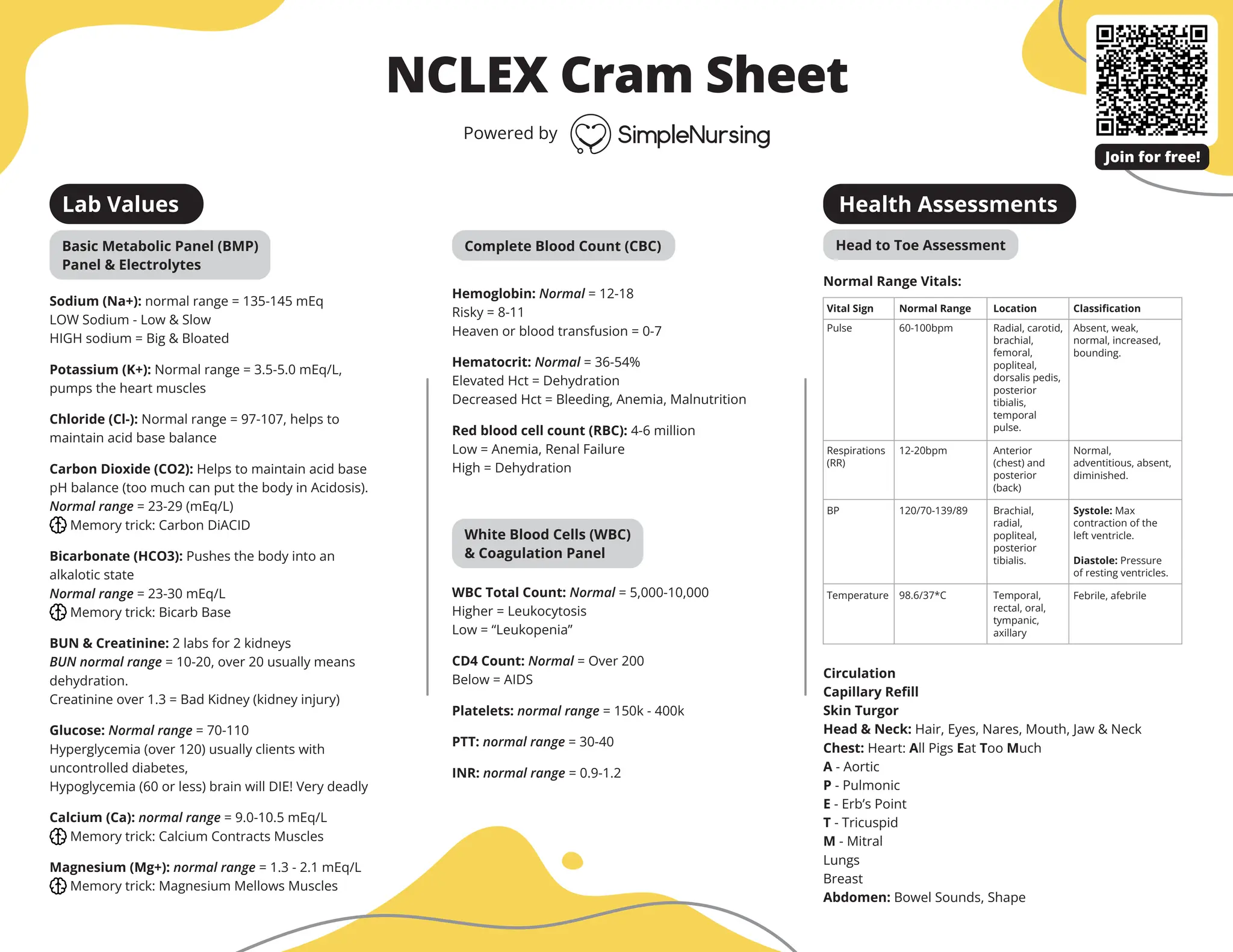
Sodium (Na+): normal range = 135-145 mEq
LOW Sodium - Low & Slow
HIGH sodium = Big & Bloated
Potassium (K+): Normal range = 3.5-5.0 mEq/L,
pumps the heart muscles
Chloride (Cl-): Normal range = 97-107, helps to
maintain acid base balance
Carbon Dioxide (CO2): Helps to maintain acid base
pH balance (too much can put the body in Acidosis).
Normal range = 23-29 (mEq/L)
Memory trick: Carbon DiACID
Bicarbonate (HCO3): Pushes the body into an
alkalotic state
Normal range = 23-30 mEq/L
Memory trick: Bicarb Base
BUN & Creatinine: 2 labs for 2 kidneys
BUN normal range = 10-20, over 20 usually means
dehydration.
Creatinine over 1.3 = Bad Kidney (kidney injury)
Glucose: Normal range = 70-110
Hyperglycemia (over 120) usually clients with
uncontrolled diabetes,
Hypoglycemia (60 or less) brain will DIE! Very deadly
Calcium (Ca): normal range = 9.0-10.5 mEq/L
Memory trick: Calcium Contracts Muscles
Magnesium (Mg+): normal range = 1.3 - 2.1 mEq/L
Memory trick: Magnesium Mellows Muscles
Hemoglobin: Normal = 12-18
Risky = 8-11
Heaven or blood transfusion = 0-7
Hematocrit: Normal = 36-54%
Elevated Hct = Dehydration
Decreased Hct = Bleeding, Anemia, Malnutrition
Red blood cell count (RBC): 4-6 million
Low = Anemia, Renal Failure
High = Dehydration
WBC Total Count: Normal = 5,000-10,000
Higher = Leukocytosis
Low = “Leukopenia”
CD4 Count: Normal = Over 200
Below = AIDS
Platelets: normal range = 150k - 400k
PTT: normal range = 30-40
INR: normal range = 0.9-1.2
Basic Metabolic Panel (BMP)
Panel & Electrolytes
Normal Range Vitals:
Circulation
Capillary Refill
Skin Turgor
Head & Neck: Hair, Eyes, Nares, Mouth, Jaw & Neck
Chest: Heart: All Pigs Eat Too Much
A - Aortic
P - Pulmonic
E - Erb’s Point
T - Tricuspid
M - Mitral
Lungs
Breast
Abdomen: Bowel Sounds, Shape
Complete Blood Count (CBC)
Health Assessments
Head to Toe Assessment
White Blood Cells (WBC)
& Coagulation Panel
Vital Sign Normal Range Location Classification
Pulse 60-100bpm Radial, carotid,
brachial,
femoral,
popliteal,
dorsalis pedis,
posterior
tibialis,
temporal
pulse.
Absent, weak,
normal, increased,
bounding.
Respirations
(RR)
12-20bpm Anterior
(chest) and
posterior
(back)
Normal,
adventitious, absent,
diminished.
BP 120/70-139/89 Brachial,
radial,
popliteal,
posterior
tibialis.
Systole: Max
contraction of the
left ventricle.
Diastole: Pressure
of resting ventricles.
Temperature 98.6/37*C Temporal,
rectal, oral,
tympanic,
axillary
Febrile, afebrile
Powered by
Join for free!
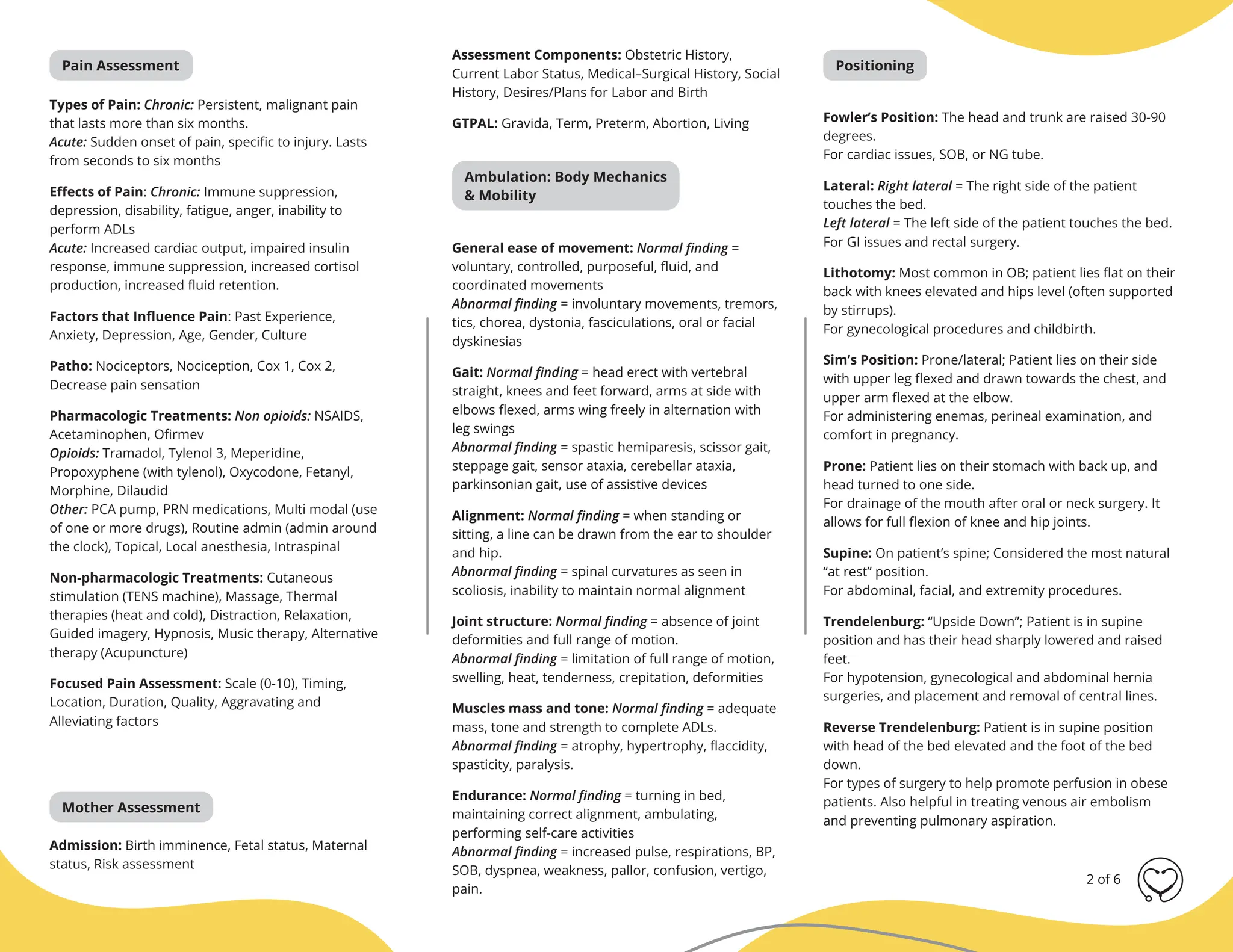
Types of Pain: Chronic: Persistent, malignant pain
that lasts more than six months.
Acute: Sudden onset of pain, specific to injury. Lasts
from seconds to six months
Effects of Pain: Chronic: Immune suppression,
depression, disability, fatigue, anger, inability to
perform ADLs
Acute: Increased cardiac output, impaired insulin
response, immune suppression, increased cortisol
production, increased fluid retention.
Factors that Influence Pain: Past Experience,
Anxiety, Depression, Age, Gender, Culture
Patho: Nociceptors, Nociception, Cox 1, Cox 2,
Decrease pain sensation
Pharmacologic Treatments: Non opioids: NSAIDS,
Acetaminophen, Ofirmev
Opioids: Tramadol, Tylenol 3, Meperidine,
Propoxyphene (with tylenol), Oxycodone, Fetanyl,
Morphine, Dilaudid
Other: PCA pump, PRN medications, Multi modal (use
of one or more drugs), Routine admin (admin around
the clock), Topical, Local anesthesia, Intraspinal
Non-pharmacologic Treatments: Cutaneous
stimulation (TENS machine), Massage, Thermal
therapies (heat and cold), Distraction, Relaxation,
Guided imagery, Hypnosis, Music therapy, Alternative
therapy (Acupuncture)
Focused Pain Assessment: Scale (0-10), Timing,
Location, Duration, Quality, Aggravating and
Alleviating factors
Admission: Birth imminence, Fetal status, Maternal
status, Risk assessment
Assessment Components: Obstetric History,
Current Labor Status, Medical–Surgical History, Social
History, Desires/Plans for Labor and Birth
GTPAL: Gravida, Term, Preterm, Abortion, Living
General ease of movement: Normal finding =
voluntary, controlled, purposeful, fluid, and
coordinated movements
Abnormal finding = involuntary movements, tremors,
tics, chorea, dystonia, fasciculations, oral or facial
dyskinesias
Gait: Normal finding = head erect with vertebral
straight, knees and feet forward, arms at side with
elbows flexed, arms wing freely in alternation with
leg swings
Abnormal finding = spastic hemiparesis, scissor gait,
steppage gait, sensor ataxia, cerebellar ataxia,
parkinsonian gait, use of assistive devices
Alignment: Normal finding = when standing or
sitting, a line can be drawn from the ear to shoulder
and hip.
Abnormal finding = spinal curvatures as seen in
scoliosis, inability to maintain normal alignment
Joint structure: Normal finding = absence of joint
deformities and full range of motion.
Abnormal finding = limitation of full range of motion,
swelling, heat, tenderness, crepitation, deformities
Muscles mass and tone: Normal finding = adequate
mass, tone and strength to complete ADLs.
Abnormal finding = atrophy, hypertrophy, flaccidity,
spasticity, paralysis.
Endurance: Normal finding = turning in bed,
maintaining correct alignment, ambulating,
performing self-care activities
Abnormal finding = increased pulse, respirations, BP,
SOB, dyspnea, weakness, pallor, confusion, vertigo,
pain.
Fowler’s Position: The head and trunk are raised 30-90
degrees.
For cardiac issues, SOB, or NG tube.
Lateral: Right lateral = The right side of the patient
touches the bed.
Left lateral = The left side of the patient touches the bed.
For GI issues and rectal surgery.
Lithotomy: Most common in OB; patient lies flat on their
back with knees elevated and hips level (often supported
by stirrups).
For gynecological procedures and childbirth.
Sim’s Position: Prone/lateral; Patient lies on their side
with upper leg flexed and drawn towards the chest, and
upper arm flexed at the elbow.
For administering enemas, perineal examination, and
comfort in pregnancy.
Prone: Patient lies on their stomach with back up, and
head turned to one side.
For drainage of the mouth after oral or neck surgery. It
allows for full flexion of knee and hip joints.
Supine: On patient’s spine; Considered the most natural
“at rest” position.
For abdominal, facial, and extremity procedures.
Trendelenburg: “Upside Down”; Patient is in supine
position and has their head sharply lowered and raised
feet.
For hypotension, gynecological and abdominal hernia
surgeries, and placement and removal of central lines.
Reverse Trendelenburg: Patient is in supine position
with head of the bed elevated and the foot of the bed
down.
For types of surgery to help promote perfusion in obese
patients. Also helpful in treating venous air embolism
and preventing pulmonary aspiration.
2 of 6
Pain Assessment Positioning
Mother Assessment
Ambulation: Body Mechanics
& Mobility
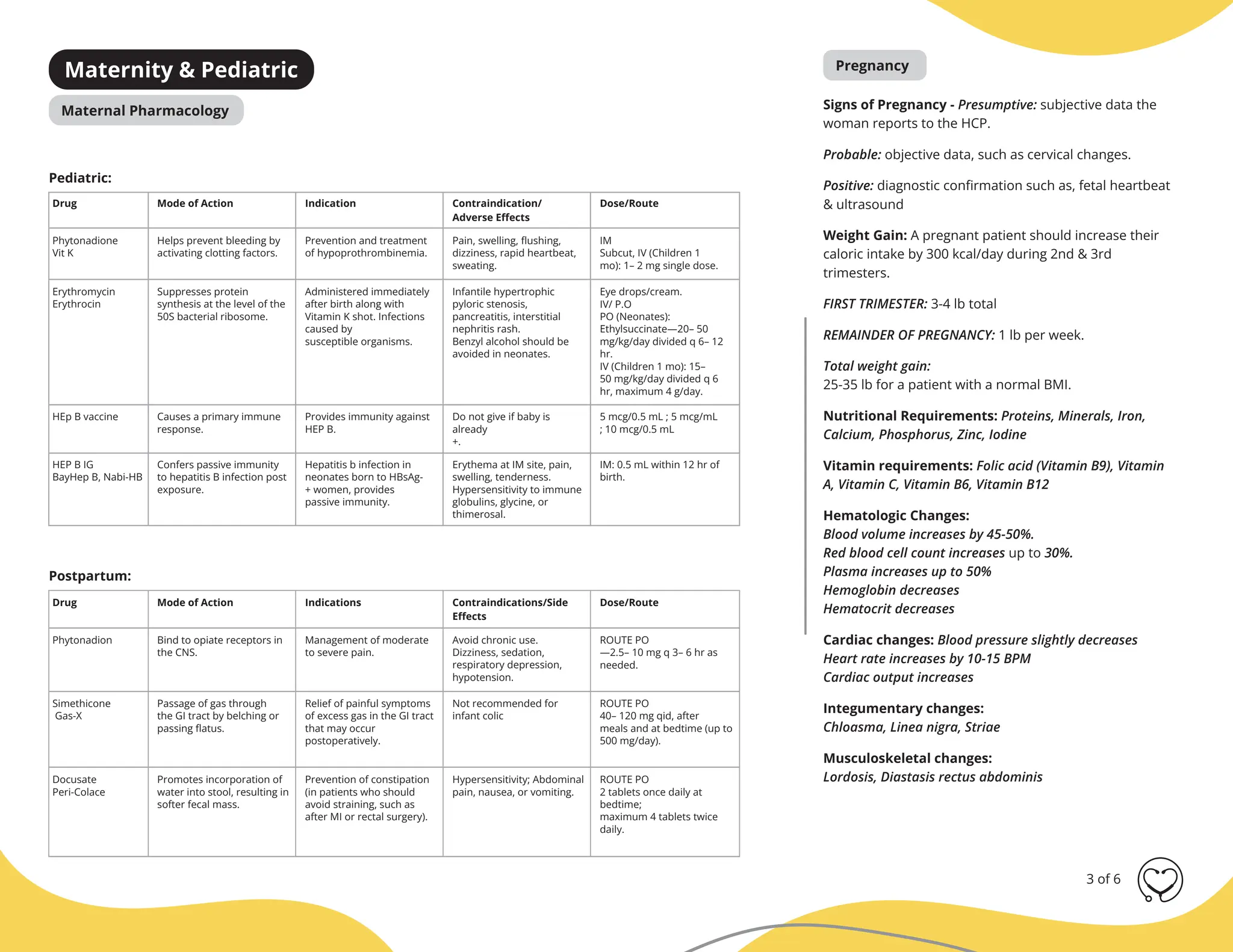
Signs of Pregnancy - Presumptive: subjective data the
woman reports to the HCP.
Probable: objective data, such as cervical changes.
Positive: diagnostic confirmation such as, fetal heartbeat
& ultrasound
Weight Gain: A pregnant patient should increase their
caloric intake by 300 kcal/day during 2nd & 3rd
trimesters.
FIRST TRIMESTER: 3-4 lb total
REMAINDER OF PREGNANCY: 1 lb per week.
Total weight gain:
25-35 lb for a patient with a normal BMI.
Nutritional Requirements: Proteins, Minerals, Iron,
Calcium, Phosphorus, Zinc, Iodine
Vitamin requirements: Folic acid (Vitamin B9), Vitamin
A, Vitamin C, Vitamin B6, Vitamin B12
Hematologic Changes:
Blood volume increases by 45-50%.
Red blood cell count increases up to 30%.
Plasma increases up to 50%
Hemoglobin decreases
Hematocrit decreases
Cardiac changes: Blood pressure slightly decreases
Heart rate increases by 10-15 BPM
Cardiac output increases
Integumentary changes:
Chloasma, Linea nigra, Striae
Musculoskeletal changes:
Lordosis, Diastasis rectus abdominis
3 of 6
Pregnancy
Maternity & Pediatric
Maternal Pharmacology
Drug Mode of Action Indication Contraindication/
Adverse Effects
Phytonadione
Vit K
Helps prevent bleeding by
activating clotting factors.
Prevention and treatment
of hypoprothrombinemia.
Pain, swelling, flushing,
dizziness, rapid heartbeat,
sweating.
Erythromycin
Erythrocin
Suppresses protein
synthesis at the level of the
50S bacterial ribosome.
Administered immediately
after birth along with
Vitamin K shot. Infections
caused by
susceptible organisms.
Infantile hypertrophic
pyloric stenosis,
pancreatitis, interstitial
nephritis rash.
Benzyl alcohol should be
avoided in neonates.
HEp B vaccine Causes a primary immune
response.
Provides immunity against
HEP B.
Do not give if baby is
already
+.
HEP B IG
BayHep B, Nabi-HB
Confers passive immunity
to hepatitis B infection post
exposure.
Hepatitis b infection in
neonates born to HBsAg-
+ women, provides
passive immunity.
Erythema at IM site, pain,
swelling, tenderness.
Hypersensitivity to immune
globulins, glycine, or
thimerosal.
Dose/Route
IM
Subcut, IV (Children 1
mo): 1– 2 mg single dose.
Eye drops/cream.
IV/ P.O
PO (Neonates):
Ethylsuccinate—20– 50
mg/kg/day divided q 6– 12
hr.
IV (Children 1 mo): 15–
50 mg/kg/day divided q 6
hr, maximum 4 g/day.
5 mcg/0.5 mL ; 5 mcg/mL
; 10 mcg/0.5 mL
IM: 0.5 mL within 12 hr of
birth.
Pediatric:
Drug Mode of Action Indications Contraindications/Side
Effects
Phytonadion Bind to opiate receptors in
the CNS.
Management of moderate
to severe pain.
Avoid chronic use.
Dizziness, sedation,
respiratory depression,
hypotension.
Simethicone
Gas-X
Passage of gas through
the GI tract by belching or
passing flatus.
Relief of painful symptoms
of excess gas in the GI tract
that may occur
postoperatively.
Not recommended for
infant colic
Docusate
Peri-Colace
Promotes incorporation of
water into stool, resulting in
softer fecal mass.
Prevention of constipation
(in patients who should
avoid straining, such as
after MI or rectal surgery).
Hypersensitivity; Abdominal
pain, nausea, or vomiting.
Dose/Route
ROUTE PO
—2.5– 10 mg q 3– 6 hr as
needed.
ROUTE PO
40– 120 mg qid, after
meals and at bedtime (up to
500 mg/day).
ROUTE PO
2 tablets once daily at
bedtime;
maximum 4 tablets twice
daily.
Postpartum:
4 of 6
Respiratory changes:
Nasal mucosa edematous due to vasocongestion.
Nasal congestion and voice changes are possible.
Accommodations to maintain lung capacity.
May feel short of breath when eupneic.
Third trimester diaphragm pressure.
GI changes:
Intestines are displaced upwards & to the side.
Pressure changes in the esophagus & stomach which
leads to heartburn.
Constipation
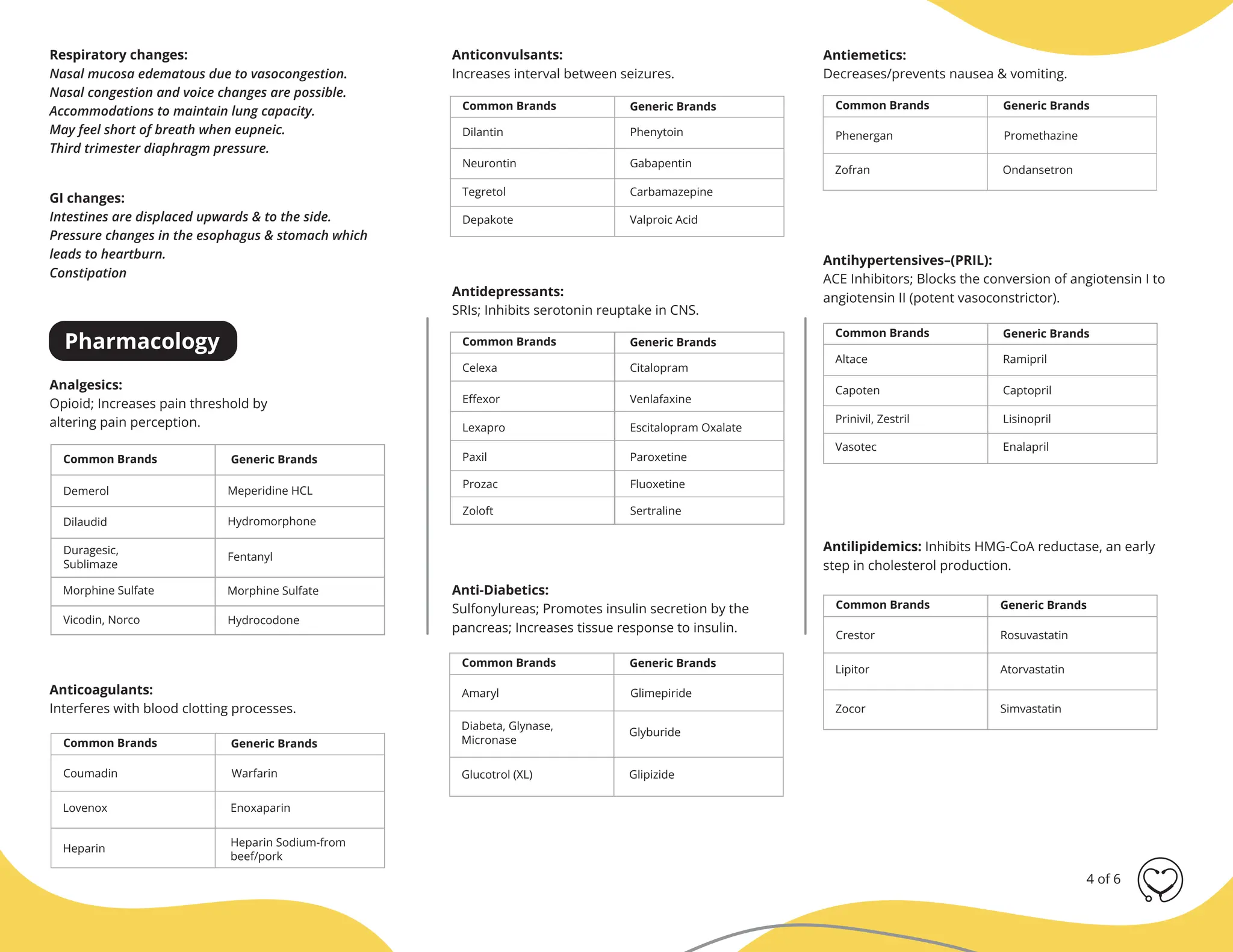
Analgesics:
Opioid; Increases pain threshold by
altering pain perception.
Anticoagulants:
Interferes with blood clotting processes.
Anticonvulsants:
Increases interval between seizures.
Antidepressants:
SRIs; Inhibits serotonin reuptake in CNS.
Anti-Diabetics:
Sulfonylureas; Promotes insulin secretion by the
pancreas; Increases tissue response to insulin.
Antiemetics:
Decreases/prevents nausea & vomiting.
Antihypertensives–(PRIL):
ACE Inhibitors; Blocks the conversion of angiotensin I to
angiotensin II (potent vasoconstrictor).
Antilipidemics: Inhibits HMG-CoA reductase, an early
step in cholesterol production.
Common Brands Generic Brands
Crestor Rosuvastatin
Lipitor Atorvastatin
Zocor Simvastatin
Pharmacology
Common Brands Generic Brands
Demerol Meperidine HCL
Dilaudid Hydromorphone
Duragesic,
Sublimaze
Fentanyl
Morphine Sulfate
Vicodin, Norco
Morphine Sulfate
Hydrocodone
Common Brands Generic Brands
Coumadin Warfarin
Lovenox Enoxaparin
Heparin
Heparin Sodium-from
beef/pork
Common Brands Generic Brands
Dilantin Phenytoin
Neurontin Gabapentin
Tegretol Carbamazepine
Depakote Valproic Acid
Common Brands Generic Brands
Celexa Citalopram
Effexor Venlafaxine
Lexapro Escitalopram Oxalate
Paxil Paroxetine
Prozac Fluoxetine
Zoloft Sertraline
Common Brands Generic Brands
Phenergan Promethazine
Zofran Ondansetron
Common Brands Generic Brands
Altace Ramipril
Capoten Captopril
Prinivil, Zestril Lisinopril
Vasotec Enalapril
Common Brands
Amaryl Glimepiride
Diabeta, Glynase,
Micronase
Glyburide
Glucotrol (XL) Glipizide
Generic Brands
Common Brands Generic Brands
Actos Pioglitazone
Avandia Rosiglitazone
Common Brands Generic Brands
Pepcid Famotidine
Zantac Ranitidine
5 of 6
Common Brands Generic Brands
Atacand Candesartan
Cozaar Losartan
Diovan Valsartan
Common Brands Generic Brands
ASA - aspirin Acetylsalicylic Acid
Plavix Clopidogrel
Common Brands Generic Brands
Xanax Alprazolam
Valium Diazepam
Ativan Lorazepam
Versed Midazolam
Antiplatelets:
Interferes with the 1ST step in the clotting process:
platelet aggregation.
Anxiolytics:
Azaspirodecanedione derivatives;
Decreases anxiety.
Arbs-(SARTAN):
Blocks binding of angiotensin II at the receptor site.
Benzodiazepines (Pam & Lam):
Enhances/facilitates GABA, an inhibitory
neurotransmitter
Beta Blockers-(OLOL):
Prevents sympathetic heart stimulation, thus
Decreases HR and contractility.
Biguanides:
Decreases hepatic glucose production
& intestinal absorption of glucose.
Calcium Channel Blockers:
Blocks Na+ influx into the beta-receptors.
Cardiac Glycosides:
Positive inotropes (improve contractility
and cardiac output).
Corticosteroids:
Inflammation, produces intentional immunosuppression,
and treats adrenocortical insufficiency.
Diuretics: Decreases fluid volume in the body.
Glitazones: Decreases insulin resistance.
H2-Histamine Receptor Antagonists: Inhibit histamine
at histamine H2-receptor sites, gastric acid secretion.
Common Brands Generic Brands
Buspar Buspirone Hydrochloride
Common Brands Generic Brands
Inderal Propranolol
Lopressor Metoprolol Tartrate
Toprol-XL Metoprolol Succinate
Tenormin Atenolol
Common Brands Generic Brands
Glucophage Metformin
Common Brands Generic Brands
Cardizem Diltiazem
Norvasc Amlodipine
Procardia Nifedipine
Verelan, Isoptin,
Calan
Verapamil
Common Brands Generic Brands
Lanoxin Digoxin
Common Brands Generic Brands
Celestone Betamethasone
Decadron Dexamethasone
Deltasone Prednisone
Solu-Cortef Hydrocortisone
Solu-Medrol Methylprednisolone
Common Brands Generic Brands
Bumex Bumetanide
Demadex Torsemide
Lasix Furosemide
Nitrates:
Peripheral and coronary vasodilators.
Proton Pump Inhibitors (PPI):
Blocks final step of gastric acid production;
Ulcer-reducing.
Tricyclics:
Blocks reuptake of norepinephrine
and serotonin at nerve endings.
Common Brands Generic Brands
Nitro BID, Tridil,
Transderm Nitro,
Nitrostat
Nitroglycerin
Imdur Isosorbide Mononitrate
Isorbid, Isordil,
Sorbitrate
Isosorbide Dinitrate
Common Brands Generic Brands
Nexium Esomeprazole
Prilosec Omeprazole
Protonix Pantoprazole
Common Brands Generic Brands
Elavil Amitriptyline
www.simplenursing.com

NCLEX Cram Sheet simple nursing 03/03/2024

  • 1.
    Lab Values NCLEX CramSheet Sodium (Na+): normal range = 135-145 mEq LOW Sodium - Low & Slow HIGH sodium = Big & Bloated Potassium (K+): Normal range = 3.5-5.0 mEq/L, pumps the heart muscles Chloride (Cl-): Normal range = 97-107, helps to maintain acid base balance Carbon Dioxide (CO2): Helps to maintain acid base pH balance (too much can put the body in Acidosis). Normal range = 23-29 (mEq/L) Memory trick: Carbon DiACID Bicarbonate (HCO3): Pushes the body into an alkalotic state Normal range = 23-30 mEq/L Memory trick: Bicarb Base BUN & Creatinine: 2 labs for 2 kidneys BUN normal range = 10-20, over 20 usually means dehydration. Creatinine over 1.3 = Bad Kidney (kidney injury) Glucose: Normal range = 70-110 Hyperglycemia (over 120) usually clients with uncontrolled diabetes, Hypoglycemia (60 or less) brain will DIE! Very deadly Calcium (Ca): normal range = 9.0-10.5 mEq/L Memory trick: Calcium Contracts Muscles Magnesium (Mg+): normal range = 1.3 - 2.1 mEq/L Memory trick: Magnesium Mellows Muscles Hemoglobin: Normal = 12-18 Risky = 8-11 Heaven or blood transfusion = 0-7 Hematocrit: Normal = 36-54% Elevated Hct = Dehydration Decreased Hct = Bleeding, Anemia, Malnutrition Red blood cell count (RBC): 4-6 million Low = Anemia, Renal Failure High = Dehydration WBC Total Count: Normal = 5,000-10,000 Higher = Leukocytosis Low = “Leukopenia” CD4 Count: Normal = Over 200 Below = AIDS Platelets: normal range = 150k - 400k PTT: normal range = 30-40 INR: normal range = 0.9-1.2 Basic Metabolic Panel (BMP) Panel & Electrolytes Normal Range Vitals: Circulation Capillary Refill Skin Turgor Head & Neck: Hair, Eyes, Nares, Mouth, Jaw & Neck Chest: Heart: All Pigs Eat Too Much A - Aortic P - Pulmonic E - Erb’s Point T - Tricuspid M - Mitral Lungs Breast Abdomen: Bowel Sounds, Shape Complete Blood Count (CBC) Health Assessments Head to Toe Assessment White Blood Cells (WBC) & Coagulation Panel Vital Sign Normal Range Location Classification Pulse 60-100bpm Radial, carotid, brachial, femoral, popliteal, dorsalis pedis, posterior tibialis, temporal pulse. Absent, weak, normal, increased, bounding. Respirations (RR) 12-20bpm Anterior (chest) and posterior (back) Normal, adventitious, absent, diminished. BP 120/70-139/89 Brachial, radial, popliteal, posterior tibialis. Systole: Max contraction of the left ventricle. Diastole: Pressure of resting ventricles. Temperature 98.6/37*C Temporal, rectal, oral, tympanic, axillary Febrile, afebrile Powered by Join for free!
  • 2.
    Types of Pain:Chronic: Persistent, malignant pain that lasts more than six months. Acute: Sudden onset of pain, specific to injury. Lasts from seconds to six months Effects of Pain: Chronic: Immune suppression, depression, disability, fatigue, anger, inability to perform ADLs Acute: Increased cardiac output, impaired insulin response, immune suppression, increased cortisol production, increased fluid retention. Factors that Influence Pain: Past Experience, Anxiety, Depression, Age, Gender, Culture Patho: Nociceptors, Nociception, Cox 1, Cox 2, Decrease pain sensation Pharmacologic Treatments: Non opioids: NSAIDS, Acetaminophen, Ofirmev Opioids: Tramadol, Tylenol 3, Meperidine, Propoxyphene (with tylenol), Oxycodone, Fetanyl, Morphine, Dilaudid Other: PCA pump, PRN medications, Multi modal (use of one or more drugs), Routine admin (admin around the clock), Topical, Local anesthesia, Intraspinal Non-pharmacologic Treatments: Cutaneous stimulation (TENS machine), Massage, Thermal therapies (heat and cold), Distraction, Relaxation, Guided imagery, Hypnosis, Music therapy, Alternative therapy (Acupuncture) Focused Pain Assessment: Scale (0-10), Timing, Location, Duration, Quality, Aggravating and Alleviating factors Admission: Birth imminence, Fetal status, Maternal status, Risk assessment Assessment Components: Obstetric History, Current Labor Status, Medical–Surgical History, Social History, Desires/Plans for Labor and Birth GTPAL: Gravida, Term, Preterm, Abortion, Living General ease of movement: Normal finding = voluntary, controlled, purposeful, fluid, and coordinated movements Abnormal finding = involuntary movements, tremors, tics, chorea, dystonia, fasciculations, oral or facial dyskinesias Gait: Normal finding = head erect with vertebral straight, knees and feet forward, arms at side with elbows flexed, arms wing freely in alternation with leg swings Abnormal finding = spastic hemiparesis, scissor gait, steppage gait, sensor ataxia, cerebellar ataxia, parkinsonian gait, use of assistive devices Alignment: Normal finding = when standing or sitting, a line can be drawn from the ear to shoulder and hip. Abnormal finding = spinal curvatures as seen in scoliosis, inability to maintain normal alignment Joint structure: Normal finding = absence of joint deformities and full range of motion. Abnormal finding = limitation of full range of motion, swelling, heat, tenderness, crepitation, deformities Muscles mass and tone: Normal finding = adequate mass, tone and strength to complete ADLs. Abnormal finding = atrophy, hypertrophy, flaccidity, spasticity, paralysis. Endurance: Normal finding = turning in bed, maintaining correct alignment, ambulating, performing self-care activities Abnormal finding = increased pulse, respirations, BP, SOB, dyspnea, weakness, pallor, confusion, vertigo, pain. Fowler’s Position: The head and trunk are raised 30-90 degrees. For cardiac issues, SOB, or NG tube. Lateral: Right lateral = The right side of the patient touches the bed. Left lateral = The left side of the patient touches the bed. For GI issues and rectal surgery. Lithotomy: Most common in OB; patient lies flat on their back with knees elevated and hips level (often supported by stirrups). For gynecological procedures and childbirth. Sim’s Position: Prone/lateral; Patient lies on their side with upper leg flexed and drawn towards the chest, and upper arm flexed at the elbow. For administering enemas, perineal examination, and comfort in pregnancy. Prone: Patient lies on their stomach with back up, and head turned to one side. For drainage of the mouth after oral or neck surgery. It allows for full flexion of knee and hip joints. Supine: On patient’s spine; Considered the most natural “at rest” position. For abdominal, facial, and extremity procedures. Trendelenburg: “Upside Down”; Patient is in supine position and has their head sharply lowered and raised feet. For hypotension, gynecological and abdominal hernia surgeries, and placement and removal of central lines. Reverse Trendelenburg: Patient is in supine position with head of the bed elevated and the foot of the bed down. For types of surgery to help promote perfusion in obese patients. Also helpful in treating venous air embolism and preventing pulmonary aspiration. 2 of 6 Pain Assessment Positioning Mother Assessment Ambulation: Body Mechanics & Mobility
  • 3.
    Signs of Pregnancy- Presumptive: subjective data the woman reports to the HCP. Probable: objective data, such as cervical changes. Positive: diagnostic confirmation such as, fetal heartbeat & ultrasound Weight Gain: A pregnant patient should increase their caloric intake by 300 kcal/day during 2nd & 3rd trimesters. FIRST TRIMESTER: 3-4 lb total REMAINDER OF PREGNANCY: 1 lb per week. Total weight gain: 25-35 lb for a patient with a normal BMI. Nutritional Requirements: Proteins, Minerals, Iron, Calcium, Phosphorus, Zinc, Iodine Vitamin requirements: Folic acid (Vitamin B9), Vitamin A, Vitamin C, Vitamin B6, Vitamin B12 Hematologic Changes: Blood volume increases by 45-50%. Red blood cell count increases up to 30%. Plasma increases up to 50% Hemoglobin decreases Hematocrit decreases Cardiac changes: Blood pressure slightly decreases Heart rate increases by 10-15 BPM Cardiac output increases Integumentary changes: Chloasma, Linea nigra, Striae Musculoskeletal changes: Lordosis, Diastasis rectus abdominis 3 of 6 Pregnancy Maternity & Pediatric Maternal Pharmacology Drug Mode of Action Indication Contraindication/ Adverse Effects Phytonadione Vit K Helps prevent bleeding by activating clotting factors. Prevention and treatment of hypoprothrombinemia. Pain, swelling, flushing, dizziness, rapid heartbeat, sweating. Erythromycin Erythrocin Suppresses protein synthesis at the level of the 50S bacterial ribosome. Administered immediately after birth along with Vitamin K shot. Infections caused by susceptible organisms. Infantile hypertrophic pyloric stenosis, pancreatitis, interstitial nephritis rash. Benzyl alcohol should be avoided in neonates. HEp B vaccine Causes a primary immune response. Provides immunity against HEP B. Do not give if baby is already +. HEP B IG BayHep B, Nabi-HB Confers passive immunity to hepatitis B infection post exposure. Hepatitis b infection in neonates born to HBsAg- + women, provides passive immunity. Erythema at IM site, pain, swelling, tenderness. Hypersensitivity to immune globulins, glycine, or thimerosal. Dose/Route IM Subcut, IV (Children 1 mo): 1– 2 mg single dose. Eye drops/cream. IV/ P.O PO (Neonates): Ethylsuccinate—20– 50 mg/kg/day divided q 6– 12 hr. IV (Children 1 mo): 15– 50 mg/kg/day divided q 6 hr, maximum 4 g/day. 5 mcg/0.5 mL ; 5 mcg/mL ; 10 mcg/0.5 mL IM: 0.5 mL within 12 hr of birth. Pediatric: Drug Mode of Action Indications Contraindications/Side Effects Phytonadion Bind to opiate receptors in the CNS. Management of moderate to severe pain. Avoid chronic use. Dizziness, sedation, respiratory depression, hypotension. Simethicone Gas-X Passage of gas through the GI tract by belching or passing flatus. Relief of painful symptoms of excess gas in the GI tract that may occur postoperatively. Not recommended for infant colic Docusate Peri-Colace Promotes incorporation of water into stool, resulting in softer fecal mass. Prevention of constipation (in patients who should avoid straining, such as after MI or rectal surgery). Hypersensitivity; Abdominal pain, nausea, or vomiting. Dose/Route ROUTE PO —2.5– 10 mg q 3– 6 hr as needed. ROUTE PO 40– 120 mg qid, after meals and at bedtime (up to 500 mg/day). ROUTE PO 2 tablets once daily at bedtime; maximum 4 tablets twice daily. Postpartum:
  • 4.
    4 of 6 Respiratorychanges: Nasal mucosa edematous due to vasocongestion. Nasal congestion and voice changes are possible. Accommodations to maintain lung capacity. May feel short of breath when eupneic. Third trimester diaphragm pressure. GI changes: Intestines are displaced upwards & to the side. Pressure changes in the esophagus & stomach which leads to heartburn. Constipation Analgesics: Opioid; Increases pain threshold by altering pain perception. Anticoagulants: Interferes with blood clotting processes. Anticonvulsants: Increases interval between seizures. Antidepressants: SRIs; Inhibits serotonin reuptake in CNS. Anti-Diabetics: Sulfonylureas; Promotes insulin secretion by the pancreas; Increases tissue response to insulin. Antiemetics: Decreases/prevents nausea & vomiting. Antihypertensives–(PRIL): ACE Inhibitors; Blocks the conversion of angiotensin I to angiotensin II (potent vasoconstrictor). Antilipidemics: Inhibits HMG-CoA reductase, an early step in cholesterol production. Common Brands Generic Brands Crestor Rosuvastatin Lipitor Atorvastatin Zocor Simvastatin Pharmacology Common Brands Generic Brands Demerol Meperidine HCL Dilaudid Hydromorphone Duragesic, Sublimaze Fentanyl Morphine Sulfate Vicodin, Norco Morphine Sulfate Hydrocodone Common Brands Generic Brands Coumadin Warfarin Lovenox Enoxaparin Heparin Heparin Sodium-from beef/pork Common Brands Generic Brands Dilantin Phenytoin Neurontin Gabapentin Tegretol Carbamazepine Depakote Valproic Acid Common Brands Generic Brands Celexa Citalopram Effexor Venlafaxine Lexapro Escitalopram Oxalate Paxil Paroxetine Prozac Fluoxetine Zoloft Sertraline Common Brands Generic Brands Phenergan Promethazine Zofran Ondansetron Common Brands Generic Brands Altace Ramipril Capoten Captopril Prinivil, Zestril Lisinopril Vasotec Enalapril Common Brands Amaryl Glimepiride Diabeta, Glynase, Micronase Glyburide Glucotrol (XL) Glipizide Generic Brands
  • 5.
    Common Brands GenericBrands Actos Pioglitazone Avandia Rosiglitazone Common Brands Generic Brands Pepcid Famotidine Zantac Ranitidine 5 of 6 Common Brands Generic Brands Atacand Candesartan Cozaar Losartan Diovan Valsartan Common Brands Generic Brands ASA - aspirin Acetylsalicylic Acid Plavix Clopidogrel Common Brands Generic Brands Xanax Alprazolam Valium Diazepam Ativan Lorazepam Versed Midazolam Antiplatelets: Interferes with the 1ST step in the clotting process: platelet aggregation. Anxiolytics: Azaspirodecanedione derivatives; Decreases anxiety. Arbs-(SARTAN): Blocks binding of angiotensin II at the receptor site. Benzodiazepines (Pam & Lam): Enhances/facilitates GABA, an inhibitory neurotransmitter Beta Blockers-(OLOL): Prevents sympathetic heart stimulation, thus Decreases HR and contractility. Biguanides: Decreases hepatic glucose production & intestinal absorption of glucose. Calcium Channel Blockers: Blocks Na+ influx into the beta-receptors. Cardiac Glycosides: Positive inotropes (improve contractility and cardiac output). Corticosteroids: Inflammation, produces intentional immunosuppression, and treats adrenocortical insufficiency. Diuretics: Decreases fluid volume in the body. Glitazones: Decreases insulin resistance. H2-Histamine Receptor Antagonists: Inhibit histamine at histamine H2-receptor sites, gastric acid secretion. Common Brands Generic Brands Buspar Buspirone Hydrochloride Common Brands Generic Brands Inderal Propranolol Lopressor Metoprolol Tartrate Toprol-XL Metoprolol Succinate Tenormin Atenolol Common Brands Generic Brands Glucophage Metformin Common Brands Generic Brands Cardizem Diltiazem Norvasc Amlodipine Procardia Nifedipine Verelan, Isoptin, Calan Verapamil Common Brands Generic Brands Lanoxin Digoxin Common Brands Generic Brands Celestone Betamethasone Decadron Dexamethasone Deltasone Prednisone Solu-Cortef Hydrocortisone Solu-Medrol Methylprednisolone Common Brands Generic Brands Bumex Bumetanide Demadex Torsemide Lasix Furosemide
  • 6.
    Nitrates: Peripheral and coronaryvasodilators. Proton Pump Inhibitors (PPI): Blocks final step of gastric acid production; Ulcer-reducing. Tricyclics: Blocks reuptake of norepinephrine and serotonin at nerve endings. Common Brands Generic Brands Nitro BID, Tridil, Transderm Nitro, Nitrostat Nitroglycerin Imdur Isosorbide Mononitrate Isorbid, Isordil, Sorbitrate Isosorbide Dinitrate Common Brands Generic Brands Nexium Esomeprazole Prilosec Omeprazole Protonix Pantoprazole Common Brands Generic Brands Elavil Amitriptyline www.simplenursing.com