The History of
Halloween
Created by Sergio Viñals
The origins of Halloween





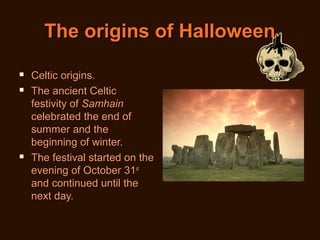
Celtic origins.
The ancient Celtic
festivity of Samhain
celebrated the end of
summer and the
beginning of winter.
The festival started on the
evening of October 31st
and continued until the
next day.
RITUALS





Celtic druids organized religious rituals.
They believed that ghosts, witches and evil
spirits returned on the night of October 31 st.
They made bonfires and wore frightening
costumes to send evil spirits away.

Ghost

Witch

Evil Spirits Bonfire

Costume
Halloween: past traditions





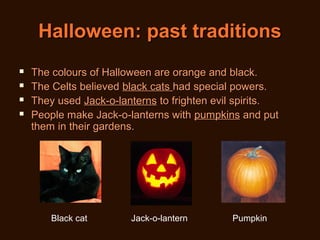
The colours of Halloween are orange and black.
The Celts believed black cats had special powers.
They used Jack-o-lanterns to frighten evil spirits.
People make Jack-o-lanterns with pumpkins and put
them in their gardens.

Black cat

Jack-o-lantern

Pumpkin
Halloween: present traditions



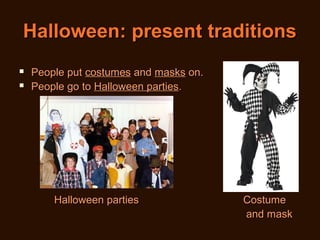
People put costumes and masks on.
People go to Halloween parties.

Halloween parties

Costume
and mask
Halloween: present traditions



Children play trick or treat.
People play bobbing for apples

Trick or treat

Bobbing for apples.
Goodwill conquers Evil




The Roman Catholic Church called
November 1st “All Saints’ Day”.
Christians believe Jesus defeats Evil.
Now it’s your turn


What are the origins of Halloween?

A) American
B) Irish
C) Celtic
Now it’s your turn


When do we celebrate Halloween?

A) On 1st November
B) On 31st October.
C) On 30th October.
Now it’s your turn


When was Samhein?

A) At the end of winter
B) At the beginning of summer
C) At the end of summer
Now it’s your turn


What is “bobbing for apples”?

A) A Halloween game.
B) A Halloween mask
C) A Halloween song
Now it’s your turn


A traditional Halloween vegetable is…

A) Apple.
B) Pumpkin.
C) Orange.
Now it’s your turn
Try this webpage to check your Halloween
words.
Halloween activities
THE END
Don’t miss my other educational blogs:
www.eoi-nb1.blogspot.com (NB1 EOI / A1 CEFR)
www.eoi-nb2.blogspot.com (NB2 EOI / A2 CEFR)
www.eoi-ni1.blogspot.com (NI1 EOI / B1 CEFR)
www.eoi-ni2.blogspot.com (NI2 EOI / B1 CEFR)
www.eoi-na1.blogspot.com (NA1 EOI / B2 CEFR)
© Sergio Viñals

NB1- Halloween

  • 1.
  • 2.
    The origins ofHalloween    Celtic origins. The ancient Celtic festivity of Samhain celebrated the end of summer and the beginning of winter. The festival started on the evening of October 31st and continued until the next day.
  • 3.
    RITUALS    Celtic druids organizedreligious rituals. They believed that ghosts, witches and evil spirits returned on the night of October 31 st. They made bonfires and wore frightening costumes to send evil spirits away. Ghost Witch Evil Spirits Bonfire Costume
  • 4.
    Halloween: past traditions     Thecolours of Halloween are orange and black. The Celts believed black cats had special powers. They used Jack-o-lanterns to frighten evil spirits. People make Jack-o-lanterns with pumpkins and put them in their gardens. Black cat Jack-o-lantern Pumpkin
  • 5.
    Halloween: present traditions   Peopleput costumes and masks on. People go to Halloween parties. Halloween parties Costume and mask
  • 6.
    Halloween: present traditions   Childrenplay trick or treat. People play bobbing for apples Trick or treat Bobbing for apples.
  • 7.
    Goodwill conquers Evil   TheRoman Catholic Church called November 1st “All Saints’ Day”. Christians believe Jesus defeats Evil.
  • 8.
    Now it’s yourturn  What are the origins of Halloween? A) American B) Irish C) Celtic
  • 9.
    Now it’s yourturn  When do we celebrate Halloween? A) On 1st November B) On 31st October. C) On 30th October.
  • 10.
    Now it’s yourturn  When was Samhein? A) At the end of winter B) At the beginning of summer C) At the end of summer
  • 11.
    Now it’s yourturn  What is “bobbing for apples”? A) A Halloween game. B) A Halloween mask C) A Halloween song
  • 12.
    Now it’s yourturn  A traditional Halloween vegetable is… A) Apple. B) Pumpkin. C) Orange.
  • 13.
    Now it’s yourturn Try this webpage to check your Halloween words. Halloween activities
  • 14.
    THE END Don’t missmy other educational blogs: www.eoi-nb1.blogspot.com (NB1 EOI / A1 CEFR) www.eoi-nb2.blogspot.com (NB2 EOI / A2 CEFR) www.eoi-ni1.blogspot.com (NI1 EOI / B1 CEFR) www.eoi-ni2.blogspot.com (NI2 EOI / B1 CEFR) www.eoi-na1.blogspot.com (NA1 EOI / B2 CEFR) © Sergio Viñals