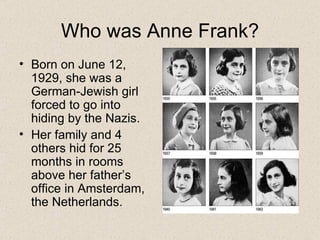
Who was Anne Frank? Born on June 12, 1929, she was a German-Jewish girl forced to go into hiding by the Nazis. Her family and 4 others hid for 25 months in rooms above her father’s office in Amsterdam, the Netherlands.
Anne Frank After being betrayed to the Nazis, Anne, her family and others were arrested and sent to concentration camps. In March of 1945, Anne died of typhus, at Bergen-Belsen concentration camp. She was 15 years old.
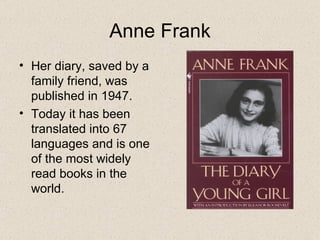
Anne Frank Her diary, saved by a family friend, was published in 1947. Today it has been translated into 67 languages and is one of the most widely read books in the world.
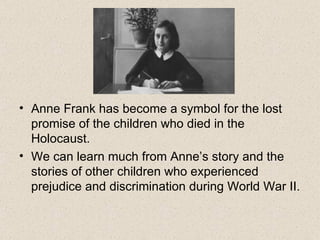
Anne Frank has become a symbol for the lost promise of the children who died in the Holocaust.  We can learn much from Anne’s story and the stories of other children who experienced prejudice and discrimination during World War II.
Through Children’s Eyes   2008 book What was life like for Danish children living in 1943? What choices did the non-Jewish children, like Annemarie, make? What does it mean to be a “rescuer?”
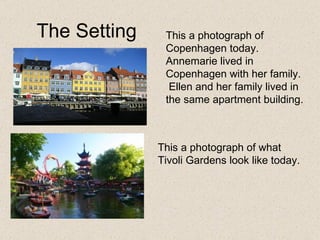
The Setting Copenhagen  This a photograph of Copenhagen today.  Annemarie lived in Copenhagen with her family.  Ellen and her family lived in the same apartment building. This a photograph of what Tivoli Gardens look like today.
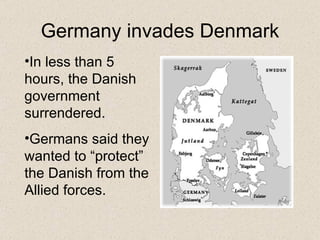
Germany invades Denmark In less than 5 hours, the Danish government surrendered. Germans said they wanted to “protect” the Danish from the Allied forces.
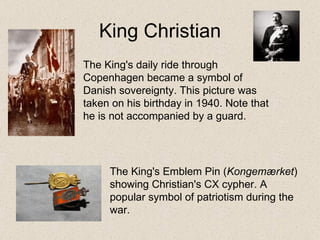
King Christian The King's Emblem Pin ( Kongemærket ) showing Christian's CX cypher. A popular symbol of patriotism during the war.  The King's daily ride through Copenhagen became a symbol of Danish sovereignty. This picture was taken on his birthday in 1940. Note that he is not accompanied by a guard.
 
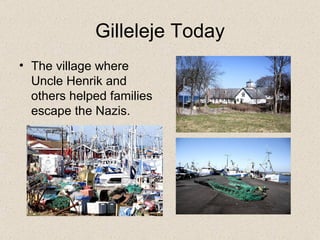
Gilleleje Today The village where Uncle Henrik and others helped families escape the Nazis.
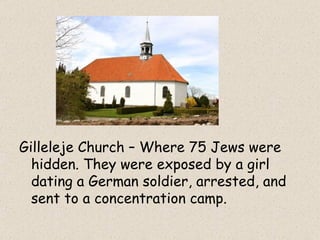
Gilleleje Church – Where 75 Jews were hidden. They were exposed by a girl dating a German soldier, arrested, and sent to a concentration camp.
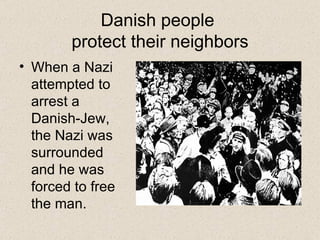
Danish people  protect their neighbors When a Nazi attempted to arrest a Danish-Jew, the Nazi was surrounded and he was forced to free the man.
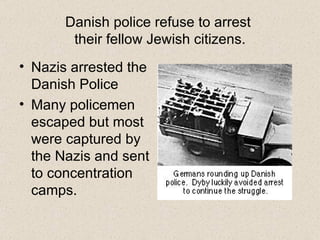
Danish police refuse to arrest  their fellow Jewish citizens. Nazis arrested the Danish Police Many policemen escaped but most were captured by the Nazis and sent to concentration camps.
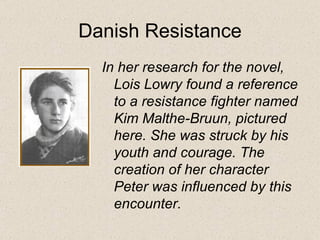
Danish Resistance In her research for the novel, Lois Lowry found a reference to a resistance fighter named Kim Malthe-Bruun, pictured here. She was struck by his youth and courage. The creation of her character Peter was influenced by this encounter.
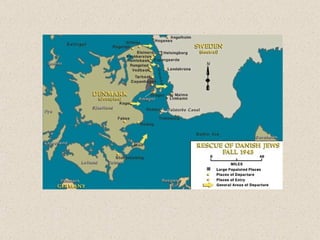
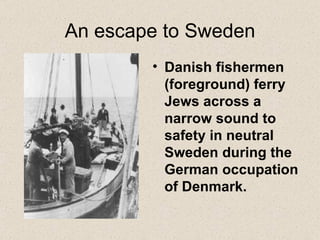
An escape to Sweden Danish fishermen (foreground) ferry Jews across a narrow sound to safety in neutral Sweden during the German occupation of Denmark.
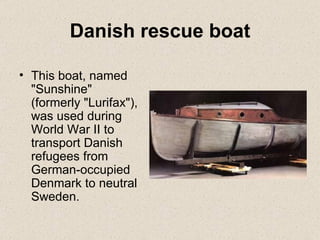
Danish rescue boat This boat, named "Sunshine" (formerly "Lurifax"), was used during World War II to transport Danish refugees from German-occupied Denmark to neutral Sweden.
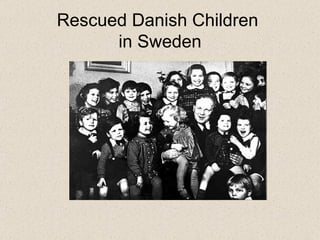
Rescued Danish Children  in Sweden
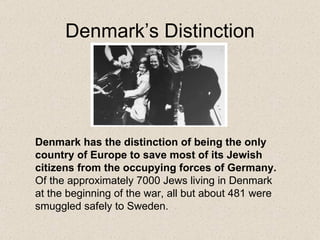
Denmark’s Distinction Denmark has the distinction of being the only country of Europe to save most of its Jewish citizens from the occupying forces of Germany.  Of the approximately 7000 Jews living in Denmark at the beginning of the war, all but about 481 were smuggled safely to Sweden.
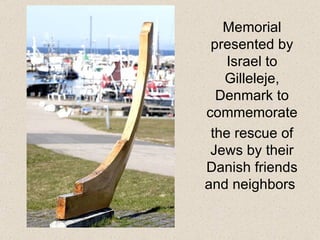
Memorial presented by Israel to Gilleleje, Denmark to commemorate the rescue of Jews by their Danish friends and neighbors
When the Nazis came for the  communists , I remained silent; I was not a communist. When they locked up the  social democrats , I remained silent; I was not a social democrat. When they came for the  Jews , I remained silent; I wasn't a Jew. When they came for  me , there was no one  left to speak out. by Rev. Martin Niemoller, 1945
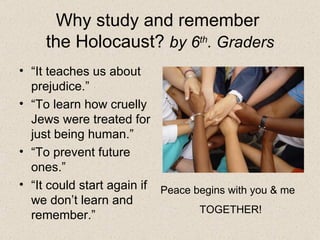
Why study and remember  the Holocaust?  by 6 th . Graders “ It teaches us about prejudice.” “ To learn how cruelly Jews were treated for just being human.” “ To prevent future ones.” “ It could start again if we don’t learn and remember.” Peace begins with you & me TOGETHER!

Number the Stars

  • 1.
    Who was AnneFrank? Born on June 12, 1929, she was a German-Jewish girl forced to go into hiding by the Nazis. Her family and 4 others hid for 25 months in rooms above her father’s office in Amsterdam, the Netherlands.
  • 2.
    Anne Frank Afterbeing betrayed to the Nazis, Anne, her family and others were arrested and sent to concentration camps. In March of 1945, Anne died of typhus, at Bergen-Belsen concentration camp. She was 15 years old.
  • 3.
    Anne Frank Herdiary, saved by a family friend, was published in 1947. Today it has been translated into 67 languages and is one of the most widely read books in the world.
  • 4.
    Anne Frank hasbecome a symbol for the lost promise of the children who died in the Holocaust. We can learn much from Anne’s story and the stories of other children who experienced prejudice and discrimination during World War II.
  • 5.
    Through Children’s Eyes 2008 book What was life like for Danish children living in 1943? What choices did the non-Jewish children, like Annemarie, make? What does it mean to be a “rescuer?”
  • 6.
    The Setting Copenhagen This a photograph of Copenhagen today. Annemarie lived in Copenhagen with her family. Ellen and her family lived in the same apartment building. This a photograph of what Tivoli Gardens look like today.
  • 7.
    Germany invades DenmarkIn less than 5 hours, the Danish government surrendered. Germans said they wanted to “protect” the Danish from the Allied forces.
  • 8.
    King Christian TheKing's Emblem Pin ( Kongemærket ) showing Christian's CX cypher. A popular symbol of patriotism during the war. The King's daily ride through Copenhagen became a symbol of Danish sovereignty. This picture was taken on his birthday in 1940. Note that he is not accompanied by a guard.
  • 9.
  • 10.
    Gilleleje Today Thevillage where Uncle Henrik and others helped families escape the Nazis.
  • 11.
    Gilleleje Church –Where 75 Jews were hidden. They were exposed by a girl dating a German soldier, arrested, and sent to a concentration camp.
  • 12.
    Danish people protect their neighbors When a Nazi attempted to arrest a Danish-Jew, the Nazi was surrounded and he was forced to free the man.
  • 13.
    Danish police refuseto arrest their fellow Jewish citizens. Nazis arrested the Danish Police Many policemen escaped but most were captured by the Nazis and sent to concentration camps.
  • 14.
    Danish Resistance Inher research for the novel, Lois Lowry found a reference to a resistance fighter named Kim Malthe-Bruun, pictured here. She was struck by his youth and courage. The creation of her character Peter was influenced by this encounter.
  • 15.
    An escape toSweden Danish fishermen (foreground) ferry Jews across a narrow sound to safety in neutral Sweden during the German occupation of Denmark.
  • 16.
    Danish rescue boatThis boat, named "Sunshine" (formerly "Lurifax"), was used during World War II to transport Danish refugees from German-occupied Denmark to neutral Sweden.
  • 17.
  • 18.
    Denmark’s Distinction Denmarkhas the distinction of being the only country of Europe to save most of its Jewish citizens from the occupying forces of Germany. Of the approximately 7000 Jews living in Denmark at the beginning of the war, all but about 481 were smuggled safely to Sweden.
  • 19.
    Memorial presented byIsrael to Gilleleje, Denmark to commemorate the rescue of Jews by their Danish friends and neighbors
  • 20.
    When the Naziscame for the communists , I remained silent; I was not a communist. When they locked up the social democrats , I remained silent; I was not a social democrat. When they came for the Jews , I remained silent; I wasn't a Jew. When they came for me , there was no one left to speak out. by Rev. Martin Niemoller, 1945
  • 21.
    Why study andremember the Holocaust? by 6 th . Graders “ It teaches us about prejudice.” “ To learn how cruelly Jews were treated for just being human.” “ To prevent future ones.” “ It could start again if we don’t learn and remember.” Peace begins with you & me TOGETHER!