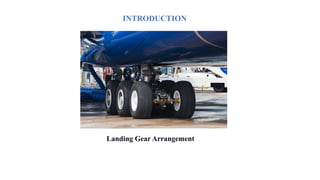
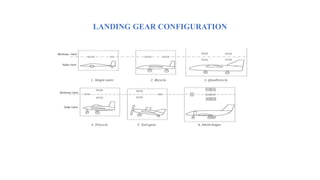
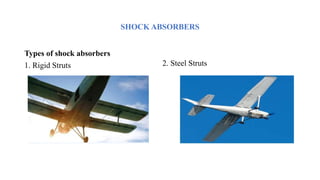
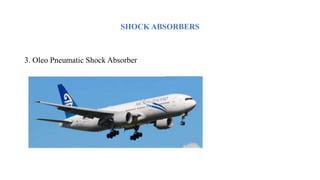
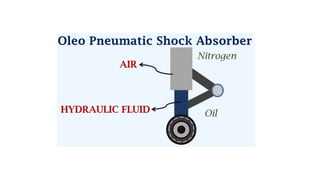
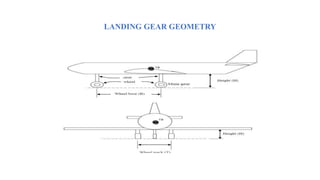
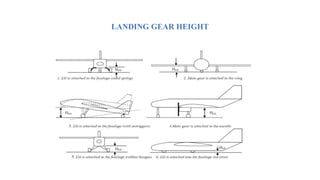
This document summarizes a seminar presentation on landing gear arrangement analysis. It discusses the objectives of landing gear, which include keeping the aircraft stable on the ground, allowing movement during taxiing, providing clearance from other aircraft components, absorbing landing shocks, and facilitating take-off. It also describes common landing gear configurations, types of shock absorbers, factors that influence landing gear geometry and height, and concludes that the tricycle or nose-gear configuration is most commonly used in modern aircraft due to its advantages over other systems.