
NATURAL
PHENOMENA
 Movement of electrons through a
  conductor is called electricity.
 Electricity used in electrical
  appliances is called current
  electricity. It flows through wires.
 Electricity which does not flow is
  called static electricity.
 Benjamin Franklin was an American
  scientist who did his well known kite
  experiment in the year 1749.
 He performed his experiment by
  using a kite made of silk to which a
  small metallic key was attached.
 He flew the kite into the clouds and
  waited for lightning to strike.
 When lightning struck, the key was
  found to have become hot.
 The key was also found to have got
  electrically charged.
 Franklin concluded that the thunder
  clouds must be electrically charged.
 Thus, in a way, in his experiment he
  had drawn the electricity of the
  atmosphere into the key.
 He also demonstrated directly that
  lightning is associated with
  electricity.
 Dr.Gilbert showed that amber
  rubbing with cat’s skin and glass rod
  rubbing with silk, it develops a
  properties of attracting tiny bits of
  dry paper, dry straw and also
  develops similar properties when
  rubbed against each other.
 When two such objects are rubbed
  together and separated, they both
  acquire the property of attracting
  light objects. we call such objects
  having this property, to attract or
  repel as charged objects.
 Any object which does not have this
  ability is referred to as an uncharged
  objects.
 The process of charging up an object
  is referred to as electrification.
 Therefore, Thales may be regarded
  as having discovered that “electricity
  can be produced by rubbing or by
  friction”.
 A charged comb (rubbed against your
  dry hair) can attract small pieces of
  dry paper.
 A charged pen (rubbed against a dry
  cotton T-shirt) can attract tiny bits
  of dry paper.
 A charged plastic board (rubbed
  against woollen cloth ) attracts
  popcorns.
 Benjamin Franklin found that there
  are two kinds of electrical charges,
A) Positive (+ve)
B) Negative (-ve)
 Like Charges repel each other unlike
  charges attract each other.
 Two charged ebonite rods repel each
  other.
 Two charged glass rods repel each
  other.
 A charged ebonite rod and a charged
  glass rod attract each other.
 Thunder is what you hear, lightning is
  what you see, but both are due to
  electrical discharge in the
  atmosphere.
 They can seem to be separated in
  time to an observer (you see the
  lightening before you hear the
  thunder) because of the large
  difference in the speed of sound and
  the speed of light.
 If you are significant distance away
  (a few miles or kilometers), the light
  from the discharge will reach you
  almost instantly, but the sound can
  take several seconds to arrive.
 In fact you can measure the distance
  from you to the lightening in this
  way: for each second delay between
  seeing it and hearing it, the
  lightening bolt is approximately 300
  meters, or 1000 ft away.
 Sequence of steps are responsible
  for these natural phenomena.
a) The +ve & -Ve charges present in
  thunder cloud get separated. This
  separation occurs in a way that is
  similar to the separation that occurs
  due to the rubbing of one object
  against other.
The +ve charge move to the upper edge of
  the cloud & the –ve charge move to the
  lower edge of the cloud.
B) Because of this collection of –ve charges
  near the bottom of the cloud, the earth
  becomes +ve charged with respect to the
  cloud by a potential of the order of as
  much as 100 million volts.
c) This difference between the cloud and
  earth ’breaks’ the air into + & -ve charges
  or ions.
d) The huge –ve charges present near the
  bottom of the clouds flows through the
  conducting air down towards the earth.
 If any tree or building comes in the path of
  this flowing current, this object gets
  burnt or seriously damaged. Then we say
  that lightning has struck the object.
F) The lightning stroke through the air,
  heats it to a very high temperature.
  In fact, the air then momentarily
  acquires temperature as high as
  30,000 c.
 This rapid heating followed by a very
  rapid cooling of air produces a shock
  wave in it. It is this which results in a
  thundering sound.
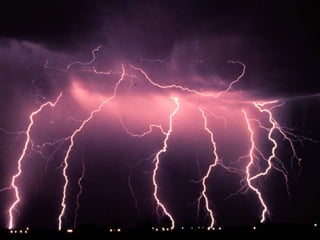
 Lightning is the result of the flow of
  large amount of charges between two
  (oppositely charged) clouds or a cloud
  and the earth.
 A huge amount of electrical energy
  get discharged during this flow.
 This heat up the air to very high
  temperatures.
 This, in turn, produces the flashes of
  lightning that we see in the sky and
  accompanying thundering sound.
 It has been estimated that if this
  interval is 30 seconds or less, ’the
  lightning’ can pose a serious danger
  to the area where it occurs.
 It has also been suggested that one
  should continue to stay in one’s
  shelter for almost 30 minutes after
  observing the last flash of lightning.
 This is sometimes referred to as the
the 30-30 principle of safety against
Lightning.
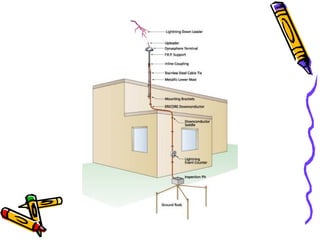
 A metallic conductor fixed on high
  rise buildings to protect them from
  lightning by conducting the
  atmospheric electricity into the
  earth.
 The lower end of the metal is
  connected to a large copper plate
  which is buried inside the earth is
  called earthing.

Natural phenomena

  • 1.
  • 2.
     Movement ofelectrons through a conductor is called electricity.  Electricity used in electrical appliances is called current electricity. It flows through wires.  Electricity which does not flow is called static electricity.
  • 3.
     Benjamin Franklinwas an American scientist who did his well known kite experiment in the year 1749.  He performed his experiment by using a kite made of silk to which a small metallic key was attached.  He flew the kite into the clouds and waited for lightning to strike.
  • 4.
     When lightningstruck, the key was found to have become hot.  The key was also found to have got electrically charged.  Franklin concluded that the thunder clouds must be electrically charged.
  • 5.
     Thus, ina way, in his experiment he had drawn the electricity of the atmosphere into the key.  He also demonstrated directly that lightning is associated with electricity.
  • 6.
     Dr.Gilbert showedthat amber rubbing with cat’s skin and glass rod rubbing with silk, it develops a properties of attracting tiny bits of dry paper, dry straw and also develops similar properties when rubbed against each other.
  • 7.
     When twosuch objects are rubbed together and separated, they both acquire the property of attracting light objects. we call such objects having this property, to attract or repel as charged objects.  Any object which does not have this ability is referred to as an uncharged objects.
  • 8.
     The processof charging up an object is referred to as electrification.  Therefore, Thales may be regarded as having discovered that “electricity can be produced by rubbing or by friction”.
  • 9.
     A chargedcomb (rubbed against your dry hair) can attract small pieces of dry paper.  A charged pen (rubbed against a dry cotton T-shirt) can attract tiny bits of dry paper.  A charged plastic board (rubbed against woollen cloth ) attracts popcorns.
  • 10.
     Benjamin Franklinfound that there are two kinds of electrical charges, A) Positive (+ve) B) Negative (-ve)  Like Charges repel each other unlike charges attract each other.
  • 11.
     Two chargedebonite rods repel each other.  Two charged glass rods repel each other.  A charged ebonite rod and a charged glass rod attract each other.
  • 12.
     Thunder iswhat you hear, lightning is what you see, but both are due to electrical discharge in the atmosphere.
  • 13.
     They canseem to be separated in time to an observer (you see the lightening before you hear the thunder) because of the large difference in the speed of sound and the speed of light.
  • 14.
     If youare significant distance away (a few miles or kilometers), the light from the discharge will reach you almost instantly, but the sound can take several seconds to arrive.
  • 15.
     In factyou can measure the distance from you to the lightening in this way: for each second delay between seeing it and hearing it, the lightening bolt is approximately 300 meters, or 1000 ft away.
  • 16.
     Sequence ofsteps are responsible for these natural phenomena. a) The +ve & -Ve charges present in thunder cloud get separated. This separation occurs in a way that is similar to the separation that occurs due to the rubbing of one object against other.
  • 17.
    The +ve chargemove to the upper edge of the cloud & the –ve charge move to the lower edge of the cloud. B) Because of this collection of –ve charges near the bottom of the cloud, the earth becomes +ve charged with respect to the cloud by a potential of the order of as much as 100 million volts.
  • 18.
    c) This differencebetween the cloud and earth ’breaks’ the air into + & -ve charges or ions. d) The huge –ve charges present near the bottom of the clouds flows through the conducting air down towards the earth. If any tree or building comes in the path of this flowing current, this object gets burnt or seriously damaged. Then we say that lightning has struck the object.
  • 19.
    F) The lightningstroke through the air, heats it to a very high temperature. In fact, the air then momentarily acquires temperature as high as 30,000 c.  This rapid heating followed by a very rapid cooling of air produces a shock wave in it. It is this which results in a thundering sound.
  • 22.
     Lightning isthe result of the flow of large amount of charges between two (oppositely charged) clouds or a cloud and the earth.  A huge amount of electrical energy get discharged during this flow.  This heat up the air to very high temperatures.
  • 23.
     This, inturn, produces the flashes of lightning that we see in the sky and accompanying thundering sound.  It has been estimated that if this interval is 30 seconds or less, ’the lightning’ can pose a serious danger to the area where it occurs.
  • 24.
     It hasalso been suggested that one should continue to stay in one’s shelter for almost 30 minutes after observing the last flash of lightning.  This is sometimes referred to as the the 30-30 principle of safety against Lightning.
  • 27.
     A metallicconductor fixed on high rise buildings to protect them from lightning by conducting the atmospheric electricity into the earth.  The lower end of the metal is connected to a large copper plate which is buried inside the earth is called earthing.