Native VS Hybrid
Mobile Apps
Senthil Kumar
senthil@indix.com
About me
• Mobile App Developer @ Indix
• Working on iOS & Android apps.
• Ex- Ness employee – Bangalore.
• Worked on EPL football apps & ATP Tennis mobile apps.
Agenda
• Magic Quadrant for Mobile
• Native Platforms
• Advantages & Disadvantages of Native Approach
• Hybrid Apps
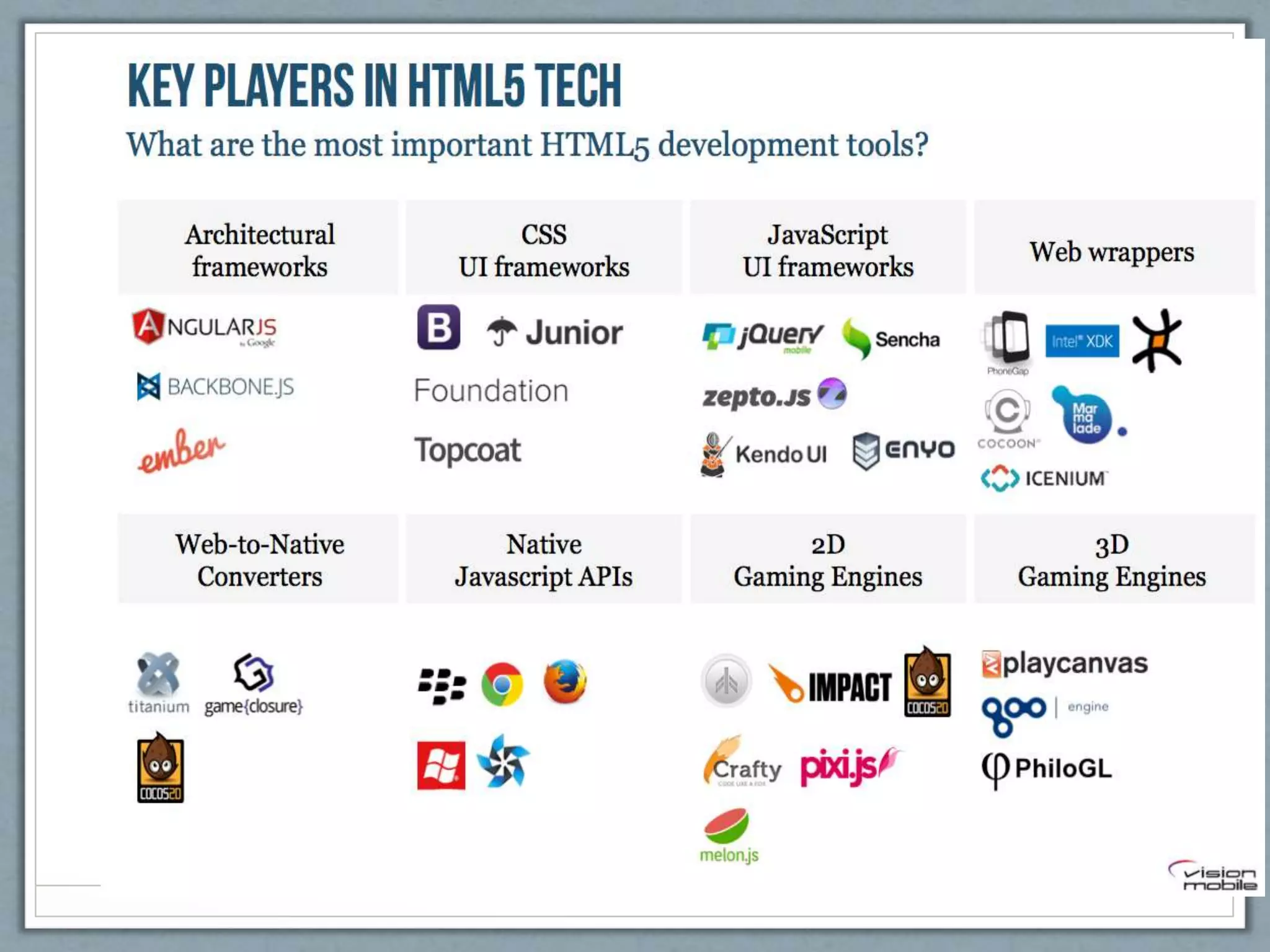
• HTML5 Approaches & Key Players
• HTML5 Myth VS Reality
• Adobe – PhoneGap
• Mobile @ Scale
• Case Studies – LinkedIn, Facebook & Dropbox
• Conclusion
Magic Quadrant for Mobile Application
Development Platforms
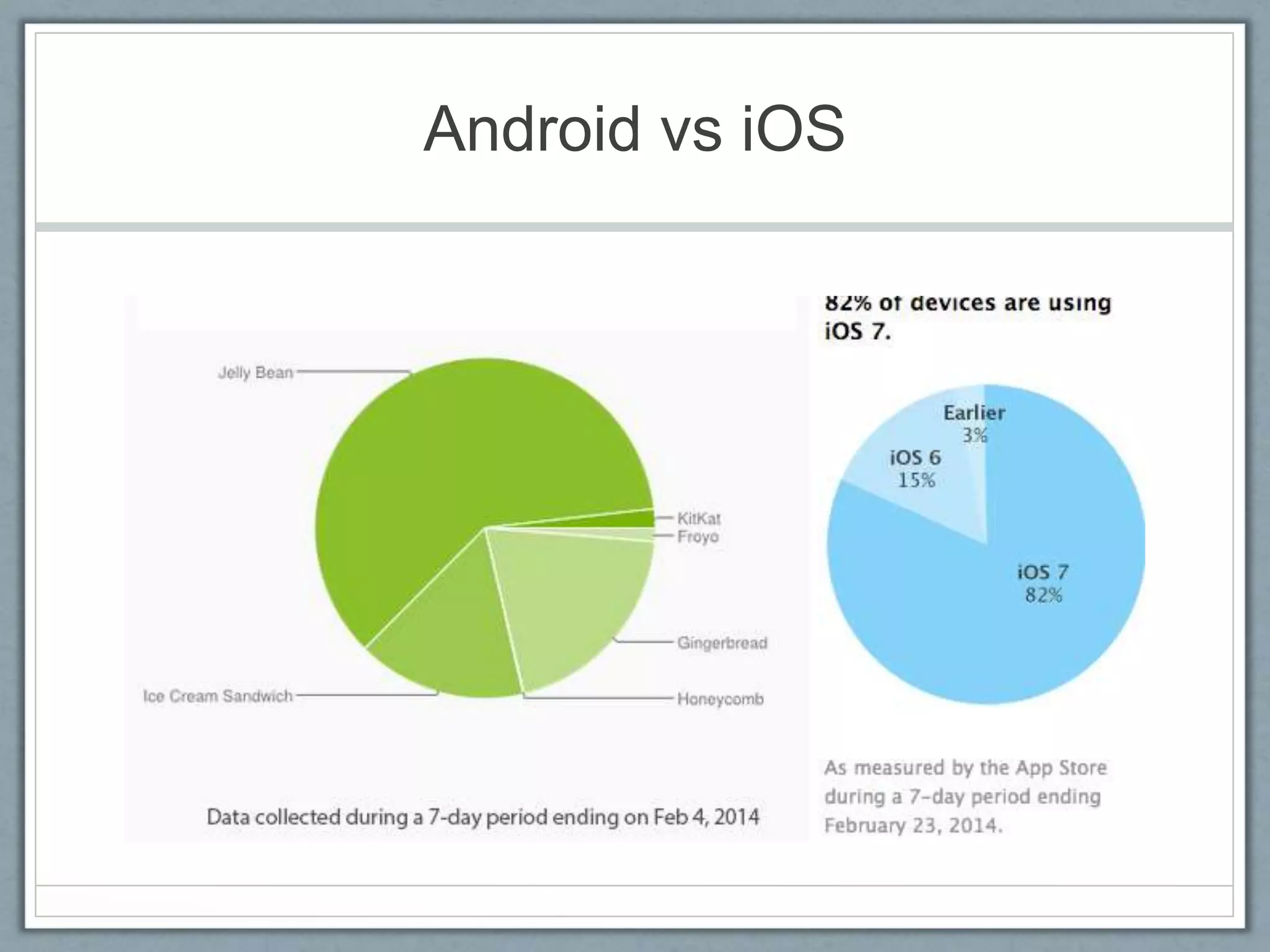
Android vs iOS
Native Apps
• User prefers native apps
- 80 % of time is spent on apps and 20 % on
browsers(Flurry report)
• High User Engagement & Smoother Experience
• Faster adoption to support new OS Versions
• Offline support and Hardware access
• Monetization
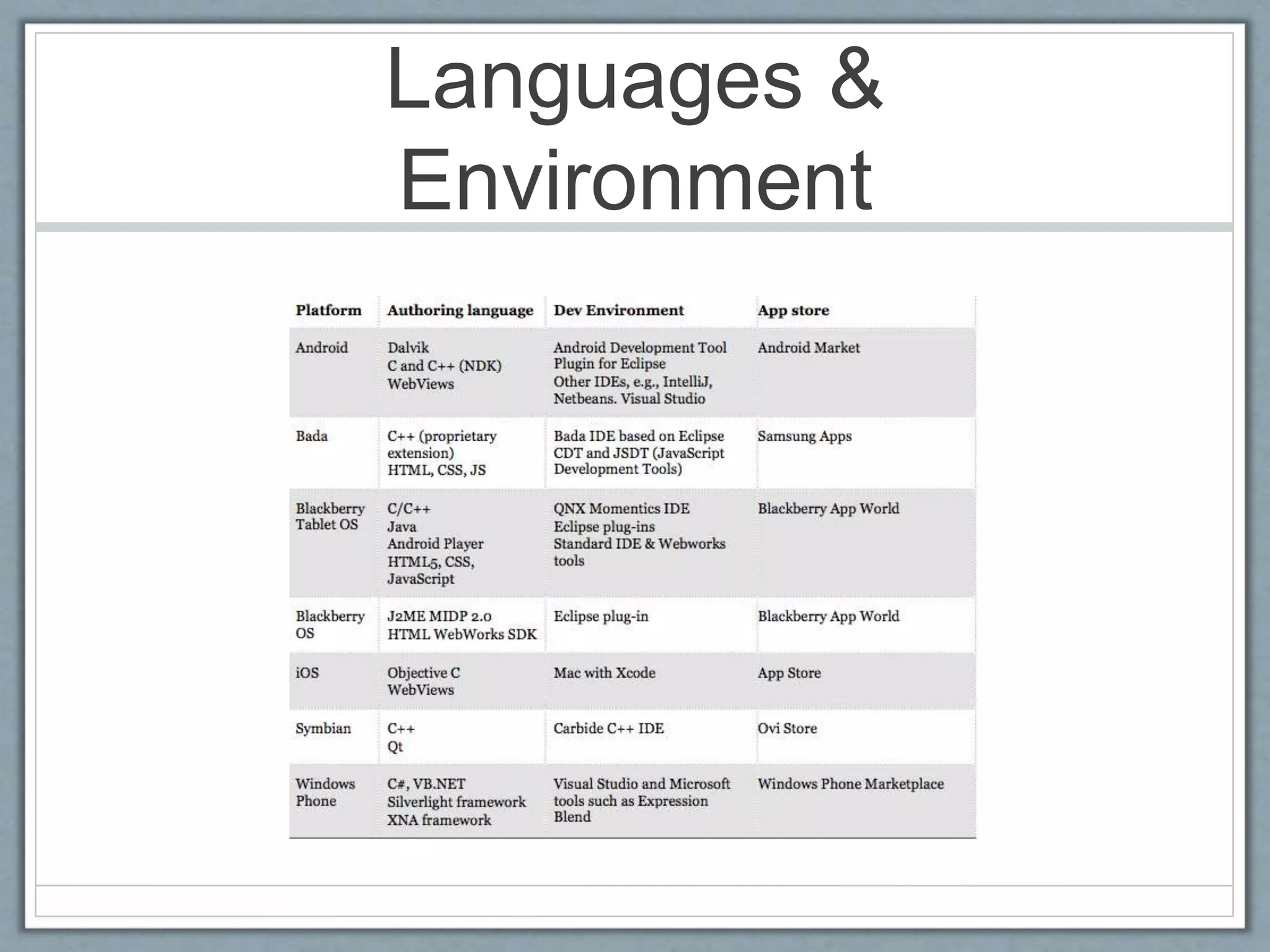
Languages &
Environment
What Stops from using
Native?
• Platform dependent – code can’t be
reused
• Multi skill set and tool requirement
• Higher TCO (Total cost of ownership)
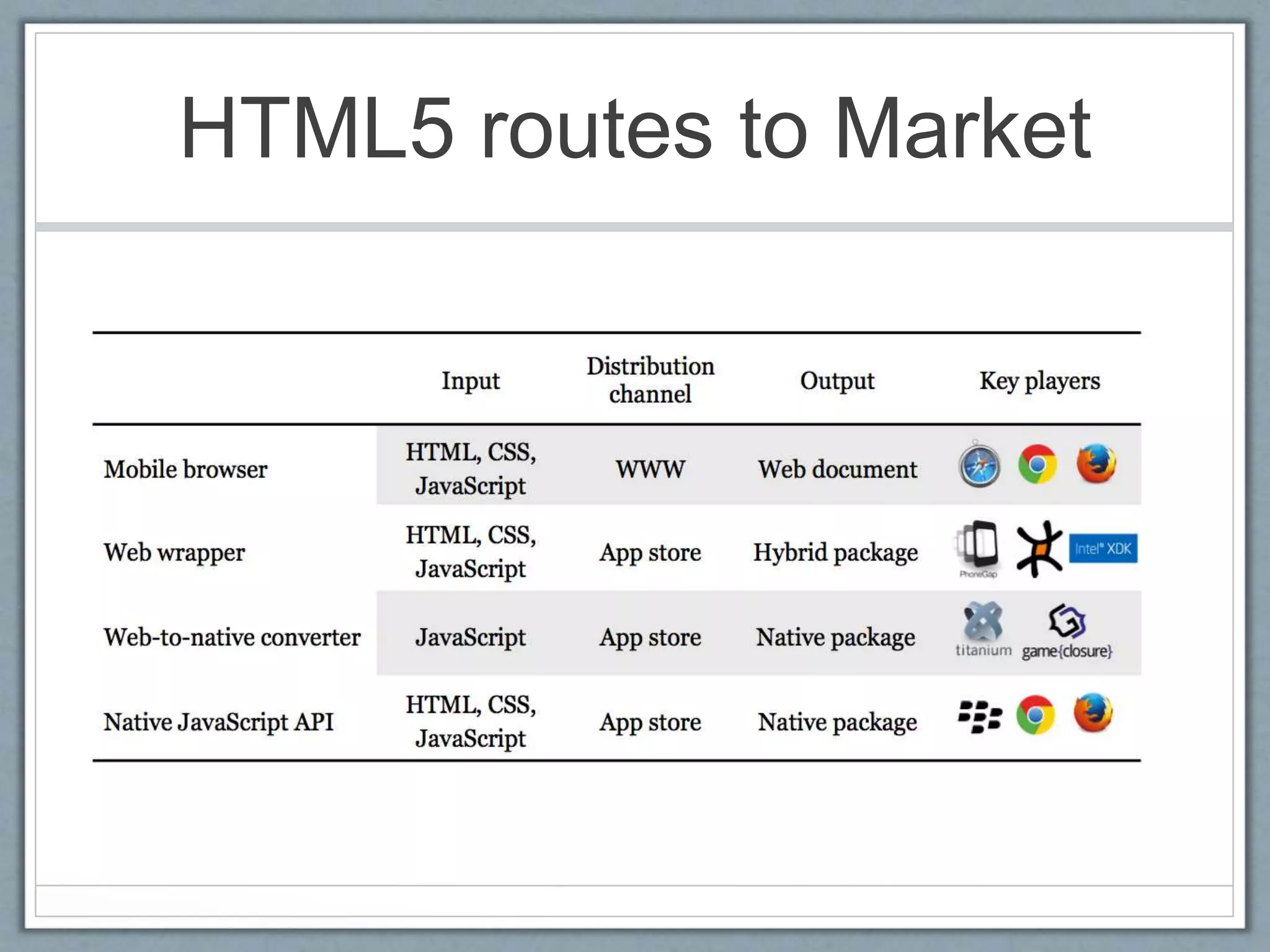
Hybrid Apps
• It’s a bridge between Native and Web
Apps
• Cross platform reach is more
• Instant products update
• Data guides them on future decisions (A/B
testing)
HTML5 routes to Market
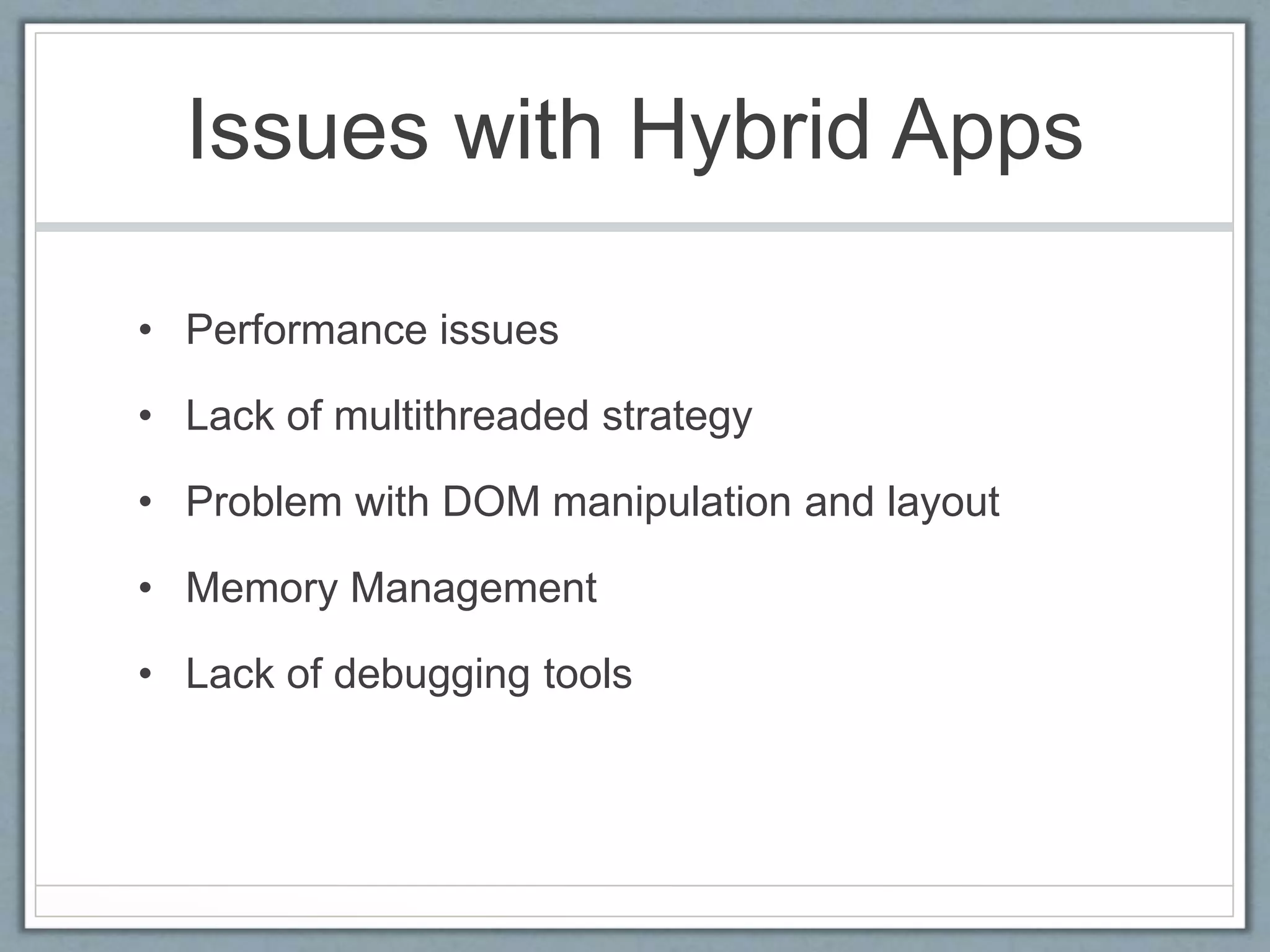
Issues with Hybrid Apps
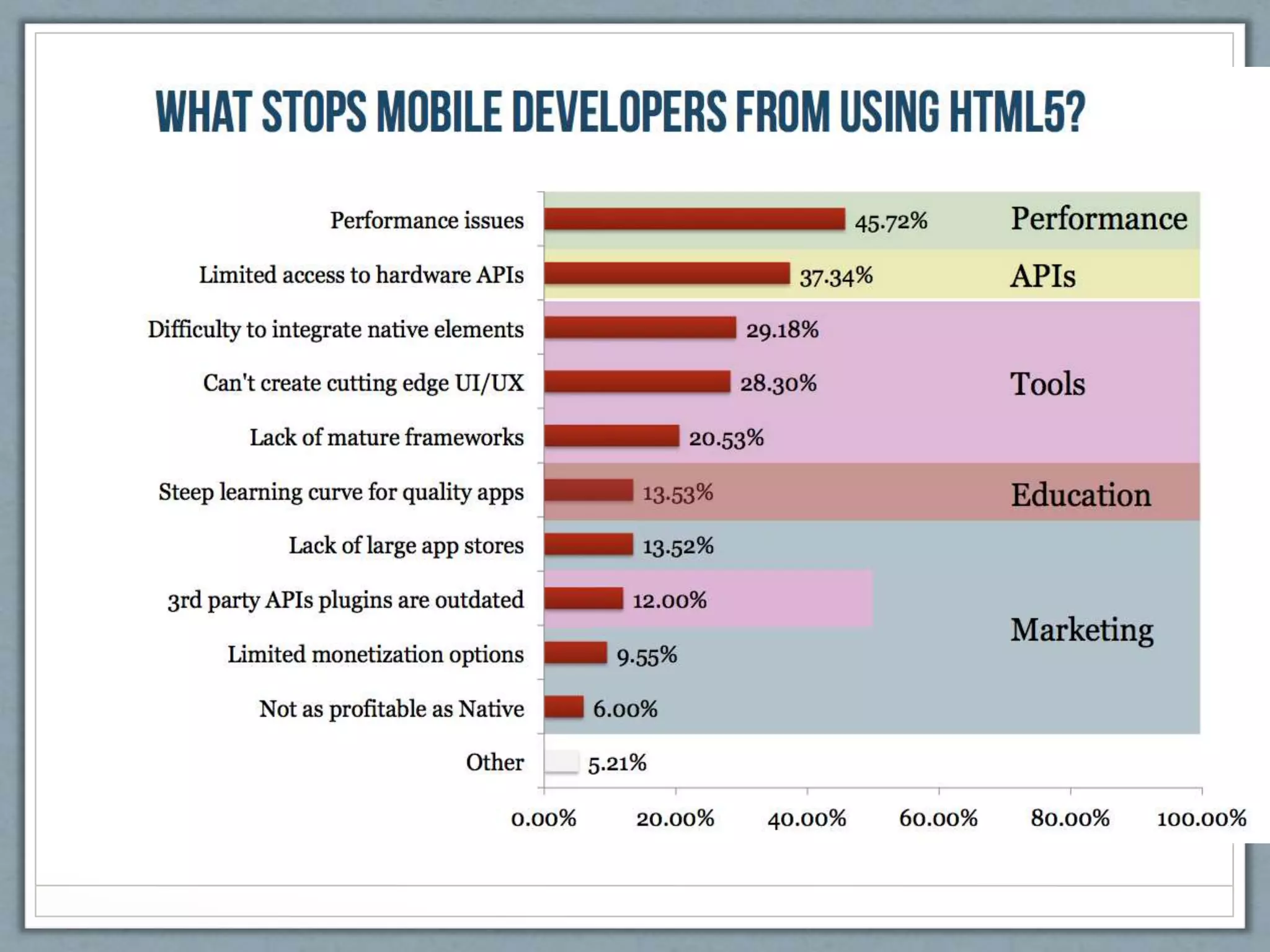
• Performance issues
• Lack of multithreaded strategy
• Problem with DOM manipulation and layout
• Memory Management
• Lack of debugging tools
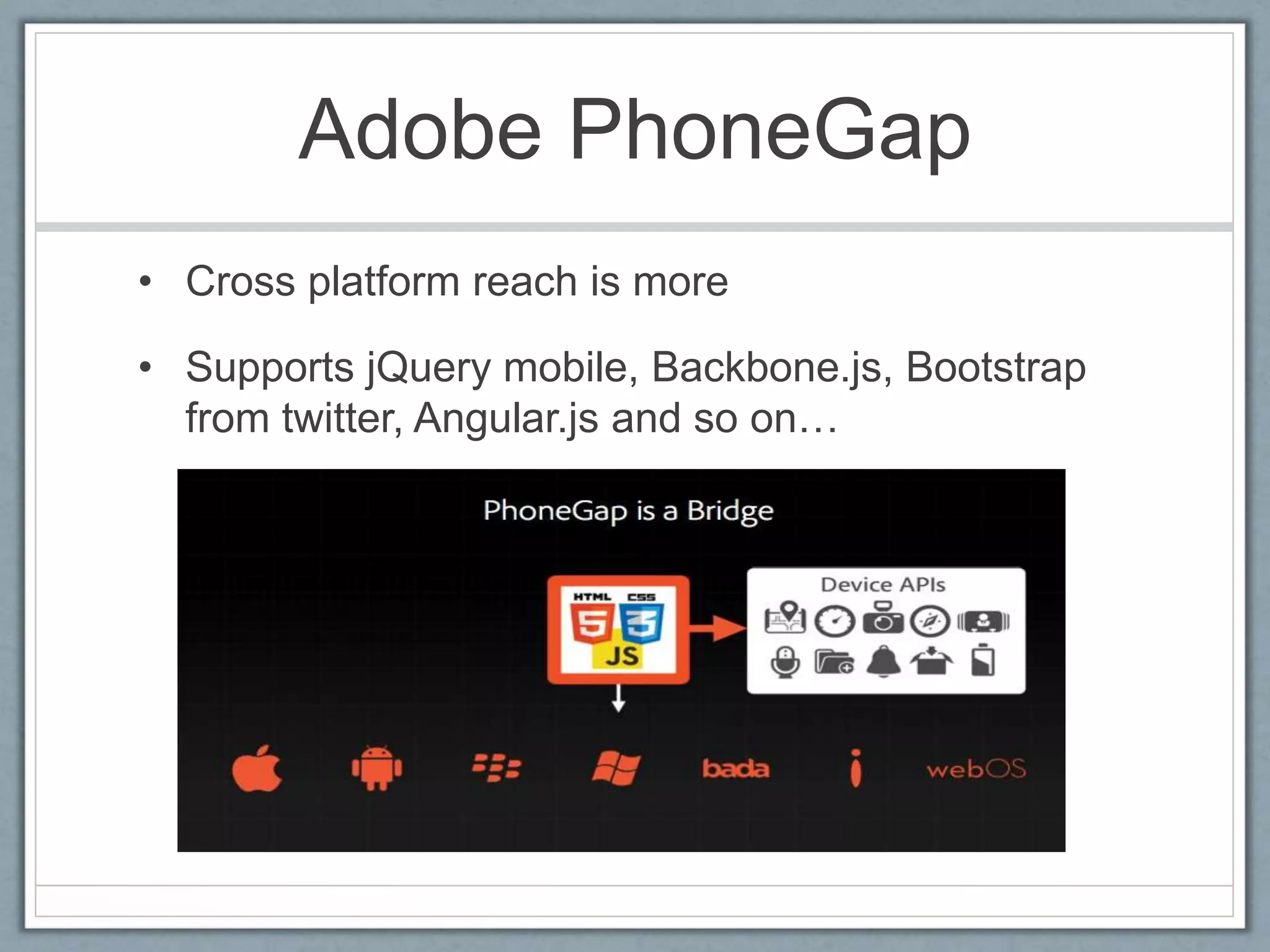
Adobe PhoneGap
• Cross platform reach is more
• Supports jQuery mobile, Backbone.js, Bootstrap
from twitter, Angular.js and so on…
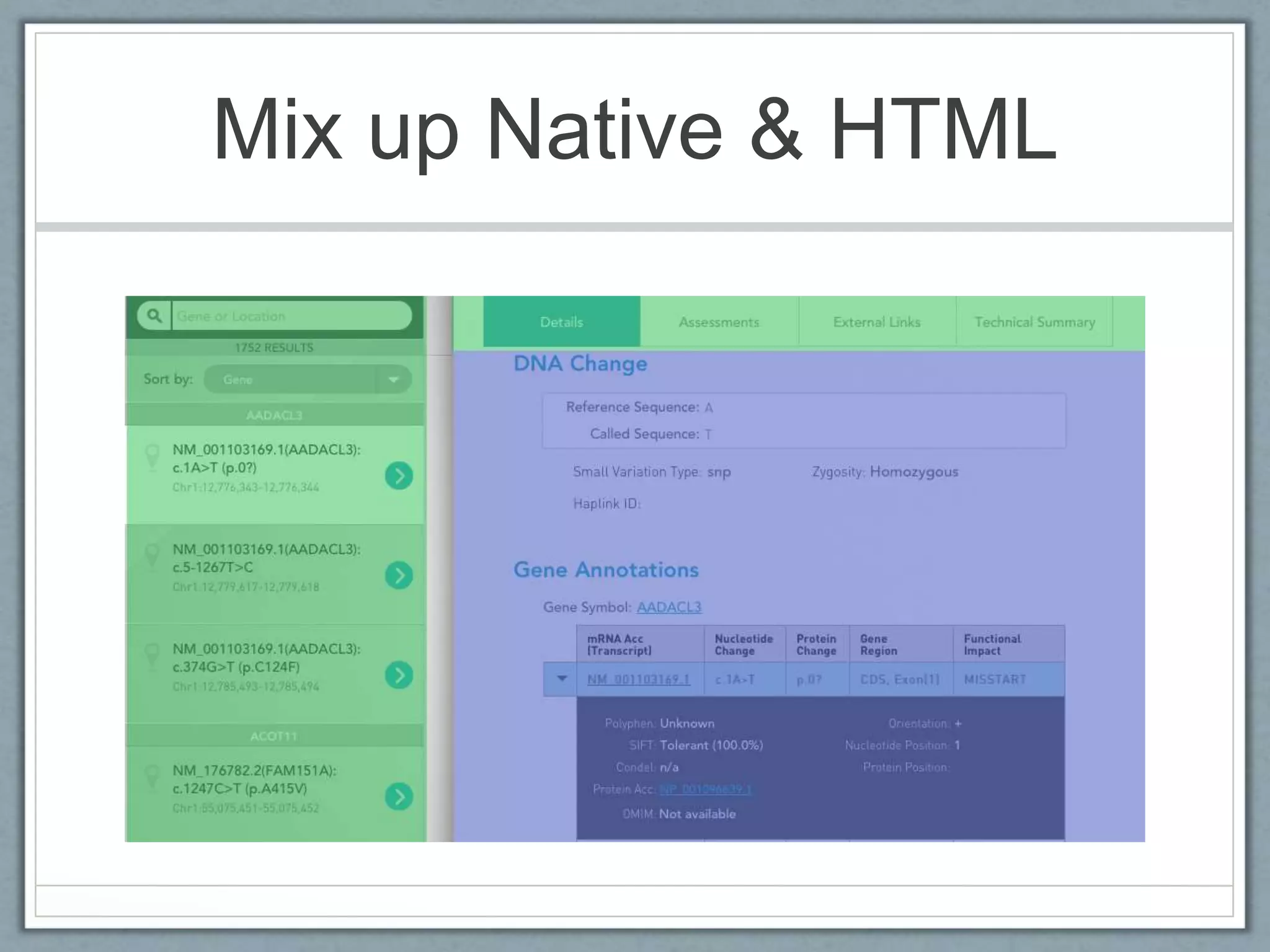
Mix up Native & HTML
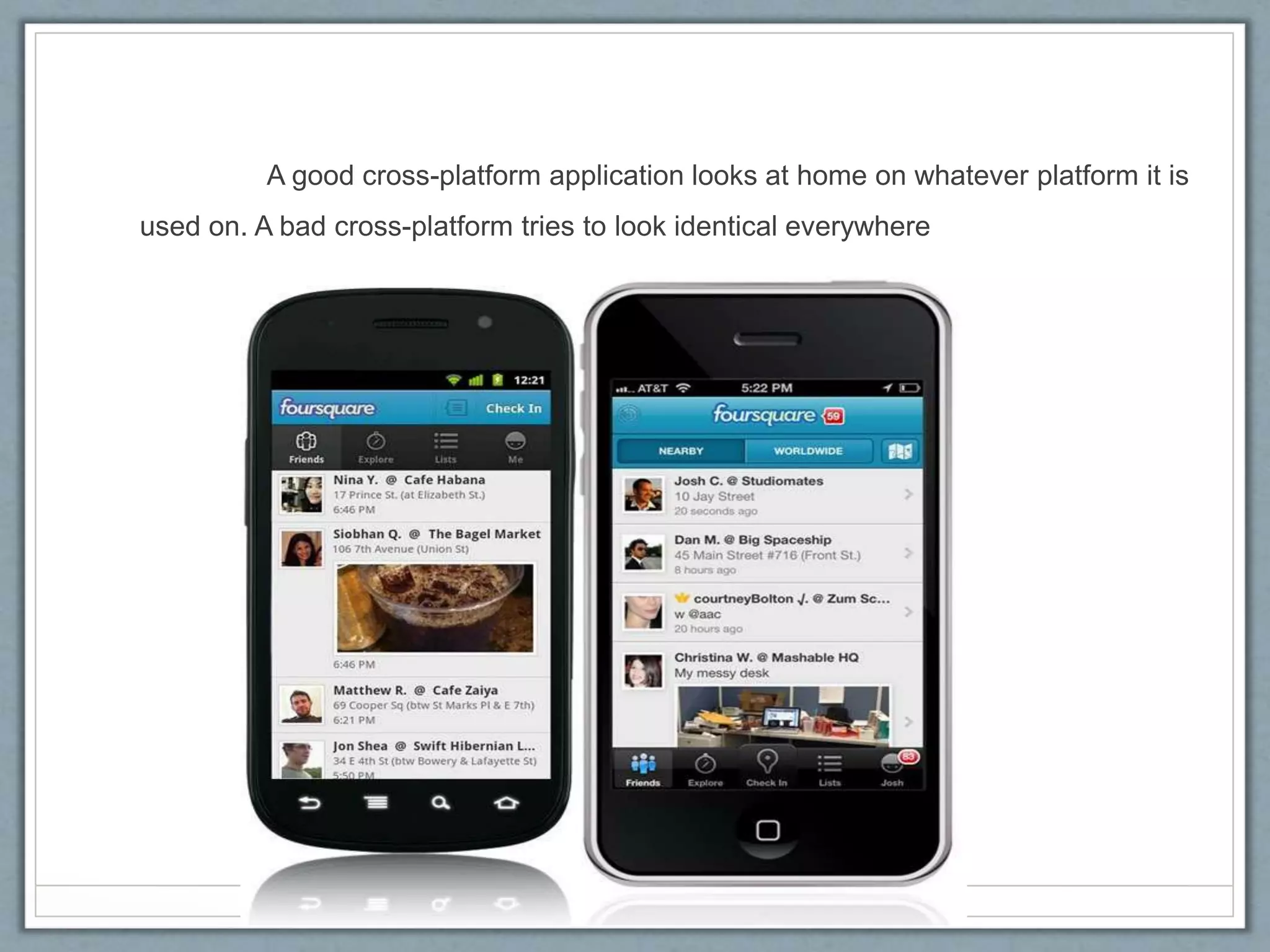
A good cross-platform application looks at home on whatever platform it is
used on. A bad cross-platform tries to look identical everywhere
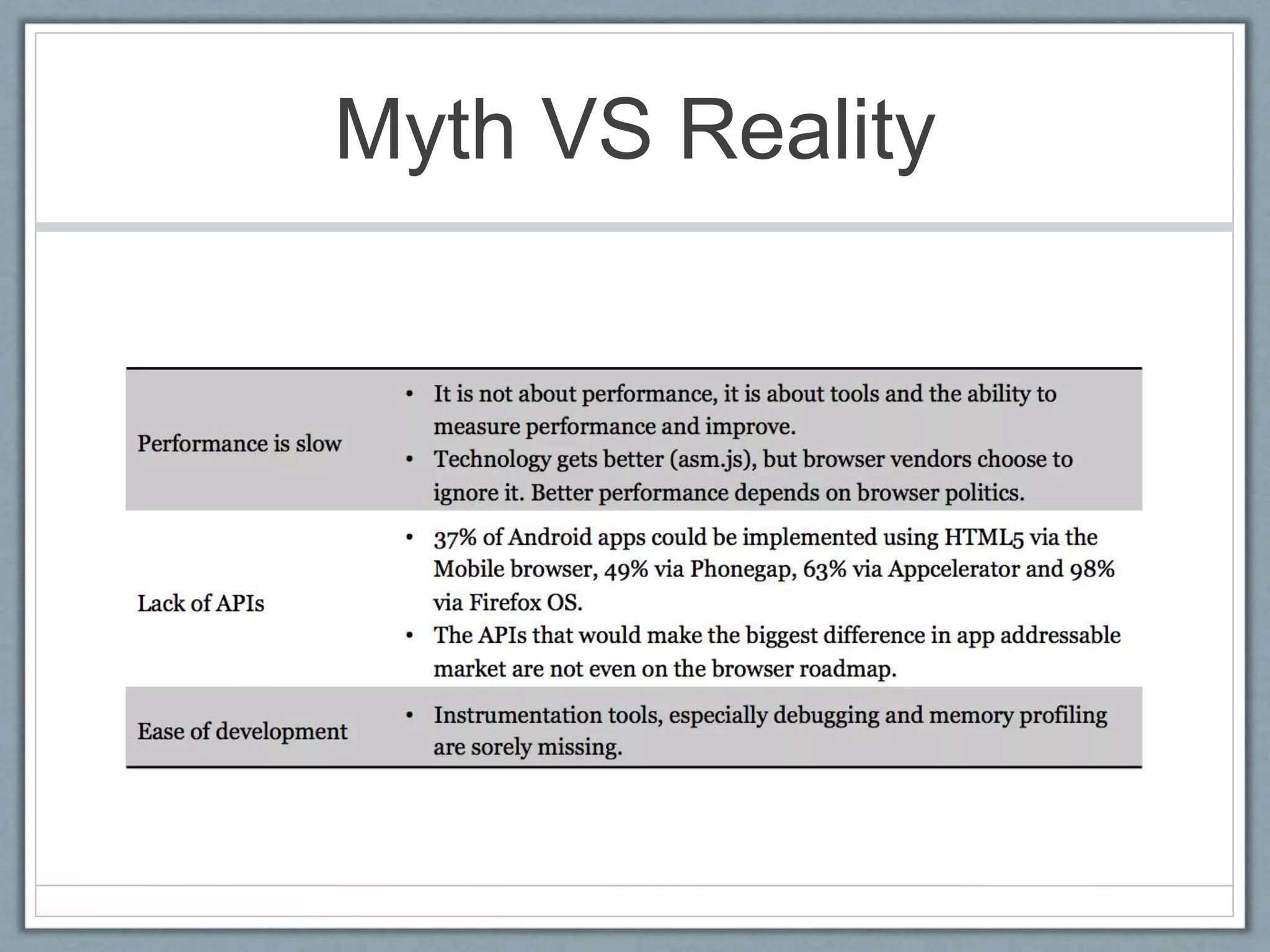
Myth VS Reality
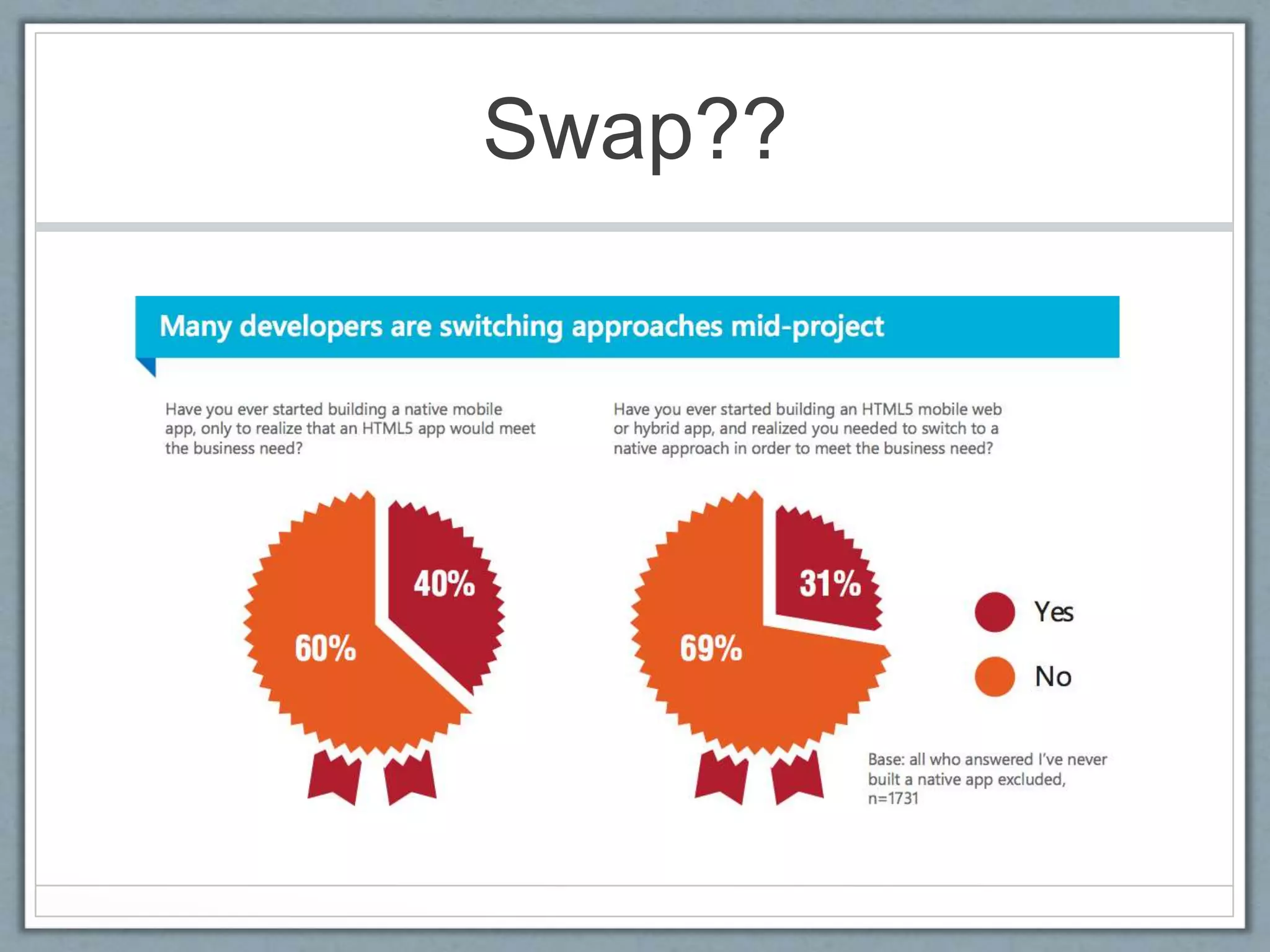
Swap??
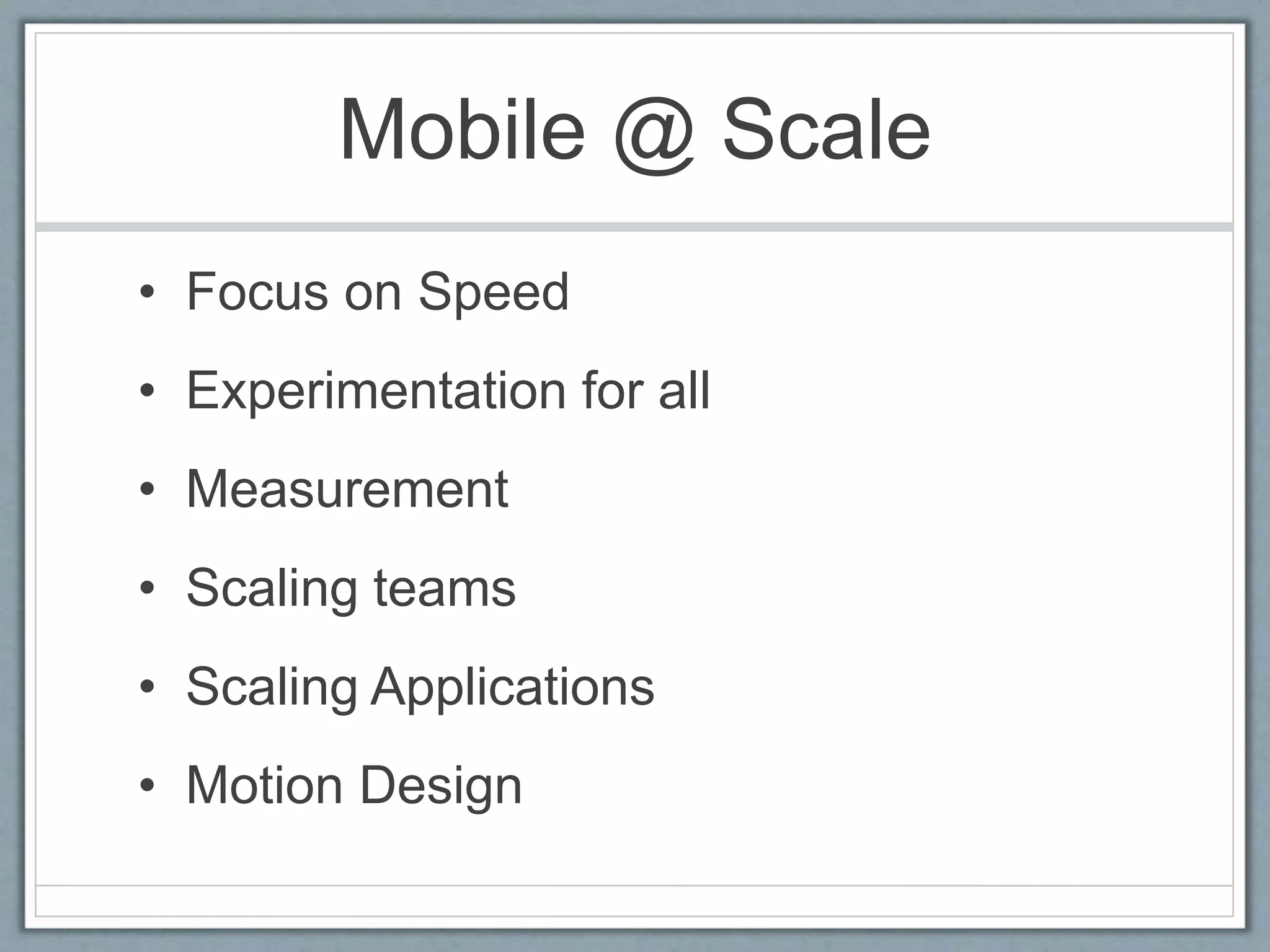
Mobile @ Scale
• Focus on Speed
• Experimentation for all
• Measurement
• Scaling teams
• Scaling Applications
• Motion Design
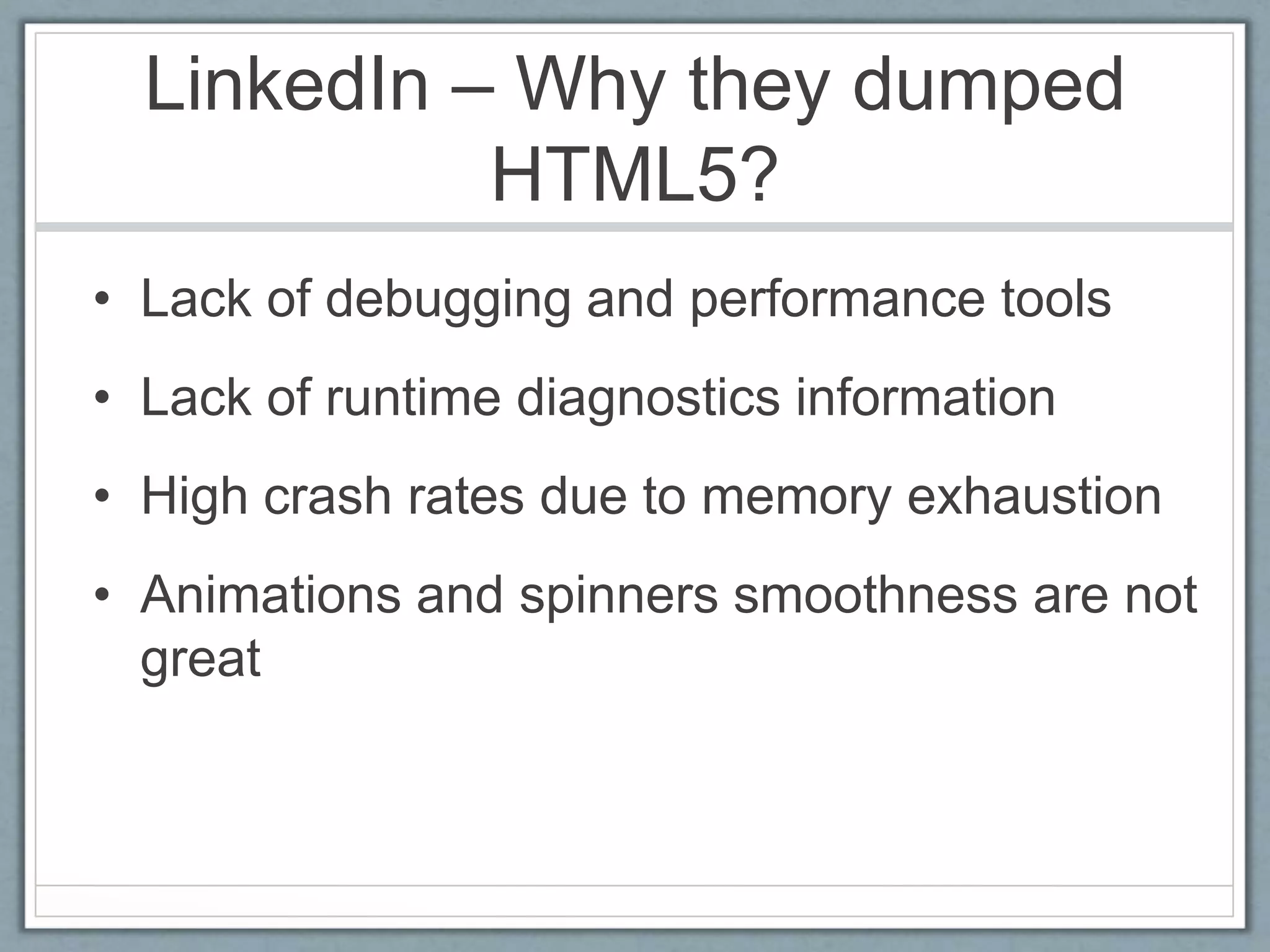
LinkedIn – Why they dumped
HTML5?
• Lack of debugging and performance tools
• Lack of runtime diagnostics information
• High crash rates due to memory exhaustion
• Animations and spinners smoothness are not
great
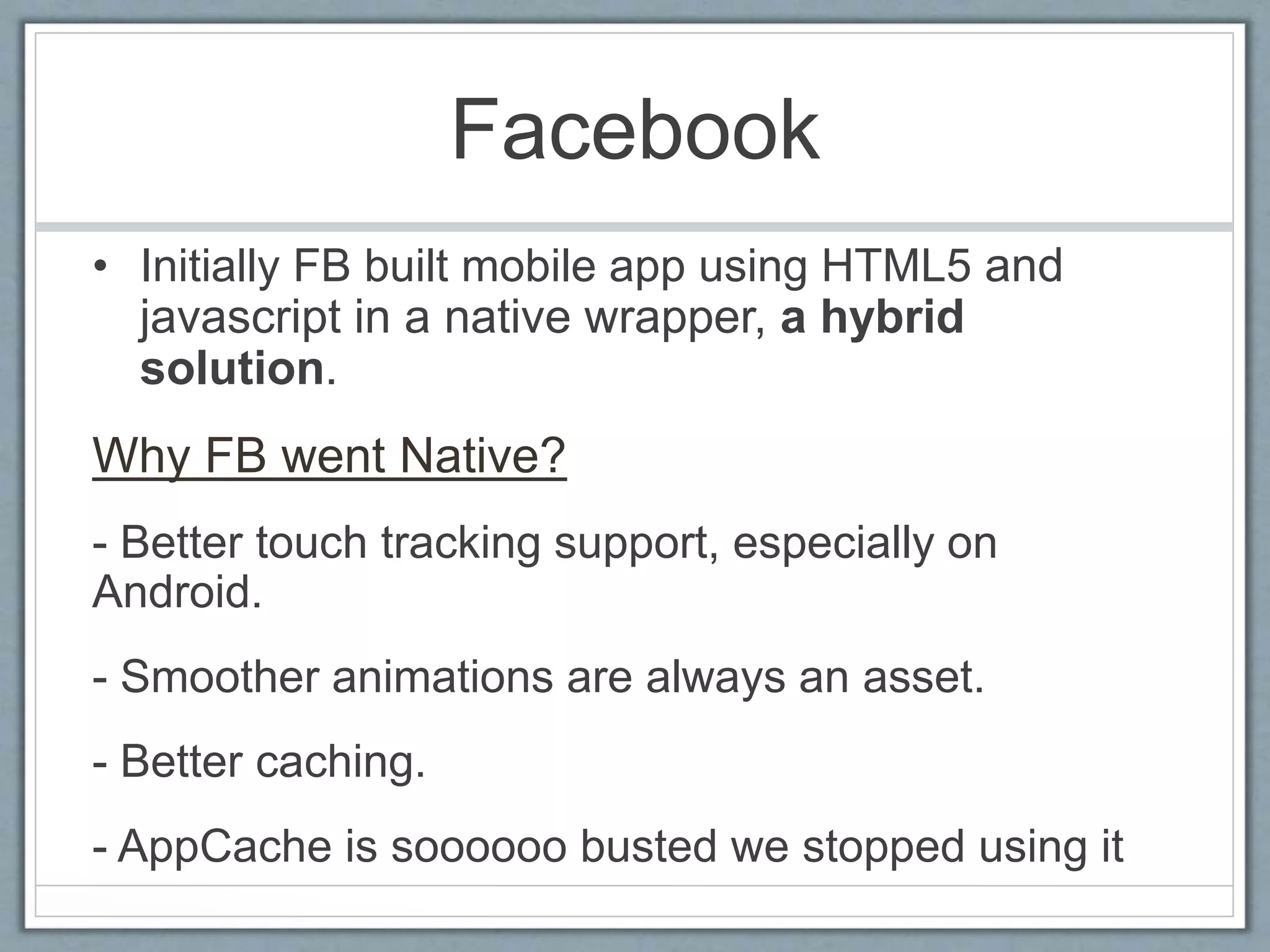
Facebook
• Initially FB built mobile app using HTML5 and
javascript in a native wrapper, a hybrid
solution.
Why FB went Native?
- Better touch tracking support, especially on
Android.
- Smoother animations are always an asset.
- Better caching.
- AppCache is soooooo busted we stopped using it
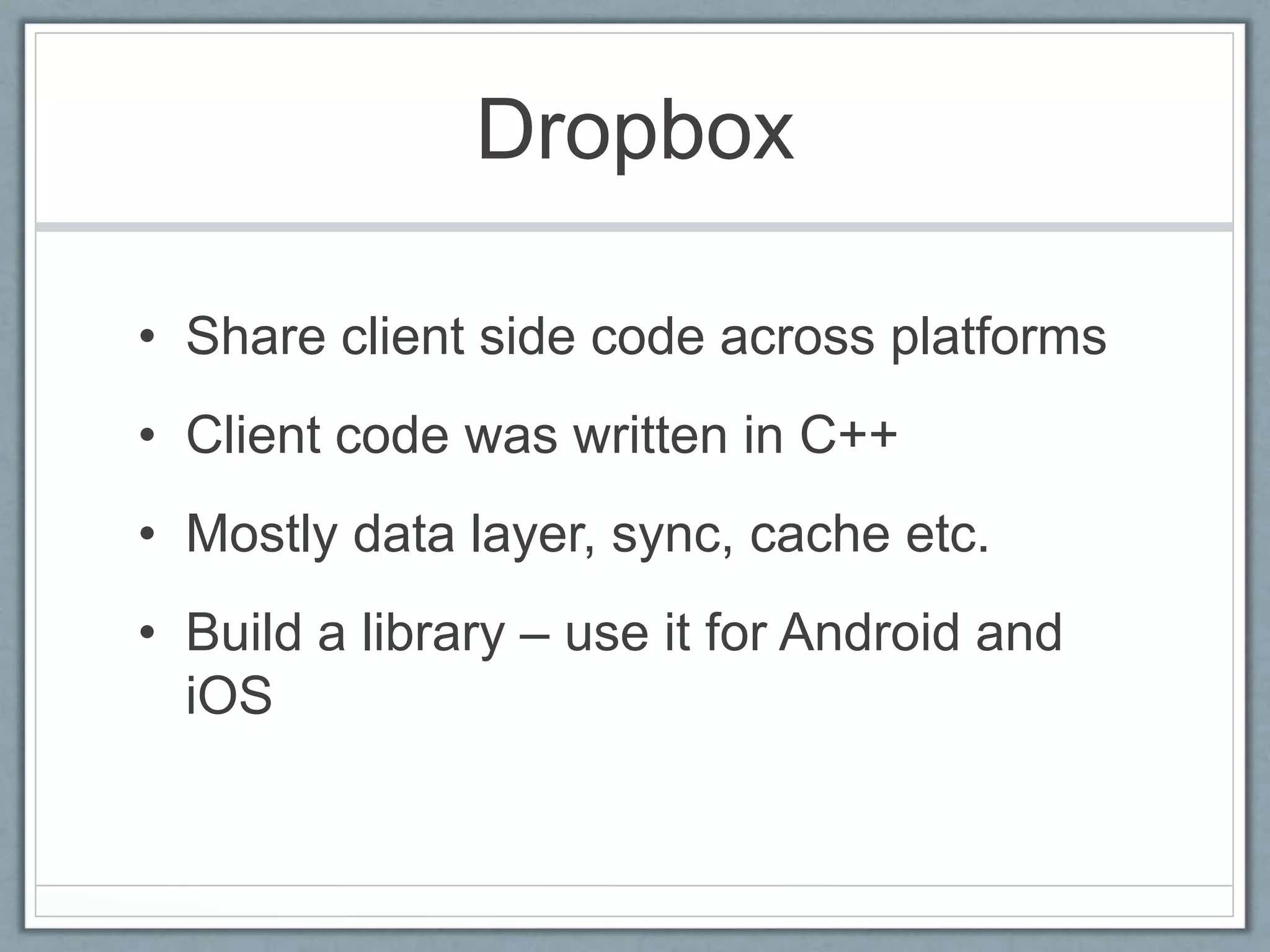
Dropbox
• Share client side code across platforms
• Client code was written in C++
• Mostly data layer, sync, cache etc.
• Build a library – use it for Android and
iOS
Questions?
Thanks!

Native vs hybrid approach Mobile App Development

  • 1.
    Native VS Hybrid MobileApps Senthil Kumar senthil@indix.com
  • 2.
    About me • MobileApp Developer @ Indix • Working on iOS & Android apps. • Ex- Ness employee – Bangalore. • Worked on EPL football apps & ATP Tennis mobile apps.
  • 3.
    Agenda • Magic Quadrantfor Mobile • Native Platforms • Advantages & Disadvantages of Native Approach • Hybrid Apps • HTML5 Approaches & Key Players • HTML5 Myth VS Reality • Adobe – PhoneGap • Mobile @ Scale • Case Studies – LinkedIn, Facebook & Dropbox • Conclusion
  • 4.
    Magic Quadrant forMobile Application Development Platforms
  • 5.
  • 6.
    Native Apps • Userprefers native apps - 80 % of time is spent on apps and 20 % on browsers(Flurry report) • High User Engagement & Smoother Experience • Faster adoption to support new OS Versions • Offline support and Hardware access • Monetization
  • 7.
  • 8.
    What Stops fromusing Native? • Platform dependent – code can’t be reused • Multi skill set and tool requirement • Higher TCO (Total cost of ownership)
  • 9.
    Hybrid Apps • It’sa bridge between Native and Web Apps • Cross platform reach is more • Instant products update • Data guides them on future decisions (A/B testing)
  • 10.
  • 12.
    Issues with HybridApps • Performance issues • Lack of multithreaded strategy • Problem with DOM manipulation and layout • Memory Management • Lack of debugging tools
  • 13.
    Adobe PhoneGap • Crossplatform reach is more • Supports jQuery mobile, Backbone.js, Bootstrap from twitter, Angular.js and so on…
  • 14.
  • 15.
    A good cross-platformapplication looks at home on whatever platform it is used on. A bad cross-platform tries to look identical everywhere
  • 16.
  • 19.
  • 20.
    Mobile @ Scale •Focus on Speed • Experimentation for all • Measurement • Scaling teams • Scaling Applications • Motion Design
  • 21.
    LinkedIn – Whythey dumped HTML5? • Lack of debugging and performance tools • Lack of runtime diagnostics information • High crash rates due to memory exhaustion • Animations and spinners smoothness are not great
  • 22.
    Facebook • Initially FBbuilt mobile app using HTML5 and javascript in a native wrapper, a hybrid solution. Why FB went Native? - Better touch tracking support, especially on Android. - Smoother animations are always an asset. - Better caching. - AppCache is soooooo busted we stopped using it
  • 23.
    Dropbox • Share clientside code across platforms • Client code was written in C++ • Mostly data layer, sync, cache etc. • Build a library – use it for Android and iOS
  • 25.
  • 26.