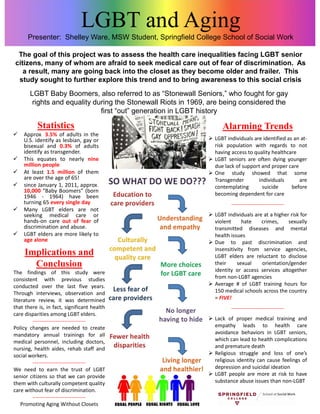
LGBT and Aging
Presenter: Shelley Ware, MSW Student, Springfield College School of Social Work
Statistics
 Approx. 3.5% of adults in the
U.S. identify as lesbian, gay or
bisexual and 0.3% of adults
identify as transgender.
 This equates to nearly nine
million people
 At least 1.5 million of them
are over the age of 65!
 since January 1, 2011, approx.
10,000 “Baby Boomers” (born
1946 - 1964) have been
turning 65 every single day
 Many LGBT elders are not
seeking medical care or
hands-on care out of fear of
discrimination and abuse.
 LGBT elders are more likely to
age alone
LGBT Baby Boomers, also referred to as “Stonewall Seniors,” who fought for gay
rights and equality during the Stonewall Riots in 1969, are being considered the
first “out” generation in LGBT history
Alarming Trends
 LGBT individuals are identified as an at-
risk population with regards to not
having access to quality healthcare
 LGBT seniors are often dying younger
due lack of support and proper care
 One study showed that some
Transgender individuals are
contemplating suicide before
becoming dependent for care
------------------------------
 LGBT individuals are at a higher risk for
violent hate crimes, sexually
transmitted diseases and mental
health issues
 Due to past discrimination and
insensitivity from service agencies,
LGBT elders are reluctant to disclose
their sexual orientation/gender
identity or access services altogether
from non-LGBT agencies
 Average # of LGBT training hours for
150 medical schools across the country
= FIVE!
------------------------------
 Lack of proper medical training and
empathy leads to health care
avoidance behaviors in LGBT seniors,
which can lead to health complications
and premature death
 Religious struggle and loss of one’s
religious identity can cause feelings of
depression and suicidal ideation
 LGBT people are more at risk to have
substance abuse issues than non-LGBT
The goal of this project was to assess the health care inequalities facing LGBT senior
citizens, many of whom are afraid to seek medical care out of fear of discrimination. As
a result, many are going back into the closet as they become older and frailer. This
study sought to further explore this trend and to bring awareness to this social crisis
Implications and
Conclusion
The findings of this study were
consistent with previous studies
conducted over the last five years.
Through interviews, observation and
literature review, it was determined
that there is, in fact, significant health
care disparities among LGBT elders.
------------------------------
Policy changes are needed to create
mandatory annual trainings for all
medical personnel, including doctors,
nursing, health aides, rehab staff and
social workers.
------------------------------
We need to earn the trust of LGBT
senior citizens so that we can provide
them with culturally competent quality
care without fear of discrimination.
------------------------------
Promoting Aging Without Closets

NASW Poster 2

  • 1.
    LGBT and Aging Presenter:Shelley Ware, MSW Student, Springfield College School of Social Work Statistics  Approx. 3.5% of adults in the U.S. identify as lesbian, gay or bisexual and 0.3% of adults identify as transgender.  This equates to nearly nine million people  At least 1.5 million of them are over the age of 65!  since January 1, 2011, approx. 10,000 “Baby Boomers” (born 1946 - 1964) have been turning 65 every single day  Many LGBT elders are not seeking medical care or hands-on care out of fear of discrimination and abuse.  LGBT elders are more likely to age alone LGBT Baby Boomers, also referred to as “Stonewall Seniors,” who fought for gay rights and equality during the Stonewall Riots in 1969, are being considered the first “out” generation in LGBT history Alarming Trends  LGBT individuals are identified as an at- risk population with regards to not having access to quality healthcare  LGBT seniors are often dying younger due lack of support and proper care  One study showed that some Transgender individuals are contemplating suicide before becoming dependent for care ------------------------------  LGBT individuals are at a higher risk for violent hate crimes, sexually transmitted diseases and mental health issues  Due to past discrimination and insensitivity from service agencies, LGBT elders are reluctant to disclose their sexual orientation/gender identity or access services altogether from non-LGBT agencies  Average # of LGBT training hours for 150 medical schools across the country = FIVE! ------------------------------  Lack of proper medical training and empathy leads to health care avoidance behaviors in LGBT seniors, which can lead to health complications and premature death  Religious struggle and loss of one’s religious identity can cause feelings of depression and suicidal ideation  LGBT people are more at risk to have substance abuse issues than non-LGBT The goal of this project was to assess the health care inequalities facing LGBT senior citizens, many of whom are afraid to seek medical care out of fear of discrimination. As a result, many are going back into the closet as they become older and frailer. This study sought to further explore this trend and to bring awareness to this social crisis Implications and Conclusion The findings of this study were consistent with previous studies conducted over the last five years. Through interviews, observation and literature review, it was determined that there is, in fact, significant health care disparities among LGBT elders. ------------------------------ Policy changes are needed to create mandatory annual trainings for all medical personnel, including doctors, nursing, health aides, rehab staff and social workers. ------------------------------ We need to earn the trust of LGBT senior citizens so that we can provide them with culturally competent quality care without fear of discrimination. ------------------------------ Promoting Aging Without Closets