On declarative configuration management using
Kubernetes and Helm
Alexander Chistyakov
ITMO University
Software Engineering Conference Russia 2018
October 12-13
Moscow
First things first, what is DevOps?
● I will make a short break for you so you can ship a release
● And if your process is solid enough, you can ship while I talk
● Or even better, a release can ship itself when it’s ready without even
bothering you
● Do you need a couple of minutes just to check if something is shipping right
now?
BTW, who are you?
● Are you a human being?
● Maybe a DevOps engineer?
● Maybe a cyborg?
● Maybe even a Jenkins node?
● If so, how many jobs you can run in parallel?
What does a CM process look like?
● We define a desired state declaratively
What does a CM process look like?
● We define a desired state declaratively
● We instruct a CM master tool to get a system to that state idempotently
What does a CM process look like?
● We define a desired state declaratively
● We instruct a CM master tool to get a system to that state idempotently
● Some CM magic begins
What does a CM process look like?
● We define a desired state declaratively
● We instruct a CM master tool to get a system to that state idempotently
● Some CM magic begins
● Midnight suddenly comes
What does a CM process look like?
● We define a desired state declaratively
● We instruct a CM master tool to get a system to that state idempotently
● Some CM magic begins
● Midnight suddenly comes
● Infrastructure gets to the desired state!
What does a CM process look like?
● We define a desired state declaratively
● We instruct a CM master tool to get a system to that state idempotently
● Some CM magic begins
● Midnight suddenly comes
● Infrastructure gets to the desired state!
● Sounds not too difficult, should be quite easy to implement
A bit of history
● Are you familiar with Puppet CM system?
● Raise your hands if you like it! (But how on Earth is it possible?)
A bit of history
● Are you familiar with Chef CM system?
● Raise your hands if you like it! (Please don’t cry, SECR is a safe place and
I’m your friend)
A bit of history
● Are you familiar with Ansible CM system?
● Raise your hands if you like it!
If you know Ansible, pls help me a bit
● I need to configure a cluster of something
● No, not a cluster yet, just a monitoring tool for a cluster
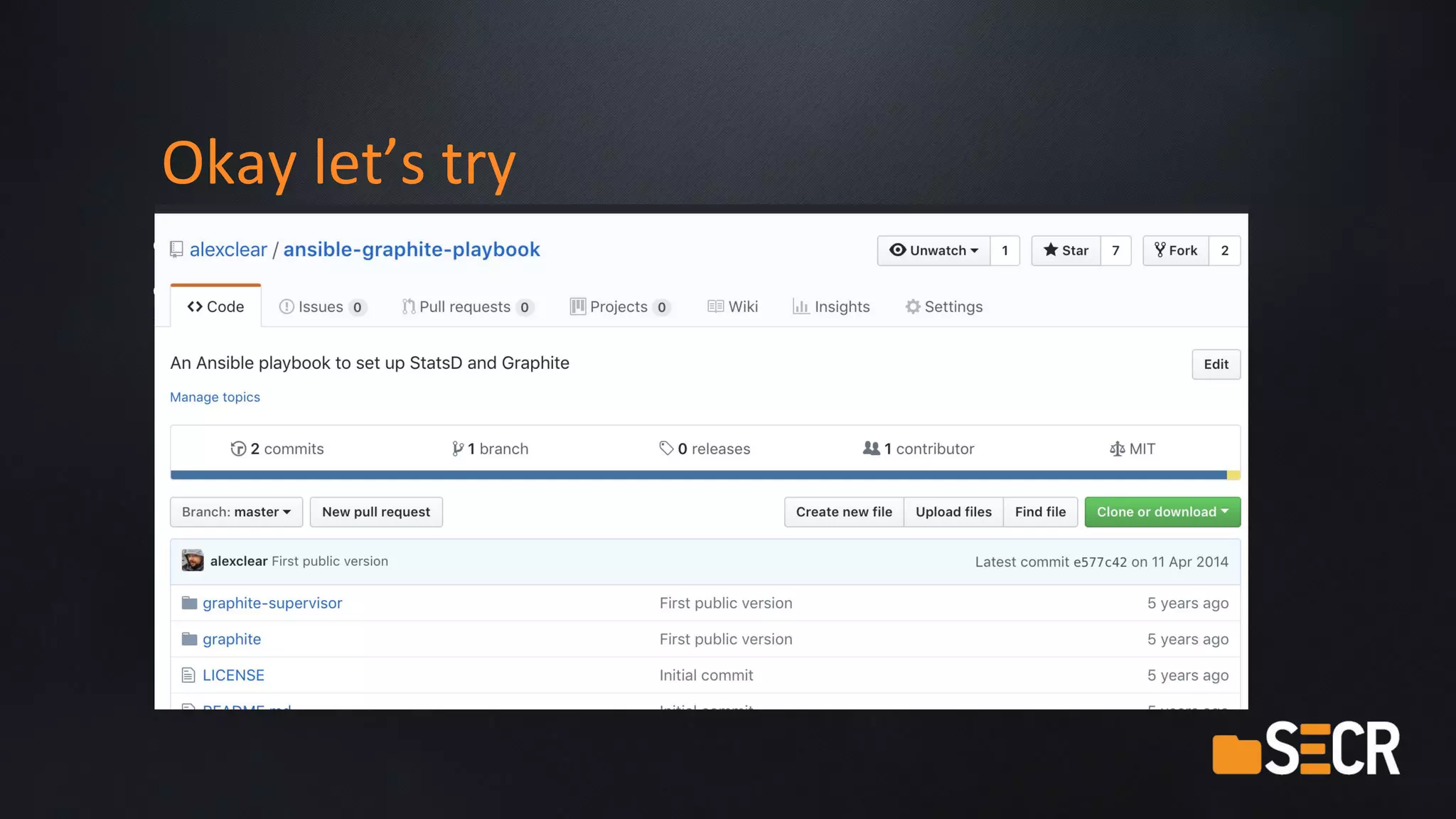
Okay let’s try
● I need to configure a cluster of something
● Raise your hands if you like it!
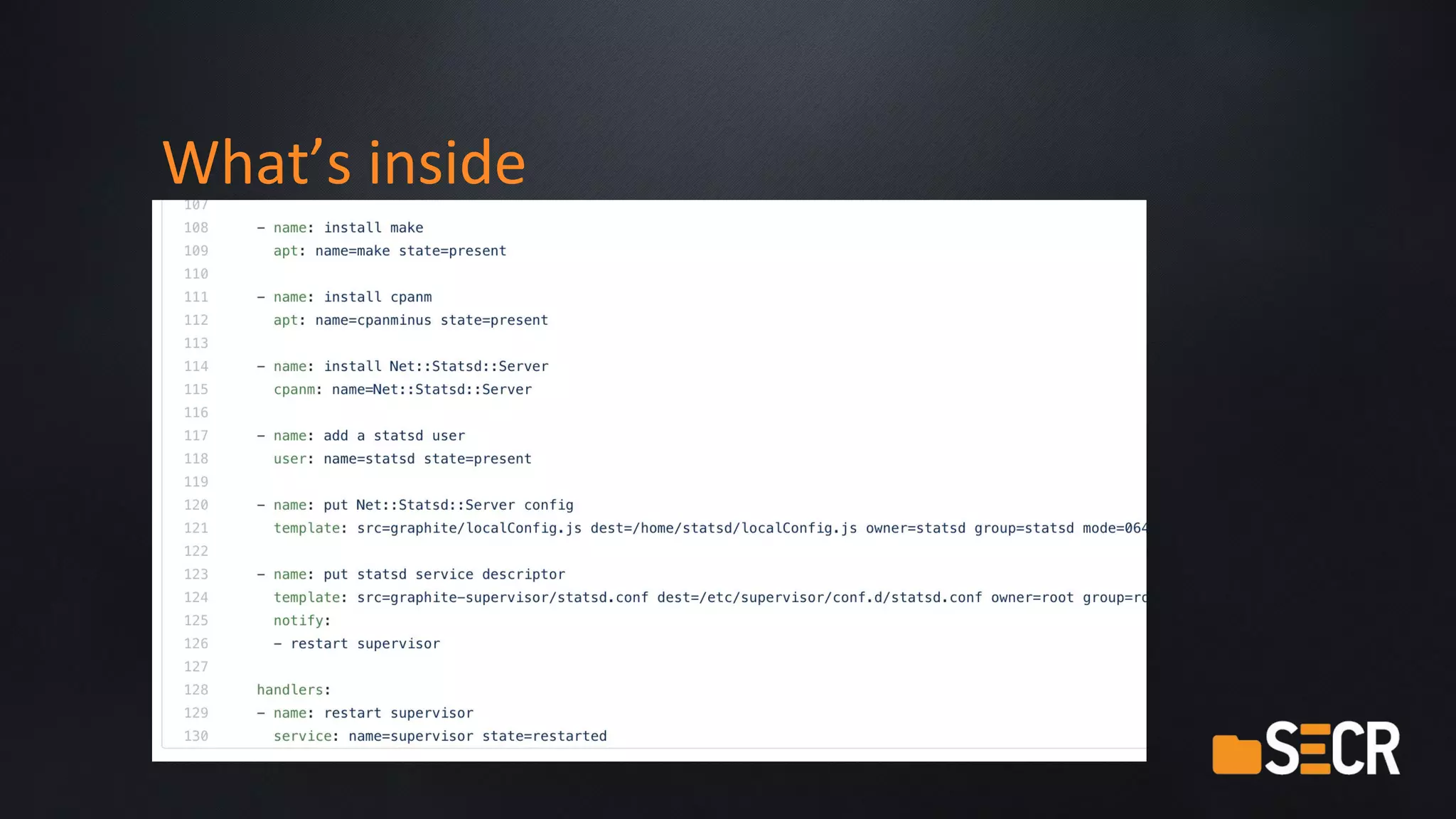
What’s inside
● I need to configure a cluster of something
● Raise your hands if you like it!
What’s wrong with it?
● Nothing, this module was just awesome
● Except that it was poorly written, not documented at all, hard to use, not
supported and finally abandoned
● Still 7 stars on GitHub!
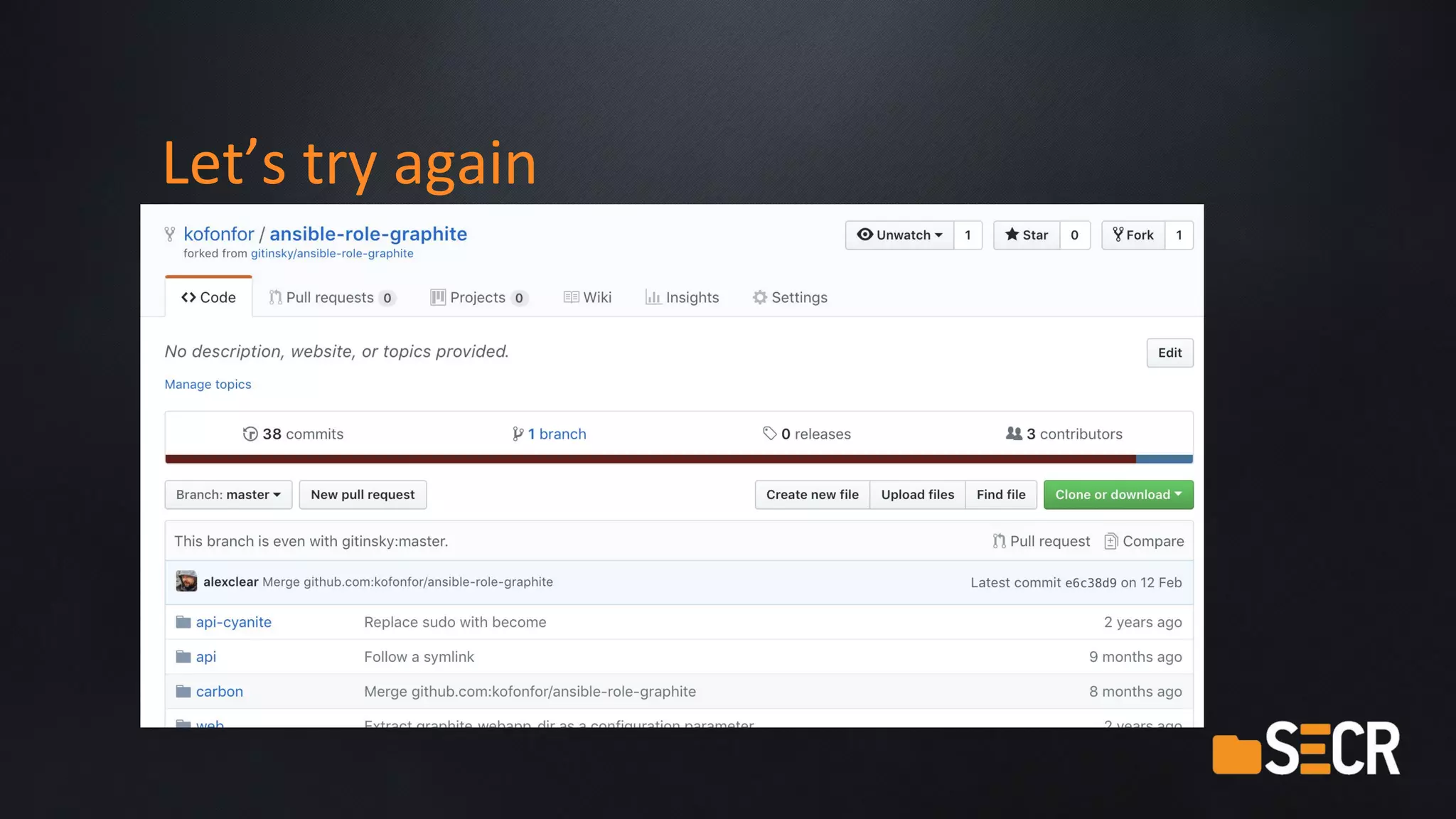
Let’s try again
● I need to configure a cluster of something
● Raise your hands if you like it!
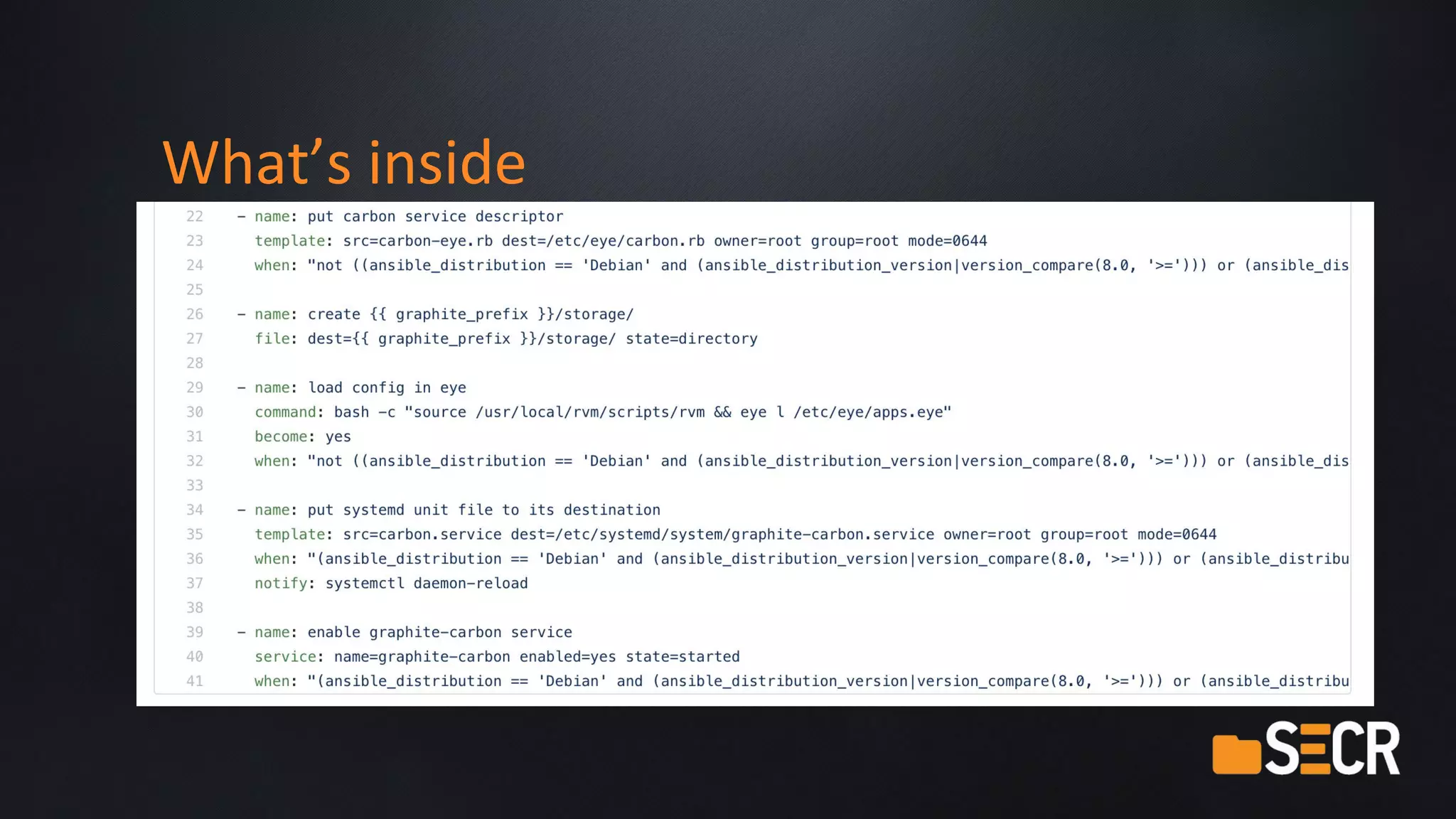
What’s inside
● I need to configure a cluster of something
● Raise your hands if you like it!
What’s wrong with it?
What’s terribly wrong with it?
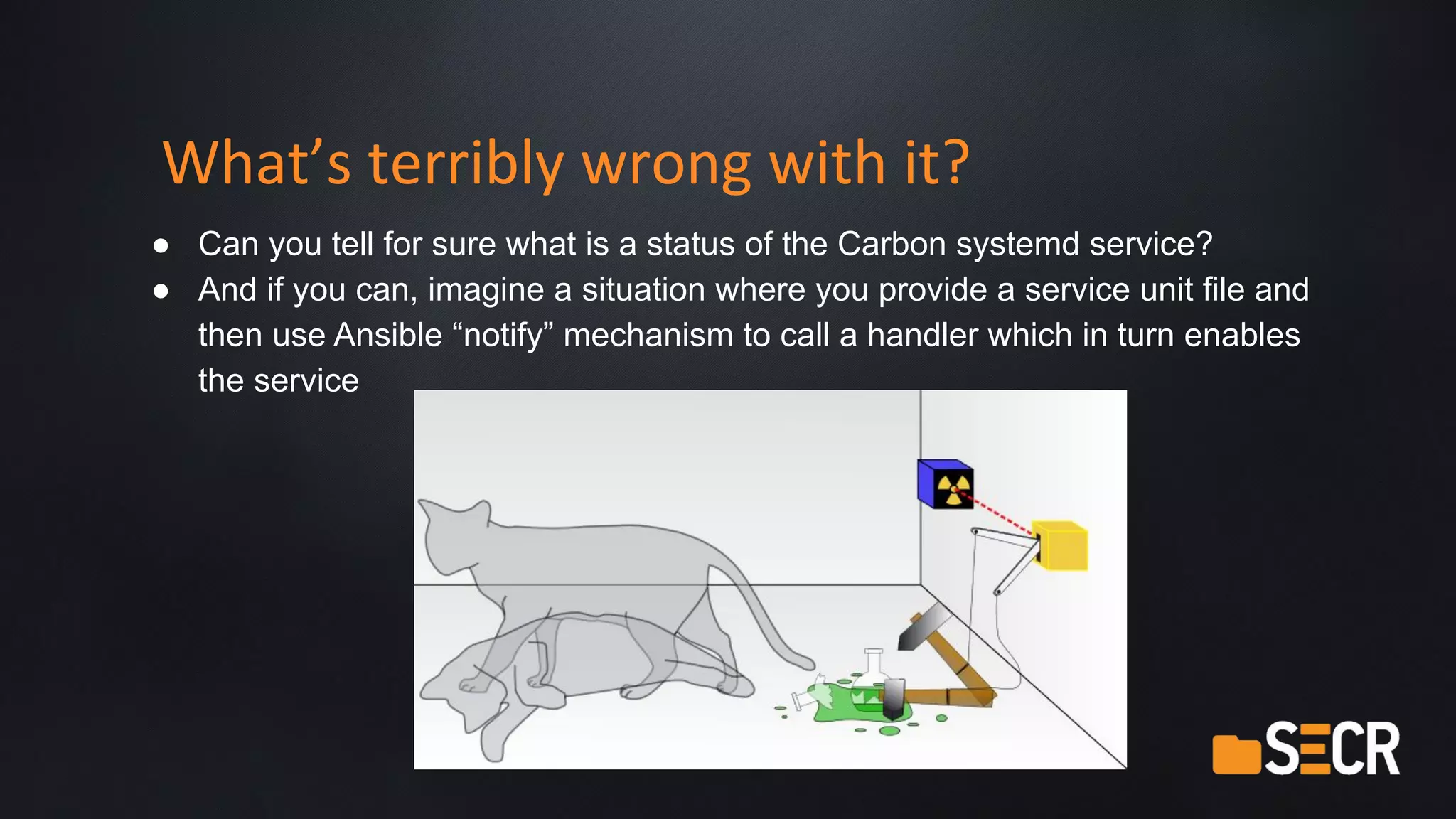
● Can you tell for sure what is a status of the Carbon systemd service?
● And if you can, imagine a situation where you provide a service unit file and
then use Ansible “notify” mechanism to call a handler which in turn enables
the service
What’s terribly wrong with it?
● It’s hard to explain (not so hard to implement though), but people tend to be
extremely proud implementing solutions like this
● Why on Earth does Ansible allow this?
● Please note that Ansible handlers run at the end of script execution
Back to the CM process for a moment
● We want to run a set of microservices on top of a monolithic Linux kernel
● If this still makes sense, we can consider services as building blocks
A dictionary for people from late 90s
● A microservice = a process
● A Docker image = a package
● Kubernetes = an operating system for microservices
● Helm = a package managing system (think apt in Debian or yum in RHEL)
for Kubernetes
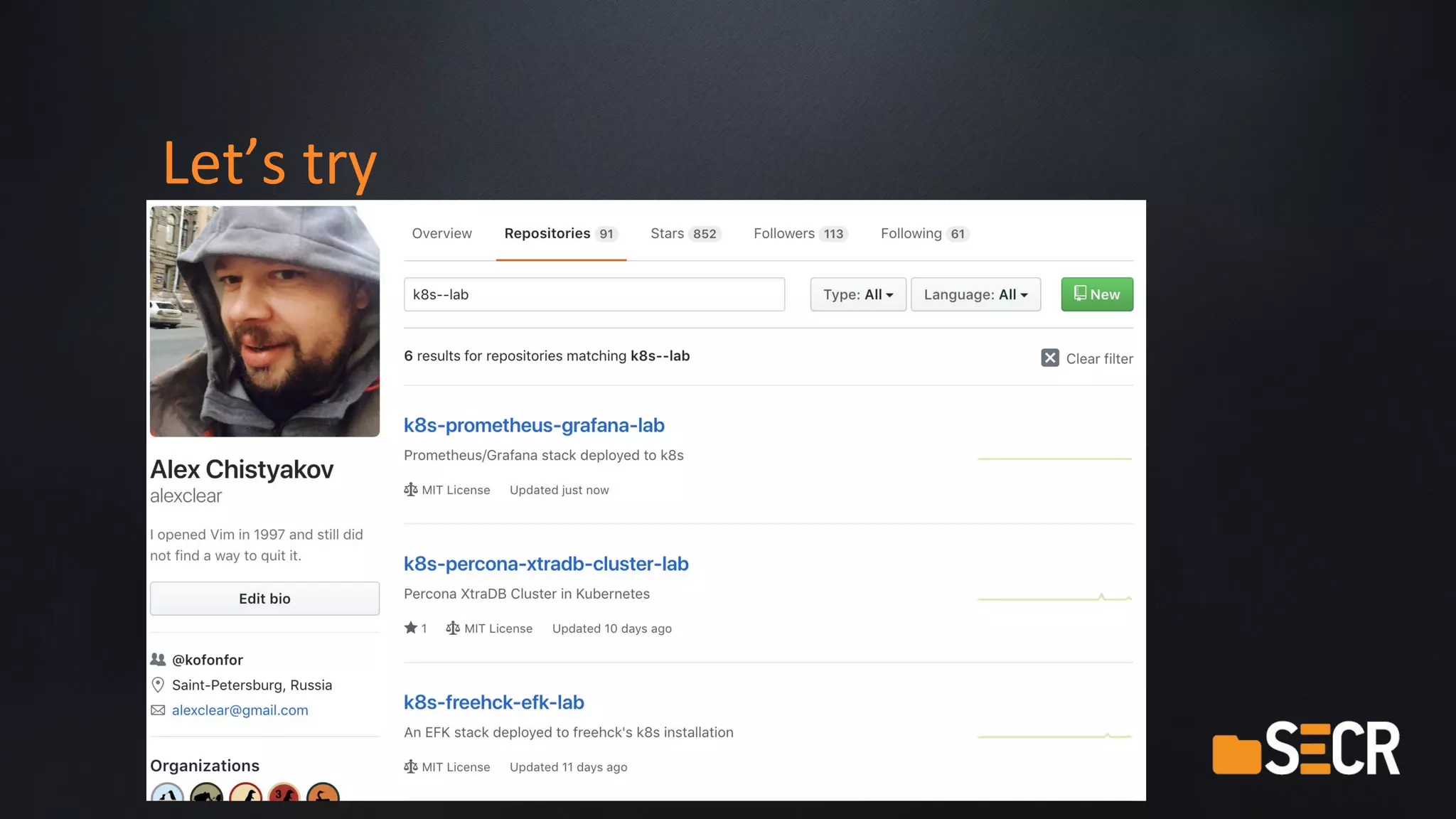
Let’s try
● A microservice = a process
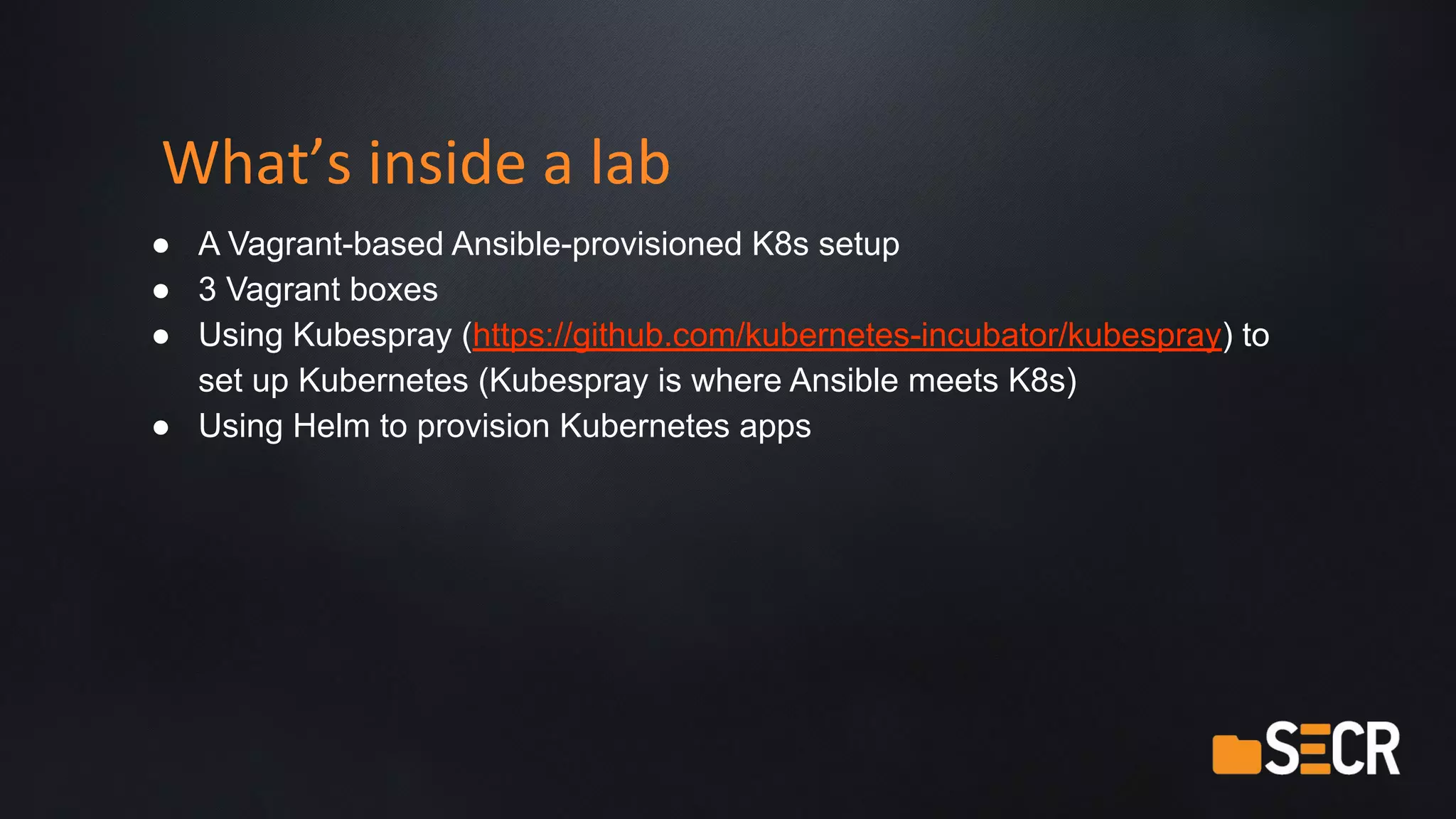
What’s inside a lab
● A Vagrant-based Ansible-provisioned K8s setup
● 3 Vagrant boxes
● Using Kubespray (https://github.com/kubernetes-incubator/kubespray) to
set up Kubernetes (Kubespray is where Ansible meets K8s)
● Using Helm to provision Kubernetes apps
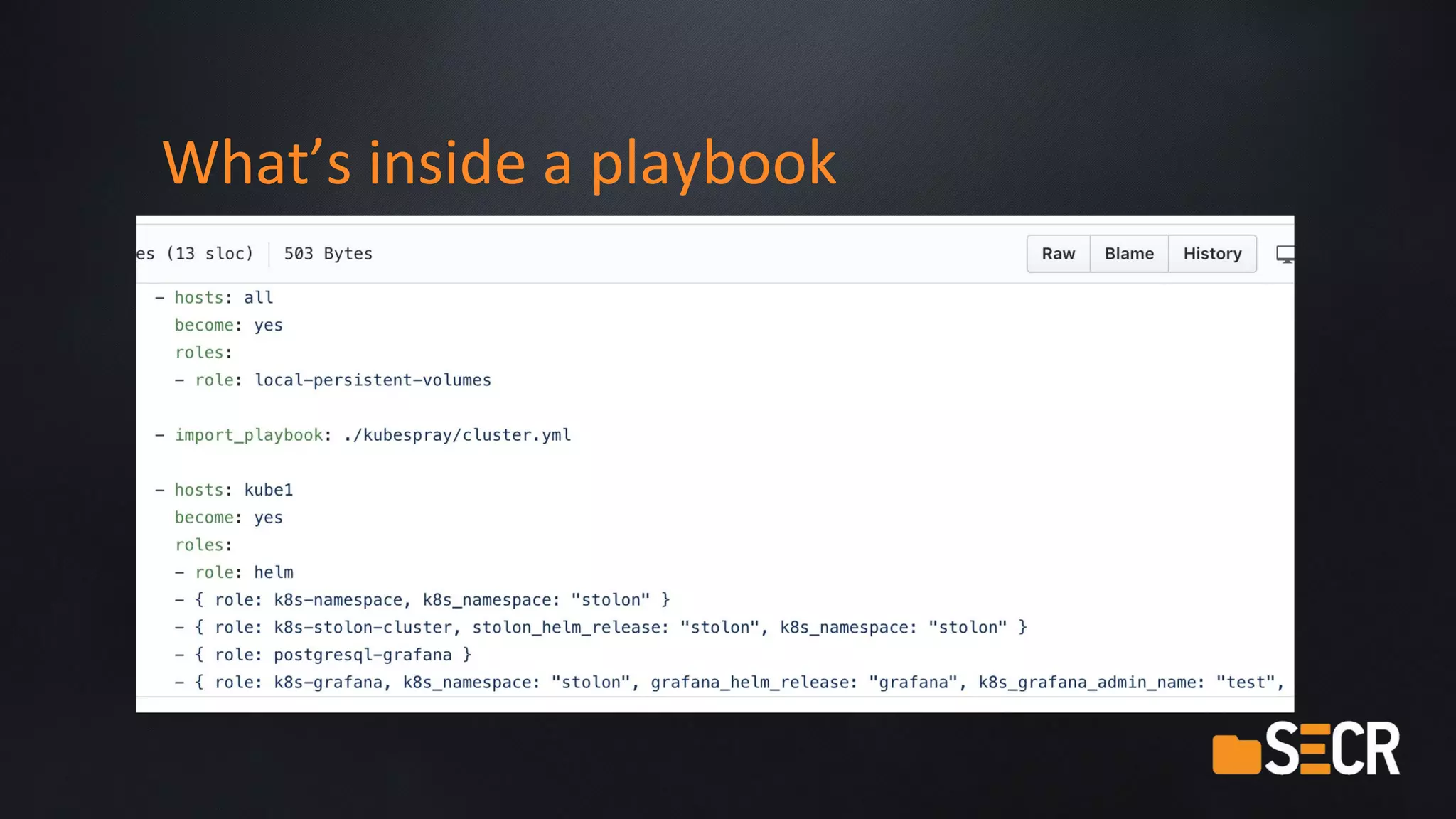
What’s inside a playbook
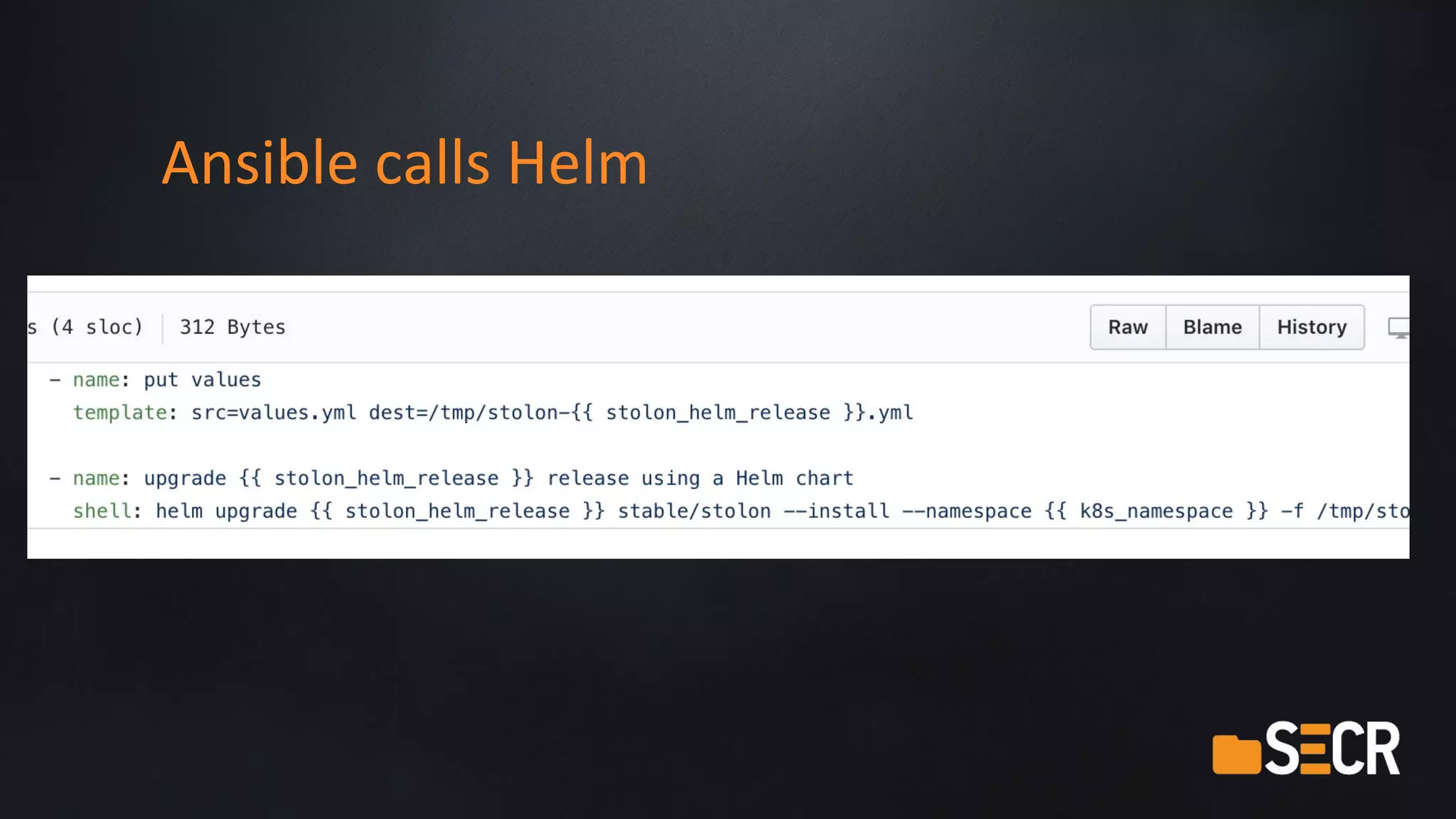
Ansible calls Helm
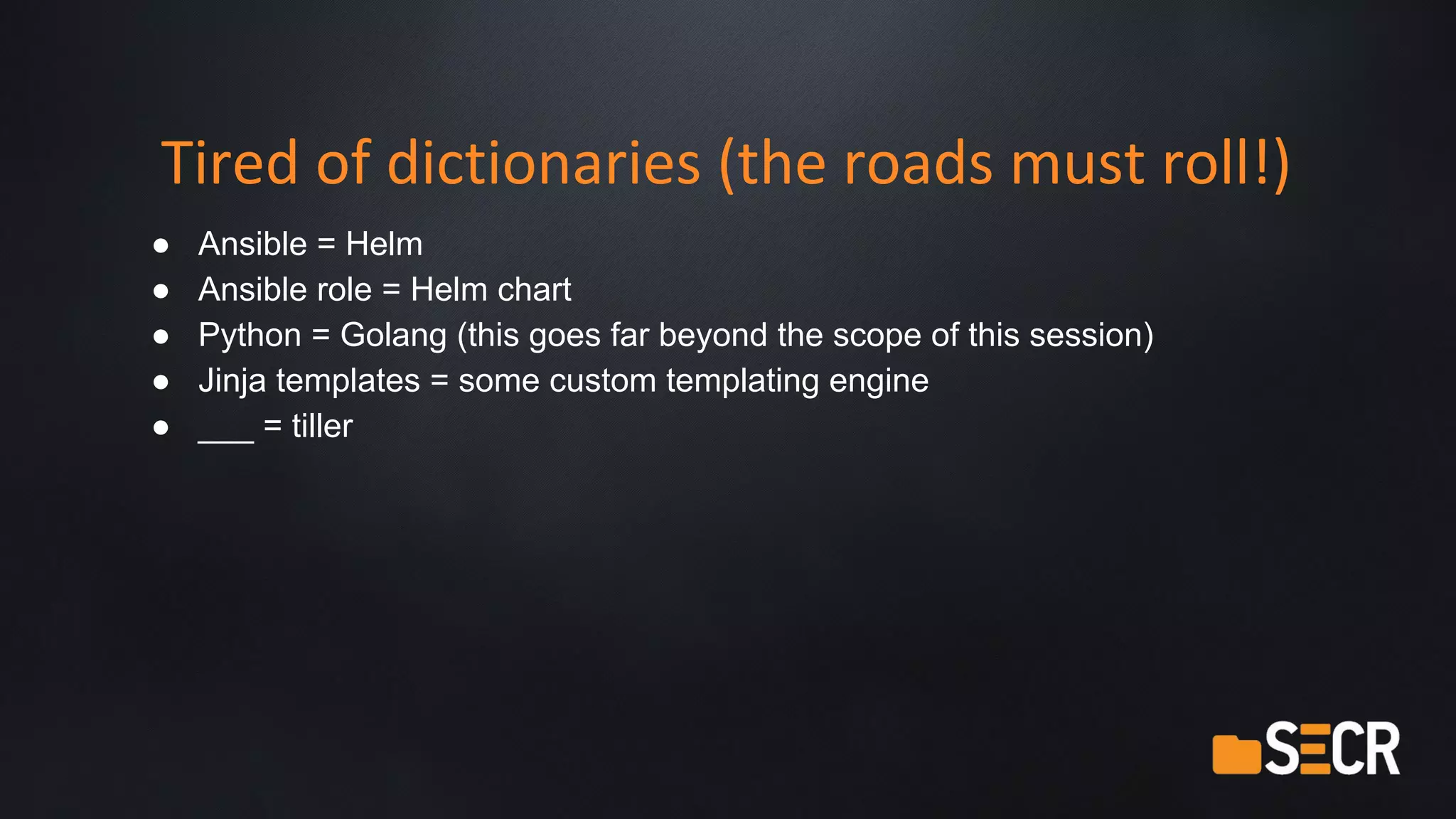
Tired of dictionaries (the roads must roll!)
● Ansible = Helm
● Ansible role = Helm chart
● Python = Golang (this goes far beyond the scope of this session)
● Jinja templates = some custom templating engine
● ___ = tiller
How Helm works
● Helm generated K8s YAML configs
● Helm transfers generated config files to the K8s cluster
● Tiller is an agent which runs in the cluster, effectively a cluster-side Helm
service
● Tiller applies configuration files and labels a release
● Just like a Chef client 7 years ago but without a memory leak :)
Helm charts repository
● It’s centralised
● It’s on GitHub (https://github.com/helm/charts)
● It grows very fast
● If you submit a patch it will be landed in about a month, which I consider
quite fast
Helm charts repository
● https://hub.kubeapps.com (a nice landing page for non-kinesthetic people)
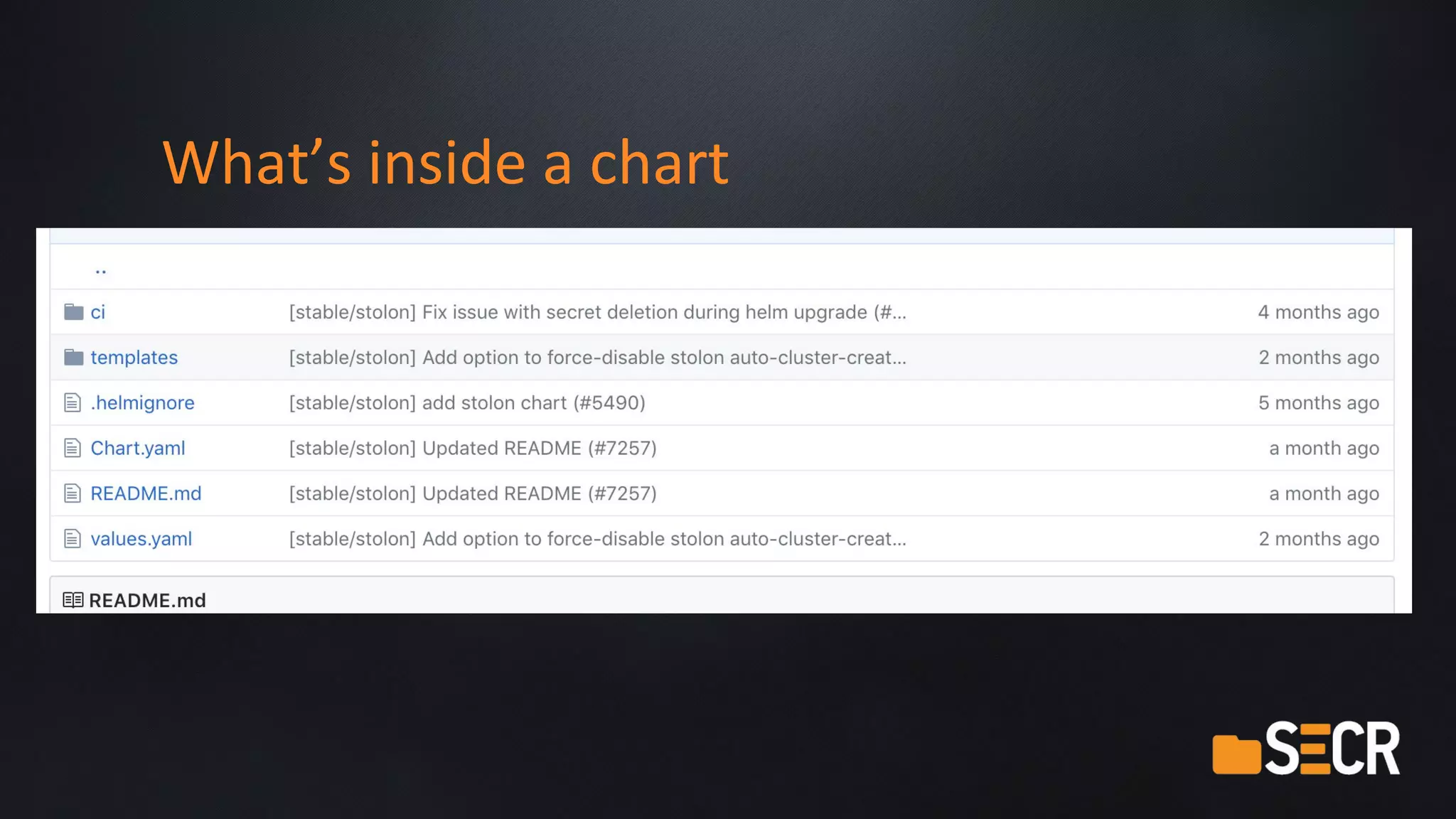
What’s inside a chart
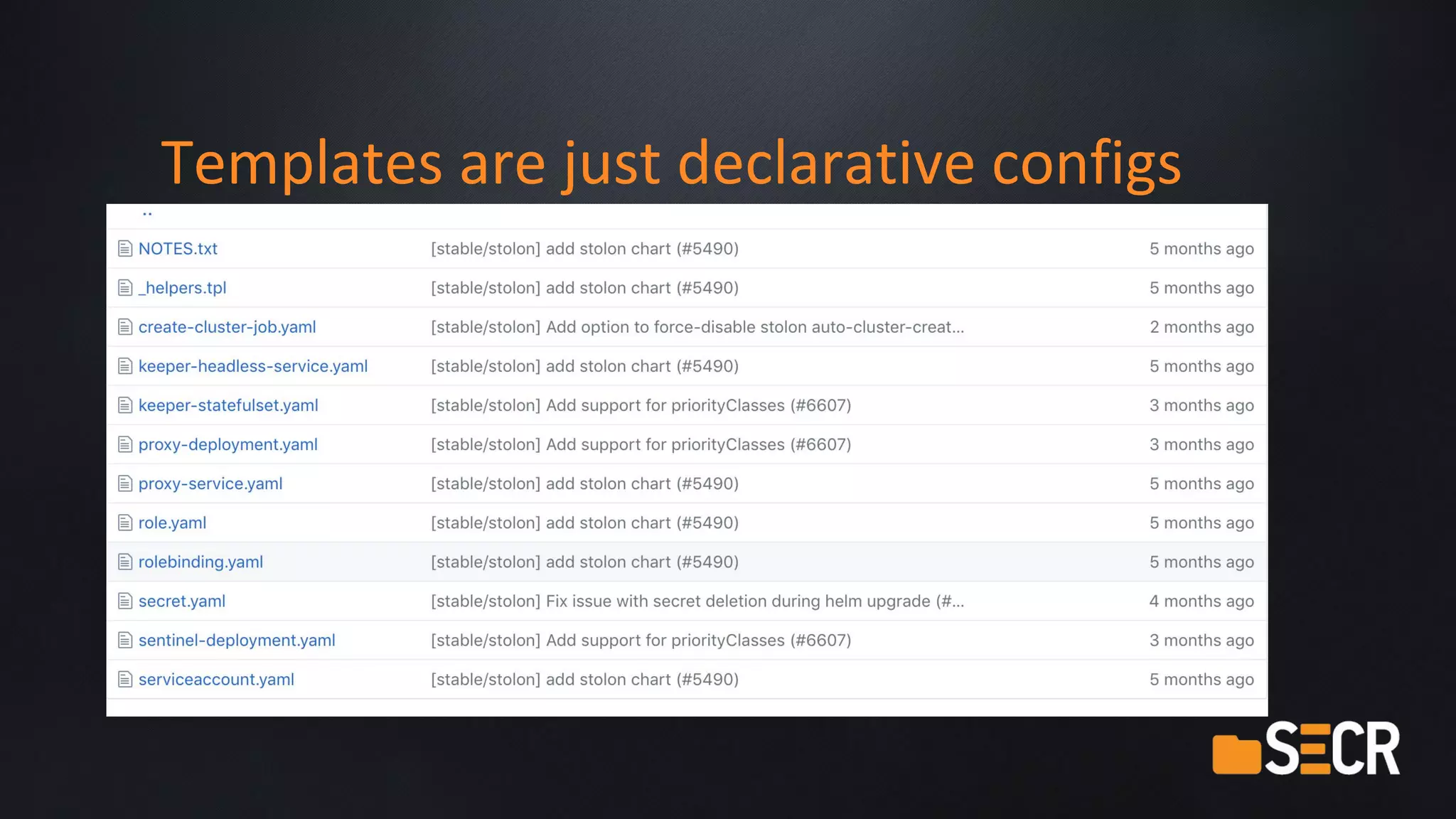
Templates are just declarative configs
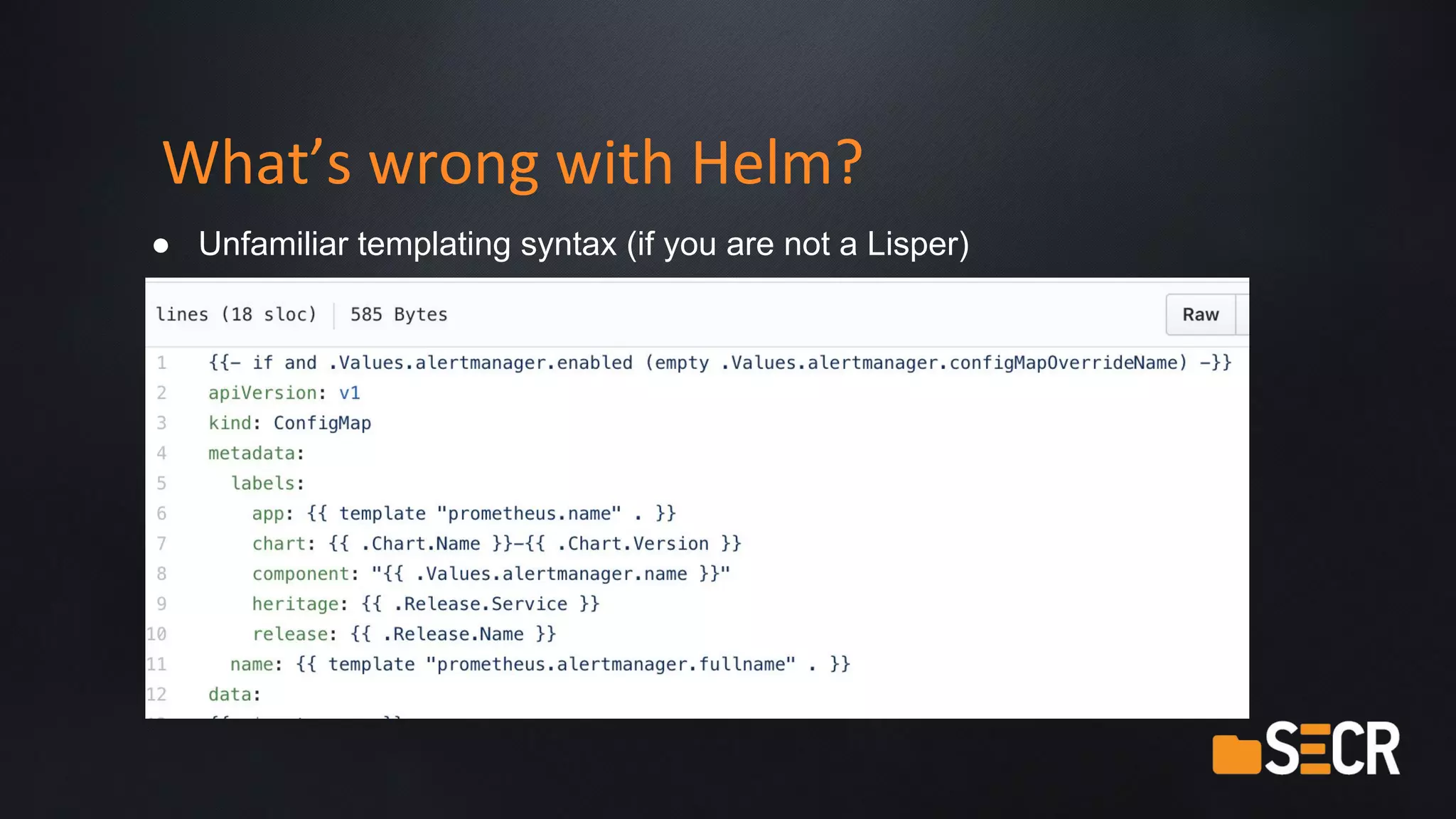
What’s wrong with Helm?
● Unfamiliar templating syntax (if you are not a Lisper)
What’s wrong with K8s and Helm?
● They are written in Golang
● Really, seriously, please stop using Golang for everything!
● We are humans not rodents, we already invented nuclear bombing, Haskell
and even soccer, why Golang after all???
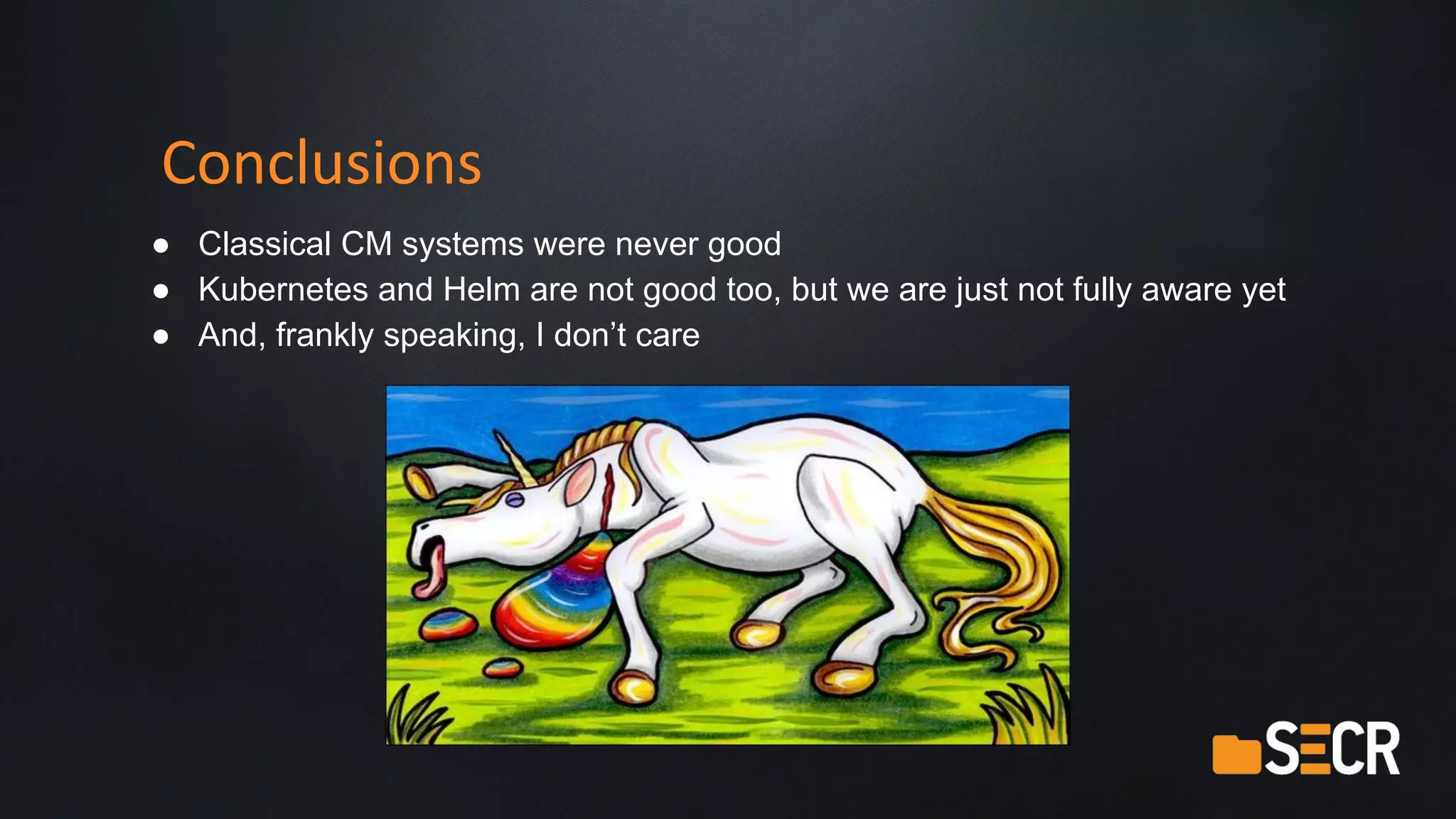
Conclusions
● Classical CM systems were never good
● Kubernetes and Helm are not good too, but we are just not fully aware yet
● And, frankly speaking, I don’t care
Contacts
• Alex Chistyakov
• alexclear@gmail.com
• +7-921-643-93-27 (Please don’t call me, I am
a sociophobe)
• @demeliorator (in Telegram and Skype)

My slides from SECR'2018

  • 1.
    On declarative configurationmanagement using Kubernetes and Helm Alexander Chistyakov ITMO University Software Engineering Conference Russia 2018 October 12-13 Moscow
  • 2.
    First things first,what is DevOps? ● I will make a short break for you so you can ship a release ● And if your process is solid enough, you can ship while I talk ● Or even better, a release can ship itself when it’s ready without even bothering you ● Do you need a couple of minutes just to check if something is shipping right now?
  • 3.
    BTW, who areyou? ● Are you a human being? ● Maybe a DevOps engineer? ● Maybe a cyborg? ● Maybe even a Jenkins node? ● If so, how many jobs you can run in parallel?
  • 4.
    What does aCM process look like? ● We define a desired state declaratively
  • 5.
    What does aCM process look like? ● We define a desired state declaratively ● We instruct a CM master tool to get a system to that state idempotently
  • 6.
    What does aCM process look like? ● We define a desired state declaratively ● We instruct a CM master tool to get a system to that state idempotently ● Some CM magic begins
  • 7.
    What does aCM process look like? ● We define a desired state declaratively ● We instruct a CM master tool to get a system to that state idempotently ● Some CM magic begins ● Midnight suddenly comes
  • 8.
    What does aCM process look like? ● We define a desired state declaratively ● We instruct a CM master tool to get a system to that state idempotently ● Some CM magic begins ● Midnight suddenly comes ● Infrastructure gets to the desired state!
  • 9.
    What does aCM process look like? ● We define a desired state declaratively ● We instruct a CM master tool to get a system to that state idempotently ● Some CM magic begins ● Midnight suddenly comes ● Infrastructure gets to the desired state! ● Sounds not too difficult, should be quite easy to implement
  • 10.
    A bit ofhistory ● Are you familiar with Puppet CM system? ● Raise your hands if you like it! (But how on Earth is it possible?)
  • 11.
    A bit ofhistory ● Are you familiar with Chef CM system? ● Raise your hands if you like it! (Please don’t cry, SECR is a safe place and I’m your friend)
  • 12.
    A bit ofhistory ● Are you familiar with Ansible CM system? ● Raise your hands if you like it!
  • 13.
    If you knowAnsible, pls help me a bit ● I need to configure a cluster of something ● No, not a cluster yet, just a monitoring tool for a cluster
  • 14.
    Okay let’s try ●I need to configure a cluster of something ● Raise your hands if you like it!
  • 15.
    What’s inside ● Ineed to configure a cluster of something ● Raise your hands if you like it!
  • 16.
    What’s wrong withit? ● Nothing, this module was just awesome ● Except that it was poorly written, not documented at all, hard to use, not supported and finally abandoned ● Still 7 stars on GitHub!
  • 17.
    Let’s try again ●I need to configure a cluster of something ● Raise your hands if you like it!
  • 18.
    What’s inside ● Ineed to configure a cluster of something ● Raise your hands if you like it!
  • 19.
  • 20.
    What’s terribly wrongwith it? ● Can you tell for sure what is a status of the Carbon systemd service? ● And if you can, imagine a situation where you provide a service unit file and then use Ansible “notify” mechanism to call a handler which in turn enables the service
  • 21.
    What’s terribly wrongwith it? ● It’s hard to explain (not so hard to implement though), but people tend to be extremely proud implementing solutions like this ● Why on Earth does Ansible allow this? ● Please note that Ansible handlers run at the end of script execution
  • 22.
    Back to theCM process for a moment ● We want to run a set of microservices on top of a monolithic Linux kernel ● If this still makes sense, we can consider services as building blocks
  • 23.
    A dictionary forpeople from late 90s ● A microservice = a process ● A Docker image = a package ● Kubernetes = an operating system for microservices ● Helm = a package managing system (think apt in Debian or yum in RHEL) for Kubernetes
  • 24.
    Let’s try ● Amicroservice = a process
  • 25.
    What’s inside alab ● A Vagrant-based Ansible-provisioned K8s setup ● 3 Vagrant boxes ● Using Kubespray (https://github.com/kubernetes-incubator/kubespray) to set up Kubernetes (Kubespray is where Ansible meets K8s) ● Using Helm to provision Kubernetes apps
  • 26.
  • 27.
  • 28.
    Tired of dictionaries(the roads must roll!) ● Ansible = Helm ● Ansible role = Helm chart ● Python = Golang (this goes far beyond the scope of this session) ● Jinja templates = some custom templating engine ● ___ = tiller
  • 29.
    How Helm works ●Helm generated K8s YAML configs ● Helm transfers generated config files to the K8s cluster ● Tiller is an agent which runs in the cluster, effectively a cluster-side Helm service ● Tiller applies configuration files and labels a release ● Just like a Chef client 7 years ago but without a memory leak :)
  • 30.
    Helm charts repository ●It’s centralised ● It’s on GitHub (https://github.com/helm/charts) ● It grows very fast ● If you submit a patch it will be landed in about a month, which I consider quite fast
  • 31.
    Helm charts repository ●https://hub.kubeapps.com (a nice landing page for non-kinesthetic people)
  • 32.
  • 33.
    Templates are justdeclarative configs
  • 34.
    What’s wrong withHelm? ● Unfamiliar templating syntax (if you are not a Lisper)
  • 35.
    What’s wrong withK8s and Helm? ● They are written in Golang ● Really, seriously, please stop using Golang for everything! ● We are humans not rodents, we already invented nuclear bombing, Haskell and even soccer, why Golang after all???
  • 36.
    Conclusions ● Classical CMsystems were never good ● Kubernetes and Helm are not good too, but we are just not fully aware yet ● And, frankly speaking, I don’t care
  • 37.
    Contacts • Alex Chistyakov •alexclear@gmail.com • +7-921-643-93-27 (Please don’t call me, I am a sociophobe) • @demeliorator (in Telegram and Skype)