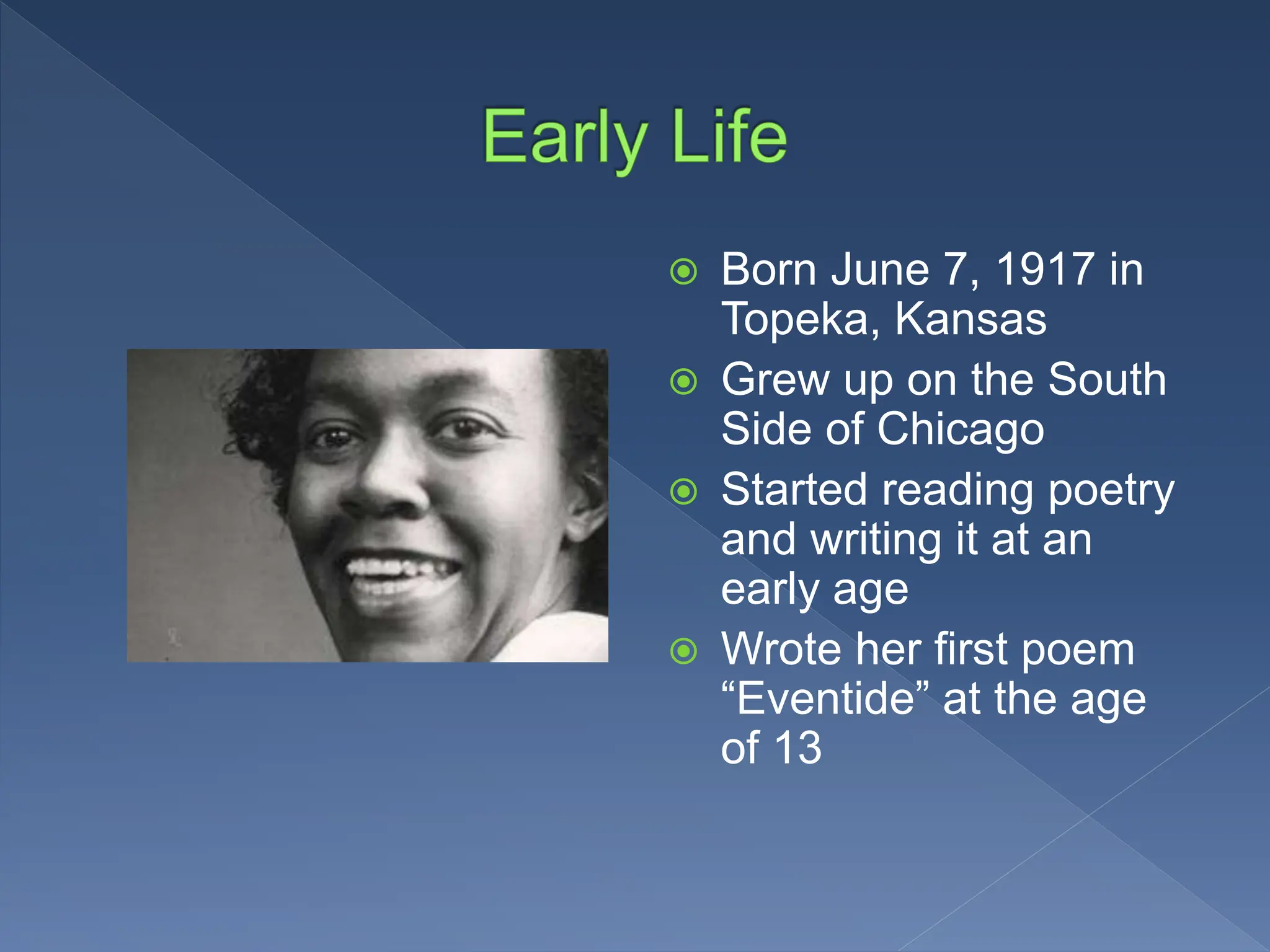
 Born June 7, 1917 in
Topeka, Kansas
 Grew up on the South
Side of Chicago
 Started reading poetry
and writing it at an
early age
 Wrote her first poem
“Eventide” at the age
of 13
 She attended three
different high schools
 At age 17, she was
frequently publishing
poems in the Chicago
Defender
 Graduated from Wilson
Junior College
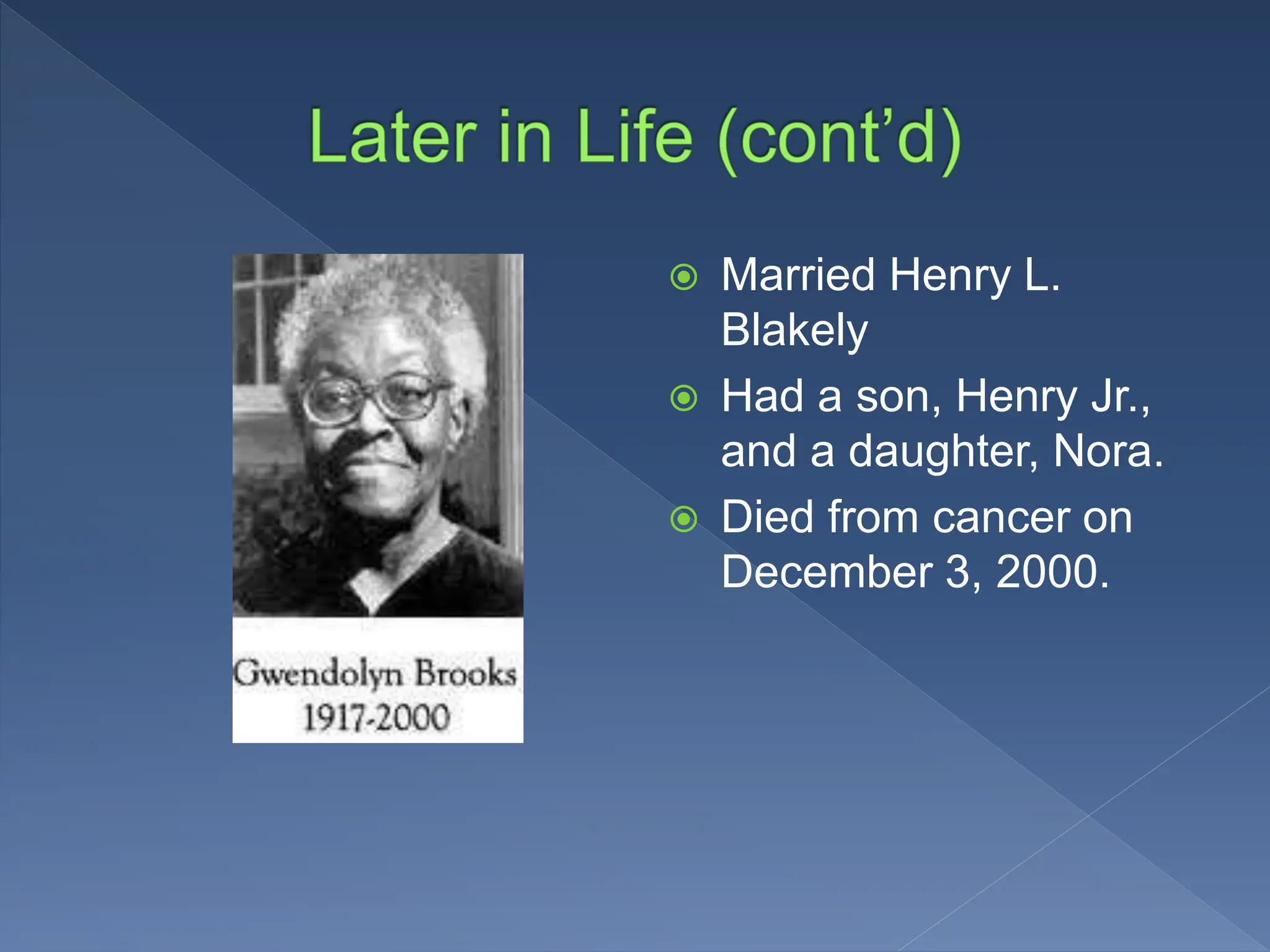
 Married Henry L.
Blakely
 Had a son, Henry Jr.,
and a daughter, Nora.
 Died from cancer on
December 3, 2000.
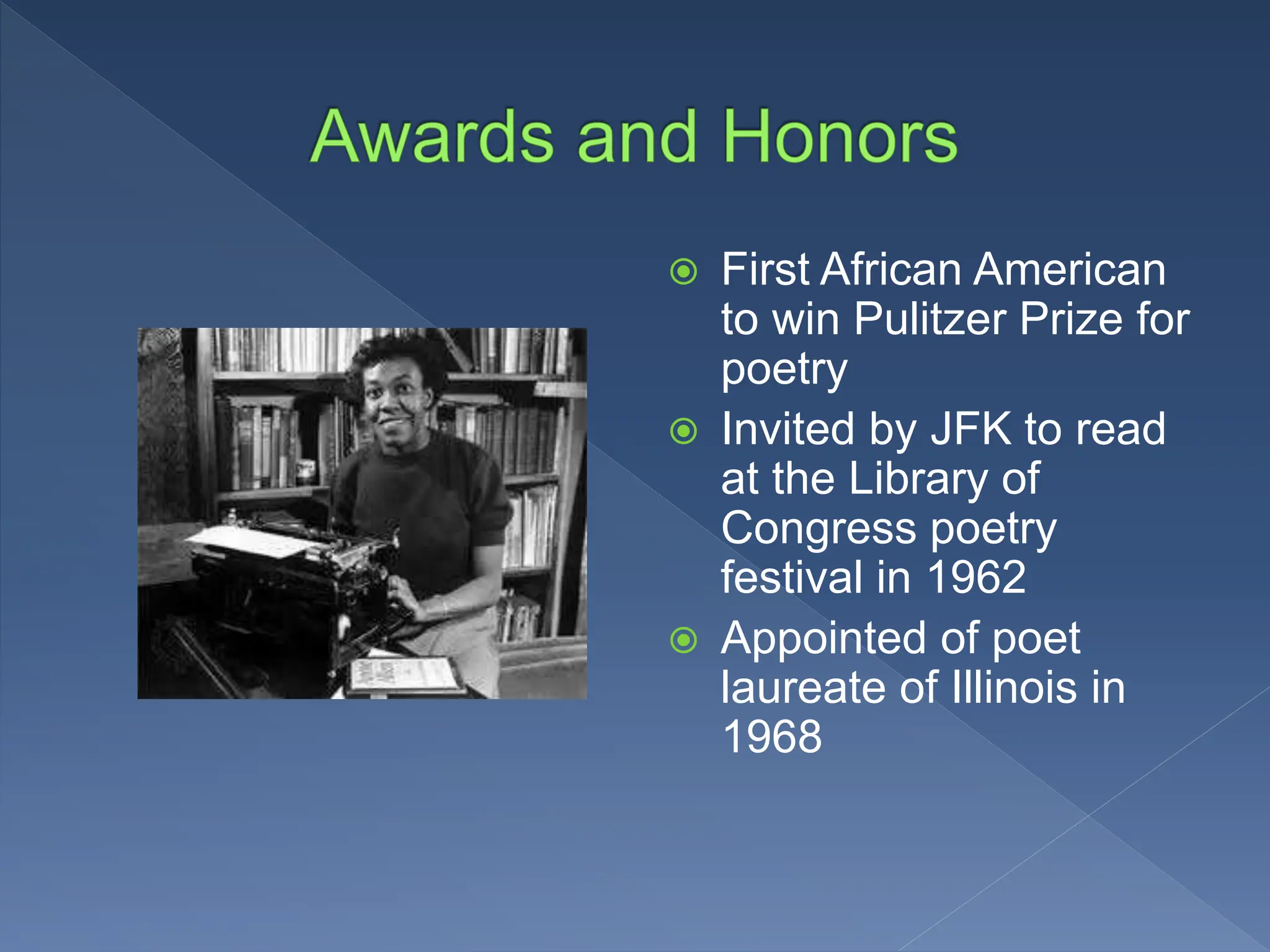
 First African American
to win Pulitzer Prize for
poetry
 Invited by JFK to read
at the Library of
Congress poetry
festival in 1962
 Appointed of poet
laureate of Illinois in
1968
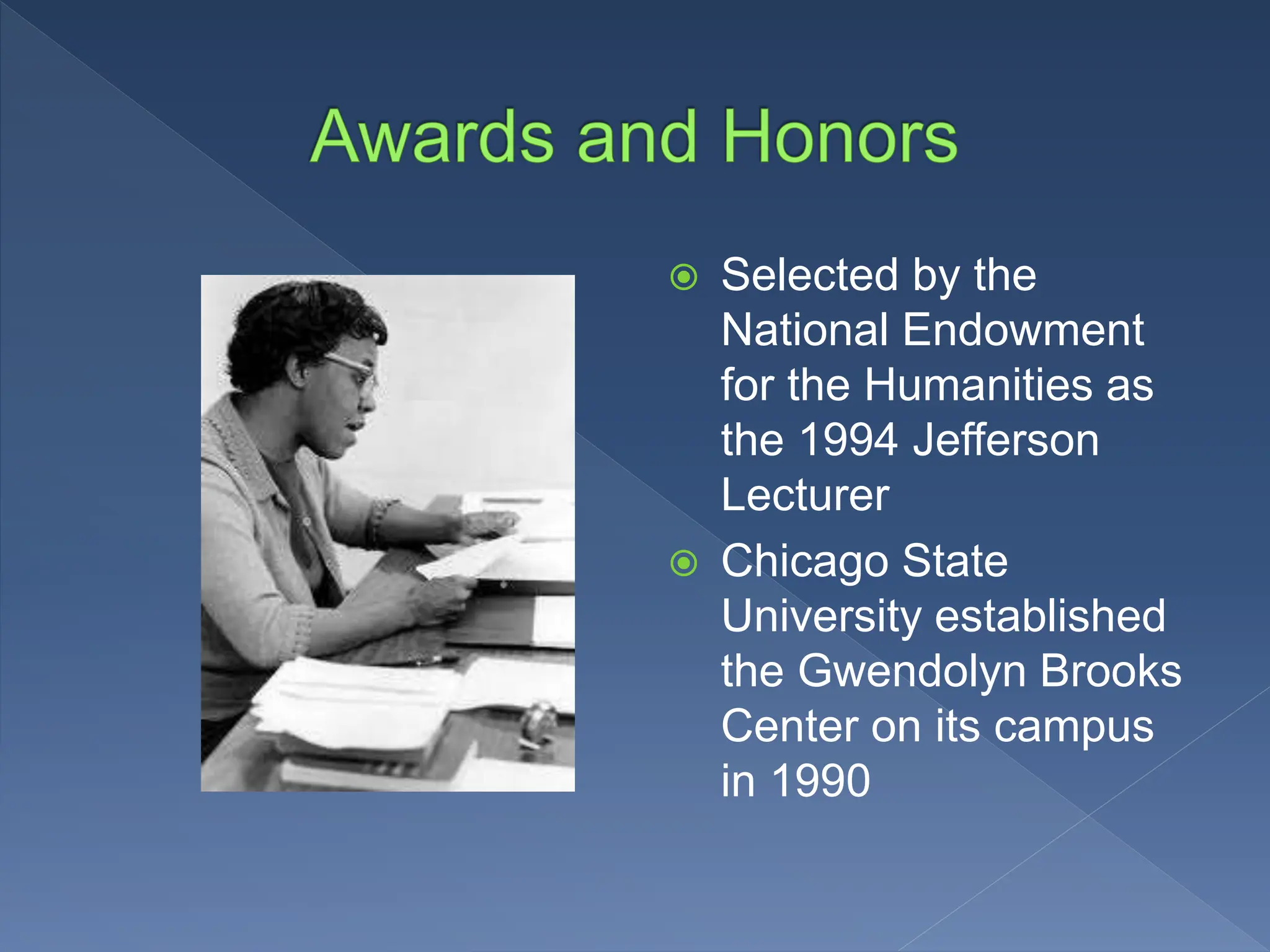
 Selected by the
National Endowment
for the Humanities as
the 1994 Jefferson
Lecturer
 Chicago State
University established
the Gwendolyn Brooks
Center on its campus
in 1990
 Uses narrative poetry to depict the struggle of a Black American
family trying to own their own home, which ends up to be in a white
neighborhood.
 After the Reeds move into this unwelcoming neighborhood, they
are finally a proud and happy family, but they still didn’t earn the
satisfaction of their Caucasian neighbors.
 As Brooks writes “A neighbor would look, with a yawning eye that
squeezed into a slit. But the Rudolph Reeds and the children three
were too joyous to notice it” (The Ballad of Rudolph Reed), you can
see these feelings of the segregated neighbors come across, but
the Reeds, being so happy that they have their own home, didn’t
even notice.
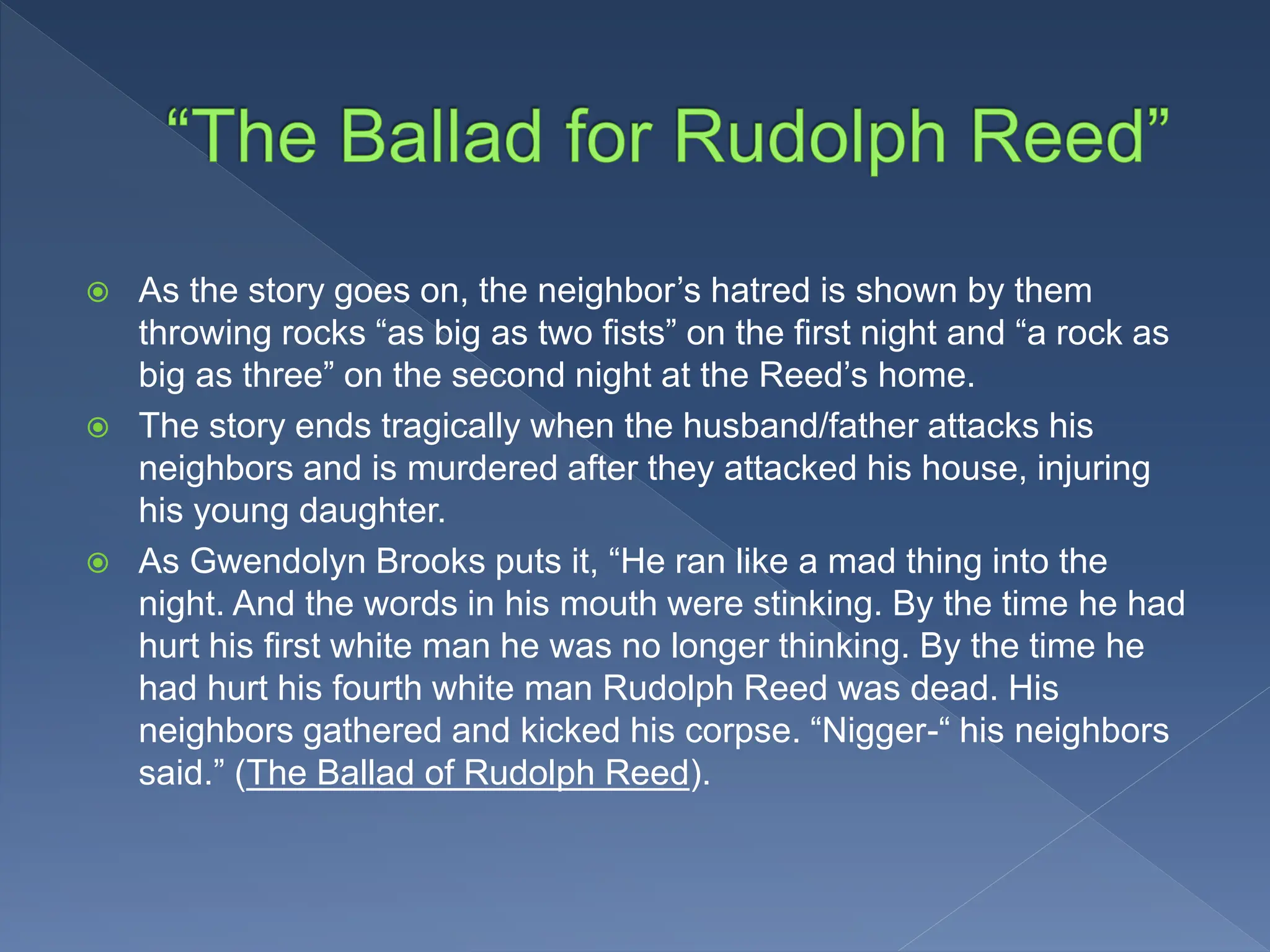
 As the story goes on, the neighbor’s hatred is shown by them
throwing rocks “as big as two fists” on the first night and “a rock as
big as three” on the second night at the Reed’s home.
 The story ends tragically when the husband/father attacks his
neighbors and is murdered after they attacked his house, injuring
his young daughter.
 As Gwendolyn Brooks puts it, “He ran like a mad thing into the
night. And the words in his mouth were stinking. By the time he had
hurt his first white man he was no longer thinking. By the time he
had hurt his fourth white man Rudolph Reed was dead. His
neighbors gathered and kicked his corpse. “Nigger-“ his neighbors
said.” (The Ballad of Rudolph Reed).
 Uses narrative poetry to tell the story of a little black boy who is
shunned by his family and society by the way he looks.
 In her words he is the “Ugliest little boy that everyone ever saw.
That is what everyone said.” (The Life of Lincoln West).
 As he gets older, he realizes that he is unfortunately treated
different.
 This poem describes how discrimination can be more than just the
color of someone’s skin, but other things as well.
 One day his mother and he went to the downtown movies, and
while in the movies a white man sitting beside him whispered loudly
to his companion, pointing at Lincoln saying “THERE! That’s the
kind I’ve been wanting to show you! One of the best examples of
the specie. Not like those diluted Negroes you see so much of on
the streets these days, but the real thing. Black, ugly, and odd. You
can see the savagery. The blunt blankness. That is the real thing”
(The Life of Lincoln West).
 Brooks describes African American’s
blackness using metaphors and similes.
 She uses a selective word choice to describe
“Black”
 In this poem, she’s saying that “black” isn’t
just a word, it actually has life and meaning
to it.
 The themes of a lot of her poems deal with
discrimination or depict the lives of urban
Black America, with some of these
experiences coming from Brooks growing up
on the South Side of Chicago
 Brooks was highly respected and honored by
her peers, critics, and readers which made
her writings have a positive impact on
society.

My dreams, my works - Gwendolyn biography.pptx

  • 2.
     Born June7, 1917 in Topeka, Kansas  Grew up on the South Side of Chicago  Started reading poetry and writing it at an early age  Wrote her first poem “Eventide” at the age of 13
  • 3.
     She attendedthree different high schools  At age 17, she was frequently publishing poems in the Chicago Defender  Graduated from Wilson Junior College
  • 4.
     Married HenryL. Blakely  Had a son, Henry Jr., and a daughter, Nora.  Died from cancer on December 3, 2000.
  • 5.
     First AfricanAmerican to win Pulitzer Prize for poetry  Invited by JFK to read at the Library of Congress poetry festival in 1962  Appointed of poet laureate of Illinois in 1968
  • 6.
     Selected bythe National Endowment for the Humanities as the 1994 Jefferson Lecturer  Chicago State University established the Gwendolyn Brooks Center on its campus in 1990
  • 7.
     Uses narrativepoetry to depict the struggle of a Black American family trying to own their own home, which ends up to be in a white neighborhood.  After the Reeds move into this unwelcoming neighborhood, they are finally a proud and happy family, but they still didn’t earn the satisfaction of their Caucasian neighbors.  As Brooks writes “A neighbor would look, with a yawning eye that squeezed into a slit. But the Rudolph Reeds and the children three were too joyous to notice it” (The Ballad of Rudolph Reed), you can see these feelings of the segregated neighbors come across, but the Reeds, being so happy that they have their own home, didn’t even notice.
  • 8.
     As thestory goes on, the neighbor’s hatred is shown by them throwing rocks “as big as two fists” on the first night and “a rock as big as three” on the second night at the Reed’s home.  The story ends tragically when the husband/father attacks his neighbors and is murdered after they attacked his house, injuring his young daughter.  As Gwendolyn Brooks puts it, “He ran like a mad thing into the night. And the words in his mouth were stinking. By the time he had hurt his first white man he was no longer thinking. By the time he had hurt his fourth white man Rudolph Reed was dead. His neighbors gathered and kicked his corpse. “Nigger-“ his neighbors said.” (The Ballad of Rudolph Reed).
  • 9.
     Uses narrativepoetry to tell the story of a little black boy who is shunned by his family and society by the way he looks.  In her words he is the “Ugliest little boy that everyone ever saw. That is what everyone said.” (The Life of Lincoln West).  As he gets older, he realizes that he is unfortunately treated different.  This poem describes how discrimination can be more than just the color of someone’s skin, but other things as well.
  • 10.
     One dayhis mother and he went to the downtown movies, and while in the movies a white man sitting beside him whispered loudly to his companion, pointing at Lincoln saying “THERE! That’s the kind I’ve been wanting to show you! One of the best examples of the specie. Not like those diluted Negroes you see so much of on the streets these days, but the real thing. Black, ugly, and odd. You can see the savagery. The blunt blankness. That is the real thing” (The Life of Lincoln West).
  • 11.
     Brooks describesAfrican American’s blackness using metaphors and similes.  She uses a selective word choice to describe “Black”  In this poem, she’s saying that “black” isn’t just a word, it actually has life and meaning to it.
  • 12.
     The themesof a lot of her poems deal with discrimination or depict the lives of urban Black America, with some of these experiences coming from Brooks growing up on the South Side of Chicago  Brooks was highly respected and honored by her peers, critics, and readers which made her writings have a positive impact on society.