MULTIPLE OBJECT TRACKING
What is MOT?
• Process of localizing multiple moving objects over time using a
camera as input or capturing device
• Variety of uses
human-computer interaction
surveillance and security
video communication and compression
augmented reality
traffic control
medical imaging and video editing
Why Tracking is useful?
• Too many objects detected in a video frame, then tracking will make it
possible to establish the identity of certain objects across all the
frames
• If in case the object detection has failed, it is still possible to track
those objects because tracking system extracts and stores the
location and appearance features of detected objects from the
previous frame
• Tracking methods could perform very efficiently because they
perform a local search in place of a global to achieve a good
performance for the proposed hybrid system
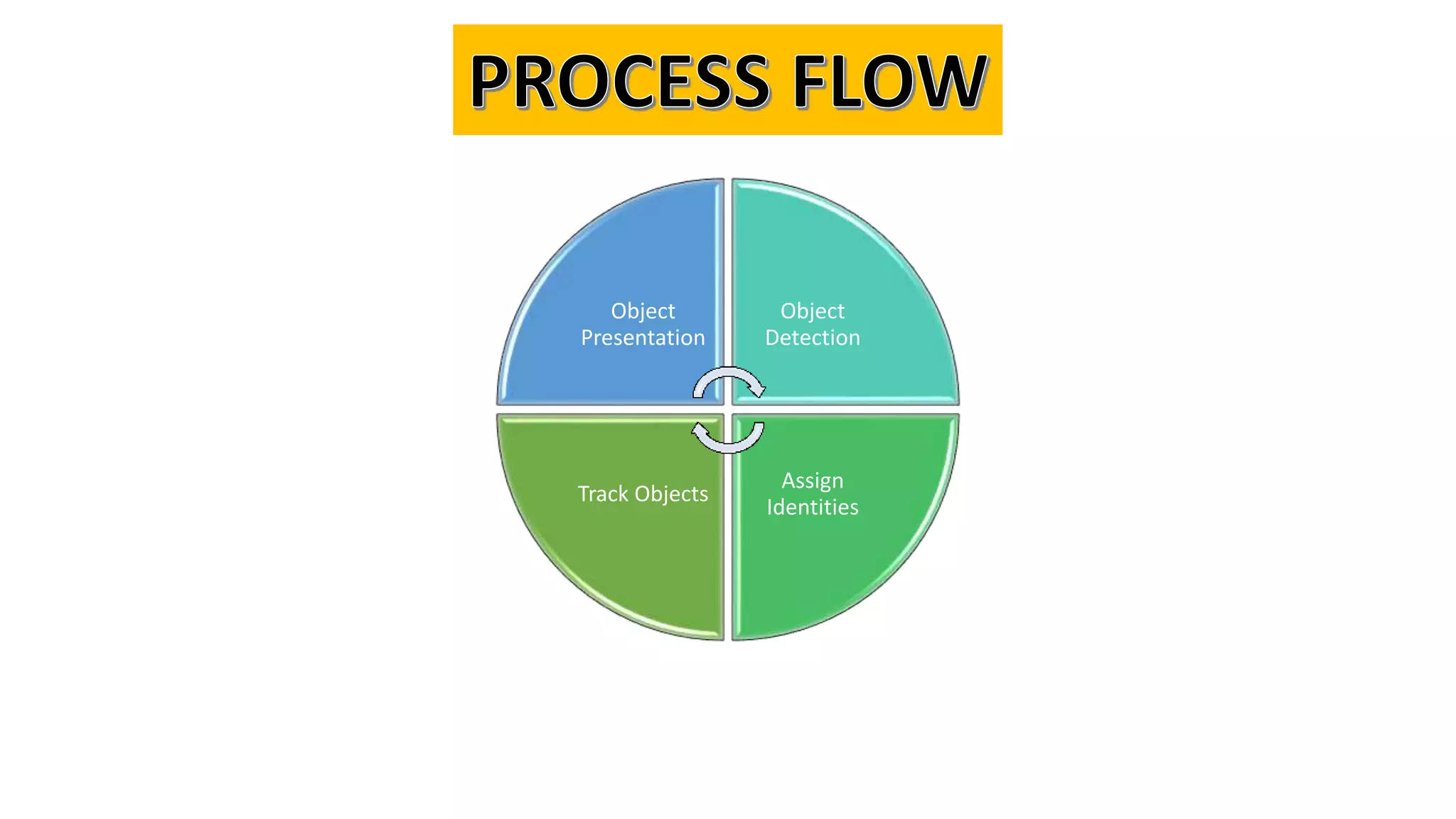
Object
Presentation
Object
Detection
Assign
Identities
Track Objects
Challenges
•Time Efficiency: Due to limitations of batch-based tracking
algorithms, there are certain challenges to implement these
systems in real-time scenarios. A lot of efforts are being made
to move tracking system from batch based to real time
•Finding the solution of the problem of identity switches
•Fragmentation: when detection of object is missing in some
frames, a fragmented trajectory is generated, meaning
tracking breaks where human is not detected
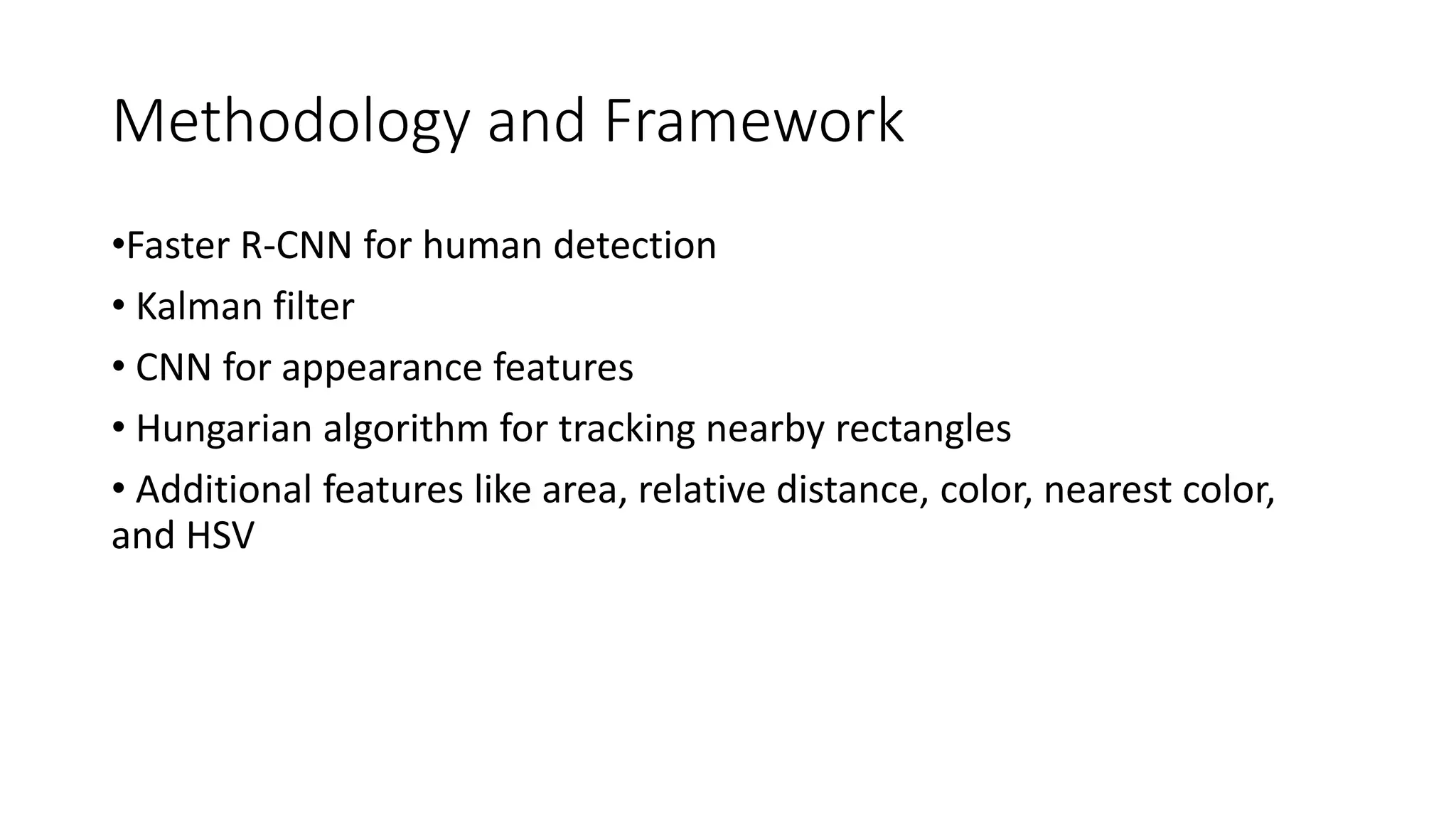
Methodology and Framework
•Faster R-CNN for human detection
• Kalman filter
• CNN for appearance features
• Hungarian algorithm for tracking nearby rectangles
• Additional features like area, relative distance, color, nearest color,
and HSV
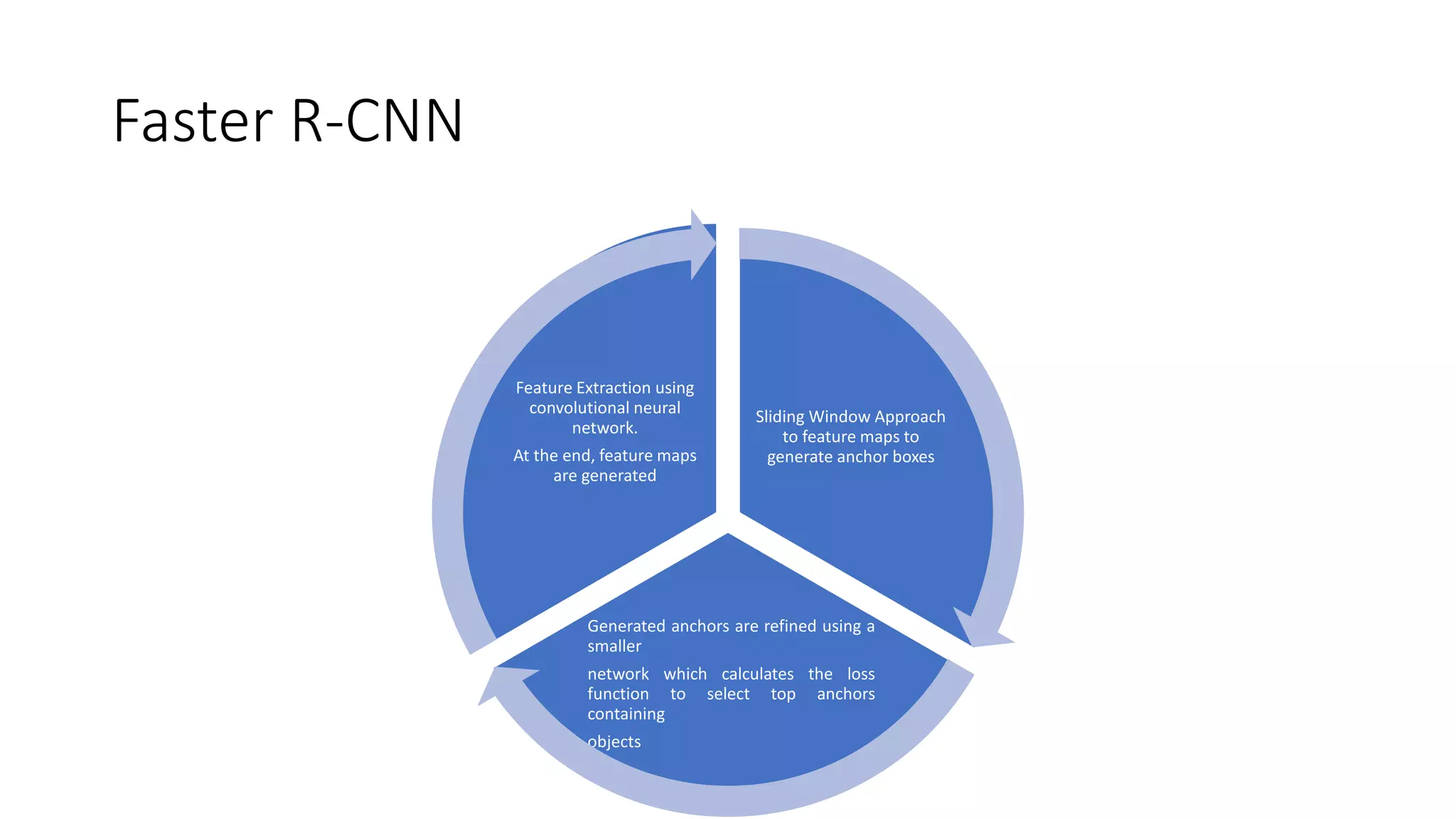
Faster R-CNN
Sliding Window Approach
to feature maps to
generate anchor boxes
Generated anchors are refined using a
smaller
network which calculates the loss
function to select top anchors
containing
objects
Feature Extraction using
convolutional neural
network.
At the end, feature maps
are generated

Multiple Object Tracking

  • 1.
  • 2.
    What is MOT? •Process of localizing multiple moving objects over time using a camera as input or capturing device • Variety of uses human-computer interaction surveillance and security video communication and compression augmented reality traffic control medical imaging and video editing
  • 3.
    Why Tracking isuseful? • Too many objects detected in a video frame, then tracking will make it possible to establish the identity of certain objects across all the frames • If in case the object detection has failed, it is still possible to track those objects because tracking system extracts and stores the location and appearance features of detected objects from the previous frame • Tracking methods could perform very efficiently because they perform a local search in place of a global to achieve a good performance for the proposed hybrid system
  • 4.
  • 5.
    Challenges •Time Efficiency: Dueto limitations of batch-based tracking algorithms, there are certain challenges to implement these systems in real-time scenarios. A lot of efforts are being made to move tracking system from batch based to real time •Finding the solution of the problem of identity switches •Fragmentation: when detection of object is missing in some frames, a fragmented trajectory is generated, meaning tracking breaks where human is not detected
  • 6.
    Methodology and Framework •FasterR-CNN for human detection • Kalman filter • CNN for appearance features • Hungarian algorithm for tracking nearby rectangles • Additional features like area, relative distance, color, nearest color, and HSV
  • 7.
    Faster R-CNN Sliding WindowApproach to feature maps to generate anchor boxes Generated anchors are refined using a smaller network which calculates the loss function to select top anchors containing objects Feature Extraction using convolutional neural network. At the end, feature maps are generated