Multi-Node Processing
Stuart Blackler
Who am I?
• Software/Database Developer currently at Bournemouth
  University (Computing)

• Most comfortable when developing with C#/VB.net/T-SQL

• Completely self-taught with (almost) 3 years commercial
  experience

• Occasionally blog about SQL/.Net Development over at
  http://sblackler.net/
The Problem
• Many websites usually have a complex unit of work that needs
  to be completed (Eg: Recommendation systems)

• It can, potentially, take a long time to complete the unit of
  work

• Websites can easily generate large amounts of traffic, so there
  is a potential need to offload the work from front-end servers
  to back-end processing servers.
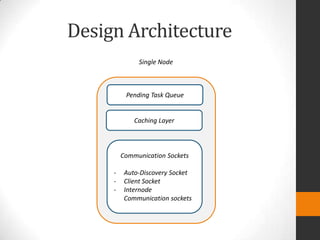
Design Architecture
              Single Node


          Pending Task Queue


             Caching Layer


         Communication Sockets

     -    Auto-Discovery Socket
     -    Client Socket
     -    Internode
          Communication sockets
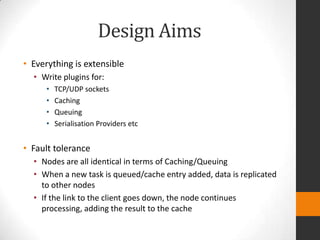
Design Aims
• Everything is extensible
  • Write plugins for:
     •   TCP/UDP sockets
     •   Caching
     •   Queuing
     •   Serialisation Providers etc


• Fault tolerance
  • Nodes are all identical in terms of Caching/Queuing
  • When a new task is queued/cache entry added, data is replicated
    to other nodes
  • If the link to the client goes down, the node continues
    processing, adding the result to the cache
The Implementation
• Currently a work in progress, expected prototype completion
  early April

• Will be available via Github once initial prototype complete
  • I will post on #IWDev’s Facebook page when ready
  • Pull requests/modifications welcome

• Makes heavy use of the Observer Pattern

• No Master/Slave arrangement. Every node is a master
Interesting Points
• End product should be able to run on Mono

• Tasks can be written in nearly any language
  • As long as it can be used by the CLR/DLR
  • EG: Tasks can be written in Python/F#

• Core library contains some useful collection extensions for
  .Net developers:
  • ManagedStack<T> - Creates a Stack that makes a program wait
    when the resources are depleted
Questions?
• Any questions/ideas feel free to come and chat to me or:
  •   Twitter: @stublackler
  •   Email: stuart@sblackler.net
  •   Facebook: IW Dev page
  •   GitHub: SBlackler


• Slides available:
  • http://dl.sblackler.net/mnp.pptx
  • http://dl.sblackler.net/mnp.ppt
  • http://dl.sblackler.net/mnp.pdf

Multi-Node Processing

  • 1.
  • 2.
    Who am I? •Software/Database Developer currently at Bournemouth University (Computing) • Most comfortable when developing with C#/VB.net/T-SQL • Completely self-taught with (almost) 3 years commercial experience • Occasionally blog about SQL/.Net Development over at http://sblackler.net/
  • 3.
    The Problem • Manywebsites usually have a complex unit of work that needs to be completed (Eg: Recommendation systems) • It can, potentially, take a long time to complete the unit of work • Websites can easily generate large amounts of traffic, so there is a potential need to offload the work from front-end servers to back-end processing servers.
  • 4.
    Design Architecture Single Node Pending Task Queue Caching Layer Communication Sockets - Auto-Discovery Socket - Client Socket - Internode Communication sockets
  • 5.
    Design Aims • Everythingis extensible • Write plugins for: • TCP/UDP sockets • Caching • Queuing • Serialisation Providers etc • Fault tolerance • Nodes are all identical in terms of Caching/Queuing • When a new task is queued/cache entry added, data is replicated to other nodes • If the link to the client goes down, the node continues processing, adding the result to the cache
  • 6.
    The Implementation • Currentlya work in progress, expected prototype completion early April • Will be available via Github once initial prototype complete • I will post on #IWDev’s Facebook page when ready • Pull requests/modifications welcome • Makes heavy use of the Observer Pattern • No Master/Slave arrangement. Every node is a master
  • 7.
    Interesting Points • Endproduct should be able to run on Mono • Tasks can be written in nearly any language • As long as it can be used by the CLR/DLR • EG: Tasks can be written in Python/F# • Core library contains some useful collection extensions for .Net developers: • ManagedStack<T> - Creates a Stack that makes a program wait when the resources are depleted
  • 8.
    Questions? • Any questions/ideasfeel free to come and chat to me or: • Twitter: @stublackler • Email: stuart@sblackler.net • Facebook: IW Dev page • GitHub: SBlackler • Slides available: • http://dl.sblackler.net/mnp.pptx • http://dl.sblackler.net/mnp.ppt • http://dl.sblackler.net/mnp.pdf