1
1
Digital Culture 2019
February 2020
2
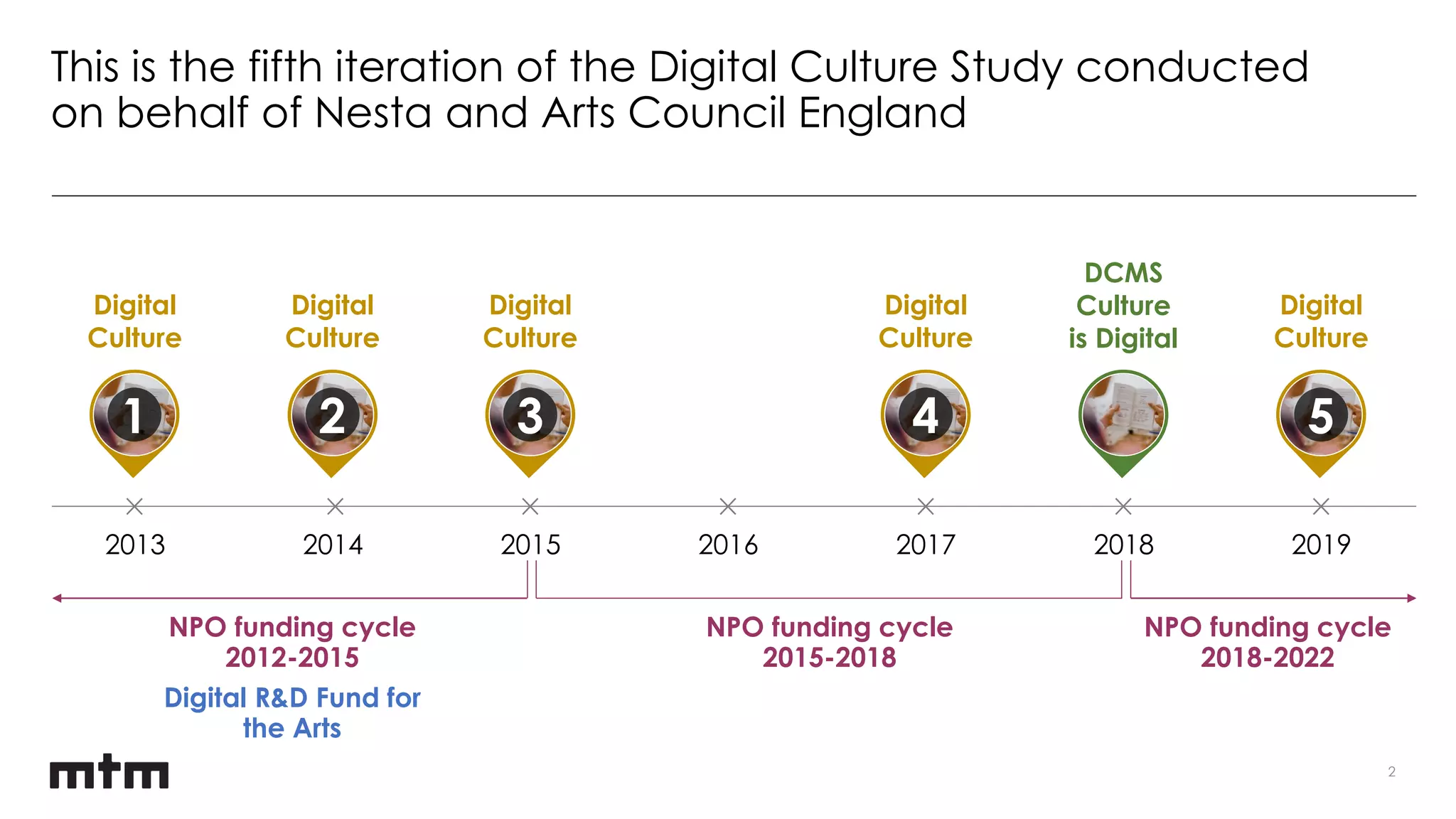
This is the fifth iteration of the Digital Culture Study conducted
on behalf of Nesta and Arts Council England
Digital
Culture
2013 2014 2015 2016 2017 2018 2019
1 2 3 4 5
Digital
Culture
Digital
Culture
Digital
Culture
Digital
Culture
DCMS
Culture
is Digital
NPO funding cycle
2012-2015
NPO funding cycle
2015-2018
NPO funding cycle
2018-2022
Digital R&D Fund for
the Arts
3
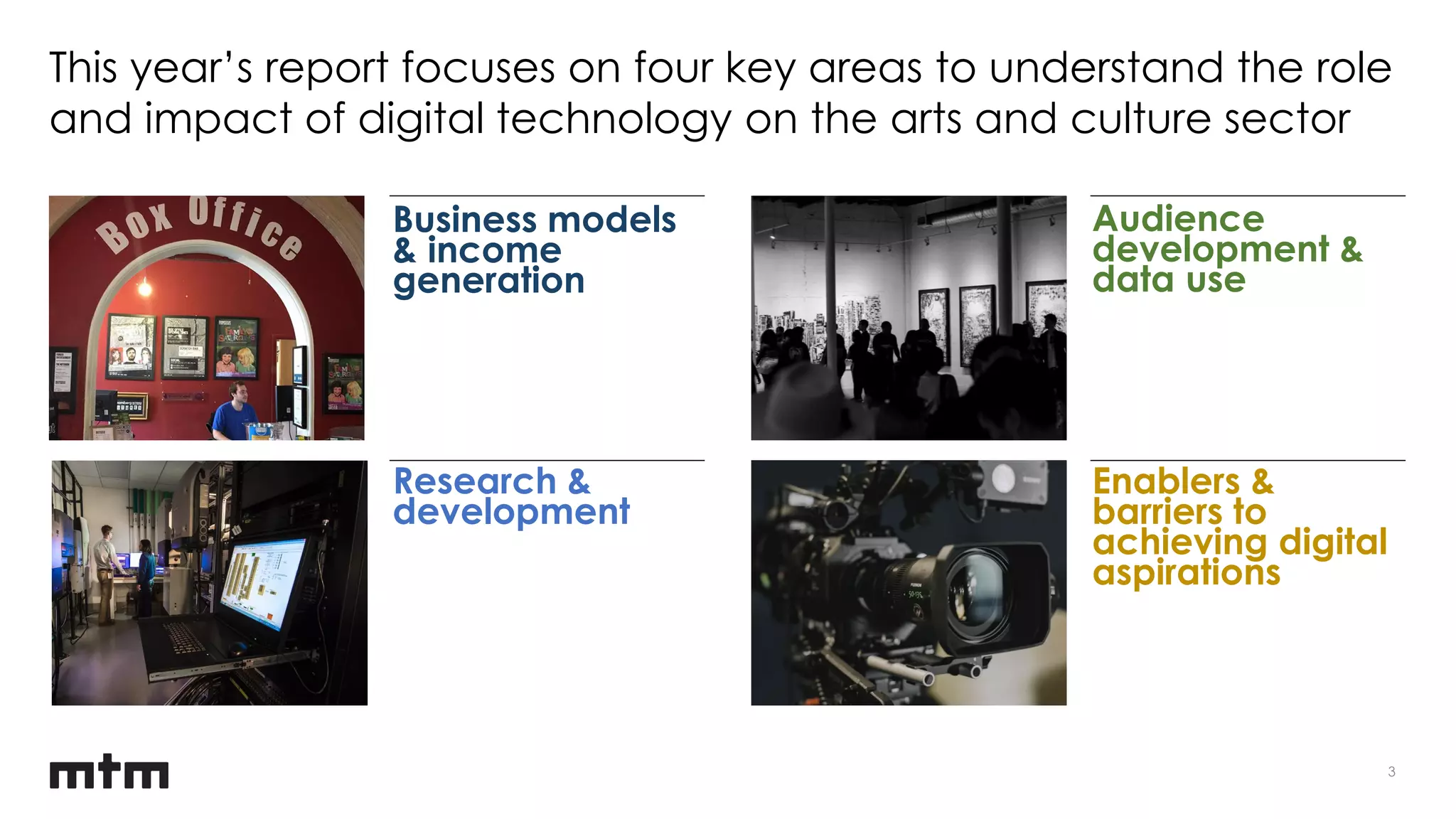
This year’s report focuses on four key areas to understand the role
and impact of digital technology on the arts and culture sector
Business models
& income
generation
Research &
development
Audience
development &
data use
Enablers &
barriers to
achieving digital
aspirations
4
Business models is the only
area in which digital
technology is considered
more important now than in
2013
2013
35%
2019
49%
Proportion of organisations agreeing that
technology is essential / important …
5
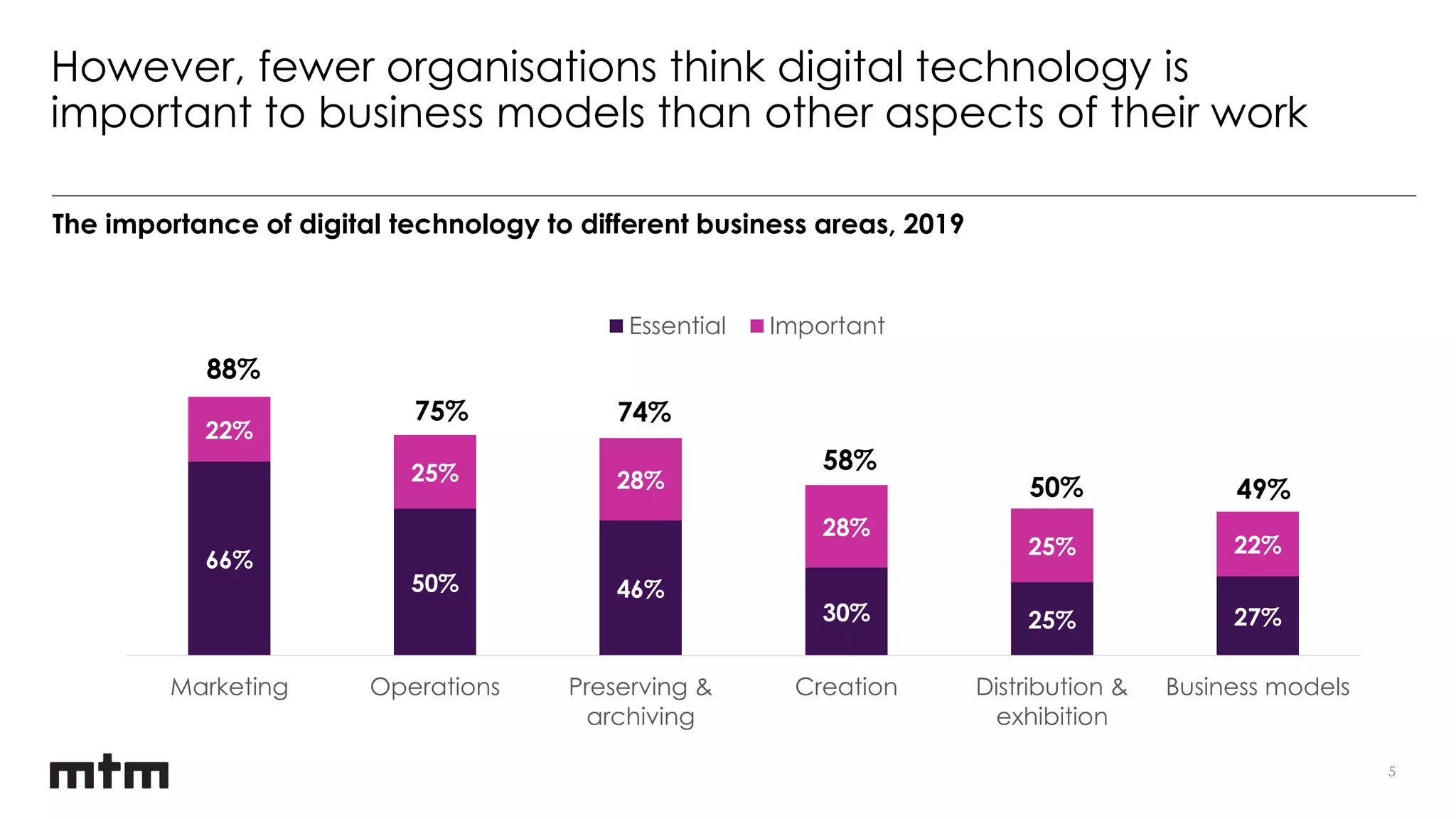
However, fewer organisations think digital technology is
important to business models than other aspects of their work
The importance of digital technology to different business areas, 2019
66%
50% 46%
30% 25% 27%
22%
25% 28%
28%
25% 22%
Marketing Operations Preserving &
archiving
Creation Distribution &
exhibition
Business models
Essential Important
88%
75% 74%
58%
50% 49%
6
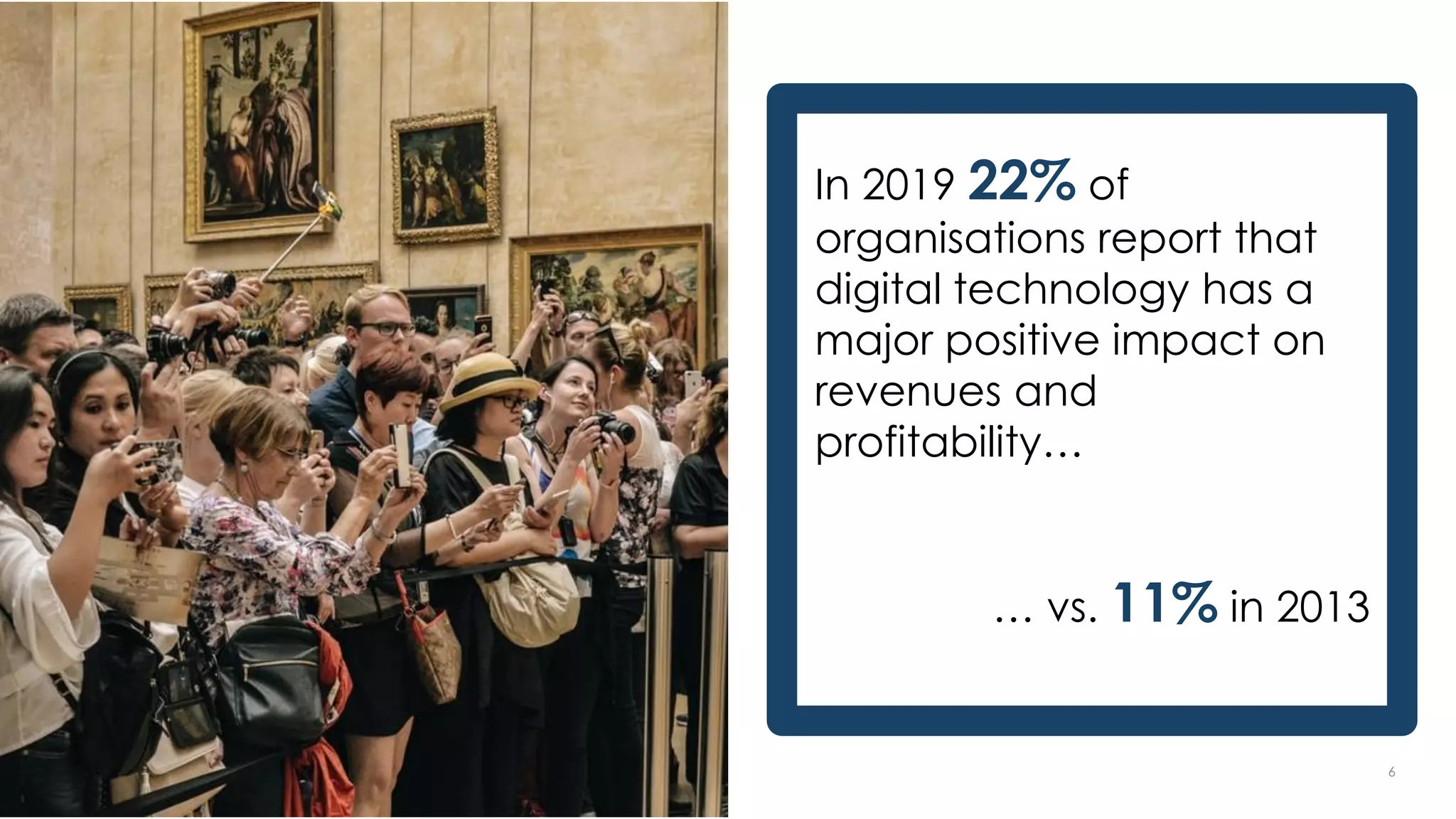
In 2019 22% of
organisations report that
digital technology has a
major positive impact on
revenues and
profitability…
… vs. 11% in 2013
Notes:
Source:
7
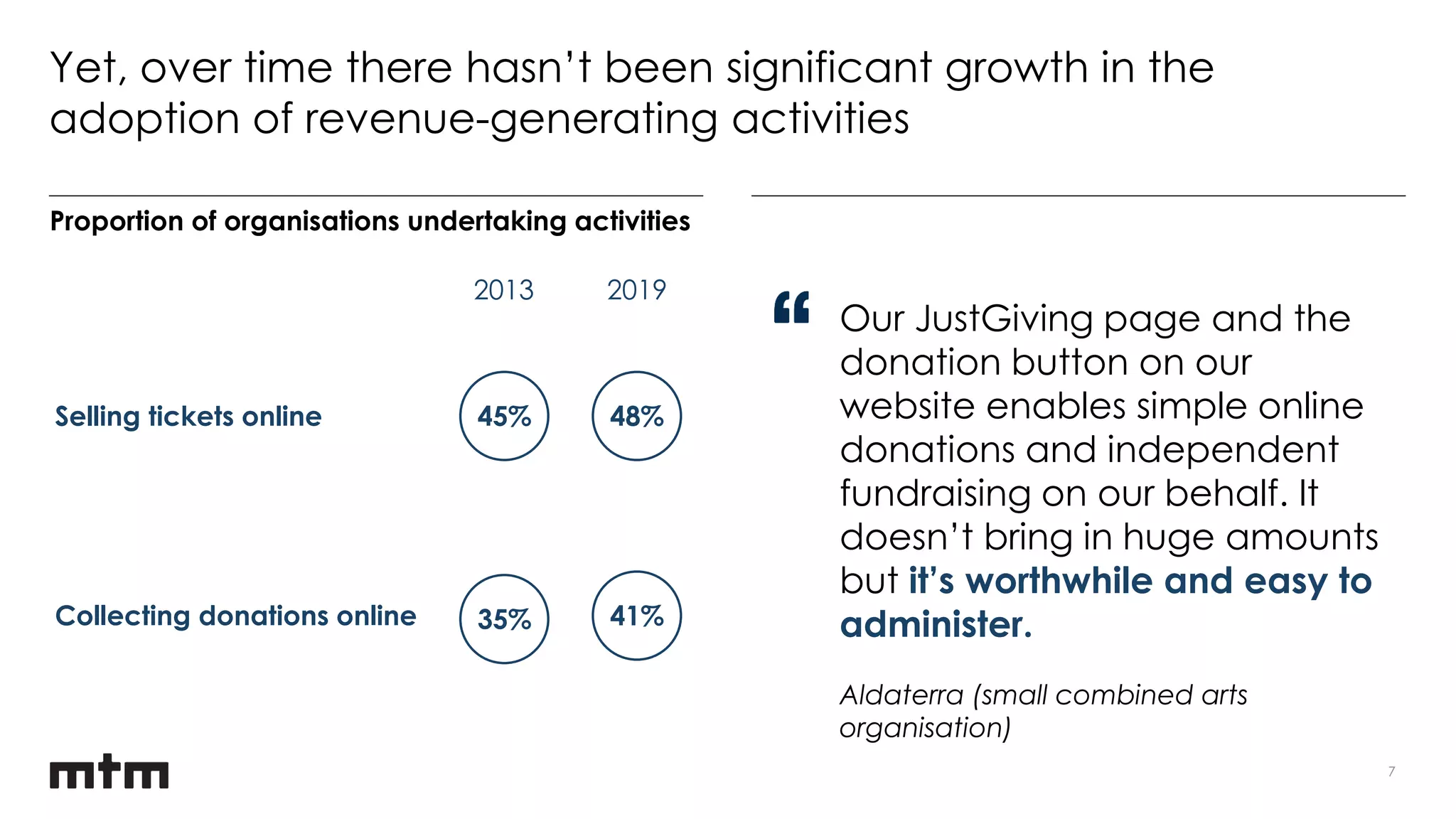
Yet, over time there hasn’t been significant growth in the
adoption of revenue-generating activities
2013 2019
Selling tickets online 45% 48%
Collecting donations online 35% 41%
Our JustGiving page and the
donation button on our
website enables simple online
donations and independent
fundraising on our behalf. It
doesn’t bring in huge amounts
but it’s worthwhile and easy to
administer.
Aldaterra (small combined arts
organisation)
Proportion of organisations undertaking activities
8
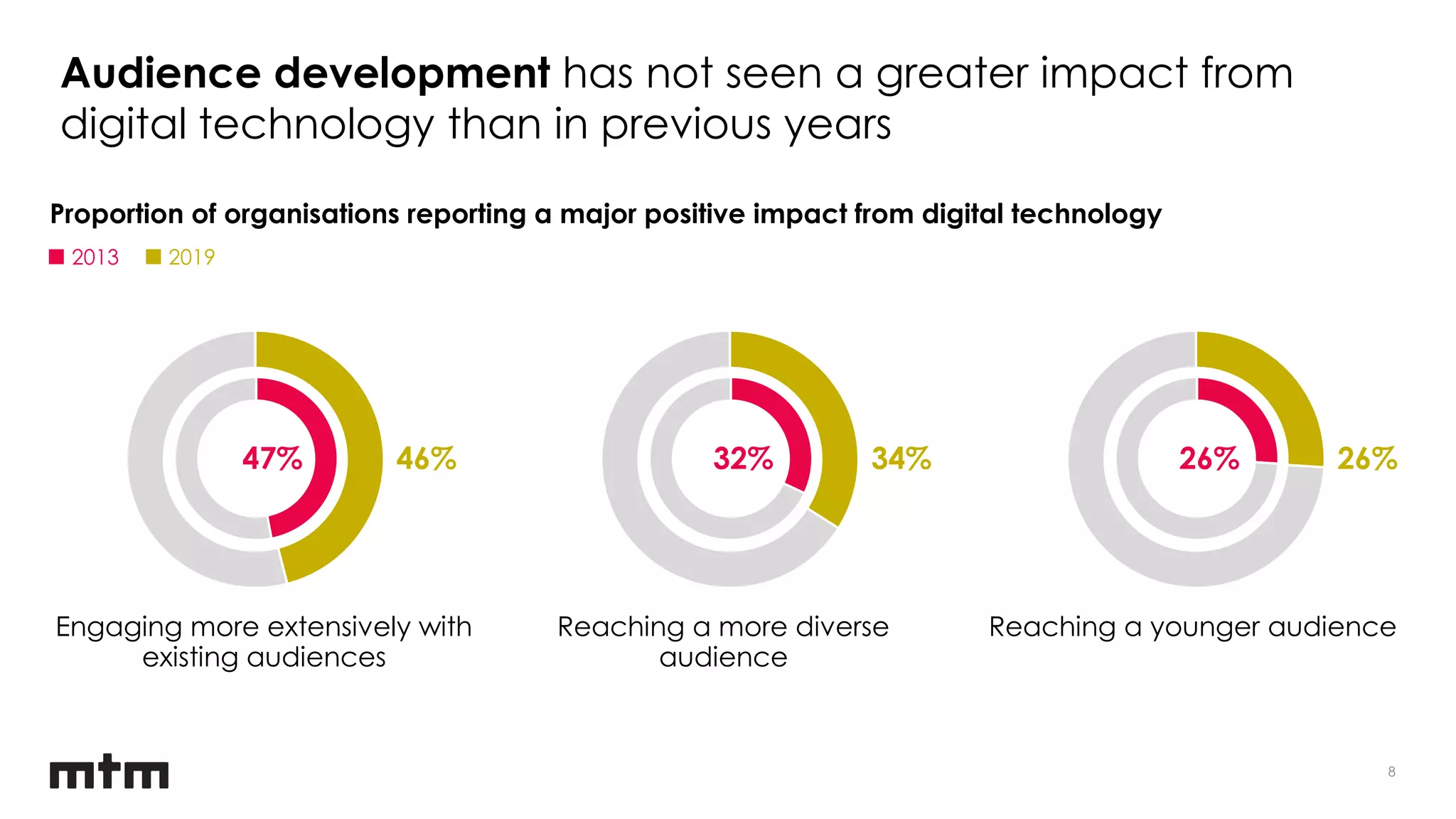
Proportion of organisations reporting a major positive impact from digital technology
Audience development has not seen a greater impact from
digital technology than in previous years
20192013
46%47% 26%26%34%32%
Engaging more extensively with
existing audiences
Reaching a more diverse
audience
Reaching a younger audience
9
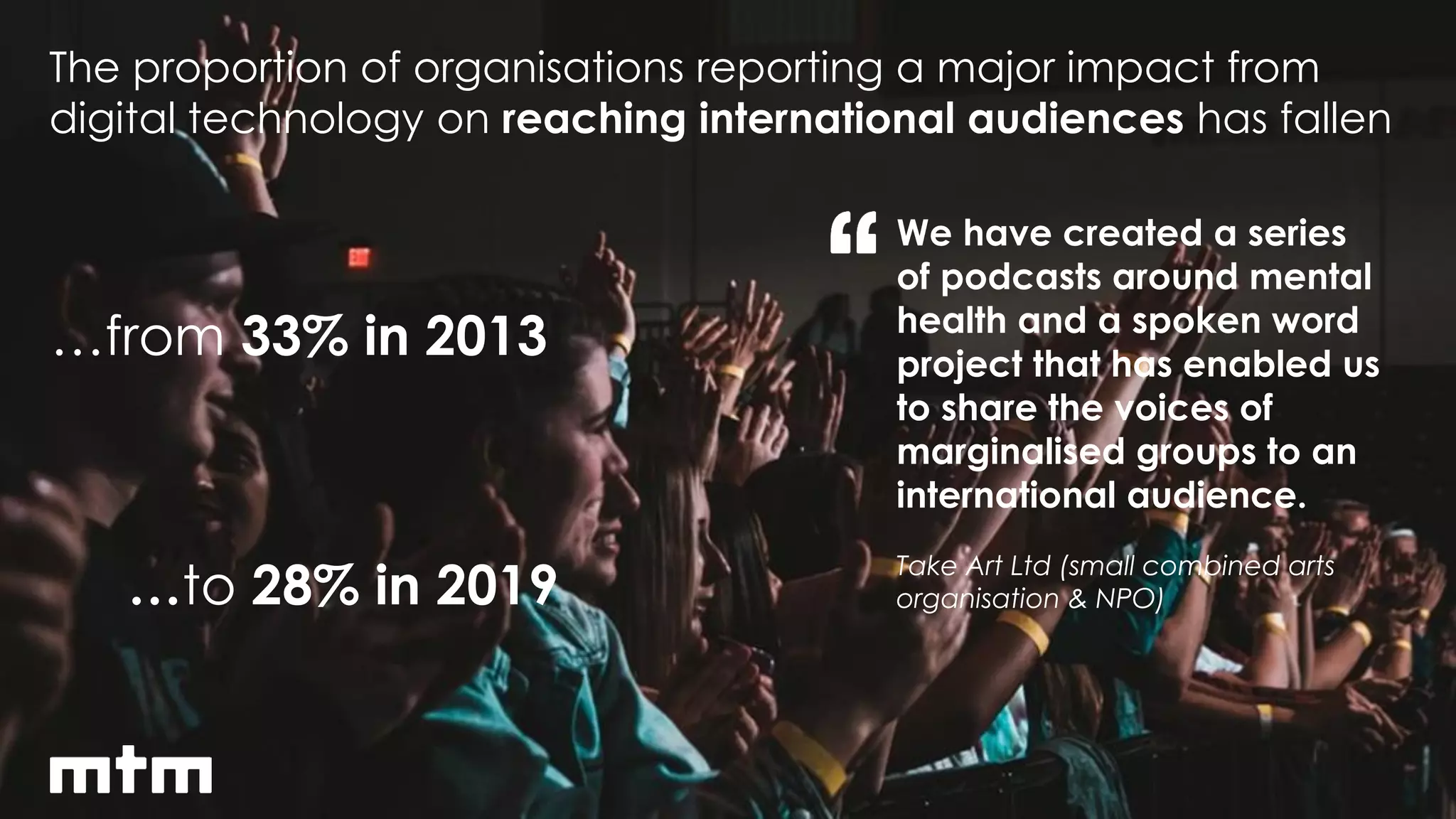
…from 33% in 2013
…to 28% in 2019
We have created a series
of podcasts around mental
health and a spoken word
project that has enabled us
to share the voices of
marginalised groups to an
international audience.
Take Art Ltd (small combined arts
organisation & NPO)
The proportion of organisations reporting a major impact from
digital technology on reaching international audiences has fallen
10
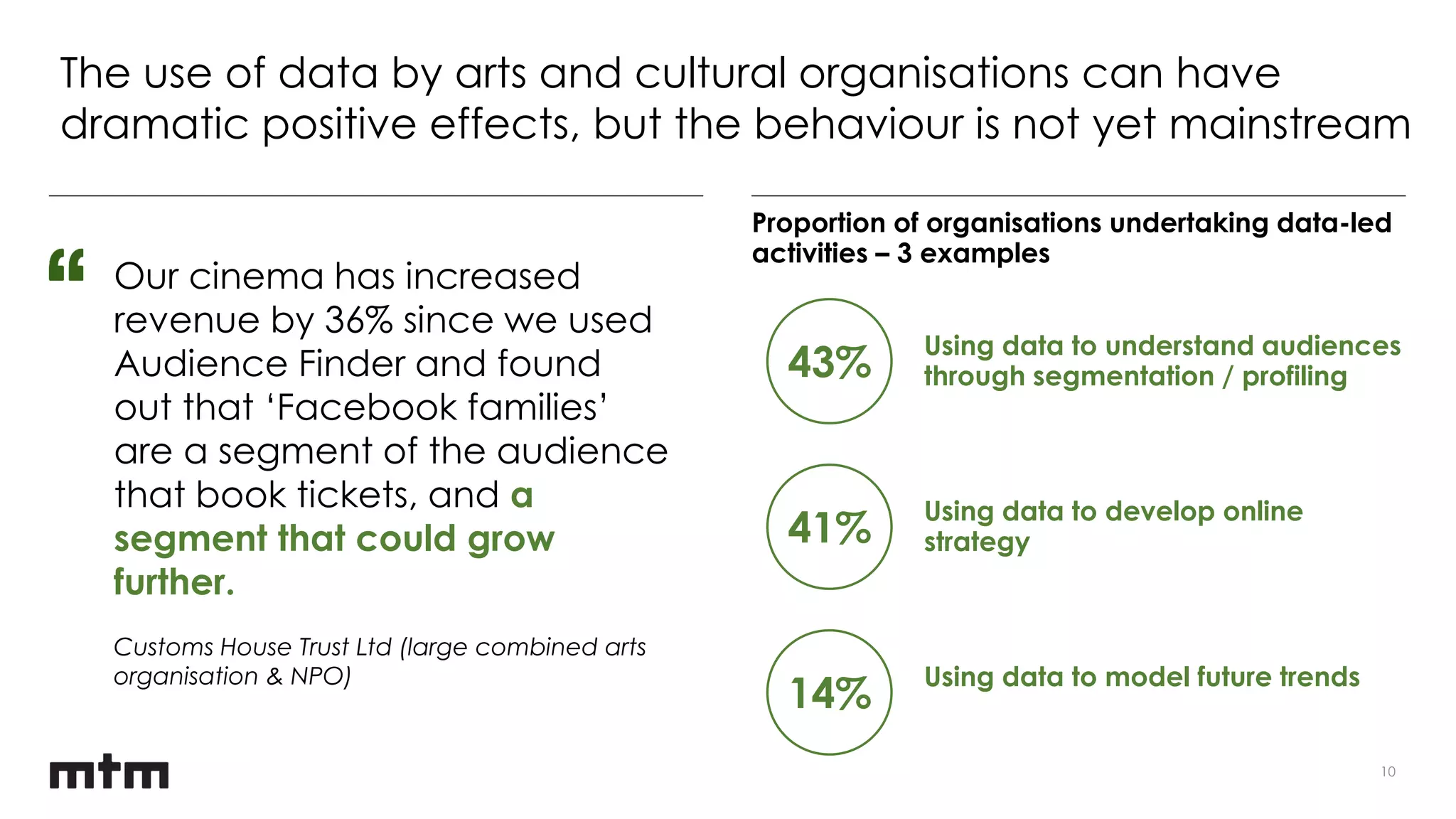
The use of data by arts and cultural organisations can have
dramatic positive effects, but the behaviour is not yet mainstream
Our cinema has increased
revenue by 36% since we used
Audience Finder and found
out that ‘Facebook families’
are a segment of the audience
that book tickets, and a
segment that could grow
further.
Customs House Trust Ltd (large combined arts
organisation & NPO)
Proportion of organisations undertaking data-led
activities – 3 examples
41%
Using data to develop online
strategy
14%
Using data to model future trends
43%
Using data to understand audiences
through segmentation / profiling
11
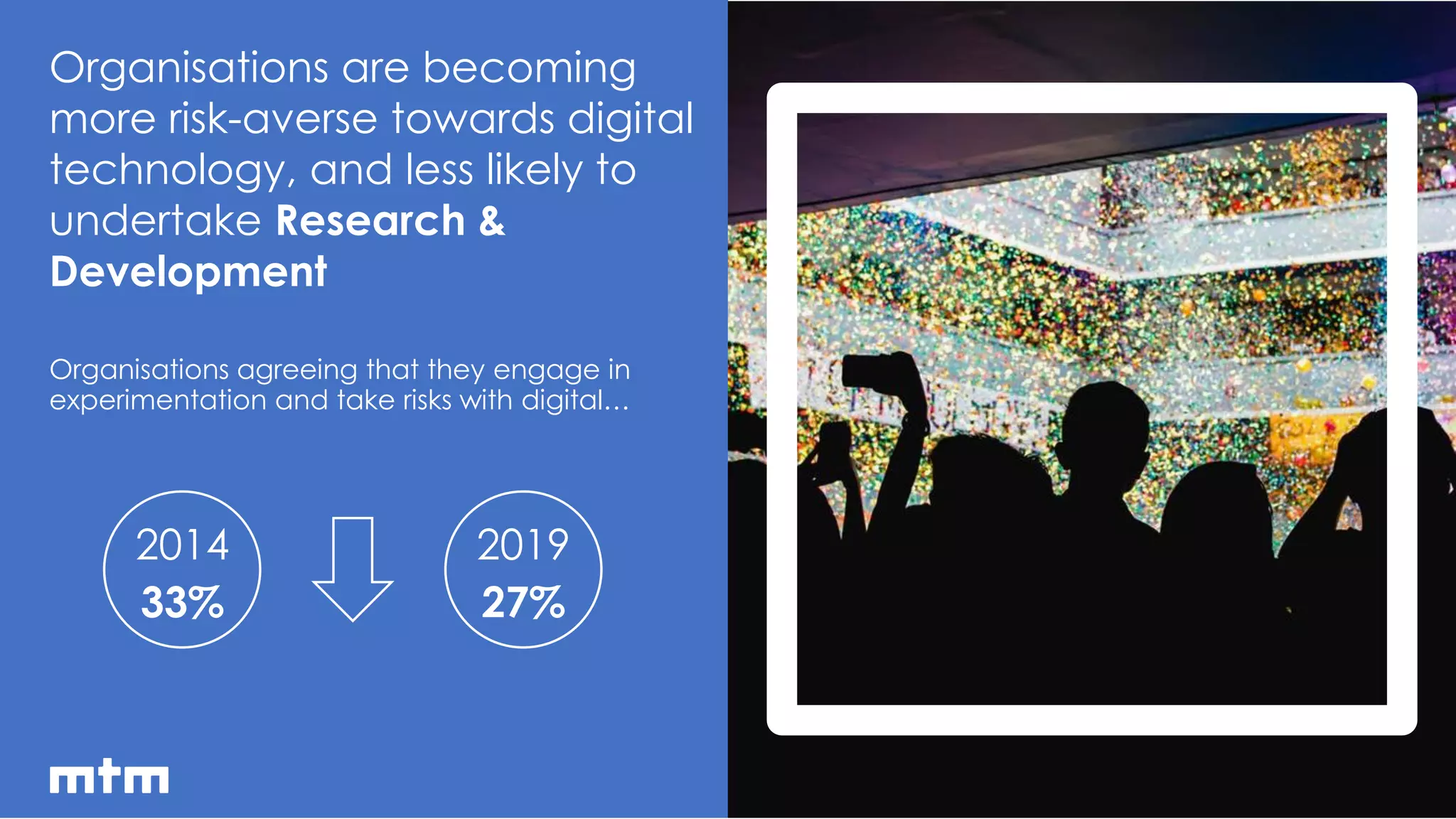
Organisations are becoming
more risk-averse towards digital
technology, and less likely to
undertake Research &
Development
Organisations agreeing that they engage in
experimentation and take risks with digital…
2014
33%
2019
27%
12
We are still playing catch
up in digital display /
exhibition technology so I
think we can let other
organisations test the
water before we do!
Hampshire County Council
Museums and Archives Services
(large heritage organisation)
14
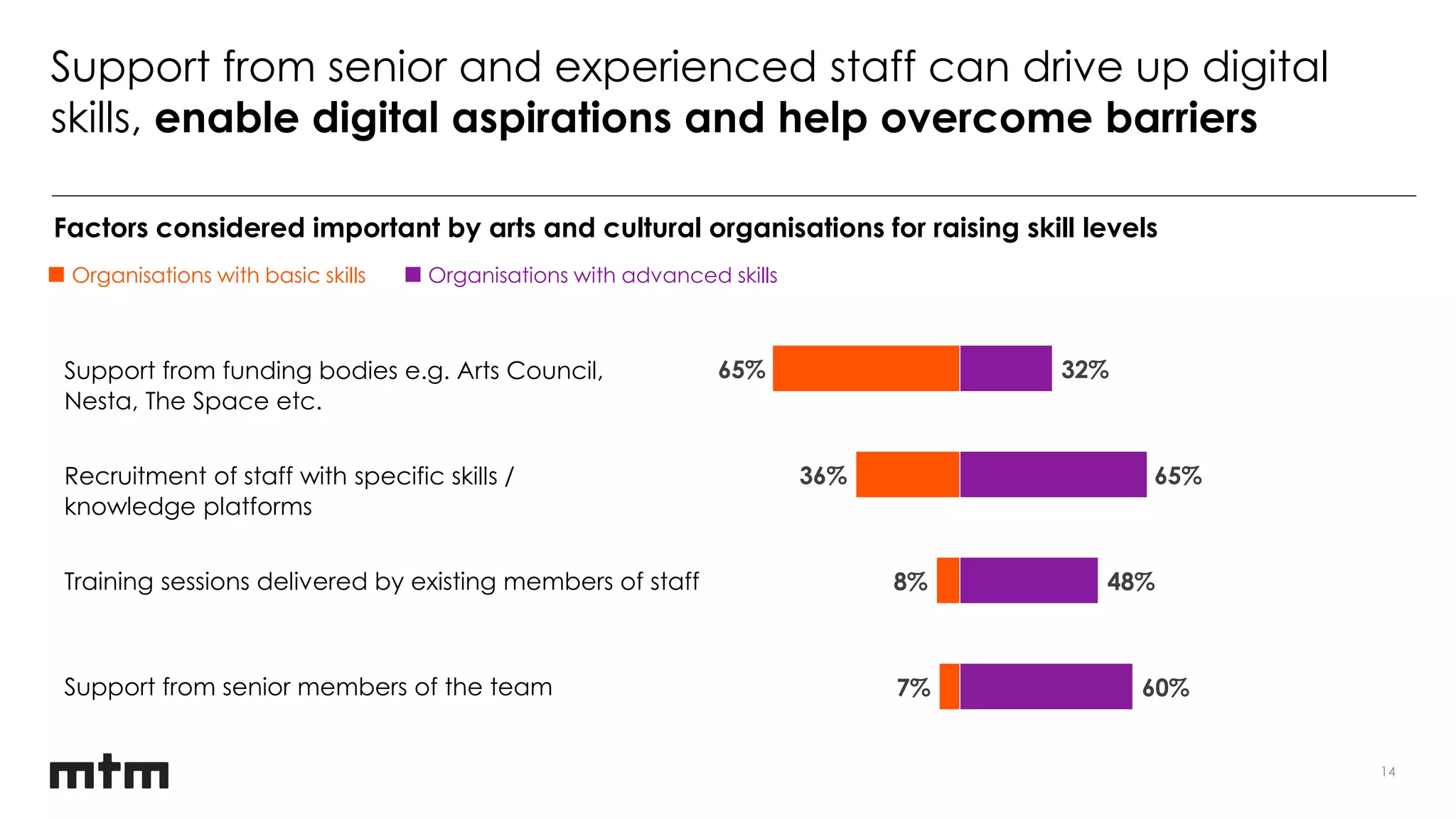
Support from senior and experienced staff can drive up digital
skills, enable digital aspirations and help overcome barriers
Factors considered important by arts and cultural organisations for raising skill levels
Support from senior members of the team
Training sessions delivered by existing members of staff
Support from funding bodies e.g. Arts Council,
Nesta, The Space etc.
Organisations with basic skills Organisations with advanced skills
65%
36%
8%
7%
32%
65%
48%
60%
Recruitment of staff with specific skills /
knowledge platforms
15
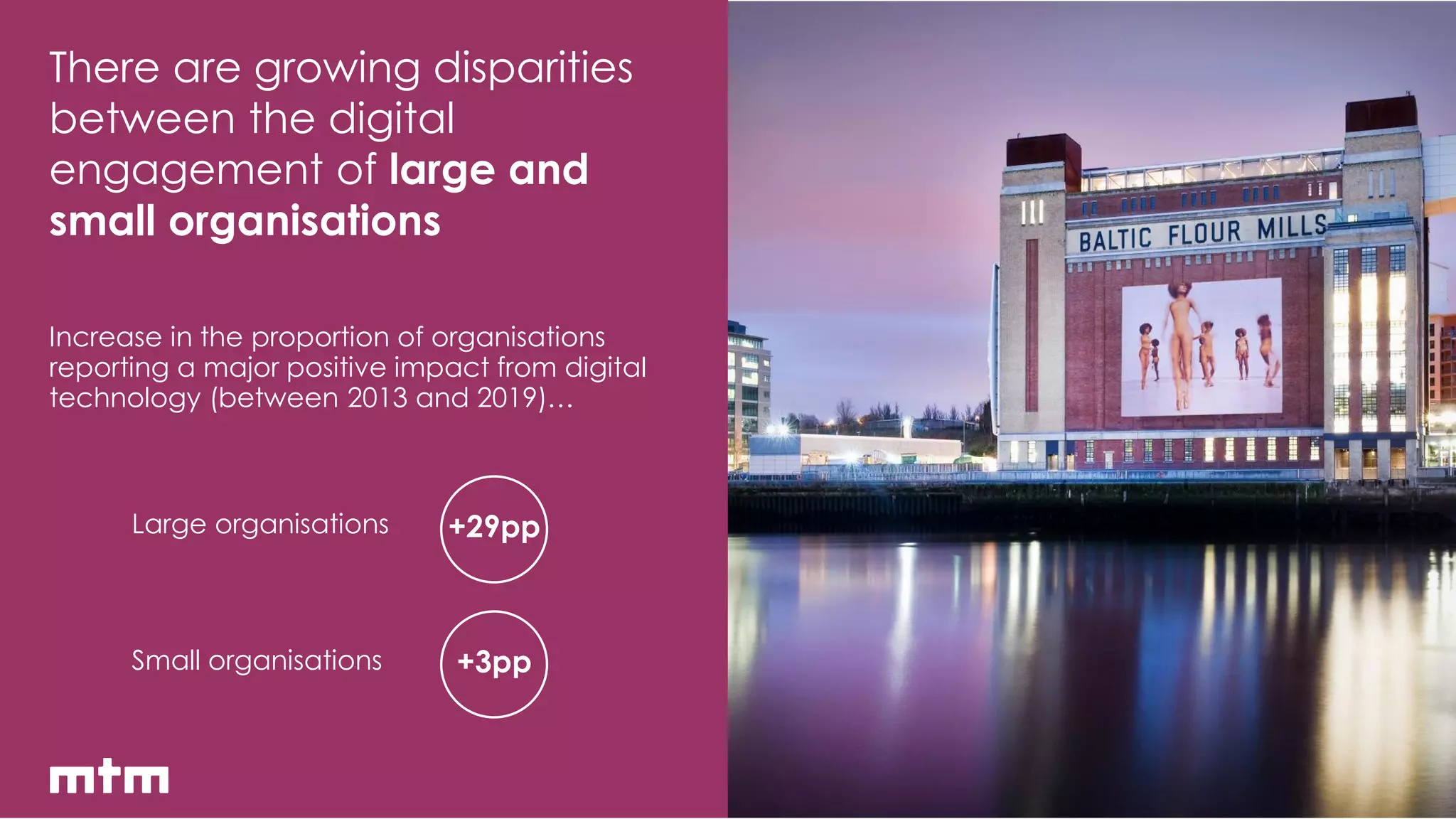
There are growing disparities
between the digital
engagement of large and
small organisations
Increase in the proportion of organisations
reporting a major positive impact from digital
technology (between 2013 and 2019)…
+29pp
+3pp
Large organisations
Small organisations
16
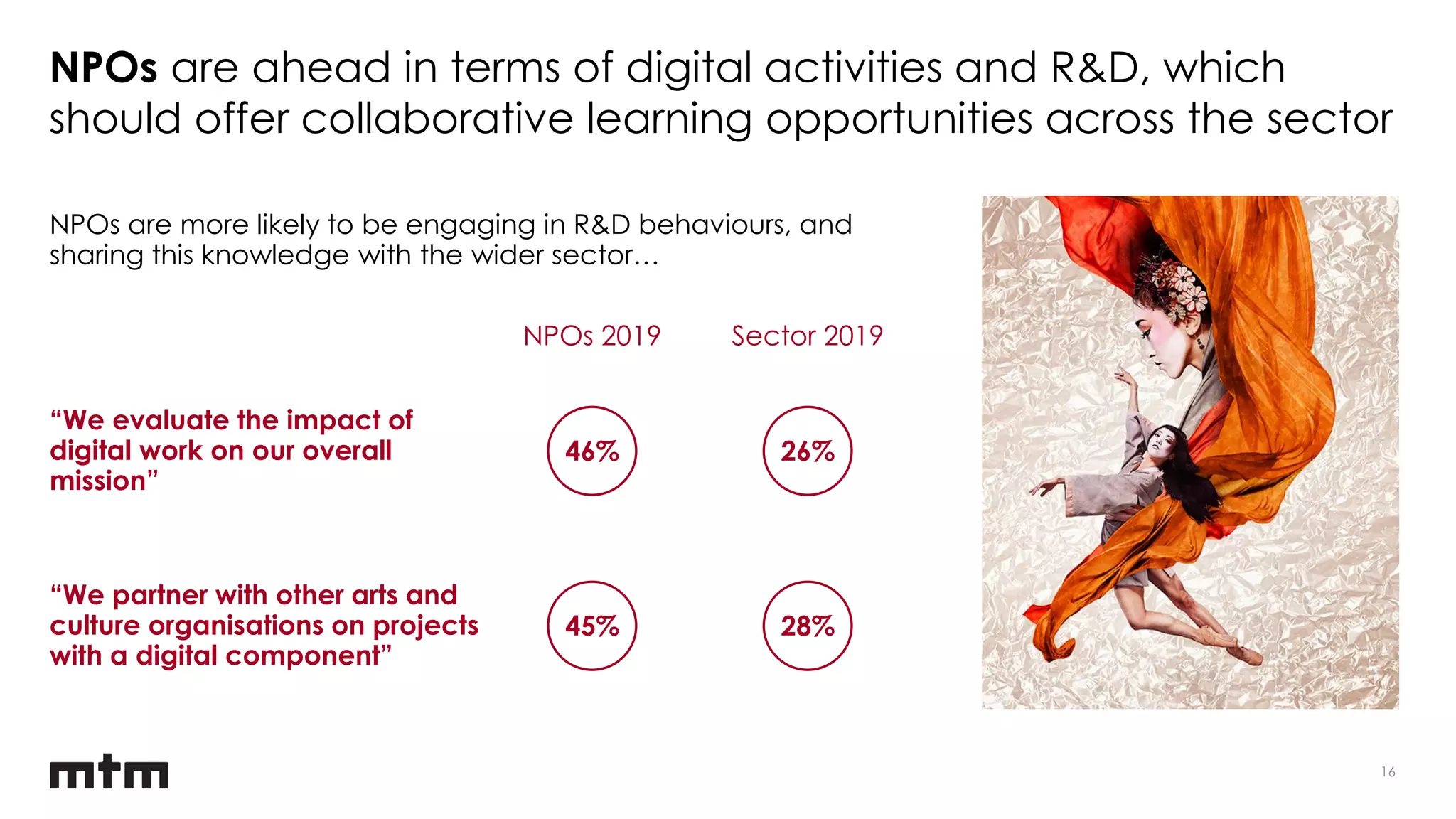
NPOs are ahead in terms of digital activities and R&D, which
should offer collaborative learning opportunities across the sector
NPOs are more likely to be engaging in R&D behaviours, and
sharing this knowledge with the wider sector…
NPOs 2019 Sector 2019
“We partner with other arts and
culture organisations on projects
with a digital component”
45% 28%
“We evaluate the impact of
digital work on our overall
mission”
46% 26%
17
CAROLINE WREN
MANAGING DIRECTOR
caroline.wren@wearemtm.com
THANK YOU
FOR LISTENING_

MTM Digital Culture 2019 Launch Presentation

  • 1.
  • 2.
    2 This is thefifth iteration of the Digital Culture Study conducted on behalf of Nesta and Arts Council England Digital Culture 2013 2014 2015 2016 2017 2018 2019 1 2 3 4 5 Digital Culture Digital Culture Digital Culture Digital Culture DCMS Culture is Digital NPO funding cycle 2012-2015 NPO funding cycle 2015-2018 NPO funding cycle 2018-2022 Digital R&D Fund for the Arts
  • 3.
    3 This year’s reportfocuses on four key areas to understand the role and impact of digital technology on the arts and culture sector Business models & income generation Research & development Audience development & data use Enablers & barriers to achieving digital aspirations
  • 4.
    4 Business models isthe only area in which digital technology is considered more important now than in 2013 2013 35% 2019 49% Proportion of organisations agreeing that technology is essential / important …
  • 5.
    5 However, fewer organisationsthink digital technology is important to business models than other aspects of their work The importance of digital technology to different business areas, 2019 66% 50% 46% 30% 25% 27% 22% 25% 28% 28% 25% 22% Marketing Operations Preserving & archiving Creation Distribution & exhibition Business models Essential Important 88% 75% 74% 58% 50% 49%
  • 6.
    6 In 2019 22%of organisations report that digital technology has a major positive impact on revenues and profitability… … vs. 11% in 2013 Notes: Source:
  • 7.
    7 Yet, over timethere hasn’t been significant growth in the adoption of revenue-generating activities 2013 2019 Selling tickets online 45% 48% Collecting donations online 35% 41% Our JustGiving page and the donation button on our website enables simple online donations and independent fundraising on our behalf. It doesn’t bring in huge amounts but it’s worthwhile and easy to administer. Aldaterra (small combined arts organisation) Proportion of organisations undertaking activities
  • 8.
    8 Proportion of organisationsreporting a major positive impact from digital technology Audience development has not seen a greater impact from digital technology than in previous years 20192013 46%47% 26%26%34%32% Engaging more extensively with existing audiences Reaching a more diverse audience Reaching a younger audience
  • 9.
    9 …from 33% in2013 …to 28% in 2019 We have created a series of podcasts around mental health and a spoken word project that has enabled us to share the voices of marginalised groups to an international audience. Take Art Ltd (small combined arts organisation & NPO) The proportion of organisations reporting a major impact from digital technology on reaching international audiences has fallen
  • 10.
    10 The use ofdata by arts and cultural organisations can have dramatic positive effects, but the behaviour is not yet mainstream Our cinema has increased revenue by 36% since we used Audience Finder and found out that ‘Facebook families’ are a segment of the audience that book tickets, and a segment that could grow further. Customs House Trust Ltd (large combined arts organisation & NPO) Proportion of organisations undertaking data-led activities – 3 examples 41% Using data to develop online strategy 14% Using data to model future trends 43% Using data to understand audiences through segmentation / profiling
  • 11.
    11 Organisations are becoming morerisk-averse towards digital technology, and less likely to undertake Research & Development Organisations agreeing that they engage in experimentation and take risks with digital… 2014 33% 2019 27%
  • 12.
    12 We are stillplaying catch up in digital display / exhibition technology so I think we can let other organisations test the water before we do! Hampshire County Council Museums and Archives Services (large heritage organisation)
  • 13.
    14 Support from seniorand experienced staff can drive up digital skills, enable digital aspirations and help overcome barriers Factors considered important by arts and cultural organisations for raising skill levels Support from senior members of the team Training sessions delivered by existing members of staff Support from funding bodies e.g. Arts Council, Nesta, The Space etc. Organisations with basic skills Organisations with advanced skills 65% 36% 8% 7% 32% 65% 48% 60% Recruitment of staff with specific skills / knowledge platforms
  • 14.
    15 There are growingdisparities between the digital engagement of large and small organisations Increase in the proportion of organisations reporting a major positive impact from digital technology (between 2013 and 2019)… +29pp +3pp Large organisations Small organisations
  • 15.
    16 NPOs are aheadin terms of digital activities and R&D, which should offer collaborative learning opportunities across the sector NPOs are more likely to be engaging in R&D behaviours, and sharing this knowledge with the wider sector… NPOs 2019 Sector 2019 “We partner with other arts and culture organisations on projects with a digital component” 45% 28% “We evaluate the impact of digital work on our overall mission” 46% 26%
  • 16.