Digital Strategy
Theory, Practice, and the Future
October 2022
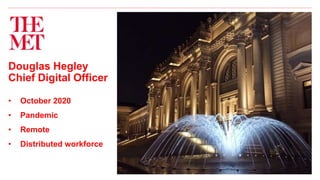
Douglas Hegley
Chief Digital Officer
• October 2020
• Pandemic
• Remote
• Distributed workforce
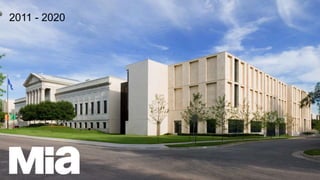
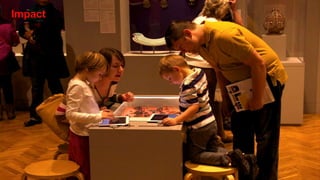
Image source: http://upload.wikimedia.org/wikipedia/commons/d/d9/Minneapolis_Institute_of_Arts.jpg
2011 - 2020
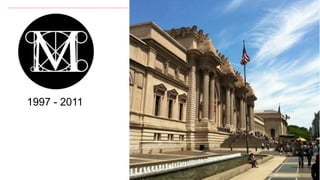
1997 - 2011
5
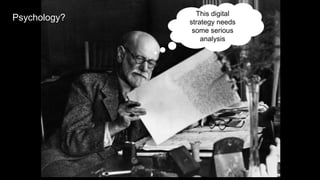
Psychology? This digital
strategy needs
some serious
analysis
6
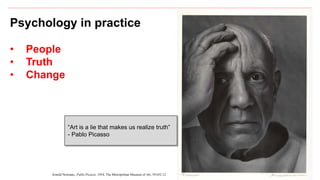
Psychology in practice
• People
• Truth
• Change
Arnold Newman, Pablo Picasso, 1954, The Metropolitan Museum of Art, 59.652.12
“Art is a lie that makes us realize truth”
- Pablo Picasso
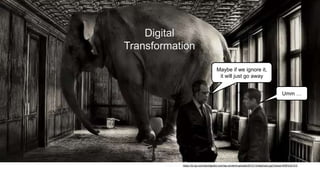
Digital
Transformation
Image Source: https://i2.wp.com/davidgodot.com/wp-content/uploads/2012/12/elephant.jpg?resize=636%2C310
Maybe if we ignore it,
it will just go away
Umm …
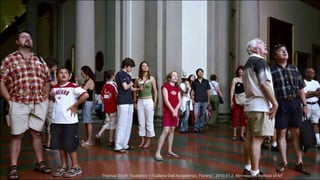
Thomas Struth “Audience 1 (Galleria Dell Accademia), Florenz”, 2010.51.2, Minneapolis Institute of Art
9
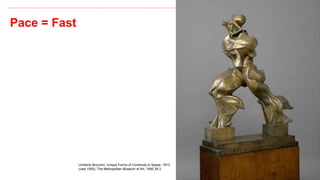
Pace = Fast
Umberto Boccioni, Unique Forms of Continuity in Space, 1913
(cast 1950), The Metropolitan Museum of Art, 1990.38.3
Digital and Audience
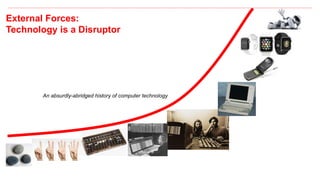
External Forces:
Technology is a Disruptor
An absurdly-abridged history of computer technology
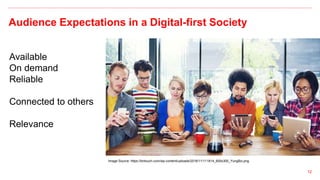
Audience Expectations in a Digital-first Society
12
Available
On demand
Reliable
Connected to others
Relevance
Image Source: https://bntouch.com/wp-content/uploads/2016/11/111814_600x300_YungBiz.png
Audiences
13
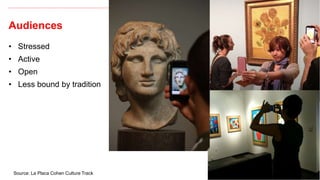
• Stressed
• Active
• Open
• Less bound by tradition
Source: La Placa Cohen Culture Track
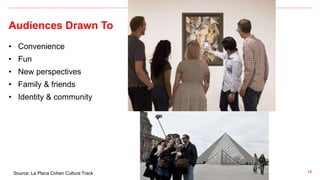
Audiences Drawn To
14
• Convenience
• Fun
• New perspectives
• Family & friends
• Identity & community
Source: La Placa Cohen Culture Track
Audiences of the Near Future
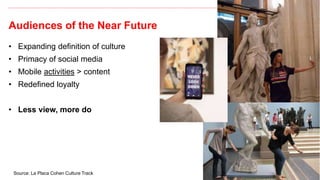
15
• Expanding definition of culture
• Primacy of social media
• Mobile activities > content
• Redefined loyalty
• Less view, more do
Source: La Placa Cohen Culture Track
Why Digital?
To deliver: Reach, Engagement, Impact
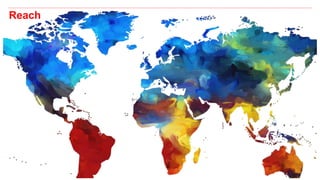
Reach
Reach
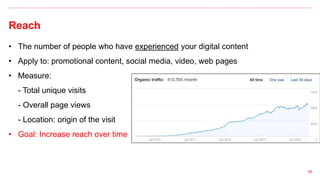
• The number of people who have experienced your digital content
• Apply to: promotional content, social media, video, web pages
• Measure:
- Total unique visits
- Overall page views
- Location: origin of the visit
• Goal: Increase reach over time
18
19
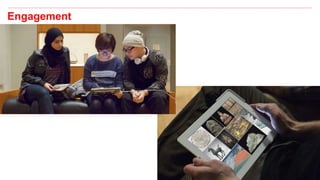
Engagement
Engagement
20
• Effectiveness of your content, how deeply you are connecting with your audiences
• Apply to: stories, video, audio, purchases
• Measure:
– Page views per session and session duration
– Repeat visitors
– One-time purchase (merchandise, ticket, event, registration, etc.)
– Social media follow
• Goal: Increase engagement over time by providing rich content and an invitation to
learn more and interact
Impact
Impact
22
• The meaning of your content to your audiences & how they change because of it
• Apply to: learning resources, membership, donations
• Measure:
– Learning - retention of information or stories over time
– Survey results, esp. questions about lasting impressions and reflections
– Sustained purchases (ongoing membership, subscriptions)
– Money donated
• Goals: Create lasting impact on our audiences, inspire creativity, increase
tolerance and empathy, support multicultural perspective, increase mutual
understanding
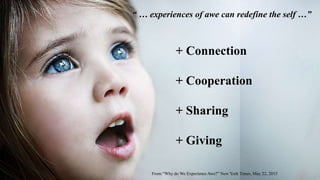
“ … experiences of awe can redefine the self …”
+ Connection
+ Cooperation
+ Sharing
+ Giving
From “Why do We Experience Awe?” New York Times, May 22, 2015
Digital at The Met
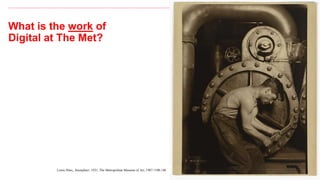
What is the work of
Digital at The Met?
25
Lewis Hine, Steamfitter, 1921, The Metropolitan Museum of Art, 1987.1100.146
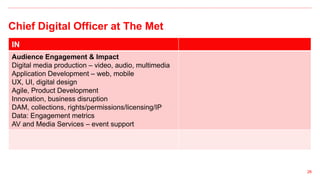
Chief Digital Officer at The Met
26
IN
Audience Engagement & Impact
Digital media production – video, audio, multimedia
Application Development – web, mobile
UX, UI, digital design
Agile, Product Development
Innovation, business disruption
DAM, collections, rights/permissions/licensing/IP
Data: Engagement metrics
AV and Media Services – event support
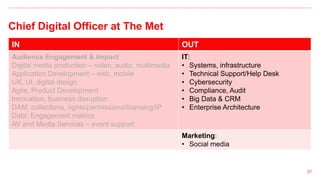
Chief Digital Officer at The Met
27
IN OUT
Audience Engagement & Impact
Digital media production – video, audio, multimedia
Application Development – web, mobile
UX, UI, digital design
Agile, Product Development
Innovation, business disruption
DAM, collections, rights/permissions/licensing/IP
Data: Engagement metrics
AV and Media Services – event support
IT:
• Systems, infrastructure
• Technical Support/Help Desk
• Cybersecurity
• Compliance, Audit
• Big Data & CRM
• Enterprise Architecture
Marketing:
• Social media
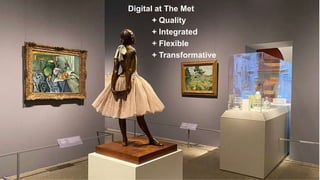
Digital at The Met
+ Quality
+ Integrated
+ Flexible
+ Transformative
Digital Adoption by Museums
(Pre-Pandemic)
29
30
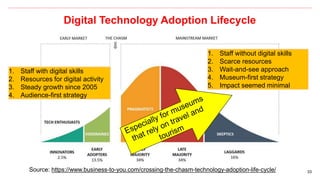
Digital Technology Adoption Lifecycle
Source: https://www.business-to-you.com/crossing-the-chasm-technology-adoption-life-cycle/
31
Digital Technology Adoption Lifecycle
Source: https://www.business-to-you.com/crossing-the-chasm-technology-adoption-life-cycle/
1. Staff with digital skills
2. Resources for digital activity
3. Steady growth since 2005
4. Audience-first strategy
32
Digital Technology Adoption Lifecycle
Source: https://www.business-to-you.com/crossing-the-chasm-technology-adoption-life-cycle/
1. Staff without digital skills
2. Scarce resources
3. Wait-and-see approach
4. Museum-first strategy
5. Impact seemed minimal
1. Staff with digital skills
2. Resources for digital activity
3. Steady growth since 2005
4. Audience-first strategy
33
Digital Technology Adoption Lifecycle
Source: https://www.business-to-you.com/crossing-the-chasm-technology-adoption-life-cycle/
1. Staff with digital skills
2. Resources for digital activity
3. Steady growth since 2005
4. Audience-first strategy
1. Staff without digital skills
2. Scarce resources
3. Wait-and-see approach
4. Museum-first strategy
5. Impact seemed minimal
COVID-19
34
35
36
Source: https://medium.com/theagency/everybody-wants-to-go-digital-nobody-knows-what-it-means-c675653d1a5b
(e.g., Museum Director)
“GO DIGITAL”
● “We have no choice”
● “We cannot lose our audiences”
● “Those tech people work fine from home, right?”
37
“GO DIGITAL”
● “We have no choice”
● “We cannot lose our audiences”
● “Those tech people can work fine from home, right?”
RESULT: An initial burst of activity, and surprisingly good audience engagement
38
39
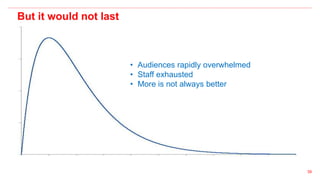
But it would not last
• Audiences rapidly overwhelmed
• Staff exhausted
• More is not always better
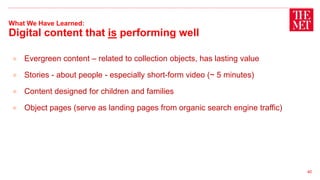
What We Have Learned:
Digital content that is performing well
● Evergreen content – related to collection objects, has lasting value
● Stories - about people - especially short-form video (~ 5 minutes)
● Content designed for children and families
● Object pages (serve as landing pages from organic search engine traffic)
40
Digital Strategy
41
42
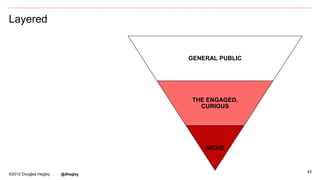
GENERAL PUBLIC
THE ENGAGED,
CURIOUS
NICHE
Layered
©2012 Douglas Hegley @dhegley
43
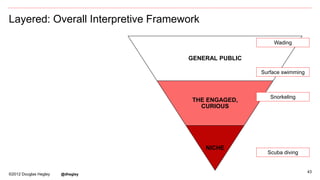
GENERAL PUBLIC
THE ENGAGED,
CURIOUS
NICHE
Surface swimming
Snorkeling
Scuba diving
Wading
Layered: Overall Interpretive Framework
©2012 Douglas Hegley @dhegley
44
GENERAL PUBLIC
THE ENGAGED,
CURIOUS
NICHE
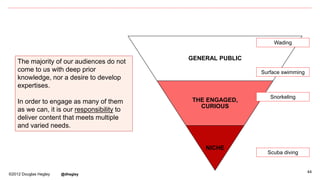
The majority of our audiences do not
come to us with deep prior
knowledge, nor a desire to develop
expertises.
In order to engage as many of them
as we can, it is our responsibility to
deliver content that meets multiple
and varied needs.
Surface swimming
Snorkeling
Scuba diving
Wading
©2012 Douglas Hegley @dhegley
45
GENERAL PUBLIC
THE ENGAGED,
CURIOUS
NICHE
©2012 Douglas Hegley @dhegley
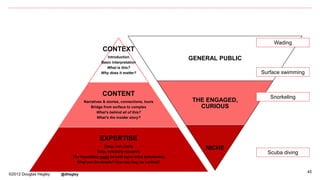
CONTEXT
Introduction
Basic Interpretation
What is this?
Why does it matter?
CONTENT
Narratives & stories, connections, tours
Bridge from surface to complex
What’s behind all of this?
What’s the insider story?
EXPERTISE
Deep, rich, facts
Data, scholarly research
The foundation must be built upon solid scholarship
What are the details? How can they be verified?
Surface swimming
Snorkeling
Scuba diving
Wading
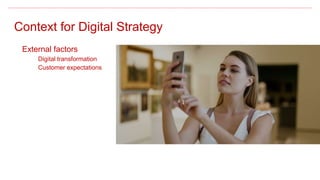
Context for Digital Strategy
External factors
Digital transformation
Customer expectations
Context for Digital Strategy
External factors
Digital transformation
Customer expectations
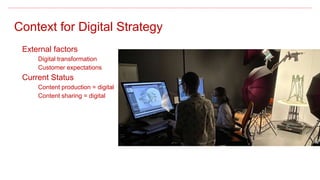
Current Status
Content production = digital
Content sharing = digital
Context for Digital Strategy
External factors
Digital transformation
Customer expectations
Current Status
Content production = digital
Content sharing = digital
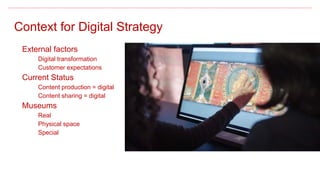
Museums
Real
Physical space
Special
Digital Strategy: Advantages
● Emphasizes the transformative power of digital
● Aligns digital efforts
● Provides clarity & transparency
● Enables long-term success of digital efforts
49
Digital Strategy: Advantages
● Emphasizes the transformative power of digital
● Aligns digital efforts
● Provides clarity & transparency
● Enables long-term success of digital efforts
● Recognizes digital as a specialty
○ Digital is still a young discipline
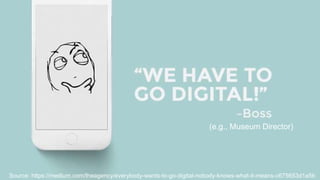
● A teaching tool across the organization
● Frames decisions re: digital
● Helps manage expectations
50
Digital Strategy: Potential Pitfalls
● Confirms digital as “extra” - not core to the mission
● Confirms that digital is separate
○ Digital is the job of someone else
● Focuses on technology, leaving out people
● Adds unnecessary complexity
● Sounds self-justifying (or defensive)
● Sounds expensive
51
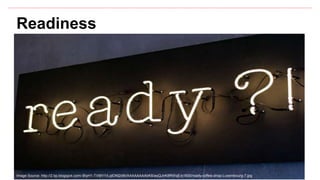
Readiness
Image Source: http://2.bp.blogspot.com/-BIyH1-TVt8Y/VLqtDNl2d8I/AAAAAAAAbK8/aqQJnK8RWqE/s1600/ready-coffee-shop-Luxembourg-7.jpg
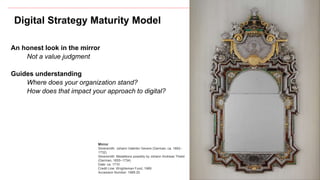
Digital Strategy Maturity Model
An honest look in the mirror
Not a value judgment
Guides understanding
Where does your organization stand?
How does that impact your approach to digital?
Mirror
Silversmith: Johann Valentin Gevers (German, ca. 1662–
1732)
Silversmith: Medallions possibly by Johann Andreas Thelot
(German, 1655–1734)
Date: ca. 1710
Credit Line: Wrightsman Fund, 1989
Accession Number: 1989.20
Digital
Customer
Experience
Excellent
Not
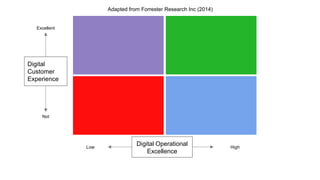
Adapted from Forrester Research Inc (2014)
Digital Operational
Excellence
High
Low
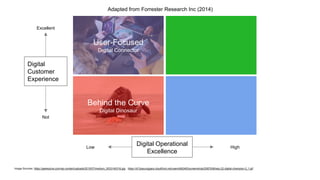
User-Focused
Digital Connector
Behind the Curve
Digital Dinosaur
Digital
Customer
Experience
Excellent
Not
Digital Operational
Excellence
High
Low
Adapted from Forrester Research Inc (2014)
Image Sources: https://geekszine.com/wp-content/uploads/2015/07/medium_5533140316.jpg https://d13yacurqjgara.cloudfront.net/users/662463/screenshots/2087638/seq-22-digital-champion-2_1.gif
User-Focused
Digital Connector
Leading Edge
Digital Master
Behind the Curve
Digital Dinosaur
Technology-Focused
Digital Operator
Digital
Customer
Experience
Excellent
Not
Digital Operational
Excellence
High
Low
Adapted from Forrester Research Inc (2014)
Image Sources: https://geekszine.com/wp-content/uploads/2015/07/medium_5533140316.jpg https://d13yacurqjgara.cloudfront.net/users/662463/screenshots/2087638/seq-22-digital-champion-2_1.gif http://theiowarepublican.com/wp-
content/uploads/2015/03/head-buried-in-sand.jpg http://assets.inhabitat.com/wp-content/blogs.dir/1/files/2011/11/data-farm.jpg
User-Focused
Digital Connector
Leading Edge
Digital Master
Behind the Curve
Digital Dinosaur
Technology-Focused
Digital Operator
Improve the
technology
Begin
implementation
Work on
sustainability
Focus on
audiences
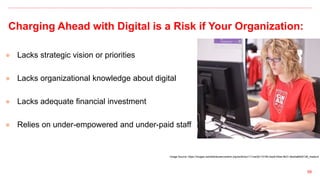
Charging Ahead with Digital is a Risk if Your Organization:
● Lacks strategic vision or priorities
● Lacks organizational knowledge about digital
● Lacks adequate financial investment
● Relies on under-empowered and under-paid staff
58
Image Source: https://images.worldskillsusercontent.org/ws3b/ws11/1/ws3b110190-4ea9-45aa-9b31-8ee0a89d5128_medium
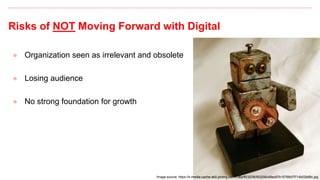
Risks of NOT Moving Forward with Digital
● Organization seen as irrelevant and obsolete
● Losing audience
● No strong foundation for growth
59
Image source: https://s-media-cache-ak0.pinimg.com/736x/f0/32/56/f03256c49ec67b15768d7f714b02b68c.jpg
The Future
+ Emerging Technologies
60
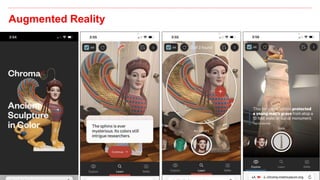
Augmented Reality
61
• placeholder
62
Augmented Reality
63
64
Web3
65
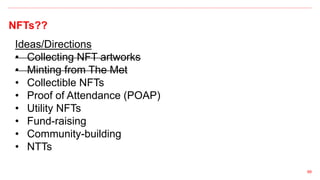
NFTs??
66
Ideas/Directions
• Collecting NFT artworks
• Minting from The Met
• Collectible NFTs
• Proof of Attendance (POAP)
• Utility NFTs
• Fund-raising
• Community-building
• NTTs
NFTs
67
Ideas/Directions
• Collecting NFT artworks
• Minting from The Met
• Collectible NFTs
• Proof of Attendance (POAP)
• Utility NFTs
• Fund-raising
• Community-building
• NTTs
NFTs
68
Ideas/Directions
• Collecting NFT works
• Minting from The Met
• Collectible NFTs
• Proof of Attendance (POAP)
• Utility NFTs
• Fund-raising
• Community-building
• NTTs
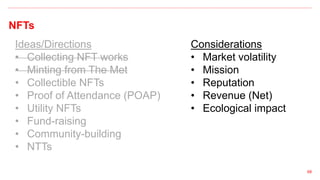
Considerations
• Market volatility
• Mission
• Reputation
• Revenue (Net)
• Ecological impact
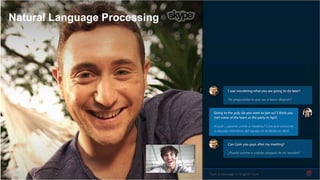
Natural Language Processing
69
71
Metaverse
Metaverse
72
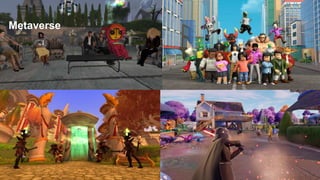
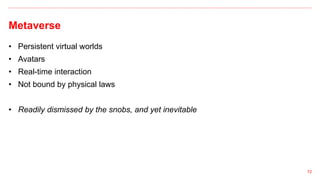
• Persistent virtual worlds
• Avatars
• Real-time interaction
• Not bound by physical laws
• Readily dismissed by the snobs, and yet inevitable
Image Source: http://advisor.museumsandheritage.com/features/audience-development-putting-visitors-at-the-heart-of-the-museum/
Thank you - Gracias
Questions?
74
@dhegley

CIMED_Keynote_Digital_Strategy_2022.pptx

  • 1.
    Digital Strategy Theory, Practice,and the Future October 2022
  • 2.
    Douglas Hegley Chief DigitalOfficer • October 2020 • Pandemic • Remote • Distributed workforce
  • 3.
  • 4.
  • 5.
    5 Psychology? This digital strategyneeds some serious analysis
  • 6.
    6 Psychology in practice •People • Truth • Change Arnold Newman, Pablo Picasso, 1954, The Metropolitan Museum of Art, 59.652.12 “Art is a lie that makes us realize truth” - Pablo Picasso
  • 7.
  • 8.
    Thomas Struth “Audience1 (Galleria Dell Accademia), Florenz”, 2010.51.2, Minneapolis Institute of Art
  • 9.
    9 Pace = Fast UmbertoBoccioni, Unique Forms of Continuity in Space, 1913 (cast 1950), The Metropolitan Museum of Art, 1990.38.3
  • 10.
  • 11.
    External Forces: Technology isa Disruptor An absurdly-abridged history of computer technology
  • 12.
    Audience Expectations ina Digital-first Society 12 Available On demand Reliable Connected to others Relevance Image Source: https://bntouch.com/wp-content/uploads/2016/11/111814_600x300_YungBiz.png
  • 13.
    Audiences 13 • Stressed • Active •Open • Less bound by tradition Source: La Placa Cohen Culture Track
  • 14.
    Audiences Drawn To 14 •Convenience • Fun • New perspectives • Family & friends • Identity & community Source: La Placa Cohen Culture Track
  • 15.
    Audiences of theNear Future 15 • Expanding definition of culture • Primacy of social media • Mobile activities > content • Redefined loyalty • Less view, more do Source: La Placa Cohen Culture Track
  • 16.
    Why Digital? To deliver:Reach, Engagement, Impact
  • 17.
  • 18.
    Reach • The numberof people who have experienced your digital content • Apply to: promotional content, social media, video, web pages • Measure: - Total unique visits - Overall page views - Location: origin of the visit • Goal: Increase reach over time 18
  • 19.
  • 20.
    Engagement 20 • Effectiveness ofyour content, how deeply you are connecting with your audiences • Apply to: stories, video, audio, purchases • Measure: – Page views per session and session duration – Repeat visitors – One-time purchase (merchandise, ticket, event, registration, etc.) – Social media follow • Goal: Increase engagement over time by providing rich content and an invitation to learn more and interact
  • 21.
  • 22.
    Impact 22 • The meaningof your content to your audiences & how they change because of it • Apply to: learning resources, membership, donations • Measure: – Learning - retention of information or stories over time – Survey results, esp. questions about lasting impressions and reflections – Sustained purchases (ongoing membership, subscriptions) – Money donated • Goals: Create lasting impact on our audiences, inspire creativity, increase tolerance and empathy, support multicultural perspective, increase mutual understanding
  • 23.
    “ … experiencesof awe can redefine the self …” + Connection + Cooperation + Sharing + Giving From “Why do We Experience Awe?” New York Times, May 22, 2015
  • 24.
  • 25.
    What is thework of Digital at The Met? 25 Lewis Hine, Steamfitter, 1921, The Metropolitan Museum of Art, 1987.1100.146
  • 26.
    Chief Digital Officerat The Met 26 IN Audience Engagement & Impact Digital media production – video, audio, multimedia Application Development – web, mobile UX, UI, digital design Agile, Product Development Innovation, business disruption DAM, collections, rights/permissions/licensing/IP Data: Engagement metrics AV and Media Services – event support
  • 27.
    Chief Digital Officerat The Met 27 IN OUT Audience Engagement & Impact Digital media production – video, audio, multimedia Application Development – web, mobile UX, UI, digital design Agile, Product Development Innovation, business disruption DAM, collections, rights/permissions/licensing/IP Data: Engagement metrics AV and Media Services – event support IT: • Systems, infrastructure • Technical Support/Help Desk • Cybersecurity • Compliance, Audit • Big Data & CRM • Enterprise Architecture Marketing: • Social media
  • 28.
    Digital at TheMet + Quality + Integrated + Flexible + Transformative
  • 29.
    Digital Adoption byMuseums (Pre-Pandemic) 29
  • 30.
    30 Digital Technology AdoptionLifecycle Source: https://www.business-to-you.com/crossing-the-chasm-technology-adoption-life-cycle/
  • 31.
    31 Digital Technology AdoptionLifecycle Source: https://www.business-to-you.com/crossing-the-chasm-technology-adoption-life-cycle/ 1. Staff with digital skills 2. Resources for digital activity 3. Steady growth since 2005 4. Audience-first strategy
  • 32.
    32 Digital Technology AdoptionLifecycle Source: https://www.business-to-you.com/crossing-the-chasm-technology-adoption-life-cycle/ 1. Staff without digital skills 2. Scarce resources 3. Wait-and-see approach 4. Museum-first strategy 5. Impact seemed minimal 1. Staff with digital skills 2. Resources for digital activity 3. Steady growth since 2005 4. Audience-first strategy
  • 33.
    33 Digital Technology AdoptionLifecycle Source: https://www.business-to-you.com/crossing-the-chasm-technology-adoption-life-cycle/ 1. Staff with digital skills 2. Resources for digital activity 3. Steady growth since 2005 4. Audience-first strategy 1. Staff without digital skills 2. Scarce resources 3. Wait-and-see approach 4. Museum-first strategy 5. Impact seemed minimal
  • 34.
  • 35.
  • 36.
  • 37.
    “GO DIGITAL” ● “Wehave no choice” ● “We cannot lose our audiences” ● “Those tech people work fine from home, right?” 37
  • 38.
    “GO DIGITAL” ● “Wehave no choice” ● “We cannot lose our audiences” ● “Those tech people can work fine from home, right?” RESULT: An initial burst of activity, and surprisingly good audience engagement 38
  • 39.
    39 But it wouldnot last • Audiences rapidly overwhelmed • Staff exhausted • More is not always better
  • 40.
    What We HaveLearned: Digital content that is performing well ● Evergreen content – related to collection objects, has lasting value ● Stories - about people - especially short-form video (~ 5 minutes) ● Content designed for children and families ● Object pages (serve as landing pages from organic search engine traffic) 40
  • 41.
  • 42.
  • 43.
    43 GENERAL PUBLIC THE ENGAGED, CURIOUS NICHE Surfaceswimming Snorkeling Scuba diving Wading Layered: Overall Interpretive Framework ©2012 Douglas Hegley @dhegley
  • 44.
    44 GENERAL PUBLIC THE ENGAGED, CURIOUS NICHE Themajority of our audiences do not come to us with deep prior knowledge, nor a desire to develop expertises. In order to engage as many of them as we can, it is our responsibility to deliver content that meets multiple and varied needs. Surface swimming Snorkeling Scuba diving Wading ©2012 Douglas Hegley @dhegley
  • 45.
    45 GENERAL PUBLIC THE ENGAGED, CURIOUS NICHE ©2012Douglas Hegley @dhegley CONTEXT Introduction Basic Interpretation What is this? Why does it matter? CONTENT Narratives & stories, connections, tours Bridge from surface to complex What’s behind all of this? What’s the insider story? EXPERTISE Deep, rich, facts Data, scholarly research The foundation must be built upon solid scholarship What are the details? How can they be verified? Surface swimming Snorkeling Scuba diving Wading
  • 46.
    Context for DigitalStrategy External factors Digital transformation Customer expectations
  • 47.
    Context for DigitalStrategy External factors Digital transformation Customer expectations Current Status Content production = digital Content sharing = digital
  • 48.
    Context for DigitalStrategy External factors Digital transformation Customer expectations Current Status Content production = digital Content sharing = digital Museums Real Physical space Special
  • 49.
    Digital Strategy: Advantages ●Emphasizes the transformative power of digital ● Aligns digital efforts ● Provides clarity & transparency ● Enables long-term success of digital efforts 49
  • 50.
    Digital Strategy: Advantages ●Emphasizes the transformative power of digital ● Aligns digital efforts ● Provides clarity & transparency ● Enables long-term success of digital efforts ● Recognizes digital as a specialty ○ Digital is still a young discipline ● A teaching tool across the organization ● Frames decisions re: digital ● Helps manage expectations 50
  • 51.
    Digital Strategy: PotentialPitfalls ● Confirms digital as “extra” - not core to the mission ● Confirms that digital is separate ○ Digital is the job of someone else ● Focuses on technology, leaving out people ● Adds unnecessary complexity ● Sounds self-justifying (or defensive) ● Sounds expensive 51
  • 52.
  • 53.
    Digital Strategy MaturityModel An honest look in the mirror Not a value judgment Guides understanding Where does your organization stand? How does that impact your approach to digital? Mirror Silversmith: Johann Valentin Gevers (German, ca. 1662– 1732) Silversmith: Medallions possibly by Johann Andreas Thelot (German, 1655–1734) Date: ca. 1710 Credit Line: Wrightsman Fund, 1989 Accession Number: 1989.20
  • 54.
    Digital Customer Experience Excellent Not Adapted from ForresterResearch Inc (2014) Digital Operational Excellence High Low
  • 55.
    User-Focused Digital Connector Behind theCurve Digital Dinosaur Digital Customer Experience Excellent Not Digital Operational Excellence High Low Adapted from Forrester Research Inc (2014) Image Sources: https://geekszine.com/wp-content/uploads/2015/07/medium_5533140316.jpg https://d13yacurqjgara.cloudfront.net/users/662463/screenshots/2087638/seq-22-digital-champion-2_1.gif
  • 56.
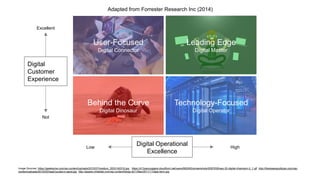
    User-Focused Digital Connector Leading Edge DigitalMaster Behind the Curve Digital Dinosaur Technology-Focused Digital Operator Digital Customer Experience Excellent Not Digital Operational Excellence High Low Adapted from Forrester Research Inc (2014) Image Sources: https://geekszine.com/wp-content/uploads/2015/07/medium_5533140316.jpg https://d13yacurqjgara.cloudfront.net/users/662463/screenshots/2087638/seq-22-digital-champion-2_1.gif http://theiowarepublican.com/wp- content/uploads/2015/03/head-buried-in-sand.jpg http://assets.inhabitat.com/wp-content/blogs.dir/1/files/2011/11/data-farm.jpg
  • 57.
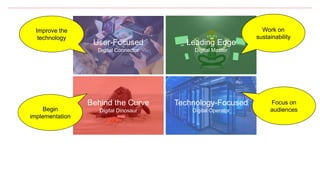
    User-Focused Digital Connector Leading Edge DigitalMaster Behind the Curve Digital Dinosaur Technology-Focused Digital Operator Improve the technology Begin implementation Work on sustainability Focus on audiences
  • 58.
    Charging Ahead withDigital is a Risk if Your Organization: ● Lacks strategic vision or priorities ● Lacks organizational knowledge about digital ● Lacks adequate financial investment ● Relies on under-empowered and under-paid staff 58 Image Source: https://images.worldskillsusercontent.org/ws3b/ws11/1/ws3b110190-4ea9-45aa-9b31-8ee0a89d5128_medium
  • 59.
    Risks of NOTMoving Forward with Digital ● Organization seen as irrelevant and obsolete ● Losing audience ● No strong foundation for growth 59 Image source: https://s-media-cache-ak0.pinimg.com/736x/f0/32/56/f03256c49ec67b15768d7f714b02b68c.jpg
  • 60.
    The Future + EmergingTechnologies 60
  • 61.
  • 62.
  • 63.
  • 64.
  • 65.
  • 66.
    NFTs?? 66 Ideas/Directions • Collecting NFTartworks • Minting from The Met • Collectible NFTs • Proof of Attendance (POAP) • Utility NFTs • Fund-raising • Community-building • NTTs
  • 67.
    NFTs 67 Ideas/Directions • Collecting NFTartworks • Minting from The Met • Collectible NFTs • Proof of Attendance (POAP) • Utility NFTs • Fund-raising • Community-building • NTTs
  • 68.
    NFTs 68 Ideas/Directions • Collecting NFTworks • Minting from The Met • Collectible NFTs • Proof of Attendance (POAP) • Utility NFTs • Fund-raising • Community-building • NTTs Considerations • Market volatility • Mission • Reputation • Revenue (Net) • Ecological impact
  • 69.
  • 71.
  • 72.
    Metaverse 72 • Persistent virtualworlds • Avatars • Real-time interaction • Not bound by physical laws • Readily dismissed by the snobs, and yet inevitable
  • 73.
  • 74.
    Thank you -Gracias Questions? 74 @dhegley

Editor's Notes

  • #3 I am Douglas Hegley, the Chief Digital Officer at The Metropolitan Museum of Art. It is an honor to be with you today, virtually. I have been in my current position for two years, that means I was hired during the terrible global pandemic, and I worked remotely for the first several months, overseeing a distributed workforce of more than 50 staff.
  • #4 For the 9 years before taking my current job at The Met, I was the Chief Digital Officer at the Minneapolis Institute of Art, another encyclopedic museum located in the middle-north of the US. I was the first executive-level technology leader at that museum and worked hard to enable digital transformation and audience engagement. The museum has nearly 300 staff and before the pandemic was averaging just under 1 million visitors per year.
  • #5 Ironically, prior to Minneapolis I also worked at The Met! For 14 years, I helped the staff of the museum adopt and implement technology, and to begin to think strategically about how to use digital to reach and engage audiences.
  • #6 My formal educational background is in Psychology, not in digital technology. You might ask “What does psychology have to do with digital transformation in museums?”
  • #7 The practice of psychology focuses on People, Truth, and Change. You work with people, to help them see and embrace the truth, in order to make positive changes in their lives. Digital technology leadership in deeply entrenched cultural heritage institutions requires this kind of perspective. And I might add that my father was an art teacher, and I spent many vacations visiting museums, so I always had a love affair with cultural heritage and great art.
  • #8 The truth that our sector has to deal with is that digital transformation is real, it is here, if you try to ignore it, it becomes the “elephant in the room” – and psychologists are very good at pointing out the elephant in the room!
  • #9 If there is a central connection that ties together what I’ve done in my career, it’s people. I am a tireless advocate for people, in all of our wonderful variety and potential.
  • #10 When I say that the pace is fast, I’m not just referring to technology – I am also aware that I can get excited and talk very fast. I feel I have a lot of ground to cover today, so let’s get started.
  • #11 Let’s begin with a general perspective on digital technology and on audiences.
  • #12 The rapid growth of computer technology over the past two decades has been nothing less than astonishing. I bought my first desktop computer in 1984. By comparison, many people now own a wristwatch that has far more computing power!
  • #13 The impact of this technological expansion includes the expectation by people for constant internet connectivity, to have information available on-demand, and a reliance on digital technology to connect with other people. In such a world, non-digital interfaces and experiences may actually become less relevant.
  • #14 Modern day audiences are ...
  • #15 They are drawn to ...
  • #16 And audiences of the near-horizon future ..
  • #17 We must ask about the core purpose of digital for cultural heritage: Why Digital? I think there is an enormous opportunity, because digital can deliver in three key inter-related areas: Reach, Engagement, and Impact.
  • #18 Reach is the number of people who experience digital content.
  • #19 We measure reach with metrics like total unique visits, and overall page views. The goal is to ncrease reach over time. But reach is not the most important goal.
  • #20 Engagement is looking at the Effectiveness of your digital content.
  • #21 We measure things like page views per session, session duration, and repeat visitors. The goal is to increase engagement over time with rich content and interaction, but again that’s not the complete goal.
  • #22 Impact is looking at how audiences are changed by digital content.
  • #23 We seek to measure: Learning, lasting impressions and reflections, and donations. The goal is to create lasting impact, inspire creativity, increase tolerance and empathy, support multicultural perspective, increase mutual understanding. In other words, museums can change lives for the better.
  • #24 From research we know that we can have a positive impact on people’s lives when they have experiences that resonate with them on a deep emotional level. One of those experiences is awe. People who experience awe in their lives are more connected to others, more generous, more caring. They can become BETTER PEOPLE.
  • #25 Now that I have framed what digital is all about in our sector, let’s talk more specifically about The Met.
  • #26 In particular, what is the work of the digital department at The Met? What are my areas of responsibility?
  • #27 As you can see by this long list, I have plenty of work to oversee, all under the heading of Audience Engagement and Impact.
  • #28 There are notable areas that are not currently my responsibility, including the information technology area and social media. But my staff does work in close partnership with the staff in those other areas.
  • #29 At The Met, we work to ensure that our digital efforts are firmly planted in the core mission of The Metropolitan Museum of Art – of a quality to match the stature of The Met, integrated into the museum’s vision and strategy, with technology that is flexible and adaptable, all leading to transformative and lasting change (not just digital window dressing).
  • #30 Before the pandemic, museums were slowly embracing digital. And I emphasize slowly.
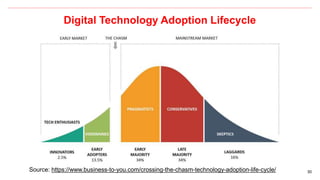
  • #31 Perhaps you’ve seen this graph: the technology adoption lifecycle. On the left, the innovators and early adopters, together labeled as Tech Enthusiasts, making up only 16% of the total. On the right, those who just aren’t there yet, whether for pragmatic or skeptical reasons – and that majority is actually the mainstream market.
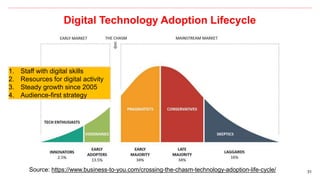
  • #32 Museums that fall on the left side had four things in common. Staff with digital skills, Resources for digital activity , Steady growth since 2005, and an Audience-first strategy
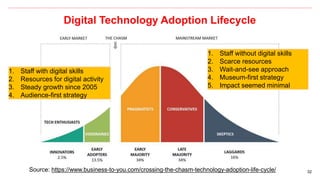
  • #33 Meanwhile, the museums that have lagged behind share these 5 characteristics: Staff without digital skills, Scarce resources, a Wait-and-see approach, a Museum-first strategy, and a belief that the actual impact of digital seemed minimal.
  • #34 This was especially true for museums that welcomed tourists onsite, day-after-day, reliably.
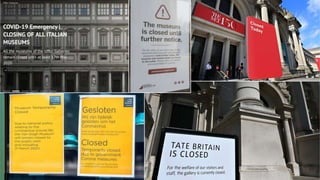
  • #35 Then, as we all know, the major disruption of the global pandemic arrived, which hit us suddenly and severely. Travel and tourism ended abruptly.
  • #36 We were faced with sudden closures, and dire predictions about loss of revenue and audience.
  • #37 There was a mad scramble to “go digital”, even for museums and other organizations that were not well-prepared.
  • #38 The reasons were clear, at least from perspective of executive leadership. They felt forced, worried about the future, and made assumptions about the staff who worked on digital.
  • #39 The results, at least for the first month or so, seemed very positive.
  • #40 But it could not be sustained. Our audiences were rapidly overwhelmed and exhausted, and so were the staff assigned to the digital work - in other words, more is not always better.
  • #41 What is most-important is the quality of the content. We have learned that there are specific types of content that have performed particularly well at The Met during COVID-19. Your content strategy can be informed by this success – plan your digital content intentionally.
  • #42 How do we pull all of this together into a digital strategy?
  • #43 I want to talk about layering as a vital core construct of digital strategy for cultural heritage.
  • #44 Digital can enable layering, based in part on hyperlinking. This can provide us with a framework for interpretation. As an analogy, imagine a beach resort. Most visitors only put they feet in the water, or perhaps go for a short swim. Other are more engaged, and take a snorkeling excursion. The specialized customer will go scuba diving. But the resort treats them ALL with respect, welcomes them, and does everything they can to make their stay enjoyable.
  • #45 We must take this approach with our audiences, because …
  • #46 This is not, and never will be, ‘dumbing things down’. It is called INTERPRETATION. It’s goal is to invite, welcome, orient, and delight audiences, at whatever level they are interested in experiencing. This is opening as many doors as possible, and meeting our audiences where they are, with respect and enthusiasm for all of them.
  • #47 Let’s put the interpretive strategy into context for digital strategy. We live in a world that has been transformed by ever-more-ubiquitous digital technology. This causes our audiences - customers - to have a set of expectations for content access, convenient transactions, and personalized service.
  • #48 Our organizations produce content and share content via digital platforms, like never before.
  • #49 The expectations remain true even in the very special physical spaces that our museums provide, in the presence of real things that are imbued with history, creativity and rarity - things that are both valuable and meaningful. So the digital strategy must take all of this into consideration.
  • #50 Advantages of a clear digital strategy include ...
  • #51 In addition, a digital strategy …
  • #52 But please understand, there are situations in which a digital strategy can backfire.
  • #53 It is vital to understand where an organization stands in terms of digital readiness. The simple question is: are we ready?
  • #54 One way to look at readiness is to use a digital strategy maturity model. This provides any organization with an honest look in the mirror that can guide understanding and help inform us as to that org’s level of readiness.
  • #55 Forrester Research has developed this model for categorizing digital maturity. Breaking it into quadrants, we can take a look along two dimensions: customer experience and operational excellence.
  • #56 Taking this one step further, Forrester adds labels to illustrate each quadrant. Some orgs have been quick to address user focus, but lag behind in best practices and sustainability of technology. Other organizations are labeled as “digital dinosaur” which probably is not fair, because some orgs have simply been held back by real constraints or by leadership that has been unable to decide to move ahead – remember the adoption curve from earlier. If that’s your organization, you’ve got plenty of catching up to do - and your digital strategy will focus on basic building blocks.
  • #57 If you are an org with strong IT and technology, but a lack of user focus, then your approach will be to move in that direction. Some orgs have been quick to address user focus, but lag behind in best practices and sustainability. Finally, if you are on the leading edge, then congratulation and please be in touch, I want to learn from you!
  • #58 Your readiness can tell you what you need to do next in your digital strategy journey.
  • #59 If you charge ahead without a strategic approach, these are some of the risks.
  • #60 Of course, there are risks of waiting, of not moving forward regardless of strategy.
  • #61 Now that I’ve set of of this context, let’s turn our eyes to the future.
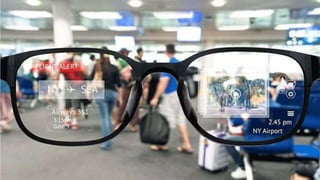
  • #62 I believe that augmented reality technologies hold great promise for our sector. Again, this is layering interpretive content, this time on top of the real world. This example is available to you right now, just go to chroma.metmuseum.org (maybe after the lecture).
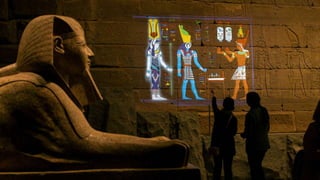
  • #63 Think of this as an extension of the projections used in The Met that help us understand that this ancient temple wall was once covered with color – once AR is more common we won’t need to rely on limited projections like this, because the experience will take place through the visitor’s own devices.
  • #64 Consumer-grade digital hardware that is AR-enabled will rapidly improve.
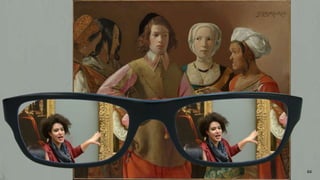
  • #65 What about an AR virtual docent? Imagine being able to access your favorite docent anytime, and in many different languages!
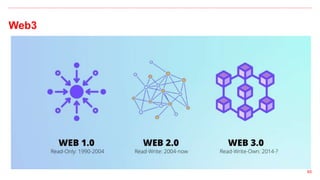
  • #66 Web3 has become a catchall for the natural evolution of the internet ...
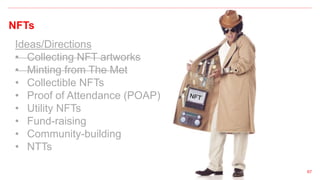
  • #67 I’m sure you can imagine that I get a lot of inquiries about nonfungible tokens – what is The Met going to do about NFTs?
  • #68 It all begins to feel something like this – “psst, hey man, wanna buy a watch?”
  • #69 We need to take several factors into consideration ...
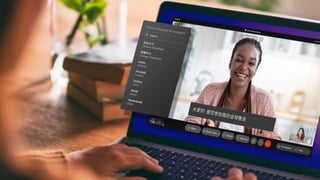
  • #70 Another example that I am excited about is the potential for real-time language translations driven by machine learning and natural language processing. The technology already exists, it just hasn’t been applied to museums yet.
  • #71 Imagine people across the world able to interact with our collection and our expertise and our content in their native language, without the need for us to hire hundreds of translators to work manually for years to translate all of it.
  • #72 Let’s not forget the Metaverse: Second Life, Roblox, World of Warcraft, Fortnite = all versions of a metaverse experience
  • #73 What makes a metaverse?
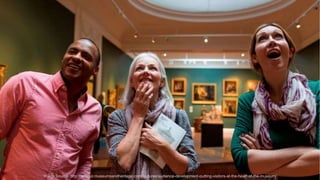
  • #74 Perhaps most importantly, museums have the potential to be Cathedrals of Awesome. Providing jaw-dropping moments of “Wow, that’s amazing!” My responsibility is to deliver THAT through digital means.