Molecular Psychiatry (2008) 13, 786–799 
& 2008 Nature Publishing Group All rights reserved 1359-4184/08 $30.00 
www.nature.com/mp 
ORIGINAL ARTICLE 
Gene expression analysis in the human hypothalamus 
in depression by laser microdissection and real-time 
PCR: the presence of multiple receptor imbalances 
S-S Wang1,2, W Kamphuis1, I Huitinga1, J-N Zhou2 and DF Swaab1 
1Netherlands Institute for Neuroscience, Amsterdam, The Netherlands and 2Hefei National Laboratory for Physical Sciences 
at Microscale and Department of Neurobiology and Biophysics, Life Science School, University of Science and Technology 
of China, Hefei, Anhui, PR China 
Hyperactivity of corticotropin-releasing factor (CRF) neurons in the paraventricular nucleus 
(PVN) of the hypothalamus is a prominent feature in depression and may be important in the 
etiology of this disease. The activity of the CRF neurons in the stress response is modulated 
by a number of factors that stimulate or inhibit CRF expression, including (1) corticosteroid 
receptors and their chaperones, heat shock proteins 70 and 90, (2) sex hormone receptors, 
(3) CRF receptors 1 (CRFR1) and 2, (4) cytokines interleukin 1-b and tumor necrosis factor-a, (5) 
neuropeptides and receptors, vasopressin (AVP), AVP receptor 1a (AVPR1A) and oxytocin and 
(6) transcription factor cAMP-response element-binding protein. We hypothesized that, in 
depression, the transcript levels of those genes that are involved in the activation of the 
hypothalamo–pituitary–adrenal (HPA) axis are upregulated, whereas the transcript levels of 
the genes involved in the inhibition of the HPA axis are downregulated. We performed laser 
microdissection and real-time PCR in the PVN and as a control in the supraoptic nucleus. 
Snap-frozen post-mortem hypothalami of seven depressed and seven matched controls 
were used. We found significantly increased CRF mRNA levels in the PVN of the depressed 
patients. This was accompanied by a significantly increased expression of four genes that are 
involved in the activation of CRF neurons, that is, CRFR1, estrogen receptor-a, AVPR1A and 
mineralocorticoid receptor, while the expression of the androgen receptor mRNA involved in 
the inhibition of CRF neurons was decreased significantly. These findings raise the possibility 
that a disturbed balance in the production of receptors may contribute to the activation of the 
HPA axis in depression. 
Molecular Psychiatry (2008) 13, 786–799; doi:10.1038/mp.2008.38; published online 22 April 2008 
Keywords: hypothalamo–pituitary–adrenal axis; depression; paraventricular nucleus; laser 
dissection; corticotrophin-releasing factor; steroid receptors 
Introduction 
The hypothalamo–pituitary–adrenal (HPA) axis is 
considered to be the ‘final common pathway’ for a 
major part of the depressive symptomatology. Stress-ful 
life events and genetic- and epigenetic-risk factors 
for depression have been linked to increased HPA-axis 
activity in adulthood.1 When patients or animal 
models for depression are treated either with anti-depressants, 
or with electroconvulsive therapy, or 
when patients show spontaneous remission, the HPA-axis 
function returns to normal.2 Moreover, studies in 
high-risk probands of patients with major depression 
(MD) have shown that abnormalities in HPA-axis 
function already exist prior to the onset of the clinical 
symptoms, suggesting that such abnormalities can, in 
fact, precede depressive episodes.3 
The hyperactivity of the corticotropin-releasing 
factor (CRF) neurons is important in the neurobiology 
of depression as it appears from (1) an increased 
amount of CRF mRNA in the paraventricular nucleus 
(PVN) as determined by in situ hybridization in 
depression, (2) a fourfold increase in the number of 
CRF-expressing neurons in the PVN and (3) the 
increased number of CRF neurons co-expressing 
vasopressin (AVP).4,5 An important argument for a 
causal role for central effects of CRF in depression is 
that similar symptoms, such as decreased food intake, 
decreased sexual activity, disturbed sleep and motor 
behavior, and anxiety can all be induced in experi-mental 
animals by intracerebroventricular injection of 
CRF.6 An additional argument for the direct involve-ment 
of CRF in the symptomatology of depression is 
the recently found increased susceptibility to MD in 
Correspondence: Dr J-N Zhou, Hefei National Laboratory for 
Physical Sciences at Microscale and Department of Neurobiology 
and Biophysics, Life Science School, University of Science and 
Technology of China, Huangshan Road 433, Hefei 230026, Anhui, 
PR China. 
E-mail: jnzhou@ustc.edu.cn 
Received 29 June 2007; revised 10 March 2008; accepted 10 
March 2008; published online 22 April 2008
case of a single-nucleotide polymorphisms in the 
CRF receptor 1 (CRFR1) gene.7,8 Antidepressants 
attenuate the synthesis of CRF by upregulation of 
corticosteroid receptor expression1 that causes a 
decrease of the cerebrospinal fluid (CSF) levels of 
CRF.9 A transgenic mouse model with an overproduc-tion 
of CRF showed increased anxiogenic behavior, a 
symptom that is usually related with MD, and 
that could be counteracted by injection of a CRF 
antagonist.10 Lastly, CRF-receptor antagonists may be 
effective in the treatment of depression.11,12 Together, 
these arguments have led to the CRF hypothesis of 
depression: hyperactivity of CRF neurons, and in 
particular those driving the HPA axis, induces 
symptoms of depression. 
The CRF neurons of the activated HPA axis do not 
only stimulate cortisol production by the adrenal 
gland but also project centrally. Both this centrally 
released CRF and these increased levels of cortisol 
contribute to the signs and symptoms of depression 
(for review see Bao et al.1). In addition, there is 
interaction of the HPA axis, both by centrally 
projecting CRF and via cortisol, with the monoami-nergic 
systems and with the prefrontal cortex.13–15 
Alterations in these systems also contribute to the 
mood changes. 
The activity of CRF neurons is modulated by a large 
number of factors that can be produced in the PVN 
and may also be involved in the pathogenesis of 
depression, that is, 
(1) a change in corticosteroid feedback on the HPA 
axis involving the glucocorticoid receptor (GR) 
(that is, GRa) and the mineralocorticoid receptor 
(MR). MR and GR can form hetero- and homo-dimers 
that differ in their activity of gene regula-tion. 
A change in the balance of MR/GR ratio in 
depressed patients may contribute to the change 
in transcription rate of CRF16–20; 
(2) the CRF receptors, that is, CRFR1 that stimulates 
CRF production21,22 and CRFR2 that opposes this 
action23; 
(3) alterations in vasopressinergic systems that po-tentiate 
effects of CRF24 and the AVP receptor 1a 
(AVPR1A) that is involved in anxiety/ depression-related 
behavior25; oxytocin (OXT) that attenuates 
the stress response was found to be increased in 
the PVN only in melancholic depression26; 
(4) cAMP-response element-binding protein (CREB) 
that stimulates CRF expression as a transcription 
factor27; 
(5) sex hormones, involving estrogen-receptors 
(ESR) 1 and 2 and androgen-receptor (AR), 
stimulating and inhibiting CRF gene expression, 
respectively28,29; 
(6) the powerful CRF-stimulating proinflammatory 
cytokines such as interleukin 1-b (IL1b) that is 
produced by glial cells and PVN neurons,30 and 
tumor necrosis factor-a (TNFa), a circulating state 
marker for depression31 that is also produced by 
glial cells32; 
Gene expression analysis in the human hypothalamus 
S-S Wang et al 
(7) the heat shock proteins (HSP) 70 and 90 that are 
determinants of glucocorticoid resistance.33 
We hypothesized that, in depression, the transcript 
levels of those genes that are involved in the 
activation of the HPA axis (CRF, CRFR1, MR, AVP, 
AVPR1A, CREB, ESR1, ESR2, IL1b, TNFa, HSP70 and 
90) are upregulated whereas the transcript levels of 
the genes involved in the inhibition of the HPA axis 
(GRa, CRFR2, AR, OXT) are downregulated. 
For the first time, we performed laser microdissec-tion 
(LMD) and real-time quantitative PCR (qPCR) on 
the isolated PVN and supraoptic nucleus (SON) from 
snap-frozen post-mortem hypothalami of seven de-pressed 
and seven matched controls to determine 
changes at the transcript level of these feedback and 
input factors in depression. Subsequently, we deter-mined 
the transcript levels of peptides of the stress 
axis, that is, CRF, AVP and OXT, and transcription 
factors that are possibly involved in the hyperactivity 
of the CRF neurons in depression, and thus in the 
pathogenesis of this disease. The hypothesis we 
wanted to test was whether there was a receptor 
imbalance such as the one proposed between MR and 
GR16 in the PVN in the depressed patients, and if that 
was the case, whether such an imbalance also exists 
for other related receptors. The transcripts of these 
targets were also determined in the SON, as a control 
area, since this nucleus hardly produces CRF, and 
AVP expression was only activated in the SON in the 
melancholic type of depression,26 while this type of 
depression was only present in one of the seven 
depressed patients in the present study. 
Materials and methods 
Subjects 
The hypothalami were obtained by autopsy from 14 
subjects of which 7 were patients clinically diagnosed 
with depression, either in the context of a MD or of a 
bipolar disorder (BD), and 7 served as controls 
matched for sex, age, post-mortem delay, season and 
clock time of death, and brain weight. The depression 
and control groups were matched for sex, age 
(z =0.192, P = 0.848), season and clock time of death 
(w2 = 1.902, P = 0.386; w2 = 2.406, P = 0.300, respec-tively), 
brain weight (z =0.704, P = 0.482), post-mortem 
delay (z =0.576, P = 0.565) and for pH of 
the CSF (z =1.146, P = 0.252) that is a measure of 
agonal state (for clinicopathological information 
see Table 1). The frozen brain material was obtained 
from the Netherlands Brain Bank, following permis-sion 
from the patient or the next of kin for a brain 
autopsy and for the use of the brain material and 
clinical information for research purposes. The 
patients suffering from depression were diagnosed 
during their life and the diagnosis was checked 
by a certified psychiatrist (Dr G Meynen) retrospec-tively 
using the medical record, who paid special 
attention to the presence of melancholic features 
according to Diagnostic and Statistical Manual 
787 
Molecular Psychiatry
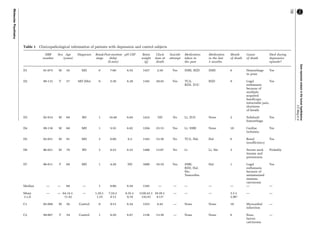
Table 1 Clinicopathological information of patients with depression and control subjects 
NBB 
number 
Sex Age 
(years) 
Diagnosis Braak 
stage 
Post-mortem 
delay 
(h:min) 
pH CSF Brain 
weight 
(g) 
Clock 
time at 
death 
Suicide 
attempt 
Medication 
taken in 
the past 
Medication 
in the last 
3 months 
Month 
of death 
Cause 
of death 
Died during 
depressive 
episode? 
D1 01-074 M 45 MD 0 7:00 6.55 1427 2:30 Yes SSRI, BZD SSRI 6 Hemorrhage 
in pons 
Yes 
D2 99-115 F 57 MD (Me) 0 5:30 6.28 1345 20:45 Yes TCA, 
BZD, ZUC 
BZD 9 Legal 
euthanasia 
because of 
multiple 
acquired 
handicaps, 
intractable pain, 
shortness 
of breath 
Yes 
D3 02-014 M 68 BD 1 16:46 6.64 1424 ND No Li, ZUC None 2 Subdural 
hemorrhage 
Yes 
D4 99-118 M 68 MD 1 5:55 6.82 1204 23:15 Yes Li, SSRI None 10 Cardiac 
ischemia 
Yes 
D5 02-051 M 81 MD 3 6:00 6.5 1345 15:30 No TCA, Hal, Hal 6 Renal 
insufficiency 
Yes 
D6 06-021 M 70 BD 3 6:23 6.53 1488 13:07 No Li Li, Mo 3 Severe neck 
trauma and 
pneumonia 
Probably 
D7 06-011 F 60 MD 1 4:20 ND 1080 16:10 Yes SSRI, 
BZD, Hal, 
Mo, 
Tamoxifen 
Hal 1 Legal 
euthanasia 
because of 
metastasized 
mamma 
carcinoma 
Yes 
Median — — 68 — 1 6:00 6.54 1345 — — — — — — — 
Mean 
±s.d. 
— — 64.14± 
11.42 
— 1.29± 
1.25 
7:24± 
4:12 
6.55± 
0.18 
1330.43± 
142.61 
18:39± 
4:13a 
— — — 3.5± 
2.06a 
— — 
C1 05-068 M 56 Control 0 9:15 6.54 1553 4:45 — None None 10 Myocardial 
infarction 
— 
C2 99-067 F 59 Control 1 6:20 6.67 1156 13:30 — None None 6 Ileus, 
larynx 
carcinoma 
— 
Gene expression analysis in the human hypothalamus 
S-S Wang et al 
788 
Molecular Psychiatry
Table 1 Continued 
NBB 
number 
Sex Age 
(years) 
Diagnosis Braak 
stage 
Post-mortem 
delay 
(h:min) 
pH CSF Brain 
weight 
(g) 
Clock 
time at 
death 
Suicide 
attempt 
Medication 
taken in 
the past 
Medication 
in the last 
3 months 
Month 
of death 
Cause 
of death 
Died during 
depressive 
episode? 
C3 06-037 M 66 Control 0 7:45 6.7 1590 17:45 — Testosterone 
(substitution) 
Testosterone 
(substitu-tion) 
5 Ruptured 
abdominal aorta 
aneurysm 
C4 05-034 M 56 Control 0 14:00 7.03 1323 0:00 — None None 5 Congestive 
heart failure 
C5 05-019 M 74 Control 3 5:00 6.7 1125 2:00 — Digoxin Mo, Hal 4 Bronchus 
carcinoma, 
cardiac 
decompen-sation 
C6 01-033 M 75 Control 1 6:20 6.18 1180 6:10 — None None 3 Dehydration/ 
pneumonia 
C7 99-111 F 88 Control 3 5:40 6.67 1054 3:05 — Digoxin None 9 Respiratory 
insufficiency 
Median 66 1 6:20 6.67 1180 
Mean±s.d — — 67.71± 
11.95 
— 1.14± 
1.35 
7:45± 
3:05 
6.64± 
0.25 
1283± 
213.27 
1:00± 
4:17a 
— — — 5.33± 
2.06a 
— 
Abbreviations: BD, bipolar disorder; BZD, benzodiazepine; F, female; Hal, haloperidol; Li, lithium; Me, melancholic type; MD, major depression; Mo, morphine; M, 
male; NBB, Netherlands Brain Bank; ND, no data; none, no medication; s.d., standard deviation; SSRI, selective serotonin reuptake inhibitor; TCA, tricyclic 
antidepressant; ZUC, zuclopenthixol. 
Braak stages, neuropathological distribution of neurofibrillary Alzheimer changes over the brain; stage 0, no neurofibrillary changes; stages I/II, mild/severe alterations 
in the entorhinal cortex; stage III first involvement of the hippocampus. Clinically stages 0–II are unaffected controls, and in stage III mild cognitive impairment may 
start.34 
aCircular mean and s.d. of the clock time at death or the month of death. Neither the clock time or month of death differed significantly between the group as tested with 
the Mardia–Watson–Wheeler test. 
Gene expression analysis in the human hypothalamus 
S-S Wang et al 
789 
Molecular Psychiatry
Gene expression analysis in the human hypothalamus 
S-S Wang et al 
of Mental Disorders, fourth edition criteria (American 
Psychiatric Association). Five patients fulfilled the 
criteria for MD and two patients fulfilled the criteria 
for BD. For detailed information, also on the relevant 
medication in the past and in the last month before 
death (Table 1). The medical records did not reveal 
any alcohol or other drug abuse among subjects of 
either group. The absence or presence of neuropatho-logical 
changes, both in the patients with mood 
disorders and in the controls, was confirmed by 
systematic neuropathological investigation.35 The 
results are set down in Table 1. 
Human brain material 
Laser microdissection. The freshly frozen hypo-thalami 
were serially sectioned at 15 1C on a 
cryostat (Leica CM 1850 UV) at a thickness of 20 mm 
from rostral to caudal throughout the PVN and the 
SON. The PVN and the SON were dissected at the 
right side of the hypothalamus. The beginning and the 
end of the PVN and the SON were defined by thionin 
staining every 10th section from rostral to caudal 
throughout the hypothalamus. The tissue sections 
were thaw mounted on a slide coated with a plain 
film (Birkelbach Film, Germany). In total, there were 
126–328 serial sections obtained from the most rostral 
to the most caudal part of the SON and PVN 
(the variation of the section numbers due to the 
orientation of the frozen block). We took 3 out of the 9 
unstained sections of every 10 sections (of which one 
was stained with thionin). In this way, a total of 
66±3 (mean±s.e.m.) sections of PVN in depression 
and 64±8 in controls (P = 0.304 in Mann–Whitney 
U-test); 60±3 sections of SON in depression and 
51±4 in controls (P = 0.14 in Mann–Whitney U-test) 
were sampled for LMD in each patient. The frozen 
sections were stored under vacuum at room temperature 
with silica gel for dehydration for two nights, and the 
PVN and SON were dissected from the sections by a 
PALM MicroLaser System (Bernried, Germany) (Figure 
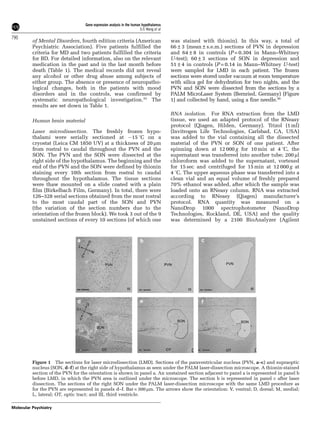
1) and collected by hand, using a fine needle.36 
RNA isolation. For RNA extraction from the LMD 
tissue, we used an adapted protocol of the RNeasy 
protocol (Qiagen, Hilden, Germany). Trizol (1 ml) 
(Invitrogen Life Technologies, Carlsbad, CA, USA) 
was added to the vial containing all the dissected 
material of the PVN or SON of one patient. After 
spinning down at 12 000 g for 10 min at 4 1C, the 
supernatant was transferred into another tube; 200 ml 
chloroform was added to the supernatant, vortexed 
for 15 sec and centrifuged for 15 min at 12 000 g at 
4 1C. The upper aqueous phase was transferred into a 
clean vial and an equal volume of freshly prepared 
70% ethanol was added, after which the sample was 
loaded onto an RNeasy column. RNA was extracted 
according to RNeasy (Qiagen) manufacturer’s 
protocol. RNA quantity was measured on a 
NanoDrop 1000 spectrophotometer (NanoDrop 
Technologies, Rockland, DE, USA) and the quality 
was determined by a 2100 BioAnalyzer (Agilent 
Figure 1 The sections for laser microdissection (LMD). Sections of the paraventricular nucleus (PVN, a–c) and supraoptic 
nucleus (SON, d–f) at the right side of hypothalamus as seen under the PALM laser-dissection microscope. A thionin-stained 
section of the PVN for the orientation is shown in panel a. An unstained section adjacent to panel a is represented in panel b 
before LMD, in which the PVN area is outlined under the microscope. The section b is represented in panel c after laser 
dissection. The sections of the right SON under the PALM laser-dissection microscope with the same LMD procedure as 
for the PVN are represented in panels d–f. Bar = 300 mm. The arrows show the orientation: V, ventral; D, dorsal; M, medial; 
L, lateral; OT, optic tract; and III, third ventricle. 
790 
Molecular Psychiatry
Technologies, Palo Alto, CA, USA). RNA integrity 
number (RIN) was used to assess the RNA quality 
(scale 1–10, with 1 being the lowest and 10 being the 
highest RNA quality). 
cDNA synthesis. For each sample, an equal quantity 
of RNA (300 ng) was used for the synthesis of cDNA, 
mixed with 4.1 ml mixture of oligo dT (100 mgml1) 
and 10hexanucleotide (Roche, Basel, Switzerland) 
(40:1 for the oligodT and hexanucleotide mixture), 
heated to 80 1C for 10 min, after which the tubes were 
quickly transferred to ice. Then 1 ml reverse 
transcriptase Superscript II RT (Invitrogen Life 
Technologies) was added together with a mixture of 
5 ml 5first-strand buffer, 2.5 ml 100mM 
dithiothreitol, 1.5 ml 10mM dNTPs and 0.5 ml RNase 
inhibitor. The synthesis reaction was allowed to 
proceed for 1 h at 42 1C, after which cDNA was 
stored at 20 1C or used immediately. 
Primer design. The mRNA sequences for all of the 
genes were downloaded from the NCBI at http:// 
www.ncbi.nlm.nih.gov. The primers were designed 
by Primer Premier (version 5.0) to amplify specific 
amplicons. Sequences and size of the primer pairs are 
shown in Table 2. Most primer pairs were designed to 
span the 30-most intron to avoid amplification of DNA 
templates that may be present in trace amounts in the 
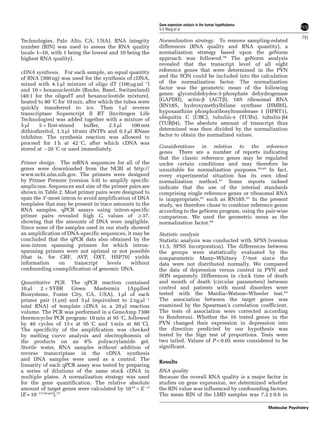
RNA samples. qPCR assays using intron-specific 
primer pairs revealed high Ct values of X37, 
showing that the amounts of DNA were negligible. 
Since none of the samples used in our study showed 
an amplification of DNA-specific sequences, it may be 
concluded that the qPCR data also obtained by the 
non-intron spanning primers for which intron-spanning 
primers were not optimal or not possible 
(that is, for CRF, AVP, OXT, HSP70) yields 
information on transcript levels without 
confounding coamplification of genomic DNA. 
Quantitative PCR. The qPCR reaction contained 
10 ml 2SYBR Green Mastermix (Applied 
Biosystems, Foster City, CA, USA), 1 ml of each 
primer pair (1 mM) and 5 ml (equivalent to 2 ng ml1 
total RNA) of template cDNA in a 20 ml reaction 
volume. The PCR was performed in a GeneAmp 7300 
thermocycler PCR program: 10 min at 95 1C, followed 
by 40 cycles of 15 s at 95 1C and 1 min at 60 1C). 
The specificity of the amplification was checked 
by melting curve analysis and electrophoresis of 
the products on an 8% polyacrylamide gel. 
Sterile water, RNA samples without addition of 
reverse transcriptase in the cDNA synthesis 
and DNA samples were used as a control. The 
linearity of each qPCR assay was tested by preparing 
a series of dilutions of the same stock cDNA in 
multiple plates. A normalization strategy was used 
for the gene quantification. The relative absolute 
amount of target genes were calculated by 1010Ect 
(E=10(1/slope)).37 
Gene expression analysis in the human hypothalamus 
S-S Wang et al 
Normalization strategy. To remove sampling-related 
differences (RNA quality and RNA quantity), a 
normalization strategy based upon the geNorm 
approach was followed.38 The geNorm analysis 
revealed that the transcript level of all eight 
reference genes that were determined in the PVN 
and the SON could be included into the calculation 
of the normalization factor. The normalization 
factor was the geometric mean of the following 
genes: glyceraldehydes-3-phosphate dehydrogenase 
(GAPDH), actin-b (ACTb), 18S ribosomal RNA 
(RN18S, hydroxymethylbilane synthase (HMBS), 
hypoxanthine phosphoribosyltransferase 1 (HPRT1), 
ubiquitin C (UBC), tubulin-a (TUBa), tubulin-b4 
(TUBb4). The absolute amount of transcript thus 
determined was then divided by the normalization 
factor to obtain the normalized values. 
Considerations in relation to the reference 
genes. There are a number of reports indicating 
that the classic reference genes may be regulated 
under certain conditions and may therefore be 
unsuitable for normalization purposes.39,40 In fact, 
every experimental situation has its own ideal 
normalization method.41 Some reports indeed 
indicate that the use of the internal standards 
comprising single reference genes or ribosomal RNA 
is inappropriate,42 such as RN18S.43 In the present 
study, we therefore chose to combine reference genes 
according to the geNorm program, using the pair-wise 
comparison. We used the geometric mean as the 
normalization factor.38 
Statistic analysis 
Statistic analysis was conducted with SPSS (version 
11.5, SPSS Incorporation). The differences between 
the groups were statistically evaluated by the 
nonparametric Mann–Whitney U-test since the 
data were not distributed normally. We compared 
the data of depression versus control in PVN and 
SON separately. Differences in clock time of death 
and month of death (circular parameters) between 
control and patients with mood disorders were 
tested with the Mardia–Watson–Wheeler test.44 
The association between the target genes was 
examined by the Spearman’s correlation coefficient. 
The tests of association were corrected according 
to Bonferroni. Whether the 16 tested genes in the 
PVN changed their expression in depression into 
the direction predicted by our hypothesis was 
tested by the Sign test of proportions. Tests were 
two tailed. Values of P  0.05 were considered to be 
significant. 
Results 
RNA quality 
Because the overall RNA quality is a major factor in 
studies on gene expression, we determined whether 
the RIN value was influenced by confounding factors. 
The mean RIN of the LMD samples was 7.2±0.6 in 
791 
Molecular Psychiatry
Gene expression analysis in the human hypothalamus 
S-S Wang et al 
Table 2 Sequence of the primers, gene bank accession numbers, the size of amplified product for the target genes and reference 
genes 
Gene Primer sequences Accession numbers Amplicon length (bp) 
AVP TGTGTGCACCAGGATGCCT NM_000490 84 
the PVN and 6.6±0.7 in the SON. However, we found 
no significant difference in RIN values between the 
depression group and the control group (z =1.529, 
P = 0.126). 
Gene expression in the PVN in depression versus 
controls 
Transcript levels of CRF, CRFR1, MR and ESR1 were 
found to be significantly higher in the PVN in the 
TTCTGGAAGTAGCACGCGG 
AVPR1A CTTTTGTGATCGTGACGGCTTA NM_000706 75 
TGATGGTAGGGTTTTCCGATTC 
AR GTCAACTCCAGGATGCTCTACT NM_000044 101 
AGGTGCCTCATTCGGACA 
CREB ACCACTGTAACGGTGCCAAC NM_134442 73 
CTCCTCCCTGGGTAATGG 
CRFR1 CGGGTCGTCTTCATCTACTTCA NM_004382 100 
TGGCAGAACGGACCTCACT 
CRFR2 AATGCTTGGAGAATGGGACG NM_001883 100 
ACAAGGGCGATGCGGTAG 
CRF CATCTCCCTGGATCTCACCTTC NM_000756 109 
AATAATCTCCATGAGTTTCCTGTTG 
ESR1 TCTTGGACAGGAACCAGGGAA NM_000125 82 
CGGAACCGAGATGATGTAGCC 
ESR2 TGCTTTGGTTTGGGTGATTG NM_001437 118 
TTCCATGCCCTTGTTACTCG 
GRa (NR3C1) CCATTGTCAAGAGGGAAGGAA NM_001018077 119 
TGTTTGGAAGCAATAGTTAAGGAG 
GRb (NR3C1) AGAACTGGCAGCGGTTTTATC NM_001020825 91 
GTGTGAGATGTGCTTTCTGGTTT 
HSP90 CGCTCCTGTCTTCTGGCTTC NM_005348 117 
TGGTATCATCAGCAGTAGGGTCA 
HSP70 CCATCATCAGCGGACTGTACC NM_005345 87 
CTGACCCAGACCCTCCCTT 
MR AAGTCGTGAAGTGGGCAAAG NM_000901 83 
CCAAGAATACTGGATTAGGGT 
OXT GCTGAAACTTGATGGCTCCG NM_000915 67 
TTCTGGGGTGGCTATGGG 
TNFa GGCGTGGAGCTGAGAGATA NM_000594 88 
CAGCCTTGGCCCTTGAAGA 
IL1b CCGACCACCACTACAGCAA NM_000576 86 
GGCAGGGAACCAGCATCT 
ACTb CCCAGCCATGTACGTTGCTA NM_001101 65 
TCACCGGAGTCCATCACGAT 
GAPDH CAAATTCCATGGCACCGTC NM_002046 62 
TCTCGCTCCTGGAAGATGGT 
HPRT1 GGACAGGACTGAACGTCTTGC NM_000194 88 
ATAGCCCCCCTTGAGCACAC 
TUBa CTTTGAGCCAGCCAACCAGA NM_006082 72 
GTACAACAGGCAGCAAGCCAT 
UBC GCTGCTCATAAGACTCGGCC NM_021009 70 
GTCACCCAAGTCCCGTCCTA 
HMBS GATCCCGAGACTCTGCTTCG NM_001024382 70 
ACACTGCAGCCTCCTTCCAG 
TUBb4 GGGCCAAGTTTTGGGAGGT NM_006087 71 
CACTGTCCCCATGGTATGTGC 
RN18S TCGAGGCCCTGTAATTGGAA M10098 60 
CCCTCCAATGGATCCTCGTT 
Abbreviations: ACTb, actin-b; AR, androgen receptor; AVP, vasopressin; AVPR1A, AVP receptor 1a; CREB, cAMP-response 
element-binding protein; CRF, corticotropin-releasing factor; CRFR, CRF receptor; ESR, estrogen receptor; GAPDH, 
glyceraldehydes-3-phosphate dehydrogenase; GR, glucocorticoid receptor; HMBS, hydroxymethylbilane synthase; HPRT1, 
hypoxanthine phosphoribosyltransferase 1; HSP, heat shock protein; IL1b, interleukin 1-b ; MR, mineralocorticoid receptor; 
OXT, oxytocin; RN18S, 18S ribosomal RNA; TNFa, tumor necrosis factor-a; TUBa, tubulin-a; UBC, ubiquitin C. 
792 
Molecular Psychiatry
depression group while AR was decreased compared 
to the controls (Table 3). The median of the total 
amount of CRF mRNA in the PVN was 1.9 times 
higher than that of the controls (z =1.981, P = 0.048, 
Figure 2a). The median amount of CRFR1 mRNA in 
the PVN was B2.5 times higher than that in controls 
(z =1.981, P = 0.048, Figure 2b). In depression, the 
sex hormone receptor expression levels in the PVN 
changed significantly. The amount of AR mRNA in 
the PVN was decreased by B2.7-fold in the depressed 
patients as compared to the controls (z =1.981, 
P = 0.048, Figure 2f), while the amount of ESR1 
mRNA was B1.7 times higher than that of the 
controls (z =2.492, P = 0.013, Figure 2d). The MR 
mRNA levels of the depressed patients were B2.2 
times higher than those of the controls (z =2.747, 
P = 0.006, Figure 2c) and the AVP mRNA levels were 
B1.9 times higher in the depressed patients than in 
the controls, a trend that did not reach significance 
(z =1.597, P = 0.11). The AVPR1A level was B2 
times higher in the PVN of depressed patients than in 
the controls (z =1.981, P = 0.048, Figure 2e). 
We hypothesized that in depression the transcript 
levels of those genes that are involved in the 
activation of the HPA axis (CRF, CRFR1, MR, AVP, 
AVPR1A, CREB, ESR1, ESR2, IL1b, TNFa, HSP70 and 
90) are upregulated, whereas the transcript levels of 
the genes involved in the inhibition of the HPA axis 
(GRa, CRFR2, AR, OXT,) are downregulated. From the 
16 tested genes in the PVN, 13 changed their 
expression in depression into the direction predicted 
by our hypothesis (Table 3), which the Sign test for 
proportions deemed significant (a  0.05). 
There were interesting correlations present between 
the expression levels of sex hormone receptors in the 
PVN in the depressed patients but not in the controls. 
ESR1 mRNA was positively correlated with estrogen 
receptor-b (ESR2) mRNA in the PVN, both in the 
depressed patients and in the controls (Figure 3a) 
(r = 0.893, P = 0.007; r = 0.821, P = 0.023, respectively). 
A significant correlation was found between AR- and 
ESR1-mRNA (r = 0.857, P = 0.014) and AR- and ESR2- 
mRNA (r = 0.857, P = 0.014) (Figure 3b) in the PVN 
but only in the depressed patients. 
Gene expression in the SON in depression and controls 
No significant difference of these target genes was 
found in the SON between the depressed patients and 
the controls as far as these target genes are concerned. 
Gene expression in the PVN and the SON of depressed 
patients and controls 
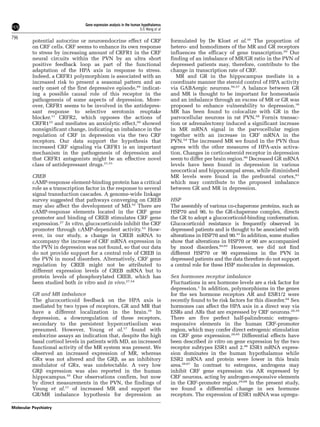
The transcript levels of CRF, OXT, GRa, AR and ESR1 
were found to be significantly higher in the PVN than 
in the SON both in the depressed patients and in the 
controls (Table 4), whereas the MR, ESR2 and CRFR1 
were significantly more expressed in the PVN in the 
depressed patients than in the controls. There was no 
significant change of AVP mRNA in SON and PVN of 
depressed patients. A similar level of expression for 
the PVN and the SON was found for CREB, TNFa, 
Table 3 Mean gene expression levels in the PVN for controls versus depression 
CRF AVP AVPR1A CREB OXT TNFa IL1b GRa MR CRFR1 CRFR2 AR ESR1 ESR2 HSP 70 HSP90 
Median of depression 224 576 4 061 582 686 3997 855 901 8574 17 108 11 432 33 381 12 532 3927 5776 4898 130 550 21 750 213 062 
Median of control 116 209 2 121 455 615 2894 424 931 3666 14 354 11 235 15 383 5017 1359 15 383 2815 88 157 17 893 190 517 
P-value 0.048* 0.11 0.048* 0.18 0.085 0.085 0.482 0.406 0.006** 0.048* 0.085 0.048* 0.013* 0.064 0.406 0.406 
Abbreviations: AR, androgen receptor; AVP, vasopressin; AVPR1A, AVP receptor 1a; CRF, corticotropin-releasing factor; CRFR, CRF receptors; CREB, cAMP-response 
element-binding protein; ESR, estrogen receptor; GR, glucocorticoid receptor; HSP, heat shock protein; IL1b, interleukin 1-b; MR, mineralocorticoid receptor; OXT, 
oxytocin; TNFa, tumor necrosis factor-a. 
The values represent the total amount of gene expression in the PVN. 
*P  0.05, **P  0.01. 
Gene expression analysis in the human hypothalamus 
S-S Wang et al 
793 
Molecular Psychiatry
Figure 2 Transcript levels of corticotropin-releasing factor (CRF) (a), CRF receptors 1 (CRFR1) (b), mineralocorticoid 
receptor (MR) (c), estrogen-receptor (ESR) 1 (d) and vasopressin receptor 1a (AVPR1A) (e) were found to be significantly 
higher in the paraventricular nucleus (PVN) of the depression group while androgen receptor (AR) (f) was significantly 
decreased compared to the controls. Dots represent the total expression levels in the PVN and supraoptic nucleus (SON) of 
individual depressed subjects (n = 7) and controls (n = 7). The numbers1–7 beside the dots represent the patients correlated to 
D1–D7, respectively, in Table 1. C1–C7 represents the controls. Numbers 3 and 6 represent the two bipolar disorder (BD) 
patients. The horizontal line indicates the median value. The asterisk demonstrates a significant difference in the PVN in 
depression versus controls. *P  0.05; **P  0.01. 
IL1b, CRFR2, HSP70 and 90. GR subtype-b (GRb) 
mRNA was not detected by real-time qPCR, probably 
because of its low abundance (Table 4). 
Discussion 
The present study shows that in depression, the 
increase in CRF expression was accompanied by a 
significant increased expression of four genes that are 
involved in activation of CRF neurons, that is, CRFR1, 
ESR1, MR and AVPR1A, while the expression of the 
AR that is involved in the inhibition of CRF 
neurons was decreased significantly. The direction 
in which 13 out of the 16 genes changed their 
expression level was significant and confirmed our 
hypothesis. The data were obtained in the PVN and 
SON of depressed patients and controls, using for the 
first-time LMD of the SON and PVN tissue followed 
by real-time qPCR in these patients. The results 
indicate that depression is accompanied by an 
imbalance in the expression of genes regulating the 
HPA axis. 
Gene expression analysis in the human hypothalamus 
S-S Wang et al 
794 
Molecular Psychiatry
Gene expression analysis in the human hypothalamus 
S-S Wang et al 
Figure 3 Correlation between the expression levels of sex hormone receptors. (a) Estrogen-receptor (ESR) 1 mRNA was 
positively correlated with ESR2 mRNA in the paraventricular nucleus (PVN) both in depressed patients and controls. (b) A 
significant correlation was presented between androgen receptor (AR)- and ESR1-mRNA and AR- and ESR2-mRNA in the 
PVN only in depression. 
Table 4 Differences in gene expression between the PVN and the SON (the value represents the median of the total expression 
levels per PVN or SON) 
CRF AVP AVPR1A CREB OXT TNFa IL1b GRa MR CRFR1 CRFR2 AR ESR1 ESR2 HSP 70 HSP90 
CRF neurons and CRFR1 and CRFR2 imbalance 
The CRF hypothesis of depression is supported in our 
study by the increased total amount of CRF mRNA in 
the PVN of depressed patients, now for the first time 
determined by real-time PCR. This confirms our 
earlier studies in depressed patients with other 
techniques, showing an increase in the number of 
CRF-immunopositive neurons in depression4,28 and 
elevated levels of CRF mRNA as determined by in situ 
hybridization.5 So far, only one related study45 on 
brain tissue in suicide victims has been carried out in 
which no significant increase of CRF mRNA in the 
PVN was found. However, in the study, the concen-tration 
of CRF was measured in a PVN punch and not 
the total amount of CRF mRNA in the PVN, as we did 
in the present study. 
Our new finding of an enhanced amount of CRFR1 
mRNA in the PVN in depressed patients supports the 
CRF hypothesis of depression. No information on this 
receptor has been available for the human brain until 
now. Although observations in human post-mortem 
material can only reveal correlations and cannot 
distinguish cause and effect, our findings are fully 
supported by the enhanced CRF expression in the 
PVN in various types of stress in rodents that 
mediates CRF-induced ACTH secretion, anxiety and 
anorectic effects. CRFR1 expression occurs widely in 
the central nervous system indicating a large number 
of sites of CRF action. The expression of CRFR1 is low 
within the PVN but substantially and selectively 
increases after stress.46 It is surprising that an increase 
in ligand (CRF) expression is associated with an 
increase in the expression of its cognate receptor 
CRFR1 rather than downregulation, but again this 
observation agrees very well with the animal experi-mental 
data. Injection of CRF in the rodent PVN 
increased CRFR1 expression, and the majority of the 
CRF-containing neurons in the PVN express this 
receptor.47 There are also CRF synapses on CRF 
neurons present in the rat PVN.48 In our study, the 
increase of CRF was accompanied by an increase of 
CRFR1 expression in the PVN. This suggests a 
Depression 
PVN 224 576 4 061 582 686 3997 855 901 8574 17 108 11 432 33 381 12 532 3927 5776 4898 130 550 21 750 213 062 
SON 1363 4 029 505 698 2717 126 638 5977 9094 5131 11 156 2733 2631 2091 1191 81 552 14 720 176 688 
P-value 0.002a 0.848 0.475 0.180 0.002a 0.277 0.180 0.018a 0.004a 0.004a 0.338 0.009a 0.002a 0.035a 0.406 0.565 
Controls 
PVN 116 209 2 121 455 615 2894 424 931 3666 14 354 11 235 15 383 5017 1359 15 383 2815 88 157 17 893 190 517 
SON 2336 3 828 294 669 2716 110 072 6427 23 745 4715 12 821 2667 2131 2874 1024 110 612 16 448 187 961 
P-value 0.002b 0.003b 0.225 0.609 0.013b 0.225 0.277 0.013b 0.565 0.110 0.277 0.003b 0.035b 0.338 0.848 0.949 
Abbreviations: AR, androgen receptor; AVP, vasopressin; AVPR1A, AVP receptor 1a; CRF, corticotropin-releasing factor; 
CRFR, CRF receptors; CREB, cAMP-response element-binding protein; ESR, estrogen receptor; GR, glucocorticoid receptor; 
HSP, heat shock protein; IL1b, interleukin 1-b; MR, mineralocorticoid receptor; OXT, oxytocin; PVN, paraventricular 
nucleus; SON, supraoptic nucleus; TNFa, tumor necrosis factor-a. 
aP  0.05, significant differences in the PVN and SON of the depressed patients. 
bP  0.05, significant differences in the PVN and SON of the controls. 
795 
Molecular Psychiatry
potential autocrine or neuroendocrine effect of CRF 
on CRF cells. CRF seems to enhance its own response 
to stress by increasing amount of CRFR1 in the CRF 
neural circuits within the PVN by an ultra short 
positive feedback loop as part of the functional 
adaptation of the HPA axis in response to stress. 
Indeed, a CRFR1 polymorphism is associated with an 
increased risk to present a seasonal pattern and an 
early onset of the first depressive episode,49 indicat-ing 
a possible causal role of this receptor in the 
pathogenesis of some aspects of depression. More-over, 
CRFR1 seems to be involved in the antidepres-sant 
response to selective serotonin reuptake 
blocker.11 CRFR2, which opposes the actions of 
CRFR122 and mediates an anxiolytic effect,50 showed 
nonsignificant change, indicating an imbalance in the 
regulation of CRF in depression via the two CRF 
receptors. Our data support the hypothesis that 
increased CRF signaling via CRFR1 is an important 
mechanism in the pathogenesis of depression and 
that CRFR1 antagonists might be an effective novel 
class of antidepressant drugs.21,51 
CREB 
cAMP-response element-binding protein has a critical 
role as a transcription factor in the response to several 
signal transduction cascades. A genome-wide linkage 
survey suggested that pathways converging on CREB 
may also affect the development of MD.52 There are 
cAMP-response elements located in the CRF gene 
promoter and binding of CREB stimulates CRF gene 
expression.27 In vitro, glucocorticoids inhibit the CRF 
promoter through cAMP-dependent activity.53 How-ever, 
in our study, a change in CREB mRNA to 
accompany the increase of CRF mRNA expression in 
the PVN in depression was not found, so that our data 
do not provide support for a central role of CREB in 
the PVN in mood disorders. Alternatively, CRF gene 
regulation by CREB might not be attributed to 
different expression levels of CREB mRNA but to 
protein levels of phosphorylated CREB, which has 
been studied both in vitro and in vivo.27,54 
GR and MR imbalance 
The glucocorticoid feedback on the HPA axis is 
mediated by two types of receptors, GR and MR that 
have a different localization in the brain.16 In 
depression, a downregulation of these receptors, 
secondary to the persistent hypercortisolism was 
presumed. However, Young et al.17 found with 
endocrine assays an indication that, despite the high 
basal cortisol levels in patients with MD, an increased 
functional activity of the MR system was present. We 
observed an increased expression of MR, whereas 
GRa was not altered and the GRb, as an inhibitory 
modulator of GRa, was undetectable. A very low 
GRb expression was also reported in the human 
hippocampus.55 Our observations confirm, but now 
by direct measurements in the PVN, the findings of 
Young et al.17 of increased MR and support the 
GR/MR imbalance hypothesis for depression as 
formulated by De Kloet et al.16 The proportion of 
hetero- and homodimers of the MR and GR receptors 
influences the efficacy of gene transcription.20 Our 
finding of an imbalance of MR/GR ratio in the PVN of 
depressed patients may, therefore, contribute to the 
change in transcription rate of CRF. 
MR and GR in the hippocampus mediate in a 
coordinate manner the steroid control of HPA activity 
via GABAergic neurons.56,57 A balance between GR 
and MR is thought to be important for homeostasis 
and an imbalance through an excess of MR or GR was 
proposed to enhance vulnerability to depression.16 
MR has been found to colocalize with GR in the 
parvocellular neurons in rat PVN.58 Fornix transac-tion 
or adrenalectomy induced a significant increase 
in MR mRNA signal in the parvocellular region 
together with an increase in CRF mRNA in the 
PVN.59 The increased MR we found in the PVN thus 
agrees with the other measures of HPA-axis activa-tion. 
Changes in corticosteroid receptor in depression 
seem to differ per brain region.60 Decreased GR mRNA 
levels have been found in depression in various 
neocortical and hippocampal areas, while diminished 
MR levels were found in the prefrontal cortex,61 
which may contribute to the proposed imbalance 
between GR and MR in depression. 
HSP 
The assembly of various co-chaperone proteins, such as 
HSP70 and 90, to the GR-chaperone complex, directs 
the GR to adopt a glucocorticoid-binding conformation. 
Glucocorticoid resistance is frequently observed in 
depressed patients and is thought to be associated with 
alterations in HSP70 and 90.33 In addition, some studies 
show that alterations in HSP70 or 90 are accompanied 
by mood disorders.62,63 However, we did not find 
different HSP70 or 90 expressions in the PVN in 
depressed patients and the data therefore do not support 
a central role for these HSP molecules in depression. 
Sex hormones receptor imbalance 
Fluctuations in sex hormone levels are a risk factor for 
depression.1 In addition, polymorphisms in the genes 
for the sex hormone receptors AR and ESR1/2 were 
recently found to be risk factors for this disorder.64 Sex 
hormones can affect the HPA axis in a direct way via 
ESRs and ARs that are expressed by CRF neurons.28,29 
There are five perfect half-palindromic estrogen-responsive 
elements in the human CRF-promoter 
region, which may confer direct estrogenic stimulation 
on CRF gene expression.28,65 Differential effects have 
been described in vitro on gene expression by the two 
receptor subtypes ESR1 and 2.66 ESR1 mRNA expres-sion 
dominates in the human hypothalamus while 
ESR2 mRNA and protein were lower in this brain 
area.28,67 In contrast to estrogens, androgens may 
inhibit CRF gene expression via AR expressed by 
CRF neurons, acting by androgen-responsive elements 
in the CRF-promoter region.29,68 In the present study, 
we found a differential change in sex hormone 
receptors. The expression of ESR1 mRNAwas upregu- 
Gene expression analysis in the human hypothalamus 
S-S Wang et al 
796 
Molecular Psychiatry
lated in depressed subjects, whereas AR was down-regulated 
compared with the controls. Both changes go 
together with increased CRF expression. Moreover, 
there was only a trend for an increase of ESR2 
expression, while activation of this receptor subtype 
reduces anxiety.69 The two ESR subtypes correlated 
positively both in depressed patients and controls 
(Figure 3a), while a correlation between ESR and AR 
was only found in the PVN of depressed patients as 
shown in Figure 3b. Our data show an imbalance in the 
changes of the three sex hormone receptors that will 
contribute to the increased activity of the CRF neurons 
and thus to the signs and symptoms of depression. 
Cytokines 
Cytokine levels may be enhanced during depression 
and elicit depressive symptoms.70,71 CRF production is 
stimulated by proinflammatory cytokines such as 
IL1b,72,73 produced by glial cells and PVN neurons.30 
Also TNFa, a circulating state marker for depression 
may stimulate CRF production.31,74 In addition, TNFa 
is produced by astrocytes and ependymal cells.32 In 
the present study, we did not find a change of TNFa or 
IL1b in mRNA levels in the PVN in depressed patients. 
AVP 
No significant difference of AVP mRNA expression 
was found between the SON or the PVN of controls 
and depressed patients, AVP mRNA expression was 
earlier found to be significantly increased in both the 
SON and the PVN, but only in the melancholic 
subgroup of depressed patients.24 In the present 
study, only one patient was diagnosed as having the 
melancholic type of depression (Table 1), which fully 
explained why we did not find a significant change of 
AVP mRNA in our group of depressed subjects. 
The receptor AVPR1A was reported to be present in 
the rat PVN and to control hormone release.75,76 In 
animal experiments, AVPR1A immunoreactive cells 
in the PVN increased after mineralocorticoid adminis-tration77 
and an AVPR1A antagonist resulted in a 
decrease in anxiety/depression-related behavior.25 
The increased AVPR1A mRNA found in the PVN of 
depressed patients may therefore be directly related 
with the symptoms of depression. 
Several limitations of the present study should be 
mentioned. The groups are relatively limited in size. 
However, for qPCR, frozen brain material is needed 
from clinically well-documented depressed patients 
and well-matched control material with a relatively 
short post-mortem time and good quality RNA, which 
is extremely difficult to obtain. 
A second point is that the five MD subjects and the 
two BD patients may be seen as pathophysiologically 
non-identical entities. For instance, image studies 
showed that the hippocampal volume is reduced in 
MD, while BD patients did not show a reduction of 
hippocampal volume.78 Indeed, for each depression 
subtype—and even probably for each MD patient— 
there are different genetic and epigenetic factors 
involved in the pathogenesis of depression. However, 
Gene expression analysis in the human hypothalamus 
S-S Wang et al 
previous studies have shown that both, MD and BD, 
are accompanied by an activation of the final common 
pathway, the HPA axis. Both types of depression 
exhibit similar activation of the CRF- and ESR1- 
expressing neurons in the hypothalamic PVN,4,5,28 
both go together with a decreased activity in the 
biological clock.79 Apparently, whatever the indivi-dual 
risk factors and pathogenetic mechanisms for MD 
and BD are, they ultimately seem to lead to similar 
activity changes on the level of the hypothalamus. 
At a third point, it should be noted that the 
increased activity of the PVN CRF neurons in the 
patients with mood disorders is unlikely to be the 
result of the administration of antidepressants, since 
it has been found that they may attenuate rather than 
enhance the activity of CRF neurons.80–83 Thus, if 
antidepressants interfered with our measurements, 
this would have led to an underestimation of the 
observed difference between controls and patients 
with mood disorders with regard to the activation of 
their CRF-expressing neurons in the PVN. Further-more, 
antidepressants did not influence AVP mRNA 
or OXT mRNA levels in PVN and SON in an animal 
experimental study.84 On the effect on the expression 
of the other genes studied (MR, ESR, AR and CRFR), 
there is, however, insufficient information. 
In conclusion, in the present study, we combined 
laser microdissection and real-time PCR, which enables 
detection of differences in gene expression levels in 
specific areas of the human hypothalamus. A combina-tion 
of in situ hybridization and immunocytochemistry 
would be a next step to determine in what cell type in 
the PVN the expression of the different genes is 
localized. Our study contributes new data to the 
question how the activity of the HPA axis may be 
modulated by a number of factors in depression. The 
finding of multiple receptor imbalances in the PVN 
indicates new targets for future work, a study of 
possible cross talk between these receptors systems in 
theMD being one of them. The significant change in the 
expression of five genes that all indicate a stimulation 
of the HPA-axis activity may also offer new avenues for 
therapeutic strategies, such as testing combinations of 
different receptor agonists and antagonists. 
Acknowledgments 
We are indebted to the Netherlands Brain Bank at the 
Netherlands Institute for Neuroscience for providing 
us with the brain material and patient information. 
We thank Dr Michel A Hofman and Dr Aimin Bao for 
their statistical assistance, Dr Gerben Meynen for the 
psychiatric evaluations, Dimitra Kontostavlaki for pro-viding 
us with the primers and Dr Elly Hol, Nathalie 
Koning, Dr Yinhui Wu, Tian Zhou, Bart Fisser, Rawien 
A Balesar, Arja A Sluiter, Unga A Unmehopa, Joop Van 
Heerikhuize and Paula van Hulten van Run for their 
technical advice. This investigation was supported by 
the projects of the Royal Netherlands Academy of Arts 
and Sciences (06CDP026) and the Natural Science 
Foundation of China (30530310). 
797 
Molecular Psychiatry
References 
1 Bao AM, Meynen G, Swaab DF. The stress system in depression 
and neurodegeneration: focus on the human hypothalamus. Brain 
Res Rev 2008; 57: 531–553. 
2 Nemeroff CB. The corticotropin-releasing factor (CRF) hypothesis 
of depression: new findings and new directions. Mol Psychiatry 
1996; 1: 336–342. 
3 Holsboer F. The corticosteroid receptor hypothesis of depression. 
Neuropsychopharmacology 2000; 23: 477–501. 
4 Raadsheer FC, Hoogendijk WJ, Stam FC, Tilders FJ, Swaab DF. 
Increased numbers of corticotropin-releasing hormone expressing 
neurons in the hypothalamic paraventricular nucleus of depressed 
patients. Neuroendocrinology 1994; 60: 436–444. 
5 Raadsheer FC, van Heerikhuize JJ, Lucassen PJ, Hoogendijk WJ, 
Tilders FJ, Swaab DF. Corticotropin-releasing hormone mRNA 
levels in the paraventricular nucleus of patients with Alzheimer’s 
disease and depression. Am J Psychiatry 1995; 152: 1372–1376. 
6 Holsboer F. Stress, hypercortisolism and corticosteroid receptors 
in depression: implications for therapy. J Affect Disord 2001; 62: 
77–91. 
7 Liu Z, Zhu F, Wang G, Xiao Z, Wang H, Tang J et al. Association of 
corticotropin-releasing hormone receptor1 gene SNP and haplo-type 
with major depression. Neurosci Lett 2006; 404: 358–362. 
8 Wasserman D, Sokolowski M, Rozanov V, Wasserman J. The 
CRHR1 gene: a marker for suicidality in depressed males exposed 
to low stress. Genes Brain Behav 2008; 7: 14–19. 
9 Heuser I, Bissette G, Dettling M, Schweiger U, Gotthardt U, 
Schmider J et al. Cerebrospinal fluid concentrations of cortico-tropin- 
releasing hormone, vasopressin, and somatostatin in 
depressed patients and healthy controls: response to amitriptyline 
treatment. Depress Anxiety 1998; 8: 71–79. 
10 Stenzel-Poore MP, Heinrichs SC, Rivest S, Koob GF, Vale WW. 
Overproduction of corticotropin-releasing factor in transgenic 
mice: a genetic model of anxiogenic behavior. J Neurosci 1994; 
14(5 Part 1): 2579–2584. 
11 Grammatopoulos DK, Chrousos GP. Functional characteristics of 
CRH receptors and potential clinical applications of CRH-receptor 
antagonists. Trends Endocrinol Metab 2002; 13: 436–444. 
12 Keck ME, Holsboer F. Hyperactivity of CRH neuronal circuits as a 
target for therapeutic interventions in affective disorders. Peptides 
2001; 22: 835–844. 
13 Ruhe HG, Mason NS, Schene AH. Mood is indirectly related to 
serotonin, norepinephrine and dopamine levels in humans: a 
meta-analysis of monoamine depletion studies. Mol Psychiatry 
2007; 12: 331–359. 
14 Swaab DF, Fliers E, Hoogendijk WJ, Veltman DJ, Zhou JN. 
Interaction of prefrontal cortical and hypothalamic systems in 
the pathogenesis of depression. Prog Brain Res 2000; 126: 
369–396. 
15 Reyes BA, Valentino RJ, Xu G, Van Bockstaele EJ. Hypothalamic 
projections to locus coeruleus neurons in rat brain. Eur J Neurosci 
2005; 22: 93–106. 
16 de Kloet ER, Derijk RH, Meijer OC. Therapy insight: is there an 
imbalanced response of mineralocorticoid and glucocorticoid 
receptors in depression? Nat Clin Pract Endocrinol Metab 2007; 
3: 168–179. 
17 Young EA, Lopez JF, Murphy-Weinberg V, Watson SJ, Akil H. 
Mineralocorticoid receptor function in major depression. Arch 
Gen Psychiatry 2003; 60: 24–28. 
18 Nestler EJ, Barrot M, DiLeone RJ, Eisch AJ, Gold SJ, Monteggia LM. 
Neurobiology of depression. Neuron 2002; 34: 13–25. 
19 Miller DB, O’Callaghan JP. Aging, stress and the hippocampus. 
Ageing Res Rev 2005; 4: 123–140. 
20 Trapp T, Rupprecht R, Castren M, Reul JM, Holsboer F. Hetero-dimerization 
between mineralocorticoid and glucocorticoid re-ceptor: 
a new principle of glucocorticoid action in the CNS. 
Neuron 1994; 13: 1457–1462. 
21 Muller MB, Wurst W. Getting closer to affective disorders: the role 
of CRH receptor systems. Trends Mol Med 2004; 10: 409–415. 
22 Imaki T, Katsumata H, Miyata M, Naruse M, Imaki J, Minami S. 
Expression of corticotropin-releasing hormone type 1 receptor in 
paraventricular nucleus after acute stress. Neuroendocrinology 
2001; 73: 293–301. 
23 Valdez GR, Zorrilla EP, GF K. Homeostasis within the cortico-tropin- 
releasing factor system via CRF2 receptor activation: a 
novel approach for the treatment of anxiety. Drug Dev Res 2005; 
65: 205–215. 
24 Meynen G, Unmehopa UA, van Heerikhuize JJ, Hofman MA, 
Swaab DF, Hoogendijk WJ. Increased arginine vasopressin mRNA 
expression in the human hypothalamus in depression: a pre-liminary 
report. Biol Psychiatry 2006; 60: 892–895. 
25 Wigger A, Sanchez MM, Mathys KC, Ebner K, Frank E, Liu D et al. 
Alterations in central neuropeptide expression, release, and 
receptor binding in rats bred for high anxiety: critical role of 
vasopressin. Neuropsychopharmacology 2004; 29: 1–14. 
26 Meynen G, Unmehopa UA, Hofman MA, Swaab DF, Hoogendijk WJ. 
Hypothalamic oxytocin mRNA expression and melancholic 
depression. Mol Psychiatry 2007; 12: 118–119. 
27 Legradi G, Holzer D, Kapcala LP, Lechan RM. Glucocorticoids 
inhibit stress-induced phosphorylation of CREB in corticotropin-releasing 
hormone neurons of the hypothalamic paraventricular 
nucleus. Neuroendocrinology 1997; 66: 86–97. 
28 Bao AM, Hestiantoro A, Van Someren EJ, Swaab DF, Zhou JN. 
Colocalization of corticotropin-releasing hormone and oestrogen 
receptor-alpha in the paraventricular nucleus of the hypothalamus 
in mood disorders. Brain 2005; 128(Part 6): 1301–1313. 
29 Bao AM, Fischer DF, Wu YH, Hol EM, Balesar R, Unmehopa UA et 
al. A direct androgenic involvement in the expression of human 
corticotropin-releasing hormone. Mol Psychiatry 2006; 11: 567–576. 
30 Huitinga I, van der Cammen M, Salm L, Erkut Z, van Dam A, 
Tilders F et al. IL-1beta immunoreactive neurons in the human 
hypothalamus: reduced numbers in multiple sclerosis. J Neuro-immunol 
2000; 107: 8–20. 
31 Himmerich H, Binder EB, Kunzel HE, Schuld A, Lucae S, Uhr M 
et al. Successful antidepressant therapy restores the disturbed 
interplay between TNF-alpha system and HPA axis. Biol Psychia-try 
2006; 60: 882–888. 
32 Kuno R, Yoshida Y, Nitta A, Nabeshima T, Wang J, Sonobe Y et al. 
The role of TNF-alpha and its receptors in the production of NGF 
and GDNF by astrocytes. Brain Res 2006; 1116: 12–18. 
33 Tissing WJ, Meijerink JP, den Boer ML, Brinkhof B, Pieters R. 
mRNA expression levels of (co)chaperone molecules of the 
glucocorticoid receptor are not involved in glucocorticoid resis-tance 
in pediatric ALL. Leukemia 2005; 19: 727–733. 
34 Braak H, Braak E. Neuropathological stageing of Alzheimer-related 
changes. Acta Neuropathol (Berl) 1991; 82: 239–259. 
35 van de Nes JA, Kamphorst W, Ravid R, Swaab DF. Comparison of 
beta-protein/A4 deposits and Alz-50-stained cytoskeletal changes 
in the hypothalamus and adjoining areas of Alzheimer’s disease 
patients: amorphic plaques and cytoskeletal changes occur 
independently. Acta Neuropathol (Berl) 1998; 96: 129–138. 
36 Koning N, Bo L, Hoek RM, Huitinga I. Downregulation of 
macrophage inhibitory molecules in multiple sclerosis lesions. 
Ann Neurol 2007; 62: 504–514. 
37 Kamphuis W, Schneemann A, van Beek LM, Smit AB, Hoyng PF, 
Koya E. Prostanoid receptor gene expression profile in human 
trabecular meshwork: a quantitative real-time PCR approach. 
Invest Ophthalmol Vis Sci 2001; 42: 3209–3215. 
38 Vandesompele J, De Preter K, Pattyn F, Poppe B, Van Roy N, 
De Paepe A et al. Accurate normalization of real-time quantitative 
RT-PCR data by geometric averaging of multiple internal control 
genes. Genome Biol 2002; 3: RESEARCH0034.1-0034.11. 
39 Dheda K, Huggett JF, Bustin SA, Johnson MA, Rook G, Zumla A. 
Validation of housekeeping genes for normalizing RNA expression 
in real-time PCR. Biotechniques 2004; 37: 112–114, 116, 118–119. 
40 Huggett J, Dheda K, Bustin S, Zumla A. Real-time RT-PCR 
normalisation; strategies and considerations. Genes Immun 2005; 
6: 279–284. 
41 Bustin SA, Benes V, Nolan T, Pfaffl MW. Quantitative real-time 
RT-PCR—a perspective. J Mol Endocrinol 2005; 34: 597–601. 
42 Tricarico C, Pinzani P, Bianchi S, Paglierani M, Distante V, 
Pazzagli M et al. Quantitative real-time reverse transcription 
polymerase chain reaction: normalization to rRNA or single 
housekeeping genes is inappropriate for human tissue biopsies. 
Anal Biochem 2002; 309: 293–300. 
43 Elberg G, Elberg D, Logan CJ, Chen L, Turman MA. Limitations of 
commonly used internal controls for real-time RT-PCR analysis of 
Gene expression analysis in the human hypothalamus 
S-S Wang et al 
798 
Molecular Psychiatry
renal epithelial-mesenchymal cell transition. Nephron Exp 
Nephrol 2006; 102: e113–e122. 
44 Batschelet . Circular Statistics in Biology. Academic Press: New 
York, 1981. 
45 Merali Z, Kent P, Du L, Hrdina P, Palkovits M, Faludi G et al. 
Corticotropin-releasing hormone, arginine vasopressin, gastrin-releasing 
peptide, and neuromedin B alterations in stress-relevant 
brain regions of suicides and control subjects. Biol Psychiatry 
2006; 59: 594–602. 
46 Mansi JA, Rivest S, Drolet G. Regulation of corticotropin-releasing 
factor type 1 (CRF1) receptor messenger ribonucleic acid in the 
paraventricular nucleus of rat hypothalamus by exogenous CRF. 
Endocrinology 1996; 137: 4619–4629. 
47 Imaki T, Naruse M, Harada S, Chikada N, Imaki J, Onodera H et al. 
Corticotropin-releasing factor up-regulates its own receptor mRNA 
in the paraventricular nucleus of the hypothalamus. Brain Res Mol 
Brain Res 1996; 38: 166–170. 
48 Silverman AJ, Hou-Yu A, Chen WP. Corticotropin-releasing factor 
synapses within the paraventricular nucleus of the hypothalamus. 
Neuroendocrinology 1989; 49: 291–299. 
49 Papiol S, Arias B, Gasto C, Gutierrez B, Catalan R, Fananas L. Genetic 
variability at HPA axis in major depression and clinical response to 
antidepressant treatment. J Affect Disord 2007; 104: 83–97. 
50 Kishimoto T, Radulovic J, Radulovic M, Lin CR, Schrick C, 
Hooshmand F et al. Deletion of crhr2 reveals an anxiolytic role for 
corticotropin-releasing hormone receptor-2. Nat Genet 2000; 24: 
415–419. 
51 Kunzel HE, Zobel AW, Nickel T, Ackl N, Uhr M, Sonntag A et al. 
Treatment of depression with the CRH-1-receptor antagonist 
R121919: endocrine changes and side effects. J Psychiatr Res 
2003; 37: 525–533. 
52 Zubenko GS, Maher B, Hughes III HB, Zubenko WN, Stiffler JS, 
Kaplan BB et al. Genome-wide linkage survey for genetic loci that 
influence the development of depressive disorders in families 
with recurrent, early-onset, major depression. Am J Med Genet B 
Neuropsychiatr Genet 2003; 123: 1–18. 
53 Nicholson RC, King BR, Smith R. Complex regulatory interactions 
control CRH gene expression. Front Biosci 2004; 9: 32–39. 
54 Wolfl S, Martinez C, Majzoub JA. Inducible binding of cyclic 
adenosine 30,50-monophosphate (cAMP)-responsive element bind-ing 
protein (CREB) to a cAMP-responsive promoter in vivo. Mol 
Endocrinol 1999; 13: 659–669. 
55 DeRijk RH, Schaaf M, Stam FJ, de Jong IE, Swaab DF, Ravid R et al. 
Very low levels of the glucocorticoid receptor beta isoform in the 
human hippocampus as shown by Taqman RT-PCR and immuno-cytochemistry. 
Brain Res Mol Brain Res 2003; 116: 17–26. 
56 de Kloet ER. Hormones, brain and stress. Endocr Regul 2003; 
37: 51–68. 
57 Cole RL, Sawchenko PE. Neurotransmitter regulation of cellular 
activation and neuropeptide gene expression in the paraventri-cular 
nucleus of the hypothalamus. J Neurosci 2002; 22: 959–969. 
58 Han F, Ozawa H, Matsuda K, Nishi M, Kawata M. Colocalization of 
mineralocorticoid receptor and glucocorticoid receptor in the 
hippocampus and hypothalamus. Neurosci Res 2005; 51: 371–381. 
59 Han F, Ozawa H,Matsuda KI, Lu H, De Kloet ER, KawataM. Changes 
in the expression of corticotrophin-releasing hormone, mineralocor-ticoid 
receptor and glucocorticoid receptor mRNAs in the hypotha-lamic 
paraventricular nucleus induced by fornix transection and 
adrenalectomy. J Neuroendocrinol 2007; 19: 229–238. 
60 Webster MJ, Knable MB, O’Grady J, Orthmann J, Weickert CS. 
Regional specificity of brain glucocorticoid receptor mRNA 
alterations in subjects with schizophrenia and mood disorders. 
Mol Psychiatry 2002; 7: 985–994, 924. 
61 Xing GQ, Russell S, Webster MJ, Post RM. Decreased expression of 
mineralocorticoid receptor mRNA in the prefrontal cortex in 
schizophrenia and bipolar disorder. Int J Neuropsychopharmacol 
2004; 7: 143–153. 
62 Shen WW, Liu HC, Yang YY, Lin CY, Chen KP, Yeh TS et al. 
Anti-heat shock protein 90 is increased in acute mania. Aust N Z 
J Psychiatry 2006; 40: 712–716. 
63 Shimizu S, Nomura K, Ujihara M, Sakamoto K, Shibata H, Suzuki T 
et al. An allele-specific abnormal transcript of the heat shock 
protein 70 gene in patients with major depression. Biochem 
Biophys Res Commun 1996; 219: 745–752. 
Gene expression analysis in the human hypothalamus 
S-S Wang et al 
64 Geng Y-G, Su Q-R, Su L-Y, Chen Q, Ren G-Y, Shen S-Q et al. 
Comparison of the polymorphisms of androgen receptor gene and 
estrogen alpha and beta gene between adolescent females with 
first-onset major depressive disorder and controls. Int J Neurosci 
2007; 117: 539–547. 
65 Vamvakopoulos NC, Chrousos GP. Evidence of direct estrogenic 
regulation of human corticotropin-releasing hormone gene expres-sion. 
Potential implications for the sexual dimophism of the stress 
response and immune/inflammatory reaction. J Clin Invest 1993; 
92: 1896–1902. 
66 Paech K, Webb P, Kuiper GG, Nilsson S, Gustafsson J, Kushner PJ 
et al. Differential ligand activation of estrogen receptors ERalpha 
and ERbeta at AP1 sites. Science 1997; 277: 1508–1510. 
67 Osterlund MK, Gustafsson JA, Keller E, Hurd YL. Estrogen receptor 
beta (ERbeta) messenger ribonucleic acid (mRNA) expression 
within the human forebrain: distinct distribution pattern to 
ERalpha mRNA. J Clin Endocrinol Metab 2000; 85: 3840–3846. 
68 Lund TD, Munson DJ, Haldy ME, Handa RJ. Androgen inhibits, 
while oestrogen enhances, restraint-induced activation of neuro-peptide 
neurones in the paraventricular nucleus of the hypotha-lamus. 
J Neuroendocrinol 2004; 16: 272–278. 
69 Bodo C, Rissman EF. New roles for estrogen receptor beta in 
behavior and neuroendocrinology. Front Neuroendocrinol 2006; 
27: 217–232. 
70 Besedovsky HO, del Rey A. Immune-neuro-endocrine interac-tions: 
facts and hypotheses. Endocr Rev 1996; 17: 64–102. 
71 Hayley S, Poulter MO, Merali Z, Anisman H. The pathogenesis of 
clinical depression: stressor- and cytokine-induced alterations of 
neuroplasticity. Neuroscience 2005; 135: 659–678. 
72 Berkenbosch F, van Oers J, del Rey A, Tilders F, Besedovsky H. 
Corticotropin-releasing factor-producing neurons in the rat acti-vated 
by interleukin-1. Science 1987; 238: 524–526. 
73 Melik Parsadaniantz S, Levin N, Lenoir V, Roberts JL, Kerdelhue B. 
Human interleukin 1 beta: corticotropin releasing factor and 
ACTH release and gene expression in the male rat: in vivo and 
in vitro studies. J Neurosci Res 1994; 37: 675–682. 
74 O’Brien SM, Scott LV, Dinan TG. Cytokines: abnormalities in major 
depression and implications for pharmacological treatment. Hum 
Psychopharmacol 2004; 19: 397–403. 
75 Hurbin A, Boissin-Agasse L, Orcel H, Rabie A, Joux N, 
Desarmenien MG et al. The V1a and V1b, but not V2, vasopressin 
receptor genes are expressed in the supraoptic nucleus of the rat 
hypothalamus, and the transcripts are essentially colocalized in 
the vasopressinergic magnocellular neurons. Endocrinology 1998; 
139: 4701–4707. 
76 Hurbin A, Orcel H, Alonso G, Moos F, Rabie A. The vasopressin 
receptors colocalize with vasopressin in the magnocellular 
neurons of the rat supraoptic nucleus and are modulated by water 
balance. Endocrinology 2002; 143: 456–466. 
77 Pietranera L, Saravia F, Roig P, Lima A, De Nicola AF. 
Mineralocorticoid treatment upregulates the hypothalamic vaso-pressinergic 
system of spontaneously hypertensive rats. Neuroen-docrinology 
2004; 80: 100–110. 
78 Videbech P, Ravnkilde B. Hippocampal volume and depression: a 
meta-analysis of MRI studies. Am J Psychiatry 2004; 161: 1957–1966. 
79 Zhou JN, Riemersma RF, Unmehopa UA, Hoogendijk WJ, 
van Heerikhuize JJ, Hofman MA et al. Alterations in arginine 
vasopressin neurons in the suprachiasmatic nucleus in depres-sion. 
Arch Gen Psychiatry 2001; 58: 655–662. 
80 Fischer P, Simanyi M, Danielczyk W. Depression in dementia of 
the Alzheimer type and in multi-infarct dementia. Am J Psychiatry 
1990; 147: 1484–1487. 
81 Vingerhoets AJ, Ratliff-Crain J, Jabaaij L, Tilders FJ, Moleman P, 
Menges LJ. Self-reported stressors, symptom complaints and 
psychobiological functioning-II: psychoneuroendocrine variables. 
J Psychosom Res 1996; 40: 191–203. 
82 Nemeroff CB. Dosing the antipsychotic medication olanzapine. 
J Clin Psychiatry 1997; 58(Suppl 10): 45–49. 
83 Oldehinkel AJ, van den Berg MD, Flentge F, Bouhuys AL, ter Horst 
GJ, Ormel J. Urinary free cortisol excretion in elderly persons with 
minor and major depression. Psychiatry Res 2001; 104: 39–47. 
84 Marar IE, Amico JA. Vasopressin, oxytocin, corticotrophin-releas-ing 
factor, and sodium responses during fluoxetine administration 
in the rat. Endocrine 1998; 8: 13–18. 
799 
Molecular Psychiatry

PCR en tiempo real

  • 1.
    Molecular Psychiatry (2008)13, 786–799 & 2008 Nature Publishing Group All rights reserved 1359-4184/08 $30.00 www.nature.com/mp ORIGINAL ARTICLE Gene expression analysis in the human hypothalamus in depression by laser microdissection and real-time PCR: the presence of multiple receptor imbalances S-S Wang1,2, W Kamphuis1, I Huitinga1, J-N Zhou2 and DF Swaab1 1Netherlands Institute for Neuroscience, Amsterdam, The Netherlands and 2Hefei National Laboratory for Physical Sciences at Microscale and Department of Neurobiology and Biophysics, Life Science School, University of Science and Technology of China, Hefei, Anhui, PR China Hyperactivity of corticotropin-releasing factor (CRF) neurons in the paraventricular nucleus (PVN) of the hypothalamus is a prominent feature in depression and may be important in the etiology of this disease. The activity of the CRF neurons in the stress response is modulated by a number of factors that stimulate or inhibit CRF expression, including (1) corticosteroid receptors and their chaperones, heat shock proteins 70 and 90, (2) sex hormone receptors, (3) CRF receptors 1 (CRFR1) and 2, (4) cytokines interleukin 1-b and tumor necrosis factor-a, (5) neuropeptides and receptors, vasopressin (AVP), AVP receptor 1a (AVPR1A) and oxytocin and (6) transcription factor cAMP-response element-binding protein. We hypothesized that, in depression, the transcript levels of those genes that are involved in the activation of the hypothalamo–pituitary–adrenal (HPA) axis are upregulated, whereas the transcript levels of the genes involved in the inhibition of the HPA axis are downregulated. We performed laser microdissection and real-time PCR in the PVN and as a control in the supraoptic nucleus. Snap-frozen post-mortem hypothalami of seven depressed and seven matched controls were used. We found significantly increased CRF mRNA levels in the PVN of the depressed patients. This was accompanied by a significantly increased expression of four genes that are involved in the activation of CRF neurons, that is, CRFR1, estrogen receptor-a, AVPR1A and mineralocorticoid receptor, while the expression of the androgen receptor mRNA involved in the inhibition of CRF neurons was decreased significantly. These findings raise the possibility that a disturbed balance in the production of receptors may contribute to the activation of the HPA axis in depression. Molecular Psychiatry (2008) 13, 786–799; doi:10.1038/mp.2008.38; published online 22 April 2008 Keywords: hypothalamo–pituitary–adrenal axis; depression; paraventricular nucleus; laser dissection; corticotrophin-releasing factor; steroid receptors Introduction The hypothalamo–pituitary–adrenal (HPA) axis is considered to be the ‘final common pathway’ for a major part of the depressive symptomatology. Stress-ful life events and genetic- and epigenetic-risk factors for depression have been linked to increased HPA-axis activity in adulthood.1 When patients or animal models for depression are treated either with anti-depressants, or with electroconvulsive therapy, or when patients show spontaneous remission, the HPA-axis function returns to normal.2 Moreover, studies in high-risk probands of patients with major depression (MD) have shown that abnormalities in HPA-axis function already exist prior to the onset of the clinical symptoms, suggesting that such abnormalities can, in fact, precede depressive episodes.3 The hyperactivity of the corticotropin-releasing factor (CRF) neurons is important in the neurobiology of depression as it appears from (1) an increased amount of CRF mRNA in the paraventricular nucleus (PVN) as determined by in situ hybridization in depression, (2) a fourfold increase in the number of CRF-expressing neurons in the PVN and (3) the increased number of CRF neurons co-expressing vasopressin (AVP).4,5 An important argument for a causal role for central effects of CRF in depression is that similar symptoms, such as decreased food intake, decreased sexual activity, disturbed sleep and motor behavior, and anxiety can all be induced in experi-mental animals by intracerebroventricular injection of CRF.6 An additional argument for the direct involve-ment of CRF in the symptomatology of depression is the recently found increased susceptibility to MD in Correspondence: Dr J-N Zhou, Hefei National Laboratory for Physical Sciences at Microscale and Department of Neurobiology and Biophysics, Life Science School, University of Science and Technology of China, Huangshan Road 433, Hefei 230026, Anhui, PR China. E-mail: jnzhou@ustc.edu.cn Received 29 June 2007; revised 10 March 2008; accepted 10 March 2008; published online 22 April 2008
  • 2.
    case of asingle-nucleotide polymorphisms in the CRF receptor 1 (CRFR1) gene.7,8 Antidepressants attenuate the synthesis of CRF by upregulation of corticosteroid receptor expression1 that causes a decrease of the cerebrospinal fluid (CSF) levels of CRF.9 A transgenic mouse model with an overproduc-tion of CRF showed increased anxiogenic behavior, a symptom that is usually related with MD, and that could be counteracted by injection of a CRF antagonist.10 Lastly, CRF-receptor antagonists may be effective in the treatment of depression.11,12 Together, these arguments have led to the CRF hypothesis of depression: hyperactivity of CRF neurons, and in particular those driving the HPA axis, induces symptoms of depression. The CRF neurons of the activated HPA axis do not only stimulate cortisol production by the adrenal gland but also project centrally. Both this centrally released CRF and these increased levels of cortisol contribute to the signs and symptoms of depression (for review see Bao et al.1). In addition, there is interaction of the HPA axis, both by centrally projecting CRF and via cortisol, with the monoami-nergic systems and with the prefrontal cortex.13–15 Alterations in these systems also contribute to the mood changes. The activity of CRF neurons is modulated by a large number of factors that can be produced in the PVN and may also be involved in the pathogenesis of depression, that is, (1) a change in corticosteroid feedback on the HPA axis involving the glucocorticoid receptor (GR) (that is, GRa) and the mineralocorticoid receptor (MR). MR and GR can form hetero- and homo-dimers that differ in their activity of gene regula-tion. A change in the balance of MR/GR ratio in depressed patients may contribute to the change in transcription rate of CRF16–20; (2) the CRF receptors, that is, CRFR1 that stimulates CRF production21,22 and CRFR2 that opposes this action23; (3) alterations in vasopressinergic systems that po-tentiate effects of CRF24 and the AVP receptor 1a (AVPR1A) that is involved in anxiety/ depression-related behavior25; oxytocin (OXT) that attenuates the stress response was found to be increased in the PVN only in melancholic depression26; (4) cAMP-response element-binding protein (CREB) that stimulates CRF expression as a transcription factor27; (5) sex hormones, involving estrogen-receptors (ESR) 1 and 2 and androgen-receptor (AR), stimulating and inhibiting CRF gene expression, respectively28,29; (6) the powerful CRF-stimulating proinflammatory cytokines such as interleukin 1-b (IL1b) that is produced by glial cells and PVN neurons,30 and tumor necrosis factor-a (TNFa), a circulating state marker for depression31 that is also produced by glial cells32; Gene expression analysis in the human hypothalamus S-S Wang et al (7) the heat shock proteins (HSP) 70 and 90 that are determinants of glucocorticoid resistance.33 We hypothesized that, in depression, the transcript levels of those genes that are involved in the activation of the HPA axis (CRF, CRFR1, MR, AVP, AVPR1A, CREB, ESR1, ESR2, IL1b, TNFa, HSP70 and 90) are upregulated whereas the transcript levels of the genes involved in the inhibition of the HPA axis (GRa, CRFR2, AR, OXT) are downregulated. For the first time, we performed laser microdissec-tion (LMD) and real-time quantitative PCR (qPCR) on the isolated PVN and supraoptic nucleus (SON) from snap-frozen post-mortem hypothalami of seven de-pressed and seven matched controls to determine changes at the transcript level of these feedback and input factors in depression. Subsequently, we deter-mined the transcript levels of peptides of the stress axis, that is, CRF, AVP and OXT, and transcription factors that are possibly involved in the hyperactivity of the CRF neurons in depression, and thus in the pathogenesis of this disease. The hypothesis we wanted to test was whether there was a receptor imbalance such as the one proposed between MR and GR16 in the PVN in the depressed patients, and if that was the case, whether such an imbalance also exists for other related receptors. The transcripts of these targets were also determined in the SON, as a control area, since this nucleus hardly produces CRF, and AVP expression was only activated in the SON in the melancholic type of depression,26 while this type of depression was only present in one of the seven depressed patients in the present study. Materials and methods Subjects The hypothalami were obtained by autopsy from 14 subjects of which 7 were patients clinically diagnosed with depression, either in the context of a MD or of a bipolar disorder (BD), and 7 served as controls matched for sex, age, post-mortem delay, season and clock time of death, and brain weight. The depression and control groups were matched for sex, age (z =0.192, P = 0.848), season and clock time of death (w2 = 1.902, P = 0.386; w2 = 2.406, P = 0.300, respec-tively), brain weight (z =0.704, P = 0.482), post-mortem delay (z =0.576, P = 0.565) and for pH of the CSF (z =1.146, P = 0.252) that is a measure of agonal state (for clinicopathological information see Table 1). The frozen brain material was obtained from the Netherlands Brain Bank, following permis-sion from the patient or the next of kin for a brain autopsy and for the use of the brain material and clinical information for research purposes. The patients suffering from depression were diagnosed during their life and the diagnosis was checked by a certified psychiatrist (Dr G Meynen) retrospec-tively using the medical record, who paid special attention to the presence of melancholic features according to Diagnostic and Statistical Manual 787 Molecular Psychiatry
  • 3.
    Table 1 Clinicopathologicalinformation of patients with depression and control subjects NBB number Sex Age (years) Diagnosis Braak stage Post-mortem delay (h:min) pH CSF Brain weight (g) Clock time at death Suicide attempt Medication taken in the past Medication in the last 3 months Month of death Cause of death Died during depressive episode? D1 01-074 M 45 MD 0 7:00 6.55 1427 2:30 Yes SSRI, BZD SSRI 6 Hemorrhage in pons Yes D2 99-115 F 57 MD (Me) 0 5:30 6.28 1345 20:45 Yes TCA, BZD, ZUC BZD 9 Legal euthanasia because of multiple acquired handicaps, intractable pain, shortness of breath Yes D3 02-014 M 68 BD 1 16:46 6.64 1424 ND No Li, ZUC None 2 Subdural hemorrhage Yes D4 99-118 M 68 MD 1 5:55 6.82 1204 23:15 Yes Li, SSRI None 10 Cardiac ischemia Yes D5 02-051 M 81 MD 3 6:00 6.5 1345 15:30 No TCA, Hal, Hal 6 Renal insufficiency Yes D6 06-021 M 70 BD 3 6:23 6.53 1488 13:07 No Li Li, Mo 3 Severe neck trauma and pneumonia Probably D7 06-011 F 60 MD 1 4:20 ND 1080 16:10 Yes SSRI, BZD, Hal, Mo, Tamoxifen Hal 1 Legal euthanasia because of metastasized mamma carcinoma Yes Median — — 68 — 1 6:00 6.54 1345 — — — — — — — Mean ±s.d. — — 64.14± 11.42 — 1.29± 1.25 7:24± 4:12 6.55± 0.18 1330.43± 142.61 18:39± 4:13a — — — 3.5± 2.06a — — C1 05-068 M 56 Control 0 9:15 6.54 1553 4:45 — None None 10 Myocardial infarction — C2 99-067 F 59 Control 1 6:20 6.67 1156 13:30 — None None 6 Ileus, larynx carcinoma — Gene expression analysis in the human hypothalamus S-S Wang et al 788 Molecular Psychiatry
  • 4.
    Table 1 Continued NBB number Sex Age (years) Diagnosis Braak stage Post-mortem delay (h:min) pH CSF Brain weight (g) Clock time at death Suicide attempt Medication taken in the past Medication in the last 3 months Month of death Cause of death Died during depressive episode? C3 06-037 M 66 Control 0 7:45 6.7 1590 17:45 — Testosterone (substitution) Testosterone (substitu-tion) 5 Ruptured abdominal aorta aneurysm C4 05-034 M 56 Control 0 14:00 7.03 1323 0:00 — None None 5 Congestive heart failure C5 05-019 M 74 Control 3 5:00 6.7 1125 2:00 — Digoxin Mo, Hal 4 Bronchus carcinoma, cardiac decompen-sation C6 01-033 M 75 Control 1 6:20 6.18 1180 6:10 — None None 3 Dehydration/ pneumonia C7 99-111 F 88 Control 3 5:40 6.67 1054 3:05 — Digoxin None 9 Respiratory insufficiency Median 66 1 6:20 6.67 1180 Mean±s.d — — 67.71± 11.95 — 1.14± 1.35 7:45± 3:05 6.64± 0.25 1283± 213.27 1:00± 4:17a — — — 5.33± 2.06a — Abbreviations: BD, bipolar disorder; BZD, benzodiazepine; F, female; Hal, haloperidol; Li, lithium; Me, melancholic type; MD, major depression; Mo, morphine; M, male; NBB, Netherlands Brain Bank; ND, no data; none, no medication; s.d., standard deviation; SSRI, selective serotonin reuptake inhibitor; TCA, tricyclic antidepressant; ZUC, zuclopenthixol. Braak stages, neuropathological distribution of neurofibrillary Alzheimer changes over the brain; stage 0, no neurofibrillary changes; stages I/II, mild/severe alterations in the entorhinal cortex; stage III first involvement of the hippocampus. Clinically stages 0–II are unaffected controls, and in stage III mild cognitive impairment may start.34 aCircular mean and s.d. of the clock time at death or the month of death. Neither the clock time or month of death differed significantly between the group as tested with the Mardia–Watson–Wheeler test. Gene expression analysis in the human hypothalamus S-S Wang et al 789 Molecular Psychiatry
  • 5.
    Gene expression analysisin the human hypothalamus S-S Wang et al of Mental Disorders, fourth edition criteria (American Psychiatric Association). Five patients fulfilled the criteria for MD and two patients fulfilled the criteria for BD. For detailed information, also on the relevant medication in the past and in the last month before death (Table 1). The medical records did not reveal any alcohol or other drug abuse among subjects of either group. The absence or presence of neuropatho-logical changes, both in the patients with mood disorders and in the controls, was confirmed by systematic neuropathological investigation.35 The results are set down in Table 1. Human brain material Laser microdissection. The freshly frozen hypo-thalami were serially sectioned at 15 1C on a cryostat (Leica CM 1850 UV) at a thickness of 20 mm from rostral to caudal throughout the PVN and the SON. The PVN and the SON were dissected at the right side of the hypothalamus. The beginning and the end of the PVN and the SON were defined by thionin staining every 10th section from rostral to caudal throughout the hypothalamus. The tissue sections were thaw mounted on a slide coated with a plain film (Birkelbach Film, Germany). In total, there were 126–328 serial sections obtained from the most rostral to the most caudal part of the SON and PVN (the variation of the section numbers due to the orientation of the frozen block). We took 3 out of the 9 unstained sections of every 10 sections (of which one was stained with thionin). In this way, a total of 66±3 (mean±s.e.m.) sections of PVN in depression and 64±8 in controls (P = 0.304 in Mann–Whitney U-test); 60±3 sections of SON in depression and 51±4 in controls (P = 0.14 in Mann–Whitney U-test) were sampled for LMD in each patient. The frozen sections were stored under vacuum at room temperature with silica gel for dehydration for two nights, and the PVN and SON were dissected from the sections by a PALM MicroLaser System (Bernried, Germany) (Figure 1) and collected by hand, using a fine needle.36 RNA isolation. For RNA extraction from the LMD tissue, we used an adapted protocol of the RNeasy protocol (Qiagen, Hilden, Germany). Trizol (1 ml) (Invitrogen Life Technologies, Carlsbad, CA, USA) was added to the vial containing all the dissected material of the PVN or SON of one patient. After spinning down at 12 000 g for 10 min at 4 1C, the supernatant was transferred into another tube; 200 ml chloroform was added to the supernatant, vortexed for 15 sec and centrifuged for 15 min at 12 000 g at 4 1C. The upper aqueous phase was transferred into a clean vial and an equal volume of freshly prepared 70% ethanol was added, after which the sample was loaded onto an RNeasy column. RNA was extracted according to RNeasy (Qiagen) manufacturer’s protocol. RNA quantity was measured on a NanoDrop 1000 spectrophotometer (NanoDrop Technologies, Rockland, DE, USA) and the quality was determined by a 2100 BioAnalyzer (Agilent Figure 1 The sections for laser microdissection (LMD). Sections of the paraventricular nucleus (PVN, a–c) and supraoptic nucleus (SON, d–f) at the right side of hypothalamus as seen under the PALM laser-dissection microscope. A thionin-stained section of the PVN for the orientation is shown in panel a. An unstained section adjacent to panel a is represented in panel b before LMD, in which the PVN area is outlined under the microscope. The section b is represented in panel c after laser dissection. The sections of the right SON under the PALM laser-dissection microscope with the same LMD procedure as for the PVN are represented in panels d–f. Bar = 300 mm. The arrows show the orientation: V, ventral; D, dorsal; M, medial; L, lateral; OT, optic tract; and III, third ventricle. 790 Molecular Psychiatry
  • 6.
    Technologies, Palo Alto,CA, USA). RNA integrity number (RIN) was used to assess the RNA quality (scale 1–10, with 1 being the lowest and 10 being the highest RNA quality). cDNA synthesis. For each sample, an equal quantity of RNA (300 ng) was used for the synthesis of cDNA, mixed with 4.1 ml mixture of oligo dT (100 mgml1) and 10hexanucleotide (Roche, Basel, Switzerland) (40:1 for the oligodT and hexanucleotide mixture), heated to 80 1C for 10 min, after which the tubes were quickly transferred to ice. Then 1 ml reverse transcriptase Superscript II RT (Invitrogen Life Technologies) was added together with a mixture of 5 ml 5first-strand buffer, 2.5 ml 100mM dithiothreitol, 1.5 ml 10mM dNTPs and 0.5 ml RNase inhibitor. The synthesis reaction was allowed to proceed for 1 h at 42 1C, after which cDNA was stored at 20 1C or used immediately. Primer design. The mRNA sequences for all of the genes were downloaded from the NCBI at http:// www.ncbi.nlm.nih.gov. The primers were designed by Primer Premier (version 5.0) to amplify specific amplicons. Sequences and size of the primer pairs are shown in Table 2. Most primer pairs were designed to span the 30-most intron to avoid amplification of DNA templates that may be present in trace amounts in the RNA samples. qPCR assays using intron-specific primer pairs revealed high Ct values of X37, showing that the amounts of DNA were negligible. Since none of the samples used in our study showed an amplification of DNA-specific sequences, it may be concluded that the qPCR data also obtained by the non-intron spanning primers for which intron-spanning primers were not optimal or not possible (that is, for CRF, AVP, OXT, HSP70) yields information on transcript levels without confounding coamplification of genomic DNA. Quantitative PCR. The qPCR reaction contained 10 ml 2SYBR Green Mastermix (Applied Biosystems, Foster City, CA, USA), 1 ml of each primer pair (1 mM) and 5 ml (equivalent to 2 ng ml1 total RNA) of template cDNA in a 20 ml reaction volume. The PCR was performed in a GeneAmp 7300 thermocycler PCR program: 10 min at 95 1C, followed by 40 cycles of 15 s at 95 1C and 1 min at 60 1C). The specificity of the amplification was checked by melting curve analysis and electrophoresis of the products on an 8% polyacrylamide gel. Sterile water, RNA samples without addition of reverse transcriptase in the cDNA synthesis and DNA samples were used as a control. The linearity of each qPCR assay was tested by preparing a series of dilutions of the same stock cDNA in multiple plates. A normalization strategy was used for the gene quantification. The relative absolute amount of target genes were calculated by 1010Ect (E=10(1/slope)).37 Gene expression analysis in the human hypothalamus S-S Wang et al Normalization strategy. To remove sampling-related differences (RNA quality and RNA quantity), a normalization strategy based upon the geNorm approach was followed.38 The geNorm analysis revealed that the transcript level of all eight reference genes that were determined in the PVN and the SON could be included into the calculation of the normalization factor. The normalization factor was the geometric mean of the following genes: glyceraldehydes-3-phosphate dehydrogenase (GAPDH), actin-b (ACTb), 18S ribosomal RNA (RN18S, hydroxymethylbilane synthase (HMBS), hypoxanthine phosphoribosyltransferase 1 (HPRT1), ubiquitin C (UBC), tubulin-a (TUBa), tubulin-b4 (TUBb4). The absolute amount of transcript thus determined was then divided by the normalization factor to obtain the normalized values. Considerations in relation to the reference genes. There are a number of reports indicating that the classic reference genes may be regulated under certain conditions and may therefore be unsuitable for normalization purposes.39,40 In fact, every experimental situation has its own ideal normalization method.41 Some reports indeed indicate that the use of the internal standards comprising single reference genes or ribosomal RNA is inappropriate,42 such as RN18S.43 In the present study, we therefore chose to combine reference genes according to the geNorm program, using the pair-wise comparison. We used the geometric mean as the normalization factor.38 Statistic analysis Statistic analysis was conducted with SPSS (version 11.5, SPSS Incorporation). The differences between the groups were statistically evaluated by the nonparametric Mann–Whitney U-test since the data were not distributed normally. We compared the data of depression versus control in PVN and SON separately. Differences in clock time of death and month of death (circular parameters) between control and patients with mood disorders were tested with the Mardia–Watson–Wheeler test.44 The association between the target genes was examined by the Spearman’s correlation coefficient. The tests of association were corrected according to Bonferroni. Whether the 16 tested genes in the PVN changed their expression in depression into the direction predicted by our hypothesis was tested by the Sign test of proportions. Tests were two tailed. Values of P 0.05 were considered to be significant. Results RNA quality Because the overall RNA quality is a major factor in studies on gene expression, we determined whether the RIN value was influenced by confounding factors. The mean RIN of the LMD samples was 7.2±0.6 in 791 Molecular Psychiatry
  • 7.
    Gene expression analysisin the human hypothalamus S-S Wang et al Table 2 Sequence of the primers, gene bank accession numbers, the size of amplified product for the target genes and reference genes Gene Primer sequences Accession numbers Amplicon length (bp) AVP TGTGTGCACCAGGATGCCT NM_000490 84 the PVN and 6.6±0.7 in the SON. However, we found no significant difference in RIN values between the depression group and the control group (z =1.529, P = 0.126). Gene expression in the PVN in depression versus controls Transcript levels of CRF, CRFR1, MR and ESR1 were found to be significantly higher in the PVN in the TTCTGGAAGTAGCACGCGG AVPR1A CTTTTGTGATCGTGACGGCTTA NM_000706 75 TGATGGTAGGGTTTTCCGATTC AR GTCAACTCCAGGATGCTCTACT NM_000044 101 AGGTGCCTCATTCGGACA CREB ACCACTGTAACGGTGCCAAC NM_134442 73 CTCCTCCCTGGGTAATGG CRFR1 CGGGTCGTCTTCATCTACTTCA NM_004382 100 TGGCAGAACGGACCTCACT CRFR2 AATGCTTGGAGAATGGGACG NM_001883 100 ACAAGGGCGATGCGGTAG CRF CATCTCCCTGGATCTCACCTTC NM_000756 109 AATAATCTCCATGAGTTTCCTGTTG ESR1 TCTTGGACAGGAACCAGGGAA NM_000125 82 CGGAACCGAGATGATGTAGCC ESR2 TGCTTTGGTTTGGGTGATTG NM_001437 118 TTCCATGCCCTTGTTACTCG GRa (NR3C1) CCATTGTCAAGAGGGAAGGAA NM_001018077 119 TGTTTGGAAGCAATAGTTAAGGAG GRb (NR3C1) AGAACTGGCAGCGGTTTTATC NM_001020825 91 GTGTGAGATGTGCTTTCTGGTTT HSP90 CGCTCCTGTCTTCTGGCTTC NM_005348 117 TGGTATCATCAGCAGTAGGGTCA HSP70 CCATCATCAGCGGACTGTACC NM_005345 87 CTGACCCAGACCCTCCCTT MR AAGTCGTGAAGTGGGCAAAG NM_000901 83 CCAAGAATACTGGATTAGGGT OXT GCTGAAACTTGATGGCTCCG NM_000915 67 TTCTGGGGTGGCTATGGG TNFa GGCGTGGAGCTGAGAGATA NM_000594 88 CAGCCTTGGCCCTTGAAGA IL1b CCGACCACCACTACAGCAA NM_000576 86 GGCAGGGAACCAGCATCT ACTb CCCAGCCATGTACGTTGCTA NM_001101 65 TCACCGGAGTCCATCACGAT GAPDH CAAATTCCATGGCACCGTC NM_002046 62 TCTCGCTCCTGGAAGATGGT HPRT1 GGACAGGACTGAACGTCTTGC NM_000194 88 ATAGCCCCCCTTGAGCACAC TUBa CTTTGAGCCAGCCAACCAGA NM_006082 72 GTACAACAGGCAGCAAGCCAT UBC GCTGCTCATAAGACTCGGCC NM_021009 70 GTCACCCAAGTCCCGTCCTA HMBS GATCCCGAGACTCTGCTTCG NM_001024382 70 ACACTGCAGCCTCCTTCCAG TUBb4 GGGCCAAGTTTTGGGAGGT NM_006087 71 CACTGTCCCCATGGTATGTGC RN18S TCGAGGCCCTGTAATTGGAA M10098 60 CCCTCCAATGGATCCTCGTT Abbreviations: ACTb, actin-b; AR, androgen receptor; AVP, vasopressin; AVPR1A, AVP receptor 1a; CREB, cAMP-response element-binding protein; CRF, corticotropin-releasing factor; CRFR, CRF receptor; ESR, estrogen receptor; GAPDH, glyceraldehydes-3-phosphate dehydrogenase; GR, glucocorticoid receptor; HMBS, hydroxymethylbilane synthase; HPRT1, hypoxanthine phosphoribosyltransferase 1; HSP, heat shock protein; IL1b, interleukin 1-b ; MR, mineralocorticoid receptor; OXT, oxytocin; RN18S, 18S ribosomal RNA; TNFa, tumor necrosis factor-a; TUBa, tubulin-a; UBC, ubiquitin C. 792 Molecular Psychiatry
  • 8.
    depression group whileAR was decreased compared to the controls (Table 3). The median of the total amount of CRF mRNA in the PVN was 1.9 times higher than that of the controls (z =1.981, P = 0.048, Figure 2a). The median amount of CRFR1 mRNA in the PVN was B2.5 times higher than that in controls (z =1.981, P = 0.048, Figure 2b). In depression, the sex hormone receptor expression levels in the PVN changed significantly. The amount of AR mRNA in the PVN was decreased by B2.7-fold in the depressed patients as compared to the controls (z =1.981, P = 0.048, Figure 2f), while the amount of ESR1 mRNA was B1.7 times higher than that of the controls (z =2.492, P = 0.013, Figure 2d). The MR mRNA levels of the depressed patients were B2.2 times higher than those of the controls (z =2.747, P = 0.006, Figure 2c) and the AVP mRNA levels were B1.9 times higher in the depressed patients than in the controls, a trend that did not reach significance (z =1.597, P = 0.11). The AVPR1A level was B2 times higher in the PVN of depressed patients than in the controls (z =1.981, P = 0.048, Figure 2e). We hypothesized that in depression the transcript levels of those genes that are involved in the activation of the HPA axis (CRF, CRFR1, MR, AVP, AVPR1A, CREB, ESR1, ESR2, IL1b, TNFa, HSP70 and 90) are upregulated, whereas the transcript levels of the genes involved in the inhibition of the HPA axis (GRa, CRFR2, AR, OXT,) are downregulated. From the 16 tested genes in the PVN, 13 changed their expression in depression into the direction predicted by our hypothesis (Table 3), which the Sign test for proportions deemed significant (a 0.05). There were interesting correlations present between the expression levels of sex hormone receptors in the PVN in the depressed patients but not in the controls. ESR1 mRNA was positively correlated with estrogen receptor-b (ESR2) mRNA in the PVN, both in the depressed patients and in the controls (Figure 3a) (r = 0.893, P = 0.007; r = 0.821, P = 0.023, respectively). A significant correlation was found between AR- and ESR1-mRNA (r = 0.857, P = 0.014) and AR- and ESR2- mRNA (r = 0.857, P = 0.014) (Figure 3b) in the PVN but only in the depressed patients. Gene expression in the SON in depression and controls No significant difference of these target genes was found in the SON between the depressed patients and the controls as far as these target genes are concerned. Gene expression in the PVN and the SON of depressed patients and controls The transcript levels of CRF, OXT, GRa, AR and ESR1 were found to be significantly higher in the PVN than in the SON both in the depressed patients and in the controls (Table 4), whereas the MR, ESR2 and CRFR1 were significantly more expressed in the PVN in the depressed patients than in the controls. There was no significant change of AVP mRNA in SON and PVN of depressed patients. A similar level of expression for the PVN and the SON was found for CREB, TNFa, Table 3 Mean gene expression levels in the PVN for controls versus depression CRF AVP AVPR1A CREB OXT TNFa IL1b GRa MR CRFR1 CRFR2 AR ESR1 ESR2 HSP 70 HSP90 Median of depression 224 576 4 061 582 686 3997 855 901 8574 17 108 11 432 33 381 12 532 3927 5776 4898 130 550 21 750 213 062 Median of control 116 209 2 121 455 615 2894 424 931 3666 14 354 11 235 15 383 5017 1359 15 383 2815 88 157 17 893 190 517 P-value 0.048* 0.11 0.048* 0.18 0.085 0.085 0.482 0.406 0.006** 0.048* 0.085 0.048* 0.013* 0.064 0.406 0.406 Abbreviations: AR, androgen receptor; AVP, vasopressin; AVPR1A, AVP receptor 1a; CRF, corticotropin-releasing factor; CRFR, CRF receptors; CREB, cAMP-response element-binding protein; ESR, estrogen receptor; GR, glucocorticoid receptor; HSP, heat shock protein; IL1b, interleukin 1-b; MR, mineralocorticoid receptor; OXT, oxytocin; TNFa, tumor necrosis factor-a. The values represent the total amount of gene expression in the PVN. *P 0.05, **P 0.01. Gene expression analysis in the human hypothalamus S-S Wang et al 793 Molecular Psychiatry
  • 9.
    Figure 2 Transcriptlevels of corticotropin-releasing factor (CRF) (a), CRF receptors 1 (CRFR1) (b), mineralocorticoid receptor (MR) (c), estrogen-receptor (ESR) 1 (d) and vasopressin receptor 1a (AVPR1A) (e) were found to be significantly higher in the paraventricular nucleus (PVN) of the depression group while androgen receptor (AR) (f) was significantly decreased compared to the controls. Dots represent the total expression levels in the PVN and supraoptic nucleus (SON) of individual depressed subjects (n = 7) and controls (n = 7). The numbers1–7 beside the dots represent the patients correlated to D1–D7, respectively, in Table 1. C1–C7 represents the controls. Numbers 3 and 6 represent the two bipolar disorder (BD) patients. The horizontal line indicates the median value. The asterisk demonstrates a significant difference in the PVN in depression versus controls. *P 0.05; **P 0.01. IL1b, CRFR2, HSP70 and 90. GR subtype-b (GRb) mRNA was not detected by real-time qPCR, probably because of its low abundance (Table 4). Discussion The present study shows that in depression, the increase in CRF expression was accompanied by a significant increased expression of four genes that are involved in activation of CRF neurons, that is, CRFR1, ESR1, MR and AVPR1A, while the expression of the AR that is involved in the inhibition of CRF neurons was decreased significantly. The direction in which 13 out of the 16 genes changed their expression level was significant and confirmed our hypothesis. The data were obtained in the PVN and SON of depressed patients and controls, using for the first-time LMD of the SON and PVN tissue followed by real-time qPCR in these patients. The results indicate that depression is accompanied by an imbalance in the expression of genes regulating the HPA axis. Gene expression analysis in the human hypothalamus S-S Wang et al 794 Molecular Psychiatry
  • 10.
    Gene expression analysisin the human hypothalamus S-S Wang et al Figure 3 Correlation between the expression levels of sex hormone receptors. (a) Estrogen-receptor (ESR) 1 mRNA was positively correlated with ESR2 mRNA in the paraventricular nucleus (PVN) both in depressed patients and controls. (b) A significant correlation was presented between androgen receptor (AR)- and ESR1-mRNA and AR- and ESR2-mRNA in the PVN only in depression. Table 4 Differences in gene expression between the PVN and the SON (the value represents the median of the total expression levels per PVN or SON) CRF AVP AVPR1A CREB OXT TNFa IL1b GRa MR CRFR1 CRFR2 AR ESR1 ESR2 HSP 70 HSP90 CRF neurons and CRFR1 and CRFR2 imbalance The CRF hypothesis of depression is supported in our study by the increased total amount of CRF mRNA in the PVN of depressed patients, now for the first time determined by real-time PCR. This confirms our earlier studies in depressed patients with other techniques, showing an increase in the number of CRF-immunopositive neurons in depression4,28 and elevated levels of CRF mRNA as determined by in situ hybridization.5 So far, only one related study45 on brain tissue in suicide victims has been carried out in which no significant increase of CRF mRNA in the PVN was found. However, in the study, the concen-tration of CRF was measured in a PVN punch and not the total amount of CRF mRNA in the PVN, as we did in the present study. Our new finding of an enhanced amount of CRFR1 mRNA in the PVN in depressed patients supports the CRF hypothesis of depression. No information on this receptor has been available for the human brain until now. Although observations in human post-mortem material can only reveal correlations and cannot distinguish cause and effect, our findings are fully supported by the enhanced CRF expression in the PVN in various types of stress in rodents that mediates CRF-induced ACTH secretion, anxiety and anorectic effects. CRFR1 expression occurs widely in the central nervous system indicating a large number of sites of CRF action. The expression of CRFR1 is low within the PVN but substantially and selectively increases after stress.46 It is surprising that an increase in ligand (CRF) expression is associated with an increase in the expression of its cognate receptor CRFR1 rather than downregulation, but again this observation agrees very well with the animal experi-mental data. Injection of CRF in the rodent PVN increased CRFR1 expression, and the majority of the CRF-containing neurons in the PVN express this receptor.47 There are also CRF synapses on CRF neurons present in the rat PVN.48 In our study, the increase of CRF was accompanied by an increase of CRFR1 expression in the PVN. This suggests a Depression PVN 224 576 4 061 582 686 3997 855 901 8574 17 108 11 432 33 381 12 532 3927 5776 4898 130 550 21 750 213 062 SON 1363 4 029 505 698 2717 126 638 5977 9094 5131 11 156 2733 2631 2091 1191 81 552 14 720 176 688 P-value 0.002a 0.848 0.475 0.180 0.002a 0.277 0.180 0.018a 0.004a 0.004a 0.338 0.009a 0.002a 0.035a 0.406 0.565 Controls PVN 116 209 2 121 455 615 2894 424 931 3666 14 354 11 235 15 383 5017 1359 15 383 2815 88 157 17 893 190 517 SON 2336 3 828 294 669 2716 110 072 6427 23 745 4715 12 821 2667 2131 2874 1024 110 612 16 448 187 961 P-value 0.002b 0.003b 0.225 0.609 0.013b 0.225 0.277 0.013b 0.565 0.110 0.277 0.003b 0.035b 0.338 0.848 0.949 Abbreviations: AR, androgen receptor; AVP, vasopressin; AVPR1A, AVP receptor 1a; CRF, corticotropin-releasing factor; CRFR, CRF receptors; CREB, cAMP-response element-binding protein; ESR, estrogen receptor; GR, glucocorticoid receptor; HSP, heat shock protein; IL1b, interleukin 1-b; MR, mineralocorticoid receptor; OXT, oxytocin; PVN, paraventricular nucleus; SON, supraoptic nucleus; TNFa, tumor necrosis factor-a. aP 0.05, significant differences in the PVN and SON of the depressed patients. bP 0.05, significant differences in the PVN and SON of the controls. 795 Molecular Psychiatry
  • 11.
    potential autocrine orneuroendocrine effect of CRF on CRF cells. CRF seems to enhance its own response to stress by increasing amount of CRFR1 in the CRF neural circuits within the PVN by an ultra short positive feedback loop as part of the functional adaptation of the HPA axis in response to stress. Indeed, a CRFR1 polymorphism is associated with an increased risk to present a seasonal pattern and an early onset of the first depressive episode,49 indicat-ing a possible causal role of this receptor in the pathogenesis of some aspects of depression. More-over, CRFR1 seems to be involved in the antidepres-sant response to selective serotonin reuptake blocker.11 CRFR2, which opposes the actions of CRFR122 and mediates an anxiolytic effect,50 showed nonsignificant change, indicating an imbalance in the regulation of CRF in depression via the two CRF receptors. Our data support the hypothesis that increased CRF signaling via CRFR1 is an important mechanism in the pathogenesis of depression and that CRFR1 antagonists might be an effective novel class of antidepressant drugs.21,51 CREB cAMP-response element-binding protein has a critical role as a transcription factor in the response to several signal transduction cascades. A genome-wide linkage survey suggested that pathways converging on CREB may also affect the development of MD.52 There are cAMP-response elements located in the CRF gene promoter and binding of CREB stimulates CRF gene expression.27 In vitro, glucocorticoids inhibit the CRF promoter through cAMP-dependent activity.53 How-ever, in our study, a change in CREB mRNA to accompany the increase of CRF mRNA expression in the PVN in depression was not found, so that our data do not provide support for a central role of CREB in the PVN in mood disorders. Alternatively, CRF gene regulation by CREB might not be attributed to different expression levels of CREB mRNA but to protein levels of phosphorylated CREB, which has been studied both in vitro and in vivo.27,54 GR and MR imbalance The glucocorticoid feedback on the HPA axis is mediated by two types of receptors, GR and MR that have a different localization in the brain.16 In depression, a downregulation of these receptors, secondary to the persistent hypercortisolism was presumed. However, Young et al.17 found with endocrine assays an indication that, despite the high basal cortisol levels in patients with MD, an increased functional activity of the MR system was present. We observed an increased expression of MR, whereas GRa was not altered and the GRb, as an inhibitory modulator of GRa, was undetectable. A very low GRb expression was also reported in the human hippocampus.55 Our observations confirm, but now by direct measurements in the PVN, the findings of Young et al.17 of increased MR and support the GR/MR imbalance hypothesis for depression as formulated by De Kloet et al.16 The proportion of hetero- and homodimers of the MR and GR receptors influences the efficacy of gene transcription.20 Our finding of an imbalance of MR/GR ratio in the PVN of depressed patients may, therefore, contribute to the change in transcription rate of CRF. MR and GR in the hippocampus mediate in a coordinate manner the steroid control of HPA activity via GABAergic neurons.56,57 A balance between GR and MR is thought to be important for homeostasis and an imbalance through an excess of MR or GR was proposed to enhance vulnerability to depression.16 MR has been found to colocalize with GR in the parvocellular neurons in rat PVN.58 Fornix transac-tion or adrenalectomy induced a significant increase in MR mRNA signal in the parvocellular region together with an increase in CRF mRNA in the PVN.59 The increased MR we found in the PVN thus agrees with the other measures of HPA-axis activa-tion. Changes in corticosteroid receptor in depression seem to differ per brain region.60 Decreased GR mRNA levels have been found in depression in various neocortical and hippocampal areas, while diminished MR levels were found in the prefrontal cortex,61 which may contribute to the proposed imbalance between GR and MR in depression. HSP The assembly of various co-chaperone proteins, such as HSP70 and 90, to the GR-chaperone complex, directs the GR to adopt a glucocorticoid-binding conformation. Glucocorticoid resistance is frequently observed in depressed patients and is thought to be associated with alterations in HSP70 and 90.33 In addition, some studies show that alterations in HSP70 or 90 are accompanied by mood disorders.62,63 However, we did not find different HSP70 or 90 expressions in the PVN in depressed patients and the data therefore do not support a central role for these HSP molecules in depression. Sex hormones receptor imbalance Fluctuations in sex hormone levels are a risk factor for depression.1 In addition, polymorphisms in the genes for the sex hormone receptors AR and ESR1/2 were recently found to be risk factors for this disorder.64 Sex hormones can affect the HPA axis in a direct way via ESRs and ARs that are expressed by CRF neurons.28,29 There are five perfect half-palindromic estrogen-responsive elements in the human CRF-promoter region, which may confer direct estrogenic stimulation on CRF gene expression.28,65 Differential effects have been described in vitro on gene expression by the two receptor subtypes ESR1 and 2.66 ESR1 mRNA expres-sion dominates in the human hypothalamus while ESR2 mRNA and protein were lower in this brain area.28,67 In contrast to estrogens, androgens may inhibit CRF gene expression via AR expressed by CRF neurons, acting by androgen-responsive elements in the CRF-promoter region.29,68 In the present study, we found a differential change in sex hormone receptors. The expression of ESR1 mRNAwas upregu- Gene expression analysis in the human hypothalamus S-S Wang et al 796 Molecular Psychiatry
  • 12.
    lated in depressedsubjects, whereas AR was down-regulated compared with the controls. Both changes go together with increased CRF expression. Moreover, there was only a trend for an increase of ESR2 expression, while activation of this receptor subtype reduces anxiety.69 The two ESR subtypes correlated positively both in depressed patients and controls (Figure 3a), while a correlation between ESR and AR was only found in the PVN of depressed patients as shown in Figure 3b. Our data show an imbalance in the changes of the three sex hormone receptors that will contribute to the increased activity of the CRF neurons and thus to the signs and symptoms of depression. Cytokines Cytokine levels may be enhanced during depression and elicit depressive symptoms.70,71 CRF production is stimulated by proinflammatory cytokines such as IL1b,72,73 produced by glial cells and PVN neurons.30 Also TNFa, a circulating state marker for depression may stimulate CRF production.31,74 In addition, TNFa is produced by astrocytes and ependymal cells.32 In the present study, we did not find a change of TNFa or IL1b in mRNA levels in the PVN in depressed patients. AVP No significant difference of AVP mRNA expression was found between the SON or the PVN of controls and depressed patients, AVP mRNA expression was earlier found to be significantly increased in both the SON and the PVN, but only in the melancholic subgroup of depressed patients.24 In the present study, only one patient was diagnosed as having the melancholic type of depression (Table 1), which fully explained why we did not find a significant change of AVP mRNA in our group of depressed subjects. The receptor AVPR1A was reported to be present in the rat PVN and to control hormone release.75,76 In animal experiments, AVPR1A immunoreactive cells in the PVN increased after mineralocorticoid adminis-tration77 and an AVPR1A antagonist resulted in a decrease in anxiety/depression-related behavior.25 The increased AVPR1A mRNA found in the PVN of depressed patients may therefore be directly related with the symptoms of depression. Several limitations of the present study should be mentioned. The groups are relatively limited in size. However, for qPCR, frozen brain material is needed from clinically well-documented depressed patients and well-matched control material with a relatively short post-mortem time and good quality RNA, which is extremely difficult to obtain. A second point is that the five MD subjects and the two BD patients may be seen as pathophysiologically non-identical entities. For instance, image studies showed that the hippocampal volume is reduced in MD, while BD patients did not show a reduction of hippocampal volume.78 Indeed, for each depression subtype—and even probably for each MD patient— there are different genetic and epigenetic factors involved in the pathogenesis of depression. However, Gene expression analysis in the human hypothalamus S-S Wang et al previous studies have shown that both, MD and BD, are accompanied by an activation of the final common pathway, the HPA axis. Both types of depression exhibit similar activation of the CRF- and ESR1- expressing neurons in the hypothalamic PVN,4,5,28 both go together with a decreased activity in the biological clock.79 Apparently, whatever the indivi-dual risk factors and pathogenetic mechanisms for MD and BD are, they ultimately seem to lead to similar activity changes on the level of the hypothalamus. At a third point, it should be noted that the increased activity of the PVN CRF neurons in the patients with mood disorders is unlikely to be the result of the administration of antidepressants, since it has been found that they may attenuate rather than enhance the activity of CRF neurons.80–83 Thus, if antidepressants interfered with our measurements, this would have led to an underestimation of the observed difference between controls and patients with mood disorders with regard to the activation of their CRF-expressing neurons in the PVN. Further-more, antidepressants did not influence AVP mRNA or OXT mRNA levels in PVN and SON in an animal experimental study.84 On the effect on the expression of the other genes studied (MR, ESR, AR and CRFR), there is, however, insufficient information. In conclusion, in the present study, we combined laser microdissection and real-time PCR, which enables detection of differences in gene expression levels in specific areas of the human hypothalamus. A combina-tion of in situ hybridization and immunocytochemistry would be a next step to determine in what cell type in the PVN the expression of the different genes is localized. Our study contributes new data to the question how the activity of the HPA axis may be modulated by a number of factors in depression. The finding of multiple receptor imbalances in the PVN indicates new targets for future work, a study of possible cross talk between these receptors systems in theMD being one of them. The significant change in the expression of five genes that all indicate a stimulation of the HPA-axis activity may also offer new avenues for therapeutic strategies, such as testing combinations of different receptor agonists and antagonists. Acknowledgments We are indebted to the Netherlands Brain Bank at the Netherlands Institute for Neuroscience for providing us with the brain material and patient information. We thank Dr Michel A Hofman and Dr Aimin Bao for their statistical assistance, Dr Gerben Meynen for the psychiatric evaluations, Dimitra Kontostavlaki for pro-viding us with the primers and Dr Elly Hol, Nathalie Koning, Dr Yinhui Wu, Tian Zhou, Bart Fisser, Rawien A Balesar, Arja A Sluiter, Unga A Unmehopa, Joop Van Heerikhuize and Paula van Hulten van Run for their technical advice. This investigation was supported by the projects of the Royal Netherlands Academy of Arts and Sciences (06CDP026) and the Natural Science Foundation of China (30530310). 797 Molecular Psychiatry
  • 13.
    References 1 BaoAM, Meynen G, Swaab DF. The stress system in depression and neurodegeneration: focus on the human hypothalamus. Brain Res Rev 2008; 57: 531–553. 2 Nemeroff CB. The corticotropin-releasing factor (CRF) hypothesis of depression: new findings and new directions. Mol Psychiatry 1996; 1: 336–342. 3 Holsboer F. The corticosteroid receptor hypothesis of depression. Neuropsychopharmacology 2000; 23: 477–501. 4 Raadsheer FC, Hoogendijk WJ, Stam FC, Tilders FJ, Swaab DF. Increased numbers of corticotropin-releasing hormone expressing neurons in the hypothalamic paraventricular nucleus of depressed patients. Neuroendocrinology 1994; 60: 436–444. 5 Raadsheer FC, van Heerikhuize JJ, Lucassen PJ, Hoogendijk WJ, Tilders FJ, Swaab DF. Corticotropin-releasing hormone mRNA levels in the paraventricular nucleus of patients with Alzheimer’s disease and depression. Am J Psychiatry 1995; 152: 1372–1376. 6 Holsboer F. Stress, hypercortisolism and corticosteroid receptors in depression: implications for therapy. J Affect Disord 2001; 62: 77–91. 7 Liu Z, Zhu F, Wang G, Xiao Z, Wang H, Tang J et al. Association of corticotropin-releasing hormone receptor1 gene SNP and haplo-type with major depression. Neurosci Lett 2006; 404: 358–362. 8 Wasserman D, Sokolowski M, Rozanov V, Wasserman J. The CRHR1 gene: a marker for suicidality in depressed males exposed to low stress. Genes Brain Behav 2008; 7: 14–19. 9 Heuser I, Bissette G, Dettling M, Schweiger U, Gotthardt U, Schmider J et al. Cerebrospinal fluid concentrations of cortico-tropin- releasing hormone, vasopressin, and somatostatin in depressed patients and healthy controls: response to amitriptyline treatment. Depress Anxiety 1998; 8: 71–79. 10 Stenzel-Poore MP, Heinrichs SC, Rivest S, Koob GF, Vale WW. Overproduction of corticotropin-releasing factor in transgenic mice: a genetic model of anxiogenic behavior. J Neurosci 1994; 14(5 Part 1): 2579–2584. 11 Grammatopoulos DK, Chrousos GP. Functional characteristics of CRH receptors and potential clinical applications of CRH-receptor antagonists. Trends Endocrinol Metab 2002; 13: 436–444. 12 Keck ME, Holsboer F. Hyperactivity of CRH neuronal circuits as a target for therapeutic interventions in affective disorders. Peptides 2001; 22: 835–844. 13 Ruhe HG, Mason NS, Schene AH. Mood is indirectly related to serotonin, norepinephrine and dopamine levels in humans: a meta-analysis of monoamine depletion studies. Mol Psychiatry 2007; 12: 331–359. 14 Swaab DF, Fliers E, Hoogendijk WJ, Veltman DJ, Zhou JN. Interaction of prefrontal cortical and hypothalamic systems in the pathogenesis of depression. Prog Brain Res 2000; 126: 369–396. 15 Reyes BA, Valentino RJ, Xu G, Van Bockstaele EJ. Hypothalamic projections to locus coeruleus neurons in rat brain. Eur J Neurosci 2005; 22: 93–106. 16 de Kloet ER, Derijk RH, Meijer OC. Therapy insight: is there an imbalanced response of mineralocorticoid and glucocorticoid receptors in depression? Nat Clin Pract Endocrinol Metab 2007; 3: 168–179. 17 Young EA, Lopez JF, Murphy-Weinberg V, Watson SJ, Akil H. Mineralocorticoid receptor function in major depression. Arch Gen Psychiatry 2003; 60: 24–28. 18 Nestler EJ, Barrot M, DiLeone RJ, Eisch AJ, Gold SJ, Monteggia LM. Neurobiology of depression. Neuron 2002; 34: 13–25. 19 Miller DB, O’Callaghan JP. Aging, stress and the hippocampus. Ageing Res Rev 2005; 4: 123–140. 20 Trapp T, Rupprecht R, Castren M, Reul JM, Holsboer F. Hetero-dimerization between mineralocorticoid and glucocorticoid re-ceptor: a new principle of glucocorticoid action in the CNS. Neuron 1994; 13: 1457–1462. 21 Muller MB, Wurst W. Getting closer to affective disorders: the role of CRH receptor systems. Trends Mol Med 2004; 10: 409–415. 22 Imaki T, Katsumata H, Miyata M, Naruse M, Imaki J, Minami S. Expression of corticotropin-releasing hormone type 1 receptor in paraventricular nucleus after acute stress. Neuroendocrinology 2001; 73: 293–301. 23 Valdez GR, Zorrilla EP, GF K. Homeostasis within the cortico-tropin- releasing factor system via CRF2 receptor activation: a novel approach for the treatment of anxiety. Drug Dev Res 2005; 65: 205–215. 24 Meynen G, Unmehopa UA, van Heerikhuize JJ, Hofman MA, Swaab DF, Hoogendijk WJ. Increased arginine vasopressin mRNA expression in the human hypothalamus in depression: a pre-liminary report. Biol Psychiatry 2006; 60: 892–895. 25 Wigger A, Sanchez MM, Mathys KC, Ebner K, Frank E, Liu D et al. Alterations in central neuropeptide expression, release, and receptor binding in rats bred for high anxiety: critical role of vasopressin. Neuropsychopharmacology 2004; 29: 1–14. 26 Meynen G, Unmehopa UA, Hofman MA, Swaab DF, Hoogendijk WJ. Hypothalamic oxytocin mRNA expression and melancholic depression. Mol Psychiatry 2007; 12: 118–119. 27 Legradi G, Holzer D, Kapcala LP, Lechan RM. Glucocorticoids inhibit stress-induced phosphorylation of CREB in corticotropin-releasing hormone neurons of the hypothalamic paraventricular nucleus. Neuroendocrinology 1997; 66: 86–97. 28 Bao AM, Hestiantoro A, Van Someren EJ, Swaab DF, Zhou JN. Colocalization of corticotropin-releasing hormone and oestrogen receptor-alpha in the paraventricular nucleus of the hypothalamus in mood disorders. Brain 2005; 128(Part 6): 1301–1313. 29 Bao AM, Fischer DF, Wu YH, Hol EM, Balesar R, Unmehopa UA et al. A direct androgenic involvement in the expression of human corticotropin-releasing hormone. Mol Psychiatry 2006; 11: 567–576. 30 Huitinga I, van der Cammen M, Salm L, Erkut Z, van Dam A, Tilders F et al. IL-1beta immunoreactive neurons in the human hypothalamus: reduced numbers in multiple sclerosis. J Neuro-immunol 2000; 107: 8–20. 31 Himmerich H, Binder EB, Kunzel HE, Schuld A, Lucae S, Uhr M et al. Successful antidepressant therapy restores the disturbed interplay between TNF-alpha system and HPA axis. Biol Psychia-try 2006; 60: 882–888. 32 Kuno R, Yoshida Y, Nitta A, Nabeshima T, Wang J, Sonobe Y et al. The role of TNF-alpha and its receptors in the production of NGF and GDNF by astrocytes. Brain Res 2006; 1116: 12–18. 33 Tissing WJ, Meijerink JP, den Boer ML, Brinkhof B, Pieters R. mRNA expression levels of (co)chaperone molecules of the glucocorticoid receptor are not involved in glucocorticoid resis-tance in pediatric ALL. Leukemia 2005; 19: 727–733. 34 Braak H, Braak E. Neuropathological stageing of Alzheimer-related changes. Acta Neuropathol (Berl) 1991; 82: 239–259. 35 van de Nes JA, Kamphorst W, Ravid R, Swaab DF. Comparison of beta-protein/A4 deposits and Alz-50-stained cytoskeletal changes in the hypothalamus and adjoining areas of Alzheimer’s disease patients: amorphic plaques and cytoskeletal changes occur independently. Acta Neuropathol (Berl) 1998; 96: 129–138. 36 Koning N, Bo L, Hoek RM, Huitinga I. Downregulation of macrophage inhibitory molecules in multiple sclerosis lesions. Ann Neurol 2007; 62: 504–514. 37 Kamphuis W, Schneemann A, van Beek LM, Smit AB, Hoyng PF, Koya E. Prostanoid receptor gene expression profile in human trabecular meshwork: a quantitative real-time PCR approach. Invest Ophthalmol Vis Sci 2001; 42: 3209–3215. 38 Vandesompele J, De Preter K, Pattyn F, Poppe B, Van Roy N, De Paepe A et al. Accurate normalization of real-time quantitative RT-PCR data by geometric averaging of multiple internal control genes. Genome Biol 2002; 3: RESEARCH0034.1-0034.11. 39 Dheda K, Huggett JF, Bustin SA, Johnson MA, Rook G, Zumla A. Validation of housekeeping genes for normalizing RNA expression in real-time PCR. Biotechniques 2004; 37: 112–114, 116, 118–119. 40 Huggett J, Dheda K, Bustin S, Zumla A. Real-time RT-PCR normalisation; strategies and considerations. Genes Immun 2005; 6: 279–284. 41 Bustin SA, Benes V, Nolan T, Pfaffl MW. Quantitative real-time RT-PCR—a perspective. J Mol Endocrinol 2005; 34: 597–601. 42 Tricarico C, Pinzani P, Bianchi S, Paglierani M, Distante V, Pazzagli M et al. Quantitative real-time reverse transcription polymerase chain reaction: normalization to rRNA or single housekeeping genes is inappropriate for human tissue biopsies. Anal Biochem 2002; 309: 293–300. 43 Elberg G, Elberg D, Logan CJ, Chen L, Turman MA. Limitations of commonly used internal controls for real-time RT-PCR analysis of Gene expression analysis in the human hypothalamus S-S Wang et al 798 Molecular Psychiatry
  • 14.
    renal epithelial-mesenchymal celltransition. Nephron Exp Nephrol 2006; 102: e113–e122. 44 Batschelet . Circular Statistics in Biology. Academic Press: New York, 1981. 45 Merali Z, Kent P, Du L, Hrdina P, Palkovits M, Faludi G et al. Corticotropin-releasing hormone, arginine vasopressin, gastrin-releasing peptide, and neuromedin B alterations in stress-relevant brain regions of suicides and control subjects. Biol Psychiatry 2006; 59: 594–602. 46 Mansi JA, Rivest S, Drolet G. Regulation of corticotropin-releasing factor type 1 (CRF1) receptor messenger ribonucleic acid in the paraventricular nucleus of rat hypothalamus by exogenous CRF. Endocrinology 1996; 137: 4619–4629. 47 Imaki T, Naruse M, Harada S, Chikada N, Imaki J, Onodera H et al. Corticotropin-releasing factor up-regulates its own receptor mRNA in the paraventricular nucleus of the hypothalamus. Brain Res Mol Brain Res 1996; 38: 166–170. 48 Silverman AJ, Hou-Yu A, Chen WP. Corticotropin-releasing factor synapses within the paraventricular nucleus of the hypothalamus. Neuroendocrinology 1989; 49: 291–299. 49 Papiol S, Arias B, Gasto C, Gutierrez B, Catalan R, Fananas L. Genetic variability at HPA axis in major depression and clinical response to antidepressant treatment. J Affect Disord 2007; 104: 83–97. 50 Kishimoto T, Radulovic J, Radulovic M, Lin CR, Schrick C, Hooshmand F et al. Deletion of crhr2 reveals an anxiolytic role for corticotropin-releasing hormone receptor-2. Nat Genet 2000; 24: 415–419. 51 Kunzel HE, Zobel AW, Nickel T, Ackl N, Uhr M, Sonntag A et al. Treatment of depression with the CRH-1-receptor antagonist R121919: endocrine changes and side effects. J Psychiatr Res 2003; 37: 525–533. 52 Zubenko GS, Maher B, Hughes III HB, Zubenko WN, Stiffler JS, Kaplan BB et al. Genome-wide linkage survey for genetic loci that influence the development of depressive disorders in families with recurrent, early-onset, major depression. Am J Med Genet B Neuropsychiatr Genet 2003; 123: 1–18. 53 Nicholson RC, King BR, Smith R. Complex regulatory interactions control CRH gene expression. Front Biosci 2004; 9: 32–39. 54 Wolfl S, Martinez C, Majzoub JA. Inducible binding of cyclic adenosine 30,50-monophosphate (cAMP)-responsive element bind-ing protein (CREB) to a cAMP-responsive promoter in vivo. Mol Endocrinol 1999; 13: 659–669. 55 DeRijk RH, Schaaf M, Stam FJ, de Jong IE, Swaab DF, Ravid R et al. Very low levels of the glucocorticoid receptor beta isoform in the human hippocampus as shown by Taqman RT-PCR and immuno-cytochemistry. Brain Res Mol Brain Res 2003; 116: 17–26. 56 de Kloet ER. Hormones, brain and stress. Endocr Regul 2003; 37: 51–68. 57 Cole RL, Sawchenko PE. Neurotransmitter regulation of cellular activation and neuropeptide gene expression in the paraventri-cular nucleus of the hypothalamus. J Neurosci 2002; 22: 959–969. 58 Han F, Ozawa H, Matsuda K, Nishi M, Kawata M. Colocalization of mineralocorticoid receptor and glucocorticoid receptor in the hippocampus and hypothalamus. Neurosci Res 2005; 51: 371–381. 59 Han F, Ozawa H,Matsuda KI, Lu H, De Kloet ER, KawataM. Changes in the expression of corticotrophin-releasing hormone, mineralocor-ticoid receptor and glucocorticoid receptor mRNAs in the hypotha-lamic paraventricular nucleus induced by fornix transection and adrenalectomy. J Neuroendocrinol 2007; 19: 229–238. 60 Webster MJ, Knable MB, O’Grady J, Orthmann J, Weickert CS. Regional specificity of brain glucocorticoid receptor mRNA alterations in subjects with schizophrenia and mood disorders. Mol Psychiatry 2002; 7: 985–994, 924. 61 Xing GQ, Russell S, Webster MJ, Post RM. Decreased expression of mineralocorticoid receptor mRNA in the prefrontal cortex in schizophrenia and bipolar disorder. Int J Neuropsychopharmacol 2004; 7: 143–153. 62 Shen WW, Liu HC, Yang YY, Lin CY, Chen KP, Yeh TS et al. Anti-heat shock protein 90 is increased in acute mania. Aust N Z J Psychiatry 2006; 40: 712–716. 63 Shimizu S, Nomura K, Ujihara M, Sakamoto K, Shibata H, Suzuki T et al. An allele-specific abnormal transcript of the heat shock protein 70 gene in patients with major depression. Biochem Biophys Res Commun 1996; 219: 745–752. Gene expression analysis in the human hypothalamus S-S Wang et al 64 Geng Y-G, Su Q-R, Su L-Y, Chen Q, Ren G-Y, Shen S-Q et al. Comparison of the polymorphisms of androgen receptor gene and estrogen alpha and beta gene between adolescent females with first-onset major depressive disorder and controls. Int J Neurosci 2007; 117: 539–547. 65 Vamvakopoulos NC, Chrousos GP. Evidence of direct estrogenic regulation of human corticotropin-releasing hormone gene expres-sion. Potential implications for the sexual dimophism of the stress response and immune/inflammatory reaction. J Clin Invest 1993; 92: 1896–1902. 66 Paech K, Webb P, Kuiper GG, Nilsson S, Gustafsson J, Kushner PJ et al. Differential ligand activation of estrogen receptors ERalpha and ERbeta at AP1 sites. Science 1997; 277: 1508–1510. 67 Osterlund MK, Gustafsson JA, Keller E, Hurd YL. Estrogen receptor beta (ERbeta) messenger ribonucleic acid (mRNA) expression within the human forebrain: distinct distribution pattern to ERalpha mRNA. J Clin Endocrinol Metab 2000; 85: 3840–3846. 68 Lund TD, Munson DJ, Haldy ME, Handa RJ. Androgen inhibits, while oestrogen enhances, restraint-induced activation of neuro-peptide neurones in the paraventricular nucleus of the hypotha-lamus. J Neuroendocrinol 2004; 16: 272–278. 69 Bodo C, Rissman EF. New roles for estrogen receptor beta in behavior and neuroendocrinology. Front Neuroendocrinol 2006; 27: 217–232. 70 Besedovsky HO, del Rey A. Immune-neuro-endocrine interac-tions: facts and hypotheses. Endocr Rev 1996; 17: 64–102. 71 Hayley S, Poulter MO, Merali Z, Anisman H. The pathogenesis of clinical depression: stressor- and cytokine-induced alterations of neuroplasticity. Neuroscience 2005; 135: 659–678. 72 Berkenbosch F, van Oers J, del Rey A, Tilders F, Besedovsky H. Corticotropin-releasing factor-producing neurons in the rat acti-vated by interleukin-1. Science 1987; 238: 524–526. 73 Melik Parsadaniantz S, Levin N, Lenoir V, Roberts JL, Kerdelhue B. Human interleukin 1 beta: corticotropin releasing factor and ACTH release and gene expression in the male rat: in vivo and in vitro studies. J Neurosci Res 1994; 37: 675–682. 74 O’Brien SM, Scott LV, Dinan TG. Cytokines: abnormalities in major depression and implications for pharmacological treatment. Hum Psychopharmacol 2004; 19: 397–403. 75 Hurbin A, Boissin-Agasse L, Orcel H, Rabie A, Joux N, Desarmenien MG et al. The V1a and V1b, but not V2, vasopressin receptor genes are expressed in the supraoptic nucleus of the rat hypothalamus, and the transcripts are essentially colocalized in the vasopressinergic magnocellular neurons. Endocrinology 1998; 139: 4701–4707. 76 Hurbin A, Orcel H, Alonso G, Moos F, Rabie A. The vasopressin receptors colocalize with vasopressin in the magnocellular neurons of the rat supraoptic nucleus and are modulated by water balance. Endocrinology 2002; 143: 456–466. 77 Pietranera L, Saravia F, Roig P, Lima A, De Nicola AF. Mineralocorticoid treatment upregulates the hypothalamic vaso-pressinergic system of spontaneously hypertensive rats. Neuroen-docrinology 2004; 80: 100–110. 78 Videbech P, Ravnkilde B. Hippocampal volume and depression: a meta-analysis of MRI studies. Am J Psychiatry 2004; 161: 1957–1966. 79 Zhou JN, Riemersma RF, Unmehopa UA, Hoogendijk WJ, van Heerikhuize JJ, Hofman MA et al. Alterations in arginine vasopressin neurons in the suprachiasmatic nucleus in depres-sion. Arch Gen Psychiatry 2001; 58: 655–662. 80 Fischer P, Simanyi M, Danielczyk W. Depression in dementia of the Alzheimer type and in multi-infarct dementia. Am J Psychiatry 1990; 147: 1484–1487. 81 Vingerhoets AJ, Ratliff-Crain J, Jabaaij L, Tilders FJ, Moleman P, Menges LJ. Self-reported stressors, symptom complaints and psychobiological functioning-II: psychoneuroendocrine variables. J Psychosom Res 1996; 40: 191–203. 82 Nemeroff CB. Dosing the antipsychotic medication olanzapine. J Clin Psychiatry 1997; 58(Suppl 10): 45–49. 83 Oldehinkel AJ, van den Berg MD, Flentge F, Bouhuys AL, ter Horst GJ, Ormel J. Urinary free cortisol excretion in elderly persons with minor and major depression. Psychiatry Res 2001; 104: 39–47. 84 Marar IE, Amico JA. Vasopressin, oxytocin, corticotrophin-releas-ing factor, and sodium responses during fluoxetine administration in the rat. Endocrine 1998; 8: 13–18. 799 Molecular Psychiatry