Depression and neurobiology
Disclaimer: this essay is about 1000 words more than expected. You can pass
on “Gaze, senses, motor activities, emotion states during depression” if you
want to, but please don’t!
And don’t forget to be gentle with the grading process, thanks!
What is depression?
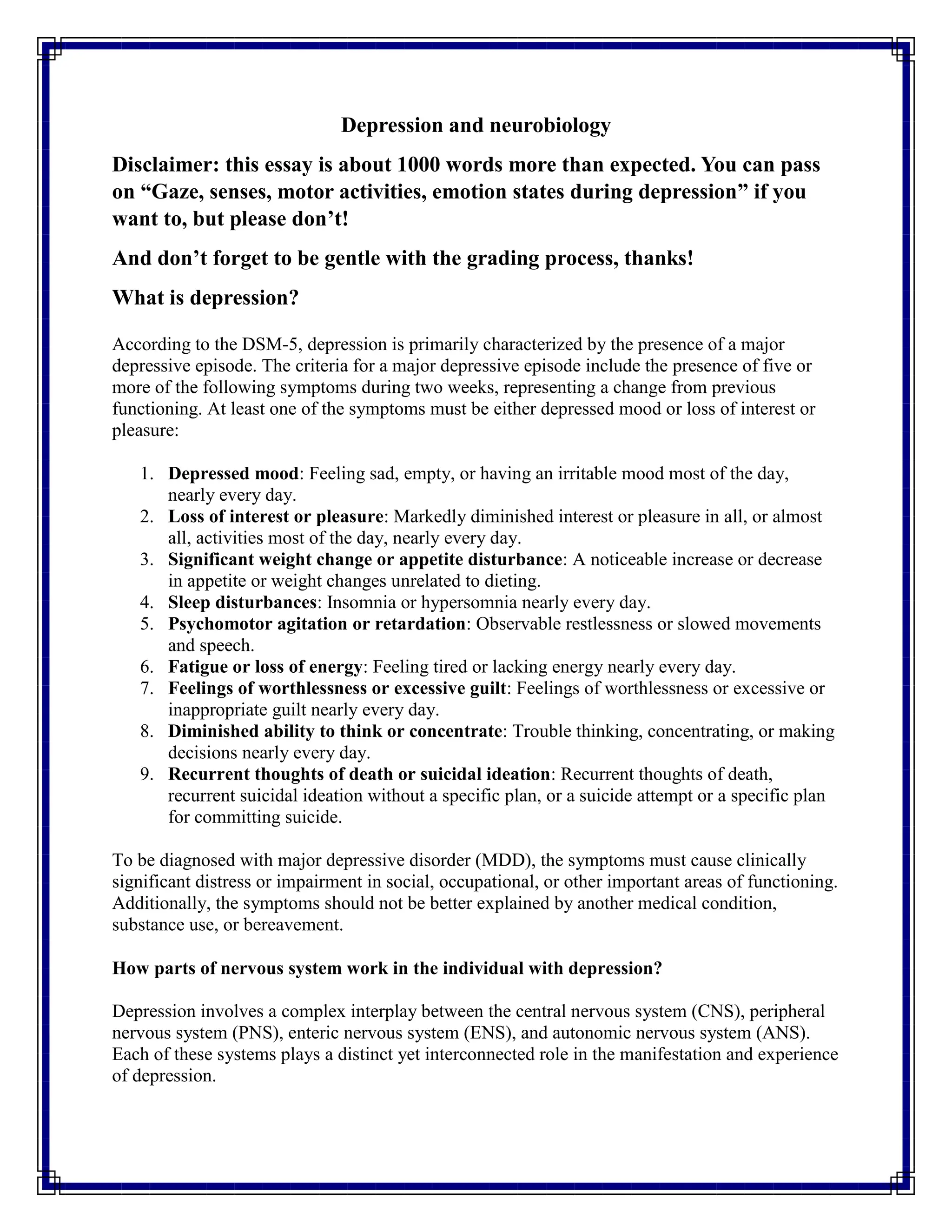
According to the DSM-5, depression is primarily characterized by the presence of a major
depressive episode. The criteria for a major depressive episode include the presence of five or
more of the following symptoms during two weeks, representing a change from previous
functioning. At least one of the symptoms must be either depressed mood or loss of interest or
pleasure:
1. Depressed mood: Feeling sad, empty, or having an irritable mood most of the day,
nearly every day.
2. Loss of interest or pleasure: Markedly diminished interest or pleasure in all, or almost
all, activities most of the day, nearly every day.
3. Significant weight change or appetite disturbance: A noticeable increase or decrease
in appetite or weight changes unrelated to dieting.
4. Sleep disturbances: Insomnia or hypersomnia nearly every day.
5. Psychomotor agitation or retardation: Observable restlessness or slowed movements
and speech.
6. Fatigue or loss of energy: Feeling tired or lacking energy nearly every day.
7. Feelings of worthlessness or excessive guilt: Feelings of worthlessness or excessive or
inappropriate guilt nearly every day.
8. Diminished ability to think or concentrate: Trouble thinking, concentrating, or making
decisions nearly every day.
9. Recurrent thoughts of death or suicidal ideation: Recurrent thoughts of death,
recurrent suicidal ideation without a specific plan, or a suicide attempt or a specific plan
for committing suicide.
To be diagnosed with major depressive disorder (MDD), the symptoms must cause clinically
significant distress or impairment in social, occupational, or other important areas of functioning.
Additionally, the symptoms should not be better explained by another medical condition,
substance use, or bereavement.
How parts of nervous system work in the individual with depression?
Depression involves a complex interplay between the central nervous system (CNS), peripheral
nervous system (PNS), enteric nervous system (ENS), and autonomic nervous system (ANS).
Each of these systems plays a distinct yet interconnected role in the manifestation and experience
of depression.
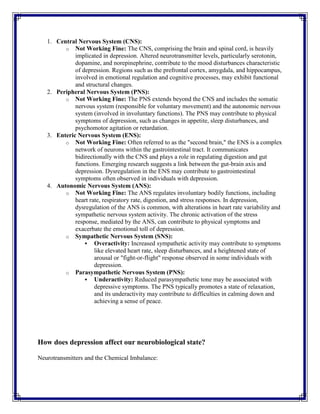
1. Central Nervous System (CNS):
o Not Working Fine: The CNS, comprising the brain and spinal cord, is heavily
implicated in depression. Altered neurotransmitter levels, particularly serotonin,
dopamine, and norepinephrine, contribute to the mood disturbances characteristic
of depression. Regions such as the prefrontal cortex, amygdala, and hippocampus,
involved in emotional regulation and cognitive processes, may exhibit functional
and structural changes.
2. Peripheral Nervous System (PNS):
o Not Working Fine: The PNS extends beyond the CNS and includes the somatic
nervous system (responsible for voluntary movement) and the autonomic nervous
system (involved in involuntary functions). The PNS may contribute to physical
symptoms of depression, such as changes in appetite, sleep disturbances, and
psychomotor agitation or retardation.
3. Enteric Nervous System (ENS):
o Not Working Fine: Often referred to as the "second brain," the ENS is a complex
network of neurons within the gastrointestinal tract. It communicates
bidirectionally with the CNS and plays a role in regulating digestion and gut
functions. Emerging research suggests a link between the gut-brain axis and
depression. Dysregulation in the ENS may contribute to gastrointestinal
symptoms often observed in individuals with depression.
4. Autonomic Nervous System (ANS):
o Not Working Fine: The ANS regulates involuntary bodily functions, including
heart rate, respiratory rate, digestion, and stress responses. In depression,
dysregulation of the ANS is common, with alterations in heart rate variability and
sympathetic nervous system activity. The chronic activation of the stress
response, mediated by the ANS, can contribute to physical symptoms and
exacerbate the emotional toll of depression.
o Sympathetic Nervous System (SNS):
 Overactivity: Increased sympathetic activity may contribute to symptoms
like elevated heart rate, sleep disturbances, and a heightened state of
arousal or "fight-or-flight" response observed in some individuals with
depression.
o Parasympathetic Nervous System (PNS):
 Underactivity: Reduced parasympathetic tone may be associated with
depressive symptoms. The PNS typically promotes a state of relaxation,
and its underactivity may contribute to difficulties in calming down and
achieving a sense of peace.
How does depression affect our neurobiological state?
Neurotransmitters and the Chemical Imbalance:
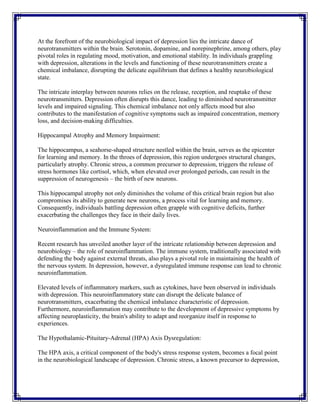
At the forefront of the neurobiological impact of depression lies the intricate dance of
neurotransmitters within the brain. Serotonin, dopamine, and norepinephrine, among others, play
pivotal roles in regulating mood, motivation, and emotional stability. In individuals grappling
with depression, alterations in the levels and functioning of these neurotransmitters create a
chemical imbalance, disrupting the delicate equilibrium that defines a healthy neurobiological
state.
The intricate interplay between neurons relies on the release, reception, and reuptake of these
neurotransmitters. Depression often disrupts this dance, leading to diminished neurotransmitter
levels and impaired signaling. This chemical imbalance not only affects mood but also
contributes to the manifestation of cognitive symptoms such as impaired concentration, memory
loss, and decision-making difficulties.
Hippocampal Atrophy and Memory Impairment:
The hippocampus, a seahorse-shaped structure nestled within the brain, serves as the epicenter
for learning and memory. In the throes of depression, this region undergoes structural changes,
particularly atrophy. Chronic stress, a common precursor to depression, triggers the release of
stress hormones like cortisol, which, when elevated over prolonged periods, can result in the
suppression of neurogenesis – the birth of new neurons.
This hippocampal atrophy not only diminishes the volume of this critical brain region but also
compromises its ability to generate new neurons, a process vital for learning and memory.
Consequently, individuals battling depression often grapple with cognitive deficits, further
exacerbating the challenges they face in their daily lives.
Neuroinflammation and the Immune System:
Recent research has unveiled another layer of the intricate relationship between depression and
neurobiology – the role of neuroinflammation. The immune system, traditionally associated with
defending the body against external threats, also plays a pivotal role in maintaining the health of
the nervous system. In depression, however, a dysregulated immune response can lead to chronic
neuroinflammation.
Elevated levels of inflammatory markers, such as cytokines, have been observed in individuals
with depression. This neuroinflammatory state can disrupt the delicate balance of
neurotransmitters, exacerbating the chemical imbalance characteristic of depression.
Furthermore, neuroinflammation may contribute to the development of depressive symptoms by
affecting neuroplasticity, the brain's ability to adapt and reorganize itself in response to
experiences.
The Hypothalamic-Pituitary-Adrenal (HPA) Axis Dysregulation:
The HPA axis, a critical component of the body's stress response system, becomes a focal point
in the neurobiological landscape of depression. Chronic stress, a known precursor to depression,
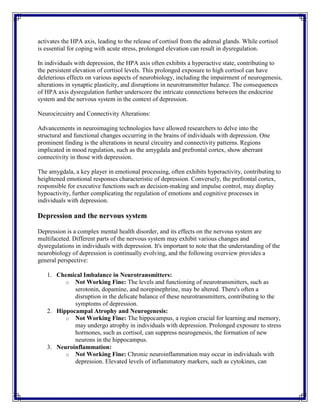
activates the HPA axis, leading to the release of cortisol from the adrenal glands. While cortisol
is essential for coping with acute stress, prolonged elevation can result in dysregulation.
In individuals with depression, the HPA axis often exhibits a hyperactive state, contributing to
the persistent elevation of cortisol levels. This prolonged exposure to high cortisol can have
deleterious effects on various aspects of neurobiology, including the impairment of neurogenesis,
alterations in synaptic plasticity, and disruptions in neurotransmitter balance. The consequences
of HPA axis dysregulation further underscore the intricate connections between the endocrine
system and the nervous system in the context of depression.
Neurocircuitry and Connectivity Alterations:
Advancements in neuroimaging technologies have allowed researchers to delve into the
structural and functional changes occurring in the brains of individuals with depression. One
prominent finding is the alterations in neural circuitry and connectivity patterns. Regions
implicated in mood regulation, such as the amygdala and prefrontal cortex, show aberrant
connectivity in those with depression.
The amygdala, a key player in emotional processing, often exhibits hyperactivity, contributing to
heightened emotional responses characteristic of depression. Conversely, the prefrontal cortex,
responsible for executive functions such as decision-making and impulse control, may display
hypoactivity, further complicating the regulation of emotions and cognitive processes in
individuals with depression.
Depression and the nervous system
Depression is a complex mental health disorder, and its effects on the nervous system are
multifaceted. Different parts of the nervous system may exhibit various changes and
dysregulations in individuals with depression. It's important to note that the understanding of the
neurobiology of depression is continually evolving, and the following overview provides a
general perspective:
1. Chemical Imbalance in Neurotransmitters:
o Not Working Fine: The levels and functioning of neurotransmitters, such as
serotonin, dopamine, and norepinephrine, may be altered. There's often a
disruption in the delicate balance of these neurotransmitters, contributing to the
symptoms of depression.
2. Hippocampal Atrophy and Neurogenesis:
o Not Working Fine: The hippocampus, a region crucial for learning and memory,
may undergo atrophy in individuals with depression. Prolonged exposure to stress
hormones, such as cortisol, can suppress neurogenesis, the formation of new
neurons in the hippocampus.
3. Neuroinflammation:
o Not Working Fine: Chronic neuroinflammation may occur in individuals with
depression. Elevated levels of inflammatory markers, such as cytokines, can
disrupt normal neurobiological processes, affecting mood regulation and
cognitive functions.
4. Hypothalamic-Pituitary-Adrenal (HPA) Axis Dysregulation:
o Not Working Fine: The HPA axis, responsible for the body's stress response,
may be dysregulated in depression. This dysregulation can lead to prolonged
elevation of cortisol levels, impacting various aspects of neurobiology, including
neurotransmitter balance.
5. Neurocircuitry and Connectivity Alterations:
o Not Working Fine: Functional and structural changes in neural circuitry,
particularly involving regions like the amygdala and prefrontal cortex, may be
observed. This can contribute to heightened emotional responses and impaired
executive functions in individuals with depression.
6. Genetic Factors:
o Not Working Fine: There is evidence of a genetic component in depression,
suggesting that certain genetic factors may influence an individual's susceptibility
to the disorder. Genetic variations can impact the functioning of neurotransmitter
systems and other neurobiological processes.
7. Cognitive Impairments:
o Not Working Fine: Cognitive functions, such as concentration, memory, and
decision-making, may be impaired in individuals with depression. These
impairments are linked to changes in neurotransmitter levels and the structural
integrity of brain regions involved in cognition.
8. Reward Pathways:
o Not Working Fine: Dysfunction in the brain's reward pathways, involving
neurotransmitters like dopamine, may contribute to anhedonia – the diminished
ability to experience pleasure – which is a common symptom of depression.
9. Sleep Disturbances:
o Not Working Fine: Disruptions in sleep patterns are often observed in
individuals with depression. These disturbances can involve difficulties falling
asleep, staying asleep, or experiencing restorative sleep.
10. Stress Response:
o Not Working Fine: Individuals with depression may exhibit an altered stress
response. Chronic stress can contribute to the development of depression and
exacerbate its symptoms by influencing various neurobiological processes.
Gaze, senses, motor activities, emotion states during depression:
The relationship between motor hierarchy, gaze, vestibular sense, hearing, and depression
underscores the intricate connections between sensory and motor functions and mental health.
While depression is primarily characterized by mood disturbances, its impact extends beyond
emotional states, influencing various aspects of sensory perception and motor control. Here's an
exploration of how these domains are related to depression:
1. Motor Hierarchy:
o Not Working Fine: Depression can influence motor functioning, resulting in
psychomotor agitation or retardation. Psychomotor agitation may manifest as
restlessness, pacing, or an inability to sit still, while psychomotor retardation
involves slowed movements and reduced reactivity. These motor changes reflect
the broader neurobiological alterations in the CNS associated with depression.
2. Gaze and Eye Movement:
o Not Working Fine: Depression may affect gaze and eye movement. Individuals
with depression may exhibit changes in eye contact, reduced facial expressivity,
or avoidance of eye contact. These alterations in gaze may contribute to
difficulties in interpersonal interactions and communication, further influencing
the social aspects of depression.
3. Vestibular Sense:
o Not Working Fine: The vestibular system, responsible for maintaining balance
and spatial orientation, may be impacted by depression. Vestibular dysfunction
can contribute to symptoms such as dizziness, unsteadiness, or feelings of
imbalance. These physical manifestations may exacerbate the psychomotor
symptoms observed in depression.
4. Hearing:
o Not Working Fine: While depression is not primarily an auditory disorder,
individuals with depression may experience changes in auditory perception. These
changes can include a reduced ability to derive pleasure from music or sounds,
heightened sensitivity to noise, or, in severe cases, auditory hallucinations.
5. Sensory Processing:
o Altered Sensory Perception: Depression can influence sensory processing,
leading to changes in how individuals perceive and interpret sensory stimuli.
Hypersensitivity or hyposensitivity to sensory input may occur, affecting the
overall sensory experience and contributing to the emotional burden of
depression.
6. Cognitive Processing and Attention:
o Impaired Concentration: Depression commonly leads to cognitive impairments,
including difficulties in concentration and attention. These cognitive changes can
affect the integration of sensory information, making it challenging for
individuals with depression to engage effectively with their environment.
7. Motor-Related Brain Regions:
o Alterations in Brain Regions: Brain regions associated with motor planning and
execution, such as the motor cortex, may show altered activity in individuals with
depression. This could contribute to the observed psychomotor symptoms,
reflecting the broader impact of depression on neural circuits involved in motor
control.
The relationship between embodied emotions and depression underscores the complex interplay
between the mind and body in the context of mental health.
1. Physical Manifestations of Depression:
o Embodied Nature: Depression often involves a range of physical symptoms,
such as fatigue, changes in appetite and sleep patterns, psychomotor agitation or
retardation, and aches and pains. These physical manifestations are part of the
embodied nature of depression, highlighting the interconnectedness of emotional
and physical well-being.
2. Somatic Symptoms:
o Body as a Conduit: Depression can manifest with somatic symptoms, where
emotional distress is expressed through physical complaints. Individuals with
depression may experience headaches, gastrointestinal issues, or other somatic
symptoms that are intricately linked to their emotional state.
3. Psychomotor Changes:
o Motor Expression of Emotion: Embodied emotions are often evident in
psychomotor changes associated with depression. Individuals may exhibit slowed
movements (psychomotor retardation) or restlessness and agitation (psychomotor
agitation), reflecting the physical expression of emotional states.
4. Posture and Facial Expressions:
o Nonverbal Communication: Depressive states can influence posture, facial
expressions, and body language. Slumped shoulders, averted gaze, and facial
expressions reflecting sadness or numbness are examples of how emotions are
embodied and communicated nonverbally in individuals with depression.
5. Emotional Memory in the Body:
o Stored Tension and Trauma: Emotional experiences, including trauma or
chronic stress, can become stored in the body as tension. This may contribute to
the physical symptoms associated with depression and can impact overall well-
being.
6. Interoception and Emotional Awareness:
o Awareness of Bodily States: Interoception, the perception of internal bodily
states, is closely tied to emotional awareness. Depression may influence
interoceptive awareness, altering an individual's ability to accurately perceive and
interpret their own emotional and physiological states.
7. Biological Correlates:
o Neurobiological Basis: The biological basis of depression involves alterations in
neurotransmitter systems, neuroendocrine function, and brain structure. These
changes have implications not only for mood but also for bodily functions and
sensations, reinforcing the embodied nature of depression.
8. Treatment Implications:
o Holistic Approaches: Considering the embodied nature of emotions in
depression has implications for treatment approaches. Holistic interventions that
address both mental and physical well-being, such as exercise, mindfulness, and
body-oriented therapies, may be beneficial in managing depressive symptom
Conclusion
conclusion, our exploration of the neurobiological aspects of depression unveils the intricate and
interconnected web of factors that contribute to this complex mental health disorder. From
neurotransmitter imbalances shaping emotional states to structural changes in critical brain regions
influencing cognition, the nervous system is at the forefront of the depressive experience. The profound
impact of stress on the hypothalamic-pituitary-adrenal axis, the intricate dance of neurotransmitters, and
the plasticity of the brain underscore the dynamic nature of depression at the molecular and cellular
levels. Embracing a holistic understanding that encompasses the central, peripheral, and enteric nervous
systems allows us to appreciate the embodied nature of depression, where emotional turmoil is intricately
woven into the fabric of our physical being. As we delve deeper into the realm of psychiatric
neuroscience, the potential for targeted interventions that address these neurobiological underpinnings
emerges, offering hope for more effective treatments and a brighter future for those affected by
depression.

Depression and neurobiology.docx

  • 1.
    Depression and neurobiology Disclaimer:this essay is about 1000 words more than expected. You can pass on “Gaze, senses, motor activities, emotion states during depression” if you want to, but please don’t! And don’t forget to be gentle with the grading process, thanks! What is depression? According to the DSM-5, depression is primarily characterized by the presence of a major depressive episode. The criteria for a major depressive episode include the presence of five or more of the following symptoms during two weeks, representing a change from previous functioning. At least one of the symptoms must be either depressed mood or loss of interest or pleasure: 1. Depressed mood: Feeling sad, empty, or having an irritable mood most of the day, nearly every day. 2. Loss of interest or pleasure: Markedly diminished interest or pleasure in all, or almost all, activities most of the day, nearly every day. 3. Significant weight change or appetite disturbance: A noticeable increase or decrease in appetite or weight changes unrelated to dieting. 4. Sleep disturbances: Insomnia or hypersomnia nearly every day. 5. Psychomotor agitation or retardation: Observable restlessness or slowed movements and speech. 6. Fatigue or loss of energy: Feeling tired or lacking energy nearly every day. 7. Feelings of worthlessness or excessive guilt: Feelings of worthlessness or excessive or inappropriate guilt nearly every day. 8. Diminished ability to think or concentrate: Trouble thinking, concentrating, or making decisions nearly every day. 9. Recurrent thoughts of death or suicidal ideation: Recurrent thoughts of death, recurrent suicidal ideation without a specific plan, or a suicide attempt or a specific plan for committing suicide. To be diagnosed with major depressive disorder (MDD), the symptoms must cause clinically significant distress or impairment in social, occupational, or other important areas of functioning. Additionally, the symptoms should not be better explained by another medical condition, substance use, or bereavement. How parts of nervous system work in the individual with depression? Depression involves a complex interplay between the central nervous system (CNS), peripheral nervous system (PNS), enteric nervous system (ENS), and autonomic nervous system (ANS). Each of these systems plays a distinct yet interconnected role in the manifestation and experience of depression.
  • 2.
    1. Central NervousSystem (CNS): o Not Working Fine: The CNS, comprising the brain and spinal cord, is heavily implicated in depression. Altered neurotransmitter levels, particularly serotonin, dopamine, and norepinephrine, contribute to the mood disturbances characteristic of depression. Regions such as the prefrontal cortex, amygdala, and hippocampus, involved in emotional regulation and cognitive processes, may exhibit functional and structural changes. 2. Peripheral Nervous System (PNS): o Not Working Fine: The PNS extends beyond the CNS and includes the somatic nervous system (responsible for voluntary movement) and the autonomic nervous system (involved in involuntary functions). The PNS may contribute to physical symptoms of depression, such as changes in appetite, sleep disturbances, and psychomotor agitation or retardation. 3. Enteric Nervous System (ENS): o Not Working Fine: Often referred to as the "second brain," the ENS is a complex network of neurons within the gastrointestinal tract. It communicates bidirectionally with the CNS and plays a role in regulating digestion and gut functions. Emerging research suggests a link between the gut-brain axis and depression. Dysregulation in the ENS may contribute to gastrointestinal symptoms often observed in individuals with depression. 4. Autonomic Nervous System (ANS): o Not Working Fine: The ANS regulates involuntary bodily functions, including heart rate, respiratory rate, digestion, and stress responses. In depression, dysregulation of the ANS is common, with alterations in heart rate variability and sympathetic nervous system activity. The chronic activation of the stress response, mediated by the ANS, can contribute to physical symptoms and exacerbate the emotional toll of depression. o Sympathetic Nervous System (SNS):  Overactivity: Increased sympathetic activity may contribute to symptoms like elevated heart rate, sleep disturbances, and a heightened state of arousal or "fight-or-flight" response observed in some individuals with depression. o Parasympathetic Nervous System (PNS):  Underactivity: Reduced parasympathetic tone may be associated with depressive symptoms. The PNS typically promotes a state of relaxation, and its underactivity may contribute to difficulties in calming down and achieving a sense of peace. How does depression affect our neurobiological state? Neurotransmitters and the Chemical Imbalance:
  • 3.
    At the forefrontof the neurobiological impact of depression lies the intricate dance of neurotransmitters within the brain. Serotonin, dopamine, and norepinephrine, among others, play pivotal roles in regulating mood, motivation, and emotional stability. In individuals grappling with depression, alterations in the levels and functioning of these neurotransmitters create a chemical imbalance, disrupting the delicate equilibrium that defines a healthy neurobiological state. The intricate interplay between neurons relies on the release, reception, and reuptake of these neurotransmitters. Depression often disrupts this dance, leading to diminished neurotransmitter levels and impaired signaling. This chemical imbalance not only affects mood but also contributes to the manifestation of cognitive symptoms such as impaired concentration, memory loss, and decision-making difficulties. Hippocampal Atrophy and Memory Impairment: The hippocampus, a seahorse-shaped structure nestled within the brain, serves as the epicenter for learning and memory. In the throes of depression, this region undergoes structural changes, particularly atrophy. Chronic stress, a common precursor to depression, triggers the release of stress hormones like cortisol, which, when elevated over prolonged periods, can result in the suppression of neurogenesis – the birth of new neurons. This hippocampal atrophy not only diminishes the volume of this critical brain region but also compromises its ability to generate new neurons, a process vital for learning and memory. Consequently, individuals battling depression often grapple with cognitive deficits, further exacerbating the challenges they face in their daily lives. Neuroinflammation and the Immune System: Recent research has unveiled another layer of the intricate relationship between depression and neurobiology – the role of neuroinflammation. The immune system, traditionally associated with defending the body against external threats, also plays a pivotal role in maintaining the health of the nervous system. In depression, however, a dysregulated immune response can lead to chronic neuroinflammation. Elevated levels of inflammatory markers, such as cytokines, have been observed in individuals with depression. This neuroinflammatory state can disrupt the delicate balance of neurotransmitters, exacerbating the chemical imbalance characteristic of depression. Furthermore, neuroinflammation may contribute to the development of depressive symptoms by affecting neuroplasticity, the brain's ability to adapt and reorganize itself in response to experiences. The Hypothalamic-Pituitary-Adrenal (HPA) Axis Dysregulation: The HPA axis, a critical component of the body's stress response system, becomes a focal point in the neurobiological landscape of depression. Chronic stress, a known precursor to depression,
  • 4.
    activates the HPAaxis, leading to the release of cortisol from the adrenal glands. While cortisol is essential for coping with acute stress, prolonged elevation can result in dysregulation. In individuals with depression, the HPA axis often exhibits a hyperactive state, contributing to the persistent elevation of cortisol levels. This prolonged exposure to high cortisol can have deleterious effects on various aspects of neurobiology, including the impairment of neurogenesis, alterations in synaptic plasticity, and disruptions in neurotransmitter balance. The consequences of HPA axis dysregulation further underscore the intricate connections between the endocrine system and the nervous system in the context of depression. Neurocircuitry and Connectivity Alterations: Advancements in neuroimaging technologies have allowed researchers to delve into the structural and functional changes occurring in the brains of individuals with depression. One prominent finding is the alterations in neural circuitry and connectivity patterns. Regions implicated in mood regulation, such as the amygdala and prefrontal cortex, show aberrant connectivity in those with depression. The amygdala, a key player in emotional processing, often exhibits hyperactivity, contributing to heightened emotional responses characteristic of depression. Conversely, the prefrontal cortex, responsible for executive functions such as decision-making and impulse control, may display hypoactivity, further complicating the regulation of emotions and cognitive processes in individuals with depression. Depression and the nervous system Depression is a complex mental health disorder, and its effects on the nervous system are multifaceted. Different parts of the nervous system may exhibit various changes and dysregulations in individuals with depression. It's important to note that the understanding of the neurobiology of depression is continually evolving, and the following overview provides a general perspective: 1. Chemical Imbalance in Neurotransmitters: o Not Working Fine: The levels and functioning of neurotransmitters, such as serotonin, dopamine, and norepinephrine, may be altered. There's often a disruption in the delicate balance of these neurotransmitters, contributing to the symptoms of depression. 2. Hippocampal Atrophy and Neurogenesis: o Not Working Fine: The hippocampus, a region crucial for learning and memory, may undergo atrophy in individuals with depression. Prolonged exposure to stress hormones, such as cortisol, can suppress neurogenesis, the formation of new neurons in the hippocampus. 3. Neuroinflammation: o Not Working Fine: Chronic neuroinflammation may occur in individuals with depression. Elevated levels of inflammatory markers, such as cytokines, can
  • 5.
    disrupt normal neurobiologicalprocesses, affecting mood regulation and cognitive functions. 4. Hypothalamic-Pituitary-Adrenal (HPA) Axis Dysregulation: o Not Working Fine: The HPA axis, responsible for the body's stress response, may be dysregulated in depression. This dysregulation can lead to prolonged elevation of cortisol levels, impacting various aspects of neurobiology, including neurotransmitter balance. 5. Neurocircuitry and Connectivity Alterations: o Not Working Fine: Functional and structural changes in neural circuitry, particularly involving regions like the amygdala and prefrontal cortex, may be observed. This can contribute to heightened emotional responses and impaired executive functions in individuals with depression. 6. Genetic Factors: o Not Working Fine: There is evidence of a genetic component in depression, suggesting that certain genetic factors may influence an individual's susceptibility to the disorder. Genetic variations can impact the functioning of neurotransmitter systems and other neurobiological processes. 7. Cognitive Impairments: o Not Working Fine: Cognitive functions, such as concentration, memory, and decision-making, may be impaired in individuals with depression. These impairments are linked to changes in neurotransmitter levels and the structural integrity of brain regions involved in cognition. 8. Reward Pathways: o Not Working Fine: Dysfunction in the brain's reward pathways, involving neurotransmitters like dopamine, may contribute to anhedonia – the diminished ability to experience pleasure – which is a common symptom of depression. 9. Sleep Disturbances: o Not Working Fine: Disruptions in sleep patterns are often observed in individuals with depression. These disturbances can involve difficulties falling asleep, staying asleep, or experiencing restorative sleep. 10. Stress Response: o Not Working Fine: Individuals with depression may exhibit an altered stress response. Chronic stress can contribute to the development of depression and exacerbate its symptoms by influencing various neurobiological processes. Gaze, senses, motor activities, emotion states during depression: The relationship between motor hierarchy, gaze, vestibular sense, hearing, and depression underscores the intricate connections between sensory and motor functions and mental health. While depression is primarily characterized by mood disturbances, its impact extends beyond emotional states, influencing various aspects of sensory perception and motor control. Here's an exploration of how these domains are related to depression: 1. Motor Hierarchy: o Not Working Fine: Depression can influence motor functioning, resulting in psychomotor agitation or retardation. Psychomotor agitation may manifest as
  • 6.
    restlessness, pacing, oran inability to sit still, while psychomotor retardation involves slowed movements and reduced reactivity. These motor changes reflect the broader neurobiological alterations in the CNS associated with depression. 2. Gaze and Eye Movement: o Not Working Fine: Depression may affect gaze and eye movement. Individuals with depression may exhibit changes in eye contact, reduced facial expressivity, or avoidance of eye contact. These alterations in gaze may contribute to difficulties in interpersonal interactions and communication, further influencing the social aspects of depression. 3. Vestibular Sense: o Not Working Fine: The vestibular system, responsible for maintaining balance and spatial orientation, may be impacted by depression. Vestibular dysfunction can contribute to symptoms such as dizziness, unsteadiness, or feelings of imbalance. These physical manifestations may exacerbate the psychomotor symptoms observed in depression. 4. Hearing: o Not Working Fine: While depression is not primarily an auditory disorder, individuals with depression may experience changes in auditory perception. These changes can include a reduced ability to derive pleasure from music or sounds, heightened sensitivity to noise, or, in severe cases, auditory hallucinations. 5. Sensory Processing: o Altered Sensory Perception: Depression can influence sensory processing, leading to changes in how individuals perceive and interpret sensory stimuli. Hypersensitivity or hyposensitivity to sensory input may occur, affecting the overall sensory experience and contributing to the emotional burden of depression. 6. Cognitive Processing and Attention: o Impaired Concentration: Depression commonly leads to cognitive impairments, including difficulties in concentration and attention. These cognitive changes can affect the integration of sensory information, making it challenging for individuals with depression to engage effectively with their environment. 7. Motor-Related Brain Regions: o Alterations in Brain Regions: Brain regions associated with motor planning and execution, such as the motor cortex, may show altered activity in individuals with depression. This could contribute to the observed psychomotor symptoms, reflecting the broader impact of depression on neural circuits involved in motor control. The relationship between embodied emotions and depression underscores the complex interplay between the mind and body in the context of mental health. 1. Physical Manifestations of Depression: o Embodied Nature: Depression often involves a range of physical symptoms, such as fatigue, changes in appetite and sleep patterns, psychomotor agitation or retardation, and aches and pains. These physical manifestations are part of the
  • 7.
    embodied nature ofdepression, highlighting the interconnectedness of emotional and physical well-being. 2. Somatic Symptoms: o Body as a Conduit: Depression can manifest with somatic symptoms, where emotional distress is expressed through physical complaints. Individuals with depression may experience headaches, gastrointestinal issues, or other somatic symptoms that are intricately linked to their emotional state. 3. Psychomotor Changes: o Motor Expression of Emotion: Embodied emotions are often evident in psychomotor changes associated with depression. Individuals may exhibit slowed movements (psychomotor retardation) or restlessness and agitation (psychomotor agitation), reflecting the physical expression of emotional states. 4. Posture and Facial Expressions: o Nonverbal Communication: Depressive states can influence posture, facial expressions, and body language. Slumped shoulders, averted gaze, and facial expressions reflecting sadness or numbness are examples of how emotions are embodied and communicated nonverbally in individuals with depression. 5. Emotional Memory in the Body: o Stored Tension and Trauma: Emotional experiences, including trauma or chronic stress, can become stored in the body as tension. This may contribute to the physical symptoms associated with depression and can impact overall well- being. 6. Interoception and Emotional Awareness: o Awareness of Bodily States: Interoception, the perception of internal bodily states, is closely tied to emotional awareness. Depression may influence interoceptive awareness, altering an individual's ability to accurately perceive and interpret their own emotional and physiological states. 7. Biological Correlates: o Neurobiological Basis: The biological basis of depression involves alterations in neurotransmitter systems, neuroendocrine function, and brain structure. These changes have implications not only for mood but also for bodily functions and sensations, reinforcing the embodied nature of depression. 8. Treatment Implications: o Holistic Approaches: Considering the embodied nature of emotions in depression has implications for treatment approaches. Holistic interventions that address both mental and physical well-being, such as exercise, mindfulness, and body-oriented therapies, may be beneficial in managing depressive symptom Conclusion conclusion, our exploration of the neurobiological aspects of depression unveils the intricate and interconnected web of factors that contribute to this complex mental health disorder. From neurotransmitter imbalances shaping emotional states to structural changes in critical brain regions influencing cognition, the nervous system is at the forefront of the depressive experience. The profound impact of stress on the hypothalamic-pituitary-adrenal axis, the intricate dance of neurotransmitters, and the plasticity of the brain underscore the dynamic nature of depression at the molecular and cellular
  • 8.
    levels. Embracing aholistic understanding that encompasses the central, peripheral, and enteric nervous systems allows us to appreciate the embodied nature of depression, where emotional turmoil is intricately woven into the fabric of our physical being. As we delve deeper into the realm of psychiatric neuroscience, the potential for targeted interventions that address these neurobiological underpinnings emerges, offering hope for more effective treatments and a brighter future for those affected by depression.